Making Cents with Charlie podcast - Ep 2 Peter Lay - Full Episode

In this episode of the "Making Cents with Charlie" podcast, host Charlie Liu interviews Peter Lay, co‑founder and Head of Innovation, about his unconventional career path, his move from Canadian consulting to Silicon Valley, and how those experiences shape his approach to building finance‑focused technology solutions. Peter explains that innovation at their firm means solving problems once and fully automating them, aiming to reduce user clicks to the bare minimum. He stresses that adoption, not just technical elegance, determines a solution’s success, and shares concrete examples of how click‑count metrics translate into time‑savings. The conversation shifts to change‑management tactics: treating every client engagement like a job interview, using empathy to surface pain points, rolling out solutions slowly with internal champions, and balancing documentation with real‑time knowledge delivery. They discuss the role of modern AI tools (Gemini, ChatGPT, Claude) in streamlining these processes and speculate on AI’s broader societal impact. The episode closes with a rapid‑fire segment and Peter’s “2‑cent” advice: automate the boring 20% of any task to make the remaining work enjoyable.
Chapters
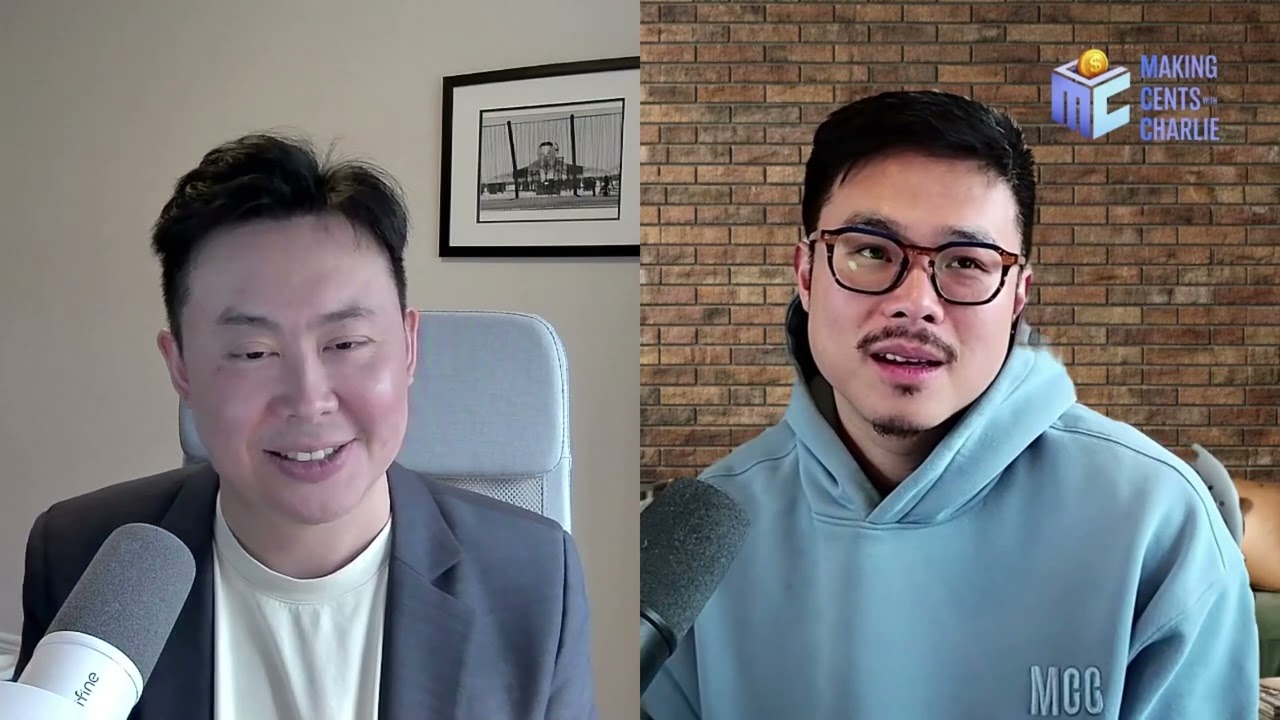
Let's Make Sense with Charlie. Serious business on serious hosts. Welcome back to Making Sense with Charlie, the podcast. Thank you for everyone for your warm welcome, especially during our pilot episode. I'm really excited here for our second episode. Especially with my other co-founder, Peter Lei, and a good friend of mine. He has a unique intersection of finance, data, and technology, one of the most technical person I know. Uh, despite if you saw his background, you thought he'd just be a CPA. Let's welcome Peter. Glad to have you here. You are the head of innovation here. Love to, uh, have you kind of tell the world a little bit about yourself.
Yeah, great to be here. I think I started my career over at a CPM, similar to you yourself, right? Graduated from university and really not knowing what to do and bumped into someone who recommended me to a role. And at the time it was just like a traveling consulting role. Didn't really have much of an idea what I was getting myself into. And then fast forward like 5 years, I'm still doing that same role, but albeit at a different level. And then as you mentioned, I am a CPA, but my background is in marketing. So how I made that transition was really just a stroke of luck, waiting outside a guidance counselor's office and bumping into someone who really brought me into this, into this industry.
I love it. And I started more on the data accounting side. I think I'm spending more time in marketing and sales these days. The world's a funny place. You are our Head of innovation. I think we came up with that title through innovation, through GPT, but there's a reason behind it. Love to hear, love to have you kind of share a little bit of that with everyone.
Yeah. I mean, the head of innovations really is just solving problems, but a lot of times when a lot of these companies, when they solve problems, it's, they throw more bodies into it. That is definitely a way that you can, you can solve the problem, right? But being a startup, there isn't, we don't have that luxury of Just throwing bodies at a problem. So when we do innovations, we really have to tackle the problem in a way where it's solved once and for all. It's fully automated and there is little to no touchpoints, right? So a lot of the tools that are out there right now, especially during the advent of the AI era, right? We can solve a lot of these problems using AI, using, using these tools. And Where we start to innovate, right, is really just, is there a way that instead of clicking it 3 times, we click it once or not at all, right? That is kind of the metric that we're using and still getting the same, if not better results.
I want to come back to this because I have a feeling that we're going to spend a decent amount of time today and talk about AI and finance, all that stuff, how they relate. It's the hot topic. Everyone— it's— I mean, it works for RBD. It's like the number one thing that gets someone to excited to chat about. But you've come a long journey since I've known you. I think it's what, 12, 13 years now, maybe 12, 11. And I remember back in the days, like many of us growing up in Canada, I always felt like we were kind of on the outskirts of kind of that fast-moving hot tech movement you saw down in the States, especially Silicon Valley.
Mm-hmm.
How did you get down there? I'm sure a lot of the audience would love to kind of hear your story. And I think things have changed drastically over the last decade as well. Your experience, did you even want to go in the first place? How did you end up there? What kind of recommendations you make to the audience today?
Yeah, for sure. So the way I got down there was actually through consulting, right? A lot of it, a lot of the roles, it was more like I interviewed for the job. Just by doing the job, and then the opportunity came a year after that. So I was working with the finance team, working with working closely with their finance team and setting up their reporting and planning. And by the time, funny enough, by the time we were we were done, the business changed so much that we basically have to start again, right? Because Silicon Valley moves. At a rapid pace, so that being said, right? My recommendation and to to the folks that are that are listening or or watching the the best way to get into Silicon Valley from what I've seen, right? Is actually through consultancies and through connections. A lot of the folks that ended up joining, right, are ex-PWC who worked on a project or from Deloitte who. was part of the project, right? And that's how I ended up going there was they remembered who I was, remembered the kind of work that I was doing and the value that I was delivering. And when the opportunity arose and they needed someone, they gave me a call.
I like that. It's like even thinking back my own journey for a long time, I want to get down there and the opportunity didn't come until probably a decade into my career where I was no longer at a state where I wanted to go down, but it was starting to pop up. And many of it did come from relationships that I built while I was a consultant. A lot of it actually came down to when I was doing a lot of freelance work, fractional work. You can argue it's basically a different title for a consultant-like role. You're advising them to do things, but you're not actually doing much of it yourself. And that relationship you've built, you've done the work already, you have the trust, it makes a big difference. That's, I think that's actually really helpful. Never thought about this. I think a lot of people want to go down there. It's still, things are definitely moving faster. We're in Canada, things are better, significantly better today, but things are still like day and night in terms of speed down there. But to get down there, it's not just applying to so many jobs. It's not going to networking events nonstop. I think it's building genuine relationships and actually doing the work.
Yeah. Right.
Speaking action speaks louder. Who, I think, I think it was Jensen who had a line where from NVIDIA, he said, you can't escape a bad past. And that makes a big, I think if you think about just providing value and focusing on that, it will help you get down there a little bit easier than just figuring out how to get down there from a surface level. Did you always want to go down?
Yeah. I mean, after, after the first experience, I realized that the This is something that I can definitely get used to and definitely would, would enjoy, right? The atmosphere was absolutely electrifying. The sense of entrepreneurship. Every time I talked with someone, it was about their idea and their startup, and they were very open on sharing about it. The best one I think was I was in an Uber going to the airport and my Uber driver was pitching me his idea. And his application and how it was going to compete against Uber itself, right? So that was a really interesting experience, but more so to the point about how the relationship and how that engagement works is that there was a consultant back in the past where I was on a trip with him and this guy was incredibly intense, right? He was an incredibly intense guy and he He said something to me that resonated with me even to this day. And he said, you have to treat every client engagement as a job interview because that's what it is. You're trying to buy their— you're trying to build rapport with them. You're trying to build that trust and you have a certain amount of time to do so. So every— you have to treat every engagement with every client as if it's a job interview.
This was a consultant in RCPM space. I like that. I think just tying back to kind of the work we do a little bit, velocity is a key piece of getting clients happy, getting clients live, getting clients to use it. Now there's definitely the monetary investment, but I think what drives the most amount of success, the consultant, the platform and data, all that stuff definitely matters. But I truly think the biggest driver is the client investment involvement and the faster you can get them excited, invested, just like an interview, if you're going through multiple rounds.
Yeah.
You need to come out of the gate swinging. You need to start strong. They're going to be that much better. They're going to be that much more invested and they're going to get that much more out of the platform. And you're going to have a longer, longer-term relationship. It might end up like a job, right?
Yeah.
What, you were down there for a while. What was this, 4 years?
Uh, I think it was closer to 5 years. Uh, but time was moving a little bit differently. Uh, during that era, uh, just because I was there right when COVID started. Uh, 2019 was a— was the end of 2019 was when I first started. And then beginning of 2020 was when COVID happened. So it was a different time back then. Yeah.
I'm going to take off, take us off the kind of planned path a little bit because you started this. This is a, that was an interesting time. I mean, the world shut down. A lot of us maybe even forgotten what was that like, but I know like it was hugely impactful for you because you weren't down there for a long time.
Yeah.
Where I'm getting to this is like, love to kind of hear a bit, a little bit of what that experience was like. But I also think if you start with what was your initial experience like, because I know a lot of the audience, they do want to move geographically. They do want to get down to work in Silicon Valley. They want to work in the States, maybe sometimes come back to Canada or wherever they're from, just like you.
What was your pursuit?
personal experience going down there? What was it like? Did you have people on the ground that you were friends with? What were the biggest challenges? What was the most memorable? What was the best memories for the first year or two?
Well, that was going to be, that's an interesting one because the, because that journey was definitely different. Luckily I had a really good friend who was, who was there. And he was basically my entire support system while I was down there because everything shut down, right? In terms of, in terms of what it was like when I first got there, the navigation of just a whole different country was fairly interesting. Having to get your licenses, your bank stood up, just having your life rebuilt again. That in and of itself was interesting. I couldn't even qualify for a credit card because I didn't have any credit to speak of, right? I couldn't get a phone because you needed a license, like valid government-issued ID from the States to get a phone.
No idea.
So it was a lot of that. Having to navigate that was, was an interesting, interesting time. As for the work, I mean, the people there were great, right? Like I really enjoyed my time. time there. You learn a lot from there and then you learn a lot. But the funny thing about learning a lot there is that the problems that you thought were problems is not a problem in the tech industry, which is funny to say because in our space, a lot of the times we run into performance issues with systems. We run into data issues, either it's too much data, And then the eye-opening moment was working with the team down there and I was going a little bit too hard on the design, anticipating performance issues. And he pulled me aside and said, yeah, that's, those are not issues here. Like you're nowhere near the threshold, right? You're dealing in the gigabyte scale. Like we are in the petabyte scale. That's when it becomes a problem. This is not a problem. So that to me is like a huge eye-opener, right? So yeah.
That's fascinating. Like you and I, like we spend a lot of our projects making sure that the design designs are fast. I think a lot of people forget about that, but the ease of use, the user experience makes a huge piece or aspect in terms of someone adopting something. You're not going to use a platform or tool if you're clicking and sit there and wait. And some of it's definitely platform, some of it's data, but some of it, a lot of it revolves around the design of the platform as well, the solution. I mean, that's why we exist. That's what we do, what we do. We help design platforms for FP&A, for the office of finance. Outside of that kind of work you get in the tech side where you have nearly unlimited amount of processing power that others don't have access to. Were there any, did you see anything where, how they thought about projects, how they thought about decision strategy that was different from any other industry or experience you've seen that you think it's helpful for others to learn from? And you've worked with clients of all sizes and shapes and locations, industries. I'm sure there's something that spots out. It's a good question.
Yeah. I mean, there was a huge So all things being equal, you're still solving a problem. You're solving the problem, you're putting together a solution, you're putting together a design. For most companies, that's good enough. But one thing that was, that had a lot of emphasis and carried a lot of weight is how many clicks does the end user have to do in order to get to what they need, right? Because every click matters. Every click means— more clicks means lesser user experience. So if you can get a solution that can solve the problem with the minimal amount of clicks, in fact, if there's no clicks, that's what they're goal-seeking to, is that minor operational efficiency that can compound over time. Right. We've had, I've seen reports where, you know, that where it was, well, that equals to like 13 clicks. 13 clicks translates to however many minutes in a day to how many hours in a month to what are the time savings, right? So keeping that user experience in mind was definitely different than what, what we were used to as consultants.
It's surprising because we're talking about finance, FP&A, like that's something you hear about UX/UI, software design. And I wonder if because of Silicon Valley, everything is inspired by building good software, the user experience of it, the adoption of it. I think that's a great point. And I think about this for a long time, but when I was doing my CPG e-commerce days, a lot of it was like, how many clicks does it take to get to getting someone's attention to actually checking out? If you think about what we're doing, yes, we're building platform integration, transformation, helping clients with lots of stuff, but At the end of the day, at least I think in my opinion, the highest KPI or North Star, I think there is TTV, time to value, but there's the adoption to me is more important than anything else. And you're absolutely right. The less clicks we have by itself defines a simpler, easier solution for someone to adopt.
Yep. The focus was mainly on adoption. A lot of the times when we When we did have conversations, it's a lot of discussions revolving around, well, people are not going to use it, right? If people are not going to use it, then it doesn't matter how good your solution is. It can solve a lot of the problems, but if there is such a high barrier to entry, then that's not really a solution, right? It has to be user-friendly. It has to make sense. It has to be simple. And that imposes a much larger challenge because it's not just solving the problem, but solving it in the most elegant way possible.
I really like that. I think a lot of us, especially if we love what we do, we always want to create the best solution for clients. And now when I emphasize best, because that definition is often defined by us, the consultants.
Yeah.
I know when I was younger, I wanted to jam as much data, much complexity, calculation drivers, try to capture as large of a percentage of the usage use cases as possible. And I realized it worked, it was great, but the adoption was never there.
Yeah.
Because it was so complex. So much of it was just so due to my own ego, uh, versus actual client usage. I mean, there's something we talked about. A lot here. I mean, for sake, the whole podcast is about tying finance with the human, the happiness side. I think we forget about the empathy. What does it take for someone to enjoy using the stuff that we've built?
Yeah. And a lot of it really is, they, do they understand? Right. And are they, are they able to explain it? Right. Because as consultants, when we build the design and when we build a solution, we understand it inside and out. We think it's incredibly elegant. But if the end user doesn't understand or can't explain it to their leadership, it doesn't matter. Right?
100%. I think I'm seeing a lot of this as I work with you now. I mean, the role of what you do has changed drastically over the last couple of years. We're now going from where we came from, just being incredibly strong ICs, individual contributors, having amazing tribal knowledge. To ourselves, to now trying to build a PS firm. We've learned over the last, especially the last year, tribal knowledge is not a good thing. It's not how you scale. And I know you bring up propagation. I don't know if that's the word you use with the company a lot. How are you seeing things around that?
Within our company?
Yeah. With what you're doing these days about figuring out design solutions, but ultimately adoption and usage with a broader audience, not just with a small handful of eyes?
The proliferation is actually really tricky because there's— and it is proliferation, but propagation also works. Proliferation is the—
That's the one that you like. Yes.
Is how do we proliferate that knowledge, right? There is the documentation approach. Right. You and I have done enough documentation in our past lives that one, that the inherent problem with documentation is that, and I'll quote, no one wants to write it and no one wants to read it. Right. We can have documentation. That's not the issue, but it's how do we deliver that intel, that information, that piece of information to the team in such a way where they don't have to read Through endless pages of documents, right? And let's say you do read through that endless page of documents. It's really not going to stick until at the time when they are executing and actually doing the work, right? And if they're doing the work and executing, they're not reading documentation. So there is a fine balance between having good documentation, but also a good method of delivery. Delivering it in a way where, where they can get it at their fingertips quickly, reliably, and doesn't require too much of a search. Because last thing you want to do is go through a Google Drive or like a OneDrive or SharePoint. And, and I don't know if you've experienced this where you asked a question and someone will tell you, oh, it's in the shared drive. Great. We have like several gigabytes of documents in there. How do we, how do we get it?
Right.
Yeah. So how do we surface this information? How do we make it more accessible? Ease of use, ease of access, right? And I think we're entering in a really interesting time in our lives where that question has an appropriate answer, right? So that to me is like, is the bigger problem that I'm trying to tackle is how do we leverage the tools now so that it reduces the amount of steps, the amount of clicks, the amount of places that The knowledge and the intel can be surfaced to the end user, right?
I think there's a huge part that's surrounding the availability of technology that's off the shelf now. And I know I mentioned earlier, we're going to get into AI. I don't think we're going to have the time today. It's something I really want to dig in with you as well. You're someone I go to for all things tech and AI related. I think one question I do want to get with the time that we have is, I mean, all this is really kind of change management at the end of the day. And I've seen kind of the culture around it change over time. I feel like these days there's a lot of, here are the best practices, these are the things you should do, you should go attend these. They're more optional in terms of how it's been asked with the client, or is it not the client, the team? How do you think about that? Because my thoughts around this has been shifting over the last couple years. How do you push change with the team? How do you communicate it?
Let's go back to the idea of empathy, right? And let's not beat around the bush, and we know that Getting answers to questions is painful. I'm experiencing it right now because I'm dogfooding the entire process. I don't want to dig through all that documentation. So what is the change management process for me is, hey guys, this is my problem. I don't know if this problem is resonating with you guys, but here's the solution. Here's what I am doing. And by the time I get to that, get to that speech, I've already dogfooded This solution many, many times, and it does work. It cuts, it cuts out the, the need to go hunting and pecking and to go spelunking through your, to your archives. And then I also like to roll it out slowly, right? I don't want to do a big bang rollout that always runs into interesting and unforeseen issues. But if I can get a slower rollout, right? to some of the key folks who are interested, who does this on a regular basis, then they themselves become evangelists to the idea that, oh, this does work, right? And other folks who may be experiencing the same problem, now I have social proof within our own team that, oh no, this works for so-and-so, you should try it, right? And then that naturally builds over that change management without having it being so abrupt and so invasive, right? Getting a couple of champions and just walking them through, this is the problem that I'm experiencing. I'm guessing you're experiencing the same thing. Let me know if this will, this will help, right? And then provide me feedback and I'll improve the, the whole process.
A couple of things you mentioned, I want to call out. We talk about this a lot. I think empathy is Focus and empathy can get you almost kind of any results or goals you want to have. In this case, it's exactly it. I think too many, I think a lot of people are really good at making cases, ROIs, the reasons at large projects, but they don't do it at the change management level. They don't do it at an individual user stakeholder level. And that's where a lot of projects don't go well. And I think a lot of execs, leaders often kind of question and have all these postmortems, deep dives about why projects don't succeed. A lot of it, I don't think it's because there were poor decisions or poor initiatives. I think it all comes down to the change management, the adoption side. A lot of them, to get the project in, they build this whole thing with champions making decisions, but then they don't do the same exercise at the adoption. It feels like once they started, they think the project is done, but— I think what you're saying is it's the hardest part, just starting now. And then one piece I want to highlight is getting that personal aspect. I think a lot of people forget about that. We're all people at the end of the day. How do we— why is it painful? What is the reason why it's painful for you individually? And seeing the pain points getting resolved by the solutions you have. Only by doing that, you're going to have people excited about trying things. And once you have excitement, energy, we talked about that earlier, You're going to have better adoption across the board. We are coming down towards the end of time. I'd love to kind of just switch gears a little bit. So a big piece here is about having serious discussions on topics and being unserious to get through it. How do you stay optimistic during difficult times?
I mean, I have you guys, right? That's one of the most— the best things about working with with the team is having you guys, but more so, I think all the cool things that we're doing, all the future prospects, I think that keeps me going, right? It's constantly learning. The other thing is something you mentioned to me is that instead of treating the problem as a problem, right, treat it as education. So it's just a constant learning cycle for me. And it's The only way that I can think of it in a very positive light, because the hard days, they get really hard, but I'm learning something out of that, right? I'm learning about some things to look out for or future questions that I can ask or what I would do differently should this happen again. So instead of treating problems as an obstacle, right? If you were to reframe that as a lesson or to reframe that as, oh, I'm getting something out of this other than just, you know, the pain and the anxiety of it all. If you look at it as a lesson, it's a quite positive spin.
Appreciate it. It's a line I survived the first few startups. One of my first startups, my other co-founder, she kept saying like, this is just tuition. The failures, the hardships, everything, there's just tuition to pay that you're paying for the learnings and results you're getting. So I think changing that frame of mind, almost training yourself, you can look at it negatively and I don't think that helps in any aspect, but being excited that you're going to go through this, it's going to hurt, but you're going to come out of it knowing you have to do this again.
Yeah.
Is quite Quite, it's quite a good one. Thanks for bringing that up. Final kind of piece. I think we have 2 sections that we often end our podcast. Naturally, this is our second one, so things might change over time, but the first one is just a rapid fire. And then lastly, the audience being promised a 2-cent advice, 2 cents advice from you. Let's go through the rapid fires. Debit card or credit card?
Credit.
Pizza or burgers? That's a hard one.
Pizza. Pizza. Don't judge Hawaiian pizza.
I get it. I love it. I love it as well. I'm with you. Audiobooks or podcasts?
Podcast.
What's your favorite podcast right now?
Pivot with Scott Galloway and Kara Swisher. Yes.
Yes. Favorite AI tool?
Whoa. It's too many. It's way too many right now. Gemini, ChatGPT, Claude. Those are the main big ones. Yeah. We'll, we'll, we'll, we'll. go there. We'll just keep to those 3 main ones.
You and I had this talk over and over again. We feel like AI is going to take over. If you were going to make a bet on it, what year do you think we're all going to just be sitting at home collecting universal income, just eating pizza all day?
I mean, that sounds pretty good. So I'm going to go with a 2027 to 2030 bet, somewhere in the next 4 years.
I mean, 2037 is next year, dude.
Yep.
Let's come back to this in a year and see where we're at. I love this. Final 2 cents from you for the audience?
Yeah. Automate the boring. Automate the boring 20%. I find that if you can automate the boring part, which is usually 20% of the task, it makes the remaining 80% much more enjoyable. Plus you get to learn about automation. So there's always that. I love that.
And I think if you go into any process or task or role with that mindset, I'm going to learn about this 20% boring stuff so I can automate it.
Yep.
You have a better time even doing that boring stuff as well.
Yep.
Well, Peter, this was, this was beautiful. Thank you so much. Uh, thank you for being here with me and thank you for being on the Podcasts of MCC with me. Thank you so much.
Absolutely, man.
More from Charlie



Making Cents with Charlie and Mark Schroeder | Coffee, Sports, Disc Golf, DIY & Scaling South Africa