Making Cents with Charlie Podcast Ep 1 Full Episode - Charlie Liu and Eugene Cheng
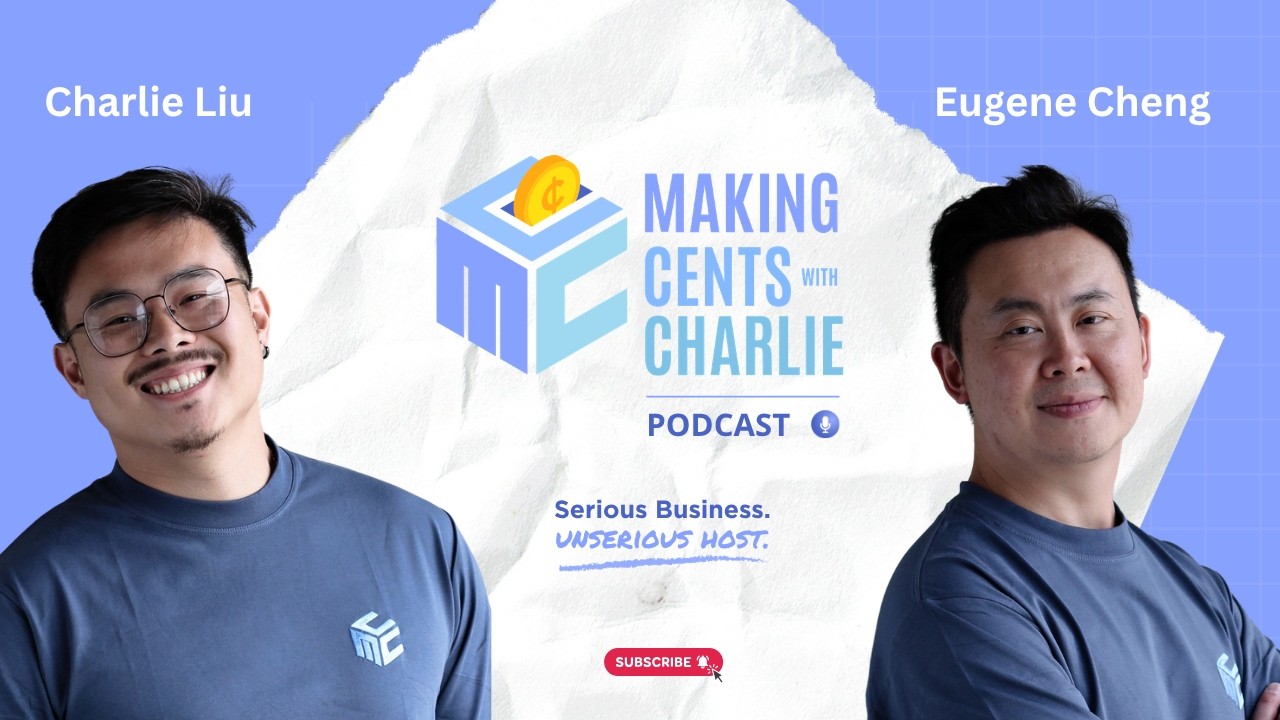
In the inaugural episode of the Making Cents with Charlie (MCC) podcast, host Charlie Liu introduces the show’s mission to make finance, FP&A, and strategic finance both serious and fun, emphasizing a people‑first approach. He is joined by co‑founder and longtime friend Eugene Cheng. The conversation weaves personal anecdotes—how they first met, early dropshipping experiments, and travel stories—with deep reflections on their career trajectories. Eugene recounts moving from a cushy banking role to consulting, valuing travel and the unknown, then spending 11 years at Vena (formerly Vanna) working on high‑profile projects (SpaceX, Regal Cinemas, Morgan Stanley, Taylor Swift’s label). He explains why he left a senior architect role to join MCC: a desire for rapid growth, avoiding comfort, and setting an example for his young daughter. Together they discuss what makes a good consultant and architect, stressing effectiveness, adding value beyond implementation, asking “why” behind processes, and treating clients as people whose careers depend on project success. They explore leadership habits—maintaining positivity, recognizing emotional contagion, using “above‑the‑line” mindset, and staying fun during tough times. The episode concludes with their signature “2‑cent” advice: listen, smile, be concise, and a rapid‑fire round (coffee vs. Red Bull, light vs. dark mode, VLOOKUP vs. INDEX MATCH, etc.). The dialogue blends humor, mentorship, and actionable insights for finance professionals.
Chapters
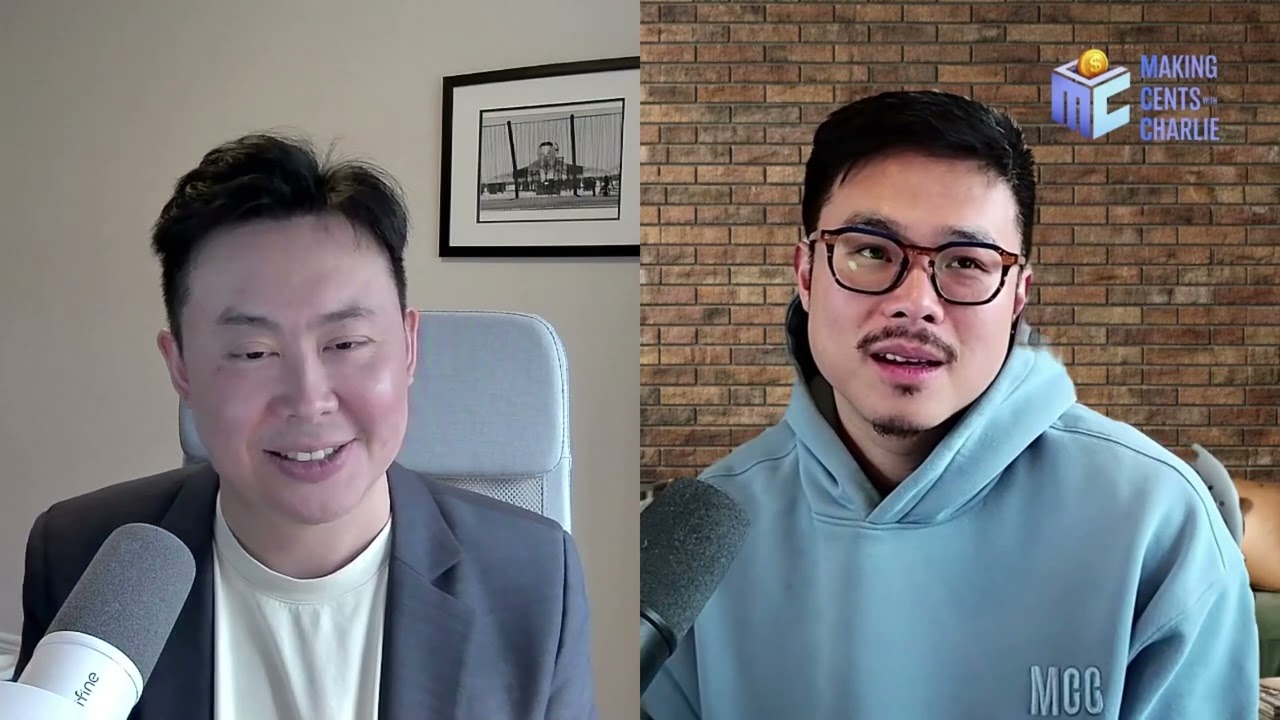
Whether you're a CFO trying to balance the burn rate or leaders trying to escape a burnout, you're in the right place. We're here for the serious business, but I'm your not-so-serious host. My name is Charlie Liu, and welcome to the MCC Show, Making Cents with Charlie. We're diving deep into finance, leadership, and happiness. Stick around because at the end of every episode, we'll all be asking for that one piece of high value Low-cost wisdom, that 2-cent advice. Well, let's make sense. Well, family and friends, um, this is a special episode for us. This is our first ever episode. We're gonna have some hiccups, we're gonna have some issues, probably some IT bugs as well, but it's a learning opportunity for us. And I want to share why we're doing this. It's something that we're— a new muscle we're building. And what I've learned over the last couple of years, it's fun being online, it's fun giving back to community, it's fun learning from each other and sharing our learnings with everyone as well. And for us, this Making Sense with Charlie podcast, MCC, I'm sure everyone understands why it's MCC, but we're trying to build another— we're trying to build a finance podcast that's not just the, lack of better words, the boring bits of day-to-day stuff. We'll be talking through that stuff as well. They're all very serious. I don't think they're boring necessarily, but I do want to bring out the unserious side as well. I think I'm a fun person. And I think my team, everyone, Eugene here with me, we're a fun group. So, we want to make FP&A, we want to make corporate finance, strategic finance fun as well. But I think a big piece what made us successful, made me do better is also connecting with that personal side. I think there's too much in terms of just the serious business side. And a lot of us forget that We're people on the other side. CFOs, VPs, our clients, ourselves are people on the other side. And there's a reason why we do what we do. I often tell my team, it's so that the team on the other side, they don't have to work late nights. They don't have to work weekends now. They're getting that better automation with us. They're able to go home earlier. But to me, that aspect of tying that serious professional side, but also taking care of ourselves physically, mentally, spiritually, It's a huge journey as well. And I really want to share in terms of my learnings through my career to also just the different guests I have on the show with me as well, so that we can give back to the community. I started MCC. I wanted to scale this business. I wanted to build an environment that takes care of ourselves, our clients as well. And I wanted to make sure it's a fun and healthy environment as well. So, we on this show will be showing in terms of how you can be experts and still be people first. Well, now let's get started, everyone. I'm super excited. Like I said, this is our first one, but I have my co-founder Eugene Chang with me as well. But he's also more than just a co-founder. He is a long-term, long-term friend of mine. I've known each other for what, 10+ years?
Yeah.
I still remember meeting you at the Divina office and taking the subway back home together and the laughs, the giggles, the Conversations we had carries us through today. Eugene, what did you remember from how we initially met?
Actually, Charlie, before we get— even we get started, we talk every day on business, everything that we do. It's actually only now that I noticed that Making Cents with Charlie actually stands for MCC.
We've been doing this for so long. Everyone out there, it's important to communicate. Um, I thought it was obvious. Uh, sometimes you get in trouble. Yes, sometimes what you think it's obvious is not so obvious, and that applies in all aspects of life.
But no, thank you, thank you for having me. Um, wow. Yeah, we have gone back for— we go back a long time. I remember, I think the most vivid ones was, um, We take the subway back, you know, usually our usual laughs and giggles, but then we also talk about some of the serious stuff. And there are a couple of times where I say, you know what, I actually want to do a dropshipping business too. I had 2 options. I was either going to dropship furniture from Japan or stuff from AliExpress. And you were telling me that, that the best way to start is create a website and just put your product up there. You may not know what you're selling. You may not even have that product in stock, but just put up there. And if people ever want to click on it, just tell them you are out of stock, and but then you'll be restocking soon. It's that through it for that experience that you're actually learning that running a business is not about having all the answers, having all the information. It's not about always being ready and going when you're 100%. it is also about testing. It's about iteration. It's about when you're going in with incomplete information. And then the key part of business is actually learning and what the environment is, what the market is. And that oftentimes just requires you going in without the full information. And we carry on this to this day to anything that we do.
Yeah, I think it's, uh, for me building demand first and then figuring it out afterwards. I mean, we saw our good friend Mike Liu this weekend. He told me what he's learned in life is sometimes when an opportunity comes and you're a little bit scared, you're not ready for it, often that means it's a sign that you should take it. So, Yeah. To me, it's to get in, generate demand, make sure that Because ultimately business is basically joining supply and demand, right? So figuring out demand, testing it, if what you offer truly something people want, and then you can figure out a supply set afterwards. Uh, those were fun times. I remember testing dropshipping because that was the, that was the meta, that was the hype back then.
Yes.
And, um, that led me to a different path for a couple years as well. But, uh, it's good being back together with my old friend.
Yes, yes. My first dropshipping product was men's underwear with pockets, because where else would you put your phone?
Exactly, folks. I love that. That was a fun kind of side thing we were testing for a while. Speaking of that, I mean, we did that while we were at Vanna. I know your career has been very interesting for a lot of folks, actually. In the last month, I had 2 reach out to me, asking me how I got into space, if they should get into the space, how do they grow in their space as well. You did not— you came from a very different background. I'm sure the audience will appreciate kind of learning your career path and why you did, or what the reasons were behind your changes and decisions.
Do you want the real reason or the reason that I tell people? Both.
Why not both? Why not both, right? So for all the audience, at least you have an answer for, for certain folks, and then genuine answer for the true, the true, the real ones, right?
Well, let's start with the real one. Um, so my last, last job before probably joining Vanna was, uh, RPC as a— it's called developer business specialist, all kind of stuff. So it was a lot mainly dealing with capital markets, trading systems, that kind of stuff, very technical stuff. It was good. But as you can imagine, being in bank, you— it was a relatively cushy job. It was, you know, you got your pension, you got your benefits, you got your holidays, um, you got your bank holidays, um, and the pay was decent. Regular 9 to 5, no complaints. But I felt something was missing. Um, so I wanted a challenge. So I just started looking, and then I started looking for consulting jobs. And, and here's where the real reason comes in. The first thing, the main thing I was looking for is it was just a consulting job that required travel. Anything that had travel, I said I'll take it. Um, it was one of those days where you're still kind of young, you still want to see, you know, how— what else you can get out of your career. And frankly, I actually did enjoy the travel. Being— it's not so much about, you know, the perks of it as the being in the unknown. You're in the unknown city in a foreign land, in the city you've never been to, client that you've never been to, that client that you've never met. That kept me on my toes. So that's actually one of the things that I truly, truly enjoyed. Um, so then yeah, after that, it was— the rest is history. Spending 11 years at Vanna doing all types of different projects, from really cool stuff such as SpaceX, uh, Regal Cinemas, Morgan Stanley to some of the also exciting but mid-sized markets such as Taylor Swift's first record label at Big Machine Label Group.
What was— it's funny because I had a very similar start as well. But what was the worst? Not worst, every place is beautiful for everyone. Every place is a special snowflake. But what was your worst travel experience for work? And what was your favorite one?
Oh, worst travel was, um, in a place— not, not the shit on the place, but, um, it is a place where even when I was at border security, they didn't know where it was. Um, it was in a place called Coeur d'Alene. It was in North Idaho and had to go in the middle of winter. So it was definitely not the most interesting place, and also it was basically one of the smallest places I've been to. It was also 2-3 hours drive from the nearest airport. So that was truly, truly, um, one of the less than ideal place to go to. Um, and my favorite, my best trip— and I tell this, my wife gets mad at me all the time— um, it was actually a trip to Hong Kong for one of the projects. It was the Peninsula Hotel. I keep telling her my, my, my Happiest moments in my entire 40-ish years of life. Number one was when my daughter was born. Second was my 2-week trip to Peninsula for work. Third was getting married to her.
At least you're— at least your transparency—
transparency is important.
Transparency is important. I, I think one of my worst business travels, similar to yours as well.
I—
memory is failing me where it was. But it was about a 6-hour drive. It was near Erie, Pennsylvania, and it was the middle of winter. It was a rental car without snow tires, and I got there. Surprisingly, I got there, but right outside of the client office, I got trapped in the snow.
Oh no.
I called the CFO. So the CFO, the VP, the controller, and myself trying to get that car out of the snow. And that's how we met. That's how we started the consulting engagement. The project Really well afterwards. Like, uh, we started, we bonded, right? And, um, yeah, those, those things makes it fun. I got into this space as well because, um, I was this hippie backpacker and I learned that consultants get to travel and I was like, sign me up, whatever you need, I'll figure it out. If I get to see the world, sign me up. Now, so that's how you got started at Vena. I know your career progressed significantly over there, but a lot of people I know asked as well, like, why did you kind of— you were at the peak of your game, you were the architect that managed all the architects, right? And then suddenly you decided to kind of join me at MCC and go from kind of having everything to almost nothing. And, uh, I know you and I love what we do. We, we work harder, make less than we've ever done. But yeah, what went through your mind? Because like, um, I was even skeptical. I remember saying, I don't know if you should do this with me. It's, uh, eating glass, looking at the abyss, and not knowing if there's gonna be a return.
Yes, I distinctly remember the eating glass phase very well. Um, so it's for, it's for 2 main reasons, right? Um, number one is, uh, like I said, that's part of the reason I like the traveling part was always getting into the unknown. And while the Vantage job was great, people were great, um, I find that it was— I was getting very, very comfortable there. I knew everyone. I knew exactly, uh, what the processes are, who to contact for, for whatever the needs are. It was getting way too comfortable. So that's when I know I needed a change. You know how every time you change a job, you go somewhere else, you do something new, you get the exponential rocket curve, learning curve. I was still learning at Vanna, but it was at a much slower pace than I wanted to. So it was plateauing, to be honest. Um, there's still stuff to be learned, but it's not the— it's not— it's the difference between steady growth versus rocket ship growth. And that's what I was grateful for. So that's number one. And the second reason is a bit more of a personal reason. Um, As you, as you know, and some of the audience know as well too, I have a 6— 5-year-old daughter now. Um, and part of it is, I believe, is to set an example, to let her know the path of least resistance, the easiest path or most comfortable path, it's not always the best path. I want to encourage her to try things, um, to go step in the unknown, to stare into the abyss and Eat glass. So I want to let her know that doing stuff like that is worthwhile, and there's no better way to teach that than doing it yourself. I came from a family of entrepreneurs. My dad has a great entrepreneur spirit, just trying and also trying to follow in his footsteps as well too. So it's a bit of a personal for my daughter and also for my parents that brought me here as well too.
Kids are smart. You gotta lead by example.
Exactly. They see, they see everything. They see more than nothing.
Nothing speaks louder than action as well. Um, I know it's hard because especially right now it's hard to balance the work-life balance, but I'm sure having her seeing you kind of grow a business, leading it, is going to be inspiring. I, I mean, my, my, my dad was an entrepreneur as well. A bunch of them in my family, my brother, my sister. I think some people kind of have it in their blood. I'm not saying that you can't be an entrepreneur. It's more like, I think there's an itch that some people might be born with. I advise a lot of people, if you have that itch, go scratch it.
Yeah.
Even if you fail, You know, you've tried and you decide afterwards if it was for you. I think the heaviest things in life are those unmade decisions, those kind of what could have happened. Even if you fail, you can sleep better at night.
Yep. Agreed.
Now, we— I mean, I started this conversation kind of to help the audience kind of learn about how you got into it and how you got out of it in terms of And it's interesting, I spent a lot of time thinking about what consulting is, what consulting in what we do, the CPM, EPM, FP&A system, data intelligence, strategic finance. What does it mean? I have done multiple different things in this space from actual services to sales to product, et cetera. I found out that everything tied back together and made me better as a consultant, which I started off. And it's like a crazy journey, but I know you've also taken a very different path as well. A question I often think of was like, what makes a good consultant?
What—
when do you go from a consultant to architect? And I think this is a good question as well, because there's a ton of people in this space and— I think what's good with consulting these days, it's not tenure that moves you up. It definitely helps, but it's being effective, right? What, especially with all the stuff happening, AI, things are moving faster than ever. In your perspective, what makes a good consultant? What makes a good architect? How do you grow into that ideal consultant, ideal architect as well?
I think you nailed it on the spot. Spot when you said effective. Um, and I think it's actually beyond that as well too, is how to be effective and also how do you ultimately add value for your customers beyond the simple stuff. Um, so let's say you have a deliverable, you need to do X, Y, and Z, you deliver it, project's done, great. Now, next is how do you work with the customers to go beyond and Part of it that I used to do quite a bit is we know what the scope of the project is, we know what needs to be done, but then also talk with customers like, is this process still makes sense? We can design all these templates for you, um, go through your, go through your, your user's view, but then also ask, why are you doing this? Sure, it was in scope. You know, you need these allocations, you need this, this type of workflow, you need this 6-step approval process. We can build it all for you, but why? That's where you ask the customer, start thinking, oh yeah. So you bring in a third perspective to help the customer not only implement that, implement systems, but also take a second look at what their processes were, what the business is. I think that's where you add the value beyond just software implementation, because Anyone can build a template, anyone can load data. It is how you look at the customer, what kind of value do you bring that differentiates you from a regular customer to a consultant that a customer would love.
And I love that because, and I think this, I'll come back to this, I think it relates to that, even the happiness thing I was talking about earlier. How do you get better at building that muscle? Because most of us aren't born with— I know for a fact I, I did not have that muscle at all when I started this, and I was so good at just taking requirements from the statement of work, what the client said, and just— and did it. How, how do you build that muscle?
Ultimately, I think it's— and I think you, you mentioned this as well— just treating them as people, not just customers. I remember very vividly in one of my earlier engagements Um, let's see, I was talking to a CFO or VP pretty high up there on the seniority level. He basically told me that this— his job hinges on this implementation going well. Um, he was the one that suggested we needed a tool, the board approved it, now we go ahead with implementation. If this— if the implementation went well, it will elevate his career. He'll be the one that known as modernizing finance. But if it didn't go well, he would be known as the one that had a, had a screwed up project, and it would carry with him for the rest of his duration. So it's important to remember that you're dealing with people, their careers on the line. It's not just about you and finishing a project, it's about them on their side as well too. Someone took a chance on you, so the least you should do is Pay back in, you know, in principal plus some interest.
I love that. And I've been thinking about like intention, being intentional and empathy for a long time. I think that was the pivotal driver to me just being a better person, but also better leader, but also just more effective all things career. And I think understanding someone— I don't think enough people think about someone bought this tool for a reason.
Yeah.
It's so obvious, but sometimes we're going to build the ETL, the transformations, figure out the allocation rules, the intercompany rules, the lease accounting rules. Someone bought this for a reason, and you— it can often make or break their career. And I think that part of just putting yourself in their shoes and understanding them— they didn't buy a tool for the sake of buying a tool.
Yeah.
They bought it as an investment to improve something, to remove some sort of pain, and asking the reasons behind the why makes it better. I think Dan Martell is the one that always talks about like the bigger the why, the easier the how, right?
Yeah.
I think that makes a big difference. No, I love that. The other thing I wanted to ask about as well is I think for a lot of consultants, a lot of people in general, there's a lot of people pleasers. I myself am one of them. And a lot of people that are not very good at confrontations. But I've learned in my career, at least, it's not really confrontation, but setting boundaries and managing escalations takes a level of unseriousness, being able to smile and manage a relationship effectively. You're one of the most positive, positive guys I know.
Yeah.
Literally, your energy gets us through the dark times, MCC. But how do you stay fun during times like that?
Oh, I think a lot of it is, like you said, taking life not super seriously, but also being conscious of people around you. Uh, I grew up in a— I grew up in a Catholic school, in a Catholic school system. And one of my favorite learnings, um, was not exactly the Bible or the religious teachings, whatnot. Those are all great, but I think it was— there was one religious class where there were 2 pictures. One of them was, um, you know, a kid and family. The kid came down, he was happy, and the entire family is happy. But then it's the exact same picture, but on this side is the kid came down in the morning, but he was grumpy, and then immediately the entire family was grumpy. And that's what I learned very early on in my elementary school days, that emotions are contagious. If you're happy, naturally you bring up everyone around you. But if you're sad, pissed off, aggressive, you bring everyone, everyone down the line as well too. We also learned in leadership that there's something, a concept called above the line or below the line. So every day I ask myself, am I below the line or above the line today? And if I'm below the line, I ask myself why and what can I do to bring myself above the line. And keep as simple as, you know, thinking about your, your small wins. What are you looking forward to this weekend? What are you looking forward for lunch? Staying positive is really the way to get out of dark times. There's no way. There's no, no, there's no other way. Otherwise, positivity It's just a negative spiral.
Positive is really important. Um, I think it was Alex Hormozi, which is like, the ability to be in a good mood— I'm probably butchering the line— but the ability to be in a good mood in the absence of reasons to be in a good mood is the most powerful ability you can have. And it Gets us out of some phenomenal situations. That, uh, story that triggered all this for you, it's, it's fun, uh, that I can— the imagery around it is, is powerful. Like, I can picture it.
Um, you see in real life too, like, you've seen it where, well, yeah, a friend came by, unfortunate news, and then the energy drops right away. Same as family.
I think that makes a big piece. I also thought for a long time I had RBF, resting bitch face. Um, learned to figure out over the years there's enough, uh, study of that. Like, you can actually change this just by— it's a muscle, right? It's a muscle.
Yeah.
And just learning to make this like the resting state of what you look like can make a big difference. It takes time. Right. But Eugene, we do have a few minutes left. I would love to have a longer session. I'm sure we'll have one very soon. Like I promised the audience, love to get that high-value, low-cost 2-cent advice. What's your 2 cents for the audience?
If you're unsure of what you have to say next, Shut up and smile. Wait for what the— wait for what the other person has to say. This is true for negotiation, executive speaking, executive talk. What I've learned over the years is the more you talk, the more you put yourself in trouble. The more you negotiate, the more you negotiate with yourself. Yeah, keep it short. If you notice that a lot of the executives talk, like, you know, yesterday's— when yesterday when we met with some CFOs, CEOs, what I've noticed is that when they talk, it's in very short bursts. They don't go long-winded. They don't need to talk about their points, explain their points, reiterate on the point, whatnot. They say what the point is and they just stop.
I love it. There was a sales friend of mine who mentored me and he told me, don't overexplain your point. It cheapens it.
Yes.
State it, have the reason behind it sometimes. Sometimes you don't need to. And he told me to bite my tongue. So there are conversations where I'm actually biting my tongue and just waiting for the response. It's— that's a great one. Well, Eugene, let's end this with just some rapid-fire questions I think would be fun. Um, so just give me the first idea or thought that comes to your head. Coffee or Red Bull?
Coffee.
Dark mode or light mode?
Light mode.
Oh God, you're disgusting. No, I mean, you live with yourself. Um, VLOOKUP or INDEX MATCH? I know there's better ones now. I know, audience, I know there's XLOOKUP, but Eugene and I came from an older time. Um, VLOOKUP or INDEX MATCH?
Neither. I use some ifs.
Oh God, I can see that. Biggest mistake, a bad hire or a bad formula somewhere?
Bad hire. Bad hire.
I want to say bad hire, but I've done some advisory work where I'm like, oh, I messed up there. Thank God we caught it in time. Cringiest corporate jargon that Do you love to just get rid, get rid of this, get rid from the surface of this earth?
Oh, it would be contagious one and contention— contentious one. I mean, it would be enablement. It's so overly used and it's a solution to everything. There's a lot more to enablement, um, processes, uh, learnings, uh, critical thinking. There's a lot more to cover than simple enablement. So I would love to write that off though. the face of the earth and toss it into the ocean.
I love it. Well, thank you so much, Eugene, for doing this with me. Thank you for being at MCC with me and also being at MCC Podcast with me.
Oh, thank you.
This is a lot of fun.
There's a lot of fun. Same here.
Thank you so much.
More from Charlie



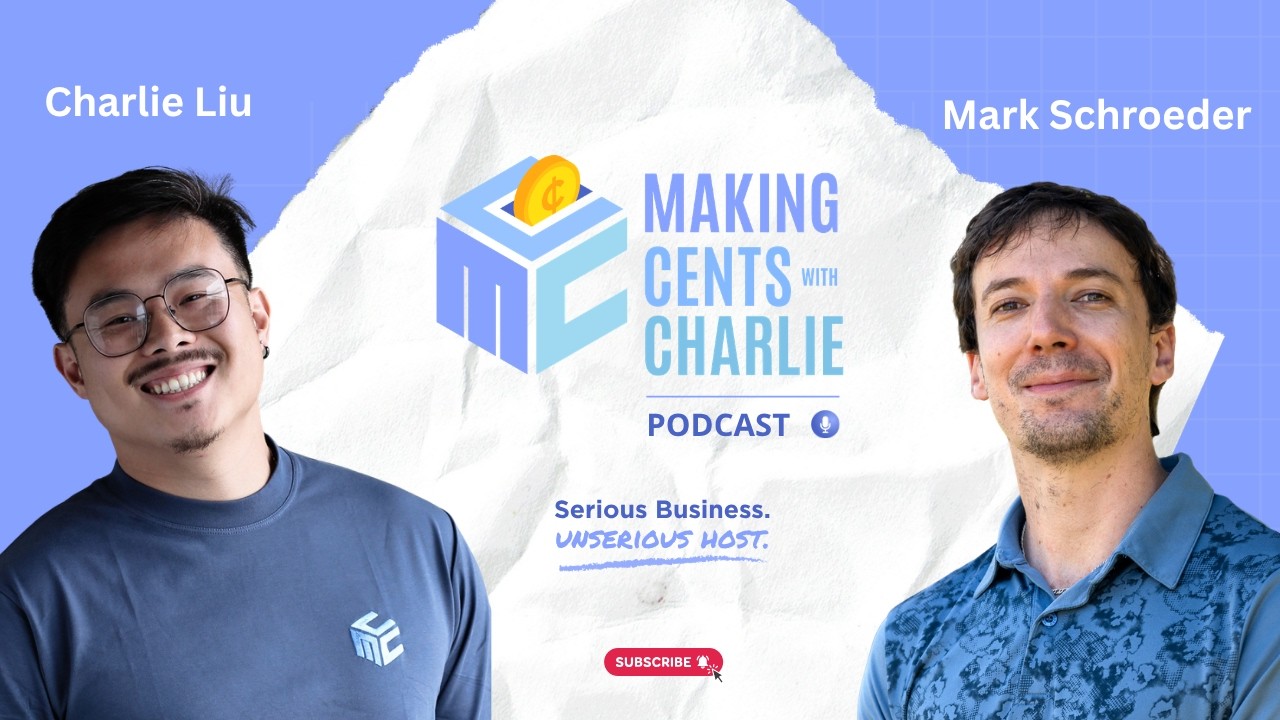
Making Cents with Charlie and Mark Schroeder | Coffee, Sports, Disc Golf, DIY & Scaling South Africa