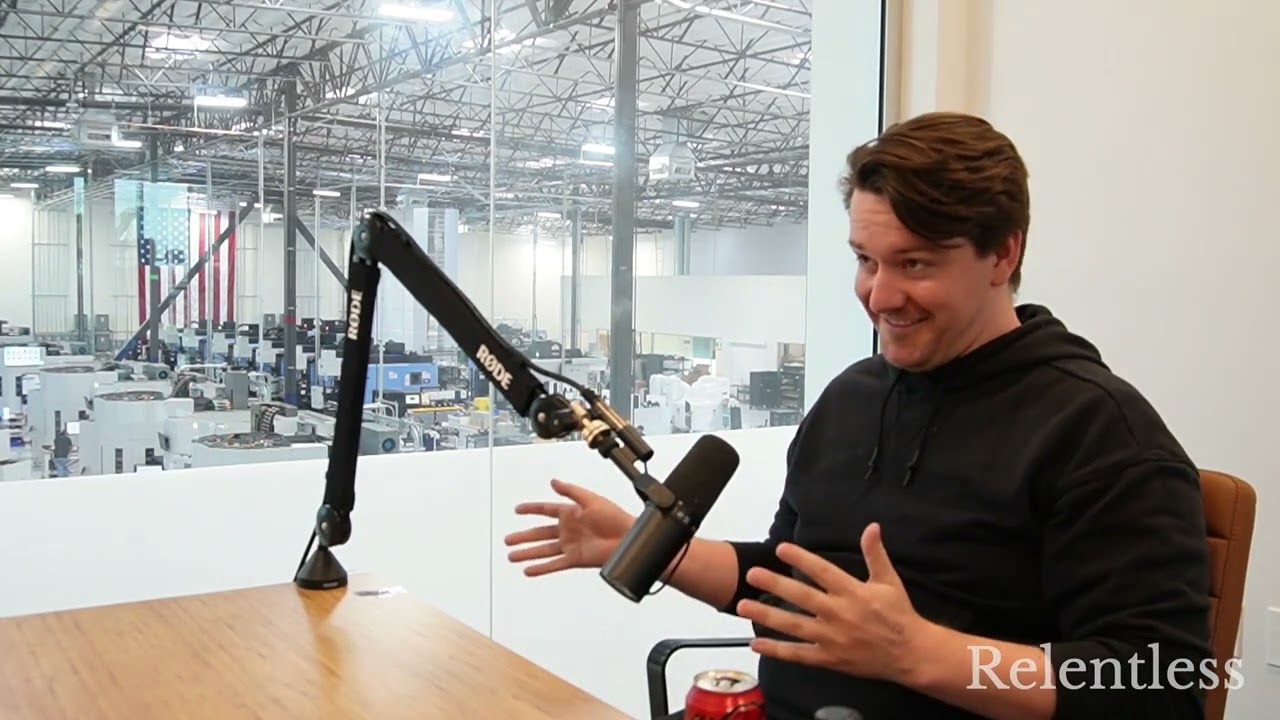
In this interview, Chris Power, founder and CEO of Hadrian, recounts his unconventional path from a shy, music‑obsessed kid in Australia to a serial entrepreneur in the United States. He describes how a lack of role models sparked his ambition after seeing Mark Zuckerberg’s early success, his early work in a small video‑game retail store, and a rapid rise in e‑commerce where he tripled sales and learned the power of data‑driven growth. Power explains the decision to leave Australia, the macro‑historical lenses (the Fourth Turning, Ray Dalio’s cycles, Weimar Germany) that shape his belief that the U.S. must rebuild its manufacturing base to survive a looming civilizational decline and a rising, authoritarian China. He outlines Hadrian’s core thesis: vertical integration of software and hardware in manufacturing, standardizing equipment to reduce software complexity, and scaling operations while continuously upgrading them—a hybrid of “blitz‑scaling” and “phd‑model” change‑management. Power also shares his views on cultural decay, the role of religion and martial doctrine in preserving societal seriousness, the impact of the internet on social fragmentation, and the personal challenges of rebuilding his life after moving to the U.S. The conversation blends practical startup lessons (recruiting, failure modes, hiring for complexity) with broad geopolitical and historical commentary, revealing Power’s blend of technical, operational, and macro‑strategic expertise.
Chapters
Facebook went public and I remember Googling, what is an IPO? Literally had no idea. I remember Googling what is an IPO 'cause it had gone up massively and I was like, wow, how do I invest in IPOs?
This kid.
I'm deadly serious. And then I realised the CEO was like 26 and then I was like, what am I doing? And that's when the ambition really kicked in 'cause I just like, no one had told me that that was possible.
Hello, I'm Ty Morris. This is my conversation with Chris Power, the founder of Hadrian. I hope you enjoy. What were you like? What were you like as a kid before you even went to college?
Oh, super weird, shut-in, I was mostly a musician, the fat kid who ate his feelings. Other than that, I pretty much kept my head down, didn't really cause any trouble. Yeah, pretty normal.
Did you do anything unusual? Like you said, musician? What was that?
Uh, so my grandmother is a French Conservatory-trained concert pianist, so I started learning music when I was 2. So I think I'm okay, good at 4 instruments, bad at another 4. Uh, and then nothing unusual, man. I mostly just worked at my job at Blockbuster, played video games, and kept my head down.
Okay. How did you decide to do accounting versus, like, of all things?
Oh, that, that is actually a really easy answer. So Australia's equivalent of like, what score do you have to get into college? What is it called in America?
Probably like SAT scores and stuff.
Yeah, yeah. So the SAT equivalent is called something. And someone had rigged up this thing called EnterCalc. So in Australia we call it an EnterScore. So it's like, you know, between, if you get a 50, you're like failing. If you're in like 99.9, you get into medicine. And I didn't know what I wanted to do. And if you don't know what to do in Australia, you go into commerce or business degree and then you pick your majors. And I figured out that getting into the best university, which I went into, would take a— on the rolling average would take a 91 ATAR score.
Uh-huh.
And all the subjects are weighted on difficulty. So if you get an A in science, it's better than an A in English, that sort of stuff. So I looked at how I was doing throughout the year. I knew I could like get A's in some stuff by falling asleep. I hated chemistry. So I basically like just gamed it out and got within like half a percentage point of the ATAR score that I wanted. But it's really 'cause I had no idea what I was doing and I couldn't be bothered doing chemistry and stuff. So I just like gamed it and then just got into university.
What was your favorite like subject during that time? You hated chemistry. What did you like?
Math, mostly because— math, mostly because, uh, we had a great classroom and we're mostly just throwing books out the window. Um, I really liked music theory, actually. Uh, and then what else did I study? Not much else. Oh, and IT. IT was good. IT was good.
IT was good.
And then I quite liked accounting and finance, which we did In high school. But yeah, I don't know.
Yeah. Did you do anything in college, like outside of college, like projects?
No, mostly just drinking.
Just mostly drinking?
Yeah.
Okay. How did, how did you end up like becoming ambitious?
So, so the real story is that in the second year of, second year of university, I started failing classes. 'Cause I was bored.
Yeah.
'Cause you, it's like 12 hours a week contact hours. So I was mostly running around as the treasurer of the Commerce Society throwing parties and doing all like interesting stuff. It was great. And then I'm a big procrastinator, so I just figured, well, I think I can coast through this. I'll, I'd interviewed at PwC for like an early internship and realized I didn't wanna do it. So I decided that the only way to get through university without failing was to just get a full-time job and not tell anybody, show up to zero classes and then just work at night. And so that's what I did. So I got a retail store job from 9 to 5 in the Melbourne city and then I studied at night. And then 6 months into that retail store job, I had lunch with the owners and the owners basically said, do you realize that 90% of our business revenue is on ecommerce. The retail store is just a holdover from when we bought, they'd acquired this business. Do you wanna come? You've somehow tripled the sales in the retail store and everyone loves you. Do you wanna come help run the ecommerce business?
Yeah.
So I was like, sure, it sounds great. So I started to help run the ecommerce business. And then at some point, at some point while I was doing that, you know, I started talking at conferences. I started like, getting my head up and like, wow, there's like a whole thing that you can do that's not work for someone. And I remember the moment was actually Facebook went public.
It's like 2012.
Facebook went public and I remember Googling what is an IPO, literally had no idea. I remember Googling what is an IPO 'cause it had gone up massively and I was like, wow, how do I invest in IPOs?
This kid.
I'm deadly serious. And then I realised the CEO was like 26. And I was like, what am I doing? And that's when the ambition really kicked in because I just like, no one had told me that that was possible.
No one had told you that you could be ambitious? No one had told you that you could like build something?
No, no, no one was like obvious that it was possible. I was like, okay, like, okay, what are we doing here? But yeah, I remember the day I Googled what is an IPO.
Yeah. Okay, so you like, let's actually go back a little bit. You went and you joined this like retail store, what was the base of revenue that you went from, you know, that to 3x in a couple of months?
I have no idea.
Okay.
I wasn't even paying attention. I was just, I was just, I loved video games. I was just talking to people. I was writing email copy.
Was this like GameStop for Australia or something?
No, it was literally a small EB Games in Australia as a GameStop competitor. This was the last remaining independent video game store in Australia.
Wild. Okay. How did you end up, how did you end up like working at Splash Retail and why did you—
So that was that company.
That was Splash Retail. Okay. Why did you end up leaving there?
So we'd started with 3 business units and I'd started doing a lot of enterprise partnerships and it was going really well. And then I think I just got itchy feet. We had some like really interesting working capital issues.
What do you mean by that?
One of our biggest business lines was power tools. And basically we needed to buy so many power tools on such a long lead time to keep up with demand that like the working capital cycle, like there was nothing wrong with it. And then, but I'd been there for 3 years and like wanted to do something else. And I'd started talking to friends about like what businesses can we start and stuff like that. So it wasn't really like, there was anything that I wanted to jump to. I was like, I'm gonna give myself 3 months to like figure out what the next thing is. Yeah.
What did you do during that 3 months?
Probably just talk to people. Yeah. Nothing super intentional. I was way dumber back then.
Yeah. I mean, you like later said that you basically for the like private equity fund or whatever, you were just like calling hundreds or doing like hundreds of calls every single day. And I was like, this is a very But not many people do that when they're coming up with ideas and stuff. So how did you end up working at Catch of the Day?
So we were a supplier to them.
Okay.
And when, when people realized that the— that I would like had nothing to do, I had coffee with one of the founders and he's like, look, I got a couple of ideas. You want to come in and just start it under our banner? I was like, sure. And then we did it.
Yeah. What was it like there? What did you do?
So I helped out in a bunch of places really. We built the technology and launched it for daily deals for music, books, and games, digital downloads. This is pre-Shopify, pre— this is like in the early days of iTunes.
Yeah.
And yeah, launched that. It worked. We sold thousands and thousands and thousands and thousands and thousands of units, like albums for a dollar, click to download. It was a really, really good add-on to their existing business, but the volume was so small because you're selling, hey, some album exists for $20. You can download it for a dollar. It was just like, was never gonna scale with the population of Australia.
Yeah.
'Cause it's like $2 SKU cost or something like that. And then helped out with a bunch of like general e-commerce things along the side. And yeah, but that was the primary thing.
Yeah. How did you end up deciding to come to the US?
That was really easy. So I was running a software company. We did workforce scheduling in Australia. And through that, I'd gotten really good at building product and like implementing software inside factories, distribution centers, stuff like that. Like most of sales was technical engineering, product implementation. And I was pretty burnt out. So, and what I realized was that one, business was like good, but it wasn't ever gonna be like something that I wanted to spend the next decade on. And secondly, I realised I was like, I think I was like 26. And truly my logic was at some point I'm going to want to settle down and get married. And if I don't do it now, I'm never going to escape Australia. So I was like, I got to do it now. And that was the logic.
Yeah. And you just, you came to the US and then how did you end up deciding to like start? Because I kind of feel like you had a very interesting learning curve. You said that you didn't do a whole lot when you were a kid and then you end up, you seem like you have a very thoughtful process for building this company and thinking long-term and having a huge ambition. And that seems slightly unusual to me that like you didn't do a bunch of crazy stuff and then just like naturally come into this.
It feels thoughtful. I think in some ways I'm making up for lost time.
Okay.
Moving to the US, so, okay, there's a couple of things. One is, Why manufacturing? Why software in manufacturing?
Yeah.
And that is very a kind of Thielian-Straussian thesis, which is there is never, no one's ever figured out how to get software in manufacturing. I think I have a unique insight because you have to vertically integrate software in manufacturing to build the right software. And all your competitors are gonna be running around on spreadsheets and you have a laser gun. So why would I sell a, oh, and I was really frustrated at Ento selling like half a million dollar a year SaaS contracts when I was, optimizing these companies that would save like $20 million a year.
Yeah.
I was like, why don't I just be the company?
That's, yeah, being optimized.
Yeah, being optimized. So that was the core vertical integration thesis. And then because I'm not an actually trained engineer, I never wanted to compete with Silicon Valley, like Palantir or OpenAI. So I was like, well, I will just go compete over here where there is no software. Now from an American perspective, basically Because Australia has a very small population, it became obvious to me why no good startups come out of Australia. And it's basically because there are no early adopters. So what you need to do with early adopters is like find someone who has a big enough problem that they're willing to use your garbage software for a long time and it eventually gets good and then you hit the rest of the curve, right? The N of early adopters for any market you can think of in America is like 100,000 companies. The N of early adopters in Australia for like, say retail.
Yeah.
There might be 0.1.
Why do you think that is?
Because of the population.
It's just not enough people?
No. So I'll give you an example. There are probably 500 retailers in Texas with over 1,000 employees. There are probably 5 retailers in all of Australia with over 1,000 employees. So like the number of companies that you can, potentially in that early adopter segment is potentially zero. And I'm a big student of history, a big like macro, I'm a hobby macroeconomist. So the first thing you do is get out of the small shitty market, right? Which means you either go to China or the US. This was literally my thought process.
Yep.
So I'm a big like Fourth Turning guy. I'm a big like Ray Dalio macro guy. My favorite books are Barbarians at the Gates, not like software books.
What do you actually like about that? So I saw you say something about Fourth Turning. What about that book specifically like inspired you or whatever?
Or attracted you? I've always had this belief that if you're smart enough and thoughtful enough, you can write your own destiny and you wanna surf the biggest wave possible, right? So you can either work really hard at something that is a decade or multi-decade long thesis, or you can work really hard at something where like the customers aren't quite ready or the market just sucks, right? And the market for Ento sucked, mostly because it was already saturated. We were behind competitors, right? So I wanted to be so far ahead of anybody else that even if I executed like crap, The wave is so big, you're just surfing it. Correct.
Yeah.
So the first thing is, what's the big market? China or the US? And we really start thinking about it and you read The Fourth Turning and you think about interest rate cycles. Roughly every 120 years, the reserve currency of the world changes. Now, the longer you go back in history when basically there is a sine wave of civilizational growth and collapse which matches the market, Like it's mania and depression except at a country scale. Those cycles get shorter when information travels between humans faster. So basically, you know, the printing press, it's like 500 years, 10,000 years for Babylon because no one's communicating right. Now the cycles are shorter on the sine wave because of the internet.
That'd be 10 years.
This is like—
15 years.
Good friend Sean Linehan from Flexport, this is like the internet theory of time. Which is basically time is just human emotions. Time compresses, right? So anyway, became obvious to me that that China is a rising power. America is the failing power. That all the signs are there: decadent culture, inflationary events, degradation of like core industry, blah blah blah. You can see the signs all over the place. China's going like this. So. the correct decision to make with my brain, which is like macroeconomics, is like go to China because then you auto-win, right? The difficulty though is that the CCP is like pure evil. And so the literal choice I was thinking through and made was, what do I have to believe to believe that America can like maintain Pax Americana?
Mm-hmm. Right.
And basically, so before I went over to the US, my assumptions were basically if I'm correct about this civilizational theory, then core industry's gonna be decimated. And there's a number of other dynamics that play into this. Like actually in a hyperinflationary environment, you want to be in a CapEx-heavy business because debt becomes an asset.
So it just becomes— it starts becoming cheaper and cheaper. Right.
So basically, correct. Basically what I said was, if I'm correct, what do I have to see on the ground floor to believe my own thesis? So what I went looking for is a decimated manufacturing base and I found it. So my first 6 weeks in the US was I spent 3 weeks in San Francisco, 3 weeks in Texas visiting as many manufacturers as I possibly could and just talking to people about the problem. And I discovered it was way worse than I thought. But then you have to answer the question, which is like, what do you have to believe that leads you to believe that you can tilt the arc of history, right? 'Cause the US has to win. And by the way, the reason why the US has to win is because there are no continents to expand to. There are no more fractals for humans to experiment with coordination systems, basically. That's all a country is.
Yeah.
I think America was the last experiment. And with AI rising, climate change, basically I believe that all of this is coming to the point of which system and culture wins the world government, and then it's, we're into space, right? So my belief is that, you know, last time this happened, it's like the Dutch to the British to the American Empire, great trades all through. This one is probably the last trade we get.
For a very long time.
For a very, very, very long time.
Yeah.
And I believe this one will bake the solar system as well. And I'll tell you why. Is when you look at how Polynesian tribes jump from island to island and what religion spreads, there's always a kind of leverage point. And the way the islands are structured is basically, you know, there's like a, island here that's very far from like the big continent, and then there's hundreds of other islands which are very prosperous. But it's basically like this— getting, getting the first one's really hard, and then it spreads. And it's obvious from the way humans, human cultures and religions and political systems kind of replicate, is whichever one gets on the beachhead first replicates. So in terms of space and solar system, the moon is the off— because of the 4 pillars of light and hydrogen, oxygen, and sunlight, blah blah blah. You can, you can build rocket fuel, which solves the delta-v problem. So basically it is a fucking bum rush to monopolize the moon because that is the tipping-off point for everything else. So if we lose this one, the time window is such that you probably lose the solar system and then the fucking communists win space. I'm dead serious.
Oh, I, I totally agree with you. Yes.
So coming back, CCP, super evil, like chemically castrate millions of women in immigrants every year. It's horrible. I truly believe they've infected big swathes of the political system in DC through nonprofits. It's very obvious that most of the ESG stuff is just CCP-driven. The fentanyl crisis in San Francisco is just revenge for the British opium crisis. Like, this is all just because their language is on a longer time series. They just play 1,000-year games and we're idiots and we play 40-year games. All of this has been written in from the start. They're coming for the whole thing. So what do you have to believe to believe that you can do something that's never been done before, which is basically break the Fourth Turning?
Yep.
Yeah. So the one thing is, is China has about 30 to 40 years. So it's very hard to believe that you can arrest population decline, population growth. That is just You know, um, however, because Xi is old and because of the one-child policy, their demographics are going to shift in about 30 to 40 years where they will halve their working male population. The population is going to get halved. Much easier to believe that we can stave it off for 30 to 40 years and then they can try again in 1,000 years because their population is fucked. And India is like 200 years behind. The communists in Europe have regulated themselves to death. Japan's doing nothing. We went much easier to believe. How do we extend for 40 years Pax Americana and not break this 100-year reserve currency cycle, which no one has ever done in the history before? Then the real question is, how do you fix— what is the thing that's broken about American culture and how do you fix it? So, okay, so let me go back a step. The first thing that matters is what wins and prevents wars is not who has the fanciest drone or fighter jet. It's just who has the most raw production output. Just throw more shit at the other guy. This is how we won World War II. This is how actually all wars have been won. It's iteration speed and production capacity. We've completely decimated our industrial base because we basically over-financialized it and outsourced everything, much like a startup who starts looking at spreadsheets instead of building more product. It's the same thing. So anyway, the point behind all of this is Hadrian is an effort basically to reverse the 120-year Fourth Turning cycle, primarily so that the CCP doesn't end up owning the world government. That is the entire purpose of this company. Then, uh, one of the interesting things I've learned about culture and manufacturing is how do you solve this multi-generational kind of decadence structure, right? There are only 2 ways that have ever been solved in civilizations before. One is martial doctrine, which is you make the senators' sons kill barbarians on the front and then they make really good decisions when they are senators. You make the elites—
Go back down and like fight.
Because no one learns the lessons of what it— civilizational decline is basically a degradation of values that made you successful in the first place. They get forgotten 'cause everything's too easy and then you're fucked because you're riding the coattails of success and then, but the engine on the back is not turning anymore. The second way is religion. Religion is a very good programming methodology to do multi-generational stories that bake in values through stories that last a long, long time.
Like long-term thinking.
The Jews are incredibly good at this.
Yeah.
So one of the things that happened to the US in the '70s and '80s when we threw religion out, for science is that we threw the baby out with the bathwater and we actually accelerated. And this is actually what happens is secularism climbs during success because families don't matter much, blah, blah, blah. It always happens. The interesting thing about manufacturing is I think it is the way I would frame it is that it was never Nixon versus the hippies, which was Apollo and Dionysus. That was a complete misframe. Which is kind of, um, you know, you go to work or you party. So that we really broke in the '70s coldfully because it should have been Nixon and the hippies, which is kind of work hard, play hard. And the misreading of that is that the Apollonian thing, you still party, but you do it in an intentional way. So things like the winter solstice are actually intentional quarterly structures to keep society running.
Huh.
Because it is a reminder that, so society works because you're the security guard and I'm the guy that makes bread. And in a small town, if either of us don't do our job properly, like we're back to fighting each other for food. But at some point society breaks down unless we can all party once, game's off, then we get back together, right? So the correct reading of Apollo-Dionysus is actually serious-unserious.
Okay.
And the entire problem with America is that we're not a serious country anymore because no one's serious, because we don't have to be serious, because nothing matters, because there are no consequences, because we're so successful. That is the entire problem. Now, the interesting thing about manufacturing is it is the, it is the closest thing to war that is nonviolent as an industry. So what you lose when you remove your manufacturing base is you also lose a cultural engine that produces serious people. Because the way you train serious people is having them as adjacent as possible to reality so that they can never kid themselves that the roads are gonna get paved.
Yeah.
So the reason why we see like a lot of software engineers building like dumb stuff is because they don't have to be serious because they're building on layers of abstraction of society. Like they just assume that like there's a guy that's gonna fix the plumbing, right? Finance is actually, You know, when we removed the gold standard, actually that was just finance is now unserious, right? This is how it goes. The interesting thing about manufacturing is because you get slapped in the face every single day, you can't lie to yourself like it works or it doesn't work or the rules don't apply.
Yeah.
Like most of high finance right now, the rules no longer apply, but it still somehow works. So one of my theories about manufacturing and fixing American culture is not only do we lose the production capacity, We removed a core engine that produces serious people and we moved the seriousness out. So that is a long way—
So we exported seriousness?
Basically, yeah, yeah, yeah. 'Cause either it's religion, martial doctrine, or core industry where, you know, if you don't make the thing and it's not good, you can't lie to yourself about it, right?
Yeah. It's either there or it isn't.
It's either there or it isn't. So mostly everyone's like, what happened in 1971? Well, actually, like, we did 3 things. One is we removed the draft, we made abortion legal, and, uh, we removed the gold standard, and we broke all the rules, uh, and now we're here. So, uh, that was a long-winded way of saying, like, that's, that's the entire thing basically, is the thought process. So how did I think this through? How did I get here? This is kind of the point, right? Um, and then, yeah, when you see the demographics internally to manufacturing is such that, like, everyone is in their very late 50s, early 60s, then the long-short trade has to play out over a decade where if you're the only one that can produce skilled labor for a core critical industry and the rest of the skilled labor is going away because of pure demographics, 'cause we told all the kids in the '80s and '90s that manufacturing was shit and you have to get a 4-year journalism degree, then it should play out, right? Now then you get slapped in the face when you start executing of like, holy fuck, how do you actually do it? which is a whole nother kettle of fish. But before we started, that was the thought process, truly.
Yeah.
Yeah.
Okay, what other like civilizations have you studied? So you say you're a student of history. What's your like favorite historical context of what's happening today?
Probably Weimar Germany.
Okay.
And the interesting thing there is that, you know, it's like what are the preconditions for tyranny basically? And there's when you get hyperinflation and so I believe finance is mostly a fuzzy map of human emotions. So when you get hyperinflation and a recession at the same time, people are very angry, right? But it's a frustrating anger. It's not like you punch me in the face. It's just like, man, my shit is just getting harder. I'm getting beaten down all the time. Everyone gets depressed. It's like, You know, it's just very hard on the population. And actually the reason why normally when you have hyperinflation and recession generates a war is because the elites have to point at a bad guy because otherwise they've lost the population because things are so bad.
Like lost the narrative.
And the fury is there waiting for something to point to because everyone's already at boiling point 'cause things are just really hard. Now the interesting thing is that I think everyone knows the story of Weimar Germany where the financial situation led to the frustration in the population that led to the ability for Hitler to rise. And then it was just, who are we gonna point at? Return to the greatness of, you know, return to the greatest Germany. What people miss though is that the tinderbox for that was actually the decadent culture of the elites. So, you know, the first book burning was actually at the like University of Sexology or something like that, sexual studies. And have you ever seen the movie Cabaret with Liza Minnelli?
I think so, yeah.
It is quite literally about the decadence of the elites in Weimar Germany. And the tinderbox for the first book burning that was the precursor to the Nazi book burnings is actually at a university that was studying like sexual proclivities. But the, the actual tinderbox was a combination of inflation and recession and the elites parading around Like, you know, prime ministers openly sleeping with prostitutes. So what happens is the elites are just saying to the people, don't worry, your life will be fine if you follow these hardworking moral values. And then very publicly they're behaving in the complete opposite. And then a very strong leader comes along saying it is a return to the values that got us here. And then the whole thing flips and then you've got, you know, kind of that Hitler situation, right? And the most interesting understudied thing about Weimar Germany is not inflation or the degradation of the currency or the racism that eventually existed there. It is the decadent culture of the elites which caused Hitler to rise in the first place. So when you look around, what do you see? It's a very interesting question about where we're at today in the US.
Yeah. Do you think that like social media has any impact on I guess how people perceive.
Of course. So the biggest thing with social media was not that information travels more fast. It's basically the hot girl in the village problem. Do you know this?
No.
There's a great study around how mating matching works in villages and now on the internet. And the way it works now on the internet is that something— I'm gonna get the numbers wrong, this is directionally correct— 10 to 20% of males access 90% of females. This is what you get in incelism because it's just a mismatch. Because everyone can see the graph, right? The hot girl in the village problem is basically when you're in a village with no internet, you might be the hottest girl in the village and you might be a global maximum of 10 and you're a local maximum of 10. The guy that you end up dating might be a 5, a 10 in the village but a global maximum of 5. Hot girl in the village walks to the next town and goes, wow, like— I'm the hottest girl in this village. There's a lot of options. And then the dating cycle breaks down, right? So the thing the internet does is basically one is degrades getting information from your local community, family, church, school, sports team, where you might have different opinions, but your echo chamber is with variable people in your community, right? So And how this plays out is like you might say something off-color to your buddy that might eventually lead to racism, but you go, hey man, that's like not cool. Like don't do that. But it's checked.
Yep.
Whereas what the internet creates is pockets of these clusters of these arms running out. And then like you're no longer communicating with your church or your family. You're just like in this cluster of the internet where you believe this one insane thing. But it's the reverse of the hot girl in the village problem 'cause now you're only seeing 10s in that vector of your thought process. So it creates this cultural fragmentation against all the nasty stuff. And you also see you have a much higher information stream of like people are doing better than me. I'm not happy with my job, blah, blah, blah, blah, blah. Like humans are not objective rankers. We're relational rankers. So that's the biggest thing, right?
I love the line from Warren Buffett where Charlie said apparently Warren would remind him regularly that the world runs on envy.
100%. And then, you know, and, you know, now it's an attack vector for the CCP through TikTok. So thank God we got that banned. But yeah, I mean, that's, that's the internet. Yeah.
Yeah. I'd be super curious. So I think that a huge part of your job and probably most of the people in El Segundo is storytelling and becoming like a really good storyteller for whatever mission you're on. How did you become a good storyteller?
The real answer was I'm an incredible introvert.
Okay.
Um, and so I had to get good at talking to people. And when you, when you were not naturally good at something but you were forced to— so Australia is a very extroverted culture. I don't really belong in Australia. Um, but when you have to, you get very good at it. So that's why.
Was your— wait, wait, wait, was the partying and stuff in college a like, uh, almost over-optimising for that, like trying to course correct introvert, being an introvert as a kid?
Yeah, you caught it.
Okay, so tell me about like what, who did you learn from and who were you like? I imagine that you emulated some people for doing this.
No, but what I did was pick up clues of what not to do and where the macro failure modes are. So You know, very early on, the obvious thing to do was like, you live or die by how good of a recruiter you are. So I just got good at recruiting. How did you do that? Just do it.
Just recruit?
Just do it.
Okay.
Just get good at it.
Okay.
I'm being serious.
I know you are.
How do you get good at basketball?
I don't know.
Shoot.
Shoot lots of hoops.
Shoot lots of hoops.
Okay.
And then I very deeply studied every single automation company that had tried to automate manufacturing, was running a robotics company, and I figured out what they were doing wrong. And then I did the opposite of what they were doing.
What were the biggest like failure cases?
Failure cases is not building full stack. Second failure case is entering a low margin market to start with in the hopes that you get into a higher margin market, which never happens. You get stuck you get stuck in the local margin market.
Yeah.
Maybe an equivalent of this is you might make money selling ERP software to Fortune 500 companies. It's very hard to get there, but you might make no money selling ERP software to consumers. But if you start there with the hopes that you get up, you actually learn the wrong product lessons. You like get stuck. And then the third one was many companies try either to automate everything and then launch or bullshit their way into it and hope that they can patch the automation in later. Or many companies actually say, it's actually a very elite cultural thing to do. It's a bit like private equity acquiring manufacturers, which is like, we know what we're doing, fuck you, you're all fired. The software equivalent of that is, I have 50 PhDs and they're all smarter than a machinist because he looks dumb. I'm not going to hire anyone from the industry. I'm just going to try and automate with software. And the reason why that's wrong is because you learn the wrong lessons and you automate the wrong things and the automation doesn't work in the real world and you're convincing yourself that it will. So we just do the opposite of that. Yeah.
Did you have a situation? So I find it very interesting that you seem to be not only like testing but also building at the same time. How did you come to the conclusion that that was the right strategy?
So With large operationally complicated companies, there are only 2 paths that have ever been tried. One is the let's cook the technology so it's perfect, test it to small scale, and then kind of operate from there. The problem with that is you usually run out of time because venture investors want you to grow and you never get the growth muscle and you're operating off the wrong signal. But the technology works. The other way to do it is basically the technology will come eventually. So you have a software team and an operations team and they're running like this, but it's a real cultural problem because the software and operations team are not tight enough together that you can basically have enough internal customers that trust what you're doing and enough context in the software engineer's brain that you can actually upgrade your operations as you're flying the ship. And then it takes a long time to correct. And I would call that the like kind of blitzscaling subsidised operations waiting for the technology to come model. This one is like the PhD model. What we were doing is smack bang in the middle. And the core point is that you have to start setting the expectation and the mode, which is basically what Hadrian is really good at is change management.
Change management.
Because we are continually upgrading operations and changing processes to get better and better and better. There's a core rhythm that exists and no one's ever pulled that off before, which is you can scale the ship while upgrading it at the same time.
Okay.
That's the trick.
That's the trick. Okay. How do you— how did you get your first, like, few customers for this? Because I imagine that you basically, like, pre-sold.
No.
You didn't?
No, we just built it and then what? Just kept going.
Okay.
In fact, we had built and beta tested the first factory and scaled this one Like the building was being constructed while we were running out of money before the Series A, 'cause I was just doing everything in parallel.
You're doing everything in parallel. One thing that I really love that you said, or you just like mentioned at the dinner a few nights ago, is you said there's almost this dynamic of there's like customers, investors, and then employees.
Oh, the swan dive.
Basically like you basically are doing this. How does that work? How did you come to that?
Here's my thesis on what makes the difference between a small business and Theranos is there are 2 curves and one is narrative and reality. If you do this, you're Theranos. If you do this, you're a small business. What I think Elon is probably the best at is this, where you narrative reality, narrative reality.
And they like converge and diverge over time.
Yes. And the important thing there is that you are competent enough to actually pull it off because if you're not competent enough to pull it off, then you become Theranos. That's the real trick. The rest of it is tactics. That's the trick.
Yeah. Okay. How did you, like, during the private equity part, you'd spent like 6 weeks basically just going to a bunch of different manufacturers and just talking with them? What was like the biggest learnings that you had during that time?
So the biggest learnings was that it's very hard to upgrade brownfield operations and that you cannot automate manufacturing unless you simultaneously standardize the hardware and that by simplifying the physical world, you can usually make the algorithms easier. So one of that is just practicality. So if you walk into a factory and there's 40 machines, but there's N of 1 of each of them, they all have different code running on them. Every node in that relationship, the non-standardization creates a massive explosion in software complexity. So it's just impossible. The second thing is, one of the reasons why are we successful at automating things that other people aren't is because we simultaneously standardize the physical world and the hardware. So you're automating on top of something that is controllable. And often there is a very good trade-off by controlling something very small in the physical world that now makes your computer vision robotics an order of magnitude easier. And paralleling that is the important part.
Interesting. Okay. What was like, how do you decide? Because this is not something, this is not a business where people just like come into it knowing like how to do it, I guess, how to manufacture whatever. How do you decide how to hire people with the understanding that it's just like a steep learning curve or a steep growth curve?
It depends. For a lot of software engineering, it's like, can you handle complexity? Do you want to crank? And you need very high clock speed. And are you an artist internally, but you care about the customer? And then are you basically willing to operate the factory yourself? to a level where you do understand it so you don't need a product manager. The rest of it is context, clock speed, what have you done before. Like some of our engineers build very large systems at companies like Stitch Fix. Are they going to write our deep tech automation? No. Are they some of the best engineers in the country? Yes, because they built big complex systems before. Some of our deep tech engineers are great software engineers, but the real trick is that they started off as mechanical engineers and then switched to software. Now they're not great mechanical engineers, but they've got enough context to know most of it and then they just get after it. So yeah, mix and match.
Mix and match. Okay. The final question. What is the hardest thing you've overcome?
At Hadrian or in general?
In general. Hmm.
That's a great question. The answer to that is Rebuilding a life while operating without losing your head. Yeah.
Rebuilding a life while operating without losing your head.
Yeah.
Can you explain that?
So most people barely survive startups, not to mention complex ones like this. The thing that I'm most lucky for or happy about is Doing that in an environment where you're also starting from scratch with friends, community, everything simultaneously. So you have no support system functionally because you don't know anyone. It's a new country.
You're just coming to a new place.
Yep. That's, that's the— everything else is just— How did you get through it?
How did you overcome that? Oh, um, because you can't just like call— you can't just call—
High pain tolerance.
High pain tolerance.
Yeah.
Did you learn that or is it just innate?
I think it's just innate.
It's just innate.
Nature, nurture. Who knows?
Nature, nurture. Yeah. Okay. Okay. Chris, thank you.
It was a pleasure, man. Thanks for this.
Appreciate it.
More from Chris
Hadrian CEO Chris Power Series D Allows Us to Build ‘Factories of the Future’


Hadrian's Chris Power: How a 40-Year Manufacturing Gap Became a National Security Crisis
Hadrian CEO Chris Power Reveals Next Move After Firm Hits $1 6 Billion Valuation
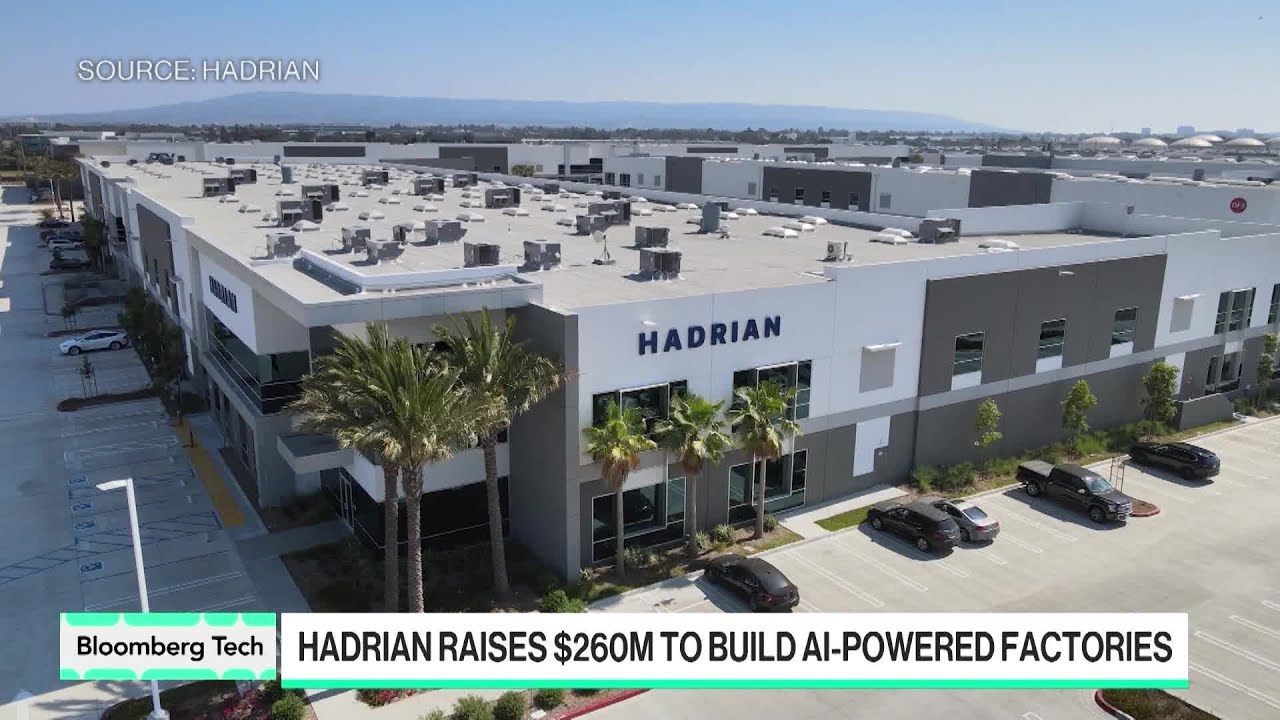

Startup Hadrian raises $260 million to expand its AI-powered factories to meet soaring demand




This Next Billion-Dollar Startup Founder Is On A Mission To Revive American Manufacturing