How to Enable a Manufacturing Renaissance

Ian Cinnamon of Apex and Chris Power of Hadrian discuss building U.S. aerospace and defense manufacturing at scale. Hadrian runs automated factories to replace a 62-year-old skilled workforce. Both cite LA's aerospace ecosystem but face brutal infrastructure costs: high electricity rates, lengthy permitting, and utility negotiations that block expansion.
Chapters
Why don't you give like a 60-second intro about what you're building?
So my name is Ian Cinnamon. I'm the CEO and co-founder of a company called Apex. And essentially, we're ensuring that the US and the West wins the new space race that we are in the middle of today. Uh, as Brian, you mentioned earlier, uh, China is far surpassing the US and our allies in their ability to produce spacecraft at scale. The CCP has announced plans to launch over 13,000 government satellites in the coming years. The US government launched barely over 200 last year. We need to catch up by orders of magnitude. And at Apex, we are building the core platform for these satellites known in the industry as the satellite bus. to power the wave of proliferated space. So we can build these very rapidly at our facility in Los Angeles. Uh, our company is a little bit over 2 years old. Uh, we're very fortunate to have, uh, our, uh, satellites in orbit, uh, dozens of satellites ordered by customers, and, uh, fortunate to have Andreessen Horowitz as our largest shareholder.
And Chris, tell us about Hadrian.
Uh, so I'm Chris. I'm the CEO and founder of Hadrian. We build, uh, automated factories for, the aerospace and defense industry. So our customers are the big primes, the neo primes like SpaceX and Anduril, as well as a lot of the startups in this room that are trying to go fast. And the thesis of the company is basically, if people don't know this, most of the skilled labor in the defense industrial base is 62 years old that makes the components or widgets that end up getting assembled into drones, fighter jets, missiles, any hardware that we need to put in the air, on the sea, or on the land for deterrence. It's about $200 billion in manufacturing in the US, but it's all being done by 62-year-olds who are incredibly highly skilled and aging out. And actually, the vice president nailed it this morning, which is the point is how do you compete with China on global manufacturing? And the answer is with software and AI and robotics that give the American worker superpowers. So we enable all of our customers to go a lot faster and a lot cheaper and at a price point where we can onshore both in our facilities in LA and across the country now as well as dedicated facilities for the federal government or major programs where you can think about us as like we will build and operate you a Tesla Gigafactory so that you are spinning out ships and missiles or whatever product set has constrained manufacturing in the US as fast as humanly possible.
So Chris, why— we're all in Los Angeles as a start and we're probably not there for the taxes or the wildfire management practices. So why LA? For us, I mean, it was the people. And you mentioned like the workforce is aging, but the talent in LA for like all the various aerospace disciplines and for even the technicians. But so why are you guys based in LA?
We will scale outside of California very quickly, but the inception of the company basically had to be half Silicon Valley, half manufacturing. And we need to combine those 2 cultures together. And Shyam actually nails this, is like you've got to have your engineers with your manufacturing. For us, that's I have to have my software engineers on the factory floor automating things, and that's how you build really good product. They have to be literally running this stuff themselves. Otherwise, the context is not there. And LA was the perfect place where we could pull enough software and robotics talent down from Silicon Valley. And with massive companies like SpaceX and Anduril already in LA, there is a huge manufacturing base there. So it was about the combination of those 2 cultures to go 0 to 1 on all our autonomous systems.
Ian, how about you?
So when I started Apex, we had a very particular point of view on the types of people that we wanted to bring together and where we needed to be. And we wanted to combine the world's best of traditional engineering and manufacturing with what we call new space companies like SpaceX or others in the industry, and combine that with frankly non-aerospace as well. And there's really only one place on the planet that has all 3 of those, and that is Los Angeles, right? We're able to build about a third of our team, or now about half of our team, for companies like SpaceX. a huge chunk of our team from traditional aerospace that brings a lot of great mentality, and then non-space like myself. I come from a software background. And we wanted to co-locate that alongside our customers. And when you look at where the major defense primes are, we act as a merchant supplier to the defense primes. We have folks like Anduril or Northrop or Lockheed or Boeing right in our backyard. And we have our end customers like Space Systems Command 7 minutes from our office. So for us, it wasn't really an option. It was the obvious choice of where we needed to be.
So we're on the topic of LA, and Chris, we've talked about this before. We both suffer through, maybe Ian, you do too, you're in Culver. So I don't know if you get the, the benefits of Southern California Edison, which is the local power company. Um, the power rates in California are ridiculously high, and even if you tell them, I will just pay you hundreds of thousands per month to buy megawatts of power, They argue with you. Not gonna happen. Tell you, you don't need power. And so I'd say like one of the things that like we experienced in LA is I literally tried to bribe a line crew to install larger kVA transformers on the pole than the paltry ones that they were putting in, unsuccessfully, sadly. But this for us is like gonna be a reason that we will end up not manufacturing in LA. So I think like, What do you guys see as, like, if you want to, like, host businesses like these and, like, be supportive from a policy perspective, like, what types of things have you guys seen that have been a problem that you would want to address?
So I will say that we built 100,000 square foot in LA, and then we're going to launch 2 new facilities next year, which are about half a million square foot each, and then we'll keep expanding to every state. And as an example, and I actually think the current administration really knows what they're doing here, 3 years ago I would not have told you this is how much time it was spent, but I think we, designed and launched the actual building and all the construction in 3 months, and then sat around waiting for permits and energy for 6 to 9 months, and probably had to put more documentation together to convince Southern California Edison to give me 8,000 amps to the building than the documentation I had to give our lawyers to do a $100 million Series B. And you can't pay any money just to get power, energy, or permitting done. Whereas there are more friendly states out there with better grids and stuff like that. And, you know, we have a lot of robots, we have a lot of machines, we have a lot of people. Like, we just need this. infrastructure there. Yeah. Yeah.
We had the mayor of El Segundo call them on our behalf, and he was told to go away.
Yes.
Which is pretty impressive. Ian, what are you, what are you seeing?
When you send Doge into the power company.
Yeah.
I mean, look, we're, we're in the same boat, right? We, uh, we moved to, uh, Playa Vista, so we're still in Los Angeles now. No more Culver City. And it's the same thing, right? Um, we got our building, we filed for our permits, we waited 9 months, no permits. 10 months in, we got our permits, and then it took 4 weeks to build out the building. Like, that's not how it should be. That being said, I think I have a little bit of a different take than the two of you. We are manufacturing in Los Angeles, and we're gonna expand and manufacture in other parts of not just the US, but allied nations as well. And we're gonna keep manufacturing in California and Los Angeles. And I really believe that no matter where you go, there's always gonna be problems, right?
Yeah.
There's always some issue left or right. I'll be honest, we have the same power problems that you guys have. Running these shaker tables takes a little bit of power. We're actually working on getting the lease of the building next door to us. that is wired for a lot more power than our building, literally just to use their power. Like, that is the extent that we're going to. So is it a problem? It's a massive problem. But yeah, we're working to mitigate it.
No one ever tells you what you're going to be doing trying to run a manufacturing business, but it's just literally one day to the next trying to weasel your way through. And this is like, if you want to look at like where, like, at least we're looking to expand, just having an environment where things like the basics, power, water, regulatory licensing, 'cause I think for us, like, one of the biggest issues has been licensing uncertainty. You can literally go and deploy a lot of capital to build out facilities, and like, we're— we make missiles, we have energetics. I don't wanna invest in an area if I don't know if I'm gonna actually get the final permit to use the factory, and that just then slows everything down. So working with jurisdictions for us that give out regulatory certainty is, by far the most important. I will say El Segundo has been phenomenal, but California controls a lot. I think there's some improvements that could be made there. Let's go to what you've seen over the past, say, 3 years. We are at the American Dynamism Summit. For us, I've seen a huge shift. I'd love to get your take of what shift have you seen in terms of this movement actually empowering change? From where you started?
I think it's insanely accelerating. And for those of you who don't know, the American Dynamism practice at Andreessen is about 3 years old. And historically, I would say 10 to 20 years ago, there were companies like SpaceX and Palantir, more recently Anduril, who I think is about 8 or 9 years old. And then there was a wave of very patriotic companies in kind of our era when we're about 4 years old now. That really realized that manufacturing and the national security mission were critically important to the country. And like, how would we ever even attempt to think about building a software company? 'Cause this was just so important, even though it's incredibly difficult. As Marc Andreessen likes to say, you know, these hard tech businesses are on hard mode, and he's absolutely correct. Um, but for us, like kind of the early people who just cared about the mission, it was, it was never about like hopping onto a movement that already existed. Um, and then you got folks like, uh, Catherine and, and David Yulovich that really also believed in the same thing. And the, the fund and the practice kind of started at the same time. And now in the last 2 to 3 years, I would say the number one thing is 3 years ago for very young talent or software engineers, it was like convincing them that manufacturing or national security was incredibly important. And now I think if you're starting a startup, I think if you're a software engineer, actually most What I hear from people today is like, I actually don't want to go work at Google. I want to go work at SpaceX. I want to go work at Anduril. I want to work at Hadrian. And I think the mission building here from how many Americans want to work on these hard problems, from leaders like Catherine and Mark and Ben and Diyu, from like really sending that message out, has taken this from kind of really only 10 companies that are true believers to now this enormous ecosystem of hundreds and hundreds of companies. Um, that are getting sprung up around American manufacturing and American dynamism. So it's been, it's, it's incredible to see just a few short years of how fast this has gone.
It has shifted a lot. Yeah. Ian, anything you wanna add to that?
Yeah, I mean, 10 years ago I started a company that was building AI and computer vision software for different national security applications, and we built the company in Palo Alto, California. And I remember every single day we were worried about protesters standing outside our doorstep, coming over from Stanford or wherever they may have been to say, how dare you work with the government? And then I remember about 5 years ago in 2020, I sold the company to Palantir. And around that time, there were protesters lining up outside Palantir's office in Palo Alto, and the company ended up relocating its headquarters. And then I remember 2 years ago when Chris and I were at the first American Dynamism Summit sitting right here, It started to shift, right? And I think Catherine and David were early, and Andreessen was obviously early to this trend, and realized that there was a shift happening. And it started to be something where it's like, wait a minute, like, you can actually make an impact on the world. You can make a change by doing this. And now I look and I'm entertained, because it looks like every investor around the world thinks it's cool and sexy to go do defense tech and all of that. Look, you have a lot of people maybe putting money where they shouldn't, into science projects or ideas that are not very real, or they don't understand the end customer. But for the companies that have been in it from the beginning, and the investors who have been in this from the beginning and understand it, I mean, I think we're still at the very beginning of this wave.
Yeah, I completely agree. So when we started the business, and obviously we're building missiles, it's a bit of an aggressive idea, like, thought we could raise money, wasn't 100% sure. It was very possible just going to become unemployed. But we couldn't even get a bank account. We tried to open a bank account, and then we just got dumped into, like, well, you're basically the same as porn and gambling, so we're not going to give you a bank account. And I was like, OK, well, how do I even start the business? I can't even get a bank account.
Only hypersonics.
SVB said yes, and then the next week they went bankrupt.
Should have done it with Bitcoin.
It was a panicked moment. But I think this concept of defense tech manufacturing, all of it, hardware, Is cool again.
Would you have ever thought 3 years ago the Vice President of the United States is standing up on stage at the American Dynamism Summit talking about the American manufacturing workforce and how important it is to reindustrialize the country?
Honestly, it's fantastic.
I think if you told me this 3 years ago, I wouldn't have—
Yeah, I wouldn't have either. And I've always been like, I, I, as a mechanical engineer, like I get why software's so important, but my God, there's, there's nothing worse than just arguing with code and having it not run. But making something, I mean, it's just difficult. And I'd love to hear like your guys' take of like what's the biggest challenges? Like we all make very different things, but they're complex things. Like what's your biggest challenges that you see? So Ian, maybe take that. Like what's the hardest part of scaling up manufacturing satellites?
Yeah, frankly, there's 2 pieces, right? So one of them, I mean, thank you, Chris, for starting Hadrian 'cause you address a lot of these problems. But the supply chain is a nightmare, right? You're dealing with a bunch of tier 2 and 3 suppliers who are frankly mom-and-pop shops, which good for them, right? They did a phenomenal job creating this industry. But when you realize that they were built around the premise of let's go put a few bespoke exquisite systems into space or into whatever domain you wanna operate in, not let's move towards proliferation and put hundreds or thousands of systems into orbit, everything breaks down. So, uh, that, You know, we like to say at Apex, the hardest part about building a satellite is having the parts to go build that satellite. If you don't have the parts, it's not happening. The second thing that frankly I think is one of the most undervalued pieces of any hardware system, and both Chris and Brian have mentioned it already today, uh, is software. And I think a lot of people forget that if you have a bunch of hardware parts that don't know how to talk to each other, that can't be updated, it doesn't work. The leading cause of anomalies on orbit in space is software, not hardware. And most companies forget about that. They underinvest in that space. And by investing in that from the beginning at Apex, I think we've done a good job mitigating it. But it's not just software for the hardware that's on the satellite or for the satellite itself. It's software to run the entire facility. We've had to build our entire homemade operating system that powers our entire company, that ties together my BD team with my finance team to supply chain, to production, to engineering. That is the only way we're able to build at the scale that we're building at.
Anything you want to add, Chris?
I mean, manufacturing is just this beautiful, fun game of getting punched in the face every single day. Um, I would say as a startup founder, this— and, you know, if anyone's listening who wants to start a manufacturing company, it's, It's incredibly important, but it's not for the, it's not for the faint of heart. And the main one is you have to do this at billions of dollars in scale. Otherwise we don't really fit the mission, which means you have to grow unbelievably fast. And most manufacturing, because it's a physical world company, is just like growing's just hard because it's not like a software company where the faster you sell, the faster you can deploy 'cause you just switch on another data center server. You have to play this really nice parallel game of scaling operations, but not too far ahead of sales and customer demand and doing the right thing. And then you've got workforce development training. So for us, the biggest challenge will always be not producing customer demand. It is just going to be producing supply as fast as possible. And it's also manufacturing. So you get fun things like there's a fire.
Yeah.
There's safety issues. There's all this other stuff. quality stuff. It's the best game in the world to play. And arguably, I think it's the most important thing for society to be doing is doing manufacturing in America. But it's like you go to a software company. I sell Ian some software. Great. He uses it. Maybe he writes me a customer support ticket. Manufacturing is kinetic.
And nearly every decision at some point could be like game over. It's all on the line all the time. I think it's— maybe there's a misconception that software is cheaper than hardware, but it's— I don't think that's true. It's software, the investment is into the people. So if you make a big mistake, you can unfortunately have a layoff and correct some of that. If you've ever tried to sell like your used furniture versus what you pay versus what you can sell it for, it's the exact same for factory equipment. You buy it for millions and it's literally worth like a few dollars. Um, you can't reverse any mistake that you make as you, as you go back. So you just have to be right, uh, which makes it really high stakes. Yep.
I think we're just betting $100 million chips on CapEx every single time, and you gotta hope that you make the right decisions.
Yeah.
Yeah.
So we have, uh, a tremendous amount of policymakers in the room. What would, what would make your life easier? What could help?
I think the main thing for us in manufacturing is that it's, Uh, you know, you raise tariffs, more things are gonna come onshore, and therefore the manufacturing base is gonna have to grow. Um, I think the 2 important things are, you know, big moves. Um, one is the DOD has to look at the manufacturing base, like strategic capability and capacity. Um, you know, you can go purchase 20,000 drones or ships or something like that, but because we've destroyed our industrial base, and talent since kind of the '70s through the '90s of, you know, Nixon going to China and then kind of NAFTA. It just takes time to rebuild, um, decades often to that skill base to get like good again. Um, and I think the most important thing is policies where just force more demand onshore, which is either tariffs or if you're getting paid by the DOD or the federal government for a product, your entire supply chain should be onshored and then let Capitalism figure out how to build that capacity. I would say the second most important one is making manufacturing incredibly sexy and cool again, because you got to remember in the '80s and '90s, we told all the kids that if you did not have a four-year college degree, you like you know it wasn't something to be proud of. And that's one of the biggest impediments that we've overcome because our factory is really cool, and that matters a lot, especially to 22 and 23-year-olds. And if you want this workforce coming in for the national mission and shipbuilding or munitions or fighter jets or drones to actually make this stuff. The cultural impact that I think the government, the Vice President did a very good job today of letting kids know that they don't have to go to a college degree. They can be an electrician or they can be a machinist is actually super important because that's one of the main things of people not getting started in manufacturing or defense tech in the first place is it just has to be cool and it has to be celebrated.
It's true. And STEM needs to be like, actually get out and make something.
Yes.
If the first time you're like actually using a CNC or a mill is like when you arrive on the job, like, oh, You're not gonna be a very good machinist, as you would expect. Ian, what would you, what would you add?
So, I mean, I think, Chris, everything you said is spot on. The one thing that I would add is, in my mind, the first step is how do we make sure that we're onshoring kind of these capabilities in these shops? How do we bring it to the US? The second step that I think we're just starting to think about now is how do we make sure the rest of the world is buying from this US industrial base? So instead of just selling within the US, how do we make sure that our allies around the world are buying from the US as well? Because frankly, if they're not able to buy from us, what's going to happen? They're going to buy from our near-peer adversaries who can make it much cheaper and much faster. So for us, we're a huge believer in not just supporting the US, but supporting our allies as well. We do a tremendous amount overseas. We export a lot. I think the tariffs overall have been positive for us, frankly. Usually aerospace is somewhat exempt. But, um, I think what we've seen is getting those export licenses expediently, um, is something that has been a huge pain point where other countries like China or others are able to do everything without an export license and swoop in and try to steal business. What that does is it degrades the US's capability to be able to have this influence and get these capabilities, not just in the US but all over the world.
And with that, we have a big red zero on the screen. So thank you everybody for the time. Appreciate it.
Thank you.
More from Chris
Hadrian CEO Chris Power Series D Allows Us to Build ‘Factories of the Future’

Hadrian's Chris Power: How a 40-Year Manufacturing Gap Became a National Security Crisis
Hadrian CEO Chris Power Reveals Next Move After Firm Hits $1 6 Billion Valuation
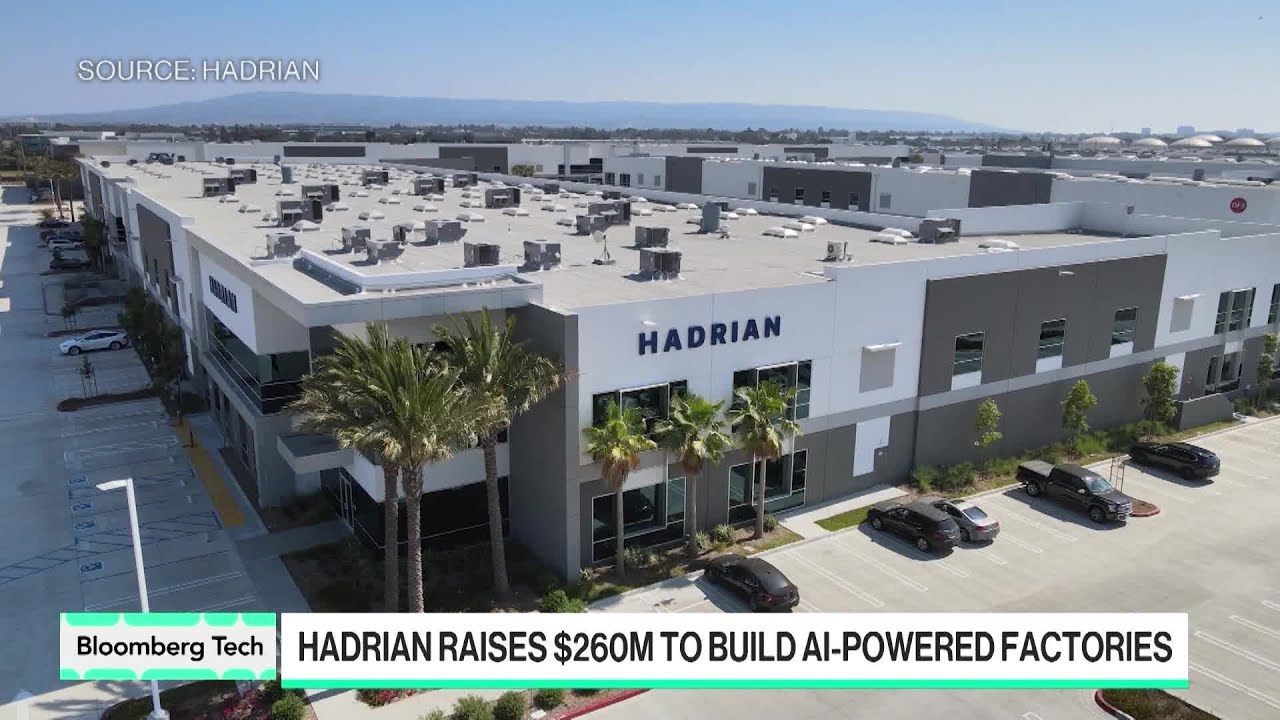

Startup Hadrian raises $260 million to expand its AI-powered factories to meet soaring demand

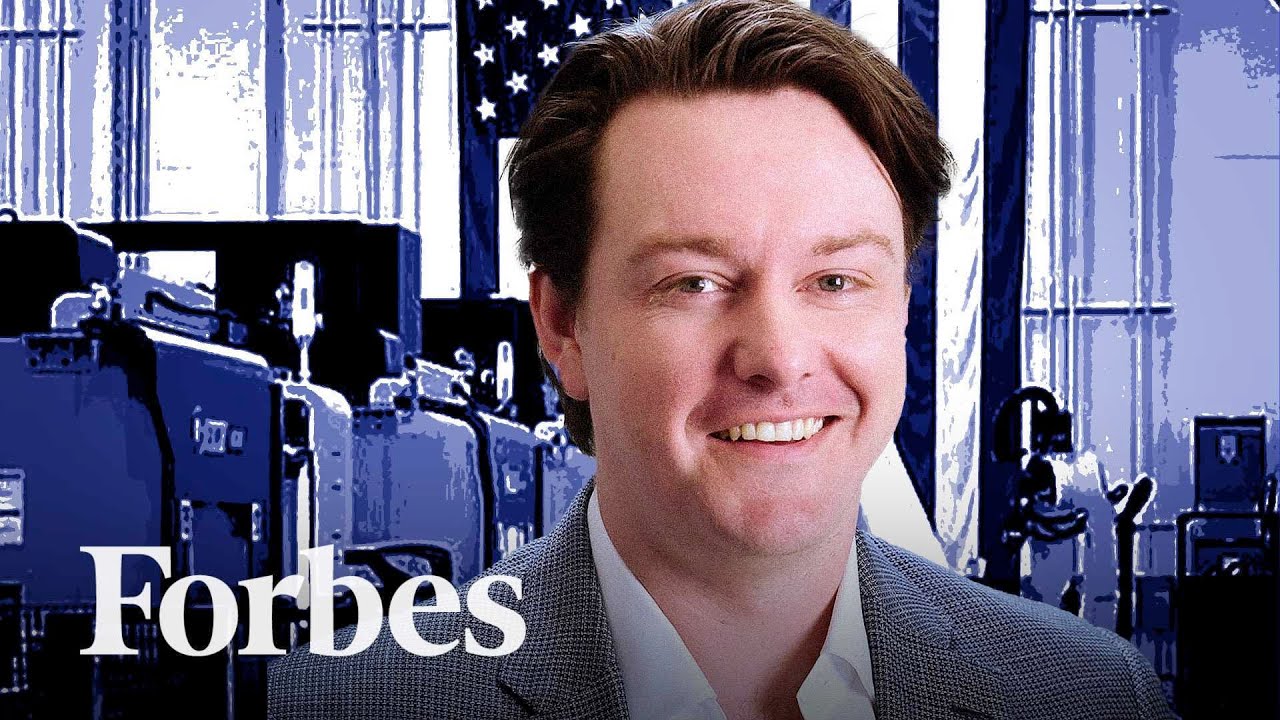
This Next Billion-Dollar Startup Founder Is On A Mission To Revive American Manufacturing
