Hadrian's Chris Power: How a 40-Year Manufacturing Gap Became a National Security Crisis

Chris Power of Hadrian explains how a 40-year manufacturing collapse, triggered by 1980s offshoring that cut defense jobs 63%, created a national security crisis. Ukraine's war exposed depleted missile stockpiles. His company uses AI and digital twins to automate factories, promising 5-8x labor efficiency and filling a 50-million-labor-hour annual deficit in the defense industrial base.
Chapters
China has been treating manufacturing for a long, long time as a national security issue, and we've been treating manufacturing in the United States as a purely economic issue, and it, it never has been.
Alrighty, great to be here. Uh, my name is Eric Christman. I'm a partner with Altimeter Capital, in addition to being a happy investor in Hadrian. We're large investors in companies like OpenAI, Anthropic, SpaceX, Anduril, K2 Space, Castilian, and a bunch of other great companies. Um, 2 of our main investment themes at the moment are AI and reindustrialization. Uh, Chris and Hadrian sits at the intersection of those 2. And so excited to be here with you all today to, um, allow Chris to tell us all a bit more about what Hadrian's doing, why it's important, reindustrialization. And, um, you know, with, with that, uh, Chris, maybe you could tell us just a bit about Hadrian, why you started the company, um, a bit about the moment we're in and, uh, what, what Hadrian is doing about it.
So in, in short, we, we build and operate, uh, highly automated factories of the future powered by physical AI that give the workforce superpowers. Um, we work with the Navy, the Army, all the defense primes to basically fix or scale production in an as-a-service model. So think about it as manufacturing as a service, and it's basically like, well, it's, you know, big data center that's highly automated with a bunch of software revenue on top of it. We take other people's designs, translate them to digital twins, and then build and operate automated factories.
Awesome. 5 years ago when you started the company, this theme was maybe on the fringes of what people were excited about, and since then you've raised hundreds of millions of dollars from great firms, ourselves, Andreessen, Founders Fund, Lux, the list kind of goes on and on. What do you think has shifted from a macro perspective that has brought great investors, you know, to you? What do you think that they're getting excited about? What's resonating from them? What's shifting, you know, in the market and in the industry?
So if you— let me zoom out for a second, please. And then we'll— so I think there's basically 4 big waves crashing at the same time. And the history behind American manufacturing is You can sum it up as in 1986, '87, 2 big things happened. One is we started offshoring all the commercial manufacturing in the United States, and then we cut defense manufacturing jobs by 63%. So in aggregate, you basically created this from, from '86 till today, a 40-year massive, massive under the curve of skilled talent because we offshored all the jobs and then we cut the defense manufacturing jobs. And you're left with a skilled talent base that was basically completely degraded. No one wanted to enter the workforce. There were no jobs. Your son or daughter didn't want— everyone needs a 4-year journalism degree, etc. That's big wave number one that happened over the last 40 years. Um, the second thing which people kind of miss is the reason why Germany and Japan have really good automotive industries is because all their factories got bombed in World War II. The US never recapitalized its manufacturing base since '40s, '50s, and after the peace dividend. So you're operating on this huge CapEx base that literally hasn't changed in 40 years and has never been— and there's no commercial pressure to do that because there was no commercial manufacturing. Um, and what you've got now is basic. And then the third thing that really changed is From when Russia invaded Ukraine, which was, what, 4 years ago now, was the first time since the Gulf War that we started depleting stockpiles of inventory of, you know, missiles, Javelins, Stingers. And because of that, everyone started to wake up that the underlying risk of not having a sovereign manufacturing base that was at any sort of competence or scale was now starting to appear. in the kind of yellow and red lines. Because for the last 40 years, and Treasury Secretary Bessent said this on stage a couple of weeks ago, is basically we traded resiliency for returns, but that risk doesn't show up until the system's tested. The system only started to get tested when Russia invaded Ukraine and you started to hear things like, hey, we shipped 5 years' worth of missile inventory to the Ukrainians and they blew through it in 3 weeks, and then we went back and asked for more. Well, that's 6 years, and that takes time to, to percolate. But going, going back, that risk was always going to appear because you're always going to be in this period of reversing globalism whether you like it or not. And then the risk, you know, ratchets over the last 4 years started to really show up, but the underpinnings got started because you have basically Cold War-era factories, Cold War-era workforce, and the biggest issue is you've got this massive hard to describe the enormity of the skilled labor deficit in the country. And then over the last 4 years, that system test of are the production lines hot or not kind of ratcheted up and up, and now it's full-blown crisis mode. So I, I think the— we were always like a very macro company in the sense that like if you, if you kind of believe that at a certain point industrial power becomes the most important thing in a time of kind of turmoil, then the question is just how fast does the risk appear in the system and everyone goes, oh, uh-oh, like manufacturing very important now. And, you know, that's been really accelerating. Now it's in complete takeoff, especially with this administration who's realized that like actually the big story here is that for better or for worse, you know, China has been treating manufacturing for a long, long time as a national security issue, and we've been treating manufacturing in the United States as a purely economic issue, and it never has been, and there's some big macro reversal of that. Then those risk signals are just appearing faster and faster and faster. Now it's basically, okay, how do you automate your way out of the problem by giving the skilled workforce superpowers, and how do you massively scale and reindustrialize the country, both for reshoring and to just completely fix defense production? itself. And that's, that's kind of the big picture here.
Yeah. You know, what got us excited about Hadrian was not only the, the macro theme and some of the policy tailwinds, but really the magnitude and the scale of the opportunity where we saw a generational sort of need to, you know, you know, build out a lot of CapEx and capacity across both dual use for the defense industrial base and for the commercial market. Um, utilizing automation and AI to get a lot better utilization out of this CapEx.
Yep.
And get a lot more productivity out of the workers and decouple them in some sense from the machines, providing them a lot of tools. And you use a great phrase like give them an Iron Man suit so that each person can do a lot more, um, and, and reap the benefits of doing a lot more. And as a whole, you can produce a lot more.
Yep.
Maybe you could talk a little bit about just about the scale of the opportunity. Recently, it was announced you guys are working on really some of the most critical and large programs for the Navy on the submarine side of things. The amount of worker hours it used to take to build a submarine was roughly 13 million, and now it's 70+ million. you know, you, you kind of address that gap and the importance of, of the technology and, and retraining the, the workforce.
So the, the, the, the way I would think about this is, you know, the US forgot how to do this except for SpaceX. Uh, so there's, there's, there's, there's 2 big dynamics at play, and I'll get into some of the technology. So dynamic number one is, um, You know, in the '80s, '90s, we had very skilled craftsmen working in the defense industrial base and they're all, they're all retired. So now you've got a bunch of people who kind of don't want to be there, frankly, and just don't have the fundamental kind of old guard skills anymore. And where you see that in the defense base with some public data like the Virginia and Columbia-class submarine program is it takes like close to 10x more hours of labor today than it did 20 years ago to just make one. And that's like a— that's a skills gap, right? In terms of the scale of the opportunity, you know, I'll give you one example. So the Virginia and Columbia-class submarine programs are behind schedule. We should be— we have— the US taxpayer has purchased 2.1, roughly 3 a year. And the current production rate is like 0.6. And the main underlying issue is annually they are 50 million labor hours short of what they think they need across the entire enterprise to, you know, go get back on schedule. That's just one program because the same dynamic exists across absolutely everything. I think it's on the, on the CapEx and revenue side, it's like half a trillion dollars maybe. And if you, if you look up any public stock, it's basically, you, you can measure this, right? Because if they were producing what the US taxpayer had purchased, then the, the backlog over defense primes or the organic industrial base would be one-to-one with like delivered revenue. And what ends up happening is just, it just grows and doesn't shrink. And now we're in a position where we're canceling allies' orders for critical munitions because we're trying to preserve it. So this is just like this massive demand-supply imbalance. That's what it comes down to. The second thing people miss is that Army, Navy, Air Force run their own organic industrial base that's almost at the scale of the entirety of the defense primes. It's just, it's not a public stock, you can't really see it, but it has the same dynamics where it hasn't really been repatriated or reconstructed for 40 to 50 years. There's no automation, there's no technology. So the long story short is when you've got this massive imbalance of demand and supply in skilled labor, the only way to do is automate your way out of the problem. And because there's this massive shortage, you literally need a 10x productivity boost with physical AI and automation, not to be cheaper, just to simply produce the productivity to meet the demand signal in the first place. And we just see that continuing for like, Infinitely.
Yeah. Um, another thing that, you know, I think we've seen, which is, um, across companies like yours in this ecosystem, is, you know, you're delivering, um, you know, a better product more quickly at a reasonable cost, much higher throughput. Um, and Uh, you know, the gross profit dollars are very large of the entire, of the entire market. Your underlying business is much more interesting, um, because of the automation, because of the software. Um, and that's a very interesting ingredient for, for just an asymmetric investment opportunity. Um, you know, and, and kind of coupling with that is, is, you know, a lot of the sentiment around AI, physical AI in particular.
Mm-hmm.
And, you know, okay, well, are you gonna automate away some of the jobs? You have an interesting sort of, you know, reality lived through the experience of not only the data that you're capturing, but actually the massive, you know, need for the people that still work within your business model. Maybe you could touch on just how actually the physical AI sort of industry is gonna require massive amounts of jobs. of skilled labor, how you're tapping into various talent pools and repurposing workers who can come make a lot of money doing something very important, working with advanced technologies. That is maybe a story that's candidly not being told very well or broadly enough that I think you guys are really positioned to do very well. Yeah.
So, you know, the base case of advanced manufacturing today is there's someone who's got 20 years worth of training. They're very highly skilled. They're underpaid, in my opinion. And they are standing in front of a machine, you know, running it not manually, but they're driving a very dumb computer at the end of the day. That's, that's what they're doing. And there's, there's, there's, there's 2 parts to this. What we see in reality that's happening on the ground floor is We are, you know, 5 to 8x more efficient on labor hours, which is great for the business. But again, it's not about being cheaper, it's just about being— creating the supply in the first place. And the more important thing is close to 100% of our workforce in the factory, 'cause you can never get fully automated, it's like this is an impossible dream, have never set foot inside a factory before, we can train them in 30 days and they're operating like experts in that timeframe. And they're coming from hospitality, retail, salad bar, they're an ex-Marine, they're a 40 to 50-year-old nurse or bus driver who's now doing something meaningful in the physical world. Because of our productivity, I mean, they all have great healthcare, they have stock-based compensation, and—
That's amazing.
Maybe in an industry like self-driving trucks, you automate that, you're putting millions of 40-year-old Americans out of work. In manufacturing, there's such a shortage that you need the productivity boost, and it's actually a massive job creator because the more productivity we gain in the United States, you've got to remember that 99% of the manufacturing revenue is still sitting offshore. It's this productivity wave that's massively increasing the revenue pool for reshoring as well as just ramping ramping defense and reindustrialization in the first place. And I think it's a real huge opportunity to tell a better story because yes, maybe the software engineers go away, but at least in blue-collar manufacturing, it's actually letting us pay people more. It's pulling people from different industries into manufacturing for the first time in 40 years. Um, and without that AI automation component, you simply wouldn't be able to do do it, and that's a huge problem for the country. But at the ground floor, it looks much more like, you know, a 25-year-old kid who was a paralegal writing forms is now running 14 robots themselves and having an absolute blast, you know, helping reindustrialize the country and working hand in hand with software to make this massive productivity jump versus this kind of replacement narrative, which at least in blue collar is— I think the skilled blue collar jobs are the hardest to automate. And certainly I think will become the most valuable over the next 10 years. And I think a big part of the macro here as well is you've got to remember, like manufacturing in the US, because we offshored all of commercial manufacturing, is basically just defense and aerospace, which has huge amounts of protection from like, you know, ITAR data rights, etc. So like, in short, manufacturing has been offline and hidden from software for 40 years. So, you know, like there's no software engineers in manufacturing until we did it. Point number one. Point number 2 is that there's no data for any physical AI model to train on unless you generate it through an automated factory like ours by processing this legacy data through doing the work. Um, and that's just like this, this huge asymmetric thing where Okay, long story short, in aggregate, you're taking the largest industry in the US that's going through a boom and attaching AI to it simply because it's been offline for, you know, 40 years, and you're the only ones with the data processing to actually even make it— make a stab at the, at the fundamental data chain that you need to generate the physical AI models that we've got. And that's just hugely asymmetric. But because there's such a shortage and you need to get fully automated, the net result on the workforce is Huge amounts of hiring, way higher pay than working at McDonald's or a salad bar or as a paralegal or whatever. And frankly, being able to then move jobs into the middle of the country. So we just announced this multi-billion dollar program with the Navy, and it's in the middle of nowhere in Alabama. And this actually really matters to the middle of the country. It matters to a lot of people. But you got to remember, like, all the wealth has been on the coasts and all the defense primes are on the coasts as well. So like pushing that kind of Silicon Valley wealth is like a generational transformation. And like everyone loves factories. You know, I think there's a bit of pushback on data centers right now, both power and the job losses. But I think this is like in reindustrialization, a complete false narrative is a massive boon to the American workforce because there's more jobs, because there's growth and there are way better jobs, frankly, as well. Yeah.
Yeah. You know, on this theme of reshoring, and you've mentioned this, which is a lot of the manufacturing revenue has, you know, left.
Yep.
And in pursuit of bringing that back, obviously, you know, aerospace and defense is really the beachhead to start with, which you guys did very strategically. How do you think about starting there, expanding from there? What are the things that are, hey, this is a national security, sort of, you know, imperative that we should reshore at any cost and using that to maybe earn the right to onshore more and more manufacturing sort of capabilities.
So let me break down some absolute insanity for you at the moment. So in a, in a Navy missile, right, you know, there's out of 1,000 components, probably 150 of them are literally from China. Like circuit boards, chips, that sort of stuff. And this is not unique to the Navy. This is like writ large. So the government is in the process of basically like fully banning those. And then you get, you get all this reshoring because at the end of the day, what it comes down to is China subsidizes so much labor, export, and energy that literally some products, you can buy a completed product from China for one-third of the cost of just the raw raw material in the US. It's not about— we do this in our models. We dial our labor costs to zero and dial our energy costs to zero and dial our financing costs to 0.5%. And it's— it just doesn't make any sense. So there's this huge base that's locked onshore because of the ITAR regulations for aerospace and defense where you're competing against America. That's point number one. The second big thing that's happening in areas like drones Is so how how did we get here? Like why is China able to make literally ten million drones a year? Well, because they subsidized it and the American consumer subsidized DJI for two decades, and now they have big drone factories. It's fake. What's happening now with the Pentagon ramping drone production in the U.S. is every quarter. So they're going to spend fifty six billion dollars buying defense drones. Point number one. Point number two is most drones today, even for defense use, maybe. 70% of the components like printed circuit boards, electronics is all sourced from China or like Taiwan. But every quarter they're going to ban, ban one of those sources of supply every quarter and force this reshoring wave. So if you do that first, obviously, but those are also the same products and manufacturing techs that you need for Optimus-style robots. That's what you need for data centers. That's what you need for any of these new products coming online. So you kind of end up with this like massive reshoring wave because the government is structurally disconnecting manufacturing from the Chinese economy. Finally, it's insane that the US hasn't done this before for defense. And through that, you end up with these massive companies that these supply chains have to be created because they don't currently exist off the back of this massive defense spend. And then you earn the right to go commercial with higher and higher levels of automation. I don't think you ever reshore everything to the US. You'd have to ramp tariffs by 100% and make them stick. But there's the underpinnings of the manufacturing methods for doing things like drones, submarines, munitions are the exact same techniques that you need to make, you know, cars, batteries, everything. And I think you end up going back to this dual-use economy in a couple of years once the defense wave has run its course. Uh, I think that's kind of the way it plays out.
Yeah. A friend of ours, Jacob Helberg, is doing a lot with Pax Silica where, you know, how do we partner with allies where maybe not everything can be reshored to the United States specifically, but with, you know, allied countries who maybe have, um, cheaper hourly, you know, rates or just even capabilities that are already in place or structures in place. Do you think that that is, you know, a lot will, will be onshored domestically to the United States, but increasingly we'll chip away at bringing back more, even with allied partners for like, you know, whether it's actuators or, or different parts of the supply chain that maybe don't make sense to make here, but we can partner or—
Yeah, I, I think the quantum of the deglobalization is so huge that you end up, it's not even kind of worth thinking about because there's so much that you should do co-production with allies and co-production in the US. And like, the Korea and Japan trades are a great example of this. Maybe you do some mass production in Korea, Japan, who are allies, you do 30% of it in the US, you have some resiliency, and I think the government will pay more for that resiliency now than they have previously. But allied nations are super important to restaff and reshore and protect from the kind of disconnection to the Chinese economy. I think you're going to see both. It's not all going to be reshored, but I definitely think it'll be reshored or friendshored as fast as humanly possible. People got to remember, everyone remembers the CHIPS Act, right? We gave Intel a bunch of money. Over 10 years from 1990 to 2020, Apple alone invested 5 times the CHIPS Act in just CapEx to Foxconn. So that's like the biggest government manufacturing program that the Biden administration ever ran. And this is not a criticism. This is just to give you a sense of scale, is a fifth of just Apple's CapEx kind of subsidies to China. And then you can think about the rest of the scale. And some of that needs to go to allies. Some of that needs to go to you know, the US, but it might be 50/50, but the, the quantum of the scale is so large that both sides will win.
Yeah. Um, what about maybe touch on how, how you guys think about modernizing, helping to modernize some of the existing, you know, incumbents in this space, um, who have, uh, been able to deliver maybe great products, maybe no longer at the scale that, that are, that are needed while, you know, helping them while also enabling, you know, maybe, maybe newer entrants who are coming at it from, you know, ground up, whether that's a SpaceX or an Anduril or Constellation or a K2 Space. You guys kind of span, you know, everyone. Um, how do you, how do you balance that? You know, how do you think about, is it just more of everything all at once?
Yeah. So our, our job at the end of the day is to solve critical production issues for defense and then commercial. There's 2 ways to do that. We run dark factories for our customers and we also integrate our software into their businesses kind of for deployed engineering style to help them with critical workflows. where it makes sense. And, you know, I think we'll like do close to $1 billion in revenue next year. I think 30% of that's pure software. The rest of it's manufacturing as a service, something like that. In reality, there's— firstly, you've got to remember that out of the entire Pentagon budget, like less than 5% gets spent with new entrants. So all of the TAM is in existing programs of record that we have incredible designs. The primes are actually incredible engineers, but they're fighting with 2 hands tied behind their back because backing up a step, we put them on life support in terms of manufacturing since '86 for, for 4 decades. And now they've got legacy workforce, legacy factories, and frankly, an organization that hasn't been pushed that hard for 4 decades. And the analogy I like to use is like, hey, you walk up to IBM, which is an incredible American company, but a heritage legacy company, and you turn around one day and say, please invent Anthropic, and the CEO and the board go, yeah, let's do it. Can the workforce do it? Is the talent base there? Is the velocity there? No. So our job is to help transform people and marry the old with the new because you actually need the primes and the new entrants to win at once. For the new companies, like the startups in the defense space, there's really 2 categories. There's like one, maybe 2 mega players like Anduril that will go full vertical integration. We're a great partner to Anduril on some federal programs. And then there's all these other companies that are winning big contracts, but they have no hope of scaling manufacturing. So starting from day one, helping them with the designs, building these factories ahead of the need, and being able to capture that is, is a big part of the strategy as well. And there's just very few companies that can actually do that capability because it's become so scarce in the US. That's the bottom line. Yeah.
What do you think about your model? Your— is drawing, you know, deep-pocketed investors not only from venture capital but into, you know, other types of, you know, broader capital markets who are seeing, maybe starting to understand what, you know, a smaller handful of folks, of venture capitalists, saw in you and what you were doing, you know, 4 or 5 years ago and now are seeing, oh, there is just almost a bit of— at least how I think about it is, you know, we're large investors in AI and data centers and, you know, you're seeing just the demand for intelligence going parabolic and therefore everyone is trying to, um, you know, get, get data center capacity online so they can print out tokens. Um, and, and, and people want access to that. I think of Hadrian somewhat similarly where, right, like demand for US manufactured, you know, products, um, across aerospace and defense, you know, flowing into commercial. Um, and you guys are building, you know, capacity, uh, ramping up capex, utilizing it a lot more. Do you think that folks are realizing that these things are, are, are quite similar?
Yeah.
Um, in, in terms of, you know, how, how to finance them, the underlying economics of what this looks like, and, and more so just like the scale of what we're talking about. Like, for us, these are the 2 largest opportunities.
Yep. Um, so the, the, the scale of the CapEx buildout firstly is like maybe half AI, maybe it's close to the same. So the scale is very attractive. The second thing is, is at, at the end of the day, manufacturing has been uninvestable for large, large credit or debt, which we utilize as much as we possibly can. I'd love to take more money from investors like Eric, but I'd much rather use massive, massive amounts of credit and debt to capitalize the base. But fundamentally, the IRRs, the IRRs on the CapEx base without technology are terrible. What it comes down to is you're utilizing most CapEx in small businesses, or the primes themselves are utilized something like 10% of the time. With our technology, our utilization is 65-80%. So kind of a 4 to 5 times jump. So you've just got like $4 of revenue on $1 of CapEx instead of 1 to 1. And once people worked out that math and then we can do these big as-a-service offtake agreements, that at the end of the day, it is a new industry coming up of it's going to get securitized, it's going to, it's going to mature up that big credit cycle like solar did. You know, went from like terrible loans to now it's, you know, investment grade. And manufacturing is running the same curve. But at the end of the day, the math is so good that it's like, it's unbelievable. Now that, that IRR math to make it super investable for large credit funds, and we, we partnered with Morgan Stanley and a number of others, is that the technology uplift just makes the math really attractive and then the scale is really attractive. And then new business models like ours where it's not being delivered in it's being delivered as a service so you can write these big offtake agreements, has just changed the way capital can form around massive CapEx buildouts. But at the end of the day, it comes down to like the math just really works on the IRR side for the CapEx buildouts. And you've got incredible dual demand from blue-chip customers. It's like kind of hard to argue that like we're not going to need more missiles or nuclear submarines when the backlog is $700 billion. So you're betting against a pre-established demand signal as well. There's a lot of execution to do to actually make that work in the real world, don't get me wrong. But at the end of the day, it's just the IRRs are great, the opportunity is massive, and it's the first time for the last 40 years that it's been matured and securitized to an extent that it's actually legible to big, big pools of credit.
Yeah, I think JPMorgan's, what, $10 billion fund and $1.5 trillion initiative. Yeah. for industrialization specifically is, at least for me, a pretty clear signal that—
Huge signal.
The opportunity is massive, is large, is enduring and durable. And, you know, you were early to see it.
It's, it's, it's, it's unprecedented. It's like nothing has really changed in the defense industrial base since '86 when we had the peace dividend kick in. And now it's all being flipped on its head and the scale and It's a once in a 50-year kind of run.
Yeah.
That's what's happening.
Yeah. Exciting. Well, Chris, thanks for stepping on stage with me. Thank you all for being here. Have a great day.
More from Chris
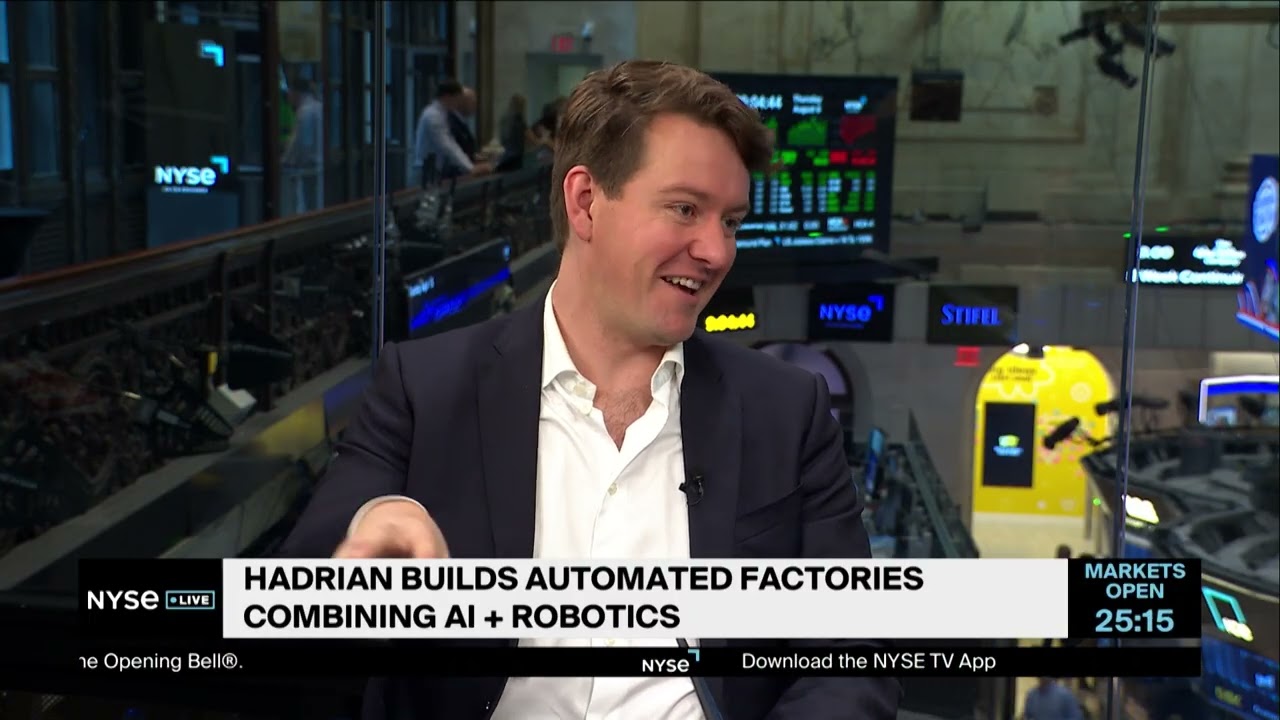
Hadrian CEO Chris Power Series D Allows Us to Build ‘Factories of the Future’

Hadrian CEO Chris Power Reveals Next Move After Firm Hits $1 6 Billion Valuation
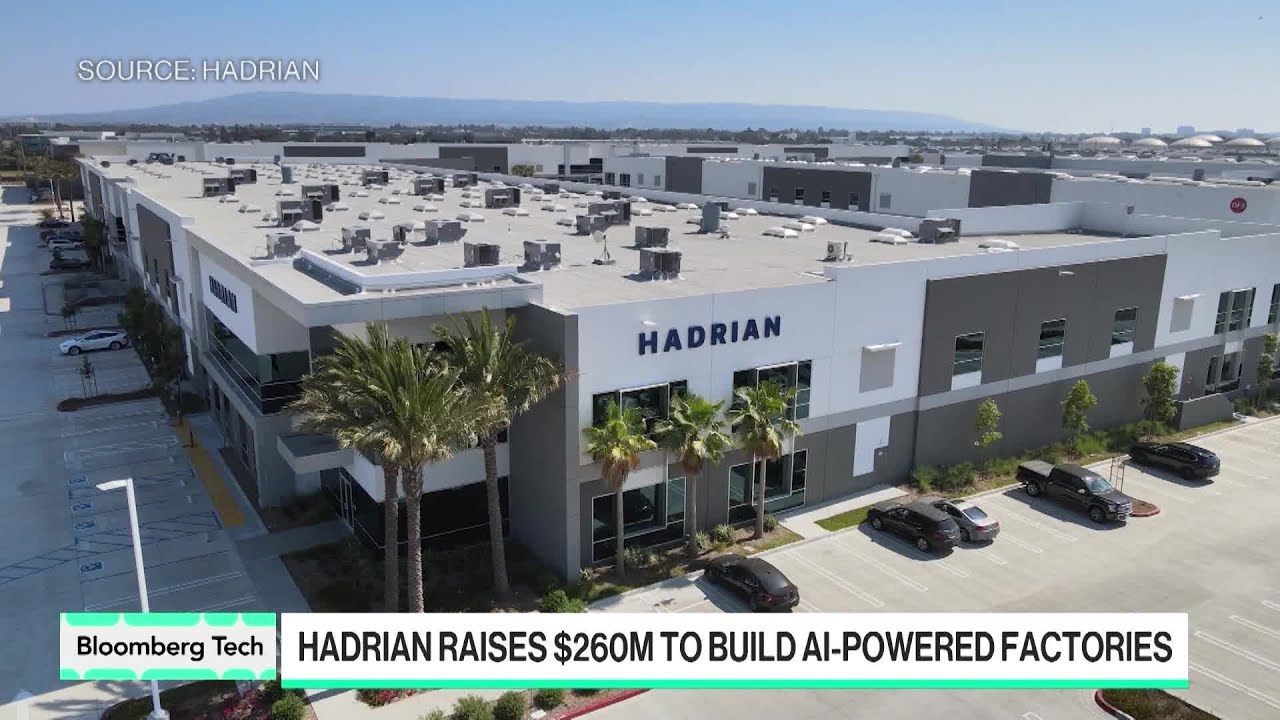

Startup Hadrian raises $260 million to expand its AI-powered factories to meet soaring demand




This Next Billion-Dollar Startup Founder Is On A Mission To Revive American Manufacturing
