This Next Billion-Dollar Startup Founder Is On A Mission To Revive American Manufacturing
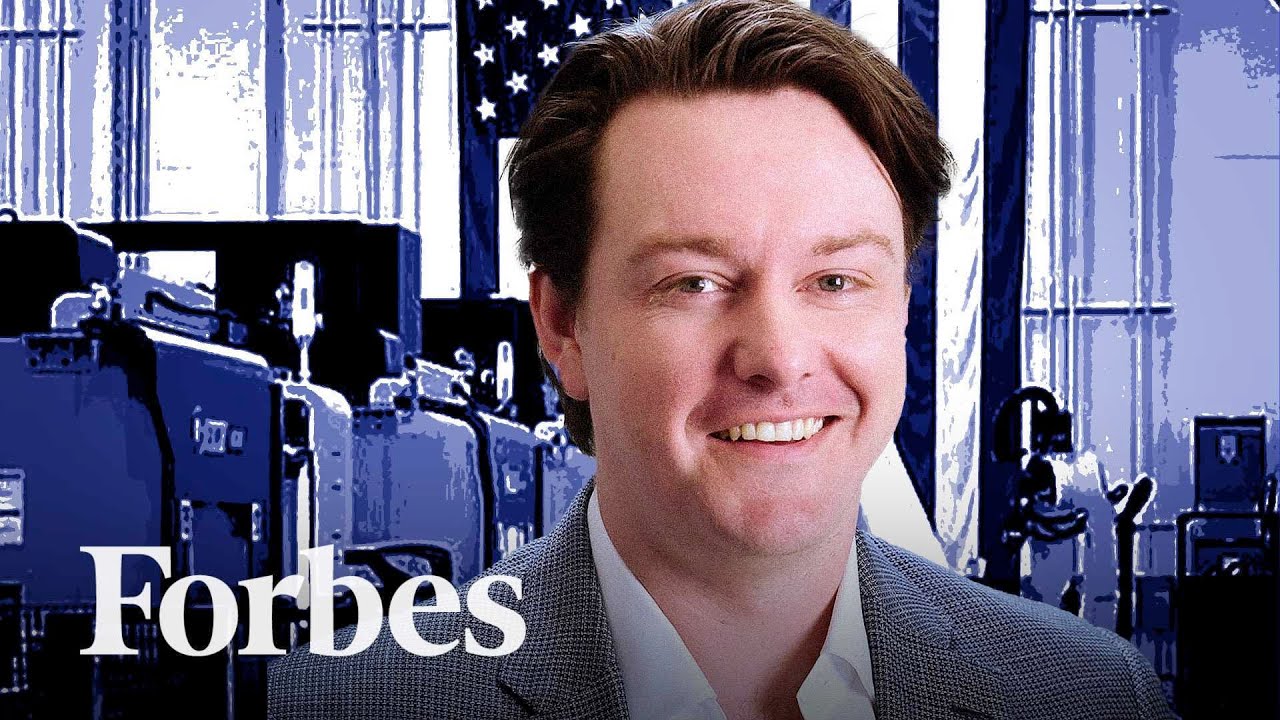
Hadrian founder Chris Power plans to build factories four times larger than his current Los Angeles plant and launch two to three new manufacturing categories per year. He's positioning autonomous, software-driven factories as a way to give U.S. workers superpowers and counter decades of offshoring, with the incoming Trump administration as a potential accelerant for tariffs and industrial policy.
Chapters
Hi everyone, I'm Maggie McGrath, senior editor at Forbes. Hadrian founder and CEO Chris Power has raised $180 million to manufacture metal parts at his California factory. Now he's going to build a network that will do this faster, better, and perhaps cheaper. He was also named to the Forbes Next billion-dollar startup list in 2024. He joins us now to give an update on the business. Chris, thanks so much for being here.
Of course. Thanks for having me.
So you made the Forbes 2024 Next Billion Dollar Startup list, which came out in August. So not quite 6 months ago, but a decent amount of time. Let's start with any changes. What's been going on for you guys since we last spoke in August?
Mostly just explosive growth and a lot of new people joining the mission, which is fantastic. So we are over 300 people now and bursting at the seams in LA and rapidly planning out our countrywide expansion for later this year.
Rapidly planning countrywide expansion. So what does that expansion plan look like? What states are you targeting and how many locations?
Yeah, so we will be launching, um, a facility that's at least 4 times the size of the current one in LA, um, in, in different states. We'll publicly announce where that state is going to be at the end of March. We're just walking through the selection process there for the next couple of months. And we really have grown so explosively, you know, we are very close to being— we're out of floor space. We're definitely very close to being out of Revenue capacity, which is really exciting. I think we are by far the fastest growing manufacturer of Bolt timing in the U.S. And yeah, we will need to launch two big new factories next year: one for a custom project that's highly confidential, and one for all of our customers that would be four times the size of what what you see here behind me in different states. And then after that, we'll be launching you know one or two a year. In every state, we can get that handled across the U.S. Wow!
By far, as you say, the fastest growing manufacturer in the U.S. What is fueling this growth? And maybe perhaps to zoom out for folks who haven't been following our coverage, what makes Hadrian so unique within the manufacturing market?
So manufacturing in the U.S. for the last thirty years has really been destroyed by globalization, offshoring, and then 25 years of CCP state-level subsidies, because in the '80s and '90s, we viewed manufacturing as, as something to get off our balance sheet. And the CCP viewed manufacturing as a strategic, strategic critical competitive element where they're actively subsidizing their cost base in order to pull as much offshoring out of the US as humanly possible. Um, so our mission is to basically build and run autonomous factories here in the U.S. that let us give the American manufacturing workers superpowers so that they are 10 times more efficient so that we can put people overly on a cost base with China at CCP, reindustrialize the country by bringing all that volume back, but doing it in a very America first way. Is how we do this in a way that doesn't result in wage depression, really brings back the middle class to the center of the country and blends the best of American manufacturing and the Rust Belt and Silicon Valley, blend those 2 things together. And to do that, we operate and build factories, but we're really a technology company where we're vertically integrating everything possible to be efficient with what America is best at, which is people and technology versus rent and CCB subsidies and terrible work conditions.
Now, I'd be remiss not to mention you were born in Australia. So how does an Australian come to be so passionate about improving American manufacturing?
So 5 or 6 years ago, I'm a big student of history. You'll see books on my shelf that are mostly about interest rates and culture. than anything else. And through every cycle of history, whether it was the Byzantine Empire or the Roman Empire or the British Empire, what people normally do when they're successful is they trade financial returns for industrial security. And they push the industrial base and their core power off to cheaper and more developing countries. And through that, they make the developing countries more powerful and more successful. And then 50 years later, they've now accidentally created their largest competitor who's been friendly for a couple of decades and is now very unfriendly because they have that funding. So from the Australian perspective, you know, really over the next 20 to 30 years, we have to solve AI, climate, energy. We're going to settle the stars as human beings. And really, it's a question of who's leading the world. And the last time the balance of power changed, it was the British Empire to the American Empire as a pretty good trade for the world. This time, really, the only two options are American-led Western system with American values, or the CCP, who is literally hellbent on destroying the West, pushing real communism and pushing like really terrible conditions for. Immigrants and you know slave labor camps in their country, and the critical thing that is important is in a wartime footing or an industrial setting, the thing that prevents or wins wars is basically having a bigger stick. And the thing that the U.S. has been lacking for the last thirty years is the industrial base that's able to kind of go head to head with the industrial base that we have funded for China for the last thirty years. Now, from the Australian perspective, we get taught world history. So maybe 10 years ago, most Americans were thinking about Russia or thinking about, you know, Iran or the Middle East as the real problem set. From the Australian perspective, you know, China now owns 50% of the farmland of Australia. They're our number one trade partner. But if the US Pacific Fleet loses the defense of that trade way, Australia will run out of food. Food in 60 days and Ryan O'Connell in gas in 25 minutes. So really it's about for humanity, where can I spend most of my time making the biggest impact? And the answer is like they're on revitalization of the US and make sure that we've got the biggest stick possible in order to go head to head with the CCP in the biggest heavyweight fight that we're going to be, which is industrial dominance. Such that for the next 50 years, as we settle the stars, tackle the challenges of AI and this whole economy changing, that it is a Western-led system and that we don't end up in a position where we're all speaking Mandarin and have a social credit score on our phones.
Social credit score. That has always sounded so science fiction to me, but as you say, perhaps anything is possible. And speaking of anything being possible, I want to talk about the industries that you see Hadrian playing into. So I mentioned metal parts at the top of this conversation, but what are the other applications of your company?
So we will, we will end up being in every manufacturing category at the base layer of manufacturing. We started off with high precision machining, but really that was the incubator for the Hadrian production system, which is a software platform that has given us huge amounts of leverage to be able to Automate and enter all manufacturing categories very rapidly, which was a huge venture investment in technology built. But we're really planning for a 50 to 100 year company that should should be the dominant American manufacturer. So over the next year, we will launch into three to four new manufacturing categories outside of machining to build that full stack out for our customers in these critical areas that. Our customers are screaming about that there are no American manufacturers left who can do this. It's all offshore. They want to bring it onshore, as well as driven by the DOD, where they know in areas like the Navy and munitions and these critical infrastructure components that the types of manufacturing is very scarce and very hard to do with the US involved, needing to be brought back in order to scale those programs out. So we will roll these out probably at a clip rate of 2 to 3 a year using our core software and manufacturing. Platforms. We're now at a point where we're able to rapidly kind of enter new markets by plugging in these manufacturing capabilities to our overall software production system. And that's really exciting because that's, that's the leverage that we always wanted to build. So we'll be not only launching and scaling new factories at much greater scale of what we're doing today with the same product side, also rapidly launching new manufacturing categories for our customers at a clip rate of about 3 to 4 a year. And we have that technology and market leverage to go rapidly, rapidly into those spaces.
At the beginning of the conversation, you mentioned massive employee growth. And when you and your colleagues spoke to Forbes last year, you talked about wanting to make manufacturing jobs as exciting and braggable as a software engineering job, right? Make it so that people say, oh my God, I got a job in manufacturing. It sounds like hiring is going well for you? What has been the value proposition you've been offering to employees and what have you been hearing from those new hires? I guess what I'm asking is, are they saying, oh my God, I got a job in manufacturing, this is so cool?
So what's interesting is I think for us, our software engineering robots, you know, for the last 3 to 4 years, they really realized that critical infrastructure industries in the US is important to spend their time on. And it's one of the last bastions of real engineering in the US where, because technology hasn't really entered manufacturing for the last 30 to 40 years, there's real hard, poor engineering work to be done here. And the best engineers in the country want to work on the hardest problems to see. And the only 2 places you can do that right now is no longer SaaS where you, you know, anyone can create a user interface with ChatGPT now. It's really AI and then manufacturing where the hardest problems are to be solved. And certainly in both of those domains is is the most mission-oriented, the most creative. Um, for the, for the rest of our workforce, it's, it's really interesting because they've never set foot inside a factory before. And Alzo is so far and away above both in efficiency, technology, and, and working environment and culture that, that it's kind of like, it's, it's, it's not their dad's manufacturing company where it's, it's dark, it's greasy, it's oily. Um, and what we get is a real passion They're working on things that are clearly impactful to the US space system, to defense, to industrial in general. And they're in an environment where the growth opportunities they're getting here to work with software engineers, to work with the best operations leaders in the world, whether they want to end up being a technical expert, you know, a manufacturing leader, people operations, compared to something like a You know, Home Depot or a salad bar, or bringing them into manufacturing because there's a level of economic opportunity and career growth there at a startup that I think most hourly workers have never had access to before, which is really important. And of course, on top of that, like whether you're a top software engineer or a new technician that's 19 years old, that maybe this is your first or second job, everyone has equity in the company. And I think there's a barrier to Silicon Valley companies actually Are economically and culturally bringing those two sides together and giving as much opportunity versus this kind of coastalism which has plagued the country for the last ten to twenty years. And I think I think that's really important, especially as we scale out to as many states as possible in the U.S.
and create jobs across the country and not just on the coast. Now, when we talk about new developments, you are also one of the leaders of a. Recently launched, I'm going to get this right: New American Industrial Alliance. Can you talk about what this is and what the goals of this coalition are?
Yes, so for forever there is there's really been no single party that can talk intelligently to the government about how to counter the CCP in terms of American manufacturing and what needs to be done at the ground floor to actually solve the problem. And to do that, you know, you need to bring together. Massive legacy manufacturers, the Frimes. You know, 90% of manufacturing in the U.S. is small businesses that have been really left by the wayside by the government for the better part of two decades, as well as the new technology forward entrants. And one, there's never been a body where we're bringing all sides together to really like share that knowledge for the benefit of everybody. And secondly, there's never been. A hard pull push for reindustrialization by a group that can credibly speak because we are operators at these companies and represent all four sides of that equation: kind of legacy, new, large, small. And you know, America has always viewed manufacturing as kind of a cost on its balance sheet versus strategic national interest. Now, as we see China rising, always talk about reindustrialization. We have munition shortages. We can't make anything in the country anymore. You know, DC has really woken up to, oh, this is a crisis of our own making from, from the offshore pushment in the April dimes. And it needs one voice and one player representing all these companies to make these real big macro changes in industrial policy in the US for the benefit of everybody. And that's our goal here is to make sure that we are taking the message of everyone from the small businesses, the primes to legacy, the new technology stars, or what are the 4 or 5 things that really need to change? So that we are on an American, we are on even playing field with China, who has been using their whole economy to subsidize their manufacturing base to destroy ours for the last 25 years. And, you know, we're not going to come asking for, you know, a leg up. We're not going to come asking for a free ride. All we're going to come asking for is even playing field to these destructive policies that have forced American manufacturers to massively decline. We've given all our industrial knowledge up. So that's the purpose. Really excited to launch our policy petitions in the next month or two, as well as, as the administration is building in tariffs and industrial policy of handbags, how are we going to go through that? What makes sense for everybody? And how can we have a huge united front to make sure that we're all sending the same message and we can actually get something done in the next 2 or 3 years that's really impactful for the future of the industrial base in this country?
That's a really good point. We are speaking in a moment, of course, of presidential administration transition. So what are the opportunities you see? Let's start with the coalition, because that's what we're talking about at this particular junction. What are the opportunities for this manufacturing coalition under the new second Trump administration? And perhaps how is it different than what you would have seen under a Harris administration?
It's a really good point. I think because a lot of the administration have grown up, um, in the center of the country and a lot of them being, you know, their fathers have been manufacturing, um, certainly, certainly J.D. Vance, the vice president, has seen part of the destruction of the industrial base or kind of a blue-collar workforce. I think there's a real connection to the real issue, not just economically with the CCP, but culturally for the U.S. of You know, manufacturing used to be the highest bucket of wage growth for a lower middle class American that didn't necessarily have the opportunity to get a 4-year college degree. Right. So I think there's a real tacit understanding of not only the industrial threat of China, but how it's been so culturally destructive to Americans to do that offshore or you'll lose all your liberty. I think industrial policy in general has always been Um, super bipartisan. Ro Khanna on the Democratic side have a huge appetite for this. I think it's a bold sign for the R&D. I think what you're going to see in this administration is a, is a real urgency to do big things, national security and jobs focused extremely quickly and take, take a lot more risk and risk is required here. We have to do big, big things and bold things. Um, like the administration did with the COVID vaccine and Operation Warp Speed. Is is that level of a national crisis, and you just we're just not talking about it enough. And I think with the focus on aggressive tariff policy against China, against other countries that are really taking jobs away from the U.S., I think there's a real a vision and need to do big things very quickly that that are required in this sort of a crisis situation. So we're very excited to work with the administration so that the whole country gets reindustrialized. I really think we have a unique 4 to 8 year opportunity here to do big things very quickly for the benefit of the broader American people.
And then what are the challenges or opportunities you see under the new administration specifically for Hadrian's growth?
So I think what you'll see is, you know, if tariff policies are successful and this reindustrialization is successful, you know, all American manufacturers probably still outsource their base level of supply chain spend in core manufacturing offshore. Because there are cost pressures. So as tariffs come in, what it will force companies to do is make rational economic choices to move more manufacturing back to America. You know, if we level the playing field in that sense. So I think that is a huge opportunity for everybody is level that playing field out and then create real structured programs to create an even playing field for China so that the volume comes back to America. I mean, we're talking about In aerospace and defense manufacturing, small businesses alone make about $50 billion a year in components that end up into the primes or into the neo primes like SpaceX or Andrew Alt. The volume that's been offshored is probably 4 or 5 times the size of that. And the cost delta globally is not that bad. It's like 30 or 40%. Apart from the CCP subsidies where it's much lower than that, out of question. So as these tariffs and policies come in to create that even cost-based playing field, what you should see companies do is choose national security over offshoring. Because if the cost is the same, there should be this flood of volume coming back onshore. And what that will create is this enormous capital investment boom, jobs boom, technology boom all across the country as kind of the playing field of globalization and trade policy gets reset. I think it is by far the most exciting thing. I think the second most exciting thing, which is important, is, you know, specifically, I think we are in a crisis situation with preparing for the, uh, the Davidson window of trying to potentially make me move on Taiwan, which they're getting more and more aggressive about, of cutting, cutting undersea cables. And bear in mind that China, Taiwan is so critically important in the AI race that that is, that is really, I think, the focal nexus of this administration. I think that's really important for all of national security is we have 2 to 3 years, not 20 years. So yes, we have to incur some risk and maybe make some mistakes along the way. But what are the 2 to 3 operation walk speeds that need to be done today in order to get ahead of that and prepare for that? And I think this administration is very aggressive and willing to do those big moves at a national crisis level. that I don't think we've seen in the last week.
Chris, I only have 30 seconds left with you. And in those 30 seconds, I would love to know, if we were to speak one year from now, what would you hope to be able to report to me about what Hadrian has accomplished in the ensuing year?
So I think if we are— if we are lucky and we do our jobs correctly, we'll be able to announce some very big impacts that we've had. On the shipbuilding rate in the US, which is 250 times behind China, which is extremely scary, especially if we're pivoting to the Pacific. Um, secondly, we'll hope to be announcing and scaling, uh, 2 new facilities in multiple states and have created several thousand jobs across the country, as well as launched into all these new manufacturing categories. And I think that what are we great to report is that we are far, far down the path of making manufacturing a top-tier job that I think if you in your role or my role in the world that we live in are talking to college students and at least one out of the ten is excited to get a job in manufacturing for like the national interest, then I think both of us will have done our jobs correctly. So hopefully, hopefully we get to tell some of those stories next time we catch up, Addie.
All right. When we talk in a year, we'll see how many college students have joined manufacturing jobs. But in the meantime, Chris, thank you so much for joining us and giving us these updates. We so appreciate it. Your time.
Grateful. It was a pleasure, Nisha.
More from Chris
Hadrian CEO Chris Power Series D Allows Us to Build ‘Factories of the Future’


Hadrian's Chris Power: How a 40-Year Manufacturing Gap Became a National Security Crisis
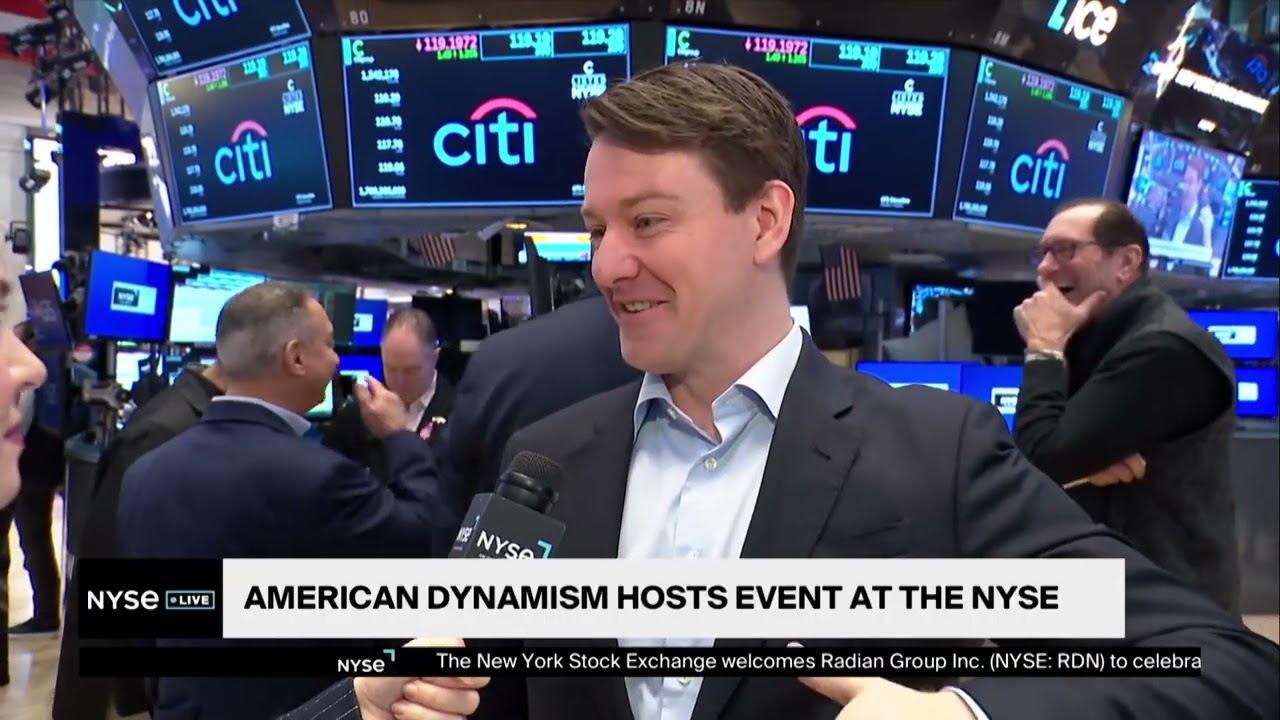
Hadrian CEO Chris Power Reveals Next Move After Firm Hits $1 6 Billion Valuation
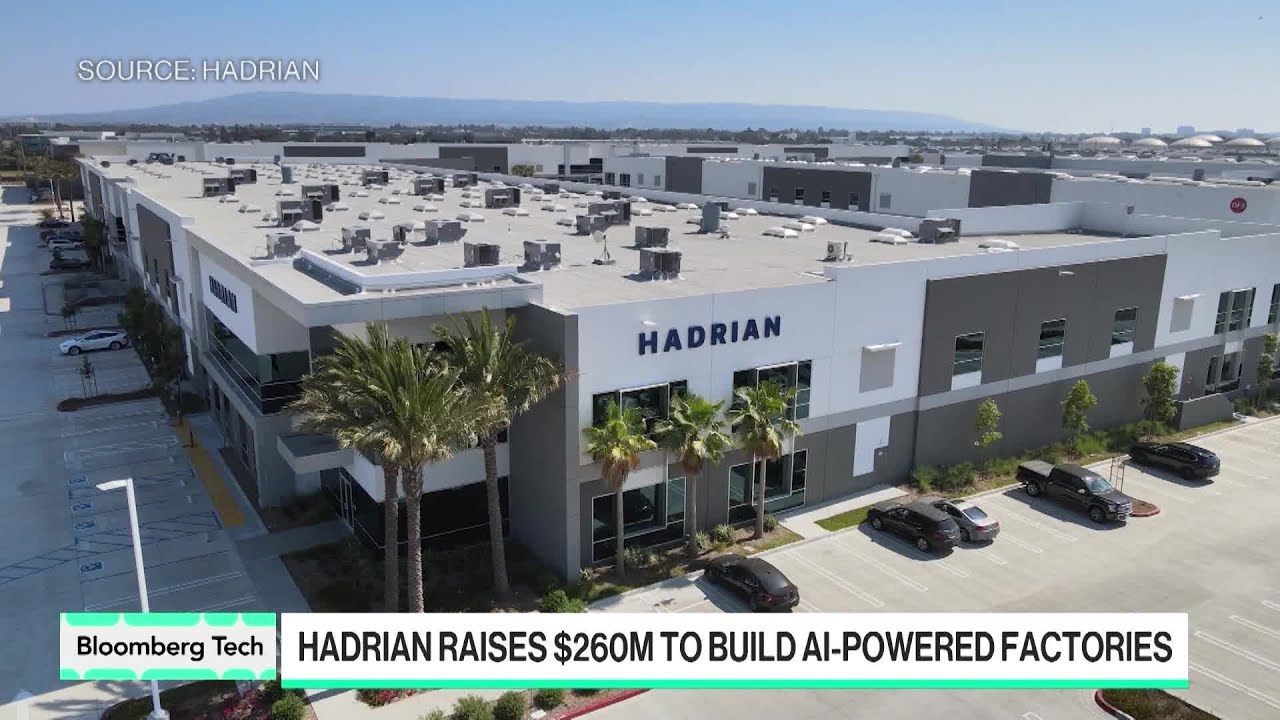

Startup Hadrian raises $260 million to expand its AI-powered factories to meet soaring demand