Chris Power and Hadrian's multi-billion dollar software defense factory

Chris Power built Hadrian into a $2.2 million-square-foot defense factory in Alabama by digitizing machinist expertise through custom software, raising over $322 million to solve a crisis: most master machinists are in their 50s-60s with no apprentices to replace them. A Taiwan conflict in 2027 could drain U.S. missile stockpiles in eight days, making rapid manufacturing a national security problem Power is positioned to solve.
Chapters
You know, usually when we look at, like, the absolute pinnacle of human engineering, let's say a SpaceX Falcon 9 lifting off the pad at Vandenberg.
Right.
Or a Virginia-class nuclear submarine slipping silently into the deep ocean, there is this overwhelming assumption of a flawless futuristic foundation underneath it all.
Oh, totally. We see the polished titanium, the rocket exhaust, and we naturally assume the system that built it is Just as flawless.
Exactly. We picture this unbreakable, high-tech chain.
We assume that if the end product looks like it belongs in the year 2050, the manufacturing pipeline must also be from 2050. Like, we picture pristine, robotic clean rooms stretching for miles.
Managed by hyper-advanced artificial intelligence, right?
Yeah.
Zero friction, perfect efficiency.
Yeah, but then you actually pull back the curtain on the American aerospace and defense manufacturing base, and you realize that chain isn't titanium at all. I mean, it is shockingly fragile.
It really is. It's the absolute definition of an industrial house of cards held together by, like, duct tape, legacy software from the 1990s, and a rapidly aging workforce.
Which is terrifying when you think about what's actually at stake.
And to really understand how fragile it is, we've been poring over a massive, fascinating stack of sources for today's deep dive. We have Pentagon tabletop war game reports, deep tech venture capital memos.
And a series of incredible profile pieces on a startup called Hadrian.
Right. And our mission today is to extract the blueprint of how massive outsized bets are made in the physical world. If you are a founder, an investor, or just someone obsessed with how hard problems are actually solved, this is going to be a masterclass.
Because we aren't just reading a sterile company report on Hadrian. We are going to build a character portrait of its CEO, Chris Power.
We want to get inside his head. We need to feel how he thinks, how he makes decisions, and how he navigates what the DOD calls the valley of death in deep tech.
And how he uses, like, concrete numbers and a very specific kind of contrarian empathy to win.
Yeah, and I want to set the scene by giving you a snapshot of this guy's trajectory, because the speed of it is just almost incomprehensible. I want you to picture the year 2019. an Australian guy whose background is in accounting and building software for shift workers, steps off a plane in California. He has exactly $6,000 to his name.
Just 6 grand. That's wild.
Literally 6 grand. He has no military background. He doesn't have a PhD in robotics. He has never run a defense program.
Just a guy from Melbourne with a really specific lens on the world, looking at an industry that everyone else in Silicon Valley thought was, You know, unfixable or unsexy.
Or just someone else's problem.
Right.
But fast forward just 7 years later to early 2026, that same guy, Chris Power, is standing in a rural town called Cherokee, Alabama, cutting the ribbon on a $2.4 billion mile-long factory.
It's mind-blowing.
His company, Hadrian, is holding a $1.6 billion valuation, and the United States Navy is literally relying on him and the $1.5 billion in private capital he put on the line to fix a critical vulnerability in the American defense base.
It is one of the most compressed, aggressive timelines for industrial scale-up we have ever seen. And to understand how he managed that leap, we have to start by attacking the consensus story that was floating around when he first arrived in California.
Okay, lay out that consensus. What was everyone else thinking in 2019?
Well, the narrative among the smartest people in finance was that the American manufacturing base was dying, and the only way to save it was through financial engineering.
The classic Wall Street playbook.
Exactly. The assumption was you either wait for the giant defense primes, your Boeings and Lockheed Martins, to consolidate everything, or you send in private equity firms to roll up all the small machine shops.
Slash the overhead, squeeze out financial efficiencies, just consolidate and financially engineer your way out of the problem.
Right. But Power looked at that consensus and realized everyone in a tailored suit was completely missing the actual bottleneck.
So what was the What was the contrarian truth he uncovered?
He realized the private equity approach fundamentally misunderstood the core vulnerability. The real problem wasn't a lack of capital, and it wasn't a lack of financial efficiency.
Then what was it?
It was a demographic time bomb coupled with a catastrophic failure of cultural respect. Power saw that financial engineers in suits genuinely believed they were smarter than the master machinists with grease on their hands.
The arrogance of the spreadsheet over the physical reality of bending metal.
Exactly. And that specific arrogance, the belief that an MBA's optimization model is superior to 30 years of unwritten tribal physical knowledge, is exactly why the system was failing.
The system didn't need financial optimization. It needed someone who respected the blue-collar worker enough to extract and digitize their brain before they retired.
Right. And we need to establish the ticking clock on this entire story right now because the stakes are terrifying.
Yeah, this isn't just about making commercial airplane brackets a little faster to improve quarterly margins. Based on the Pentagon war game reports and our sources, if a geopolitical conflict breaks out in the Indo-Pacific today, the U.S. would deplete its current inventory of precision missiles in roughly 8 days.
8 days of sustained conflict, and the entire arsenal is empty.
And because of the fragile house of cards we just described, it would take 3 years to replace that inventory. 3 years of standing still while the adversary continues to produce.
We're exploring the mind of the founder who is, quite literally, racing against a geopolitical clock to change that math.
So, to understand how Power even possessed the mental framework to tackle a problem of that magnitude, let's look at his non-traditional background, his formative forge.
Yeah, because he wasn't molded in a top-secret defense lab or MIT's robotics program.
Right. Let's trace his origins. He's in Melbourne, Australia. He studies commerce, accounting, and business law at Monash University.
Very traditional analytical business path.
But he leaves in 2013 to dive into the startup world. He becomes a general manager at Catch.com, which is an e-commerce platform.
Yeah.
And then crucially, he takes a role as the head of growth for a company called Ento.
And Ento is the incubator for his entire worldview. It is a software platform specifically built for shift workers.
Which is fascinating because to a traditional venture capitalist, Building scheduling software for hourly retail or hospitality workers sounds completely unrelated to advanced aerospace manufacturing.
Oh, completely unrelated. But this is exactly where Power gained his permanent edge. For years, his daily obsession was staring at the friction points of blue-collar labor.
He's not building enterprise software for other software engineers sitting in ergonomic chairs in San Francisco.
No, he's trying to figure out how to write code that actually interfaces with a human being who is tired, who is standing on their feet for 8 hours and operating in a chaotic physical environment.
He was learning how to digitize the physical movements of hourly workers in the real world.
And he saw firsthand how traditional enterprise software usually fails blue-collar workers. Usually corporate software is designed to police the worker, to track them, to force them into rigid compliance.
Right. It's top-down.
Exactly. But Power learned that if you want massive efficiency gains, you have to build software that's serves the worker, software that removes the administrative garbage from their day so they can just do their job.
So he masters the meta of human physical labor. He takes that specific empathy-driven lens, and in 2019, he lands in California and takes his first swing at the aerospace problem.
And what's wild is that his first swing is actually exactly what he later realized was the ultimate failure mode.
Wait, really? What was he doing?
He was running a buyout fund attempting to acquire mom-and-pop aerospace supply shops using a traditional private equity model.
He was literally trying to be the guy in the suit rolling up the industry.
He was. He had raised a bit of capital and he started looking under the hood of these machine shops to figure out the unit economics. And this is the crucible moment of his career. The numbers he found completely shattered his original thesis.
Let's lay out those concrete numbers. from the venture memos because they paint an incredible picture. He's looking at an industry generating over $40 billion in annual revenue.
Right. But it isn't dominated by a few massive corporations. It is entirely fragmented, made up of roughly 18,000 small machine shops scattered across industrial parks.
Just tiny shops in places like Ohio, Texas, and California.
And the scale of that fragmentation is hard to overstate. The average revenue of one of these 18,000 facilities is just $2.3 million a year.
That is tiny for aerospace.
It is. The average number of employees on the floor is less than 15. But the 2 numbers that sent a cold sweat down his spine were the demographic metrics.
What were they?
The average age of the owner of these shops was 60 years old, and the average age of the master machinist on the floor, the person actually making the parts, was 55.
I have to pause and synthesize this because it feels like a massive contradiction. We are talking about 18,000 tiny, aging mom-and-pop operations, But these aren't shops making generic metal shelving, right? Right.
No, they are making flight-grade components.
They are machining parts with tolerances thinner than a human hair that go into SpaceX rockets, satellite arrays, and nuclear submarines.
Exactly.
So if these tiny shops are holding the foundational capability of the entire American aerospace industry, why didn't Elon Musk or the executives at Boeing just buy them all up and bring them in-house 20 years ago?
To answer that, you have to trace the financialization of American industry back to the '70s and '80s. For decades, the massive prime contractors were heavily incentivized by Wall Street analysts to become asset light.
Right. The prevailing corporate theory was that you wanted to be an intellectual property company.
Yes. You wanted to design the brilliant systems, own the patents, and win the government contracts. But you absolutely did not want the messy, low-margin, capital-intensive headache of owning the giant factories that actually bent the metal.
So they outsourced the physical reality of their products to make their balance sheets look cleaner.
They outsourced 80 to 90% of their custom parts manufacturing to this fragmented, invisible network of 18,000 small shops.
And it looked brilliant on a quarterly earnings report.
But sure, because they shifted all the heavy capital expenditure and operational risk onto the shoulders of a 50-year-old machinist in a tin shed in the Midwest.
But the downstream consequence is that the prime contractors lost the muscle memory of how to build things. They hollowed out their foundational capability for short-term stock performance.
Exactly. And so late one night in 2019, Chris Power is staring at this demographic data. He's trying to build a financial model for how his buyout fund is going to acquire these shops and increase their margins. And the epiphany hits him.
The demographic house of cards?
Yes. The cliff is approaching fast. He realizes that buying these shops through a traditional private equity roll-up, where you buy them, fire middle management, slap some new accounting software on the computers, and squeeze the margins, would result in total systemic failure.
Because the actual tangible value of the shop wasn't the physical CNC machine sitting on the floor. You can buy a CNC machine anywhere.
The value was entirely locked inside the brain of the 55-year-old master machinist. That machinist possesses 30 years of unwritten tribal knowledge.
They know exactly how a specific alloy of titanium is going to warp when it gets hot. They know by the sound of the drill bit if the spindle speed is slightly off.
Right. They have an intuitive understanding of physics that isn't written down in any textbook or CAD file. And that guy is going to retire in 5 to 10 years.
Wow.
And worse, there is no pipeline of 22-year-olds apprenticing under him to take his place. For 40 years, American culture has systematically told young people that factory work is a dead end.
So the knowledge transfer mechanism is broken. Power is looking at a $40 billion industry that is literally going to age out of existence in a decade.
So he realizes the private equity path is a dead end. Financial engineering cannot save an industry that is physically dying. He abandons the buyout fund completely.
And he pivots to a massive venture capital-backed playbook. He decides he has to build a completely new company that vertically integrates software and manufacturing from the ground up.
His thesis is that he has to build a software system capable of extracting the intuition from the retiring master machinist, encoding it into an operating system.
So that a brand new, unskilled worker can be trained to produce flight-grade parts in weeks instead of decades.
Exactly. And this realization forges the massive chip on his shoulder. To pull this off, he has to navigate between 2 massive cultural failure modes.
Who's he fighting against?
On one side, you have the PE guys in suits who think money solves everything and view human workers as expendable line items.
And on the other side?
You have the arrogant Silicon Valley intelligentsia, the elite coders who look down their noses at physical labor, the guys who think they can just disrupt hard physics with a sleek app interface.
So, Power decides to wage war on both of those mentalities. His competitive edge becomes his aggressive defense of the blue-collar worker.
He decides that Hadrian will not be a typical Silicon Valley software company that tries to sell a SaaS product to legacy factories. Hadrian will be the factory.
And inside that factory, the software engineers will serve the machinists. The code will bend to the needs of the floor, not the other way around.
Which brings us to the first existential, non-obvious decision Power had to make, because deciding to build a vertically integrated company where you smash elite Silicon Valley software engineers together with veteran blue-collar machinists.
That sounds like a recipe for a nuclear cultural explosion on day one.
It is the ultimate culture clash. You're taking 2 groups of people who inherently distrust each other and forcing them to build a company together.
It's like trying to get a top-tier Wall Street quantitative analyst to share a desk and collaborate on equal footing with a deep-sea oil rig driller. They don't speak the same vocabulary.
They don't value the same metrics of success either. And historically, the tech guy assumes he's the smartest person in the room by default.
So, how does Power prevent the culture of Hadrian from detonating before they even cut their first piece of metal?
He institutes what became known internally as the Lunch Table Rule.
Tell me about the Lunch Table Rule.
Picture the vivid scene of the early days at Hadrian's very first, small facility in Torrance, California. Power instituted a mandatory, non-negotiable rule: Literally everyone at the company eats lunch together, at the exact same table, at the exact same time.
Everyone?
Everyone. The guy writing the backend architecture for the AI sits shoulder to shoulder with the guy covered in machine coolant who just spent 4 hours loading heavy aluminum blocks into a mill.
Wow. Forced proximity. You can't otherize someone if you are breaking bread with them every single day. You have to look them in the eye.
It breaks down the class dynamic. Instantly. But Power backed up that lunch table rule with hiring decisions that most venture-backed tech founders would find absolutely terrifying.
What kind of decisions?
He intentionally rejected top-tier, brilliant software engineering candidates, like 10x coders whose output could have significantly accelerated the development of his software.
Why?
Purely because he sensed there was a 5 to 10% risk that they possessed that elite Silicon Valley arrogance.
Think about the immense conviction that takes as a founder. You have millions of dollars of venture capital burning a hole in your pocket.
Your investors are demanding you ship a complex product yesterday.
Right. And you interview an incredibly gifted engineer who can solve your backend problems.
Mm-hmm.
But you turn them down because you think they might roll their eyes at a factory worker's suggestion during lunch.
You are intentionally slowing down your technical velocity to protect the vibe of the factory floor.
That's amazing.
He was willing to sacrifice short-term technical speed to build an impenetrable cultural moat because his experience building software for shift workers taught him a fundamental truth.
If the machinists on the floor didn't trust the software engineers, they would never share that precious, unwritten tribal knowledge.
They would hoard it to protect their jobs. And if that knowledge wasn't shared, the software would be completely useless. The culture was the product.
So he creates what we could call a metastructure of empathy. He explicitly structures the internal customer dynamic of the company to invert the traditional tech hierarchy.
He literally pulls his elite product managers aside and tells them, the guy on the floor who is shipping the receiving station, the guy pushing the broom, he is your customer. You work for him.
And he proved it to the machinists with immediate action, right?
Yeah. Power made sure that when a machinist on the floor made a product suggestion regarding the software interface, even if it was just a minor UI tweak, Even if it wasn't the absolute best engineering suggestion, it was prioritized and pushed into production immediately.
He wanted them to experience the absolute revolution of a software team that actually listened to them.
Respected their input, and served their needs in real time.
If I'm a 50-year-old machinist who has spent my entire life fighting against clunky corporate software that makes my job harder, and suddenly these young coders update the system overnight, just because I asked them to. That builds a level of fierce loyalty you can't buy with a higher hourly wage.
And this deep structural empathy for the worker led to one of Chris Power's most crucial mental models. This is vital for any founder building in physical industries: the anti-automation trap.
Oh, this is where his genius really starts to crystallize. Because when the average person hears AI-powered factory of the future backed by Founders Fund, They imagine robots doing literally everything.
They picture a dark factory with no humans in sight, just robotic arms spinning metal and lasers flashing.
But Power recognized that purist vision is a deadly trap.
It is the exact trap that kills almost every robotics and advanced manufacturing startup in Silicon Valley.
How so?
Well, brilliant PhD-level engineers look at a factory floor, and their natural instinct is to automate the absolute hardest, most complex physical task available. Because that is what is intellectually stimulating to them.
Right. They want to solve the hardest math problem.
Exactly. In precision machining, one of the most notoriously difficult tasks is called fixturing.
Let's define fixturing so we understand the physics of the problem. When you are machining a part, you start with a raw block of metal, and a violently fast drill bit carves away the excess material.
Right. And to do that without the metal flying across the room, you have to hold the block completely still. You have to fixture it or clamp it down.
But as you carve away the metal, the shape of the block changes into a bizarre custom geometry.
So figuring out how to clamp a bizarrely shaped, half-finished piece of titanium so it doesn't vibrate a fraction of a millimeter while a drill hits it with immense force, that is incredibly difficult.
So the instinct of a brilliant Silicon Valley engineer is, let's build an AI that can simulate the physics of any custom shape in the universe and design a custom robotic grip for it.
And they will raise tens of millions of dollars, hire a massive team, and burn through years of runway way trying to solve this nightmare physics simulation that might not even be possible to solve reliably.
Because of tiny variations in raw material or tool wear.
Exactly. Power looked at that approach and realized it was ego-driven engineering. It's the anti-automation trap.
So if I'm looking at this physics problem, my instinct is to throw $1 billion at a robotic arm that can hold any shape. But that's a bottomless pit of R&D. He must have bypassed the hardware entirely. What was his specific bet?
His bet was to automate only what costs humans time, not what is physically hardest for a computer.
Interesting.
He looked at that exact problem of fixturing a custom part. For an AI, calculating the perfect clamping pressure across an infinite variety of shapes is a nightmare. But for a veteran human machinist who has seen thousands of similar parts—
It's just pattern matching.
Exactly. It's a 15-minute decision. The human brain just looks at the geometry and intuitively knows I need to clamp it on the long edge, leave a quarter inch of clearance, and it'll hold.
The human intuition solves the physics problem almost instantly based on experience.
So instead of spending 5 years trying to replace that human intuition with a complex robotic arm, Power had his software team build a dropdown menu.
Wait, just a dropdown menu?
Basically, yeah. He built software that handles all the tedious invisible math, the routing of materials, the quoting, the inventory tracking. The generation of the baseline toolpaths. He took all the administrative friction that steals hours of a worker's day and evaporated it.
But when it comes to the hardest physics problem—
The software pauses, presents a dropdown menu to the human operator, and asks, where are you going to clamp this?
The human makes the final physics judgment.
Yeah.
Clicks the menu, and then the software instantly calculates the rest of the operational code based on that human anchor point.
By not trying to be a purist about 100% automation, he achieved massive scale and speed. This specific decision respecting human intuition and using software strictly as an exoskeleton to remove time-wasting friction is what allowed Hadrian to scale so fast.
It allowed them to take completely unskilled workers, put them on the factory floor, and bring them up to full productivity in under 30 days.
He solved the demographic crisis not by replacing humans with robots, but by building an operating system that downloads the intuition of the retiring masters and makes it accessible to a 20-year-old on their first day.
So, he cracks the cultural code with the lunch table rule. He avoids the anti-automation trap by building an exoskeleton rather than a replacement. Because he solved that cultural friction first, he unlocked the right to build the actual technology.
But his next bet, taking this from a theoretical concept to a massive physical reality, was arguably his riskiest move as a CEO.
This is where we transition into the concrete power law bit. The staggering capitalization that fueled his vision and what he actually built. Because what Chris Power decided to build defies every standard piece of startup logic you'll ever hear.
Let's trace the actual dollars because the conviction from the venture capital world here is just eye-watering.
He's running a VC-backed playbook applied to heavy physical industry. In April 2021, he raises a $9.5 million seed round led by Lux Capital and Founders Fund.
Less than a year later, in March 2022, he closes a $90 million Series A, bringing Andreessen Horowitz on board.
Moving at incredible velocity for a hardware company. Then, in February 2024, he raises a $117 million Series B, plus a $25 million debt facility, and Raytheon comes in as a strategic partner.
And then comes the massive swing.
July 2025. A $260 million Series C led again by Founders Fund and Lux, alongside a significant factory expansion loan arranged by Morgan Stanley. The company hits a $1.6 billion valuation.
That is over $322.5 million in equity raised across just 6 rounds, plus massive debt to build physical factories in America.
And the question is, what did he do with that mountain of capital?
He made a product decision that on paper should have completely destroyed the company. Power realized early on that you couldn't just buy off-the-shelf enterprise software like SAP or Oracle and plug it into a machine shop to save it.
They're too clunky, too generalized. They don't understand the complex physics of machining metal.
So he realized he had to build the entire software stack from scratch.
And when you say the entire stack, you mean everything. I hear that. But every startup advisor in Silicon Valley will tell a founder, focus on one core product. Do one thing better than anyone else.
Right. Nail your niche.
But Chris Power threw that out the window. He decided to build the equivalent of 5 distinct software companies and a robotics company simultaneously, all internal to Hadrian.
It is a breathtaking level of scope creep intentionally embraced. Let's break down what he actually built to understand the complexity.
Let's define the terms for the listener so we understand the workflow.
First, they built their own DFM tool, which stands for Design for Manufacturing. When a customer uploads a 3D CAD model, the DFM software instantly analyzes it to see if it violates the laws of physics or if it's too expensive to machine.
Okay, that's one software company.
Second, they built their own CAM automation system. Computer-Aided Manufacturing. Traditionally, a human programmer has to spend hours writing the literal G-code The exact XYZ coordinates and spindle speeds. That tells the drill where to move.
But Hadrian's software automates massive portions of that translation. So instead of a human writing the coordinates, the software generates the toolpaths automatically using the human's dropdown menu choice as an anchor.
Precisely. Third, they built their own entirely custom ERP system, Enterprise Resource Planning, which they call Flow. This is the nervous system of the factory. It dynamically tracks every block of raw material and manages the machinists' time.
And fourth?
They built their own quality control and inspection software to verify the part is perfect down to the micron. All of these insanely complex systems were being built at the exact same time to form a single operating system called OPUS.
I have to push back here. Trying to build 5 enterprise software platforms simultaneously while also trying to pour concrete, Negotiate leases, buy physical CNC machines, and hire hundreds of workers.
That's a lot.
The burn rate, the sheer technical complexity. How does a single founder manage that without the whole codebase collapsing into a buggy mess? Usually when you build 5 things at once, you build 5 mediocre things.
It worked because of what Power himself describes as his meta-knowledge. Power has this incredible, almost ruthless self-awareness where he admits, I know the meta of everything and I discreetly know nothing.
He knows how the orchestra's supposed to sound, but he can't play the cello.
Exactly. He knows exactly how a vertically integrated system should function conceptually, but he knows he isn't the master machinist and he isn't the lead software architect.
So his strategy to prevent collapse was to hire what he calls the absolute best artists in the world for each specific vertical function.
He found the absolute best supply chain artist, the best precision machining artists, the best robotics artists. He put them in a room with top-tier coders, and he forced them to ruthlessly break down every single assumption about how a metal part is made.
They deconstructed the entire physical lifecycle of a component down to its atomic level.
Yes. In traditional manufacturing, everyone on the floor knows how to make a part, but if you ask 5 machinists, you will get 5 different answers on the best way to do it. Power forced these experts to debate Every assumption, established the absolute optimal process from first principles, and then and only then did he let the software engineers write the code to automate it into the OPUS system.
And the returns on that massive, complex bet are not just theoretical marketing hype. We have the concrete proof of what happens when the OPUS system actually takes over a factory floor.
The contrast in the numbers is stark. If a space or defense prime went to a traditional legacy machine shop for a custom aerospace part, the delivery time was typically 9 to 10 weeks and sometimes up to 20 weeks.
A quarter of a year waiting for a single piece of carved metal.
Hadrian's delivery time for those exact same components? 5 to 21 days. They are operating roughly 10x faster than the legacy industry.
And it's not just the sheer speed of delivery, it's the underlying machine utilization that makes the business model work.
Right. Traditional aerospace manufacturing equipment, These million-dollar CNC machines sit idle most of the time due to planning bottlenecks or missing raw materials. The industry average for equipment uptime is a dismal 30%.
30%?
Yep. But because Hadrian's Flow ERP system is dynamically routing materials and scheduling jobs with AI, their equipment uptime is between 75% and 80%.
More than double the utilization of the same capital equipment.
Which culminates in a facility that is over 40% more efficient overall than legacy manufacturers. The unit economics fundamentally change when you can push that much volume through the exact same square footage.
So he proves the model. He builds the Opus software stack. He builds the initial proving ground factories in California, Factory 1 and 2 in Torrance, which are around 100,000 square feet.
He radically speeds up the factory floor.
But having the world's fastest factory floor creates a completely new, terrifying bottleneck. If you're cutting metal 10x faster, You are burning through raw materials 10x faster.
You will literally starve your own factory to death if you don't control the supply chain feeding it.
This transition from the factory floor to the broader supply chain explains why Power made a highly strategic offensive move in August 2024. Hadrian acquired a company called Datum Source.
Let's dig into the friction of procurement to understand why he had to buy Datum Source. If I'm a hardware startup and I need 5 prototypes of a new drone rotor, I have to email CAD files to 20 different machine shops.
And 15 of them won't even reply because your order's too small.
Exactly. 3 of them will quote me an insane price, and the last 2 will quote me a 15-week lead time. The procurement process itself is a nightmare.
What did DatumSource do to fix that?
DatumSource was a procurement management SaaS platform. It was software designed to digitize and streamline that exact nightmare. It helped hardware companies purchase parts and manage suppliers.
But by acquiring Dedim, Power didn't just buy a sleek software interface; he bought immense strategic leverage.
He bought an active, integrated network of over 100 elite machine shops that were already plugged into the Datum platform.
So instead of just being the massive factory at the very end of the line, he integrates upstream. He captures the demand funnel.
Yes. This acquisition gave Hadrian the ability to control the entire hardware lifecycle for a customer. Imagine that new defense startup you mentioned. They need a single small batch prototype.
It doesn't make sense to spin up Hadrian's massive automated factory for one part.
Right. So Hadrian uses the Datum network of 100 specialized shops to get that prototype made instantly. Then, 2 years later, when that startup wins a massive government contract and suddenly needs 10,000 of those rotors a month, Hadrian shifts that volume seamlessly into its own massive Opus-driven factories for scaled production.
He owns the choke points from the very first prototype idea all the way to mass scale.
And this perfectly bridges what the DOD is always complaining about, the valley of death, that gap where a brilliant prototype dies because they can't figure out how to manufacture it at military scale.
Power built a bridge over the valley of death, and he owns the toll booth, and he packaged that bridge into a completely novel business model innovation. He introduced something called Factories as a Service, or FACE?
FACE! It sounds exactly like something out of a cloud computing pitch deck.
Because the underlying logic is identical. Power took the Amazon Web Services, the AWS, cloud computing model and applied it to physical, heavy industry.
Before AWS, if a software startup wanted to scale, they had to buy physical servers, rent a closet, hire an IT guy— massive capital Now, they click a button and spin up an instance in the cloud.
The legacy defense primes are currently stuck in the pre-AWS era. If they want to build a new drone swarm, they have to spend 3 years building a new factory and hiring a workforce.
But Hadrian allows them to rent the factory's output programmatically.
Instead of just selling individual transactional parts, Hadrian allows those primes to dynamically scale entire factory capacities To meet the demand of new programs of record, the prime contractor just sends an API Colicad file and a volume requirement, and Hadrian spins up the required manufacturing capacity as a service.
It abstracts away the CNC machines, the coolant, the chips, and the labor.
That is wild. It completely decouples the design of defense hardware from the capital expenditure of building the factory to make it. But it forces a very hard question: What's that? Why the intense breakneck rush? Why the need to scale from a hundred thousand square foot facility in California to massive gigafactories? Why raise $260 million in a single round just to pour concrete faster? What is chasing him?
The geopolitical reality forcing Power's hand is what's chasing him. The ticking clock we mentioned at the beginning of the episode. We need to walk through the chilling tabletop exercise that is driving every single capital allocation decision in his boardroom right now.
The 2027 scenario. Let's paint that picture based on the Wargame reports. It's the year 2027. The geopolitical tensions in the Indo-Pacific have finally snapped. China launches a military incursion into Taiwan.
What happens in the first 48 hours to the American economy and the defense space?
The immediate shockwave is catastrophic. TSMC, which produces nearly 90% of the world's advanced semiconductor chips, goes dark.
Instantly, global supply chains stall. Key materials destined for the U.S. industrial base— batteries, actuators, motors, rare earth magnets— are halted.
Financial markets plunge. Inflation surges as the supply of fundamental electronics evaporates. And militarily? The U.S. responds to the incursion. What does the logistics pipeline look like?
The U.S. mobilizes. But as Power noted in The Sources, the logistics are terrifying. Within roughly 8 days of a hot conflict, the U.S. would blow through its entire existing inventory of precision munitions and missiles.
8 days?
Days.
And because we spent 40 years outsourcing so much capacity, and because the legacy machine shops that are left are bottlenecked by 20-week lead times.
It would take 3 years to rebuild that inventory. 3 years of industrial standstill while the adversary, which commands 50% of the world's shipbuilding capacity and a hyperscaled industrial base, simply continues churning out drones and missiles.
So the rush for Hadrian isn't just to maximize venture returns; it's a literal race to build an industrial deterrent. The logic is, if the adversary knows America can spin up factory-as-a-service capacity to replace missiles as fast as they are fired, the mathematical calculus of the invasion changes.
That is the core theory of American dynamism. Peace through overwhelming technological and industrial strength. But we have to red-team this vision.
We have to look at the real bottleneck here. Because throwing hundreds of millions of venture dollars at robots and software is one thing, But Power himself admits that reshoring American manufacturing isn't just a capital problem.
No, it's a deeply entrenched cultural problem. A true cultural rebuild of a nation's workforce takes 10 to 20 years to fix.
You can't just skip to the top and build hyper-advanced factories if no one knows how to hold a wrench.
Exactly. Because we offshored all the simple manufacturing jobs decades ago, we don't have a baseline workforce that knows how to build things fast anymore. You have to train a massive new workforce to do this simple stuff first, to rebuild the cultural habit of hardcore physical labor.
And that reality creates the existential tension of the company. If the culture takes 20 years to rebuild, is Power's character, his aggressive speed, his demand to scale from zero to billions in revenue capacity in just a few years, is that actually a liability here?
Can you venture-scale a cultural workforce rebuild? Can you force a 20-year cultural shift into a 5-year VC return horizon? Without breaking the people on the floor?
That is the hardest question he faces. But this is how Power defends his speed and how he views his ultimate legacy. He points directly to Elon Musk and SpaceX.
He argues that the biggest thing SpaceX did for the United States wasn't just landing reusable rockets. It was the fact that SpaceX served as an intense decade-long training ground for thousands of young 25-year-old aerospace engineers.
It was a crucible that forged a completely new generation of hardcore engineering talent.
Yes. And now those engineers are 30 or 35 years old. They're leaving SpaceX and they're starting their own advanced defense and space companies. They learned the meta of how to build hard things fast from Musk.
Power's goal is for Hadrian to do the exact same thing for advanced manufacturing. He wants to train thousands of young engineers and machinists under the Opus system.
He knows they won't all stay forever. They will eventually leave, take that culture of speed and empathy with them, and start their own manufacturing companies across the country.
He is trying to create an alumni network that seeds the 20-year cultural rebuild. Which brings us to the ultimate manifestation of all of his theories. The software architecture, the cultural engineering, the massive influx of VC capital, the geopolitical ticking clock— it all culminates in a single, monumental physical bet in early 2026.
The MegaBet: Factory 4.
I want to paint the picture of Cherokee, Alabama, because the visual contrast is incredible. It is a rural town in northwest Alabama.
The local Piggly Wiggly grocery store closed its doors in December 2024. The town was left in a literal food desert, struggling economically.
And sitting right there, casting a shadow over the town, is a mile-long, dormant, hollowed-out railcar manufacturing plant. A literal ghost of American industry.
And then Chris Power and Hadrian arrive. They don't just lease a corner of it to run a pilot program, they take over the entire 2.2 million-square-foot facility.
To put 2.2 million square feet into perspective, we are talking about nearly 40 football fields of advanced manufacturing space under one single roof. It is a Gigafactory.
And the human impact on Cherokee is immediate. Factory 4 promises over 1,000 new jobs for this area, paying north of $70,000 a year.
Injecting that kind of capital into a town that just lost its grocery store is transformative. But what makes Factory 4 truly revolutionary for the defense base isn't just its physical size, it's how the facility is financed.
This represents Chris Power's absolute masterpiece of leverage. He used this factory to fundamentally invert the United States Navy's defense procurement model.
Let's deconstruct how traditional defense procurement works so listeners understand exactly how crazy the deal Power struck really is.
Traditionally, a giant legacy defense contractor goes to the Pentagon and says, we will build this new submarine part for you, but you have to guarantee we make a profit regardless of how badly we mismanage the project.
They use what are called cost-plus contracts. Under a cost-plus contract, the government pays the contractor for all of its allowed expenses, plus an additional guaranteed profit margin on top.
It is essentially free money. The contractor takes zero capital risk, and more perversely, they're actually economically disincentivized from being efficient, because if the project is delayed and costs more, their guaranteed percentage yields more absolute profit dollars.
It is a recipe for extreme bloat, endless delays, and lack of innovation. But Chris Power walked into the room and flipped the script completely.
He looked at the Navy and said, we are done with free money. Here's the deal they struck for Factory 4: Hadrian put up $1.5 billion of its own private capital first.
$1.5 billion of venture equity and debt capital on the line before the government pays a single dime.
Yes. The U.S. Navy follows with $900 million in matching funding authorized under the July 2025 One Big Beautiful Bill Act, but there is a massive, unprecedented catch.
What's the catch?
The Navy's $900 million is only released conditionally, as the factory demonstrates actual operational results. As the Secretary of the Navy explicitly stated at the ribbon-cutting, risk is shared, performance is required. Wow.
So, what does this reveal about Chris Power's psychology as a founder?
Yeah.
To walk away from the cozy, guaranteed safety of a cost-plus contract, And instead put $1.5 billion of your investors' money on the line.
Betting that your software can actually deliver on its promises, it reveals a staggering level of absolute conviction. He's so confident in the Opus software system and the cultural workhorse engine he built that he's willing to risk $1.5 billion to force the US Navy to play by his rules of speed and performance.
He's using private capital as a battering ram to change the behavior of the United States government. And with Factory 4, Hadrian isn't just making small aluminum drone parts anymore. They are moving into the heaviest of heavy industry.
The maritime industrial base. They are building submarine components, heavy forgings, eventually munitions.
Which requires completely different physical processes. And this brings us to the ultimate question for you, the listener. If you were Chris Power today, sitting at the helm of a $1.6 billion company with 2.2 million square feet of factory floor, to fill in Alabama.
What is your single highest leverage move right now to ensure this massive bet doesn't collapse?
Let's steelman his genius and figure out the exact lever he needs to pull. The highest leverage move today has to be the flawless execution of their 2 newest divisions.
What they're calling the Foundry of the Future and the Hadrian Additive Division they launched in 2026.
Exactly. Why those 2 specific divisions?
Because Factory 4 is just the prototype for the macro vision. Power explicitly stated they need 5 more of these massive Gigafactories to actually secure the defense base against the 2027 scenario.
But to justify building 5 more, he has to prove that the OPUS software can handle more than just CNC machining. CNC's subtractive— you carve a block of cold metal. But submarine hulls require massive castings and heavy forgings, which means pouring molten steel or smashing hot metal with giant hydraulic presses.
And rocket engines require additive manufacturing, which is industrial 3D printing of complex internal geometries layer by layer. He has to prove the operating system is physics agnostic.
If the additive division and the foundry can generate flawless submarine-grade components at massive scale using the same software and the same unskilled labor force trained in 30 days, then he proves that the Factory 4 shared risk model works Perfectly, and he can replicate it 5 more times across the country. The leverage is proving the technological repeatability at massive scale across different physical mediums. But we also have to red team the risks. We have to look at the blind spots that could quietly end this incredible story if mismanaged.
Where does this incredibly aggressive strategy break down?
The single biggest risk is a shift in market structure combined with a cultural rejection. We have to be honest about the timing edge.
Power's ability to raise hundreds of millions of dollars at a $1.6 billion valuation, and his ability to force the US Navy to change its contracting rules, is a non-replicable window.
It was created entirely by the immediate, terrifying geopolitical threat of a Taiwan conflict in 2027. The geopolitical ticking clock is his ultimate financial tailwind.
If the bipartisan urgency for massive defense spending cools down, say, if a diplomatic resolution occurs in Pacific, or the threat profile shifts to cyber warfare, that massive fire hose of venture and government capital dries up instantly.
And on the operational side, that 10 to 20-year training timeline for the workforce is still a physical reality. If the blue-collar culture in Alabama or Arizona rejects the software-driven OPUS integration at a massive 2.2 million square foot scale.
If the culture breaks down because the hypergrowth destroys the empathy of the original lunch table role, The whole thing collapses under its own weight.
You can enforce culture in a 100,000-square-foot building. You can't fake factory culture across 40 football fields. The timing edge is indeed fragile. He is racing to build physical permanence and a cultural alumni network before the geopolitical panic subsides.
So, as we wrap up this deep dive into the mind of Chris Power, I want to leave you with 3 concrete mental models that you can steal from how he operates and apply to your own company or your own portfolio this Model number 1, the anti-automation trap. When you are introducing AI or robotics into your business, do not use the technology to try and solve the absolute hardest physics or engineering problem just because it's intellectually stimulating to your engineers.
Instead, use the technology to eliminate the invisible, tedious administrative tasks that cost your human workers the most time. Automate the friction, not the final human judgment. Build an exoskeleton, not a replacement.
Model number 2: The metastructure of empathy. If you are building tools or software for a workforce, the person physically holding the tool on the floor is your ultimate customer.
Protect your floor culture at all costs. Have the courage to reject elite, top-tier talent if their arrogance threatens the psychological safety and trust of the people actually doing the labor. Force the lunch table rule.
And model number 3: Invert the risk to win the market. If you want to change how a massive, slow-moving legacy incumbent does business, whether it's an enterprise client or the United States Navy, don't wait for them to offer you a guaranteed risk-free contract.
Put up the private capital to prove your unit economics first, share the risk, and force them to play by your rules of performance. Which brings us right back to where we started.
We talked about pulling back the curtain on the American manufacturing base and finding fragile house of cards, a system relying on 55-year-old machinists whose tribal knowledge was about to vanish into retirement.
A foundational capability that was quietly aging out of existence. But Chris Power looked at that retiring workforce and didn't see a dead end.
He saw a brain trust waiting to be downloaded. He saw that if you simply respected the machinists enough to build software that served them, you could compress 30 years of tribal physical knowledge into a 30-day, Training protocol.
He digitized the intuition of the American worker. So, I want to leave you with this final provocative thought to mull over: if a single startup founder, armed with a contrarian view on empathy and a venture capital playbook, can compress decades of tribal machining knowledge into software—
To literally rebuild the United States arsenal from a dormant railcar factory in Alabama—
What other dying blue-collar industries are sitting on their own demographic cliff right now. Think about it.
What other foundational pillars of our physical world, whether it's the electrical grid maintenance, heavy commercial construction, or industrial agriculture—
Are just waiting for a founder who respects the workers enough to digitize their brains before they walk out the factory door for the last time?
More from Chris
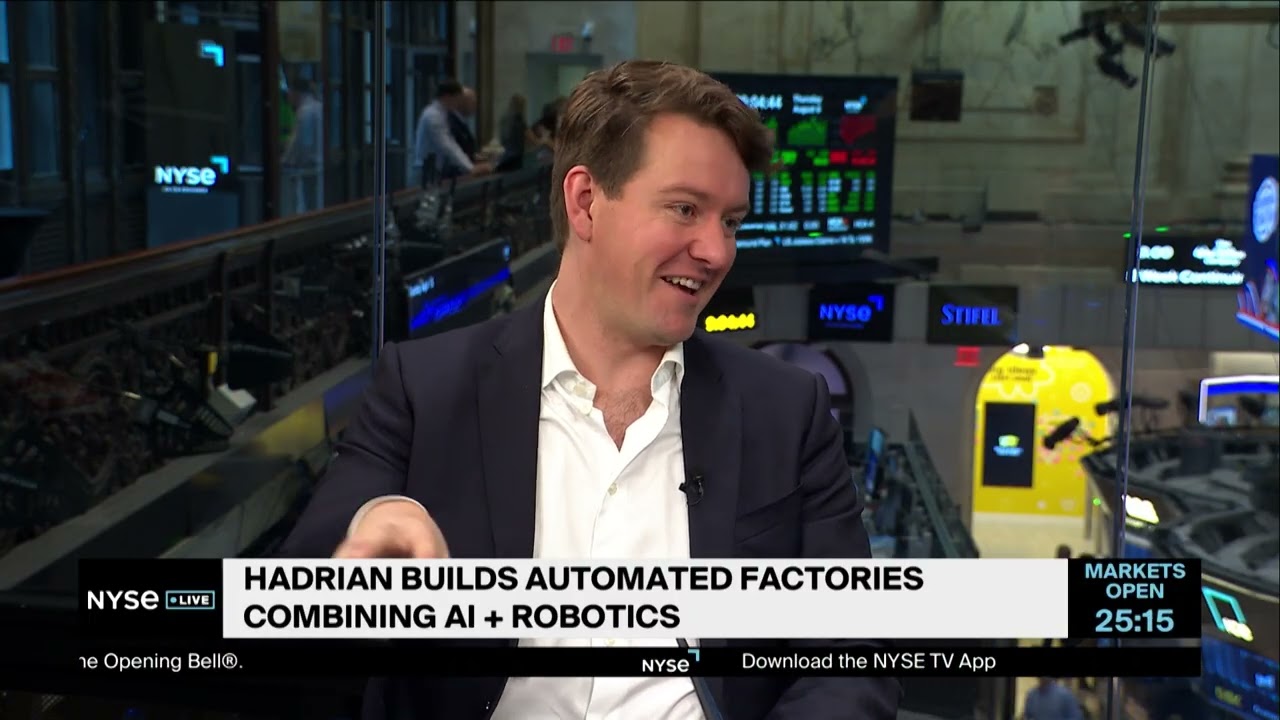
Hadrian CEO Chris Power Series D Allows Us to Build ‘Factories of the Future’
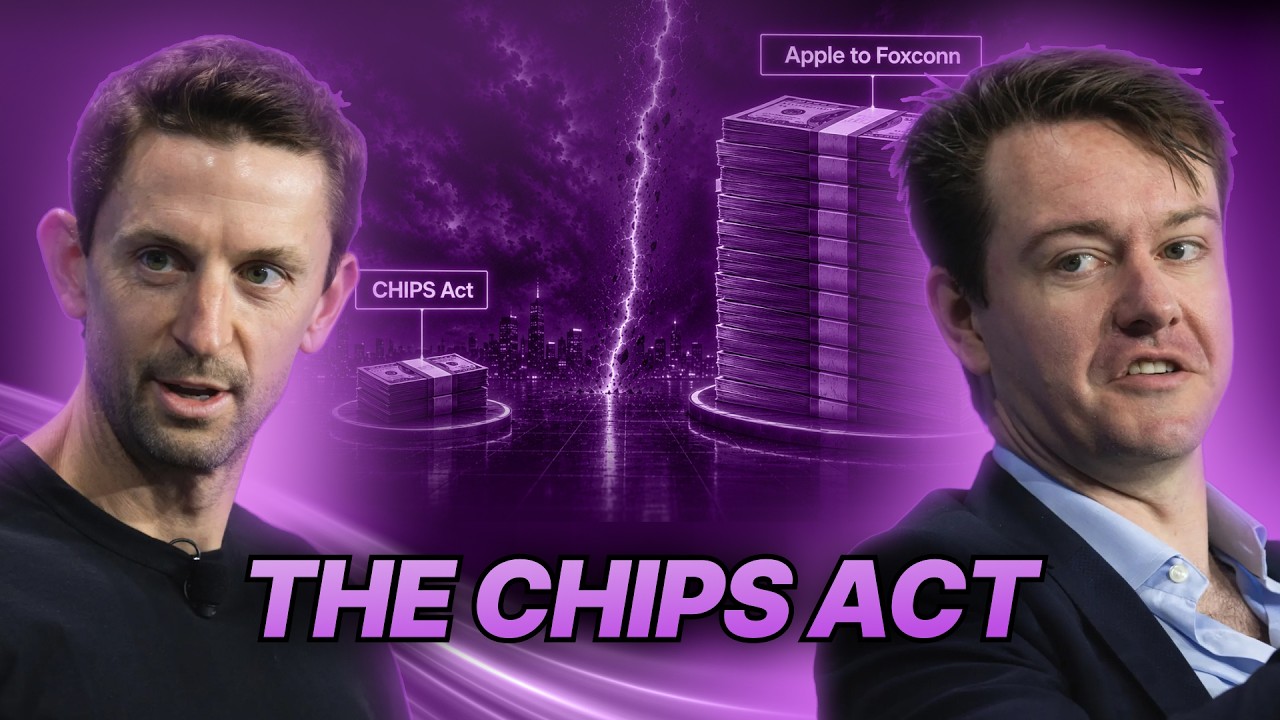
Hadrian's Chris Power: How a 40-Year Manufacturing Gap Became a National Security Crisis
Hadrian CEO Chris Power Reveals Next Move After Firm Hits $1 6 Billion Valuation
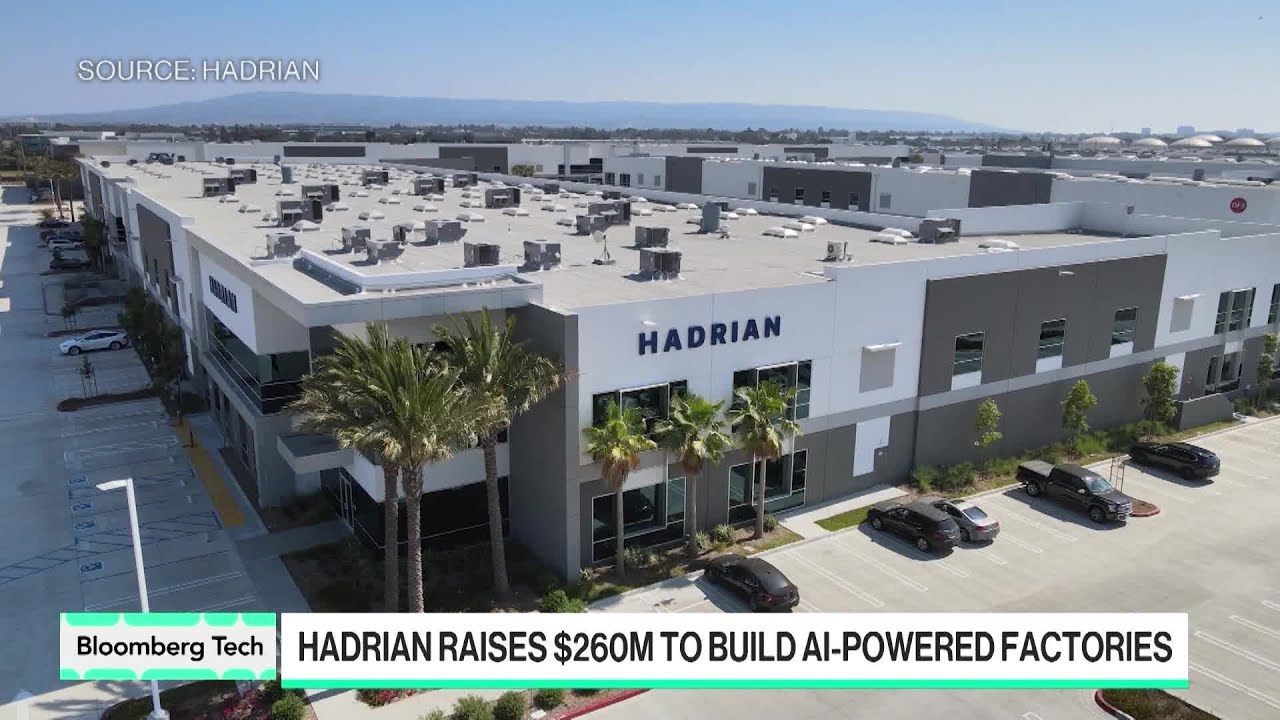

Startup Hadrian raises $260 million to expand its AI-powered factories to meet soaring demand




This Next Billion-Dollar Startup Founder Is On A Mission To Revive American Manufacturing
