The Future of American Manufacturing with Chris Power

In this American Compass Podcast episode, host Oren Cass interviews Chris Power, founder and CEO of Hadrian, a company building automated, software‑driven factories to reindustrialize the United States. Power explains Hadrian’s model of high‑precision, highly automated factories that boost productivity ten‑fold while allowing workers to be trained in 30‑40 days, effectively “deskilling” complex tasks so anyone can operate them. He contrasts the cost structure of U.S. manufacturing with China, Korea, and Japan, attributing U.S. disadvantages to higher labor, energy, raw‑material, and CapEx costs, as well as aggressive subsidies in China. Power argues that U.S. manufacturers suffer from chronic under‑investment because public markets treat CapEx as a sin and because small‑business manufacturers cannot secure affordable financing. Hadrian raises capital through venture funding for R&D and partners with large commercial banks for CapEx, but notes that most small manufacturers lack access to low‑cost capital, leading him to propose loan guarantees, domestic‑sourcing rules, and bridge‑loan programs as policy solutions. He also discusses the erosion of the manufacturing workforce due to decades of offshoring, the cultural perception of manufacturing jobs, and Hadrian’s internal training pipeline that hires people from diverse backgrounds and trains them on proprietary software within 30 days. The conversation concludes with Power’s top policy recommendations: (1) require that products paid for with American dollars be manufactured in the United States, (2) provide government‑backed loan guarantees to lower financing costs for small manufacturers, and (3) offer bridge financing tied to purchase orders to solve cash‑flow gaps. Throughout, Power emphasizes that technology‑first factories and a new, well‑paid, tech‑savvy workforce are essential for the United States to regain manufacturing competitiveness.
Chapters
Hello and welcome to the American Compass Podcast. My name is Oren Cass. I am the chief economist at American Compass. And today we are talking with Chris Power, who is the founder and CEO of Hadrian, one of the really exciting companies leading reindustrialization efforts in this country and bringing a lot of new technology to bear on manufacturing with much higher levels of productivity and American workers. It's a really fascinating story of what they are doing in their company in particular. And from his vantage point, I think he just has a great perspective on, you know, what are the competitive challenges for the US? Why are we more expensive than China, which is a very different answer than why are we more expensive than South Korea? And therefore, both what is the business sector doing to recover that and where's the role for policymakers as well? Part of the occasion here is we've just released the Techno-Industrial Playbook, a big project we did in partnership with Foundation for American Innovation, with Institute for Progress. A ton of different proposals, all from different authors, on the various facets of policy that can really make a huge difference here in fostering reindustrialization, yes, but specifically, as the techno implies, leveraging what what the United States is best at and actually building a new generation of industry rather than trying to recover the old. So please take a look at all of that. We'll have the links in the show notes. And I think a lot of really good ideas that I know already a lot of policymakers are looking at. Of course, got to tell you about what else is happening at Commonplace. We've been focusing on this same topic throughout the week. We had Charles Yang on what an enduring industrial policy requires. We had Chris Koopman and Josh Smith on Repealing NEPA, and I especially enjoyed the piece by Parker Shepherd looking at that polling data that we've had an online spat about on what does it mean if 25% of Americans wish they had a factory job? Is that a lot or is that not a lot? Obviously, I think the answer is that's a lot. That's a huge opportunity, and Parker dives into that. Lastly, now we are in the era when I have to tell you about 2 other things on every single podcast. One, of course, is Understanding America. If you are not subscribed to the Substack, head over to understandingamerica.co. But also very importantly, American Compass celebrating our 5th anniversary this month. And to that end, we are releasing a book that a ton of effort went into, has about 30-plus essays from, I think, 12 different scholars called The New Conservatives. And it is the definitive compendium of the thinking that is driving economics on the new right. So Highly recommend picking up a copy. Go preorder it now. And I think you'll really enjoy that when it comes out on June 3rd. But in the meantime, here is Chris Power. And here we are with Chris Power and his amazing industrial backdrop. Thank you so much for joining us, Chris.
Thanks for having me.
I guess we should start just at— well, it's not at the beginning, but at the top. What is Hadrian? Give listeners a little bit of a sense of sort of what you guys are up to.
So, we build automated factories to reindustrialize America, highly software and robotics powered alongside a new American workforce. And mostly, we operate in aerospace, defense, and maritime, where traditionally, for the last 40 years, we offshored all of commercial manufacturing. And what we got left with was a dying defense industrial base where all of the really highly skilled people are retiring or leaving their knowledge behind. So to compete globally and to kind of preserve that knowledge so America doesn't forget how to manufacture, we build high-precision, highly automated factories that give the workforce 10 times more productivity and also allow us to make the jobs a little bit easier so we can train anyone in 30 to 40 days and really reindustrialize the country with combining the 2 things we're good at. One is the American spirit and American software engineering.
And how long is— how long have you been doing this? When was it founded? When did the first factory start going up?
So we are just on our 4th anniversary. And in 2022, we were building, you know, I would say our prototype factories, and then we scaled with some customers. And now we're in full growth mode where this factory behind me is about 100,000 square foot in LA. We filled that and scaled it in less than a year. And now we're, you know, 3 months away from having factories all across the country in many different states. Wow.
And so are you a designer and builder of the machine tools, of the robotics, or are they your suppliers and you're the sort of integrator?
Yeah, they are all our suppliers. We don't produce our own CapEx. What we're extremely good at is building factory software and workforce development systems to run everything. And the analogy I would give you is like, everyone knows how hard it is to drive a Formula 1 car. But if you had Tesla Autopilot on a Formula 1 car, like you or I could drive like Verstappen. And that's what we're trying to do here is automate enough that anyone can operate like an expert. But all of our CapEx, we, you know, we buy and then we make smart with software. Now, the unfortunate thing is we don't produce CapEx in America anymore. So a lot of our suppliers are German, Japanese, South Korean. But yes, we make all the CapEx small with software.
Yeah. Interesting. So how does the economics of manufacturing in the US look today? I mean, I guess there's the sort of, if you want to call it 1.0, what people are already out there trying to do versus maybe 2.0 is what a Hadrian factory would look like. If you're literally just kind of stacking up the cost bar for the kind of more advanced tech products you guys are focused on. Is 1.0 sort of woefully uncompetitive and why? A little behind the curve? How do you guys change that picture? Give a sense of what, what the key drivers of all this are.
Yeah. So very simply, everything could be boiled down to raw material, aluminum, steel, ink canals, And then, you know, energy, maintenance, like the cost per minute of running the factory or running a machine, and then all the people costs. There are really 2 markets in the US industrial base that American manufacturers compete against. One is it's regulated by ITAR, so it has to be manufactured onshore, and then it's American companies spending the money, but it's not regulated so that they can make that component or make that product or engine. anywhere in the world. So there really are 2 markets in terms of competitiveness. So in the ITAR market, you're competing against everyone else has the same skilled labor costs. Like, maybe California is more expensive for highly skilled labor and energy than Texas or South Carolina or Alabama. And then there's the offshore market. So comparing, call it, and the economics of most of these businesses are They basically operate like consulting businesses where if you are a highly skilled quality inspector or a highly skilled welder, ultimately what your business is doing is, Oren costs me $60 an hour, so I'm going to resell Oren's time plus raw materials as part of my service to a customer at $120 an hour. And they really operate like consulting businesses on top of very highly skilled labor. In terms of say, high-precision machining, which is one of our factories, this is the one behind us, versus China, you know, in aerospace, I would say that the US is 2 to 3 times more expensive than China. And for unregulated markets, you know, you're prototyping something, China is 8 to 10 times cheaper.
So, why is that? What are the What are the differences?
There's, I would say there's 2 or 3 real differences and 2 or 3 fake CCP differences, because really everything comes down to raw material, energy, and CapEx costs, and then labor. So as far as we can tell, China has a cheaper labor cost than the US and Mexico. That's point number one. Raw materials are a big part of the cost base, and the vast majority of the cost of raw material is actually energy. You know, 90% of the cost of aluminum is the cost of the energy that runs the smelter.
Yeah.
Yeah. So because the CCP has bad regulations, well, not up to Western standards, and they also subsidize it, you know, the cost of a raw material in China is 10 to 20 times cheaper, right?
10 to 20 times cheaper?
Yep. So we can, in the commercial market, you could buy a fully complete shipped and delivered part with all of the labor and all of the machining in it for 3 times as cheap as you could buy the raw material alone in the US. So then on top of that, so firstly, I think fundamentally the labor is cheaper, the CapEx is cheaper, and the energy is far cheaper. So you're kind of at a, I would say, 100% advantage against the US. Then what happens on the ground floor is that the national champions like DJI, who are big, or Foxconn, are big-scale businesses, get export rebates. So if you sell a dollar to an American company, you get 30 to 40% back. The CCP is very political and localized. So often these national champions will basically be given free energy and labor subsidies and create a massively unfair advantage. And they're doing that on purpose to deindustrialize us and steal IP. So it's hard to tell what level is subsidy, what level is like true competitiveness. But our best estimate is that for factories, we are— Hadrian is 30% more expensive than China right now, which is a big technological leap, and we will get to parity or cheaper very quickly. The rest of the industry, I would say, is 2 to 3 times more expensive. It's hard to tell how much of that is aggressive subsidies versus, you know, true efficiency. But my opinion is a lot of it is aggressive subsidies because you can, you can do the math on some of this and it just doesn't make sense without aggressive energy, labor, and CapEx and export subsidies like reverse tariffs.
Yeah. Well, okay, so putting China to the side for a minute, if we're thinking about the US versus Japan or Korea or Germany, seems to me in the kinds of markets you're describing, again, putting ITAR and so forth to the side, those places also seem to have an advantage over the US. Although in a lot of cases they are higher cost energy, they do receive some subsidies, but not the— not CCP style. So what does the comparison look like in that case if we're comparing to a South Korean factory, let's say?
So I think shipbuilding is the greatest example, and I would say it's 2 things. It's culture and technology. And I think the American workforce is quite depressed. Since the '80s through the 2000s, because we offshored so much and we removed our ability to compete globally, you're left with this very up and down defense spend that's hitting our factories. Everything else got offshored. So a lot of the energy of the workforce is really gone and kind of not the American pride, but if you walk through a Korean shipyard, they're really running after it like you would see in a Hadrian factory or a SpaceX factory. They care. They're great jobs. They're run by executives that understand manufacturing. So, I think there's just a lot more energy around it because it's a nationally competitive industry. They're not trying to build one defense ship. They're cranking out commercial ships. It's a real commercial business. And then I think most of our large manufacturers, especially in aerospace and defense, We really capitalized them in the '60s and '70s and then stood them down post the Cold War. And, you know, a lot of our shipbuilders had 30,000 people and then we really cut them down to 3,000 people post-Cold War, right? So that CapEx base, the processes, the systems, the technology haven't really changed fundamentally since the '60s and '70s. Whereas the Koreans and the Japanese are very good manufacturing technologists, you know, Just the culture and the technology, right? For batteries, shipbuilding in Korea, cars, they've had to compete globally. So, they've just got a much more sophisticated technology base inside their factories that they are genuinely 2 to 3 times better than us at, call it, manufacturing technology and automated systems. Hadrian is definitely a parity, but if you look at the manufacturing as a general industry in the US, we are Way far behind, not just on subsidies, but also fundamentally on manufacturing technology efficiency.
Where does that cash out in the actual economics of it? Is it that they're getting that much more productivity out of workers? They have higher yields, they're using different materials. What, what do you get with the technology?
I would say 3 main things. One is, one is quality and yields. Secondly is just performance and schedule. Manufacturing is a very complicated business. And SpaceX has a huge workforce that's very aggressive in how they go manufacture Falcon 9s. They have also invested a lot, and so has Tesla, in the manufacturing technology, not just robotics, like scheduling coordination systems, quality systems to make the workforce's lives easier. And so you get schedule performance, you get accountability, you get on-time delivery. You get what the customer wants. And then yeah, you also get a cost and throughput base, right? Where you're using more robotics, less people. Now you can pay those people more, but you know, you're kind of making the factory system far more efficient and competitive. And then the US is just completely underinvested.
The underinvested term is, I think, to me, the fascinating one because, you know, in a sense, the premise of capitalism is, well, you can't be over or underinvested. You are, Financial and capital markets are efficiently investing in pursuit of return on capital, and that's where you want the capital to go. You know, one part of the critique that I think folks broadly understand is, well, you could just be underinvested in the sense that even if shipbuilding isn't very profitable, you really care for security and other reasons about being able to make ships. But it seems to me there's a separate, almost entirely economic. I mean, even if you put the national security question entirely to the side, it looks certainly to me like we are still underinvested, that the industrial sector, that manufacturing just became a place where capital didn't go. And maybe it's because, well, how are you going to compete with the Chinese? But I'm curious how you perceive sort of how the industry is perceived and then how your own thinking is different. What makes this the place where you and your team are investing, whereas in the last couple of decades, people seemingly didn't want to?
I think there's 2 big pieces. One is the way we trained our large public companies through our stock market was to Get rid of all the CapEx as fast as possible. And then you end up creating this incentive to underinvest in new physical CapEx that is automated. That's just a huge, huge problem. And it's kind of the same thought process as you would expect if you wanted a technology company to grow. Their R&D bill keeps growing because unless they're launching new products, or scaling and getting better, they're eventually going to lose that growth curve, right? So for whatever reason, we've trained people that CapEx is a sin. The second more important question is capital. Capital follows growth, right? And because most of the, you know, the Korean shipbuilding volumes are commercial, they are also defense. But there is a real business engine behind that, whereas because we offshored everything in American manufacturing basically that was commercial, What you've got is this massive trend down in long-term growth. You're an engine manufacturer. Okay, your only growth business is in defense, which doesn't have a long-term forecast to it. You can't plan around it. The DOD is issuing contracts maybe a year or 2 ahead. Very hard to invest in a billion-dollar facility looking at a 10-year depreciation horizon because, hey, we want to make more engines. Let's go invest a billion dollars in a new advanced factory. And then in terms of the secular industry, if you're just a McKinsey analyst or an investment banker looking at a growth curve of software's going like this, manufacturing's going like this because we're offshoring everything, it's very hard to get the capital for technology or CapEx behind something that's like a shrinking industry because you want to invest in these growth companies. And that is just a function that we offshored everything that was commercial through these poor incentives. So that's why I think everyone has been trained that manufacturing is not a growth industry or not something that you can put $1 billion in CapEx to work and it'll pay off over a decade, which is ultimately the functional commercial drivers. So with a shrinking industry on the revenue side, it's a very hard—
Is it different for you at Hadrian? And well, I guess initial question, how is Hadrian funded? Are you guys venture capital backed? What is Where does the investment in capital come from to actually do the CapEx?
So, we think about this in 2 ways. One is from a mission perspective. If we don't get the highly skilled labor leveraged into software so we're capturing that knowledge, everyone's going to retire and we're screwed. That's like point number one. Secondly, You know, you can think about this as 2 buckets. Venture capital funds innovation and R&D and technology and growth. But our strategy has always been to use large commercial banks to fund CapEx, which you can do if you're a very high-growth business. So, we actually work with a number of large famous banking partners that basically help us massively finance these factories. which takes a lot of innovation. It takes a new type of business model. It takes a really strong margin profile. It takes a lot of growth because that's what all the investors, both on the CapEx side, want to see. But bear in mind, I think another part of this is the vast majority of the defence industrial base, because the DOD created small business rules, right? 95% of the manufacturing volume for the defence industrial base is small businesses with less than $15 million in revenue, right? And if you think about that in aggregate versus like the Korean or Japanese industry where there are mega manufacturing corporations, for the CapEx side, people think about that as like very high risk. You know, it's kind of like a home loan. You know, Oren's running a $10 million business. Okay, I might lend you the money to buy one more machine, but it's going to be at 30% interest rates. And your margin is then destroyed on those interest payments. You can only grow 5% a year because you're a small business. If you are a large business, you can do one, your cost of capital is far lower. You can get really creative finance people that have better corporate structuring. But we don't have these mega manufacturers like a Foxconn or a Hauhua that they are just good at manufacturing. That is their job in the industry in the United States. And this creates this downward pressure where A small business cannot compete with the cost of CapEx of a large company. They just can't. They can't aggregate the capital. The market views them as highly risky. It'd be like giving a car loan to someone who might be poor, had bad credit history, versus giving a car loan to Hertz, right? There's just no scale there. And I think because we created this legislation that a lot of American manufacturing is has to be small businesses, in aggregate, you make them very uncompetitive on the capital side because a bank can't underwrite the risk. A bank finds it much easier to underwrite the risk of a Hadrian or a large-scale player like you might see in Japan or Korea, where you're a public company, you can issue bonds, you've got a balance sheet that someone can read. And financing the CapEx very intelligently is a big part of how to grow a manufacturer fast. And it's not that these small businesses are unsophisticated. They're very, very smart Americans. But from a bank's perspective or from the capital markets perspective, it just looks like a risky small business loan. Yeah.
Yeah, it's a great point. How did you bootstrap though? I mean, how do you, or, you know, how do you go to the commercial bank the first time? Is it there's a sufficient business plan that a syndicate comes in and says, let's really do this? Is there a, is there a way to scale up to that?
What will it look like for others who are trying to follow in the same So, I think that for small businesses that do not have a technology story, it's very tough because what people want is like, what's the 1 1 5? Realistically, it's a function of scale and sophistication. So, we started with, you know, we're 4 years in now. Now, our cost of capital is probably the lowest in the country and will be forever because we're at a sufficient scale and growth curve. You know, we 10x'd revenue last year, which is like the fastest-growing manufacturer of all time in the US, in my opinion. But in the early days, no, we started off with very expensive small equipment loans. And then a year later, we're slightly less expensive and more corporate debt. And then now we're at like the big bank tiers. But to run that curve, it's kind of like R&D, right? You start off with no product, eventually the product gets good, eventually you have a software platform. And, you know, now you're kind of a big HR software platform and you've done the fundamental R&D. We think about CapEx and cost of capital in the exact same way. But to do it fast, you can subsidize that or say to people, hey, Oren, my cost of leasing this machine for the first 9 months is going to be 30%, but in a year's time, it'll be 20%, and then in 3 years' time, it'll be something very, very much lower than that. But that means you have to be a fast-growth business to get there. So it's kind of this extremely bad chicken and the egg game, which I think a lot of American manufacturers are based on. But we just knew we had to run this 3-year insane growth curve to be sufficiently large and sophisticated enough that you get there very quickly. But yes, you have to climb that curve. And now we're at a scaled position where it's going to be a huge competitive advantage. But kind of unless you've got the growth capital, the story, and the real technology uplift to go run that curve, it's very hard for anyone else to get there. And I think you'll see this in a lot of other manufacturing startups that are venture funded is unless you hit that curve very quickly where you get big enough so your cost of capital is cheap enough, even if that takes you 6 years, that's just too slow. And you've got to understand that CapEx dynamic from day one.
Interesting. So, well, this raises a policy question in my mind then, which is, is this a policy problem? I mean, you could say, well, Hadrian managed to kind of hit escape velocity, maybe a couple others will. Or you could say, well, private capital markets just are not the right way to bridge whatever you want to describe this gap. And it is a place where you would want to have some sort of, you know, whether it is a direct public subsidy or it is some sort of loan guarantee at a certain scale. What do you think it looks like if we wanted to foster 40 competitors for you as quickly as possible? What kind of infrastructure support on the financing side actually makes sense to somebody going through this kind of process?
So, before I answer the question, a bit of ancient history is this used to exist in the '90s and 2000s because you would be a small manufacturer in Minneapolis and you would have a relationship with your local banker and they would give you a business loan. Because of the financial crisis and Dodd-Frank and these other dynamics that increased the amount of loan-to-value a bank had to have on their books to issue business loans and all these other regulatory legislations, what you've really got is several massive banks in the US that just don't have the capacity to take the risk or underwrite small business manufacturing loans. But if you go back in time 20 years, you would happily get a small business loan from your local banker because you had a relationship. You know, it was a real American fragmentation because you would go to your local bank.
And they could take the time to learn what your business actually is and decide if this makes sense.
And you cared about it because you're in your local, you know, you weren't like a banker for Texas, you were a banker for Frisco and you had this manufacturing business in Frisco. And I think the The banking regulation really created this dynamic where small businesses in the US just simply cannot get business loans because they're all big banks now. That's like point number one. Point number 2 is, yes, we should absolutely stand up cheap capital loans and legislations for all small businesses to reverse that trend. What that can look like is a matching guarantee. Right. So one way to do this is like you don't get the money from the government, but they subsidize the interest rate. So small businesses, you know, if you can go get a loan, that's up to you. But if you're in American manufacturing or in a critical industry, hey, the government's going to say your interest rate is 30% down to 10%, and the government provides a loan guarantee because then the bank can say, okay, well, if this small business goes belly up, I'm going to get my million dollars of this machine back because the government's given me a loan guarantee. That is one way to do it. I don't think we want the government underwriting small business loans. We want the government very far away from making commercial decisions, but they can provide the COVID fire of things like loan guarantees so that banks can underwrite small business loans at a cost of capital that's not irrational, it's just survivable. And that these small businesses can grow as fast as they could if they had an unthrottled CapEx gate.
Yeah. Interesting. I want to talk about the workforce side, which I think has been fascinating even just in the past few months, as there's so much talk about tariffs, reindustrialization. People rightly make the case, it's great if we're creating more demand for domestic manufacturing, but who's actually going to do this stuff?
Yes.
There's then a range of some useful, some less useful discussions that follow. Are these even good jobs? Does anybody want them? Wait a minute, we thought there were hundreds of thousands of vacancies. It seems like we have too much, too many manufacturing jobs out there. Starting just at the very broad level before we get into how kind of Hadrian is addressing it, what is your perception of the labor market in manufacturing? What characterizes these jobs? Why is it hard to fill them? And yet, why are there seemingly in a lot of cases Fewer than we would want to have.
So, I think fundamentally it's because we destroyed the labor base by offshoring everything. So, in the '80s and '90s, manufacturing was a great job, and then we offshored everything. So, your father or your mother had a manufacturing job when you were sitting around the kitchen table, and then you said, Dad, I would love to be a manufacturer like you, or I'd love to be a machinist, and you said, Absolutely not. Go get a 4-year college degree. Because it's terrible. We've had layoffs every year since for the last 20 years. There's no wage growth, right? So culturally, very hard to convince young people to get in there. So what we are left with in the highly skilled manufacturing arenas is that most of the skilled people are in their early 60s and retiring faster and faster. So it is objectively true that without technology leverage to give the workforce superpowers in productivity, There isn't enough people to do the jobs. And then culturally, I don't think they are bad jobs now, far from it, but they have historically been bad jobs because you get into an industry and it's declining and then you're on a low wage rate forever and you're telling the rest of your family to get out of the industry as fast as possible. So if you think about the macroeconomics, we really have 2 choices. One is do mass highly skilled immigration, which in my mind is impossible because most of the industrial base in the United States is connected to defense. So you have to have a green card, you know, so this is just generally something that's not going to work. The second thing you can do is give up and just do nearshore or peer shoring, which is like, hey, send a bunch of Americans to Mexico or something like that. And that seems bad. Our view is that the only way to do it is to build a techno-industrial base where, yes, people are— there are less jobs. If you're not growing the pie, there are less people and less jobs. The reason why I don't think that's a problem for the country is it's not like the trucking jobs, right? If you put a self-driving truck everywhere in America, you're destroying the livelihoods of everyone who's like 40. They're good working age. People want to be truck drivers. It's The single biggest kind of classed job that you can get into quickly and earn a high wage. So I would be against massively destroying trucking jobs. In advanced manufacturing, there just simply aren't enough people. So either you have to give up and say China won the manufacturing race, or you have to automate a lot of it and use automation to de-skill it so you can have one person running 10 machines instead of one machine. And that the job is a little bit simpler so we can train them in 30, 40 days instead of 10 to 20 years. But unless we give the American workforce an Iron Man suit so they can be more productive, we simply do not have the skilled workforce to reindustrialize. And then secondly, what that causes is if you're competitive globally, We shouldn't be thinking about like, oh, we have 10,000 American manufacturing jobs today and you're going to automate. No, no, no. We're going to create a million manufacturing jobs because we're going to reindustrialize the country and there's going to be many more jobs and they should be technology first. And you should be looking at the workforce as not someone who's doing manual labor. You should be looking at the workforce as someone who is running 10 machines at once with robotics and software, and they are an advanced factory technician, not a— Not the jobs of old. And fundamentally, if we want American manufacturing to be reshored, it has to be a fusion of technology and the new workforce and a new way of thinking about it where they can be paid highly, they can have great insurance. At Hadrian, we give everyone equity in the company. But the only way to do that is by rampant technology productivity through the industrial base. That is the only way to remain globally competitive. And we should be celebrating that, not thinking about it as like, oh, there are less jobs. Now, I agree that if people think about factories as not what you see behind me, but as what you remember from the '80s and '90s of everything's dirty, it sucks, everyone's yelling at each other, those are terrible jobs. The new American manufacturing jobs like at SpaceX or at Hadrian or at Anduril are awesome. But that mindset has to shift. But yes, our strategy has always been, if you want manufacturing in America, you have to create new types of jobs that are technology manufacturing jobs and that aren't what you're used to seeing in the '80s and '90s. Yeah, yeah, yep. So I'll give you an example. They're working with their hands, they're doing things that robots can't do, they're running our systems, and they're having a blast. And maybe I'll give you a practical example. So All of our workforce now have never set foot inside a factory before, right? And they are smart people. They're from industries where they were working at a salad bar in hospitality. They were a bus driver or even nurses. Or frankly, one of the interesting things we're seeing now is we have some people that during COVID had a desk job and their entire job was like filling out forms for like a legal company. And We can pay them the same as that, often sometimes better. What we hear is actually like, they love doing this because one, it's like they're making cool stuff for our customers. Secondly, you know, they are running a manufacturing system, right? They're not like a robotics programmer. All of our people, you know, they don't need a college degree. You just need some aptitude and some will. And we will teach you the skill. So those jobs that you're describing do exist. But I think that's an important point is you don't want to create a technology manufacturing system where you're creating complexity and then, oh, to be productive, you now need to learn how to code. It's just like the Tesla Autopilot example. It's like we would have many more F1 drivers if you slapped a Tesla Autopilot on a McLaren. That's what we're doing here. And you shouldn't— maybe a better way to frame this is it's a deskilling of the traditional complex job, but that is a good thing because it means you can get started tomorrow and all you need is some guts, some skill, and some basic aptitude, and we will teach you the rest. And certainly it's a far better job than not having one or being in an environment like hospitality or retail where you're disconnected. There's no purpose. That's what we're here Yeah, interesting.
And so how does the training look for you guys? I mean, are you— do you do it all internally? Do you partner with community colleges or other—
It's all internally.
All internally?
What we've found is that the community colleges or manufacturing training programs in the US are very well-intentioned, but the gap is on-the-job training. So we actually prefer to take people from, you know, whether you're 20 or you're 40 or older than that, you just want a better job and we will train you. Or if you're interested in manufacturing, we want to take you straight out of high school. So we actually have internship programs that start at 16, 17, and then when you're out of high school, you're in a job from day one and you're loving it. Because the trade colleges really teach you kind of like deep manufacturing, and that's not really what the workforce we're building are. And then they don't come out with any practical experience. So, we take most of our people from, hey, you're 20 to 40-plus, you want to get into manufacturing, or you just want a better job and actually don't care if it's manufacturing or not.
Yeah.
It's just a great job. And we see a lot more uplift from folks in high school that want to get started. You know, they want a job when they're 17 or 18. That's really effective from us. In terms of how the training actually works is you're learning to use our software systems. You're learning to think about the underlying problems in manufacturing so that you can, when something goes wrong, you can think for yourself. And we do that in 30 days because we know that we can— the most important part of learning is pairing you with someone that's been here for 6 months. And then we have stage gates over 3 months of, are you learning the right skills? Are you learning to run our more advanced systems? And then from there, you know, you're either going to become, you know, you're going to get into operations leadership, you're going to get into a more technical job if you've got the aptitude. Like, we've promoted many people from a technician to, hey, like, we found out that they were really interested in software engineering and we promoted them and trained them into a software job or manufacturing leadership or some of our customer success roles, right? So there's also that promotion path. But fundamentally, yeah, it's, hey, Arun, get started in 30 days. We're going to test, train, and teach you in the basics. And then we have this on-the-job shadowing training problem where you get better and better over your kind of 3 or 4 year period here. But the gap in trade colleges is always like, there's too much schoolbook work. If you want to get good, we'd rather just take you straight out of high school or from another career and just Yeah, that makes a lot of sense.
The place we have to wrap up is, I guess, part of this discussion was prompted by, you know, we've just released what we're calling the Techno-Industrial Playbook in partnership with Foundation for American Innovation, Institute for Progress, and must be 27 different policy proposals. Obviously, different things for different purposes. But I'm curious what the— and maybe they're not in the book at all, but if there are kind of the 2 or 3 things for a policymaker audience that you would say are kind of in the top right quadrant of both most achievable and most impactful, what can policymakers be doing that are going to help Hadrian succeed and help the next 10 Hadrians? flourish as well?
So I think there's 2 important macroeconomics things that if I waved a magic wand, I would focus on. One is that if you are getting paid by an American, you have to manufacture in America. And there is a surprising amount of defence or commercial spending that is through ultimately our tax dollars, that the end product is made in China or something like that. And then, you know, you do the last 10% in America and that kind of feels like cheating, right?
Right.
So, I would have a policy that if you're getting paid in America, you have to make it in America for companies that are, you know, they're selling their products to the DOD or something like that, right? Because a lot of the problem is not other jobs going away in the primes. A lot of the problem is their supply chain is not getting supported. And that's your real small business problem. The second thing I would do that would hurt Hadrian but help the rest of the industry is, yes, I would do loan guarantees. A lot of the reason why small manufacturing businesses cannot scale to meet customer demand is because they are too small to access the type of low-cost capital But they can add 5 more machines, they can add 3 more welding robots or welding technicians while they're growing, right? And that can be easily done with not the government giving loans, but the government giving loan guarantees. And then the third thing I would do is, and this exists in Japan and other industries, is small manufacturers have a cash flow problem. So if you're making something in a 90-day period, I give Oren a purchase order. I have to then bear the cost of raw material and labor, and then you're going to pay me in 120 days, right? So small manufacturers have a huge cash flow problem. And other countries basically say, if you were selling to a defense prime or the Japanese equivalent of Boeing, we will give you a bridge loan because we know that invoice is getting paid. And that means you can use your cash to grow. You can use the cash to invest in technology. And we've really created this environment where small businesses don't have low cost of capital to add more CapEx. They can't really add staffing because they're on a 200-day payment cycle. So most of their cash is going to working capital or float. And the 2 easy moves there are, let's do loan guarantees. And then let's, if you submit an invoice from a Boeing or something like that, we're going to give you the cash upfront knowing that Boeing is going to pay so that you can continue to reinvest in your business. And we've just hamstrung a lot of small businesses with silly regulations or going head to head with the primes. So they have no, they really don't have any leverage. And I think the government should intervene in that. And there are good patterns for this that already exist in other countries to support small business manufacturers.
Yeah, no, that's terrific. Well, Chris, thank you so much for this time. Thank you for everything you're doing. Your job is much cooler than mine and most of the people we talk with on the podcast, but it is fascinating and we really appreciate you telling us about it.
Don, thank you so much for the time, and I really appreciate your thought leadership as we try and fix the country.
Well, we'll get there eventually, and we will be back again soon with another episode of the American Compass Podcast.
More from Chris
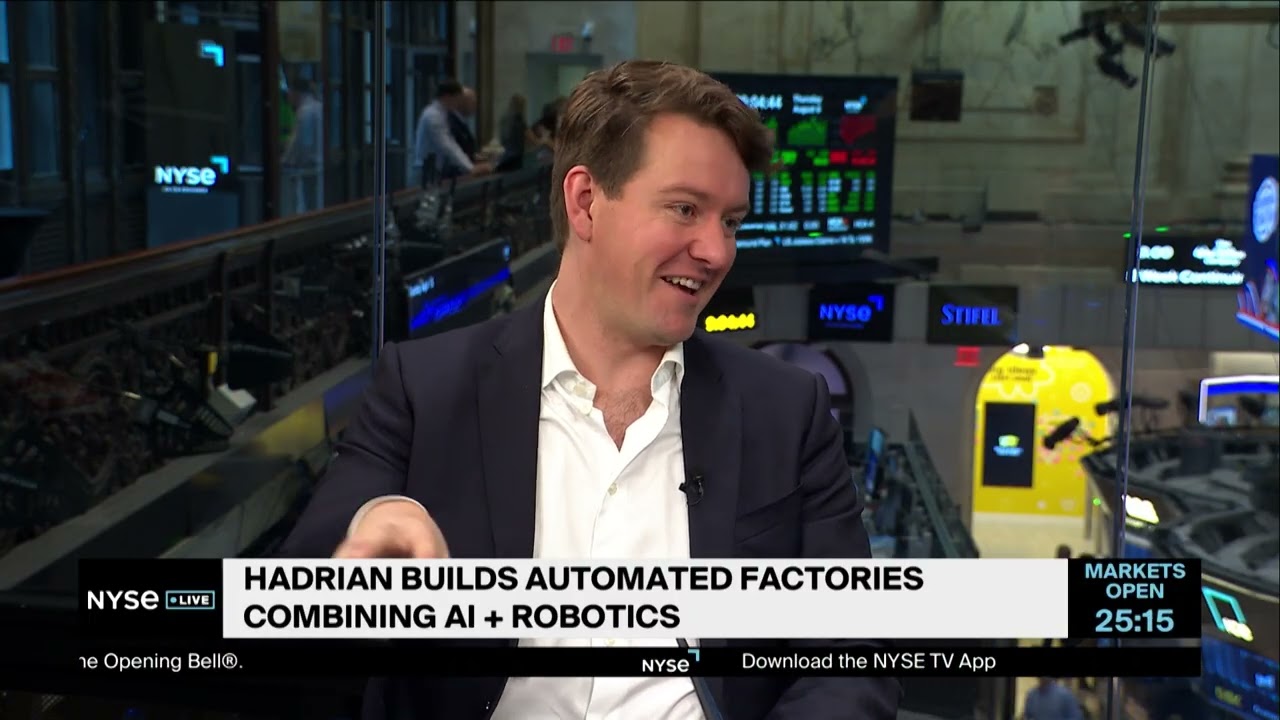
Hadrian CEO Chris Power Series D Allows Us to Build ‘Factories of the Future’


Hadrian's Chris Power: How a 40-Year Manufacturing Gap Became a National Security Crisis


Hadrian CEO Chris Power Reveals Next Move After Firm Hits $1 6 Billion Valuation
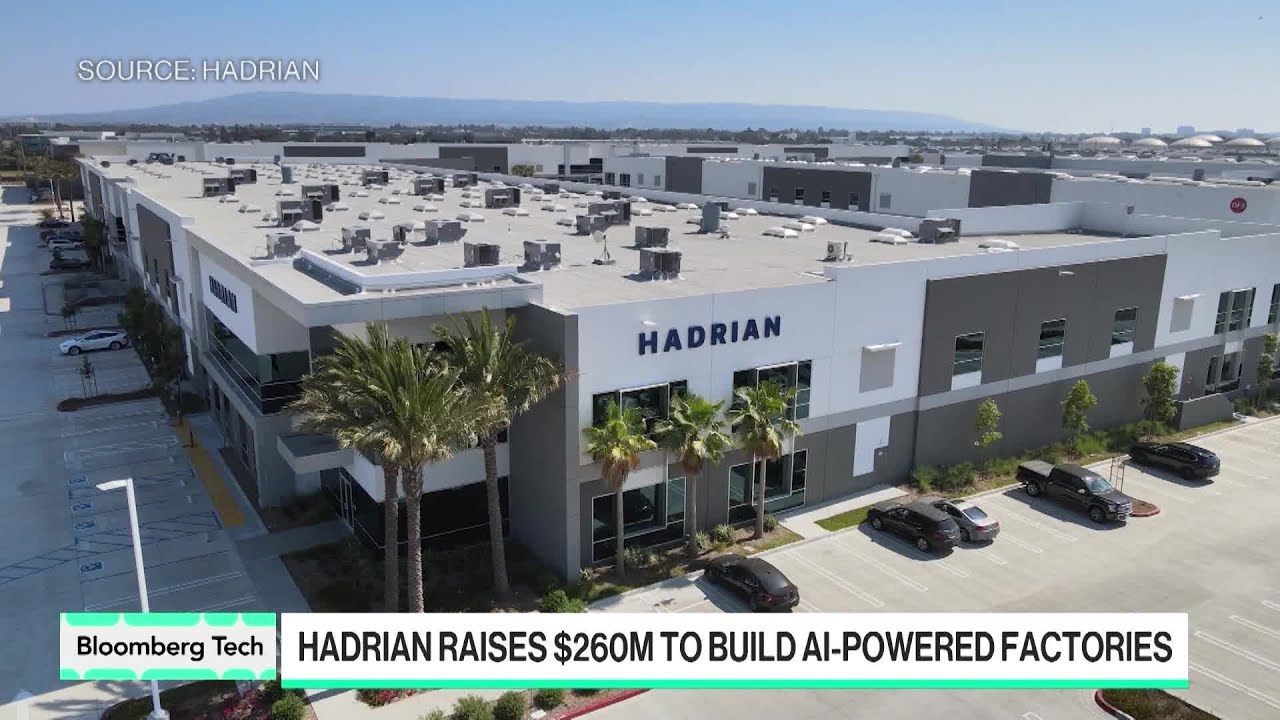

Startup Hadrian raises $260 million to expand its AI-powered factories to meet soaring demand



This Next Billion-Dollar Startup Founder Is On A Mission To Revive American Manufacturing
