This Next Billion-Dollar Startup Wants To Save American Manufacturing

Chris Power's Hadrian has raised $180 million to build software-enabled factories making aerospace and defense parts. Instead of automating existing processes, the startup extracts knowledge from skilled workers, systematizes it in software, and uses robotics to handle high variability. Hadrian generated $3 million in its first commercial year and expects $30 million this year.
Chapters
If you look at the shape of the last 30 years geopolitically, it's pretty obvious that what happens in the rise and fall of great nations is that step 1 is great success, step 2 is hard industrial power, step 3 is outsource all the hard industrial power to lower-cost countries, and then step 4 is because you did that, you lost what made the country powerful and strong in the first place. And eventually that comes home to roost.
You've probably followed the stats that American manufacturing has actually declined in the past few years. It's actually stagnated. And I think that's because they've just hit a wall. There is no real productivity leap. There is no supercharged fuel underneath that will allow them to continue to grow. The old processes that were invented in the 1900s, the mid-1900s, just are, are done. You know, they just don't work. They've gotten out all they can get out of them, and now they've started to slide backwards.
Los Angeles-based Hadrian has raised $180 million in venture funding to build out software-enabled factories for high-precision machine parts for aerospace and defense companies.
It was a real, like, culture paradigm shift that we realized was It's not about automating something because manufacturing people don't know what they're doing. It's just how do you get the knowledge out of their heads, systemize it, get it in software and automation? That's really the trick.
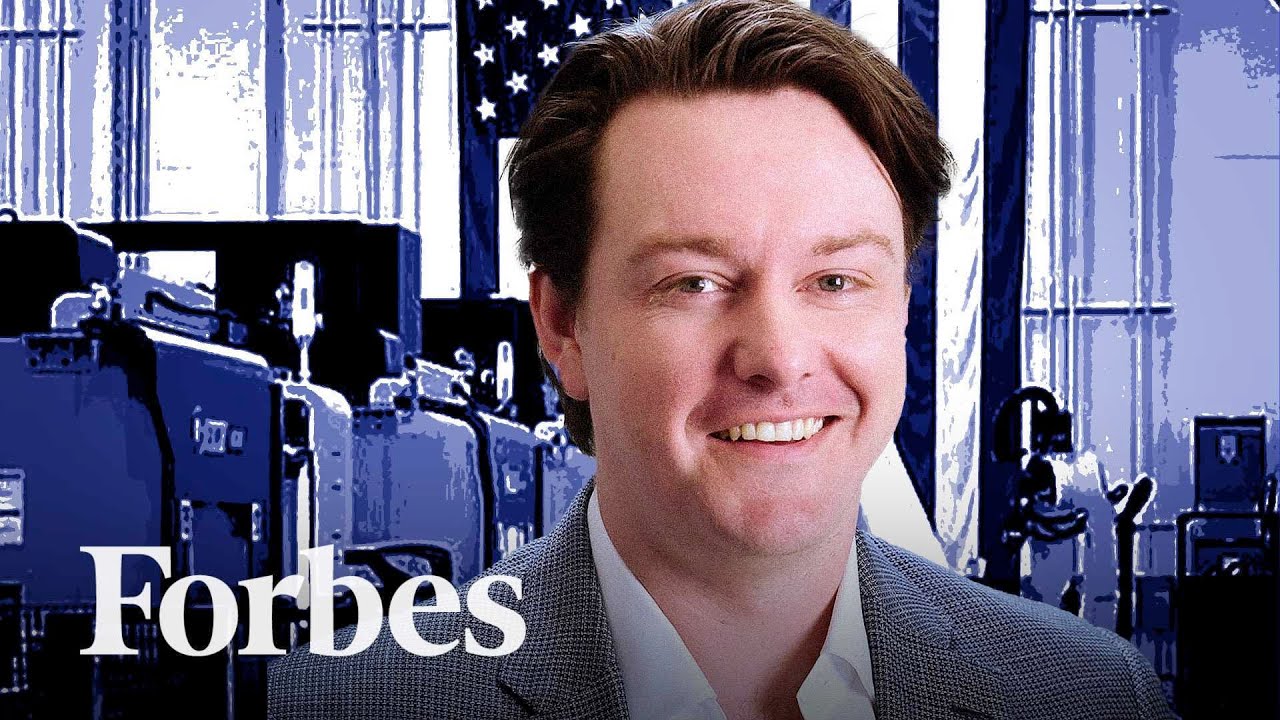
Hadrian's founder is Chris Power. He's a 33-year-old Australian immigrant.
Australia is the best place to grow up or retire. Very rarely does anything big happen there. So personally, it always felt like sitting at the kids' table at Christmas. It was pretty obvious that the US is kind of the last great democratic experiment. In the next 50 years, it will be decided whether the CCP rules the world or it continues to be like a Western-led American order.
Hadrian's big idea was to build its own software-enabled facilities. Rather than selling software to existing ones.
We're a company full of slightly insane people that believe in something slightly greater than themselves. We work with basically startups who are trying to develop new technology, either for space, the DOD, or deep tech in general. Neo primes where they're starting to become these massive companies and need a lot of manufacturing support. So our job is to basically accelerate the new entrants while helping the legacy or massive entrants that are the pillars of this country's manufacturing base transform their operations with technology and services very, very, very quickly.
Most automation is built around a very defined product, and automotive is probably the best parallel. So you have a production line making X type of cars or variations of cars, and you build automation in the highly repeatable task of where you're going to do the same thing over and over and over again. It works really well even in a machining environment when you're going to make a small subset of parts at a high rate. Where it tends to break is Introducing a mass amount of variability, and that's what our system was designed to go ingest. And so both with how we set up our process as well as how the automation is, is built, is to try and take mass ambiguity and break it down into a set of standardized functions or tasks to make it digestible, to make, make it effective, and to really kind of give us a lot more of that variability.
Chris Power first approached SpaceX employee Chris Baker back in 2021 with what seemed like a crazy idea.
Chris originally reached out when I was managing the machine shops at SpaceX and had this wild idea that he wanted to automate the work I was doing in that factory. At the time, it was a 2-person shop. Extremely chaotic environment and was proof to me that what he was trying to push was not going to work. I think you lose a lot of faith in the fact that this can be automated when you've been surrounded by the type of hardware that we have to manufacture and the amount of different variables, both like human and just physics-based problems that the space is surrounded with. And you lose a lot of trust that You can really get down into each and every variable, standardize it, and build a system that can be replicated without a ton of human intervention.
Despite his original skepticism, Baker decided to join Power at his startup named after the Roman emperor. Power, who is both relentless and charming, soon convinced investors to back his idea too.
Investing in Chris Power was a wonderful experience because he's one of those founders who's a true visionary and he lights up, you know, not just a room, but a whole market. He explains the need in terms of the supply going down, the demand going way up in such a way that if you didn't know you needed it, now you know you need it.
Chris's very first principles will challenge every aspect of anything you're saying cannot happen and really gets you to question kind of your underlying philosophy of why am I against this? What is, what is holding me back? And so I think it's an extremely aggressively helpful way of approaching what we're going and building and what we're going and doing, because if you don't know at its core why it can't work, then You sure as hell better go figure it out.
It's long been hard for manufacturers to find people who want to work there.
You've got millions and millions of high-skilled labor shortage that is going to get worse because people are retiring. So we could train 10,000, 100,000 people over the next couple of years. We can't train millions. So it's like, How are they 10x more effective with software and robotics? And then where is the pool of people that we can make manufacturing exciting for, give them a great career?
One of our core mission statements is to make meaningful jobs for the American workforce. And I think it's like one of the things we've, we've done the strongest at. Like the majority of the tour and interview process is held out on the floor around equipment. And a core element is seeing how they engage, what type of questions they ask, how interested they are in the specifics versus it just being a job or something to To collect a paycheck.
It's really where are the pools of people that have similar skills that we can draw from and bring them into this industry where there is high talent density. And that's, you know, retail, hospitality, oil and gas, ex-military, nurses, really, really anybody who wants to, who is like able and willing to do. So we are down to a point where we can train and onboard anybody in like 30 days. And the first part of that is using software and robotics to make it a lot less complicated. And the other part is training and workforce development to enable the new people coming in to be successful and grow as fast as they can grow.
The variety of people we have here is really cool. We have really like Super smart people and equally smart people without the experience, people who, you know, this might be their first job.
Some of us have that context and, you know, have a little bit of mechanical engineering and manufacturing background. Most people really don't. And so when we try to bring them in here, we're like, we kind of tell them like, hey, we're going to teach you all that. The thing that you need is to be interested.
When I joined manufacturing, it was this dated thing that nobody wanted to be a part of. And I think we're building something that can change that dynamic. And so the entire kind of strength of the US economy, the US defense program is built on the ability to go build things internal to the US. And I think we have the ability to go scale that and we have the ability to get more people familiar and exposed in this environment and make them effective quickly.
Hadrian's revenue reached an estimated $3 million last year, its first year of commercial operations. This year, Power figures it will grow tenfold to at least $30 million. After that, he has big plans to open additional factories around the country.
So we invested in the summer of 2021, and the product was just being built at that time. So it has really gone from zero to exponential growth in that timeline. They've, you know, not only brought their product to life, they've built a factory around it now, put those CNC machines on their software platform, and now have a wonderful set of customers, many of which are, of course, confidential, but are growing, growing really, really well and have supercharged demand in that space.
In terms of where we were 2 years ago, or what we thought could have possibly happened, is we've blown our expectations out of the water. And the proof is really in what customers think and also like just how efficiently we're operating. We are 300 to 400% more efficient on how we utilize our capital equipment. Usually machines run 20% of the time. We are running at 79%, 80%. So we can get more with less. Secondly, we are about 6 to 10x more efficient on a workforce productivity basis.
It's been 4 years since Chris and I really started talking. And again, I started in this very, I can't believe you're trying to do that, good luck state. Today we're about 100,000 square feet. It's a relative size of where we'll build our next factory as we bolt on different capabilities or really look to grow the size of the hardware we support. This is kind of the playbook we're trying to go build out and, and define for those future factories. But the ambition of the company is truly going to scale with us. And so the amount of processes we support, what we're trying to do to really be a single source, is really going to stress what that playbook looks like as we grow.
The long-term vision is that we will do everything for everybody in core manufacturing for the US. Every 6 months or so, we roll out one of those new product lines to customers to expand the capability of what we can do. So ultimately, we will have, you know, 50 or so kind of very large facilities specialized in each of those areas so customers can tap into any one of those services depending on what they're making.
What all leaders should aspire to do is like make yourself obsolete. I think the interesting thing about Hadrian is I have no line of sight or vision to being able to do that based on the ambition of scale and growth, how we develop the workforce, just the amount of challenges in front of us, both technically with people, with just like infrastructure in the country is so impactful and large that I really don't know where the road ends.
I think if we can look back in a decade, yes, we're financially successful, but the test that I want to see is like a guy or a girl is like 17, they're deciding on what to do, and they're like bragging to their friend at a bar that they're like, they've got a job in manufacturing, they're really excited about it, opposed to, you know, a software engineering job and a finance job. If we can make that cultural shift, that is the biggest thing because everything is downstream from that.
More from Chris
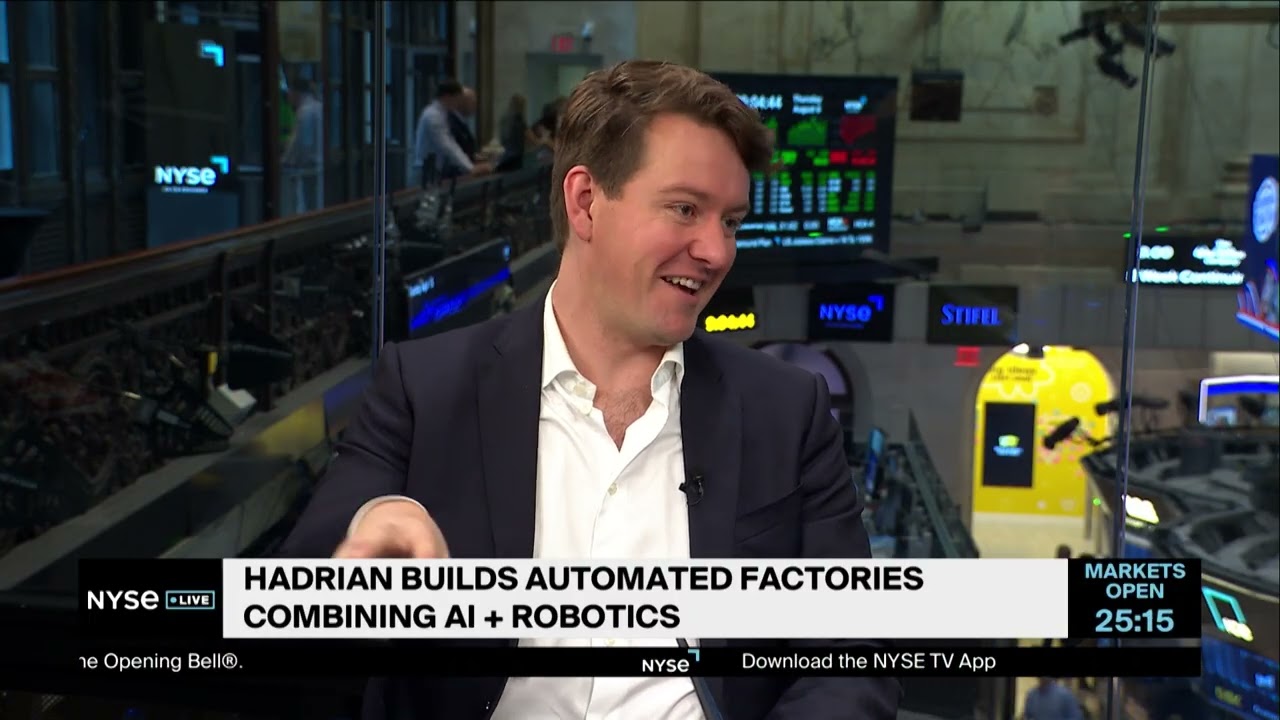
Hadrian CEO Chris Power Series D Allows Us to Build ‘Factories of the Future’


Hadrian's Chris Power: How a 40-Year Manufacturing Gap Became a National Security Crisis
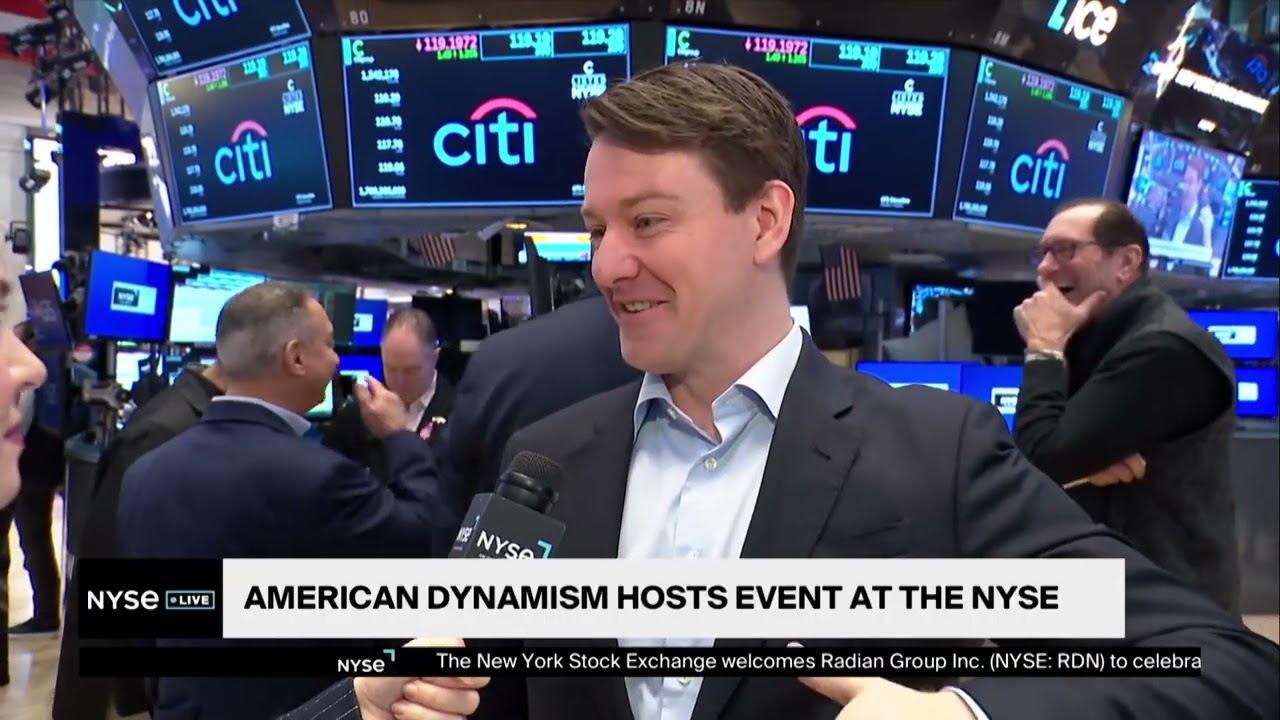
Hadrian CEO Chris Power Reveals Next Move After Firm Hits $1 6 Billion Valuation
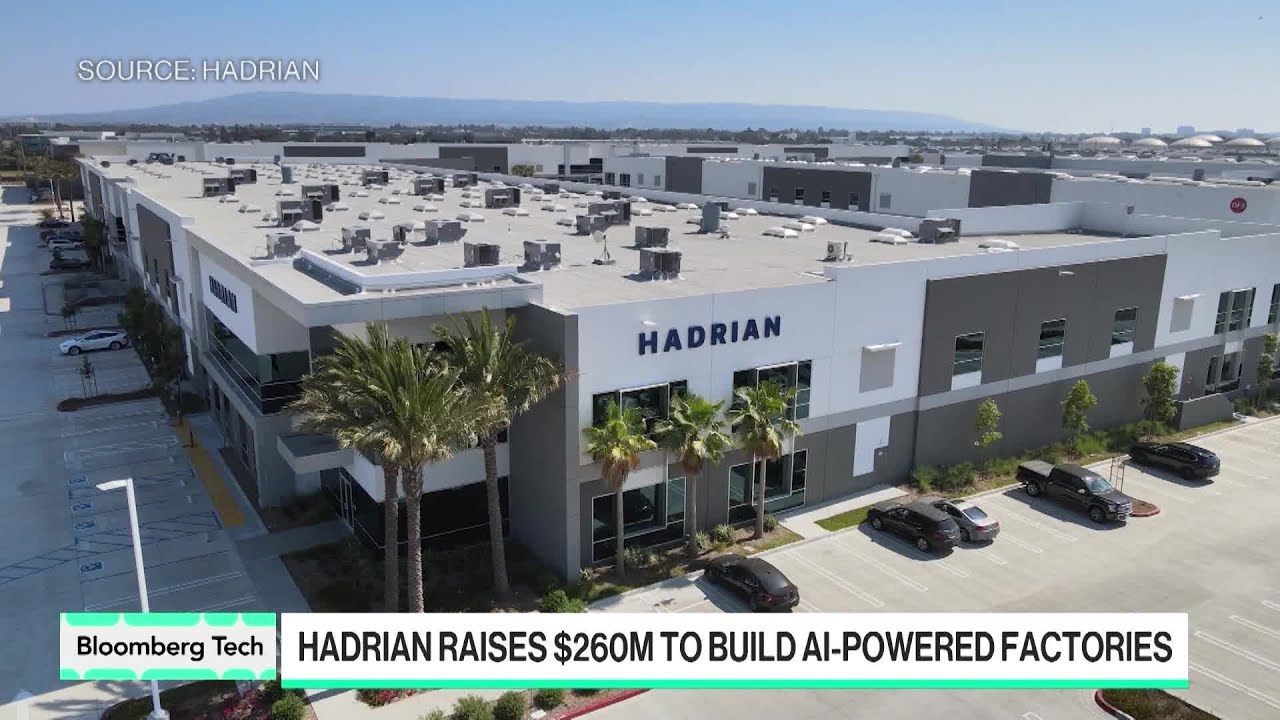

Startup Hadrian raises $260 million to expand its AI-powered factories to meet soaring demand


This Next Billion-Dollar Startup Founder Is On A Mission To Revive American Manufacturing