Eliminate All Negative Emotions For Peak Performance
A YouTube coaching video by Christian Santiago explaining that all negative emotions are responses to pain and contrasting them with pleasure-based positive emotions. He presents a layered pain model (levels 1–4), formulas linking life-to-vision/expectations to pleasure, pain, and suffering, and prescribes two decisions to resolve negative emotions: (1) improve your life through concrete changes and (2) shift your expectations/vision. He illustrates with anecdotes (Ms. Beverly and her depressed husband; a senior leader bored/depressed) and ends with calls-to-action for coaching and subscription.
Chapters
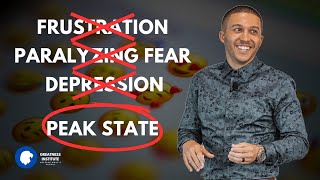
Hey, it's Christian Santiago, peak performance coach for executives, investors, and surgeons. And in this video, we're going to tackle probably one of the biggest things that pertain to peak performance, and it actually has to do with eradicating all negative emotions. Why is that? Because oftentimes the level of your performance is directly correlated with the state of your emotional self, and everything we do is by emotions. And. And we're literally going to break down the source of every negative emotion you have, along with the two decisions you can make to shift from something negative to getting back to a peak state mentally and emotionally so you can achieve the outsized results that we help our clients do at the Greatness Institute on a regular basis. So enjoy the video. So I was on a flight to Oklahoma City to meet a client, and we right next to me, there was this cheery lady. Her name was Ms. Beverly. And I knew we were going to get to talking because she was just saying hello to everybody on the flight. You know, one of those cheery personalities that you're like, hey, I don't mind being around. And so she was a woman late in her late 60s, and she was a teacher, and she was flying to Oklahoma City to ride some horses with some friends. But I knew we would get to a conversation after we started chatting about her, that she would ask about me. She was like, what do you do? And I said, I'm a peak performance coach for high level leaders to help them get more done in less time without getting more stressed. And she was like, wow. And then we ended up having the conversation about her husband, who was at home not traveling with her, standing and sitting in front of the TV for days on end, fully depressed. Fully depressed. And then we ended up having a conversation where I'm going to walk you through the frameworks that we talked that then at the end of it, she was literally like, wow, I'm so glad I sat next to you. I'm so glad I asked the questions that I asked. And I know I was supposed to be here because now I can go home, try to shift my husband, change him around so that way the depression is no longer in control of his life. And that was so grateful because this is something I do with entrepreneurs, executives, investors, surgeons, high level leaders like you, who are also leading teams, who are also growing things, who are also trying to do big things in your world. And so if you're part of the Greatness Institute or you even really just on this channel, you know, hey, like, you know, you're supposed to do Something big. And I'm going to tell you this. The things that are going to push you forward are the things that are going to get in your way have everything to do with human emotion. Either your negative emotion or the negative emotion of other people around you. Whether it's your team, your customers or clients, or the patients you serve, or the leadership, the people above you, or the people you're leading, or the partners that you have, it always has to do with the role of human emotion. Or maybe you're writing and you're a copywriter and you're not connecting with the people that you want. It's because you're not tapping into human emotion. Or maybe what you're writing is repelling them because you're bringing up negative emotions inside of them. So I want to give you the source of every negative emotion you're ever going to feel and give you two things that you can do to shift into a peak state. Now, every negative emotion you have is not a problem in and of itself is a response to a problem. So, for example, anxiety is not the real problem. Anxiety is a response to the real problem you have. Depression is not a real problem you have. It's a response to the problem you have. Anger, rage, all that is not the problem itself is a response to the problem. Because every, every human being is going to have to experience in life. They're usually going to have pain or you're going to have pleasure. Pain is responsible for every negative emotion we have. Pleasure is responsible for every negative, every positive emotion we have. I mean, think about this. Pleasure. What is joy? Is joy a pleasurable thing? Yes, it's a response to pleasure. It's a response to good thing. Oh, man. Joy, gratitude, peace is a, is a response to pleasure. You know, just, just, just excitement is a pleasurable experience. So even positive emotions are pleasure. But pain is all negative emotion. So every negative emotion you have is a response to pain, is a response to pain. And it's varying, different degrees, varying, different degrees of pain. Like, for example, level one pain is nervous, frustrated or disappointed. Level two pain is like anxious, anger and sad. Level three, pain, paralyzing fear, rage, depression. Then the biggest fear, which is level, I mean, the biggest pain, which is level four pain, is suicide. It's when it's more painful to stay in this world than it is to leave. And it's all a response to pain. I mean, think about this. Like, let's even take the degrees of, you know, frustration, anger and rage, okay? It's all different degrees of response. To pain. Like, if my wife loses $100. Oh, man, I'm a little frustrated. I'm like, babe, how are you gonna lose $100? Like, if she loses a thousand dollars? Okay, now I'm angry. I'm like, how you gonna lose a thousand bucks? Are you serious? But then she loses $10,000 or $100,000. Rage. What? You know, if someone, you know, someone on my, you know, team or a partner steals 100 bucks, okay, I'm a little frustrated, But I'm like, that's a little kind of a picture that. It's not okay. That's not okay. But then they steal $10,000. Oh, man, now I'm pissed. Now I'm like, what in the world, Steve? Steal a hundred thousand dollars? Oh, my gosh, I might kill somebody. Complete rage. And so every thing, every negative emotion you have is a response to pain. Like, for example, depression. There's so much pain, and in reality, it's not really. The source of it is different. Some people are so depressed because they are either bored or stuck. They're either bored or stuck, or they feel like they can't change things. They feel powerless, and so they get depressed. And so really, that's a response to pain. The pain is. I've never felt boredom like this in my life. Oh, my gosh. I just sold my company, and now I have no vision for what I'm doing next. Oh, my gosh. I'm just existing, man. Existing for people who just sold their company, that is very scary to them because they've lived on purpose for quite some time. For a vision. Being depressed because you feel stuck, man. Like, I'm. No matter what I do, I can't change this. Wow. Wow. Oh, my gosh. I am depressed. Of course you're going to be because you feel that level of pain. Feeling stuck is so painful. Okay, and so let's talk about the formula for pleasure, the formula for pain, and the formula for suffering. Okay? So. So the formula for pleasure is when your life matches your vision or expectations. Okay? When your life matches your vision or expectations. Or it's even better than that. I mean, think of an area of your life. Like, for me, like, an area of my life that brings massive joy in my life is being a father. I'm two kids under three, and my life. I love it. Because my life is either matching or exceeding what I expected it to be or my vision for it to be. I mean, my kids have so much personality when they see me. They smile. They have so much joy. I mean, they do unpredictable things that make me laugh and it brings so much pleasure and joy, even on the area of my business, I mean, even my coaching, man, when I tell you the level of like transformation that people get, like the people I work with, the high level leaders, like they thought it was impossible situations, we, we have one or two sessions and they're like, oh my gosh, what I thought was a problem, now we've overcome it, man. When I tell you where I am now, to where I expected to be three years from now, or two and a half years from now to where I'm at now, it is mind blowingly different from where I'm at. And so there's massive pleasure for it. Now what is the formula for pain? It's when your life doesn't match your vision, expectations, okay? Your vision or expectations. So when you, when it's a formula of pain, you usually get to a level one or level two pain. When it's just when your life doesn't match your vision or expectations, okay? Like, I'm not happy about the growth of my business. I shouldn't be here, man. I just don't feel good about it, okay? You might be frustrated or you might be a little bit angry, you know, I expect to be. I've been doing this for 10 years and I should be here and I'm not. All of a sudden you've got massive pain and guess what? That's hindering you from being able to see what obstacles that you can overcome. But also some innovations that you might have missed that maybe 10 years ago weren't available now, like how much technology or tech is available now than it was 10 years ago. But if you're always in a frustration of a level of pain where you're like, man, I shouldn't be here. This is where I should be, you could actually miss out on the goal that can get you there. Because you're operating at the lens of anger or frustration or whatever, that you're not seeing the things that are allowing you to get you to another level. Okay, but then formula for suffering. Let's talk about suffering, which is level three or level four pain, where it's paralyzing fear, rage or depression, or level four for pain, which is suicide, which is a formula for suffering. It's when your life doesn't match your vision, slash expectations, and you feel like you have no control to change it. No control to change it. So one of the things with Ms. Beverly, with her husband was her husband is the youngest of seven and they're Getting in their old age. And his oldest brother died suddenly, and he was super close to his siblings. All of a sudden, that brought massive pain. And he felt like he had no control to change it because he was feeling like death was happening. And he couldn't stop the aging process. For his family, it was this expectation that they were always going to be together, always going to be. And it was coming to a point where he was at a season of life where he had no control to stop this. And then his, his, his. His second oldest sister was getting deathly ill, getting sick, and time is starting to be a little bit shorter, but he just didn't. Nope. He didn't want to leave the house. He wouldn't do any of that. And he felt like he had no control to change it. He was suffering. He was suffering. And so when you're in a place of negative emotions, you either got too decisions to make, either improve your life, improve your life, or you shift your expectations. You improve your life or you shift your expectations. And here's what I mean by improving your life. You can either make the changes. Like, for example, if you don't feel like your business should be where it's at, guess what? Make the courageous decisions. Shift some people around. Let some people go. Go in that direction that, you know, you need to go. Make some bold moves. Make a new investment in a coach or a new investment in a strategist or a consultant that showing you something you never did before. Invest in a new technology, develop something. Step into those things that you need to make or shift your expectations. And oftentimes, people's visions or expectations are actually the main problem first. Like, for example, he's either got to, you know, I told Ms. Beverly, I was like, look, he's either got to shift his life, but either way, you got to think about it. Okay, how can you stop aging? You really can't. Okay, so it's like, or he's got to shift his expectations. And here's what I mean. I asked her this question. I said, have you ever asked him this question? Have you ever asked him, what do you want the rest of the of your time with your siblings to be about? How do you want it to be defined? What kind of memories do you want to create that you want to hold on to that ultimately where you're at right now that depression is not allowing you to create? Because when you're depressed, you're staying where you're at. You're sitting in front of the tv. You're not spending that time you're not visiting them, you're not creating those memories when they're gone, you can't get it back. And so the expectation is you can't stop it from happening. You can't expect them to be together forever. That's an impossible belief right there. But what if your expectation that you shifted is, now we can't be together forever, but I can have memories that I can hold on to forever. What if we shifted to those expectations? And all of a sudden she's like, I've never thought about asking him that. You know, it's like with some leaders who are like nervous about making a big change and because they have this expectation that they're supposed to be a certain kind of leader or a certain kind of person. I'm this kind of person and that kind of person. And it's like, no, no, no. What if you shifted of who you really are supposed to be now? Who you really supposed to be now? Like, I remember I was talking with a high level leader who was multiple, six figure job, amazing marriage, married 12 years, have four boys, fully depressed still. Okay, fully depressed. And I was like, what was your vision of what you were happy about, what you're joyful about in your life? He was like, man, I was always feeling my impact. I remember when I was growing through the ranks, I had meeting after meeting after meeting after meeting and my schedule was so filled. And now I was like, where are you at now? Now my life is. I've got so much gray space. Yes, I'm overseeing over 200 employees now in my division globally. I'm in this region, overseeing this region. But I have so much gray space now. I'm sitting around and I'm like, I'm not doing as much. Yes, my impact is growing. Yes, I have a lot of influence, but I've got a lot of gray space. Right before, I was feeling the impact over and over and over again. And I said, you're not depressed, you're bored. And he was like, oh my gosh. And I was like, so either couple things, either you've got to change your life in terms of get back in the weeds a little bit, get back on the front lines, meet with people and all that. That's going to bring life back into you. Or you change your expectation of how you know your influence is growing. Before, your influence was rapid fire, rapid fire. 1, 2, 3, 1, 2, 3. Meeting after meeting after meeting. And I'm feeling it, and I'm feeling it and I'm feeling it. And that was your expectation before or you can shift your expectation like now. I'm going to another level now, a higher level leader that's going 10x, not 2x, because 2x is by effort. 10x is by transformation. Now I am becoming a new type of leader that I before. What got me here is not going to get me there. And I need to set a new vision, a new foundation, a new expectation of where I'm going and who I'm becoming. And we actually shifted number two because once we shifted number two, it's easier to then go and do number one, which is to improve your life. Then we caused him to take three decisions that allowed him to come into alignment with those new expectations. And he did it right there because he created momentum that he had to keep up with. And when that happened, 13 months later, 14 months later, I literally talked to him last week. He hasn't had one episode of depression since. And he's been growing and growing and growing. And so all you have to do, every negative emotion you have is a response to pain. And guess what? All you have to do is make two decisions. Either improve your life, make those decisions that you know that you need to make and stop holding back. Go ahead, make those things. Or two, shift your expectations, shift your vision. Either make it bigger or bolder or shift it to what it should be. Okay. And make those decisions. Because then you're going to make a shift and you'll see transformation happen in your life so you're no longer held back. Hey, if you really love this video, share this with somebody that it would help subscribe to this channel. And guess what? If you are a high level leader that want to get outsized returns in a short amount of time, click the link below and schedule it so we can have some peak performance coaches in your corner. Hey, Christian Santiago, peak performance coach. I'll see you in the next video. And operate at your peak because you have more inside of you than you even realize. Chase after greatness and go ahead and live a legendary life. I'll see you in the next video.