How To Make Decisions Like The Top 1%
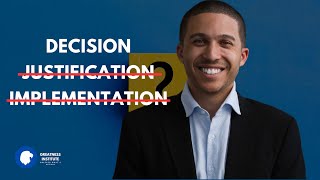
Christian Santiago (peak-performance coach) presents a decision-implementation framework for high-performing leaders (CEOs, investors, surgeons). Core advice: first give yourself permission to want what you want (the 'what') without immediate justification; then add compelling reasons (the 'why'); and crucially separate decision from implementation (don’t design the how while deciding). He advocates making committed decisions (burning other options) to create momentum, illustrates with client anecdotes (a CEO post-exit and a COO transition), and highlights joy, confidence, and presence as primary emotions that enable peak performance.
Chapters
YouTube. Hey, it's Christian Santiago, executive peak performance coach for executives, investors and surgeons. So in this video I'm going to be showing you a decision implementation framework that's going to allow you to make decisions no matter what and continually moving forward. It's the same framework I've used with CEOs of publicly traded companies, high end investors, surgeons, doesn't matter who I'm working with. And so once you apply it, I'm guarantee you that you won't ever be held back from making the right decision and the real decision. Because all your life needs is one decision away from everything changing for you. I hope it serves you. So I was meeting with a CEO who just exited his company. He did a 30 plus million dollar exit share selling it. And I met with him two weeks ago. He found me because out of all the coaches within the area of where I live in South Carolina, he said, you know what, I want to meet with you. And what was interesting was near the end of the session, we spent about 90 minutes together working through some peak performance tact and specific practices he can apply into his life. But when we got to the end, his biggest thing he was struggling with was vision. I don't know if this is something that you struggle with, but leaders, once they hit a high, high, a really big high, now it's what's next. And because it's what's next, ultimately that could be a determining factor of for them whether they continue creating momentum in their life or they end up destroying their life. Because one of the things I told him was in the beginning I said, where purpose is unknown, abuse is inevitable. Where purpose is unknown, abuse is inevitable. That means if I don't know the purpose of my relationships with my marriage or my wife besides just having kids, then I'm going to abuse my relationship. And I'm not saying abuse as in the most extreme sense, I'm talking about abnormal use. If I don't know the purpose of my day, I'm going to abuse my time. I, I'm going to abuse my day, I'm going to have an abnormal use of it to where the end of my day I'm going to look at what did I actually accomplish, how did I get momentum or did I just stay completely busy and that's it. Um, if I don't know the purpose or the season that I'm in, as far as where I'm at in my life, then I'm going to abuse those years of my life when I could have built something incredible. And so for him, I said, where purpose is unknown, abuse is inevitable. And now when it comes to your next vision and where you're going, ultimately, you need a purpose, you need a vision. If not, you're going to abuse this time. And one of the things I asked him at the end, which is kind of hilarious, it doesn't matter who you are. It doesn't matter if you're a seasoned executive like he was, or you're just getting started in your career. Ask him a simple question of what do you really want at this stage of your life? What do you really want at this stage of your life? Now what do you want? Ultimately, what I've seen the difference between peak performers and those who are not just working with top 1% executives, investors, and surgeons is the people at the top know exactly what they want at this stage of their life, not just what they want ultimately, because it's your now that leads you to your next. It's your now that leads you to your next. And so when I asked them this question, all of a sudden I drew out a framework for them, and I'm gonna draw it out for you. And this framework I gave them really brought clarity as to why he was having trouble figuring out what he actually wants. And it's this. And it's because I believe he was doing two things at the same time. He was trying to find a desire or a vision and try to justify it at the same time or rationalize it, why he should make that a worthwhile outcome. And that's going to come a problem because you're using two different modes of your mind or two different modes of your heart to. To do something. You're trying to combine the what and the why. You're trying to combine the what and the why at the same time. And those are two different things. One of the things I told him, which is what I worked with one of my surgeons on, I said, you need to say yes to your desire without justifying it at first. Because if you try to do justification and rationalization along with making the same decision or desiring what you want, then ultimately you're going to be conflicted all the time and not create movement. And from there, he could not make a decision because he was trying to rationalize it. Well, what should I want at my next stage of my life? I don't care what you should want. What do you actually want? Because your shoulds are not going to help you if you're measuring yourself against an ideal of what you should or what's right. Or what's wrong, you're not going to have the joy that's going to help step you into peak performance. There are three emotions that allow you to substitute performance. They've done studies. Joy, confidence, fully present in the moment. Okay, in that order. There was joy that came first and confidence, then fully in the moment. And so for him, I was like, look, in order for you to be joyful, confident and fully in the moment, at the same time, you need to give yourself permission to want what you want without any justification on it. And after you give yourself permission to do that and you let it settle, then you go into your why you add justifications into. You add rationalizations. And I told him, I said, look, when I wanted to be a peak performance coach and I started working with top 1% people, I really started my peak performance coach two years ago. But one of the reasons why I moved really fast and was able to work with a $360 million company within my first four months. Already working with, you know, CEOs of publicly traded companies within my first nine months. Getting read up by New York, New York Weekly, LA Weekly, within my first eight months as being my city's number one high performance coach. The only reason why I've been able to do that is cause I accepted what I wanted without justifying it. And he was like. And I was like, but I know why I want it now. He's like, well, tell me why. I was like, well, I wanna work. I love working with top 1% leaders, number one. Because I can't work with people who need motivation. Motivation is a baseline issue that I don't have time to deal with. Okay? So top leaders aren't really struggling as much of motivation. Cause they're already moving. They've already conditioned themselves for movement. They've already conditioned themselves to move. Number two also too. I love working with leaders because I can tell them the truth without holding things back. Because they're already used to. For them to get to a certain level, they have to tell themselves the truth and tell other people the truth. And so I can give them what specific truth and they would have more respect rather than if they're just getting started as a leader. Oh, you were too mean. You were too. No, that doesn't matter right now. Okay? The truth is the truth. And all change begins by telling yourself the truth. And then the third thing I said is, I love impacting leaders because oftentimes they are alone, they feel alone, and they're like wounded tigers. So if I can help them and Help them step to a higher level, then ultimately what's going to help them is they're going to impact more people. And this is also another reason why I love working with top 1% leaders, because I get to scale my influence and impact. I impact that one person, they're going to impact a thousand people. And so all of a sudden it was like, wow. I was like, but you know what? First step was giving myself permission to want what I want. Because I couldn't make a real decision to be a peak performance coach if I didn't accept what I really wanted. And so once you accept what you really want, then you can go into the why, Then you can add reasons. But you see, compelling enough reasons. The hardest question to ever answer in your life is not why, it's what. Because. How can you ever know? How can you ever attach your why if you don't have a what? Your why needs to attach to something. I just, why, why, why, why, why? If I'm just asking myself why without what, then I'm removing the object for which my why will attach to. And so I've asked the what. And then now I stepped into the why. And the why is meant for compelling enough reasons for you to move forward. And then after that, he was like, wow, okay. And I was like, you wanna know another reason why you're struggling? You know your what? And as. He was like, why? He's like, well, tell me what that is. I was like, you're dealing with the you're trying to do the what and the how at the same time. You're trying to do the what and the how at the same time. I said, here's what you got to do. You got to divide. Decision and implementation. Decision and implementation, those are two different things. You cannot decide because you're either confusing your what and your rationalization. Okay, you're trying to rationalize why is it important? Why should I go after? You're trying to do both of them at the same time, which is why you're not moving. But then the second reason why you're not moving forward is because you're trying to do the what and the how at the same time. You're trying to decide and implement how it's going to work at the same time. Here's the thing, those are two separate things. And you know what? Step one is deciding. That means you're making a decision, not a choice. I've seen far too many leaders make choices, not decisions. Okay, A choice is I have door A and door B. Okay? A Choice is I go here and I try it out. I don't like it, so I go to door B. A decision is I go to door A, I go here to door A and I burn the door. Because I'm making door A work no matter what. And I'm not going back. I'm not going to door, baby. That's why decide C, I, D, E. The ide at the end means to kill off. So suicide, homicide, all those things are killing something off. Decide you're killing off every other possibility. So I said, you've got to make a decision. I remember I worked with another leader of a top, top organization in Miami. And he had his right hand person, his COO was a good friend, okay? Became really good friends and he couldn't let him go. He was having struggles with him. And I was like, how about this? Let's make a decision. He was like, well, I just don't know what to do. I said, it's because you're trying to do what and how at the same time, let's separate it, okay? You need to either move him or let him go. He wants to do it because he was good friends with him. Do it in an honoring way. You want to launch him into his next thing, Next venture. And then the last one is how to keep the team encouraged. Because this person was a part of the entire time. This person was a part of the buildup from the organization. So they've been there a good bit. And so the team was a big deal. And so I said, okay. He's like, okay, so what kind of solutions? I said, no, no, no, that's not what we're doing. He's like, what do you mean? I'm ready, I'm ready. I was like, no, we haven't made a decision yet. We're gonna decide first. So are we doing this? And I said, let's go to the left side. I said, are we doing this side right here? Yes or no? Because we're not gonna implement if you hadn't made a decision. Because as soon as you face obstacles, as soon as something gets a little bit hard, you're not gonna follow through because you didn't make a real decision. You made a choice. So are we going in this direction, yes or no? And he looked at me and he said, yes, Christian, we are. We're going in this direction. I said, are we going in this direction? Yes or no? Come hell or high water, are we going in that direction? He said, yes. It's going to be hard, but I'm ready. That's when we created solutions. And it was interesting because the solutions that we created was actually much easier than he thought it was before he could not do it. He was holding back for five months. He was telling me, christian, I just feel like I need to make a decision. I was like, you haven't made a decision yet. That's why you're struggling for five months. Okay? Most of your problems that you're having is because you're not able to make a decision. You're the confused, you're trying to do the what and the why at the same time. Trying to justify it at the same time. Or you're trying to do the what and the how at the same time. Okay? But it was funny because he had a conversation with the guy and the guy ends up wants to pull back his position, wants to be part time so he can focus on his next venture of what he wants to do. And. And he said, christian, I repaired the relate. I kept the relationship. That was one of the big things I wanted to do also too keep the relationship. And he didn't lose the relationship. So he was able to have a transition that was masterful. Now he's getting other people to step up within the organization and now he's able moving forward because with joy and excitement. And now he's stepping into peak performance even higher because he separated decision and implementation. And so the CEO that, that was, that was a leader of a different organization in Miami. But the CEO I met with a couple weeks ago, I was like, who just exited his company. I was like, okay, so what are we gonna do? And so for him, he made a decision on who he was gonna become in the next six months. He decided on who he's gonna become. And we created ultimately, we ultimately created the solutions that would come alongside that decision. And so for you, if you're struggling with any decisions, you're here watching this video, you've stumbled upon me, okay? If you want to make a real decision, all of your life can change in a moment. When you make a real decision, it doesn't even say the right decision. A real decision, I don't care if it's perfect or not, at least you're moving forward. If you're a high level leader with a lot of things that you got to do and you want to step into peak performance so you can operate at the highest level, make real decisions, cut off things. But sometimes we can't cut off of things because we're too busy trying to justify it. At the same time, or we're too busy trying to figure out implementation at the same time. Separate those things. Separate them. Okay. Do the what first. Then add compelling reasons to step over the line. But you got to decide first. Step over the line. Go what then second thing. Okay, if you're, if you fall in the decision and implementation trap, the then you need to decide step over the line. You're doing that no matter what. And then figure out to implement. I've done this framework with all of my clients that I've worked. I've done this with myself and it makes things easier. So continually moving forward. Okay. So again, my name is Chris Santiago, Peak performance coach for executives, investors and surgeons. I pray that this channel and this video ultimately helped you and so subscribe and make real decisions decisions because your life will change when you do that. Okay, signing off and I'll see you in the next video.