The 4 Fulfillment Focuses For Visionaries
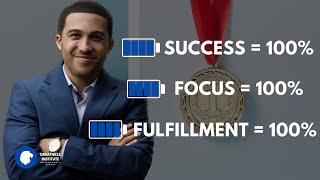
This content was created by Christian Santiago. This content was uploaded by Christian Santiago. This is a YouTube video titled "The 4 Fulfillment Focuses For Visionaries" (created 2024-04-04) featuring Christian Santiago, a peak performance coach, delivering a solo coaching/talk to visionary leaders and entrepreneurs. Drawing on ~1,114 coaching sessions, he presents four practical frameworks to combine success with fulfillment: define your "enough," identify your burning (or success) question, choose three legacy words, and set two feelings to bring and two feelings to get. The video is instructional/motivational and includes examples (a surgeon, a mayor, founders), personal anecdotes, and a call to action to subscribe or book coaching.
Chapters
Hey, it's Christian Santiago, peak performance coach for visionary leaders and entrepreneurs. And in this video, we're going to walk through four things that I've seen just out of the 1114 coaching sessions I've done the last three years of high level leaders, the four things that will allow leaders like you to feel fulfilled while also being successful. Okay, because oftentimes we can get the achievement. We've mastered the science of achievement, but we've not mastered the art of fulfillment. So you can achieve some things that don't feel like anything to you. You might hit your seven figures in revenue, you're eight figures, or you do an eight figure exit, whatever, and then you feel nothing. You feel a jump and then a huge drop. And most of the time it's because we have not defined what these four things are. And so. And you can also define that on the road to your high level achievement. So that way every step you get there actually feels fulfilling along the way. So that way you don't feel empty until you finally hit that point. You can feel absolutely fulfilled the entire way towards what you're going after. And it's by defining these four things. Enjoy the video. So one of the things I'm super grateful about, just after working with hundreds of clients, whether they're in a dozen different industries, in the medical, the entertainment, they're in the home building, they're in the investment space, regardless of where they're at, I'm grateful because out of the 1114 coaching sessions, at the end of it, whether we go three months, six months, a year, some of my clients are right now two years with me, they say, christian, I'm not just hitting higher levels of success, I'm also being fulfilled along the way. Because one of the things that I just realized for leaders is oftentimes we equate success with fulfillment. And it's because we're saying, hey, when I be successful or when I hit this thing, I, I am, will be fulfilled. But ultimately, whatever you chase that, when I hit this, then I'll get this. What you're admitting in that moment is that you don't have this. If I'm saying, hey, when I have a relationship, then I'll be happy. What you're saying is right now you're not happy. You're saying you'll never be happy until this thing gets fulfilled. And in reality, if we're honest with ourselves, most leaders who even achieve certain level of success or even there are being successful or they hit a high level or they're going forward no matter what. Or maybe they're just beginning their journey of success and they're starting to get a little bit of momentum. They realize not every piece of success gets them fulfilled. Success doesn't equal fulfillment because there's a science to success. In other words, like. Like, if you do 1, 2, 3, you'll be successful. It doesn't matter. You put. Put A in, you're gonna get B out. That doesn't matter. But fulfillment is an art. Is an art. It really is. Like, for one person, it's different. While another person, there's a different way they feel fulfilled. It's like certain criteria has to happen in order for them to be fulfilled. And so success is a science where you can hit it, but that doesn't guarantee that you're going to be fulfilled. Because oftentimes people chase things that they were told or that. That they were told that they would feel fulfilled on, that they were told that they should go after whatever. And then when they finally get there or they're on the road there, they realize, this isn't what I really want. And how do you get there? Or what are the things that you need to define in order for you to be there? And the first thing I would say is for visionaries, they need to define what their enough is. Here's what I mean. They're enough. They're in a certain season or a certain area of their life. And what would be enough for you? What's your enough achievement? Here's what I mean. Enough achievement. So I was talking with one of my clients who's a chief of surgery at a nearby hospital, local hospital for me, where I live, and I asked him, what would be the achievement that when you've achieved this, you feel like you've finished out and you've ended your time well at being a surgeon? He said, christian, I know I can put up my scalpel when I have an agent and a coach in every surgeon's corner. An agent, he started an agency where he's able to negotiate for surgeons with hospitals because most surgeons don't know the business of healthcare to a point that when they try to go into contract negotiations, they either get emotional and they don't really are not in the minds of the hospital administrators, or they actually get way less than what they could, and it ends up creating negative engagement in the hospital system where hospitals have problem physicians and stuff like that. So literally, he's like, we need to have an agent in every surgeon's corner, but also a coach. And every surgeon's Corner because every, every surgeon needs a high performance coach. They really do because they're doing 80 to 100 hours a week in high intensity situations and high focus, and they need to produce at the highest level, at the high level of skill. And him being a trauma surgeon, he also deals with the biggest situations, like a family getting hit by a car or something like that. And he literally needs to work through it all and be at his peak. So he's like, Christian, I know I've hit my enough and I can put my scalpel up when I have an agent and a coach in every surgeon's corner. What's your enough? You know, I was also meeting with the mayor of my city and he just won reelection. This is his last four year term. He'd been the mayor of Greenville for the past 25 plus years and he's 69 years old. And I said, what would be your, what objectives would have to happen that when you achieve it at the end of your term, it would feel like enough to a point that you won't run again for reelection because, you know, your wife kind of was telling you, I don't want you to run anymore. He's like, I know, I know, Christian. And so we define six things that when he accomplished these six things, they'll feel like enough and he can finally hang up his mantle of being the mayor and he can move on to his next season of what he wants to achieve, which he's excited about shifting and transforming other cities like Greenville with his expertise. Expertise. But he feels like that's enough. If you've never defined what your enough is, you'll never know. Like some founders need to say, you know what, when I get to a valuation of 100 million, where we're doing that 20 million of EBITDA, we could do 5x and sell it for 5x. That's my enough. I'm not trying to get to a billion dollar unicorn. I'm not trying to do all that stuff. What I actually want to do is I want to do 100 million. Or maybe I want to do, I'm going to exit and do a 20 million. Or maybe what my enough number is having $10 million liquid cash in the bank and then I will retire and step away. Or what's your enough? Because when you define that, then you get laser like. Because when I texted the mayor two weeks later, I was like, how is it defining what your enough is? He said, christian, I've been more laser, like focused in the past two weeks that I've had The past three months combined because we've defined what those things are and we've laid those things out and he's fulfilled. Okay, the second thing that you have to define is what's your burning question? Okay, what do I mean by your burning question? So your enough achieve, your enough achievement is seize it all. Okay? It's your enough achievement. Your burning question is the thing that last, that lasts. Like, what is your burning question? Everybody has a burning question. I remember I was talking to a prospective client and I was like, what's your burning question? What do you want to achieve? What do you really want to accomplish? And he's like, I don't have a burning question. That's the dumbest thing I've ever heard. And then I explained to him how one of my other clients, he has a burning question. He's like, how do I really, really, in his healthcare. He's another healthcare leader. He said, Christian, how do I build it out for the next generation of surgeons so, so they don't have to deal with what I've dealt with? He said, that's what keeps me up at night. How do I really help the next generation of surgical leaders to not deal with the issues in healthcare leadership that I've dealt with? How do I do that? How do. And that's his burning question. And he's always thinking about the next generation of leaders. Because even when we were talking about what he's going to do after healthcare, he's talking about how can he set for the next generation of leaders for his boys, for how can he. Because he knows his boys are going to be leaders. How can that for the next generation? So he has a burning question about the next generation. What's your burning question? My burning question is how much, like, if my enough achievement is man, like, I'd love to create a solution that would eradicate depression in the lives of leaders. How can we do that? How can we eradicate depression in my lifetime? Like, I have a framework where I've helped leaders who have struggled with depression, anxiety, suicide, and I've been able to break them out of those things for. In two, two and a half hour zoom sessions. My first ever break, my first ever case for depression was August of 2022. And I've talked to this person two weeks ago. They haven't had one episode of depression since, like, since then. And it only took one three hour session together. And he's been free since. And I've been able to do about six other cases since then. But my burning question is like how do you move suffering from the people, from the lives of people? Another burning question for me is how do we amplify the limitless potential, the limitless, the potential of human beings? How do we amplify it? How do we activate the limitless human potential in inside of people? How do we activate that in a way that lasts? That's a burning question I have all the time. So anytime I'm doing a video, I'm thinking, how do I activate the limitless potential in this person? How do, if I'm on a coaching call, how do we do that? How do I activate the limitless potential inside of them? Or maybe if you don't have that, if you don't have a burning question, maybe what could be easier is you develop your success question. Your success question. What do I mean by your success question? Well, when I was first starting my coaching sessions, my coach practice, I always was like, hey, like my success question is, did they cry or did they get teary? Because I knew if they got teary or they cried in our sessions, that means they're going to enact the change. For some reason, there was a correlation between people who got emotional to people who actually got life change. Why? Because I knew that beliefs are not shifted until emotions are activated. Beliefs are not shifted until emotions are activated. So I knew my success question was, did they cry or did they get teary all of a sudden? If I got them teary, I'm like, yes, on the outside. Like when I ended that call, I was like, let's go, let's go. I got excited. So it's success and fulfillment. Okay, number three. The third thing is your three legacy words. Leaders need to define with the three legacy words, what do they want to be remembered for the three words at the end of their life. If you go to your funeral, there's such thing as mortality motivation, which is the highest level one, one of the highest levels of motivations. And, and you don't have to go to a near death experience to experience that. You can just travel to your funeral. How do you want people to remember you at by what are the three words? I've had clients who said their three words are transformational, gravitational and big hearted. That was the three words I've had. For me, my three words are giving, inspiring and leading. Did I give without thinking about it? Did I inspire people to live a powerful life and did I lead people to a better place? Because once you define your three legacy words, you with what you're accomplishing. How can I align What I'm accomplishing with those three words, And I'm gonna be on fire every single day for that. Because I'm fulfilling my legacy. What do I wanna be remembered for? Okay? And so I'm able to move forward on that to a point that every single achievement has real meaning to it. Has real meaning to it. Define those things. What are those three words for you? And then the last thing I would say are the two feelings to bring and two feelings to get. Okay, Two feelings to bring and two feelings to get. Here, here's what I mean. Most people don't have never defined what are the feelings that they actually want to get out of what they're doing. Because fulfillment is a feeling thing. It's really a fulfillment thing, a feeling thing as well. So it's like I feel fulfilled. You can absolutely have success without having the feeling behind it. Okay? I just sent 2,000 cold emails. We closed a lot of people, but I didn't feel any of it. Not a big deal. Okay, but what are the feelings you want to get from it? And most people, okay, they never define what the feelings they want to get from something or their venture or their career or any of that. But then in order for. Maybe they have defined that. But in order for you to get something, you have to bring something, something to it. So what are the two feelings you need to bring to the situation in order for you to get those feelings? Like, for example, I've set this up for myself. My two feelings I bring every single day is commitment slash devotion. Like, I bring that feeling of committed devotion. All right? The second thing is, is intensity. I bring a level of focus and dedication. I put intensity as focus plus dedication, where it's like, hey, I'm bringing intensity and I'm bringing commitment. Okay? So. But the two feelings I want to get at the end of my day, when I lay my head on my pillow, what are the two feelings I want to experience? I want to experience a feeling of emptiness. Here's what I mean by empty. Not that I'm empty on the inside, but that I gave everything. And then I feel momentum, that feeling of momentum. Things are moving along, but the only way I can feel that is if I bring the. The feelings of commitment that I'm going to bring. No matter what, I am committed to it. I don't care what comes up in my day. I'm getting everything done that I said I would get done. I'm committed to the process, and I'm going to bring a sense of intensity, a sense of zeal. So that way, at the end of my day, I can get the feelings I've been wanting the entire time that I feel empty. Oh, it feels good to pour myself out fully that day. And I'm, I feel momentum because that's what I want to feel. But you cannot get something without bringing something to the table, because if you try to get something without bringing something, that's entitlement. But if you are, if you are trying to get something while bringing something to the table, that's expectation. That's why there's a difference in expectation and entitlement. And so if you answer these four things, as a visionary leader, you'll get success and achievement. And every step of the way is going to feel absolutely incredible. And you'll probably achieve more because you defined any of these one things. So again, Christian Santiago, Peak Performance Coach. Subscribe like comment on this. Also send this video out to another visionary leader. You know, and if you want to take everything you're doing to another level, either by getting a growth strategy that's going to take your company from 1 to 5 million, 5 to 15, 15 to 50, or you want a peak performance strategy for your team or for yourself, get someone in your corner. Click the link in our video. And again, Christian Santiago here, you operate at your peak and there's more in you than you're really bringing out. I'll see you in the next video.