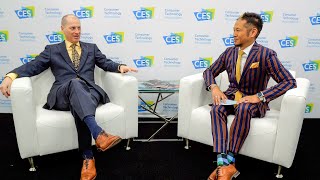
CES 2026: AI and Innovation Take Center Stage with Gary J. Shapiro of Consumer Technology Assoc.

In this episode of The Chris Voss Show, host Chris Voss sits down with Gary J. Shapiro, CEO and Vice‑Chair of the Consumer Technology Association (CTA), to discuss the 2026 Consumer Electronics Show (CES). Shapiro outlines his long‑standing relationship with CTA (CEO since 1991, Vice‑Chair since 2024) and provides a historical overview of CES, noting its origins in 1967, its move to Las Vegas in 1976, and its status as the world’s largest audited trade show with roughly 55,000 international attendees, under 100,000 U.S. visitors, about 4,000 exhibitors occupying 2.5 million sq ft across three major Las Vegas convention centers, and a media presence of 6,000 journalists. He highlights the dedicated startup zone, Eureka Park, which hosts over 1,000 emerging companies and serves as a matchmaking hub for investors, media, and corporate partners. Shapiro announces a new AI‑focused area called the Foundry, which also covers cybersecurity and quantum computing, and describes AI as the core technology underpinning the show. He discusses rapid growth in robotics, a renewed emphasis on U.S. manufacturing and reshoring, and a half‑day manufacturing track. Healthcare innovation is another pillar, with telehealth, remote monitoring, and cost‑effective drug discovery showcased, reflecting post‑COVID acceleration. Shapiro shares his nuanced policy views, critiquing tariffs and the push for total domestic production, invoking the law of comparative advantage, and warning of the economic strain of over‑protectionism. Throughout, he emphasizes the free‑market, capitalist ecosystem that fuels innovation, noting both success stories and the harsh reality of startup failure. The conversation ends with Shapiro encouraging listeners to attend CES, describing it as a life‑changing, optimistic showcase of technology that can solve fundamental human problems.
Chapters
You wanted the best. You've got the best podcast, the hottest podcast in the world. The Chris Voss Show, the preeminent podcast with guests so smart you may experience serious brain bleed. The CEOs, authors, thought leaders, visionaries, and motivators. Get ready, get ready. Strap yourself in. Keep your hands, arms, and legs inside the vehicle at all times because you're about to go on a monster education roller coaster. With your brain. Now here's your host, Chris Voss.
Hi folks, it's Voss here from thechrismosshow.com. Ladies and gentlemen, the earliest things that makes it official, welcome to the big show and all that wonderful stuff that's there. I hope you're ready for some wonderful show today. We've got good shows, they like to call it. Today we've got a— we'll be talking with our good friend for his 6th or 7th appearance. I think his 7th appearance on the show as annual appearance for announcing the new season of the show. For 6 to— yeah, I can't count beyond 5 because I, I flunked second grade, but I believe it's 7 by my count here.
That's the thing, Chris, you got to look it up.
It's 67 at this point, but we hope to have him on our 67th time on the show, so we'll just keep him coming back. In the meantime, we need you to go to goodreads.com/chrisvoss, youtube.com/chrisvoss, facebook.com/chrisvoss, linkedin.com/chrisvoss, and follow the amazing things we do there. And our good friend Gary is on the show today. He also posts a lot over there on the LinkedIn.com. You should check it out. Today we're going to be talking with the amazing Gary J. Shapiro. He is the CEO and Vice Chair of the Consumer Technology Association, otherwise known as CTA. It's a trade association representing U.S. consumer technology and industry. He's held the position since February of 2024 after serving as CEO from 1991. He got sick of that job, I guess, for after 20, 30 years, something like that. I'm just putting words in his mouth. Mr. Shapiro is a lawyer, author, and lobbyist who's been recognized as a tech titan and one of Washington's most influential people. Welcome to the show, Gary. How are you?
Chris, thank you for having me. I'll tell you, we've done this more times than I think any show I've done, so I, I have tremendous respect for what you've done. I love your book. I like your honesty and your candor and your refreshing way, and the fact that you've been doing podcasts a long time, and you and I have known each other a long time. You know what, I, I count you as a friend, a colleague, and a voice in the industry, and I just wish I could keep up with all your podcasts.
And I wish you could keep up with all your great posts you make on LinkedIn. You, you talk a lot, and you lobby Congress hard and, and politicians hard on behalf of businesses. And so I'm just going to Shit, a little tear there. Thank you for saying the wonderful things. I love you, buddy. So anyway, let's get into the show. We'll talk about CES for those who are uneducated on it. That's what we want to do, build awareness. Where can people find out more about your organization and the CES show?
CES.tech, T-E-C-H, CES.tech is focused on CES. And of course, there's CTA.tech, which is the association, the Consumer Technology Association. So we're a big association, but one of the One of the best and coolest and funnest things we do is produce this mega event, one of the largest events in the world, largest business event in the world, largest tech event, largest, largest, largest of every, just about every measure. And then we even hire an independent auditor to tell everyone that we're honest, which we are in terms of all the different numbers we release. But it's, it's all out there. We, we are what we say. We have pages and pages and pages of information about the industry. About what we do, about the CES, which you've been coming to for how many years?
I don't know, 10 years plus, something that I've been coming to. I've been aware of it for longer than that and promoting it and things that are there. You know, it's always— it is the largest trade show, I think, ever, really, isn't it?
No, that one is— there's some big outdoor events that are held once every few years, but certainly on an annual basis, definitely as an independently audited event, we're the largest We have a big footprint, one of the biggest in the world, and it's been held since 1967. Wow. The guy who hired me started it in New York and moved to Chicago. Got pretty cold one January there, and they were the first big business event to move to Las Vegas. Oh, and that was in like '76, I believe. Yeah. And I, I think my first one was in the '80s and I haven't missed any since, knock wood. Oh, that's not true. I guess we missed the COVID one that didn't happen.
Oh yeah, the COVID one.
I remember that happened in the Microsoft, actually. We did a digital event.
That was, that was wild times. We were wild times. We talked to that.
Yeah.
So you're an acclaimed author. We've had you featured. How many books do you have under your belt there?
There's 4 books and about 1,300 or 1,400 different op-eds and commentaries and probably some other stuff. And I don't know, it's, it's just a lot of words. It's, it's a lot of words.
And I'm going off the CTA Tech website here, but you are a lobbyist for, of course, all the businesses in your Consumer Technology Association, the CTA. And it says here it represents over 1,300 consumer technology companies and owns and produces CES show, the global stage for innovation. Is that right, the 1,300 number these days?
Now we're saying over 1,200, but it's variable. It depends how long we give people to pay their dues. We are, we only allow a company with a, you know, a US facility. So that limits some of the foreign-owned companies. But we're, we're, we're doing okay. We keep getting new members in, big new members. Our prospect list is getting shorter and shorter. But CES has several thousand exhibitors.
Yeah.
From all over the world.
Yeah.
And it's as an association. The other word I struggle with is lobbyist. Uh, I do get on every lob— not every, but many lobbyist lists as most influential and all that. But actually I'm not a lobbyist, which is the ironic thing according to legal definition, which means you spend at least 20% of your time lobbying, which I definitely do not.
Um, you'll have to take it up with the people at your company because they put on your website.
Oh really? They use the word lobbyist?
Yeah, I read that from your website.
That's why I made that disclaimer because, well, you know what, that'll be under the book.
That— sometimes when I quote numbers from, from bios, they're old because, you know, we see that all the time on Amazon. Somebody will have some bio from like their original first book.
As long as they're not, you know, doing the Ann Landers thing with a picture from 60 years ago for me when I had a full head of hair, then I'm okay.
No, No, no, they give it— they got, they got a recent photo up there. So, but you know, I mean, you could have that barba wawa effect, you know, that whole— I, I'm gonna start putting that on all my stuff. So tell us about fuzzy lens, the fuzzy lens. Yeah, that beauty lens.
Because I don't think I was ever hired for my looks to begin with, so I don't worry about that.
You and I, that's the one thing we have going for us, I guess, or well, at least one of them. So Gary, give us a— this is going to be held, the show at least, the exhibit are January 6th through the 9th, and I believe you guys do other stuff pre-show. Yes, the press and stuff. Give us an overview of what this show is, maybe to people who are laymen and aren't aware of it, and give us the rundown of what's, what's going on this week. This week?
Oh yeah, this is a global event, and by that I mean we have people from all over the world. 40% of the people at the show are from outside the United States. That was this past January of 2024. 5, I'm sorry. It was, we had 55,000 people from outside the United States.
Yeah.
And we had, you know, another little under 100,000 from the United States. Mm-hmm. We had about 4,000 exhibitors. It was in about 2.5 million square feet of exhibit space. Mm-hmm. Spread out across Las Vegas. We have a lot of major facilities we use there. We, you know, Las Vegas has 3 of the 10 largest convention centers in the country, and for the show, different parts of it, we use all 3. Plus we use a whole bunch of hotels. We get about 6,000 media around the world. We get, we have a whole special event. It's a side event in a sense, part of the show though, called C Space. We use this about 4 or 5 hotels now. Uh, we get about 10,000 chief marketing officers and content creators and tech people to go to that. They're focused on the, the business of the internet, if you will, in terms of selling things, the marketing techniques, the Internet allows, so we get all sorts of people doing— going to that conference. And then, you know, the convention centers have a lot of exhibits, and they are exciting. You know, big companies like LG and Sony and others show their full display of products that the way they want them displayed, the message they want to get to the world. It's, it's really interesting stuff. We have the chip companies, we have a lot of the mobility companies, not only the car companies, but also boating mobility, air mobility. We have a lot of companies that are just trying to make the world better and feed people, like John Deere and Caterpillar with their equipment. We have Oshkosh, which makes half the fire engines in the country, and the airplane— airline airport service vehicles. And we have all sorts of different companies. We have LEGO exhibiting for the first time.
Oh really?
Yeah, we get some really interesting companies coming because they You know, every company's a tech company.
Yeah, that's wild.
And they want to let the world know what they're doing. Yeah. They want to reach this extremely influential, high-value audience of media, of investors, of retailers, of potential partners, and of startups. One of the most areas of our exhibit, if there's one category, it would be startups. We have over 1,000 different startups that come in a separate area called Eureka Park. We give them special treatment, so they just have to show up with their idea, basically.
Mm-hmm.
And they get a place to meet all sorts of investors and media and potential partners or customers or investors. And that's, it's called Eureka Park. And it's dedicated to our proposition as a nonprofit organization that we want to make. We know good ideas can come from anywhere in the world, anywhere, any type of person. And these people that are risking, you know, their time and their own credit card may be maxed out and they just want to get their idea out to the world and we try to help them. Yeah, mission in the core of the organization, actually, that we, we want to always make room for startups.
I love that because, you know, there's a lot of people that exhibit in the main halls and the main areas that, you know, they can afford it. You know, Samsung can afford, you know, a million dollar— probably, I don't know what they cost, but, you know, the big tents and the, and the audio and the video and all the, all the engagement they have going on there. But, you know, if you're a small Up and Starter, you know, you're like, I really can't afford the big booth and, and all the, all the stuff there. And it's so great that you make that Eureka Park and there's so many startups, like the French section is just, I've watched that grow over the years. That has just become huge. Other countries going there and, and using that area to profile their startups. And it's really like the place to go as a press person. That's one of my favorite places to go is you see the future of companies that hopefully will be eventually someday on your main floor.
Absolutely. It's, it's exciting. You know, it's really interesting is what we've seen in the last couple years is we've seen South Korea become ascendant.
Yeah.
They're probably the number one country after the US in terms of startups in Eureka Park. Countries like Italy are also growing. Clearly the Dutch and the French, you know, always have a strong presence.
Yeah.
And obviously the Americans have the most startups, which makes a lot of sense because we're based here and we're known for our startups. But it's, it's a global event and good idea This can come from anywhere in the world. What's interesting is you talk about some of the bigger companies, but some of them help finance those, those startups. And a few of them actually send their entire teams of people to comb the area.
Yeah.
And look around. And it's, I was introducing myself to the CEO of Walmart. And he says, he says, I go to CES every year and see, I know you are. And he says, I love going to Eureka Park. Who'd think that the CEO of this huge company, you know, would go to Eureka Park and walk around Eureka Park every year. But like Mark Cuban, it's one of his favorite places to go. Shark Tank, Mr. Wonderful are there. They do Shark Tank tryouts there. Audition. It's, it's an opportunity for them. And some of our biggest volunteers were Shark Tank contestants or in Eureka Park, and they, they, companies succeeded and they grew and they wanted to give back and volunteer to the industry.
Yeah.
Those are the kind of people that, that run our organization and provide us the guidance and leadership and direction that we need because they've lived it. You know, those people that have helped out, and I could think of so many of them off the top of my head. They started, as Bill Gates once told me, he says, Microsoft needed CES. So we started as a tiny company in CES, and there was a show then called COMDEX. They made us seem bigger than we were, and they got us— every year we got bigger and bigger and bigger because the business we were able to do there and the people we're able to— it's very efficient. You know, the average person that comes to CES has 29 meetings.
Wow.
There's a whole bunch of business deals. And as much as I'm the paid cheerleader for the consumer technology industry, let me tell you something. I believe in the power of face-to-face relationships and trade shows and in business, and also the value of discovery, of serendipity that you get at an event like CES, like a trade show like ours. And we try to encourage it in every way possible. You know, we're always trying to make it better. We've improved our app. For those that come so they could find things and say what they're interested in. We certainly improve in terms of our programming. And if you look at our programming, you'll see some big names there.
Yeah.
It's really impressive. We have 1,200 different speakers. No one could hear every speaker or do everything or see every exhibit. You know that because you've been there.
I've tried.
But you get such a flavor for the world and the optimism of the technology. It's great. We'll have a lot of people from the Trump administration as well as Democrats. From around the country, and international politicians are coming in force from all over.
Yeah, it's, it's going to be a huge event. You know, you've been hosting this since 1991, or working with CES since 1991, over, you know, nearly 35 years roughly of, of doing the show. What's, what's new this year? Are you seeing any of that AI?
Yeah, what's that?
What? I, I know, I don't know.
That's, uh, no, AI will be pervasive throughout the show. It's, it's huge and everyone's talking about it and doing it and they're showing different cool implementations of it. And there's a lot of stuff there in terms of helping your customers, helping your employees, having cool products that do all sorts of things. It's definitely, if there's one, you know, core technology underlying the CES, it's AI. In fact, we have a new area called the Foundry that focuses on AI and cybersecurity and Quantum Computing, and it's new. It's more of a conference with some cool places to see— excuse me— see things. It's— and it's oversubscribed at this point. We have a waiting list to companies to get in there.
Holy crap.
Yeah, it's, you know, you try new things and, you know, part of our obligation is to introduce our constituencies to the future. And for example, like this past show in 2025, we had A whole big focus on energy. Well, we're continuing expanding that because you need energy to power AI and quantum and electric cars. Now we're seeing more self-driving cars with the new administration. Electric is not being subsidized, and they're back to the focus we should have on self-driving because that solves a lot of big societal problems. It empowers seniors, people with disabilities. It cuts down on traffic accidents and deaths. Who doesn't want that?
Yeah, I was really, I was really surprised it hadn't been adopted sooner. I was expecting like 2017 to have—
Well, you know, nothing ever happens as quickly as you think. I mean, certainly AI has taken over quickly because that's just software, but this is, you're changing a whole industry, the auto industry, and you're changing how people get around. But increasingly, you know, if you go to San Francisco, you could take self-driving taxis. They're doing phenomenal. They're saving lives already. It's only news when something happens like, you know, one hit a cat and killed the cat. And that was big news. But it's a number of lives being saved because of self-driving technologies and active collision avoidance. It's hard to measure, but it'll be reflected in the numbers each year.
Yeah, AI is— I mean, I'm just surprised at the growth of it. I shouldn't be, but I mean, just them, because I'm like just trying to hold on for dear life to keep up on new technology. What other technologies are you seeing that are leading the charge there? At CES 2026.
Another one is that's really seeing fast growth in is robotics. You know, there's factory robotics, obviously, which is really important, especially as we bring manufacturing back to the US in different ways. And we, we're having a fact, we're having a whole half-day sessions focus on manufacturing. We have manufacturing factory engineers exhibits there. We have, I think, people try to reach a global audience for US. That's certainly part of our agenda that we didn't have last year. Or this year, I should say, this is January, the next year, '26 in Las Vegas. We're talking about, we will have manufacturing, we'll have a lot on robotics, and we certainly see a lot in healthcare still. And this is, this is just accelerated since COVID in that you have all these devices which are basically providing supercharging, the ability of doctors who are scarce supply and takes a long time, and hospitals which are looking to make sure they get the people when they should be there, not when they they shouldn't be there. Remote monitoring, telehealth, telemedicine, drug discovery, discovering what works and what doesn't. My wife's a doctor, and she's already done some original research looking at her patient records and discovered that one of the treatments she's experimented on is actually just as good as everything else, but it's only once every 8 months and not once every 4 months, and it costs only a few dollars rather than several thousand dollars, existing treatment. So we're, we're on our way as a country, as a society, to finding better ways to do things. You know, we do trust our experts. Everyone trusts their doctors, but they're all human. And, you know, in the U.S., we have the most expensive healthcare system in the world, and we incentivize doctors to do everything. Yeah, we're not incentivizing the best treatments or the best care, which is something, you know, we, we hope we'll eventually switch to. And I actually, I give the Trump administration credit because they're very eager to learn and hear about all this. That's why we'll see a lot of leading people from the healthcare portion of the administration there. They want to know what works and what doesn't, and they're willing to challenge the status quo. You could love them, hate them, you could disagree. I'm a little more nuanced. I mean, I think what they're doing in artificial intelligence is critically important. When I think they're doing tariffs, it's not helpful to American consumers and not helpful to our place in the world with our allies. Yeah, but, you know, it's— it's— he's trying to change things and trying to make things better. And that's important that we have open-minded leaders that are willing to do things like that. I'm and got to get over the fact that you're not going to agree with them on everything.
Yeah, I mean, you represent a lot of these businesses and, and, and, you know, try and get politicians to understand what they need to do to help these businesses grow and be great and help, you know, America be great and the world be great and solve a lot of problems. And with technology, and do you, do you see— I know one of the things they've been trying to accomplish, that administration, is bring manufacturing back. I don't know if that falls fully under your purview, but are you seeing methods that are working going that direction of bringing manufacture back, maybe through the show or your affiliates and stuff? Your viewpoint?
To be perfectly honest, I'll be interviewing the CEO of the National Association of Manufacturers, a good friend of mine. Talk about him in my recent book, actually, Pivot or Die, and my meeting with their board. But they're focused exclusively on US manufacturing, but they don't love tariffs either. Because they think that they're, they're making it very expensive to, to manufacture in U.S. if you're putting special huge fees on steel and aluminum and things you need to make stuff. Plus, I mean, to be honest, we're, we're exporting a lot of people who, yes, they're here illegally, but they have skills and they're willing to work hard. And they're, a lot of them from Latin America, in a sense, they, they have our values. They have work, hard work, and God-fearing, religious, pro-family. They're really great workers, and we're getting rid of them. So the question begs, who's going to make all this stuff here? Where are the workers that are going to do it? Are Americans— or I asked the Deputy USTR today, do you want Americans to be making pencils? Like, what's your vision 10 years from now? We don't have enough people in the U.S. to do all this manufacturing, and it's going to be so expensive that it's something that will be so deeply expensive that American consumers won't be able to afford to buy anything. Yeah, the intentions of the administration are good, but it'd be nice if we manufactured more. And it's important, especially when it involves clearly involves national security. But to have everything made here is absurd, and frankly, it's not going to happen. Yeah, because you put up an iron or electronic or both curtain around the U.S., Americans will be dying in poverty because we won't have the things we expect— food that's reasonably priced. And even today, I do the grocery shopping for my family. Let me tell you, I don't know how the average American could afford food anymore.
I don't know either.
It's just, it's We're, we're, we're, we have great aspirations, but we're ignoring the facts. And the same thing we're doing about this huge growing budget debt that we're in. And I understand why President wants to get interest rates down because just the jump in interest rates is costing us trillions of dollars a year more.
Yeah.
And that's taking money away from investment, is taking away money from our kids' future. And it's not fair to the next generation. Yeah. So in some ways we're visionary, in some ways we're being delusional. Yeah, I think it's important that we focus on the facts. And the fact is we can't build everything here. We never will be able to build everything here. We shouldn't build everything here because that's not how the world was built. 99% of the economists in the world will tell you that there's something called the law of comparative advantage, which is a pretty hard, fixed physical law that says everyone wins if you build the stuff you're good at building and don't build the stuff you're not good at building. Yeah, we're not good at building factories and pencils and things like that. We're not good at backbreaking labor. We have to import a lot of our labor. We need it here to survive. And right now we're in this rapid transformation, which is super well-intentioned, but frankly just ignores the reality that we don't have here, even with growing unemployment, the workers we need with the skills we need.
Yeah, we have a shortage of nurses and healthcare coming up too. We talked to a lot of doctors about that on the show. Oh, I was gonna tell you, we've, we've had people, you mentioned that investors go to the show. To find, you know, the newest big thing. And we've actually had companies that we've reviewed and profiled on the Chris Voss Show from CES, we've had investors write me and go, hey, can we get the contact information for those guys? We want to invest in that company. So it works.
It does work.
Yeah, I've seen a lot of that. So the interesting thing is going on the show, I, I love it. It's like a— to me, it's like a big Christmas Day sort of opening presents sort of experience at CES where I get to see all the latest stuff and the coolest things and, and the most interesting innovation and sometimes you see stuff that you're like, I don't know if that's really going to fix the problem you think it is, but you see these— the minds at work trying to, you know, fix problems of, of, of people and innovate. And I mean, that's the— that's the great thing about the human spirit, you know. There's always a way to make things better. And as long as we have that drive in our country where the human spirit can, you know, have the freedom and the— and the wherewithal and the money to be able to invest in themselves or invest in products You know, you never know what's going to be the next biggest thing these days.
Absolutely. And it happens all the time. And sometimes there's something which everyone thinks is the next big thing and it clearly is not. Yeah, I would say 3D television was in that category. And the metaverse, I mean, 4 or 5 years ago, I was doing all these interviews. All they want, they lead with the metaverse, this and the metaverse. And I, I, I was ready to like, seriously? But, you know, you can't argue with momentum. And, you know, I It's interesting to see how companies have spent huge amounts of money because everyone just agrees with each other. And I've seen it mostly in Japan where there's no word for no and it's always consensus. But, you know, the CES is great because it's a huge laboratory and the people that exhibit there, especially in Eureka Park, come back and they have a different business plan because they've listened to their potential customers, potential investors, people who want to buy their product if they change the thing. And, you know, they come back and that's the free market system in place. It's rough and tough and competitive. And it hurts when you waste money or you, you've given your life savings and you've, nobody wants to buy your product. But on the other hand, you hit it big. You could hit it big in this country. And that's what makes us a great country is that we have more innovation here than I would guess all the other countries in the world put together right now because we have a tax system. We have a, you know, we have a culture that embraces it. And if you fail at a business, you're not a failure. We've all failed at different things we've tried. That's when you learn. And that's the important thing in this country, that we are a nation of learners, always striving for something better. And that's what the standard the CES goes to. We try to give everyone an equal chance. And so you're out there, you're gonna, you know, your business may succeed, it may fail, but the, you know, people will tell you what you need to do to succeed. People are honest. Now the show, I have to close here, but the show is, it's in January, it's open to anyone. Who can show a business interest, whether it's in media, as an investor, working for a tech company or a startup. If you could show you can come and you could be inspired and you could— it could change your life as it has for several other people. You go to our website, CES.tech, you could see what it takes to go there. But it is life-changing for many people. It changes the arc of their— the decisions they make in life, the businesses, the people they meet. It's just an eye-opening, optimistic view of the world. And how technology will solve the most fundamental human problems. And capitalism, frankly, and the free market are the solution to a lot of what's wrong, whether it's in healthcare or transportation or robotics or AI, or you wanna name the category, it's there. Having said that, Chris, I look forward to seeing you. So the CES will be complete. And I appreciate the opportunity to be on your show. It's a great show and you have a great book that's out that I found really life-changing for me, just reading your book and you're about your experiences.
Thanks, Gary. Thanks, Gary. It's been wonderful to have you. You just completed your 8th show. I counted them up. This is your 8th show on the Chris.
Okay. 8th year.
8 years in running.
My goal is to make it at least to 9. Always want to have that goal in front of you.
You're always welcome on the show, Gary. We really appreciate you and it's going to be an awesome show. Thanks for coming by.
Thank you, Chris. Please have a great holiday and New Year. Bye now.
All right. Thank you very much.
You've been listening to the most amazing, intelligent podcast ever made to improve your brain and your life. Warning: consuming too much of the Chris Wauschau Podcast can lead to people thinking you're smarter, younger, and irresistible sexy. Consume in regularly moderated amounts. Consult a doctor for any resulting brain bleed.
More from Gary
CES 2026 Preview: Gary Shapiro on AI, Manufacturing Innovation & the Future of Technology
Innovation Conference: Gary Shapiro, CEO & Vice Chair, Consumer Technology Association (CES owner)
Gary Shapiro, CEO + Vice Chair at Consumer Technology Association Joins NYSE TV Live
Gary Shapiro, CEO + Vice Chair, Consumer Technology Association Joins NYSE TV Live

The Future of Technology and Innovation: A Conversation with Gary Shapiro, CEO of CTA
🎙️ Tech Leadership Insights: CTA CEO Gary Shapiro on Innovation & Adaptability