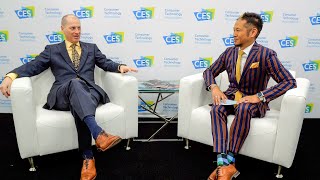
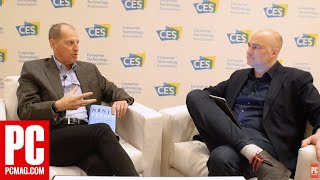
The Future of Technology and Innovation: A Conversation with Gary Shapiro, CEO of CTA

In this episode of the Boon of Wireless podcast, host John Horowitz interviews Gary Shapiro, the long‑time CEO of the Consumer Technology Association (CTA). Shapiro walks through the organization’s 100‑year history, from its origins as the Radio Manufacturers Association to its current role as the steward of the Consumer Electronics Show (CES) and a leading policy advocate for the tech industry. He outlines CTA’s core mission – to enable innovation that improves human life – and describes how the association influences spectrum policy, opposes a proposed AM‑radio mandate in cars, and supports both licensed and unlicensed spectrum for wireless innovation. The conversation covers major technology trends showcased at CES, including generative AI, digital health, robotics, mobility, 5G/6G, and the growing importance of drones and autonomous vehicles. Shapiro discusses societal issues such as children’s access to smartphones, the balance between safety regulation and innovation, and the impact of immigration on the prepaid wireless market. He also promotes his new book, Pivot or Die, which argues that leaders must adapt quickly to disruptive changes. Throughout, Shapiro emphasizes optimism about America’s capacity for tech leadership, the importance of skilled immigration, and the need for pragmatic, evidence‑based policy making.
Chapters
Welcome to this edition of the Boon of Wireless podcast, coming to you as always high above the streets of northern New Jersey at ANJ Media. Yes, New Jersey, where we have more drones flying overhead than we have exits on our turnpike. No one knows where they're coming from. Well, I'm sure someone knows. Andrew, behind the glass, uh, on Halloween you told me that you believed in ghosts. Do you believe in aliens? Yes, John. Have you ever seen an alien? No, John. Not surprising. Okay, I'm John Horowitz, your host. Our guest today is an acclaimed author, speaker, and chief executive officer of the Consumer Technology Association, or CTA, which represents over 2,200 consumer technology companies and owns and produces CES, the Consumer Electronics Show, which is the most powerful tech event in the world. Gary Shapiro has authored more than 1,200 opinion pieces highlighting the importance of innovation in the US economy. In his 30 years plus heading CTA, Gary expanded the association's influence and impact alongside the growth of the technology industry. He also transformed CES, expanding its reach globally to attract exhibitors from more than 50 countries, regions, and territories, and attendees from 160 countries, drawing up big global brands and innovative new startups alike. CES is both the world's most powerful technology show and one of the most transparent, adhering to rigorous auditing standards and making attendance and data publicly available. Gary holds a Doctor of Jurisprudence from the Georgetown University Law Center and a BA in Economics and Psychology from Binghamton University here in New York. Please join me in welcoming to the broadcast Gary Shapiro. Gary, how are you?
John, thank you for having me. I am quite honored at this moment.
Well, I am the one who should be honored. I mean, it's someone of your stature to give us your time to come on The Boon of Wireless. Thank you very much. And you bounce between Michigan and Washington, D.C., I understand?
Yes, I do. I've been doing it for over 20 years. It's just I had a wife who I thought I could convince to move to Washington and She thought she'd convince him to move to Detroit, and as usual in most situations, the woman wins.
Yes. Okay. Uh, all right, so, uh, this is the 100th anniversary of the CTA. First of all, congratulations. You've been at the helm for about 30 of those years, I understand. And CTA started out as the Radio Manufacturers Association in 1924.
Absolutely.
Yeah, he had many other names before becoming CTA. Take our listeners through the evolution of the association.
Well, it was 1924. The radio is this new product, and radio broadcasting was the gold rush. A lot of people jumped in there, but, you know, it's a chicken and egg, which would come first. The government passed laws allowing a spectrum to be used for a certain defined way and received. And it's— we, when television came along, The Radio and Television Manufacturers Association was formed, and then it morphed into the Electronic Industries Association, became the Electronic Industries Alliance, and we were the consumer electronics group. We changed our name to the Consumer Electronics Manufacturers Association. We broke away from the EIA and stood on our own because we were the— by far the biggest part of it by every definition. And, uh, we shifted our name to the Consumer Electronics Association. And then became the Consumer Technology Association several years ago. And that's our name. It's a great name. The consumer is not part of the Consumer Electronics Show because, first of all, we don't allow consumers in, but second of all, a lot of the show is business-to-business, and we call it just CES now.
Yeah, I'm a veteran of, God, I don't know, dozens and dozens of shows. I think you used to let the consumers in on the last day, didn't you, back in the day?
It was 1996. We had a show in Chicago and we decided for 2 years in a row we opened it to the public. It was fun, it was difficult, it was a great experiment. And it's funny when you do something radical like that in an industry, all of a sudden everyone wants you to speak about it. So we put me on the trade show speaking circuit, but it was kind of funny because it really doesn't work. The hybrid shows are very difficult. Yeah.
So as I mentioned, you've been the CEO there for the last 30 years. Congratulations. How has the association advanced through all these technology changes?
A lot of developments in my career and with this association are really just a matter of luck, but it's also a matter of, of jumping on an opportunity when it exists. I was actually a consultant to the association before I joined, and I went to the show as a consultant, and I thought it was the most exciting thing in the world to see, and I just wanted to be part of it and figured out how to create a job for myself and joined on focusing on policy. The issue then was whether a VCR should be legal. Hollywood was trying to make it illegal, and then The same thing happened with music industry and they wanted to make recording cassettes illegal. And then it was even recording CDs and issues just kept morphing. And, you know, the Supreme Court decided that VCR is a legal product and a lot of other products are legal based on that decision. And there's just this explosion in technology. And along the way, we figured out TVs could get better. HDTV could come along. How did we get there? We had a national goal. We worked with government and other industries and we had a consensus. We ended up with the best system in the world. And there are other things that happened, you know, the internet came along, the PC. I remember in the early 1980s, I worked in Congress, we got National PC Month, we talked about a chicken in every pot and a PC in every home, and by gosh, it took a while, but it happened. It was IBM that was pushing us at the point to do that. But there were other, many other issues have come along. Certainly the internet was one of the biggest, and I was lucky to be part of this group of people that said we could commercialize the internet. How do you do business over it? How is the signature legal? And believe it or not, we started in Virginia. You went to William Mary, and Virginia was the first government in the world that actually had a way of commercializing the internet. Steve Case of AOL was part of a group that I was part of, and we, with bipartisan members of Congress and the state legislature, came up with this whole proposal and went through the Virginia legislature unanimously. That got us speaking gigs around the world, frankly, testified before the House of Lords, was in Egypt with Hosni Mubarak, did all sorts of things focusing on how you legalize the internet, and the rest is really history. I mean, people really did take advantage of that. Companies like Facebook and Google and Amazon and others were created because when the internet first came, there was no commercialization. Now, obviously, the cell phone is part of our background as well. The early 1980s, going from those big— I remember the big Panasonic phone I first used. It was almost $1,000, and it didn't really do that much except suck out batteries. But you could— it was revolutionary. You could communicate while you're traveling. And that's gotten so many other products and technologies, obviously. And, you know, what's great is that in many ways the United States has done so many developments in that area. And every 10 years there's been a new G, you know, 1G, 2G, 3G, 4G, 5G. We're doing about 4 years for 6G. We're working on it. We've already filed comments with the government on it. And our job is to make sure that innovation can occur, that government allows it, doesn't mess it up. Because this is what we are great at in the United States is creating new things, innovating, and the world benefits from it. And we've been very lucky. You know, we have more unicorns and technology companies that are significant than any other country in the world. And that's made such quite a difference in our national economy, our standard of living, and frankly, the advancement of the world's population and things like getting food and clean air and clean water and and also health. I mean, a big portion of CES now is focusing on health technology. COVID just pushed that along even further. So we've been in transportation, self-driving vehicles, that's very big. And all these things, a lot of it came up because of the smartphone, because you have all these sensing devices in this tiny little product, and every one of those devices could be available for pennies, and very smart people put them together in innovative ways, came up with algorithms that and user interfaces which allow it to record things, get it to others. And like, we're in the middle of this incredible technology gold rush now that's just astounding. And I'm just very lucky.
Good. We're going to talk about smartphones later on. Some states and some countries now are starting to push legislation that children, 10 years old, 12 years old, shouldn't have access to a phone or shouldn't have access to certain internet sites. Is that something that obviously will cause a lot of debate, but does the CTA have a position on that?
The reality is, is it is a job of a society to protect children. We do it with children's advertising on television. We do it with— they have a special place. I mean, even if you think about pornography and child support, I mean, it's a crime. And, and, but the thing is, is a phone is, is like the wheel or the gunpowder or other developments in humankind, the car, the airplane, the computer, these are devices, or even a house or fire. These are things which we kind of invented as humans, our forefathers invented, and government's job is to regulate them in part and say, "This is safe, safety is more important, this is how you do it." Our job as an association of well over 1,000 tech companies is to make sure that it is done in such a way that focuses on the problem and allows the creators and the innovators to work within solving the problem, but not designing the way government says you must design a product. So that's always a little bit of tension there and back and forth. You know, I've been— I have a 12 and a 16-year-old, and it's only recently our 12-year-old's been allowed to take a phone under certain limited conditions. It's one of our older used phones, honestly. We're very careful. We know we can get a more child-oriented phone, but it's, it's, it's makes it more difficult to be a parent now. Same thing with TV set viewing. We're very strict in terms of the rules we have. But as you know, though, the TV companies and the phone companies and others have all sorts of ways of managing your child that are actually pretty good. And I don't think you could take, especially in this day of school shootings and things like that, it's very difficult to take phones away. We did a really interesting experiment. We had this, um, meeting of our CEOs and where we urge them to bring their families, and we said, we addressed the problem you raised, like, what should we do? And we took the kids and they went on by themselves, and the kids of different age— we had 30 kids ranging in ages from like 6 to 20— and they came back with their own report. And they basically said a little regulation is a good thing. We could deal with these things in schools if you— as long as you have them available so we could get them if we need them in an emergency. But a certain amount of regulation makes sense. Now the question is, is it a federal rule? Is it a state rule? Is it like done like in China where they say you just can't use it? I mean, there's different countries now coming up with rules and everyone's trying to grapple with this problem. And I don't think it's— I think it's a real problem and we have to address it.
I saw a clip on one of the morning news programs, I forget which one, where they had 5 seniors in high school, 5 girls, they took their phones away for 30 days, or maybe it was 2 weeks, I don't know. And they said it was hard, but by the end of it, they were happier. They were engaged more one-on-one with people. They were going out without having to, you know, look at what someone else was wearing or doing. So, you know, you're right, there's got to be a middle ground there. And, and the industry has found more ways to penetrate that into the little kids. So I don't 8, 10, whatever.
But you're right. I mean, you have to balance safety. Kids are always stuck in their phones. You know, your kids being hit by— or people actually being hit while walking while texting or walking. It's a real issue. And certainly the emotional well-being of children, it's a real issue. I mean, people put on Meta or Facebook their best lives or their best moments. They don't put up the, you know, I'm a crappy failure life type of thing. But we're all humans and we all have good days and bad days. And things we've done we're not proud of or that shouldn't happen. But it's just, it's a problem we just have to deal with. But the good outweighs the bad. The good, the phone's connected us with our relatives in our ways. I mean, look what it did during COVID If you, not just the phone, obviously with devices. I mean, we were able to stay connected. A lot of us were able to keep doing our jobs, but just what we do with our relatives. I mean, you know, dealing with sick relatives, things, it's just, how can we stop that from occurring?
Yeah.
Right.
Right. So with all that you've said in the first few minutes, sum up CTA's mission in a couple sentences. Again, I hate to say the 30-second elevator pitch, but if someone to say they didn't know of you or know of your organization, what, what is the mission of the CTA?
I'll say it quicker than you've asked me the question. Our mission is to allow innovation to occur, which will make human lives better.
That's excellent. That's excellent. I mentioned drones in the introduction earlier. Yeah, they're here in New Jersey. They're flying everywhere. You were quoted earlier this year in an article saying that— then I'll quote you here— drones are helping to reduce risks to people taking on difficult or dangerous jobs like bridge inspections, explosive removal, or military operations. First, what do you think's happening right now on the East Coast with all these drones?
You know, have you ever seen the satellites for Starlink going up and around?
Yeah.
You know, that's a lot of people think that's those are UFOs. I've been around a few situations and seen that. So I don't know. I was reading about it earlier today and I have no idea. You know, the fact that the government is saying they have no clue. But I think a lot of people have drones and they do. They could go a distance. Uh, my son is a— my 16-year-old loves his drone and he operates it and he's really good at it. And, uh, you know, sometimes he'll like mess with people a little bit, I think, in terms of what they see. But I don't know. I mean, I, I'm a voracious reader of science fiction and I love it because that's kind of like what the future is. And they've been proven right, a lot of the older science fiction writers. But I, I don't think that the— there's some UFOs that are just focusing on this is the way they contact humans. But, you know, I look forward to learning more about it. It'd be very sad if we're the only, you know, life in the whole galaxy or global universe that has any intelligence in it.
I agree with you there. And although we're both probably past the age, I still would love to go up to space one day.
My wife thinks I'm nuts, but I said, you know, well, if you, if you get a few more viewers and you could sell advertising, you could buy your way into space.
Gary Shapiro just said advertisers. Thank you very much. Yes, Carl. What role does CTA play in advancing technology innovation, especially in the wireless and the mobility space?
Well, certainly we advocate for spectrum auctions. We want to see the authority go back to the FCC to allow that. I think it's a good way of allocating spectrum, but at the same time, we like unlicensed spectrum. You know, the thing that powers your garage door opener. Because there's a lot of innovation that can occur. And certainly if you're just selling spectrum, there's a barrier to entry of a lot of money there. We also think that, you know, we need to keep getting better with spectrum in terms of how we use it. You know, one of the things we're fighting, ironically, which is— it's just I can't believe I'm talking about this— is that there's a proposal to require AM radios in every car. And that's how, you know, we're celebrating our 100th anniversary and here we are fighting a mandate of the product we were created over. Everyone else in Washington would love it if the product was mandated, but to us it's just silly because the reason they want to mandate it, that's stated, is it's a safety issue. You know, there's something bad in New Jersey and like, uh, it's, it's very important that people learn about it, uh, and AM radio is one of the ways. But, but there's FM radio, they're not trying to mandate that. There's obviously satellite, there's, there's cellular, your phone.
And how many times have you gotten an Amber Alert on your phone where you're—
Amber Alert. There's D-Radio, which I kind of like.
It's pretty cool. Yeah. And all of a sudden everybody's phones go off at the same time. Now it's a good thing that there's 100 ways, but this has—
but the real reason has— is only about the fact that there's AM radio stations and they're afraid of going under because of declining listenership. But the safety reason assumes that there's someone working at the AM station when the disaster occurs, which is a very unclear assumption. And Congress, I think it's a conundrum, just find out the facts first. And they don't want to, because the real reason that the Congress is interested in doing this is because radio broadcasters put them on the radio. They have PSAs. It's the big loophole in the lobbying law. And you can get your name out there as an incumbent member of Congress by being blasting with a PSA that the National Association of Broadcasters is more than happy to help you with. And it's, it's a loophole, it's a lobbying thing. And, you know, members of Congress, you know, their number one thing is to get reelected, and that's sadly what's going on here.
What does big auto think about this, that now they have to reconfigure?
It doesn't like it. I mean, and the irony here is that almost every automobile is sold with an AM radio now, except for electric vehicles. And the reason electric vehicles aren't sold, because you can reimagine the vehicle. And the elect— all the batteries, and it's a huge amount of batteries for these cars, they interfere with AM radio. So you have to sheath it all, and it becomes expensive. It's billions of dollars it costs on the electric vehicle industry when our kids and grandkids are being basically subsidizing electric at this point. The other thing is self-driving vehicles are, um, probably will be back with the Trump administration the way they were with Obama. As well as Trump, the first administration, and Biden just went all electric all the way. And that self-driving, if you think about the opportunities that offers the US auto industry, is to create an environment that you could choose the environment. You want a work environment, you want to sleep environment, you want an office environment, and you could— you'll be able to buy decked out because you won't have to have the steering column and all the driver information, all the cost of that. And you'll have it in something sort of layer again, layer on top of that. You got to get the AM radio in there. You don't need the FM radio. You don't need to have a cell phone. You don't need to have a satellite dish on your car. You don't need family radio or CB radio or like all these other options that are out there, but you need an AM radio.
Yeah, it's funny. I bought a car about a year ago and I won't say what brand, but it had more stuff telling me what to do and this and that. Buttons. And I said to my sales guy, who I've dealt with for about 20 years, bought about 8 cars, and I said, what is— he says, just drive the car, just don't look at it, drive the car. And I said, then why is it here? Just drive the car.
So, all right, well, look, the truth is these, these features now are saving lives, some of them. Yes, the passive collision avoidance, it vibrates your seat or hands if you're about to hit someone. The active collision avoidance actually takes over so you don't hit something and the cameras, the backup cameras, these are real safety features that make a difference and will save lives.
Yes. Good. But something pops up about this and that. I said, what do I do? He goes, anyway. All right. Let's shift over to CES, the Consumer Electronics Show that's coming up again in Las Vegas January 7th through 10th, I believe. Last year I was there. It seemed that almost everything was AI. And driverless cars. Uh, what do you see being the main themes this year? Uh, first at the main venue and then at the wireless pavilion?
Well, certainly CES has generative AI throughout the show in almost every category. Yeah. Plus we have digital health, which is absolutely huge, health technology, robotics, mobility. You've identified, uh, that it's just not cars, it's everything from electric scooters to these helicopter-like devices that move you around cities that are increasingly being introduced and developed and talked about, to John Deere and Caterpillar there showing these amazing earth-moving and agricultural things that are very good for the environment in terms of measuring seed and water usage and doing things right, as well as electric boats. In terms of what's going on at wireless at CES, you know, carriers will be there and device makers. They want to show the connectivity, they want to show the efficiency. They're already talking about 5G, different uses, and obviously 6G focus on, you know, 5 of the top 10 global telecom companies exhibited at CES this past show. And, you know, wireless TVs are there, advances in Wi-Fi. How, what you're doing about 5G, how you're— we have a whole portion of the show called C Space, which is now in a few hotels and it keeps expanding. And this gets the chief marketing officers from all industries around the world, not just technology, but, you know, consumer goods, other things. And the chief marketing officers have to figure out how to use all these new things that are happening with technology. And that's where you see companies like Yahoo, AOL, you know, obviously Verizon Media is there, AT&T is there. Cloud partnerships are being developed there as well, different things, Dish Network. There's tech solution providers like T-Mobile, of course. Pretty sure that anyone listening to you or watching this is connected with the industry in some way. They're eligible to attend. Go to the website, ces.tech, and you could see about it. CES has a few thousand exhibitors.
Yeah, right.
And it'll have over, probably over 140,000 people from around the world 40% of them come from outside the United States. And there's all these different companies. We have a whole area just for startups. It's inspiration. That's where Shark Tank is. There they'll be hosting, you know, tryouts for Shark Tank. But it's not only that, but like the top leadership of big companies like Best Buy and Walmart and others are there. They're looking for the next big thing. But it's inspiring. It's about optimism. It's about the future. It's about solving problems. In fact, so much about solving problems, we have this deal with the United Nations that we promote the fundamental securities, access to clean air, clean water, as well as healthcare, food. And they've added one at our request, and that's access to technology as a fundamental human security.
Any big announcements we can expect from CTA?
Oh my gosh. You know, if our exhibitors and keynoters, and we'll have over 1,000 different speakers, They like to make announcements. There's a huge number of press conferences. We have the CEO of Jensen, you know, I think this is his first major U.S. appearance in a while. And we have CEO of Delta, which is a tech company in a sense, as every company is a tech company, but they've really gone for it. And Ed Bastian, the CEO, will be speaking in Sphere, that big round thing which seats several thousand people and is an experience in itself. It's an immersive experience. I can't wait for that. I don't know what they'll say. Panasonic is celebrating its 100th anniversary with us. They were one of our first exhibitors in 1967, and we have other several other companies and well-known personalities, personalities, actors, artists, musicians. It's a, it's a festival as much as it is a show. Good.
Well, you twisted my arm. I will be out there.
Okay, great. Well, we'd love to have you. It's important because we do get about 5,000 media from around the world. We get independent consultants. We get the smartest people in the world focusing on innovation in the future. And it's a great thing.
Can I join that group one day? The smartest people in the world?
Yeah, you're in it. Okay, thanks.
All right, in September of 2020, the CTA published a white paper on 5G, which you've talked about a couple of times here. 5G Enterprise in the Industrial IoT Revolution. In your opinion, has 5G lived up to the pre-launch hype?
Well, it depends. You know, the challenge of new technology, whether it's AI or it's metaverse, um, or it's other things, is it— is it— there's a groupthink in trends, and everyone thinks it'll come tomorrow. And sometimes things take longer, and sometimes they think they happen quicker. Generative AI is like phenomenally quick, how quickly that advanced and spread because the benefits were clear. 5G is pretty clear the benefits are. Consumers just don't care that it's 5G. They care about the benefit. They care about the rapid stream that they could see everything, that it's not crowded. And it's a matter of us, you know, marketing and selling the benefits and understanding what consumers really want and marketing to the consumers that are one of them. But every 10 years, there's a new G. This isn't like, you know, one of the real disasters of all time was 3D television, which was— that was the hype for 2 years, and that's all I heard about. Then all I heard about was the metaverse. Another— just a few years ago, I couldn't go on a TV interview without them showing, doing a whole clip, and that's they want. And honestly, I was like, I don't have any enthusiasm for that. Um, 3D TV, I, I talk about my book Pivot or Die.
I was going to bring that up.
Okay, well, I talk about the fact that I, I was ready to quit my job rather than promote 3D television. Yeah, that's why I wrote a book, actually, to get— have you something else to talk about.
There you go. Anything the network providers could have, uh, and others could have done better with 5G?
I mean, I don't think they've done a bad job. I mean, people, you know, they just assume they've done a bad job. You know, we take for granted as consumers how great these things are, and they should be great. I remember my friend was working closely with President George W. Bush, and he was so frustrated that he couldn't go from the White House to Andrews Air Force Base without losing his signal. But to me, it's still a miracle that you could drive a car 60 or 70 miles an hour and get a signal. From different cell towers and they pass off. And at that point, there was a lot more dark spots. But even now, talking about satellite, which is clearly emerging, low-Earth orbiting satellites, there's a lot of developments integrating the chain, getting out to people where there are dark spots in the US. There's opportunity there. The answer is not just like to lay cable to everyone for broadband or do just one thing. The answer is to do all these things in different ways depending on who you're trying to reach. And I think, I think the, like, you know what, for example, what Verizon's done with fiber and other things is just spectacular. I have no problem with my 5G. I like it. It does great. You know, there are certain areas I go to when I'm frustrated because I can't get a signal, but that's life. You know, before you buy a house, you should make sure you get a signal. That's all.
That's right. That's it. Okay. Well, you mentioned, uh, former President Bush. Next month we have a new administration coming into town. Um, do you or does CTA have any position or see any major changes in the world of technology that you folks support?
Yeah, I mean, before the election when we didn't know the result, I, I told our entire staff and all staff, you know, no matter who wins and what happens, I'm going to find good in it. And I have found good in it, and I've also found some Quickly, the good of the Trump administration that I see is that they will embrace self-driving vehicles. We'll have a new Federal Trade Commission chairman who doesn't think big companies buying small companies is a bad thing. That's how small companies and startups get funded. People think there's an exit. That's how innovation occurs. Sometimes better for big company, it's much quicker and easier and smarter to buy somebody. The people being bought, clearly it's a free decision on their part. Trump's gonna cause a lot of Malox moments. People are going to have a lot of antacid churning around their stomachs. And, you know, this whole tariff thing, it just— it's impossible to plan. Yeah. And, you know, a lot of what we rely on because we're in a global world, we have source around the world. We don't have the capability in the United States and won't get it for many, many years. I think this building everything in the U.S. idea is a good idea for important national security items, and we have to pursue that. But to have everything and assume that— I've been in too many Chinese factories to know that we are not going to have those factories. And if we do, they'll be may be more advanced, but then they won't employ a lot of people. And a tariff is definitely a tax. I think President Trump and I disagree on this issue. I don't know how else to say it politely. I mean, he's our president. We elected him. Um, I personally was pleased to see the amount of vote splitting that went on. So people didn't vote according to their racial or color of their skin or their identity. Uh, instead they crossed lines and the vote splitting between the senators and the president in the states was miraculously high, which shows that people are actually thinking for themselves and not just voting for their party. And I think that, you know, Americans really want some— they want to see more in the middle and they don't want to see the extremes. And I think that's a— there's an opportunity there that hopefully the future elections will see more and more of.
Gary, let me, uh, ask you a question about, uh, the new administration. And this is not a political show at all, but this is something that is being discussed now more and more. The new administration says they're going to do mass deportations, uh, of illegals. And when you look at the prepaid wireless business here in our country, um, data shows that, you know, the illegals, uh, non-documented, whatever you want to call them— I don't know what's politically correct anymore— um, there are big, big users of prepaid phones for various reasons, uh, With these mass deportations and a domino effect possible, what is going to happen to the prepaid business in, in the United States, uh, if, if X amount of millions of people are now forced to leave the country?
Well, thanks for asking about immigration. I mean, we're a big proponent of highly skilled immigration. I mean, I think every country has a right to determine who is in their borders, and we should be very strategic about it. You know, it's been our strategy as a country to track the best and the brightest, and if you look at our biggest tech companies most of them are headed by an immigrant or a child of an immigrant. They are entrepreneurial and they're smart, and people love to come here. We— they populate our universities, they give us money to study here. We should encourage them to stay, and we don't, we don't talk about it enough, about how we want them to stay. Having said that, I don't use the phrase illegals personally. I think they're people, and they are here illegally for a better life, which is what my grandparents came here for. Obviously, they came here legally, and that's the preferred thing. But our immigration system is clogged up. And I think what will happen, and I'm willing to bet on this, is that President Trump will start out in his first 2025, and he'll start out going after people that have committed crimes and shouldn't be here. And we should export the people who went onto those college campuses from outside and paid by Iran. And that's what the Justice Department has found. And they were doing things illegally. We have their names, they've been— a lot of them have been arrested or rounded up. We should send them back to where they came from. I have no problem with any of that. And then they'll go after people that are probably living off the system, that are not working and they should be working. We've heard a lot of stories about that. Some people just, you know, some of them are like demanding to stay in the hotels in New York and otherwise. We have some issues there. So they'll go down in a logical way about who we want here and who we don't. But along the way, we have to rationalize our system, recognize that we're fighting inflation. If we want to add to inflation now, add taxes and get rid of every one person who is here illegally, because they're the ones who are building probably half the construction jobs in America, roughly. I don't know. And they're people and they have needs. And whether or not they should get driver's licenses and things like that, we have to recognize that some of these people have served in our armed forces. They've done things. And obviously there's the Dreamers. You know, I don't know, as one of the candidates said, how you can have a heart and not understand these are people that were kids that came here. They did nothing wrong. They don't even speak any language probably other than English. And there's certain right things to do. And I think the American public, that's where they are on some of these issues. It's difficult. Yes, someone wants everyone deported because they don't know. They might live in an area, never have exposure to someone who is working their butt off, especially I would say people from south of the border. These people, for the most part, are coming here and they work so hard. You know, I've talked to a number of construction workers because everyone around me seems to be constructing places. And you talk to these people and, you know what, and I've had them come to my house and fed them during bad weather days. And just their stories are so compelling. And, you know, I don't ask, are you here illegally? But it's pretty obvious they are. And they speak Spanish and they're God-fearing, religious, moral, hardworking people. They're what Americans used to be. And I think we should have a way of judging who's here and whether or not we want to keep them. But I can't imagine we're going to get rid of 15 million or 10 million or whatever the number is of people overnight and disrupt lives and be so inhumane when we want these people here. We don't want the gangs. We don't want the people with the gang tattoos, maybe. Whatever the criteria, let's be reasonable. And I want to— since you're asking about the prepaid phone things, which maybe is of interest to your audience greatly, Saying that those are the people that are illegally here and they have to use prepaid phone things is probably not the most compelling argument that's going to move policymakers because you're saying those that are for removing everyone say, well, they're here illegally, they have no rights. I think a better way of convincing them is we need these people. We need people who are religious, God-fearing, hardworking people that are, that have the belief in the values of the American system. And yeah, they just came here 'cause they were desperate, a lot of these people. The same thing our relatives did.
That's a great—
Sorry, I didn't mean to make a speech.
No, that's a great answer. And I think hopefully a lot of people will listen to what you just said and take it to heart. Finally, this October, you published a book called Pivot or Die: How Leaders Thrive When Everything Changes. Now, you jokingly said a few moments ago that you wrote a book so you can go on a press tour and not talk about all the issues that are out there. Tell us about the book.
Well, actually, that was a prior book that I wrote, and I didn't wanna talk about 3D television 'cause I thought it was a loser. The book is about, it really starts with COVID because COVID had made everyone pivot. We all had to do things differently as a society, as businesses, as leaders. And that's something that business leaders, there's a lot of pivots in tech. And if you don't move quickly, you're going to change. Like, for example, the people who are selling the prepaid cards, if they see that this is going in a way, it's not working, they have to change their business plan. There are certain things you can't control. And I talk about different types of pivots, but one of the pivots is a, you know, a natural disaster or something like COVID, or when government issues a rule that affects you. You have to be willing to move because certain things are immovable. I mean, you could try to get things changed at the margin, but you have to deal with disasters. And it separates— according to Darwin, was alleged to have said, it's not the fastest It's not the strongest. It's those that adapt quickest to the change that succeed. And that's what we are as human beings, is you have to adapt. Everyone takes a picture of where they are at that moment, any moment in time, especially when you're a kid and you think the whole world's going to exist like that forever. And you know, people around you get older, they die, your parents, your grandparents die, then your parents get that. And you can't keep the moment. You got to change. You got to move with the times and your attitude in doing it, how you do it. How you approach it. That's what this book is about. You have to pivot, but you can't fret over every decision. The biggest decisions you make in life are: are you going to commit a major crime? Are you going to do something fundamentally unsafe and, you know, destroy your body? Are you— who you're going to marry, if you marry, or whatever you do? And are you going to have children? Those are 4 decisions, pretty serious decisions, which require a lot of thought. Other decisions, like a lot of kids stress over, like, what's my first job? A lot of people stressor. What college I go to. Those are very stressful decisions. And yeah, they randomly will make a decision in your life, but you have to learn about yourself more and more as an individual. And you don't even really know yourself till you're in your 30s to know what you want and you should do. So, that's basically what the book is about. It's about personal advice and but it's about business advice, what leaders should do, how they treat, what they do, and how they make those tough pivot decisions.
Pivot or Die.
Where could Anywhere. Amazon, Barnes Noble. There's a wonderful audiobook on Audible, which I put all my heart and soul into. The leader of a major company said, "I loved your book." And I said, "Yeah, how did you listen? How did you get it?" And he said, "I did the Audible. I did it when I'm running and I put on double speed." I said, "What does that sound like?" And I listened to it and it sounds like, you know, I'm like Daffy Duck or something like that. And I was like, "Oh God, I put so much passion into that." I'll have to try that.
I'll have to try that. Gary Shapiro. If somebody wants to contact CTA, it's very easy.
cta.tech is the website, or ces.tech if you just want to go right to the show and skip one click for cta.tech.
Well, this is probably our last podcast for 2024, and I have to say that, well, you know, this is going to run the week before Christmas, and I don't think we'll get another one in, but I got to say, we definitely If this is our last one, we ended on a high note.
I can't imagine.
I can't imagine a better conversation that we've had all year. And we started the podcast.
Oh, wow. I am so honored. Well, I thought you were going to say of all the podcasts I've had, this one's the most recent. Well, instead, you were very gracious.
That is true.
I appreciate your, your conversational interviewing style and the variety and diversity of the questions.
Well, we try to The Boon of Wireless is by and for the wireless community. We try to educate and stimulate discussions on what affects our industry. We have been in this industry a very long time, and like you, I've seen massive changes in our industry. And we say the only thing that's constant in wireless is change. Hope to see you, Gary. Gary Shapiro, thank you very much for joining us today. That is going to wrap up another edition of The Boon of Wireless. I will see you in Las Vegas and We will see you next time. Thanks.
More from Gary
CES 2026 Preview: Gary Shapiro on AI, Manufacturing Innovation & the Future of Technology

CES 2026: AI and Innovation Take Center Stage with Gary J. Shapiro of Consumer Technology Assoc.
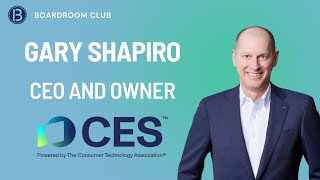
Innovation Conference: Gary Shapiro, CEO & Vice Chair, Consumer Technology Association (CES owner)

Gary Shapiro, CEO + Vice Chair at Consumer Technology Association Joins NYSE TV Live

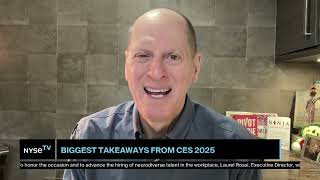
Gary Shapiro, CEO + Vice Chair, Consumer Technology Association Joins NYSE TV Live


🎙️ Tech Leadership Insights: CTA CEO Gary Shapiro on Innovation & Adaptability