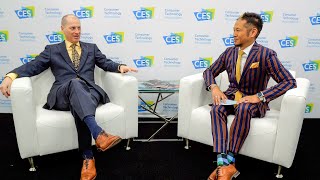
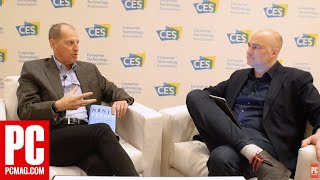
Gary Shapiro on AI, CES, and Why Every Business Must Pivot or Die
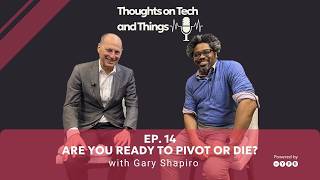
Gary Shapiro, CEO of the Consumer Technology Association, discusses his book Pivot or Die and why businesses must adapt or fail. He covers CES's shift to virtual during COVID, the rise of AI and autonomous vehicles, and regulatory challenges around privacy and tariffs. Shapiro is transitioning to executive chair.
Chapters
My guest today has spent more than 35 years at the center of the technology industry. Gary Shapiro led the Consumer Technology Association, the organization behind CES, the Consumer Technology Show, every year in Vegas, first as CEO and now as executive chair, executive chairman. Over that span, he's transformed CES into one of the most important technology stages on the planet. He's testified before Congress more than 20 times on issues from AI to intellectual property, and most recently wrote the book Pivot or Die: How Leaders Thrive When Everything Changes. We are here today at CTA's headquarters in Arlington, Virginia, in the studio. So Gary, thank you. Welcome. And also thank you for welcoming us to your home.
Well, thank you for making the trip to Arlington, Virginia, our global headquarters.
I appreciate it. So I'm going to start off with your book. And just fair, I am not done reading the book yet. I was still early in the book, but what I did appreciate about Pivot or Die is that it starts off with COVID And the story that really stuck with me is that while everyone can relate to COVID, you were forced to move the biggest conference in— the biggest conference ever and take that conference with more than 140,000 attendees, thousands of exhibitors, 2.5 million square feet of floor space and figure out how do you do it virtually? And you had to make that call early, which I don't think some of them that's early, I think it is. And I'm just wondering, like, when you took a pivot, that's one of the biggest pivot points, what was that decision like?
Well, it's an interesting question. And I'm glad you raised that because COVID was the big pivot for the world that we all experienced together. But that specific decision, what was very controversial in the world of those people that put events on because no one had canceled an event 7 months out. And you know, at that point, President Trump was talking about, "This will be over by Easter," and you know, things like that. But we decided, we saw it coming, we made a decision kind of early on that we were still strategizing a staff and our board finalized it. But we were there certainly by June that we had to cancel because the investment the companies make is so huge in the exhibits and the planning and the contracts and hotels and entertainment and the flights. We wanted to give them as much notice as possible. And there was no way there would be a vaccine that publicly available in terms of broad public reach that would be there in time for the show. So we just made them very logical, "Well, this makes no sense." And we spoke to all our partners ahead of time in Las Vegas, and they were all very understanding. And one of them said, "Well, but our contract says that." This really isn't in force majeure, an act of God, because it hasn't happened yet. And you're supposed to wait till it happens. And I thought that would be foolish. So we took a calculated risk and did what we thought was the right thing for everybody. So like hotels and convention centers could plan as well. And we went digital. And we, and then we, not only did we go digital, but we had to go, had to find vendors. And no one had ever tried anything of that scale to try to do that. We ended up with Microsoft because they had They're a member of ours, they're a good customer, they understood then Microsoft Teams, they're very good on cybersecurity, their headquarters. We later learned when we actually did this that they had a backup generator, which actually went into effect because there was a storm the night before we were going live. And they didn't even know they had a backup generator. And it worked, it all worked. And a lot of, and so going back and forth from Microsoft to prepare for that was very interesting. But they, you know, try to do stuff in a larger setting and get keynotes done ahead of time and interviews. It's actually some ways easier because you won't get, you could interview almost anyone. They were willing to do a Zoom call interview, but doing live stuff, uh, we, you know, we took, all took calculated risks and it worked out well, but it was, you can look at the world two ways. You could say this is a terrible thing that happened, or you could say, wow, there's tremendous change, which means tremendous opportunity. The opportunity we had as a world was to do things differently, to do remote work, to learn about different ways of communicating.
And when you were early, I mean, this is the thing of living on the frontier is because you made that call early, as I remember, there were a lot of large conferences that followed your lead and also learned from some of the things that you did. I mean, this is innovation in a lot of ways of taking something as huge as CES is and and turning it into a virtual format.
Yeah, but I don't wanna overstate how great it was, 'cause it wasn't great, to be perfectly honest with you. It was extremely difficult. And one of the great lessons, I think, at the CEO level from people I speak to, CEOs around the world, is that they all of a sudden focused on trade shows as entities, and other events, where you have to be face-to-face with people. And I think they were very frustrated, 'cause most CEOs, have a big part of their job, which is dealing directly with people. And I think it was very frustrating for them. And while the CFOs after this whole tragedy of COVID like, oh wow, look at all the money we saved not traveling. The reality is you need that live face-to-face, five-sense experience where serendipity rules and things matter and you can discover people, discover relationships. And we're still seeing the benefits of that. Now there's more and more about Opportunities for all staff to get together and work in an exhibit. There's opportunities there for discovery. There's opportunity for new customers to strengthen these. And all of a sudden, at the very top levels of major corporations around the world, these events are greatly appreciated. CFO still, you know, forget the travel. And although I'm the paid cheerleader for the technology industry, and I believe in the power of technology to do a lot of great things, it is not a great substitute for the fundamental human experience we need to be like you're doing this. Sitting here with me, and it's so much more meaningful that we're together than just doing it. By the way, some of our interviews—
That's something I hear from a lot of business owners. It is that the, it's the, the time that it's taking to get back from virtual to being in person for events, physical events, the Zoom events, the Zoom webinars, they're just not the same. They're not a replacement. For a moment, that was there, but I'm gonna go on a big tangent here for a moment. When you look at people who are trying to figure out what their next job is, careers, being in person, physical, makes a difference.
Absolutely. And when you experience, you do. We are human beings. We need other human contact. And the information you can get from a computer about somebody, even with a great Zoom call or Teams call, is very limited because you're not getting the full sense of what the person's saying. You're not having an opportunity to have a drink or, you know, share a meal or and you're not, it's much more difficult just to discover what you don't know. The joy of an event like CES or other trade shows is the serendipity. You are discovering, you're being inspired. You're having, if you think about what innovation is, innovation is two ideas coming together, which produce something that people find value in. And the way you do that in an efficient way at a trade show or a convention or a meeting is you have a lot of people and you create an environment, a catalyst where that these innovation ideas can grow and also do it in an inspiring way. There's nothing more inspiring to me than events like CES, where you can go and see what's out there. We have over 4,000 exhibitors, almost 150,000 people from around the world, over 7,000 journalists. And you just walk around and say, I can't believe you can do that. And people, even journalists are coming back, they're saying they get, you know, enough story ideas and interviews for several months. So it's, it's a very, very efficient way. There was one highlight moment that occurred for me many years ago as CEO of Intel. I ran into him the last day of the show and he was carrying his own suitcase, which really impressed me. And he said, I just want to thank you because I got more done in these 4 days. I met more people from around the world than I could have traveling around for 6 months.
So I have to, of course, ask the things that— one of the reasons that I found your book so timely is that we are living through, I think, the biggest transition or thing that has ever happened, which is AI, artificial intelligence. When we think about this pivot to AI, it's such a fundamental change in how we work, how we make decisions, how businesses operate, and it's one of the biggest disruptors. So when I was reading your book, you talk about the 4 types of pivots. In those 4 types of pivots, I think the startup pivot, the forced pivot, the failure pivot, and the success pivot. Can you explain how those are different? And also when it comes to AI, what type of pivot do you think that we're in? What type of pivot do you think businesses are dealing with right now?
Well, you're right about AI. I agree with you. It is a fundamental change and it's happened super quickly. Like if you look at the telephone and it took like 25 years to get where we are with AI, or even some of the, the internet itself, which was, was a huge pivot for the world. In terms of creating business, creating opportunities, but also creating fears. You know, we have certainly lived through technology. I would say it's come along in a way, it's almost logarithmic, the increase in the pace of change. But there's similarities that going back for every new technology, 'cause it's inspired great possibility, but also people as human beings love the status quo. I mean, that's how we grow up. We start, you know, with our families And everything is like you want it to be the same, but life changes around you and you're not going to stop it. So you have to adjust. And it's a little bit of Darwinism there. It's not the strongest or the fastest, it's the quickest, the quickest who can adapt. And that's true in the business world. When you talk about the 4 types of pivots, they're each different. Certainly a startup, startups have an advantage over bigger companies. They can move super quickly and they can jump onto a rapidly changing time like this where you're seeing more like startups going massive, like almost overnight. It's because of the technology of AI that allows that. The success pivot is especially one of my favorites is it's the problem with success is you think you're really smart when you're successful. And the other problem is almost every company has one great product that they are, this is the, they make all their money on it. It's the biggest thing they do. And they carry them. So every new thing they do is like, first of all, it'll never get big enough, quick enough to satisfy what the old thing is. And Steve Jobs figured it out. He created a skunkworks and that's how he dealt with it as a big company. And he recognized, and that's how he kept pivoting and growing Apple. And others have done that as well. But generally that's the fact that it takes so long and the big companies are slow, slow allows us startup pivots. The failure pivot is when we don't have a choice really. Like you, you're going down and you know it. And, but I've seen there's a lot of denial when companies are going down. Because there's things you could do when you start going down where you could either sell out, you could change, you could partner, you could do joint ventures, you could save your value. But what I more often see is that people are in denial. They're stuck with this idea and they can't give it up because either the idea hasn't worked or they haven't executed, or it's just not a good idea, or life has changed around them, or everyone else thought it was a good idea and there's no real barriers or moats to get into that. Product or field or service. And so they don't adapt. So there's different types of pivots, but generally I think what the book tries to do though is offer advice, not only in business, but in life. And it's something that, you know, especially as I go on in my career, I'm giving a lot of people advice because they're asking for it. It just happened at lunch today with a large association executive asked for advice about what I would do in her position. And I am finding myself mentoring people a lot, but what I do think for younger people especially, The advice that the things that they, they just are traumatized over is like, what college do I go to? Or what do I do when I graduate high school? And then it's like, what's my first job? And those are big decisions, but you know what? They're not that important in the scheme of things because a lot of it is random. And that's how you meet. But there are important decisions in life. There's only really 4. It's like if you get a partner in life, you know who that partner is. If you have kids, which is like a lifetime commitment, if you commit a felony, and if you do something unsafe. Everything else, you know, you are learning about yourself in a sense. So when you go to school, you know, sure, what is it turns you on? What wakes you up that you look forward to? What's your passion? And how do you turn that into work? And then in terms of who you meet, which affects your life, a lot of it is randomness. There are ways to meet people, to meet your lifetime partner, and it's good if you have something in common with them, like whether it's sports, the sporting teams, or sports itself, or hobbies, or whatever. And those things help the relationships last. But in reality is, you know, these are decisions that are— I don't think you should be allowed to be married until you're 30. That's the end of it. You don't know yourself yet, you know.
I think that what's interesting about that is the psychology, right? Is this— that we are, like you said, attuned to be afraid of change, to be afraid to do something different. And the thing that I think makes it so interesting about this moment with AI, with the adoption rates that we see with technology, certain technologies, is that it's sometimes hard to get people to say, yeah, I want to try this thing out. I want to take a risk. I want to do a thing. And it's a big separation because adapting is scary, right?
I mean, that sounds like exactly Exactly what you— exactly. It is true that it always is more comfortable to do what you've done before. So you have to realize it's discomfort. It's like going on the stage. If you're not a little nervous when you go out on stage, that's great. That's not normal. But if you are nervous, if you challenge it, this nervousness is good, it'll make me perform better on stage, that's a way of harnessing it. Same thing with anything you do that's different. I mean, it's— It's— I remember my mother used to listen to the radio talk shows all the time. I said, "Mom, why are you wasting your time?" She says, "Gary, if I could learn one thing from this in an hour, it's worth it." So I always like brought up like you have to keep learning your whole life and adapting. And that's really important. It's not like you just, you know, graduate and get your degree at school and you're done learning. You're learning all the time and you'll never— the more you learn, you realize you like— and that's important because you keep learning and you also learn from failures. Anytime anything bad happens in my life, a failure, Or people go, look, even a relationship, they think, what did I learn from this? And that's the important thing. That's why this is the opposite of, or the counter to that, in a sense, is success breeds overconfidence and arrogance and you think you're brilliant. Well, failure actually is your learning moment in your life. Every time you've ever failed at something, that's when you've learned the most. And that's how you can make yourself feel better. Always learn something at this horrible moment.
I 100% agree with that. I think I've learned the most. Through many failures in life, but they've also— those are the things that are the catalyst to figure out how you change what you do or help you learn. And like, we're all lifetime learners.
And definitely the people who are watching this podcast are because they're watching, they're like, totally.
Of course, this is why they tune in.
Absolutely.
So this moment, you have members of some of the biggest consumer organizations in the world and you're just Speaking about someone who's a trade association leader, I wonder when you look at the moments of mass disruption, you know, we talked about COVID one of the biggest disruptions that I can think of in the world. I know that you were here for the internet and the web, one of the biggest disruptions. Now AI disruption is a big disruption. What are the types of things that you hear business leaders or that you talk with business leaders about and how they prepare to, I mean, I guess the best word is to cope. Or die.
Well, I think that there is a culture among successful people of pivoting, actually, and adapting to change. And the more I've gotten to know a lot of CEOs—
Like a muscle.
It is. You don't become a CEO of a successful company without learning how to pivot. I mean, maybe there's some— there's probably some examples in the tech world where very extremely inexperienced younger people, you know, they did one thing that was great and they're stuck even carrying it. But generally, you know, what we see, for example, in the tech world, speaking of pivoting and risk-taking, is we see a lot of immigrants. They've made the risk already in their lives by immigrating here. It's a big risk, that new culture, often a different language, you're giving up family. So then starting and taking business risks is not that big a deal for them. And they're willing to do that. And it's striking to me how so many of our tech companies performed by immigrants or children of immigrants. And it's, and it's true statistically with research that shows how much immigrants are willing to take risks than a lot of the entrepreneurs. That's why a lot of what's going on in terms of pushing out our immigrant community who is not here, I guess, legally for the long run, but that's affecting not only our ability to innovate, but it's also affecting, you know, we have this great manufacturing push in the US and yet even we're kicking out the workers. And we have Americans that are not doing it. And when I go and talk to our members around the country, they say, "Love to manufacture in the US. Show me where the workers are, 'cause they're not available." You know, they say, "We will train, we'll train someone for 3 months." And in certain areas of the country, 70% of them will leave within the first 3 months after they're hired. They say, "We can't find the workers. That's one of the reasons we manufacture overseas." And of course, there's the cost of workers, there's the cost of healthcare of the manufacturers. They're here in other countries. They, you know, that's borne by the government. There's a lot of different reasons that go into this thing. And our big risk as a country right now is we are basically starting to put up a digital wall around the country for a lot of reasons. Some of it's called national security. It's called tariffs. It's called not letting people in come visit, which is, you know, travel industry is being decimated by our own country at this point because a lot of people don't like us. They don't think— there's rumors about what's going on. I mean, there's so many things we're doing wrong as a country right now that is discouraging our own economy. Uh, the CEOs can't plan anymore because they don't know what's going to happen because they don't know what a range of tariffs are and they don't know where they get their workers from. They don't know what the next administration or Congress will do. And there's no— if you want businesses to succeed, you need a certain level of predictability from your government. You can't have contingency planning going, you know, 96 different ways. And that's where we are today. And it is a fundamental concern for me in the country.
It feels like a lot of consistent chaos. And it reminds me that as much as I like to think of CTA as CES, then a big part of your organization is focused on advocacy for technology, advocacy for consumer businesses and technology. And if I have the number right, I think in the beginning I said 20+ times that you have in front of Congress to talk about everything from autonomous vehicles to tariffs to, you know, to AI. I'm curious to start off, I have like 2 or 3 questions here. First off, I've listened to some of the things of your thoughts on AI advocacy. The Trump administration recently, just March 2026, released their plan. And I think there's some similarities in that. I think we both believe here is that there's a risk in having a lot of states do their own regulations as opposed to more of a federal roadmap for how we legislate around AI. And that is in some ways, you know, potentially the ideal way. I don't know if you have any thoughts there.
I have so many. So, you know, AI is the technology of the era that will define us. There's no question. You've made that point. There's different flavors of AI. You know, AI has been flying planes for a long time. So— And there's factory automation, there's robotics, humanoid robotics. There's so many different things that— humanoid for pets that are robots. There's a lot of great things that AI is doing and it'll do a lot more. But my career, you're right, has been from the beginning, starting with the legality of the VCR, getting into the PC, high-definition television, focus on the internet itself, working on the literally global laws now that allowed commerce on the internet, 'cause it wasn't allowed in the beginning. As well as now going to AI and self-driving vehicles and robotics and quantum and other things where there's so many things that are obviously coming. And there is a, I don't wanna call it a battle, but there's a race among nations and it'll be determined whose economies do better and maybe what languages your kids end up speaking because This is a hugely important battle that's fought out. And other countries have national AI plans and/or self-driving. And we are like, you know, the self-driving, we can't get it through Congress because the trial lawyers, they will, they live off of carnage. And it's a huge industry of 40,000 people a year dying and 2 million people hospitalized because of avoidable vehicle accidents. We could end that, almost all of it. But the trial lawyers effectively killed the bill 6 years ago in the Senate, and they're stopping a national plan. And now in AI—
If I could just like interrupt you real quick, the thing about autonomous vehicles that gets me is what you said earlier. AI and space is fully autonomous. You do not, you're not piloting a spaceship. The thing is flying itself on autopilot. For the most part, airlines are, for the most part, they run on autopilot.
90% of the time it's autopilot.
They land and they take off. Everything else is generally autopilot. Yet autonomous vehicles, especially on the highway, in the freeways, that is still a thing where we haven't been able to agree on. I know that there's legislation in front of DC and Maryland right now about whether or not Waymo and other autonomous vehicles can live on the streets and There's yet to be a push to make that happen.
It's insanity. It really is. Because it's not only a matter of, of cutting healthcare costs, helping cut the debt and deficit, and saving a lot of people's lives and injuries. And we've all lost loved ones and friends that we know of because of— these things are avoidable now. Not only empowers disabled people, empowers older people, it does, it saves energy. It could save on the actual cost of the cars because if you don't have all these driver controls in the car, you take out a lot of the cost of a car.
Maybe like an AM radio?
What you're referring to as AM radio is the broadcasters using government to save their dying business, is they are pushing for a mandate in every car that gets an AM radio. It's kind of silly because it's such a silly issue. We started over 100 years ago as a radio manufacturers association. I think we're the only association in the history of Washington that's fighting them. Oh wow, the government mandate your products. No, we don't want it mandated. We believe in a free market and we believe That, you know, they're arguing about emergencies and safety. It's just bull, because most of the AM radio stations probably don't even have people in them, man, and they're just repeaters. And second of all, the last emergency broadcast we measured, and 99% of the people got it through their smartphone. They didn't get it through a radio, even FM or AM. But you could also get it through satellite, there's CB radios, there's telephones, there's a whole bunch of different ways to communicate in an emergency. And so it's just a made-up story because AM radio has gotten to the tanker and they want to preserve it. And you know what? It'll be preserved. We said, look, car manufacturers are going to give it in rural areas for a while. Farmers do rely on it somewhat for reports and things like that. This is a marketplace of multimedia. This isn't the life-saving equipment anymore. But getting back to the different things and the products that are introduced, efforts like self-driving. And now we're seeing with AI, and you mentioned 50 states, 50 There's been over 2,000 pieces of legislation introduced in the states in the last 15 or 16 months. And that is debilitating to startups. This is where big companies have the advantage. And God bless big companies that we have. Almost every one of them is a member of ours, but 80% of our companies are smaller companies. And as a fundamental cultural imperative for our organization, we want startups. We want entrepreneurs. We give a break to the exhibitors at the CES that are starters because we want them there to expose their ideas. To the 7,000 journalists, the tens of thousands of retailers, the investors, the partners, and the big guys. Because you know what the big guys want to invest in? They want to be the first customer for it. They want to help finance the small guys because they want to learn. They recognize that's where innovation is occurring. And that's what— it's that fundamental, basic secret sauce in the United States is that we encourage innovation and challenging the status quo more than any other country. And it comes from our culture. It comes from the fact that that, you know, there's so many people that came here that are immigrants. It also came from the fact that we have a First Amendment that allows you to say what you want and push back on government. When the broadcasters are trying to protect their rice ball, you just push back. And they're doing it again. They're doing it in all sorts of different ways. They want a TV tuner standard. They want a TV tuner on every video screen you buy so they could get a signal. They're just pushing and fighting because they give the broad— they give the members of Congress free airtime. To do charitable causes so they could get in there. And that, you know, look, they're in every district.
But like bureaucracy and fear is the thing that prevents innovation in lots of ways.
Bureaucracy is stultifying. I mean, you know, I go to France a lot and, you know, I'm a huge fan of President Macron because he really believes in entrepreneurship and innovation. He created a third party called En Marche Forward, which was all about technology and innovation. He made his pitch at CES in Las Vegas, uh, 2 years in a row. And he is in there in office and, and he, he's fine. But as I give a lot of speeches in France, and I can't resist saying, you know, entrepreneur is a French word, but so is bureaucrat. So they understand that about themselves, but they do have a lot of good things going for them. And, but Europe itself is, you know, you want to talk about AI. So part of AI is enormous datasets. That goes against some, and should, against privacy principles that we share. We share with the Europeans, they're definitely worse. They're like everything's, you can erase your own history on the internet by law. We're more balanced. China's the other way. China has 1.3 billion health records in one agency and they could use AI and draw every possible correlation and they're going to figure out how to treat people. It's a very homogeneous society where, you know, we look different. We have so many differences in so many different ways. They're not like that, but they are gonna be ahead of us on AI because they have no privacy at all. And they really are going after AI. They're producing AI engineers and scientists en masse. Like, we can't keep up. Remember, China has more people than the US and Europe together, multiplied by 4. So they just, it's a numbers game with them. It's like the Olympic athletes. You get enough people, And then you get the best, so you're gonna win a lot of Olympic medals. And especially if, you know, you don't have human rights, as they don't in China the way we do. So what we try to do is we're like Goldilocks and the Three Bears, you know? We don't want the fruits too hot, we don't want them too cold, we want it just right. And that's what privacy and balancing against innovation. We want to be reasonable, and that's really important. And I can give you a lot of examples where we maybe we haven't done the way we should. I see them a lot because of in healthcare, especially my wife's a surgeon and she does research, she's an inventor. And I see how sometimes privacy is so high that you get rid of progress and you don't save lives. And that's not a good thing.
So let me shift gears here for a second. CS, one of my favorite things, I think I've been to 70, uh, 70, uh, CS. 67? Yeah, something like that. One of the things that I find that is the most amazing about CES is like, it's like a slow time-lapse. You see something that seems like an idea, maybe with a small business or entrepreneur, and you come back and it was slightly bigger booth. And then 3 years later, it's like 15 companies who are doing the thing. And then it just like, it keeps growing.
No, but then it shrinks sometimes because too many companies are doing the same thing.
This is true. So with the, with glasses, it's like, you see glasses and then suddenly not as many people are going, uh. But maybe they're back out with them now. And, you know, of course Meta has them. But I'm wondering, like, this is the same, like, is this a thing that you felt from 35 years of CESs of just watching these little things grow and turn into sometimes really big ideas?
Yes. And I've also seen funny things because I remember there was this one Japanese company, Sony Fisher, that put in its display case surrounded by glass, this at that time impossible to create camcorder. It's tiny. And everyone was photographing the whole show and can't see what that was about. He said, we just wanted to drive people crazy. But you know, and, but people didn't realize it wasn't possible because that's what Samuel Fisher thought, but actually they made it possible because they were taking pictures. But no, yeah, there's tremendous amount of innovation that occurs across many different lines. Some of them, you know, they're throwing up against the wall to see what succeeds. Some of them are great ideas, but not the right time. I think you mentioned glasses is a great example of that. So like, for example, when Google Glass was first being prototyped, it had facial recognition tied in with Facebook. And I thought that was great for someone like me who can't remember anyone's names. And I deal with, I mean, literally thousands of people a year, and I just can't remember. Like, I need that. And the Washington driver, a lot of us need that. And, but all of a sudden there was a couple of privacy— this is an invasion of privacy, and oh my God. And they pulled it, and it was dead for like 10 years. But now it's coming back. I mean, people with Alzheimer's, other people that are visually impaired, they're going blind or they are blind. Why can't they have that? These are great things. When you go out in the street, if you want to cover up your face, you can do that. People wear masks all the time now for various reasons. But the law is very clear that once you go in public, you give up a certain amount of privacy, whether it's, you know, the Fourth Amendment search and seizure is if you have something plain view or your physical, your, your photo, if it's not used for commercial purposes, you do give up certain rights. And there's a balancing of rights in this country, but we should always balance in the favor of we don't have to go to government to ask for permission to build something unless it's like a nuclear bomb or something like that's really inherently dangerous. But we don't want to be one of those countries where the government is telling us what we can build and we can't build, or we won't be competitive in the world.
It would be that there was a talk that I gave and I mentioned that things feel either bad or just weird until it becomes visibly normal. You know, there was a point that having AirPods or like buds, you know, it was a strange thing or it was not acceptable to walk up into a restaurant, maybe still with AirPods in your ear or holding a phone all the time or, you know, now glasses with cameras, but there's that there's this weird place where something goes from to acceptable, and then it's just acceptable. And I say this as a person who will wear an Apple Vision Pro on a flight and just, you know, sit there and, and just own the world.
But, you know, I agree with everything you're saying, but I want to add, sometimes it's not like it's not like something, but sometimes it's the opposite. It's a status symbol. The red Beats headphones were a status symbol, and you were, you were making this And even, let's be honest, the white, the white AirPods, but yet that signified for a long time that was Apple's thing. Now anyone can produce white. But there is status, like why do people have like, you know, 100 different cars to choose from? It's about status. You go to 0-60 pretty much the same in any car. And there are certain comfort things and safety things, but a lot of cars, are you trying to send a message to the world about who you are?
Yes, good point. So back to that seeing technology over this time lapse, the thing that I have noticed over the last few years is robotics. And you mentioned China and China being ahead in some ways in AI. I mean, the, the number of, of companies with the different pieces of robotics from design to manufacturing, the number of hands, arms, bodies, all the things. It was the first time I realized, wow, we were at this point of seeing a leap from to general purpose robotics in a way that, that the cost is coming down, that there are more people producing and building. I know that I think the CTA did a white paper on robotics that talks about just some of the things that are happening. I'm curious, of course I should also add NVIDIA's keynote on physical AI, which robotics I would say is a subset, but this is sensors, cameras, cars, anything that is artificial intelligence and robotics or sensing physical devices attached.
No, you're absolutely right. I mean, self-driving car is a robot. Absolutely. I mean, and it's pretty complex because there's a lot of safety involved and you have to detect whether it's a ball or a kid or an animal. I mean, there's so many different things you have to detect. It's— and we've done great as a country. We're almost there. But yes, yes, we had over 50 robotics exhibitors and we expect more. It's, it's Correct. I grew up reading science fiction. That's why I love this stuff, because this is CES and other events are like science fiction coming to life. And not everything's going to happen that way. I mean, there's a lot of weird things in science fiction. So, you know, I love Star Trek, but I don't think I'm going to live to see teleportation. I'd like to, but robotics, robots are weird, are definitely a success thing, and they'll be very unusual and different from each other. So there's a lot of categories of robotics. Some of them are comfort. Some of them are for safety. Some of them for industry. Some of them are for tasks to save things. You know, there's, there's a lot in the food area of food preparation. Now there's robotic restaurants, there's robotic servers, there's robotics delivering things all around. George Mason University, the campus, they're one of the very first to have robotic delivery of pizza. And this is like at least 10 years ago. They're doing, I mean, there's a lot going on. All over the country and the world in robotics. And we're just, we're still doing the baby steps now. And you know, there's ethical issues that come up with AI and with robotics and we have to deal with them. But the things I've been involved in, like the internet, HDTV, other areas, is where we have to define the national goal and say, this is what we want. And once you agree with the government and industry, you will get there because there'll be a process. Of discovery, of evaluation, of experimentation. And the marketplace itself has to determine what ultimately is, unless there's a reason like the government would, for example, we stay away from national security issues for the most part. But, you know, how they do what they do in defense, they have all sorts of reasons for doing it the way they do it, requiring building in the US. The challenge we're facing is more and more like with self-driving cars, we're defined as connected cars as a national defense issue. And then drones as a defense issue. And now there's this pursuing out there on wireless routers as a defense issue. And some of the defense things, when you try to understand them, they're very difficult. I mean, drones, it's very clear. Look what's going on in the Mideast and how important drones are there. Self-driving vehicles and whether you're, you know, I remember when the Y2K was coming, the concern was like everything would turn off. And then I remember there was a, even before that, there was the guys that chips and products, chips and products are government, senior government officials. This is terrible. You know, your coffee maker with one chip in it's going to revolt and start spewing coffee at me. I mean, there's been a lot. The thing about technology is that people think it's going to take over the world and hurt you. And unless it's specifically programmed to do so, it's not likely to do that. But there are legitimate issues of cybersecurity and there are concerns. And our job as an organization, which you referred to earlier, is to make sure that public policy in a way is welcoming to innovation. But sets the necessary guardrails to protect citizens' safety, which are important. And it's also important for manufacturers and service providers to know what's legal and what's not legal. What's happened lately is that Congress and administrations, in the interest of compromise, sometimes they get lazy and they don't define what's legal. And the reason there's so many freaking lawyers around is because they're, they're helping determine in courts what's legal and what's not illegal. And, and for innovative companies, It's deadly once a lawsuit's filed, especially for startups, because they'll lose their funding right away and they can't get additional rounds of funding. And some of that is because we are very— even some of the biggest companies on Wall Street and even some with ties to the administration are patent troll friendly. And people buy up dead patents and then they just issue threatening letters and they made money. And now they're basically sell this as a bundle package as you can buy, you know, a piece of this patent trolling. And that's devastating to innovation. So there's a lot of things which we're fighting on and we're not succeeding on. Litigation costs, patent trolls, all sorts of things. One thing the US does fairly well is we have a bright and flexible workforce that, where we have people that can share in the profits. We have a lot, like if you take NVIDIA as a company, which is clearly one of the most successful, Jensen Huang, who came into this building the very first time I was in Washington and spoke to our staff. I wish I listened more carefully and bought his stock. 'cause he laid out his vision. He basically, he has many, many multimillionaires among like several thousand of his employees.
Not only are they the most valuable company, they're also one of the smallest most valuable companies. I think the smallest that's ever existed. I'll fact-check and make sure I put these in the show notes just to make sure. I'm sure there are a lot of billionaires there.
I think some of the platforms are getting, I mean, like ChatGPT and others are relatively small. And yeah, but you're right. I mean, but he had a vision of chips being in self-driving cars and in video games. And I think the third thing was high-resolution monitors, brushes, something else. And all three of those hit. And now, I mean, and he doesn't give up. He's relentless. He gave a keynote at CES a year ago. He also spoke this past, this year. But like he was on stage by himself for an hour and a half speaking with barely any notes or screens or anything. Nobody else came on stage except to hand them stuff. And then Kenzo Fabrizio, our president who will soon be CEO, came on the stage, came on rather backstage with me. And he kept talking to us for 20 minutes. The guy is passionate. He doesn't do anything but like on weekends, like I'll get a note or a text. The guy is passionate about his work and he has a vision. He's like, like certain individuals like Steve Jobs and Elon Musk and, and Donald Trump that are so— or Michael Dell, they're just so focused on their— what they believe in that they're very successful in different ways.
So you mentioned Kenzie, and I feel like this is probably a great time to ask a question about— because, oh well, I guess the question is, what advice are you going to take from your own book as you're about to pivot from being CEO to now the executive chairman?
I am executive chairman. Yeah, that's right. So yeah, I, the first thing is we have a 1-hour meeting at CES and we have 55 people that speak and you still have to end it on time. That was my first test. So I survived the first test. No, you know, the job of a CEO is to run the organization. I've done that since 1991. And I'm, as I told my board 5 years ago, I'm ready to stop. This whole transition to Kenzie has been a 5 at least 5 years. Her name was named in our succession planning a long time ago. She's a star. She's smart. She's empathetic. She's articulate. She's a great manager. She loves creating new things. She has what it needs to take the organization to the next level. I felt, first of all, you know, at some point, as my kids have let me know, I do have to spend some time with my family. And also I've climbed every mountain that I can visually see and climb. And I think I'm at the point where I'm giving back, nonprofit work, speaking on some for-profit boards, doing other things, mentoring a lot of— I do a lot of mentoring of, especially, but around female executives that are going places. And I get a lot out of that. So I'm ready for something different. And I want Kinsey to succeed, but I also care so much, and I have so much institutional history, I want to be there for her. So Our board and Kinsey and I have agreed on this executive chairman thing for a while that'll, I think, carry me and give me the taste. But I, she asked, I do not want any Robert Iger of Disney to have your Hamptons successor come in there and then you cut him off at the knees. So at this point, I think I've been really well behaved and, but she's not giving me any reason not to be, but she's, I think she'll do great. And I want to be there. As I told her, I'm always there a phone call away. But I realize also, since I've dealt with so many CEOs, I've seen them, how they transition out, and I see what they do. And sometimes it works and sometimes it doesn't. And I realize that a lot of, I'll give you a positive example. President Bush, President Obama spoke to each other frequently, even though they weren't in office at the same time, but they would call each other and they'd get advice from each other. And Matt Dickinson and I are different political parties, but the point is it does happen in a very positive way. Because the CEO position is a very lonely position and no one really knows what you're going through because the people that work for you, as much as you love them and like them, they're not your friends because you have a— you're in a power relationship over them. So you have to be able to talk to other people. I've been very blessed that as opposed to some associations that has approached the boards as enemies, my board has been chosen not because they're great guys, which I hate when a nominee talks about that, but because they fill gaps and needs and they— I could bring my biggest problems and they could help solve them. So that's been a very important relationship, and I want to continue that culture on the board to make sure we get people on the board that could come from different backgrounds, different companies, different categories, different size of companies, different parts of the world or country, and bring different viewpoints. So we'll have— what it takes is you need a strong CEO and you need a strong board. The chairman's role, frankly, is to make sure every board member is heard. The board approves the overall strategic direction. Of the company and the CEO's role is to run the company and come up with ideas collegially with the board and the budget. And we, by every definition we've done, we've been very lucky. I'll say luck is a large part of our success. You know, we caught this thing called industry and we have a CES and we've always gotten new things and grown it. And we've been definitely by every measure one of the most successful organizations in Washington. And we want to continue that, but we need Kinsey to take them to the next level. Sounds like a long answer.
Well, what I'm hearing is that you're expecting that Kinsey's going to keep inviting you to CES even after you maybe retire from being a chairman.
Oh, I am. I can't think— I think I qualify to go as a former chairman. So I, I didn't, I've never thought of it that way, but I will go on, but I hope we got—
I mean, I'm sure there's no way that you wouldn't. I'm just, I'm just— All right. Last question. Last question. 2027 for CES. Where should I eat next year?
Where should you eat?
Yeah. What's your favorite place? You spend a lot of time in Vegas. I'm sure you spend a lot of time in Vegas with CES. Don't you have like some, some, you, I assume that you're like Vegas royalty at this point and have spent a lot of time across the city. So I figured I had to ask for some, some last minute recommendations before, before I left.
So the truth is I'm like the prettiest girl in high school that doesn't get asked to the prom. So first of all, I don't get a lot of invites, but there's a lot of things I do have to go to. And I'll go to like 3, 4, 5, 6 different events in one night. I remember the funniest time I was with my wife is we raised the whole schedule and the last, the end was going to be, oh, it's that famous Asian restaurant at the top, the one with the gates. Anyway, there's a great Asian restaurant that my wife really wanted to go to and that's where we'd end up. And we get there at 11 o'clock at night ready to eat. And it was, we were there the wrong night. And so we went out to the hotel, like begging for some food because we were starving. Does that matter to go through like 5 or 6 receptions and not eat anything? But no, I don't go to dinners except at the, our own dinner because, and I have dinner with my brothers after the show's over because they like to go there and play poker and kind of get together. Um, but no, I, I very rarely go to a Las Vegas restaurant, to be perfectly honest. I go to events. I go to public and that's what I do. So I'm trying to remember the last time I was in a Las Vegas room. We'll go, we'll have a little dinner on the third night of the show for some of our key board members. How they, Kenzie and I will host at a hotel, good hotel restaurant. And I don't ask me which ones because it's all about Bill. I won.
I won.
And plus they're all my, you know, it's like choosing your favorite kid.
Gary, it's been amazing having you on the show. Gary is now the executive chair, executive chairman, oops.
Sir is good. It's sir. I'm big on brevity. Other than the answers I give.
Gary Shapiro is now the executive chair of CTA, and it's been wonderful having you on the show.
Thanks for coming here and visiting our headquarters.
Oh, this has been a great conversation.
More from Gary
CES 2026 Preview: Gary Shapiro on AI, Manufacturing Innovation & the Future of Technology

CES 2026: AI and Innovation Take Center Stage with Gary J. Shapiro of Consumer Technology Assoc.
Innovation Conference: Gary Shapiro, CEO & Vice Chair, Consumer Technology Association (CES owner)
Gary Shapiro, CEO + Vice Chair at Consumer Technology Association Joins NYSE TV Live
Gary Shapiro, CEO + Vice Chair, Consumer Technology Association Joins NYSE TV Live
The Future of Technology and Innovation: A Conversation with Gary Shapiro, CEO of CTA
🎙️ Tech Leadership Insights: CTA CEO Gary Shapiro on Innovation & Adaptability