Innovation Conference: Gary Shapiro, CEO & Vice Chair, Consumer Technology Association (CES owner)
Gary Shapiro, CEO of the Consumer Technology Association, left a law career to build CES into the world's largest tech expo. He discusses pivoting to digital during COVID, the importance of face-to-face networking, and advice for entrepreneurs: listen to customers, avoid over-engineering, and keep roadmaps short.
Chapters
Hi, everybody. Good afternoon, good evening, and good morning wherever you are. Thank you very much for joining the Boardroom Club today to our innovation conference featuring executives from top tech companies across AI, analytics, cyber, fintech, quantum computing, CRM, and whatnot. My name is Yossi Garmazi, second year MBA here at Cornell. And I'm joined here also by classmates and a good friend of mine, Alvaro Jimenez.
Alvaro?
Happy to be here, Yossi.
Yeah, so today we are fortunate enough to interview none other than Gary Shapiro, CEO and Vice Chair of the Consumer Technology Association and the driving force behind CES, the most powerful tech event in the world held annually in Las Vegas. And I've been there in the last years and it was amazing. A few key numbers from the latest CES: over 141,000 attendees and representation from 60% of Fortune 500 companies. And beyond, beyond CS, Gary is also a bestselling author of 4 books with his latest release, Pivot or Die: How Leaders Thrive When Everything Changes, published last October. And personal note, yeah, you haven't signed me a copy, so right there. And yeah, Gary, thank you very much for joining us today.
Thank you, Yossi. Thank you, Alvaro. I'm happy to be here.
Yeah, definitely. So Gary, I want to take you first to the early beginning. You started to work super young from 6 years old doing piecework, shoveling snow, mowing lawns, and dishwashing, and eventually managing restaurant at 20 years of age. How pivotal was this to your current success?
I think we are what our prior experiences have made us, and this was not an intentional course, but just in retrospect. All that was very important. Um, just starting out as a dishwasher, working hard, doing piecework for a factory when I was 6 years old, and just getting a basic core work ethic as well as managing people in a fast-paced environment. You know, moving up to a dishwasher, to a busboy, to a waiter, to assistant manager, to manager, to a house manager when I was in college not far from you in Binghamton. You're in Ithaca. I was a house manager that ran the concerts as well as the Black Student Union, Hispanic Student Union, all the different dances and speakers. And working up to, by sheer chance, can then go to law school, working in a congressional office just because I needed the money. My first week of law school came with zero money and had to have money for macaroni and cheese to eat. And I took the first job that was offered to me, which was working in a politician's office on Capitol Hill so I could answer the phones while they went on break. And that just led me to the member of Congress asked me to help him on administrative procedures act rewrite, which led me to a law firm, which led me to another law firm, which led me to a lawyer's job. And while I was there, even in law school, I was working for a client increasingly a large amount of time. The client ended up being the association. And after I was a law student and an associate, And then I ended up working on full-time. They asked me if I would please come in-house to them, and I jumped at the opportunity. And right then the technology world was exploding, and this thing called CES, uh, it was then called the International Winter Consumer Electronics Show, International Summer Consumer Electronics Show, now just CES. It just kept growing as new technologies like the VCR and the CD came along. I was fortunate enough to help get at the very beginning of the global expansion to high-definition television. I was lucky enough to be running a lot of the meetings, created the Digital Television Hall of Fame, and worked with different industry groups and content creators and government to get us over the finish line and develop a very unique American standard, which some of the other countries in the world have adopted. Very robust for the unique nature of the terrestrial broadcast in the United States. And also, uh, was able to run a number of other meetings and events and things like that, especially involving the legality of the VCR, of all recording devices, whether it's photographic equipment, copying machines, even the internet itself, and was able to chair a group that focused on that. And then when the internet came, I was able to focus on commercialization of the internet. My best friend and roommate while I was in law school ended up being the first Secretary of Technology in any government in the world, and he decided it would be very smart if there were laws governing the internet allowing commercial transactions. Because when the internet was first created, it was only about non-commercial. Doing anything commercially was considered very poor form, and people were gotten a lot of disrepute because of it. But commercialization, including electronic signatures and doing business and doing all these things in Virginia, had a bipartisan commission I sat on, and Republicans, Democrats, people from industry— I wasn't from industry— And we came up with model laws. Virginia legislature adopted them unanimously, and they spread like wildfire, not only around the country but around the world. Went around the world, spoke about that to different governments, different government leaders around the world, and we ended up putting the things into place which allowed the internet to grow. Of course, now we're looking at other challenges in new areas, so it's pretty exciting. But for me, it's been just kind of a bunch of lucky things and some being in the right place at the right time, hard work, and an overconfidence in my abilities that I probably didn't have in my 20s, but I was too dumb to know that. And I said, I just proceeded dealing with some of the legends of the political world and in this industry world, and ended up now on the other side of my career looking back and saying, man, was I lucky.
Yeah, amazing story. And I want to take you maybe back to when you joined CAS because I read in your book, Pivot or Die, that you were a pretty successful lawyer and you touch a little bit about that, about making sure that the VCR invention, something that we take now for granted and essentially allowed us to record TV shows, they exist in the first place. So I was just wondering what led you to make this pivot to kind of like start anew at CES as it wasn't as big then as it is now.
That's a great question. The partners in the law firm I was looking for thought I was crazy to leave a great job at a great law firm, big law firm, getting paid a lot of money and joining associations. Or one of them told me that's where people go to retire. And I had a different view. I did not personally enjoy billing my time. So I thought I was a very fast worker and it didn't seem right. In terms of having incentives to spend a lot of time on something. I also thought it was an exciting opportunity. And I actually, when I took the job, they made me the offer of work shifted from a law clerk and a summer associate to an associate at law firm. I really wasn't that interested and they talked me into it. One of the lawyers said, do this for a few years and do whatever you want. And he was right in retrospect. But to me, the billing your time route is one thing I've never particularly enjoyed doing, a time clock, or the more sophisticated way now, you know, obviously is with law firms, you bill every 6 minutes or whatever. And it's a, uh, I think it's a system that does not reward either the client or the fast-working lawyer. So it was something that I did not enjoy. It was probably the one of the tougher 2 years of my life. And also having multiple masters and being given work that was considered less desirable by the lawyers that worked at our clients' companies and doing some rather obscure stuff. It was, to me, it wasn't what I wanted to do. I wanted to make a bigger difference. And I was given this opportunity to work for an industry or association, which we only had a couple of dozen members at the time. Now we have, I think, 1,200 or so. But we went into many new areas and that gave me the opportunity. And I took the job in the condition that we could grow the organization away from a few big TV set companies and VCR makers. And that's what we have done. So now we're in healthcare technology, we're in agricultural technology, we're in mobility, transportation, we're in so many different areas now. And it really, technology is essentially making the difference in the world and people's health and longevity of life. In solving some of the world's problems, like clean air and clean water, access to food, access to healthcare. And so I think it's just more of a mission that is making the world better than it is a law firm where you're just billing clients for whatever that, you know, you could, they want you to do for them. So to me, it was not a difficult decision. And one of the things that I've discovered along the way, and this is, my wife has been helpful in this, is when you're making decisions in life, which is really what the book is about, Pivot or Die, it's, um, you're fighting the fundamental human condition, which is to maintain the status quo. To do— when you're born, you think everything will be the same as when you were born, and you're growing up, and that's your, your reality. But, you know, things change. People get older, they die. Countries have different political views. Sometimes they go to war, sadly. And there's things that happen that you cannot control and you have to adjust. And as was said by a famous geneticist repeatedly, although he never actually said it, he implied it, it's not the strongest that survive, it's not the fastest that survive, it's those that adapt the quickest. And I've seen that in the business world and in the personal world. I mean, when tragedy strikes or something goes wrong, do people panic? Or do they say, look at the situation, assess it, and then act accordingly? And that's a very important tribute to be conscious of when you're in any situation like that. Do you have a temper tantrum and lose your temper? Or do you say, here's where we are today, let's just move forward and let's, you know, we have a chance to learn from the mistakes we made. I think in personal decisions that people make, especially what college they go to, whether what their first job is, I think a lot of people fret over that. Even what major they take. I don't think it's the biggest deal in the world. I think there's only 4 decisions which actually make a big difference in your life that you really should fret over. And one is whether you commit a felony. Second is whether you do something fundamentally unsafe. The third is, uh, if you marry, who you marry, obviously. And the fourth one is whether or not you have children, because each of those has long-term consequences in the decision. The other decisions are a path way that you make in life to get to know yourself better. For example, you know, where you go to school, what you major in, how you spend your free time, and then even your first or second job. If you're learning along the way and discovering things about yourself, you'd be much happier about it. And if you, you know, don't fret over the decisions, try to make good ones and try to understand yourself. When you wake up in the morning and you think about your day, what is it you look forward to and what is it you don't? What gives you energy and what does not? And these are the kind of things you can make a decision on, even in terms of relationships. You know, do you want to spend the rest of your life with this person? Is this something that would be interesting to you? A lot of people get married for the wrong reasons. You know, they're just in lust, or they're, you know, they think it's time, or they think it's a good match based on what their parents want, or something like that. But there's really no rush to get married, and there's no rush to make a lot of the most critical decisions in life. And when it comes to things like where do you live or things like that, you can make decisions and they're changeable. And that's, that's important to recognize in life. So that's my suggestion for young people is figure out what you like to do in terms of your own career. And then, you know, what brings you real happiness? Do you want to go for the big money? In which case you sacrifice a lot of other things. Do you want to be an entrepreneur and not have a boss? Do you want to, um, make the world better? Do you want to combine a couple of those things together? Because you spend most of your energy and your work and time. And if you have a job which doesn't require a lot of thought, you can leave it and you work here a few hours a day, then do something else. But the jobs that people that go to— the students of these great Ivy League and other institutions are going to— those jobs are not very satisfying. And you find the job you will have is one that you'll be giving thought time to and emotional time to outside of your working hours. So you— it should be something that you believe in, and they'll give you energy and make you happy. And that's how I view the world. And the other thing is, especially when you're younger, will you learn things at the job that then you could use in other things as well? And even when you're in a job, can you do things either volunteering or stepping up in your work environment or outside your work environment to volunteer and to get skills, to serve on a local community board, to volunteer, to do all sorts of things which will engage you and make you happy and frankly give you relationships and other skills?
Yeah, I agree. So what I will take, I guess, is to be As you mentioned in another book you wrote, is be ninja, ninja style, agile, adaptable, and yeah, don't be afraid to make the change.
Well, obviously you've made it because you started in one country, in Israel, which is just growing up there, you have to be resilient and be able to pivot and shift it to another. And here you are, you're recognizing that your college education at Cornell is not just about the classes you take, but about what you could do with the position and job, which is why I was eager to be interviewed by you. Because I thought you're stepping out of your comfort zone in big ways. And, you know, you went to CES in Las Vegas, you introduced yourself, you have the moxie, uh, and the willingness to just make yourself uncomfortable and do something different. And that requires a certain self-awareness, self-confidence, but it's not easy to do that. It's, it's not easy to go in a room where you don't know anyone and walk up to someone and introduce yourself. But you just— compared to some of the things other people go through in life, it really is easy, actually. Just compare yourself to other people that have tougher lives and tougher jobs, you could do almost anything.
Yeah, I agree. So sort of you got to risk it at the end and nothing to lose. That's how I see it. And as you said, like growing up in Israel, you got to be somewhat, somewhat adaptable. And yeah, so I want to take you— I mean, you specifically joined CES, and now everybody know about CES, how big it is. I mean, Jensen and Ed And Bastian was in the last one. But it wasn't like this when you joined, and specifically in '91, recession, Comdex was the dominant show. And specifically, again, you mentioned in all of your book the importance of being able to pivot when necessary. Can you share with us maybe some of the pivot that you do at the beginning of your time at CES? And what led you to play for the long term?
Well, when you do things long-term, you don't know you're doing it long-term. My wife and I have a commuting relationship, and I was on the plane last night flying to Florida, and these two guys were talking behind me, and I turned around. I said, I couldn't help but overhear you. I said, you think it's just the one or two years? I said, I've been doing this for 22 years now. Planning out that far ahead is very difficult for anyone, and if you knew that, maybe you wouldn't do it. But it's, you know, you adapt. It's not the toughest thing in the world. But in terms of making those type of decisions with CES and going there and how we— the strategy we had for CES that I adopted early was, first of all, COMDEX was the big— the biggest show in the world. And the first thing, one of the most influential books I read was called Coopetition, that you get to know your competitors. You know, the old saying is keep your friends close and your enemies closer. Um, because what we did, and this was a— not me, it was the man who hired me and started CES. We ran out of space in Las Vegas for CES in about 1982 or so, and, uh, he had this idea that we could build a convention center ourselves. And we found 3 prospects, we contacted them, and the only one we could— that was willing to talk to us and was interested was Sheldon Adelson, who started COMDEX. And we— I remember I was, I was a lawyer, so I was very much engaged in it and heading out to Las Vegas every week to work and make sure it happened. But we signed a contract in August and we built a 120,000-square-foot building by November in time for COMDEX. And I learned that you can get things done if you want to move quickly. And from that meeting, uh, Sheldon Adelson, who's pretty famous for a lot of things, but one was COMDEX, but the other is owning some publications and, and believing in Israel, not believing in unions. He— there was a love-hate relationship I had with them there for 30 years. So he did sell Comdex for almost $1 billion, and, and he leveraged that into creating the Sands and the Venetian Hotel and other things around the world, became one of the wealthiest 10 Americans. And I knew him as a competitor and a cooperator. And we had a pretty checkered past, which I could probably write another book about myself. But the bottom line of it is, is that, you know, we like competing with COMDEX because they had a different philosophy than we did. They charged a lot more, they didn't audit their numbers, they kind of made them up in terms of how many people were there, um, and we— they just maximize the revenue in the short term so they could sell it, which what everyone did. When they sold it, it just kept selling, eventually sold for a dollar, and within 10 years just— they destroyed a show. So we have a very different approach. And the fact the day that COMDEX they were shutting down. It was a very sad day for us. We loved competing with them. It's just a matter of how you define ourselves. So we define ourselves as being honest and very transparent in who was attending and how many people were coming. We had an independent audit. We also would invite those that disagreed with us on issues to speak all the time, and we give them a fair platform and we almost a debate of two different points. We start, we viewed a, and I've been pushing this in a trade show world, is that trade show is a platform. And a platform, you have a duty of disclosure and honesty and presenting the issues that are in the future that's important to people. So we try to present different futures. That's why we go to different technologies with CES. And that's why we're always expanding, always looking for what's new. We always are pushing our staff to find, you know, going in new directions to create new partnerships. To go out there. And that's been a, you know, no success formula is forever. And we keep adapting. I remember the things I used to, like we used to give our conferences, you could attend them for free. And I thought that was part of what we were giving the industry. And I was in charge in 1991. And I was strong in that. And we didn't allow people even to buy banners or things like that, even though we could have made more money. In fact, the only big change I made, the first change I made was we charged for onsite registration because I didn't like to see long lines of people waiting to get their registration, and it cost a lot to bring in a big mainframe computer as we needed. So I, I convinced my boss at the time that we charge $5 a person if they registered on site. And now that's like $300 or $400, uh, and it's a source of revenue for us. But it also put a value on the attendance. The other thing we did was also we started charging for conferences. When we started charging for conferences, we had more people going to them because there was a value on— that was so counterintuitive to me. But it taught me a lot about pricing, is that people, if you get something for free, you don't have a value. So that's why we did that. We started having sponsorships and banners and billboards and exciting different things. And, you know, we still have a principle that we are a platform. It has to be clear what is editorial and what is advertising, if you will. But it works for the event itself. But we have to keep adapting. I'm pretty paranoid about our success is not guaranteed in the future. Or as Jeff Bezos of Amazon said, he says, "Every company always will go under." He says, "I'm just trying to extend this for like an extra 20 or 30, 40 years if I can by adapting." And clearly they're a great example of a company that's pivoted repeatedly from just selling books to selling other things to the Kindle, to cloud computing. So there's a lot of great examples of technology companies that have succeeded by adapting and pivoting.
Yeah, amazing. And indeed, the Jeff Bezos story of Amazon is amazing, how they pivoted from selling only books to the AWS of today, that suddenly they are the leading cloud providers. And maybe another question about the early days of CES. I mean, at the end of the day, you were able to secure some big speakers like Bill Gates or Larry Ellison, where they just Everybody suddenly talked about Microsoft or Oracle. How did you convince them to believe in CES? I mean, as it wasn't the big thing as, as it now.
Well, when we started out, COMEX was kind of competition. They were the biggest, but they were a computer show and we were consumer electronics, meaning audio and video. And, uh, we noticed that they started— some of our bigger companies started going there, one of them said, oh, they got 170,000 people. You only get a little under 100,000. I said, yeah, but they're open to the public and they don't audit. But then I realized what's interesting about the speakers you choose for an event, they define the event a lot. And even though we found out that fewer than 10% of the people actually go to hear the speakers, that is helping define. So Bill Gates was one of our first we got. We invited him and he spoke every year for several of them. Like a dozen years, and I interviewed him on stage and did different things with him. But they— he saw a future of getting into devices and different things, but he also saw that it's an opportunity for Microsoft because they were, you know, Microsoft Word and their other products were going directly to consumers. And both Microsoft and Intel defined themselves by the computers they were in. So not only did we have, you know, we get Michael Dell to speak several times and Dell was there and there were other computer companies, Compaq Gateway, IBM, HP, and others, and some that are no longer, or some of those aren't even around. It's just the CEOs have something to say if you give them a platform for it. And one of the things we did is we realized what we're delivering is not just retail buyers because that's always consolidation in that. That's the history of retail is the big ones get big and others go away. And if you don't adapt as a big retailer, you lose. But that's not enough to fill a big exhibit hall, the number of people that are big retailers or even small retailers. So we went after other communities, we went after the media aggressively, we went after international attendance, spent a lot of time traveling the world, hiring agencies, having press conferences, having small events around the world. And that allowed CES to grow and get media. It also is a platform for the keynote speakers that they want and the corporate CEOs. They figured they could You know, we had the last CES in January 2025. We had over 6,000 media, editorial media, not ad sales, editorial media and financial analysts who attended the show as part of our 140,000 or so people that came. And that's a microphone to the megaphones of the world. But, you know, we had to adapt. When you said media, now it's people on the internet. Well, anyone could say they're media on the internet. So we had to come up with rules saying you have to have a certain number of followers. Viewers, and then there's social media influencers. Now we're dealing with it. We're always changing what we're doing. I have an internal rule that we have to do at least 3 big things differently every CES. Um, and certainly, of course, we want the hottest speakers you can get. And this last show with Jensen Huang of NVIDIA, who had actually— that was his third or fourth time speaking at CES. Um, The first time he spoke, he actually was very different. I mean, that was one of my probably big career mistakes, is that he kept asking me if he could speak and I kept saying, well, let's see. And I tested him out in a little venue. And same thing with the CEO of Samsung a long time ago. Like, it's tough because you want to give someone that platform, but a lot of people want the platform before they may be ready for it. And it's a balancing test because you want someone with global responsibility or something new. They're going to tell people. I mean, for example, the CEO of Delta, he spoke— he, he won— this is his third time he spoke at the Las Vegas Sphere. Sphere. And, you know, it's 7 or 8,000 people going globally. Um, it was an amazing presentation about an airline and a view for technology with an airline, the number one technology airline in the world. But they also love CES because, you know, the major airlines, they had 10 or 12,000 seats internationally just for that week. Because we have over 45, actually over 55,000 people. I think our audit's just being released, and, uh, we have a lot of people coming in terms of specific numbers. And I was shocked when I saw how many actually international people we have from outside the United States coming. I mean, it's biggest thing that the US does, which attracts international people.
Yeah, and I can tell you the speakers were amazing. Specifically about the Sphere, I like, I like when Tom Brady came to the stage, and later on even Lenny Kravitz suddenly did the best show I ever will see in the Sphere. And with Jensen, I mean, he just showed up with his new jacket showing off. So it was funny.
But it is funny, you know, because he's an interesting guy because he's so passionate. And he, like most keynoters, they have a very sophisticated presentation, a lot of different people on stage, and the CEO is often kind of the MC. He was the only guy on stage. And he was there for, I think it was over 90 minutes. And then I talked to them backstage with a couple of colleagues and my wife, and it was, um, he went on for 20 minutes. He, he was still passionate about what he was talking about. He wasn't done. You would think he'd be high-fiving it and having a drink. No, his, his job is his life. He's passionate about making the world better through his technology. And I love that spirit. A lot of tech executives have that. You have to be, you know, if that's what you want to do. Those that are just doing it for the money, they probably aren't going to do that well. Those that are doing it because they're passionate about something, that's different.
I agree. And I was actually surprised because I sit next to someone and I said, I bet Jensen will be only like 10, 15 minutes top on the stage. And then he just like did a whole show, made some jokes. When he shined his new GPU on the stage. And yeah, I loved it.
And he was, he was definitely, uh, excited about his jacket as well because I guess it was a kind of new glossy look or something. It's pretty cool. Now he's a— he's— these are the real people that are changing the world, and I am privileged to get to know them and meet them. Um, it doesn't rub off on me. I mean, I know they're the creators. I'm just the guy that isn't a lucky job that puts these events together in association and advocates for policies that are pro-innovation.
Yeah, and I can tell you that from our standpoint, speakers like you made this conference just like bigger as it gets. And we were also lucky to have another guy from NVIDIA, the CTO Michael Kagan, which sold Mellanox back then to NVIDIA, and he now is based in Israel. So he always When we asked him who is your, some of your biggest mentor along the year, and even though he was at Intel and Mellanox for a long time and was super successful, he mentioned Jensen as one of his big people influential in his professional career. So amazing. And Gary, I want to take you now to kind of like after COVID because CS Now is a global event with companies flying from all over the world. I can tell you myself. Coming from Israel, there is only one time a year that there is a nonstop flight from Israel to Vegas. And you could imagine only the beginning of January for CES reasons. And I was just wondering, even in the era of Zoom where it's so easy to do things remotely, how do you continue to make the CES a must-attend event?
Well, one thing that COVID taught executives is the importance of face-to-face. Meetings. As much as I am the paid cheerleader for the technology industry, I believe in the value of relationships and sharing a meal or a cup of coffee with someone, or serendipity, the joy of discovering something, somebody or something new, which you could only— it was tough to do on the internet and have that human connection. Because you're only getting part of the information and the sensation. A lot about business is about relationship building, um, trusting someone, and that's developed in person. I'm not saying that there's anything wrong with Zoom or other technologies. What I do believe though is that 5-sense experience, the joy of discovery, the ability to start something new— I mean, the, the challenge in the business world is that First of all, you could be successful, uh, you know, 5 times and fail 5 times in a row, but you get smarter over time. You have a sense of when to pull back and when to jump in. And if you're just doing the same thing over and over again, which is really the point of, of, uh, Pivot or Die, you will fail if you think that you're so smart because you were lucky enough to be right a couple of times. That you're going to succeed again in the future. You really have to be nimble and you have to adapt to a changing environment and you have to figure it out and you have to see opportunities where others don't. Sometimes you have to zig while others are zagging, and that requires a lot of firsthand experience. Not to say that someone can't stay holed up in their— wherever they are in the world with a computer and a connection and be phenomenally successful. But I just think that the joy of discovery that exists at conferences and events like CES is that you get to learn a lot about where the future is going. And then you try to, to use a hockey analogy, Wayne Gretzky is, you know, you go to where the person's going, not where they are. And that's what you have to do. You have to figure out trends and trend lines and things happen that you can't predict are going to happen like COVID. Those are non-predictable things, but how you respond to that in a sense, is the opportunity that's there. And going to an event, you're more likely to figure out where the trends are and the big changes are occurring. And you learn a lot about how other people are reacting, what has worked, what hasn't worked. So COVID's been a great instructor for CEOs. For CFOs, I mean, they say, wow, we can save all this time on travel. We never have to travel again. But for CEOs who have more personality and understand the value of relationships, for them, it was like being surrounded in Saran Wrap. They couldn't even deal with their own employees. They were— everyone I talked to was the same. We can't wait to get out and see our customers and our employees and see our partners and go to events. And that's why I think events have become more important since COVID not less. Now whether the attendance is up or down depends on the industry and the economy and a lot of other, like, transitions in the industry and a lot of things. But what's really important is that the key players are there. And when you have a as many people as we have. We, you know, we're, we're, our show is not open to the public. Um, it's something where you have to have a connection with the business. If you're a student and you're over 21, you, um, you know, you might be there with a class or something like that on the last day. We have certain arrangements we sometimes make for students, but generally a student will hook up with a company and help them out somehow to get there. Yeah, or be media.
I agree. And last question for myself before moving on to Alvaro. It's about the robotic revolution. I mean, in the last years, I saw a lot of robotic innovation, Unitree and Agility Robotics. And Jensen even made some announcement at the stage and said that besides his new jacket, physical AI is going to be the next wave of AI revolution. I also was lucky enough to be in attendance in Peter Kote's CTO of Siemens. And he spoke about the industrial AI revolution. So my question is, where do you think we are currently stand in terms of the robotic revolution?
Well, when I was growing up, I was a— I read everything in science fiction I could. And the joy of working with CES is you see a lot of it was accurate. I have long maintained that robotics is our future. We've already announced that for CES 2026, robotics will be one of the key themes that you'll see there. Robotics is clearly the future. I mean, in a sense, the brainpower of a robot We're seeing it. A self-driving vehicle is a robot essentially that learns to, in a high-speed environment, actually avoid things and be safe. And we're seeing that developments around the world. And I think that's, we'll continue to see a lot of self-driving, but beyond that, robots could do a lot of different things. I mean, it's just a matter of the physical mechanics of getting them to do that. You know, a Roomba, the vacuum cleaner, is a robot that cleans your house. There are robotic lawnmowers. The John Deere and Caterpillar essentially showing internet-enabled— they don't call them robots, but they're agricultural machines that are huge. They could go 24 hours a day and make a difference in the food supply. They're very big at CES, both those companies. So, you know, robot is a very large category of things. Now, whether they'll be more human-like and the, you know, the humanification of robots, clearly people respond to things or pets and they have value there. So that's clearly an inevitable trend in the commercial marketplace. We'll figure it out. The industrial marketplace, the personal marketplace, defense marketplace, those are things that are being developed very, very rapidly.
I'm looking forward to see it. And Gary, thank you very much for answering all of my questions. I learned a lot and super appreciate it. And Alvaro, without further ado, the floor is yours.
Thank you.
Gary, you talked a little bit about COVID the difficulties that everybody went through during that time. It was really complicated. But in your case, you were running a show that was super popular and then suddenly it stopped for 2 years. How do you bring back the show after a couple of years when everybody thought at the time everything is going to change? Maybe we don't need to go. You just mentioned CFOs are really happy about not traveling. What— how did you approach this?
Well, it was linear because time is linear. So the decisions we had to make were very linear. I'm trying to remember what's in the book and what's not in the book, but we got an early jump on COVID in January of 2020. We raised it literally out of a board-level meeting in the first week of February of 2020, where my wife spoke. She's a surgeon, and she called COVID from day one, literally when it started in China and she heard the first news report. She said, "It's coming. It's spreading out in the world. There's nothing we can do. No vaccine for a year." So on that basis, we were able to actually, in an early March meeting, make a decision we would go in two paths. One is a purely digital event. And the other is a physical event. And then we were able to cancel the show, 7 physical shows, 7 months before, which my colleagues in the trade show world did not appreciate me for doing it. They thought it was too premature. They thought I wouldn't get any, you know, I'd lose a lot of money on force majeure clauses. They turned out to be all wrong because it wasn't— we clearly could not have a physical show in January of 2021. But we did go purely digital and it was a great as good as we could possibly have done. Uh, you know, we spent $7 million on it. I think we got around $7 million in revenue. But it, but it was exhausting because we had people who were used to dealing with unions and moving buses and carpet and signage to all of a sudden working on a platform. It was the biggest shift. It was just— everyone was tired in my office, but they learned new skills, which was kind of cool. But then actually what happened was we were, we were The vaccine came along and we were ready to go, uh, but then a new strain of COVID came along November of, uh, 2021. And I remember hearing about it and getting a bad feeling in my stomach. And then the second week in December, right, 3 weeks before the show, one of our keynoters just issued a tweet saying, I'm not going to endanger my, my customers in a and employees by going to CES with Omicron, the Omicron variant. And that was one of the, was the toughest decision I had to make in my life. Our board of directors gave me the authority to make the decision whether we proceeded or not. But what was painful was that the CEOs of the biggest companies in the world were making the decision. All of a sudden, some have never even really thought about the show or what they're doing. They said, They were starting to say, no, we're not going. And it was, it was the drumbeat was the press was after us. They were, I was getting calls. They were calling as they were saying, how could you endanger your employees and customers? But we decided to go forward for a lot of different reasons. It was a painful decision on my part because I realized, you know, this is a health tragedy in a way. A million people in the United States are being hit every day with it. But it wasn't, deadly as if you'd taken the vaccine. So we did have a vaccine mandatory requirement. We went forward. We had about 45,000 people. Normally, we have well over 100,000. We had a lot of gaps in our floor. An epiphany for us was just saying, yeah, there's going to be gaps. It's going to be ugly. People have pulled out. But there's a reason this global event is so important to small businesses around the world. They make their year on it. The exhibitors— it was the most grateful CES I've ever been to. The companies were almost tearful and thanking us for going forward to save their businesses. And the big companies that went out of there, all of a sudden the press still came and they focused on these smaller companies and it gave them a limelight. It was, as we say, it was an attitude of gratitude and it was exhilarating for all our staff. And yeah, some people got COVID, no question about it, including some of our own staff. But we also— the only thing I regret about that is I wish we had advised others to do what we did, which was tell our employees, look, if you're not comfortable going, you don't have to go, uh, we'll make do. And about 10 to 15% of our employees held back. But who doesn't want a free trip to Las Vegas, you know? I mean, so these companies could have had the opportunity to go forward. I think it was a mistake they didn't. I was particularly gratified that the, uh, the United States Travel Industry Association issued a press release thanking us, as did a lot of the hotels and others, from You know, a number of the CEOs of the big companies like Qualcomm and Abbott, the CEOs themselves said, Gary, this is your opportunity. Get the country back to business. And they encouraged me to go for it. And the companies have stuck with us. And like those two did, Qualcomm and Abbott and others, they're my heroes still because, you know, everyone needs some validation for tough decisions. And it was a tough decision. I'm not going to lie. I ultimately, I'm lucky it proved out to be correct one. But, you know, the— in retrospect, I think there was a little bit of an overreaction in the world to COVID and a lot of the things that happened. I'm still waiting in the United States, at least for someone to do that, to look back and say, here's what we did right and here's what we did wrong, because we did a lot of things wrong. They were obviously wrong, even by just pure medical terms wrong. But as businesses, Um, you know, I always knew some would rise and some would not, and I saw that in companies. The advantage I saw for the businesses of COVID is that a lot of the businesses would just copy each other and look at each other. All of a sudden, COVID, they all went in different directions and they realized that this is their chance to try something new. And there's— I think there was more, uh, innovation and creativity during COVID than probably any time that I can remember in history because people really had to do things differently. And they give a lot of, especially in healthcare technology and telehealth and telework and telemedicine, but also a lot of other areas as well.
You mentioned a lot of sectors that indeed are being right now revolutionized by AI. And I wanted to ask you, well, one that you haven't mentioned is education. And we, you mentioned the innovation that stemmed from this pandemic. Well, now that we have a huge shock in pretty much every aspect of life, which is AI, how do you think AI is going to shape up our education? Do you have any any thoughts about the trends coming that we're seeing already in some businesses?
Well, definitely education is more customizable as we get better at AI, but that's a trend that started— I remember Carla Fiorina was head of HP. She keynoted, she talked about that a lot, how every— everything, whether in education or healthcare, will be customizable, personable, based on experience. And we're still getting that. Education to me is a little bit like healthcare, is you'll The more you know about the person you're trying to help, the more you can look back at similar people with similar characteristics and figure out how they learn. I mean, everyone has different ways of learning, whether it's visual or auditory or reading or self-directed or discovery or whatever. And obviously, education, I think, will just keep getting better. Having said that, the caution here is a big one. And the caution is that the human soft skills are lost to the extent we are using technology as a, uh, exclusively, or as a babysitter, or as something where kids aren't communicating with each other. And we're seeing a generation coming in, and as I speak to different groups around the world, I realize there's something going on that's big. Because when I talk to CEOs and leaders in healthcare and hospitals and universities and others, there, there's no question that they're saying The generation coming up lacks social skills, feels entitled, thinks they should jump to the, the top right away, doesn't have loyalty to anything. It's just a different group. And it seems to be the COVID socially inept generation that we're dealing with. And that's something which is— this is global at this point in terms of when you get CEOs in a room and they want to complain about the next generation, which everyone always does. But it's, this is, I've heard that for years, but this is different. And we're seeing it in kids going into medical school and not willing to put the time in or the rotations or even the work in. It's not a passion anymore for them. It's a job and it's a job they wanna leverage in any way they can. And I think we're losing something. I don't know what it, I don't have an answer, but I do think it's a real thing.
I agree completely, and I would talk for hours about this, but in the interest of time, I have to move on to one last question before we go into the real fun part of the interview. So you have been part of one of the most important trade shows in the world, and now we're seeing a lot of changes within the US into new hubs, tech hubs that are emerging. So we have Austin, we have Miami, we have New York City. So what do you think about Silicon Valley's future with— regarding this, right? What do you, what do you think?
Well, this has been an issue for me for 30 years. I mean, I was part of Steve Case's The Best of the Rest tour. I was privileged to be a judge for him and go on the bus a little bit. And I, I— innovation could come from anywhere, not only in the United States but in the world. And that's what technology has enabled further and further, which is fabulous. The strategy the United States has used, which has worked for years, and we may be getting away from— it's not clear— is we attract the best and the brightest from around the world. They come here, they, they benefit from it. Our tax system encourages them, they get rich. It's something which, which kind of works. Our universities benefited, our companies benefit, our economy benefited. And that's a lot of my early writing was about, um, you know, my first book I wrote almost 20 years ago was talking about how we have to preserve that, uh, those great ingredients we have— our legal system, our Constitution. Obviously, this is the There's a lot going on. But what do I think about Silicon Valley? Honestly, Silicon Valley is just one of many, many places in the country. I don't go gaga over it. We don't have an office there. Most of the big companies are members, but not all of them. In fact, just about every company is a member of ours. So I don't go crazy. I see the whole country and Canada, frankly. I don't, but I am, you know, we, they're part of our association. You have to be a Canadian or a US company or be a subsidiary of one. Or a subsidiary of a foreign company in the US or Canada. And that's— so what do I say? I see it everywhere. I think California is crazy. The laws they have are very detrimental. People are moving out. There's definitely a clear migration of talent and people. The costs are outrageous. The government is challenged in how it runs things. I think they're well-meaning people and they have this, we could solve any problem. The reality is, is it's, it's an, it's extremely high tax, probably the highest tax state. And it doesn't do very well in our State Legislative Innovative Scorecard, where we measure every state and every country with data. We have an international one where we're releasing in April, and we— I'm sorry, we just released the international one, we're releasing the State Legislative Scorecard in April. And we rank the states by how innovation friendly they are. So what do I think? I think California has serious problems and they need a total shakeup in their government. But they do have this infrastructure of universities and money and talent. But it's not the only place in the United States or the world where you could innovate.
All right. So now moving on to the final part of the interview, which is, like I mentioned, the most interesting and fun part. So you have a bunch of years of experience running a very important trade show. But, and you've dealt, like you've told us, with a bunch of interesting entrepreneurs that have fascinating stories and you must have learned a thing or two from them. If you had one advice, just one thing to say to all the entrepreneurs that might be listening into our call, what would you tell them?
Well, you've probably figured out in the interview, I never just do one of anything. I think being an entrepreneur is an opportunity. Opportunity that is great. And it's the toughest thing is, do you, you know, your friends and your family, you know, they want you to succeed, but they're concerned about you. So the balance you have to figure out in your own mind is where is the reality of whether is this a crazy idea I'm pursuing, or the way my relatives and friends may be trying to caution me, or is this passion real? Well, we have a special part of CES called Eureka Park. And it's designed for entrepreneurs. We go over 1,000 entrepreneurs from around the world, and we subsidize it because we, we believe in the entrepreneurs of the future and the innovators. And what we tell those entrepreneurs is advice I will give, which is don't go crazy trying to come up with a finished product or prototype of your idea. Go to a CES or any other show that offers this and test out your idea with your potential customers and listen with an open mind. And use your, your ears and your mouth in the ratio God gave them to you. So listen. And the CES, you could be there for 4 days, and let's say you spend 24 hours there listening, getting feedback. What do you think about this idea? People tell you what they want. They think about, you know, when you have the buyers from Walmart, Costco, and Best Buy and others walking around the show floor and going to Eureka Park, they will give you their input. And, uh, you should listen. But I'm not a big believer in 5-year strategic plans where you lay everything out for the next 5 years with your final product in mind. And I mean, a short 2-page document roadmap what you want, but then adapt. No entrepreneur ends up with the same idea they started with. It just doesn't work that way. So, um, and the other thing is, is just because you raise a lot of money doesn't mean you're going to do any better than anybody else. It's almost better to have less money 'Cause you really have to figure out what's important rather than waste a lot of money. And the other thing is, is that big companies want small companies to succeed because they wanna buy them, they wanna invest in them, they wanna be the first customer, they wanna help them. So look for those big company partnerships. I know a lot of the big companies, if not all of them, scour Eureka Park to look for entrepreneurs and investors. So, basically if you have an idea and you need to present it, the elevator pitch I do believe in. If you can't say it in under 25 seconds, don't bother. You know, I, I've got to get these long pitches from entrepreneurs, and I try to be as polite as I can, but it's not— if you can't explain your own idea and what problem you're solving, then you're not going to succeed. So bottom line is, listen, don't just blow a lot of money creating a perfect prototype. Don't waste your time creating a lengthy strategic Plan. Just listen to potential customers and others and just recognize your family and friends mean well, but they are not the final answer either.
Thank you so much. This is it for me.
Yossi, back to you.
Yeah, so Gary Shapiro Shapiro Shapiro, thank you very much. We learned a lot and we super appreciate you just like, you know, accepting and answering my email after the show. So it was amazing for us and we're gonna publish it in the next 2 to 3 weeks, and I'm sure it will be amazing. And thank you very much again.
Thank you, Yossi. Thank you, Alvaro. Good luck, and I look forward to following your guys' careers and seeing you at CES in the future.
Yeah, definitely. And for everybody else in the audience, stay tuned. We have another batch of amazing speakers coming up. We're going to publish the Chairman of Weeks in a couple of days, Sierra, Redis, the, the CTO of NVIDIA, and will be super interesting. So thank you very much, everyone, and thank you, Gary Shapiro Shapiro Shapiro Shapiro.
Thank you. You take care. Bye now.
More from Gary
CES 2026 Preview: Gary Shapiro on AI, Manufacturing Innovation & the Future of Technology
CES 2026: AI and Innovation Take Center Stage with Gary J. Shapiro of Consumer Technology Assoc.
Gary Shapiro, CEO + Vice Chair at Consumer Technology Association Joins NYSE TV Live
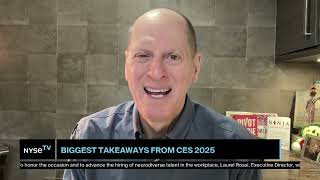
Gary Shapiro, CEO + Vice Chair, Consumer Technology Association Joins NYSE TV Live
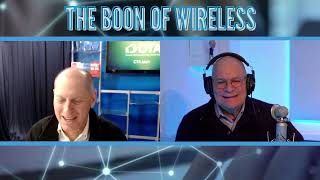
The Future of Technology and Innovation: A Conversation with Gary Shapiro, CEO of CTA
🎙️ Tech Leadership Insights: CTA CEO Gary Shapiro on Innovation & Adaptability