CTA Interview with Gary Shapiro – CES 2023
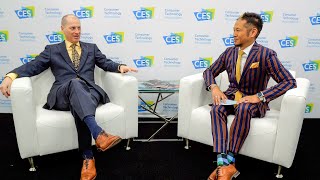
Gary Shapiro, CTA president, says CES 2023 drew record attendance with 3,200 exhibitors and 5,000 media members. The show's theme, "Human Security for All," connects technology to clean water, air, food, and health. Shapiro warns that restrictive U.S. antitrust rules could damage the acquisition-investment-innovation cycle that drives tech growth.
Chapters
All right, Gary, a lot of momentum obviously leading into CES. You know, I've heard we're what, just nearly at 3,200 exhibitors. We've got over 5,000 media members here. Also, a lot has changed from the past few years. So for you, what is different, right, from last year's CES 2022 to this year's CES 2023? What stands out for you?
Well, last year's CES was a real challenge. You know, a million Omicron cases a day and exhibitors, big ones canceling out, and people concerned from around the world whether we were going forward. We still lit up with Well over 40,000 people and a couple thousand exhibitors that were very, very grateful if we went forward. It taught us how important this event is, especially to smaller and mid-sized companies from around the world. And even the big companies, they thought it was really essential to go forward. I keep talking to some of the CEOs from some of the major car companies and other companies, chip companies and others that were there. It was the right thing to do. But what we learned from that is that people want to be engaged. We also learned that it's very important we continue with the show in a digital version, even for the people that were there, because there's so much to do even in a smaller version that they need that continued thing. So we're going for 60 days after the show. But what we have here is, I would call it inclusiveness, excitement, thrilled to be back to some semblance of the new normalcy after 3 years of being away. People, a lot of people are just so happy to see each other. There's an air of excitement and there's an air of real innovation here because these 3 years gave companies an opportunity to Become different, to go into new business lines, to create a new booth. There's more new booths on the floor than I've ever seen before. And there's more innovation. We have a record number of innovations entries. Plus we have a theme for the show. We've never had a theme before. It's always been about innovation. Now it's about sustainability with all these rights and securities with this UN-affiliated body that said you have the right to food, not to be hungry, the right to security, the right to clean air, clean water, the right to healthcare, the right to community involvement, and technology solving these problems. Fundamental problems that global bodies are thinking about saying, what do we do? Well, they're coming here. We have members of the UN General Assembly. We have politicians coming from all around the world. We have a record number of members of Congress coming. We got leaders of every type, CEO, political, different lifestyle, different industries, and they converge on Las Vegas this week for the Super Bowl, or because it's global, the World Cup of Technology.
I mean, this is an amazing place where you and I felt the energy at some of the earlier events, people have this kind of pent-up energy to be around each other here at CES and explore. And obviously when you're talking about tech and innovation, there's always going to be something new. I mean, I'm just as juiced about it. So we already felt that energy at Unveiled. And you also talked about kind of the theme of the show, which, which brings kind of a little different aspect to it because a lot of times we have the show, we know that we're going to get technology and innovation. Why was it important to have this theme, Human Security for All, as as really kind of part of the DNA of CES this year?
Well, there's a lot going on in the tech world. In a sense, there's a lot of news, there's stock issues. You know, there's, there's all sorts of issues about artificial intelligence, about the platforms. And there's a lot of ideas coming out of a lot of well-meaning legislators and policymakers, and they're trying to do the right thing. And the tech industry is not against regulation, but we want to make sure— in fact, there should be regulation to protect consumers. But that regulation also should be very clear about what is legal and what is not legal and what the obligations are of, of anyone in the tech world. And that's how business gets done. It's when a government could arbitrarily do things. And we're seeing that all around the world now, let's be honest. And I'll just pick on the United States. Our government today has changed the rules. So it used to be for several decades, Republicans and Democrats, what is best for consumers in the antitrust world? If you want to buy a company, what's best for the consumers? What's it called? The consumer welfare standard. We have switched overnight to a new standard. What's best to protect existing competitors, which is the antithesis of innovation and competition in the free market system and what's made America the best innovator in the world. So there's a lot of concern because they don't want big companies to be allowed to buy small companies, so small companies won't be getting the funding they're used to getting. And that's something that we welcome policymakers to come here. We want them to see what's going on. We want them to walk around Eureka Park and talk to those exhibitors and say, what they want things to happen. They don't want to hear that these big companies can't buy them or invest in them. They want to know that they could partner, they could do all sorts of things. And if they want to go public on their own or grow intrinsically, that's great also. But that three-legged stool, the heaviest leg is acquisition. And we can't stop the acquisition pipeline or we'll stop the investment pipeline. Investment pipeline stops the innovation pipeline.
You know, also when you talk about the innovation and people come here really to learn more things, to kind of figure out what are some of these trends, what are some of these new innovations that people should maybe lock into? And we get a sense of that by just walking on the show floor. We see— sometimes you see, okay, what is a small company, what is a medium company, what's a large size company doing? And those trends start kind of forming. Now we have our big CTA kind of announcement and press conference on day one. And what are some of those things that you're hoping to talk about at the conference?
At the opening keynote, we're talking about some of the policy issues I just talked about, but we also talk about the purpose of a show is to get people together. Because when does innovation occur? It occurs with disparate ideas joined together to create something better. And what the CES has been designed for, for the last two decades, is to get different industries talking to each other at the CXO level. As much as I thought we had a great digital event you were part of two years ago at Microsoft headquarters, it didn't inspire and engage and allow those connections to be made and the relationships to develop and the serendipity and the discovery to occur. And that's so important. I mean, I tell every CEO you, take some time, walk through the show, look at Eureka Park, look at some of the great big exhibits. Look how companies have defined themselves now after 3 years essentially of being away, many of these companies. And they're all brand new exhibits or all different things. And what we get out of this is a kickstart for optimism, for ideas. It's not just the journalists which come back with several months worth of stories and B-roll and all these things. It's the companies themselves that if they do it right, if they plan it right, they come back with relationships. And when I say do it right, you know, you set goals, you do things to meet those goals, but you also allow for those chance encounters, that discovery. And sometimes, you know, we're in the tech world, a lot of people in the tech world are not extroverts. You just got to get out and meet someone on an elevator or share a taxi or do something. And those are the relationships which change businesses and lives.
That's a really good point of the serendipity of this event. I mean, even someone like me who's covering the event and just observing, you, you'll find booths and you have to go dig deep. You got to go to Eureka Park. Don't just spend time in Central Hall where we know the big brands and the medium-sized brands. But when you kind of go exploring, you see some of these amazing things you've never heard about, you've never seen. We saw a company that was cleaning water with basically like a chemical that bunches the pollution in the water and allows it to be filtered out into kind of like this solid mass. I would not have never seen that if I didn't go to Eureka Park to go explore. And so that is really in the DNA of the show of like, go find something that you've never seen before. And this is a hotbed for it. One of the other things is that—
Well, let me just respond to that. You raise a great point, like water. We all take that for granted here in the US. But the, the fact is around the world it's a huge problem. There are several things we talk about, two of them at the opening keynote having to do with water and how people get clean water, what they can do. In fact, our chairman of the board, as of 4 or 5 days now, he started a clean water company that takes basically— you could even use dry desert Las Vegas air use solar power and take the water out and create potable water. He introduced this at CES a few years ago. It's now deployed in every continent around the world. And people who are facing water shortages now could get clean water using solar energy. It's just, it's amazing. Solving fundamental human problems like that, that's what this is about.
And, you know, ties directly into the whole Human Security for All initiative, you know, that we're talking about here at CES. You know, I know we talked about how meeting in person is important, but also the digital component of CES. Why is that so important to have all these different sessions and keynotes and press conferences available even after the show is done?
Well, what we did learn from this past CES, uh, last year is that the people who go to the show, they're so freaking busy that they can't get to everything and they're frustrated. And so we found that they were the number one user for the next 30 days of going online, checking out keynotes, um, trying to link up with exhibitors. And so we said, hey, let's do something about that. Let's get that tail longer. We're extending out now for 2 months. We're doubling the time to the end of February. So if you've been to the show, you have access to that information for 2 months. And, and, you know, working out longer term, we'll probably continue to expand it to the point where 12 months a year there'll be a CES platform. But for those who can't make the trip to Las Vegas, whether it's cost or timing or COVID or concerns about travel for the rest of your life, or it's just, you know, you're halfway around the world, we think about those people also. We're trying to meet people where they are. But to be candid, our focus is on the people that are here and now and are in it right now. And that's what we'll be thinking about these 4 days.
So you are in it right now, right? Like I've seen even the slogan or tag, like, be in it. We're here at CES. There's a lot of trends and new technologies that have been emerging and really kind of bubbling up to— this is, like you said, this is our grand show for the tech world. Is there any category or space that you're most excited about personally, whether it affects— you're just curious about it. Is there anything that you're kind of really hoping to see? And I know, you know, kind of what's going on. But again, there's going to be things you discover here.
Well, there's so much there. I mean, in the mobility area, you have electric vehicles and self-driving, which is always fascinating to me. And we're getting there quicker and quicker. They're both becoming real and other forms of mobility. There's stuff about electric boats in the water as a new form of Navi. Now, it's actually an old form, but it's energy efficiency. It's that sustainability theme. It's over there. We're even dealing with the space— the space station now. We have a live call going on. Every form of transportation possible is here, and that's great. But I am a science fiction buff for years, since I've been a little kid, and robotics, artificial intelligence, and healthcare technology, which is having done this pandemic as we've done for 3 years, there's a lot of great minds focusing on it. And you combine that with technology and all these sensing devices. We have a fundamental problem of a shortage of healthcare professionals, not only in the United States but in the world. And we're not making more of them. I mean, it's, it's a burnout profession. It's a long time to learn. I'm married to a surgeon. I hear it all the time. And I see how she has shifted to telehealth. And for some things, telehealth has become important. Remote monitoring, The problem is, should someone go to a hospital? And when they leave a hospital, should they come back? And that's the biggest problem hospitals have, is people coming back all the time. That messes up everything. So there's so many solutions out there and different things. And catching diseases early, which is really the key for a lot of healthcare, is getting early. By the time someone's in an emergency room for a chronic disease, it's a bad situation. So there's so much that technology— technology's gonna solve these problems. So I'm excited about all these things. It motivates me to get up every morning to do my job. If I do my job right, government won't screw up innovation. You know, they'll set the rules clearly. People will get together, get the synergies to catalyze innovation, and the world will be better off, safer, happier, healthier. And we have the coolest, funnest, neatest show in the world. So I'm glad you're here. Thank you for coming.
Thanks for having me here.
Love working with you, man. You are like, you're like everything I'm not.
You are cool and younger and like, you could use cool Thank you, thank you. I really appreciate it. I guess we'll run into each other, see you on the show floor.
Have a great show floor. Put on the miles on those shoes.
Miles on both of our shoes, man.
And then you'll see all 3,200 exhibitors too.
I will try. I'll try my best.
Great.
More from Gary
CES 2026 Preview: Gary Shapiro on AI, Manufacturing Innovation & the Future of Technology

CES 2026: AI and Innovation Take Center Stage with Gary J. Shapiro of Consumer Technology Assoc.
Innovation Conference: Gary Shapiro, CEO & Vice Chair, Consumer Technology Association (CES owner)
Gary Shapiro, CEO + Vice Chair at Consumer Technology Association Joins NYSE TV Live
Gary Shapiro, CEO + Vice Chair, Consumer Technology Association Joins NYSE TV Live

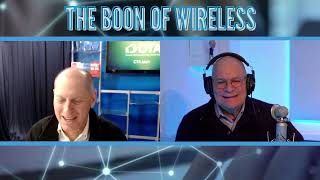
The Future of Technology and Innovation: A Conversation with Gary Shapiro, CEO of CTA
🎙️ Tech Leadership Insights: CTA CEO Gary Shapiro on Innovation & Adaptability