CES' Gary Shapiro: Tech Wrecks & Future Salvation - AAH 723
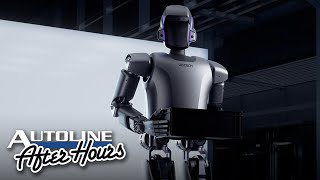
Gary Shapiro, CEO of the Consumer Technology Association, argues legacy automakers must "pivot or die" to compete in EVs and autonomous driving. He warns that East Coast longshoremen opposing toll-booth automation, backed by Trump, could cripple U.S. competitiveness if anti-automation becomes political.
Chapters
Auto Line After Hours is brought to you by Bridgestone Tires. Solutions for your journey. Hey, thanks for joining us, everybody. We got a great show today. Gary Vassalash, my co-host, is out on vacation, so we're going to miss him dearly. But the show must go on. And boy, do we have a great show today. Our special, special guest is Gary Shapiro. He is the chief executive officer of the CTA, the Consumer Technology Association, which is the association that puts on CES. Most people call it the Consumer Electronics Show, but you just call it CES now, Gary Shapiro, right?
It's just CES. And I'm happy to be here. I know you needed a Gary to fill in. So you kept your contract or whatever it is.
And we got Tu Lee, my buddy here from Sino Auto Insights.
Thanks for having me, John. Yeah, as always.
So we got a lot to talk about, tech things going on in the industry. But first, I got to hold this up. Sean, I don't know if you can get this.
Yeah, yeah.
Gary Shapiro has written a book here called Pivot or Die. And I love this because it says how leaders thrive when everything changes. And man, is everything changing right now. You know, especially in the automotive industry. But this is one thing I would love to talk to you about. You know, we're going to go into a lot of things. Sure. Let's talk about the book a little bit, because my premise right now is the legacy automakers and the legacy suppliers better pivot and change right now because, you know, they've built up 120 years of business practices and procedures And it's just bogging them down. They just can't move fast. But I'm talking too much. Gary, tell us about your book and what the premise is.
Well, in a sense, you do have to look at just what you said, because you take a company like Tesla, which came outta nowhere, and all of a sudden is, is worth more than the major auto companies put together. And you have a situation like, how do they get there? How do they get profitable? Well, they don't have all the legacy. You know, some of it is people and you're paying in pensions and, and it's tough to change people because there's relationships there, but also there's practices as well. And there's missing opportunities. Obviously, the auto industry missed the quick electric opportunity that Musk got through. And if anyone— if you've read Walter Isaacson's book about Elon Musk, I mean, he's truly brilliant. And he really did work his way on the Tesla and come up with it and work it and design it and do everything about it. But the auto industry has to pivot. They have to look at not only their supply chains, but their suppliers and how they do business. I have been visiting with some of the CIOs in the auto industry in Detroit. They're really on top of generative AI and how it could make us more efficient. We could get things analyzed and reported in a week, which would take several months. And so there are changes. But think about the opportunities that are being missed today. Yeah, like the whole auto industry rushed to electric, stop what they're doing in self-driving. At the same time, self-driving has the enormous opportunities for great pivots. You can create cars that are living rooms and cars that are bedrooms and cars that are offices and cars that are entertainment units. And who's better to do that than the people in Detroit?
Yeah, no, I totally agree. And, uh, but you know, they overinvested in EVs. They, you know, they, they thought there was a Look, they saw Tesla making money hand over fist. They thought they could do the same thing, and they just haven't been able to keep up with Tesla. And you've been tracking this like crazy too.
Yeah, so to Gary Shapiro's point, I think the Chinese EV companies didn't have the legacy, but they knew enough. So Tesla, if you look at the past, they were a startup until they hired an automotive CFO, you know, ex-Ford guy. I forget his name now, but then they really became more automotive. So there's still DNA of automobile manufacturers in Tesla, and I think that helped them get past the startup phase. And you're seeing a lot of these Chinese EV companies hire European Western automotive designers to get more Western flavor, European flavor, American, North American flavor into these vehicles. And I agree with both of you. It's more of a culture and a speed thing than a know-how thing. And the current leadership just needs to whole hog change a bunch of things. And it's going to be a turbulent 4 years for them to be doing that.
Yeah, I'm not sure if they can pull it off. So what would your advice to them be? What does your book say? Pivot or Die. What, you know, can you give us some specifics?
You have to make big decisions. You have to take risks. And I think following what everyone else is doing is a big mistake because everyone else is looking at the same pictures and they're thinking going the same direction. So, all of a sudden, it happens all the time in technology. Something happens as a turn, everyone jumps on it. And the truth is you have to have the first mover advantage. You have to learn from your mistakes quickly. You have to be able to make things. You can't have a 3-year timeframe to get something done. You have to be able to shift quickly. Now, there's advantage in being small and doing that. There's advantage— but look what Steve Jobs did. When he wanted to change, he didn't go to his existing team and say, let's change and affect our big moneymaker. He just created Skunk Works. Same thing, what did Jeff Bezos do? He created his own competition with the Kindle against the Amazon bookstore, which is what it was. He came to our meeting carrying this thing. I thought he was crazy. I was wrong. He was obviously right. He's better known than I am, and he's wealthier too. He pivoted and created competition with himself. That takes courage. And of course, it's so difficult in the auto industry. But there's a lot of lookalike cars. There's a lot of different things. And in most industries, because of COVID— COVID actually had the advantage of a phenomenal amount of innovation. People just went in different directions, whether it's health care or traditional consumer electronics or not. The auto industry, that really hasn't happened. Everyone dove into electric. In part, it was the Biden administration. Throwing money at it and they just stopped everything with self-driving cars that frankly Obama had started, that Trump 1 had kept on. And now Trump 2, especially with his new Secretary of Transportation designate who is like euphoric about automated vehicles, he's gonna, I assume, get us back into because electric cars, it's saturated market. There's so much competition there and consumers are concerned and for a lot of good reasons that they, You know, it might be a good second or third car, but a first car only if you have a very tiny commute. And even in Detroit area, like, we can't go to the airport and know that we're going to get a charging station because there's only 6 of them in the McNamara Terminal. I mean, it's crazy. And someone parks there for a week. So like, you just can't do it. So hybrids are obviously, to me, where there's a directional shift going on. And I think we'll get to electric. As well, but it'll be part of a mix of cars.
But going back to your, your skunkworks thing, I want to ask you about this too. Ford started a skunkworks. It's out in California. It's not here in Detroit. And I'm hearing good things, although obviously nothing's in production yet. Do you think that's the right way to do it? Go with the skunkworks?
I do. But it raises more questions, right? Because you get a great team, small team, nimble team, fast team. But then you have all these engineers and overhead in Dearborn. What are you going to do with them? Because now you've proven with a small team you can move faster and build really cool things. And so it creates another difficulty or challenge for Ford. And Gary Shapiro Shapiro Shapiro, one of the reasons that I was almost late was because I tried out a May Mobility self-driving vehicle. And I've tried out a number of them in China and Recently, Waymo in LA and San Francisco. So the other things that they should be looking at is what can we do to make money while people are getting driven in these cars? And I think to your point, because they're focusing on hybrids now, they're peeling back on the EVs, they're not focusing on what's next. And part of pivoting is looking at what's next. Not what your competitor is doing, looking at what's next. And I think one of the big things— because people complain about subsidies, about China and labor rates and things like that— but at the end of the day, one of the biggest reasons that they are so— some of these car companies are so great is because of the competition. And the competition is creating a lot of innovations and features that are going to end up being in vehicles in Europe and North America. As well. So—
That's a great point. I mean, you know, there's the worst business in the world, I think, is TV set manufacturing. I mean, it's best for the consumer. You get these huge flat-screen TVs. I'm having two of them put in my house today. Flat-screen sets, they cost less than a gallon of milk almost. I mean, it's crazy per weight and what they do, and they're phenomenal. But the TV manufacturers figured out another revenue source. The smart TV actually now provides advertising. So, you don't have to hook it up to anything. And all of a sudden the advertising will come onto the TV set and they're getting revenue from that. It's a big deal. In fact, at CES, we have a whole portion of CES, several hotels now. It's going to get about 10,000 chief marketing officers and platforms and it's the smart TV people are all there. They're getting their percentage increase from revenue from streaming is amazing, the ads they're getting. But that's what they're doing and that's what those marketers are doing. If you think what marketers are doing, if you're the last marketer to do something, you're paying the most. You just learned about Google Ads this year. Well, too bad. All the good words have been taken, and you're paying a lot. But if you're the first one out there, it's incredibly cheap. And that's what— a car can be viewed as a platform. You own that consumer while they're in the car. Now, obviously, you have satellite radio is in there, and you can do other things that are coming. Obviously, we've researched consumers recently. And of those owning a vehicle already, 60% of them want to buy a car in the next 2 years. And what do they want? They want the technology features in there. They want collision avoidance. They want the mirrors all around that tell them who's, you know, the blind spot. They want active, all sorts of things. And of course they want different services in the car. They want phone compatibility and all these. Well, the phone now, once you get it in there, they kind of own it. But I'm sure there are ways, the things car companies could do to create their own services.
See, I'm very pessimistic. I think the car companies have lost the battle for autonomous vehicles. I know you like to call them self-driving vehicles, whatever, it doesn't matter. You know, GM just bailed out on GM Cruise. Ford and Volkswagen threw in the towel a number of years ago. I don't think there's one car company left doing in-house AV development right now. The tech companies have won. You know, Amazon has won. Waymo has won, you know, as part of—
Yeah, Waymo is one of the keynoters to the president is keynoting at CES. I mean, we'll have a lot of self-driving there and we'll have a lot of electric cars as well, but the point is, is that when you say self-driving is not dead or autonomous vehicles, it's the Europeans, the Chinese, others are all moving forward while we stop for 4 years. We still require, you know, there's a limit, a quota on the number of autonomous vehicles that could be could be sold.
You can't cross state lines.
Yeah, right.
And you can't cross state lines. You have to change your car. We're like backwards. We used to embrace innovation and basically Congress stopped it, not because the Michigan legislators were great on it, but you know who stopped it? The freaking trial lawyers. They make money off of carnage. They want people to die. And my hope is that, you know, I hate to say, but Elon Musk comes in and realizes that a lot of our healthcare spending A lot of our deficit comes from healthcare. Healthcare spending can be reduced if we didn't have several hundred thousand people we don't have to have in emergency rooms and 40,000 people die.
So I love quoting this. So over 40,000 people are killed in motor vehicle accidents in the United States every year right now. 40,000 dead. The dead, I mean, that doesn't impact the healthcare that much, right? But 2.5 million—
Is that the number? Oh my God.
2.5 million people are injured badly enough to go to the hospital.
That's crazy.
Some injured for the rest of their life, you know, closed head injuries, I'm sorry, but they're going to cost society $20, $30 million over the rest of their lives.
There's so many reasons to do this, but the carnage industry, the trial lawyers, are stopping it.
Exactly right. They're against it. They want it to be perfect. And I've had this argument with them, and it's like, it will never be perfect. Human beings don't make perfect things. So the industry's got to be honest. People are going to get killed in autonomous cars, but We might save, make up a number, 30,000 lives a year. We might prevent 2 million people from having to go to the hospital. That'll have a massive impact on the healthcare system.
We'll save on gas costs because even if it's petrol still, you know, autonomous vehicles, they're able to not lay on the gas so much and brake so hard and things like that. So there's a lot of good that can come from autonomous vehicles, and we're only talking about robotaxis and, you know, passenger vehicles, because commercial vehicles are also going to be self-driving, and I think that's probably closer to commercialization than a robotaxi, obviously.
Well, we're seeing that also. I mean, again, we see it at CES, and we have John Deere and Caterpillar, and they're showing how they're doing all this incredible stuff and saving a lot of money. Autonomous lawn mowers. Yeah, that was how I made money as a kid. Taking my job away. That's right.
Well, that, a newspaper routes, right? And, you know, you don't— when was the last time you saw a kid delivering a newspaper?
Well, on his bike. Maybe his dad was driving him or something like that.
Maybe, right?
Well, the one thing I will say though, John, that's different with North America and China is that in China, the EV companies are developing, as you know, their own intelligent driving systems. And so that is converging much more so than anything happening in North America. Waymo is completely separate. They don't really have an OEM backing them. There are several. So XPeng, NIO, Li Auto, I've tried all their intelligent driving and I've tried most of the robotaxis. And XPeng's is really good. Huawei is supposed to be the best in China anyways, and they've partnered with state-owned enterprises and OEMs. And so there's going to be a convergence in China much sooner than and because you, like you said, in North America they've kind of given up, right?
No, look, the tech industry won. The automakers—
it's not a battle between the tech industry. I think, I think they work together, right? Yeah, but I mean, I'm concerned about China because they are, you know, they are— I wouldn't call them an enemy, but they're a threat in a sense to the US, not only militarily but economically, because they, they laid that they were going to do this out several years ago, and they're just doing— they're operating on their plan. Plus they have no privacy restrictions. In China that we have in data and bureaucracy. And they don't have lawyers the way we have stopping everything. I mean, putting a litigation tax on every American business.
Right. Yeah, it's— yeah, you're right. It's not a battle between them. But you mentioned Europe. Really, there's not much of anything going on with advanced autonomous development in Europe.
I was told Germany is going to be one of the last countries in the world that that will adopt robo-taxis.
So, well, yeah, I mean, look, it's the American tech companies and the Chinese that are leading the charge in all this development.
There's an English company called Wave now. They've just opened an office in San Francisco, and the irony is Waymo uses Jaguars, which is an English brand, and Wave, which is an English autonomous vehicle company, are using Ford Mach-Es, Mustang Mach-Es, riding around testing them and San Francisco in the Bay Area. So, uh, so there is a— if you could call them European, I guess if you say English because of Brexit, now they're not really part of the EU, right?
And I got to stand back. I've been saying that no American company— I'm missing Tesla. Tesla is— in fact, Tesla came out today, I think, that they want to have robo-taxis running in Austin, Texas next year.
Really?
Yes, next year. So it's, it's coming, it's coming fast. And I'm like you, I've been a huge proponent of autonomous vehicles because, you know, electric vehicles, all electricity does is change the way you turn the tires to move the car. Autonomy changes mobility. It'll have a massive impact on society. Electric will have some benefits in climate change and stuff like that. And And electric cars are a better driving experience, you know, I think for most people. But autonomy, that changes everything.
Well, it certainly changes it for people that are older, people that are disabled. You can put kids in there, people that are inebriated. I mean, it is a game changer. There's no question. But electric— the problem with electric is a lot of people in America believe that electricity comes out of the air and somehow it's free. I mean, it is nice not to go to a gas station. I mean, they do save money on that, but that electricity has to come from somewhere. Right now, We have a serious electrical problem. For the first time, CES is focusing, where does all this electricity come from? Because we have electric cars, we have generative AI, we're doing a whole quantum computing conference. And quantum uses a lot more than, you know, it uses more, but it should be quicker than generative AI. So we are in trouble with our cloud forms, you know, because cloud computing is doing it and they just suck up electricity. So we don't have any more. That's why the tech companies are talking about creating their own nuclear reactors.
Right, right.
Like, who would have guessed that a few years ago? That's right.
Yeah. I mean, they're talking about reopening Three Mile Island and one— I can't remember, was it Amazon? Somebody wants to buy all the electricity out of it.
Microsoft, maybe.
Okay.
Yeah, maybe you're right.
But I can't.
But the point is that the government stepped in and said, we're going to stop that. So we'll see where that goes. But I think there's even among environmentalists who oppose nuclear, I think there's a consensus among the policymakers, we got to go to nuclear. Look, I've spent the night and done an embark on an aircraft carrier. There was 5,000 people living on it, 100 miles out of California in the middle of the Pacific, totally powered by nuclear power. If we could power a boat, we're putting American lives at risk, certainly we could power a lot of things with nuclear.
Yeah, my only problem with nuclear is, you know, the half-life of the nuclear waste is 10,000 years.
But what's the half-life of our planet if we don't get away from fossil fuels at some point? You know, what are the odds that, you know, we won't have problems in 200 years? And some of the other solutions, just what is there? All this renewable, it's a tiny percent. Correct. The Canary Islands actually get from wind 60 to 70% of their energy, but they're a wind tunnel. I was there recently. And France actually is best on nuclear. They get 60 to 70% of their energy from nuclear. But, you know, we are like, we're tiny at this point with nuclear. We just have to step up. And I think you'll see that's where I think some of the efforts will be.
Well, there's these new nuclear reactor designs that don't produce as much waste, or even the waste can be used as fuel. And there's a lot of stuff being focused now on fusion that would get rid of, my understanding, my limited understanding of it, a lot of this waste. But to me, the way— I'm sorry, the waste The waste is a problem because every nuclear reactor is on water. It's on a big river, right? Or it's on the ocean. And I found out the reason why is that the reactors are so damn big and heavy, the only way you can move them is by barge. You cannot do it by truck or by rail. It's got to be by barge. So they're right on a water source. We have not as a country— in fact, no country has figured out what to do with its waste, really. And so what do we do? We store it right there at the nuclear power plant. God forbid that there's a terrorist attack or, or some sort of technical snafu. You're going to irradiate a major water source wherever it is. So and like I said, 10,000 half-life. Who's going to warn people 10,000 years from now, don't go dig there? And besides, who's, you know, these— all this waste has got to be in pools of water and it's got to be monitored. Who's going to do that for 10,000 years? So that's my problem with, with going all, you know, whole hog on nuclear. Talk about kicking the can down the road. It kicks it down the road for thousands of years.
I hear your concerns. Yeah, we'll be able to ship it into space. We'll be able to do things. Okay. I don't only slip into that. I always slip over some things. Electric cars that we're so reliant on China for some of the minerals that it's so expensive to fix when the battery breaks in electric car. I mean, And it is difficult with salt around and, you know, salty conditions. There's a lot of issues with electric cars. And I think that, you know, the range anxiety that people have is real. There's no question about it. It's just—
I think that my guess is we'll see. Everybody can take their guess. In about 3 years, this is going to be largely solved. We're going to see second-gen EV platforms, second-gen batteries. We're going to see new chemistries. The sulfur battery stuff, I think, is really promising. And we're going to see a lot more public chargers.
How about hydrogen?
Hydrogen, I think, makes a lot of sense for long-haul trucking and for trains. I don't see it happening for decades in passenger cars. That could all change, though. That could change.
So China is focusing and investing in hydrogen. So I think anytime the Chinese government says we're going to invest in the technology, it's going to be viable at least in that country, which likely makes it viable in other countries. But yeah, I agree with you, hydrogen is— certain use cases are better for hydrogen. And I do agree that batteries, swapping, um, charging, whether it's wireless charging, whether it's fast charging, I think that's also going to help. With range anxiety. But Gary, you make a great point. I just got an EV myself. It barely gets 250 miles of range. And I live in Metro Detroit, like right outside, like in Troy. There are like 5 chargers, like Level 2 chargers that I could go to, and they're always taken up until like 9:00 at night. And so I I tell my wife, she thinks I'm going to the bar or something. Like, hey, where are you going? I'm going to charge my car.
That's crazy.
She's like, what? That's crazy.
We had a bunch of chargers installed in our garage in the building we own right outside of Washington, DC. And I will say, increasingly, they're in demand. We keep adding. And it is— electrical is real. It'll be there. It serves a lot of purposes if you know your commute, you know what you're doing. But the soccer families that I deal with when we're driving to Ohio and Indiana, there is no way. No one could have an electric car. Car. And that's just the way it is. And it's not a great starter car for a kid either. Our son just got his license.
Oh, I was going to— so I was thinking about— it's too small, but I was thinking about getting a used Bolt because they basically have brand new battery packs because GM replaced all the old battery packs. And then 4 years from now, I was going to give it to my son. But I decided to get an IONIQ 5. But to your point— you earlier about how the consumers are looking at these connected features and the safety. It's funny you mentioned that because in China, Chinese consumers, what they want out of any EV or connected EV is number one, the connectivity, you know, the home life in the vehicle, and then safety, which means intelligent driving. And so in my opinion, The opportunity that Tesla thinks they have of spent charging $8,000 in China for FSD is not going to be there because BYD is hiring 1,000 engineers and software guys to start developing the intelligent driving systems themselves. They're working with DJI on some of that, and so BYD is just going to democratize that. And they're going to push the price down so low. Li Auto is already giving it away for free as part of their vehicle. It's standard. It's not free. It's standard. But most of the other systems in China are less than $1,000 or $1,500. And so just to charge that premium— and FSD is not going to be a runaway success in China for sure. So I think that's where— the rubber meets the road, 'cause, John, we have these North American autonomous vehicle companies, we have these Chinese, they're gonna do battle in Europe, they're gonna do battle in South America, Latin America, Southeast Asia, like long-term, in Middle East, to try to dominate and compete in those markets because there's not likely going to be an American autonomous vehicle company in China and then vice versa. So, yeah.
That's stupid. I mean, seeing GM pull out of the Chinese market and then pull out of autonomous vehicles, that was— I mean, I understand it's difficult for an American company. The Chinese write the rules in their favor. We don't have those same rules. We don't require a US partner and the government gets their hand, which is the government in China. We don't have those same requirements. But it hurts to see GM get out because they were such a great advocate for autonomous vehicles.
Right. You know, it hurts me to see them do that. And it speaks to the short-term focus. Of American companies. And I understand GM was going to have to put billions more into GM Cruise before it ever got a return on it. But someday, I think we're all agreed, someday autonomy is going to be a massive profit generator.
But there are other choices. You could partner with someone else. Well, but the guys partner with the tech company, they can do all sorts of things. So I don't, I don't think this is— unless they're just writing off the whole thing and walking away from it, there's an asset.
No, they're, they're, they're going to put more effort into their Super Cruise system They had a next-gen coming called Ultra Cruise, which is going to be hands-off and eyes-off, but they axed that program.
So I was told that when they opened the Mountain View office, they were looking to consolidate and figure all that stuff, and then the Cruise thing happened. But the irony is, is that GM has invested heavily in an autonomous vehicle company called Momenta. You know this, in China. So they could have a robo-taxi or an autonomous vehicle in China sooner than they would in the United States as it stands right now, which is kind of crazy to think, uh, because I think they wrote a $400 million check 5 or 6 years ago. And then Toyota's also invested in Momenta in China as well. So again, full steam ahead. The level of competition, the types of technology that's available to most Chinese consumers is leaps and bounds ahead of anything in Europe and North America. But it's going to bleed over for sure, to your point, because American consumers eventually want that themselves.
Well, I just want to make it clear, GM is a great company. They're a member of mine. I drove a GM Cadillac over here today. I believe in GM. It's a beautiful car. It's a beautiful company. And it does have great leadership. But I'm starting to wonder— I know this will sound far afield. The UnitedHealth, I've learned a lot about them. They're in the top 5 Fortune 500 company, top 5. How do they get that way? They only pay 32%. They have 32% of their claims they don't pay for health insurance.
Yikes.
And the industry standard is 16%. Wow. So the executives got super wealthy and the stockholders got wealthy by denying people health care. And it goes to capitalism, I believe in passionately, But I'm starting to get jinxed. That's a very bad way to run a company, in my view, because you're hurting people. Now, boards of directors— I'm not speaking about GM. I'm speaking generally. They could choose their way. They could go for the short-term profit. Like, we could run a trade show. We could cut out all the buses. And we spent over $1 million on buses. We could cut out the carpet. We'd cut out the signage. We could even cut out our marketing. We could have one hell of a year or two or three. But you know, you gotta focus on the long— you need a board that's focused on the long term and people incentivized on that.
No, no, I, I'm glad you brought that up because that, that's a pet peeve of mine. Boards of directors set the goals for what these CEOs have got to achieve. And by the way, they also set the pay for it.
Yes.
And you know, it's the old adage, tell me how you're gonna measure me and I'll show you how I'm gonna perform.
That's right.
So it, it, you know, so much of this criticism that, you know, gets heaped on the CEOs. The problem really starts with the board of directors. Or maybe I shouldn't say the problem, but the challenge of trying to run a business that is ethical and long-term.
Right. I mean, UnitedHealthcare will be the Harvard Business Review case study and it's not over yet. I mean, I know it's tragic this guy was killed, but I don't think most Americans know. My wife's a doctor and And when it first happened, I said, oh, UnitedHealthcare. He said, we hate them as doctors. They just deny everything just as a matter of course. It's just difficult. I can't believe that people are denied healthcare. I'm not an expert on healthcare insurance at all. But the facts are the facts. I mean, if you're denying so many claims, you're hurting people. That's right. And that's when government, even who knows what this government, the next government will do. They'll do— I can't imagine they're not going to do something about that.
Well, that's what Doge is supposed to do, I think.
Yeah.
So, or—
well, they're supposed to cut government spending, and this is pro— I mean, they're private health care insurance, and, and so what they're doing in a sense is they're charging corporations a lot of money to have health care for their people or labor unions or others, whoever has health care, and, and they're not getting value out of it. I mean, their people are being hurt and not getting served. It's just It's tragic to be waiting for your insurance person. Sure. I mean, people die that way.
Yeah.
So, hey, look, we got to take a quick commercial break. We got a lot more things to talk about. We'll be back in just a minute. But first, a shout out to our great friends at Bridgestone. Making a life full of memories one road trip at a time. That's what really matters. Bridgestone WeatherPeak tires with a 70,000-mile warranty. 1,000-mile limited warranty. Okay, we're back talking with Gary Shapiro from the Consumer Technology Association and Tu Lee from Sino Auto Insights. But what do you think is going to be the big thing at CES next year?
Well, it's—
oh yeah, next year.
That's next year. I mean, you know, we're still, we're still in '24 as we, as we do the show.
Technically, yes.
We had a lot of all-staff meetings this this week in Washington, D.C. to go over everything that's happening. And it's going to be an amazing event. I mean, it's January 7th through 10th in Las Vegas. And first of all, the keynote speakers, like we got the hottest companies. And I realize so many of them are in mobility. You know, NVIDIA, what's a hotter company than that? Jensen is speaking. XM Sirius is speaking, CEO. Waymo is speaking. We have also, we have other companies that are in mobility.
That's okay. You can look at your list.
I am checking my notes here because—
Well, it's not fair. It's not the de facto auto show for the United States. Yeah, it really is.
It really is. So Delta CEO is actually speaking. Ed Bastian speaking in the Sphere. Oh, wow. Never before has a trade show used the Sphere. The Sphere, for those that don't know, is like several thousand seats. And it is this— you're in the middle and you are immersed and covered in sound and video. I can't even— it's like describing ice cream. I can't describe the experience of a Sphere. It's delicious, though. Oh, and also Volvo Group as well, CEO speaking, Panasonic. It's just—
if I may add to Gary Shapiro's list, I know XPeng is going to be there introducing the AirHot, the eVTOL. So, John, we should take a look at that. Zeekr is going to be there showing off some of their vehicles. Autonomous vehicle company DeepRoute is going to be there as well. They all reached out, so that's how I know.
I don't know if he's a speaker, but I know Akio Toyoda is going to be there too.
Oh really?
Yeah, yeah, yeah, yeah.
That's why I do these things. I learned. Yeah, yeah, I'll be honored to have Mr. Toyoda come.
And it'll be my first year coming to CES, so I've never been.
Oh my gosh, wear comfortable shoes.
Yeah, that's what I heard.
Optics in Las Vegas are further than they appear, so if you think you could walk there, you can't.
Good thing it's the winter.
We spent a billion dollars on buses that are free to go go around and take people places. But it does require planning. We have a great app and things like that. But, you know, the West Hall will have the first time we have a mobility stage actually as well. And it's the newest convention center hall in Las Vegas and it's fabulous. But the thing is, the mobility is so big, we have to spread out elsewhere as well. But of course, there's a whole big section on healthcare, there's robotics, there's obviously everyone's going to be talking about generative AI. We'll have several thousand exhibitors. We have a separate area for startups. It's called Eureka Park. And, believe it or not, Shark Tank does their tryouts there. Mark Cuban's walking around. I know he's coming to the show. You have others. Mr. Wonderful will be there. There's so many people. But, it's not only that. Like, the Walmart executive team goes to Eureka Park. Everyone, it's energizing to see what the startups are doing. But, there's so much to see, you can't see it all.
And there's a handful of startups in Detroit that are going to be presenting, I think, at Eureka Park too.
So that's great. And the Lieutenant Governor actually is coming. There's a great Michigan delegation always going.
Look, I remember former CTO at Delphi, when Delphi was still a big supplier, told me he walked through there with his checkbook and when he saw something he'd like, he'd write a check. And yeah, so I mean, They're not just looking.
Oh yeah.
They're there to do business.
We have several thousand investors from the, from angel investing to the biggest funds that are there. And the other interesting thing is about a lot of companies, this is their one opportunity to show to the world who they are. Because we'll have about 140,000 or so, plus or minus 10,000. And over 40% of those people are not even from the United States. They're coming in from elsewhere, which is phenomenal. Think about over 55,000 people. There's nothing like it in the United States in terms of people coming in. And when other people say we're the next CES or things like that, that's just simply no way because it takes— it's taken us a long time to get this big. And we independently audit our events because we're a platform. That's how we view ourselves. Like, you're a media company. We're a platform. And we have an obligation to present everything. Even if we have an opinion on something, we'll present the other side as well. We'll invite people speak. We'll have 1,100 speakers. And it can be, the keynotes will be streamed live. So any of your listeners, when they're done watching what you're doing, that's right. That's right.
They can go from this show to your show. Right.
Well, and we'll have a library and we'll keep building on that over time, but not all, obviously, just the big speakers will be out there, but it's a, we'll have over 5,000 media coming to the show. So it's It's probably the biggest—
Gary, you got to help me write a cheat sheet out, like where to go, what halls to go to.
Well, it depends what you're interested in. But I tell everyone to go to Eureka Park because you'll be inspired when you go there. But go to the halls of the biggest companies and see what they're doing. I mean, even if it's an agriculture company, like John Deere or Caterpillar, to see what they're actually doing and how they talk, it's amazing.
And I will say, having seen the cat and the the Deere displays there, they're jam-packed. Oh yeah, because they got big, big machinery in there and everybody loves looking at big machinery. And everything that they showed too, at least in what I've seen there, all autonomous. Autonomous mining trucks, autonomous tractors.
One big first-time exhibitor is Oshkosh. Oshkosh, you know, I, I only know them from the clothing. I learned they make a huge amount of vehicles.
Oh no, those are two separate companies, I I think Oshkosh Apparel is different from Oshkosh Trucks.
Well, they are different, but it's Oshkosh.
But it's Oshkosh.
Yeah.
So, but the vehicles, all sorts of different vehicles, and they want to be there because it's important. A lot of publicly traded companies are there because they want people to know what they're doing.
Sure.
And that's what they're there. They're there for the institutions, they're there for the media. But also, like some of these big companies with the big construction equipment and other things, They're taking orders or getting customers from around the world that would never otherwise know them or see them. So this, to them, is a show they continue to invest in. And the other thing is, like, 7 of the 10 largest auto suppliers are there. This is— it's not a— we are not a public show. I want to make that clear. You have to be connected. But we have the auto ecosystem there. You know, the chip companies are there. Other companies are there. It's just all the way up. So you'll see a lot of— people in this town that will be there.
Oh, yeah.
As someone new to the history, when did it turn to becoming more of a, like, a mobility showcase and auto show?
You know, the Car PC, I think it goes way back. Wasn't that Ford and Microsoft, or was it?
Yeah, yeah, yeah, yeah.
That was the first, but, you know, what happened was we're based in Washington. That's where our office is. I have an apartment there, and I married this woman in Detroit, so I had to have a business reason to keep coming back and forth from Detroit, you know? So, no, that's not really it. I think what I've been saying for 20 years from the CES keynote stage is that every company is a technology company. And the car companies figured it out actually fairly early that people didn't just want 0 to 60 in 3.2 seconds. They wanted to get those brand names like it was Bose and Sony and others and Audiovox. They wanted in their car. And now it's just obviously they want to replicate their home and their office in their car. And that's what they want, those comforts. And, you know, some of these things you get like, well, here, like you get the heated seats and heated steering wheel and other technologies. You, once you get the benefit of a technology, you don't willingly give it up. I remember when people made fun of the remote controls on their TV, said, who needs that? Who needs a microwave oven? Who needs a cordless phone? I mean, if you look at the history of technology, these things like, why do I want that? To all of a sudden, like, I can't live without it.
That's right. It's so true.
And it's more broadly defined now because like 5 years ago, 6 years ago, NVIDIA might not have been an automotive juggernaut, but like, so now tech companies are, have really, really specialized in mobility and automotive.
So I think absolutely. No, but I'll give Jensen credit. He, he came to me like 15 years ago and talked about keynoting. This is his third time keynoting. I wish I'd paid a little bit more attention and like, you know, maybe like just put in a few bucks worth of stock.
That's right.
But I did.
So here's my CES history that I'll tell you. I went probably for the first time in the late '90s, and up before then, the big thing for automotive and CES were the speaker companies. And you could get, you know, woofers for your cars and tweeters for your, you know, all this stuff. And then I went there going back to Delphi because HD radio had just been introduced and they were going to announce it at CES. And then the auto industry started to realize, and it was probably Tesla that kicked it off, if your company had a tech cachet, ooh, Wall Street wanted to invest in you. So they all wanted to be seen as advanced tech companies. And then as the industry started to transition more to electric vehicles, but especially autonomous, and all the UX stuff and the connectivity, the tech industry realized, holy crap, this auto industry could be a huge market for us. And I can tell you, I had been out to Intel back in, in the '90s and to Motorola, which were the big, biggest chip makers then. Intel wanted nothing to do with the auto industry. Moto did it because it was some extra volume, but they didn't have their heart in it. Boy, has that changed. Because like, I mean, NVIDIA, I mean, automotive is a huge part of what they're doing.
Yeah, actually, I'm thinking back now to the beginning of COVID when we ran out of chips, essentially. The auto industry was cut off first because they were the— out of fairness— the toughest bargainers, and they wanted the cheapest possible chips. So the chip company said, well, you know, you could wait on line. We got bigger customers that are spending big money for all those great things we do. So I think the car companies themselves have gotten a little more sophisticated, recognizing it's just not how much what your supply is. It's also what you pay and what those chips can do.
And to your point, you know, from sand to ASIC is 6 months, generally speaking.
How does that happen, right?
And so, but a lot of the OEMs years ago were using indirect buyers to buy silicon. And so they didn't understand like the processing and the timeframe and the lead times. And so they thought they could just bully a TSMC or an Intel. And so they learn quickly. And unfortunately, a lot of the OEMs, they still don't hire experienced silicon buyers and sourcing guys and logistics people. Because when I was at Apple, I learned to drink through a fire hose because I, I didn't know anything about silicon, but I learned in 6 months because I just sat right next to an engineer and he explained to me what 7 layers and how this turns into a wafer, how the wafer turns into— and then how it's packaged and all these things. And we were flying chips from Taiwan, prototype chips from Taiwan to Shenzhen just to make first, you know, for production, for first, first production the next morning. Because, you know, we were working with ATI at the time and NVIDIA at the time because they were just graphics suppliers. And so I learned early on the importance of the silicon part of it. And so that's ingrained in me. But it's such an interesting time because every major connected vehicle has an NVIDIA chip and a Qualcomm chip, whether you're American, European, or Chinese.
Those are two hot companies, and they're both big there at CES. But it's not just the chips, which changed dramatically in the last, uh, several years is it's the pervasiveness of smartphones, every one of which has a tremendous number of sensing devices. But those little sensors, they don't cost a lot, you know, a few cents. And very smart people are putting them together and they create some algorithms and they solve some consumer's problem. And all of a sudden there's a huge business and another billionaire. It's, it's—
That's Meta Ray-Bans, right?
Oh, yeah. So, yeah. So, yeah. So, yeah, we got, we actually got through legislation, became a law that said anyone with a hearing impairment should be able to you get a cheaper hearing aid the way you get eyeglasses at a CVS. And, you know, we fought the 3 hearing aid companies, and they're several thousand dollars each, but we won and we got it. And now, like, the amount of people listening and hearing is great. And an eye company came along and said, uh, we're going to put— make it part of glasses. You won't even see it. And they're big at— see, it's Exeter Luxottica, uh, with— which owns a lot of the brand names in it. All of a sudden they're there. So, so And that's what the CES is. It's the coming together of innovation in a magical way where it's just the exhibitors are doing business with each other and everyone's doing business and it's once a year. And when we had this, I talk about a little bit in the book, this tragedy of COVID and then we thought we were out of it. Then Omicron hit at Thanksgiving and then spread to the US and all these major companies started pulling out of CES, including frankly GM. We were supposed to, Mary Barra was supposed to keynote. And they had built this whole big thing. And they pulled out. They said, it's not safe. We went forward with the event anyhow, thanks to companies like Qualcomm, actually, and others that were very big— Abbott Labs, others. I spoke to their CEOs, and they really encouraged, we got to get out of this. But it was a million people a day. But we went forward. And you know who loved it? All the smaller companies and the companies that were there. They said, we got a lot of exposure. No, because the press kept coming.
And I'll say, as somebody who attended the show then too, boy, you could go anywhere in Vegas. It was not a problem at all. Whereas in a normal CES week, holy crap. I mean, the traffic, you know, it's just crazy.
It was, it was.
But, but that COVID year, you could get anywhere. No problem.
Toughest pivot. Biggest. My board said, Gary Shapiro decision. It was the biggest business decision of my life because you're affecting tens of thousands of people and what they do. And that was a tough one, but it was the right call because it helped bring America back. And it was the first big business event to come back. And then, you know, we just— now we just— we've adopted a healthy— a lot of safety and healthy things. We try to get air and we— but still, we got to get together. I'm the paid cheerleader for the technology industry, but I really believe we got to get together because that's how the business relationships was formed. That's how you go into new categories and new areas and get ideas because everybody has to partner now. I mean, every car company has a zillion partners because nobody has all the technology or the ideas. And that's why it's better if companies go in different directions rather than go in the same direction, have the same type of thing, the same features in a car and all that, because you could figure it out. And the reason the car shows have struggled so much is because you want to reach the consumers. You could do it now with technology and get exactly the demographic for that specific model with those features for that car and what it feels like. It's tougher with a car show.
And if you don't have live shows— so one of the things I try to tell everybody is you got to go to the Chinese auto shows. You got to touch, feel, see these things because watching a 15-minute YouTube video about the XPeng vehicle, it doesn't do it justice because, to your point, You got to see the excitement from everybody else in the booth and feel it. And I invite anybody that wants to understand electric vehicles, what's next, to go to the Shanghai Auto Show next year because I'll be there. Number one, because I'm a nerd and I'm like you. I want to see, I want to touch, I want to feel, I want to talk to these people, right?
And well, I want to talk to you after CES and see what you say because you said you've not been to CES.
I have not.
If you think the Shanghai Auto Show is exciting. Wait till you go to see it.
Yeah, I'm looking forward to it.
I mean, we're obviously much more than cars. Not there's anything wrong with just cars, but there's so much there and so much that could go into a car and ideas for cars. And it is more at the also the supplier level. And when you hear the chip company, like when you hear Nvidia, Jensen speak, I mean, come on. I don't know if you've ever heard him speak.
Yeah, I have.
I have.
Yeah. He's— yeah. So yeah, I'm really looking forward to it. I don't necessarily I'm only going to look at mobility stuff. I'm just going to look at whatever kind of— I'm looking forward to everything, a lot of it. And then the events in the evening too.
So pivoting slightly, I'd love to get your idea what you think about the new Trump administration coming in, Elon playing a role in that. You're in Washington. You're really plugged in. You talk to so many people in the tech world. What do you see happening? It's, I mean, there's a lot to unpack there, right? But I'm sorry.
You know, the thing about Trump is we do have some experience with him, but I told our employees, we don't take a position on the presidential race, but no matter who wins or what happens with it, I'm going to find positive things. And I found a lot of positive things. I mean, for one thing, the election, it didn't look like the Chinese or the Russians made a difference. There was a clear result. There wasn't rioting in the streets. And frankly, people vote split, even in Michigan, for example. You know, they went for Trump, but they went for a Democratic Senate. It shows that people, they could vote, they could think. Americans can actually think and make decisions and not have a party tell them what to do or tell them based on their skin color or their religion how they have to vote. And that blew up, it kind of blew up the assumptions a lot of the media had and people had about how they should think. So that was great. In terms of the business environment, honestly, I'll be honest, the Biden administration was horrible. It was just terrible because Elizabeth Warren and Bernie Sanders were picking everyone and Biden didn't really care. And so they were running all the business, the Department of Labor, the Federal Trade Commission. Federal Trade Commission literally went to Europe and had them suing American companies. They took one of the best— we had the robotics companies that made the Roomba, which was started by these MIT grads 30 years ago and they're finally getting out of it. And they sold to Amazon and they went to Europe and said, "Amazon, don't let Amazon buy this company." And they had to lay off 300 people as soon as Europe decided to sue them. And they said, "We have the worst administration in my lifetime for business. That's over. We have a new FTC chairman coming in. We don't have this person who's never worked at a business in her life for a day, who is 32 years old and took the best agency in Washington, highest morale, and turned into the lowest. So she's going to— that will be righted. And we're seeing other good appointments. I mean, some of them are a little kinky. I mean, you know, Department of Labor appointment is interesting. It scares us with the overnight— she supported legislation allowing overnight unionization, no worker rights, no privacy rights for workers, and that you have to give up your phone number and at-home address to any union representative or someone trying to organize you. It's a little weird. So we'll see what happens with that one. But in terms of the Congress being all Republican, and also it's kind of unfamiliar because there's testing going on of what the boundaries are. Like, is Trump— like, does he own the Congress? Or, you know, and yesterday, does Elon Musk own the Congress? This is a phenomenon. Elon Musk is the most powerful non-governmental person now. Not only is he running 5 companies, I mean, it just boggles my mind. The guy's an advanced form of human being. He's brilliant. And the way he makes things happen, and he's like Steve Jobs in a way. You know, 3 people are a lot alike: Elon Musk, Donald Trump, and Steve Jobs. And you probably know, every encounter I had with Steve was very strange for me personally. I thought it was me. Turns out it really wasn't. He's just like that. But they're all brilliant. They all have— they go for the big thing. And they all have— lack a certain self-awareness in how people are reacting to what they're saying. I don't know.
I call that a reality distortion field.
That's what Apple and Walter Isaacson—
I think all three of them have that.
Yeah. And so that's what— those are people, amazing people that are changing the world in big ways. You know, Trump's book, everyone talks about The Art of the Deal. The book that I read that's hardly written but has a great point is something like the big thing. And he says he only goes for big things. And reading his son Jared Kushner's book, as I recently did, it's true. I mean, and it talks about how Trump operates. If you want to understand Trump, read his son-in-law's book. He just lays it out there. I mean, it's very complimentary, obviously, but Trump did have a good 4 years. And a lot of things he did, he got things done. And I'm hopeful in the big picture. Like, if we could get the Mideast situation resolved and Ukraine resolved, I mean, the economy, people start buying cars again, they'll be optimistic. But right now there's a lot of uncertainty. And of course, how could I not mention tariffs?
Well, I was just, I was gonna ask you that if you didn't bring it up, because not only will that impact the auto industry, it's gonna impact the tech industry big time.
Oh, and it depends what you're talking about. China tariffs, Canada and Mexico tariffs, tariffs on everybody, tariffs here, tariffs there. I mean, it's like, it's the, it's the COVID of our era. But the reality is, is that tariffs are taxes and he's trying to control inflation. How is he going to do that? By taxing everything that comes into the United States, plus the business indecision, plus like we're going to get rid of all the people that are here illegally. Well, those people are the ones that are cleaning our hotels. The last time you tried to do this, we had fields that didn't get picked of fruits and vegetables.
And fruits were costing $10.
Right. I, my head's ready to explode at this point. Like, I just, but I've been wrong about Trump and anything I've ever said about him because I can never predict him. And that's his strength is, and his opponents and our allies can't predict him, which gives him a certain amount of strength on the world stage that nobody else will have. That's why there's all these man of the years all of a sudden.
But to your point about tariffs, um, we've been working a lot with investment firms and risk management teams because before Trump was elected, Biden had these restrictions on Chinese IP and technology. And so they're wondering, okay, where do we get our supply? You know, how do we manage that? And then Trump gets elected and then he starts talking about tariffs, and now they come back and say, okay, and we just help them lay everything on the table. And because it's not just China now He's talking about Mexico, like you said, and Canada, and Europe. And so, and there was an article in the Detroit News yesterday just talking about how, you know, there's 3 or 4 tiers, right? Even if the part actually, FOBs from Mexico, it'll likely have Chinese components in it if it's, you know, an automotive part. And so to your point, if we're trying to battle inflation, tariffs is probably not going to help him do that.
You're absolutely right. And then there's another layer besides the tariffs terrors is the companies you're not allowed to do business with. Actually, Trump started this and it was on human rights abuses in China. He gets zero credit for it, but no one knows that Trump actually made a bigger difference on human rights in China than anyone. And he had all these companies starting with Huawei and others that had the Uyghurs in—
Xinjiang.
Xinjiang. Is that the province? I thought it was another one. Anyway, so he's— there's all sorts of companies, for example, that that are not in CES.
Well, and Biden didn't lift those restrictions either.
Biden didn't lift any of the restrictions. He added a lot of companies and he kept almost all the tariffs that Trump had. That's why they couldn't debate that as Democrats. And it was just very difficult because Biden didn't— Biden supported the Trump tariffs. So, and Trump's in love with tariffs. It is a power the president shouldn't have that he took, that Congress gave. A zillion years ago and he figured it out, but there's some big, there's some limit on it and it will probably be tested in the courts. Oh, but, but to him, but the thing is, it's just a lot of this is just negotiating.
Yes.
And what it'll end up with. But meanwhile, there's business executives and there's plans and there's Wall Street and there's real people that are affected by these things. And it's, it's a big deal.
Well, a lot of companies are hoarding parts right now. They're ordering ahead because they're unsure.
Well, for those of you that are thinking of getting something for the holiday season, this is a good time to stock up for Valentine's Day and for for everything else in the future for a while because, you know, it's, it's—
but you're right, it's, uh, in Brazil the, the story came out this week, what, BYD's got something like 30,000, 40— I, I can't remember the name— big pile of electric cars, you know, stranded in Brazilian ports. But it's just that they're—
because Brazil, they feed the— they just fed the supply chains because Brazil wants to raise tariffs.
Brazil has always been a very high tariff country. They're one of the worst in the Americas. But I don't think that's the reputation we want because, you know, 100 years ago the same thing happened and we ended up with a Great Depression. So I think Trump measures himself by stock market performance. He'll measure himself by inflation. He can't have high inflation because then 2 years from now the whole Congress will change.
That's right.
And, you know, but, but Gary, I go back to the whole reality distortion field, right? He can— they can have high inflation and he can blame it on something and then You know, his supporters are going to believe him. That's honestly how I feel.
I mean, like, they'll believe him for a while, but you know, your paycheck is your paycheck. And if you don't have enough money, right, you're going to turn against whoever.
I'll turn against it. I mean, there are his supporters will be there forever. He's big on loyalty. There's Democrats and others that will never ever support it, but there's this middle that determines which way the country goes. And the middle was not pleased with the Democrats this time for a whole range of reasons. And they're really concerned about immigration. I think Trump may mistake that though when people start seeing, you know, there's one thing to have criminals here and deport them. It's another thing to take people that have been working here for 30 years who actually contribute to Social Security and get nothing back.
Right.
Yeah.
Which is really strange.
We'll see if he actually goes after them.
I mean, I think they'll go after people that are criminals. Sucking off the criminals.
Yeah.
Yeah. That's easy.
People are sucking off the system. I think if he's smart, he'll go after chain migration because chain migration is you bring in your elderly relatives and family, and then they just get Medicare and Medicaid, and that's just taking money. I think he'll say, well, if you want it, you have to put up the money to pay for them. So that's, that, I, they'll go in steps. So we'll see what happens, but I think he'll set some records in terms of, but I feel bad for like literally these millions of people that are just trying to, I know they're here illegally, but they're humans. They're not illegals. I refuse to say it that way.
And to your point, it's, it's like there's a lot of bluster in the beginning because he wants to create like a floor that's moving under European leaders, whatever, you know. And then he comes back around and says, I have a deal for us. And then he comes back to the public and says, I'm a dealmaker, I made a great deal for the United States. So I kind of see that. And I had made a prediction, uh, in my newsletter that within the next 4 years there's gonna be a Chinese EV built in the United States or North America. Yeah, I think that's gonna happen.
I'll make a shorter-term prediction. That TikTok's going to be bought by Mahesh Ahsan, who came here last week and said, I'm going to be spending $100 billion. What do you think he's going to spend it on?
Well, and, and remember that Databricks had gotten a huge investment, which is, I think, a Masa invested company.
So, well, but you're trying to support that, but you're, I mean, yeah, that's how the Chinese companies will be able to to come here. They got— they have to build factories. But the other challenge is, where are we going to get the workers to build these? First of all, if he's kicking out all the immigrants that are not here and we're at full employment, just where are these people going to come?
Well, that pivots me to the last topic I want to cover here that combines both tech, automotive, robots. And it seems like every time I turn around, somebody's doing a humanoid robot. And so, you know, Hyundai bought Boston Dynamics, which I think is probably the best robot company in the world, in my opinion.
It looks so cool and human, human-doggish.
And, you know, Tesla's doing the Optimus, uh, Prime. And, uh, but there's, uh, UBTECH in, in China. But there's a bunch of car companies talking about they want to use these robots in their plants working on cars, working on components. So any thoughts of where this humanoid robot thing is going?
Well, there's two points there. One is that to the extent we build factories in the US, they're not going to create that many jobs, actually. I mean, building the factory will create jobs, but the factories themselves, to be efficient, they'll have to be super efficient. And there is a huge amount of robotics already now in factories in developed countries.
Distribution centers and everything.
I mean, look at Amazon. It's so robotic. But actually, you're talking about the form factor of humans.
Correct.
So, yeah, I love my job because I read a lot of science fiction when I was young, and a lot of it's coming true. But I am I had a discussion this week with a woman running our show and a lot of the president of our organization. And we're talking robots for 2026 being a big part of CES. Oh, interesting. Because that is the future.
Yeah.
I don't want to start selling the next thing when we're selling this thing.
Yeah, yeah.
But that's a big mistake.
You got next month's show to sell, right?
But robotics is definitely huge. We got to be there. And the humanoids are looking or coming. But so are factory robotics.
Yeah. What do you think, too?
Yeah, I agree. The largest assembly plants are going to be on the aerospace side and on the automotive side. And I think for most of the automotive factory, at least in China, it's all automated except for final assembly. There's a lot of humans doing the final assembly part of it. But if you go into a Chinese factory, it is much more automated than I think Americans or Westerners will give it credit for. you know, there's an artificial, there's an artificial difference here because unions. And I think if GM and Ford could get rid of some of the union workers and replace them with— and it doesn't need to be humanoid, right?
They can restate that, by the way.
Okay, but yes, not get rid of, like, I think they would choose to hire less union work. Retrain, retrain. Yes. But 2026 looks like it's going to be the year. There's another company called Figure in Silicon Valley that is doing humanoids too.
So, well, there's something coming up January 15th or so. It's the Longshoremen's Union contract for the East Coast. And the guy who heads it, who was indicted for a lot of things, but the key witness was killed. And he actually said there shouldn't— he said Michigan's not big on tollbooths, I know, but there's a lot of areas of the East Coast there. So we don't— we should have humans and people should wait on cars on the tollbooth lines to keep those guys employed. We shouldn't have automated going through tollbooths. This guy says he's— they got what they wanted, the wages, which are six-figure salaries for all their workers, but now they're fighting automation. That's the issue. And Trump met with him and his son, and Trump agreed with him.
Yeah, because they supported Trump during the election.
Well, to say that you're against automation in our factories, if Trump goes that direction, I fear for the future of the US.
Totally agree. Yeah, no, look.
You got it. We've always embraced innovation and done things better. And we've been a leader in the world. And that would be like a 180-degree reversal. We might as well go back to the George Washington times start plowing the fields by hand, you know, I mean, it's just with oxen, right? Yeah. Buy oxen futures.
Right.
Yeah.
Well, look, we're going to have to wrap it up. We're at the top of the hour here. But Gary, thanks so much for coming out.
Oh, thanks for having a great discussion.
I'm going to CES anyway. Now I'm doubly excited to get there.
So this is cool.
And you're going to be there for the first time.
Yeah. I'm looking really, really forward to it.
So good.
Thanks again.
Thank you.
Both of you.
Enjoy it.
Happy holidays, guys.
Yeah. Happy holidays too. Right. And I want to thank all of you for having tuned in. Auto Line After Hours is brought to you by Bridgestone Tires, solutions for your journey.
More from Gary
CES 2026 Preview: Gary Shapiro on AI, Manufacturing Innovation & the Future of Technology

CES 2026: AI and Innovation Take Center Stage with Gary J. Shapiro of Consumer Technology Assoc.
Innovation Conference: Gary Shapiro, CEO & Vice Chair, Consumer Technology Association (CES owner)
Gary Shapiro, CEO + Vice Chair at Consumer Technology Association Joins NYSE TV Live
Gary Shapiro, CEO + Vice Chair, Consumer Technology Association Joins NYSE TV Live
The Future of Technology and Innovation: A Conversation with Gary Shapiro, CEO of CTA
🎙️ Tech Leadership Insights: CTA CEO Gary Shapiro on Innovation & Adaptability