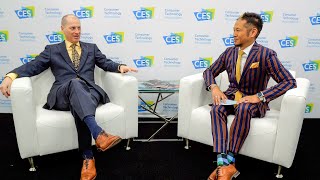
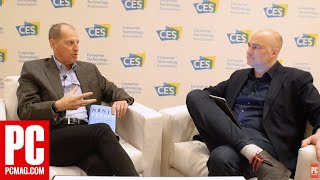
Pivot or Die with Gary Shapiro
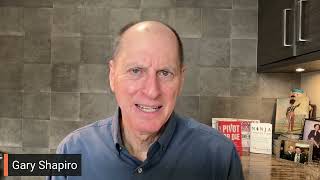
Gary Shapiro, CEO of the Consumer Technology Association, discusses CES planning years in advance and his new book Pivot or Die, which argues pivots are essential for growth. He cites Steve Jobs and Elon Musk as examples, and recounts winning a Supreme Court case that legalized home recording and shaped digital innovation.
Chapters
I'm talking with Gary Shapiro, CEO of the Consumer Technology Association. Thanks for talking with me today.
Well, thanks for having me on this great podcast.
Oh, thank you. So CES just wrapped up. I know it's the jewel of the year for the CTA, if you will. How early do you start for next year? Are you already working on 2026?
Totally. In fact, I could tell you the dates of our show going through the late 2030s if you want. That's an exciting show. But we, because we use almost every major facility in Las Vegas, we have to plan literally years ahead of time, as do, as do a lot of groups. Actually, for the, for the 2025 or show in 2023, where we're drawing the floor plan, we talk to the biggest companies and see what they want. The ones with the most seniority, they get to choose first, and then we design the floor plan. And then during the 4 days of the show, believe it or not, companies are choosing their space for the next year. So the 2025 CES, during it, we've already sold a lot of the space for the '26 CES. And companies are pretty excited about their experience. They're in the moment. It saves us, honestly, several months of playing domino effect. And it's something that most of the major trade shows have actually followed that format.
You know, that's a good point. In a world where companies tend to do a lot of their own events these days, CES has stood out, I think, as being a place where companies are still coming and treating it like a place to have a big platform. And video a great example this year. What is the secret to keeping companies interested in coming back?
Well, we've been very lucky, to be honest with you. Um, I don't credit my brilliance to anything. It's, uh, it's a combination of luck, hard work, opportunity. We have certain things that we follow. We have a culture that, that values honesty and candor. We highly value and produce an actual independent audit of the attendance and the exhibits at CES to make sure when we give numbers to media like you, they're independently verified. We're one of the few U.S. shows to do it. It's more common in Europe. We also want to— in a sense, the exhibitors and the industry own us. We're a nonprofit organization, and as such, we feel we have an obligation. And there's a culture there also focusing that the big companies are obviously part of what we do, but so are the small companies. And you could see our leadership is balanced. In fact, our chairman this year is from Amazon, but our last two chair people were from really relatively small organizations. The woman that— Dina Gazarian had a 3-person organization. We have a culture of favoring small companies, and the big companies respect that. That's why we have Eureka Park at CES. And it's a culture. And we also try to focus on new. We view ourselves as a platform. The platform is designed to present all sorts of new things to our attendees and also different sides of an issue. Clearly take positions in Washington and around the world and in state legislatures. We have a very clear point of view, but we invite our opponents to speak as well because we feel we substantively will beat them. And we've been very fortunate, especially in the United States, of doing that. And our innovation culture in the U.S. has stemmed in large part from our ability to present a substantive case favoring innovation.
I know a lot of folks in our audience, uh, do have small startups, they, they have small businesses. Uh, if they want to get involved with the CTA, uh, what resources are available available for them, and, and how do they get involved in the Consumer Electronics Show itself?
But sure, for CES, it's, uh, it's really easy. You just say you're interested, go to our website, uh, ces.tech, and you could— we have a special place for startups called Eureka Park, and it's actually a subsidized area of the show. You just could show up with your product or your idea and a few talking points, and, you know, we supply everything else from the booth to the chair to the table, uh, and it's, it's a few thousand dollars, and it's, it's the way a lot— some of our most active volunteers have started and become much bigger companies. We also, we have at the Consumer Technology Association, which owns CES, we have a special portion of the organization for smaller companies, for entrepreneurs and innovators. And they love it. They get together. They not only get deep friendships when they get involved, but they have access to all sorts of materials from a tremendous amount of market research that we do where we ask consumers questions about what they like and what they want to having an influence in public policy. We've had many of our small business members come and testify before Congress or government agencies because we have very clear aligned positions. And that has allowed companies to get involved. One of the big ones that we're pretty happy that there's a change now is we want big companies to be allowed to buy small companies because most small companies are financed and get investment because people expect an exit of some type. And big companies buying those small companies is something that's— our small companies are real passionate that they have that ability. Many of them have sold their companies and started numerous startups. Just keep going that way because they love doing startups. Others just stick with the company and become part of a bigger company. Of course, you know, a few go public, like NVIDIA certainly did, um, and did very well. That's probably the best example of a company that was very small when, when they first— I met Jensen when he first came to Washington, DC, his very first time. He spoke to our staff. I wish I paid more attention what he was saying, actually.
But I mean, it's hard when you got that many people. Yeah, uh, you know You talked about the fact that CES is a platform, uh, the CTA tries to provide a platform for the new, for the new technologies. AI was obviously a big star of the show this year. What do you see as some of the faster rising technologies and things that we can look forward to at future CESs?
Well, artificial intelligence is obviously going to dominate for a while, uh, with the, uh, return of the Obama-Trump focus on self-driving cars, vehicles, and a focus on cutting healthcare costs and empowering the disabled and the elderly, we expect a return to a focus that's been absent for 4 years. We kind of marched in pace on self-driving and all the money was thrown at electric vehicles. And now the new secretary, well, who's soon to be the new Secretary of Transportation, should be approved by the time, by the Senate, by the time this goes live, is very much a proponent of self-driving cars. So we expect a major change there. We also expect a lot focusing on robotics. That's clearly a growing area, especially as they become more humanoid looking and lifelike. I mean, there's so many variations on a theme that is the future we expect, as well as obviously automation in terms of businesses, restaurants, things like that, because it's also a business-to-business event in very, in very large measure. And also, as we announced, there's two focuses at this CES which we're just beginning on. One was quantum computing We had a conference on that. We just announced that we're invested in the World Congress on Quantum, and it's something that we're now part of and we're joined with them. And that's, that's the future and the long-term future. The other is, is maybe less exciting, but it's real challenge now for our society. And for the first time, I feel for our industry, and that is where do we get our electricity from? Interesting enough, President Trump's come out very much against wind, but he seems to be favoring everything else. We'll see what happens with nuclear. We'll see what happens with other things. The California fires certainly have raised one more time the focus on how utilities do things, how they put out wires, how they create the opportunity for fires, things like that. So there's a lot of energy, if I will, focused on the energy issue. And we'll see all sorts of ways. It's also energy creation, energy production, cutting down use of energy. The consumer technology industry produces a huge number of extremely energy-efficient products. We're the only industry industry, I think you can point to that say, well, the prices have come down in many categories, the products have gotten better, and the energy use is actually less. With, uh, AI and with quantum, we definitely need more energy. I mean, you could argue maybe they're using less energy because they're solving problems quicker, but then now they're just also tackling tougher problems. So there's a lot there. Uh, the CES certainly has a huge number of areas, and we've seen a lot of new areas in agriculture, food production, as well as cosmetics, pet tech, and others that have just seemed to keep growing. And obviously, health tech, because health is such an important part of our lives. And it's also an important part of what we spend as a society. And there's technologies filling in gaps where there's just not enough trained humans to go around.
Congratulations on your new book coming out, Pivot or Die.
It was really well-timed given the surprise election results, because we are all pivoting. It's focused on how we make pivots in life and business. And it gives some real-life examples of— actually literally dozens of companies in real situations, but also gives personal advice.
So one of the things that, that caught my eye in the book, uh, a lot of people think of pivot as a failure. Uh, in the book you talk about the success pivot, but also why even if there's a failure pivot, it's not a bad thing. Uh, explain a little more for folks by what you mean by that.
Well, what I love about the United States and our culture is there's no culture that exists that's even close, maybe Israel and Canada, where you actually— your failure is a learning experience. But if you think about your own life, um, and I've raised this with lots of people, no one's pushed back on it, so I'm going to keep saying it's true. You learn from your failures, you don't learn from your successes. Successes, uh, produce false confidence, arrogance, and a lot of mistakes in judgment where you just like think, well, I made this good decision before, I'll make a good decision in the future. Failure is when you in a relationship, in a job, in a business, you are very successful. When I interview people for jobs, one of the things I like to hear about is if they've tried something and failed, especially a small business, because that is the school of hard knocks. And if you look at our most successful people, and I talk about this in the book, many of them have failed many times. I mean, if you— I know there's a lot of bad things and good things about Donald Trump as president, but if you look at it, he has failed numerous times. I mean, he's gone and declared bankruptcy. He's done things. And, you know, in a certain way, whether you hate him or you love him, he does get some things done in a way that, you know, obviously people find disagreeable. And there's also, you know, you do require a certain amount of independent thinking to succeed. And I would look at Steve Jobs, I'd look at Elon Musk and Donald Trump, and I'd categorize them together. Is it in a sense they're superhuman? They don't seem to have the same empathy gene that others may have, and they really don't care about what people think about what they say, or Steve Jobs didn't care. But they were very focused on getting the job at hand done and coming up with a way of doing it. And that's what I think is part of what I've seen in entrepreneurs and success is you have to be really, really focused. And I've met so many of them in the course of my career, whether it was Bill Gates or Michael Dell or Steve Jobs or others. And even the way they respond to me when I ask them to do something, I like a lot of them. There's many more names I can name. But they often say no to me, but they do it quickly because they're so focused on what they want to do, not what I want. Them to do, and I respect that.
Yeah, yes, Jobs is a really interesting example of that because people think of him as a complete success, but he failed tremendously with certain product lines like the Lisa and, and even, uh, leaving Apple and going off into the wilderness. Uh, do you have any other examples besides Steve Jobs off the top of your head of, of that, that failure pivot that ended up being useful?
Well, the failure pivot is true just about for almost any entrepreneur or innovator. I mean, there's so many different ones, whether it was the inventor of the ring, the camera, which was, you know, was rejected by so many. Or there's a— what if you look at— it's difficult to come up with and not name someone who's failed because usually they'll admit it. And, you know, I've read a number of Trump's books and he certainly has had a whole ton of failures. But he's always swung for the fences too. So that— but, but, you know, look, Michael Dell went public, then he went private, then he went public. Then, I mean, he's done a lot of different things. Uh, there's, there's people who've also inherited, like Brian Roberts of Comcast, NBC. Uh, and, you know, not everything they did was, was success. I don't know if your audience is old enough to remember the NBC Olympics where they sold— oh yeah, uh, they sold different colored things, and it was a dismal failure. But you know what? So what? You learn from your failure. If you don't risk things in life, you're not going to get very, very far, and you probably won't succeed because the world changes around you whether or not you change. And that's especially true in the business environment. But it's also true in your personal environment and your relationships. And you just can't keep doing things the way you've always done them. You always have to invest in, try new things, and grow. I mean, you have an obligation to do that to succeed because the world is going to change. As humans, we think the status quo is always worth protecting. Certainly, that is not only a political philosophy, it's a personal philosophy. But as we go through life and we grow up and, you know, people get sick and they die and things change around us, or there's, you know, there's fires in LA, there's extreme weather, there's new politicians, there's new rules, there's new technology. We have to change. It's Darwinian in a way. It's not being strong. It's not being fast. It's adapting to change the quickest, which determines success. And that's what the book is about, is how you make those business and personal decisions. Now, the biggest decisions in life, I think— because I don't want to get the wrong message here— the biggest decisions, especially for young people, that they fret over are really not there. Like, even what college you go to or what your first job is, not that important because you don't even know yourself yet. The big decisions younger people should look at is, you know, do you commit a major crime? Do you do something fundamentally unsafe, you know, drink and drive? Do you marry someone? Do you have children? Those are 4 big decisions which are not irrevocable, but they have long-lasting implications. And the rest of the decisions, it's just you got to get to know yourself and learn. Every job you take, you'll learn something that's valuable about yourself. And that's why we tell our employees, we want them to do something outside of the office besides just work because just working all the time is not what we want from our employees. We want them to be broadly diversified and to be able to innovate. And innovation is putting different ideas together for a better result. And that, that's something that we try to do as an organization. That's part of our culture.
Yeah, it sounds like, uh, leaving room for yourself to pivot and, and always considering that an option is, is what you're talking about is being important.
Absolutely.
Yeah. Well, uh, before I let you go, uh, just a big thank you for, uh, helping defend our rights to home recording, uh, all those years ago.
I don't know if a lot of people realize how involved you were in Yeah, I was the chairman of the Home Recording Rights Coalition at the age of 26. It was really a strange bit of luck, but I was, I was managing people, believe it or not, like David Rubenstein, who now had the Carlyle Group, and Ron Brown, who headed the Democratic Party, and there was lawyers. And I just fell into this. I was an outside, uh, junior lawyer, and the client was never around. They made me the vice chairman, so I ran the group. And, uh, the issue was the legality of the VCR, which is the first technology that allowed you change things in time, time shift and rent videos and determine what you watched when you wanted to watch it. And Hollywood fought us tooth and nail. They were the biggest lobby in Washington. We're the little, little guys, the weird ones, um, who thought, you know, we're like the little dog fighting the big dog. We didn't realize how small we were, uh, and we won. We won every step of the way, even arguing twice before the Supreme Court, uh, Supreme Court, just by one vote, 5 to 4 established what we call the Magna Carta of the innovation world, which said a product is legal if it has significant legal uses. And that's— that actually paved the way for so many things that we use today, not only the copying machine, but the internet itself, which some people tried to shut down as the world's largest copying device, and other technologies, camcorders, cameras, so many things we use today just naturally because there's a tension between the intellectual property owners and the innovators. But of course, the intellectual property owners that own the content and the copyright are different than the patent owners than a lot of the technology. But we've, we've managed to succeed and convince our government, more than any other government, that you have to favor innovation in everything you do. And that's why there's like this proposal before Congress that, that almost passed last Congress and could possibly pass again, is to mandate the ancient technology that we began over 100 years ago, the AM radio, that it'd be mandated and required to be put in every car. This dying radio broadcast industry is leaning so heavily on Congress that it's an embarrassment. And it actually, you know, we're concerned because it also paves the way for future mandates of ancient technology. It's like the last railway car, you know, that you put on the caboose that had to be on trains for years or having to have elevator operators and things like that. There's good intent, but boy, it's crazy.
Well, thanks for keeping up the good fight for innovation. The book is called Pivot or Die: How Leaders Thrive When Everything Changes. You can You can find it wherever you find books. You've got an audiobook version, you've got ebook version, print version, whatever people like. Anything else you should tell people about where to find what you do and where you are?
Well, you know, if you want to learn more about the organization, it's the Consumer Technology Association, and we own and produce CES. We have a great website, cta.tech and ces.tech, T-E-C-H, and you can learn a lot. We do so many different things involving safety, involving standards, involving public policy. We rank all the states and all the countries, how innovation-friendly they are. And we also believe that innovation is going to solve the world's problems in, in, in food and hunger and clean air, clean water, uh, healthcare. And that's what gets us to work every day. It's a great mission and we believe in it.
Gary Shapiro, thank you so much for chatting with me today. I appreciate it.
Thank you.
More from Gary
CES 2026 Preview: Gary Shapiro on AI, Manufacturing Innovation & the Future of Technology

CES 2026: AI and Innovation Take Center Stage with Gary J. Shapiro of Consumer Technology Assoc.
Innovation Conference: Gary Shapiro, CEO & Vice Chair, Consumer Technology Association (CES owner)
Gary Shapiro, CEO + Vice Chair at Consumer Technology Association Joins NYSE TV Live
Gary Shapiro, CEO + Vice Chair, Consumer Technology Association Joins NYSE TV Live

The Future of Technology and Innovation: A Conversation with Gary Shapiro, CEO of CTA
🎙️ Tech Leadership Insights: CTA CEO Gary Shapiro on Innovation & Adaptability