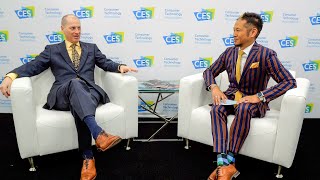
🎙️ Tech Leadership Insights: CTA CEO Gary Shapiro on Innovation & Adaptability

Gary Shapiro, CEO of the Consumer Technology Association, discusses how tech companies must constantly adapt to survive. He started as an antitrust lawyer fighting to keep VCRs legal, and now navigates regulation on AI, self-driving cars, and manufacturing competition with China. His book Pivot or Die argues the industry needs the right balance of rules, not too loose and not too tight.
Chapters
I'm Nikki Christophe, and welcome to Tech Dub. Today I'm joined in the studio by Gary Shapiro, the longtime CEO of the Consumer Technology Association. It's a group that represents more than 1,300 North American companies on the cutting edge of innovation. CTA owns and produces the CES show in Vegas, one of the most influential events in the tech industry. Gary is also the author of Pivot or Die, How Leaders Thrive When Everything Changes. It's a timely topic to discuss in this current Washington moment.
Thank you, Nicki, for having me.
Thank you for coming into the, the studio today. It's a busy moment in Washington, busy for you, but you recently authored a book again, and I want to talk a little bit about Pivot or Die. But let's start with your career. You and I both are educated and trained as lawyers. How did you end up from being a lawyer to where you are now?
Yeah, great question. I never really knew what I wanted to do in life. I just tried to keep my options open. And the last second I got into Georgetown Law School and I heard that Georgetown campus was beautiful. I'm dating myself. There was no internet to check then. And on the way there, my father was driving me and a friend of the family who's another lawyer. And she said, you know, they're not connected, those two campuses. Anyway, bottom line, I went to Georgetown. I was broke, had no money, and needed to eat my macaroni and cheese. So I, first couple days, I found a place to live and got a job. And the job was with a congressional office, a conservative Republican. Here I was from a New York liberal family. And fortunately for me, actually, it was Congressman Mickey Edwards. He wanted to rewrite the Administrative Procedures Act and he asked me to help him with it. I think I was the youngest person at the time in Georgetown Law School, extremely young. And I, I loved it. And I, that propelled me to a job at a law firm. It was an FTC law firm, which is very current right now. There was all former FTC commissioners and heads of competition. I started out as an antitrust lawyer. I worked with Squire Sanders Dempsey, and then the association was my client. Even while I was in law school, I was working for the association. The association figured out rather than spend a few hundred thousand dollars to build my town, they could pay me well under $100,000 and I could work full-time for them. It was brilliant on their part. And it actually launched my career. I remember some of the lawyers from said, why would you do that? You know, that's our associations where people go to die. And I was like, I hated billing hours. I just hated it.
Oh, same.
Keeping track of them. It's just, I found it so, 'cause I'm really a fast worker and a thinker and a writer. And I just think, I thought it was a stupid system. And sometimes it was unfair to the client, to be honest with you.
Actually, right. It disincentivizes efficiency. So the main reason I left being an attorney was because of the billables. And at the time when I got out of law school, the software that we used to track your minutes, which every lawyer tracks in 6-minute intervals, was called Carpe Diem. And I was like, I can't with this. I just, I'm outta here.
I didn't know that Carpe Diem existed. Yes.
Yes.
And I just loved it from day one. I mean, I'd been to the, as a consultant to the association, I'd been to the CES and as soon as I walked in, I said, I want to work there. And it was just great. I mean, it was the go-go era when the VCR was being introduced. There was, my extreme involvement with relatively famous people like Ron Brown and David Rubenstein and a number of former senators and congressmen at the time was to run this coalition to try to preserve the VCR being legal. And we were up against the big Motion Picture Association with the most famous lobbyist of all time, Jack Valenti. We were the scrappy young people. I was running these meetings. I was in my mid-20s. I ended up doing live interviews and debates on the Today shows before Congress testifying. Doing all sorts of things. And we went to the Supreme Court twice. We won by 5 to 4, and we beat Hollywood at every round. We got, we preserved the legality of not only video recording, but of video rentals. And the principle that you could use something that's copyrighted and it could be a fair use, that we call that the Magna Carta of the tech industry. But the internet was challenged as an illegal recording device. There were so many things that came from that. The music industry battled, and we ended up fighting for the legality of, of products always against established industries. And we were the bad guys. And frankly, I didn't know what I didn't know, but we were very fortunate and we were very intellectually curious where our opponents were all old industries with a top-down approach. We were all equals and we debated how to approach things and we worked our butt off. And our goal was always to try to make sure we could stay legal long enough so members of Congress could figure out how to use our products.
Oh, this is— and understand what they were. Right. This has defined my career too.
Great.
Largely.
We've traveled similar routes.
It's— Yeah, trying to make sure that you can have the moment to— people, lobbying gets a bad name. We have a PR problem. I'm not a lobbyist, but lobbying has a PR problem. And part of lobbying is just explaining and educating. I remember when I first moved to DC with Google, most members did not know that Google owned YouTube at that time. Like we had to really explain every single thing. And anyway, continue. Yes.
No, I mean it, it is so, so, but that, and then the internet came along and we got engaged in that. And I was really fortunate that my, my best friend and former roommate, He became the first chief technology officer in the world for a government, the state of Virginia. He worked for Jim Gilmore and I'd helped Jim Gilmore. He ended up creating a commission to basically allow commerce over the internet, to allow a lot of the companies that are there today to survive. Because when the internet started, it was unethical and arguably illegal to use the internet for commercial purposes. The crowd would devour you if you did. But he saw it coming and he got together a group of us in Virginia including Steve Case of AOL and Tom Davis, who, who was active Republican member of Congress at the time, and others who headed companies to agree on a way of doing business. And Virginia passed in a law bipartisan immediately. And that was the springboard for the rest of the world to follow. And outta that, we literally went around the world and other governments bought into it. I remember going to Egypt and meeting with a, head person in Egypt and even helping host him when he came to the US, as well as testifying before the House of Lords on it. I mean, there were so many different things we did and that became the standard around the world for doing business. That sprung into other things through the development of HDTV where we were essentially trying to figure out how to do it right. And that was another initiative where we had the government work with industry and we set a national goal and we agreed on it and the FCC was part of it. But so was former Chairman Dick Wiley of the FCC volunteering his time and a lot of us And thousands of people looking at standards and testing and doing that. And we created the world's best HDTV standard in the US in a voluntary cooperative way. That's still the best. In fact, Japan had to recall all their analog sets and Europe abandoned their two-step approach with ANSYS. My first trip out of North America was literally to speak at a Paris conference and tell them why they were doing what was wrong. And I ended up being right. The US way was the correct way, which is US arrogance, I know, but.
I know, I always say my love language is being right about things.
Yeah, well, that, I'm good at admitting when I'm wrong, but I'm often right. So in those cases, we've gotten this thing. And now, you know, we look at Europe where you have to ask permission first and, you know, their major output is regulation. That's their innovation strategy sometimes, the way we feel it as an organization. So along the way, we grew dramatically this thing called CES, made it international. Now we have 140,000 people 40% of them are from outside the United States and it's the most important global event there is in business. It's a tech event where the innovation world gathers every January and it really is inspiring. And that's what keeps me going. Our goal as an organization is actually to make the world better for innovation and make sure the government doesn't screw it up, to be honest. And it doesn't matter Republican or Democrat. I mean, they, they both have tendencies that way because they're trying to deal with specific problem and banning technology is often the way. We would rather go with solutions saying, if you have a specific problem, let's address the specific problem. That can be with legislation or regulation. It can also be with standards or voluntary standards. One thing I'm proud of that we did during the Obama administration is there was this talk about privacy and wearables. And we got everyone together in a room, Google and Samsung, and then it was Fitbit and Apple and others. And we agreed on voluntary guidelines for how we use our devices and how information will be shared. And it hasn't been a problem since.
I seem to remember President Obama wearing a Fitbit. Am I right about that?
Probably. We all did at one point.
We all did. Then I wanted less data about my movement after COVID.
Yeah, well, that's true. We do a lot with standards. We've produced 30 healthcare standards and everything from measuring brainwaves to measuring what a step actually is to how you deal with heartbeats. And that allows cross-devices to talk with each other. Now we're working on something called the Cybermark so that consumers could have some level of comfort when they buy a product that it has some basic understanding. We did that with the Biden administration. Which I guess raises a question for the future, but we'll deal with that. We're still dealing with the new information we've just gotten this week. We are a standard-setting organization, but we're also a lobbying, and we are market research. We do a phenomenal amount of market research as to what consumers want. And we're industry promotion. And the primary thing we do in industry promotion is CES because it really does focus people on what we're doing.
I wanna talk for a minute about, so, I, I love that you started with working on VCRs. I think sometimes one of the things that I bring to the table when I talk to people is I've been in tech for 20 years, which is a pretty long time. I, you know, was at Google before they bought Android. So I feel like I can bring sort of this big picture view. People forget when these things weren't legal or weren't allowed or weren't standardized. The entire economy has been driven by this industry, right? You just outlined, what, 35, 40 years of innovation that the US has led on. And you just wrote this book, Pivot or Die. And one of the things I wanted to ask you about is your thoughts on our industry and how we need to pivot, because at least in my time in Washington, which has been significant, we have gone from what I would call peacetime, like we could do in some ways no wrong. Yes, we— it was telecom versus tech and we had net neutrality battles and we had surveillance, which is when I think things started to turn. But now it's almost I'm literally quoting this from you— it's a bipartisan issue to have headwinds against tech. How do you think we as an industry need to pivot, not just set aside the election, just in this moment where it feels like big is considered bad or tech is considered bad? Or do you even agree with the premise of that question?
I struggle with the issue, honestly. I agree with the premise. I mean, the brief history of tech and policy is tech ignored it. Bill Gates didn't pay attention and he ended up with this huge lawsuit. Now it's that you look back and say, what a joke of a lawsuit that was. I mean, that they had the best search platform and were putting it on everyone and forcing people to use it. Obviously that's not what happened. And even going back to the IBM or the AT&T breakup, which is really before my time, government looks at successful companies and they do own patents for, you know, almost 20 years and they might have a market share, but it changes quickly. And I think every tech leader knows that and they're paranoid and they should be, I would be paranoid because it's kind of easy to, unless you're building, you know, big semiconductor plants, it's kind of easy to get into tech. It's like what Travis did with Uber. Look what others have done. Even Mark Zuckerberg with Facebook/Meta. This wasn't a lot of capital and competitors came in and they blew away existing companies. It's a very competitive world and people catch up quickly is the point. The other point is we've avoided it. The third point though, that's gotten us into this horrible situation, which I'll get to in a minute why it's not so bad as we think it is. Is that the tech industry is considered very liberal. You know, love or hate Elon Musk, at least he's put a new color on tech because the Republicans viewing tech as anti-Republican intentionally and what they believe in. And I think that's been very harmful to us. And I think I'm probably known as— although I am not a Republican, I am not a Democrat, I'm definitely an independent and I've made that clear— is that I'm probably viewed as the most conservative-leaning tech leader of an association without question. I'm comfortable with that because I really believe that's part of our problem is that we've just said we're liberal and we're not liberal. I don't take positions on a lot of issues and that others do because our membership is all over the US. It's not Silicon Valley. Silicon Valley doesn't speak for us, but they're very important to us, obviously. But they're Tech leaders are human beings. They have different views. Some of them supported Trump, some of them supported Harris. I made a commitment that I am, no matter what happened in the election, I was gonna find good news. And I have found much more good news than I imagined. The bad news is that there is no party for business right now at all. The good news is now every, the other businesses are now kind of like tech. We don't have a lot of friends, but now we're in bed with the rest of the business community in a lot, on a lot of issues, I think. And that's important.
I think that's right. It's a team-based town, right? You're on my team or you're not on my team. And we have managed, as you said, to alienate Republicans who— there's no real reason for that except that people think tech is liberal. And I'm like you, I've been independent/unaffiliated for years now, but within tech I'm considered probably pretty right-leaning, just among the groups that I spend time with. But that doesn't mean the companies are, the employees are, and certainly not their issues. They just happen to be business issues. So immigration, right? High-skilled immigration. This is an issue that there's an enormous amount of bipartisan support for. And we've been hammering away at it for years and years. Can't quite get it done. But it's just a pro-business issue, right? Or antitrust. I know you and I probably are in violent agreement about how the FTC handles antitrust, which is why are we applying European law to American companies? We've managed to not create enough allies on the right specifically.
That's probably true in retrospect. It's nice if you can look back and say what you've done wrong, but I think sometimes our lives are so fast-paced we can't look back. One thing I love about the tech industry is they think they can solve any problem and they look forward. You know, that's, I guess the older you get, the more you start looking back and talking about history. We probably don't have enough allies. I feel comfortable with where we're, at least I am or we are. I participate with the National Association of Manufacturers regularly. I'm a big fan of everything they're doing. I get that there's a movement to move manufacturing here. I've also been in a huge number of Chinese factories. I don't want to be the kid that's yelling at the emperor's new clothes, but the reality, factories that come to the US are going to be highly automated or they won't succeed. I'm hopeful that as we transition, because clearly there's a bipartisan consensus on this issue to transition to US manufacturing, especially vis-à-vis China, we have to do it in a way which doesn't destroy the US economy. You know, surrounding ourselves with an iron wall of tariffs It sounds great, it's populist, but it will be inflationary and will hurt us. And yes, we need allies in that, but we're all dealing with the reality of a new administration. And I was comfortable with the first Trump administration personally. If you talk their language, which we were willing to do, we worked very closely with them on high-tech apprenticeships.
They were great on that. I was at Salesforce when we worked on apprenticeships as well. And Microsoft does great work on apprenticeships. Sorry not to interrupt you, but yes, we— they were great on that.
And we work with IBM. They basically gave all their stuff away for free for all our member companies about how to get into that. Ivanka Trump did a particularly amazing job, I think, in pushing on her dad, who was way behind it, in creating jobs. And I think we were in a good place because of it. And there's a lot of other things as well. I expect even with— especially with this next round of appointments, I think we'll see a lot of former business people, which makes me very comfortable. People are freaking out that, that Trump is the president. I get it. I actually get why people support Harris and I get why people support Trump and I wish they could just communicate with each other. I think the Trump people are, they wanna do what's best for the country and so did the Harris people. I think if you start with a place where, as Tiffany Moore, who's on your show, always says, assume good intentions, you could get very far in life. And that requires a certain amount of empathy. It requires understanding and it requires maturity.
I think that that is such good advice. And I know we're quoting Tiffany, friend of the pod, but Assuming good intentions and then also listening, as we were just discussing, listening to what clearly has been said, which is people are worried about the economy. So when you come to our business and you wisely pointed out, all business leaders are now kind of being cooked in the same pot in this town. It's not just the tech industry. People want growth and to have growth, you have to have innovation. And frankly, you have to have immigration, including high-skilled immigration, which is an unbelievable process for people to get through. It's just a gauntlet. My old boss, Eric Schmidt, used to say we should just staple a a green card to everyone graduating from an engineering school, which I basically—
I actually first heard that same line 25 years ago, 20 years ago when Alan Greenspan was chairman of the Fed and I met with him and he said that to me. Maybe they got it from me, one of them got it from each other. But yeah, I've been working on that. That issue was in my first book almost 20 years ago. And like that and debt reduction and deficit reduction. And I should be fired at this point because those are two big goals we have as an association. We are very concerned about the debt and the deficit. And we believe in growth, we're ready to support anything bipartisan on tax policy or spending policy because it's just out of control. Democrats accuse the Republicans of not being science-based. Well, Republicans could have accused the Democrats of not being math-based because they're both, at this point, they both have challenges with both of them because we are in a bad way and we need growth and we need innovation to fuel it. So I'm there and we need to do that. But I, been advocating this for 20 years. It's good to see a fellow traveler here, but I think those are two big planks and I haven't gotten anywhere with either one of them.
Well, we've gotten closer on high-skilled immigration, but there was— yeah, a hue and cry from the American public about the economy. So if that's what they care about, our industry is going to have to be able to operate without one or both hands tied behind our backs. Right. So I worked at Google for a very long time. Competition is a click away, which we— is a great tagline and also true, is accurate. You always have people right at your heels innovating and changing. And as you look toward— I mean, set aside just the administration. We don't know who the appointees will be necessarily, but what do you think? We need to build friendships. Do you think we need to communicate something differently? Do you think things are going pretty well?
I think things can always go better and we have to strive. I mean, the point of the book Pivot or Die is that nothing stays the same. In terms of businesses and pivoting and public policy and pivoting, we have to change. We have to adjust. There's not only a new administration, there's clearly a populism in America which disagrees with the concept that immigration is a great thing. We have to get across the concept that actually immigration enhances the economy, that our tech companies are overly represented by immigrants, that we are a nation of immigrants, that diversity is something which is really important to innovation. And there's something about the immigrant mindset, which is true. It's almost genetic in the culture of our country now. And we have so many other things in our favor that help us, whether it's the First Amendment, which allows us to disagree, or it's the fact that failure uniquely in the US in a startup is actually a pathway of education to success that people like me who hire people like, oh, you failed in a startup, we want you.
Right, right, because you've learned so many lessons, right?
In other, I mean, you know, Israel and Canada come close on that, but there's other countries, It's not an issue. So we have so much going for us. And my job and what I wake up every day and I, if I fail at my job, government will do something to hinder innovation, which should change the world. We have a partnership with the United Nations where we are out there promoting these, the fact that innovation is gonna solve fundamental human problems. And they, what the UN calls human securities, the right to not be hungry, the right to healthcare, the right to clean air, the right to clean water. They've added one at our request. We announced it a year ago at the UN on the opening day of the General Assembly, the right to access to technology. So we're up there with all these things as technology fundamental to human success in the world. What a responsibility that is for us. And if the US can't do it right, who could do it right? So that's what gets me going is we're changing the world. We're solving fundamental problems. We keep it on the big issues. I'll tell you one thing, we talk about net neutrality. I know it's the Lobbyist Relief Act. I made a decision 25 years ago that—
I've actually— I don't know how I haven't heard that.
But we would have a position on it, which we have. The competition will solve some problems, but we're not going to spend any money on it. We're not going to hire lobbyists. We're not going to advocate. We're not going to waste a lot of time because it's a non-issue.
I think the idea that sometimes Washington is a hammer looking for a nail and that we are predicting problems that don't exist yet is absolutely fundamentally one of the challenges of this town, right? So you're defending against something of which there's no evidence of harm at this time. I actually think this— and I'm not sure if you agree, but I talk on this podcast a lot about AI. We used to talk about crypto, now we're talking AI. And I think there's a little bit of that too, where we have many laws on the books that already apply to harms that could be caused by AI, whether that's discrimination or in credit. Worthiness, whether it's hacking a pharmaceutical company, things that people think AI could be used for that would be very harmful. There are already laws on the books for that. And I think that there's a little bit of a hammer looking for a nail when it comes to AI as well. Voluntary guidelines or voluntary commitments are maybe a way we can get a little more runway to see where this goes before we overregulate ahead of time.
I totally agree with you. I mean, if you take self-driving cars, AI, privacy, these are issues which are literally creating new costs, especially for startups, which we're very sensitive to. We wanna make sure that startups can go in there. Like Europe's, they focus on it. Their export is regulation now and they're hurting startups. They hurt 'em with their privacy laws. A lot of them went under and it's tougher to start a company in Europe. And now they're doing it with AI. And their export is regulation. We don't wanna be like Europe, but we don't wanna be like China either. China has no privacy and they have 1.4 billion people. 1 million people and they have amazing databases that we'll never have. So they've gone the other way and they're actually getting pretty good in innovation. I used to say they were just copying and stealing, but now they're—
And then selling it back to us.
Yeah, they're graduating 1 million engineers a year and they have a strategy that focuses on these technologies that we're talking about that they've had for years. We have to be like, you know, Goldilocks and the Three Bears. We want our porridge just right. We have to recognize that privacy's an issue. We are rights protectors, as is Europe, but we're not as, crazies Europe in the sense of pushing things and hurting businesses. And I'll say one thing is that Congress, and I'd say Republicans and Democrats have done a good job with that. They've listened, they've held hearings, they're being thoughtful in their approaches. But at the same time, we have states which can act and hurt and make difference. And they make decisions without regard to the consequences of the decisions. And a national approach on some of these issues like self-driving so you don't have to change your license plates when you drive And you have a self-driving car going across. And that's one thing where the Biden administration just, they went all electric, they stopped everything on self-driving. And I'm hopeful we'll get back with that because that's really important, not only to saving American lives and empowering disabled people, but it's a global competition that will make a difference. And it'll also save healthcare costs, which is also driving a lot of our spending.
Well, and anyone who knows me has to hear about self-driving trucks, which I'm obsessed with because we have a shortage of truck drivers. And so this is going, anyway, that's the topic for another day.
You and I are very aligned on all our issues. I know.
Well, that kind of makes sense given our backgrounds, but I feel like we managed to come full circle, which is I started out by asking you what the industry should do to pivot. And the truth is, back in the day, we were— no regulation is good regulation. Gridlock is great for the industry. But what you just said is we're Goldilocks, right? We don't want no privacy protections for people. We need those. They're important. They're incredibly important for, for the health of, of the— our citizens. And we don't want to be exporting regulation. We don't want to be regulating like Europe does, because then we are going to absolutely make it impossible to run a business here. So That is a pivot to me. It's a pivot perhaps to the middle. I don't know if you agree with that or not.
No, I totally agree with you. I think we have to be reasonable and we have to recognize that technology and innovation are actually our secret sauce in this country that allows us to do all these amazing things and have a strong economy and grow our way to a certain extent out of our challenges. But it is not a God-given right that we have this and we can't make bad decisions. And we're on the verge of making some bad decisions. I mean, Section 230 is what created the internet in a sense. How could you be responsible for every user-generated comment? You know, some of the sites where people put on comments, it's not only about Google and Facebook.
No, it's every website.
Oh my gosh, it's Nextdoor, it's all these websites.
Reddit.
There's so much out there. And yeah, I mean, there's companies which are increasingly valuable and are US companies. We're the world leader in this. And what do we have under the Biden administration? We had an FTC, going to Europe to tell them to sue our companies and stop acquisitions and saying outright, you know, I hate Amazon. I hate big companies buying small companies. If there's no exit, there's no money of investment for startups. We have 1,300 tech companies. 80% of them are smaller. They're unified on this. Like, they think our government has gone crazy here. If Trump does one thing, he has to fix that FTC. Yeah, because it is— it has gotten absurd. The fact that we're telling Europe to fine our companies, we're telling our best companies and we're tearing them down so they don't even want to look at buying smaller companies because they don't want to have to deal with a potential lawsuit from the FTC. So if there's one person that we need a replacement, and we need a replacement chairman, I am not a fan of hers and I am not secret about it. She's been harmful at an agency that had the highest employee satisfaction, that had like the best and brightest people going from law schools, had all these great economists and really was implementing a standard that's focused on consumers and consumer welfare that, believe it or not, President Carter, it was under his presidency that that happened. She's changing like 40 or 50 years of antitrust law with her view of the world to protect existing competitors. And that gives companies like the broadcasters and others the courage to go in there and go after tech and say tech is bad. Banning artificial intelligence from doing things, which is a trend we're starting to see, especially in states, really dangerous. And I love American workers and I want them to succeed. We have to be the country in the world that has innovation and progress and makes the world better.
I think this is a wonderful wrap-up to our conversation, Pivot or Die. I'm going to put a link to it in the show notes so people can buy your book. Gary, thank you for taking the time to come in. It is a busy moment in Washington because we've just gone through the election and gotten results faster than we thought. And now everyone, you, me, everyone is trying to figure out what the chessboard's going to look like in 2025. So I really I really appreciate you taking the time.
I appreciate the discussion. Great. Thank you.
And that's a wrap. If this show gives life to your inner tech nerd, please subscribe or leave us a 5-star review. Anybody listening to this podcast knows that the algorithm needs to be fed, and I really want to keep it ad-free and independent. You can find more content on YouTube, Instagram, and techedup.com. Or if that's TMI, you can just tune in every other week wherever you get your podcast.
More from Gary

CES 2026 Preview: Gary Shapiro on AI, Manufacturing Innovation & the Future of Technology

CES 2026: AI and Innovation Take Center Stage with Gary J. Shapiro of Consumer Technology Assoc.
Innovation Conference: Gary Shapiro, CEO & Vice Chair, Consumer Technology Association (CES owner)
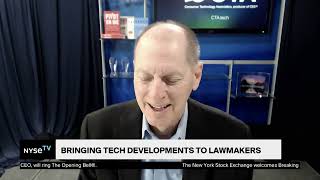
Gary Shapiro, CEO + Vice Chair at Consumer Technology Association Joins NYSE TV Live

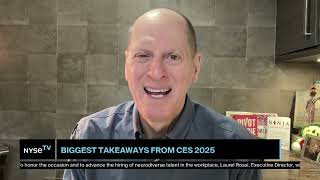
Gary Shapiro, CEO + Vice Chair, Consumer Technology Association Joins NYSE TV Live


The Future of Technology and Innovation: A Conversation with Gary Shapiro, CEO of CTA