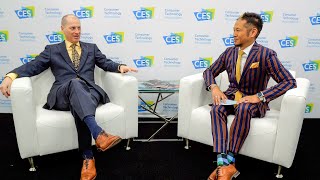
DLDTelAviv14 - Disruptive Innovators Under Attack pt.1 (Gary Shapiro)

Gary Shapiro, former head of the Consumer Electronics Association, traces disruptive innovation from the VCR's Supreme Court battle to Airbnb and Uber. He calls the 5-4 VCR decision the "Magna Carta of technology" and warns that countries resisting change risk economic stagnation while driverless cars reshape logistics and ownership.
Chapters
That is the toughest act I've ever had to follow because it is discussing issues that are critically important to the world. What I want to talk about with you today is disruptive innovation. I started out my career a while back, and I started out in the United States dealing with One of the most disruptive innovations there was, the videocassette recorder. And I started out as a student actually working for a consulting group which was trying to preserve the legality of that product. And it took a long time, it took two trips to the Supreme Court of the United States, but eventually by a 5-4 decision, the Supreme Court of the United States found that the VCR is indeed a legal product. I can't do that, or you're not going to see me. Okay, I'm not that much to look at. So out of that Supreme Court decision, which we call the Magna Carta of technology and innovation, an entire industry was born. And the opponents of the VCR, which were the broadcasters and the motion picture industry, basically found out that the VCR was not such a bad product, especially the motion picture industry. I spent many years of my career debating the various studio heads and Jack Valenti, who headed the Motion Picture Association. And the issue there was, is this technology and innovation good or is it bad? And technology is, of course, neutral. It's how it's used. So just to give you a little bit of background, and thank you very much for the introduction. It was a bit short. So I'll elaborate. So the Consumer Electronics Association is a trade association of over 2,000 technology companies in the United States. We own and produce the world's largest innovation event, the International CES, held each January in Las Vegas. It attracts over 160,000 people from around the world, uh, CXOs of every type of industry from technology to broadcasting to cable to content to music, you name it, Madison Avenue, uh, and the content industry. And what it does is it gets the disruptors in a room. To basically meet each other and see where the world is going. And that to us is very important. It's like the DLD conference. It's focusing on big issues. There's about 800 speakers, including the leaders of global companies. As a result of running that event for over 20 years, I've gotten to know many of the leaders around the world. I wrote a book published last year called Ninja Innovation. Ninja is focused on the concept of the ancient Japanese fighter who against great odds would go against enemies and with planning, with a great team, with disruptive ideas, it would almost always win. I called it also ninja because it's an ancient fighting form. I have a— I'm a black belt in taekwondo, which those of you that know is actually Korean. There's a little bit of license there between Korea and Japan. But what it is, is it's a focus on doing things differently and breaking out Life is not necessarily digital. There's not always a yes or a no or two choices. There's often a third way of doing things, and that is disruption. Disruption is occurring today in big ways. Some of you attended other conferences, have heard about it. Airbnb. On the night of July 5th this summer, just a little bit over two months ago, Airbnb had— I wrote this down because I couldn't believe the number— 120,000 people using rooms around the world, including 20,000 actually in Paris alone. That compared to 2 years earlier, it was only 4,000. That's phenomenal. But what's happened to Airbnb? Well, there's been efforts around the world by groups that feel impacted to close down Airbnb. In California, there was a group that tried to have a ballot initiative to shut down Airbnb, and I was looking at who funded that initiative. It was interesting to see. There was one guy who owned a $35 million home in San Francisco that somehow he did not like the concept of Airbnb. Maybe it was bringing too many people to San Francisco. A second group was a group of developers who build hotels. And the third group was a hotel labor union. And they were funding this initiative. And what the initiative would require is that everyone who rented out their room on Airbnb— does anyone not know what Airbnb is, by the way? Okay, everybody knows. Well, I saw one hand, so I'll say it quickly. You basically have a place to live where you're living, and you could have someone come in with you for the night, or you could give them the place. My brother owns a place in Hawaii, and he actually pays his mortgage every month by getting revenue from Airbnb while he's there and when he's not there. And that's— it's a way of going directly using the internet to people without really anyone intervening except Airbnb, which takes a cut of the revenue. So the ballot initiative even at one point had a squealer's ransom, which is if you told on someone and the government collected money from you, you would get a cut of that. So it was basically encouraging people to tell on their neighbors and things like that. The City of New York— that, by the way, that ballot initiative was pulled. I think the people who were funding it realized they had no chance of winning. Because people like the fact they can deal with other people. This is part of the shared economy. It's what we're doing. In New York, the attorney general there has said, "We're not getting tax revenue from these people." And so he has come down hard. He went after Airbnb and said, "I want to see your list of people who are renting out their hotel rooms so I can go after them for the taxes they may owe." And it became a big kerfuffle, but he ended up backing down on that. Now, of course, the most famous example that we all know of, and I even had the delightful pleasure of using the service in Israel just 2 days ago, is Uber. How many of you use Uber? I'd say about half of you. That's great. Uber, for those that don't know, is a car-sharing service where actually someone has a car and they want to drive it. If they can meet the Uber threshold, go through the Uber process, it's— they could all of a sudden, with this phenomenal application that uses an algorithm, allows you to get a ride where you want. Now, the implications of that are huge, and I've been involved in a few of the battles. Uber is a member of our association, as is Lyft, one of their competitors, and it's been attacked all over the world. And ironically, it's being attacked in places that are kind of pro-technology, like Portland, Oregon, Washington, D.C., Virginia. I don't know if you'd consider Paris— I know some of my friends from France are pro-technology, but Paris has been very harsh. Germany They actually had a court shut it down, and just yesterday another court reversed them on that about whether Uber could be legal in Germany or not. But the advantage of Uber is it radically changes everything. Instead of having this ancient environment where you have a regulatory commission with cabs and things like that, and there's no choice, and you get lousy service from a cab, although I have to say that the cabs I've taken have been somewhat different than the ones I'm used to in various places in the US. Cab service is not considered exceptional in the United States. The choice I have in the Washington, D.C. area is I can get a taxi that's not air-conditioned, that smells, and is unreliable in showing up, and the guy's talking on the phone while we're driving, and it costs a modest amount, or I have to rent a limousine for 3 hours and pay over $300 U.S. for that. That's the choice I faced until Uber came in the market a couple years ago, and now Uber is phenomenal. When it was the D.C. City Council was responding to the cab commission actually arrested an Uber driver. And what we ended up doing was they're going to the city council and we flooded the city council with— they got 5,000 contacts in one day. And they have a temporary compromise on that. Virginia, just a few months ago, the Virginia Department of Motor Vehicles said, "We are shutting you down, Uber." We immediately launched a campaign and we had them contacted. I personally called the governor who I had supported, a Democrat. Because he was a pro-technology, pro-innovation politician. He said he was President Clinton's best friend, and I said, that's why I supported you. He reversed that decision. So there— and Illinois, the governor reversed the decision shutting Uber down as well. So there's, there's a lot of efforts. And what is it about Uber and Lyft and Airbnb and a lot of things that we're seeing on the internet, things that have not yet been invented? They challenge the status quo. Now, the status quo is what we're all used to, and the truth is, if it wasn't for changes in the status quo, we would never grow as a world, as an economy. We would never have conferences like this one or trade shows like the CES, because things change. And the most difficult concept for humans to understand is the fact that there is change that goes on. We all picture a world as we know it, with everyone alive that we knew when we were kids. And everybody in the same situation. And it's very difficult to envision a changed world. And we spend the entire— our lives trying to preserve the status quo as we know it. And that's a very difficult thing to accept. And it's not only economic issues that come out, it's personal issues that are felt. It's change. And the cultures and the societies which are willing to embrace change are the ones that are going to do best, economically and otherwise. I think we saw it in the discussion earlier. You're dealing with a changing environment, but really a status quo that has gone on for hundreds of years. We see it with different European countries. There are those which are embracing change rather quickly, and there are those that are not. In Europe, for example, I think it was— I don't want to pick up on France, because although I do in my book talk about France a lot, I think they're changing, they're embracing innovation. But they do some incredibly stupid things. Not only have they tried to shut down Uber, But they recently had a rule that said, "Employees are hurting because they're taking too much work home from them. It is illegal to contact your employee by an email after business hours." Now, what kind of startup is going to want to be in France with the kind of backward thinking, although well-intentioned, type of law like that? That is something where there's change that's occurring rapidly, there's a global environment for technology, and a country is not responding. And what's changed in our era more than I think any others, and I've had some debates about this, someone was telling me the other night here that the printing press was the biggest thing when Gutenberg invented it. Can you imagine the changes occurred where someone could only write a few books, copy a few books in a lifetime, a monk, and there's very little literacy to the change of the printing press, or the change of electricity, or the change that occurred in the last century with mobility, with cars and trains and things like that. Those are huge changes, obviously, but the change that we're experiencing now with the internet is, is another fundamental change. And what it is doing is making it so that it is a global marketplace now. Countries are competing with countries. There is— it's the only time in our world's history where anyone essentially could create a global enterprise within like 24 hours if you have a computer and a broadband connection. And people are doing it. So the battle used to be over where companies were located. Now it's where people are located. And what actually— and some of the modest changes around the fringe, get back to Uber. What has Uber done? It's actually changing where people live in cities, because no longer do you have to live near public transportation anymore, or closer to the city. If you can get a ride with Uber, you can live further out. And it's changing even how cities are created, which I think is really fascinating, because people— what's geographically acceptable to people has changed. So we have this change that's fundamentally occurring, and the countries that are going to win, in my view, in part, are those that are embracing change and creating a legal structure which is more comfortable with change. I want to talk about some other— because what I'm— what I've done up to this point is talk about change in a sense of where we are today. I want to talk a little bit about the future and where I see some changes going that are disruptive and also going to invoke a lot of big public policy issues, and some of them have just started, some of them have been going on for a while, and some of them haven't started. So my vision of the world in the future is that really there's 5 different ways you will get what you want. Today, if you want a product, there are 2. You could go buy it at a store, or you could order it online. Well, there's 3 more, and I want to go through each of them. One way is a driverless car. A driverless car is one of the most disruptive changes there are. Because I represent the interest of everyone from Apple to, believe it or not, all the automobile companies and everyone else in Washington, D.C., I'm dealing often with the government agencies in Washington that focus on, say, car safety. And they're very concerned about distracted driving, they're concerned about people texting while driving, which is clearly wrong. And for me, it's personally hurtful that the products of the companies that I'm representing are actually causing the loss of lives and limb and tragedy. And essentially because it's avoidable. Now the government argues that it's avoidable by having not only rules and laws which say you can't use your product while you're driving, which I'm fairly comfortable with, but actually they are now going in the direction that they want to mandate it so if you carry technology into the car with you as a driver, it will not work. And they want to create a zone within the car of non-working. And I think that that is not a workable solution, to put it politely, because there are people who want to respond to a call from a babysitter, or if they're a doctor, an urgent phone call, or 1,000 other reasons they have for talking on the phone. And there are hands-free mechanisms, and there's other ways of dealing with it. And there's also technology which is rapidly emerging which allow— either, for example, it focuses on your eyes and sees if they're going away from the road or if you're falling asleep, or there's already being sold cars which have automatic lane shifting, or there's cars which detect a lack of lumen or attention, or there's cars which you have to punch in something to show that you're alert or awake. There's literally hundreds of new technologies which are being developed to deal with the problem of distracted driving. And distracted driving, of course, is not just about using devices. It's about alcohol use, drug use, drinking coffee, putting on makeup, shaving, falling asleep, arguing with your spouse, fighting with your kids. It's about anything which can occur in a car. And so our battle, frankly, with the government agencies involved is like, deal with the big problem. And plus you've had 30 years to deal with drunken driving and done nothing about it because it's fairly easy to not allow a car to operate unless you can prove you're sober with all sorts of technologies. So that's one area though where there is a solution and it will be here. And 20 to 30 years from now, The vast majority of cars in the world, I believe, will be driverless, or some people call it autonomous driving. So what impact will that have? And I'll just go through that one fairly quickly. I would— I— the way I led into that was I said it will deliver things to your home. So without a driver, that's a cool way of doing it. You know, you can get something fairly quickly. The trend, at least in the United States, is, is that companies like Amazon are getting facilities closer and closer to where people live because everything's about speed to delivery. Another strategy the retailers have is getting— you order online and you can go to the retailer to pick it up. The next step is just a delivery with a driver. And obviously delivery services like UPS and FedEx and things like that are incredibly competitive with each other for that business. But what will it do to other parts? So there you'll have it. I heard speakers recently this week talking about the distracted— the driverless cars will produce an economy where there's, um, you will not need to own cars. If you could always summon a car, why would you need to own one?
More from Gary

CES 2026 Preview: Gary Shapiro on AI, Manufacturing Innovation & the Future of Technology

CES 2026: AI and Innovation Take Center Stage with Gary J. Shapiro of Consumer Technology Assoc.

Innovation Conference: Gary Shapiro, CEO & Vice Chair, Consumer Technology Association (CES owner)
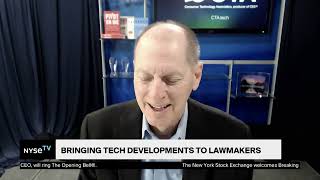
Gary Shapiro, CEO + Vice Chair at Consumer Technology Association Joins NYSE TV Live


Gary Shapiro, CEO + Vice Chair, Consumer Technology Association Joins NYSE TV Live
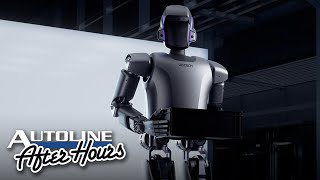

The Future of Technology and Innovation: A Conversation with Gary Shapiro, CEO of CTA

🎙️ Tech Leadership Insights: CTA CEO Gary Shapiro on Innovation & Adaptability