Tech Titans - Gary Shapiro

Gary Shapiro, CEO of the Consumer Electronics Association, opens CES 2014 with a record $208 billion industry forecast. He highlights emerging categories like 3D printing, wireless health, and Ultra-HD, and names Snapchat, Uber, and Aereo as examples of business-model disruption reshaping the market.
Chapters
We are the flagbearers of the innovations of the past, the champions of what is to come. This is the gathering place, the proving ground, where hands-on experience separates reality from rumor. This is a pilgrimage site for all those who thrive on the business of consumer technologies. See what's next.
Ladies and gentlemen, President and Chief Executive Officer of the Consumer Electronics Association, Gary Shapiro. Good morning and welcome to the 2014 International CES. Where innovation comes to market. Thank you so much for coming. You know, I know many of you had some real challenges getting here. We're so glad you're here. For me, CES is the highlight of the year. It kicks it off. It has energy, excitement, ideas, new products, and even celebrities. This place, Las Vegas, this week is the home to innovators thought leaders, and even disruptors. It's where the best of the best in our industry gather to celebrate innovation, and they come to do business. The new products and services that we're seeing here are creating totally new industries overnight. In fact, what we do each year on this stage at this time is we release our annual sales forecast. And now for the very first time, we can prove that it is new products which are driving our industry growth. This year, I'm pleased to announce that the US industry forecast is to grow 2.4% to a record high of $208 billion, but it is driven by product categories that didn't even exist in a meaningful way a few years ago. In fact, in 2014, we will see $6 billion in sales of new categories. Such as 3D printers, wireless health, and Ultra HD, an innovation basket of new technologies that CEA is now beginning to track. To give you context what that $6 billion means, $6 billion is a lot bigger than the entire US machine tool industry. The fact is, is that our industry is reinventing itself. The fact is also that innovation often goes hand in hand with disruption. Some legacy businesses get really excited by the opportunities of innovation. Others get scared. Disruption is uncomfortable, but disruptive innovation improves our lives. New companies and technologies that threaten the establishment are resisted, sometimes by regulators, sometimes by old laws that are misused by legacy industries. But as history shows, disruptive innovation is essential for economic growth, it creates new jobs, and of course, And of course, it benefits consumers. At the Consumer Electronics Association, we embrace and we fight for innovation. It's too important to be choked by laws written long ago. And it's especially important today because we're at the beginning of a whole new age of innovation. New companies like Snapchat, Shutterfly, and Yelp are changing how we communicate. Others like Aereo, Uber, and Dish have launched totally new business models. To provide consumers with innovative services. What all these CEA members have in common is that they threaten the status quo. And let me tell you, their products and their technologies are game changers. Of course, you'll see many examples of innovative disruption all across the show floor. The Internet of Things, 3D printing, Ultra HD TV, driverless cars, MEMS, and the over 200 companies at Eureka Park They're introducing new services, new products, improving consumers' lives. They're offering lower costs, greater convenience, and things we haven't dreamed of even before. So when the show officially starts, to me it's like that moment in The Wizard of Oz where Dorothy leaves behind a grim black and white world and opens the door to a full-color multidimensional experience. CES is that moment for me. In an hour, the doors will open on a show full of surprises and innovation that will wow any journalist willing to walk the floor. Now, as many of you know, I'm a cheerleader for technology. In a sense, that's my job as head of the Consumer Electronics Association, but I am passionate about it and I believe in it. But as much as I know and understand what technology can do, I still believe we must get together, as we are in this room today, sharing a 5 Sense experience. In fact, that is what the— this event is about. It's about getting together and Seeing new companies, new exhibitors, looking at someone in the eye and figuring out whether you could do business with them. It's about that serendipitous moment that happens at shows like this. These things happen when you least expect them, and you might be walking the show floor and you'll see a person, a product, a technology, or a service, or you'll get an idea, and it will change your business or even change your life. I love CES. It brims with optimism for our future. And we design it so that different industries can converge, new alliances can form, and innovation can, can flourish. The fact is, CES helps our industry, and our industry exists simply to create a better world. But CES also gives insight into the future. Last night, we heard Intel's new CEO, Brian Krzanich, introduce a range of innovative products including wearables, an incredible baby monitor, and an amazing dual processor chip. Products like these do improve lives. Of course, one catalyst for many innovative products at CES is microelectromechanical systems called MEMS. This disruptive sensor technology is inside smartphones, tablets, and products like wearable technology and digital healthcare systems. And for the first time, we have a special area at CES, a tech zone, focusing on how these sensors make life smarter and even more capable. You know, devices are increasingly talking to other devices to make us safer, save energy, and solve everyday problems. Indeed, the Internet of Things is also showcased at CES, highlighting the network connection of people, processes, data, and objects. Cisco not only has a major presence here, but John Chambers will be keynoting on this stage later today to explain how the Internet of Everything will transform our lives by making us more efficient, safer, and healthier. Now, all of this data collected by devices help people measure themselves and their health and their progress towards goals. The Quantified Self is a movement to use technology to self-monitor, for example, what we eat, our performance, our health, and even our mood. Wearable sensors are improving our lives. Wearable technology includes everything from fitness tech to smart watches, and it's all here at CES. Of course, innovation is also changing our cars. The automotive electronics portion of our show is bigger than ever, with 9 of the top car companies exhibiting. And we are seeing amazing breakthroughs in auto technology at CES. Last night, Audi introduced an amazing Quattro concept car, which gets 90 miles per hour— 90 miles per gallon and has power, lighting, and connectivity. CEA, being a responsible organization of over 2,000 technology companies, has developed an innovating safety campaign. It promotes new technology like blind spot detection, drowsiness alerts, and advanced entertainment systems to make driving safer. And we also have the single largest group of stakeholders working to develop best practices to design CE products to ensure driver, passenger, and pedestrian safety. But distracted driving issues go away, of course, as we inevitably shift to driverless cars. At CES, several companies will present their vision of how driverless cars and other technologies will enhance our experience in the future. It's another example of a disruptive technology that will provide new valuable benefits. Another area that promises huge growth and potential and is absolutely revolutionary is 3D printing. The new 3D printing tech zone, which didn't even exist in 2013, had to be expanded 3 times. More than 30 companies are sharing 3D printing innovation at CES. This technology will be transforming manufacturing around the world. Of course, CES is also where hardware and content intersect. In recent months, an array of deals have emerged as studios, networks, producers, and others look for ways to deliver movies, on-demand TV shows, and enhanced video experiences to a whole array of products, including, of course, smart TVs. At CES, we bring these communities together in our Brand Matters and Entertainment Matters tracks. On the show floor, you will see the latest in video with curved OLED and Ultra HD 4K displays. Ultra HD offers dazzling, pristine images and an immersive viewing experience with 4 times the resolution of HDTV. Our latest research to be released later this week shows that once consumers see Ultra HD, they love it. Also, you can experience the advances in high-resolution audio at the Hi-Res Audio Experience Tech Zone. You know, the future is exciting, but the start of a new year is also a great time to look back and to recognize those leaders who have come before us. In 2013, we lost some of our brightest visionaries. Last year, we lost leaders from Rakuten, Bose, Dolby, Kenwood, the inventor of the computer mouse, and a former speaker of the US House of Representatives who was a phenomenal advocate for technology and attended so many CESs. Each of these leaders made a difference. They knew that innovation defines us. It is who we are. It separates humans from other animals. Since Thomas Edison first discovered electricity and invented the light bulb, we have hurtled towards the future with electronic technology making us healthier, allowing us to communicate around the world in seconds, research almost instantaneously, and advance in every area of human endeavor. From agriculture to transportation. Our technology has changed and is changing the world. We have made it safer. We have empowered people. Walk the floor and you will see this. Whether it's the rapidly growing digital health area or a new section, totally new, focused on research from universities, CES represents the idea that as humans, we must reach higher in every endeavor. Soon every citizen of the world will have access to the richness of life through the internet and our wireless products. Our products not only allow anyone with an idea to create a global business, but we run the CES so anyone with an idea can have a shot at becoming a successful entrepreneur. For example, Eureka Park. We launched it 2 years ago for young companies to launch their products. These are startups. It's curated in partnership with Startup America and the National Science Foundation. And what you will see there with over 200 startups is passion, energy, out-of-the-box thinking, and it defines the very vision of CES, which we run for the smallest company, the person that maxes out their credit cards to come here with an idea and expose it to 150,000 journalists, investors, retailers, from around the world that will help give feedback and determine the success of that product. Of course, the only constant here— by encouraging that, the only constant we have in our industry is change. And we plan the show to embrace change and disrupt traditional thinking. That's why each CES is so different than the prior one. Of course, I'm happy to announce that this year's show is breaking records on every level. We have more exhibitors and more product launches across the largest show floor in history. There are so many new and emerging areas this year that I'm happy to announce that this is our largest CES ever. We have crossed a significant milestone with more than 2 million net square feet of exhibit space. This is the largest innovation event in the world, and our doors will open this morning to 20 tech zones dedicated to emerging markets, 300 conference sessions with 850 speakers. CES is bursting with new ideas and new technologies. Digital health and fitness exhibits here are up 40%. The CES is also the world's largest app event with the CEA Hackathon. Our wall of apps in a mobile app showdown. I heard last— yesterday's AT&T app event was the biggest ever. And we have a special area designated for authors of books connected to innovation and entrepreneurship. But CES is just a one-week reflection of an industry that operates all year round. Our industry helps solve some of the biggest problems in society. For example, our products are making the lives of the elderly and disabled more productive. And allowing both to build relationships despite limitations. We have an area of the show focused on products for the disabled, and we are working as an association to create standards so these products can be designed and sold. CEA also has a foundation, the CEA Foundation, focused on using technology to empower the disabled and the elderly and to improve their lives. Our show is international, but our association's primary focus is on the United States. So if our international guests in the audience can indulge me for a moment, let me share some of our U.S. efforts. We care about the 1 million military men and women who serve our country and are now transitioning back to the civilian workforce. They are heroes, tenacious, problem solvers, disciplined, mature beyond their years, and many have strong technology skills. And the technology industry needs many of them as employees. Tomorrow, we'll have a major announcement with several other trade associations in the technology community on how we are going to help our veterans find jobs and our employers find great workers. CEA is a nonprofit trade association committed to the cause of bettering our world through innovative consumer technology. Our 150 employees work in Washington to ensure that our industry can continue to innovate and produce great things for the future. Of course, we face battles as entrenched industries and industries fight to preserve the status quo. Innovation requires free trade, a flexible workforce, a great environment attracting the best and brightest employees from around the world, and a marketplace that encourages investment and risk-taking. Innovation also means dismantling outdated rules and regulations that no longer make sense. Earlier this year, CEA worked with other stakeholders to convince the FAA to allow the use of electronic devices during takeoff and landing on commercial flights. For all those— for all those who enjoyed your tablet or e-reader on your entire flight to Las Vegas, You're welcome. However, while reading your ebook at 30,000 feet makes sense, torching your seatmate by gabbing on your mobile phone may not. So we ask airlines to use common sense, and while allowing use of our products, ensure also that all passengers do not have to endure other travelers' loud conversations. We are human. You know, keeping America as the world's leading innovator also means attacking obstacles to job creation. Every nation wants to highlight innovation in their country, and many of the necessary ingredients for innovation are now clear worldwide. That's why we fight for free trade. We've been fighting to expand the Information Technology Agreement, which for over a dozen years has removed tariffs on all IT products. The problem is the definition of IT products has expanded as our products have changed, and now there has been a multilateral effort to expand the list of products covered. But we were baffled why China blew up the recent negotiations with an extremely protectionist position. We urge China to rethink its position and recognize that true international leadership means responsible engagement in the world's economic system. Removing barriers to innovation— thank you, Sage Chandler. Removing barriers to innovation is crucial. Awesome innovations are being swamped by bogus litigation from patent trolls, lawyers who do not produce any product or service but simply sue those that do. Last month, the House of Representatives stood up and with an overwhelmingly bipartisan vote passed a strong bill to put an end to the patent troll extortion market. Unfortunately, this is Washington, and some in the Senate are saying we should slow down and wait a while before addressing patent abuse. We say no. This is extortion. It is killing American jobs, and it must stop immediately. Believe in innovation. That should be our national strategy. And if you agree, I encourage you to sign up for the Innovation Movement, as a quarter million Americans already have. Every policy or new law must be measured by whether it helps or hurts innovation. For example, we know that Americans love wireless connectivity using our products. This connectivity requires spectrum, especially as we're going to full-motion video. We supported the law requiring the Federal Communications Commission to create an auction for broadcasters wishing to sell their spectrum. But now we ask all leaders in the broadcast community, especially the leadership of the National Association of Broadcasters, to use their bully pulpit to support these auctions. As an industry, of course, we need spectrum, but we also, as humans sharing this moment in time, We owe future generations something. We owe them a healthy environment. We are on our way towards our goal of recycling 1 billion pounds of consumer electronics a year in the United States. We recently announced an expansion of our agreement with the cable industry to cut down set-top box energy usage. As always, we are socially responsible as we envision a future where innovation flourishes. The magic of our industry and CES is that something new is always just around the corner. And that's why we are pleased to announce today the new Extreme Tech Challenge, codenamed XTC. The challenge is a new era of active investment and incubation by the world's leading innovators to empower entrepreneurs. Industry luminaries we'll be working with include Sir Richard Branson, Samsung President Young-san, Lars Rasmussen, inventor of Google Maps, And Red Bull athlete Susan Ma and venture capitalist Bill Tai will lead this challenge. Stay tuned. CES is full of transformative technology. I hope you enjoy the full spectrum of the tech ecosystem from gesture recognition and augmented reality to eye-tracking technology, from wearable tech with jackets that adjust to outside temperatures and solar charging handbags to health monitoring devices and body sensors. These are just a few of the breakthrough technologies you will see on the show floor. At CES, you will see the creative disruption that promises to transform and improve our lives. And I guarantee that you will be energized and inspired. Now, we always kick off CES in a big way, and this year is no exception. Our opening keynote is Sony, a brand synonymous with consumer electronics. In any consumer technology category you can think of, Sony either already has a product people love, is currently driving product innovation, or plans to make a product that will redefine the next wave of the consumer technology experience. Sony leads the way in shaping how consumers enjoy their music, movies, TV shows, and games, and delivers new ways for consumers to receive information. And Sony has the most options for consumers to create their own content and then watch it on any type of device. From the earliest days of the Trinitron and the Walkman to the dawn of the digital and high-definition areas, to 3D and now ultra-high-definition TV and high-resolution audio and across any type of platform, Sony is always a leader out in front. And of course, Sony always has one of the most exciting exhibits here at CES year after year. In breadth of resources It's unrivaled. In addition to its consumer electronics reach, add a movie studio that regularly produces box office favorites, a music label that showcases the best in every genre, and a professional group that covers everything from Hollywood to network news. Sony ties it all together into an intuitive and seamless consumer user experience. But don't just take my word for it. Our speaker this morning has personally been involved in many of Sony's achievements. Like Sony itself, Kazuo Hirai, President and CEO of Sony Corp., is a man of many talents. He's seen consumer electronics from all sides, from his successes with the Sony PlayStation business to international work with music artists to his leadership of Sony's network products and services initiatives. He also was a 2013 ESA Champion honoree, where he was recognized as one of the most influential executives in in the entertainment industry. He is uniquely qualified to continue Sony's leadership at the forefront of consumer electronics innovation. Ladies and gentlemen, please join me in welcoming Sony's Kazuo Hirai!
More from Gary
CES 2026 Preview: Gary Shapiro on AI, Manufacturing Innovation & the Future of Technology

CES 2026: AI and Innovation Take Center Stage with Gary J. Shapiro of Consumer Technology Assoc.
Innovation Conference: Gary Shapiro, CEO & Vice Chair, Consumer Technology Association (CES owner)
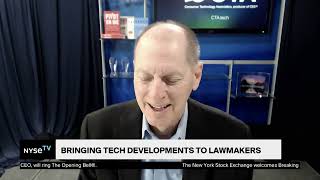
Gary Shapiro, CEO + Vice Chair at Consumer Technology Association Joins NYSE TV Live

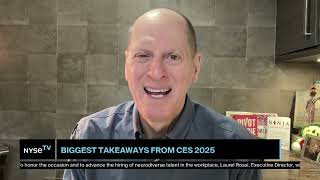
Gary Shapiro, CEO + Vice Chair, Consumer Technology Association Joins NYSE TV Live
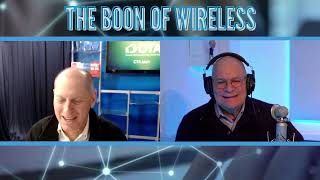
The Future of Technology and Innovation: A Conversation with Gary Shapiro, CEO of CTA
🎙️ Tech Leadership Insights: CTA CEO Gary Shapiro on Innovation & Adaptability