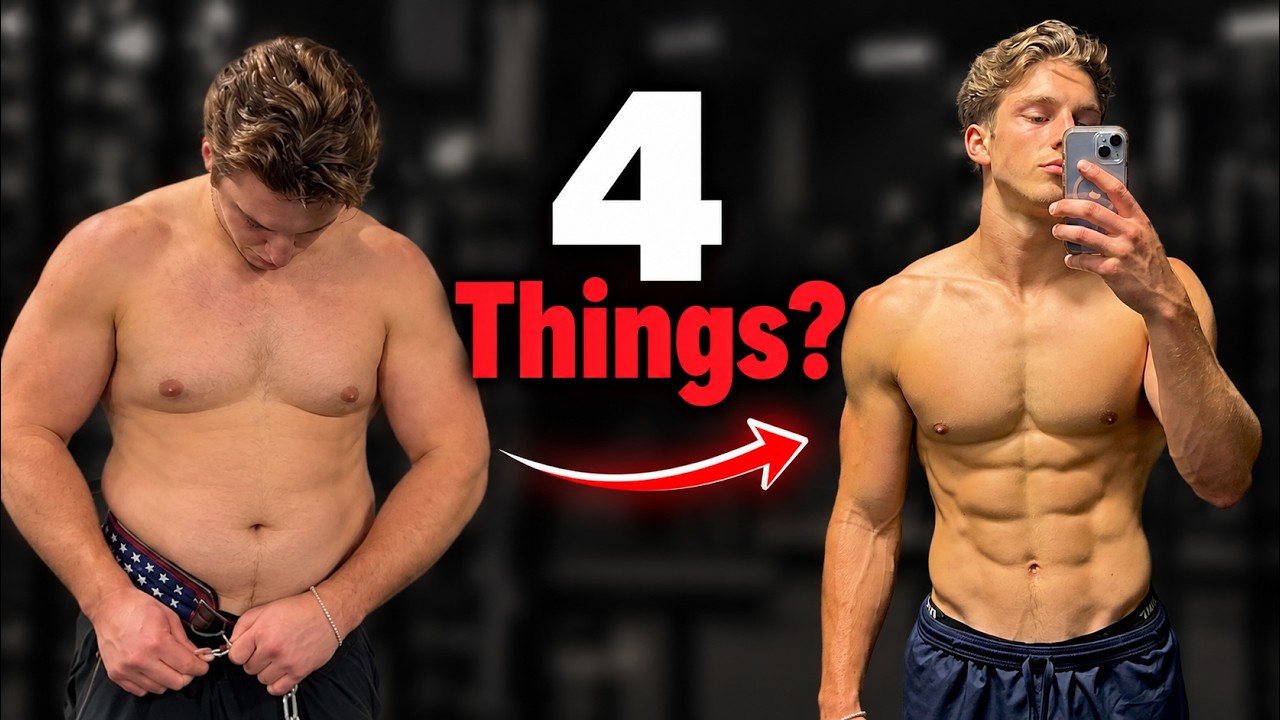
21 Day Fat Loss & Body Transformation Roadmap

Josh Heverly lays out a 21-day fat loss plan built on four pillars: eat whole foods at body-weight times 10-11 calories with protein matching your weight in grams, do a 4-day upper-lower split plus daily incline walks, sleep in a cool dark room, and do one 36-hour water fast per week. The goal is to burn visceral fat and improve body composition fast.
Chapters
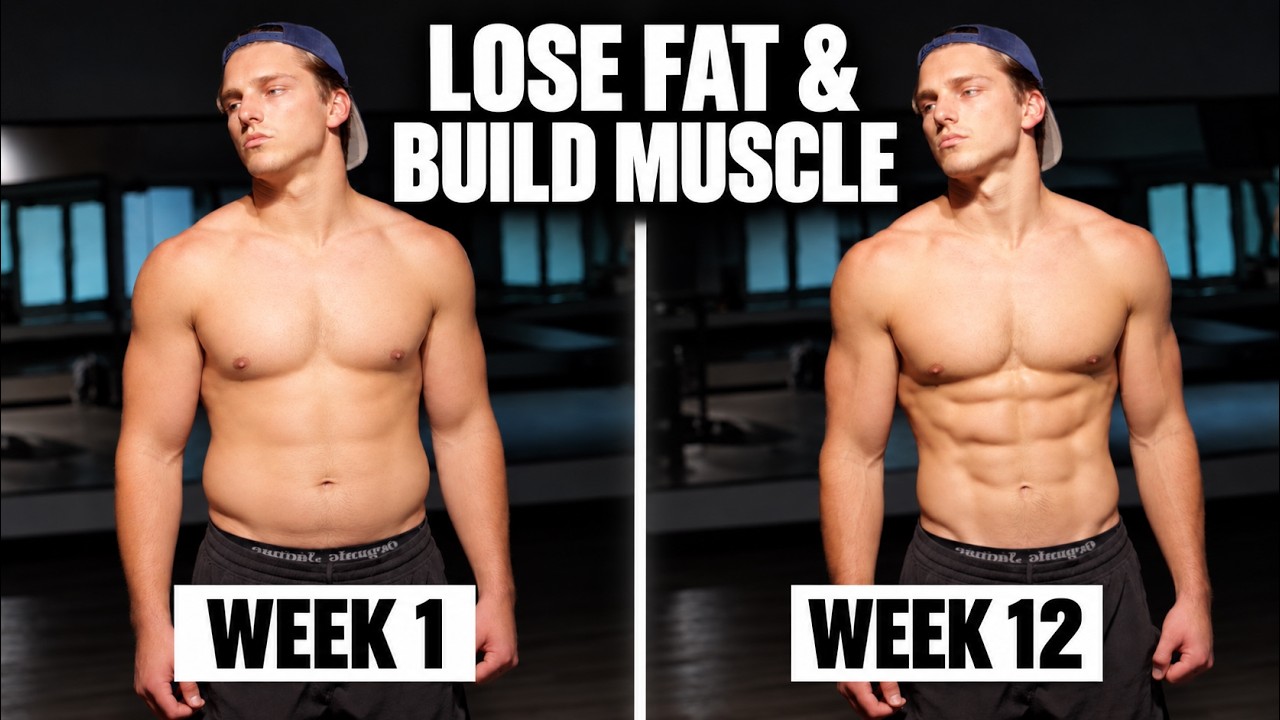
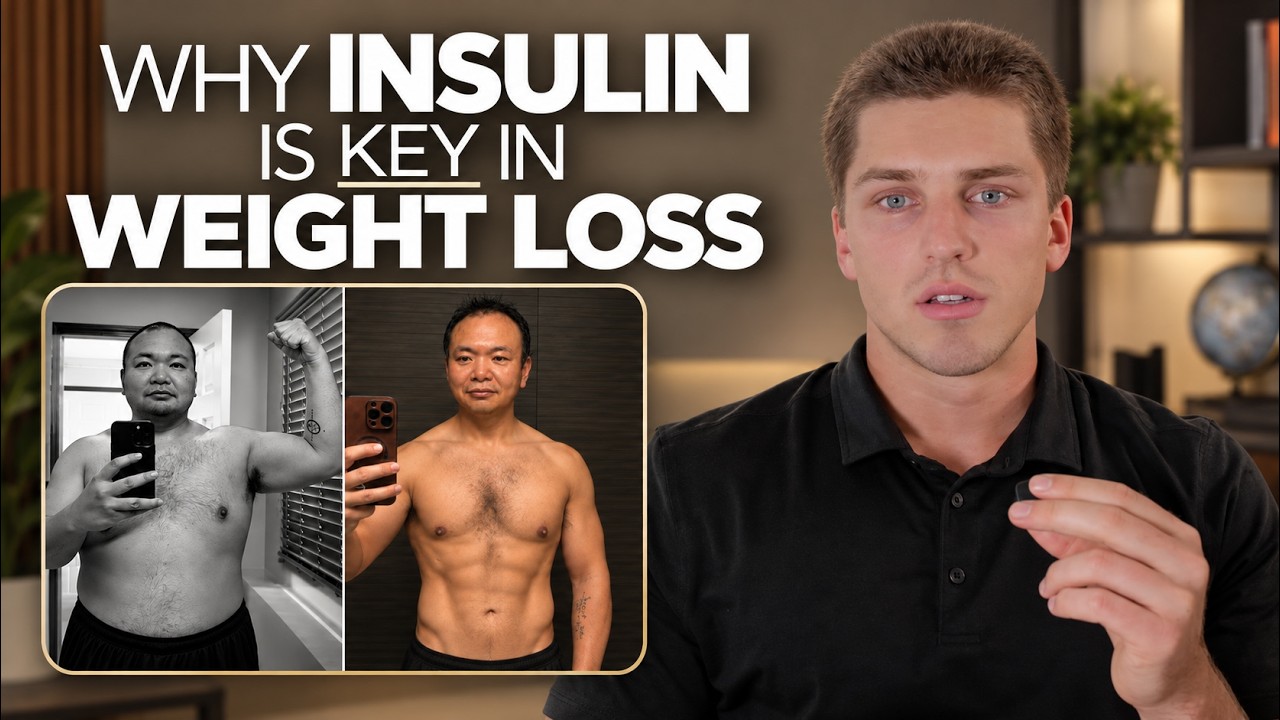
The 21-day fat loss and body transformation roadmap is extremely simple. You stick to my plan for 21 days straight, and I can assure that you start to lose the love handles, see more definition in your core, lose the man boobs, get more definition in your chest, in your shoulders, your core, your whole body start to build more muscle and lose fat simultaneously. It's, it's not easy, but you stick to it for 21 days straight, and I can assure you will see those results. But more importantly than all that, is the visceral fat that we're gonna work on. The fat that's around your heart, your liver, your kidneys, your organs that you don't even know about. It causes and has direct correlation to cardiovascular disease, heart disease, type 2 diabetes, and more. And when you have that protruding belly, you have a lot more visceral fat than you think. So you need to work on lowering that and lowering the overall body fat, and that's how you become the healthiest and fittest version of yourself. Now, what actually is visceral fat and why is it so important to focus on lowering it? Well, like I said, it's the fat that surrounds your organs internally— your liver, your pancreas, and a bunch of other things in there. Now, it drives chronic inflammation, it disrupts insulin signaling, it raises blood pressure, and like I said, it's directly correlated to type 2 diabetes, cardiovascular disease, heart disease, the list goes on. Now, how do you actually lower it? Well, you have to specifically focus on lowering it in a few different ways. One, by actually lowering the fat but making sure you get in a state of ketosis. So your body actually uses the fat for fuel. Now, before I actually get into the full 21-day plan, I need to preface it with something. This is just a 3-week plan. If you stick to it, I can assure you that you will see phenomenal results. Like I said, you will start to see more definition on your stomach, you will start to build more muscle and feel like a new changed person. But one thing I have to say is that it's not a lifelong plan. You need to ensure that what you continue to do after it is suitable and realistic for your lifestyle. But with that said, let's get right into it. Now, the first aspect of this 21-day plan is the nutrition, the most important part, but it's not the only part that matters. Okay, now the first thing that I need you to focus on, this has a critical impact on your overall health and specifically that visceral fat, is the whole foods diet. Now, what does that actually look like and why is it so important? Well, focusing on foods that come from the earth, have a mom and dad, things like meat, dairy, fish, eggs, et cetera, fruit, vegetables, things that you would see on the earth and that you could have eaten 100, 200 years ago. The reason it's so important is because of the micronutrients and the bioavailability of the food. Now, the difference in you eating 200 grams of protein of protein bars and 200 grams of protein of steak is completely different. One of them gives you micronutrients to fuel and help your body and brain and liver and kidneys function properly. The other one has fake protein that might help you build a little bit of muscle. Now, whole foods is gonna be the first step in this whole process. I really, really want you to focus on at least 90% of your diet on whole foods throughout this 2-week process. Now, what this might look like, well, at least for me, is gonna be breakfast, you know, eggs, sourdough, fruit for performance. Then I'm gonna have a snack right before I go to the gym, maybe some honey, a little bit more fruit for some energy. Now, very, very specific right here is after you go to the gym is going to be the most important time for carbs. That's gonna be your carb timing, right before and right after you go to the gym. The reason for that is you want the carbs to be used as fuel when you go to the gym, and you wanna replenish the glycogen that you just used in the gym with the carbs as well. That's what's gonna help you build the muscle. But if you could really focus on carbs only before and after, keep your insulin low throughout the day, you'll actually be able to stay in a state of ketosis, and really work on that visceral fat. Now, the next aspect of the nutrition is the overall macros. And what I want you to do, ultra, ultra specific, take your body weight, okay? Multiply that by 10 or 11, and then that's the amount of calories that you eat in a day. So for example, I'm around 200 pounds. I weigh, well, times 10 or 11, let's take 10.5, That would be 2,100 calories, and that's what I'm going to be eating for my weight loss, fat loss journey. 'Cause again, this is a 21-day plan. This is extreme. 2,100 calories for me is a significant, significant calorie deficit, and it will be for you as well, especially as we go into the training aspect. That's gonna burn even more calories. But with that, that ties into the whole foods aspect. 'Cause if you are focusing 90% of whole foods, you'll be able to get your micronutrients, even on an extreme calorie deficit like that. But also very, very important, working the carb timing into that 2100 to make sure you're still building muscle and you have enough energy for the gym. Now, next to that, arguably just as important, take your body weight, okay, mine's 200, and multiply that by 1. That's how many grams of protein I want you to eat. So 200 grams of protein. Now, from There, with the remaining calories, I want you specifically— the remaining calories is going to be 60% carbs and 40% fat. The reason for that, and again, most of that carbs is going to be around the actual training, which we're going to get in later. The fat needs to be a minimum of 60 grams at least for most men, just to keep the hormones up and functioning. Now, this is a general plan of what the nutrition should look like. On a daily basis, that would look like eggs and protein in the morning, turkey bacon, avoiding pork, a very dirty animal, I can make a whole nother video on that. And then having maybe a small snack, some fruit, something to give you energy for the gym. After you go to the gym and we do that training session, which I'm going to get into, we're gonna have a big protein and carb meal, the fats are gonna be low. And then for dinner, we're gonna have one more really heavy protein and fat-heavy meal, keeping the overall carbs low, but having some vegetables, fiber. And that's one thing as well, is I want you to get a minimum, bare minimum, 25 grams of fiber. 'Cause that's gonna be the digestion and allow your body to, and your gut really, to actually have good digestion. That's one of the most important things that people don't realize. And going back to that 20 or 200 grams of protein from protein bars, your gut is going to be absolutely fried if you do that. You need to be focusing on fiber, but the whole foods, the fruit specifically, 2 pieces per day, that will make sure that you are hydrated and giving yourself that— those pre and probiotics, focusing on the protein, the carbs before and after. This is going to really change your overall diet, but this is going to change your body and help you so much to lose that visceral fat. All right, number 2, training and cardio. Arguably just as important as the diet. Maybe a step below, but it's something that you really have to put a lot of emphasis into. And it's more so about the consistency and getting it right the first time and staying consistent with that. Now, what's that actually going to look like? Well, on this 21-day plan specifically, I want you to go on a 4-day training split, okay? So that's 4 days, and that's going to be upper, lower, rest. So you're going to rest on one day, on Wednesday, and then you're going to go upper, lower. Again, that would be a full upper body day, a full lower body day, a full upper body day, and a full lower body day. So it'd be Monday, Tuesday, rest, Wednesday, Thursday. Okay, you got that? And then with that, the cardio very specifically is that 6 to 7 days a week you are going to be doing incline walking. Okay, incline walking. And it's going to be a very specific amount that I want you to do. Because we want to tap into that, like, the glycogen and actually get your heart rate up. We want to push that heart rate to really burn the fat and burn that visceral fat. Now, one thing on 10,000 steps a day— it's amazing, keep it up. The more that you walk, the better it is for your overall health, but it's not going to get you shredded. It's not going to get you the physique that you want. So specifically, like I said, incline walk. But what's that going to look like? Well, we're going to go 10 to 15 degrees. We're gonna go 20 to 30 minutes minimum, 3 to 3.5 miles per hour, okay, 3.5 miles per hour. We're doing that 20 to 30 minutes. If you can go longer, that would be phenomenal, but this is going to be the overall split. Now, like I said, the nuances matter because within the upper-lower day, you need to be hitting the right amount proportionately. So what that might look like is for every single exercise or workout that I do, it would be about 3 supersets with the warm-up and a movement prep. So I would do a warm-up right here, and it would be movement prep, and then I would do block 1, block 2, block 3. Now what those look like, for each one I do a superset. So that would be maybe chest and back, that would be shoulders and biceps, and then that might be triceps and biceps again. Now that varies obviously depending on what you're actually doing for the day, but that's just a very vague— and I could go more into depth than this, you know, Tell me in the comments if you want specific help with, you know, the, the workouts you actually need to be doing. But this is what it should look like overall. So again, the training and the cardio: 4-day upper, lower, rest, upper, lower. 6 to 7 days a week of incline walking, 10 to 15 degrees, 20 to 30 minutes at 3 to 3.5 miles per hour. And then this is what the workout typically looks like. It should really only take about 45 minutes, but you are pushing yourself to failure, okay? So every single set goes to failure once you are fully warm. So you go the warm-up, the movement prep, and then block 1, maybe 1 to 2 warm-ups here on the actual movements, like 1 to 2 sets of the bench, but then you're pushing yourself to failure. Ask for a spot, and failure doesn't mean you have more in the tank. That means you physically cannot get another rep. That's what we need to be focusing on for this 21 days. Number 3, lifestyle and recovery. This is something that most people that I see do not put nearly enough emphasis on. Now, I want you to think about it like this, it's a domino effect. So, if you get 15, 30 minutes, 45, maybe an hour extra of sleep every single night, your recovery is going to be maybe 10 to 15% greater. That gives you 10 to 15% more energy in the morning, more energy in the gym, more energy to push yourself, better energy overall throughout the day, better recovery so you build more muscle, the list goes on, right? It's a domino effect and it's a snowball effect. Every single day it gets bigger and bigger and bigger and you get better and better results. So, the more emphasis that you put on the lifestyle and recovery, the better results you get. So, the first thing that I want you to focus on is sleep. I mean, you hear it all the time, get better but deeper sleep. And there's a couple of tricks, very specific, for you to get better sleep. Number 1 by far, and simply because this is one thing that I see everybody struggle with, is their phone, but specifically blue light before bed. So every single night that it starts to get dark, I want you to turn off the blue light. You don't have to stop using your phone, you don't have to stop using your computer, but I want you to turn on the red light. You go into your accessibility, you can ask me in the comments and I can show you how to do it. But you turn on the red light and it, it stops emitting the blue light. Now, why is that important? Because the blue light simulates the sun. It stops the melatonin production in your brain, which doesn't allow you to get into as deep a sleep quickly as you would like. So the, the more that you can get rid of that blue light in your eyes before you get to sleep, the deeper you get to sleep, the more energy you have, the better recovery you have. Like I said, it's that snowball effect. So little things like this, but number 2 with that is putting it down outside of your room. Down and outside. So specifically, when you're gonna go to bed, there's no more doom scrolling. And this is, again, incredibly important for the lifestyle and recovery. I guarantee you, this is one thing that I am so confident in, that if you put your phone down and outside of your room before you go to bed, you don't allow yourself to doom scroll, you will feel like a changed man in the morning. So here's exactly what I do. I use a physical alarm clock. I have it set up right here and I set it to 5 minutes before my phone's going to go off. I set my phone out in the kitchen and it forces me to go up and walk out of my room and actually go pick it up and turn it off. That way I cannot use it before I go to bed. It's not the first thing I see in the morning and I have to go physically wake my, myself up, wake my brain up, and it allows me time to think before I hit snooze. And if I get back in bed and I hit snooze, well, that's another problem that you got to work on. But this is the first step, putting it down and outside of your room. Not actually outside outside, but outside of your room. That's what I want you to do. That's going to really, really help you focus on that recovery and get better recovery. Now, number 3 with the sleep is a cool room. Now, if you are sleeping in a room that's really hot— I know it's the summer right now. If you're watching this in a couple of months, it may be a little bit cooler. But you wanna have a room that's really sub-68 degrees. That's gonna be best for the human body to actually get into a deep sleep. Now, overall lifestyle as well, there's a few things that you can focus on, grounding, getting out in the sun, but really the sleep is going to be the biggest factor in actually recovering better and getting the results that you want. Number 4, fasting. I know I said the nutrition is the most important part, But this one specifically for the 21-day plan, for your goals, for lowering the fat quickly, the visceral fat, getting that out, lowering the overall body fat and getting quick results, this is going to be the key. I cannot stress that enough, but you have to do it properly because I see people do it wrong all the time. Intermittent fasting and extended fasts are two different things. What I want you to focus on over this 21-day period is 3 extended fasts. Okay, so that might look like every Sunday you eat nothing, you have nothing, no calories, except if you need black coffee, you can have it strictly black, water, some electrolytes if you're going to train, but really focus on being hydrated. Now what that would look like is your last meal would be the night before, and then your next meal— so you have no food throughout the day, no food the whole next day, right? And then the next meal would be breakfast. Okay? Now, that would be more so like a 36-hour fast, not eating for one whole day. There's loads and loads of benefits for this, tons of science and proof as to how it actually affects your body. The first one is forcing you to get in a calorie deficit, but also working your brain and forcing you to actually put a little bit more discipline. It's extremely hard. It's not gonna be easy 'cause that dopamine hit. Us in the US, or really around the world, we're so used to having that constant dopamine hit of food. One, it's gonna get rid of that and, and help you get past that. It's gonna build discipline in your mind. But just as important is the calorie deficit, okay? You're automatically going to be in a 2,000+ deficit, which just speedruns fat. But arguably even more important than that is going to be the visceral fat that I keep mentioning. Now, this is going to be one of the best ways to get rid of that visceral fat. Why? Because what it takes, ketosis, to get rid of that visceral fat, your body needs to use it as fuel, okay? Now, when you get into the state of ketosis is around 18 hours of no food, but black coffee can actually help enhance that. So around the 18 hours mark and then up into that, that whole next day. So that's about 18 hours that you're going to be in that state of autophagy where your body's recycling old cells, where it's also in the state of ketosis. Okay? You following? So, when you're in the state of ketosis, your body is able to use fat for fuel. Now, where does it go? It's gonna eventually go to that visceral fat. It's gonna work around your organs and help clean that all up. This is incredibly important because of the cardiovascular risk, the type 2 diabetes risk, and 2 out of 5 people in the US pre-diabetes, and 80% of them don't even know it. So if you're 10, 20, 30, 40 pounds overweight, there's a phenomenal chance that you have pre-diabetes, and you do not even know it. Now, this is going to be one of the best things, if not the best thing for you to do. Not only because it's gonna work the visceral fat, not only because it's gonna get you in a calorie deficit, but it's gonna build that mental fortitude, build that up in your brain so you can accomplish more, so you can actually complete the 21 days. And I promise you, you will feel like a changed man after that 36 hours. It's tough, I'm not saying it's easy, but you can, you technically can have zero calorie drinks, but I would suggest having only black coffee, only some electrolytes, and water. Stay very hydrated, move around, get in the sun, take your mind off of it. Okay, that's the best way to do it. Fasting is a phenomenal, phenomenal tool to have. You don't want to go necessarily too, too long. If you do go past 36, that's when you want to start to use a little bit, you know, something like bone broth. After your fast, you don't want to have a humongous meal. Have something small, a piece of fruit, a couple of eggs to aid the digestion, and then have some bigger meals about 30 minutes after that. Now, that's pretty much the whole plan, 1 through 4. It's not that one of them is better than the next, they all play into each other. Nutrition's extremely important, the training's extremely important, the recovery is extremely important. 'Cause if you don't have the recovery to back the training, well then, you're not gonna be able to get the results from the training. And everything is tied in together. Now, if you really wanna get the best results possible in this 3 weeks, incorporate the fasting, that's gonna be a fast-tracked way to get those results. Now, if you've made it this far, you're obviously very, very serious about seeing results, about losing the visceral fat, about getting better results and showing your abs again, becoming the man that you want to become. If that is you, I would like to formally invite you into my program. Now, what you can do is go into the— link is in the description to book a call with me. I will say though, I close my program every other month and there's only 2.5 days that I take meetings with people that want to join my program. So it's not necessarily available to everybody. Although you have the opportunity to meet with me, there's a great chance that it fills out quick. So you want to get your spot as soon as you possibly can, as soon as you see this, because there's a chance that either my program is closed for the next month or that it's booked out. Now, if you do want to lose fat, if you wanna become that man that you wanted to become 5 years ago, you keep putting it off, just book a call with me. It's free, it takes 30 seconds to fill out the form. Go to my website, scroll down, click a time that works best for you, and I would love to see you.