The 90 Day Plan to Lose 15lbs & 20% Visceral Fat
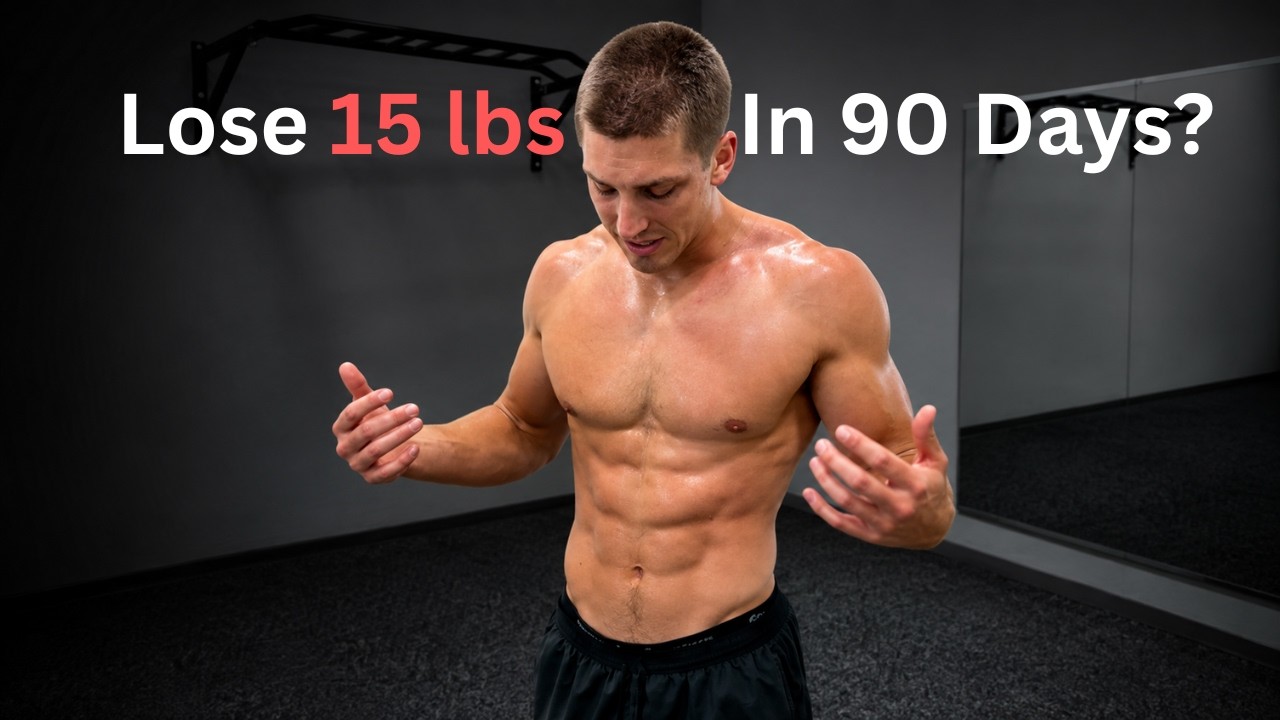
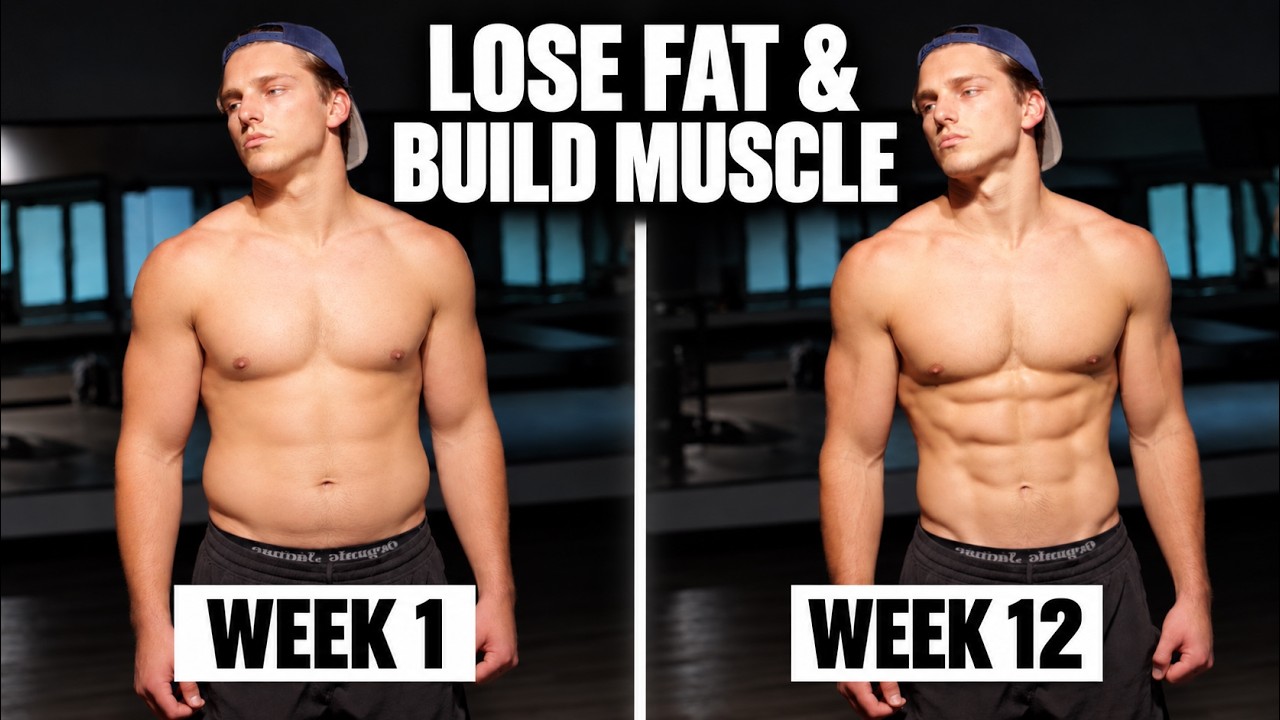
In this extensive instructional video, fitness coach Josh Heverly presents a comprehensive 90‑day fat‑loss system designed to shed at least 15 pounds of body fat and reduce visceral fat by 20 %. The plan is built on a mathematically‑driven calorie prescription (body weight × 11 kcal) with weekly recalculations, a strict 8‑hour eating window (no food for the first and last four hours of the day), a once‑per‑week OMAD (one‑meal‑a‑day) protocol, and Zone 2 cardio guided by a target heart‑rate formula (180 – age). He outlines a full daily nutrition template, macro percentages, and timing of carbs around training, followed by a 4‑day split lifting routine with specific compound supersets, progressive overload guidelines, and a minimum of 12 000 daily steps plus 20‑30 minutes of incline walking. Supplement recommendations (vitamin D, omega‑3, creatine, magnesium) and detailed sleep hygiene (7.5 h, 90‑minute cycles, caffeine timing) are included. Alcohol is limited to hard liquor twice a month with carb compensation. Progress is verified via DEXA scans, and a money‑back guarantee is offered for clients who follow the plan exactly. The video ends with a call‑to‑action for coaching and further content.
Chapters
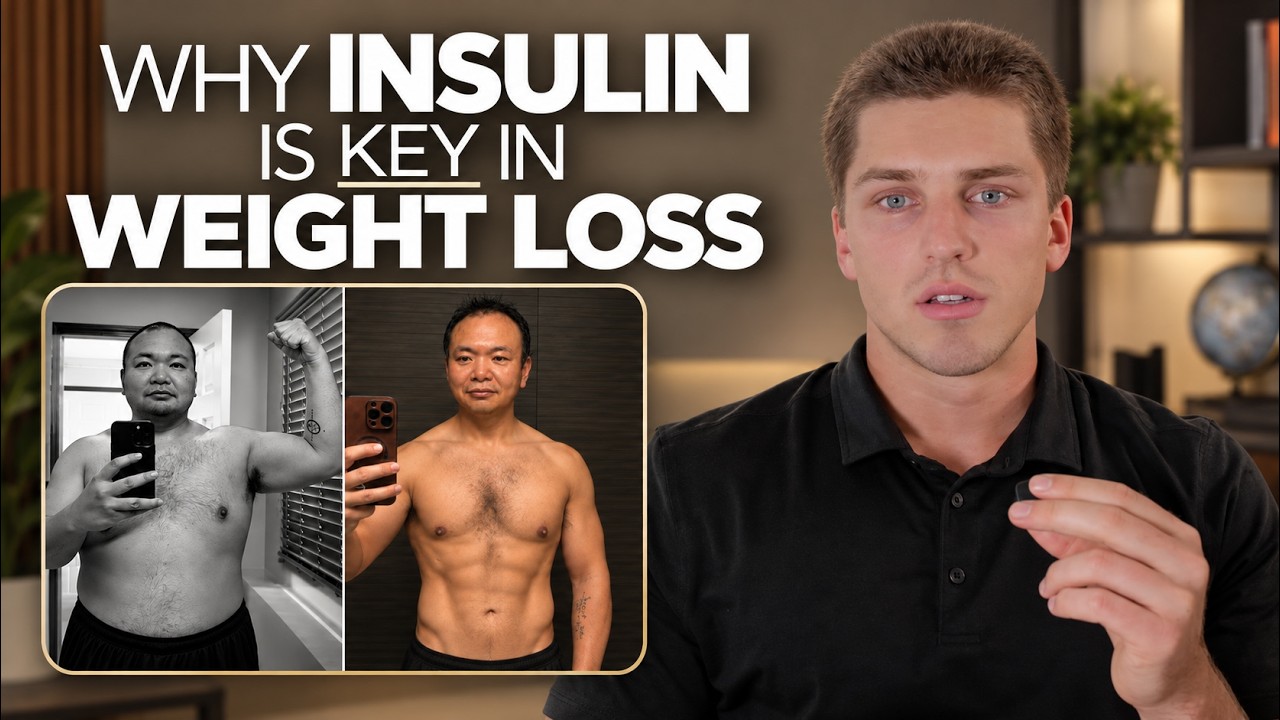
This is the ultimate guide to lose 15 pounds of fat and 20% of your visceral fat in 90 days. I'm not gonna lie though, this video is not for the faint of heart because I'm giving you absolutely everything you need to know. It's long, it's extensive, but if you follow the plan, I guarantee you will see results because it's based on math, it's based on a plan that actually works, and it's all revolved around you. So you can copy exactly what I put in this playbook and get the results. I'm not going to sugarcoat it. I'm just going to be honest. This is a long video, but if you follow it, if you follow the plan, I guarantee you will get results. So let's just get right into it. So here's the 90-day plan to lose 15 pounds of fat and 20% of your visceral fat. Everything that you need to know, genuinely everything— I took a lot of time to build this plan— is all right here. I'm leaving nothing out. As you can see, there's a lot of points. This is not for the faint of heart. It is Long, it's extensive, take notes. But I genuinely mean it, if you follow this plan to a T, I guarantee you will get the results because I've done it with my clients, I've done it with myself, the results are inevitable. Okay, so here's everything that I'm going to break down, just so you know: the math, your deficit and what actually produces your calorie number and how to recalculate it as the time goes on, the eating window to follow, the weekly OMAD day, Zone 2 cardio and your target heart rate, the full daily nutrition plan, the training split, the progressive overload, supplements to take, sleep and recovery, alcohol and social events. Like I said, it's a lot, but the results speak for themselves. Like, I guarantee you, I can't stress it enough, if you follow this plan, you will get the results. Let's just get right into it. So why does it actually work? It's not a guess, it's based on math. Okay, so So taking myself as an example, and we'll get into how you can apply this to yourself, but I'm burning around 3,000 calories in my total daily energy expenditure. What I eat is my body weight times 11. So that'd be around 2,200 calories. The average daily deficit, depending on what I do, 700 to 900 calories. Okay. So 90 days, that's about 12.9 weeks at that deficit plus one OMAD day per week. That's 18 to 22 pounds of fat over 90 days. The 15-pound target is the floor, not the ceiling. I honestly just say 15 pounds because that's an easier guarantee. But I can nearly guarantee you're going to lose more than that if you actually stick to this the whole time. So we recalculate your calories every 5 pounds that you drop. That number moves with you. So rule number 1, your calorie number. This is like, if not the most important thing, it's one of the most important things with this whole plan. You have to stick to it. Okay? That's your body weight times 11. That's it. As simple as that. There's a lot more nuance that goes into it, which we're going to get into all of that. But for example, 200-pound man, say I'm 200 pounds. 2,200 calories per day. Protein target: 1 gram per pound of body weight. Non-negotiable in a cut. You need it to preserve and ideally grow muscle. Okay, every 5 pounds you lose, recalculate. So if you go down to 195 pounds, it'd be 2,145 calories. Your calories have to drop as you lose weight because your TDEE, your total daily energy expenditure, will also drop as you lose weight. Simply because you have less mass on your body. Okay, this is the single number the entire plan is built on. If you don't follow this, it doesn't work. Okay, but the rest of it is still just as important. You need this to start and the rest of it helps everything else. And honestly, you could track it for 2 weeks. After that, you can eyeball it because then you will pretty much know exactly what you need to be eating. Okay, rule number 2, the eating window. No food for the first 4 hours or the last 4 hours of your day. So for example, if I wake up at 5:00 AM, my first meal is at 9:00 AM. If I'm asleep by 9:30 PM, my last bite of food is by 5:30 PM, hard cut, non-negotiable. That's an 8-hour window. Yours will differ. Just keep the 4 in the morning and the 4 at night. The 8 hours in the, in the middle of the day, I don't necessarily care about, but it's the 4 and 4 that will really help produce the best results. And this is for discipline first. Hard rules make everything else easier to follow. So For example, if you allow yourself to have more calories at night, it's technically okay if you're eating within your macros. There's other factors that we have to talk about in terms of your sleep, in terms of recovery, in terms of overall health. But the number one thing is for the discipline. For the average person, if you give yourself an inch, you might take a mile. You might be good for 6 days out of the week, and then on the 7th, you're gonna get intense cravings. Okay? If you don't allow yourself to indulge in the first place, it'll be much easier to stick to it. Okay, the secondary reason: it keeps your insulin low so your body can burn fat for fuel. Okay, the insulin— keeping your insulin low, your body can actually burn fat for fuel. But it's also directly tied to diabetes, hyperinsulinemia, high uric acid, and a bunch of other things that you don't want to have happen within your health. Okay, so when you eat within that 8-hour window, even if you have the same amount of calories, your insulin will be lower, your body will be able to burn fat more effectively, making this a much easier and more efficient plan. The back end 4 hours matter most because you don't want to digest food while you sleep. And we'll get more into the sleep aspect later. Rule number 3, 1 day a week, 1 meal a day. That's what OMAD stands for. 1 meal, 1 pound of lean ground beef. That's what we're shooting for. You technically can change it to 1 pound of fish, 1 pound of chicken, but 1 day a week, stick to that. Okay? Pick the same day every week. Consistency beats optimization. 1 pound of lean ground beef is the target. Simple, high protein, no thinking. Yes, I know what you're thinking. On the average day, you want to get 1 gram of protein per pound of body weight. On this specific day, I don't care about that number. We're having one meal, not going over our calories obviously because it's one meal, and then that's it. Low carb to keep our insulin low. Again, berries or other low GI fruit are fine. No bananas, nothing super carb heavy. So Berries, even like an apple, something not incredibly high on the GI index. Veggies for fiber, you'll want them for the overall gut health as well. This is the biggest single-day deficit of your week and it's gonna really expedite that process. Rule number 4, zone 2 cardio. Okay, 5 to 6 days per week, 20 to 30 minutes on an incline. As simple as that. But your target heart rate is what we're after. So take 180 minus your age. For example, I'm 23, so my target heart rate in this zone 2 cardio would be 180 minus 23, that's 157. And it continuously progresses. So if you're 50, 130 is the beats per minute that you want to be shooting for. So it doesn't have to be exact, but that's the target that you're aiming for generally. That's going to keep us where we're burning fat but not tapping into the muscle and not Depleting our energy, not depleting our recovery. Okay, so the setup that you should stick to: 10 to 15 degrees incline, 3 to 3.5 miles per hour, 20+ minutes on a daily basis. This is outside of the walking and the lifestyle that we're gonna get into later. Do it right after your lift, or you can split it before and after. I just wouldn't go fully before if it depletes your energy and then you can't push yourself as hard for the lift. Okay, this is what drives the visceral fat numbers specifically. It's working your heart, working the organs to actually burn the fat. around your organs. Okay, put on a show, call a friend, or just be a dog and stare at the wall. Sometimes I'll watch Netflix, sometimes I'll edit videos, sometimes I will just stare at the wall for 20 minutes. And almost— it's like, it's almost like you're meditating, trying to not think and trying to think about your breathing. It's a great, great practice to build that mental discipline and build that mental fortitude. Rule number 5, the daily nutrition plan. 4 things matter: protein, fiber, micronutrients, Calories, right? And they all matter for different reasons. Time: 9 AM. That's the first time that you eat. 6 egg whites, 2 whole eggs, 2 cups of berries. Pre-gym: 1 slice of sourdough with honey. That's carbs, straight carbs for energy and fuel for our gym session. Post-workout: this is the heaviest carb meal of the day. 10 ounces of lean ground beef, 300 grams of potatoes. We don't want too much fat here. We want the protein for the muscle protein synthesis and a lot of carbs to replenish that glycogen. You can add a little bit more fat here for the dinner if we want. Okay. Dinner by 5, 10 ounces of chicken, broccoli, carrots. What we can do is substitute a little bit more fat for the chicken if you would like. The dessert, because everybody wants a sweet treat, right? Done by 5:30. Non-negotiable. Vanilla skyr bowl. Add some cacao nibs. Super, super tasty. Freeze it a little bit. Turns into like a bit of ice cream. That's 2,200 calories, 200 grams of protein, 30 grams of fiber. The fiber is really important for that gut health. The pre and probiotics. Your gut feeds on that fiber to actually perform as you want it to. If you're not eating enough fiber, you're not gonna go to the bathroom enough. If you're not going to the bathroom enough, you're gonna get backed up. Your body won't recover properly. Your gut aids every single mechanism in your body. Fix your gut, fix your health, lose fat easier. As simple as that. Carbs loaded around the training, and then the morning, water, quick functional movement, coffee delayed 60 to 90 minutes. And that's one thing that a lot of people don't realize is really, really important. It's messing with your sleep, it's messing with your cortisol daily rhythm. Because if you have coffee too early in the morning, it's gonna artificially spike your cortisol. You want your cortisol to come down on its own and then have the coffee. 2 miles on the walking pad before 9 AM is the ideal goal so we can just work on our steps earlier in the day and you don't have to worry about getting it in later. So scale it to yourself. As you see right here, the calories, 400, 200, 800, 500, 300. That's specific to me, right? Because I'm 200 pounds. That's my, uh, macro targets. But if you can scale it to yourself— breakfast, 20% of my calories, pre-gym snack about 10%, post-workout 35%, dinner 25%, dessert 10%. And then the percent of protein: 20%, 0%, 30%, 30%, 20%. Okay, your 2 training meals carry 60% of your calories and 60% of your protein. That's the whole shape of the day. See, before and after your workout is a lot of carbs, and then post-workout and dinner is going to be most of your protein. Okay, um, quick, quick break. You know, I do coach men 25+ one-on-one. I guarantee 15 pounds of fat and 20% of your visceral fat gone in 90 days, or your money back. That's my guarantee. If it feels like a lot, book a free call. Scroll down, the link is in the description. But now back into the plan. Rule number 6, the training split: 4 days of lifting, 5 to 6 days incline walking, 12 steps minimum. Okay, upper day times 2, so this would be Monday and Thursday, and then a lower day on Tuesday and Friday. So what's the actual training split look like? You warm up plus a movement prep for the upper body, a horizontal push superset with a horizontal pull in a compound movement. Specifically, a compound movement means you're moving at 2 joints, so Think shoulder and elbow, think knee and hip. A horizontal push would be something like a bench press, a push-up. Horizontal row would be something like a dumbbell or barbell row. Vertical press superset and a vertical pull superset. Again, horizontal— I mean, sorry, again, compound movements here. Okay, think a shoulder press and a pull-up or a lat pulldown. The last superset is going to be tricep or tricep and bicep superset. Add in some forearms if you would like. The lower day, very similar concept. Warm-up plus lower body movement prep, compound squat pattern superseded with hanging leg raises or some side of— some sort of core work. The second superset is a hinge pattern plus pogos. So a hinge would be hinging at the hips, hinging at the waist to actually work the posterior chain, your low back and your hamstrings. The last superset, any sort of calf work, calf work plus quads or hamstrings, whichever needs more of a focus. That's the upper and lower body day. 4 days of lifting, 5 to 6 days of incline walking, 12,000 steps minimum. That incline walking though is separate from the 12,000 steps. So we're getting 12,000 steps outside of the gym. That incline walking counts for our cardio, not the 12,000 steps. Okay. Rule number 7, progressive overload. This is the most important thing you do in the gym. It's, it's its own rule for a reason. You need to constantly progress. Otherwise you're not going to be making the progress that you want. Every week, more weight, more reps, or more time under tension. As you do cut, it's going to be harder and harder to put on muscle and progress. You're really just trying your best to progress. It's not a guarantee though. It will not be linear, linear in a cut. Some weeks you hold, that's fine. Some weeks you might even decline if your energy is low. Losing fat means you will lose some muscle, you will lose some lean mass. That is a given. About 17% of adipose tissue, of fat, is made up of lean mass. So it's inevitable that you actually do lose some lean mass. But progressive overload plus enough protein plus enough carbs around your training, you at least keep the muscle and ideally build some in this aggressive cut. Without it, you finish 90 days lighter and flabbier. That's the whole— that's the risk, honestly. If you don't focus on these nuances that are actually important, there's a risk that you cut and you feel flabby, and I see it all the time. You lose the weight, but you don't look the way you wanted. Why? Because you didn't preserve and build muscle in this cut. Okay, rule number 8, supplements. Just as important as anything else is the overall health, right? Vitamin D first thing in the morning, 2,000 to 4,000 IU in the morning with the eggs. Most people are deficient, so this is just to get us up to baseline. If you are in the sun genuinely a lot with your shirt off, that's not something you will need. But this omega-3, most people should be taking. Especially to fix that omega-3 to omega-6 balance. And if you're not getting enough fish in your diet, take the omega-3s and the vitamin D with your breakfast at the same time. The reason for that is they need a fat to bind to to actually be absorbed into that body. But those whole eggs is what's going to allow these 2 vitamins to actually bind together and be used within your body. Number 3, creatine before the gym. You can really take it whenever you want, just be consistent with it. This preserves muscle mass while you're cutting. Number 4, magnesium, 400 to 800 milligrams of magnesium glycinate at night. Deficiency is really common and it aids sleep as well. Okay. Number 9, sleep and recovery. Sleep is when you actually build the muscle. Skip it and none of this works. Okay. The target is around 7.5 hours because your body runs on 90-minute cycles. Okay. 7.5 hours equals 5 full cycles. Okay. Essentially what that means is that during the 90 minutes, your body runs in actually 15-minute cycles within those 90 minutes. You want to wake up at the end of the cycle to not feel groggy and to have the most energy. So this is what the 7.5 hours allows us to do. You wake up at the end of that 90-minute cycle and you will feel, feel your absolute best. So you— how to actually get it: coffee, wait 60 to 90 minutes like I mentioned, none within 8 hours of bed. It has a long half-life, which is around 5 hours. A 4 PM coffee is still in you at 9. Okay, so no food within 4 hours of sleep. Magnesium glycinate at night, red light after sundown, dim the house, put the phone away 30 minutes before bed. Never use your bed— your phone in the bed ever. As simple as that. Okay. Number 10, real life alcohol and social events. 90 days is long enough that something will come up— a work event, you know, a happy hour, a wedding, whatever it may be. You just want to hang out with the boys. Ideally, zero alcohol for 90 days. But a hard maximum at 2 times per month, ideally less. Okay, if you do, hard liquor only— vodka soda, tequila soda, nothing with sugar mixed in. That's when the calories really spike, and that's when you get the really bad hangovers, and then you lose progress completely. No beer, no wine, no cocktails with juice or soda. That's all those extra calories. Pull carbs from some of that day. So let's just say you're gonna go drink, pull about 300 carbs that day. So if you do drink and drink a little bit too much, at least you will know you were in a deficit earlier and those— the drink— the carbs that you're having from the drinks kind of equaled out. Okay, plan it in advance. An unplanned night out is where a 90-day plan dies. That's where you lose the progress. Okay, how do you know it's working? Because you can't see the visceral fat, you have to measure it. Okay, so the 15 pounds shows up on the scale, the 20% visceral fat drop does not. You have to measure that. A DEXA scan is the only way to actually verify it before and after. That's what I run with my clients, and that's why we can guarantee the number that I said. I guarantee that you will lose 15 pounds of fat and 20% of your visceral fat within 90 days, or you don't pay. And if you feel like that's something that you want to do, well then scroll down and book a call with me. And if you don't want to book a call with me, completely fine, but I would suggest watching this video next right here. Essentially what this video does is it puts you in a certain archetype. Are you overweight? Are you skinny? Are you skinny fat? And it outlines exactly how long it takes for you to actually get the results you're after. So this video outlines absolutely everything that you want to know and how long it takes you to actually get there. Watch this video, subscribe if you would like, book a call with me if you would like. Regardless, I hope that you took something away from this video. I hope that you took notes and I hope that you apply the plan. God bless and I'll see you soon.