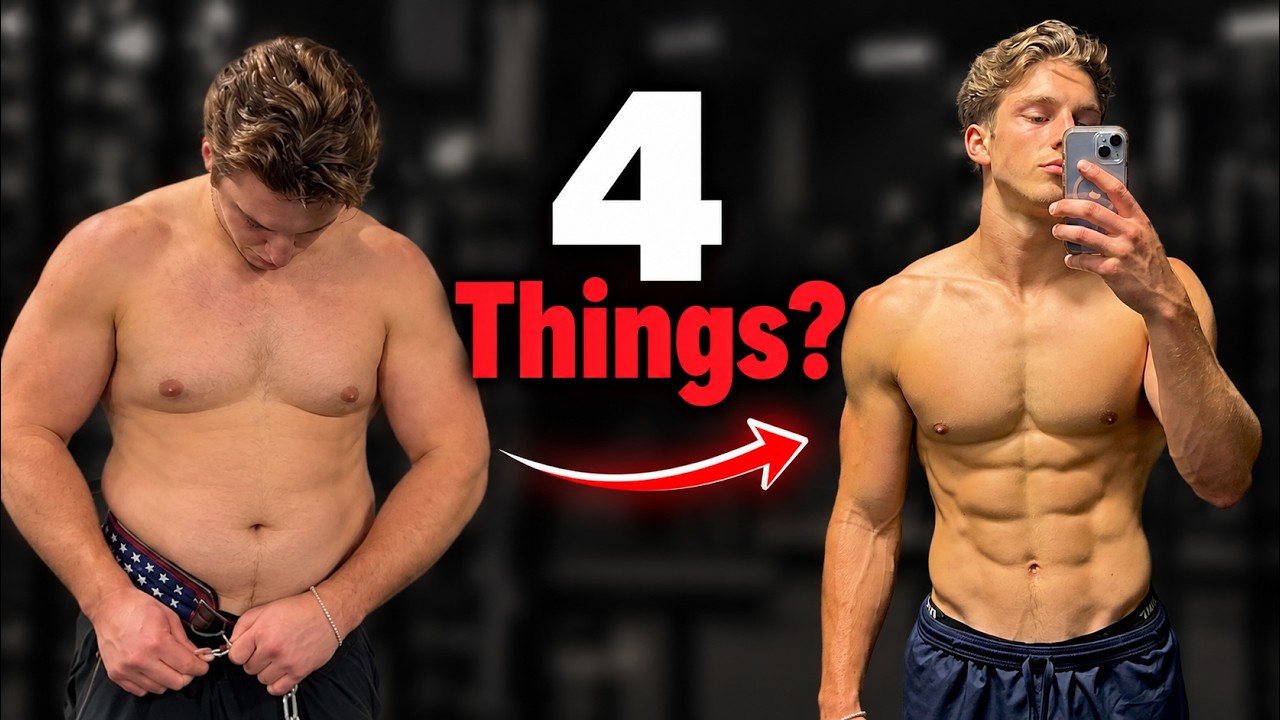
The Full Protocol I Used to Transform Over 100 Men’s Lives (and counting)

A former Division I football player outlines a nine-pillar system for transforming men's bodies in 90 days: nutrition, training, metabolic health, circadian rhythm, breathing, temperature exposure, testosterone, sleep, and integration. He shows real client transformations and argues that most men fail because they chase isolated outputs instead of fixing the inputs that drive them.
Chapters
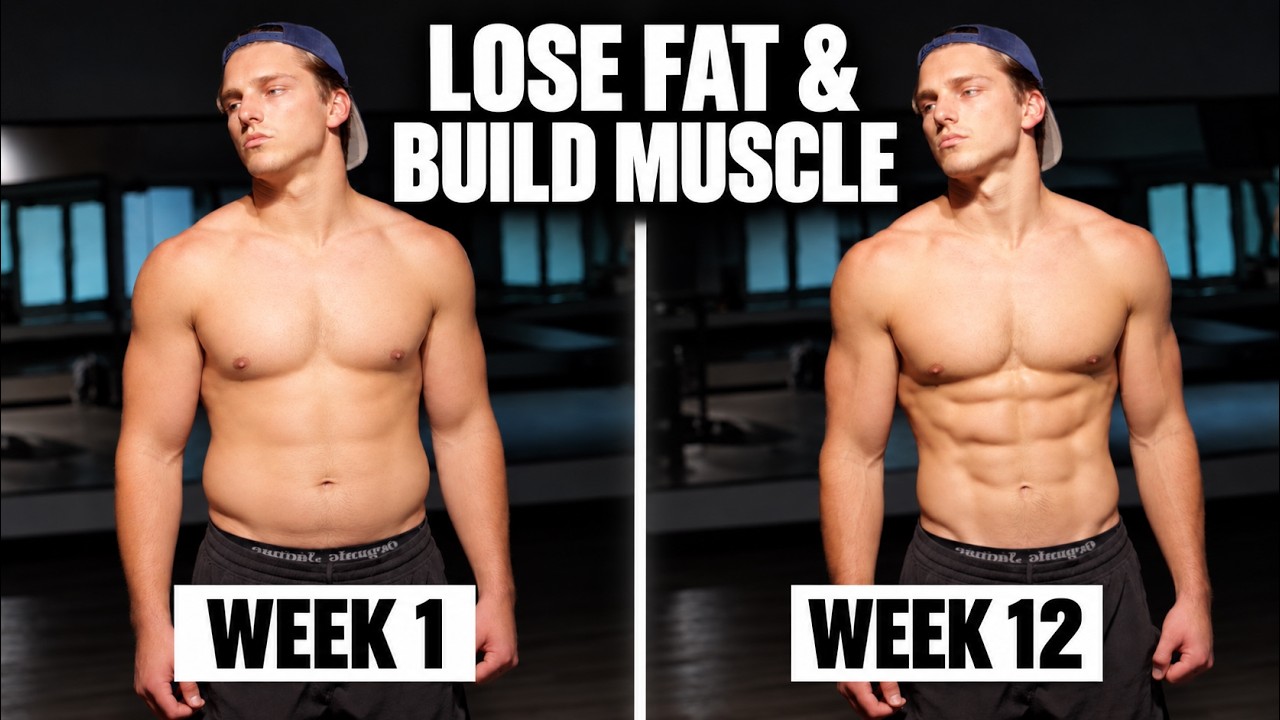
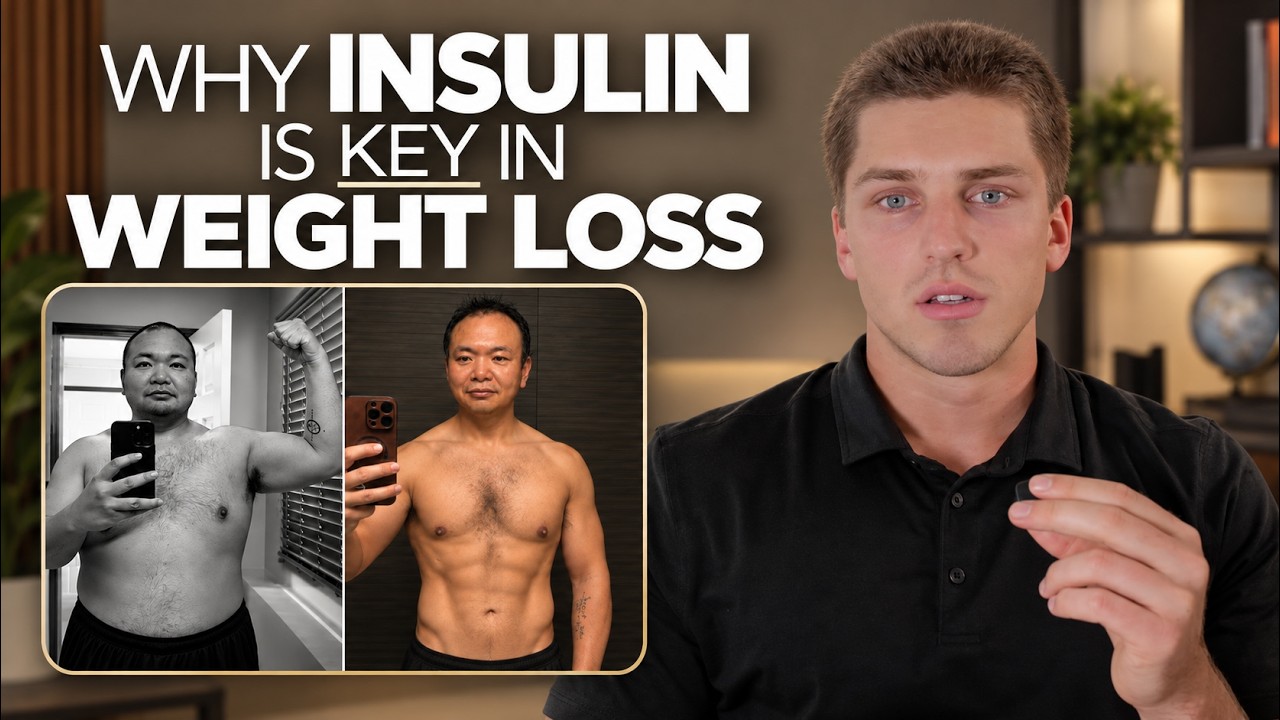
This video right here is undoubtedly the number one on the internet when it comes down to explaining how to transform your life, health, physique, mindset, and way more. I'm breaking down my full holistic protocol, unedited, unscripted, just for you to learn exactly what it takes to transform your life. Now, it's long. Like I said, it's unedited. It's not a quick dopamine hit. But what I can tell you is if you apply the lessons that I'm teaching in this video and my holistic protocol, your life and health will change. If you want to learn from me, listen to it the whole way through, apply it to your life, and see how it can make a difference. Now let's get to it. This right here is my full holistic protocol, breaking down everything from training, nutrition, lifestyle, mindset— the list goes on. And like I said before, if you apply the lessons that I'm teaching in this video, your life will change. Now let's get into it. So like I said, this is the holistic protocol, the complete protocol to go from skinny fat to muscular and the healthiest person possible in 90 days. By the end of this video, you're going to know exactly how to number 1, burn stubborn belly fat without starvation diets or endless cardio. Number 2, skyrocket your energy levels. Number 3, optimize your testosterone. Number 4, build a physique that looks as good as it performs. Now most guys think they have a discipline problem They think they're just not consistent, consistent enough, not motivated enough, not tough enough. But that's not the real issue. The real issue is you're running a broken system. You're putting in maximum effort with minimum information. You're training hard but eating wrong. You're eating clean but sleeping 4 hours a night. You're doing everything 70% instead of doing the right things at 100%. And when the system is broken, willpower can't save you. Motivation can't save you. Grind culture can't save you. You need a complete system, a protocol that addresses every input that determines your outputs, and that's what this is. Now, for a little bit of context, here's just a couple of my clients that I have helped. I've helped over 100 men transform not their— just not just their physiques, but their lives too in the last 3 years. So here's Dan. In 2 months, yes, literally just 2 months, he's dropped 10 pounds and lost 5% body fat. You can see that difference right there. For me, it's a 50-pound increase of muscle added over a few years. This is one of my first clients, Steven. He lost over 20 pounds and 7% body fat in 3 months on the holistic protocol. Vinci, he's lost over 10% body fat and 30 pounds in 3 months on the holistic protocol. And Noah, he got shredded, man. These aren't genetic freaks, they're not fitness influencers, they're busy working men with careers, families, and busy lives who followed a complete system. Now before we go any further, I need you to make a decision right now. If you're here to grab one quick tip and bounce for this, bounce. You're not here for the right reason. If you're looking for some magic pill or shortcut, this isn't for you. Close the video. But if you're ready to actually understand how your body works, how to optimize every input that matters, and how to build a system that gets you results for life, then stay with me for the next hour because I'm going to give you the complete holistic framework. No gatekeeping, no holding back, the full protocol. So here's what you're getting. This is the same protocol I've used to help transform hundreds of people's lives, and you're getting it completely free in this video because I wanted to see how this actually works. I want you to understand the difference between knowing what to do and having someone help you execute it. So let's get into it. So here's my story, a little bit of a background on myself. A few years ago, I was a mess. I was chubby and had acne, was insecure to show my face. My diet was awful and simply just unsure of what I was doing wrong. And then I realized something that changed everything. I was chasing outputs without fixing inputs. I wanted clear skin, but I wasn't addressing gut health. I wanted abs, but I wasn't tracking my actual calorie intake. I wanted high energy, but my sleep quality was poor. I wanted to build muscle, but my nutrition was terrible. So I stopped chasing symptoms and started fixing root causes. I learned how to eat for my goals, not just for my taste buds. I learned how to train with actual structure and progressive overload. I fixed my sleep, my digestion, my circadian rhythm. I optimized my testosterone naturally, and everything changed. Now here's just a couple examples of how my face has changed, the inflammation in my body as well, like I showed before, 50 pounds of muscle over a couple of years. Now I'm not some random guy on the internet. I played Division 1 football at the University of San Diego, and I learned from the best of the best. NFL and collegiate coaches, trainers, nutritionists— the list goes on. I've been studying human performance, nutrition, and training, training science for nearly a decade. I've worked with everyone from college athletes to busy executives to guys in their 40s and 50s who thought their best years were behind them, but we transformed their lives. And what I've learned is this: there are 9 core pillars that determine your results. You master these 9 pillars and you can build any physique you want, maintain it for life, and feel incredible while doing it and being in the best health possible. So ignore any one of these pillars and you'll always be spinning your wheels wondering why you can't break through. Here's what I see with almost every guy who comes to me: they want to lose 20 pounds, they want visible abs, they want more energy, they want higher testosterone— the list goes on, right? But they're not addressing the inputs that create those outputs. They're doing random workouts from Instagram, they're eating whatever seems healthy, they're sleeping whenever they can fit it in, they're stressed out of their minds, they're drinking every weekend. And they wonder why nothing changes. Hmm, I wonder why that is. The problem is the fitness industry has sold you on quick fixes— 30-day shred programs, detox teas, fat burner pills, workout plans that promise abs in 6 weeks. None of that garbage works long term because it doesn't address the system, okay? Your body doesn't work in 30-day sprints. Your body responds to consistent inputs over time. It responds to the cumulative effect of what you do day after day, week after week, month after month. So here's the framework that changes everything. Step 1: Identify the outputs you want. Step 2: Work backward to identify the inputs that create those outputs. Step 3: Build a system that delivers those inputs consistently. Step 4: Execute that system with precision. Step 5: Track, adjust, and optimize as you go. And when you fix the inputs, the outputs become inevitable. Now, just again, here's another example of myself In just a year, you can see the difference. 10 plus, 10 plus pounds added, all from the holistic program. So the Holistic Protocol breaks down into 9 core pillars. And what are those? Nutrition, training, metabolic health, circadian rhythm, breathing and nervous system, temperature exposure, testosterone optimization, sleep, and integration— how it all works together and how to build the perfect day. And I'll get to that at the end. And we're going to cover all of it in this video. It's It's a lot, like I said, but if you apply it, you'll see a difference. So nutrition— if you're struggling, if you're dealing with stubborn belly fat that won't go away no matter how hard you train, if your energy crashes every afternoon and you need coffee just to function, if your testosterone is in the gutter and you feel like the shell of a man you used to be, the problem is your nutrition inputs. And we're about to fix that right now. So your macros— this is the first step and the first thing that you need to consider. Quality over quantity, but also hitting the right amounts. So what are macros? Protein, carbs, fats. That's what they are. Most guys think macros are just about hitting numbers, but here's what actually matters: the quality of those macros determine how your body responds. You could, you could hit 200 grams of protein from gas station beef jerky and protein bars, or you could hit 200 grams from eggs, steak, and salmon. Same number, completely different result. Promise me, I promise you, I have lived it. I am the experimental test. I have seen the difference in myself and all the other people that I have coached with this specific difference right here. If you put the worst gas in a Ferrari, how do you expect it to perform? So the protein gap, let's talk protein first because this is where most guys are getting destroyed. The average guy eats around 100 grams of protein per day and they wonder why they can't build muscle, why they're always hungry on cut, why why their recovery is trash. So here's what you actually need. If you're trying to build muscle, at least 1 gram per pound of body weight. If you're trying to lose fat, even more protein, 1 to 1.2 grams per pound of goal body weight to preserve muscle while in a deficit. So if you weigh 180 pounds and you want to get shredded, you need 180 grams of protein per day. That's the protein gap and it's destroying your progress. But quality makes a big difference. Let me show you why and what I mean. So first of all, the protein absorption, animal protein versus plant protein. So now this is where it gets important. Animal protein has a much higher bioavailability than plant protein. Your body actually absorbs and uses it more efficiently. They're complete proteins with all essential amino acids in the right ratios. Animal proteins, meat, fish, eggs, dairy, etc., naturally contain all 9 EAAs in ratios that closely match human tissue needs. Most plant proteins are incomplete. They're low in one or more EAAs called limiting amino acids. The gold standard measure of protein quality is the digestible indispensable amino acid score. Animal proteins typically score above 1.0, while most plant proteins score below 1.0, which is poor quality. Aim for at least 80 to 90%, ideally 100%, of your protein from animal sources, and I promise you the results will speak for themselves. So not just that, but carb timing matters as well. So carbohydrates aren't the enemy specifically, but bad carb, carb timing kind of is. So here's the strategy. You load your carbs around your training, pre-workout for energy, post-workout for recovery and glycogen replenishment. You keep carbs moderate to low when you're sedentary. If you're sitting at a desk for hours, you don't eat 100 grams of carbs during that window. That's just going to get stored as fat. This is called nutrient timing. It's not magic. But it's the difference between having stable energy all day versus crashing hard at 2 PM and storing fat in all the wrong places. Your body is most insulin sensitive around training. That's when carbs get shuttled into the muscle instead of fat cells. Use that to your advantage. So this is the insulin sensitivity— high around training, low when you're sedentary. Now on to the seed oil problem and fats overall. So we need to talk about seed oils because this is one of the biggest problems in modern nutrition. Canola, soybeans, sunflower, etc. They're inflammatory garbage. They're chemically extracted, highly processed, unstable fats that oxidize easily and promote inflammation in your body. And they're in everything—packaged foods, restaurant meals, protein bars, salad dressing. Like, the list goes on. And here's what you do instead: you cook with butter, ghee, avocado oil, eat fatty fish for omega-3s, use olive oil for salads, get saturated fat from red meat and eggs. And don't be afraid of healthy fats. Cholesterol is a precursor to testosterone. Now with that, you need to focus on the micronutrients. This is where the real deficiencies lies— lie. Macros are important, but micronutrients are where most guys are actually suffering. You could be hitting your protein, carbs, and fats perfectly and still feel like garbage if you're deficient in key vitamins and minerals. Here are the big ones almost everyone is low on: magnesium, vitamin D, zinc, B12, omega-3s, vitamin A. And you can screenshot this right here. That gives you all of the symptoms of what you may be deficient in. Now, what you want to do is blood test or reverse engineer your diet to see where you fall short, and then you can supplement, or ideally eat the foods that correlate most with the actual, uh, vitamin right here. So most guys are walking around with multiple deficiencies and wondering why they feel terrible. You need to address that input first. Okay, micronutrients. Here are your nutrient-dense anchors, foods you should eat regularly: eggs, red meat, fatty fish, liver, fruit. They're all foods you should be in your rotation every single day/week. They're not optional if you want to optimize. Now you can screenshot these right here. You can see all the nutrient-dense anchors, the foods that you need to be eating consistently. This is the base of your diet. Like I said, eggs, red meat, fatty fish, liver, fruit. Liver about once per week, but fruit and meat, that's where you're going to get the most nutrients and the best results. Symptoms are feedback. Your body is always giving you feedback about what it needs. You have muscle cramps, probably low magnesium or potassium. Acne won't go away, most likely your gut. Always getting sick, vitamin D and zinc are likely low. Brain fog after meals, gut issue, or blood sugar, sugar dysregulation. Stop ignoring symptoms. They're your body telling you something is off. Address the deficiency, fix the root cause, watch the symptom disappear. So here's just a, a quick example of fruit consumption, why it is so beneficial and why I eat it and promote it so much. You can see all the pros versus the cons. Clean carbs for energy and glycogen fiber for your gut health, health benefits overall with all the vitamins, minerals, nutrients, electrolytes, digestion aid, micronutrients, antioxidants. There's a lot of things in fruit that you cannot get anywhere else. It has to be part of your diet if you want to be as healthy as possible and look your best. Now that you understand nutrition, let's talk about how to actually build muscle, burn fat, and develop a physique that looks as good as it performs. Let's get into training. So training— if you're training hard but not building muscle, if you look the same as you did 6 months ago despite being in the gym 4 days a week, if you're inconsistent, don't know what to focus on, and feel like you're just going through the motions, your training structure is broken and we're fixing it right now. So foundation plus mindset plus principles— let's talk about why training actually matters beyond just looking good. Yes, training builds muscle and burns fat, but it does way more than that. It optimizes metabolic health, muscle tissue is metabolically active, which means it burns calories at rest and improves insulin sensitivity. It extends your lifespan and healthspan. Strength training reduces all-cause mortality and keeps you functional as you age. It regulates hormones. Training properly increases testosterone, growth hormone, and IGF-1, and more. So yes, you'll look better, but you'll also feel better, perform better, and live better, right? It's all about how you feel. That's what really matters. And And that's why this pillar is non-negotiable. On top of that, discipline matters way more, way more over motivation. Let's get one thing clear: motivation is worthless because motivation is an emotion. Emotions are temporary. You can't build a physique on temporary feelings. You have to remember your long-term goals and build discipline around that. You need a system. You need training to be a non-negotiable part of your schedule, just like brushing your teeth. You don't ask yourself, do I feel motivated to train today? You just train because that's what you do. It's part of your lifestyle. You build the discipline. The motivation will come and go. This discipline stays. Now on to the next part. You have to actually build your training plan and be consistent with that. The most important part is before you touch a barbell, you need to define your goal. Your goal is going to define where it takes you. Are you trying to build muscle? Are you trying to lose fat? Are you trying to build pure strength? They all have different training plans that depending on what your actual goal is. Your goal determines your training structure. Don't use a powerlifting program if your goal is bodybuilding. Don't use a bodybuilding program if your goal is strength. Match the program to the goal. Every single training session should follow this structure: a warm-up, movement prep, main compound lift superset, secondary compound lift superset, accessory movements, and an optional finisher if you want more. So, example A warm-up: rower, bike, treadmill, 1 to 2 minutes just to get the blood flowing. Movement prep, typically a triple set, can be a superset, something to work, uh, some rotation and get more blood flowing and work the joints of the muscle and the muscles that are actually going to be worked during, during the exercise and workout. So push-up plus pull-up plus rotation, 2 sets. Block 1, bench plus row. As you can see, this is typically 2 compound movements. 1— that's supposed to say 2 warm-up sets. 2 sets to failure, or 3. Block number 2, shoulder press and pull-up, 3 sets to failure once you're fully warmed up. Block, block 3, this is the accessory work, so tries and buys, 3 sets to failure. Block 4, optional, but sometimes I like to add it in, push-ups to failure. Stick to the structure for every single workout. Now the exercise selection, it's critical. Tier 1, compound movements, these should make up 70% of your training volume because because the— it requires so much stimulus, it's going to give you the best results. For chest, barbell and dumbbell bench, flat and incline. For back, rows, pull-ups. For legs, squats, all kinds, RDLs, lunges, hip thrusts. For shoulders, overhead press. Tier 2, isolation mov— movements. These should make up 20 to 30% of your volume. For chest, cable flies, pec deck. For legs, leg extensions, leg curls, calf raises. For shoulders, Cuban press, rear delt fly. For arms, tricep extension, bicep curls. Compound movements require more strength and stimulus and stress the body more. This is needed for optimal results. Don't make a program that's all isolation work. You'll spin your wheels forever. Next up is tracking everything. If you're not tracking your training, you're guessing. You need to log your exercise selection, sets and reps, weight used, RPE or RIR, Notes on how it felt and why, because the only way you know if you're progressing is if you have data from last week, last month, last quarter. If you squatted 225 for 8 reps last week, you need to try for 9 this week, or 230 for 8 reps. That's progression, that's progressive overload, and I'll get more into that in a second. Without tracking, you have no idea if you're progressing or if you're just showing up. Use a notebook, an app, or whatever works. Just track. And you can screenshot this right here These are the training split options: 3, 4, 5, 6 days. It really depends on what your goals are, what you have available, but one of these options should work well for you. Now onto the progressive overload. It's the most important concept in all of training because at the end of the day, if you're progressing week over week, that's what's gonna make the most difference for you. So progressive overload is systematically increasing the training stress over time to force adaptation. Your body adapts to stress. If you give it the same stress every week, it has no reason to change. You need to progressively increase the demand. This is the principle that separates guys who build muscle from guys who spin their wheels for years. So as you can see in this diagram right here, adding weight, reps, increasing TUT, which is time under tension, increasing difficulty— this is going to get you over those roadblocks and get you to build muscle and get the results you want. Next up, cardio and recovery. So most people do it wrong. Here's my approach: high intensity a couple times per week— sprints, bike intervals, rowing intervals, sled pushes— and then low intensity, or LIS, daily— walking, light bike, incline treadmill. You know, walking consistently promotes recovery, burns calories without taxing the nervous system. I see the best results coming from those who sprint a few times per week and walk a lot, not those who jog daily. Go hard or go easy, don't live in the middle. Cardio based on goal. Adjust cardio volume based on your goal. So if you're trying to bulk and build muscle, high intensity 1 to 2 times per week, walk consistently, don't overdo it. Cardio burns calories you need for growth. And if you're trying to cut and lose fat, high intensity 2 times per week, LISS daily, Cardio helps create and maintain your deficit. And if you're maintaining, HIIT or high intensity 1 to 2 times per week, LISS consistently on a daily basis— balanced approach for health and body composition. Cardio is a tool, use it strategically based on your phase. Next up, sleep is the primary recovery driver. It's so critically important and most men don't get enough sleep. Let's talk about recovery because this is where most guys destroy their progress. It's the number one recovery tool. Nothing comes close to it. 7 to 8 hours of quality sleep per night is non-negotiable if you want to build muscle, lose fat, and optimize testosterone. So what actually happens during sleep? Muscle protein synthesis peaks, growth hormone is released, um, testosterone is produced, nervous system repairs, glycogen replenished, mental recovery occurs, a whole lot more as well. Okay, if you're training hard but sleeping 5 hours a night, you're actively sabotaging yourself. You're not recovering, you're not growing, you're just breaking yourself down. Evening light disrupts sleep. So here's a critical sleep optimization tip: avoid bright artificial light in the evening, especially blue light from screens. Why? Light exposure signals your brain that it's daytime. This suppresses melatonin production, the hormone that makes you sleepy. When you're scrolling Instagram at 11 PM with your phone brightness maxed out, you're You're telling your brain, stay awake. Then you wonder why you can't fall asleep. So here's exactly what to do. Dim lights after sunset, use blue light blocking glasses, or turn your red light on phone in settings. You can look that up. You go to accessibility and then you turn the red light on from there. And then once you triple click your phone button, it'll be able to turn on and make it super, super simple. And it'll help you avoid that bright blue light. So avoid blue bright light and blue light 1 hour before bed. Keep your bedroom dark and cool. Cool, 68°F or less ideally. Your sleep quality will improve dramatically just from those changes. So here's the amazing sleep checklist: get to bed as early as possible, before midnight, keep sleep schedule the same every day— that's very important, can't stress that enough— dark, cold room, no blue light within an hour of bed. I like to turn my phone red, I even turn my, my whole room red. Now, nervous system recovery. This is a big thing. A lot of people, they start to feel like they can't recover properly, and they, and they wonder why. Their nervous system is broken down, either from overtraining or stress or something else, but it can cause strength loss, motivation drop, your sleep worsens, your libido disappears, disappears. You're wired but tired. This has happened to me, it's happened to me a couple times by overtraining myself and not recovering enough, and it's, it's terrible. I don't want anything to go through this, but if you prioritize recovery, recovery like quality sleep, grounding, reduce inflammation, breathing, stretching, and more, you won't have that happen to you. When you prioritize recovery, you will never run out of gas. So your body, your goals, your lifestyle, everything I just taught you works. These are universal principles. But your specific training split, frequency, exercise selection, progression rate— that's individual to your body, your recovery capacity, your schedule, and your goals. A 25-year-old with no stress and 9 hours of sleep can train way differently than a 40-year-old with a high-stress job and 2 kids. You know the principles, but executing them for your specific situation requires customization and adjustment based on your data and your life. So now that you understand how to eat and how to train, let's cover the pillars that most people ignore but have massive impact on your results: metabolic health, circadian rhythm, and breathing. Let's hit these quickly. But thoroughly. Metabolic energy and foundations. Let's talk about fasting, not as a diet, but as a tool for metabolic flexibility. Here's some benefits of periodic fasting. Autophagy, and this is the biggest one right here, cellular cleanup and recycling process. Mental clarity, enhanced focus and cognitive function. Hunger signal teaches you hunger is not— is just a signal, not an emergency. That's what most people deal with the most. Improved insulin sensitivity, reduced inflammation. So here's exactly how I do it, at least. This is just a 24-hour one. So finish dinner at 6 PM, don't eat again until 7 PM the next day. Or ideally, uh, on day 3, so 36 hours, that's ideal. You finish dinner, you don't eat at all the next day, and then you have breakfast then the day following that. That would be 36 hours. That's more ideal. Water or, or black coffee, no calories. Promise you, you won't die, you won't lose muscle. You'll actually feel sharper and more focused after the initial hunger passes. This isn't about restriction, it's about building metabolic resilience. Now, gut health, your second brain. This is something that so many people bypass. They don't realize how critically important your gut health is. It literally is your second brain. And it determines way more than just digestion. Your gut is literally your second brain. Like I said, it produces neurotransmitters, regulates your immune system, and communicates directly with your brain via the vagus nerve. If your gut is destroyed, everything else suffers— mood, energy, skin, immunity, digestion. The list goes on. So here's how to support gut health. Chew your food thoroughly. I promise you, this is something that is so important, and most people do not realize Digestion starts in the mouth, not your stomach. Secondly, eat gut-supportive foods. Fermented foods like yogurt, kefir, sauerkraut, kimchi, garlic, onions, asparagus, bananas, uh, you know, the feed-good bacteria. It's that prebiotic foods that you need to be eating, as long with the fermented foods. Bone broth, collagen, and glutamine for gut lining repair. Fiber-rich foods, fruit, and some veggies. Like, really, the biggest things here would be cutting out and eliminating the processed garbage that's going to disrupt your gut, and then only focusing on meat and fruit. That's going to be the best thing for you. Avoid the gut-destroying foods, like I said— seed oils, excess alcohol, ultra-processed foods. Your gut microbiome is an ecosystem. Feed it well, it supports you. Feed it garbage, it breaks down. Now, water and hydration. Water is so critically important to overall health, yet most neglect it. So this is just something for you to search up. Search EWG water database, then type in your zip code and see your water quality. Without a proper water filter, you are ingesting loads of cancer and, cancer and other disease-causing chemicals. You will see this on the database that I just showed you. When you look it up, it's going to show you all of the disease and cancer-causing chemicals that are in your area. And if you're not filtering your water properly, you're going to be ingesting those, going to be keeping you sick and and you're not going to be able to get the results you want. Focus on quality water with minerals and electrolytes only if needed, if you're sweating a lot. Lots of quality water and fruit is the best way to stay hydrated. Make it a priority. Your body is mostly water. Your body runs on water. You need to stay hydrated if you want to get the best results. Hydration is a foundation. Don't neglect it. Now, your circadian and nervous system— most people don't even know what this means. Your circadian rhythm controls everything— sleep, energy, hormones, digestion, body temperature— and the number one way to optimize it is simple: get sunlight in your eyes within 10 to 30 minutes of waking. Why? Morning sunlight signals to your brain that it's daytime. This stops melatonin production, starts cortisol production, sets your circadian clock for the day, improves sleep quality that night. And here's how to do it: you go outside for a few minutes within 30 minutes of waking, ideally The closer you are to waking, the better. No sunglasses. Let the light hit your eyes. Cloudy day? Still go outside. You're getting way more light outdoors on a cloudy day than indoors with artificial light. This one habit will improve your sleep, energy, and mood more than almost anything else. Now, breathing and recovery. Nasal versus mouth breathing, specifically, and why it is so important. Most people have no idea about this.. You can see all of the differences here. I'll break it down in an overall view. Nasal breathing versus mouth, mouth breathing. So nasal nitric oxide production, diaphragmatic, diaphragmatic activation, nervous system regulation, airway protection, sleep quality, jaw and facial structure, athletic performance. Simply put, nasal breathing is optimal for human health. Mouth breathing on the other side, No nitric oxide, chest breathing pattern, sympathetic dominance, dry mouth and throat, disrupted sleep, structural changes, reduced performance, lower CO2 tolerance, early fatigue. The difference is severe. If you don't know if you're a mouth breather or a nasal breather, really focus on it for one day and make it a priority to only breathe through your, through your nose as best as possible. All right, we just covered metabolic health, circadian rhythm, and and breathing, the foundational lifestyle pillars that most guys completely ignore. Now let's talk about the hormone that drives everything for men— testosterone. This is one of the most important sections of the entire video, so pay close attention. If you have low testosterone, this is what usually happens, and this is what you're probably feeling right now: low drive, stubborn belly fat, low libido, brain fog, weak recovery, and more. You're not gonna recover properly, you're not going to put on the muscle, you're not going to feel and look the way that you want to. But the good thing is we can fix it. So, um, most guys think testosterone is just about building muscle. You're wrong. Testosterone affects fat distribution, energy levels, mood, motivation, and sex drive, libido and sexual function, recovery from training, bone density, red blood cell production, cognitive function. The list goes on. When your testosterone is optimized, you feel like a different person. When it's low, everything suffers. You're tired, unmotivated, carrying fat you can't seem to lose, and you just feel off. Supplements for testosterone. Here are two supplements right here, zinc and magnesium, that a lot of people are deficient in that'll help you, uh, be healthier overall and have better, better testosterone levels. Now these are some natural supplements. Tongkat Ali. I'll let you screenshot this right here. Tongkat Ali. Forskali, maca. This is more of a libido support. But if you take these right here as, as shown, I got this data from published research that you can literally just copy and see how it makes you feel. You can test the difference. So now sleep, the number one driver, as we talked about before, but specifically for testosterone. So the single most important factor for testosterone is sleep. Why? Because it's produced primarily during deep sleep. If you're not getting 7 to 8 hours of quality sleep, Your body can't produce it. Here's the data. Study 1: men sleeping 5 hours had 10 to 15% lower testosterone versus 8 hours sleep. Study 2: 1 week of 5 hours sleep dropped T to— testosterone levels of men 10 to 15 years older. 1 week of bad sleep ages your hormonal system by over a decade. No supplement can fix that. Sleep is a non-negotiable. Optimize everything else but prioritize sleep first. Alcohol, the testosterone killer. Let's talk about alcohol because most guys don't want to hear this. Chronic heavy alcohol consumption takes testosterone, especially beer. How? Alcohol directly suppresses testosterone production in the testes, increases cortisol, damages liver function, disrupts sleep quality, increases aromatase activity, and more. I'm not saying you can never drink. I'm saying if you drink heavily multiple times per week, You're destroying your testosterone and your gut and a lot of other things. If optimizing testosterone is, is a priority, limit alcohol to 1 to 2 drinks or once or twice per week max. Even better, cut it out completely for 90 days and see how much better you feel. You will see the difference. All right, we just covered testosterone optimization, the final major pillar. Now you understand nutrition, training, metabolic health, circadian rhythm, breathing and recovery, testosterone optimization. You have all the pieces. Now let me show you how to put it all together into a system that actually works in real life. This is where everything clicks. So knowing versus executing. All right, you've just absorbed a ton of information. You know more about nutrition, training, metabolic health, circadian rhythm, and testosterone optimization than 95% of people who train. But here's the critical question: does knowing equal, equal results? It doesn't. Knowing is step one, executing is everything. And this is where most guys fall apart. They have the knowledge, but they don't have a system for execution. So let me show you what execution actually looks like. Let me show you the perfect holistic day. Okay, this is long. Let's go through it one by one. I'll first— I'll let you take a screenshot of this and one right here. Got it? And let me go Zoom in. So here's what the perfect day looks like when you're executing the holistic protocol. Night before, that's where it all starts. 7-8 hours of deep sleep, high quality sleep, mouth tape to encourage nasal, nasal breathing, room cold and dark for optimal sleep quality. Morning, wake up in the first 90 minutes, one prayer, uh, or gratitude just to set your mind right and lower the stress and cortisol. Uh, no phone, avoid unnecessary cortisol spike. Get outside for sunlight to set circadian rhythm. Early morning walk. Wait 60 to 90 minutes before waking, after waking, before caffeine. And one thing on the cortisol, you do want cortisol in the morning to wake you up and set you up for the day, but you want to limit the artificial cortisol from going on your phone or high stress like that. Training. Option 1, early workout. Eat fruit beforehand. Hydrate well, train hard. Post-workout: eggs, fruit, protein, optional sourdough. But you want the high protein, high carbs right after your workout so you can get the glycogen replenishment and the protein synthesis. Option 2: later workout. Fast for a few hours, hydrate well, train later in the day. Workday: work 8+ hours, short walk outside at some point during the day, 30 minutes midday sun exposure if possible, and walk outside when you can on your breaks.. You want to utilize getting outside, walking, and you can eat at your desk rather than taking the time off to sit while you eat. You can eat and then go walk. That would be the best thing for you and your overall health. Your nutrition during the day: training hard, nutritious lunch is a very— is appropriate. If, uh, if you're fat or weight loss goal, skip lunch, high protein, nutrient-dense snacks instead. In the evening, dinner: high protein, Nutrient-dense foods. Walk after dinner to aid digestion and get more steps. For recovery, sauna, stretching, breathwork. Watch the sunset to reinforce circadian rhythm. No caffeine within 8 to 10 hours of sleep. Pre-bed routine— this is so important. Red lights on, bright lights off. Limit screens. So turn the red light on your phone, turn the bright lights off in your house, and limit the blue light. No eating within at least 2 hours of sleep. Stretch, pray, or do breathwork to calm the nervous system before sleep. And here's some daily non-negotiables: minimum 2 pieces of fruit for the healthy carbs, the energy, all the good things that we talked about earlier. 0.8 to 1 gram protein per pound of body weight. Walk as much as possible, plus ground if possible. Sunlight plus nutrient-dense foods, plus avoid processed foods. That's going to be the best thing for you. Do something challenging every day, physically and mentally. The perfect day starts the night before, and ends preparing for the next one. So that's the perfect day. But execution versus reality— let me be real with you. Execution is hard not because the system is complicated, but because life gets in the way. You'll have days where work is stressful and you want to skip the gym. You're traveling and your routine is disrupted. You're tired and you want to sleep instead of getting sunlight. You're tempted to eat garbage because it's easier. That's normal. This is everyone. The difference between, between guys who transform and guys who stay stuck isn't perfection, it's consistency. You don't need to execute perfectly every single day. You need to execute 80 to 90% of the time and get back on track quickly when you fall off. One bad meal doesn't ruin you, one missed workout doesn't ruin you, but one bad meal that turns into a bad week that turns into a bad month, yeah, that ruins you. Stay in the game, Execute the system, adjust when needed. It's not a theory, it's a proven system. Everything I just taught you isn't theory, it's something I read in a book. It's not something I read in a book and think it sounds good. It's the exact system I've used to transform over 100 men in the last 3 years. Real guys, real results, real transformations. Now, I know this is a long one, but here's the choice. I need to be honest with you about something. As men, we're taught that asking for help is weak, that we should figure everything out on our own, that needing guidance means we're not good enough. I used to believe that too, but here's the truth I had to accept. Everything I just taught you, I didn't figure it out alone. I got help on literally everything. Direct help from Division I and NFL coaches, Stanford graduates, from the best strength coaches, nutritionists, and performance specialists in the world. And without that help, I wouldn't be standing here teaching you this system. I've wasted many years spinning my wheels trying random programs, making the same mistakes over and over. But then I got help. Staying stuck while convincing myself I just needed to work harder. The reality is the guys who transform their physiques, fix their testosterone, and actually get results in 3 to 6 months instead of 3 to 6 years, they all have one thing in common: they got help. Not because they're weak, not because they can't do it themselves, but because they're smart enough to know that speed matters. You can spend the next year trying to piece together this information on your own, tweaking your macros, guessing at your deficit wondering why your lifts aren't going up, dealing with low energy and stubborn belly fat, not being able to fix your gut issues, your testosterone issues. Or you can work with someone who's already built the system hundreds of times and knows exactly what needs to be done to adjust, adjust it to your body, your schedule, your goals. That's not weakness, that's strategy. That's being smart. The men who succeed don't do it alone. They get in the room with someone who's already where they want to be. So the question is, are you going to keep doing this alone? Are you going to get ready to make a change? Make a decision. Option 1: take everything you learned in this video and try to do it yourself. 100%, you can do that. Everything I taught you is real, actionable, and effective. If you execute it, you're— you'll get results. But you'll also have to figure out your exact macros for your goal, design your training split and your progression plan, troubleshoot when you plateau, adjust when life disrupts your routine. Hold yourself accountable when motivation fades. Some guys can't do that. Most can't, to be honest, from what I've seen. Option 2, you get help. You work with someone who's done this 100+ times, someone who can customize the system to your body, your life, your schedule, someone who holds you accountable, troubleshoots your roadblocks, and adjusts the plan based on your data. That's what I do. That's what my program is. Now, if you want to personalize help executing the system, here's what to do. Use the link below to book a call directly with me. When you do that, here's what happens next. Step 1, we'll hop on a quick call to discuss your goals, your current situation, and where you're stuck. I need to understand what you've tried before, what your schedule looks like, where your biggest bottlenecks are, where your actual goal is— not what you think you should want, what you actually want. Step 2, if we're a good fit, I'll show you exactly how I build your personal protocol your exact macros, your exact training plan, your exact supplementation strategy, your exact daily structure, all customized to you. Step 3, step 3, we get to— we execute the system. I guide you, troubleshoot, adjust, and hold you accountable every single week until you hit your goal. So thank you for watching. I hope you got massive value from this. Whether you work with me or not, I want you to win. Take this information and use it. And if you want my help executing at the highest level, book a call with me on my Calendly linked below. Let's get to work. God bless. Stay holistic. If you've made it this far, congratulations! You're doing better than 99% of people already. I applaud you for making it all the way through the video. There is a lot of information, so the best way for you to apply this to your life and benefit from it is writing down a daily checklist of what it would look like for you. I gave you my holistic protocol in the daily checklist for myself, but everybody's a little bit different. Your schedule, your needs, your goals— apply the lessons that you learned from this video to yourself and then execute. If you need help executing, click the link below and schedule a free call with me on my calendar. Like I said, it's free, there's no risk, so you might as well just try it out. We can talk about your problems, goals, needs, everything like that, and see if it would be a good fit for us to work together.