AI Summit Forecast '25 Business Model Innovation & Growth Strategies led by Lara Shackelford
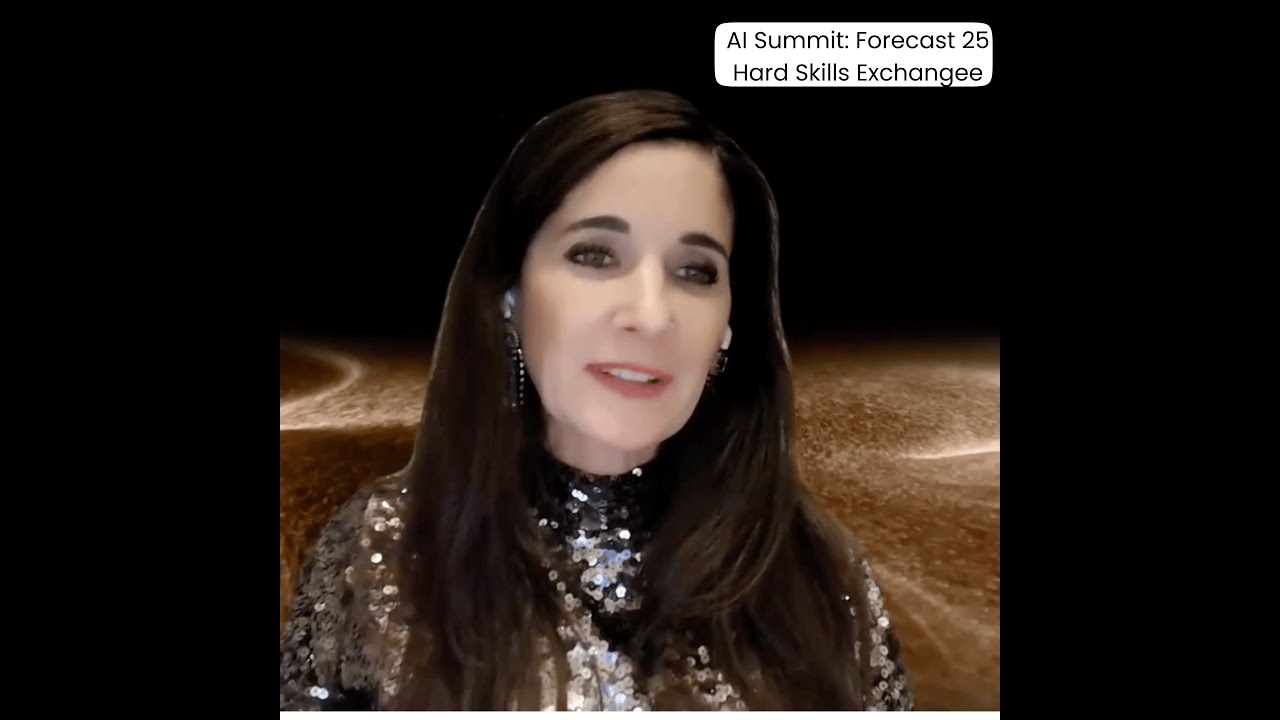
In this AI Summit Forecast ’25 panel, moderated by Lara Shackelford (SVP of Growth Marketing & Revenue Operations at iCapital, founder of Federi AI), a diverse group of senior leaders—Beth Bauer (Poseroy), Tommy O'Brien (SEMrush), Russell Sherwin (consultant, former IBM), Brandy Sanders (Aprimore), Paul Kuhn (CMO/marketing), and Julien (sales‑tech)—debate how AI will shape business model innovation and growth strategies for 2025. The conversation begins with introductions and quickly moves to a macro view of the global AI regulatory landscape: the EU AI Act (effective 2024, full enforcement 2026), the UK’s post‑Brexit approach, China’s inward‑focused AI ecosystem, and the United States’ shift toward lighter regulation. Panelists stress the need for “compliance‑by‑design,” using a PESTEL framework to embed legal and ethical considerations early. They contrast “AI‑first” hype with a more pragmatic “AI‑enabled” stance, arguing that AI should be woven into cross‑functional workflows rather than siloed. Process mining and AI‑driven process intelligence are highlighted as tools to surface inefficiencies, enforce governance, and enable data‑driven decision‑making. The role of strategic partnerships is examined, with concerns that over‑automation can erode trust. Throughout, the panel underscores the importance of AI fluency (instead of binary literacy) across organizations. In rapid‑fire closing remarks, each panelist offers a 2025 trend: Beth on monetizing untapped data, Paul on AI‑augmented go‑to‑market analytics, Russell on acceleration of digital disruption, Brandy on process‑centric AI, and Julien on pragmatic, measurable AI. The discussion ends with a call to embed AI fluency, accelerate responsibly, and focus on process‑driven, measurable outcomes in 2025.
Chapters
Hi everyone. I want to make sure that we've got all of our panelists here. I think we might be made it waiting for a few people. Got Beth, Tommy. Yeah, we just need a couple more minutes.
Bringing them on. How's everyone?
Very awesome. How are you?
I'm super excited for this one. Actually, the most tangible and practical out of all of the panels for GTM. So yeah, let's do a quick round of introductions.
All right, everyone. So I'm Lara Shackelford. I'm the moderator for this session. I'm SVP of Growth Marketing and Revenue Operations at iCapital. I'm chairman and founder also of a company, Federi AI, that helps with AI strategy for AI field strategies for marketing customer experience. And I have a background at Intel and Microsoft. I'm currently coming to you live from Oxford in sequence because we've got our black-tie dinner tonight after this, and I'm earning my master's in AI here. So that's me. We also have— I'll hand over to you, Tommy, to introduce yourself, and then we can go down the line.
All right. Good evening, everyone, from Barcelona. I'm Tommy O'Brien, Chief Sales Officer at SEMrush. Really excited to be here.
Okay, Beth.
Hi, everyone. Beth Bauer, founder and CEO of Poseroy. That comes from intentionally creating positive returns. And I've been thinking about that with regard to data and AI for over 35 years. Some of my background is in big data as a product through companies like IQVIA and Merck, known as MSD outside the US. Super excited to be talking with everyone today.
Great, welcome Beth. Russell, over to you.
Hey team, I'm Russell Sherwin. I am on a sabbatical right now. While I'm on sabbatical, I'm running B2B Tracks, a consulting firm. I'm teaming with Force Management as a facilitator. And I like to think of myself as a pragmatist. With that said, I was writing neural network code about 30 years ago. When I was not on sabbatical, I was Chief Revenue Officer for a SaaS company called FPX and Chief Marketing Officer for Watson Commerce at IBM.
Excellent. OK, Brandy, you're next.
Wonderful. So first off, I'm loving the sequins. And I applaud them whether there's a dinner happening or not. I was like, a panelist in sequins? Yes, I'm here.
Love it.
So pleasure to connect with everyone. I'm Brandy Sanders, currently CMO at Aprimore, a process mining company. Super excited to be a part of this panel and bringing a very non-traditional background coming originally from creative multimedia and all of the softer creative arts on the theater, television, film, and media into B2B SaaS technology, e-commerce, and then eventually deeper data analytics, things like data lakes, working with companies like Blackline, leading them to IPO, and then other wonderful organizations like Sony Music, Etsy, et cetera. So super excited. Excited to see some familiar faces and some new ones here today.
Well, we're thrilled to have you, Brandy. And let's wrap it up here with Paul Kuhn.
Sorry, my background's a little screwed up, but my name is Paul Kuhn. I'm based in the US, and I've headed up marketing and sales for about 20 years. I'm heavy social impact bent and educational technology, but also industrial and manufacturing. CMO and marketing and sales leader, mostly in B2B.
Great. So we have a great group of panelists and we want to get right into the content because— oh, there's Julien, and we wouldn't be complete without you. I'll let you introduce yourself.
Sorry I'm late. I'm always fashionably late. That's the Frenchness that speaks. Hi everybody. Julien, I'm very happy to be here. Marketing exec coming from the sales tech side of the house, Salesforce, Gong, and Klari.
Excellent. So as you all know, we're here to talk about what the future looks like in 2025. We're— and talk about global AI and how we look at innovation and growth for 2025 leveraging AI. And we can't do that without talking about the global landscape, right? So I wanted to just take a quick minute to share some things that we've been thinking about here while I've been at Oxford. Working on my diploma in AI for the week. And one of the things we've been thinking about is, you know, what, how is the global landscape change? And where does it stand today? And how do we as organizations moving into 2025, we're all, hopefully we're all wrapping up 2025 planning. I imagine a lot of you are in your, you know, planning on Q5 planning because that's more common than it should be. But as you look to 2025, we have to think about a couple of things. One, the European Union, right? They're, they, you know, the EU AI Act came into effect in August of 2024. It's really going to start, you know, having its full application though in August of 2026. The EU is taking, of course, a highly regulated conservative approach. And their aim, of course, is to have a very comprehensive and regulatory framework, both for AI development and use, which is important because, You know, if anyone thinks, well, they don't operate in the EU or their company is not based there, it's use within the EU. So lots to pay attention to there. And then we need to consider England separately, or I should say the UK, right? So post-Brexit, the UK, you're hearing a lot of people be feeling enthusiastic because the UK has a chance to set their own standard. In their own approach and be less regulated if they choose to than the EU. That's not a choice they've made yet. They're looking to potentially move faster in AI development and implementation, but the stage is set to see where they're going to go. And then of course we have China, right? With that, China's been adopting a very insular, inward-focused approach to AI development. We have limited information about their specific strategies and regulations. But it's worth noting that 5 of the top 20 universities in AI are in China. There's a lot of great work happening there, we presume. And so we'll, we'll see what unfolds there over time. And then, of course, in the US, we— whether whatever your politics are, we're not getting into politics on this. But the recent shift following our elections means that we're moving from a more cautious innovator in the US to becoming less regulated. And we'll see a faster-paced approach to AI. In the US. We're going to likely focus more on domestic AI development, less on the global part cooperation. And there will definitely be a, you know, a focus on efficiency with Elon Musk being a leader in AI who also, of course, has just been appointed the co-leader for the Department of Government Efficiency. So with that lens, as we look to 2025, we need to think about our global approach. Right. And how We're going to take those business models into account and adjust for those, especially as we apply AI to become more innovative, drive greater efficiency, and ultimately more growth. So those, those shifts might influence a couple things. The need for flexible business models that can adjust to the different regulations that will come into effect. Opportunities to, for companies to leverage different approaches. Regionally. And then there is a potential for new partnerships that will come out of this across borders in ways we haven't seen before as these dynamics are changing. So I'm going to stop there and ask panelists, based on, you know, what I just shared and your point of view experience, what are your thoughts on the kind of the global view, how you're approaching thinking about your global organization for 2025? Beth, over to you.
So I always think of it as we are so connected, quite frankly, now that whether you are US-based only, you're going to be impacted by what's happening globally, whether we like it or not. And GDPR, along with CCPA in California combined, really end up impacting and driving all the things that we're thinking about. But that's a perfect tie into how I think about business model innovation, quite frankly. There are several different components: the external, the internal, your customers, and then how do you bring that all together. And I was actually thinking that the number one thing that I wanted to bring out to people today is something called a PESTEL analysis, which AI just lends itself so beautifully to. PESTEL is an acronym that stands for political, economic, social, technological, environmental, and legal. And, and I'm that base of legal at the end, I think is a key component because what I have seen in, in order to actually do extraordinarily well and accelerate with AI, you need to be bringing legal and regulatory and be compliant by design. That means thinking through and bringing all of those people across that entire pestle on the journey with you so that when you are ready to innovate technologically, everybody else is ready to accept that innovation as well. So AI will allow us to be able to better understand our world rapidly across those continuums. And then we can take that and go back to our internal business capabilities and begin to see how can we— what are the processes that we can accelerate internally by bringing AI into the picture, beginning to understand what decision-making we have. I again bring that back to the legal component because Legal, for example, a report just came out from Reuters earlier this week that the legal teams are actually responding that they don't want to be touched by AI. But quite frankly, if we don't bring them along on this journey, we're not getting anywhere because they're the barrier that keeps us from moving forward. And I say that with the flip side of governance is key, which is why we want to bring them at the beginning because we want to be compliant by design. We want them to be thinking through that with us. And that opens us up into the entire— how could we begin to create blue oceans to get at new customers? And then how could we begin to take the totality of these things back to our decision-making and allow AI to help us to actually identify the decisions that we've been making all along, whether we could articulate them or not? But now we can see them visibly and break down the silos across our organizations and partners. Partners so that we can actually transparently move forward and say, this is what we're coming forward to provide value to our customers, to provide value to our shareholders, and to provide value to our employees.
I love what you said about compliant by design. That's, that's definitely how I, we think about it. And it's, it's the right approach as much as we can, right? So we'll be ready. And then consider things as they come up. But Brandy, I was watching your face as Beth was talking, and it looked like you were eager to jump in. And by the way, folks, everyone on this panel is excited to talk to you about this topic. So I'll call people out to talk when needed, but also people will jump in, right? So we've got a lot of interest here. So expect that too from the next minutes that we're together.
This is where the ex-theater major stuff really comes in handy is because it's these intent signals. If you would.
No.
So first off, Beth, that is so eloquent and well put together. And compliance, which people often view as a burden, is actually now turning into a necessity. And I could literally go into everything from like, you know, automated alerts, violation, detailed root analysis causes, linkage with process models. There's so much technical stuff there, but it's so messy with the human element. Because quite often, and I think ChatGPT, GenAI, AI honestly over the last 3 to 5 years and possibly even further back, has created this buzz, this kind of like hyper energy that's traveled through organizations because everybody rolls over to the next tech bro who's like, this is the tool. And we all wake up and go buy the thing and we install it. And then legal, of course, they're the bottom of the pyramid trying to protect us all, turns around and goes, who's in charge of that? Who keeps it in the guardrails. And then you have sales looking at marketing and marketing looking at sales and sales looking at IT and IT is like, I quit. And the lawyer burns out and leaves. And so it's this, this lovely idea, this concept, but the actual execution process and operations of it is quite often messy. The data is bad. Things are built on something like a Jenga from 1985 on some server. No one has any ideas in the middle of Iowa. Like there's all of these intricacies that I think we we kick right over with the concept. But the execution, particularly from the compliance, Ben, which I'll of course be obsessed with because Appomore is process mining and we just launched Compliance Center. But there's this idea that what looks good on paper is always so much harder to execute within organizations, especially if they're in hypergrowth mode, they're on the startup side, and conversely, legacy organizations that are glacially slow to change. So there's a human element here, not to like push that button, bingo on AI-human hybrid, but I'm gonna do it. There's a human emotional element as well, which is like, who owns this? Because no one's gonna wanna touch it. Look at DORA, GDPR. Look at the fact that there's now litigative measures to like put people behind bars if they violate certain things of compliance at an executive level. And it's a bit of a hot potato. So like for me personally, when I hear the concept, I'm like, that sounds so sexy and wonderful and it's great. And then how do you do it? Starting on page 1, who's in charge of this bad boy? Who's creating the guardrails? Are we progressively going to push it like the recent administration? Are we more conservative because we don't want our CTO behind bars? So it's this lovely balancing act that I think everybody will do differently. And we're at that beginning of that maturity arc. So I'm super curious to see how this plays out. But I agree, compliance is key. And this is like no longer an if-then-that Boolean that is optional. It now at the scale at which we are adapting in AI, automation, workflow, everything, we're gonna need this to be automated. And you'd have to have those systems in place before you're entering your PII, your customer data, all of that valuable information, which I think more than ever is at risk for vulnerability.
Hey, Brandy, I'm gonna give you 2 points for putting the word bullying in there. I thought that was awesome that you worked that in. I wanna throw a question out to the 3 of you or anyone else who's been talking about compliance. And I'll be honest, I'm, I have not dug into the compliance regulations here, and personally, I'm a little, um, worried that we can't put Pandora back in the box here. That said, if China and the US is, you know, wild, wild west with AI and the EU is getting heavily regulated, is that putting the EU nations at a competitive disadvantage? How, how are, how are nations thinking about the impact of regulations around what the global landscape will look like in 20 years?
Oh, I have thoughts and I'll say them really quickly and get the hell out of the way, but it's a spider web. This global market is inexorably tied, right? So EU, even though we want it to be its own thing, that you've got a strong parent who's like, I'm sticking to the rules. You've got your kid out in the playground playing with the other person at that meeting. You've got this engineer over here in Estonia, or you've got this person over here in India, and you know how difficult it is to control them at both the individual level and the process level. So I think that when one part of the spiderweb pulls, the other part will pull back. I think that individually, as units, they'll try to control these things, but to your point, the toothpaste is literally out of the tube. And so it's going to be pew pew, you know, a little bit of the Wild West there with things being pulled in lateral directions across the markets.
Other thoughts? I mean, Lara, you're taking a PhD or a class in AI. It sounds like you're deep in the woods here. What's the thought around compliance? Is it right or wrong? And how does it plug into global power?
Yeah, I think it's— I just go back to what Beth was saying about compliance by design. We talk a lot about ethics and AI, and it's not the same, but ethics and compliance just go hand in hand. You have to design for compliance at the outset as best you can. You have to design for ethics and think through what potential scenarios could be as best you can. And you have to allow space for the unknown because there is so much unknown here. And that's not a very direct answer, but that's the highest level of how we're thinking about it. But I do want to make sure, Russell, that we give Tommy a chance to— Tommy, you're sitting in Spain, right, for this call, unless you're traveling? And so I feel like you should give us a view right from the field.
Yeah.
Hello everyone from Spain. There's a lot to uncover there. I think the most interesting part from a revenue standpoint is over the last few years there's been this big drive towards consolidation that drives compliance, but it just drives the ability to effectively leverage your data. And now that seems to have gone completely out the window. We're going to buy this AI tool for content, this AI tool for search, for IT compliance. And I'm really interested to see what happens with CTOs in the next 12 to 18 months because it all seems well and good, but when you try and integrate it and you try and leverage that data, I got a chance over the last 2 days to join some of the sessions and, you know, one of the most common themes was you can achieve remarkable things, but it is the data that you put into it. It's your ability to ingest it, leverage it, execute it. And some of the things that we're most focused in on, on the sales side right now is just diversification of our revenue streams. You know, we've seen, you know, over the last few years, it's Diversification has become absolutely essential for any business at all. And things like strategic partnerships are great, things like product development, but they're incredibly risky and take time and effort. Whereas we've started to see some really nice uplift from leveraging AI for new markets and new verticals. So prior to AI, you would have done what— an acronym that I've worked with is MACARA, which is market availability, real-time analytics and customer accessibility. So you're doing everything from trying to understand GDP, population, search maturity, online maturity. You're then trying to leverage your own real-time analytics. So you're trying to understand, well, what are customers doing with us today? What are they spending? How are they leveraging our technology? What's their attach rates? How long have they been with us? And then that customer accessibility, trying to fundamentally understand if you're an online business, What's the payment success rate look like? Like, that's very different in LATAM and APAC versus US. What's the language component? What's the currency component? And you go and work with a consultancy that costs you an arm and a leg, or you'd work with your RevOps team and it could take several weeks to do. If you've got your data in the right area, that could take you hours. And now all of a sudden you're getting to build a really strong pilot to understand what new markets you need to go into to diversify or just continue to accelerate growth, and vice versa with new verticals as well. So I think the power is absolutely essential. I think the consolidation play is going to come back very quickly when people realize how challenging it is to actually leverage these technologies. But done right, we've been able to move into new markets so much quicker than I've ever seen before. And it's definitely had a huge impact on our revenue.
Related to all of this, I mean, having worked in global companies most of, well, all of my life, quite frankly, and in the space of IT and data, at the end of the day, there are a series of best practices of concepts that need to be utilized literally in every country. But how they play out from an execution standpoint needs to be able to be flexible. So federated and flexible ensures that we have the ability to reach customers in the way that they can and want to be reached in various countries. That means we have to be able to understand the differences in the regulatory as well as the similarities in the regulatory, playing to that base, but being able to take opportunities as they play out. Just an interesting concept about the whole China thing as well. I mean, China has more data technically than anywhere, right? They're capturing data about every move that people make. And in some cases, they— there's thought that that is attempted to be happening all over the globe through certain applications. TikTok comes to mind out of the United States, but also recognizing that within China, they actually have put caps on that, right? So that there's limited usage of TikTok by young people in China as a requirement by law. It's not that they're not recognizing that, you know, there are differences in how we want to play out looking at somebody else versus looking at ourselves. And that's going to be up to how all of us behave in the future and how both as the businesses as well as the consumers, what we will request. And so I think that the long-term survivors in this space will actually begin to build personal relationships with who they're looking to create a better business with long-term so that actually there's an anchor in trust because the trust component is really going to be a major issue for the future.
Great. I want to move over to— we're getting some great questions from the audience as we speak. And so I want to move over to one of those questions and I'll hand it over to either Paul or Julian, whoever wants to take this one, which is what does an AI-first business model look like in practice?
Happy to take it, and Paul, you can chime in any time. Well, first off, everybody's saying AI first, so I don't even know what that means anymore, right? If you're not AI first, you're nowhere. So it's the most annoying piece of B2B tech messaging ever.
I hate AI first.
Side note, but I think AI first and like putting AI in the center of your business model and execution kind of means going from like functional departments using AI in silos to like AI across the workflows and across the functions. I think that's what it, at least to me, that's what it means. Because when you think about it, like 90% of the use cases we hear about for AI are productivity-based, right? It's like automation.
Stuff.
So SDRs can now write emails faster. Content marketers can produce content faster. Reps can, don't have to manually enter their sales data anymore. Like everything's automated, but it still is like it lives in pockets, right? It's all very siloed. So I think an AI-first business model and company tries to break the silos and really bring all the revenue-critical functions together. And infuse that AI into the workflows. Like that's what it means. And I think there's back to what we were talking about earlier, there's a governance aspect to that as well. If AI is well-defined in existing cross-functional workflows, then everybody's going to be able to leverage it and benefit from it. And it's not going to be just in pockets. So that would be my, my high-level answer to the question. I'm not even sure I got the question right, but AI in the cross-functional workflows to break the silos.
I, so I don't disagree, obviously, and I have the same frustration you do, Julian, about AI and ML. They slap it on everything. You know, it's a reason either jack up the price or to launch something new that was previously just SaaS, right? And so I struggle with it because I think it's just the evolution of smarter automation or more intelligent automation that Despite the success of these platforms, two things. Big companies struggle with still adopting Sales 2.0 principles, let alone whatever AI is going to do, because they're big enough to be inefficient, or they're so small they don't have the resources. And I think that that AI is not a silver bullet. It just means it can help us work smarter. It can be that sidekick or turbocharge that you said, Julian, right? And I think that even with the proliferation of marketing automation and smarter automation, it still remains siloed. It's not that single pane of glass across the business, even if it is in an utopia across marketing and sales, like you said, Julian. And so I think that that attempt to have, not that it's a local language model, but the attempt to have sort of everybody speaking the same language at the company and to kind of layer on efficiencies based on that is awesome. Now what's hard is that I think a lot of people, like marketing automation was sold to us 20 years ago, a lot of people think if they buy the system or 17 of them, that's gonna happen tomorrow. And that's not how it works. It doesn't mean you shouldn't get started, but you know, the use cases we see out there of, you know, oh, we're actually using our conversational intelligence and to customize or personalize content and follow up at scale, which seems so basic and unsexy, is not happening at most places, right? People with marketing automation, especially in B2B versus B2C, abandoned dynamic content or it's hard to maintain ages ago, right? And so I think that there's still an efficiency there, but the starting small across the business and figuring out what it means for go-to-market in terms of brand and demand and keeping the lights on, and then how does that bleed into ops and finance and CS and product is important. And that's how do we leverage tools that are based on ChatGPT and Claude, or there might be bespoke AI for your industry. And all of that's still so at the front of the bell curve that it's exciting, but you could just dabble in it and still not be disciplined enough to see anything through. And I worry about that even with sort of, you know, the marketing automation stuff we have. It's sort of like Industry 4.0 and 5.0 in manufacturing. It's like we're moving on to something we've— the quorum has not mastered what came before. And so I think you want to keep your finger on the pulse there. But in marketing and sales, if you can work smarter and AI enables that, that will help you meet your revenue goals, which are what the short-term goal is, right? And I think that people are dizzy about AI and excited to read up on it and excited to play with it. But just employing small wins, whether it's, you know, campaign analysis or product market fit on the backend, or whether it's content and not press go and publish 19 crappy blogs, but sort of how do we make this blog a podcast? How do we clip something more easily? All of that's out there today, but that's not the be-all end-all. I think it's moving toward what Julian's vision was that would be more ideal.
I'm gonna take a bit of a contrarian tone to what we call AI first. And that is, that sounds like a bunch of rubbish unless you're Mistral, unless you're OpenAI, unless you're Writer, unless your business is selling AI. It's rubbish. I'll give you a story. Back in the '90s, I was a consultant. Audi of America was my client and we put in their website, which was wonderful. And this was at the point in time when everyone was smoking web crack, which is the web was gonna solve and change everything. We were out for a drink and the CMO, Jim, walks up to me and says, "We did a great job with the website. Now, let's go sell cars online." I'm like, "Awesome. Let's have a meeting on it tomorrow." My point of view to Jim was, "Jim, you're Audi of America. You don't make cars. You don't sell cars, or at least to consumers. You import cars and you distribute cars." Just like any other business, your purpose is driving revenue by serving a mission and minimizing your cost, minimizing your risk. At the end of the day, Businesses exist to serve a purpose. AI is a tool that in some cases is going to help us out, in some cases isn't. And just like the internet, just like databases, just like the wheel, we just got to figure out how it's going to help us serve our purpose. So perhaps my point of view there is, as I'm thinking about it, it's AI second or AI third. Because again, just like anything else, it's a tool that's going to help us serve our mission. If we're putting AI first, then perhaps we're the tool.
Yeah, where exactly are— but where's the car going, right?
Yeah, AI enabled is a term that we use a lot because it is about you. There are a lot of people who for a bit thought that they— let me get an AI strategy. And I'm sure we've all seen organizations where, oh, let me— so-and-so has been appointed in our company to lead AI. And then that person is running around looking for use cases, right? What AI strategy should come from, we have a business purpose. We're doing our best to align our culture to it. People get it, they're bought in, our strategy now aligns to it. And then by the way, AI can enable and support that strategy. So that's where it comes in versus AI first for AI's sake. That will get any company in trouble.
One of the things that came up that Beth mentioned yesterday when we were talking was this idea that digital transformation, which AI is part of, is a journey and not a destination. And like, it's— I can cut Beth off there, but I thought that's an important point because it is— you can't just jump from, you know, backwards processes to suddenly buying 3 pieces of software or bolting it onto your legacy software solution for what you sell and hope that it's AI first. I do think that that's a little misleading. I think it's enabled in various degrees of enablement, like you said.
And I'm going to add to that. I have seen organizations say that they want to be first. It was data first. Now it's AI first. At the end of the day, it's business first. But I'm going to add to that strategy does not only come through business. There does need to be an AI strategy. There does need to be a data strategy. All of those things need to be tied to the business strategy, right? But you can't come at this and say it's AI last either. Because if you don't think about and strategize about how you're going to take your data and your AI over time aligned and evolving with your business, you've missed the mark.
But I think any technology—
sorry, go on, Paul.
I was just going to say what's essential to that strategy. Marketing also often is challenged as a service organization, right? Or corporate strategy similarly, when you like have to have your hands in everything. And people that are in charge of— in manufacturing, it's digital transformation or advanced manufacturing, Industry 4.0, and now It's kind of like AI digital transformation. If you don't build that consensus across the leadership team to do more of what you were saying, Beth, or you were saying, Julian, we skip that step sometimes, that internal education about what the hell is AI, or what does pragmatic AI look like in stages, or what do we need because of our vertical and our product. You know, maybe it's not sort of the TikTok data up the wazoo as helping our, or maybe it's not sort of everything agentic. And so like that, it's dizzying as opposed to like what core parts of it could enhance our main go-to-market strategy or open new markets to your point, Beth. But yeah, I just, I think that the internal education is almost taken for granted. And then this poor person that either grew through the ranks or comes in sideways and is charged with AI or digital transformation is not empowered to succeed. And there's all the scary stats from WEF and Gartner and friends about how many digital transformation initiatives die.
And then they think that they're going to do that alone, right?
Yeah.
That's the person who's going to make this happen, not the web across the internet.
Pulling their magic AI buttons behind the scenes.
Right.
It feels like that stanza from the Bo Burnham song, a little bit of everything all of the time, because that's what it feels like when you're on the receiving end of that and there's no discipline, is it turns into chaos. And then we all go, what happened? I thought we spent six figures to get this exec from XYZ with the accolades to come in and make magic. There's that human element again. Like, one person cannot control all of that chaos. The discipline, the compliance, the standards have to be set before you go out there. You got to know what plants you want in the garden before you're putting seeds in the ground. And I think quite often, to Paul and Beth's point, it's always retrospective.
And sometimes the others, if you haven't educated, right, especially at a scale-up or a startup, the CEO was wooed by some SDR or saw something somewhere, right, about how these SDR robots are going to have it rain from the skies. And so then you have to like figure out, are you doing this? Do you agree? Does it make sense? And so there's like a lot of potential. But you can't— what's going to make room for that, even if it will ultimately make efficiencies, right? New technology takes a hot minute. And I know someone was asking about what types of different people you might hire. And I think just like any RevOps on steroids, or sort of coordination on steroids, it's people that are willing to think different. It might be digital natives or people that understand how to layer technology onto business processes. It's not so that they're willing to, you know, look at the auto cuts from a webinar, edit super slightly, throw on something from Canva and call it a day. That's more efficient. Can a 70-year-old or a 22-year-old do that? Absolutely. But, you know, can— is someone that's new to sales more likely to use conversational intelligence versus someone that's been doing it for 50 years? Maybe. Maybe they're great at note-taking. Maybe they were great at putting notes in Salesforce. Maybe they weren't. But I think it's the, the mindset that's important, no matter your age.
Let's flip over to talk about partnerships in the ecosystem because this is— we're in such a connected world, right? We have been for quite some time, but it becomes even more connected in this AI-enabled world that we're in. So this question, Russell, is for you, but for all the panelists where you have a point of view, When you think about your experiences at IBM Watson, your current advisory role, how do you think strategic partnerships within AI-driven ecosystems— let's not say AI-driven, sorry— AI ecosystems that are potentially AI-enabled, how do you think those partnerships will enable innovation and growth in 2025? And what factors do you consider when you select and manage partnerships?
It's a fascinating question, AI and partnership. And here's why I find it fascinating. And I'll give you a point of view. And I think AI, Grant, Grant, it's going to change everything. It's wonderful. At the same time, when I look at AI and sales and AI and partnerships, end of the day, people don't buy a darn thing, at least in complex sales, because you had a great message or even because you were a little bit better than the competition. You know, the day partnerships work because I trust that when shit hits the fan, you're gonna take care of me. And I've built up trust over the course of a sales cycle. And so when I think about AI and partnerships, I think AI can lubricate the path and make some of the busy work easier or fall to the background. But I think too much AI and partnerships is a scary place because AI, when AI starts doing the thinking, the human element leaves and it's the human element that drives the trust that underlies good working partnerships. So my instinct is too much AI is not a good, and I've seen that too on the buy side when people try to sell to me and I see, when I see AI taking the place of a rep, it's an immediate turnoff. And frankly, when I motivate sellers, like I don't mind a seller, or a partnership rep using AI to help think through a message or to role play. Okay, you know, talk to me, you know, I'm working with an industrial manufacturer I need to partner with. What might the value driver, what might be some value driver hypotheses be that I can attach a message to? That's great. When all of a sudden AI is just automating stuff, all of a sudden the trust erodes and isn't that the fabric of a partnership anyways?
Right.
So sorry to be the contrarian once again there.
Oh, we like contrary in this panel. Who else?
No, I was—
Tommy, I think you had—
Sorry, Tommy.
Oh, go, Paul.
I was just going to say that I think that, you know, I guess on the light side of AI, more intelligent automation about which channel partners are most active or which are at risk, the same types of intel we would apply to direct sales. Could be helpful because I think that, you know, obviously sometimes channel partners have a lot to sell and staying on top of their radar, realizing who your low-hanging fruit are, whether they're small, medium, or enterprise, is important. And so some intel behind the scenes could help, but it's not some silver bullet. And that's different than the wider picture, obviously, that you painted.
I wanted to add to that, that there is so much accelerated change and so many new tools and so many ways that AI can help us, that AI will help us find partners, yes, but then our partners will help us find AI. Because we're not going to be able to adopt everything. And so our trusted networks and circles, we'll rely on them because we can't all know everything. We'll rely on those humans to guide us to what they think is going to work best for us. And so Some of those partnerships are going to get stronger and stronger where those are guiding us towards specific tools that will help us to have a better future.
I like the emphasis on AI and human. I heard it in other discussions over the last couple of days, but for sure it's not AI, you know, the fear of AI replacing our jobs, right? It's AI helping us to be more efficient, more productive, more innovative. So that we can do more of the things that we can, where we can add the most value.
One other thing I wanted to add onto that, it was an important distinction that I just heard this week, which I think really needs to be reiterated. It's not just a human in the loop, right? It's not just some now robotic human who's going to do some checking. It's humans and AI in this together all the way.
Exactly.
I, I would just agree. I know some, when we were at Cisco, some of the research we did, we jokingly did not call the report this, but like robots are gonna take your job, but they're gonna give you a new one. And I would say for the purpose of this call, robots, AI, digital transformation, it's all sort of interchangeable because what can be automated will be, but then the human skills or the soft skills or the 21st century skills or whatever we want to call the entrepreneurial skills, the, the what you get in is what you get, the better, you know, the, as you start to master these AI models, whether they're language based or other based, that sort of interface, making it part of your regular operations like you said, Beth, is so important and will evolve greatly as the tech evolves and as the data at its disposal, if it's data-based, evolves. But that is exciting. People aren't going away. It's just a different way of interacting with data and tech.
And I, and I, I totally will throw out there that I often think of humans as the guardian of quality in AI because we're overseeing the rules, we're validating, we're refining AI, like the processes that are involved with that from both like a technical and ethical hopefully ethical, uh, standard, like setting the standards, um, reviewing the outputs, detecting and addressing bias, which is a massive issue, or errors, because we're creating the rules and the mechanisms that enforce these certain things. And there's continuous improvement, of course, through feedback loops, but it's, it's inexorably— they're tied together for now.
And the going back and forth on that I see it both ways because while we ultimately make the decision-making on that, we make mistakes. And so there are little spots where maybe a rule we wanted didn't get applied, and AI can go find that. Um, AI can actually also identify if we've said that there needs to be a certain decision process and then that decision process was not applied in every case, it will find those cases. It won't necessarily go and implement, I hope, but it would bring them to our attention and make us more aware of where we have holes and blind spots.
I want to shift gears a little bit and bring us back to— we're talking about AI and maybe the future. I want to look at really 2025 planning, and I'd like to ask the panelists to weigh in on, as you're looking at 2025, how are you incorporating AI into your plans? How is it either helping you to build your plans or going to be a key factor in what you're building for next year?
Okay, I'll go. I was like, come on, someone take the hot mic. I definitely feel like first off, retrospectively, like looking back, amalgamating massive amounts of data on performance on marketing. And I'll just view this from like a sales and marketing and B2B tech, like SaaS space is huge because you can go back, amalgamate massive amounts of data beyond just a dashboard. And hopefully you're using it also for a little bit of predictive and forecasting in '25. But you can understand what worked, what didn't, you know, where those, where those posts were that you anticipated based off of the model or the data that you had from last year. And then what that's foreseeably going to look like with data-driven forecasting and like even scenario planning. Now, some scenarios, as our market has proven to us, and I have the white hair to prove it time and time again, we'll get little surprises there with scenario planning in our markets and the world in general. But I think from the perspective that I look at it, it's operational efficiency, resource allocation, being able to determine that if-then-that— there's Boolean again, right? Being able to do that if-then-that and then making sure that there's some level of personalization to that market strategy. So we understand customer personalization. We're laser-focused on ICP. We understand what worked, what didn't. You remove it. You optimize it. You set those kind of goalposts up. And you know, hey, if I'm 85% of the way through the quarter and my forecast is telling me I'm only 25% of the way to goal, what levers can we pull? And you integrate AI across that as a solver, as someone mentioned Lubricant earlier. To make those decisions easier and then also remove the someone coming in and say, I think we should do X, and then being able to say, I know we want to do a $5,000, you know, Rick and Morty steak dinner in Iowa, but there's like zero customers there, there's zero prospects. I'm not flying you to Vegas for this because there's if-then-that data that shows how we should properly like, you know, resource and, and put those things together. So both across both budget, go-to-market, sales and marketing, I think it's a, it's a pretty core piece for both retrospectively understanding what worked, what didn't, getting everyone to agree on the handshake, and then using that for forecasting and scenario modeling.
In terms of prep for 2025, I go back to, again, late '90s. I feel like an old man here. Gartner made a ton of money by selling classes to non-IT people, executives around what the internet is and how it might impact what you do every day. And I think it's very similar for AI. I think if you're a business leader, yeah, you do need to incorporate AI into your plans, but I think you need to take personal accountability to understand it at a non-superficial level and start thinking through where it can help you serve your purpose better. Me personally, I'm looking into the O1 model. I'm looking at things like Replit and Cursor and programming with AI. I'm looking into a lot of— I'm advising a lot of these companies, frankly, so I could learn. Because as much as I wish we could, Randy said, put the toothpaste back in the bottle, um, it's here, it's real. And whether the EU wants to stick their head in the sand and overregulate and let the Chinese and Americans get ahead of them or not, um, it's there, it's real. We all have our purposes and our missions, um, and it's up to us to figure out how this tool can help us in the pursuit of the— these outcomes. So, so that's a long-winded way of saying take it seriously and get in under the surface so you can figure out how it can help you in serving your purpose and mission.
I'll add to that. One of the important things— I love what you were saying just a minute ago, Brandy, about personalization, right? And so much what AI can help us do is also to be relevant with our audience. And that's, that's one of the key things I see for 2025 is more of that relevance. In addition to or on top of personalization.
I would just add that aside from even if it's just in Canva, playing with, playing with it on the content side of things, I think the product marketing or forecasting implications that Brandi spoke of are really important here because at a startup or scale-up, the idea of FP&A is hysterical. And so to expand your capabilities in finance and marketing, go-to-market, with crowdsourced data from somewhere, or looking at your own data with hands you don't have as a kind of copilot is a huge opportunity so that you can be honest with yourself or realize, assuming it's not hallucinating, realize opportunities that you might not uncover yourself, right? And so that is really important because I've seen so many places that where finance and investor forecasts are a silo from marketing and sales, right? Which is hysterical. Since you're supposed to meet them at the end of the day, right? So this can really help with that parsing and collecting of information. And what type of person would do that? It's almost like there's a lot of talk about Google being such an important skill, Googling, right? Searching being such an important skill on resumes or for kids these days. Being able to understand prompts and curation and working with AI tools, both basic and bespoke, is, is sort of an evolution of that, that is, you know, a huge area of opportunity. And if you know how to harness that so that you have this army of thousands that isn't perfect but is pretty darn efficient, that's a huge opportunity for planning or for output on the other side.
And I think related to that is creating a more broad awareness of how data and AI need to be contextualized to actually provide you the right answer. So we often look to data and AI to just, you know, oh, I'm going to ask this big thing and it's just going to give me the big answer. But that personalization is really down in the weeds and being able to parse out where are you able to apply an insight and where do you need a different insight and beginning to understand what it means to capture data from these various spaces when you can generalize and when you can't. And that's going to require, back to the partnerships conversation, that people are going to have to talk about what it means when they see certain data and not make assumptions and be able to have the language to translate across these various silos and ultimately to their customers. And when I say language, I don't mean language like English versus French. Codification.
Codification.
Technical versus marketing. Right? Shared codification.
Yeah.
Yeah. So critical.
Yeah.
I love that you picked French, by the way. Thank you, Beth. That's a good call. I think for one of the things I like to say is that AI forces us to think about our tasks. You know, it's like, it's that huge, like automation booster, but then if you don't really know what the sequence of tasks that a given person is taking to get to an outcome, you can never optimize it. In other terms, you cannot define the destination. Well, you know where you are today, but if you don't know the road to get to a destination, you can't optimize that route. And so I think one of the beauties of AI to me, despite me bashing the marketing of it, is it forces all of us, leaders, practitioners, everybody to think about, okay, what's the sequence? Where do I spend time today? Where do I click? What do I look at? Who do I talk to? And then it should put us in that mindset of there's no tolerance for what I call the dead click. The dead click is if you clicked on something already once, you are not allowed to click on it again because that means that you're repeating a pattern and that could be automated. So every time you think about the click path or the sequence of event or something that you're doing, and it's a repetition of something you did in the past, that's a potential for automation and AI. So I think AI, despite all the hype, is a great way for us to think about our, the ways we work pretty much.
And, and processes, which is so critical because again, it's very easy to talk conceptual and there's like the reality of what people assume it takes to get X done. And then there's reality of it because even if you look at like things like AI often gets interplayed with process mining, all of that is tied together because it allows for smarter resource allocation and continuous levels of improvement. So you have strategies that are actually grounded in operational reality, not the assumption that the exec thinks it takes 10 steps when it really takes 55 and a fax machine and it's coming back over and someone's pager goes off in an office like In addition to that, when you interplay process mining across that AI branch and you're looking at operational reality, there's this compliance management element that's tied into everything we're talking about for that, which identifies the regulatory risks and all those little ping pong steps that you're mentioning, Julian, and it can integrate that AI for that actual, like, data-driven monitoring for proactive mitigation and eliminating inefficiency. So, like, the process mining side of that is also really fascinating.
I would just add, I think idiot-proofing that for your executive team or your peers is really important. Right? So there's, and they still might think it's bullshit. But, like, showing the process and showing what could be automated, showing the risks is important. I know I had to do that both for practitioners and for leaders in marketing automation, and still it was Greek. Right? But you have to be like, here's today and here's tomorrow, guys. Here's what happens. Like, this is what's gonna happen. And it's not, we're not even getting to revenue impact yet. But obviously that is the goal over time. And I, but that is part of that education that everybody said. But I think that it is, I think Julian and Brandy, you hit it. It's, it's, if you don't have a good process, if the process, if the bad process is what you're putting in, if the crap is what you're putting in, crap is what you're going to get out. You don't want to scale that. So.
I wanted to add one thing onto that. What I have found is most organizations hate two words, process and governance. And if we can flip both of them on their heads, process is really your organizational habits, and everybody loves the Atomic Habits book, right? So if we can think about that as what are the habits of your organization and how can you change those habits, and then from a governance standpoint, flipping governance on its head to something that is more what are, what are the capabilities that we want to have and what are the guardrails that we need in place to be able to enable that. I really see the flip side of governance as enablement. And how can you begin to focus on breaking down those barriers that actually lead you to that full-on enablement? But without governance in place, you're going to end up with bigger fences than you thought.
I like that you said enablement because I keep wanting to go back to AI literacy. You brought me back there, so thank you. The AI literacy, we, I think a lot of us, especially if you've tuned into this show, you're probably already engaged with AI, right? But there's so much, and so there's still so much for people to learn and learn across organizations. And we can't assume that, you know, people who are more enthusiastic or maybe more kind of change-oriented are the norm, right? And there's still a high level of AI literacy training that needs to be done to bring the rest of our organizations along. So that's one thing that I look to in 2025 is how do we make sure that our organizations are truly literate, have the ability to take advantage of AI, and, you know, look at their processes with help from, you know, someone who really understands AI, but also always question where, you know, if there's a place where they can be more efficient because AI can help them. Even something like Clay— oh, I don't have— I have a couple hundred thousand email or sorry, contacts where I don't have email addresses for them, right? Clay can help me solve that problem in a matter of hours. But if someone's not necessarily as literate, they, they wouldn't know. So that's a really important piece that I wanted to stress. All right, we've got a few minutes here. Go ahead, Beth, were you gonna jump in on something?
I had one little thing on a soapbox about calling anything literacy. I'd like to use fluency, and the reason why is literacy is like a binary. You're either literate or illiterate, and it makes a lot of people feel like they're not part of the cool kids. If we can switch to fluency, because we are all at various levels of fluency with regard to AI, it opens up the world and actually points out that there are very few people who are actually completely illiterate at this point with regard to AI, but we want them to up their game no matter where they are.
I like that. I'll adopt fluency. I'm in. So we have just a couple minutes here, and I want to, again, focused on our theme of 2025 innovation and growth, I want to go through each of the panelists and ask you, just give us a, you know, pretty rapid fire. What are the, what's the trend, one trend that you really want to make sure people have their eye on for 2025? Beth, since you were just speaking, why don't we start with you and then we'll move down the line?
I really think that one of the key things that we're going to finally realize is how much data we have. Data is really, is feedback, is knowledge, is everything we know. And it's a question of what did we prioritize digitize. And if we recognize within organizations, we've got a lot of data that we haven't digitized yet, and we can actually monetize that both for ourselves and potentially for others, which opens up even more revenue streams, both internally and externally. I think that's going to be the key, is, is recognizing that prioritizing what knowledge we have to digitize and turn into data is going to be really powerful.
Powerful. Paul, over to you. Sure.
I mean, obviously, we're seeing a lot of AI used for content, but I think that on the go-to-market side, and we were touching on it before with planning, I think that from either a campaign analysis or go-to-market fit perspective, it gives you capabilities at a startup or scale-up that you probably don't have because you're trying to dial for dollars, but do it in a smartly intelligent way, right? And so whether you're trying to look at messaging or trying to look at ICPs and you're putting data in there or getting data that is out there to analyze it, or you want more analysis than you can do alone on how certain channels are working, using it behind the scenes in marketing and servicing and marketing sales, I think is really important. And you can do that with the larger agents out there before you even look at bespoke solutions, because you could be like doing demos all day long. So I think getting into that and realizing the power for arming you with information, it's behind the scenes, but I think it's more powerful because it helps focus people.
Excellent.
Russell, your turn.
I think the trend is acceleration. Here's what I mean. Paul, you've been speaking about digital disruption a couple of times. Digital disruption used to mean I have an idea, let me go hire some people to build something, which is going to take a long time. Now I have an idea, I ask my robot to do it, and it does it really fast, like in 10 minutes. And then I hone it a little bit, and 24 hours later, I have a disruptive application. Stuff's going to be moving so fast that it's going to give us as a species whiplash. And so I think buckle up and dig in, learn. You can either put your head in the sand, or you can learn and get on the wave. So acceleration.
Acceleration. Brandy.
Oh, oh, it's so funny because what Russell said reminds me of that Ian Malcolm from Jurassic Park. Just because we can doesn't mean we should. So be careful because the life finds a way, if you know what I'm saying. And I'm sure AI will as well. Anyway, I would say top target, honestly, if you think about the top line for '25, I'd go right back to the idea of process because AI is a lovely sticker to slap on anything, but data in, data out, garbage in, garbage out. So like process mining, process intelligence, really should be a part of enhanced strategic planning. So you harness that data-driven insight, you come back in, it reveals the true state of operations, whether it's 10 steps or 25 steps and a fax. And it helps you to really properly allocate those limited resources in markets like these and make sure that you have operational efficiencies. And that you have automation and innovation tied together on the proper target. So you're not— no longer just spraying and praying. By the way, this doesn't just apply to marketing and sales. It's universal. It's engineering resources. It's IT resources. It's human resources. It's people ops because that combination of that process mining, process intelligence, and AI really ensures that if you're looking at '25 from a planning point of view, decision-making is grounded in actual process performance. And it supports honestly a more precise, agile business strategy. So you're able to react to anything that the market might swing our way, which given the past few years could be anything.
Julian, do you want to bring us home?
Yeah, for sure. I know we're at time. I, I don't know what the trend will be. I feel like the trends we're talking about now, we could have talked about them last year. So I'll give you, uh, what my hope of the trend should be. I hope 2025 will be the year of pragmatic AI, like practical ways of measuring the actual outcomes of AI. We can talk about AI all day. If we don't identify the applications of it, if we don't measure the before and after, that thing's going to go through the trough of delusional— delusional— I forgot the name, the Gartner thing. And it's, it's gonna go off the hype cycle. So, I guess my wishful thinking trend is pragmatic and measurable AI.
Excellent. Thank you so much to our panelists. So as we wrap up, focus on AI fluency versus AI literacy, bringing that into your organization for 2025 more. Acceleration, focusing on process mining, And I have one too, but we're over time. So I'm going to say thank you, everyone, and follow up with me if you want to know what my trend is that I'm most excited about for 2025.
More from Lara


C Summit 2013 No, Really These Companies Transformed Their Businesses Using Cassandra


Strategy Magic: How to Leverage AI for Peak Efficiency with Lara Shackelford