Strategy Magic: How to Leverage AI for Peak Efficiency with Lara Shackelford
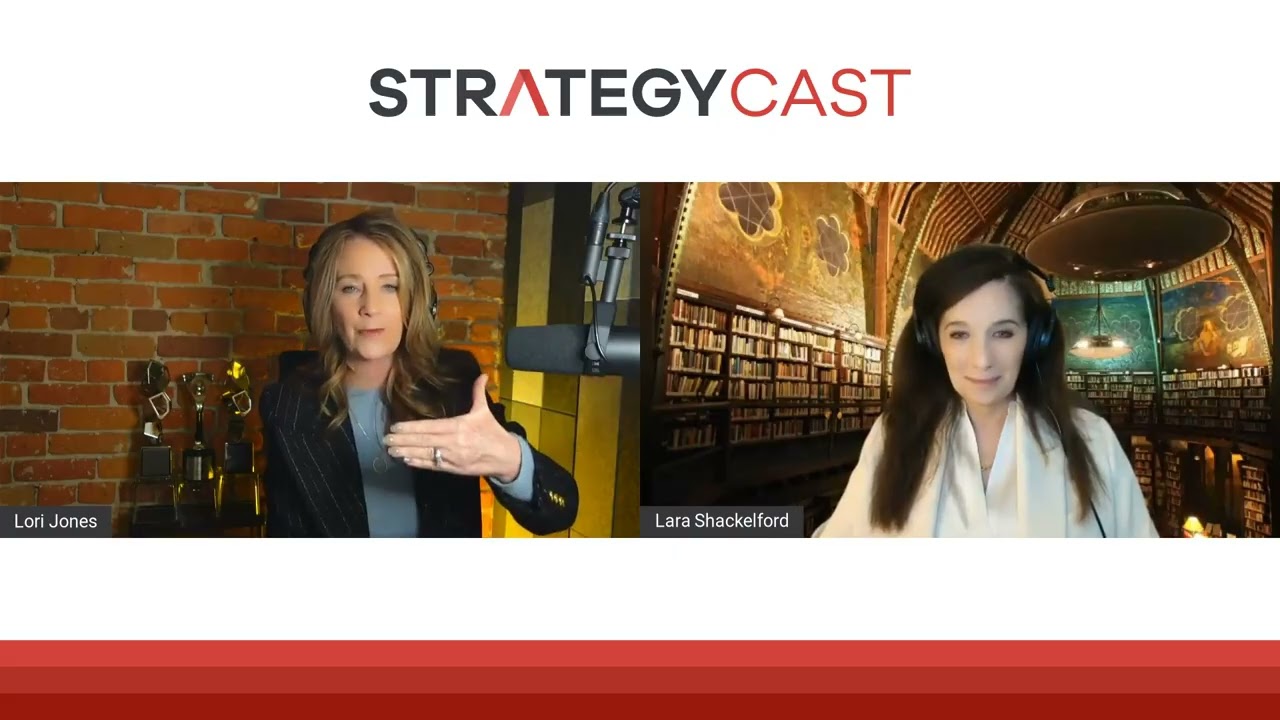
Lara Shackelford, an AI strategist who worked at Levi's and Oracle, explains how to adopt AI in marketing and customer experience. She describes a product launch that went from a year-long process to minutes with ChatGPT, and notes that 80% of mid-market companies lack an AI council. Data strategy matters most: Shackelford calls data "uranium" and stresses the need for governance, ethics, and a designated AI leader.
Chapters
Hi, I'm Laurie Jones, President and CEO of Avaset Communications and host of StrategyCast. Join me and my guests, innovators, disruptors, and visionaries, as we explore bold and brave marketing strategies that help you transform, scale, and grow your brand. On today's episode, we're joined by Lara Shackelford, an AI tech strategist and marketing visionary. Fresh from her success in roles at Oracle and founding her company, Faderi, Lara dives into the transformative the role of AI in marketing and customer engagement. And she'll unpack actionable insights on data strategy, the ethical use of AI, and how to align tech with human values for sustainable business growth. If you're looking to navigate the complex AI landscape with integrity and drive impactful marketing strategies, this is the episode you can't afford to miss. And don't forget to check out the most recent issue of the StrategyCast newsletter on strategycast.com. Just like this episode, it's full of inspiration and a ton of ideas that will elevate your strategies and marketing know-how.
A competitive edge starts with strategy, and strategy starts with knowing how to develop one. StrategyCast is a leading marketing podcast that serves up strategic insights, trends, and tips to help separate your business from the pack. Tune in weekly as host Laurie Jones interviews bold marketing leaders who have priceless wisdom and are willing to share. Each episode explores cutting-edge approaches that have proven instrumental in transforming brands into industry trailblazers.
Welcome to StrategyCast. I'm so excited to have Lara Shackelford join the show today. Welcome.
Thank you so much. I'm so great to be here, Lori.
Oh, well, I, I'm so thrilled to have you. You're like one cool chick. You've got this incredible background. You're just starting your own AI-based company by the name of Federi. Federi. How many different ways can we say that? You're gonna correct me.
Right. In a minute. I know.
But nonetheless, tell us a little bit more about your journey and what really got you into realizing that AI was going to be the next big thing for you.
Sure. So, well, that, that goes a little deeper than, than what I was planning to give. So, I grew up in Kansas City, Missouri, and I have these solid, firm Midwestern values that I am proud of. I loved growing up with them and I, well, my, I, but I wanted to go to one of the coasts. It was gonna be New York or San Francisco. New York was gonna be fashion design, which I majored in. San Francisco wound up being tech. I can tell. Thank you. Maybe that's a tough thing to admit, but, uh, yeah. So somehow made my way into tech and. Ended up marketing. Well, let me just start with, I worked at Levi Strauss for 3 years when I started. I joined them because they had this aspiration statement. I saw it in Fortune magazine back then, and it was talking about values of respecting individuals, being inclusive, things no company was doing back in 1993. I don't mind dating myself at all. And, and it just inspired me. And so I ended up going west instead of east to the fashion designer that I had a job with. And they gave me these corporate values. You know, I already had my values I grew up with, but they taught me how to operate within a company with great values. And that stuck with me through my entire career. And that's been more important to me than any data or AI or, you know, financial gain that I've ever could have made.
And you know what? I bet that is absolutely beautiful with your Midwest values too. You know what I mean? Yes.
I mean, exactly.
You grew up, and there's something very special about those values and that mindset that you bring to the table. And then to find a company, you know, pretty shortly right outside of, of college in order to really mold that with, it's gotta be, and that's probably one of the reasons why they hired you as well.
Oh, it was incredible. Well, they hired me because I was trying to get a job with them in Chicago, and I kept going to their, I kept going to their, what do you call it? Their, their— well, I kept going to their office, but they told me, hey, where they were in the Fashion Mart, they had public restrooms. They said if we have any jobs open, they will be posted on the bulletin board in the restrooms. I love it. So I kept going to the restroom. I would go every day on my lunch hour and go, and I'd look, nothing on the bulletin board. And it took me— I mean, I'm a little bit embarrassed— it took me a couple weeks to realize the jobs were going to be posted in the men's room.
Oh my goodness. Isn't that interesting? That is a totally different show, but what a great, great topic.
I love it.
Oh my gosh.
So yeah. So I ended up there because I had the guts to walk into that men's room and grab that off the board and claim my job. Good for you. Yes.
That's that tenacity that you bring through all of your different positions, I'm sure.
It is. It is. The two words that are used to describe me most are persistent and resilient. And, uh, and yeah, tenacity is sure coupled with that. But anyway, I took those Levi's values and I joined Oracle because you can't live in the Bay Area and not have tech surrounding you. Right.
Right.
Oracle was just this, it, I mean, it's a wonderful company still, but at the time it was this booming company. All the people I knew kind of around the city were joining Oracle. I ended up joining them and worked for them for about 8 years, and I was promoted a couple times into different roles. I got to do business development. I did a little bit of partner marketing, and actually I started off answering phones for them, which was incredible because, you know, the BDR job, SDR is so hard.
So much. Yes.
You learn everything. Yeah.
Yeah.
And actually the funny thing is that job, part of my, when I got promoted from the BDR role, I'm still, I got promoted a level up and my job was to work with startups there. I was working with startups who were using the Oracle database to develop AI technologies. And so it just, you know, it was, it was in what I was doing all along, and I didn't even realize it at the time. And it just, I kind of grew up with it in my, in my DNA. Yeah.
I love, that's so cool. And, and, you know, people, I, I just interviewed Mike Caput from the Marketing AI Institute last week. Yes. And people don't realize, we talked about this on the show, that AI has been around for decades, decades, decades.
Exactly.
And that most people have been utilizing it for decades as well. Just, you know, at what is at the forefront right now regarding how mainstream America can use it is really the big difference. So you have all that incredible experience and you decide to start your own firm, um, with, uh, you know, with quite a bit of of, you know, just trust in where AI is going as at the foundation. Tell us a little bit more about that.
Oh, that was a beautiful segue. I think you were setting me up because Spadere, of course, means to trust in Latin. Uh, and that's why I chose the name that it's, uh, may sometimes a little hard to pronounce, but for me, I'm a, you know, been a marketer a long time in my career. And that just gives me the opportunity to work really hard and making sure we have a great strong brand that people relate to. And, but yeah, Federi, I, the thing is, I, having spent most of my career marketing data analytics and AI technologies, I care deeply about the community, about the integrity of what we're saying when we market those products. I found, there are a lot of people who have jumped into AI and they're learning and they're digging in and they're spending hard-earned money. You don't have to, a lot of courses are free, but they're digging in to learn AI. And I applaud those people. There are a lot of people also who are saying, hey, look at me. I've been, you, I've been doing this thing in AI for 2 months and now you should hire me as your chief AI officer.
Unbelievable.
Yeah. And though the latter group is, yeah, it's not good. And I don't want people that I know to hire folks like that. I want to bring some clarity and, the ability for companies just to have trust in when they're using AI, have trust in the partners that they're working with.
Well, that's what we're gonna dive into today. We're gonna talk about increasing customer engagement and satisfaction, satisfaction with AI-fueled strategies. But it has to start with the company having an AI council of some sort in order to develop go-to-market, um, approaches, strategies, policies, procedures, and as a launchpad to be able you know, to even use AI. So as we, as companies are developing their AI strategy, talk to us a little bit more about some of the best approaches that they can use to level set and be safe and trustworthy as they, as they deploy it.
Yeah. So a couple of things with that. One is you absolutely need to start with, one of the first steps is appointing an AI council and an AI leader. And you need to, one, you need to have a view of AI across your organization. Every organization has to be invested in some way. It's not just a customer support thing. It's not just, you know, we're seeing departments, marketing, customer support, HR, where you're seeing AI take up more rapidly. And certainly sales is seeing it too. But then there are other areas of the business where we're not seeing it as fast. And every part of the organization needs to be invested. And know what's happening and, and have a commitment to whether they're moving as fast or not. They need to be involved in that council. And then a company also needs to appoint an AI leader, whether they're big enough, like President Biden declared that, you know, some of the biggest companies in America now have to, are, have to have a chief AI officer on their staff. Whether you're, you know, big enough to warrant a chief AI officer or whether you're smaller and you're appointing someone, you know, within your organization to lead AI, You need to have one person who's in charge because they just need to have their eye on all the pieces and how things are coming together. It's crucial to the success.
We have had an AI council for 18 months at Abbott. Oh, yeah.
Brilliant. I love it.
Definitely ahead of the game, that's for sure. And one thing, just a little tidbit here that we ended up doing was changing our master services agreement so that our clientele could say yes or no to the use of AI to create efficiencies or ideation, you know, DALL·E, whatever it might be. And many, many— we're using about 18 different tools right now, but they either, due to their own corporate policy or them just wanting to experiment, they say yes or no, uh, regarding the usage of that. So that to me is something very important for the AI Council when you're talking about procedures and policies, it's not just internal, but with your external customers. If you are providing a creative product, totally different, although it could be, you know, I guess an in-house department as well. You need to be very, very transparent with your clientele about what you are or are not doing and make sure that they under— they give you the yay or the nay.
Exactly. I love that. You did it exactly the right way. I'm sure you already know that very well based on all the work you do in AI. I'm curious though, how many, what percent of the clients that you have said yes to that or, or I, I would have pulled out the type of clients.
So our enterprise clients were more concerned about its usage. Our small, you know, SMBs, 100%. Yep. Go ahead and use it. Just let us know when you are using it.
That makes a lot of sense. And you know, that is one of the things we're going to see in this next year. This is a year that a lot of the enterprises are going to move from they are moving from kind of just trying things in a few different departments to more broadly adopting AI. And, and so, yeah, this is, this is that pivotal year for the enterprise, but it's still, you know, still people are, enterprises are still certainly moving cautiously with good reason.
Yeah.
And I, I totally agree.
And the main point, the reason we wanted to level set with the need for an AI council is you've gotta have a starting point before you can—
Exactly.
You know, think through how you can positively impact, um, the customer journey. So, and, and let's just focus on perhaps a, a product launch for right now. How do you see AI addressing the challenges of product launches and mess— messaging alignment? Because that's really how we get to the heart of defining the problem, right?
Yes, yes. The actual use cases and the application of it. You know, I will say quickly on the I'll give you an example where, but if I started, I, I'm gonna use a product launch that I actually ran. It was a year-long process at a very large, one of the largest tech companies in the world. And, and it's that big that it takes a year for, to bring everything together. I was leading a launch team of about 90 different people who were virt, you know, part of my virtual launch team. It was a BMF effort. And I have this really specific example where we could have used AI to help us so much. GenAI, for this particular launch wasn't available yet in the form that it is today. There was, there was a little bit out there that we were using, but ChatGPT hadn't come out yet. So what I would have done though is start with a strategy. I know it sounds obvious, but you put your strategy in place, you have your AI council. I would have done an AI readiness assessment, you know, for this large organization, even though the large enterprise wasn't ready at that time for that, you know, the whole, strategy across the business. I would have done one across my organization and the stakeholders that I was working with because that's key to get a measurement point, you know, at the start of, you know, where are you? How ready for you are, are, how ready are you, were you, excuse me, how ready are you for AI? And then who, how do you drive executive alignment, right? How do you make sure your stakeholders are coming from the same place and where they're not, you know, address things so that you are moving in the same direction.
That's absolutely paramount. And thank you for adding that in. I think one, you know, as you're selling this to the C-suite, if you will, one area that they will be very, very interested in is the amount of efficiency or productivity that teams are able to achieve. And I believe with one of the AI teams that you worked on, by the use of AI, they were able to basically get 12.5% more work done.
Yes.
Talk to us a little bit about that.
Yeah. Well, we're able to get more work done. We're able to— the work product that we're doing is better and more impactful. And so it also, the unseen benefit of it is that the team is proud of the work that they're doing. They feel good about it and they're able to free up themselves so they're not focused You know, those tasks that we all do, I mean, calendaring alone, you know, before, what did we do before Calendly? It was such a frustrating task. Anything that we can do that automates the stuff that is just monotonous, obviously is a great place to use AI and gain that efficiency and then be able to free up time for people to be creative, to not sit in as many meetings, you know, and, and actually do the work that they're there to do. And that, you know, most people really want to do.
Yeah. How has— so, you know, big data, especially with some of the very large enterprise companies that you've worked with, utilizing AI with big datasets, I think is something that is very normal for, you know, the enterprise companies. How have you been able to, since that, streamline the use of ChatGPT as a tool and what kind of counseling are you providing your clientele or your internal teams on how and when it should be used?
Yeah, so one, it's— there's so much fear still, right? There's one social media company that I know— actually, you know what, I'm going to use a different example. There's a company that I know, it's a tech company, but they're in the Midwest. This company launched and they were going so hard to, on a product launch, their product launch, unlike mine that took a year, this one they put together in about 2 months' time because they were racing to— Yes. They wanted to make sure the market knew that they had an AI product. So they, you know, they developed it fast. It's a SaaS offering. They were able to get it to market fast, but their team was absolutely exhausted as happens and has happened throughout time. By the time you get to launch, they weren't able to use their, their chief legal officer had said, absolutely. No use of ChatGPT, no use of AI anywhere, but they already use, they were launching an AI product.
Yeah.
Right.
But they couldn't use it themselves. And so that's an example where, I mean, the efficiency you can gain in product launch. I'll give you one quick example from the large company I mentioned that took a, took a year to launch products. We actually went back right as we were finishing messaging for that launch. And we were trying to create a new, uh, category at the time. So it takes time to do the analysis, the market research, all of it. And it was about a 9-month process to do all of the research, align stakeholders, go through, you know, workshops to get to the point that we had decided upon the category that we were gonna use, these precious 3 words that we were gonna call our product. And basically, or the category that we were gonna name them in. By the time that we got there, ChatGPT had just come out and I said, okay, let's just see if ChatGPT can do this any faster. And I put the problem into ChatGPT, told it, you know, who my target audience was and said, you know, how would you solve this problem? What category would you choose? And it named the category that we spent 9 months to build. And it happened in a matter of 3 minutes, that whole exercise. Now, I would have had to still bring the organization along, right? You can't substitute the alignment of human beings, but you can cut parts of that process and make it a heck of a lot faster.
Yeah, that's fantastic. As we are really diving into some of these AI field strategies for customer, really satisfaction, you know, customer intimacy, you know, reducing churn with retention. I mean, all those sort of things are the goal here. Coca-Cola launched a campaign years ago. I think it was 2011, as a matter of fact, where they really personalized the product.
They—
it was the launch of the customized names on the cans themselves. So I spent an entire summer looking for Taylor, Bailey, and Kendall, by the way.
Those were beautiful.
An entire summer. As I was studying for this podcast, it, I, I, you know, it really aged me as well. The thing that, that is amazing is they, you know, A, chat was not around. I mean, this was truly conceptual. It was such a pers— a perfect example of personalization and really developing an incredible relationship with the customer. And, and, you know, having people hunt around the nation and actually it started in Australia, but Hunt, uh, for, for the name of their, their, their can. So AI wasn't necessarily there, but they had to have had tons of pieces of data to determine which names were going to be the most popular and which ones should make it on the can. So what, what was in the mindset of, of Coca-Cola and AI, you know, 13 years ago?
Oh, I mean, they've done such an incredible job of leveraging AI for their business. There are several use cases that I won't get into the details of all of them right now. But, you know, you build the foundation. It takes one of the most important things in AI is your data. You mentioned it earlier, but at Fideri, we have a part of our offering is data strategy because we wanna take the, the fact that data is gonna be an issue for many companies off the table. And get them into the right place with their data. Coca-Cola, you know, obviously they nurtured their data, they paid attention, they built the data model for the future to begin with. They also though, starting with the example that you used where may they had the data and they didn't have AI yet to be able to do the things they're doing today. But that data is actually what makes the AI today possible. As I know, you know, if you think about they have these smart vending machines now where they actually have facial recognition. And they can, you know, offer to someone they, you know, they know someone's face so they can say, hey, Lara, I, in my life, I've, I've never as an adult had a Diet Coke in my life. I only drink regular Coke and I haven't got, I haven't actually had a Coke in years because of health reasons. But if I were going to have one, I love that, you know, once I go to a vending machine once or twice like this, I could walk up and they would know to never offer me a Diet Coke. And that's the kind of personalization that makes you feel like they get me, you know, I, I'll choose the Coke vending machine over the Pepsi. Well, I also prefer it, but I will also choose it just because I feel like they get me. And that is the personalization that we can create. And that one little thing creates that loyalty in the brand. It's, it's amazing. But you know, it takes that focus on the data, like I was saying, and really making sure that you've got it in the right state to leverage it.
Yeah, there's certainly, you know, barriers along the way. I know you've got many, many tales, I know, of real-life examples. What are some of the most common things that people need to be concerned about as they're building this customer journey and utilizing AI?
I think one is we talked about the, we talked about data. An important aspect of that is governance. So making sure that there's a, there's a term we used to use in 2006 that was coined. It was called data is the new oil. And Clive, gosh, Clive Humby coined the term.
Yeah.
In about 2015, people started saying data is the new uranium. And I still see it that way today because it is. Data is either going to be your best friend, like what Coke was able to do and leverage it and leverage it, you know, build upon it for their future. Or it can be the thing that is going to cost you because you don't have the right governance in place. So the data and governance go hand in at hand and you're maybe taking data that you don't need to, that you could take anonymously. You're storing or hoarding data. I'm actually getting my master's degree at Oxford in AI right now. And our professor, after our talk about data, it was a day about data and we have much more coming, but this particular day he said, so time for truth. He looked around the room of 70 students and said, raise your hand if you're a data hoarder and if you believe in data hoarding. And a couple of my colleagues raised their hands and one of them, you know, one of them articulated a very good reason that she's been doing it. Understandable. But she said later, you know what, I think I'm going to relook at that strategy of hoarding data because it really can be, you know, uranium can be good or bad. And we need that governance.
What was her reason?
Um, this person, oh gosh, I wish I could use the specific use case, but it's very, it's a very high security organization. They work with companies across Europe, countries across Europe. They have so much demographic information about these countries and the companies in them and every aspect of them. And the reason was, I don't know what I'm going to need in 5 years with, you know, or 10 years with what's happening in AI. There might be something magical I could do in even 3 years if I'd only kept the data. So it's really hard for me to, you know, want to give anything up for that reason.
You know, I think it's interesting. You can see that people might hoard data like from one, like from HR, you look at it maybe more internally, uh, and then you've got product development, you know, certainly sales and, and marketing. Which departments are the, you know, the biggest culprits for hoarding the data and not sharing it? And, and the second part of the question is, how many organizations truly have a centralized warehouse for you, if you will, of where that data should reside versus not at all.
Yeah, it's— I think companies are much better today about having that centralized, you know, place for their data and a centralized approach for it. But of course, the smaller you go, the less that's the case, unfortunately. I think a lot of, you know, when you look at smaller businesses, it is going to be more, you know, sales and marketing who are hoarding the data, if you will, because, you know, marketing can do so much with data now that we couldn't do in the past. Use it because of AI. But I think in larger organizations, it, it's interesting because I think there may be, you know, IT will usually, IT is leading the way with governance usually. They are usually very clear about the data that they wanna keep, what they're not gonna keep, their policies. But I would say in larger organizations, the sales and marketing, HR teams, they have strong input, but they don't have You know, there's certain data they can say, we're absolutely not going to give up this data. Right? But there are other aspects of the data where there, it's not really necessarily their choice. And IT can choose, you know, to keep other parts of the data that they think may be important for, you know, part of the picture later on. Yeah. So I think, you know, I think it, it's funny because I would say I don't know many IT leaders who are data hoarders, but they, they are the ones who are most empowered to do it if they were to do it.
Yeah. What are the legal barriers are something that people are talking quite a bit, today. What insights do you have to share there?
Yeah. I work closely with a couple of chief legal officers. I was just on a podcast a couple weeks ago with a, a couple of legal experts. And we were just talking about ethical AI and how you use ethical AI. In my case, because I focus on customer experience and marketing and creating better customer engagement, I really focused on how you use ethical AI in your customer engagement and how you build go-to-market strategies from the ground up with ethical AI. But the ethical piece and responsible AI is a huge part of that, you know, the legal. And I think if you— what we're seeing is if organizations start from that place, then they're gonna start from the right place from a legal perspective too. You know, they go hand in hand. So I think it's funny, it brings it all back to those Levi's values. And if companies, you know, you like really need to be grounded in their corporate values, stay grounded in that as you build your AI approach and your AI strategy, and then make sure that legally you're, you know, what you're doing legally, the choices you're making legally aligned to it as well. And then you're gonna be in a good place. It's much, obviously much deeper than that. There's so much privacy with the, the— what was it called— the legislation that was just passed in Europe, um, where, right, there's, there's just so much to know in terms of privacy and how much that could affect U.S. companies, even startups.
Yeah. Yes, yes, yeah, yeah. And that I, I think people still don't have a stronghold on. So you introduce AI to the mix and, and all of that, I, I— there's just a lot of reasons to include the legal team in all these decisions. And the other, other area I think is important here is having a strategic vision for AI usage. So we're talking about a lot of modalities, right? And the, you know, the, the teams that are going to help push it through, understanding the legal piece of it, you know, being transparent with your customer base. But really, it's got to start from the top. Of, of the head, if you will, and have this vision regarding how it, it can and should be used.
I am so happy you said that. So that is one of the things we see too, is today a lot of people are using AI for efficiency, and that's understandable with any major new technology that, that happens, and it starts out that way. It happened that way, you know, early on in big data as well. But people are finding. In fact, there's just no end to use cases. People— I've actually, I've got a set of use cases for each of the key leadership roles in customer experience and marketing. But it's not because I'm searching for use cases. I just kind of put together here the top ones that you should be thinking about. But it really isn't about the use case at all. And it's— the efficiency is great, but it's sort of start down the path, identify areas of efficiency. But the reason you're doing that is, yes, to free up time and space so that you can do greater and bigger things on behalf of your organization. And there are companies like DBS Bank in Singapore. This is a bank who started early on with AI. They've done so much. They're renowned for their customer service. DBS has just done a phenomenal job of making sure that they, they, you know, the efficiency was there. They started there, but they are moving into new markets. They are creating new product offerings because They are so focused on how they incre— get added value out of AI and give added value to their customers from AI.
Great. It's how you pass it right along.
Mm-hmm.
You, I believe, have— I remember this from our pre-show discussion— an AI readiness program that you've deployed. Can you walk us through that real quick?
It tracks— Exactly.
The strategic vision and everything that we're, we're discussing here.
Yeah. And there are 4 key aspects of that that we focus on, which is leadership, governance, technology, and critical capabilities. And then we have multiple factors that we go into. We'll do a readiness assessment light for someone who just wants kind of to almost like a proof of concept. They wanna get a sense of how they might approach AI for their organization. But then we have a much, much deeper assessment that we'll go into for organizations because we want to make sure they get value out of it. And we dive into each of those areas. What we do is we start out, I mentioned that AI council, we basically are working with the AI council. We're going to every executive role across the operating table. And we sit down with them and we ask them to rate themselves qualitatively on each of the, I think we've got about, we've got about 60 dimensions within those 4 categories I've mentioned. And they'll rate themselves, themselves on a scale of 1 to 5. And then we do that for each one of the executives. We aggregate the results, and then we have a view for the organization. After that, then we'll go and we'll get data from, you know, the qualitative is kind of a starting point for us to have a discussion. And that really brings out the kind of workshop for an organization so they can get things out on the table. Following that, then we'll add the data to that readiness assessment. So where we had qualitative statements that can be backed up by data or refuted by data, then we'll add those to that assessment. But it gives us a real starting point. It helps us to know what people in the organization we need to influence. Yeah, it's just a great tool for alignment.
Where do you see that most people are not aligned in during these assessments?
Yeah. You know, it's funny. We're finding it, it really comes down to kind of, if you think about the operating table, and I think of, in fact, I've created my own, if you will, AI council that I'm launching soon where I've got about 4 to 5 of each of the operating roles coming together to create a governing body so that we can create standards. And, but if you think about that operating table and you, I kind of break it into different groups, like there's the revenue team. And if you put, you know, marketing can go into many of the teams, but for sure marketing's in that one and sales and, you know, anything related to revenue operations. Then I look at kind of more of the, there's got to be a better word. I apologize in advance, but the back office functions, you know, the, the finance CFO, the chief legal officer, CIO, those teams. And I think it usually more of the friction ends up coming between the, those groups, I think, because, you know, the one group wants to be really aggressive and they wanna move fast and they wanna keep up with their peers and, and ex— excel past their peers. And then you've got another group who's very wisely saying, you're putting our business at risk, or, you know, financially we can't take that bet right now. We're gonna have to go slower and phase it. So, That's where I see, I can think kind of between those operating groups, more of the friction.
Yeah. It's so interesting as we're talking about this, what percent of businesses out there do you feel do not have these AI strategies in place? Because I mean, if you don't have these in place, you can't create that, that customer continuity and centricity along, along the way. It, It seems because we're so ahead of the curve, both of us, that it'd be impossible for someone not to have at least started talking about these sort of things. But we're hearing about people that just say, we don't believe in it, we're not going to use it, and they're going to get lost in, in the mix. Um, and possibly even worse. What percentage of these businesses do you believe, maybe just a gut check, still have not even had the earliest discussions surrounding perhaps this simple concept of an AI council?
I'll, I'll answer that in two parts. One is, and I think it, it varies so much again by segment, but if you look at just, you know, mid-market to enterprise, I'm guessing you're at least 80% haven't gone there. The, the second statistic, that's my own gut check number or my, my gut reaction number. But Deloitte is saying, hey, they, this future though does look promising. Deloitte just did a report and they believe that 79% of business leaders are expecting generative AI to help transform their business over the next 3 years. So it's coming. I think even the organizations that haven't started it know that they need to, but so many haven't even taken a step beyond that and are, I think, just being guarded at this point.
Yeah. It's, to me, it's one of those situations where we've got to approach it from an efficiency standpoint. We've said that, you know, several times throughout the show. But also, I think long term, it's, you know, how can we use AI to future-proof the business? How can we use it to help align business strategies with sales strategies, with marketing strategies? You know, that misalignment is such a big issue out there among organizations. That just AI goes a great way, a great, a mile long to making sure that the alignment can be achieved.
Exactly.
Do you have any examples of companies that are doing this 100% correctly? They've got, you know, they've got these AI strategies in place so that they're able to create the customer journey that's, that we all want.
Yes. You know, Octopus Energy is a, a use case that many people don't know in the US because they're born in the UK. They are one of the large, one of the largest energy providers in the UK. They were born of the cloud. And so they, in that regard, they're in an ideal situation because their data is all in a state that, you know, they, they intentionally built it so they would be able to use it, their data readily. They would be able to use it for customer engagement. So as AI technologies advanced and became more accessible to them, they were able to take advantage of it very quickly. They actually, they, they used AI tools to replace customer support agents. Their servant, when they did that, just like Klarna did the same thing. Klarna replaced 700 customer support agents with AI tools. The customer service satisfaction score actually went up when both organizations did that. So, um, it's, you know, Octopus, like I said, is in a rare situation to be able to just be fully leveraging it, providing a great experience to their customers and more value to them. But Klarna is doing a great job with it. There, there are lots of shining examples out there that are leading the way for others.
Yeah, I love it. So looking ahead, there is so much promise for the use of AI in business today? We've talked a lot of operations, we've talked a lot of the ability for us to connect the dots from a consumer standpoint or a buyer standpoint through the buyer journey. What do you see the customer service or customer experience and marketing, how those two, you know, areas really will work and, and, and Gosh, now I've gotta rephrase this. Sorry about that.
Thanks. No worries.
Looking ahead, the future of AI, especially when it comes to marketing and customer experience, there's just so much to do, so much, I mean, so much to be had, so many ideas that we haven't even discovered yet and, and come up with. And AI and data usage and having the right operations in place is definitely gonna make that happen. Where do you see this going?
Yeah. So the marketing customer experience, we talked about the example of Klarna and Octopus Energy where they've been able to create, provide better customer support to make increase customer satisfaction. On the marketing side, there's so much we can do to be more strategic, to move out of using AI for efficiency and be a better strategic partner at the table, which is something that marketing, you know, is been crucial for marketing for years. So I think it really empowers marketers as we go forward. We've been talking for a while about hyper-personalization in marketing. There's actually one of the largest telecom companies in the US I've talked to extensively and working with them on their approach to AI, and they are afraid of the fact, you know, I wouldn't say afraid is a harsh word, but they're very aware of the fact that it's gotten creepy for people in many ways. And they wanna be hyper-personalized, but they wanna do it in context, you know, and their, their big focus is contextual marketing. So how do we, how do we create something, you know, when you're on a travel site that you're getting served up an offer for a flight or a meal in the location that you were searching yesterday as something that's complimentary versus suddenly getting served up an ad for a lawn part when it just makes it so clear that someone was listening to you while you were complaining, mowing the lawn.
I don't know.
I'm, uh, it's trying to think of the best example for that, but it is really just the future is bright in the— we can do more. We can do it though in the context of helping people to, you know, enjoy the benefits of AI in their daily lives.
Do you see one department over another tackling this with more, you know, interest and ferocity than like marketing? I, I, you know, I think so many people, so many marketers, and there's a lot of publicity out there about saying creative strategy and, you know, graphic design is going to be done because of, of these generative tools that are out there. And those of us who are the wise ones are saying it takes wisdom, you know, in order to really push those tools out and be on strategy and perhaps we can just get more done with it. So I, so it's organically, I think, real comfortable for marketers to be utilizing this because of the data that we're putting in in order to get, you know, some great ideas out of it and then weave those into our strategies or make those strategies stronger. But what about product development? You know, what about operations? What about HR? Who's really tackling this?
HR is doing so much with AI. And I'll say they've been doing it for a few years before ChatGPT came out. Did. So they've been able to use AI tools for things like, there were tools for having more diversity and inclusion in the candidates that they served up, even that they would screen into the process. And that was, gosh, that was like 3 years ago, they started using tools like that, maybe it was even 4. And so I think they're more comfortable with it. And it's just been more of a natural part. I agree, marketers are moving fast, because there's also this feeling like they have to, there's that You know, certainly fear, but the, the marketers who are really leading the way are able to say, I see a, you know, brighter future and an opportunity to be more strategic, like I've mentioned.
So as, you know, reflecting on our discussion today, what is your top piece of advice, uh, for people that are really trying to harness the power of AI and create, uh, this engagement and customer satisfaction that's so important?
Number one piece of advice is learn and experiment and try it and try it so many ways. We can try it in our personal lives. I actually, I think many of us are familiar with Paul Raetzer, who runs the Marketing AI Institute, works close, Mike Capet, works with Paul at the institute. Paul gave a great example recently when he was building the agenda for his event that's coming up next fall. And he said he took and said, oh, I have to pick out speakers for this, you know, here are all the steps in the process, kind of, I don't know exactly how he did it, basically said, are there any steps that I missed? You know, put this into a process and help me figure out what AI can do for this, what actually has to be done by me. And he said something like, I insist that choosing the candidates, actually going through them one by one and spending an hour researching them online, looking at their talks that they've done in the past is done by me personally. And that's a great example of where, you know, just anything you're doing as you're going through your day, think, you know what, could I do this in AI? And maybe it'll save me 10 minutes, but it's just a good question to ask yourself when you kind of automatically start to default to doing something. And so just try and experiment. The other thing I want to add is there is so much expensive training out there for AI, and people can go and get certified many great places, but there's a lot of free training out there. And so encourage, don't let, don't let cost be the barrier. This is an opportunity for all of us, and there's It's a great equalizer.
Well, I tell you, Lara, I really appreciate you walking us down this path today. What is the best way for our audience to get in contact with you?
Oh, I am on LinkedIn. I swear LinkedIn has become the Facebook of B2B. I'm sorry to say, but it just has. So, um, if you wanna find me on LinkedIn, Lara Shackelford, I am super responsive to direct messages there. And, um, yeah, look forward to connecting with anyone who wants to talk about it further.
And if you wanna get in contact with me, you can reach me at laurie@strategycast.com. And don't forget to sign up for the StrategyCast newsletter as well. You can do that right there. Lara, thank you so much for your insights today, your wisdom share. Uh, it's been an absolute pleasure.
It has been an absolute pleasure, Laurie. I appreciate it.
That's a wrap. Thanks for joining us on today's show. We hope your strategic brains are spinning with new ideas and bold inspiration that will elevate your strategies and marketing know-how.
More from Lara


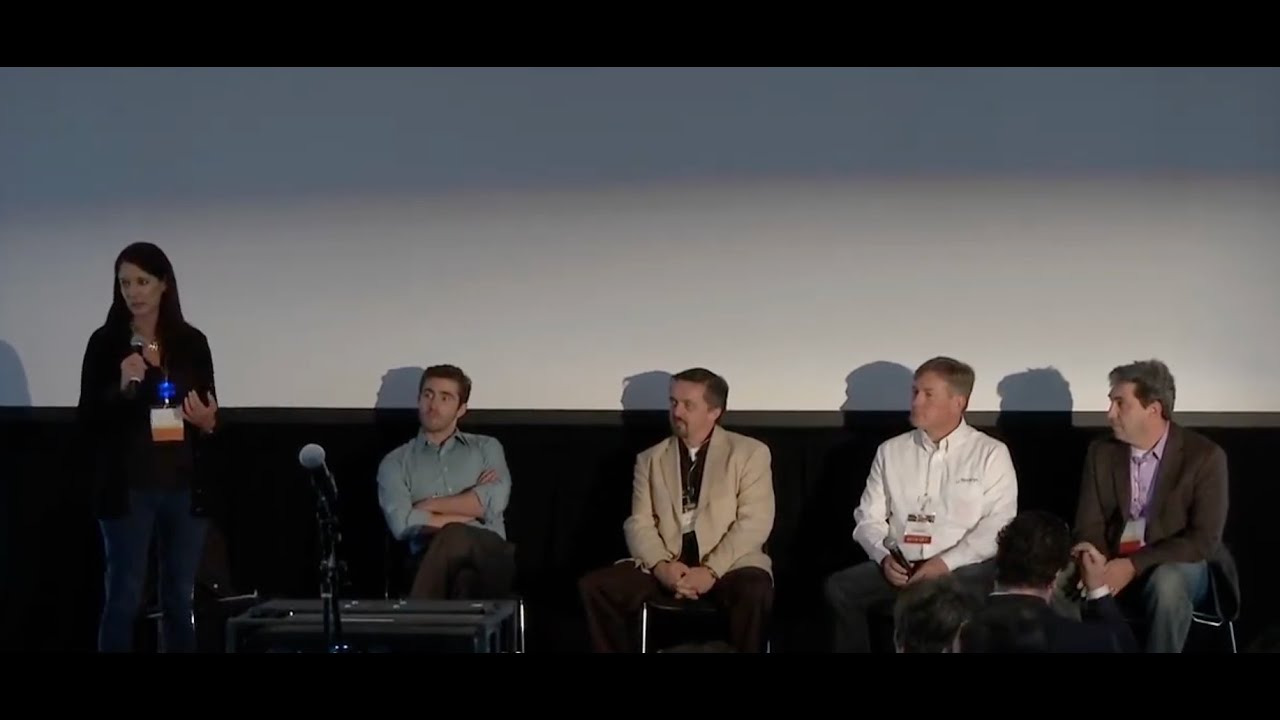
C Summit 2013 No, Really These Companies Transformed Their Businesses Using Cassandra


AI Summit Forecast '25 Business Model Innovation & Growth Strategies led by Lara Shackelford