Lara Shackelford on B2B GTM, Product-&-Revenue Signal Integrity

In this episode of Product Leader's Journey, host Rahul Abhyankar interviews senior marketing executive Lara Shackelford, currently SVP of Marketing at iCapital, about the evolving landscape of B2B product marketing, sales enablement, and AI. Lara discusses why marketing must be a cross‑functional effort, how the CMO role has shifted toward demand generation in a tight economy, and how AI enables real‑time, dynamic management of Ideal Customer Profiles (ICPs) and personas. She critiques the old model of producing massive static content libraries, advocating instead for micro‑content, weekly 2‑minute videos, and AI‑driven content management that surfaces the most resonant assets. The conversation covers the dramatic expansion of B2B buying committees (from ~7 to 12‑25 members) and the fact that most buyers complete their research before ever contacting a vendor. Lara shares practical frameworks for ROI analysis, including an “exploit vs. explore” lens and the use of ROI calculators, and describes the Marketing Engagement Index she introduced to replace MQL‑centric metrics with a shared signal for marketing, sales, and product. She also reflects on her unconventional career path—from fashion design at Levi’s to tech via an Oracle BDR role—highlighting how she built technical credibility and the importance of product marketers having deep product knowledge to partner effectively with product management and sales. Throughout, she emphasizes authenticity in AI‑generated content, the need for product‑marketing‑product‑sales alignment, and the role of marketing in pre‑product‑market‑fit startups.
Chapters
Hello listeners, I am Rahul Abhyankar, your host. Welcome to Product Leader's Journey. In today's episode, we talk about B2B product marketing, sales enablement, and AI with Lara Shackelford. Lara is a chief marketing officer many times over and has led marketing teams at Oracle, Intel, DataStax, Looker, and she has also led global demand generation at Microsoft. Currently, Lara is Senior Vice President of Marketing at iCapital. In today's episode, Lara talks about how the B2B buying experience has changed, what's a good blueprint for sales training, coming up with good ROI analysis and how to assess the ROI of AI, and what is a good partnership between product marketing, product, and sales teams looks like and a lot more. David Packard, the co-founder of HP, is believed to have said, "Marketing is too important to be left to the marketing department." So I wanted to see what Lara has to say about that. Enjoy listening. Lara, welcome to Product Leader's Journey. I'm really excited to have you on the show.
Thank you. I'm thrilled to be here.
You know, I want to start off with this quote about marketing. That is attributed to David Packard, the co-founder of HP. The quote goes, "Marketing is too important to be left to the marketing department." So I just want to get your reaction to that.
Okay. So when I was at Microsoft and we were doing a lot of diversity and inclusion, one of our core tenets was assume positive intent. And I'm going to assume positive intent in the quote that you cannot have marketing in isolation. Any marketing team that is working in isolation is failing the company. You have to have strong interlocking. I know you as a leader in product management, you will have had this throughout your career with product marketing. You have to have that partnership with product sales and across the organization, you know, anyone who touches a customer or finance being another example, right? Where the CFO has to be a very strong partner to the CMO. So I'm going to assume that it's because marketing cannot exist and drive the impact it needs to isolation.
I love that, assuming positive intent. And really, if you break down that quote, it's saying two things. One is marketing is extremely important, and it's not just the job of the marketing department to do marketing.
That's right.
So I think, you know, that's beautiful. You know, given the way in which technology is changing the industry, how is the role of marketing changing, and maybe even how is the CMO role changing? Within B2B, uh, at least.
Yes. A question that a lot of people ask CMOs is, well, what type of CMO are you? And they want you to answer one of three buckets. They want you to say, I'm a product marketing CMO, I'm a brand CMO, or I'm a demand gen CMO. And they want to know that, you know, that's the strength that you're going to lead with in marketing. And right now, in an economy like this, guess what the number one CMO preference is? Demand gen. Uh, in the economy that we just came out of, where things were a little bit more robust and, you know, buoyant, the CMO type people wanted was product marketing because they wanted people more focused on positioning for the fast growth. And unfortunately, not enough people get and value brand. The role of AI to marketing is essential. Technology is not strategy. So I'm not saying you just want a giant martech stack for the sake of having a, a lot of technology. But a very good demand generation strategy is using AI to measure all the ways and to facilitate all these different touchpoints with customers. It's helping product marketing to actually learn from how the message is resonating in real time, because you can monitor conversations that sellers have and get feedback that way. You can adjust your ICP, your ideal customer profile now can be constantly checked in real time, which is, you know, in the past, I'm going to go way back to my first role in demand gen in 2005 at Microsoft. And we, we spent months creating these personas and doing research, and then we printed them out and we stuck the images of these personas on our walls and we used them for years. And now personas can change, you know, pretty dynamically as behaviors change, as audiences, you know, evolve. Now, you know, AI is the facilitator of that, and we certainly have a strong role in terms of helping provide AI literacy to the organization.
So many directions we could go there.
Right.
That particular statement. But I want to pick up on what you said about the ICP and the personas and the work that you did. All the hard work that has gone into defining the ICPs to granular level of detail and putting those ICPs up on the walls. You know, you could end up being in a situation where that knowledge about the ICP stays siloed, right?
Mm-hmm. Mm-hmm. It's essential to have go-to-market teams and then to align the business to a rhythm. I'll give you an example. At one of the largest tech companies in the world where I worked recently, I formed go-to-market teams where I would get people who were in sales, in pre-sales, in support. I would get people across the organization. And by getting a cross-section of people involved in having input to the go-to-market strategy and then helping us execute it and holding each other accountable to it, part of that plan is communication, right? Communicating the ICP, communicating what we're learning about the behavior of the ideal customers and how messages are resonating with them. One way that you do that is through a really strong go-to-market team in motion where you've laid out communication plans for them. And they're communicating back to their organizations. And then another way is through modern sales enablement. Okay, I have to give you this other example.
Yeah, sure.
I joined a company and we were getting ready for launch. My team had signed up to deliver 380 pieces of content for the sales team for launch. Hmm.
Okay.
Wow. What sales team in the world is going to use 380 pieces of content? No, no way. And they didn't. But you know, there was the, oh, well, we might need this and we might need that. So we'll just produce it all. That's not the way that it works at all. We all know the way we consume information today is in small bursts. It's okay to have a lot of mini videos, you know, small training videos that are 2 minutes and you're giving to people weekly, but we don't need 380 white papers or, you know, that kind of rich content. And that's the same thing with the ICP is just being able to go, you know, have sales training. Where you're updating people regularly, sellers, anyone who's touching a customer or part of that customer experience, giving them the information in little sound bites that they can use and continuously receive the information. So a lot of it is, you know, the short videos, smaller pieces of content that are easily consumed. You know, that all goes into a well-thought-out sales enablement strategy. And then of course, the underlying technology.
You mentioned earlier about our styles of communication and consuming information have changed. What are you seeing in terms of how has communicating with customers changed? How has buying decisions changed? Buyers changed? Share with us about what you are seeing.
The whole buying experience for B2B has changed fundamentally. A typical B2B buying committee used to be somewhere around 7 people. Now a typical B2B buying committee is 12, and that's on the low end, 12 up to 25 people. So many people touch an opportunity, even small opportunities. If you think about the different people that are a part of a customer experience where, you know, you're selling to one department of an organization, but all these other groups get involved in some way. That's been a major shift is the breadth of the buying committee today. Long, long ago, we were shocked to learn that people who purchase don't come to the company until they're about kind of 30% of the way through the buying process. This is long ago. Now, I don't know what the stat is. I actually made a note to look it up today, but I want to say it's somewhere around 92%. Don't hold me to it. Most people do not go to a vendor until they are pretty sure they want to buy from that vendor. No one wants to be marketed to. No one wants to be sold to. Now we can get the information we need by going to Perplexity. You know, we can go to LinkedIn. We can ask our contacts, which is a huge source. And then we can go to perplexity and ask for the external validation that we're looking for. It's just the need to go to a company has changed. And then the complexity of the people buying at the company and then the timing when buyers go to the company. So it's changed for marketers where we have to be smart and figure out where to meet prospects and customers where they are. So we should be authentically engaging versus trying to market at them.
That's interesting that a lot of the buying decision has happened without even before the first contact with the vendor.
Right. Think about the last purchase you made. I never want to have to contact the company. I don't want to have any interaction with them. You know, whether I'm buying a tool for 10 people or eventually, you know, 500 people, the less I can have to deal with a company, the better. Our approach has completely changed.
And I think what that does is, you know, it places an importance on messaging and communicating that value proposition very crisply and effectively. In the age of AI, you can feed Copilot a document and say, "Give me the 500-word version of this," or, "Give me the 50-word version of this." What are you seeing in terms of how product teams are facing this challenge of how do they ensure that their value proposition is communicated effectively?
It is at the same time easier and more complex than it ever has been. And of course, the easier part is the one you just mentioned, where in theory you can just throw things into GenAI and it'll give you the answer. We both know that's the approach that will not win. It will fail for companies because it's not authentic. And you can start to peruse an article and you know when it's not authentic and when it's not someone's real voice. And AI can help a lot. I know several CMOs who have said, the mandate for my team is no more first drafts. You know, the first draft should come out of GenAI and then you tweak it to sound like your voice. I also know people who do the opposite of, give the GenAI tool your rough draft, but either way, if you're using GenAI, it should be learning from your voice, right? So it's getting smarter and smarter to where the content that it can help you create can be authentic in your voice. But I guess that comes down to being smart about how you use GenAI tools, you know, understanding marketing well enough to understand how LLMs are built, the way that they work. And also you have to understand marketing and be able to push back and get the right responses. That's a huge piece of it. And then in terms of getting that content out, them to the right places. Again, I don't want to sound like every answer is AI. It's not, but it's really being smart about the touchpoints that you create with these customers and prospects is the other piece of it. Planning your engagement in a way that is well thought out through, you know, an AI-first strategy.
Startup companies that you worked at, you know, DataStax, Cassandra, and then Looker before the acquisition of Google. When we think about, you know, early stage companies trying to get to product market fit, do you feel that marketing has a role to play in pre-product market fit?
Absolutely. I'm going to tell you the worst failure that I've had in my career was joining a pre-product market fit company. But it's good because what I learned is that I am not that CMO or that marketing leader. There are marketing leaders who thrive with companies like that. They are really good at taking that ambiguity with customers. And you've got a few people in there, you know, helping the product team to test hypotheses and try to figure out where's this message going to land? Hey, we did this with this customer. Can we call that a product now? Or what's missing to be able to call it a product offering? How do we package up use cases, which is, you know, essential for a prospect to be able to see themselves in the day-to-day use of that product? How do we do that when we We don't exactly know what the product is that someone's going to be using. So there's this nuance of crafting the use case of what you think it should be while you figure out, you know, how the customer's using it today versus how they should be able to use it in the future. And there are great, great marketers for those types of companies. It's just, I think the big thing is knowing who you are as a person, knowing who you are as a marketer and finding that spot for yourself.
Yeah. And there is an element of iteration because the product itself is iterating rapidly to find that fit with the market and the customer use cases that make it, you know, that are repeatable. And so the messaging and the communication has to also iterate along with it.
And that's right.
Agility is extremely important.
Absolutely.
You know, when you were working on these products, marketing for Cassandra or marketing for Looker and then BigQuery with Google, Microsoft, Intel, all very foundational platform-level technologies. So how technical did you have to get How did you achieve that technical proficiency? And what's your advice for how product marketers can achieve, uh, become more technical and credible?
At Oracle, I made a switch. I wanted to pivot my career from fashion design, where I was working at Levi Strauss in San Francisco, to tech. And after 3 years in the fashion design team at Levi's, I found I had to start over at the beginning, uh, to get into tech. So I got a job at the call center at Oracle answering phones. I was a BDR for their partner business and they were technical people who wanted advice. Hey, I'm trying to build this internet application. This goes way back and, you know, you only license your database per user, but, you know, I'm going to have 200,000 users using 1,000th of your database, you know, once a month, whatever the model was, but it was complex. They would call in and expect that kind of advice from my team and I, and I literally just learned it on the job. You know, you get the call and you're, I don't even know what the word is, terrified. Don't know where you're going to go. And somehow you find the answer and then you do it again and you do it again. And eventually you become proficient in the product and the technology. And so anyone who's thinking of a career in tech, I think a great place to start is any kind of BDR role where you can get that start in the company. You know, better way to learn the product in the company. Another example I want to give you is when I led marketing for DataStax, We also did training. Cassandra is a highly technical technology, and I had a training director that I hired who knew the technology. And then I had a team of folks who were creating the training content. We also had the head of the Apache Cassandra, you know, open source community, was the co-founder of DataStax. And he was coming to me and saying, page 13 of the training manual is wrong. I could agree with him and say, "You're right. Let me fix that and make sure we get it right in the future with my team," or, "You're wrong and here's why. Here's another point of view." And I never, of course, got to the level of confidence with Cassandra that he did. That would take an entire different career pivot for me. But I did get to the point where I learned Cassandra well enough to be able to say, "Yes, what you're saying is right. We have some learning to do on my team. We're going to take that away," or to be able to push back. And I know the first time I pushed back with him, I was terrified and so excited at the same time that I, that I could do that. And that happened again through just being willing to dig into it and understand the product and read and try to use it as best I could. And I think with anything, it's just a willingness to dig in and experience the product in any way that you can. Then I joined one of the largest tech companies in the world, our product marketing team. Was not quite the partner that they should have been with product management or with sales. We had a bit of a gap in terms of technical knowledge on the product marketing team. I went to the head of sales and said, okay, as your new business partner, point me to the person who can enroll me and my team in your most technical training. And they said, no, you can't go to that. You don't even want to go. You'll never be able to perform at that level, understand that level of the technology. And I said, We're going to teach it this time next year. We're going to help you, the team, teach it. So send us now so that we can learn how to teach it. And we went through the training and of course, half of it, your eyes are glazed over when it's brand new to you. After the course, we went and we presented it to each other as a team. We learned it together as a team. And, and as a leader, by the way, I think it's important that your team sees you doing it too, right? I'm not just handing it off or expecting something of them that I won't do. And then eventually the next year, we were co-teachers of those courses with the technical folks. We were expected to, you know, have that level of knowledge that we could add value and make the training much better that year than it had been the year before. And as a result, our head of sales came to me and said, "I would not be able to make it through this time." It was an exceptionally challenging time in the economy for that company particularly. And she said, "I couldn't do this if you all hadn't gained that technical knowledge that you did." So I think the answer is push through and dig in and get real-world experience in any way that it takes.
Wonderful. And I think, you know, what you said about product marketing not being a good partner with product management and sales, but just taking a step back, what does it mean for product marketing to be a good partner with product management and sales?
You gave me the easy one. I know what it looks like when it doesn't work. And I know when it works, it is a beautiful thing on the product management side. We got to the point where we could push back on product management and we had a seat at the table when they were planning their roadmap. You know, they would come to us and say, hey, here's what we just found out is going to happen in 3 years' time. These are some of the things we will think will benefit customers. They would come back with highly technical versions of it that didn't convey value for customers. Now it was our job to take that and turn it into, you know, messaging that would resonate for customers that would show value. But we still needed to be able to pull out something that we could turn into value, right? You know, I went back to the head of product management at that company and said, here's what it looks like for you to give us enough information when you learn about the product that we can then go and message it. You know, we'll have a seat at the table when you're learning about it. They brought us into those planning roadmap conversations, but then there was always a point of handoff and delivery. And I gave them the template and I then pushed back. I would work with a product management person. One of the best who'd been working on this product for 30 years. No one in the world knows it better than this person, but it also means he knows it so well. He speaks it at a level that has to be translated for people. You know, we got to the point where he would tell me, oh, well, it does this and this and this. And I would just sit there and smile and wait. And he would say, well, okay, what that means is this. And I was like, closer. So what does that do for people? And then he would give it to me. Eventually, we got to the point where they would give it to us in the way that was clear in terms of what the value could be for customers. By being a partner in that and establishing those boundaries, it really helped them see us as an equal in the process versus someone that they just said, "Hey, here's the stuff. Go and copy and paste this into some white papers and, you know, we've done your job for you." It was kind of the way it worked before. That was on the product management side. And I can tell you about sales, but I'll take a breath there.
Yeah, yeah, no, that's great because the question really is, in order for product management and product marketing to really work effectively and work very well together, each side has to have an appreciation and way to think about how they could play that role a little bit, not entirely, but a little bit, right? So you gave examples about product marketing becoming more technical, learning about the product, and extending themselves into the product technical domain. And similarly, product managers need to understand enough about how their product is being marketed, the value proposition is being communicated, and how can they extend onto the marketing side a little bit so that that collaboration becomes a lot more successful, right?
That's exactly right. Yeah, that was well said. One of the things I always said to our product team is, we're not there yet, but when we're there, we should know your product second best to you in the company. Engineers are going to know it the best, then product management, but then it should be product marketing. And it shouldn't be a matter of we were so far disconnected, right? We should be as close to their level of knowledge as anyone could be not being in their shoes. And then on sales side, there's a lot to say about the sales and product marketing partnership. The way that I can tell you if a product marketing team is adding value to the sales process, if a sales team is going to product marketing and bringing them into their opportunities instead of going to product management. Yes, there's always going to be a time where they want the product manager in the room, right? But a lot of times where the product marketer can represent the product very effectively and be a great partner to sales, that means that product management and sales trust you.
That's very well said. Lara, when it comes to sales enablement and sales training, is there a blueprint that you've evolved from all your experience working in, in all of these companies where, you know, if you put that blueprint in front of people and say, here's where product management, product marketing, engineering come together and contribute to make this sales training the best sales training ever? What does that blueprint look like?
Real use cases that the sellers can use in their conversations, not just technical white papers. They need decks that go into technical detail. They need all of the tools at their disposal. But I think really arming them with the use cases so they can talk to the customer in the context of the customer's day, you know, and help the customer see technology helping to solve their problem. And I've seen this many times. It still happens all over the place where sales enablement can almost be like an order taker to sales. You know, the example where I joined the company, we had the launch, we had signed up to deliver 380 pieces of content, right, for the sales team for launch. Made no sense. What does make sense is one, you know, having that plan of training people, giving them the technical resources, the sales tools they need, helping them understand the use cases in the context of, you know, their customer's day, giving them resources and tools in a way that they can consume them, giving them content and soundbites. Here's your 2-minute video weekly. Here's something that you consume briefly, and here's a place where you can find it easily. And, you know, and of course I'm going to bring it back to AI, but having a good content management system for the content that you've created where you can measure how content is used, you can get, have the content rated. You're constantly serving up the best content for the situation based on what you've learned about what's resonating with customers. And AI is, of course, behind all of those things. So that blueprint is really speaking in the voice of the customer, giving the sales teams the right tools, but not all of them, help them to continually be smarter and smarter as what's resonating with customers.
One of the tools that I've seen very effective is ROI calculators. And, you know, how do customers understand the ROI from the investment that they're making in the vendor's technology. What's your advice in terms of how do you really come up with a good ROI analysis for a customer?
This brings me back to my roots. So I love that you brought this up. Early in my career, I ran what was called the ROI program for Oracle. Part of my job was to sell the C-level executives at Oracle's top customers. I think it was the CTO at JP Morgan at the time, as an example, or the VP of IT at MasterCard as two examples. I would sell them on us going in and sending in a team of consultants to go spend somewhere of like 6 to 8 weeks investigating their business processes and their financials, which you can imagine that's a lot for a company, especially Oracle didn't have the reputation as being the company you want to come in and, you know, dig into your financials. But we put, you know, guardrails in place. We would get them to agree to let us come in because it would help them. VeriSign was an example. We, we were able to go in, they had made a lot of acquisitions. They were getting hammered by Wall Street saying that you made all these acquisitions and you haven't monetized them. We went in and did this ROI study and we were able to show they actually brought together, I can't remember how many different instances of ERP into one. In doing so, they gained X efficiency. And return X value back to the business. You know, here's a process that took me 12 hours and this person makes X thousands, hundreds of thousands of dollars a year, X dollars an hour, and it takes them this number of hours to do it. You have this many people doing it and you start to get into the area of being able to attach actual value to the processes that you've been able to improve or businesses that you've been able to expand into. And so that was a long, long time ago that we were doing those ROI studies. Those became the feeder for the Oracle advertisements where you would walk in the airport and see, you know, University of Pennsylvania saved 34%, things like that. But now it's funny because it's the fundamentals don't really change. It's how you get there. In AI, a lot of people want to know if I'm implementing an AI strategy, what's the return that I'm going to get for it? Still, they're unknowns. I can't tell you. What business that you're going to discover that you can create because you gained efficiency here and freed up resources to focus here and gain more insight into this data. But on the efficiency side today, I can tell you, you know, if you take these 5 use cases and implement them tomorrow, over the next 30 days, you can save these dollars. It's actually fairly easy to start to quantify that for organizations. So that's where I mean, the fundamentals don't change. We're people trying to become more and more efficient and create more space to be able to add more value to the organization.
So earn more revenue, grow the business, reduce costs, become more efficient. Is there any other aspect of ROI?
I'm getting my master's in AI at Oxford right now, and you could have taught one of the lessons that we had recently. It was all about exploit and explore. And exploit is this idea of exactly what you said of let's figure out where in the business we can create efficiency, where we have redundancies, where we can get smarter and exploit those resources. By exploit, meaning make them better, make them more efficient, save money. And then on the other side of it, on the explore side, that's where you're figuring out what new markets can we enter into that we weren't aware of? What products do we have? You know, we have all this new data that we didn't have before. Can we turn that into an offering for someone because data is always so valuable, right? But that's on the explore side of it. So I like to think of that as that exploit and explore framework. It's the moving into new markets. And then the next level of it is, you know, true innovations where you're coming up with new products, new offerings.
And I guess in each of those cases, what's really important is understanding the use cases that really contribute to those explore and exploit scenarios. And then once you understand those use cases, then digging into what are the variables that get impacted by the product. We are saving so many hours of labor, or we are creating a new complete new segment to go after. And so those use cases really become important to understand within the exploit and explore framework.
So much comes down to use cases. Agreed.
Lara, you mentioned technology. How do product teams understand the marketing stack that their product is going to become a part of.
Yeah, you hit on a topic that is near and dear to my heart because I did spend a few years at Marketo. I implemented my first marketing automation system in 2009. I've sat at countless tables where we figured out this is going to be our lead scoring model. And the funny thing is you use data to inform your lead scoring model, but you're still putting qualitative measures, trying to come up with this lead scoring framework where you would say, oh, If you download a white paper, you get half a point. And if you go to a webinar, you get 3 points, right? You're still trying to attach this value to come up with a score that is going to lead to an MQL. That whole process was built for amazingly good reasons, but I think it broke a lot of the relationship between sales and marketing because you wound up with this world where marketing would say, okay, do this many webinars. You know, these are the white papers. These are the ebooks. On and on. They all have this much value. So that'll generate this many MQLs and then sales should be able to convert this percent of them and sales, here's the handshake. We're going to hand you X number of MQLs, right? I had a chief revenue officer joined a unicorn startup and they were, I don't know, probably $300 million in revenue at the time. This is about a year and a half ago. And he said, Lara, what is going on? I just had that best quarter in the history of the company in terms of marketing performance and the pipeline that they generated and impact to the company. They're all celebrating. And he said, at the same time, we just had the worst quarter in the history of the company in terms of revenue. And that's exactly what we created with this MQL, you know, sales handoff. So I'm at Microsoft and I'm running DemandGen for the Americas, which you can imagine it's a lot of MQLs, right? The leaders of each of the regions, you know, very senior level people, wanted to know what the number of MQLs were that the DemandGen Center generated for their region. And then the CMOs for each of those regions and then CMOs of the countries really wanted to know the number of MQLs so that they could tell their, you know, the head of that business unit, here's what marketing did for you. And hey, there's a global budget. Here's my local budget. And combined, we did this for you. But it just led to a lot of MQL counting, a lot of people trying to go, well, you know, it was kind of looking this way, right? Is who's, who's responsible for where the business is. And what we did was something drastic. And we got our CMO and our head of sales to agree. We cut off access for the organization to MQLs. And you can imagine the stunned silence of an organization that they were used to going and looking every day, how many MQLs did we get? And there were people who could go back, they'd figured out how to reverse engineer and pulled the MQLs. They found a way to get to them where we would be working them and nurturing them, and we had SDRs following up, but they would find a way to go to them directly and kind of do marketing and sales to them that it was counter to what we were doing. And so we finally just shut off, like I said, the access. And there was so much terror in the organization. The specifically one of the CMOs called and said, Lara, I need you to come into my market and meet with the head of the business unit. And explain to them, because right now they don't understand why I'm sitting here in region with 50 people reporting to me and they can't see how many MQLs were generated. So they don't know my value. So we cut it off though. We gave them a new tool called Marketing Engagement Index. And this index looked at not just next likely purchase. It wasn't just predicted based on past behavior. It looked at market factors. It looked at account behaviors and brought it all together. And this Marketing Engagement Index is what we gave the organization instead. And so we trained, you know, I sat down with the country leader that I mentioned and said, no, you're not going to see your NPLs because those added no value to you. Now you get to see something you never saw before. You can see in this example where healthcare usually has this buying cycle this time of year. And look, it's lit up 3 months earlier than it normally would be for this product area. Something's going on. Now your marketing leader can go and add maybe some events that they do for that industry to try to get to them faster than they normally would and have a higher touch. Whereas maybe they would have done an event series in 6 months from then. They could see these indicators that they'd never seen before. And we got so much better as a sales and marketing organization because we were both working from one place. We were both working from that engagement index.
And I think that's a great example of an index or an indicator or a metric that is of shared value or—
Yes.
—across different organizations, rather than one organization optimizing for MQLs and claiming success, but that doesn't necessarily contribute to the success of another organization, right? So it's important to have that handshake and the set of indicators that are common definitions of success. Exactly.
And I'll tell you, the product team loved it too, because I just mentioned an industry, but the same thing with product where you could say, wow, Azure, we were expecting to sell Azure in this region, you know, to these mid-sized customers at this rate, but something is happening in the market, right? We're seeing that people are buying more. The percent is higher than we expected. What's going on? You know, we can start to dig in and we could start to market to it. We could figure out how can we take what's happening in LATAM and bring that to the US or vice versa. So It was this index that worked across the beautiful trifecta of marketing, sales, and product. Yeah, this is a great—
I mean, I love marketing as a topic because it has so many different aspects that are so interesting to go deep into. When was the time you said you transitioned from fashion design into tech? You know, did you feel like an underdog at that point making that transition? And how did you overcome, or what were any sources of inspiration that helped you overcome that?
Yeah, even from a young age, I've always loved the underdog story. Actually, my mom worked her way, got a scholarship to college. She did it all and she did it on her own. And that, I think that's part of where I've learned that beautiful underdog story of how you can push against any barriers. You know, if we're fortunate enough to be free and we wake up and we can breathe air, we, we can do things. Growing up, she gave me The Collected Works of Maya Angelou. You know, one of the books, I Know Why the Caged Bird Sings, just sat with me so much. I then looked for underdog stories throughout my life. Nelson Mandela and A Long Walk to Freedom. That book, I swear I read that one every 6 or 7 years over again. Take so much inspiration from it. So when I made the transition from fashion design to tech, a friend's boyfriend knew of a team at Oracle that was being newly formed and was hiring. When I went to interview, the folks said, you seem like a go-getter, you know, you're enthusiastic, but do you even know what a database looks like? And they asked me, there was a whiteboard, which could you draw? I, you know, went up to draw and then they, they, they took what was next to me and they drew. We all know what a diagram of a database looks like. They said, okay, now I know what it looks like. And I said to them though, I said, look, I've been selling green jeans at Levi's to little boys' moms. And they're not that attractive. They're these dark green jeans. And I exceeded expectations. I actually helped to turn around the business with the Sears national account, which at the time Sears was huge for Levi's. And I said, if I can sell green jeans to little boys' moms, I promise you I can sell databases to people who actually already know they want databases and need them to run their business. And so it's part of is that having the courage to step out of your comfort zone, it's having the conviction in yourself that you don't know, but you'll do what it takes to figure it out. That's carried me through. My career.
Wow, beautiful. That's a beautiful story. Thank you so much, Lara, for taking the time. Really appreciate you being on this show, and it was a great conversation.
I loved it. So thank you. Hi there.
This is Rahul Abhyankar. Hope you enjoyed listening to this episode. You will find the notes at productleadersjourney.com. Subscribe to the podcast, and if you like it, share it with your friends and colleagues. See you soon.
More from Lara

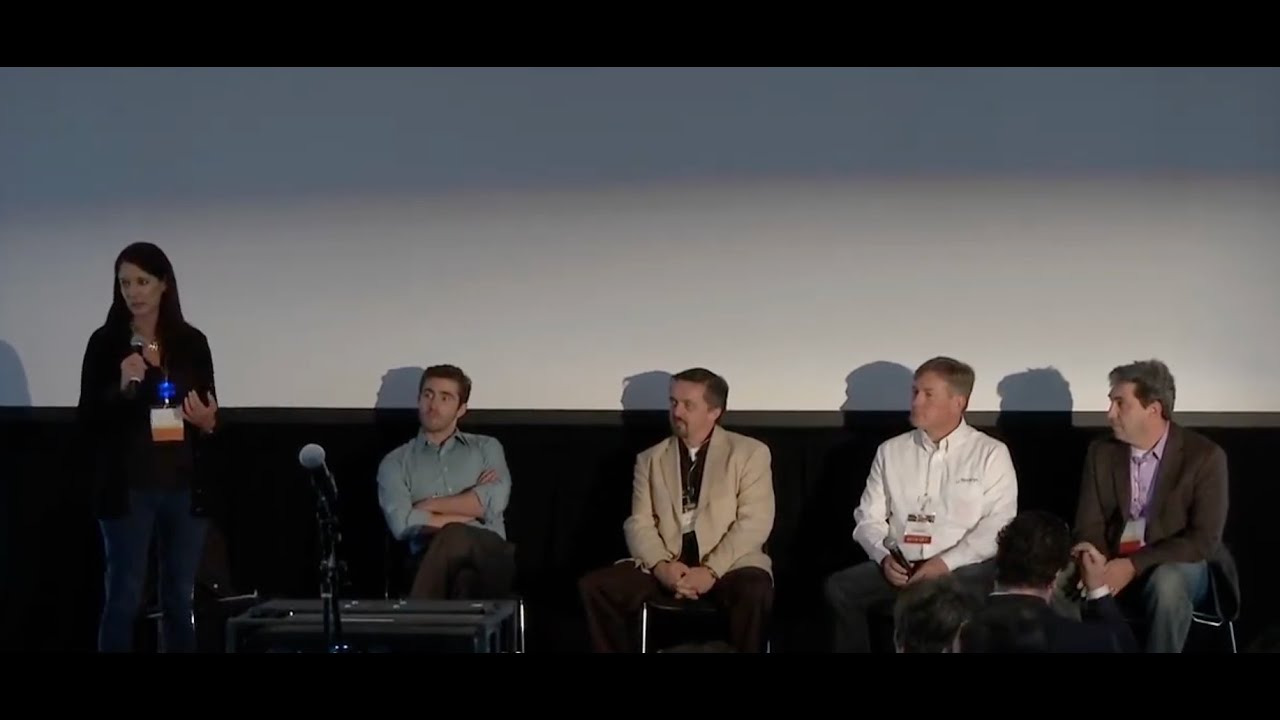
C Summit 2013 No, Really These Companies Transformed Their Businesses Using Cassandra

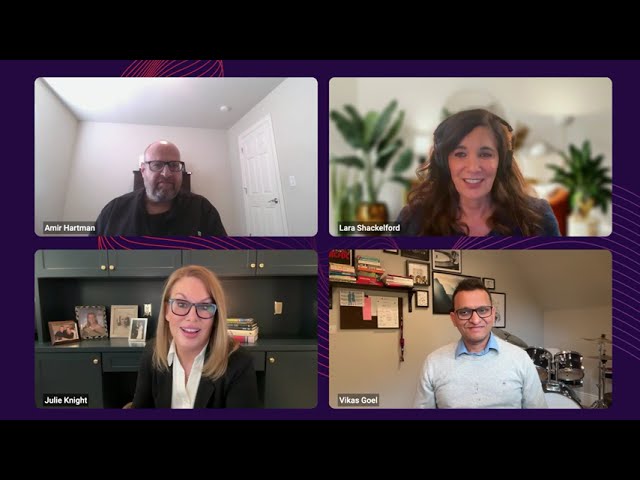

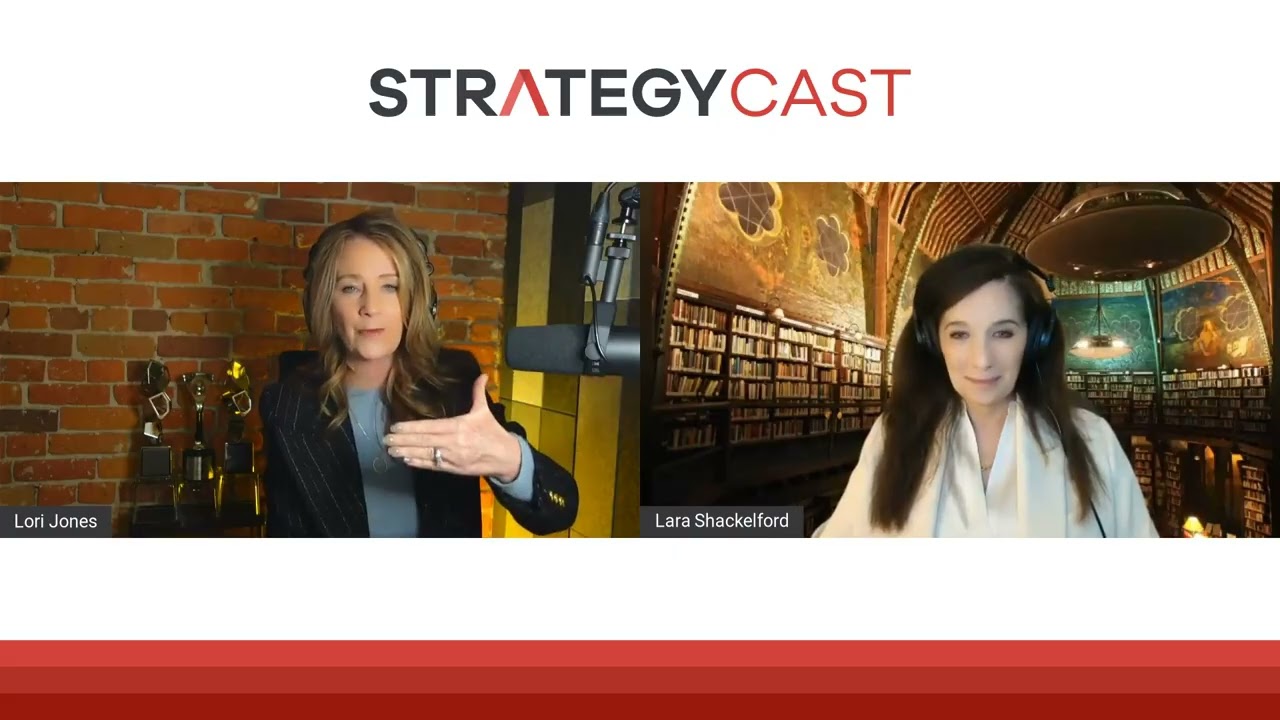
Strategy Magic: How to Leverage AI for Peak Efficiency with Lara Shackelford
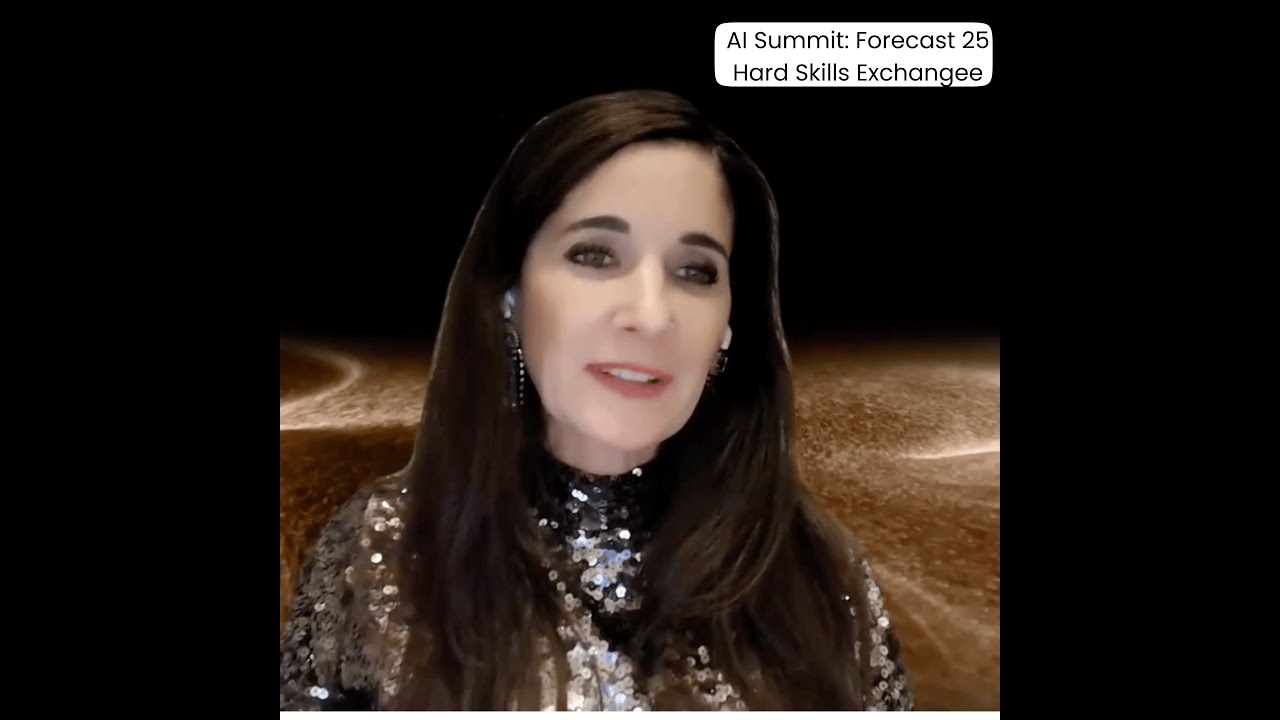
AI Summit Forecast '25 Business Model Innovation & Growth Strategies led by Lara Shackelford