Beyond the Tulip Frenzy
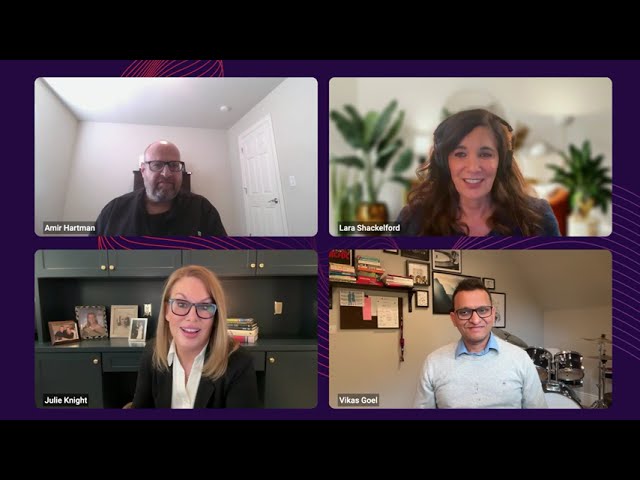
In this episode of the SAS and Sizzle podcast, hosts Julie Knight and Vikas interview AI strategy experts Amir Hartman (Distill Consulting) and Lara Shackelford (Federi AI). The conversation opens with a metaphor comparing today’s AI hype to the historic tulip frenzy, emphasizing the need for a strategic, value‑driven approach. The panel discusses how the democratization of AI—sparked by ChatGPT’s easy front‑end—has broadened enterprise opportunities, and they explore emerging capabilities such as multimodal, agentic, and “large‑action” AI that can make autonomous decisions in workflows like procurement and sales. Lara shares a 2014 case study from Looker where she built a highly prescriptive SDR process, using detailed onboarding, clear incentives, and extensive enablement to achieve rapid growth, and reflects on how AI could now automate many of those steps. The guests highlight the shift toward hyper‑personalized, contextual marketing—creating an “audience of one” by cleaning and unifying data, and they illustrate the use of digital twins to model buying committees and even generate autonomous sales agents. They stress the importance of executive alignment: appointing an AI leader, forming an AI council, and fostering CMO‑CIO partnership to govern budgets, technical debt, and change management. Amir outlines why many proof‑of‑concepts stall—POC paralysis, lack of clear value, data quality issues, technical debt, and insufficient governance—and shares research on top CX AI use cases (chatbots, predictive health, sentiment analysis, personalization, content creation). Finally, they propose an AI portfolio framework (shadow AI, embedded AI, strategic AI) and discuss different strategic roles companies can adopt. The episode concludes with practical advice for listeners on building AI councils, scaling investments, and leveraging digital twins for enablement.
Chapters
Hi, I'm Julie Knight, and welcome to our podcast, SAS and Sizzle. So, I'd like to start with this, this quote. Much like the infamous tulip frenzy, the rush to adopt AI can seem equally chaotic. Yet the true value lies not in the frenzy, but in cultivating a strategic approach to AI integration that blooms with tangible benefits. Oh, that's so beautiful. What a great way to think about it. And especially as it's tulip season. So I'd like to introduce our guests for this podcast. And I'm going to start with Amir Hartman. Amir is managing director and leads the AI digital strategy practice at Distill Consulting. And he works with senior business and technology leaders to develop and implement AI digital strategies that maximize the full potential potential of their most valuable assets, their customers. I couldn't agree more. He's also the AI strategy research director for FederiAI. Amir is a bestselling author known for his works, including Net Ready, Competing for Customers, and the upcoming AI Ready, which will be published this year. Amir has been on the faculty teaching at MBA and executive MBA programs at Berkeley's Haas School of Business. And Harvard Business School. So welcome, Amir. I'd also like to welcome Lara Shackelford, who is the CEO and founder of Federi AI, which is a leader in AI strategy. Federi partners with companies across various functions to develop AI strategies that help them become AI-first, enabling them to improve customer and employee engagement, Lara has held leadership roles at Intel, Oracle, and Microsoft, driving successful exits for startups like DataStax and Looker. Lara is recognized as a top global voice for AI and product marketing by LinkedIn, a top 35 woman in B2B marketing by Data Captive, and top CMO by Diversity First. Lara is an active advisor and investor in data and AI startups. Startups. She is currently pursuing her master's in AI at Oxford. So welcome, Lara.
Thank you.
And with that, I'm going to turn it over to my incredible partner, Vikas. So Vikas, over to you.
Absolutely. Thank you so much, Julie, and welcome, Lara. Welcome, Amir. So it's so great to have you both here. And before we dig deeper into AI and all the wonderful things that you have done around this subject. Let me open the conversation with a very simple and straight question. AI has been around for decades, right? So what is it that makes today's AI different?
I'll jump in. It is, of course, the access to AI, right? People did not know that AI could do the wonderful things that it could do for them before. They didn't know that it was already working on their behalf in many cases in the applications they've been using. The movies they've been viewing on Friday nights. But then suddenly, you know, ChatGPT came about and really there's just this beautiful— this easy, not beautiful, easy front end. And people suddenly had access to it that was never available before. And that has, of course, done amazing things for people and democratized AI and made all kinds of things possible in the enterprise, which I know we're going to get to in a minute. But that access is the key point that has really broadened the opportunity for people.
I was going to say, I was going to echo that. I think we're seeing, I think that's probably in my opinion, the biggest thing that's different. I think what Lara said is the democratization piece. Yeah, there's a few others, obviously. I mean, to your point, it's been around for decades. And so why, and it's not as if that AI, the old AI or advanced AI has gone away. It's still very active. But I think things like democratization, I think things like what we're seeing, this explosion of data from, you know, Internet of Things and digital twins, for example. So as physical assets getting smart, for example, that data explosion is, I think, a significant difference has happened over the past 10 years or so and continuing even more so. I think the multimodal aspect is very fascinating. I mean, that's, I think, starting to behave more like we humans actually understand things and communicate, right? So now with the ability for AI to take not only text, but audio and visual data in concert simultaneously and interpret things like we do with data, things that we experience is, I think, very, very groundbreaking. And I think as well, The— what's called agentic AI is something I think is very significant. We're starting to see AI not only create content and concise and do content concision, for example, summarize, but also be able to kind of take workflows and make autonomous or semi-autonomous actions or decisions. For example, given certain parameters, for example. So I think that is something that's very, very unique. And, and agentic AI is something that we're gonna see in '24 and '25 really explode as AI becomes more embedded in workflows.
So you're talking about here moving from large language models to large action models?
Yeah, it's a good way, that's a good way of putting it. Absolutely. Almost kind of like an LLM with a workflow wrapper around it and the ability to make decisions under certain— with certain parameters, you know, purchasing decisions, for example. Go find me this kind of PC, for example, with these criteria, and if you see it at this price, go pull the trigger and purchase it.
So I have a question then for you, Amir. How would that change, for example, the whole world of corporate procurement, because systems that help manage that, and you usually have a lot of people involved in that process working with, you know, business leaders to try to make the right sets of decisions, whether it's, you know, purchasing capital equipment or, you know, looking at different vendors. Is there, is there an example that you can share with the audience on that?
Yeah, I mean, I think procurement is a Huge, huge area. I think you very well point— good point that you brought that up. That to me is something that's absolutely going to radically change where AI is going to be embedded in that workflow and take actions. But I think that the other interesting question that I don't think too many people have asked, and I'd like to kind of hand this off to Lara for her perspective, is think about this. Think about the way we actually market and sell as a provider. Okay. We are assuming that the— we are marketing and selling to humans. Now, with AI agents in the process, do I need to rethink how I do marketing? I'm not saying explode it and completely trash it, but do I need to rethink how I do marketing when AI agents are in the loop?
So, Amer, you're talking about agents at both buyer and the seller side. And, and where AI agent is actually negotiating the contract or the services with another agent on the other side.
Yeah. Now it can be— we can think of a scenario where there are cases where it's fully automated agent to agent. They're making decisions on their own, but there's certainly a kind of human plus or agent plus human in the loop. And I do think it raises a good question about traditional practices like marketing We start thinking about product-market fit, for example, or how do I promote my product and services when I need to include that an AI agent is part of the process, not necessarily the only process, but part of the process.
I want to bring you in, Lara, on that same topic because we were discussing about it a few days ago where, where you mentioned that in one of your past experiences, you were able to automate or semi-automate the entire buyer journey for a software product for small and medium enterprise customers. I'm sure— I know it's not the agent AI, but there was an element of AI and automation involved there. So could you just throw some light on that? What did you do there?
Sure. So when I was at— I was CMO of a company, we were $1 million going to $5 million. We The company quickly became one of the unicorns back in the day. This was 2014. So, before unicorns were everywhere, I guess now we don't have quite as many of them as we did a few years ago. But we had built this really solid business out of being able to go into startup companies. We would go in, as long as we could show we were a data company and in analytics, as long as we could show that they could get all their data into a Redshift database, we could give their data analyst and their business, as well as their IT teams, access to that data to be able to have an analytics front end to it. And that was something back then no one was able to accomplish what we were able to do. And so, you can imagine startups were in this unique situation where it was so easy for them to get their data into one database, right, in Redshift. And so, it was an easy proposition for us, and we just, we could not fulfill the needs of those customers fast enough. And at the same time, we knew that the big opportunity for us— this was at Looker— we knew the big opportunity for us was going to be moving upmarket and getting these larger enterprise customers. And so, what we did, the model had been very hands-on, is we had my BDR team, SDRs we called them there, my SDRs, we would qualify opportunities, we would if we could confirm people could get data into Redshift, they would suddenly— then we would hand them over to get a POC created with our sales consulting team. And that sales consulting team would then spend, you know, a couple of hours with a prospect. And if they could show them the product work for them, we could close the deal. Our close rates were so high. But like I said, we wanted to move upmarket to the larger deals where we knew we were really going to grow the business. What we did is we went through and we automated every step in the SDR process, every step in demand gen. We automated as much as you possibly could in 2014. We had a playbook for the way that an SDR would onboard, the way that they would start their day, the way that they would outreach, how they would, you know, move from this step to that step. It was all documented and we had the most efficient process I've ever had. And actually, the guy who ran that team for me is now running marketing for Clary, Kyle Coleman, and he's just a legend in what he's been able to accomplish for SDR leaders. But I think now, if I think, if you could apply that today, if we had the technology today than what we had then, we could have automated so much with AI, right? And made that even— we got so efficient then, we could have made it even more efficient and then been able to focus on moving upmarket, which is what we did. But we did a kind of manual processes back then. So, by applying AI, especially if you have agents who are able to do a lot of those steps that SDRs had to do back then, then you free up space and time to be able to focus those resources on the enterprise. And what we did at Looker was we capitalized on the larger— even though we didn't have these big enterprise customers, we had larger customers like Warby Parker or One Kings Lane where they were using us a lot. They had a lot of data. So, it was an enterprise use case in an organization that was bigger than a startup, but still certainly not like a Coca-Cola, as an example. And so, we were able to start telling those stories. And we spent energy and time building the community and getting those customers like them to tell their stories to other enterprise customers like them. We did a big feature in the Wall Street Journal on Warby Parker. They let us actually go in and do a whole benefits study with them. And that took us a couple of months. But coming out of it, we were able to use that in endless you know, marketing channels. And so, it just really does, you know, AI applied to a, you know, small-medium business today where you can find so many efficiencies is a great way to, one, make your business more efficient, but especially if you are trying to move up market, you know, then free up space to be able to focus on the enterprise and then figure out also how you can use AI to get into the enterprise accounts.
Lara, so question then, and, and, you know, I tip my hat, especially in 2014 when a lot of the technologies that we have today and we sort of take advantage, we take advantage of and weren't available. So as you, you know, bring yourself back to, to that time, we know that SDRs and really anybody who is being introduced to new processes, new ways of work and new technologies to help facilitate that. Enablement becomes a really key component to helping to make it successful. And it's not a set it and forget it, but it's ongoing learning to help not only help them be more successful, but also to suss out where there's opportunities to make it more efficient. Can you just give us a little snapshot as to how enablement fed into that process when you were at Looker?
Sure. If you think about the SDR piece of it, the enablement was we were very prescriptive in, you know, people joined one, we were prescriptive in their onboarding. So, they joined and they immediately had this guidebook of here are your first 2 weeks at Looker. You know, on day 1, you're going to do this. And day 3 to 5, start building your templates. And here are some, you know, here are some templates that you can use, but, you know, build the ones that are personal to you, right? So that when you're reaching out, they don't sound like they're just coming from a, you know, a marketing person that you've taken and copied it. Then, you know, start building your list. And we would give them a tutorial, like we created videos to show them, here's how you build a list. And here's what it looks like to outreach. We would have them shadow other, other SDRs, of course, to learn how to do it and learn what the conversations were like. But I would say that enablement was baked into kind of every step of the process. And, and it was just, it was so well documented and the process was so clear that no one wondered on day 8 what they were supposed to do. The other thing is the goals we set for them were easy. They weren't easy for them to achieve, but they were very clear. You know, you get this number of meetings and they turn into this much revenue, you get paid this. And by the way, if you do this much more, here's the kicker and the accelerator that you get. And a lot of times I've seen other SDR models. In fact, I'll say I made a mistake at at the next company, and I had an SDR model that was more complicated. And it was, okay, you get this incentive if you take it to this stage, but if it's here, you get paid this. And, you know, a big part we all know as managers, one of the greatest things we can do for our team members is to be clear in what they should achieve. So, the clarity with the SDRs really, really helped that. The other piece that was key was as we moved to the enterprise, enablement becomes so much more important. And that's where I then, you know, we were a small startup. I didn't even have product marketing. So I actually built a product marketing function. I moved one of my sales consultants into a product marketing role. And there we spent a lot of energy creating demos and creating, you know, the right sales decks and video training for sellers on how to sell to the enterprise. And we would do things like competitions for sellers, right? So who, you know, who could learn how to do this kind of pitch? Back then, embedded BI was a thing. So who could do the embedded BI pitch, you know, the best, and they would win an award. But in doing so, obviously they were pitching to clients and we would, you know, they would learn kind of by doing in that way.
So takeaway, there's a lot that you can do and technology can enable you, but really also from day one ongoing training and enablement and also throwing in some rewards as well really, really brought this to life. It's fantastic. So with that, we're going to jump to customer engagement and experience with AI. That's been long talked about. And there's— I had the opportunity to be at Zendesk and, you know, we saw the introduction of technology across the board to really facilitate and make that experience so much better. So I want to dive now into, into that and the— and specifically getting into more personalized customer experiences. And, you know, as we all, we all have different ways that, you know, either we like to communicate or we expect that a vendor that we're working with to have a really good and in-depth understanding not only of what we've purchased, but why we purchased it, where are we on our journey, maybe where there's been challenges along the way, how those have been remediated if they've been remediated, quickly and what's, what perhaps if we're doing it really well, what's the path for the customer in, in, in the long term. So with that, I'd love to get, you know, your thoughts on AI to improve that customer experience and improve those interactions, whether they might be big interactions such as a major renewal or something very small in that I want to add another admin or perhaps I've just lost my password. I know, big question, but I think there's a lot that's going on in the world of CX.
Yeah, for sure. I'll share maybe a little bit of some of our reach. We recently did some research on CX leaders in organizations and trying to get a sense for how their AI journey is playing out. And, you know, I'll let Lara kind of give us some specific examples, but we're definitely seeing as far as I would say kind of the top 5 use cases, if I recall correctly from the research, as far as CX goes. So, I'm not talking back office necessarily, but chatbots was definitely number 1. Number 2, I kind of categorize it as predictive analysis. It's customer health or the churn, things of that nature. Sentiment analysis was another big category, a very close third after predictive analysis. Sentiment, how is the customer feeling and across the different channels. All right, we have so many channels that we interact with customers. So being able to consolidate and get a picture of that sentiment is very, very powerful. Personalization, to your point, that's probably— I think that was in our data the fourth most common as far as where CX leaders are going to allocate their attention, their capital and resources, you know, the FTEs. And then lastly, I'd say content creation was the last one. You would think it would be like the top ones, But those were the top 5. But I know that Lara works very closely with marketers and CX folks in terms of how their specific use cases. But yeah, from our research and the data, we just kind of— I think we just published that a month ago or less than 2 months ago.
Yeah. One of the things we're seeing, we have— I'll give you 2 quick examples. One is we work with one of the largest telecoms companies in the US I've been working with. And in conversations with them, what their CMO has this priority, that's one of their biggest priorities is to— I'm trying to think about the right way to say it. The way he says it is to focus on contextual marketing. But there, his view is we've been creepy long enough. We don't want to be creepy anymore as marketers. We want to hyper-personalize, but we need to do it in the context of how people work and how they live. And that's a mistake that market, you know, marketers jumped on jumped on the bandwagon of using AI for all the right reasons. But we were able to use AI and I think overdo it without, you know, again, without bad intention. But they're really focused on getting back to this idea of creating an experience that someone feels like they're an audience of one. And that is that really personal engagement. And it's funny because you think, okay, getting to an audience of one, you might think, well, that's very much an enterprise approach and it's very hands-on. But actually for them, it's all about cleaning up their data. They acquired a company a few years prior. They have this massive data— two massive data sets. And for them, it's about bringing their data together, having the right access to their data so then they can personalize their marketing and it can, you know, appear to people like they are that audience of one and they can market to them in context. So I think that contextual piece is massive. And the other part I want to just illustrate is marketing has completely changed. And so while AI has been happening, it has also been changing the way we market. And I have a peer. This man is CEO of a $500 million marketing services firm. And he said, he called me a couple of months ago and he said, I'm trying to figure out what works now. He said, there used to be a formula. He's, you know, Julie, it was okay. We'll do a couple of webinars. We'll have some, you know, an email that is as part of it. And we'll have the nurture streams. We have the customer journey. We will do some events, you know, the whole, the whole multichannel, you know, marketing program. And he said, nothing works anymore. He said, I used to have, I'd create content and I would get people to engage with it. People don't engage anymore. And it has just fundamentally changed. And so much of it now comes down to, you know, the way you— people used to spend too much money on Google Ads. That changed, right? And that's not the way anymore. And it's really that personalized, hyper-personalized experience. It's about getting into that audience and a feeling of, you know, helping them feel like they're that audience of one. And then it's about really being able to just have efficiency while we do it, which is, you know, having that AI in the background, but people don't experience it or feel it.
Audience of one, that's a good term I learned today, is the digital twins that you see are coming up more and more with AI. And these digital twins, as you know, could be trained to know precisely how your buyer persona is, what they are looking at, what they want to achieve in their— with the software purchase. And you can actually create the digital twin and help the digital twin to, firstly, you try your pitch itself, you practice your pitch using that twin. Okay, this is how I'm gonna present, give me a feedback, what do you think I should better on? And once you do that, you actually can allow this digital twin to go and sell it on your behalf as well. So do you see that these kind of advancements that are coming with AI on the contextualization and personalizations would really change the way we market? Today?
Oh, it's incredible what we can do. I can give you an example for messaging and how we would use that today as well. But I have a colleague who has set up, and I'm working on doing the same because it's been very successful for him. He set up a buying committee of digital twins. He created, you know, in the B2B buying community, Julie, I know you live this too. It has exploded the number of people who are involved. And so he went and created a digital twin for every person that that he thought could be in his buying committee. And then when he creates materials, he goes and he runs it by this buying committee. And he can change up the people who are in the group. You know, he can pull different personas into different situations. But it is a brilliant way for, you know, to go and create these digital twins, structure them like your buying committee, and be able to go to them for feedback on your messaging. Feedback on your campaigns, actually send, you know, try to test how a campaign would perform with them is a way to be so much more efficient and impactful in the work that we do.
Maybe slight promotion about Fydra.ai because we have tied up with a partner from UC Berkeley. They're called praxisai.com and using with their help, we are now building digital twins for buyers and sellers both and helping our enterprise clients to sell more. So what we are helping them now is you can actually create a digital twin of your best salesperson in organization, and now this digital twin goes and sells on. So, so you no more are dependent on a, a best human or best salesperson in your team. Rather, this AI can do that job for you. And so if you need any help, Google Chat.
So a quick question for our guests. We do have a lot of B2B marketers who tune in, and digital twin may be a very new concept. They might have heard it, but okay, I don't want to be the one person in the room who doesn't really understand what that means and how I'd go about it. Can we get just a quick description of how that could come to life for somebody?
Yeah, sure. So let's say your software company A was trying to sell HR software, for example. So in a B2B—
I wouldn't know anything about that.
Yeah.
It's a brilliant idea. I think that that's why it went.
Yeah. So, and you know that your key persona, the key buyer is Chief HR Officer. And maybe a talent acquisition director in the team and a CFO, for example. So what you can do with these digital twins is you would say, here's a Company B who is my buyer, and here is the LinkedIn profile of the chief HR officer, for your talent acquisition director and CFO. And these are the other bits and bits we know about them from internet as well as from the previous conversations we had. So now, so this large language model will actually generate an avatar, a digital twin of each of these personalities for you. And now when I'm, as a company, a seller, salesperson, oh, that's nice. So would go and actually—
That way.
Would pitch to all these 3 digital twins and say, and practice their pitch. Here is my software, this is what it can do for you, and it can give you an ROI in so many, so many months., and these twins would actually give you feedback on, all right, you did well here, but I think you could improve that at that place. And that's how we can actually practice the way those actual humans will receive your pitch when you go and present to them. One way in which we can leverage.
Yeah. And piggybacking off of Vikas's explanation, I think you're starting to see that also in very industrial industry, you know, industry, old world industries where they have physical factories, for example, that are very complex. That's where digital twins are really playing themselves out, where you can kind of create a virtual version of a physical asset, whether it's a product or a factory floor, for example, or supply chain, and then run simulations and with simulated data to see how that virtual— that twin, the digital twin, acts and make changes. But now, as Vikash is explaining, you can kind of take that same concept and think about different use cases, whether it's, can I create a digital twin of my top sales guy, for example, or my top marketer, and can that help lift up the rest of the sales force, for example?
Oh, that's fantastic. And yeah, you just think about the world of sales or customer enablement, and I mean, it just you know, a lot of the hurdles that have existed there could easily be removed, even just doing pitches and training on pitches in a very simple use case. Well, thank you. As we talk about these things, you know, a lot are new concepts, especially for folks that may be living in a world where, to Lara Shackelford, your point, you know, it was a cocktail of, you know, running events, doing nurtures, building content, and now all of a sudden There's a whole new set of technologies and ways of working that can just accelerate one's learning and effectiveness. And that instead of just publishing something and setting it and forgetting it, you really can iterate very quickly and get to the right answer. So thank you very much. That was a really good discussion and good explanation.
So I think let's moving on to more practical things now, which is we know that last year being a crazy world for AI use cases, a lot of companies, enterprises tried different things. Maybe if Amir, Lara Shackelford, for our guests, from your experience and your discussion and your research, especially Amir as well, where do you think companies failed in scaling those proof of concepts to actual production?
Yeah, it's a great question. I think, you know, the research that Lara and I have done kind of opened our eyes to what companies are experiencing. I mean, on the one hand, this sort of delicate balancing act between— and we've obviously, we've all felt it ourselves— we're so excited, we see use cases coming across the board daily, it's almost too much. And companies and leaders are experiencing the same thing. They've got this explosion of requests. I mean, you can imagine the demand, the AI demand within the organization is absolutely exploding. And so they've got this one— on one hand, I want to experiment and learn, which is great, and we need to do that. On the other hand, if you look at the data, even though 85+ percent of companies are either experimenting or planning to experiment in '24, with AI, the percentage of how many have gone from POC to scale is significantly lower. And so this is what we call the kind of POC paralysis, that we have this, we have so many proof of concepts and experimentations that actually is dilutive at the end of the day and makes it hard to really create value. So I think that's one, the sort of POC paralysis. Is finding that right balance between experimenting and then really focusing and selecting a couple of things to really focus on and scale. Two is, I'd say, a lack of focus on value and what actually trying to solve for, right? You kind of, you know, AI in search of a problem. So that's probably, I think, the number two issue that we're seeing. I think data I mean, I think Lara will definitely echo this, right? Data quality and data readiness is a huge, huge issue. I think 20 to 25% of the companies we surveyed said that was their primary issue. Related concept, but more for technology, what's called technical debt, right? We have companies, especially who have not just born in the cloud or born in AI, Established companies have technical debt. These are established existing systems. They may be customized. They may be a number of systems for a particular area, whether it's marketing, for example. We talk about all the marketing tools. And so that is debt, technical debt. That is a cost of moving away. There's a cost of moving away and integrating into those technologies that is non-trivial. In fact, about 10 to 15% of the cost of AI, total cost of AI, is just on the model side. The rest is non-model oriented, right? And I'd say probably the fifth thing has nothing to do with AI, right? It's these sort of non-trivial things that have to happen in order to make AI effective, which is change management, which is upskilling and enabling your employees and stakeholders to be AI literate. Those are some of the challenges we're seeing companies experience that are kind of holding them back in their, in their journey.
Do you see, Amir, one more point I wanted to make on that list that you just shared with us is do you see that sometimes organizations, they don't have enough budgets allocated towards innovations. And while they have done a lot of proof of concepts, it's fine because they're normally quick and dirty. But when you talk about scaling them, it involves a different level of investments, and an investment born resources from time, from every aspect. And you see that absolutely act as a challenge and back.
Absolutely. It's something you're hitting on. That's a great point. I mean, it's— think about, think about how spending happens, right? There's traditional, you know, budget activities and, you know, yes, to your point, it's become democratized so a marketing executive can say, "Oh, I've got some discretionary capital to spend on XYZ. I can go ahead and do that." But to integrate that into workflow across the organization, that's a bit heavier lifting and that requires, you know, alignment and that requires getting, for example, if you're a decent-sized organization, IT involved with respect to, "Okay, how do we do this? You know, what piece of the stack, for example, is going to be considered SG&A, for example, and what is going to be considered something that we fund from the business, right?" Because, you know, marketing wants it. Okay, this layer of this technology stack you can pay for yourself. It's got to adhere to these rules, But these layers underneath, we're going to fund corporate-wide. So yeah, that's a non-trivial kind of governance or operating model exercise for sure.
So that brings me to one of the podcasts we did in the past with Mr. Arif Chaudhry. He's also a very experienced marketer and he spoke about the alignment we need between the marketing function and the IT functions for AI to succeed. Because what you are bringing up now, Amit, is a very interesting point where Sometimes let's say one function may want to do certain POCs, let's say, or maybe marketing team wants to get to this use case to be scaled, but the IT teams might feel otherwise because they have other priorities or they may have budgetary constraints or they may think, oh, this will require too much of a change on my tech stack, which maybe marketing is not really understanding. Those kind of frictions sometimes come to play as well for scaling.
Yeah, for sure. I think, I think, Lara, you were going to— one of the things you work a lot with, with your customers is helping them create a kind of a council of sorts. I mean, council can serve in different capacities, whether it's responsibility, you know, what's responsible AI, as well as making this investment decisions.
Yeah, right. So one of the things I want to share on the point you just made, Vikas, is, you know, we used to talk about the CMO and CFO partnership and relationship and how important it was. And now you're hearing more that it needs to be this partnership between the CMO and the CIO, right? And I would say it's not one or the other, it's both. But that alignment is so important. And it does get to, Amir, the point you just raised. It's about executive alignment. And, you know, when you're starting out on an AI journey as an organization, there are a couple of things that you need to have in place. One is you need to appoint an organization has to appoint an AI leader. There's got to be someone at the organization that has a view across everything that's happening at the company in AI. There, you need to create an AI council so that people are, you know, all the organizations are coming together and sharing what they're doing, what they're thinking of doing, that you've got input because there's no, there's nothing that happens in isolation. You know, one project in customer experience is going to affect sales and marketing and so many other groups.
Yeah, I think, I think that's a, that's a fabulous point. And, you know, you, you think about all of the different departments, whether it's CS, finance, marketing, engineering, and everybody has, you know, their point of view, their understanding of different tools in the marketplace and how it can benefit what they're doing, even if it's just on a very simple but time-consuming task to something that could be more broad and how it changes. For example, Lara, you'll get this, you know, your, your ABM strategy or the evolution of that ABM strategy. So much like you think about a pricing and packaging council, very much the same thing in how you, how you both think about your investments, but also come up with that corporate point of view of how you're going to approach it what are those guardrails and how you might invest over time. So, with that, we're going to— we're coming up to time. So, I'm just going to ask each of you to opine on the question of executive team alignment and readiness. You both work with clients and sometimes your executive team, you know, a lot of things are being bubbled up to them and almost the organization is looking to them to set the strategy, to have the point of view, and maybe determine, you know, what guardrails are to be put in place and assess the readiness of the organization. That's a lot. And I would dare say, not all executive teams are necessarily ready to take that on. So, I would, I'd love to get, you know, each of your opinions and maybe an example of of how you've tackled that to set those expectations and help executive teams as they're thinking about AI, AI readiness and deployment and all of the things we've discussed today within their organizations.
You know, Julie, I'm glad you brought that up because that's one of the things I wanted to share is that as you're looking to embark on an AI strategy, that alignment, of course, is so important. And a lot of times you can go into something and think you're aligned and you're not as aligned as you thought you were. I was working with an organization recently where the head of the people leader, not chief people officer, but the people leader at the organization said, oh, I would love to use more AI. I've been using it for a while. And HR is an organization that has been using it longer than most because applicant tracking and things like that. But they said, "I don't have much budget. But you know what? I could probably just find it with what I have. I'll take it out of something else." The same day, I spoke to the CEO of that organization. I was doing, of course, speaking to every exec doing their readiness assessment. The CEO said, "I have a small line item for AI, but AI is so important because I know it's going to give me ROI." And she said, "I will find the budget for AI." for the organization, right? And so, even though, you know, and it's fine, they're going to come together in their AI strategy. They have a will to do it. They're going to be in a great place. But they weren't in the same place in terms of believing that they had that budget. Now, in this example, another thing that came to light is you had a couple of executives who'd been at the company for 5+ years. And then you had 3 that were brand new to the company within the last year. And you had very, very different views in terms of their AI readiness. And one group believed they were much more ready for AI than the other group did. And so just even putting that on the, out on the table for the executives, it fostered a conversation between them and they were able to say, well, what do you mean you think that we have resources? I thought that our budget was this, or can we really take people from that part of the organization? I know we have people who are good at AI, but I thought they were focused on clients. And, you know, they then start to have those conversations that sets the groundwork to be able to bring in that AI strategy. So doing that readiness assessment at the beginning is so important to drive that executive alignment.
Yeah, I would agree. I mean, I think, I mean, the reality is this. I mean, everybody, whether they know it or not, or like it or not, everybody has an AI, what I would call strategy in the form of an AI portfolio. Right? They're either— it's either ad hoc and, you know, think of an investment portfolio. We all have an investment portfolio. You may put your money under the mattress. You may put it in a bank. You may allocate it to different kinds of stocks, blue chips, startups, whatnot, more conservative. But every company has an AI portfolio. And the question is, what kind of a portfolio makes sense? You know, we're seeing from our research that— and there's varying degrees of findings on this. So we found really that over 30% of companies have what's called shadow AI, right? Sort of unapproved AI activity. You've got the LinkedIn study recently that reported 78% of people bringing in— employees bringing in their own AI into the workplace without approval. That's just a fact. So the question is, so there's that happening, the shadow AI, and we want to probably minimize as best as possible the shadow AI, make sure that we enable people to do experiments and do their thing under certain guidelines, to your point. Then you've got what I call embedded AI, AI that's embedded into already existing tools that you use like Microsoft Pilot, for example, or Oracle ERP has AI embedded in it. And then you've got your strategic AI. That's the investments that you are intentionally going to make outside of, you know, the shadow AI and embedded AI. And the question is, what does your strategy— what should it look like? What should your portfolio of investments look like? What do you want to be? Do you want to be a decorator? Do you want to be a remodeler? Do you want to be a builder? Do you want to be an architect? Or do you want to be a syndicator? Or do you want to play multiple profiles? And that's what we're seeing. And I think that's the role of the leaders to kind of figure out where are we today and what could we and should we do and kind of paint that picture for the organization.
Well, this has been sage advice by both of you, really coupled with a lot of great case studies and how you've helped organizations, including, you know, your own experiences through this, through this journey. So thank you so much. So with that, we're going to wrap up our time today on SaaS and Sizzle. I'd love to thank both Amir Hartman and Lara Shackelford for their time and bringing their expertise to today's podcast. And if you have questions or are thinking about, you know, doing things as simple as how do I stand up an AI council? How do I make some decisions about rationalizing AI investments or getting more specific? You know, and as Lara has spent a lot of time looking on, you know, the marketing side and how do you evolve that? How do you evolve it in anything, you know, for example, our digital twin discussion and how that can help with enablement. It can help in product marketing. It can help on the sales side. There's a lot here and a lot of resources to help you on your own journey. So I want to thank everybody for their time, and I wish you a very good day.
Thank you so much.
Thank you.
I hope you enjoyed the conversation today with two of my colleagues from Phytrey.ai. Amer, Lara Shackelford, myself, and Vinay, we are setting up this consulting firm, Phytrey.ai, and here we are helping a lot of businesses in their AI journey. If you'd like to know more, if you'd like to dig deeper into any of the topics that we discussed today, then please contact us via LinkedIn or visit our website, www.phytrey.ai. And we'll be there to support you in your AI journey. With that, have a good day, good evening, good afternoon, wherever you are, and enjoy the rest of your day. Thank you.
More from Lara


C Summit 2013 No, Really These Companies Transformed Their Businesses Using Cassandra


Strategy Magic: How to Leverage AI for Peak Efficiency with Lara Shackelford
AI Summit Forecast '25 Business Model Innovation & Growth Strategies led by Lara Shackelford