Future Craft: Navigating the Gen AI Frenzy in Marketing Strategy

Lara Shackelford breaks down how to actually use AI in marketing beyond the hype. She pushes back on the idea that generative AI alone is enough, introduces an exploit-explore framework to find efficiency gains first then new opportunities, and explains why the old MQL metric is dead. Practical moves: build custom GPTs for routine tasks, use AI-generated focus groups, and measure ROI by time-to-close and cost.
Chapters
Hey crafters, just a reminder, this podcast is for informational and entertainment purposes only and should not be considered advice.
The views and opinions expressed are our own and do not represent those of any company or business we currently work with, are associated with, or have worked with in the past. Thanks for tuning in to the Futurecraft Marketing Podcast. Let's get it started.
Hey there, welcome to the Futurecraft Marketing Podcast where we're exploring how AI AI is changing all things from brand to demand. I'm Ken Roden, one of your guides on this exciting new journey.
And I'm Erin Mills, your other co-host, and together we're here to unpack the future of AI and marketing. We'll share some insights, test the latest technology, interview industry pioneers, and talk to folks doing really cool things. One of my favorite questions, Ken, what really cool thing have you been up to?
I spent a whole weekend trying to design some imagery and art work for the podcast, and I actually use ChatGPT to help guide me on improving the images. So what I did is I would take a screenshot of the design and I would say, on a scale of 1 to 10, how would you rate this for engagement? Is it visually stimulating? Is it ugly? And it would give me tips and tricks on how to improve it. If you centered this, or if you changed the color on this, it would actually improve how visually engaging it was. And that's been really helpful. I have been using it and sending them to you and not telling you, and you have been saying most of the things look good. So I think it's working.
What's happening?
I know I'm trying to move on from my Lisa Frank era, but I feel like people might respond better to it. How about you?
I decided to create a digital twin of myself, which is a little weird, but between traveling for work. A lot or just having a crazy schedule, I wanted to provide my team with something that they could use to get feedback or how I might think about something. So I created a custom GPT and loaded it up with some of the work that I had done. I put in some of my personality tests that I've taken over the years, and I set it out in the wild. Wow.
That's crazy. That I heard on a New York Times podcast about digital evolution that you could use it potentially to meet that use case. I'm really curious how people you work with respond, will respond to it. I've worked with you in the past. I think I should give it a try.
I decided to think about what would somebody on my team need my help with? And so there were a lot of things where I was like, oh, I gave some feedback on that thing. I can load that feedback in. It's a starting point. It's another tool in the, the AI tool bag that folks can use.
Yeah, I think that makes sense. You, you're just trying to give a little bit of direction or input, and it could probably get better the more you do it. If you wrote a book, you could upload the book into that GPT and then all of the knowledge would be there.
Yeah. Who knows? Maybe I could load up all of our podcast episodes in there and it could get a good sense of how I talk.
Okay. What are we waiting on? As our guest today.
I'm really excited. I get very excited about our guests. The best part of the show, in my opinion. We've got Lara Shackelford, who has been at large companies. She's been at high-growth tech companies and has been a premier voice in AI and marketing.
I've been following her for a little while now. She's definitely a true thought leader. Like, she is thinking about the future and driving a lot of the conversation. So I can't wait for this interview.
Welcome back. Today we are discussing moving beyond generative AI use case frenzy and driving an AI-fueled marketing strategy with a very special guest, Lara Shackelford. Before we get into the conversation, uh, for those of you that don't already know her, which might be very few of you, Lara is a thought leader and executive in AI and marketing heading Fiery AI, a company dedicated to building trust between businesses and customers through AI. She has a rich background in tech giants like Intel, Oracle, and Microsoft, and she's had impactful roles at startups like DataStax and Looker. Lara is recognized as a LinkedIn Top Voice in AI and advocates for diversity in tech. She is known for leveraging AI to enhance customer satisfaction and operational excellence. Lara, welcome to Futurecraft Marketing Podcast. We are so thrilled to have you.
Thank you. Love being here. It's so fun to get to do this with you and Ken.
Great. So let's get into it. And I really love this topic, moving beyond generative AI use case frenzy and driving an AI strategy. What do you see happening with marketing today and what do you think marketers should be thinking about?
Yeah, you know this, and I think we're an equal step on this one, which is so many people think that gen AI equals smart AI for marketing, and we're so much more than that, right? And so I, This whole perception that, oh, marketing's gonna go away and just be replaced by AI because all we do is write all day is silly. I think there's a lot of value we can get out of GenAI and, but we have to have the smarts and experience to be able to lead and interact with AI tools, whatever those may be. And it is, we're just gonna get better and faster and we're gonna figure out how our companies are either gonna go away. Because we're not getting it, or those who get it are going to get better and faster and make a greater impact. And we're going to unlock new markets for our companies, new segments, new products in ways that were never possible before at the speed that we'll be able to go. I don't mean that I think it's all going to be roses and rockets and rainbows or whatever the phrase is. I know that there's a lot and a lot of risk that we'll face as well. But I do think driving smart AI strategies for marketers will yield great opportunities for us.
Yeah, I think that's a really interesting point. One of the things we talk a lot about, uh, on the Futurecraft Marketing podcast is adoption and starting with use cases, but how can marketers avoid the frenzy around use cases? Because I think that's one thing where it's like you get started and then you're like, and then this.
Yeah, I like Ali Miller. I'm sure you all know Ali. She posted not long ago, done any process today that you are going to do more than 10 times in your work life, in your role, right? Then create a GPT. And of course you have to be smart enough to create an effective GPT because that requires skill and talent too. But it is true that there's the strategic side of it, but then there's also the tactical and day-to-day where it doesn't have to be about use case. It can be about taking our work and going, I want to make this day more efficient and impactful. And so these 12 tasks that I have to do today, or maybe they're never just one task, right? The 12 things or the one major thing I have to get done today, how can I get AI to help me to do that? I had a project yesterday. Someone asked me for input working on defining customer journeys, and I was able to take and put the structure. I didn't take the content because it wasn't, uh, it was proprietary and confidential, but I took the concept and said, hey, we're looking at customer journeys this way and defining them like this. Can you give me some guidance on these couple of points that we're thinking about? And it came back and gave me outline thoughts that I could contribute to the conversation, and it helped. It moved us forward in a way that would have taken us 3 weeks in the past. And it was just like, that took 20 minutes of my day. So that's where I think we can get so much smarter and faster as marketers. And that wasn't about a use case as much as it was just being literate and using it.
One thing that I am really interested to hear more about your experience is working with companies actually on this stuff. I think we're still seeing a lot of people like flirting with incorporating AI into their business and maybe not diving in fully, but I know that you've worked with organizations on integrating generative AI into their marketing strategies. So what are some common strategies that you've seen teams leverage?
One is definitely the AI literacy for all. Paul Raetzer, and he talks about this a lot, but it is making sure we're not just training an executive team, it's training the organization and giving access to the organization and making sure that it's an equal playing field as much as it can be for people to get to work with AI and try to improve their jobs. I think those who embrace it in a way that is— what I'm looking for— not democratic, but open. I, I had an organization and we just started weekly office hours, and there were a few people at first that were really more invested, and we let them take the lead on a couple of calls, but then said every week we want one person to come and bring a topic that you want to share with the team and what you learned or what mistakes you made or something. But I think what I've seen being successful is when organizations take a strategic approach to thinking about what's a day in the life, what does the kind of marketing supply chain look like, what are their processes, and then where can AI go in and make it more efficient. We have this idea that we're talking about at school. It's not going to be a shock to you. It's— but it's what the way we categorize it is explore and exploit. The exploit part of it is how do you find use cases that are where you just drive efficiency, right? We could do that all day long and continue to do it. It's the create GPT things, but there are great ways to create efficiency. The other side of it is then the how do you exploit? That's hopefully if you've done that well, then it's created space for us. We all have been craving and wanting more space to think and be more strategic. Then how do you take that space, use AI and new AI tools and information to move into new markets that you didn't realize you could move into, or even higher level than that, innovate in ways that you didn't think possible, right? You're creating new product and service offerings based on what you've been able to accomplish or leverage through AI. So I think that Literacy for All coupled with the exploit-explore approach.
I really like that. One thing that I want to dive in a little bit more on is it still feels like organizations are circling around this, but like, how can we go about getting GenAI or AI into our go-to-market strategies as part of the flow? Because I think that's really where people are not— we're not yet talking about that fully.
We're not. And you're hitting the exact thing that it's the tension that I'm seeing every day with clients. You'll have two kinds of companies, or I'll interact with two types of people. One is either CEOs or leaders who've been appointed to lead AI for a company. And in those cases, CEO said, we need an AI strategy. We don't want to be out of business in 3 years. Go create one. Or else the CEO is saying, I need that in 3— I don't want to be out of business. In either case, they don't know what they want or why. They just know, and I applaud them. That's a fine place to start because we all should have AI strategies if we want to innovate and we want to be around and be one of the organizations that thrives through this massive change. There's that as an organization, right? And then there is the, the business units or the, the groups within an organization like a sales team or a marketing team in this case where they're saying we're going to be AI-first because we are going to excel and be the best that we can be. And so I think a lot of people are struggling with that sort of, should we just have an AI strategy or why and what are we trying to do? And I think it comes mapping out, you know, one, gosh, I hope I'm not just repeating myself. One, what are those efficiencies that we can gain? And then what are the tools out there that can support that, that can make it even better than the efficiency we thought we could bring, right? That make it even smarter and more efficient and help us expand. I'm not sure I'm answering your question.
I think you're bringing up the friction that we're seeing, right? People are saying, should we have an AI strategy or should we have a go-to-market strategy that incorporates AI? And I think right now we're seeing people be like, oh, we have an AI strategy. And what we're trying to do at Futurecraft Marketing specifically, no, it's actually part of what you're doing already. Like this is a tool to enhance and accelerate. So I think that's where we're at as a community.
It is absolutely. I had someone correct me for a little bit. I was saying AI first and they said, oh no, it was a CRO of a major US-based company that I admire. And they said, you should call it AI enabled. So I went back in for 48 hours. I changed all my material. I didn't, it was startup, right? I didn't have that much. I, but I changed my materials to AI enabled and then I had a few more conversations and I went back and changed it to AI first. I agree with you completely. Completely. I think it is— you're driving a go-to-market strategy, and you're— it shouldn't be AI for the sake of AI, but I think your go-to-market strategy should be AI-first, meaning— and that's the nuance to it. But it's— the AI-first is a name of the go-to-market strategy. It's not so you have an AI strategy.
I, I like both. I like being able to say AI-enabled in some instances, but the, the AI-first strategy, they go hand in hand. I think one of the things that is also really coming up, becoming apparent, is like everybody's just not sure. There's like the, hey, we gotta do AI. You, you were talking about CEOs that are like, we've just gotta adopt. And I'm seeing a lot of, even whether it's private equity or VCs, like everyone's talking about it. I'm curious to get your thoughts. You had a really interesting comparison between the 17th century tulip mania and today's rush to adopt AI. That was a great comparison. Can you talk a little bit more about how that's going to apply to the pitfalls of hype-driven technology investment?
Oh, that's such a big one. I try to think of the right way I want to approach it. Now, we were just talking last week that when I was in class, that obviously this is for sure, this is a bubble again. And some of us lived through the first— there were many bubbles, but through the dot-com bubble. And are living to tell the tale, right? We survived it. The differences between this one and the last one, of course, is that the world wasn't ready. I worked for a construction startup at the time. We were going to dot-com the entire construction process in 1998. And great idea, way too early. The difference now is AI can help us today and there's so much we can achieve. And so it's this bubble, but how far is it really going to burst versus, I don't know, maybe dissipate and the reality is just there. I'm very curious to see how it plays out, but I do think that the use case part of it is the part that frustrates me at times. The idea, and in fact I've published and I've done it intentionally, I've got many more to publish that I'm working on, but I've published a couple of one-pagers that show use cases. Here, here are 8 use cases for a VP of demand gen, top use cases for using AI, or for a VP of corporate marketing, VP of corporate success. And in them, the point is, here are some best practices and things that you can do with AI to help you in the— all the ways that you would do your job using AI. But there's no end to the use cases that you can have. And so let's not spend our time on the use cases and trying to come up with use cases or let's use a framework that's smart, that prioritizes. These are the use cases that we're going to focus on for efficiency. These are the one-off kind of process-oriented use cases where we can apply AI at any time to be more efficient. And then these are the use cases that are going to move us into new markets or into innovation. So I think, again, it's just instead of having that frenzied approach, it's having a smart, thoughtful approach. And being realistic about we have to have AI-fueled strategies or AI-first strategies right now. And this is going to play itself out in a way that none of us have the answer to.
Thinking about trying to get away from the frenzy of everything and more trying to think about things in a more structured way. I know that you and your team at Federi do frameworks and we're big fans of frameworks because there's just so much to learn right now. It helps us organize our thoughts. And you have one specifically about corporate marketing that focuses on discovery through collaboration. And I would love if you could share that with our listeners.
The idea with corporate marketing, we want to move through it with any set of use cases. You want to move through a continuum of continuing to become more sophisticated and efficient with your approach. And you're going to start early in the How do you discover the possibilities? How do you apply them, become more efficient? And then as you apply them, you then learn and you iterate and improve and then figure out how you take those and extend them to other parts of the organization. Because a customer experience is a great example because everyone in an organization, almost everyone touches a customer in some way. So when you have an AI technology that can help with a customer experience, there are so many places that technology could help or the, the, the use case could help and be translated in another way. And I'm trying to think of an example where a VP of customer success or anyone in customer success, for example, you can use training, you can create a digital twin. I know, Erin, that you have a digital twin, or you can create training and say, hey, let's use AI to learn dynamically every week, every month, every day what the top issues are that people are calling in for support. And then let's take— and a next phase might be we looked at those issues where we created answers to them. Then the next phase is we're serving them up proactively to customers before we think that they're going to encounter those issues. And then let's take it and scale that out more broadly within the customer success organization. And then let's share it with our employee experience team, with a people team, and have them apply it to the internal learning that we're doing, right? And questions that people have about benefits. And so that last part about scale is how do you take things and land them across the organization so you're capitalizing on the learnings.
Yeah, I really like how you are connecting this to different parts of the business. One of the groups— so I'm a brand marketer, so corporate marketing specifically speaks to me, specifically messaging. And I think you've done some work around incorporating this framework into strategic messaging and brand. I'm curious, like, how have you seen this kind of actually executed?
Okay, so I'll give you a reverse example of how I didn't execute it. But in fairness, GenAI wasn't out yet. And so I was— I worked on this project at one of the largest tech companies in the world. It was a major project to reposition a product that every one of us knows the name of and looks at every day, or most of us. And but it wasn't positioned well in the market. We needed to name it differently. Potentially it needed to become a category at some point. For a $20 billion business, that's a major effort. And I think one of the biggest parts is there's focus groups. We had to— we spent a couple hundred thousand dollars on focus groups that took months to get the questions and run the whole thing. There's so much change management and internal buy-in and feedback that you have to get. And as much as you want to move fast, you still have to live within this structure, right? So we went through a 9-month process, and I would say about 2 to 3 months into it, we actually wrote down the answer in a— on a whiteboard in an offsite and said, oh, we think that our goal should be that in 6 months' time, we are the ABC of this industry. And then we walked away from it and spent more time on the message and developing it, getting feedback and all the focus groups. And in the end, we ended up with a shortlist of 9 options, narrowed it down to 7 for what these, these 3 words should be. And then we took more time to— we thought we knew the answer, but we took more time because we had to debate internally and get the right executives aligned and bought in. All that said, 9 months is a long time, and within places where we could have used that energy in other places. And not long after we finished the project and we actually rolled it out, we trained our sales team, GenAI comes out and I tell them, like, I'm just going to throw it in and see what happens. And I just posed the question and said, you are an IT leader with these dimensions, the persona, and you need to do this. What do you think you would call the problem? What would resonate with you? And it gave me back the term we chose. I didn't feed the term to it.
Painful.
Painful and yet so validating. Wow, this was stupid. I knew it was dumb and it, it was. And, and now I would do that so much differently. It wasn't possible at the time, but now we have the tools and the ability to be so much smarter and I would've brought GenAI into and other AI tools into so many steps in that process. And I know I, at a large company like that, I couldn't have made it a 2-week process, but I could have made it a, I don't know, what do you two think? Maybe a 3-month process. Yeah. At the most.
It, it, you can do really cool things with GPTs around creating focus groups.
Yes.
The right parameters and without putting in a ton of information, proprietary information, I, um, I have, my partner works in a different industry, very far away from what I do. And I was like, I don't know anything about your industry. Let me create a persona and a focus group for your level, what you would buy. And I was like, give me a name of one of your company, like company you buy from. And I did. And then I asked all these questions and I was pretending this focus group and it came back and he read it and he was like, this is spot on. Exactly how I see it. It, there's one thing I would change about it. And I was like, that's crazy.
Isn't it? It can be so much faster. I'm glad you mentioned that. I'm curious about the focus groups that you created. I know a practice, and I did it once for something different, but was one thing you could do is create a committee. So you could create, here are my 5 or 6 GPTs, and now I'm going to, I want you all to interact with each other as a focus group. Is that how you approached it, or did you do it differently?
So I created a focus group and I essentially said, there are 10 of you in a room at F who have this job function, and I am pulling you out one by one to ask you questions. And I'm going to ask you some questions in a group. I really did treat it like close to how I would actually run a focus group. And you get some insight and it's eerie because it does give you human-like responses about how people outside of the room would speak versus inside the room.
Amazing.
You highlighted the role of AI in enhancing customer experience through hyper-personalization. Can you share some innovative ways that are being used to tailor customer interactions that you're seeing in the market?
Mm-hmm. I think an example is a, one of the largest telecom companies in the US has been really focused on how they move from creepy personalization to contextual marketing, right? And so that, that requires hyper-personalization. And what gets me excited about it— I have a deep experience in data and analytics. And so what gets me excited about it is the data portion of it and how smart you have to be about your data in order to be hyper-personalized and market to people in context. Actually ended up talking to them because I had a terrible customer experience with them. And so I said, this can't be happening in 2023. Someone here needs to care about it. And I'm— I know people who can help you. And so I reach out just more as a friend to some senior-level folks and ended up talking. And they said, yeah, our data is a mess. We're trying to fix it. We are trying to move to more contextual marketing. And anyway, in the conversations, what happened is I said, look, I was marketed this watch, it was, I got this instead. I, you told me to go return it at the store, even though I bought it online. And then when I went to the store, they said I wasn't allowed to return it. My point is it was a cacophony of ridiculous steps that went into a horrible customer experience. And it was not the customer experience that they promised me. And I'm just one. And so of the, I don't know how many customers they, anyway, they, they needed to do a better job. And so in our conversations, they said, yeah, we have done this job where we're embarrassed as marketers because we're promising an experience that is untrue. It is a journey for them. With them, it's not a— and when a company is that large, right, they brought in a new data leader for the organization. This is almost a C-level executive for the company, and that person is completely taken a new approach to how they leverage their data, how it's structured. From a marketing perspective, they brought in a marketing leader who's very good at understanding contextual marketing. They're serving up now— they're able to segment their customer base effectively to segment experiences by people who bought online versus people who bought in the store. Before, it was mixed. So they're taking people on a different customer journey. That doesn't sound sophisticated, But it is, it requires a high degree of sophistication when you're dealing with a lot of data and so that many customers. And they're able to then take them through, they have this experience that they offer. They do these really cool offers for their customers at certain times. And now they're able to personalize the offers that says, hey, on this day, we're going to give this person discounts to these kinds of restaurants because we can see in a non-creepy way that they like to go to Mexican restaurants on Friday nights, sometimes at 3:00, even though they should be working until 5:00. And so we're going to hit them at 2:00 with some coupons to Mexican restaurants near their home. So they're getting to this level of being able to be really personal in a way that's welcomed instead of creepy, instead of being offered, hey, I was just, you know, searching for a cane for my dad's back surgery and suddenly, I'm planning my trip and I'm being marketed canes on the, on the Expedia or whatever travel site. So anyway, I think just being able to take that personalization down to treat someone like an audience of one, that is the magic that we're all trying to get to. And I'm sure with them it's going to be a long journey, but they're— they've made great strides. And with AI, they'll be able to continue to do that.
Reminds me of that story a couple of years ago that came out with Target. Where, yes, you remember they were, they started marketing to this family and they started marketing baby products and the father got really upset and was like, why are you guys marketing baby products? And it was because the daughter had been, yes, buying behavior and it turns out she was pregnant. That's what I think, like a little bit more on the creepy side.
Exactly.
No, thank you.
That's where marketers lost trust. We lost trust in example. That is such a legendary story. Yeah.
Yeah. Totally.
Now we're regaining. I, a lot of times I'll say we need to rebuild trust and some people take offense to it, especially for some reason, my, my friends in Europe, I think are more, don't say we have to rebuild, but we are rebuilding trust. It's been lost and it's good. It's good to establish trust, even if it wasn't there before or was broken. Yeah.
And talking about Europe, I'm, I'm curious to get your thoughts. We've got this economic slowdown in the US alongside the contrasting economic resilience in parts of Europe. So how should CMOs, especially CMOs that have global responsibilities, adapt their AI strategies to manage the reduced budgets, effectively drive growth, and really have a global strategy? All the things.
I love that you mentioned that, and you obviously know Wait, I, I actually, it's funny, I was trying to figure out a few weeks ago, I noticed I was getting more leads from Poland and more connection. And some of the companies that I started to talk to were more, um, they were more of this mindset of, yeah, of course I have to have an AI strategy. It's going to save me money and I don't have much of a line item for it, but I'll create it because I need it. And that was so opposed to so many of the conversations I have in other parts of the world. And I hadn't paid as much attention to the fact that Poland and Romania are enjoying a nice economy right now. And Poland's kind of growing back into the, the global position they experienced even before World War II. And so the struggle that England, as an example, is still experiencing from the consequences of Brexit, um, and the US elections that are coming up. And I think one of the nice things about AI is that we can be so much more dynamic than than in the past. I remember pricing strategies were— but things used to be so much more fixed. Because I don't think that SaaS companies should go and start having dynamic pricing. That's not what I'm saying. But I do think we can be more responsive to markets today and look at things like maybe there are discounts that we put in place or offers to incent people. And we can do that by having AI strategies that understand what's going on in the market. They're feeding into, into our sales process. They're feeding into proposal, the process of creating proposals. There's so much AI that can be abreast of what's happening in real time and help us make real-time adjustments. And I would say again, I don't think it's just about pricing and offers. The way we position things in an economy where we have inflation is going to be much different than one of the few places right now where we have nice growing economies. And even though the calls and the way that we can hear how people respond to messages, the way AI can listen to that and process and give us, flag us for the fact that maybe a message isn't resonating as much because people are being required to focus more on sustainability and return on investment than messages that we were using 6 to 12 months ago.
I want to go back to AI for all. Aaron and I both see that there's a huge opportunity for people to really upskill and create a new opportunity for themselves. And particularly in marketing, there's just a lot of opportunity we see with AI. And you recently shared in an interview that traditional employer-employee relationships could change to more project-based engagement, and this will lower the barrier to entry. And I agree with you 100%, but I think a lot of people, that's gonna, certain populations, it's gonna blow their mind. And so I'd love you to share your perspective a little bit more on why you think that's actually likely to happen.
Yeah, I think organizations have, are already demonstrating the behavior for this with the layoffs that we continue to see. And yet we hired so many people and overhired, which is part of the reason for the layoffs in tech, particularly when we thought COVID and things would always continue to grow, which was silly, but we just, people thought that and we kept hiring. I think when you just lay off people, that to me, that's already an indicator of this gig economy that you think you can scale up and scale down. Employees, employees are, you know, frustrated and so many people are looking for work right now. But I think that's, to me, that's just an example of what's to come. But I also think employees are frustrated by an experience like that. And there's definitely no family anymore, that, that idea. And now we're more able to have these gig situations. My friend, Jen Steele, is a member of the marketing community and a great CMO, now CEO twice. She just launched a company called Sound GTM. I swear I'm not plugging her, but she has a great line that she says sometimes. It's something like, I'm going to create a giga economy for all. Don't quote me on it if she listens to this, but it was, her company is one where you can sign up. To refer deals to companies and you can get paid on it. I could say that I want to sign up for, let's say, I love calling on Oracle because that was my first 8 years of my career in tech. Let's just pretend that Oracle was on there. They're not. And Oracle had an offering and you can sign up and say, yeah, I'll take Oracle's offer. And every time I refer an AI opportunity to them, they're going to pay me 2% of the deal. You do that and you do it again and again and you sign up with 5 more companies like that. Might in the end, you might become someone who's prospecting and almost like a BDR, but that's how you make your living. And so I think they're just going to be— and that's not happening today. I don't think anyone is making their living off it yet, but I think there are going to be so many different ways for all of us just to figure out how to make money and be more innovative and nimble in this new world that we're in.
Yeah, Gen Z seems to be really good at this. I had brunch with my niece and she's 21, 22, and she has a job, but then she has two other jobs that she pretty much manages on the side and she's not fazed by it at all. She, it's very normal for her. And I think for some of us who are a little more seasoned, we might have to learn a little bit from Gen Z on how to actually run multiple sources of income, and that's probably a good idea for everyone, just financially.
Exactly. I think we all should have multiple, multiple things happening and that we're working on. And then of course there's the other side of it where people have, I know someone very well who has two jobs at the same time and I, there's a name for those people, but they're, neither of their managers even suspects it. They're full-time roles. They even travel out of the country for each of the jobs, and neither of them has figured it out for years. And so they're living this double income life, and some would say they're cheating the company 'cause the company is paying them to be available full-time, but they are available. They're just not being, there's just not full-time work.
Wow.
Yeah, it's such a dynamic world that we're gonna continue to find.
Do this one more time. Can you share your insights on measuring the effectiveness and ROI of AI-driven marketing initiatives? And what metrics or KPIs are most relevant that our audience should be aware of?
It's incredible how I think with all of this, nothing's really new. Yes, the, the technology behind it is quite new, but in the end, I hope one of the new things is bye-bye MQL, bye-bye the idea of, and hopefully people have said goodbye to this long ago, right? The idea of reporting on MQL. I can't hear you, Ken, but your facial expression is everything. So that works for me. That doesn't answer your question on ROI. At Microsoft, I was there in 2018, we took away access for the entire company to see how many MQLs had been generated. And it was mass chaos. You can imagine we had heads of states I literally mean like the head of a region for Microsoft. I was responsible for DemandGen for the Americas, and I've got the head of one of the regions calling and saying, I need you to come out and explain to me why I can't see MQLs because I no longer know what my return on investment is. And why do I have 50 people sitting here in my region doing marketing if I can't get anything back for it? That those days, though, of course, we rolled out a Marketing Engagement Index in place of MQLs, and the Engagement Index was a tool that product and marketing and sales could use to see the combination of what behavior, behavior on our actual website and what was happening in the world, predictive based on things, context based on what was happening in the industry. All these things brought together and it was fantastic. And so this— there is a new way of measuring impact in the world, and marketing and sales and product can do it from the same place and be on the same page instead of this How many MQLs did you give me and why didn't they turn into anything? And then on the other side of it, why isn't sales converting it? That was, it seems silly now, but it actually happened and it's still happening in some places. But to answer your question about ROI, so ROI we know has been a thing forever. I ran the ROI program at Oracle a long time ago, and the ROI program back then, this is what I mean, things haven't changed that much. Back then, my job was to build relationships with Oracle's top customers, they're C-level executives. And I would have to convince the CFO of JPMorgan or the vice president of IT for MasterCard that, uh, to let us bring a team of consultants in. And at the time we were trying to show the value of the, them making investments in ERP or database technologies. So imagine asking JPMorgan to let us come in and investigate their financials for 6 weeks. And they did it. They agreed to do it. In the end, they had a compliance issue and we were never able to publish it. But MasterCard did let us publish. University of Pennsylvania, all of these organizations would let us come in. And what we would do is we would measure what was your process before you implemented Oracle ERP as an example. What's your— what, how many people did it? How much time did they spend on it? How, what, or how are they paid? The basics remain, right? And then today it's the same thing where I have companies asking me before I will make a commitment, I need to know what the ROI is that you're going to give me. And that's— I would never go and tell a company I'm going to deliver this ROI for you, but I can tell them directionally that we've seen a reduction in a 25% reduction in time to close, and you might be able to get up to that amount. You might. And but there, I've got a set of KPIs that we've developed based on what we're seeing. And we're continuing to build on those KPIs to say eventually we'll have a rich set by industry and by company size. But right now we're starting with things that we're able to see where we can put attached actual metrics to, to it. But the way we're getting there is the same way we did before, which is how long does it take to do it today? Or how long did it take before you put this new process or tool in place? And how long does it take you now? What was the cost of doing it? And then there are going to be other aspects of it is what is— what was the opportunity cost of not doing this? And that's— that'll be easier to measure because, hey, you moved into a new market or you created this whole new product area. But I think the efficiency area is the part where ROI is, I think, is as important in AI conversations or AI purchasing conversations as it ever was.
Yeah, I— death of the MQL. I think get all the teams on the same page and thinking about the entire pipeline and how the customer experience does become much more of a flywheel versus one input, one output.
Yes.
But as a real recognized voice in AI and marketing and moving beyond the hype, what do you see is the next big breakthrough in AI for marketing? And really, how should marketers prepare to integrate advancements into their strategies, if you can really squint into the future?
I wish I had a strategic magic answer to that. What I believe is going to happen is I think other areas of the business, and it's been content and demand gen, have been the two areas, and there's been a little bit of dabbling with product marketing, an example of being able to like Gong or other technologies where they can listen to calls, but they're giving you like a sliver of an insight. I think we're going to be able to get so much smarter A year ago, I wanted to build an app. I actually start 2 years— it was 3 years ago because it was before GenAI. I wanted to build an application that would constantly test my message with my ICP, and it would dynamically change my ICP as it needed to be changed. So I thought that those 2 things could live together, and I had a friend say, hey, you could figure it out. There are low-code apps, just go and do it. I didn't, and I don't think we're there yet. We're— no one's doing that today that I've seen. But I know it's possible to do that today. And I think the beautiful thing in marketing is where we start applying it across all areas of marketing in a strategic way to be more effective. And it's not just about the efficiency, right? But if you can change and adjust your message in real time and that can then dynamically change the message on your website without it having to sit, without it having to send a signal to someone on the web team who goes and puts it on their to-do list to update it in a week from then, but to actually have these things dynamically talk to each other and make those changes, I think that's where marketing is going to get the real lift.
Lara, go build it.
Yes, I know. Why haven't I? I wanted to do Uber in 2002. I was too early for it, but this one, the world is ready for it now. Let's do it.
Okay, Lara, this is my favorite question to ask people. So here at Futurecraft Marketing, we are all about practical tips and tricks for our listeners. So I'm gonna ask you 4 questions and just gimme your quick hit answer. All right.
Okay.
First one, what is your best quick AI tip?
Quick AI tip is take any process and that you are gonna do more than 5 times and create a GPT.
What's your best prompt, workflow, or GPT you like to use?
I created a GPT of myself as CEO of Fidere, and I like to use it, but I, what I really like and want is for it to get smarter and smarter. And so give me 3 months and, uh, it'll be perfect. But I think it's a matter of just continually working with it to make it better and better.
That's so cool. What's your tip for listeners on keeping up with all of the latest trends in AI and marketing?
I think Paul Breitzer needs to start paying. I hope you're listening, Paul, because you need to start paying me a referral fee. Paul Breitzer and Ethan Mollick. And by the way, they get plenty of referrals within the world without me, but those two I think are two of the best for staying grounded in how marketing and AI can leverage AI.
Great recommendation. And lastly, what technology should our listeners check out that they may not know about?
I would hope everyone— I don't even think Perplexity— I don't know if that company will be around in a year from now, but it is one that I don't know that everyone uses, and I think everyone should be using it for the times when you've got more of a fact-based approach, or you can say, here's a GTM plan, poke holes in it in a way that you want it to be more structured about it. ChatGPT can be structured, but Perplexity just does it in a way that grounds it more in fact. So I hope everyone is using it already, but if they're not, and again, I'm not saying it's the end-all be-all tool. I just think it's an important tool in our toolkit.
And the pages are very cool that they rolled out as well.
Perplexity is so good for research. And I was just thinking, I hadn't thought about how to use it for like strategy, but I'm definitely going to check that out.
Yeah, I've been surprised. I don't think I think about it for research, but I do think it's so structured in the way that it comes back on things like plans that it'll more expose the holes.
Thank you, Lara, so much for joining us. This was a pleasure. We learned so much, and I think our listeners did too.
And I learned, and I cannot wait, Aaron, roll out your digital twin in the world, 'cause we wanna interact.
Perfect. Thank you. And we'll be back right after this. And we're back. Aaron, what did you think of that interview?
As always, our guests really delivered, and I learned something new. With Lara, I think one of the biggest takeaways is the AI for all, which is really what we're all about here at Futurecraft Marketing. And I loved how she not only thought about bringing diverse voices, but also creating a centralized way of thinking about the buyer journey or other parts of the business is really about something that's very integrated. And I thought the AI first, when we were talking about some of the strategies with go-to-market, AI-first versus AI-enabled and being able to blend those concepts was really interesting to me as well.
I actually thought the AI for all message probably resonated with me the most as well, but for a little bit of a different reason. Changing dynamics between employees and employers, I think, is something just as a society we're dealing with. But AI could have this play out a little differently. And for me, no matter what happens, I think AI can really help people become sufficient in being able to launch their own businesses or have the insight to be better at their jobs and contribute more and have meaningful work and do more for their companies if that's the relationship they want. And so I think it's gonna be really cool and I think maybe companies are gonna respond to that. So I'm optimistic about where it can go, but I think we've got some work to do to actually define what it is and we'll just have to wait and see.
Yeah, I think you're right. And Efficiency is certainly going to be a key driver in that. So where can you add the most value in these different projects? I think it's going to be really interesting as well.
Yeah, I heard someone talking about the role AI could have for a person at a company, and it's maybe it'll give them a few hours back every week to go spend time with their family or go exercise or go read a book or something, whatever they want to do. I'm curious to see where we can go with this.
So Ken, I think we're doing a dual review today of a, a tech tool that we use quite a bit. What are we talking about?
We are talking about Canva. So Erin, what has been your experience using Canva specifically from an AI perspective?
Yeah, so most of our listeners are gonna be really familiar with Canva and it's such a cool tool. It has democratized design. With their most recent launch, they launched the Magic Studio, which is really cool and very AI powered. It brings together everything all in one place, so you can actually upload things like different files and it will put those images or videos or sound clips into all these really cool templates. So even though it was already pretty easy to use before, it's that much easier now. And I actually haven't tried some of the additional capabilities around content generation, but have been very impressed with so far being able to put those files directly into the images that they're trying to produce. What about you?
Yeah, so I, what Canva is doing is really inspiring as a marketer. Like they have a great go-to-market and they know their buyers really well, their customers really well. And even the recommendation engine, which leverages more machine learning, says, hey, you're working on this type of post and you're playing with these type of elements. What about these to enhance it? That just actually fits into how a user would've used Canva had it before, and now they have AI for better recommendation. And then on top of that, they've integrated, I think they call their AI Magic, so it can just make quick little enhancements to the work that you're creating. I really find for design, they're who we go to for help on things. I think the copywriting stuff is not always the best, but they're often not a copywriting company for me. I don't think about them that way, but I think that's a great tool and we don't, we have a relationship with them, but we just, I think we've got a value from it.
Yeah. You bring up a really good thing with the AI magic in the actual tool itself. And I actually think that a lot of different types of technology are going to do more and more of this because not only does it help to enhance your experience as you're building something, but I noticed that I'm going there a lot more. Than any kind of tutorial or anything else. It's just help me in the moment. And that's pretty powerful.
We— Canva really is going to probably be leading that aspect of marketing for software for the next couple of years. So I'm curious to see what they do next.
Yeah, me too. Thank you, Lara Shackelford, for joining us. It was a really interesting interview and thank you all for listening.
And until next time, let's keep crafting the future of marketing together.
More from Lara


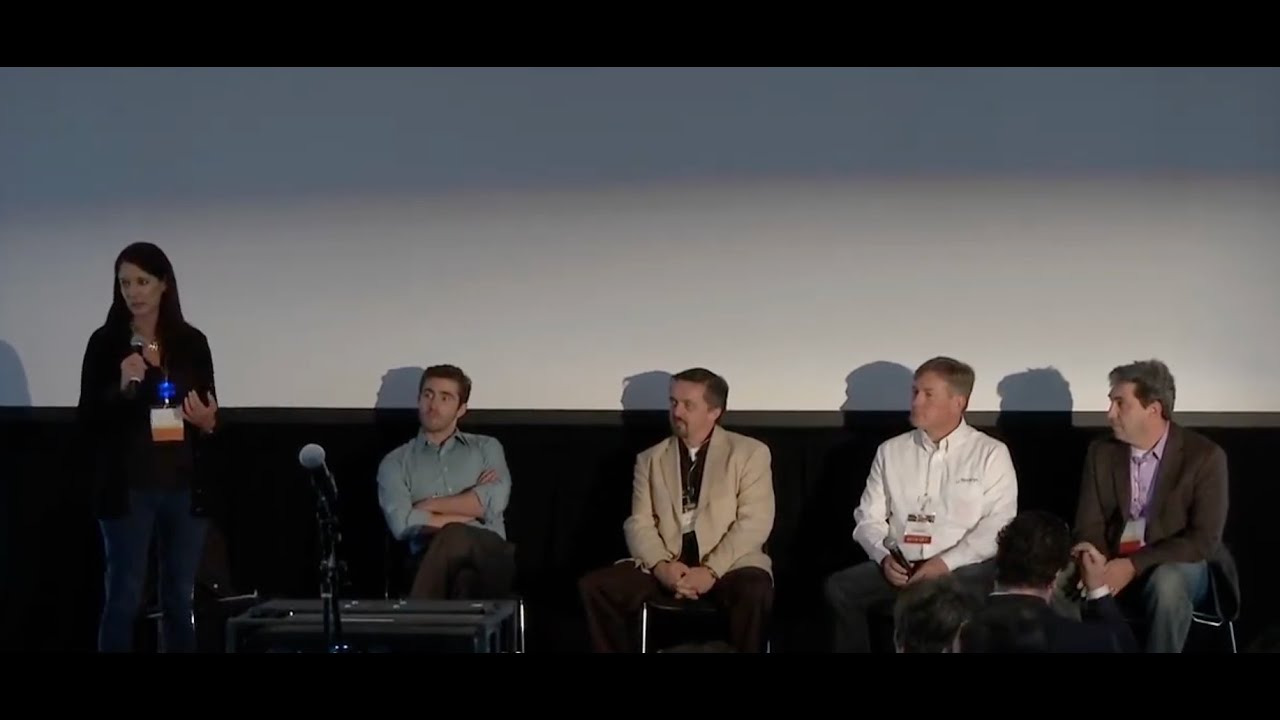
C Summit 2013 No, Really These Companies Transformed Their Businesses Using Cassandra

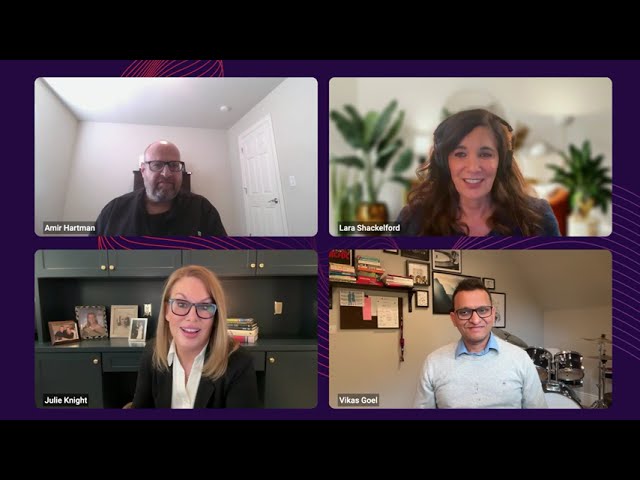
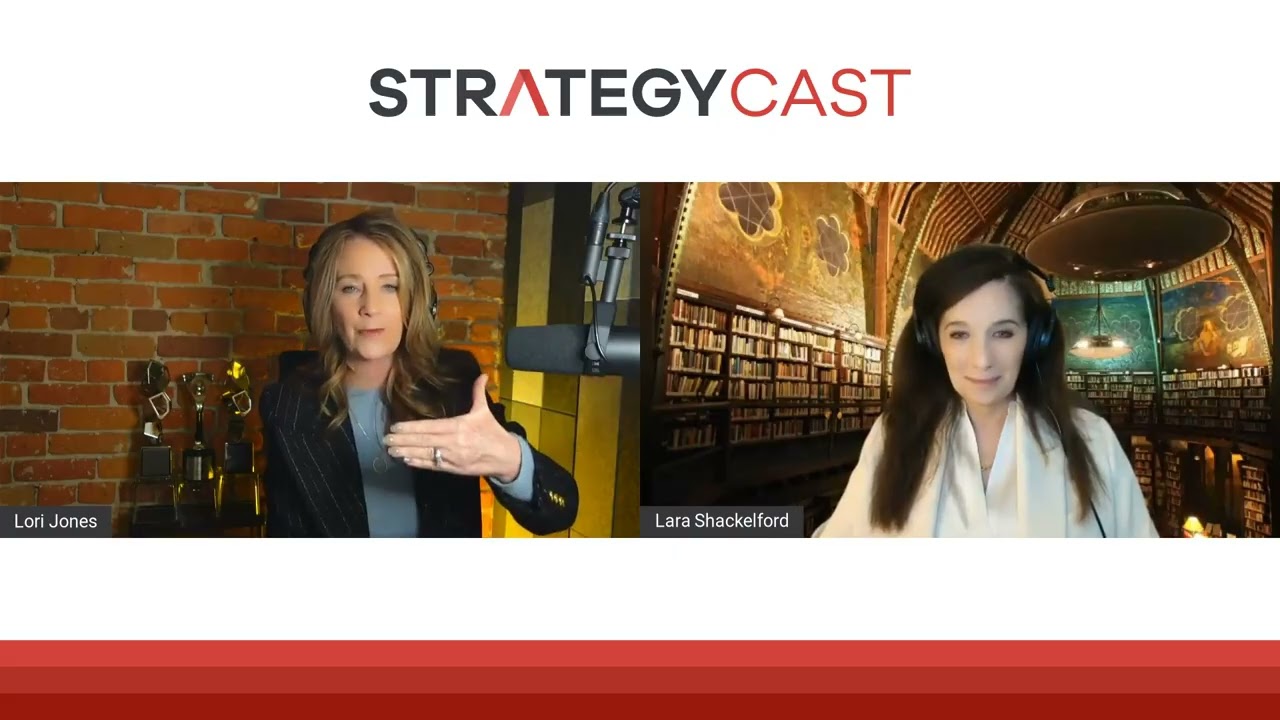
Strategy Magic: How to Leverage AI for Peak Efficiency with Lara Shackelford
AI Summit Forecast '25 Business Model Innovation & Growth Strategies led by Lara Shackelford