Orlando Insights Podcast Lara Shackelford: AI, Leadership & Inclusion
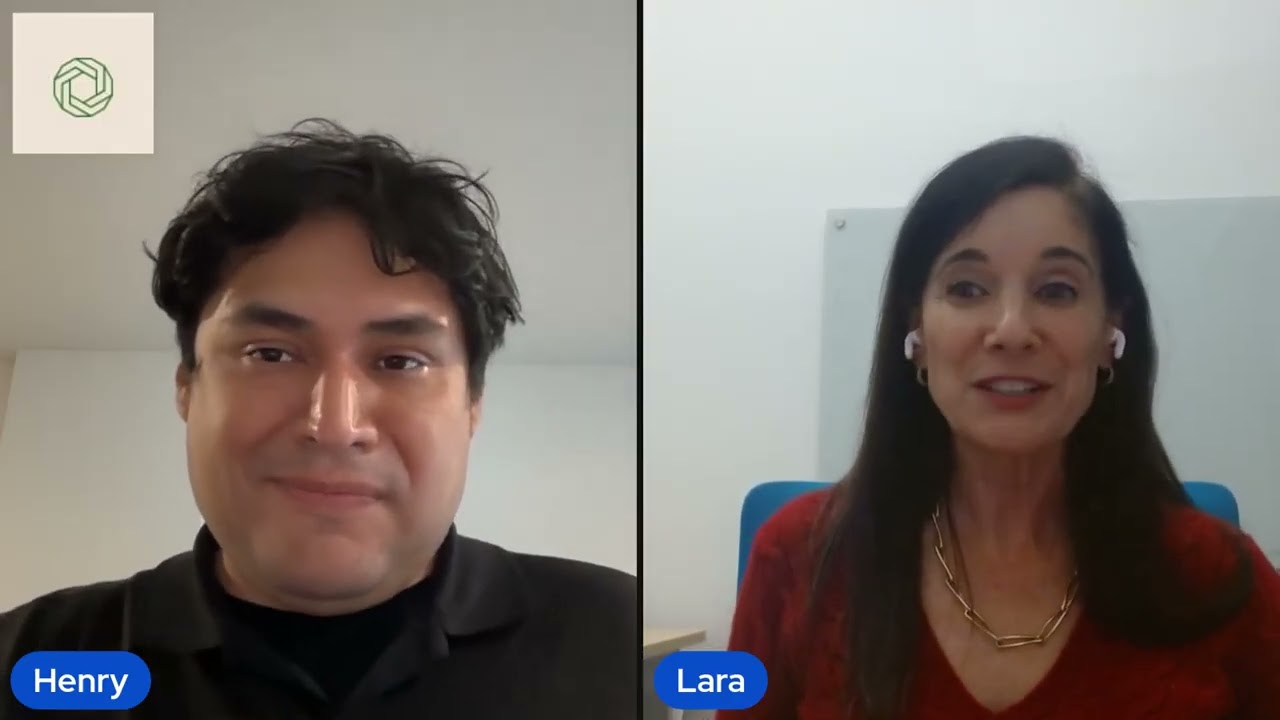
In this Orlando Insights Podcast episode, host Henry Clavo interviews Lara Shackelford, a senior marketing and AI leader with experience at Oracle, IBM, Intel, Microsoft, and several B2B tech firms. The conversation covers Lara’s career journey—from fashion design at Levi’s to tech leadership at Oracle—highlighting the early influence of diversity and inclusion and the blend of empathy with authority she developed. She shares her leadership playbook: listening to customers and data in the first 30‑45 days, establishing clarity and prioritization, and empowering teams while taking responsibility for outcomes. The discussion moves into growth tactics, where Lara introduces the concept of “signal integrity” for demand generation, the need for scalable automation, and the importance of aligning product, sales, and marketing as a single unit. She outlines her approach to category creation, emphasizing customer advocacy and turning customers into raving fans. When asked about balancing short‑term ROI with long‑term brand equity, she argues the two are inseparable, with brand experience driving demand. The pair then examine AI adoption: defining success upfront, measuring outcomes, and prioritizing use cases, while stressing change‑management and cultural readiness. Lara advises marketers to master the technology quickly to earn credibility with data and engineering teams. She predicts AI will enable hyper‑personalized, one‑to‑one customer journeys, and calls for organizations to meet prospects where they already are in generative‑AI tools. The conversation also touches on women’s adoption of AI, noting both hesitation and empowerment, and identifies blind spots executives face—lack of AI literacy, siloed ownership, and insufficient use‑case prioritization. Lara concludes with personal advice for emerging leaders: cultivate resilience, “bounce” higher after setbacks, and visualize success. She shares a personal anecdote about an early fashion internship that taught persistence. Finally, she shares her contact information (LinkedIn) and upcoming speaking engagements, including the Xerox Women’s Conference “RISE”.
Chapters
Hi everyone, and welcome. I am your host, Henry Clavo, CEO and founder of Orlando Insight Group. So each episode, we dive into real conversations with technology leaders, innovators, and experts who are shaping the future of IT data and cybersecurity. Our goal is simple: to give you practical insights, real-world strategies, and expert perspectives that you can use to drive smarter decisions and stronger results for your business. Thank you for joining us, and, uh, let me introduce you to our guest. Uh, Lara Shackelford is a dynamic marketing and AI leader with a track record of building and scaling high-growth B2B technology brands. With deep experience spanning enterprise startups and scale-up environments, she blends vision and execution to drive product-market fit, revenue acceleration, and category creation. Known for her strategic, strategic fluency, Lara has held senior marketing leadership roles at companies including Oracle, IBM, Intel, Microsoft, Datastack, Looker, Qlik, and Altify. In these roles, she's led global demand generation, product marketing, go-to-market strategies, brand positioning, martech CRM transformations, and cross-functional growth initiatives. Lara holds a postgraduate diploma in artificial intelligence from the University of Oxford. In her work, she frequently explores the intersection of AI, data, customer experience, help— helping organizations adopt AI-fueled strategies to amplify growth, improve agility, and better serve human-centric outcomes. An active voice in tech and marketing communities, Lara has been recognized among the top 35 women in B2B Top 100 CMOs and selected as a multiple-time LinkedIn Top Voice in AI. She's also an advisor, investor, speaker, and mentor supporting founders and leaders as they navigate scaling, category design, and evolving AI landscape. Lara's strategic compass, technical aptitude, and passion for sales and marketing innovations continue to fuel her mission bridging data most of human insights to create lasting revenue growth in the era of intelligent technology. Lara, welcome.
Thank you, Henry. It's great to be here. As you know, I've been following you for some time, so I, I, I immediately said yes when you invited me to be on the podcast.
I'm happy to that you're here. We get to learn something about you and your career. Um, we get started. Uh, career and leadership. Looking back, what's been the most transformative shift in your career that shaped how you lead today?
The, um, you know, I always say it's a combo of, of two things, and it started early. So I was— the first three, three years of my career, I worked at Levi Strauss, and I majored in fashion design, and that was my way of sort of combining corporate world and fashion. And Levi's was one of the first companies back then, I mean, ever, that had a, a— I forget what they called— an aspirational statement. That stood for diversity and inclusion and equity. And I learned the kind of good side of how to lead and manage even then, when I was first in my career. And they just did a great job instilling that in people and I soaked it up. And then I ended up with them in San Francisco. I was at Fisherman's Wharf every day and everywhere around me though, it was tech, right? At some point, a friend of mine knew a group at Oracle that was hiring, and I said, I've got to, I've got to get into tech. And, um, and then I went to Oracle, and it was a— it was one of the most fun runs of my career by far. I was there for 8 years. Love the relationships I built there of, you know, people who've gone out and done so many things in the, in the, um, industry. Um, but there it was a, a pretty tough environment, and, um, I had this self-gentler, gentler side that I got from Levi's. And at Oracle I had a manager who just taught me how to be strong and stand firm and be authoritative when you have to. And I, for me, I took that combination of those two of caring about people first, being empathetic, and, and also knowing how to, you know, just because I treat you with kindness doesn't mean, you know, um, that I'm not going to stand with authority and back up my ideas and push hard to deliver the impact that I need to. So I really, it happened very, very early on in my career through those two experiences.
That's amazing. Yeah. So being able to balance, you know, these roles and responsibilities as well as different personalities, that makes sense, especially when you're growing in your organization and you want to move up the ladder now. So when you stepped into the new role, how do you quickly assess where to focus your energy based on your prior experience moving in the world.
It's interesting to think how this will evolve with AI, but I won't go there yet. But I've always spent my first 30 to 45— not 45, you know, that's a luxury I don't have— but 30 days, you know, listening. And when I say listening, I mean certainly to people, customers, as much as I can. That's, that's always the goal, right? And, and then, and, and listening to the data too. And it's a combination of those three, but when I can sit down with a customer and find out, you can really get to the heart of— there's always the reason intellectually that someone made the choice they did to buy a technology or to buy a service or whatever it may be. But then there's the reason behind it as a person of what they're trying to achieve. And if I can get to that, that's always my fastest path to impact.
Yeah, you have to meet them at their at. At a human level and be able to communicate not only leadership as well as the data and tell a story, if that makes sense. Exactly. What leadership principles guide you when scaling teams through high growth phase and working with leadership as well?
One of the biggest ones is clarity and prioritization. No team member or group of people can be happy if they don't know what their priorities are. And in marketing, it's very easy for organizations to lose track of priorities because, you know, you've got this business person over here who's got this idea and something else just came up urgently and someone else has a stronger personality and you've got to have the agreement at the outset what success looks like and, you know, agree. So anyway, that was a long way of saying I need my organization to know that You know, these are your priorities and I stand behind them. And if something's shifting, I'll go back to the business, but I'll help you to be able to focus on what you need to do to be successful. One is that clarity and prioritization. And then just the other one is empowerment. I believe, you know, I don't need to sit and watch you work all day to know whether you're doing a good job. And AI will make that even more so, right?. And so I want my team members to know that they're empowered to do a great job. They're empowered to make their choices and I'll back them up. And it's me that's, if something goes wrong, it's me that's on the line, not them. Right. And with that, I think you've got the right start to having team members who feel supported and like they can be successful.
Definitely. Lara Shackelford. Yeah. You sometimes, From what I've heard, you must— you got to have a pulse check on what's going on, what's changing, what's the market adapting to. So I think that's a good indication of a well-prepared person and leader to be able to move forward in these changing times. And obviously, AI will be with us forever, to present to future.
Exactly.
And we'll move on to growth and marketing strategies, your topic. In your view, what separates good demand generations from truly scalable and sustainable growth?
It's, you know, the world we live in now is just so different, and it is being smart about capturing the signals. And I have the phrase I always use is signal integrity. Listening to the right signals. And also one of the bigger things is being able to act on them at scale. So you can have all the— it's funny when you talk to a sales team, they'll say, oh, well, I know when a client does this or I see them do that, then I know I can go in. It's like, where are we capturing that? And where are we going and looking for more of that? Right. And that's anecdotal, but you have you take the anecdotal and you take the data from what their behavior and firmographics and everything tells you and, you know, use that and build automation. So the goal— and we've been talking about this forever, but like so many things, it's now possible to have this customer journey of one, right? And where we're not the ones who are guiding the customer— that's not— we have been guiding them for quite some time, right? They're, they are guiding us. Tell us where you are, you know, we'll meet you there. And, and a good marketing organization can do that scale, and it takes a lot to have, um, you know, to have your data in the right place, to have your organization, you know, really understand that approach. Um, but like I said, I think it all comes down to that core idea of the signal integrity, know, really knowing the right signals for your customer and meeting them there.
Yeah, that's, that's very important. And not only that, you also have to have a team, um, going in the same direction, which, uh, Now that we talked about the customer, now the team behind it, how do you approach aligning product sales and marketing so they drive toward the same outcome, i.e., the customer's target?
Yeah, it's funny because that was just a recent topic and it's got to happen. It's got to come from, I don't want to say the top like in a military way, but you have to have your leadership has to be agreed upon you know, what success looks like between the three and what your priorities are, because they're, you know, the three are so interlocked— marketing, sales, and product. Um, and then, and then marketing and sales have to be in agreement of, of, like I said, what those priorities are, so then you can focus and drive the, the outcomes that you're looking for. So, you know, we've always talked about this idea of a handshake between sales and marketing, and it went the wrong way because marketing automation meant that people, you know, demand gen teams became this, you know, lead generation engine and I'm gonna throw MQLs over the fence and good marketers didn't do that and didn't intend to do that, but still it ended up being the situation. It actually was supposed to bring us closer together and it divided us more. I have no doubt that because of the technology that we have in our hands today and what even more what's coming, Sales and marketing are more and more going to become one. I mean, I can't have an initiative where I think, you know, this is marketing. It's like, I need sales to champion this in many ways, sometimes more ways than I have marketing champion. So anyway, I think that's that alignment, like the true alignment. And then it's that, it's the kind of being willing to operate as one, you know, one team in a way that we haven't done in the past.
Yeah. And with the challenges of, you know, trying to outcompete your competitors, trying to come up with a tool that would help, not only increases productivity, it can also slow down some other process from what I've seen in the research. Many leaders talk about building categories. What is your framework for successfully carving out space in a crowded market?
I'll tell you, I've, you know, I've been a part of category creation, and it was— it actually— category creation became a category for a while. And it was— I was early on, we were working to create this category of predictive analytics when I was at SPSS. And then I think now it's not so much about are you going to create a category, as, you know, are you filling a market need? Do you understand you know, what it is. Are you, are you out there trying to create the need, or are you, you know, being pulled into a need? And, um, and the thing that has been my through line in my entire career— my, one of my first roles in marketing at Oracle was, um, customer advocacy. And, but that just had such a big impact on my career. And I, I think I've just never found a way to better engage with customers than helping them see themselves in their peer group, you know, their peers are working with you, they are successful in this way. And, you know, there's so many ways that you can do that now. It's not just a, you know, it's certainly not just a one-to-one customer-to-customer relationship introduction. But whether you're creating a category or not, I say get your customers to, you know, be your raving fans and make them the heroes of your story, and the rest will follow.
That makes complete sense based on your your prior experience at Levi's, you know, prioritizing relationships and customer outcomes, that served you well. So glad that has worked out for you even now. Um, as an executive, how do you balance short-term ROI and long-term brand equity?
It's funny, I thought about this question for a bit because I, I don't remember the word you used, but to me, they're there's no— you can't unbalance them. I mean, you can. There can be situations where someone is trying so hard to be, you know, they're driven by a sales leader and they're trying to unnaturally drive to that ROI or revenue. But in most worlds where I've been, I've been a marketing leader, they're just hand in hand. And brand is demand generation, and good demand generation helps drive the brand, and they just go so closely together. Because, you know, you're engaging with people, you're creating great experiences with them. You've got, as I always talk about, signal integrity, but you're getting the signals from the customer all the way from the time they're a prospect to the time they've, you know, filed the call, made their first call or chat to support or whatever it may be. And so, yeah, I think that they are— and that is the brand, you know, their experience there is the brand. And you make that a great experience for them and they're going to tell others and tell others. And by no means is that the only piece to the brand, right? But that's just such a fundamental example of where the two are one. And I think it's really important for people to get that demand generation requires commitment to brand, investment in brand. They go so strongly together.
Yeah, I can think of other examples which I won't mention, but I know when they changed the brands, and they— or they change direction, customers tend to flee. And I found that very interesting, especially in our current landscape.
Yes, exactly.
How do you evaluate whether AI or data initiative is truly adding value versus just being hype? So in your, in your realm, you've seen Adobe or any other tools being adopted in market, how effective is it for you guys?
Yeah, and, and I know we're all aware of the recent reports that said, I think it was 95% of AI projects fail, right? Um, and, but I say that, you know, in my experience I've seen them fail when, you know, success isn't defined at the outset and you don't have alignment to begin with. And then if you're not measuring— kind of answering this in negatives— but, you know, you should be measuring the the output and your progress along the way. And change management is such an important piece of all of it. And I think, I have no doubt that change management is more important today than it ever was, right? So, um, so one, are you seeing outcomes? Are you seeing a change in, in, you know, in your business? Are you seeing behaviors changing? And then are you starting to see that impact your bottom line? And If you're not tracking to the goals that you were, that you believe that you would, then, you know, adjust and do it quickly. And, you know, do the whole Silicon Valley fail fast thing, which we've been doing for, you know, decades. But do it and move on, or, you know, get the, you know, make the changes that you need to, to keep going. But I think it's, again, it comes down to that, the alignment at the outset, you know, focus on your goals and being willing to adjust along the way or walk away if it's not the right thing.
Yeah, yeah. And I was speaking with individuals who worked in the big tech companies. They focus on time. If you could do it fast, do it quickly, it's all about ROI. And then the second part is when doing these AI initiatives, usually they're very broad, just build it, I don't care how you do it, but usually these fail because it's not very specific. It's not directly tied to a goal. And usually those are where investments go to grow more. So that's absolutely—
I'd like to say I haven't seen that myself, but it's actually a pretty classic story that's happening right now, right?
Yeah. I would say that once an organization realizes that we need to have this sketched out, planned, and then also keep aware of the people who are new to AI might not be on board with it. So that's a piece of change management that needs to be understood in that part process.
It is.
What advice will you give to marketing leaders who want to build credibility with data and technical teams?
So one of the favorite parts of my career, I've loved that I've been in tech almost my entire career. I'm at a fintech now, but the technology part of it is I have to learn the technology as fast as I can and as deeply as I can, because if you don't, as a marketing leader, you have no credibility. And, you know, whether you're in a tech company or a finance company, the faster that you can establish credibility and really know, you know, the product as well as the people maybe not the ones who are building it, but as close as you can get to that. That's how you're going to have that credibility. And I once, I had, I was working with a really technical product that I was marketing and I had a co-founder who would come to me and say, oh, I was running training as part of my remit as a CMO. And I was responsible for training curriculum and selling it. And the co-founder would constantly come to me and say, Oh, I noticed that your team member was wrong on page, you know, 83 to 98, which is— that's not actually— it wasn't that long. But my point is, it was a— it was— he was challenging me constantly, saying we weren't getting our materials right. And I had to go so deep to learn the technology because if I didn't, I couldn't— I couldn't say, yes, you're right, you know, we'll fix that moving forward, or you're wrong and I'm pushing back on you, right? You can't do that unless you know the technology. So for anyone out there is say, you know, one of your first things in a business— I talked about listening earlier, but one of the other things is getting to know the product as best as you possibly can.
Yeah, that makes sense. And, um, when you, uh, work in your organization, is that, is that still the case? You still, uh, have a learning foundation and time, or, or is it usually 30 days?
Oh, it's direct. Yeah, I wish I could, I wish I could get all that done in 30 days, but there's definitely a longer ramp on learning. And I think, you know, where companies can— when back long ago when I was at Qlik, within your first, I think it was your first 6 weeks, you, maybe it was your first 60 days, but anyway, you, you flew to wherever you were in the world, you flew to Lund, Sweden, which is where the company was founded, and you spent a week and at least 2 of the days were full days learning the product. And you had to then go and present the product, you know, what you built with the product after you learned how to use it. And that was such a good foundation for anyone. Oftentimes, most orgs, I would say, don't— they might allow a few days for training early on, but they don't have that structured approach to make sure everyone knows it that way. But for any organization, I would say, if possible, you know, they should do it because it's just let's get everyone aligned as fast as we can when that's not the case. So yeah, maybe, maybe it's slightly longer than that, 30 days, but I think as quickly as a person can. If it's 90 days, 120, and sometimes the industry is so complex, right? If a person's new to an industry, you can't— you can learn as much as you can quickly, but there's still times where it's 6 months in and you're learning like a new situation that you never heard of before, right? So it's also, I guess, that willingness to be open and Acknowledge the things that you don't know as they come up, and then as soon as you see that, you know, figure out how to learn, you know, how to learn about them and be smart as you move forward.
Yeah, and develop— I know everyone's different, but they can all develop their own learning styles or habits to integrate this piece by piece, like learning a new language. You're not going to do it all in one piece.
Exactly. Yes, layers.
Pretty much. Yeah. Good, good, good, good, Lara. Where do you see the biggest opportunities for AI to transform customer engagement in the next 3 or 5 years?
It is that, I mean, it's our, again, I know I said it earlier, but it's already happened that, you know, 80% of the prospects, they're 80% of the way through a buying cycle, you know, before they go to a company to inquire and start to engage with a company. Or at least their, you know, their decision cycle. And, um, and, and then, you know, what they learn on, you know, on a chat, you know, on an— when they go to a Gen AI tool, that's, that's what so much of what's going to inform them. But, you know, the other piece of it is then how are we as marketers and sales leaders, how are we meeting them where they are and engaging them? And so, you know, people need to have their strategy for how they're, they're showing up in the GenAI models, right? How are they— there's technology and tools that can help them do that. There's, you know, but there's— there they need to— anyway, I think I, I kind of want to bring this back to just the very clear— it is that really that customer driving the journey. They're already doing it, but, but maybe let's make it easier for them. I guess that's what I think is going to happen, and when you're able to take automations and build them down at a level of one individual, and when this person does this, when an individual does this, you know, we'll meet them there with these materials. Then if they branch off and go here versus someone who goes here, you're meeting them right where they are and not trying to guide them. There's no longer this, oh, what's the customer journey? And everyone, and by the way, everyone is what, the same customer on the same customer journey, right? It just, I think people are going to have— they already have so much more, I guess, flex in driving the experience for themselves. But what they're not getting— they're not being met yet with where they are, where people are, you know, meeting them exactly where they are. And I think we're all rushing to try to get there as fast as we can. But I can only envision 5 years from now and how different that will be. I can't even really get my mind around how how different that'll look in 5 years?
It just happened recently. OpenAI just released an SDK kit so you can build your application and process with low-code, no-code solutions. You have access to a model, have access to agent, just need to have a knowledge of how they work, how's the model working, and how can you turn a use case specifically for your organizations to leverage that technology effectively. AI workshops, AI initiatives with be around for a very long time.
Oh, it's incredible. I'm so much—
Oh, sorry.
Oh, what's that?
Oh no, it was someone texted me.
Oh, okay. No worries. Sorry, I just lost my train of thought. I need to get it back now. I have almost never felt so powerful in my life because of what you just mentioned. That I, you know, this weekend I was working on a survey for women in AI, and I was able to build this beautiful survey. So, I mean, it took time because I care about it, right? And I wanted to set it up the right way. But I took something that would have taken, you know, when it was earlier in my career, it would have taken a month for someone to do this, to really think through the questions and make sure that you're going to get the kind of provocative outfits that you're looking for. And I just— I use Lovable to do a version. I used one of my classmates built this company Chat and Build, which is also for, you know, you can use it to provide coding. But it was just so beautiful and it happened so eloquently, right? And I just— if I think of something that's annoying and that I have to do in my life now, I can just jump on to Replit and Lovable and Chat and Build. And I also go to ChatGPT and I'll, you know, use Zapier and the things that I can automate and make my life so much easier. And it's now I just need more time to automate the things in my life, right? But it is just amazing. And in fact, I'm doing a keynote for the Xerox Women's Conference in a few weeks and the— I'm doing a workshop afterward on vibe coding, you know, because I want all as many people as can possible to see and to know that they can do it too. It's just so empowering.
Oh, can you give us a sneak peek of what you'll be discussing at this year's conference?
Uh, you don't have to reveal much, but yeah, yeah, the theme of the conference is Rise. And, um, I've always had this idea in my mind when I either— when I'm going for something big or if I just hit a really big low, you know, and I'm like, I can't believe I see this, I— this is— I'm here right now. And I just say bounce to myself. And their theme is rise. So I like that, you know, it's kind of that idea of, you know, I think right now women in AI are starting to adopt faster. We're closing the adoption gap, but there's more, there's a lot more culturally that organizations need to do to make sure that women and others come along in terms of making sure that they feel, you know, that they can, they know how anyone, knows how to use by coding, you know, to, to build things, that, um, women feel like their work, if they develop it in AI, will not be judged, but they'll be, you know, empowered just like anyone else would. And so we're going to talk about how you, how you use this opportunity in AI to rise higher and kind of leapfrog where we are today as women and, and use it to do more than you ever thought possible. So that's That's the highlight.
Wow. Before technology was very exclusive, you have to know how to code, but now with live coding, you have that luxury of going in and build an idea quickly. From your experience working in different fields, how has women been able to adopt AI in their current, let's say, workflow? And office use, or are they still hesitant compared to the other side?
You know, the data says they're still hesitant. My own experience, I see just as much either hesitation or, or empowerment in women and men. So I haven't seen it yet. But the data, like I said, there's a lot of research out there that says that women are more hesitant. They don't feel that they'll be trusted as much or seen as credibly, you know, if they do something with AI. Um, and so I think anything we can do to just pave the way and make sure that they really feel like, um, you know, and I think a lot of it is just giving people the, you know, the opportunity, letting them share their work, seeing their work in action, right? And and know and see that it's going to have the impact they want it to versus feel like, you know, they're— it's like they've got an idea that they've got to try to, I don't know, pitch. I'm still figuring out how I, you know, I know how I think about it is that I want everyone to see that they're powerful, right? But there's so much to it in terms of change management and training and again, that having it be a part of the culture that is the safe-to-fail culture, right? It's a big part of it too.
It's interesting. I did read somewhere or study that if managers or hiring managers look at someone that's done AI work with their resume or with their workflow or their jobs, they seem less competent as opposed to who hasn't used it. I just found that very strange, but I guess It's a way of— is it done on merit or do you rely on the technologies to do it for you?
I found it so strange. You know, I certainly welcome great work in any way that it gets done. But I will say when I see people bring forward work that they've used AI to do, I'm impressed by it. You know, someone had the commitment, the time, you know, no one has time, right? Someone made the time. You know, they're willing to put themselves out there because it's, you know, on the one hand, yes, everyone can use GenAI tools today, but to really move to that next level, it takes a little bit of, you know, taking some risks. So I can't imagine a mindset that would not hold that in high regard. But it's, again, I've been doing a lot of research and the data says that that's true. So I want to get more, I really want to understand where that comes from because it doesn't make sense makes sense to me either.
My educated guess is, I guess, based on past experience, it's usually a culture or organization used to certain things not to change. But yeah, I digress. It is a very interesting time and very interesting tool to use, and it would be foolish not to use it now.
Yeah, and we both just made the point, I think we can understand the importance of the culture of the company and culture of the organization, the team that people are in, and what a big role that's going to play on whether people do feel empowered, you know, to do, to do things with AI. That's a huge part of it.
Yeah, yeah, I totally agree. Uh, Lara, from your perspective, what are the blind spots executives still struggle with when it comes to AI adoption, like we were discussing before?
It's funny because there's there's so much understanding today of how AI can work for organizations. And at the same time, you know, organizations still struggle with AI literacy for everyone at the organization. Um, you know, you'll have someone who starts up a pilot group, but it's a group, right? And, um, and maybe they'll train the pilot group but then roll something out broadly without training the rest of organization. I think they're still just— they're just still really early days in terms of organizations understanding where this fits in the organization. We're seeing a lot of— I'm seeing a lot of times where it's sitting under the CTO, which is a great place for it to sit, but wherever it sits, it needs to have the, you know, it needs to have the support, the measurement, you know, the clear outcomes, the cultural support, all of that. So anyway, that's, that's, I think, kind of what comes back to what we've been saying about that change management and culture.
Yeah, it's very important. If it's not established, then it is a free-for-all. There's no collaboration, and the outcomes are not documented. Yeah. Oh, go ahead.
No, I want to let you finish and then I'll add one thing.
And then there's the other end where there is a lot of documentations and a lot of meetings. I've been in meetings where I spent 2 hours, 3 hours saying one word. So it is, uh, needs a balance of those two.
It is. And I was thinking the other, the, the important part of that too is I keep talking about prioritization today, but use case prioritization, right? And what, how are you going to leverage AI to grow your business, and, and how are you going to leverage it to become more efficient, more productive, so that, you know, you have space to grow and space for people to think, which helps them to be more, you know, make a greater impact, right? So it is also that use case prioritization, that don't just go throw everything at AI, or, or, you know, have people choose use cases without having a framework. And there should be a way to prioritize, you know, what's the weight of this for revenue, how can this make an impact on the business. Like, I've got a— and I'm— I can imagine you must have 1 or 20 versions of this, but I've got a, you know, spreadsheet that I use to prioritize AI use cases where you look at the impact to the business, the time it'll take, the ability to be successful, all of those things. And you have to think that through at the outset, and it shouldn't become a science project where it's 3 weeks to look at a use case and a 3-hour meeting every time you have a use case like the one you mentioned. But you absolutely have to put thought into it or else you're going to end up, I think, just with a lot of people experimenting, which experimentation is good to an extent, but you also need a focus.
Oh, I got a story there. There's someone who like became a manager and didn't know any about Agile, so all she did was hog all the work, felt bad sharing it. But she put all her tickets and requirements in one bucket and start prioritizing. It's, it's primitive, but I guess it's a starting point to plan what is important, what is important for a team, what is important for the organization, and for them to help their support grow.
Right.
Yeah. But yeah, I guess we can move on to reflections. I know that we touched upon the future of AI and cultural shift. If you could give one piece of advice to rising executives who want to lead at the intersection of strategy, marketing, and technology, what would it be?
It would be bounce, my personal term, but it would be. It's, uh, you know, we're only— there are so many things that can hold us back in the world, but the biggest thing that will hold us back is how we, how we talk to ourselves and how we think about our potential. And so, you know, when you see that roadblock, when you, when you have that unimaginable experience in your life or your career where you think, I would never thought I could be here, because I can tell you I've been there, I've had a few of them now, right? That's how you but every one of them has made my muscles stronger, you know, and made me more able to go higher. And so I just encourage, you know, people, be kind to ourselves, be willing to take the risks, and just, you know, kind of— it's going to sound— now it's going to sound a little bit like really manifest what it is that you are trying to create and what you want, because it's ultimately it's going to come down to you.
Yeah, having your— determining your own destiny. Curious about pounds. How did you come up with these? I would have my own process with talking or interviewing or speaking with people. Mine is nonverbal, but that's very interesting. Maybe you can elaborate on how that helps you, your day-to-day?
Yeah, I just think when I see it, I have these phrases that I've had in my life, and, um, and I don't know where they, you know, they come from, but I, you know, I think somewhere all of us have a story inside of us, right, where there, there's a moment, hopefully, um, and there's not, then one create it, but where you, you you saw that there was something more that, that you can create in your life if you want to. And there was long ago, there was this author who, I mean, Norman Vincent Peale wrote a book about the power of positive. I can't remember the name of it now. I read it inside and out when I was a teenager, but it was all about manifesting, you know, what you want. And, and even though Yes, a lot of it was visualizing, but a lot of it was go get what you want and make it happen. And, and so I, I kind of took that book and made it a big playbook for myself of persistence and resilience. Of, you know, like when I, when I was in college, I had to do an internship and I, I was getting a fashion design degree in Columbia, Missouri, and I wanted to go to work for a top designer in New York. And, you know, they could have people from FIT, they could have people from Parsons, and they could have me.. And, um, and I knew I had to stand out if I was going to get an internship like that. So back then you mailed paper resumes to people and I went and people would send them in the spring. I went and got the finest paper I could afford. I sent resumes with very personalized letters in December and I went back to school after the holiday break. And my back again, back then you used landlines and my home phone started ringing and they 5 of the designers, top New York designers, called me, and I ended up with 3 offers, and I chose one, and I had a job offer for them by the end of the summer working for them. But it was, I think, because it was— I'd read that book, and I knew I've got to find a way through this, right? I want to do that and be that, and if my limitation is this, there's got to be something that's going to make me that much higher. And I can't— I can't— I always think of that idea of balance, like I'm here, and I'm going to bounce higher. And so anyway, I think we all have the stories though that we can pull from.
Yeah, definitely. I could take a video for what I saw from Steve Jobs is, you know, his advice was in the video, people don't just don't take the time just to pick up the phone and call for help or ask a question, someone important. So for you, Lara, was there anyone that you know, you called, metaphorically speaking, of course, that helped you along your journey? That one person that gave you that push that needed to move to the next level?
Gosh, so many. So I don't even know where I'd start. But since I'm— my mind now is on that fashion design experience. I loved design and I had— I thought they were great ideas. But I was just not good at drawing. And so back then, you, if you wanted to be in fashion design, you had to have this beautiful portfolio. So here I go, and I was interviewing for these internships, and I had to bring in my portfolio. And I sat across, I went in to see Nicole Miller, and I knew my drawings were terrible, but I hoped she'd see what I was trying to execute. And she said, she looked at it, and she zipped up my portfolio and pushed it back at me. And she said, look, I don't ever want to see you draw again. And she said, and you know, that could have broken me alone. I mean, I just wanted to, my mouth got dry, I wanted to start sobbing. And she said, but I'm hiring you and I'm offering you the internship because if your drawings are that bad and you have guts to come in here and sit in front of me, there's something else there. And, um, so when I started my internship, you know, she— I, I was, uh, they hazed me, um, and for 6 weeks I think I called my mom crying at the end of every day and I wanted to go home so badly, but I didn't. And, um, there were so many stories I could tell, but at the end of 6 weeks, that team, that her design team, there were 5 of us with me as an intern. They took me to lunch at this great Mexican restaurant at the time and gave me this one of her pieces of apparel as a gift and said, "You're in, like you made it." And then it was the summer of my life. And so I think that really stuck with me though, that it had been so hard to persist when, you know, I was getting yelled at and sent on all these horrible errands and, you know, I thought I didn't deserve to be treated that way, but all at the same time, I wasn't going to let them make me quit. Right. And so just sticking through it, that was just a life lesson that Nicole gave me. And she was just great and such a factor in my life. So I'll always be thankful to her for teaching me that. And in the end, like I said, she was a really wonderful person.
Oh yes. Yes. We all have that person who was tough with us, but they were helping us in our journey.
Yeah, exactly.
That's amazing. Lara, uh, thank you so much for joining the Orlando Insight Podcast. Great to learn from you, your experience in marketing and AI, and your personal experience and passion and your past. Uh, I will give you some time to, uh, outline where— how people can find you on social media or any locations that you could Yeah, I, you know, LinkedIn is my place.
I used to do a lot of Twitter back in the day, and I— so anyway, you can find me on LinkedIn, um, Lara Shackelford, because most people throw you in there as they would. But, um, but yeah, just DM me on LinkedIn, and I've got an agent that I built that cuts through all the, the, uh, all the spam and tries to find the real conversations in there. So, uh, So I'll do my best to engage and follow up with people.
Definitely. And any events coming up for you this year or next year, Lara?
I've got a couple of speaking engagements coming up at a kind of smaller, more closed conference or two in the fall. And then the Xerox conference is actually open to other women to join. Well, it's— Xerox conference, anyone can come. And so that's at the end of November. It's called RISE, as I mentioned. And so that's a big one for me. I'm really excited about that. And then there are a few things to come for 2026, but to be finalized.
Oh, we look forward to it and we'll share that information once they become live. Lara, thank you so much for joining us today.
Thank you, Henry.
So that is it. If you want to capture more or see more interviews like this, please like, subscribe, and follow Orlando Insight Group on LinkedIn, YouTube, and Spotify. It's been a pleasure. Uh, well, have a good evening. Bye.
Thank you so much, Henry.
Bye.
More from Lara


C Summit 2013 No, Really These Companies Transformed Their Businesses Using Cassandra


Strategy Magic: How to Leverage AI for Peak Efficiency with Lara Shackelford