162 Minutes Of Million-Dollar Direct Response Secrets (Uncut & Nothing Held Back)
YouTube interview (162 minutes) with Julius (direct-response marketer) and Speaker A. Julius describes his background (formerly SaaS/growth/ecomm; claims ~$15M revenue generated online) and current focus on paid direct-response funnels for info/high-ticket coaching and done-for-you clients. Major topics covered: conversion mechanisms (VSL → DTA application funnels, post-booking VSLs, webinars, low-ticket ascensions, opt-in/nurture funnels, DM funnels), maximizing VSL consumption (modular consumption, confirmation/post-booking VSLs, mechanism videos, strategic case studies), tracking/analytics (Microsoft Clarity, heatmaps, Vitalytics for video plays), Typeform/app flow optimizations (first-question sequencing, reduce friction, explain why fields are asked; example: 96% drop on broken first field), sales-marketing alignment (scorecards, call transcription scoring, show-rate tracking by setter/closer), KPI math for paid acquisition (use day-1 cash, 90–120 LTV, book-to-close math to derive break-even cost-per-book), creative & AI workflows (deep research via LLMs, competitor ad transcripts, prompt templates, hooks/catalyst hooks), creative formats that work (podcast-style, FaceTime style, green-screen with proof, B-roll, native-looking statics), and operational fixes/growth tactics (group SMS/WhatsApp reminders, calendar integration in Typeform, conditional automations).
Questions this video answers
December 18, 2025.
Around $15 million.
He prefers longer VSLs, around 12–20 minutes.
He reported a 35–40% lift in show rate from that test.
A funnel had a Typeform with a broken first question causing ~96% drop-off on question one.
Chapters
Quest some slight tribulations due to excessive launches. Yes, we are still working with done for you clients. We're not full time info coaches. It's been in the works. My main man Julius, of course Biomedia on Twitter where he's of course more known for and by Judas man. Kind of give us a brief overview or background of what you do because I understand. Right. On Twitter we've kind of got that bio and people don't understand the ins and outs of what you do. If you could just give the guys, that'd be amazing.
Yes. All right, what's up everyone? My name is Julius. If you guys don't know. If you guys didn't watch the Ryan podcast. I am a direct response marketer, copywriter, ad guy. I build landing pages, I do email, I do all the stuff year to date, I believe if I've tracked it correctly. Actually I think it's a little bit more now. I've generated around $15 million in revenue online in a variety of different niches. Right now my focus is in info and IT coaching, et cetera. You know, all rows lead to Rome. But before then I was a SaaS marketer, growth marketer. I worked for nine figure companies like you know, officially, properly as a job I worked for, you know, I had my own e comm brand, had my own clothing brand. I consulted with like big, big e commerce companies. I ran creative strategy, copywriting, all that stuff on that side as well. Now I'm more focused on info. Now I'm more focused on scaling offers and anywhere from real estate to investing to, you know, mass market biz op to some other, you know, a bit more obscure niches as well. And so my whole thing is I run ads. I run them profitable. That is basically the entirety of what I do. I hope those are, those are good intro.
Wonderful. That's a spectacular intro. Now of course we're going into conversion mechanisms, funnels and what you actually implemented for these clients. Right. But you mentioned, of course the main goal is converting cold customers right. Into paying clients. Right?
Yes.
How are you doing it? Does the conversion mechanism depend on the client and the industry or how do you finalize upon that one? Conversion mechanism?
Yeah. So right now I actually posted a comment as a reply to someone. They're asking me the same thing, like, hey, what mechanism are you seeing working? The best I've done, I've, I've done them all. The one thing that I haven't done as in depth as I would have liked to is like a low ticket ascension funnel. With like optimizing for aov, all that stuff. I was in an offer where I was like consulting on like just purely front end ads, all that stuff. I was consulting there but I didn't really get. I didn't get to get into like the AOV contribution max and like all that stuff like adjusting the offer, split testing, pricing, all that stuff. One thing I haven't gotten in depth but everything else I have done them. Oh, and besides challenges as well, that is a mechanism that I want to get into as well. But I have been reverting back honestly to the tried and true. I did webinars for a while. I did this kind of like nurturing funnel for a while. I don't know if you guys know Nick setting where it's like the profile funnel and it's like a bunch of just cold broad ads and you create retargeting audiences based off of hold race, all that stuff. I was doing that. I did a lot of opt in funnels where it take a long nurturing journey, et cetera. It does absolutely depend on the client. It depends on the vertical, it depends on the offer. So if I have a. For example I'm working with a B2B client right now where it's just direct service, I'm pretty much always and the offer is optimized for cold traffic. I'm like book a call funnel like nothing else. I don't do that first get that down and then let's explore other things. Right? If it's, if it's info especially like B2C genuinely I right now my two highest performing funnels are also literally VSL DTA funnels where it's ad direct to an application page. Nothing is gated, nothing is timed. Now another conversion mechanism I'm testing right now with kind of a partners kind of like a side business coaching offer is an opt in funnel. So add opt in funnel, get free thing, whatever. Next stage is a time down VSL which where it's like wait, your access will unlock in five minutes timer there and then the VSL kind of like that. And then after five minutes it's the pitch to the Ascension offer. So direct pitch to the Ascension offer, right? And it's a bit different because I don't actually give them the free thing on that page. I give them the option to just hey, if this does not interest you, the free things in your email, it's in your text, go there. They get to a nurturing sequence that has been performing exceptionally well right now as well. Now the ad Spend is low as like 300, 400 a day. So it's not like, you know, super high scale. But that has been performing exceptionally well. Webinars, of course, like I've done those. The thing with webinars that I've noticed is one, if one thing breaks like good, goodbye, goodbye. There goes your whole week's like you said the wrong. Like you send the wrong link or you. The link doesn't send. Oh right. Like, you know, and especially if you're. Oh my God. Especially if you're doing direct to cartoon. I haven't, I haven't been able to extensively split test the results but like in within the same offer because I was in one also real estate offer. Whereas just direct to direct to cart, direct to checkout on the webinar performed really well. I never got to split test a book a call. But then I have another webinar in another vertical that is book a call. So after the webinar and they both performed exceptionally well. My thing is one your backend ops has to be absolutely dialed to. Your spokesperson has to be so exceptionally charismatic in terms of how they deliver the message. The webinar format is like the one where the delivery is the most important. In my case, you can reshoot a vsl, right? It's hard. You can't reshoot a live webinar. Right. That's another thing. And then you just have to be really cracked at long form copy, really cracked at long form copy to create the slides. Right. They all work. That's the cool thing is they all work. I don't care if you're doing an AC funnel, a low ticket funnel, direct, high ticket, opt in, downsuff, it doesn't matter. It all works. If you have the principles in place. They all work.
They all work is one tweet I put out a while ago. It was kind of like every conversion mechanism works. What doesn't work is your reactive mindset and jumpy mindset expecting that success is going to be the next conversion mechanism. But it's not. Right. It's about keeping consistent with that one conversion mechanism for prolonged periods of time. Right. Now I want to go back. You of course mentioned the DTA funnels. Right. And I can maximize the consumption. Right. When you go from whole direct response ads to the direct application. Right. Like the typeforms of course. Embedded, I'm assuming. Right?
Yes, yes.
How do we maximize the consumption of the VSL to ensure that high quality lead is actually filling in the Typeform application?
I. So this is unpopular opinion. I Don't. So I'm sure we're all people who are watching this. If you don't know who Jeremy Haynes is, look him up after watching this. But there's, you know, he has this principle of back end selling systems, right? And so in the case of the real estate VSL DTA funnel, right Is I know because I look at the heat maps, so I can see that there's a lot of people who actually click apply, go through the entire application process. They watch like five minutes of the vsl, right? Or three minutes or whatever. I'm the kind of person, I like longer VSLs, I like 12 to 20 minutes, I really do. But to counteract that, what I have is I have a post booking vsl and I'm going to get into this because I've been working on a new template that's working really, really well. But in that post booking vsl I essentially restate the core messaging elements that are in the front end VSL and I just nurture them and I really focus on overcoming obstacles that we know based off of sales call recording data are in on the sales calls, right? And so I'm not just relying on the front end VSL consumption. I also have a VSL after and then what I'll also have is I'll have like the confirmation video, right? And so there I'm just breaking, I'm building beliefs that I want to build, breaking beliefs that I want to break, overcoming obstacles, all that stuff. Sometimes if the, if the offer, if it's a very sophisticated market, what I'll have is I'll have a mechanism video and this is a separate video, right? This goes literally into exactly how this thing works step by step by step. Daniel Fazi was a big, big proponent of this and he's absolutely correct. Then at below that, what I'll have is I have something called strategic case studies. So let's take for example, let's say I'm, let's say I'm selling like a marketing offer and I have, I know that an objection or an obstacle on a call is like, hey, how much money do I have to spend on ads to even like get this thing to work? Like I don't have, I don't have a thousand dollars a day in budget, right? And let's say my offer can still facilitate those people, right? I can still service those. What I'm going to do is I'm going to take a case study and instead of doing what everyone else does, which is like an interview, like hey, how much Success are you blah, blah, blah. No, I'm only, and I'm specifically going to speak to how this success story, this client, they did not have to spend this much money, right? Because whatever the mechanism of my thing, right, because it is purpose built so that you can get an ROI. If you're spending 50 bucks a day, a hundred bucks a day, it doesn't matter. And so I reframe the mechanism, right, to overcome whatever obstacle it is and I just attach a case study that validates, that proves it, right. That justifies it, right? And I do this for as many, as many obstacles, as many objections as I think I'm going to have. Because the thing now nowadays is it's harder and harder to force consumption. That's just the reality. Like I don't care if you have an opt in funnel, I don't care if it's a timed up, people are going to leave. Like literally just go into vitalytics, look at your engagement graph. People leave either way, they're going to opt in without, they don't care. And so what we need is modular forms of information consumption. Not in one thing. I have text by the way, like the confirmation stuff in the vsl, I put that as text on the page too, right. I have written FAQs alongside the videos, right? Every form and method of consumption. So if someone just wants to read, scroll down, click. Okay, cool. Does this work for XYZ industry, XYZ niche? Does it work if I'm making blah blah blah a month? Cool, they have that there, right? So instead of trying to force the market to commit an action that I know, like everyone's attention spans are cooked. Instead of trying to fight that, I'm just going to use it, I'm just going to flow with, with that, with, with the stream. I'm just going to flow with it and give them modular consumption as much as I can. So yeah, I hope that answers that. How about you go too much into attention?
Oh no, let's go in depth, man. Let's not gatekeep any elements, right? We're going to make this direct response mastery rich. Now I believe Alice Panic mentioned this beforehand, but of course different people respond to different types of messaging, right? Some are of course audit driven, some are visual driven. So you're essentially adapting to these different types of people and combining all the elements. Like for example, right? When someone books a call with one of our clients, we've got that pre call BSL, right? Some of those are like 45 minutes long by the way. We're kind of re educating them on the vehicle, demonstrating social proof, all these elements. Right. But now when they're on that page, we have a prequel BSL. And then we've got FAQs that overcome key limitations and obstacles. Right. But what we do, we only have the key headline, which is kind of like, let's say I'm targeting, I don't know, agency owners want to start clients. Right. It could be, do I need a case study to see result? Right. We would embed a loom video overcoming that objection. But we've only got the loom video for that consumption plate. Is what you do beneath that embedded loom video, do you also summarize that in like text format to kind of appeal to that customer as well?
Yes. Yep. So it's the way that I have it like literally the design right now, exactly like what you're talking about. So I have. So what I, what I do is I have a thumbnail over the video. So I create a custom thumbnail with literally the question or the obstacle Objection, whatever that's handling. First, they can click play. I have a little card nested under the video that just has text that's just. That literally just outlines, condenses the point of that video. And then as well, if they scroll down, there's an FAQ section that has like all that stuff as well. Right. So it's both. It's literally video right there with a thumbnail of the thing. So they can just select which ones they want to watch. Little card with the text and then the FAQ at the bottom with just raw text. Sometimes I'll go really long into the FAQs and I'll have like, on average, I have 10 to 15 FAQs on my page. Like literally like an FAQ card. So, yeah, to answer your question, yes, I like that.
I like that. Yeah. Like, we, of course, using similar principles there. You mentioned one thing as well. It would be interesting because you mentioned he maps. Right. We Microsoft clarity. Absolutely insane. Right? You know, the data on the differences between the people who consume with text to video. That'll be like an interesting kind of.
Okay, okay, okay, okay. So I have, I have on the, on the post booking. It's the, it's literally the. It's. Because it's click. It's. I. I can see it with the click like the faq. The reason why I like it a lot is because I can literally show you like the click percentage. Right? So like, okay, 30 of people clicked on this FAQ or like, it'll Give you like a click number, right? 8, 10, 12, whatever I can have. The problem is that when you embed something as an iframe on a page, clarity does not have the ability to actually see that. It hides that element from you. And so it's really hard because like, the videos you have to click play, right? So I kind of have to see go to vitalytics. I host all my videos in vitalytics. To go to vitalytics and see, like, go to each individual video. What's my play rate on each of these? And just compare that.
Right?
And so that's like, if I'm trying to see the, like the percentage of people who click on certain videos, I should literally just watch the play rate and unmute rate right on each of them and then kind of combine the two to see. Okay, you know, 20 people clicked here, only 15, like clicked on mute on the VSL. It's kind of manual. Just because that unfortunate reality, like, you can't track an iframe with clarity, which is the unfortunate part, but you kind of get a little bit. You can kind of, you know, you can kind of like MacGyver it together. So I have like looked at that. I have looked at it. I do have it on there.
Yeah. By the way, guys, Julius mentioned if you're not using hemaps for your clients, you're losing out on like a bunch of money. Respectfully, we implement Microsoft Clarity on all our clients funnels. It doesn't matter what conversion mechanism we use. The logic extension webinar funnel does not matter. You can pick up on specific drop points. And now you can see, okay, the drop off is happening on this point. I need to make a critical change to this part of the funnel. Right. Critical game. Now we have got talking points, right? But I want to walk over because it does seem like you're primarily selling high ticket coaching, right? That's like the main focus.
Yeah, yeah, like high ticket coaching info.
Yeah.
Yes.
Okay, so apart from of course, the vsl, right? We've got the prequel BSL that overcomes all the obstacles, hurdles, get them in the right headspace. We've got the faq, right? How else do you maximize not only the shop rates, but also the right headspace of the customers when they attend their calls and of course, ultimately increasing the close rates. Like, what system do you implement?
Yeah. Okay, do you want like the other backend besides just the, besides just the VSL or within the VSL specifically? Or do you want both?
Both. More value, Right.
Okay.
Okay.
One thing that I've now, I did a. I did a holdout test, so ran traffic for a week, kept everything the same, which is very, very fucking difficult. And because we're having a show rate problem, kept everything the same. The traditional post booking vsl, et cetera. I just tested adding a new lead, so opening to a new post booking vsl, where within the first five minutes, my entire goal was to reframe their identity. And this was because closers do this. That's their entire job is reframing identities and mind states, right? And so what I wanted to do was see, hey, can I just do that on the front end now? This is very specific for my offer. And if you're doing B2C, then use it. God, please use this. I literally. I'll have the. The guru, like, the script is like, give me a couple minutes. Give me. Just give me a couple minutes. You need to watch this to confirm your appointment because I want to show you something. And he picks up his phone and he shows to the camera a text from a prospect who, like, booked an appointment like two months ago and didn't show up. And then he texted him again. He was like, hey, man, are you still doing like your. The coaching thing? Are you still helping people with xyz? Like, I'm in a bad spot. And the script is like, this person booked a call with me two months ago. For whatever reason, he didn't show up. He texted me. He texted me two months later, right? He's in a worse spot. It cost him this much time. He could have been making this much money. Xyz. Xyz. Xyz. And it makes it clear, like, hey, look, booking the call was the easy part. Anyone can book a call, right? Anyone can take this little micro step, right? And I go into. I'm like. Because we talk. I talk about, like, information, the thing. I'm like, how many YouTube videos have you consumed? How many free guys do you have in your thing? How many calls have you booked in the. Like, let's be real with each other, right? That's the easy part. You need to take action. And then I go into like, a specific case study where it's like the difference between a guy like this, right, And a guy like Sam, who's on this call, who's literally on this page, scheduled the exact same call that you did, and then 30 days later hit 30k per month from 5k, is that he took action. He showed up to the call, got the blueprint, etc. Etc. Right? And I tested that the Lift in Show rate was 40%, 35 to 40% lift in show rate. Now I think I got lucky because I was speaking not lucky because I knew that I knew the psychographics of my market but it was like the perfect message for the perfect market and I knew that that was also something that the sales team was doing heavily and having to do heavily just did that on the, on the back end vsl. Now other stuff for show rates. So we do the hammer the emails, right? Of course. And so Jeremy sounds like 24. I haven't gone to that point yet. I sound like 10 to 15. And my entire goal with these emails is also the same thing where it's like pre handling objections because like you were talking about maximizing consumption here and like giving them different formats. I'm really just copying like the same messaging. I literally have a Claude bot that like the same Claude bot that writes the post booking BSL writes all these like the tactical case studies, all that stuff. It writes my emails as well, just in longer form. And I really try to go into hammering every like any specific place that they could be that they're thinking like this won't work for me, right? Because like cold traffic, that's especially if you sell anything B2B. Like anything B2B for like my B2B guys out there, they're like, oh, this won't work for XYZ industry, this won't work for XYZ revenue, this won't work for XYz location. Whatever it is, it doesn't matter, right? Like they're, they're, they're just going to think, oh this isn't for me. Like Hormozi talks about this like you have to, this works for blah, blah, blah, blah, blah, blah, blah blah blah. And so I do all that in the emails first, but then genuinely, and I didn't used to do this and I started doing this recently, I just give as much value as I humanly can, right? Which is very vague, I know, give value but like I genuinely share almost like everything, right? And I just try to build as much undeniable competence right from myself to the prospect that I know exactly how to solve this thing. Not just from social proof, they've seen that shit already, but through undeniable understanding of the thing that I'm doing and of the, you know, and of my understanding of whatever, whatever the offer is, wherever they're at, et cetera, right? And I just do that. That's the email side right now, the tech side, very basic text auto Auto reminders. I actually wanted to ask you this question, not to segue have you guys are. Do you implement send blue for, like, almost all the clients that you have?
Most, yes.
Most, yes. Okay. So that's my. That's my one regret that I haven't tried this tool sooner. And so what we're experimenting right now with right now is group chats. Jason Wojer talks about this. Like, he did that a lot. Uh, group chats where you literally record a video for any possible timeframe that the appointment could be 6, 6 37, 7 30, et cetera. And then you automate that out for whatever booking window they have. Hey, man, just saw you booked an appointment for six. And then like you create a group chat between your setter, slash closer, and then also the guru, if you know, at a certain level scale. But Jason Wojo did this at the same scale, right. And so we're just now rolling that out and I'm very curious to see how that works. But besides that, I've just been doing like, literally just auto remind and. Oh, my God, setters. It's the one thing. And like, we're going to get into this one. It's like, how does a. How can you make an unprofitable paid acquisitions? We'll get into that, but just setter activity, because you can. Anyone here who has a setting team of more than two setters or two or more setters, if you don't have a tracking sheet already that tracks this, right? Or closures or whatever, you don't already have this, create a tracking sheet that tracks show rate by setter and closer. And then when you see that discrepancy. Because there will be a discrepancy. I promise you, when you see that discrepancy, you'll start to rethink. Oh, okay. Show rate maybe isn't maybe all marketing. It is actually just activity, right? Because like, our discrepancies were insane for some of our setters. Like, that's a big thing. We'll get into that in terms of what breaks. What breaks a profitable funnel for sure.
That's super interesting how you say that. It's like the congruency now with like, some of our clients, right? It's like even set it to closer. And what you mentioned when you had the FAQs, right? Overcoming key limitations. But you include the case study that's specifically at one customer, right? Super powerful, super potent. Now with a killer setup, by the way, is like when you're in conversation with someone and now they bring up. Let's say a limitation that's potentially preventing them from attending a call right? If now they are proactive and show activity and for them a case study that's relevant to them. Bro, you're showing rates as well, right? So that activity is critical and we're going to go over like a lot of stuff, right? Because that is like massively value packed. It's kind of like that.
Yes.
Scotty Pippen, Michael Jordan. Synergy, right. They said and they, they should complement each other perfectly, right?
Yes, yes. That's such an important dynamic and such a hard dynamic to nail. It really is hard. It's very, very difficult. Like I, like I will say because like we're, we like we have our like, like one of these like the difference between unprofitable and profitable and unprofitable like media conversion mechanisms. Do you know what I've seen is like 9 times out of 10, 8 times out of 10, it's not actually the market. Like you can book calls, you can book calls at a cost that are profitable because all you guys are selling high ticket, right. And you all finance. So like it like on a, on a, like on a projection scale, like on a spreadsheet, right. Everything looks good at your cost per call. What breaks down is the back end. It's always what breaks down is something on the back end, man. Right. And it usually has something to do with people. And the people is usually either the way that you're managing your setters and your closers, right. The way that you're building team culture, the way that you're training people, the way that you're managing people, the cadence and the expectations that you have set with your team, right. How often the marketing team meets with the sales, with the sales managers, right. What data are they? Are they set like those things? It's literally that, man. Because, because marketing is, marketing is the, I will say easy part. We are, we are kind of, you know, we're good. So it's, of course it's easy for us. But if there's anything that does break with, with guys like us in there, it's going to be always backend. Like that's my experience. That's been my experience like you know, so far. It's like almost always back in stuff that's interesting.
So in that case, right, what do you believe is more important? Sales and marketing.
Oh, fantastic question. You know what's funny is I've had, I've, I've been in offers where I'm in. Well, I'm into offers. Right now where it's like literally either or. I think that marketing, really good marketing can get a prospect like almost there. But I believe that this, that I believe that this idea and now this could just, this could just be me. This might be an unpopular opinion, but I'm in it. And I believe that this idea that marketing, even with the back end selling stuff, even with all this stuff, this idea that marketing can basically create order taker prospects that show up on the call, don't blah blah and they just hand you their credit card. That's way too oversimplified. Way too oversimplified because I, the offers that I'm in, I implement that sales is shit. Guess what? No money, right? I've been there where implement that sales is amazing. Holy fuck, we're scaling to the moon. And so obviously the actual answer is they're both important. Obviously. Right? They, one cannot exist without the other. They most, they both must be given the most utmost attention. Right? Like both. You cannot have one without the other. Right. And so like if we're looking to now honestly, for me, if I'm looking to scale an offer, I'm like, you're hiring a sales agency. I don't care like if you don't have a sales manager in place, killer closers, all that stuff, sales agency, I'm not, again, I'm not dealing with it because I've done it before. You're hiring a sales agency, I don't care what their cut is now after experiencing these issues, right. So yeah, I would say they're both equally important and you must give each equal attention and equal effort.
Yes, undoubtedly. And then it's what you mentioned as well, right? It's like when you do the sales and marketing, right. Like let's say you've got a sales manager and you're doing a marketing. You need maximum congruency between the both of you to ensure maximum conversion. Right. Like let's say now in a marketing, of course you're not overcoming one key limitation of the sales guys are receiving on the sales calls over and over again. You're going to minimize your conversion rate. Right. That's why like I'm not sure how you conduct with your office, but do you have like weekly meetings with the sales guys or like do they have twice a week?
Twice a week.
And then.
Yeah.
And then when you're on like when you joined conversation, like what do you discuss? Like do you go over the calls like I want you to project and like how do you structure those calls?
So what we do is our guys record through Fathom. I created a managed project. Actually, I'm looking to completely automate this, but I created a managed project that has our entire sales script process, our avatar dynamics, all that stuff, like from past calls before. And it creates a scoring sheet for each call transcript. And so what I do upload that week's calls or like the three days of calls, you know, from wherever we left off last time. All those calls uploaded into Manus, it scores each one of them. It gives me specific objections. So like only objections. Then it goes into like pre frames. It goes into objection handling. It goes into what was the exact outcome of the call. Why did that outcome happen? Right? And then I'll just bring up that scorecard with sales manager usually. And usually he'll have the setter who actually took the closer who took that call. If it's like a big thing, I'm like, hey, like, we need to hop on this. And I'll just be like, why did this happen? Right? Tell me everything. But I want the scorecard there first because the sales guy, they're amazing at sales. But what I've noticed with salespeople is if you ask them, like, if you ask them a very simple question like, hey, how are the leads? They'll you say, oh, they're great, or oh, they're bad. That's nothing. That gives me absolutely nothing. Like, I need, oh, the leads are showing up. What they're saying is that they're really liking the offer, but they're kind of confused as to how exactly it works. They like the premise and they're not entirely sure if they could fit this into their busy schedule. And it's very hard to get a close, like, those are exceptional closers. It's hard to get them. And so I start with that already created from the scorecard, and then I use that as a guideline for the call, right? I'm like, hey, if there's anything else, give me that. Right? And now it's getting to the point where I don't even need the closer on the call. I just like, I do it with the sales manager. Like, hey, is have you been experiencing, like, these are the trends of objections that we're getting on the calls, right? Is this correct? Yes. No. How's the sales team feeling? Cool. Now I adjust my front end, front end marketing and VSL, post booking, etc. All that stuff, right? That's how I personally do that super heat.
And then the scorecard, what do you qualify for? Like, how does the scorecard look like. Yeah.
So we have first is. First is we have it score on just like sales process principles, which is like the thing that every sales call should have depends on the org, but usually it's just like, hey, you know, what are you dealing with right now? What have you tried to alleviate it? Why is it important? Like the urgency stuff? That's actually a big one. We have a specific score for urgency. So it's like, did the sales rep actively try to build urgency into the prospect or at least uncover the urgency from the prospect to solve the problem? Right. That's a big one. That's very specific. But then it's like, okay, where would you know what happens if. What happens if you don't solve this problem in six months? Blah, blah, blah. What happens there? Okay, cool. Do you think now is the resident. Blah, blah, blah. Okay. Then it goes into the sales presentation. Right. And then we score based. We also score on this little thing, this really little thing. But it matters a lot. Are you still with me, John? Does that make sense, John, you with me here, John? I listen for that and I score for that actively within the scorecard as well. Right. I forget what that's called. I Hormozi had a name for it, but it's just. Are you still with me, John, with the prospect? Because that's very, very important. I score for that. And then that's first section, just principles. And usually they have that doubt usually at the closer is taking calls and they're already ramped. This is post ramping period. They usually are already doing that pretty well. And so I just now I drill into objections. Right. And so all I'm asking is I don't have it score. I don't have my managed score on how well the objection was handled. I just have a score on what was the attempt to handle the objection. What exactly did the sales rep say? Right. Because there's no way to really score like an objection handle. You can't templatize it. Not really. We've tried, but you can't really templatize it. And so I'm just like, what was the objection? Okay, cool. How was it handled? What was the next one? How's it handled? Right. What I'm trying to get to to a certain point is to be able to uncover what was a. A phantom objection, like a non real objection versus what was the real one. And that's difficult to get even from by just listening to the entire call. It's very, very difficult. Right. But I'm trying to get to that point. But that's what the scorecard looks like. I hope that answers interesting.
Super interesting. Yeah, like I like the AI post that you kind of crafted with the scoreboards. This kind of feeding me into the next question, right? Because yeah, we use pretty advanced AI processes for cold traffic mastery. Right? And that's your specialty, right? It's inside the bio, cold traffic, right. And this feeds me to the next topic, right? Is like yes, recently I think it's been in the past 14 months or so there's been an uptrend of growth operating. I like to call them minions entering the industry, right. They've got soldiers dream of operating being such an easy business model, they want to capitalize, right? But I've seen that there are two types of operators in the industry. One of them is these heavy organic guys that consult organic audiences. Everyone can do that. If I give my little brother an AI process and some prompts, he can do it, right? But not many marketers can set up a cold traffic conversion mechanism that sells cold prospects on high tech services. Right? So like what is the importance of understanding paid ads on like a deep level as like info marketer to survive in today's increasingly skeptical, sophisticated and hyper aware market?
Okay, so the question was why is it important? Or what are the important things about to understand, to get right, about paid ads.
Why is it important? And then we'll go into the how to make, of course, about.
Yeah, yeah, it's important because if you look at pretty much any besides Andrew Tate, any, any big, any big info, anyone, I don't care. Maybe there's a couple exceptions, but any of the big ones, they will scale to unfathomable amounts of revenue on organic and they will still launch ads. Why? Because paid ads is the only vehicle to predictably get to the revenue levels that you want. And if you say hey, I want to be at $2 million a month, predictably month after month and with a predictable growth curve, right. Then you can project off of that, you can model off of if you want to build a real business. The only way to do that is with paid advertising. In my humble opinion, especially in this space, organic has a cap, first of all, but second, it's inconsistent, right? And if you're constantly relying on organic, like constantly, it's funny, you do eventually tap out. Like these guys have clipping armies, thousands and thousands. Just everyone posted. They're the most like, they just get. They become like some of the most famous people like online, right? Just randomly, right? Everyone knows who Brez is. If everyone knows who Brez is, why did he still run ads? He still launched ads. Why? Right. Cardinal Mason, same thing. Huge Organics still launched ads. Why? Because they know that. Because they know that paid is the only mechanism they can actively use to push to the next level.
Right. All info roads lead back to paid ads. All info roads lead back to paid ads. Right. And this is feeding on to the next one. Right. I don't think we've discussed conversion economics and like deep KPIs, right? But you mentioned with organic you're kind of in fluctuating mode, right? You're kind of okay, that quantity goes viral, your leader pool for that week like instantly increases. Right. But through paid media, I believe you are to some degree more in control of the conversion economics. For example, if you're running like a webinar funnel, you know that your CPOs are $5, you're getting your shop paid or 40%. You spend this much on ads, you can get the live room to this many people right now, this self sustaining effect, right. Even with your clients, let's say, that are running direct application funds. Right. Like how do you reverse engineer the KPIs and conversion economics to kind of achieve that dream goal, if that makes sense.
Yeah, it's honestly really basic math. Like stupid basic. It's. Hey, okay, what's our acv? Sometimes, sometimes we'll go into. If there's historical data, I'll go into and if there's some kind of like. Because they mostly have, they almost all have backend upsell stuff. And so I'll go into what's your day 1 day 1 average cash. Then what's your 60, 9120 day LTV. I usually, I, sometimes I, I want, I like to have the 120LTV, but I usually just optimize for 90 almost always. Okay, cool. The spread between that. How long does it take us to realize most of our ltv? So we remember day one cash, which is how much cash we collect on average. Then we have our 90 LTV. And then I have, let's say like you're selling your program and the price is 5k, right. And so 5k is your average contract value. But let's say Your average day one cash collection is 2K, right. It's like on average your day one cash collecting in the account, internal payment plan, whatever it may be 2k. Right. I'm not going to project now off of 5,000. I'm not going to do that. Right. Like I can get like my eventual lift, but I'M not going to do that because ads or hey, I'm spending money on day one and I need to know what my time, what my time frame, what my time to return is going to be right on cash. So I'm going to project off 2K. All right, cool. It's 2K. Now, based on these numbers, 2K day one, average cash. So how many people are we closing, right? Let's say it's 10%, right? So I need 10 calls. I close one from there. I'm like, okay, cool. Based off of the 2K, how much? What's my break even cost per booked call, by the way? Close rate on books. So book to close rate, not shown to close rate, because that's a whole other thing, Right? Let me get into show rates, but booked just to keep it really simple. Book to close rate, let's say it's 10%, right? I know. Okay, cool. Now I know that I need to like, my break even $200 cost per book call, right? And so. All right, cool. If I can stay under that, I am profitable. I'm not 2x profitable. Not because you just, you know, half the number. You're 2x probable, whatever. I'm not 2x probable, but I am profitable right now. That's the basic math. That rarely. Everything looks good on a spreadsheet. Like you're gonna map that out, especially everything.
Oh, we're gonna be profitable.
No, your, your day one acv, your close rate goes to trash for one week, right? Your show rate, literally, like cuts gets cut in half. Right? And so what's really, really important, especially now for. And this is to, for any growth operators who are like, dealing with clients, it's important that they understand this as well. Is that business in general, but paid as also. It's a longevity game. I get it. You're spending daily. Stop looking at the daily windows. Stop it. Stop. Right, Stop doing that. You have to look at this on a longer time horizon because it's just the deployment of capital. That's all this is. This is an investment. Think of this as an investment. You are deploying capital and you want a return, right? And so are you a fucking day trader, Right? Or are you an investor? I hope you're an investor. I really do hope you are an investor. If you're trying to build a real business and you're trying to be serious. And so I'm like, okay, cool, can we weather this storm? If we do, like get a, you know, we had a, we need a 60% sure. We got a 30 can we weather the storm and fix this problem or are you going to get emotional, turn ads off and say, hey, we're. We need to launch a webinar next such cases, bro. Like, because like, I'm sorry, now you're going to launch this new thing that you have no idea about anything about, right? And you're going to deal with different issues and it's just going to keep happening. You know what's so hilarious to me? And I wanted to bring this on when you first brought off in the beginning of the call. Why do we fall for our own bullshit? Like we need we do this to our prospects new shiny thing, right? Everything else doesn't work because of XYZ new mechanism and we fall for the same shit. Oh, I need to do webinar now because blah blah, blah, guru said so.
Stop.
No, you can't be both the manipulator and then get manipulated. Pick one.
Dude. Bro, it's what we mentioned, bro. Like every conversion mechanism absolutely works. What doesn't work is your reactive mindset. Like it does. Like of course there are industry specific conversion mechanisms, right? I used to optimize for consumption with more like with different ICPs and different markets, right? But at the end of the day, every conversion mechanism works. Like even Tommy Robbins, right? This guy was running like a book funnel in the 1990s. A book funnel still works. Now Jason Flatten was doing webinars. Jason Flatten was doing webinars since 2008. We are entering 2026 and webinar funnels are still crushing, right? The way that you become a great is of course by understanding that success is in the longevity, right? That's like, that's the cornerstone, right? And this is of course the next thing, right? Because you are a paid ads guy, right? You understand the conversion economics that go into making a funnel profitable, right? But yeah, principally thinking like everything from like principle based, of course, ideologies, right? What makes a great paid media conversion mechanism? Let's maybe like break down a unprofitable paid ads conversion mechanism and then like compare it to a profitable one and like, what has the profitable one got that the unprofitable one is like, is lacking? If that makes sense. Yeah. Okay.
Here are a couple things that I've noticed historically. So paid ads is just leverage. Paid ads is leverage. Adding leverage to an inefficient system just exponentially highlights the inefficiencies. And so this includes obviously everything on the front end that has to do with the actual conversion mechanism itself. And this has to do with everything on the back end as well. Right? Now let's say, let's say this is what I've seen because the principle of every conversion mechanism works. That is true. Now there is an odd case where we are running just the wrong funnel. The wrong. First of all, it's usually, almost always if it's a huge problem, it's kind of the offer. Like you have to have an offer that's optimized for traffic and usually all that that means is that an offer that's not vague, an offer that people are literally buying right now that's the easiest way to make a like a grand slam offer. What are people literally buying right now the most of?
Cool.
Just do that, man. But I'm assuming that everyone here already has a good offer is number one. And let's say like sometimes like literally maybe like one out of ten times. It's like the conversion mechanism itself is just like just bad. Like just really bad, right? Like let's say it's like a. I don't know, like a man. I genuinely, I'm not going to lie to you, I have never experienced a conversion mechanism that hasn't worked when I have done the following things. If something is breaking, what exactly is breaking? So having visibility into the data and then understanding what that data actually does. So like for example, we're talking about show up, right? Right. Everyone talks about that. Say we're running again the DTA application funnel. What about your Typeform submission rate? Right? Like I, I rarely see people talk about that. Like let's say all things remain the same and let's say to be dramatic, right? If you double your submission rate, you have literally doubled like your, your whole business. And so people don't understand downstream like lagging indicators, upstream metrics, downstream metrics, metrics, etc. Right. Like if I can get more people to submit my form and then what about my booked form to. To. To schedule rate, right. This is, by the way, this is a live example. We noticed that ours was low. So we did two things. When we integrated calendly directly into Typeform instead of redirecting to a separate URL. And. And we had an automation that goes out that's like conditional timer contact. Like application gets added, Wait 15 minutes. If they don't get booked into an appointment immediately notify setter and they get sent like just blasted with texts. Right. And that lifted our stuff, you know, to, to a good. To our baseline KPIs. Right. And so there's never been a case Where I couldn't fix a conversion mechanism. A conversion mechanism that doesn't work is one that you are unwilling to fix. That is what I will say. Because either you do not have insight, you cannot gather the data, you do not have like actual visibility, in which case that's just a technical issue. I would do everything in your power right now to ensure that you are tracking absolutely everything there is to track from the ad side. So all of those soft metrics, hook rate, hold rate through place, through, through play, click through rate outbound, click through rate, et cetera, et cetera, et cetera. And then your funnel metrics, so your app, all the stuff that we're talking about, four hours, track all of that, have it in a, have it in a spreadsheet and then look at what's happening. Because if you see a massive discrepancy. For example, I came into a real estate offer, like, our ads aren't working. I'm like, I wonder why. Five minutes into it, they were trying to solve this problem for a month. Five minutes into I was like, hey, who has the type form login access? I don't know. We don't even check our type form. I go to the type form, 96% drop off rate on the first question because they were asking people for first name, email, phone number and it was broken. And they were just like, oh, but guys, 96% of people are dropping off. No wonder it's not working, right? And they, by the hilarious. They were literally be like, we should, we want to test a low ticket funnel. Low ticket funnels, by the way, are so if you can crack low ticket funnels, you're, you're, you're good. You're really, really good. Because they are, they are fucking complicated. Especially like with all the AOB stuff. And so again, conversion mechanism that's not, that doesn't work is one that you are unable to fix and unwilling to fix. That is just what historically, what I have seen, right? There could be some old school. Like there's like this old funnel by Russell where it's like a high ticket down sell funnel. It's like you start with a high ticket and then you go down, down, down. Never tested it. Maybe that's a bit old school, I don't know. But again, I've never been in a conversion mechanism where I couldn't just fucking fix the problem instead of like, oh, let me try a new thing.
Yeah, but guys, pay attention to Judas, to what Julius is mentioning, right? He is obsessed with specific KPIs, right? Everyone talks about short rate, closing rate, but. Right. But he was looking at the. The KPIs for the amount of people that actually fill in the application form. Right. Like as Julius also mentioned, you are one small KPI KPI away from drastically changing your business. One small KPI. That could be an uplift in unique cdr, right? Or that could be an uplift in webinar option rate or shop rate or post webinar conversion rates. That could be your one small KPI away from drastically increasing your thing. Right.
Can I give them some sauce, by the way, on this?
Depends on how in depth it is, but yeah. Okay, that's not gatekeep, that's not gatekeeping.
Okay. Okay. So for the Typeform, let me just tell you just two quick things that I changed that drastically improve like any new Typeform that I get into. This increases the submission rate. If you're doing applications, number one, first question should be, are you interested in achieving outcomes? So for example, are you interested in starting a profitable XYZ business? Right. Yes. No, first question.
Right.
That should be your first question. Next, the order which you use in terms of the modality of the question. So by modality I mean checkbox radio versus text. The highest friction, like in terms of what they have to tactically do on the phone should go latest. Right? Next, it's the highest friction of like resistance, like mind resistance of the question. So everyone likes to financially qualify, right? First of all, there's a way to financially qualify without financially qualifying. Maybe that's like the too much sauce. I won't share that because it's like very, very, very, very saucy. But there's a way to do that without like turning your prospects off. Right? Another thing a lot of you have, I've seen this a lot where they have like a. What makes you the best fit for this program? If you have any kind of, any kind of field that has that I know this would be very, very specific. Swear to God. Change it to this. What personal strengths do you have that you think would help you succeed with XYZ business? Use that for two reasons. One, it's not invasive. Two, you have just sold them on themselves. Alan talks about this all the time. There's proving yourself like you, the guru trust in you. There's trust in the mechanism. The most important part is trust in themselves that they can succeed. You just did that with that question. Swear to God. Implement that right now. And then the next thing, for any question that you ask, that's like high friction and high Resistance where you're asking them how much money they make, how much cash they have, you have to invest, blah blah, blah. Even their contact information, tell them why you're asking it. For example, when you put the name and the email phone number, the contact fields add this. P.S. we will never spam you. We hate spam. We will only use this information to send you or confirm it or give them thing give them good result. The better the justification, the higher the submission rate. Having a justification is good enough. If it's really good, you're going to get more opt ins. I've tested this extensively. Do that on the Typeform game.
Game. That's like back to Anastasanic, right? Great marketer. Everyone of course admires him, right? He of course coined this thing push versus poor marketing. Right? Does that principle of like when you get the prospect to qualify themselves to you, it's kind of like they are. No, you're putting them towards you rather than kind of like aggressively pushing them. Right? Like principle based thinking.
Yes, yes, exactly, exactly, exactly. Like the, the problem is like. But a lot of these like biz op guys or like did this, I mean they're still doing this now. It's like imagine, imagine like I'm just like, like me, right? I. I go to a thing and I'm interested in a program. This is like why should, why do you think you're a good fit for us? It's like I'm like, dude, who the fuck are you?
Fuck you. Bye.
Like that question is so odd to me. A lot of these questions are so. It's like you're just putting, if you guys, if people just had a little bit more tact and put a little bit more effort into the kinds of questions that they're asking people. Like it's so obvious that you're trying to sell them something. So obvious that you're pocket watching them. Right. Put in some effort, get creative. Find ways to reframe each question where it's not. Where it's not. It doesn't feel like you're invading their personal space. Or does it feel like they're being treated as a number? Right? Yeah, like, like you have to remember that they're people. There's another human being at the end of the screen. So many people forget that because they just copy something from some guru and they just slap it off. They're people, man.
Sure. Minimize the resistance barriers. And if you're feeling that you can't do it, you're one AI prompt away. Like imagine you've Got that question, right? Then you put inside a clause like, or like a language like, like like a model, right? And say, hey, can you reframe this question and make it seem more personal and less invasive? I want to maximize my Typeform filling rates.
You want so easy.
Dude, you are one prompt away. Right? And like Alan of course mentions it, right? About kind of like disguising the sales process to kind of get that prospect pulling towards you, right? That's one thing. Like right now, as you mentioned, in the bizarre industry, right there is still, and I'm not sure why this is happening considering that the market is increasingly skeptical and like hyper aware. These like gurus are still like pushing these people with like aggressive tactics like artificial above the fold scarcity inclusions and all this stuff, right? Like people are picking up on it, right? Like let the person qualify themselves to you with like not making it invasive, right? Kind of as you mentioned. So that's like huge. That's huge game right there.
Yes, yes ma. Yes. Literally you are one prompt away from potentially changing your entire business. Like if you have a shit submission rate, you get a prompt, it goes higher. Congratulations. Like that could be worth $30,000, whatever. For real, like it's insane.
Like, like some game here as well. But like we would do like logic extension of funnel and we were of course taking care of the oto. The OTO one time offer take rates were a bit slim on code traffic. They were like 5 to 7%. Right. And we were of course attempting to troubleshoot this oto, right? Like how can we take this and stuff, right? Well, we done go full screen page, Chrome extension took a screenshot of the entire page, put inside Claude, which is of course engineered to think like us and just ask about, and ask Claude about CRO practices. Right? And what it recommended was adding an above default scarcity element which said this offer is vanishing in X time. And the X time, by the way, it showcased the specific time and the time zone that the prospect, bro. Yeah, our take rates, no cap on the net for a 97 OTO were 20 on cold traffic and they bought a $9.9 20 just by including and above default sketch the element that was time zone specific. You're one problem.
Okay, this is too much sauce, but do not let them, do not let people know that you can literally create the most insane like custom code elements onto your page that'll just spit them out. And you add it to your page. It changes everything. Like I've done some stuff for the webinars and also My call for like, no, like, we gotta gatekeep.
That's gatekeep. Let's gate it. Let's gatekeep. But bro, Claude, by the way, is incredible with the coding. Even logical funnels as well. It's like you kind of say it's like your discount expires on this day and this day is 48 hours from today. And then it autocorrelates a day, bro. Small things like this.
Yes.
You won't prompt away. Right.
But we've done stuff with location. I've done stuff with location. Like they're in a specific location and I'll do. I'll do an element there. I won't say the element because oh my. This I like. Actually I'm very proud of this. I don't want anyone to steal this. But an actual element that had to do with their exact city, where they were at. It was able to pull that. I had to do a little bit of some. Some crazy stuff on like a Java listener on the actual parent container. But it was. Anyway, it's. It's nuts. It can get stupid.
Silly. Yeah, silly. Like, I know like, you're like, you're familiar with Jason Capital, right? Like OG marketer Jason.
Oh my. Oh, yeah, dude. Yeah, that's a throwback. Yeah, Jason throwback.
Before, like AI, right. I was on his list and he was doing these custom codes with like location. He had one for Minnesota and all these other areas. Right. I mean, like, then I'm thinking like, how the. Have you got the specific location that I'm in? And then you're tailoring this sales page to my location. What's happening? You know? But now, as you mentioned, you are one pumped away. Like Claude, by the way, is so insane with that. It's even like artificially craft. I'm not sure if this is unethical. I'm not too sure. This is like woodland ftc, right? But there is like formal widgets that you can create. This is like super game, right? Super game. Super game. We have got done for you. If you implement this on your DTA funnels for anyone watching as well, it's like a social proof embed code, right, that says, of course this person from this location took X action. Right. But then the names are ICP specific. The location is ICP specific. And then it shows the bundle there with like five star reviewed. Oh, bro. Conversion rates increased. Yeah, the.
The location thing is. Yeah, the location thing is still nuts to me, man. That's still nuts to me. Yeah, I. Yeah, I have one that I'm about to, that I'm about to put on. On a, on a real estate offer where location is like one of the single biggest objections. Like work in my area and I'm going to literally just create an area thing there and just my, my sim, they're going to go through the roof. Like, just through the roof. It's going to be insane. I already know it.
Yeah, I know we touched on.
This is a lot of game.
This is a lot of game. This is an insane amount of game. And I know you mentioned, right on the webinar funnels, you had these codes. They can't be unleashed. Right? Like, is that too much game? The codes you were referring to, is it too much game or even just like ethically gatekeeping the.
The calls or the code?
No, the code. Like, no, like the code that we use.
Okay, okay, okay. No, I, no, I can, I can say this because it's actually very, very basic. It's lit. So literally it's a thing. It's. It has like the graphic. How would I describe the graphic? It's like imagine a bunch of little rectangles and they're all filled in with a specific color. And then one of them is blinking. And then like you have two that are like black or whatever. And then it's literally just live room seats are almost filled up. And then I have. And then I have expected date to. Expected time to lock event to like event lock time. And then it's like, it's like an hour in front of whatever.
That's like, bro, of course. Remember like I walked over like the artificial scarcity elements. Right? If you say seven spots left, no one's gonna pick up on it. But like this, bro, that is genuine.
Yes, that's the thing is like these things work. They just have to be specific. Super specific. And so we use it like your live room. Your live. The seats are about to run out and the like we're gonna close the live room literally at 7 and the person's on your page at 6:30pm Eastern. Like, yeah, that's gonna, it's gonna work. Like, it's gonna work.
That is game. That is game.
Yeah, yeah. And I put, by the way, I put that on the, on the opt in page.
Of course.
Of course. That's not like the opt in page.
Fire, bro. Fire. Now, bro, man, more conversion mechanism talk before. Of course we go to creative and kind of like industry and market specific questions. Right? We touched on the conversion mechanism they implemented for clients. Right. But what have you seen? Especially in during 2025 that the conversion mechanisms which absolutely rip like that, like are ripping like crazy. I'm not.
So I'm going to talk from my own experience actually building these things, but then also because I have consulting clients and so they. I have a bunch of consulting clients and they're doing everything right now for. I have a. I have a. I have a consulting client he runs. He has an agency and he's targeting E commerce and he has a low ticket funnel. And he's. I can't name drop because he's like one of the. He's. I'm not going to name drop what he sells, but he sells a low ticket as a low ticket product that specifically stall. It's like literally copy and paste where like time to value is immediate. It's not a course. It's not. No, it is templated. If you just do this, you copy and paste it, you use it in. I'm not going to say where because again, that could reveal too much. But you use it in a certain place where the prospect wants to and they can like immediately get results. And he is, he's profitable on the low ticket, which is.
Dude.
Which is rare as hell.
Like story.
Like, he was, he was cool with like when he showed me, I was like, oh, I bet you're. I saw that because I saw the offer. It was fantastic. I was like, you're probably at a 70, 80 liquidation rate. He's like, nope, I'm. He has like a 1.1, 1.2 ROAS on the front end. Like just something and it.
Bro. You know, like, what's the price of it? And then has he got like order bumps and stuff?
Of course, of course. So his price 27 looks like it's the, the. The template thing. And then his ot, his OTO one. How do I share this without sharing this? His OTO one is a diff. It's the same. It's the same modality where it's a template, but it's for a different. It's for a different part of the business. So all it is is like he introduced. Of course you introduce a problem. Well, you solve a problem with the, with the front low ticket. What problems have you now created from that product that you just sold them? Right? And so it's like, I'll help you generate leads. Great. Now you need to close them. Very simple example, right? And so it's like that. That's his oto. That's his OTO one, his OTO two. Actually it's. It's free. But it's a paid consultation call. Because his whole goal, he runs an agency, so his whole goal was to liquidate spend to get free calls. And his whole thing, it's like he's like Ryan Clogg, right? Like Ryan Clogg is the same thing. Wants to liquidate, spend and just ascend immediately into a call. Right? And so this guy has, this Guy has the 27. He has an order bump there too by the way. And then the oto, which is the next one and then just immediate implementation roadmap call, which I believe is similar to Sabri. I think his, I think his sell like crazy book is all similar. Where it's book, it's the book bump. I think it's $97 OTO1 and I think is it?
Yeah, I forget I worked on that validator like a long time ago when I, I send it down it by the way, I just bought the book and then it was the strategy page which was interesting, but he may have changed.
Interesting. Okay, okay, okay, okay. I, I know that he, I know that he split tested like so many headlines. I know that. Which by the way also just for just, for just so people know the things that they might be overlooking. I changed my headline and I increased my opt in rate by 25%. Everything stayed the same. Like your headline is no shit. It's an Literally, it's 80% of people read the headlines. Old marketing shit. 80% of people read the headline, 2200 people read the cop. The headline can literally make or break. Like it can be the most important element on your page. And so if you're not already split testing headlines, different leads, different power words, different mechanisms, different justifiers, different results, different time frames, do that already. I'm going to come out with like a whole headline guide on Twitter. But that's just a short little tangent. So I've seen low ticket ascension funnels work extremely well, especially in like B2B done for you because you can give them a template super, super valuable they can implement and then you can have a bunch of OTO2s that just keep solving new problems and you just put them into a free implementation call. Right? So I've seen that work really, really.
Well.
Now from offers that I'm directly in webinars with a book a call CTA Webinars working very, very well as they always have. Working if you're competent, working very well. I've seen the profile again, Nick, if you don't know like Nick setting the profile funnel, I've Tested it out on again this like side project thing that I'm doing and it's just like seven creatives, literally like video engagement conversion objective and then you Keep retargeting the 25% hold rate audience with like new things, new things, new things. Cta, it can be, it can be really cheap and like these people by the time they DM you, holy fuck. Because you're doing all the work on the front end, right? So I'm doing it on the back. You're literally taking the back end selling system and just running as ads like that's it. Right. Also specific. Also you have to have a really good personal brand. But DM funnels, by the way, I've, I'm running DM funnels now as well. They work very, very well. You have to have exceptionally dialed setters, really dialed setters, also really good profile and all those assets as well. DM funnels would highly recommend people test out especially if they have a good social presence. And then my personal favorite book, Call Funnel, that is my, that is my personal favorite right now. Simply due to the speed of, the speed of the feedback loops. Right. Like with the web. Webinars are fantastic. You should like. Webinars, I feel like are honestly the best mechanism to get a higher ROI at significant scale. And I believe that DTA funnels can give you enough baseline about your avatar, your offer, your price points, your objections, all that stuff to build what's necessary for that webinar. And so now that's not to say that book a call funnels can't scale exponentially as well. But I genuinely do believe that webinars are that like if you want a conversion mechanism where you're getting a one to five like return and you're spending half a mil, 700 grand a mil on ads in a month, you're probably going to go with a webinar or a challenge or even at that point like a live event, something like that. You know, some, some very grant cardone. But I do believe webinars scale plus roi.
Interesting, interesting. What are your thoughts on supplementing your core conversion mechanism with a different one? For example? Right. You're of course running the DTA funnels, right. Do you introduce supplementary conversion mechanisms alongside that one as well to kind of tap into new audience pools or like when do you kind of run two funnels at the same time?
Yeah, I'll run, I'll run two funnels when we've like every, like all of our baselines are stable and then I'll usually Do what we just talked about. So launch a webinar. And then what I actually do a lot is sometimes I'll run a separate reactivation with the same thing. But I'll run a reactivation or retargeting campaign because I don't run retargeting campaigns. I really only run prospecting campaigns and then whatever my ads like. My ad structure is usually like concepts are segmented out as ad sets and I have the ads under that concept. Concept is usually just avatar plus or usually just angle and then some other, some other variable there people use concepts, define concepts differently but I usually just have that and then I have top of funnel, middle funnel, bottom of funnel in all those ad sets. And Facebook automatically retargets for me. You can literally see this in the frequency view. But sometimes I'll do dedicated retargeting especially if I have really high event match quality score. And I know for a fact that my, that my you know, leads but didn't book are like populated in there. I'll run a dedicated retargeting campaign and then what I'll either is webinar. Sometimes what I'll do is an opt in campaign, believe it or not, like an opt in long form nurturing campaign. Because I'm like, okay, cool. With the VSLTA funnel I've gotten people, it's like who are like you know, very commit action right now. I know that to get to the rest, the bigger pocket of the market, I have to be more patient and I have to now just nurture authority, position myself as an authority, give them value. Right. And so that's what I'll often do is I'll launch a dedicated opt in funnel. And so this, well, I say opt in funnel several so opt in campaign but I'll have like separate landing pages that talk to specific outcomes, specific avatars that I've seen already win in the hero campaign. Right. Weirdly sometimes like now I mentioned earlier that I'm reversing that. So I'm doing the opt in funnel first. Right. And now and then after I'm going to do a book call. Just an experiment. I'm just like fucking around. But yeah, sometimes I'll do. Yeah, I'll do that. Often I'll just introduce an opt in campaign. Really? Really. The thing honestly, no matter what funnel I'm running is hiring an email email guy. Honestly, because I hate email. That's just me. I don't like writing emails even though they're the easiest copy to write. I'll hire an email guy who can work with AI tools and just literally build out like 6 to 12 month long sequences with the right tagging, the right segmentation, etc.
Right.
So VSL to webinar. VSL to opt in. Sometimes opt in to webinar. And then again not me personally because I'm not building these things. But what I've seen a lot of my consulting clients do book a call and then low ticket straight to low ticket. Right. And then they'll really try to scale that. Very similar to Ryan. I think if you could crack low ticket then one of the best. It's up there.
It's up there with webinars is up there for sure. They are hard to crack though. Like as you said, there's a lot of AOV contribution that goes to it. And one thing of course you mentioned with that agency because I'm kind of working. Right. He's of course got this template on the front end. I think they're sending these people into done for you clients. Right. Is Josh Gavin as well. He of course done the thing with Ryan Clark. Right?
Yeah.
His love to get funnel by the way is incredibly smart and intellectual. I like his one. He essentially, Josh is loading it. Bro. It's bro. It seems I haven't.
I have it on my computer as a swipe file. Like just like literally pinned because it's so gorgeous. It's beautiful. It's also beautiful.
It's beautiful. But like the philosophy around it, which is interesting to me. He the low ticket. It's essentially a done for you of some sort. He kind of crafts this low ticket product ideation for you and then it sends you now like let's say you're giving away all this value. You've got this roadmap. But then you're subconsciously thinking bro, this is long. I can't do it to myself. Fine. Strategy. Cool, right? It's like the perfect essential, right?
Yeah.
Perfect essential funnels. They are crazy as well and feeds into the next one. Right. I. We of course walked over, right. You use this AI process scorecards for your sales team and marketing congruency. Right. Now, how do you use AI to assist you on the front end with the ads? Have you got any process for starting these hardly converting ads? Yeah.
So I start with. I start with deep research prompts and I use Menace. Some people, some people use Gemini, some people use GPT. I love Manus. So I start with Menace. I have a whole. I have a whole prompt that I have it like search subreddits, YouTube videos, headlines like Facebook group. Like I'll have literally two separate menaces running at the same time and just combine them together. And what I really want, what I really, really want is so we have Personas, right? Very easy when you're going into an offer that's already established. But let's say we're trying to launch a brand new offer is I need to figure out who my, who my avatar is. And let's be honest, we're guessing, right? So what I'm going to do is you have to be specific in your avatar. Like that's the most you have to be so specific. And so I'll create. Hey, hey Manis. I'm trying to target, I'm trying to target men between the ages of 35 to 55 who are looking for, have a higher net worth and they're looking for a vehicle to park their cash, keep it safe and have it appreciate in value. What are these people struggling with right now? What is the precise, exact language that they use in their day to day life to describe the problem and the outcome that they want? What have they tried before? What are their horror stories? What is their perceived roadblocks or inabilities to get the thing that they want? Because I want perception and like going to awareness level is like, you have solution aware, it's perceived solution aware. They think they're solution aware, right? And so I want that. And then of course, what else is out in the market that goes into competitor research, but just avatar research. I want that whole thing and I want it for each and every avatar that I'm targeting. Because I can't say, hey, give me five people. Like, no, I have to be hyper specific. Specific sources, specific quotes, specific places where they go, where they Talk, different forums, YouTube channels, right? I have a thing where it. I have a thing where first this was in my old, on my old channel, on my old Twitter that got deleted. But I have two, two bosses that go out. Just some sauce here. There's a Reddit Chrome extension, I forgot the name of it, but it basically extracts posts from a certain subreddit. So what I'll do is like, hey man, is find me, give me an exhaustive list of subreddits that XYZ person might frequent visit, right? And I go to the Chrome extension, pull all the posts, upload it to a new Manus, hey Manus, extract the following things, right? And again, their exact language, blah, blah, blah, blah, all that stuff. I do the same thing for YouTube videos and I do the YouTube video, but then I go to the comments too and see what people are saying there. Now I don't do this super extensively because holy fuck, the amount of credits that it uses is nuts. But I'll do this for like maybe 10 YouTube videos in that specific niche. And I'll just pull all the comments, I'll pull literally the transcription of the YouTube video as well. That's why I take so many credits and then I'll just mash them all together, right? And I just get this massive document that informs me like everything. I'll know them better than they know themselves, right? That's the output of the prompt. It's huge. From there, from there I get into so that's number one. Then I go into competitor research. Now to be completely fair, I have, I'm not dialed on my AI processes for competitor research at all. What I do, this is super manual. Honestly need to improve on this. I use SwipeKit for. It's fantastic because you can get like transcripts of the ads within the app. No third party stuff you can save to boards, etc. I use that manually. So I'll do first of all like just keyword searches in the ads library API that it has. So blah, blah, blah, real estate investing, whatever it may be, all the competitors, add them to a board. And sometimes what I'll do is I'll create a new Instagram account and I'll find real estate stuff and if I get like, or whatever offer I'm in, if I get one ad, I'll keep scrolling, get the ad, like engage with it, engage with it, engage with it. Super manual, super, super manual. Again, very, very manual. But let's go to the swipe kit. What I'll do is all the ads that I have, like I'll compile at least 30, like at least 30 competitor ads and I want people who are like selling the same thing but speaking to different people. So I don't want the same, the same repetitive stuff. Copy the transcripts, add that all to a massive Google Doc with all the transcripts, label the names, export as txt, and then add it to a cloud project. And I have that, I have my deep research prompt and then I go into mechanism. So mechanism is I just, I have an extensive onboarding with my client and I want to understand exactly, specifically how this thing works to achieve X, Y, Z outcome. Right? I want to understand the solution mechanism, but then I want to understand also the unique problem mechanism. And this is like one thing that I feel like people don't like pay attention to enough. You'll know that you have a good, unique problem mechanism if your prospects literally feel relieved when they hear it. Because, like, relief is. Relief is the removal, like the cessation of distress. Stress is caused by the ongoing feeling of the lack of control. And we feel lack of control when we've exhausted all other options that we think possible to solve a problem. When you tell someone that there's a logical reason why everything else has failed and there is hope, there's a new way, there's something that they can try next, they will feel relief in reality, just telling them that they have something else, that they have a new option, that's more than enough because that builds that relief, right? Hilarious. Let's go back, because we're marketers, so we know this, right? Your funnel's not working, and you get an ad from some guru, launch a DM ad, launch a. I heard this thing called the Easy yes funnel, insert, whatever. What do you feel? You're like, oh, there's something else I can. Oh, there's something else I can do, right? Why? Because you're stressed out. You've tried everything to your, you know, again, this is your perception. You haven't tried everything, but you think you have, right? And so if we just give someone another option and then explain why all of these things, man, it's not your fault. It's not your fault. You've been led astray. You didn't have the people who are succeeding, they have an unfair advantage. They have this secret and something that you don't know, right? And so we need both unique problem mechanism and then what that secret is, whatever that thing is, which is a unique solution mechanism. You can't create a unique. You can't create a unique mechanism without a, like, a perfect understanding of exactly how that thing works to achieve the outcome. And so I'll give you an example. You ran a funding funnel before, right? You, like, ran a funding offer, right? Like a while back. Because I heard you. I. Because I'm surprised to your email list and you said, you said you had a post about mechanisms, and you said, like, the OPM method, like, other people's money. And so if that was like a. And so, because I ran a funding funnel too, it was like, done for you. And I, I poured through. I had my client interview. Like, he told me how it worked. And so I went to my competitor, research. Everyone was just claiming, hey, we'll get you XYZ amount of funding, right? And XYZ days, blah, blah, blah. Sure. No one was justifying that claim. No one was telling you how. I didn't say like, okay, credit stacking, blah blah, blah. Okay. After I, I had this interview, this client and they're like, we use, we use bankrupts. I was like, interesting, he's bankrupts. Okay. And so I go back to again, that competitor, like all the ads, right? All the funnels, everything that people are running right now. No one's mentioning this. If they are, it's like buried in the VSL somewhere or buried in the ad. It's definitely on the headline. It's definitely not the main core big idea or premise of the offer. So I was like, you know, something's really good. We'll use our insider banking connections to get you approved for 100,000 funding in 0% interest in XYZ days even if you don't. Insider banking relationships.
Bro.
Everyone copied us. Where there was a point, there was a point. I can literally show you my ads dashboard. There was a three day period where our cost per qualified book call was $5.46.
Crazy, bro.
Yeah, crazy. Yeah. And it's because we. I just had that, that was my unique and it. Notice how I didn't say the, the, the three step approval method system. Yeah, no insider banking connections. The better, the more understandable your mechanism is, the better it's going to perform. Because people can tell when you're being lazy with it, when you're saying XYZ funnel system, blah blah, blah. They can tell. They can tell.
So it's like that. Sorry to interrupt for a moment but like I remember you replied to Daniel Fazio's tweet on Twitter around of course, the power of um. Right. I got like a decent amount engagement that resonated with like a lot. This is like what you're achieving, right? Like it's not only a name and convention. In my opinion. When you craft a name, a convention without justifiable reasoning in why your solution is superior is cringey. A three step funnel ascension system is cringey. Right. But what you've done, you found a loophole and like a unique way in how he gets a result and dow your sales argument. Right? Because that is that like the premise of how you craft unique mechanisms is actually like finding a pocket in how they're different and then using that to advantage. Right?
Yeah. So this come, this comes from my experience writing like supplement VSLs because like I used to write while back but I used to write like long form supplement VSL copy and just like on the side it wasn't like my main thing and there's a thing called like a deeper core. Deeper core reason why, right? And when you write supplement copy, like you literally have to pour through like FDA filings, you have to pour through like scientific research papers to find like ingredients. Like you have to be part, like part time, become a biochemist. And how extensive and how deep down you have to get to extract this one nugget. You're going to read through this thing and you're going to find this one. Now you're like, oh, that's it. Oh, that's it. And I'm going to be honest, I love AI and it can probably do this, but I feel like, and I've actually been using AI less and less now, not because it's not effective, but because I need to keep my, my edge sharp when it comes to these things. And there's a certain level that you reach where your like your instinct around these things is built to the point where you can find these little nuggets. The big idea, the mechanism, like buried somewhere that will literally just destroy everyone else in the market. And I really do feel like it's a skill that you must yourself at least know how to do. Right. And yeah, so like when it comes to mechanism, very, very specific. Like my onboarding for my clients is actually mainly not even their avatar, all that stuff. It's mainly just how does your work. And we'll get like a long interview and then I'll extract everything I need from there.
That's super heat. That's super heat, yeah, because I remember as well, I'm sure. Of course, Craig Clemons, you're familiar with, right? Absolute OG marketer. He was like a portfolio of brands right. Back in the day, by the way, when I got started with copywriting, I used to dissect the gundry MDs, like emails line by line, bro. Like I was autistic with it, right? And then like they were sending this one supplement and then they came up with this crazy story and how it got found in like some like iceberg section on the top of this mountain in the secret location of Romania. And then I'm thinking, wow, bro, this is not your typical zinc supplement. This is not a typical magnesium supplement I can find in Holland and dairy or like a supplement store, right? So it's all about like digging deep. So like, yes, the way that you found the unique mechanism for the funding offer, by the way, is like that just came from a conversation with a client, right?
Yeah. So what I did was because I'll be honest, the client Wasn't the best. And so he was able to give me like a good amount of things. And he said like, like we use bank reps. But I had to go out and do my own research as to like how like does that actually make a significant difference? And so that's just insider connections is one thing, but now you have to tie, you have to, you always tire your UPM with your usm, right? And so I did some research and as well as interview with the client and I found this thing, I found this stat. I forgot what it was, but I remember the copy that I wrote from. It was. Our inside, like our insider connections will help you. It was like overcome our insight. Our insider connection will help you avoid the, like the walled gardens or like the gatekeeping that's responsible for 85% of reject funding rejections. And so what I did there, that's not obviously the word for word copy. This was a while. But what I did there was, I was like, like, hey, the reason why you're getting rejected isn't because of whatever thing, whatever belief that I wanted to instill in them that it's not because of their revenue or their credit score, whatever it was, it's because that there's a walled garden right now, right? These people are gatekeeping. And no matter how much like remove alternatives from their mind, right? So no matter how much money you make, no matter how good your score is, you're still not going to get approved for the amount that you want at the rates that you want because you don't have these insider connections, right? These insider connections let you skip the line. Line. And then I like to use analogies. And so I heavily use the analogy of being able to, like being able to skip the line like the busiest nightclub in the city or get, you know, getting, getting a reservation at any restaurant you want, right? Because you know, the manager, whatever, right? So you use analogies if you're trying to explain or condense down complex topics and so that, that, so the insider connections solve the problem mechanism which is the gatekeeping, right? Which causes them to not get the result no matter what they try. That's the most important thing is you must remove all alternatives from their mind. Nothing else will work. Nothing because of, because of my upm, right? And that's why it's so important that like you guys, that you guys like have both.
That's super heat, bro. That should be heat, bro. Sophisticated side tangents. Are we going to keep on going? Because bro, this has been value packed as now, bro, right? We walked over previously, you said the AI process for the school cards. Right. And of course we use like a similar process for crafting ads. Right. But when you understand the specific phrases. We went to Reddit, we've used that Chrome extension, we've done all of these elements. Right?
Yeah.
How do you use this brief to craft profitable ads on the front end? Yeah.
So the actual copy. Yeah, so I'll have, So I have. Let's say I have my. Let's say I have my mechanism and I have my. I have my mechanism, I have my deep research, all that stuff. I'll add all to a Manus project. And what I like to do is I like to take competitors ads. So like I have that whole document with my competitor ads. I like to at least take out one. And then what I like to do, to start with a, with a cloud chat, first of all, the instructions. So I have very specific instructions within the cloud project. Very specific. I'm working on an entire guide for this, by the way. So like this will all come out. But within those instructions, I open up a new chat. I say, I say, hey, Claude, I want you to analyze this ad and I want you to a few things. So one, I have to tell it who I'm speaking to. So I want you to write me 10 ads that are, that speak to Devin. I'll give them a name, actually. Devin. Devin is a demographic psychographic thing they're struggling with, et cetera, from the deep research thing.
Right.
And sometimes I'll just make it simple. Devin wants to scale his agency. He knows it's possible, but he's stuck on a hamster wheel dealing with client fulfillment and doesn't have the time to actually scale his agency. Right. He's lacking time. That's a very specific angle. Right. And then I'll say I want you so Devin there, I want you to take the ad that I'm pasted right here, use as inspiration, keep the writing style the same, insert however many characters, write the ad is, and then write 10 variations of the ad inspiration for Devin. That's not the exact prompt, obviously. Click send. It'll output a bunch of things from there. Really? I'll do like one of two things. Either it'll give me the output and I'll like, I'll, I'll, I'll see an ad that's like not like not the greatest or they're, let's say they're all not the greatest.
Right.
This is the funny thing about AI copywriting is you have to be good at copywriting you have to know why this is why it's bad, right? And so by the way, I have a whole, I also have a whole prompt on hooks. Creating hooks like with open loops, catalysts, all that stuff. And so building curiosity, et cetera. And so I'll add that to my cloud projects as well. Be like, okay Claude, keep everything about the ad the same, but for each ad, use the and then hooks training file, I think it's called. Use the hooks training file to create extremely compelling, highly persuasive and curiosity laden hooks for each ad. And then it'll do that. Now it's gotten a little bit better, right? And so again these are 15 ads. Edits them in bunch in like batches. Okay, cool, that's fine. But let's say like the transition is bad. Like let's say the transition from hey, like you're struggling with xyz. Let's say the transition into the mechanism isn't that great, right? Oh, I have to prompt it. How does it improve the mechanism?
Right?
So I have to prompt it like before transitioning into the mechanism. Ensure, build, build, amplify the pain, right. Of what the prospect will experience if they don't solve this problem.
Right.
And then I want you to introduce the. Something like that as an example, right. And so I'll go block by block and it'll just output me all these things right. Now what I've noticed is that over time in that chat I can get less specific with my prompts, right. And I can just say there's I got the end of a chat. I can literally say I can give it a narrative structure, right. So I'll be like create me 15 ads with the following structure. Catalyst hook which it has that training file, it knows what that is, it needs to know what that is. Catalyst hook to result, result that that catalyst achieves, right? For and then mentioned specific pains that that solution alleviates, whatever. And then go into mechanism, blah blah blah and then CTA with offer and I can literally just like it's like lines of like the actual building blocks and it'll get good enough to actually spit it all out because it has history, right? That's the way that I do it. Is that the most effective? Probably hell no. But that it's gotten me really, really good results. What's really important is enforcing the writing style within the cloud. Instructions. And so I'll have it just open this. So if I go to projects right here I go to instructions, your core principles. So when your core principles, this is after the rest of the prompt. These copywriting principles are non negotiable and must inform every piece of work you you produce. Digestibility is key. All copy you produce must be highly readable. You will Write at a 5th grade reading level. You will use clear, concise language that is not confusing. The writing style needs to be punchy. Each sentence idea should feel like a new revelation that keeps the viewer hooked. Needing to find out what comes next. You will use power words when necessary to drive home ideas and build immense curiosity and intrigue in the message and then ensure each idea naturally flows into the next idea. Building upon the overall argument should feel like crescendo. That builds and builds until the resolution. This I added those and like I swear to God my output like it started to actually write like copy like amazing full copy because it'd be. It'd be clunky sometimes it like it do the. It do the offer right? And did do the social proof and it was like super clunky. It was like it jumped between the two. It didn't read like naturally. Right. Added that improved so much.
Right.
It's like the instructions are really, really important. Once you have enough history with the chat, it can. It gets really good.
Right?
But you have to make sure that you. You have to know how to change copy if it's bad. That's you know, you have to be.
Good for sure, bro. Prompt engineering is what you mentioned. If you don't understand the direct response copyright principles. How can you engineer AI to craft winning copyright? It's very difficult. That's going to understand the principles that is game. That's for the copy, right? Of like the actual caption of the ad right now in terms of specific creative formats, of course it depends on the conversion mechanism and like industry, market, etc. Right. But first of two things, right? How do you test creatives on like a campaign kind of approach? And the second thing. Yeah. What formats have you seen work the best?
Okay, so my, my campaign structure right now which I'm like constantly iterating on and I'm like in this weird middle where like, like a month ago this structure was like my, my winning thing. It was like the best. But recently I'm like recently I'm changing things around. My campaign structure right now is CBO for CBO scaling campaign. And then for each ad set it is a. I do a. Actually I say scaling campaign. This is my only campaign. So that's, that's one thing that I do a little bit differently. But I have a CBO scaling campaign. And then I have different ad sets for different concepts. And so a concept again is pretty much an angle which is tied to a Persona, right. And sometimes I'll add in new things like I'll add in a specific offer or an offer frame, right? Or I'll add in like a unique like awareness level if I know that a certain kind of prospect is, you know, more aware, less aware of this thing that is a concept. So from that concept, that's how again, like remember I mentioned like the ads and the scripting and all that stuff where I mentioned like Devin who deals with xyz, that's the building block of a concept, right? And so when I write the copy, I write like a bunch of variations for one concept that's one ad set and then as many concepts as I think is necessary depending on the amount of spend as well. So if it's like a fresh campaign, like fresh new spend, they're only going to spend like 300 bucks a day. Do like one, maybe two concepts max. Sometimes what I'll actually do, sometimes what I will do is for I will add like a brand new campaign, I'll literally create one cbo, one campaign, one ad set and include all bunch of different concepts into that same ad set. Because with Andromeda it requires aggressive creative variance, right. In terms of not just the format and the media type, et cetera, but also like primarily the messaging. Right. And so what I'll do is I'll just add all those into there and then once I start to see some stability in winners, then I'll take them out for scaling spend. I'll take them out and then I'll create a new ad set. I'll just literally just like create a new ad set in that campaign with a dedicated concept. What I do is minimum spend rule rules. So instead of doing a creative testing campaign separate, I'll just have minimum spend rules on my concepts at the ad set level.
Interesting. Interesting. Yeah, we've already started differently.
Yeah, every man. Like the one thing that I've learned is that there's literally no right way to run an ad account. It can. I have guys that are literally testing interest still and they're performing fight like at a certain point. Like what? So like what I'm experiencing right now is and what a big change that I implemented is adding bottom of funnel assets into every concept. Like it doesn't matter because again as I mentioned, it naturally acts as retargeting.
What I'm.
What I'm noticing though is that like at scale, certain ads, especially right now, will get, like, an outsized distribution and spend and, like, outsize allocation and spend more so than previously. Previously, I could have like, three, four ads to get a pretty good amount, you know, pretty good. But now it almost always, like, sometimes other ads will get zero. That's my fault, though, because again, Andromeda reads like your map 5/7. It reads your thumbnail in the first 3 seconds of your ad. And if it's not the same, if it's similar to another ad, it counts it as the same. And so what I have to ensure is that they're like wild new variations, which is tough when you're trying to create, you know, five to seven ads within a concept. Right now, what I will say is that with this, that's like, one struggle. But stability in terms of, like, scaling this, like, I've been testing this pretty well. Like, stability with scale is pretty damn solid right now. Here's my deal. I pretty much, like, there's. There's cases where I'll do, like, horizontal scaling where I'll just literally duplicate out a campaign, same budget, run them both at the same time, right? If clients like, hey, me, like, we need to jump, we need to double spend. But I'm almost always a 20% incremental spend every single day. If KPIs are saying within metrics, are staying within KPI, kind of person, like, very old school. Because I want stability and I want scale. That's smart, right? But if we're doing like a push for a webinar, we need to double our spend. I will just horizontal scale, duplicate the campaign out. Like, literally duplicate the campaign run both.
Right?
And that's. It's worked better because I've tested again, this is for the rare case where it's like, double spend now, which is very rare. And if a client does tell you that, I would recommend saying, hey, no, but it's worked. I've tested that. It's worked better than literally going into the campaign editing and then, you know, increasing the spend manually, just horizontally duplicating it out. Constantinos gave me that idea. Constantinos, he's a Facebook ads coach on YouTube. So I tried that out. That works really well. Now, as for creative testing, because of the structure of the ad account makes testing very, very easy in terms of visible data, because I can see what ad is performing. I have it all labeled. My naming conventions are good. And then I see the concept that that ad is under. And so I can tell because, like, based off of how I named My concept.
Oh, cool.
This avatar with this angle at this awareness level is performing really well. And this specific ad with this format and this narrative structure is performing really well, right? Because I have everything templated, like in a Google Drive, all that stuff, right. Like cracked. And so it's very easy to understand what winners are winners and why they are winners. Right? And what's kind of like some like correlatory data between them, right? It's pretty easy. And so from there, if I'm, if I see like one ad, got. No. First, let me get into formats. Formats that I've seen work really, really well right now, podcast, but it has to be done well. So you actually have to have two people talking. Not the fake podcast shit that people do because everyone knows that it's fake. Have two people talking and it looks really well. If you have a co host, just do that green screen really well. Because it's very, very native feeling. Direct to camera will always work. Will always work. FaceTime. I tested that. Literally a FaceTime Adam. So, like, it's you. The bad thing is like, you have to script and add it specific for this format. But it's like you start off and you're holding the phone, you're recording like this. You're holding a phone here and you're on. You're on FaceTime. And this works like really well for testimonials, but it's also really engaging because people see like that face on the. Oh, what are they about to talk about? Rather than like an interview screen where it's like, oh, this is a case study. I'm about to be sold. And so, like, we'll just record that and then like, it's the same kind of copy that would be on a testimonial. But just like on the FaceTime thing, sometimes I will try this for like direct response. Not bottom of funnel, but top of funnel as well, right? Because like, just because of the format that works well. So this is unique to specific. Like our highest performing. Our highest performing ad in one of the real estate offers is literally the. The guru at like the property. And so this is like an overall trend that I'm seeing is like tactical proof that isn't a fucking Lambo. Because everyone knows that you can rent one or finance one with Korea. Like, everyone knows that now. And so anything that isn't like material, but it's like actually your thing, the thing that you do. What I'm really seeing now also broad concept show. Don't tell if you can try to figure out A way to show the thing rather than saying the thing. You will win. And I try to operate like this in like most of my ads now. Showing, not telling, right? And it's difficult with like a lot of online businesses because it's like, oh, well, I mean, you know, it's all online, it's all a screenshot. Like. Yeah, but how can you get creative with it? Like the green screen, as I'm talking about like most of my winning formats, it's like it's a green screen of a news article.
Right.
And that works really well with my catalyst hooks.
Right?
It's a green screen of a news article. Something like that, right. So that's like recent. Something that's like again, showing, right, Showing proof where it's not coming from you, right?
Yeah, that's like, like the YouTube guy, Ravi, the organic guy, he talks about this concept, like subconscious communication, right? Like when he takes like sales calls, he's like deliberately got like high value books on his shelf and stuff to kind of communicate that.
Right?
Is that kind of like a similar concept? Yeah, yeah.
So that's like, especially if you're dealing with biz op, like your, your clients, like the guru is pretty much going to have that by default. Like they're going to have things that communicate their, their value. Like, by default it's still very important. Like, it's still very important. Like everywhere. My only shift is what that value is. Like again, there's Lambo fatigue, there's Miami guru fatigue, right? Like people are sick of it because everyone thinks that you're a scam. Another format, by the way, format is. This is both copy but also visual is the anti guru positioning. And specifically it's like this. It's like the following. This is like basically work forward the copy. It's like, I have a question. If I could, if I was able to make XYZ XYZ with whatever thing, why can't you? Like, I. And I'm asking this because I'm not special, actually. I'm kind of stupid and I'm really, really lazy. So something like that. What's important there is the tonality. And so this is another macro trend. Like just period is just the tonality through which you deliver whatever the message is. I've talked about this a lot. Tonality matters so much. Like so much. Oh my God. If you spend more, if, like if you guys just spend more time with your clients, literally teaching them how to speak in front of a camera and deliver a message in specific ways and adjust their, their Pacing and their volume and how they sound when saying certain things because they're just given a script.
Oh.
It. It changes everything.
Never spit a difference. Chris Voss, fpi, like, he's a negotiator. Never showed the difference. Right?
Yes, yes.
He kind of talks about the 7, 3855 rule. Right. 7% of communication is worse. 38 is tone of voice, and a massive 55% is body language. Right. That's the concept that we're laying out here.
Damn. I know. It was 38%. I didn't even know about that stat.
Yeah, that's 7%. Is what you say the actual thing that you're saying?
Yes.
Yeah, I keep. I say, like, I don't know if you're an informant. If you're an informant. Right. It's like more enthusiasm, more charisma. It's kind of grabbing them by the froze. Right? Yes, that is game. Yes, that's game.
Yes.
That FaceTime format, by the way, is super interesting.
Yeah, yeah, I just like. I like to, like, just think of random. Another one. Oh, oh. B roll. Always B roll.
Yeah.
B roll crushes. B will really crushes, where it's like again, but native format. So you. So whatever text that you're using, just tell your editors whatever. Like, however they're doing their captions, make it look like the Instagram default, like, editing page, so it looks like an actual post, but it's an ad. And then this is good for. This is good for anything, actually. Like, I've used it for top of funnel. Like, super top of funnel. Like, where I'm actually introducing the problem. This is a. Blah, blah. I've used it for bottom of funnel, where I'm literally just showing proof it works really well. And it's very, very easy to create dozens and dozens of variations from it. On the static side, what I'm seeing work right now is. Let me open it. First of all, notes. Format always works well.
Sorry.
I'm literally opening this right now.
Statics crush. I like those health ones, those ugly native ones, which is like a picture of like.
Yeah.
Yeah, yeah.
Yes. So I. I have a. I have a client who's. I have a client who's running info right now, and he. Oh, you know what? No, actually, I'm gonna respect him. I'm not even gonna share that. I'm gonna respect him because he. He really worked on this and. Yeah, never mind, Never mind. I'm sorry. I do have to gatekeep that. If it was me, I'd share it, but Just to respect him. Just to respect him. But just from what you said, from what you said, I'm just gonna say it can work really, really well now also another static form that really works. I tried this and it was the highest performer in our ad account for a month. Is a static format is, you know, like the world star. I made a post about this again on my Twitter. Like the world star for where it's like the big bold headline, you have like little red thing, this is like news, whatever. And then you have like a sub headline that works really well. Really well. You just have to be good at writing headline esque copy. Like new style copy.
Yeah, I know like Savage should be. He ran like a few of them back in the day. Like I wanted them when I was doing like a funnel for myself. I took videos in like Marbella. I don't like the headline and stuff. But bro, they, they crush as well.
Yeah, yeah, they. I, I like take like specifically from like big social media pages and like, like that. I literally copy them. Like color, logo, everything except for the actual name because you know, compliant, but I literally copied the exact structure. So my, my, my principle with ads, like make it look as native as possible if you can. Make it look like an organic post, if you can. Ecom guys do this like, you know, this is what e comms do. This is what they preach. Make it look native. And so that's like for statics but then also for video. Again, like just traditionally if I just slap this into an ad account, I know it's going to perform just selfie style, selfie style. Default Instagram captions, no fancy edits, just jump cuts. Crushes. It crushes. The copy has to match the format and then the, the, the person again has to be charismatic and convey and have good tonality. But yeah, it crushes Cardinal Mason style. I'll say that and then people will know what I'm talking about, you know.
Bro, do you add, when you do those like raw, authentic like ads, do you add B rolls between like clips or just like the video object line?
Sometimes I will. Sometimes I will. What I do add is, what I do add is like I'll record, I'll. So it'll be the raw file and then I'll format it. I'll like change the aspect ratio and I'll move the. So well my editor, I told him to do this. I'll move it down. I'll leave some black space where I have a headline and it's just an open loop. That's all it is super curiosity laden open loop. It's literally just one piece of text that's there for the entire video. Sometimes I'll add B roll if the script, like if the script gets amplified with B roll. If not then just talking head. Act like, act like, like, act like. This is an organic post where, like organic posts where you're trying to provide value, whatever, right? Like that format. Sometimes I won't even add B roll. Sometimes I won't add music as organic as possible.
What's that quote? In the marketing world kind of like if it seems like an ad and looks like an ad, it's probably not. And then the people are going to grow resistance, right? Like we brought his name up like a lot of times went over his course a while back he kind of said of course make the creatives blend in natively with the feed, right? Some of his creatives, I remember he just took like there's a picture of him with like a bag on the right hand side and he circled the bag and then the entire angle of it was like, okay, this bag kind of consists of something that holds the key to your success as a business owner. But like these concepts, I think that's like the direction like now bro, we talked about like unique mechanisms, right? Like you walked up your example. What I hate in the industry do you know the, you know like a hook like attention coaches and online agency owners will guarantee X amount of causing you kind of in 30 days or less. I hate that so much, bro. Like yeah, that is, yeah, that is, that is commodity bucket.
It's the laziest like by. Yeah, they're gone. Everyone's gone now by the time you got to the offer, everyone's gone. Because you're the, you're the 10th person. You're the 10th person. Sorry. Like my writing style is very. My writing style is almost exclusively like problem aware, unaware. Almost exclusively. If it's a very, if it's a sophisticated market, of course, you know, you adjust to the sophistication of the market and I'll go into perceived solution aware. But I almost, I almost never go direct to offer. Like almost never.
In like C2B ultra sophisticated markets.
No, of course I have the offer.
Of course.
I mean in my lead because there are a million better things that you could say with that time real estate in the ad to actually get them, to actually get them into, get them wanting to hear more, right? There's so many more things you could do. So many more things that by the time you do get to the Offer. There's like, where do I sign up? Right. Rather than the inverse, right? This has been the case. This has always been the case. Like great leads, like the book, like they literally talk about this, right? It's like offer based leads in copy. Like they're great. They're the laziest kind of copy.
Right?
And they're the laziest. You do it when it's a max, max sophisticated market. You're just trying to drum up some sales. Like that's what you do, right? But there's so many other things. There's so many other things that you should do. Then just go straight to offer.
Yeah, I agree. It's like pitch anything but on class. If you guys haven't read the book, I highly recommend you pick up a copy in there. He kind of mentions like kind of psychologically speaking, right? The crocodile part of the brain. And if you're seeing a message and that message is not seen as new, dangerous or exciting, the crocodile brain like ignores it. And then like it's, it's not going to be processed into the part of the brain where we take the action, right? So like with the ads that you're crafting, right, you intentionally look for like things that you can apply to make it seem like, oh my God, that this is brand new, bro. This is getting my attention, right? Is that your underlying philosophy?
So, so my. If I can, if I can. This is like my whole thing with the catalyst hooks. My favorite format of all time is. I'll just give you an example. This new Facebook, this new AI Facebook update is letting xyz, xyz avatar, whatever, achieve, blah, blah, blah, outcome, right? In half the time, whatever, right? Then you go into why. And then you go into your. How your process leverages it, right? You go into remove alternatives and then you go into your pitch. That is if I can have a hook where something external from what I am saying is the catalyst for the justification of the rest of my copy, and especially if it's new, then I'm going to do that. Literally every AI offer right now is built off of that principle. Every AI agent, AI biz, op, AI agency, whatever, it's built off of that principle, right? And so if I can have, if I can have, if I, I will find an opportunity, I'll find a thing to add to my ads to achieve that. And they almost always just crush it. Just absolutely crush it. As that is honestly my favorite format. Like that is my, that is my, that is my favorite format of all time. Catalyst hook.
My favorite oh yeah, and like another thing after we go over because I want to discuss the state of the current industry especially within info marketing, corporate credits and even offer owners. Right. One more final question I've kind of got is five thing. Like by the way, do you want to dive into like this Q A after as well kind of when we're wrapping up? Because we received like a decent amount of questions. Okay.
Yes. Yeah, just briefly. That's cool.
Yeah. Like now with the ads to funnel, right? Congruency. How do you maximize conversion rates from cold ad to the conversion mechanism domain landing page? Like for example, like let's say you have a concept on the front end, right? Do you also mention that concept on your landing page? Like how do you ensure that concurrency?
So what I'll actually do at scale is I'll create, I'll create specific landing pages for like if I have concepts in ad set where it's specific avatar, right? Specific awareness level specific. Like if I change, although I pretty much always keep the mechanism the same because the mechanism is a mechanism but I will literally create separate landing pages for each concept. So if now this is at scale and if I have demonstrable proof that certain concepts are performing well and that what I should do is on the landing page side of things, get like drill specifically into whatever avatar and whatever angle I'm like using, then I will do that, right? And so like real, like real easy example, I have a concept again, I'm selling, I'm selling marketing coaching this and I have two, I have two concepts. One is targeting dentists, right. And one is targeting contractors, right? Obviously, obviously the ads are different. If I'm first launching, what I'll do is I'll have a landing page that doesn't. That communicates the most important parts without speaking specifically to the avatar, right? Like in the beginning. So I'll have like actually dentist and consciousness that's a bit different. In that case I would literally do, do an entire thing, like an entirely new thing. But for, oh for, for. I can literally do an example now like if I'm targeting E Com brands, right? I can have skincare brands, I can have pet brands, I can have whatever and I can have different revenue levels, right? Let's say those are all like concepts, like different asset testing. Under concepts, my initial test is just going to. I'm just going to call out ecom brand brands. That's it. I'm just going to call out econ brands, right? I'm going to get specific into the blah, blah, blah. Now if I'm. If I've ran for a month or two months, however long, if I'm scaling and I'm seeing that one concept is outperforming, like by a significant margin, or let's say they're even both performing, I'm going to be like, okay, cool. I'm going to create two separate variations of landing pages that both talk to these concepts individually. Attention skincare brands. Right? This, blah, blah, blah. And then I'll get into specific because I have my market research doc for both. Right? So I'll be like, because skincare brands care about different things than pet brands do. Right. And so they have different problems. Right. Et cetera. And so I'll make sure that my headline, my sub headline is congruent there from the ad at scale. But I really do start with just one landing page that isn't specific enough where they will disqualify themselves. Right. And the easiest way to do that is just in your vsl, just call out, this works for. That's what Hormozi does. So Hormozi doesn't Hormozi, like, for his. For his. Now he's Hormozy. So, you know, he kind of get away with whatever. But he has. For a scaling workshop, he'll have like a bunch of different ads calling out everybody. But then on the main page, he'll literally have like, he'll have listed out who this is for. This works if you are a home contractor, chiropractor, beauty salon, home services, business, et cetera, et cetera, et cetera. Right. Grant Cardone does the same thing as. Well, he has one landing page only, but he has separate offers for like 10x home, 10x service, all that stuff. But yeah, that's my SOP for congruency.
Well, that's super heat. That's super heat. Like, how would that work? Let's say. Right, Just like a vertical example. Let's say I'm selling an Airbnb biz op, right. For the US Market. Right. Of course. Testing concepts for like, let's say one of them is quoting out out truck drivers, double ones, calling out Stay at home moms. Right. If you see this concept. No, like resonating with proof of concept. Would you just simply take that, like Stay home moms and then crop the landing page that speaks directly to them, like, in a nutshell, Right? Yeah, yeah.
So, yes, essentially.
Yes.
And so what I'll do is. What I. What I'll do is attention Stay at home moms main headline. And then usually what I Do in my sub headlines, especially for biz op is I, I remove, I remove the perceived doubt of their ability to achieve the thing. So it's like headline get this thing without needing to blah blah, blah, blah blah, blah, blah, blah blah. Right. And so if I'm doing one for stay at home moms, I'll do without, without sacrificing time with your kid even if you're, even if you're busy, you know, packing lunches and cleaning the house from, you know, from, from when you wake up to when you go to bed. All those things specific to that. But I'll keep the main like outcome thing the same because that's a, that's a, that's a control. Right? That's an independent. You don't need to change that anywhere there. But I'll just call out in like my eyebrow copy, call out the person. Then sub headline is specific to their situation, specific to what they, that could maybe hinder them from getting the result right now get interesting when it comes to VSLs. When it comes to like crafting specific messaging for VSLs. Right.
I was going to touch on that question.
Yeah, yeah. So it can get, so it can get messy and get interesting. I generally, I generally won't, I generally won't like split test specific VSLs. It'll, it'll come. But I feel like that's a, it'll come and it might, it might be, it might be like an, it might be a big lever actually to test against. But like as we mentioned in the beginning, like the whole force consumption thing, it's like I don't force. I know that. I mean again, look at your engagement graph. I know that a large percentage of people who often aren't going to watch the VSL and in the VSL anyway is I do call out the problems. But if I, if I do have specific avatars, I'm just going to say this works if you are blah blah blah and then I'll just have case studies for all of these people. Right. Because I have more real estate. I have more like actual real estate where I can say this works if you're a stay at home mom. This works if you're a. What, what example did you say? Yeah, this works if you're a truck driver, et cetera. Like I can just call all those out and say this works if you're in blah blah blah and then specific case studies for each. Right. And so I will do that. Right. That's because like that's just the premise of my vsl And I kind of keep it the same. Could I split test it with very specific messaging for both on both VSL sides? Sure. I haven't gone to that level of granular yet. You guys do you guys do that?
We haven't tested the VSL intros and we have tested however problem centric and ICP specific ICP call outs, MRO section, headline, sub headline, etc the VSO intro. We haven't got our feet wet. Maybe let's say now if you're spending hundreds of thousands of dollars, right? And then these concepts of course driving like a lot of traffic, it could be worth the test because of course the VS and. But yeah, we haven't tested that yet.
Yeah, yeah, no, yeah, same, same. Not yet. I think, I think there's a. I think there's a level where also maybe not. But yeah, I have not gotten to that yet. Maybe I will. I think it's mainly because if we were able to just create AI VSLs like fully like front to back then I mean of course you push a button and you're ready to go. But you know we have to deal with the editors and the downtime, the recording, all that stuff. It's a lot of operational drag. So no, I have not gone to that level quite yet.
What would be interesting though is like what if the intro section like first 10 seconds is only output. Meaning let's say you're doing like an ICP call out based PSL, right? We call the ICP and then in the first 10 seconds the problems are specific to them and then it transitions into that evergreen section into the nose.
That could work. Yeah, that could work actually. That could work. Yeah, that's worth a split test because it's just. It's your opening, right?
Yeah, something like that.
That could be worth a shot. Yeah, yeah. My main. Also another thing is like so I have like specific. I have like specific avatars and stuff like that that I'll have like concepts of. I will have concepts that are just like I literally label as mass market. Does that speak to everyone and where it is just solely about like solely about the opportunity. The thing that I do this specifically in biz op solely about the. Because it's bizop. Like you know, everyone wants to make money, it doesn't matter. Like so I'll have an ad set that's like just mass market where it just solely talks about the opportunity really hammering home like this thing like right now it's gonna blow up like the urgency like all that stuff, all the social proof, etc Where I won't even call out a specific person, right? If anything, I'll call out like, let's say you're doing the Airbnb thing, for example. What I would do there is this is an avatar, but it's not like specific in terms of the, like the actual Persona. It's more just awareness level is like I'd be like, okay, cool. People have tried like Airbnb before. And so I will just create, I'll literally create. I'll create a concept, an ad set that speaks solely to people who have tried Airbnb before, right? Not going to call out. Not going to call out the truck driver, not going to call out the single mom. Just people who have tried this before, right? And so that's just like awareness level segmentation that I'll do in the ad account. I do that. I do that pretty much everywhere. Especially in biz op. Especially in biz up.
Bizop is a funny, funny industry, bro. Like, I call these people, do you know these people that buy Bizop offers, I call them blue eaters. And they see every opportunity. They just consume those messages and then they don't see success in one vehicle and then they're attracted by the next vehicle. Go to that one, that one. It's. It's a crazy space. Like me personally, bro, I'm not sure about you, but like selling mass market B2C. Like we've done it heavy in the past. It is fun. But I see greater joy. I'm not sure if you're the same in like selling to like more sophisticated and aware customers who actually understand how longevity.
Yes.
Like it's. Yeah, it's a little more difficult finding these industries. Right. Bar grow. It's so enjoyable.
They're better clients. The sales like you, you actually want to. There's like this feeling of like you because you know, even if you have like a great biz op program, you know, just statistically people aren't going to make it because they just will not implement. Right? And so like that makes it like, you know, if you're going more specific, you'll have higher success rates. The sales calls are always better. Like your closers are always way happier because 80% of the businesses like P and L isn't dependent on fucking Klarna financing, right? Like, that's another big one. If Klarna and afterpay did. If Klarna afterpay and split, it didn't exist. Like 90% of biz op offers would be cooked, hooked.
They'll be absolutely Cooked.
Done. And you know what's funny is it's happening soon. Like these, I think these consumer like they're not sustainable. They're not sustainable. These like consumer financing options are not sustainable. Especially right now with the credit bubble. We're about to see it. We're about to see a major shift soon I believe just in terms of like just pure macroeconomics and how that's going to. But the thing is biz op makes the most money in market downturns. Alan talked about that makes the most money in market downturns.
Bro. Interesting how you say that the state of the current industry. Right? I remember bro. I believe it was you. You replied to a post where it was like evolve ecom school community. Right? Then you applied about. Yeah, of course it's not coincidental. The product is the cornerstone. The product does this selling, right?
Yes.
Now, yes. You mentioned the changes in info. Of course these like cloning stuff, right. They're going to become less effective. Right. But like let's say going into 2026, what drastic changes do you see happening in the info marketing industry?
1 I think info, the information is going to become the bonus not the main thing for a lot of businesses that are still selling information. I believe that a combination of. Of tech so SaaS which is just with how easy it is to implement now. And I can also attest to like we like client client of mine, they're running a low ticket, a low ticket funnel. Low ticket was literally a SaaS. Right. And it was the exact same market that we're selling the coaching to also hilarious literally break even break even on. On. On the front end. On the front end for a software by the way that doesn't happen like I was in sas. That does not happen happen. Right. And so I think that's building that information going away having. I think everyone is going to need to eventually if not transition over at least have done for you assets within their offers already if they don't now like basically your coaching with courses is going to die. But it's been dying already. Like it's already been dying. It is going to continue to die as it should in my humble opinion. Like another thing is just going to be stacking and I mean stacking the value. So like again with software like give people a software, you give people leads, you give people systems, you give people like copy and paste things that they can actively implement. Maybe you have fulfillment on the back end can that can actually do things for people. Right? Because like people buy done for you. They Love that stuff. Right. That's the best offers to sell on cold are all done for you. Right. And so I think that is going to become a lot more prevalent and I think the coaching and the info side is actually going to take a back seat and there that's going to become the bonus rather than the focal point.
Interesting, interesting. What are your thoughts on real like life events like where they actually come me in person stuff like do you think they're going to become like a lot more popular in 2026?
Oh my God, wasn't that Nick. This episode with Nick Fisher.
Right.
Who was the guest he was talking about that he would know better than I would. You definitely know better than I would. I believe so. Oh yeah. Because Nick mentioned that with the, with the growth of AI it's going to become borderline indistinguishable and impossible to figure out who to know who's real or not if it's all through digital experience. And so the live stage is going to be the only thing that's left. I think that is very possible. But I do believe that that is far out. And I also believe that there is a certain type of person, there's a certain type of person who actually goes out to events and it is, the more it is, it's harder to convince. Like an introvert who like, you know, has their own learning style. They don't want to go out, they don't want to have to. It's. It's certain kinds of people go out to, to events.
Right.
It's usually people who are extroverted who want to connect, who want to network. Right. And so you're going to still attract those people. There might be more of those people but there will always be the subset who's like, no, I don't want to go out to a live event. I'm good. I want to stay in the comfort of my own home. I want to be, you know, know, etc. And so I think, I still think that that is going to stay but with the reign of how. My God. I mean the new nano banana stuff, like everything, you know, it's fully staying, bro.
It's cooked, bro. I saw like one guy, he was taking like pictures of him at like a museum. Like another picture was him with like drinking a wine stuff. Right. What you post on your history, your conversion rates are increasing.
Yeah, yeah. So this is, this is what I. And I know it's already happening. I know it is. The, the like trust is going to be basically non existent when it comes to like, like lifestyle is. Lifestyle is going to be commoditized online because now everyone can have a Lambo. Now everyone can be in the, in the, in the high rise in Miami. Everyone. And so as that becomes commoditized, we have to find things that can't be replicated. And like, I was going to mention this before, but this isn't relevant right now. Like, I generally do believe, like our, for one of our, for one of our people, one of the biggest feed, like, the most important feedback from the calls was that the prospects love the guru. Like, they love the personality. Like they say, like he's real, blah, blah, blah. He explains things simply, all that stuff. And I think genuine resonance, resonance with the, with the tart, with the person, with the guru, with the, with the coach, with the head. Like, that's going to be even more important. Personal, interpersonal connection. Because the things, the material stuff, everyone's gonna have the case studies, everyone's gonna have again, everyone's gonna have that stuff, right? And so all that's left is that, is that interpersonal connection with you and the prospect.
Yeah. Because I remember when the OG direct response books, I read.com secrets Russell Brunson, of course, right? And there he talked about the attractive character. And one trait to, of course, harness is bring out the flaws of the attractive character. Right? The moment when you're seen too perfect online is the moment that it's too unfathomable for your audience. Right? Like, out like flaws. Like, let's say like, not like you mentioned it perfectly, right? Like, you were like, like, okay, I'm lazy. Okay? Like, the person that you're speaking to is likely the same, right? But you can't say, bro, like, I'm a, I'm a hustler. I'm living in Miami. I'm living this great life. Look what I'm doing, bro. I'm buying these aps. I've got this Lambo. You can't perceive that because then it's too unfathomable. Right?
Yeah, I was literally. I literally have a section in our Google document about the hero's journey. An adjustment that I make that I'm making to every single offer. Every single, like hero's journey in a VSL is I spend. I now I don't even talk about like, the excess. What I talk about is their discovery when they first made it, where they. So everyone has like the, where they were at, right? Like the, the beginning of the hero's journey. But I now end it at when they discovered that the system could actually work for them. Their first sale, their first client. The idea and the. The. The realization that this can be. That this unlocked everything, that this changed everything. Because they can do it once. They could do it a hundred times, a hundred, a thousand times over and over again. And they did. And I ended there on talk about the Lambos and the trips and the girls and all that stuff. I don't do it. I don't do that anymore. Because now you're like, oh, you are random Instagram person now, right? No. Tell me more about how you got your first sale. Because I can. Oh, I can. I can do that. I can do that, right?
Do something. A claim is. Bro. It was on the claims. Like I saw one. I think it was publishing.com or so they. Instead of saying like 10 to 20k a month, they broke it down into.
I mentioned this. Yes, I also had a post about this. Yes, I had a post about this. Yes. So important. So important. The biggest biz, the big. Especially in biz op, but like the single. The biggest programs ever in biz op that did literally. That did tens of millions of dollars. Their claim make an extra 50 to $200 a day.
Yeah. There's no commit to dental.
Almost all of them. All of the ones that partner with Paul, you had the one where it's like, sell was like learning how to sell ad space. Like all of these was an extra couple hundred bucks a day. And now obviously, if your program is geared towards like scale and doing all that stuff is literally just condense the time. Just condense the time frame to get a specific number. Right? Like a very specific number. And what I like to do actually is make it specific to the offer. So like Airbnb, for example, it's like get your first. How does Airbnb work? Like, you get. You get a thing under. Not under contract.
Yeah, you get like a. Like you rent out like a property on like Zillow or like another platform. And then you essentially like, yeah, yeah, yeah.
So I'll do like get your first cat. Like, get your first cash flowing. Cash flowing. Airbnb property that can net you and then like literally static amount in as little as. And then shortest possible time frame. Not right. Do not guarantee. In as little as is very important there. You do not guarantee any time results. Any time frames. But yeah, it's like very specific and a very specific number. I almost never do like a month. Like, I never do income. I almost never do income. Yeah, I never come in.
It's like, what do your outcomes look like is it just like the life that you're selling like dream outcome? Like how do you look like?
Yeah, so I'll, I'll read. Yeah, I'll just literally just read this one.
By the way guys, before he reads his headline. This has been value packed as.
But this was so good. So good. Dude.
Bro, we should put a 997 price tag on this. Go people to book Aqua then send them into a coaching program. Bro.
I need a coaching program. I need, I need to be able to take clients. I literally don't even take clients. I don't have anything. I'm not monetizing any of this. I just like do my, do my clients offers and that's it. I need to. I am opening, I'm going to open up a school community with a couple of absolute killers and we're literally just going to dump everything there and we're just going, we're going to have a price and it's going to be 500amonth and that is literally your fee to even be able to access this because we're trying to filter it and only have high level people in there. So that is coming not to plug or anything because it's literally not even built yet. Okay.
Okay.
So if I go right here, one second. Oh this is like really good though. Lord. So let me just find this lander.
My bad. Okay.
So headline by the way. This is our, this is the, this is the lowest cost per book call on a, on a real estate. It's kind of like a real estate biz op offer. It is mass market and 80% of the clients who come through have never tried real estate before and they haven't really heard of wholesaling either. Like they've maybe watched a couple videos but they never tried it. And so this is more mass market biz op. This we've gotten like there was a, There was a two week long period where we got $30 cost per qualified like financially qualified cost. Okay. Headline steal this $100 million developers land flipping formula that generates 5,000 to 15,000 in pure profit from one simple deal without needing any special licenses, thousands in startup capital and even if you have zero real estate experience whatsoever. And so what I like to do for almost like all of like almost any, any real like when it comes to the outcome, it's just the thing like whatever your, whatever your program is just like extract out the thing how much money they can make from like one, one deal, one transaction. If it's E Com then I would do like sell for that. For that one I might do. For that one I might do revenue. I do revenue but I never do income. And so I'll do revenue if need be. There's one that was really good. Whereas a high ticket E Com offer, high ticket drop shipping offer and the only their literally their claim was Instead of selling $20 trinkets from China, sell 1 to 2 $2,000 high ticket Ecom items a day. Right? No income claim whatsoever. Number one, you stay FTC compliant. Number two, people hate income claims like they're so overt. You're literally explaining what they can do in the headlines like you're selling them. But it sounds believable, right? So like this a hundred million dollar developers, first of all authority then land flipping formula obviously the thing, the premise, the idea of the mechanism and then it's one deal that can make me 5,000 to $15,000. What if I get two deals about three, one simple deal. Okay so if I get three, then I can make 45 grand. Let them imagine, let them imagine giving them a. In my personal opinion, telling someone how much income they can make is literally one, it's attracting the worst possible, the worst possible demographic like imaginable. And two is insulting the intelligence of your, of your audience and of your traffic. In my personal, in my personal opinion, that's also not creative. Be creative.
That's game. That's game, bro. This has been value packed as and I don't want to stop here right. But we have received a few questions on Twitter. Right. I agree. If you want to see wavelength as me, let's go over them.
Let's do it.
Okay. We received a few.
Is my camera.
Yeah, yeah, your camera cut off for a moment.
One second, one second, one second, one second. Hello. There we go. Sorry guys.
Easy. But let's go over these ones. I'm gonna post it December 1st. We've got decent engagement from you. The first question is by my friend. He works on an incredibly big fitness offer. He said can running cold ads towards your program overcome the problem of having broken cheats on your organic and how do you not let the organic following go to complete waste?
Oh one. So first of all you're in this case like you're organic if you're running paid advertising like they work off of each other. But if you're running paid advertising you kind of treat organic as a distribution system. Like you don't treat as a distribution system anymore. The distribution system is the paid advertising. And so what you're going to do is just Answer his question because you know the answer to this. Like you're obviously you're going to target us, et cetera. And the profile is there solely as a kind of portfolio trust building asset.
Right.
Like to be fair, we've seen, I've seen data in this inside another like so high level, high level operators ad account and like tracking dashboard where he literally tracked that 50 or 60% of ad clicks on the Instagram placement did not click on his ad, they clicked on his profile, went through his profile, then clicked on the link in his bio. And so your, your, your profile on Instagram acts as a portfolio. And so you need to have your highlights that build trust to structure this genuinely. Like go to nick setting, go to nick settings Instagram. Just look at what the shit that he doesn't basically just fucking copy him. Have your, have your highlighted posts and it does not matter if the, if the page following is Indian, it does not matter. You are sending paid traffic, paid US traffic to that page. So the page is optimized. It literally does not matter. Now can you retrain your page to, to, to find people in the US That's a more complicated question. If you spend enough and if the, if the, if the percentage of new fall net new followers that you get are from the US they engage with your profile, Facebook sees these signals. Okay, cool. Let's adjust who we're showing these posts to. Maybe to be fair, I'm not, I'm not, I'm not an expert when it comes to like organic mechanisms at all. I haven't, I've never seen that honestly work. In theory it makes sense. But if you're running paid ads, treat paid ads as the distribution system, not organic. That's the main thing.
Fire Fire macaron. That's the answer. Macro. Thanks. David, who has done a podcast with just reply with the eyes emoji. Fine. And Colby, who I believe is an ecom guy, he's been like an OG E. Comm on money Twitter. What kind of ads, any vertical are you guys seeing do well or catch your eye for competitive markets right now where customers are highly skeptical? Of course Juice, we kind of touched on the format and stuff, but like, like hyper aware and highly successful skeptical markets. What ads are you seeing perform well for that industry?
Two formats. Two formats. Miro board, not mirror board. Like sharing screen and then person on the bottom and then just sharing an immense amount of like just proving competence in the thing alongside your regular ad script which is like with all the direct response principles is like you must show Immense competence in the thing. And so if you're targeting like if you're targeting e commerce brands, right? Very, very highly skeptical, highly sophisticated market. I've seen actually literally recently because I added this, this guy to my swipe file and his ad really caught my attention. 800 likes like insane amount of comments too. He was saying he was making an ad about the Andromeda update, right. And it was just a very, very broad, very non CTA like hey here's how, here's how the Andromeda update is going to change your E commerce business. And if you're not paying attention to this, you're not going to make going into 2026 Miraboard. That's really sexy. Looks very sophisticated. He went into the mechanism but he framed it, he made it kind of feel like free value, right? And so you do have to kind of adjust in very sophisticated markets. You do have especially like E Comm. You do have to give more and show more and prove more and show more competence. That format is really good. Another one that I've seen also in a very skeptical space is camera, top down notebook writing. Now this is for not skeptical but sophisticated market. So something like this would be. I would do this for B2B where you're explaining out a system very similar to the mirror board thing. If you're talking about skeptical market and let's say they're not very similar, let's say it's B2C skeptical. Any one I would do, I would test out the anti guru positioning one like where it was like the I'm just like you et cetera. Your copy matters more than the format. In that case like if it's B to C like your copy matters a whole lot more than the format. The copy matters more than the format anyway but especially with B2C. So I would recommend testing. I would recommend you just have to know how to write copy that overcomes skepticism in very saturated low trust markets. If they're low emotional state market which some biz op can be. I've seen this work really well where and Alan touches on this obviously like the, the the state emotional stages in the markets and how to sell to each low emotional state. Just tell them like show them that it's not their fault that they're not where they want to be right now because of external forces that are against that are not in their control. That just builds immediate empathy and empathy. Empathy like automatically breeds trust. And so like I've tested that out and it has worked but you have to know that Your market is low emotional state. You said skeptical, right? Skeptical is one thing. Are they sophisticated or low emotional state? It depends.
Game, Game. By the way, when that school community drops, this will be an insane marketing platform to divert traffic to that school community. I'm joining, by the way. But I'm joining. I'm joining.
Yeah, bro. Oh, yeah.
Okay. Caden, who seems. He's in B2B. B2B marketers, by all sense. What is the ideal Funnel for a B2B SaaS to cover all acquisition channels, cross sells, upsell, etc and set it up for future success. Interesting. We walked over this and by respond to this question.
Okay, just really. Okay, so he said SaaS funnel that.
Covers what to cover all acquisition channels, cross sells, upsell, etc. I mean, I'm assuming he's meaning like how to set up a conversion mechanism that cross sells upsells. In a sense, that's what I'm.
Okay, okay. This might be either. I'm misunderstanding the question or this is a stupid answer. You kind of. He kind of answered his own question in a way. The question was weird. But yeah, have a, have a, have a, like an intro offer for your SaaS that solves a very specific problem and has just again, low ticket ascension, like principles. Have a low ticket funnel that's like very immediate time to value. It's a SaaS, so that shouldn't be too hard. And then whatever problem that, whatever problem that new thing introduces, you just introduce a new solution to that problem that you just created. And so sass is weird because it's usually like usage based. Is this B2B?
B2B to CS?
B2C SaaS. Okay, yeah.
B2B.
Yeah, B2B SaaS. I've seen two things work really well. I've seen the Hiros, the Hieros way where you just charge upfront for usage and the offer is a discounted total and you literally don't let them do anything else. I've seen that work. I've seen obviously the traditional, like, dude, if you want something that just works all the time, like, you just do a free trial, you require their credit card on the checkout stage. You do a free trial and then you ensure that you do everything humanly possible to get your activation rate as high as possible. Usually if you're not a venture funded, if you're not venture funded, that's very, very difficult to do. What you can do for billing is you can also just like. What I would do maybe is go like the app Sumo route where you would have like, you sell a bundle of, like, six months, like, just, like, up front. And, like, you have some kind of bonuses. Something else that would, like, incentivize them to get the higher ticket thing. I'd need to know about your pricing. I need to know your pricing. I need to know, like, all that stuff. Because in SaaS specifically, like, that determines kind of every. Everything. SAS is a tough beast. SAS is really a tough beast. Like, if you're going the direct response route. Copy. Yeah.
Huh? You said what? Alex Becker, absolute goat. Yeah.
Oh, such a goat. Oh, my God, yes.
More from Maciek

He Spent $100m On YouTube Ads, Hit $350k/mo, Then Shut His Agency Down (Brian Moncada)
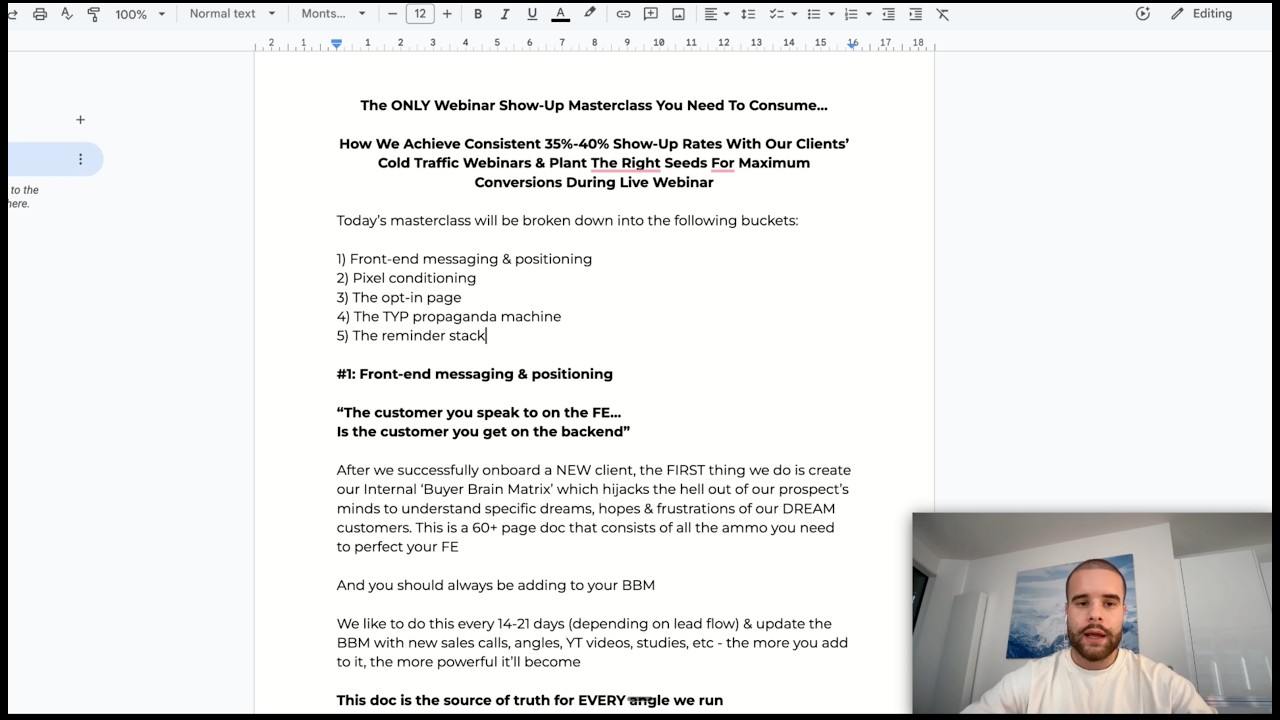
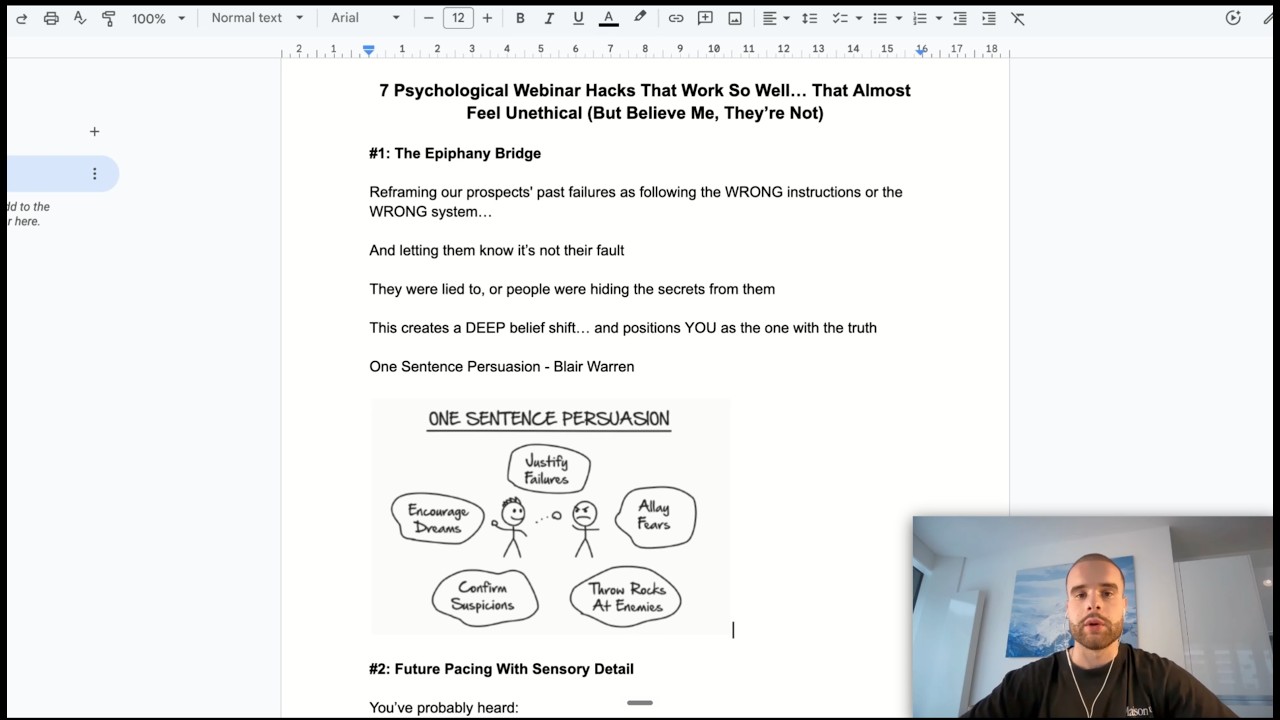
7 psychological webinar hacks that work so WELL... that they almost feel unethical
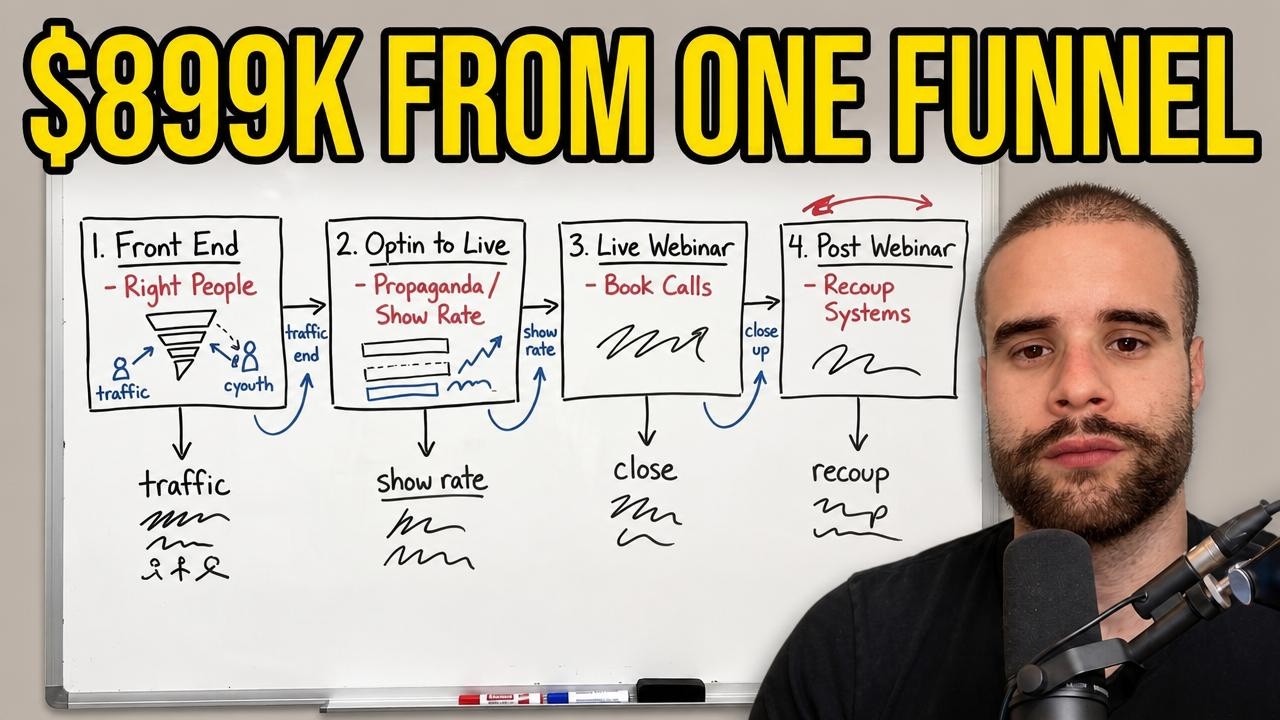

The Simplest Meta Ads Creative Strategy That Actually Scales In 2026 (1 Winner Into 40)
The 4 pillars to scale your info agency with LESS ($1.7m/year in 12 months with first agency)
He Sent 920,000 Cold Emails Running Outbound For 110+ Clients (The Unfiltered Breakdown)