This Boring Low-Ticket Funnel Made $307k In 30 Days (Here's How)
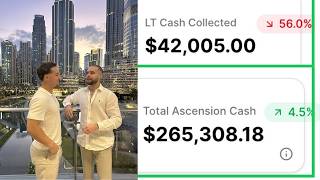
A low-ticket funnel that made $42,000 upfront was scaled to $307,000 in 30 days by immediately pushing buyers toward high-ticket offers. The key is capturing the "high-intent window" in the first five minutes after purchase with rapid outreach, then using SMS and email to move them to strategy calls before they lose momentum.
Chapters
We made $307,000 in 30 days from a funnel that sold $42,000 upfront. And today I'm gonna be showing you everything you need to know about scaling wildly profitable low-ticket ascension funnels in today's increasingly skeptical and sophisticated market. Because yes, whether you like it or not, the online education industry specifically is getting a lot more sophisticated. Your customers are becoming more aware, they're getting more skeptical, and they're doing more research than ever before. Before buying online programs. And if you don't adapt to this increasingly skeptical and sophisticated market, you'll of course lose, and I don't want you to lose. I want you to adapt, survive, and of course ensure that you're scaling properly. And that's what this masterclass is gonna take care of. So there's gonna be an extensive masterclass on effortlessly ascending low-ticket buyers into high-ticket clients using our demonstrative funnel, a low-ticket funnel with a highly converting twist. Now, just in case that you thought I was capping or that the results are not true, here's a quick screenshot March 20th to April 20th, 2026. Low ticket cash collected $42,000. Total ascension cash $265,000. If you add both these numbers together, you get $307,000. Now this funnel is still actively scaling. We're doing meta ads, organic, and the results are a lot more than this right now. We've done a lot more ascension cash as well as low ticket cash. So it's gonna be a value-packed one. Ensure you stick with me to the end because as I said, I'm gonna be showing you how we effortlessly ascend low-ticket buyers into high-ticket clients using our demonstrative funnel. Now, before I dive into it, I'd like to debunk some common myths surrounding low-ticket funnels that I've seen on YouTube, Twitter, and all these social media platforms, right? Which aren't true. Now, the first one is that low-ticket buyers are broke, right? Now you need to think to yourself, okay, someone opts in for a free webinar and doesn't buy, right? To operate to you, you may assume that the broader market can't afford high-ticket. So what do you do? You build a funnel around free to high ticket with no middle tier, right? The reality is that broke people don't buy $27 products either. Paying $27 is a filter. Like, even if the low-ticket product is $9, $7, whatever the price is, right? That pricing mechanism acts as a filter for your conversion mechanism. So what you get with the $27 buyer or $9 buyer $47 buyer. Like, it doesn't matter what price you associate the low ticket, right? You get someone who self-selected themselves out of the tire kicker pool. They have a credit card, they pulled it out, and they committed to your idea, right? So low ticket buyers are not broke. They buy. And with good ascension practices, which I'll be walking over in just a moment, you can easily ascend this $27 buyer into a high ticket client, right? And as I said, plus with great positioning on your front end, sophisticated buyers still buy low-ticket products. That feeds me onto the next myth. Myth 2: Low-ticket attracts the wrong ICP. An operator hears that low-ticket buyers are a different audience from high-ticket buyers, then they assume that the two markets don't overlap, right? But sophisticated buyers, they do buy low-ticket. A $100K a month info marketer will absolutely pay you minimum like $27 to see what's inside your system before paying $10K to work with you, right? Sophisticated buyers don't avoid low ticket. They can use it to vet you and your systems, right? Myth 3: Low ticket customers don't ascend. An operator built an LTO, they created that high ticket offer, watched their buyers not ascend into high ticket, and then they come to the conclusion that low ticket buyers are a dead-end audience, right? The reality is, my bro, that your buyers aren't dead ends, your funnel is, right? Most operators build the two products but never build the bridge between them. There's no mechanism to move someone from point A to point B, so nobody moves, nobody ascends. And we've been in this situation countless times. We've consulted with clients and offer owners who've got an insane low-ticket product. right? Insane low-ticket product. Like on the front end, they've got like a 1.2x ROAS, right? But that ROAS stays consistent because of poor ascension. On the other hand, we've launched and published clients who on the front end, we only have a 0.5x return on ad spend, but overall the funnel's doing like 6, 8x ROAS because of the ascension practices, right? So low-ticket customers, they do ascend. You need the right ascension practices, and luckily for you, That's what I'm walking through you today. Now, myth 4: if they only pay $27, they'll never pay $10K, they never pay $5K, they never pay $4K, they never buy high ticket, etc., right? The first purchase price sets the floor, not the ceiling. Someone who has paid that $27, right— and I'm using this $27 because it's of course a very conventional price to sell your low ticket, right? But you can sell it however much you like depending on your ICP, and their sophistication and awareness levels, right? But this buyer has entered a buyer relationship with you. They've completed that transactional commitment, right? Someone who pays $0, by the way, and they, they, someone who pays $0 has entered a reader relationship. There's two different psychologies that we're dealing with here, right? Plus, if you're gonna get in $27, plus if you're gonna get in $27 buyers to piff you, you're either giving away too much on the front end or your ascension systems are just whack. I'm gonna be showing you how to overcome this. Myth 4, low-ticket buyers are too hands-on and they don't want coaching, right? Low-ticket buyers buy the $27 product because they want to make progress. When they hit the natural wall inside the product, they want acceleration, they want more guidance, they want more done-for-you SOPs, right? They don't necessarily want more self-study. That wall there, is where your ascension happens. So what does our ascension ladder look like? Well, here is the demonstrative funnel ascension architecture structure. Relatively streamlined, right? I've got more videos on low-ticket funnels on my YouTube video. I'll be linking the best ones below so you can see the A to Z funnel architecture of this in a lot more detail. Now what we do, right, on the front end, we sell an entry-level offer, and this can be priced anywhere from $7 to $99, right? The pricing, as I said, depends on your ICP and the market sophistication level, right? For this case, I'll be doing like a $99, right? $99 entry, that's what we're selling on the front end. But the front end is an opt-in, right? So in order to redeem the product, they need to enter their full name, email, phone number. When they do that successfully, they're redirected to a checkout page. The checkout page, of course, a little more propaganda. We've got case studies, we're overcoming limitations, we've got scarcity, urgency, et cetera. When they opt in, redirect to checkout page, and then on that checkout page they can complete their payment, which auto-selects the product. And then there are also two optional order bumps to increase that AOV contribution on the front end. Now, when someone successfully buys the low-ticket product through the checkout page, they're redirected straight to a booking page, which is typically a strategy call. Now, I'd like to mention one thing. I know I've done previous videos where I walked over our onboarding retention practice, right? Where when someone buys your low ticket, they're automatically invited to an onboarding call, which is taken with a setter to financially and character trait qualify the prospect before they hop on a sales call with you, right? For this client, because of how dull their sales systems were, we just got them straight on a strategy call page, right? And we framed it abundantly like, listen, which, and we framed it abundantly like, okay, you bought this product, Congratulations, Lunes, you've just discovered XYZ. Then we present more problems that they're going to experience on their customer journey, and then we bridge that gap and make our high-ticket product seem superior, right? And the high-ticket product, $5,000, $6,000, $7,000, etc. Then when someone successfully books their call through this ascension ladder, then they're redirected to a pre-call VSL page with FAQ videos, which I'll be walking you through the architecture. Now, Why do most low-ticket to high-ticket ascension funnels fail? And how can you easily flip the switch so you easily ascend these low-ticket buying leads into clients that can pay 3, 5, 7, 9, 10, 15K for your high-ticket, right? You need to first understand that your low-ticket product teaches a result. It provides customers with a quick win. Your high-ticket offer needs to accelerate the result B, that requires A as the foundation. Product A, your low-ticket product, it sets the foundation for the customer journey, right? Result B is the long-lasting one, the everlasting one, and that's your high-ticket, right? This is why you can't overly bombard your prospects with front-end value, right? It needs to be chronological to their success, because now if you sell a low-ticket product and then you mention, okay, like a random example, right? Like let's say this low-ticket product, it consists of everything you need to know to scale an agency from 0 to 100K a month, right? You get coaching calls, you get SOPs, you get crash course, you get all of this, right? Like why is your high-ticket gonna make sense, right? It's not gonna make sense whatsoever. So ensure that you're not overly bombarding your prospects with front-end value. Of course you need to increase the perceived value, right? You need bonuses and you need good messaging, but that doesn't mean that you need to overwhelm them with value and elements that you will walk over in your high-ticket coaching, right? right? Now the second thing that you need to understand is you need a deliberate structural gap between your low-ticket offer and the high-ticket offer that only the high-ticket offer can close. Let me explain. The low-ticket product solves one problem, and you ideally, with your low-ticket offers, it needs to be centered around one big idea, right? Here's how you copy and paste these cold email scripts to sign your first client in 14 days or less, right? Here's how you use this fat loss bundle to shed '10 pounds of fat in the next X time,' right? That needs to have one big idea and it solves one problem, right? And then the low-ticket product, it also needs to be massively in-depth so it actually delivers on every result made on this sales page, right? Then at the end of the result, when they receive some sort of epiphany, right, a new problem or problems will appear, right? It's natural to customer journeys, right? These are not invented problems, right? These are the next logical obstacles that show up the moment the buyer implements what they learned from the low-ticket offer. And the high-ticket offer solves that long-lasting problem, right? For example, okay, I'm selling an agency offer and they can copy and paste my cold email script to sign their next 2 clients in 30 days. Okay, awesome. When someone's used these scripts to sign the client, What later on problems are they going to experience that prevent their success long term? Well, okay, they may understand, they may need to know how to onboard the clients, they may need fulfillment mastery, they may need agency SOPs, they may need someone in their corner to overlook the agency operations, they may need all of these things, right? They may need, like, whatever it is, this is what your high-ticket offer is, right? So you need that deliberate structural gap. Your low-ticket offer is the entry level. Your high-ticket offer is that accelerated success program that prevents more problems from occurring and also ensures that they see long-lasting success with your methodologies. Another thing that you need to understand is that satisfaction kills ascension. Momentum drives it. Satisfied buyers close their laptops. Let's say now on the low-ticket product, I'm ensuring that the product is overly satisfied. Okay, you get this, this, this, this, this, these done-for-you SOPs. Oh no, that's not all. You also get weekly coaching calls. Oh, that's not all. You also get a kickstart call with our customer success manager, right? Like you're making the buyer overly satisfied, but they close their laptops, right? You need to create momentum because what momentum does is it allows you to get buyers who know that, okay, you hit a new problem mid-implementation and you need us again, right? The goal isn't to leave the buyer wanting more, it's to leave them needing more. And this comes down to your chronological process of ascension. Now, what we do with ascension with Logic of Funnels is the first thing is the 30 seconds after the checkout. This is the highest intent window in your funnel, right? The buyer has just converted, they bought your low-ticket product, right? They've committed financially They've made the psychological switch from considering to committed, and right now it's freshest at this second, right? And meaning if you don't capitalize on this window, you lose 50 to 70% of the ascension you could have had. With our low-ticket ascension funnel clients, we're sending 70% of low-ticket buyers into book calls because of speed, right? Of course, it kind of depends in, um, like, it depends on like the market, the industry, and all that other stuff, but on On average, we get like 70% of low-ticket buyers booking a course. We've got this with the VSL redirect, which I'm gonna walk you over, but we also do it because of setting systems. When someone buys our low-ticket product, our sales teams are alerted ASAP, and within 5 minutes they're dialed, okay, I noticed that you bought this XYZ low-ticket product. You may have not seen the opportunity to book a call on the next step. This is your opportunity to maximize your product consumption. Of course, don't frame it like that. And ensure that you're seeing success with a low ticket. We're also gonna set the right foundation for XYZ, right? Someone, a team of dialers calling all your low-ticket buyers to maximize those book calls coming in. And our confirmation pages, they look very simple. So the first thing that we do is we have a VSL that congratulates them on their purchase. The last thing that you want doing is completely dismissing the action that they just took. You don't want to say, okay, great, you bought this, but it's not good because this is going to happen, this is going to happen, this is going to happen, this is going to happen. You don't want to do that. You want to congratulate them on their purchase because purchase, the low-ticket product, it should provide them with some sort of foundational benefit. So you first congratulate them to let them know that they made the right choice. Then you frame the next step, booking a call, as part of the product they just bought. It's not just a sales pitch. So what we do for our clients on the opt-in page, right, if we go back here on this opt-in page, of course you need to add bonuses, right? One of our bonuses is the strategy session booking, like, opportunity, right? We let 'em know, okay, when you buy this, you don't only get bonus 1, bonus 2, bonus 3, but you also get the opportunity to speak someone on our team to discuss your accelerated success. We frame it as a bonus. So we're pre-framing the prospect before they actually book the call so they know that they're getting it. So that's the first thing I need to do. We frame the next step, booking a call, as part of the product because it is, it's accelerated success. Then we name the specific outcomes that a call will deliver. We future pace what's gonna be discussed on a call. Okay, when you book your call, opportunity is limited by the way, we're gonna walk over XYZ, XYZ, XYZ, et cetera, right? We set expectations for what happens on a call and then we frame our high ticket offer as the opportunity to take what you're going to implement in the low ticket, of course, and see long-term and quicker success, right? For example, okay, Congratulations on buying your cold email script bundle. You just took the first step in signing your first 2 clients as a service provider in 2026. Now, while we're here and while I got your attention, I would like to let you know of this opportunity where we're packaging everything that is, that is included in the low-ticket product and allows you to see long-lasting success as an agency owner through XYZ, XYZ, XYZ. This is our 'Name of product that has helped thousands of people scale their agencies to $75K a month, like this person who achieved this outcome, this person who achieved that outcome, that person who achieved that outcome, so on and so on and so on.' So we frame it, the high-ticket offer, as the window, as the vehicle to see long-term success and also quicker and more efficient. Now, what we do as well, as I said, the 30 seconds after checkout with the high-intent window, dialing. Now, I understand that you may not be able to dial people within like 30 seconds, but if you do within 5 minutes, you should be good because the intent is still high. So with our dialing operations, every low-ticket buyer gets called, not just the ones who booked, by the way. Like, if they bought the low-ticket product, they get called. And what you can even do, if you've got a really big team, you can even dial the opt-ins. If we go back here, a lot of people are gonna be opting in and they're gonna— they're not gonna be buying the low-ticket product. You could dial them to buy the low-ticket product on the call and also plant the seed for the Accelerated. Session, the strategy session. So you need dialing systems. Set the dials while the intent is hot. You don't need to dial the leads— well, if you dial the leads, like, let's say within 48 hours, like, the lead is getting cold, right? They're going on their Instagram, they're going on Facebook, they're seeing more ads. Get them when they're hot so they book the calls. The call isn't a sales call, by the way. This setting call, this triage call, this dialing call, whatever you like to call it, it's a welcome call with the purpose of, okay, we confirm the purchase, we walk them through what the next step is with product consumption, we— and then we get the call booked if they haven't already. Super simple. You don't need a revolutionary SOP in place to send these leads or dialing, right? On top of this, we also have email sequences. As soon as someone buys the low-ticket product, they receive an immediate email, plain text. Okay, congratulations on buying this. Here's your next step. Book this call, right? Book this call, book this call, book this call, book this call, etc. Then after this immediate email, We also have like 5 to 10 emails overcoming limitations, flooding these low-ticket buying leads with more proof, injecting FOMO, and educating prospects on why this is the next logical step to take. Some of our post-purchase automations are relatively in-depth, 'cause what we also do is take winning examples from our campaigns and put them inside of post-purchase emails. Like, you can do this, just make the sequence as long as possible, right? Because every single email should have its sole purpose. In one email, okay, overcome this limitation. That appeals to one ICP. But then in the following email, it's like another limitation that appeals to a different ICP. So like, don't be afraid to bombard the hell out of your email sequence. Now, if you go back to the architecture structure, we've got opt-in, redirect to checkout, 2 order bumps, AOV. When someone buys that through the checkout page, they're redirected to a booking page, which of course presents an opportunity for the strategy call. When someone successfully books their strategy call, by the way, with a pre-call VSL, propaganda page with FAQ videos. And the way that that's structured kind of looks like this. Let me make this slightly larger. So of course we congratulate them on booking a call. Main VSL, which sets the right expectations for their upcoming call. Here's what's gonna be discussed, here's what you should know, et cetera. They need to watch the full video. Of course they've booked a call during this as well. We can get them to consume some sort of low ticket modules before they actually attend the hard ticket call. And they also need to prep, of course, their numbers and any questions that they may have. Like now, if you're running low ticket ascension funnels, you may run into the objection of like, okay, but I'm still going over the low ticket product. Or like, this sounds great, but I still want some time consuming the low ticket product, right? So in this VSL, like you should have like a 72-hour booking window, can get away with slightly more, but just let them know, like before your call, go in as much detail into the low ticket product as possible. So you're in the right headspace. So that's what we do here. Then beneath the VSL, which sets the right expectations, improves product consumption, et cetera, with FAQ VSLs. And these questions are going to depend on your offer, the market you are in, what you are selling, et cetera. But these frequently asked questions should overcome key limitations. They should overcome key limitations that may prevent someone from attending the call. Easily done. Get a list of all your best transcripts, people that close, people that didn't close, and just put that into Claude and then ask Claude, okay, what are the common questions people are asking here? And overcome these questions in video format, get them to consume. Then beneath the frequently asked questions, we've got rating badges from Trustpilot, CourseReport, whatever platform you're using, just to create an ungodly amount of proof of our prospects. The more proof and propaganda you create with prospects, the better of a headspace they're going to be in when they attend the call. They're not gonna be like, okay, but like, how do I trust you? Like, who have you helped? You know, like I've got this question. These objections, they can be overcome with an extensive pre-call consumption page like this, right? So we add rating badges, client testimonials, like all these review widgets beneath there. Even if our client is featured on media, we add the media publications there. We've got Forbes, New York Times, whatever publication your client was featured on, bombard them out here. Then beneath that, we also have written FAQs just in case someone likes to read them in like a more detail, right? And then on top of this, we've got the pre-call consumption page. But when someone books their call successfully, what have we got? Shout out Jeremy Haynes. We've got that extensive hammer them email sequence, which floods them with even more touchpoints, case studies, overcomes objections, et cetera. By the time they're on a sales call with your prospect, it's game over. Right? So this is a very important step. When someone follows this ascension ladder, they took a call successfully through the low ticket pre-call VSL page, right? FAQ videos put them in the right headspace. The goal of this is to put people in the right headspace. Simple, right? Now, you can have all of these systems, right? You can have the confirmation page VSL. Your VSL could be here. You could be having dialing systems. You could have in-depth email sequences. You could have SMS sequences. You could have an in-depth pre-call consumption page VSL, but the nature of marketing is that drop-offs will happen. So how can you further recoup these lost leads and get them to book a call? Well, here are some things that we've done for other clients. Now, first one is a 7 to 14 day abandoned cart sequence for non-buyers. This is all— this is sent for people that opted in and and they didn't buy the low-ticket product. Our goal with this abandoned cart sequence is simple, get them to buy the low-ticket. When they buy the low-ticket, what can we do? Okay, they're redirected to the VSL page to book a call. If they buy the low-ticket and then they don't book a call, okay, dialing, right? It maximizes our opportunity with other avenues as I walked over here, right? Dialing, SMS, this pre-call VSL page, right? Then on top of that as well, we have 5 to 10 emails inviting non-bookers to book their calls. It can be more in-depth, absolutely. And the main goal of this is that it's sent to low-ticket buyers who haven't booked their call. Simple. And each email here, it should reference the low-ticket content and tie back to the call. Okay, you bought this, this is great, but we've presented you with this opportunity to book a call. Here's why you need it. Here's the CTA. Bang. In these emails, we have a mix of product consumption, value, social proof, and limitation overcoming. On top of these emails, you should also have SMS sequences, both to abandoned cart leads and low-ticket buying leads. Of course, depends on volume, because if you only got a small amount of volume, you may not, you may not need these systems in place now. But SMS sequences, they do drive the needle forward. Now, what also works for recouping lost leads is back-end live webinars to low-ticket buying leads. When someone buys a low-ticket product, you have a database of them. Within Close, GHL, whatever platform you're using, you've got this database. You've got a list of people that didn't book their calls. You can invite them to a live training where we're gonna walk over the low-ticket offer components and then present an exclusive opportunity for 10 people wanting a one-to-one accelerated success. Back-end live webinars to low-ticket buying leads absolutely crush. What we also do is community invitation. This is framed as a bonus. and it's ultimately used for further propaganda. As I said, we frame the strategy session as a bonus, but we also frame a community with like-minded individuals as a bonus for propaganda. Within the community, we, we've got an embedded welcome VSL, which walks them over low ticket. Okay, here's how to consume, here's where the modules are. And then at the end, CTA, book a call. We've got setters inside the community starting conversations. Within a community, we do backend live webinars. That are primarily used for ascension. We've got case study propaganda. If you use Skool, you can have a section strictly for client case study, videos, images, interviews, the list goes on. Book call links beneath course components. If you host in Skool, Wapp, doesn't matter what platform it is, you can add a description of the module. Let them know what is included in the module, but then have a CTA to book a call. Your main goal with low-ticket ascension funnels, drive highly qualified calls booked on the calendar. And the fact that they made that transactional relationship with you, it's a lot easier because the easiest customer that you sell to is the one that's just bought from you. And then what we also do is retargeting to non-buyers and non-bookers. The non-buyers, separate customer audience within Meta, and we link these ads back to the sales page. The retargeting ads are typically overcoming objections, flooding them with more proof and money-back guarantees. Then the non-bookers, We frame the call as the next step in what you already bought. Then we link buyers to a separate booking page that we created only for low-ticket buying leads. So that's the gist. This is how we generated $307,000 in 30 days from a funnel that sold $42,000 upfront. And if you use these practices, you can easily ascend these low-ticket buying leads into high-ticket clients on the backend using these principles. Now, first link in the description, Daily Direct Response marketing newsletter, join thousands. As I open up a fresh Google Doc every single morning and share newsletter on info marketing, offer creation, scaling through webinar funnels, low ticket funnels, etc. I'll be also dropping some links for other low ticket masterclasses that I've done. And any questions, hit it inside the descriptions because you know it helps the algorithm. This until the next video, and remember, low ticket funnels stay on top. I'm out.
More from Maciek
7 psychological webinar hacks that work so WELL... that they almost feel unethical

The Simplest Meta Ads Creative Strategy That Actually Scales In 2026 (1 Winner Into 40)
The 4 pillars to scale your info agency with LESS ($1.7m/year in 12 months with first agency)
He Sent 920,000 Cold Emails Running Outbound For 110+ Clients (The Unfiltered Breakdown)