He Sent 920,000 Cold Emails Running Outbound For 110+ Clients (The Unfiltered Breakdown)
David "Drip" Kevin discusses sending 920,000 cold emails across 110+ clients and how B2B outreach has shifted. High-volume tactics work less than account-based approaches targeting specific deals, while e-commerce is moving toward AI-generated content and supply-chain-controlled affiliate models. Generic copywriting is saturated; the money is in positioning as a niche, high-value service.
Chapters
Guys, guys, guys, we're back! We're back with another Sophisticated Ask podcast. Now today we're here with a man, David Drip, whatever naming convention you like to go with, right? Now we've known each other for years. I remember in Mexico City we were going autistic. Back then you were running schemes, you're talking about this e-com brand, you put it to life finally, and now you've of course transitioned into B2B especially. Now Just to kind of give people a background of what you do, right? Because I'm kind of familiar, right? But like, how did this online business journey like start? Like, if we go back to like day zero, like how did it start?
Um, to be quite fair with you, I think it's, it's more of a full circle thing, uh, where I think it was 17, 18. I think everyone might be familiar with this guy, uh, a dude— I, I don't know if you guys might know him, uh, this guy Alex something Becker. Uh, he's one of the OGs, uh, basically at the time, which was like what, 2017, he was like one of the people bidding on the keyword make money online. So that's, that's like one of the easiest ways to do it. And also at the time, keep in mind, I was like still in high school. Uh, what was, uh, computer science was like the thing people were just recommending because you had Netflix, Facebook, uh, basically engineering jobs that were paying like $300, $400K. I was like, hey, how do I get a head start on this? So my first take was like, all right, like we gotta, let's, let me go investigate. Let me see what's up with the computer science thing. Most of them just suggested building a portfolio. And one of the interesting things there is when you start diving into like, okay, well, keep in mind I'm 16. I can't necessarily go and just start building apps. Like kind of have to learn. One of the few things I did pick up pretty fast was that Uh, basically there's this thing called Google AdSense, and I don't know if you've ever played Flash games before. It's like, dude, I was not working at school. I was, I was either online or just, you know, gaming. So at that point, it's like Flash games, you could see the Google AdSense there. I got a little bit curious, and then I was like, hey, well, with Google AdSense you can kind of make money. Uh, you put two and two together and you come down to the how do you, how to make money online. And that's when I got it. So I started getting blasted with the Wolf Mug ad. Funny enough, I think it's one of the things I reference a lot. I really like Russell Brunson and Alex Becker, just because even at the time, being 17, opting into a funnel, being like, hey, I sat there for an hour watching the whole thing to get hit with a $3K price point, which at 16, I just did not have $3K laying around. I wish I really did. I would have bought it immediately. Uh, but the fact that it worked on me the first time, it's one of those like sort of analysis that now when I look at, I'm like, okay, so it clearly works. Like what's webinars, funnels, sales copywriting, even some of the most basic things to someone that's not like fully aware of what's going on to you, it might seem like, okay, whatever. Like this seems like very fundamentally stupid. Why are people like even opting in for these things? From a beginner standpoint, it is something that's not traditionally ever talked about, as in like, you know, you're not 15, 16 talking about how Russell Brunson invented webinars or sales or copywriting just in general. So opting into a funnel, sitting down for a whole hour, basically getting pitched at, saying, hey, I'm going to make money with this thing, is one of those things that did throw me in for a loop. But I think once you understand the basics and fundamentals of that, You can kind of take appreciation to like, oh, so I was, I was one of the people that gave away their emails. I was on the email list. I, I basically did that. And at the time, he was doing, um, this thing called SEO. It was his SEO product, which was like the first real dive into that. And his first suggestion was like, hey, well, first of all, you, you got to learn how to do, um, I can't remember the name. It was Wave something. Point is, right, essentially I dive into that whole aspect of like SEO. I start understanding how traffic works, how keywords work, and eventually his whole thing is like, okay, well, eventually you're gonna have to pitch to these people. So number one is you can cold call. Again, that's not, that was not my thing. I was not fluent at sales yet. I was like, okay, I'm not cold calling. And one of the things I did was actually just start doing cold email through my personal email, which I have cold emails from 2018 where I was like just basically reaching out. Oh, which by the way, I'll like, I'll give myself my credit is those emails look proper. They don't look that bad for a first timer. Uh, but yeah, they didn't work. Like that's, that's what I'm getting to. It just didn't work. And then he did the actual e-com side of things and that's where I got really hooked into like Okay, well, I understand how these things are being sold. I understand how these things work. Um, a little bit of a side tangent, but it didn't work for me at all. Like, uh, so what was from 16 to like, I think even like late 18 is when I was like still kind of struggling, like trying to put it together. And eventually I had a buddy who at the time was doing, uh, it's a term many people might not like, but, uh, basically stealing girls' IG pictures to LARP as a girl online to farm followers on Twitter. And he was racking up— I swear that this was a thing. There were these things called Lob Chats on Twitter where they would get a bunch of big accounts on one group chat. This was coordinated, by the way. This, this just happens. I'm pretty sure it still happens where based on the amount of followers you had, you can get access to exclusive chats with people with followers. And they had a protocol where at 7 p.m., which is peak engagement times, they would have a tweet, they would throw out a tweet, everyone would retweet it. Within an hour, they would remove the retweet. And just based on that is they would cross-merge all their followers. And it was basically like a coordinated way of like basically mass farming engagement through Twitter, which it was basically ran like a cartel at that point. Because it's like, hey, if you want to get into those Platinum Lob chats, uh, it's, it's not gonna be hard. But essentially what I saw this guy doing was he was linking Etsy links at the bottom of his tweets, which was like pretty like, I'm like, okay, cool. I just cold pitched him at that point. It's like, yo, like, I see what you're doing. I'm not stupid. Like, I see what you're doing. And he said, yeah, bro, like I've made some good money. He's like, bro, I've made like $50, bro, just tweeting. I was like, dude, we can make a lot more money if we just had like a, we just made these tweets a little bit targeted. Eventually, that was the actual first money I ever made. Like online was like, hey, here's a Shopify store, let me just cook up, it was literally the lamest thing ever. It was a name necklace. Again, you couldn't do custom HTML at the time either for orders, you had to do the custom order note. So there was a lot of people buying name necklaces without actually giving me the names. And yeah, that was like the first money I ever made. Keep in mind margins at that point from China or shipping from AliExpress, which they still had like decently good times, which is like anywhere from 10 to 12 days shipping to the US. Margins were pretty good because you would sell those things for $15. It was gold-plated, quote unquote. Keep in mind, uh, I do not associate with No Shippers, but, um, selling fake products either, uh, but I did list it as a golden necklace and it was pretty cheap, so it got pretty good traction. And that was actually like the first money I ever made in general, like just online. And I guess transitioning from that, it was just like, uh, 4 years of basically just like shipping out products like that for like a good— keep in mind, I was like 2018, so late 2018 going to 2019. That's when the whole COVID thing happened. And basically me and this guy are running this operation, gets hit with basically we can't ship to the US anymore, shipments are halted. So I have a stack of cash, I'm like, dude, I can either take this cash, just, you know, I thought of a million different things to do with this cash, to be quite honest with you. It was not strictly, you know, let me go make another e-com store. I'm like, if that's out the books, I really don't know what to do with this cash. Uh, but God willing, is I kind of just stuck with it, and eventually I saw Nate Schmidt at time say, hey guys, I'm running up a bag selling COVID masks wholesale. And he was just saying, it's like, hey, as long as you tell people like, hey, this thing's gonna take like 3, 4 weeks to get to you, but it's gonna get there, just not sure when. I was like, all right, that's green light. Like, if Nate Schmidt's saying it, then I can probably— by the way, are you familiar with Nate Schmidt, bro?
He's, I believe, one of the first people who made me aware on copywriting. I remember back in the OG Twitter days. Yeah, he's the GOAT, dude.
Kobe Gatsby was one of the first people that helped me out, and that's— you're talking 2017.
That was a long time ago, bro, because like back then there were only like a few like go-to Twitter guys, like Nate being one of them. I remember Kobe as well. There's some like a few others.
I, I think there was this guy called, uh, Schmidt as well. Wait, no, it was his business part. I can't remember his business partner name. But, uh, yeah, it was those guys. And actually, shout out Kobe. Kobe was what— he helped me and my boy out, 27. So I've been doing this for a long time. It was like, I have the— like, people know I've been here for like— dude, I'm going into 10 years like next year. I've been doing this for a while. Uh, my point being, right, is we kind of just stuck with that whole e-commerce side of things. And even when I met you in Mexico City, it was still one of those things that was super fun to me. I think that's one of the things I did carry over was, uh I didn't pop out on Twitter just immediately claiming. I was literally just shitposting. And thank God, uh, Broads picked me up and said, hey, uh, who are you and why are you funny? And then also, why are you just like tweeting into the abyss? Um, they use one of the guys that really did put me on initially, just being like, hey, you should like post about this. It's like, dude, like you actually make money. That's weird. Like most people do the do it backwards. They'll start a Twitter account.
Yeah, thanks.
Yeah, so that was my whole start there. And even up until I met you, it's like basically just doing e-commerce. Um, keep in mind, I was super early to a lot of, uh, just initial testing for TikTok, which at the time, uh, I don't remember who coined it, realistically speaking, is. But my biggest bag was essentially on two different occasions. It was 2021, I believe, where I— keep in mind, shout out Nate Schmidt. Yeah, yeah. So funny enough, the, the watch strap store, I saw that happen live. Obviously I didn't know it was a watch strap store, but I, I remember he tweeted something about like, hey, I just did a— he was delivering pizza while doing this, by the way. So this, this is how old this is. This is key point here. He was delivering pizzas and he said, oh dude, I just found a winning product. It's just some guy asked me about this one thing I had on me. I cooked up the store and immediately launched ads. That same store, I read it a year later because I found out, I think he basically posted a video on it. I'm like, dude, let me run up a bag because the Apple Watch, I remember at the time my girlfriend had one and she kept complaining about like, hey, well, I want a new watch. I'm like, dude, you have like 5. And then that's when it hit me where it's like, hmm, they got her. Hmm, let me go get my bag. So essentially, that's what it was. I just copied Nate's— basically Nate's store from a year ago. There was this new— this new one that I really liked too, which was like the braided watch strap. And off that alone, I think I was able to keep in mind at the time, it's like, dude, I still don't have— I haven't been building credit. I'm not— I'm just stuck in the trenches at that point. Had to have my mom just let me borrow, like basically take a credit line into my mom's name, convince her to like, yo, let me run up this bag, bro. And she was like, okay, yeah, sure. It's like that. So God bless my mom. But yeah, with that, I got a decent credit line obviously under her name. Paid her back, by the way. Love her, love her to death. Mother's Day was yesterday. But point is, yeah, basically off that, it was like the first real money I ever had, which is like just for that, like those 2 weeks, like leading up to Thanksgiving, it was like $50K. Keep in mind, this is not considering that I have to pay taxes, and that also, um, a lot of things I, I don't, uh, I don't associate with no-shippers. But there was a lot of, you know, I can't trust China with delivering products on time. And basically what ended up happening was, uh, I believe the supplier, the guy that I was actually buying stuff from, just had a shortage. I don't think I realistically, I don't think I sold them out. I think it was just one of those things where it was like, he generally might've had a shortage. So I know I ate a lot of chargebacks there. And off that experience alone, it was just my account getting eaten with chargebacks. Shopify, basically Shopify Payments shut my operation down. I had to basically maintain a certain threshold and just with the chargebacks starting to hit, keep in mind, because it's coming from China, I have absolutely zero, there's some responsibility there that I have to, you know, also take. Accountability for. But there's not a lot of things you can do once you've already had the money, once you've already placed the order. And if things aren't getting there, it's not like, you know, Stripe is just— oh, Stripe— PayPal is just going to automatically release funds, or Shopify Payments is like, once it's hit my account and once I've paid for it, I'm good. I still have to pay Aspen, I have to pay the credit card back, I have to then wait for to see if people are actually getting their orders. That situation basically led me to just having a super terrible experience because it was mainly stress to deal with support. Keep in mind, at that point I'm just a one-man team, so I had to pick up the entire skill set to run an e-com store. And just getting banned on Shopify Payments, PayPal going basically negative— keep in mind, I'm basically like at a cash flow deficit at this point because I'm just like, okay, well, if I keep running ads and I know that these things aren't getting shipped, I'm just going to dig myself into a deeper hole. And plus I'm kicked off Shopify Payments and I'm kicked off PayPal, there's not really like much I can do other than just like basically sit here and watch the store just die. And that was one of those where I was like, dude, look, God willing is that, you know, I get unlisted, unblacklisted in 4 years. The other one is like, dude, okay, I have a little nice, like, have a little nice bag that I can just go and, you know, at the time, Cold Email Wizard was popping. So I'm like, all right, like, let's go. Let's go down. And then actually, I think that's when I met you because I started doing Legion and immediately right then and there, it's like, oh, well, I had done this in the past. This is actually not that complex. Like, I'm already pretty good at picking out offers. Just like, let me go do that. Build up the whole Legion agency side of things, ran it very consistently for like a year. But again, this is where the two worlds sort of like start colliding. Big issue I had scaling up the agency was number one is if I say Maciek Lipa, Like, yeah, like, let me go run your— let me go run your offer, right? And we do this whole cycle of like, okay, well, I have to go buy the domains, I have to then go warm them up, and I still don't know if this thing's actually going to convert and print. That's a big issue because now I have to allocate assets, I have to allocate resources into building out this whole thing that I'm not really sure of, and I've already taken your money. So if I want to take you on a spin for 2, 3 months at best. Not a good experience. So again, I basically just stuck to like 5 clients, getting the 6th one, 7th one just meant either getting more team members involved or just having, just again, my whole issue with scaling agency was one, the pricing that I was charging, which at the time was like $5K setup. And then we would just do a basically pay-per-lead model, which again, it's kind of hard to scale up, especially if, you know, you need the volume and you need to like have a proven offer. I, I, dude, at some point I was just like playing Fortnite and just eating Chipotle because like life was good. I'm like, dude, I don't need a fifth client. And I kind of stalled out in progress. And I think that was like late 2022. No, I'm lying, early 2022. I just kind of gave up and I was like, all right, bro, like I need to go find myself. And that's when I met you, which is like the, that little in-between period of like, okay, I did the e-commerce thing. I did the agency thing for close to a year at that point. And I think it was one of those things where I'm just like, dude, I just need a breather. Let me take a couple of months and then come back. Cause I did have like a nice little, you know, had a nice little fallback, like a parachute, pretty much. Just like, yeah, I don't have to go that hard. And keep in mind, Mexico is not the place where you go and ball out, spend 30 racks on something. But, uh, you can, you can get a decently nice place, like, just, you know, where it's like relatively affordable. And I think that's basically what led up. And obviously, I think at that point, it's like picking up here is like, yeah. Yeah, the Superwave thing sort of happened at the time and funny enough, again, full circle, but essentially what ends up happening was my buddy at the time was trying to do affiliate marketing through cold email, which I thought was really stupid, just extremely stupid. There's a reason why people don't do it. It's just not effective. There's just no way, you're just gonna waste time. If cold email is not working for a high-ticket offer, Good luck trying to sell a $100 product. The, the just the economics just don't work. Um, and he got it to work. How he like, I generally don't know how that first conversation even went because I know he worked on that for I think 5 or 6 months before I even got my hands on it. But the moment he started inboxing, uh, Dick Pills and some crazy, you know, it was like links. I have some of the first emails he ever inboxed, but It was links. We were trying to get as aggressive as possible with to see how we could actually inbox some of these things. But anything you can think of, anything you can think of was thrown in that email and it was inboxing. So that for me was like, okay, look, we can be happy to sell dick pills, but dude, we can take this to B2B and build that out. And that was a conversation. The other conversation to have was at the time, and it's still running, like shout out Fraser, but essentially we were working on a creative brand in Mexico City. That was like the project I sort of picked up in between. I was like, all right, well look, I really don't have much to do. Like I don't have a project 'cause I wanna work on something, I just don't know what. We picked up that brand, we went down the whole direct-to-consumer route. The only thing, right, is there's a big switch from going from a dropshipping model to a branded model 'cause that takes time. Takes effort. With dropshipping, you can pick out a product, you can go— keep in mind, it was a lot harder back then to do research, to get product images, to source all of that. Uh, it just happened to that we had the product in hand. It was like, dude, getting the other parts is not that hard, especially for a supplement product versus a practical product. It's like, you know, for example, these headphones, like, you, you kind of need it. For a supplement product, as long as you have you know, a picture and some proof and also some of the benefits in there, you can get away with a lot more things. So I guess that was a plus. But also branded versus, you know, dropshipping is I can just call up Xingming from China to go send out some product, gets here in 2-3 weeks, uh, versus a branded one is like, okay, well, we got to take care of packaging, make sure that things are getting delivered. Also, uh, the product we're selling was not It's regulated enough for us to sell it, but it would still fall in their high-risk processing. So that was another issue we had to fix. So just a mixed bag plus just heavy investment that was needed. I was, you know, on one side is I can go down the e-com route, which I just had like the worst experience ever. Chama already kicked out the payment processors either way. The other one was, okay, well, let's just go and let's go down the B2B route, which was not my thing at all. But it was one of those things where like, dude, I am way more happier talking to people than I am doing e-commerce. It just feels a lot more genuine and authentic. And, you know, I did— some of the clients that we picked up from that period are still my clients. I've seen some of my clients have kids, bro. Yeah, there's this guy, Ben, just— he DM'd me today. It was like, hey, yo, like, yeah, you have two kids. I saw you. Shout out, Ben. I hope he doesn't get mad that I said yes to kids.
But we can't name drop his business. But yeah, shout out Ben.
Shout out Ben. Uh, yeah, essentially is that, that's where it came down to. And I think that was one of the crazier journeys I've had because it was, uh, it was a moment where it didn't exist. The, the whole thing back then, you would have to get like the two-phone SMS. So I feel like I made a mistake. Like, I can claim, I hope I'm right, but I can actually make a statement here and like claim that I was the first one to actually pave the road for— I think you see them now, they're everywhere. But back then I was the only one like really doing it like that. So I paved an entire industry or an entire vertical for myself in an unpacked, like unpaved road, uh, established. Dude, there was people claiming that there's 99 inboxes. I always thought it was funny because keep in mind it was bullshit on my end, but I would always say that it was for, that we tested 149 and 49. No, we just liked the number 99. That's it. There's a lot of people claiming that 99 inboxes was like the perfect medium for sending. It's bullshit. I coined that. I just, we made that up. But it was really funny, people picking that thing up and trying to copy it. And even now, people are selling it, which I don't have a problem with. But again, it kickstarted a whole, journey into that.
And like, bro, that, bro, some things that I never knew, right? But would you say, right, before we go into the gems, because like I want— I really want to extrapolate that Ecom brand because that seems super intriguing, right? But before that, would you say that Alex Becker was kind of like the guy who said— who gave you that moment, okay, this shit exists? Like, was he the one that brought up the idea of online business to you, that kind of made it aware? Or like, who was that guy? Kind of like him and a combination with Nate?
It was, it was Becker, definitely Becker, Nate Schmidt, Kobe. I, I, I can give full credit to Kobe too, because Kobe was the one that really did put us on. Because keep in mind, Nate Schmidt, you can admire from a distance, but obviously on a first name basis, never. Uh, but Kobe was really one of those guys like, I, I can put the Becker thing to practice, right? Because it's just like, you know, like I, I had like the material But Kobe was really the one that actually helped us out. Like, he shipped us out some products for us to like try and sell as well. So with that help, keep in mind, the first money that we actually made wasn't even me. It was my, it was my buddy. He made— I think the funny story, but this, keep in mind, we're still in high school. This guy made $140 selling crypto t-shirts back when Ethereum was $300. We lost money, bro. This is not a funny story. This is not a, we made money. No, it was okay, $140 by the time we checked the shipping. There was a guy that realistically the margins went to this guy from Australia. We didn't know shipping to Australia was that expensive. So he ate up all our margins. But basically in that same realm of like, okay, well, who really taught you? Had to be Nate, Sebastian. That's another one that's like off the top of my head. And yeah, so it was those 3. And then at some point, Dan Da Silva too, because Dan Da Silva was more— I, I don't think he had the— oh, I, I really didn't have a scope on him, but I had heard things about it. Keep in mind, back then I was just cracking courses. I'm just not buying a course. I'm just not. Um, I ended up buying his like down the line just because I thought like, hey, he— I think he updated it for 2020, and I was like, all right, like I have some money now, like is actually go— let's actually go invest into like the knowledge side of things. But just with those 4, I, I think main thing with e-commerce in general is there's like 3 different things, right? It's number 1, if you're dropshipping, which I, I don't know if that model is just still viable, to be quite honest with you. I feel like there's too many, too many things going against it. It was okay, we'll learn the paid ad side, right? Paid ads is like the hardest thing to crack because keep in mind is like if you don't have a bankroll to to start with. It is the hardest thing in the world because you have to be consistently checking to see how much you're actually spending. Another thing that you don't notice is, okay, like 99% of people just overlook the fact that, okay, maybe there's shop by sales on the dashboard, but that's not actual revenue that's coming in. That is, as soon as you ship the thing out, you already pay for ads. So you have to— first thing that gets taken out of your pocket is that actual cost of acquisition. So like, if the ad works, right, and say you have $200 to play with and you got your first sale because you spent $30, great. Awesome. What's the cost of goods? Okay. Plus the cost of goods, the shipping, right? And let's hope that your supplier actually ships it, which again, I'm taking this from the dropshipping model, but let's hope that he actually ships it and that you don't have to fight a chargeback. That's like the big 3 that you have to focus on. And that's not even considering the fact that you might still be looking to implement recurring revenue, which again, emails, that's another one. Uh, cross-selling, upselling, down-selling, uh, there's just a lot of things that you need to pick up where the foundational thing is like if you can just do A and B, right, is like if you can throw up an ad and you can get someone to buy it, I think that takes you the farthest way because you can still operate an e-commerce store without having to upsell, cross-sell. But obviously once you actually get into the business side of things, it makes more sense for you to acquire a customer, keep them, cross-sell them, upsell them because then your margin, your actual cost of acquisition's already, you know, you've already paid for it. It's like, it's in your best interest to actually keep that customer at some point. And that's, again, my preference in the model is, again, like I said, is I've had customers for 4 years, clients for 4 years. I couldn't do that in the e-commerce model specifically for dropshipping. I don't advocate against it, but I still think e-commerce foundationally is one of those business models where it teaches you everything. It teaches you the the marketing side. It teaches you the actual operation side, teaches you the copywriting side. Like, if something's off within any sort of metric, is— I think the most people get fraud-checked whenever they do anything related to e-commerce because it's, it's simple. It's, uh, you can sell something for $20, right? But it's also the hardest thing in the world because you also have to go and pick a $20 product to sell, $20, $30, $40 to sell, and actually somehow turn that profitable. That is a way harder job than me selling a service for $3,000, $4,000, $5,000, $10,000, bro.
Okay, so like now, right, the e-commerce, we've touched on the transition. And bro, it seems like, which was interesting, right, when you mentioned Alex Becker, cold email, and now you've of course transitioned into doing that for B2B infrastructures, right? That's why for everyone watching, it's like these moments they activate— is it called the butterfly effect? Where like one thing, it kind of transitions, right? If we take a look at Kevin here, Drip, my main man, right? Like he got familiar with cold email. Now he's doing a B2B infrastructure. These moments like matter, right? And I want to touch on the e-commerce in like a little more detail, right? Because I remember you mentioned, okay, you saw these guys, they were doing these tweets, then beneath, CTA Etsy, right? Right now, the market, sophisticated, aware, you can't do it, right? But for you, when you started the brand, like, let's compare it to the first brands that you were doing with Twitter to, of course, the one that you've done with Fraser. Shout out Fraser, right? How did the logistics differ? Like, did you have to, like, adapt to the market in, like, a little more detail? Or, like, yeah, like, how was that different?
I, I think most of it comes down to developing a business sense of understanding how things work foundationally, right? Is in theory is we're all consumers at— and the shirt you're wearing, the headphones I'm wearing, we're all consumers at the end of the day. So to make it seem like it's impossible to figure these things out, it's not. The big difference, right, in understanding these things at scale, that, that is the biggest thing, the difference here, right, is a dropshipping store you can operate selling 20, 30, you know, products a day, like, well, actually making 20, 30 sales a day. Just, you know, just sacrifice the margins to have someone deal with it. If that's your thing, go do it. But then there's also the scale side of things where, let's just say I'm dropshipping these headphones, is my whole thesis now, right? And I think it's just to play off like, okay, what was the big difference? Is number one, if we're going to sell a product that we, we want a brand and we actually want to scale up so that it's, you know, keep in mind, Kratos has been running for 4 years now. So it has some longevity behind it. And again, back to it, it— you just develop a business sense after a long time. And to play off the thing that you just said is like the butterfly effect. I feel like a lot of the things that you go and do, just even foundationally, even if you're just picking it up, is that is one of like the biggest bottlenecks I feel most people have. They don't ever expand out of that comfort zone of like, okay, well, something's working, then don't change it. No, no, no. It's the opposite. It's like, if you have time, specifically if like, keep in mind, I happy that I was on the younger side when I started this. You have a lot of time to actually go and experiment with things in terms of like, okay, you have room to mess up. Like for example, just because my experience was terrible with e-commerce, if I had to go do it, anything again, I would still say that e-com is very, very much my strong suit because I can pick anything up and understand what's working. And specifically because I feel like e-commerce is not necessarily reliant on ads, but you can quite literally go online and see something working right now, specifically with UGC. It is one of the easiest times to actually go pick up the skillset to actually go and do these things. I feel like if anything, it's actually gotten a lot easier to do these things. But again, the, the business side of things is just something you kind of grow into. In terms of how you see e-commerce now versus how I saw you know, e-commerce then. It really has not changed. It's still foundationally is like, again, is regardless if you want to scale up massively or if you want to just do, you know, you want to just have your crack at it. The big difference here is you still have to understand marketing at some form or level. You still need to keep in mind for products right now, some products would just do the selling for you. You don't really have to like drill in too much of the copywriting. Keep in mind, never said I was a great copywriter, uh, but also a lot of the products that I did do was mainly to do with the design on the actual ad versus the actual landing page. So again, there's a lot of critiques that I have on myself on things that I could have done better, but foundationally is like, again, is if my job was just to make sure that the ad got enough attention to actually get a click-through and the product can really do the selling for me, is that, that's the biggest difference there. So again, Coming from selling a name necklace, or keep in mind the products that I sold was name necklace, a zodiac thing. I did, um, a silk pillowcase. That was one of the big ones too. Uh, again, watch straps. Just keep in mind these are very unique products, but they're not, you know, something that you wouldn't be able to think of and not pick up on. It was just, again, positioning, developing the skill set, actually, you know, making sure that, okay, well From the ad side is like, I can, I pretty much understand how to make ads. Okay, what can I do on the landing page side is developing that skill set. And then on the backend side is keep in mind, most of the, most of those products that I ran were just drop shipped is I would just much rather sacrifice the margin on the backend because I'm looking to have stable cash flow versus when you go into a branded store, like for example, the Kratos, which was the brand we were running is now you have to spend a lot of money into getting inventory, shipping that thing in. Not only shipping that thing, actually, you know, getting the labels, actually getting the packaging right and making sure that, you know, these things are getting, you know, sent out. Backend, make sure that we have recurring customers.
Is that—
that whole thing is slow, it takes time, it's something that you build up to. Again, it's like fast food, right? It's like you, you can make your own burger here, it's probably going to be a lot better than getting McDonald's, but again, is it the exact same thing? It's at the end of the day still a burger, it's the exact same thing. You pay a lot less, it's a lot faster, it's a lot more convenient. You still get that same, you know, dopamine hit eating a burger. It's just in terms of the quality is, you know, it takes time to develop, it takes time to do, but it basically comes down to the exact same thing. Can you sell it? Can you produce it? And then again, is if you actually want scale, I don't think the dropshipping model supports it just simply because there's too many headaches involved. If you're still having to rely on 14, 15-day shipping, specifically in the US. I know markets are a little bit different now that I've seen e-commerce done in like other places. Is the US is used to Amazon doing one to two— dude, Amazon Prime can get you stuff in like one day. Is it's basically like, again, you're in a sinking boat at that point. So I know most people now prefer to just, you know, have the product in some 3PL warehouse. And actually, that, that was the whole business that started because people were just shipping things in the most popular products in from China, holding them in US warehouses, adding their markup to it, just because the fees were just, you know, they were there.
But let's talk about Kratos. I remember, I believe I messaged— who was it? It may have been you or Fraser. At that time I was living in the UAE, you know, like I was asking about like processing to the country, right? And I understand that a product like that, it's got its difficulties with selling effectively, right? It's not your typical zinc, right? With Kratos, bro, first of all, the idea and the validation, right? I understand that you said that you had the stock within hand, you knew that people were asking for it, right? But how did you double down on that validation and like kind of thinking, okay, this product has a decent TAM, I can scale it? Like, what was that epiphany moment?
I think most of it came down to, and like to be quite honest with you, it's one of those that you kind of, I don't wanna say it's a gut feeling, but if you foundationally understand, right, that if there's a product and it's in your hands and you use it, and as a first— keep in mind, we're talking about a supplement here. If the supplement actually helps you, then there's def— like, validation should be only for you. It's like, you can get that feeling on pretty much anything, right? So if you take a supplement and it works, it's not like a product, right, where it's like, uh, again, that's the whole nuance with, uh, dropshipping products is like, it could work or it could not work. With supplements, it's not that binary. It's either it works or it doesn't work, right? It's not like a placebo thing. It's like, again, if you take Adderall, you'll feel that. With supplements, that validation is a lot different because when I started taking, I was like, okay, well, yeah, something's happening. I'm not really sure. I have to test it out a little bit further. I think after like 3 or 4 days, I was like, oh yeah, this is like one of the things that I, I consume daily. Same thing with nicotine pouches, right? Is you don't really necessarily need some sort of market validation for it, simply because again, is I'm still under the impression of these things are not difficult to do if you just fundamentally understand that again, is if there is no market for it, then that's great, 'cause then you can just create your own market for it. Obviously, keep in mind, that's a lot harder to do. On the other side is again, if you're competing with several people to actually do it, then there is, and then again, it comes down to just, researching, just figure out what's working, what's not working. Our biggest, like, uh, thing was initially the kratom that we actually sourced was just in powder form, and it tasted terribly. So then again, trying to find the suppliers, trying to find manufacturers, eventually you go down this rabbit hole. If you go, oh, there's like 5 or 6 people selling this thing, and they're, they're huge, they're distributing it to gas stations. And then again, most of it comes down to research. And even with some of the products that I was selling at the time, like for example, the, the, uh, what's called the braided, uh, what's called Apple Watch strap, is like, okay, well, I, I knew that someone had scaled that up previously. There's new watch straps in the market. It's like there's very clearly demand for it. It's like I feel like there's a couple things that you can and can't sell. For example, one of the ones that I, I really advocate against as like a first-timer, and I've heard people have success with it and I've heard people just not even touch it. Uh, people saying that they want to do a clothing brand is good luck, bro.
Bro, clothing is a different game, bro.
Exactly. So it's either you have it or you don't with clothing brand. With products, I feel like it's a little bit more binary. It's like specifically supplements, because again, it's either work or it don't work. And if it don't work, then don't sell it. That's just foundational.
Yeah, bro, I want to extrapolate your mind on the e-commerce brand, bro. 'Cause like I understood that you were of course scaling it, right? But like, as I mentioned, the product itself is not your typical zinc, right? So what did the conversion process look like? Like were you running ads? Like how did your traffic getting system look like?
That's interesting. What ended up happening in current state of Kratos is because number one thing, right, is, and this is where I mean by like you have to build some sort of skillset going into it because it sometimes, some businesses require a lot. More out-of-the-box thinking. That's something I can pride myself in a lot, is just having out-of-the-box thinking on how to— keep in mind, that's the reason I get paid, is I won't have a conventional means of like, oh, well, I can't run— it's, it's banned on Facebook, you can't run this thing on Facebook. But I've seen some crazy stuff advertised on Facebook even till this day, is there's ways around it. It's, you know, are you gonna let that stop you from actually running ads? No. So first idea was like, okay, well, can we cloak some of these ads? Can we run some of these ads? By the time I was already out of the operation, I was already working on Super Wave, but as an advisor and consultant, it was still one of those things that I'm like, okay, well, let me just, you know, pitch in my two cents is we're gonna have to go down the cloaking route of like having to buy a BM, having to advertise. Keep in mind, the harder you scale with, you know, these ad accounts is the more likely you're gonna get banned. And again, coming from that e-com background of like, okay, I know how to source these accounts myself. Uh, it was quite easy to do. The other side of it was actually scaling these things up, and it was not anything game-changing. Um, I, I won't name drop him, but there, there was a guy on Twitter that was initially helping us with, uh, the TikTok thing. I believe he doesn't want to be associated with, uh, selling Kratom in general. I don't think he— I don't think he has an issue with us. I love him. But I think it was more of, uh, you know, he wanted to go down the clean route of like, hey, actual supplements, this is, you know, something completely different. So my respects to that. But he did push out, uh, I think it was the first TikTok where he was just doing a simple review on Kratom and its effects. And that alone— keep in mind, our strategy at that point was we know that this thing works, the only thing we have to do is get on people's hands. So two things that you knock off the books there is if you highlight the benefits of it— same thing with peptides right now— is if you highlight the benefits of it and they go, hey, well, I can get a free sample Why not? Our product was basically free plus shipping at that point, where it's like, hey, we're literally going to lose some money on this thing. We're going to be break-even on all the orders. I think off that first move alone— and keep in mind, it was just a TikTok that he made highlighting the benefits, that's it. And dude was just jacked. So anything a jacked dude says is like, hey, he could tell you to take, you know, dirt from the ground and it's native to, you know, Peruvian soil. Someone will buy it just based on, again, the framing, the actual TikTok. But point is, right, is we were able to actually distribute a lot of these things for breakeven price. And keep in mind is while we are running out of stock at that point is, okay, well, we got it in their hands, it's getting shipped, we have a complete supply line there, logistics are taken care of, is the moment that we did that, the conversion rate on that was actually very, very decent. Because like I said is, if you take it and, you know, it's— it work or it don't work. And it worked. So if it worked for them— and keep in mind, due to the nature of Kratom itself, is yes, people really liked it, yes, it did help a lot of people. So what ends up happening is there was two customer bases, right? It was just the people that were just buying because they just like the brand, they like the fact that they can get it. Uh, also we had a subscription service for it, so they were just able to keep getting it like whenever they wanted to. And something interesting also, because we started the whole supply line in Mexico, uh, getting refined kratom the way we sold it, the kratom pills and the kratom gummies, it was, uh, we ended up switching a lot of the model to actually distribute to people at the B2B level. So people were starting to buy in bulk from us. So again, like I said, e-commerce takes many shapes, but it's understanding the business side of things as well, whereas like, hey, If you can actually just, you know, it's a lot easier to sell a supplement product if they want to brand it as whatever. So that again, I think the affiliate model is one of the more interesting ones where you can quite literally have someone push the product for you. And again, same example thing with UGC influencers is the UGC influencer gets a kickback from just promoting to their audience. Obviously—
What does that kickback look like? Was that like percentage form or like a discount?
Okay, so like I said, is that the B2B route is no longer up to us on how they plan to do it. I believe one of the guys that we were selling to, uh, had several gas stations that he owned, and all he wanted to do was just brand it as his own at the gas stations and sell it through his gas stations. That's it. Because he knew that we were the only people that had, um, the refined pill version of it that was at a relatively good price. And like I said, is e-commerce takes a lot of shapes and sizes depending on what you're actually selling. So again, No one's buying B2B wholesale name necklaces for me that are custom made for you, but someone will easily, you know, there's a different model here is with Crayta, we were able to sell to people, and then we were also able to sell to people that wanted to sell it on their own things, which again, you're seeing that with peptides too.
Intriguing, intriguing. That's like a white label kind of method.
Yeah, again, it's the business sense that you just kind of pick up. Some products you can do this with, some products you can't. This one, it happened. And keep in mind, most of the longevity right now has been B2B deals where it's like, hey, they, they keep expanding, they keep selling. And keep in mind is we get a kickback there because they pay for inventory upfront entirely and we just have to ship it. Once those actual relationships have been built, um, it's free game for us because again, we can keep— like, we know that's not, you know, the AOV for those things are not, you know, the typical $100, you know, MRR subscription. It's usually $3,000, $4,000 that comes in. We ship out the entirety of the product in bulk, and that's technically still e-commerce.
And then, was this guy with the gas stations, was he once a customer? Like, did he buy like the sample thing, or did he inquire around the batch from the get-go?
I, I, if I, if I remember correctly, and keep in mind, is I think that deal got struck right as I left. I managed to scope it out. And the big thing here was we just an email. Again, that's like the beauty of just online, just business in general is you're just an email away from like, actually, you know, I keep in mind is we still did the emails ourselves. Like we didn't, I still don't believe in, you know, outsourcing work to Indians, the Philippines. Like I don't believe in that. I think having a good enough team to just, you know, be able to hand, obviously, keep in mind, you can still, you know, some of these you shouldn't reply to. But because it was brand-focused, is if I'm answering the email, it is my brand, I should have access, I should still have some sort of responsibility to pick these emails up. It was one of those where it was just an inquiry about like, hey, I'm trying to order XYZ amount, can you guys give me a bigger discount? I'm trying to buy in bulk. And after we exchange details and all of that, as we established like, hey, what's your name? This is what we do. By the time the deal got across, I think that's been like one of the clients they've, well, that's been around for like the last 4 years. And again, keep in mind, it's a lot easier to do that for, you know, 4 years than it is to actually have to keep acquiring a customer every now and then, hitting them with emails versus one guy that's actually doing all the work for you. And like I said, is just having enough business sense to, you know, get this guy on the phone, be like, hey, what do you want? Oh, you do gas stations? Yeah, we can set up a deal. Like, look, how about we ship you this amount? How about we start with, you know, a minimum order quantity? How about we do this? How about we do that? Where are your gas stations located at? Okay, this is how long it's gonna take. Again, just developing business sense in general is, again, a normal person would just offhand that to a VA and you miss that opportunity completely. But again, if you're not looking for other unconventional ways of scaling this thing up, that's not on you. That's just one of the things that you just kind of learn after a while.
I agree, bro. Like, I remember being on the email list. Like, I think Fraser was writing those, bro. Like, those emails were fire, bro. Now, like, imagine you think about, okay, I'm gonna come on, Mark. No, I'm gonna save some money, save some time, find someone from Upwork. Are they gonna fulfill at the same standard? Potentially not. Could that potentially sacrifice your brand and your long-term vision going forward, it could do as well. So like, is that why you remain consistent within the operations? Like, was it only you and Fraser, or like, what did the team look like?
I'll give you two. Yeah, it was just me and him. But like I said, is I wasn't there— I'm not gonna say I was there long enough to justify, you know, a stake there. I was part of that creation of like, hey, this is how I started. Like, some of the early, like, I think some of the landing pages that I've made are like still active. So like I said, some of the work that I did before is still there. Most of the work, and even carrying into now, even at the B2B sense, is now— and again, these are just things I've sort of learned— is I won't have people do something that I wouldn't do myself. Whenever I was doing this just yesterday, I have a guy that can actually deliver domains for me and can process domains for me, set up the warm-up tags for me on my account. Should I give it to him? Yes. But who sets the standard? Who's the owner? Who's the responsible guy here? If you see the guy at the top basically going, hey, fuck it, I'm gonna do it myself, that is the quality and that's the standard. That's the protocol everyone follows, is this is not a— this is a team game. This is not, you know, I understand that at the individual level you should care somewhat, you know, if you're just getting paid to do your job, then just do your job. But if you care, you want to be here long enough, it's one of those things that I think I've just carried over from there. So again, the fact that we started out, you know, just like, hey, handle some of the emails, handle some of the copy, I'll set up the landing page, I will look into how we can actually process these things. I can look into the BM, I can go and figure out how we're actually going to sell this thing. That's one side of it. But the other side is not even just being prideful of like, hey, I'm the owner, I'm going to reply to all the emails. No, it's like, hey, If you're gonna do this and you're gonna apply— and I know he still does it, he's still replying to emails on his own. It's one of those things that even as a founder is, because you have so much access and control to every single part of the business, you still should. Because again, is if he's still doing it, and at the end of the day, I'm so— I feel like you probably do it too, where it's like, yeah, I can have someone do that for me, but I would, you know, every now and then I'll still clock in and be like, hey, I'm gonna go do this myself.
Like, yeah, the quality control, it's super critical, bro. The quality control. I mean, like, delegation is of course critical, right? But I believe if you're delegating for delegating reasons, then you're kind of losing your competitive edge, meaning kind of that founder's advantage. Then it doesn't make sense. Like, for me, for example, right? Like, daily newsletter, for example, right? I could easily find someone to write a newsletter for me, like, on my behalf. Are the newsletters gonna slap the same? Are they going to kind of give a similar voice? Potentially not, right? So that's the underlying thing. And I believe it's great because I've, as I said, like being on the email lists, some of those ideas, bro, because I know that Fraser came from a Klaviyo ELM background, right? We were talking about Klaviyo. So when he transitioned his teachings from clients to the brand, that was the advantage. He was able to craft these big ideas, these unique mechanisms. That's why, of course, the brand scaled. Right? And with the brand as well, bro, because very intrigued by it, right? Now we know in 2026 and beyond, bro, HTML, you can whip up a landing page in record time, you can find UGC, you can do AI ads, all of these other things, right? You started a brand in a different stage, especially with customer awareness, right? Like, if you could now, with all the resources available now, right, Claude and Arcat and all these tools, right, What would you have done differently with that brand to not only ensure the longevity, but also like month by month, okay, profitability? Like, we're getting our products in front of our customers' hands, we're scaling, they're happy. Like, what would you do differently with the resources you available now?
I'll give you this because I, I got— I get asked that question, um, enough for me to have an answer on the backlog. It's great. It's absolutely great, and it's not for the reason you think. It is for the opposite. People are lazy. People are absolutely lazy. People don't do research. They will do the most minimum. Like, again, AI has enabled people to have access to just information out the gate. Is some of these things— I, again, doing the research, actually going and finding who's selling what. Keep in mind, with Kratom, it was a rabbit hole that we had to go down. It was a reseller of a reseller of a reseller of a reseller. I went in, dug in. It was me and him for 2 days straight. Just keep in mind, we were trying to— the first initial price listing that we got was someone had it, I think it was a $150 markup on what we were trying to buy. 2 days later, because of that research, is we were able to get the product cost down to at least $10. And you're talking about we went from $150 to $100. Our margins incrementally increased simply because we did the work and we did the research. With AI right now, I feel like there's an inverse happening where people are spending more time trying to automate their job and make their life easier versus actually doing the due diligence. And actually, you know, they're not, you know, basically using it as intended. They're using it as a way to actually negate most of the work. So again, yes, foundationally it makes things easier. Again, spinning up a landing page is not hard, but I think you yourself know this is, AI will do a great job at helping you get the baseline going. The rest is still up to you to actually do it. And again, most people will, again, because of the skill gap, is again, me and you come from that prior background of having to do these things by hand, of like actually going, sitting down on the Google Docs at 6 AM. I have to write this thing.
French is, bro, the trenches.
Yeah. So now having that, basically that AI tool come in, you're like, hey, here's my best work. I see it with emails all the time. It's like, hey, well, we're automating most of our emails. Why? Like, what's the— what's— again, the quality control isn't there. Simply because you can automate something doesn't necessarily mean that it's quality. And again, the quality drop-off is there simply because, again, it's still your job. This whole one-man sort of thing, it just doesn't exist. You still need some form of talent to be able to spot out the good and the bad. And two is you can't sort of you know, let it get to you. Again, you can spin up an amazing landing page, but the copy and the research prior to that might have been completely terrible. You might have just completely missed. So in essence, right, it's this really good tool, and there's a key advantage here, right, is yes, while this thing is getting to market, and yes, you will have— it's getting a lot easier to spin up. Keep in mind the fact that you can just design applications now, like within a couple of days if you just understand the foundational things is great. But also the competitiveness is you're going to start seeing again, if the market starts getting flooded and it's a bunch of, you know, shit quality work that only really gives you an advantage to actually hop in because you can actually, you know, stand out above the rest. You see this on Twitter all the time. People are trying to automate tweets. People are getting ghostwriters and it's not working. Why? Because there's no— there's no more authentic takes on this. You know, all those tweets are scheduled, you know, someone has a content manage schedule planner there and your whole thing is like, hey, well, I'm not getting any likes, I'm not getting any— yeah, I can tell you like a million different reasons why, bro.
Bro, real. That's why I said as well, like, I had a podcast with Zarach a while ago and we mentioned that there's a clear difference between copywriters who started before AI to those who became familiar to copywriting during AI. Like, bro, like, remember, bro, even in Mexico City, bro, back then when, like, I was writing emails, like, other people that we were with, they were writing, like, I don't know, copy and stuff, bro. Google Doc, raw research, we had to spend hours, bro. Like, I remember, bro, like, it would take me an incredibly long time. So I agree, like, it has made it easier, it's lowered the barriers to entry, but in my opinion, that's only made your opportunity for like competitive advantages, like a lot easier. It's like now, bro, if you just spend more time engineering AI in the right way, bro, you're lapping all the competition. Many people know they just get one prompt online, copy and paste it, bang, you know, it's mediocre.
Look, look, I mean, if you just look at the Instagram Reels where it's again the whole mind— there's like a mindset shift of this is so easy now because AI has done it for— great, I love that. Yes, convince yourself that that is the thing. 'Cause again, is you can't, like you can very tell who's done the work and who hasn't done the work just simply based on the quality output. You can't hide that ever. It's like you can, it speeds up the process. The competitive advantage is that again, prior to AI is if you had that foundational skills and you were actually good, it's made your job just a lot easier to actually be able to actually output a better quality of work in general at mass. Research is taken care of for you. Again, You still have to do due diligence, and you're not stupid. You can pretty much tell when AI is hallucinating or when it's not sourcing anything correctly. So in essence, yes, but again, is anyone that sort of comes into the market and tries to skip that— I feel like now, I feel like we're just kind of gatekeeping. It's like, oh well, it used to be harder back then, so that's why we're better. It's like, in a way yes, and in a way no, because again, I feel like you can still build on that. But also there is a huge— I feel like there's, at least from people that I know, people are just generally lazy. People are just generally going to take the, hey, I would much rather automate this. Like, they're not really in it. Like, they're— they don't really have it in them to actually sit down and like do the work, is they would much rather automate it. And that's just— it comes down to a personal thing, is you, you can tell when someone has it and when someone doesn't have it. You know, you can spin up a dashboard now, say that you're an AI founder, a software founder, but no, you haven't. You've not— you've not done— you don't have any credentials, you don't have the accolades. It's cool that you can— it's cool that you can make a landing page and you can do copywriting now, bro, but You know, it's not great.
Undoubtedly. But bro, man, like, let me know your thoughts on this, right? But like, the fact that we started before AI, right, it made us in a good way more obsessed with the principles, right? Like especially direct response principles, right? Actually the research and all these other avenues, right? All these copywriters, like let's say that starting now, and I see all the time, bro, like Growth Operate is like messaging me and stuff, bro, like that there's prompt and stuff, right? They've neglected the principal avenue, actually the sales letters, reading them, dissecting them, trying to think to yourself what the writer is trying to accomplish, then they believe that this new prompt is going to help them and like save them. But if you don't understand the deep principles it takes for fulfillment, bro, even the AI, bro, it's not gonna make it 10/10, bro. Like, bro, I tried even this morning, tried to do like an AI prompt, right, without context. Dog shit, bro. But now if you understand principles and you engineer it in a right way, Can it give you a good first draft? For sure.
Yeah.
Right? For sure. But like you can't neglect the principles. That's why like I think people even with us, right? Like when you were doing the Twitter or like selling the watch straps and the necklaces, right? And even this brand right now that we're talking about, Kratom, right? You were in a good way influenced to learn the principles. Even the research, bro, you had to go down all these layers to find, okay, how can we increase our margins here, right? That's competitive advantage.
I mean, it's not like a self-taught thing. It's just one of those, like I said, is like you develop this business brain after a while where some people have it, some people don't. And like I said, is there's different facets of business. It's not just, you know, copywriting. It's like AI has sped up a lot of things for a lot of people. If anything, it's made it a lot easier to separate yourself from everyone just because, again, if you really wanted to do it before and actually hit some of those numbers before, it was a lot of work. It was a lot. It required a lot of actual quality thinking. It required actually, you know, quality people to actually run things with. And you can very easily, again, is you could very easily spot out who was doing it and who wasn't just based on the quality of work. Same thing is happening now, except, you know, people can get away with, again, I think it's made it a lot easier to actually make money, but still the gap is only just increased, right? Is great. I think the first $10K a month is like, baseline, something that you can just go ahead and just always pride yourself in. It's like, I was able to do this, great. But again, is the moment— I think you, you see, you've seen this as well— is the moment you do that jump from 10 to 50 to 100, the moment you start hitting that 100, you're walking into something completely different. You know why? Because there's people waiting for you, bro.
Brand new problems.
Yeah, it's— there's people waiting for you that are going to eat you up completely, and simply because you don't have that base, you know, that baseline skill of, you know, people that you're working with. I've seen it happen. I am one of those guys, and I see you, I'm like, okay, cool, you started your little infrastructure, cool. I'm gonna eat you up the moment you start like hitting any one of my numbers or any of my clients. I'm after you, I'm coming for you. But again, that's the big difference here is again, because it's an open market, great. But also the barrier of scale, the more money you're trying to make, or the moment you start hitting, the moment you start stepping on anyone's toes and actually disrupting something, that's when you actually start, you know, you're gonna need some of that to actually back it, quality of work, or you're just gonna get destroyed, bro.
Undoubtedly true, bro. Different revenues, different thresholds, different problems. Say this all the time. And bro, Ecom One, insightful, right? And now we've touched on Super Wave slightly, right? I remember, of course, mentioning it before, that you had to get the domains, you had this problem, and like generating results for like numerous names. It was like a bit difficult back in the day, right? Now with Superwave, of course you've been familiar with cold email, especially when you started, bro, with like Alex Becker, of course, bringing that idea up to you, right? And you even said that your first drafts were good, right? Now with B2B infrastructure, because as I said, bro, and I believe it always be a bottleneck, like AI or AI not, right, that people will have difficulties signing clients, right? Now if we look at Superwave, of course you give the introduction like What are some outbound problems that these B2B companies are facing that prevent growth? Like, is it the infrastructure? Like, speaking with the cold emails, is it the copy, the offer, the market, the TAM? Like, what main problems have you seen that, like, B2B companies are ignoring?
I'll mix in the three so that you have an exclusive here. Um, essentially, right now with e-commerce, is as much as I want to say I like it, I hate it. I, I simply hate it just on, on the premise of, of course, again, like I said, the barrier of entry is just so easy for you to do. I feel like most people are just going to skip out on the fundamentals. That's always going to be the main issue. Fundamentals is like the number one thing you need to have, or else, you know, you can still make money, it's great, but if you're gonna make money, I feel like it kind of blinds you. So there's two sort of like buckets here. It's number one is if you're starting out and it's, it's It's great, I love it. E-commerce, fantastic. First way to like actually hedge your skills, to actually go and, you know, it's one of those businesses where you actually have to put your money where your mouth is. It's like you'll find out very fast if you're not good at it. The second side of it is, okay, well you have that bucket of people that, you know, it's going to be easy to start with, might get blinded by it. Then there's the people that actually want to take it seriously and actually scale it up. At that point, it becomes a game of like, okay, build your edges, build build the skill set. It's one of those things that you can actually pace yourself, and the more money you spend, the more money you actually make, the more problems you're going to run into. That's on one side, right? At the Super Wave level is— I keep in mind I've been running this for 4 years. Funny enough, Hyros was a client of ours. So Becker has—
there we are, bro, the full circle moment, bro. There we are, mate.
Yeah, I got— I, I shouldn't say this, but I got completely shit-faced the day before the call because I already knew I was going to close it the day after. Just on the premise of, I run this shit, like, I don't care. It's like, this is my game, like, I do this. So yeah, that ended up becoming one of those things where, again, because of the business, you know, foundation, they wanted to expand into the email side, which again, they're at, keep in mind, this was last year. So at the scale that they're at is they don't necessarily need to do any of it, because the names that they have, they're already big enough. So in that sense, it wasn't one that planned out the way I wanted it to, but it was one of those things where like, dude, business is business at the end of the day. Some things just don't work. But it is one of the names that we have in there where I was like over the moon of like, dude, the fact that I have that booking in my calendar as well as Lemlist, tied with all the cold email founders, like the actual sequencers, is dude, the amount of names I can throw at you right now that have opted in organically to my product is insane. Just the fact that I was able to establish something like that is great. The other side of it is like, okay, enough patting myself on the back. What have you actually seen? Because these companies are actually coming in, purchasing, buying, is the actual intake of clients. Keep in mind, I got to see over the last 4 years a lot, basically operations of all sizes, of all scales, of all different things running through it. Because I was just the guy, you know, setting up your inboxes. I kind of have to know what you're doing. Or else we're not gonna let you in. It was one of those beautiful things where, because, you know, 4 years of working in this thing is I saw so many offers get scaled up. I know how much money they've made from government contracts to just YC startups, TikTok influencer campaigns. Like, I've seen the whole night, not just like lead gen, hey, I'm going to get a client. No. So I've seen all types of operations sort of come in. One of the coolest ones, and one of the ones I want to execute on next year, and this is where my brain's sort of at right now. Superwave as itself, and this was mainly a decision to make now, not later, is the, the whole infrastructure, the inbox market is just, you know, it's in the mud. Like, back then I saw a domain for $1,000. Right now I see some people throwing it on discount for $10. Is, uh, yeah, the, the price of the domain has gone down. Uh, so essentially is, again, do I stay stuck in this scenario of like, okay, well, let's go compete and reduce price. No, you're in a sinking ship. It's one of those executive decisions where you go, hey, we need to do something about this now. And again, just because we've established such a baseline of like really good clients, we're like, okay, well, I know what we could do. So one of the ones that it's like, okay, we're expanding our operations. We have a casino right now, which we're doing again because Superoid's able to deliver and inboxes. We just have a casino that's running, you know, competitor list, you know, like acquiring clients. I can't say what casino it is, but that's one of those where I'm like, okay, so affiliate marketing does work with email, is you just have to, you know, have a strong enough infrastructure to do it. You also have obviously the operations, the lead gen side of clients, which is like, hey, client A, client B signed, great. We have the MCA guys who, again, that's finance loans. Again, we're making a very good, decent— we're making a decent amount of money there. It's just you know, actual business loans. And then there's this other interesting one, which again, I won't mention who told me this, but there was a person on Twitter, uh, basically promoting high-ticket, uh, e-commerce products. If you follow, you understand. But there was a person selling high-ticket e-commerce products. One of the things that happened internally in there was there was people selling, uh, a specific, uh, high-ticket product via cold email. And apparently it was a subsection of like 3 or 4 people that found some decent success with e-commerce high ticket. And if you think about it logistically, it makes a lot of sense because a lot of businesses do end up buying, uh, obviously not from China, it'd usually be something manufactured in here. But there's a lot of, you know, things that you can sell. Now I've seen it with medical equipment. It doesn't have to just necessarily be e-commerce, right? E-commerce is just, you know, It could be a dog toy, or it could also be, you know, red light therapy, huge thing, contraption that you can also sell to gym owners. And not just, you know, it doesn't have to be your— keep in mind, because of that price tag, there's two types of people buying it. It's either, number one, it's a hobbyist. It's, it's Noah Ryan, and he's got himself a— Ryan as well. He's got a huge red beam laser that he just installed outside his thing and he's doing 30 backflips and he's got a laser point at him, red, and he's de-aging himself. Is you have that crowd, which again, by the way, this is not a diss, yo, I love Noah. But you do have that crowd that's able to actually afford some of this equipment and they're actually, you know, committed to this sort of lifestyle. And then you have the other side of it that is gonna basically put it in a gym or an office. One of the interesting ones that I saw was there was a coffee brand selling mass bulk coffee to, what was that, offices, like office building, office spaces. It's like they have to have some sort of coffee supplier just basically coming in. That's one of those that traditionally doesn't, like, why would you do cold email for coffee? That's one of those that I'm like, okay, cool. But now there's this interesting take where in the next year or so, what we're looking to do is build out an R&D department to basically go and scout products with enough margin where you can go ahead and say like, hey, uh, we basically want to sell this to you at this price. And again, you build a buyer-seller relationship where, in this example, let's just say you have a gym and you've sold, uh, I don't know, treadmills to a gym where it's like, hey, we have these treadmills, is there new, you're looking to replace equipment, it's like, we got you. There's like anything that you do is now you connect them with Hopefully we can do China, but this is where my whole thing with like, hey, if I can do Mexico, I'll do Mexico. But if I can do China, these guys are more than happy if you can connect them with a buyer on the side and you basically start brokering. So again, e-commerce takes many shapes and sizes. Specifically with this is you have to sell one product. You have to send out maybe 5, 10, 20 emails to actually targeted people. And keep in mind, these business emails is because we have the MCA connection where we have an unlimited amount of business emails is with that database is we're actually going after that. So in theory, I see a question here going, would you ever go back and do e-com again? I would do it, but at the B2B level, simply because it's not your traditional, hey, we'll go find a winning product and go do— no, it's actually e-commerce is a lot simpler if you really think about it. Is if I go and build you custom desk for your employees, another one I saw was, uh, refurbishing Laptops, apparently another business model where you basically get them refurbished laptops for the building after, I think it's like 5, 10 years, is you have to refurbish them just 'cause they're all beaten up, broken up. That's e-commerce, that's still e-commerce, that still qualifies as e-commerce 'cause you're selling products. And again, like I said, it is one of those where it doesn't require you to brand it. You can build something off it and you can just use something. And keep in mind that you don't have to spend a whole bunch of money on ads. You can just buy domain, send out emails, and do it. It's again, like I said, is there's this whole other side of thing, and it's just building up that business acumen in your head to know, hey, some of these gyms need saunas. Not all of them have saunas. And if you get them in for a good price, is you add your brokerage fee in there, is like you can sell 30 little dog toys or you can sell this one sauna. It's a different take on e-commerce that I really do like, and it's one of those where it does not require you to do too much thinking on, okay, well, what should I do for this ad, or what should I do for this thing? It's very simple. It's like, hey, do you want a sauna or not? That's it.
Intriguing. And then Superwave itself, right? Because like, I even had this thought when I was doing the question brief, right? This in some way— I could be wrong, I understand there's like a lot more complex, right— could potentially transform into some sort of SaaS tool, right? Potentially, right? But with Superwave do you work with like a select few of these companies and then do the entire infrastructure for them? Like including, okay, like let's say, I don't know, the sauna example, right? I sell saunas, right? Would you partner up with the manufacturer that sells the saunas and do everything for them? The research, like finding the potential buyers, send them the emails, like follow-ups, or like what does it look like with Superwave?
With Superwave, it's, well, again, like I said, is We were in a— we're basically in a sinking market, right? Is the price of domains down? I have to do something about it or I'm going to be sitting here basically eating ramen for the rest of my life. Is you have to take some risk. Is some of those risks are going to involve, like I said, AI is great because now I get to do the job I used to do before finding products. And again, because I've worked with a lot of offers, is you have two baselines with SuperWave. Number one is we can tell you the infrastructure so you can send out emails. That's pretty straightforward. It's the easiest thing in the world. I give you, you give me a domain, I set up the inbox for you, you can actually set up the campaign. The other side of it is we find an interesting, you know, offer product and instead of, you know, telling you, hey, well look, it's gonna be this much per month for you to run your outbound, is we instead propose, hey, this is how much it's gonna cost you to run it. We'll front those costs if you let us run the actual operation. Why? Worked with so many people, we actually know exactly how to inbox this thing, which you might not even be aware of, which usually ends up happening like 50% of the time, unless they're like a Legion agency. At that point, then, you know, God bless them. It's like they know everything. But if they're not a Legion agency, usually it's a founder or some sort of VP, some form of marketing director that just like, he doesn't understand the basics of this thing. So again, at that level is like at the corporate levels, we can't really touch just 'cause we don't have enough say. But if it's a, you know, I wouldn't call it a smaller operation, but if it's an operation where we can just go and say, hey, how about we partner up and do this thing? Makes a lot more sense. So there's some offers we have internally. For example, the casino one I just gave you, one of those where we go, hey, how about we just run it for you and we just test it out? Because we know we can inbox. And in that sense is now instead of telling them, hey, it's going to be this much for your, your inboxes, is we take the risk of going, hey, I want to do it because I'm familiar with this thing. I'm going to be the guy that inboxes for you. It adds a credential to your name, right? The other one that you just mentioned was like, okay, well, if we were to partner with manufacturers, you can hit up anyone at Alibaba and tell them like, hey, I need 5 of these things. Can I talk— can I talk to Xi Jinping, please? Can I go and talk to him? It's actually not that hard. And these guys are— I, I think, uh, at least in China, is like, there are some of the most Again, just for some context, some of the guys that I've ended up meeting here in Mexico, they do equipment renting and selling. Those guys got flown out to China to basically go to the manufacturers, go to the entire expos, and they treat you like a king. You might have heard stories of how they treat like potential business clients. It's one of those where the moment that you built that, you know, that seller relationship is like, hey, Hey, I plan to do this thing, are you in? They don't care. They really don't care. They will say yes to you as long as you bring people in. And keep in mind, the actual, you know, side of business is, you know, if you're gonna sell a $10, $20 product that you're buying from them in 20 units, they're not really going to care. But if you're selling something that's, you know, in the upper margins, is maybe their order volume is just not there. Like, maybe they just don't have it. They have maybe the manufacturing plan, but they're not moving any of it. The moment you start doing 2, 3, 4 sales, and keep in mind with even the beauty of email, foundationally it's, it's so inexpensive to actually run. If you even just bring them 10 clients within the first month, and not clients, right, because in theory you're just buying it from them, but because you're buying them from them again as the broker, it actually built up a pretty, pretty good relationship there because now they're like, oh well, sir, sir is buying 10 of these, hey I'd like to meet you, and then that's when you start building these things up.
So e-commerce related, right? Let's say now, okay, I see a supplier on Alibaba, right? He's or she is selling an at-home infrared solution, right? Would I simply— okay, I'll reach to them saying like, listen, I can get some business for you, right? And then when you sell it via cold email 2 questions. One, how is the list gathered? And two, what does the conversion process look like? Like, is it just a payment, like, I don't know, like a product page with, I don't know, like a buy now button, like, no, like button, you know? How does that process look like?
So, and that's actually an interesting question. So this is one of those where, like I said, is you have to under— like, you cannot be an idiot and completely just go. And I feel like sometimes, uh, imposter syndrome gets the best of us, especially if we're starting out, uh, where we can— we, we think we know best and we actually don't. One of the things I highlight here that it's just not even a question that's being brought up is, okay, well, if we were gonna go and install an infrared light, is like, okay, well, if I go to China and actually order it, ship it, you know, and who's going to go install it? All right, Maciek, are you going to go install it? I'm not going to go install it. So then you have this whole other question of like understanding is like, okay, what is the logistical process actually look like? Okay, I order from China, gets to your house, some sort of support needs to be in place. So again, is how do we ensure that that actually happens? There's two logical options, right? Is number one is you skip the China part and you just go and try to find someone that sells them. It's their— they're most likely going to be someone in the US that can actually do it, fulfill for you, which again, I think those are a lot easier to actually close and convert. I think Something I've seen, at least in this time period, is cultural differences whenever it comes to actually selling is completely different. I've had— I have to do in-person meetings here in Mexico to sell something in Mexico versus just taking a Zoom call, which I think is very interesting, but they value that over that. And then in the US, you can just tell someone like, hey, I'm going to refer you these clients, can you go please install it and take care of them? And I will try to send you 10, 20 a month. He has to do zero, like there's zero commitment there, 'cause you're only gonna send them leads. The other one is, okay, well, once you actually have that, is now how do you actually go and build out the entire process? Like I said, sales process, like when you get it down to a very simple math and science, is just simply, hey, I have this and you want this. That is the buyer exchange relationship that always happens, right? With inboxes, it's, hey, I have this, you want this? Okay, great. Here's the pricing, here's how it— that's how business works in general. But again, with the e-commerce thing, like I said, it's a lot simpler. With the service, you have to convince the person that like, hey, this is the solution for you. With an e-commerce product, you get what you're buying. You know, it's like, it's a red light therapy thing. It doesn't get more complex than that. It's like, do you need it? Yes or no? Typically, right, is if you're gonna convince them, it's like, hey, on average, you know, like this is what happens. Like it actually adds this much to your to your business, that's a completely different story. That's where actual research comes in, which is why I mentioned is like, I would love to have an R&D department that focuses specifically on figuring out, okay, well, what's step A, right? Like, what is the, what is the pro benefit of actually having a sauna? The gym— I'll give you a firsthand experience. I try to look for a sauna here, like a gym with a sauna. I didn't care about the gym, I care like, do they have a sauna? Yes or no? I found zero. The Funny enough, there was one down the street that happened to have it, and it was extremely expensive to get in, but I paid the most extreme, like the most expensive one, just for the sauna. That's it. So I know on a personal experience is like, okay, well, I definitely use that. And I feel like that basically comes down to like half of my buyer logic is like, if I would buy it, then yeah, someone else is probably stupid enough to buy it too. So again, is I don't treat myself as the smartest guy in the room. I usually think I'm pretty stupid when it comes to these things, but by the logic of I'm just gonna go spend this whole, like, a much more, like, get a more expensive membership just on the simple fact that they have a sauna over the fact that this is the gym. The gym is straightforward, it's very simple. It's one of those that I mentioned, right? It's pretty simple when it comes to, okay, well, on the email Well, what is it that you're trying to sell? It's like, okay, a sauna. But why are you trying to sell a sauna? It's like, hey, well, obviously attach a piece of information to, you know, like, are they in a buyer, like, state to buy a sauna? Probably not. But, you know, as a gym owner, if you tell them like, hey, like, on average it's like this— and again, that's where research comes in. Someone that doesn't do research will go straight in saying like, hey, well, yeah, let me go buy saunas to gyms. Like, great. But what's the actual pro benefit of having it? Like, hey, usually on average, as people are looking for saunas, it's like, this is the— that whole pitch is like embedded within just research, which is why I meant by like, if you're going to sell something, at the end of the day, you still have to do some research as to why people would buy it. But in that sense, right, is you still have that buyer-seller relationship where it's like, you know who you can just ask these things to? The guy selling it. Because the guy selling it is like, hey, by the way, can you hop on a call? It's like, I just want to hash details out with you. First question you ask the guy selling these things, like, on average, like, do you know who's like buying these things? Oh yeah, well, I'm usually selling to gyms, and usually they just have— this is what I mean by doing research is infinitely better than you just assuming things, because you can just go and talk to the guy and ask him like, hey, uh, and like, what, what is like the pro benefit of it that they're saying? These are just general questions you're asking the buyer to help you out with. If he doesn't know, then he just doesn't know. Then there's a reason why he's probably talking to you and he's just not selling anything. On the other hand is if this guy's actually, you know, selling, you know, 2, 3 units, you know, per month, and it's like a decent side gig for him, I guess you can kind of get a rough idea of like talking to them, being like, hey, on average is they're doing this and then this is the result that they're getting. So for example, the red light therapy thing, right? Whereas like if we're gonna sell that, it's like, okay, well, what's the pro benefit? It's like, oh, usually it's like for a more modern gym, usually installed, like it requires maintenance, XYZ. It's like, okay, well, you can already see some of the angles that you could actually take on these things, the pros and cons of it, so that you're already aware of it. Because it's not all pros. There's also, you know, going to be the objections of like, hey, well, what happens if it breaks down? I didn't think of that because I didn't do any research, but yeah, you're right, I guess I should look into that. It's the small things, right? But at the end of the day is on a contractual basis, if you simplify it enough, where it's like, how do I get from A to B and connect those two dots? It actually becomes a lot simpler than it is. Again, with e-commerce, that's the beauty of it. With a service, you have to pitch it, you have to convince someone like, hey, these are my previous results. It's like, I'm not sure if it's gonna work for you. I'm pretty confident we can. With the e-commerce product is you don't. So that's why I'm saying is like, to loop this whole thing around once again is, for Superwave right now, the infrastructure side of things is the least of our concerns. That is not what we're interested in. Obviously, we'll still— we still sell infrastructure at the end of the day, but if we can place ourselves within specific, you know, points in the market— so for example, with the casino side, it's just simply like, hey, can we inbox for affiliates? Maybe something comes along the way that's relevant, and then we have a footnote on traffic. Keep in mind The other beauty of it is data. So for the MCAs, I have a bunch of business data that just gets handed to me through clients. I'm basically trying to chain together an operation where I have touch points within every single entry in the market, whether it be ads, local businesses. If I have control over that, then I have control over many different operations and it becomes a thing of scaling teams.
That's game. That's game. We've got like 20 or so minutes, right? And with the client signing especially, right, first of all, bro, the private equity like industry, that's massively untapped, bro. Like, that's a huge market. I know like a few of my friends that went down that sub-niche, right? Now with client like acquisition specifically, right, I like what you mentioned in regards to research, right, that you get ideas but you can't find ideas without research, right? But how does that kind of apply to the point of like client acquisition changing, right? Like let's say now 2020 to now, like how has client acquisition changed? Like regardless of the industry, like what key changes have you seen?
Changes that I've seen is it's actually— I feel like it's gotten a lot easier simply on the basis of because you just have access to information out Keep in mind, lead generation in 2021, 2022, it wasn't just like the simple side was setting up the inbox and actually doing that. It was just one of those things that was just a headache. The other side was you had to manually go and research these industries. So in terms of client acquisition is you can get a profiling of a company industry sitting down an hour and actually drilling into these things versus back then I would have to hand make reports on industries and highlight these things. Keep in mind, scrolling through documents, information, news, basically just figuring out what the hell's going on, how do I pitch to these guys, is pitching has become a lot easier. So that's number one. Two is I feel like just even having a level-headed amount of understanding that all you have to do is really research these things to actually get through, number one. And then There's this other aspect where, because it's actually a lot easier, especially in the capital markets, is one thing that I've seen as we start going on market, you, you'll get found out real fast, really fast. You— imposter syndrome takes over at some sort of level where you can very clearly tell someone that knows what they're doing and someone that's just here because they did some research and they're not familiarized. That's the first thing that happened to us with MCA. Again, beauty of Superwave is just everyone want— want— like, it was just like there, like it just got served up and they really wanted to work with us. A couple things that we missed while doing this research, which again, research is like key here, is we didn't get paid on renewals, which renewals just means that, you know, after they take a loan, they're most likely going to renew that loan within a certain amount of months. We didn't get any kickback from that. Apparently that is very, very transparently where most of the money is made. Uh, two is we took an agreement where we would get paid on a month-to-month basis, and then also we would have to then make up for that amount in terms of a merchant cash advance, which is MCA. So in the same style of business that they're doing it is that we're basically getting— we basically got signed into a bad deal. And this is one of those things where no research would have helped us because we would not have been able to spot these things. And this is what I mean by like, okay, has client acquisition become easier? In theory, yes, just because data is just so accessible. But I wouldn't call it necessarily skin in the game, 'cause you know, you don't get thrown to, you know, imagine trying to walk into an investor meeting where you're getting pushed by like 10 people on how to push this. Key insight here is I had a, I shouldn't mention what company he works for, 'cause he told me that specifically, but there was a guy that works for a cybersecurity firm, and I was just super intrigued by how he actually goes and pitches these deals out to them. Because it's a very different take on my approach to his approach. His approach is he gets handed 300 accounts for the year and he has to work 300 leads, which is completely against what I do. Is like, I will hit up a million people tomorrow if I wanted to. He just focuses on 300 accounts and they're all within the specific section of New York City. His whole approach is completely different because he actually has to walk that person down from talking to the right person in the company, getting the right person on the call, scheduling the meeting with security, IT department, walking them through a demo, having his guy basically come in and explain to them what's going on. That sales cycle becomes a lot more complex. And these deal sizes you're talking about, they're worth $5-10 million a year. His kickback on these things is half a million. In theory, he makes money online, but it's not really that simple of like, like if you wanted to pitch these things at the upper— like, I don't know, keep in mind I'm talking about the extreme side of things, right? But I think there's a flexibility in these things, is the higher you try to go up, the more you'll get found, right? So imagine you're talking to a gym owner that has 50 chains, he owns 50 Planet Fitnesses, and you're trying to pitch him, hey, well, we're trying to install 10 saunas. He's gonna find— you're gonna find out real quick that you probably didn't do your research, because the moment that you start getting thrown questions at you that you're not ready for, that's one of those where you get found. And I think this applies to anything. I'm pretty sure you've had your personal— I've had my personal experience of being out of my depth when it comes to sales calls, where I know like I should not be in this call right now. And it, it happens very frequently. But in terms of client acquisitions, it's just, you know, keep it simple. Stupid. Like, it's— if you understand your baseline game and you understand, like, hey, if it's a simple enough service where it doesn't require me to talk to too many people and I know exactly who I'm talking to and it comes out very fluently, though obviously research can help you up to a certain level, but then you have— again, it's if you're trying to clip guys for $50,000, $60,000, I still feel like at that level you still won't get too much kickback on that. I feel like that's still, like, relatively decent. You just have to be, like, skilled enough to sell the service. But if you want to talk $100K, $200K, $300K, that's not something that you go and do just straight away. It's one of those that you have to build up the acumen. No matter if you try to hand it off to a sales guy, no matter how you have to do it, is you have to be able to actually navigate an industry enough where, like I said, client acquisition at the baseline, which is the first question you asked me, is, is it easier? Yes, you have access to infinitely more data. You have— you can be infinitely more prepared for a sales call or actually pitching a service as the first time that you're doing it versus back then where you would have to just manually go and do these things and study them. It just— it's become a lot easier to actually do it. Yeah, I agree.
Like, you know, even I read a book, Oren Klaff, Pitch Anything, right? And this guy, he used to pitch these huge business owners, bro. Like, I'm not sure what his kickback was specifically, right? But to close that deal, it was like a series of events. Like, yeah, to me, this person and that person in the office, then that person puts them in touch with that person, right? The sales cycles are longer, right? But now if we see client acquisition specific, right? And like, what works now? How can me— let's say, because I've got a lot of, I've got a lot of offer owners watching this, agency owners, etc., right? How do you get that first, like, interest point? Like, meaning, okay, I receive all these cold emails, but this one's kind of interesting. Like, what do you do with Superwave? Or like, what have you seen work well now that like activates that interest as quickly as possible?
I, I think it comes down to, uh, several factors. Is number one, how familiar are you? Like, again, keep in mind, uh, I feel like certain industries have certain dialect that you can pick up on, uh, for e-commerce, right, is if you're gonna pitch a service, is you can pretty much sell who— hey bro, we're gonna increase your ads. No, that's actually terrible. It's like, hey, we're actually going to increase your conversion rate by 30%. Okay, how, how are you going to do that? And keep in mind, this goes back to, uh, the market awareness levels, right? Is if you were the first person pitching that, you probably ate, you probably had a lot of, you probably had a lot of success running it. Now you have to actually keep in mind the same fundamentals about just copy. I feel like this is still technically copywriting, but I feel like it's still, I feel like it's still more business than it is copywriting, 'cause it's still foundationally something you kind of have to understand. Again, this happens in all types of markets, right? Where if awareness level 1 is like, you know, like it's new to the market, like, hey, no one's ever pitched 'You know, ads before,' or 'No one's ever pitched.' The one thing that I can tell you is pick up on current trends. Like, for example, UGC was not huge 5 years ago. UGC started getting bigger because of TikTok. It's one of those things where, because it's an introduction to a new market, market awareness level— again, if you're going to be pitching ads, if you're an ads agency, is that's where you're going to maybe have an issue if you keep it very basic. With introduce a new mechanism, introduce something new, something that doesn't have to do, and again, I call it a bait and switch where it's like, hey, we're gonna present you this completely new thing, right? And again, keep in mind, it's like this is where it really does become a thinking game where fundamentals that you had prior, if you didn't have 'em before, sort of apply in this case. 'Cause AI will tell you, hey, well yeah, tell 'em that you'll pitch 'em 10 creatives a month and do this. No, no, no, no, it's how about you do the baseline work from before where it's like, hey, how about you introduce a new mechanism? How about you do, hey, well, we've automated the entire UGC creation process using SeedDance and it's actually increased XYZ amounts and actual, uh, conversion rate, CPA, whatever it might be. Now you've introduced something new, something that's relevant, something that they can actually take up on versus, uh, I'll give you one that I actually picked up on, uh, last week. I was talking to someone that uh, is running— oh, eBay, to be quite honest with you, I don't know what he's doing. I, this is more of a— I'm just gonna help you here. Um, he's working for like, I think it's number 4 ranked on Amazon for a specific, uh, brand. I can't say what exact brand, but, uh, for the brand that only has presence on Amazon, right? Very unique scenario where Okay, well, what does that have to do with any of like the pitching? If you're basically number 4 on Amazon and that's what you're relying on for traffic, just because they are established in the US, right? Like through Walmart, you know, Target, like they have the presence, you know, physically, but they don't have the online presence, meaning that they don't have ads. Their main reliance is on, keep in mind with Amazon, they don't get to retain any of their clients. Everything gets held by Amazon. Is if they notice that for whatever reason they do a discount on ad platform on Walmart, is if Amazon picks that up, they actually penalize the accounts. They actually, you know, de-rank them completely. This is a very unique scenario that you would have to be aware of where again, research can help you, you know, manage like, hey, well, why is it negative that people are just, you know, relying on Amazon? But a lot of these brands actually do So keep in mind, they have access to zero client data, they don't have much presence online, and what can you do there, right? So in theory, if you were to actually do research and craft a very unique offer, you can actually go after people that are only selling on Amazon. Why? Because they're reliant on it. Hey, how about you pitch them, hey, well, we already know what keywords are being picked up on Amazon because you have access to that data. How about we go and start building? Again, keep in mind, this is all research. Semrush, you go on Semrush, go find their most lookalike competitors, go see exactly what they're doing. You can actually build a very decent proposal to then go like, hey, how about we establish your online presence first of all on your site? Number one is like, it seems like you guys are missing out on a lot of traffic. How about we first, oh, like just overhaul the site? How about we do that for free, right? Because you have AI now, you can do that for for free. It's one of those things that is sped up. So now you've crafted a very decent offer. How about I just rework your entire site? It's not going to be that hard. You already have a baseline template. There's enough, you know, I think AI, this is where you can actually, you know, speed up the process. The eye thing, right? That whole visual, that dopamine hit of like, hey, this guy works fast. The fact that you can revamp their entire site to make it more like something like their competitors have, maybe they won't want it close to it, ads creatives are getting a lot easier to do. The fact that you can actually speed up the whole visual presentation for them to actually, you know, buy into the idea of like, hey, we need to do this. The headaches that come with actually running on Amazon, from what I've heard, is they have to go and argue. The lady's entire job is to argue with the Amazon sales rep, like his actual— I don't know if it's a sales rep, it's some rep at Amazon, but basically get into a shouting match because they don't have any control over it. And also keep in mind is they're at the mercy of Amazon because, uh, at any given moment, if it's not an actual name brand, right? So you're buying is the name brand. Let's just say something like, uh, you know, the— maybe I, I don't want to dox anyone's products, but let's just say it's an off-brand, you know, it could be a mouth strip, it could be a nose tape, it could be you know, eye bags for all I care. But Amazon sells that and people are still buying it off people's just like random e-commerce stores. Like, that's not gonna ever change. But I'm just like, if imagine you're just running it on Amazon and Amazon decides, hey, this product is picking up a lot of steam, how about we just do an Amazon Basics and see other product? That's something that happens very frequently. It's one of those where it's like, okay, well How do you actually craft an offer? How do you actually go and do acquisition? Is you have to, first of all, put yourself in a position of like, hey, look at the scope of what you're doing, right? It's like if you're selling ads, if you're selling email marketing, right, is number one is sometimes you don't even have to go the direct route. Sometimes you just have to think outside the wall. Keep in mind, the more— the longer the industry's been around, the probably the more— the, the longer it is. You can check Actually, if you want a good reference point, is you can actually just go back and check to see even on YouTube, people are gonna like, oh, here's how I did this thing, here's how I booked XYZ amount of clients and this thing. You can literally go take a look at that, see like to basically take a snapshot and like, hey, this thing was released 6 months ago on how he acquired XYZ clients, and you can kind of rework that strategy just based on the copywriting that they actually use. So it's like, if you know that this thing was working 6 months ago, it probably doesn't work now. So now you have to, again, like I said, is market awareness is a very real thing, is people know about these things, people are aware of these things. The moment that something's out there and you have something that's relatively unproven, you're most likely gonna have success. That's why I always think you have to get creative with these things. You know, the whole approach with Superwave we have now is not anything, again, Superwave was the only one. I see, I still see it, Microsoft Outlook inboxes, I saw self-healing inboxes too, I saw, I see a whole bunch— like, keep in mind, market awareness about this thing is like, it's completely burnt down. I was, I just, I was at market level 1. It's like, people didn't know this thing existed. They were like blown away. They still are. But now you have self-healing inboxes. You have, uh, Outlook, Microsoft, Giga, ScaleChad inboxes. There, there was one specifically that made me laugh where it was, um is like, uh, mate, I— now I'm gonna dox them, they're probably gonna get mad. Yeah, it's like, dude, keep in mind is I am just chronically online. I see everything. Uh, that is my talent, is I just know what's going on at all given times. And that is one of the key things, right, is understanding, okay, the more you talk to people, the more you can kind of understand, like, hey, it's a very unique scenario. But also, you know, say for email marketing, right, or offer owners, there's very unique pain points. And keep in mind, this is not like a small brand. This brand makes 20— I think it's like $20 million net just from Amazon. And they're having the most foundational problem of, I have no idea how to get out of this Amazon thing.
I don't know. Yeah, it's a whole new concept, like the whole new concept. I think that that's what differentiates it because I was even speaking to like a few people who are still like attempting to pitch like Klaviyo email marketing through cold email. But bro, like there's so many angles you can tap into, like deliverability or campaigns and flows and automations. But like as you mentioned with awareness levels, these prospects have heard those claims over and over again, right? Like is there deeper underlying problem that we can attack that maybe no one else is attacking. That's what we kind of, kind of, kind of like, of course, come in and bridge that gap. Like, that new emotion, it's, it's beneficial. And like, we've built game. It's been 1 hour 45 minutes, right? And I want to leave this on a high note, right? We have got Q&A. I think we've got about like a few questions, right? But now I want to split it split it into two buckets, right? One of them, e-commerce, second one, cold email and signing clients, right? If you could leave the people with one golden principle for each, what would those principles be? First e-com and then B2B.
That's interesting. That's the curveball right there. For e-commerce, right now, current state e-commerce, current state e-commerce, I'm starting to get the feeling that it's it's in a golden zone right now, specifically simply from the side of— there is just so— again, I, I feel like we're heading into a distribution-focused e-commerce trend. I— if I coined— Maciek Lipa, if I coined that and it happens, I'm telling you right now, this is exactly how it works. You know why? Because there's still a lot of people that want to make money online. But baseline fundamentals, keep in mind, because the market entry is so open— keep in mind, this is— I'm talking like, I know this is going to happen in the next 2-3 years. I'm, I'm speaking into the future right now. What's going to happen is, because the barrier of entry is so easy right now, everyone's getting coins. Like, my e-commerce store is making $10-20K a month. You know what's easier to do? And this actually, I feel like this itself could be an offer owner is like, hey, how about instead of of, uh, relying on dropshipping models that you've already tried with Claude and, you know, it's not working for you. How about you just go and build a UGC ad funnel with Seedance? Is you front that on your own, you go build it. Here's the system, you go pay for it, you go make your own ad creatives, because again, AI is speeding up. How about you just sell my product for me and you go pitch my product for me? So now e-com is actually going to just go back to just its original form of just affiliate marketing, where I feel like people are going to have a lot easier time getting actual affiliates to promote their things. To just keep in mind, I know you've seen them, there's a bunch of influencers on IG right now that are fake. They're not real, dude.
They've got so many, bro. It's so cracked. Like, I've seen like reels with like hundreds of thousands of views and the creator is not genuine whatsoever. That's crazy, bro.
It's happening. It's happening. The first person to crack that is going to be the person that, you know, introduces this new form of e-commerce into the market. That's one of those that I'm telling you right now, it's most likely going to happen. I'm, I'm ahead of my time, bro. I'm just saying, is the moment someone actually cracks that and that becomes an offer, that becomes the next golden zone for e-commerce. Because all you really have to do is now just control the supply chain, just make sure the products are getting delivered, and you're just getting a bunch of people to sign up basically set up the system for you and you can run. Obviously, you can still run it for you, but if you were to look at the GLPO1 case that just went super, you know, that one specifically, it was a 2-man team that was running an entire system on their own. It is very simple to get people to actually buy into the system and buy into that next trend where the first person to actually crack that entire ecosystem themselves is they can then basically go launch as many offers as they can. They can quite literally take your product where at that point where someone smart enough will be able to create that subsection of e-commerce where it's like, hey, we're going to automate the entire system for you. All you have to do is just set up the system. And then actual— keep in mind, the decision-making within AI is still not good enough to actually go and write copy itself, fundamental. Which again, you could write a bunch of slop, right? But you know that the difference between an AI-made account that is just slop in general versus one of these super high quality, someone's doing quality check control. And the moment that you introduce that into the market, that's where e-commerce sort of gets in there involved. What I'm saying, right, is you— if you want the golden one, right, for e-commerce is I don't like to stick to the traditional thing. You have to be innovative because again, is if you're fighting this uphill battle, keep in mind if you have to handcraft these ads yourself and actually make them. At this point, dude, people are launching 1,000 creatives a day. And you're out here still trying to learn this thing is you're gonna have to get very crafty with these things in order to actually keep up and compete specifically right now, because that, you know, we're no longer at a race from 0 to 1. It's like people can do 0 to 1 to 10 to 50 to 1,000 in a couple days if they have a specific— I feel like certain people have, I think, you know, this too, Some people with e-commerce just have that gift of like, hey, I swear to God, I saw a guy that said that he did, I think he showed me, he did like $50K his first like 2 weeks running e-commerce and I was just completely disgusted. It was his first time too. I was completely disgusted. It's like, bro, it took me 2 years. And all he did was UGC. All he did was UGC. He didn't do anything AI, he just did UGC.
Yeah, bro, it goes to that concept that we laid out, bro. Like, it's lowered the barriers to entry, right? And I think information is in abundance. And like, some people, bro, they use information strategically, and other people, bro, they still don't use it, right? But I think it's about using it on the right level as well, bro. Because like, even now, like, AI information is everywhere, right? But if you neglect what you mentioned, that creative spark, and you only copy and paste these methods, it's going to be AI slop. Up, right?
Yeah, it's just, again, I think, uh, right now the beauty of AI is you can actually innovate forward versus, you know, trying to compete. Back then you can get away with, like, you know, work ethic systems and having that creative spark, because you can get away with a lot of that, especially if you had a team behind you. Right now, there was two guys running a $4 billion operation, just two guys. Is the moment that that model itself gets cracked and not just for one product, for all types of products. Now you're speaking, okay, this is the next sort of level at e-commerce is you can pretty much take a brand from zero to one. Keep in mind, email support are already automated. That's one of those things that's already out the way. No one's ever going to take a creative direct-to-response, you know, email marketing job, realistically speaking. That's still, you know, fundamental. There's still fundamentals that are still going to be embedded within an industry. But still for e-commerce itself, is we're at that point where next person who actually cracked that system, even just at a smaller level for just any product, I think that's the one you should pay attention to. Another big reference point here, right, is you should actually look at how these things are built. They're, they're just publicly listed. They will tell you exactly how these things are built. That's how I reverse engineer a lot of the things that I've I know is there's either court filings for these things or it's just online. Someone just exposed like how the operation looks, how it actually works, or just even speaking to them, you'll kind of get an idea as to like how these things are doing it. If you, again, reverse engineering itself is a gift of like, hey, oh, this is why this thing works. Same thing with the Russ— again, looping back to reverse engineering Russell Brunson's funnel is like, oh, tripwire. Okay. Downsell. Oh, I got that email. I bought that.
It's like, bro, do you know, like, even in my coaching program, right, I tell it all the time, right? It's one thing swiping copy, it's another thing swiping the thinking process behind the copy. I could say to myself, okay, here's an email, it looks like this, it's probably doing well. But then there's another marketer who takes that email and deeply thinks to him or herself, like, okay, why did the writer start the email in this way? How do they close? How do they inject scarcity? If they added a PS, what does the PS look like? How does the CTA structure look like? When I click the CTA and I'm redirected to this landing page, what does the landing page do to increase the conversion rates, right? These are thinking processes that I believe that you need to establish regardless. Like now, of course, I can do like an AI prompt and get like an email landing page and ask Claude like what is being achieved here, right? But it's one thing, it's one thing. Sorry, thinking to yourself, okay, well, like what's actually been accomplished here? And that's how you learn. Because like then you can reverse engineer. Like not only reverse engineering on their barrier, you can think to yourself, okay, they've done it like this way. How can I apply this to my brand, my offer, my service, my vertical in a much better way? But you wouldn't understand that without those thinking processes.
I think the best analogy, or I'm pretty sure that the analogy here is like, it's the exact same way like in school. You know, uh, specifically math is you could use a calculator, like it will give you the answer, like you have that at your disposal, which is great. But if you don't understand how to actually do it first, and then keep in mind there's several different ways to do math, but everyone's— I've— everyone's thought a specific different way to solve a specific problem. That's the exact same way I see AI is like the calculator is able to give you the right answer, but also if you don't understand how we got to that in the first place. The moment you actually ask like, okay, well, why, why did it work? It's like, oh, because the calculator told me it worked. Like, are you sure? You like, again, you could very easily fuck up an equation and you have no idea why, you know, you got the wrong answer. But that's basically what it comes down to. I think that's just the best way to put it.
That's a great analogy. I'm stealing that, bro. I'm stealing that. Ethically, of course. No, no, bro, this was, as I said, a lot of game something new on the channel, but I believe something a lot better. We discussed e-commerce, B2B, the journey, some things that I've of course found out by the first time today. I can, of course, when it drops, bro, I'll be adding your Twitter or wherever you believe is best, right? But I want to wrap this up with a few questions that we've received on Twitter and through my list. We can do like 3 or 4, and then we can of course and go into the deep end. Let's see what people are saying. I'm just going to quickly go to the questions. The first one sent by Julian— Julian, sorry if I'm butchering your name, my bro. He asked, what is the best way to do cold outreach to win clients for services as a copywriter, specifically as a copywriter?
That was a— that was interesting. Well, number one, to take AI off the books is like, if you're, again, keep in mind, I feel like copywriting itself is like, I think you know this too, is like some people are just great writers in general. I feel like some people are just able to actually craft narratives in their head and it's, there's some people, again, this is my pet peeve here is like, I hate it. When people— like, I'm not reading a long-form sales copy at all. I am not going to sit there and read a sales letter. I just won't. I refuse to do it. I will not sit down and watch a VSL. Here's how this is relevant: who are you talking to? The moment that you understand that if you're emailing an e-commerce brand and you're actually hitting the right person, they might actually read your entire copy. So you have to be very, very methodical whenever you're actually Who are you approaching to actually sell copywriting to? Number 2 is, is copywriting in effect, right? So for example, for software, hell no. Like it's not happening, bro. It's like, so software is just like the most simple, does this, does this, that's it. There's not a lot of thinking when it comes to actually, unless you're actually going up into a little bit more of a corporate thing where it's like, yeah, maybe they have copywriters. I'm pretty sure they do. But my whole thing is, right, is like, Who are you talking to? That's number one. You're talking to me, I'm not reading your email, bro. I'm hitting spam and blocking. That's it. The other side of it is if you're talking to the right person, they probably will sit down and read it. And that's where you actually, you know, in this case, it's not a case of how do you actually go and acquire clients for copywriting. It becomes of who actually needs copywriters right now. Who are the writers? And you know who probably are going to be the writers? Most likely someone, and keep in mind, this is where you have to be aware of what's going on around you. I feel like copywriting is going to start slowly transitioning into SEO briefs.
Interesting.
Just simply because AI right now, you can actually output a lot of, uh, SEO articles out. And that is one of the big things that the brands actually do put out. Like, that is one of the high-value converting things. And I speaking for software, is keyword rankings for specifically, like right now, and this is another one too, uh, specifically doing copywriting for certain— by the way, we get, I think, 2 of the last, like, 5 calls we got, Claude sent the client over and ChatGPT sent the client over. Why? Because we are indexed within, you know, the actual LLM search engines. What I'm trying to highlight here is you can have this foundational copywriting gift. I can 100% guarantee that, uh, again, whoever Julian is, as you know, maybe he's very, very good at copywriting. But the other thing you have to be very aware of is you can't go and, you know, start selling down the street. Say if you're selling— it could literally be anything— if you're selling to the wrong persons, they're not going to buy. And also, you're You have to be very realistic with your outtakes as to like where the actual market is right now. The demand for copywriters has gone down simply because owners are just getting lazy. Like people are just gonna like, they would much rather trust the AI copy slop versus actually having a dedicated writer, which again, that's mostly gonna be people that just don't care in general. The people that do care, they're probably gonna review it. And then the second side of it is you have to go and find your advantages where that, you know, maybe no one's going and looking after. Number one thing, people are pumping out SEO articles, and SEO articles, I believe they're getting punished simply because one, uh, headlines are not good enough, they're not solving any problems, uh, the actual content within it isn't even ranking. So again, is you can push out a thousand, like, copyright— like, SEO articles that are not relevant at all to the sub-nature keywords simply because AI told you to, but they might not actually be getting any traction. That's one of those where it's like, hey, I will go and monitor. Again, you're building a completely different offer. You're repackaging copywriting now as an SEO tool. And keep in mind, there's actual value behind this versus just going like, hey, well, I, I am a copywriter. It's like, okay, well, what writing are you going to copy? It's like, I already have a landing page, I don't need emails. It's like, what, what are you actually going to write? Same thing applies with, uh, uh, VS, you know, VSLs. This is another one where technically it's not a copywriting thing, but also it is a copywriting game. Is— I have copywriting basically applies to several different aspects of the business. It's just choose one to go after. And again, the more creative you are with how you actually want to position these things, the more market aware you see is you can very easily go and find someone that is actually pushing a lot of SEO articles in there. and you can give some of them to them. Again, free work where you can actually go and actually, you know, go and like, hey, I have a couple SEO written articles. Like, usually it's just AI slop. It's like, I, I see it all the time, right? It's content at the end of the day. So wherever content's being embedded, whether it be a newsletter, whether it be VSLs, whether it be content pieces, whether it be SEO, is like, that's where copywriting actually comes in and actually might be useful in the current day. You can't take advice from 2 years ago. The one of the key things I would say to take away from this, that it's— I've basically gone on rent now, but I saw this thing about, uh, back then CEOs were replaced every 10 years, and then after 2020 they had a longevity of every 3 years. And now you see Sam Altman— take Sam as like the best example— or Elon as the best example of this. Every single year they're innovating simply because the information speed has just gone up drastically. So right now is, it's no longer, again, back then we can get away with it where something would be, you know, you could take a strategy from a year ago and it would still apply to current day. Right now you have to be just on the ball with what is going on right now. And that is the key advantage is because it's speeding up at an incremental level is finding your edges might not actually be a terrible thing. It might actually benefit you long term.
That's game, William. Like, in a nutshell, the sub-niche, the subservice, and finding problems in kind of small areas, right? And like actually finding prospects that actively looking to overcome that problem. And once again, as the main man said, right, is the awareness levels as well, right? If now you're pitching as a standard email copywriter for a supplement brand that does, I don't know, 400K a month? Have they heard that claim before? Likely yes. Are they receiving cold emails promising similar outcomes? Absolutely yes. So it's about finding that small pocket and then find your competitive advantage. And as the main man Drip said, right, is now with AI, it can be easy to find these pockets mainly because of how quickly the market is evolving. That's, that's Super Game. And we'll go to this one and then we can begin doing the closing intro. This is by— his name is Coca Cola Mancha.
He might—
he's probably— he may be like an anon guy. He's probably highly skilled. We've got a lot of mutuals. He's probably a fucking killer, right? And he asks a question Any plans on a return to info, bro?
I saw it, I saw that, and my biggest question is when did I sell info? And then two, I thought about it and I remembered I did, I did do info 4 years ago.
When, bro?
But I think that was— dude, you booked a call with me to do, uh, cold emails for email marketing. This was so long ago, bro. Bro, I swear we might have had an exchange, bro.
Interesting, bro. Wait, but what did that info look like? Was it like a digital product, like a course?
Yeah, it was a digital program. I put— keep in mind, I put it out for free. This is my Russell Brunson way of doing it. It was— I put it out for free, and then I had an upsell to a consulting call, which I think you might have taken, because I— either that or we might have hopped on a call where we exchanged like, hey, here's how you do it, here's how you do it. And I basically said the exact same thing. It's like, yo, everyone's going after email marketing, how about you do newsletters but for software? It's a lot easier, as a matter of fact. That was the game, bro.
Throwback, throwback. Let's see if we've got one more and then we can do like an intro. I think we received one. One moment. Um, I should have put them in like a compiled area, so like a few spam ones. Someone replied with AI slot by your We're not replying to your question, mate. If I see that's AI stuff, I'm not replying to it, mate. Like, respectfully, sorry, mate.
I saw that.
Yeah, I'm not replying to that AI stuff one. But Drip, my brother, this has been massively value-packed. It has been great. I've learned a lot of things. We've discussed e-com, cold outbound, B2B infrastructures, where the market's going on, how to adapt to AI, how to use AI to your best advantage, and It's been a great talk, bro. Like, when it's published, you will know. But for the people then, where can the people connect you with? Is Twitter the best, or like, what's the best avenue?
Twitter is the best. Hold on, I don't even know my Dude, I, I'll play—
I'll put the link as well, I believe. Wait, the @KevinOSource.
Kevin I O Sauce.
Kevin I O Boss. I'll put the link in the description if you want to check him out. Please check him out. As you see, by the way, that he articulates himself, his conversations, his journey itself, the things that he's been through, what he's doing now with Super Wave— that's only credibility you need. Follow him, make sure to follow him. And Drip, my brother, once again, I appreciate coming on board, and this is to the best of success to what you're cooking up for the rest of Q4. And not only Q4, the rest of 2026, my bro.
I got some things coming, brother, but I do appreciate it. By the way, thank you for having me on.
It's been a pleasure.
More from Maciek
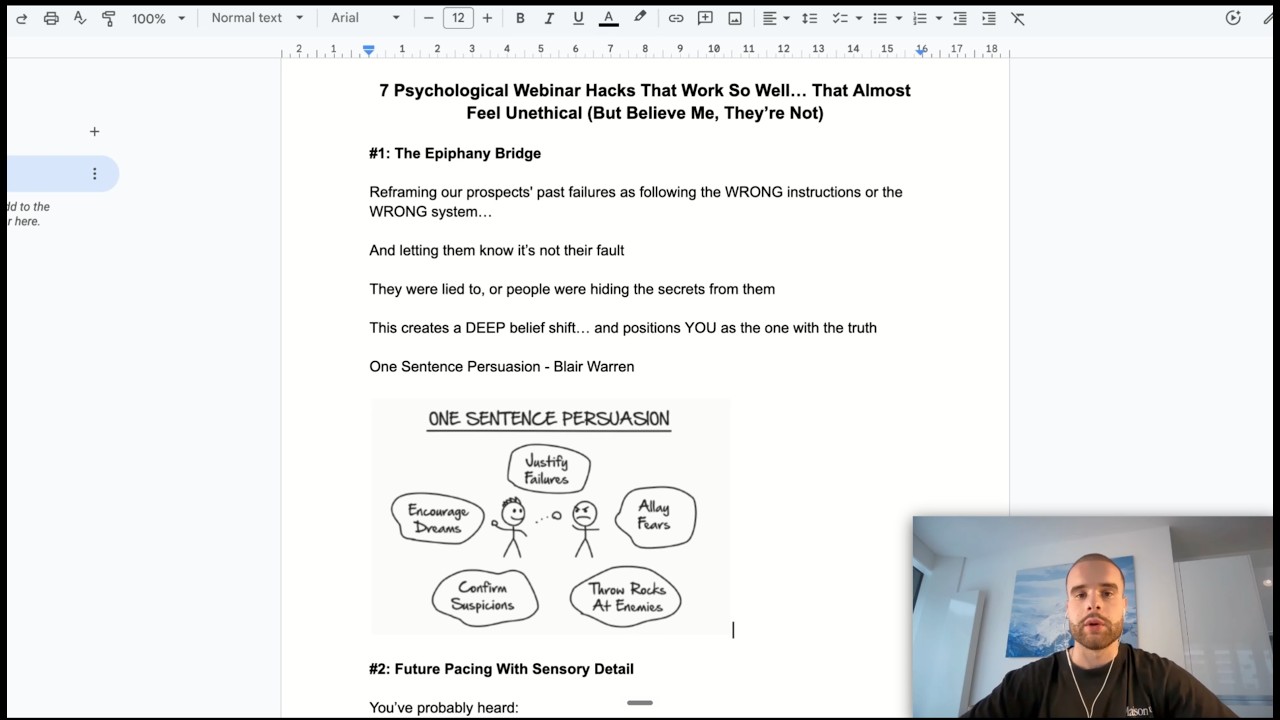
7 psychological webinar hacks that work so WELL... that they almost feel unethical
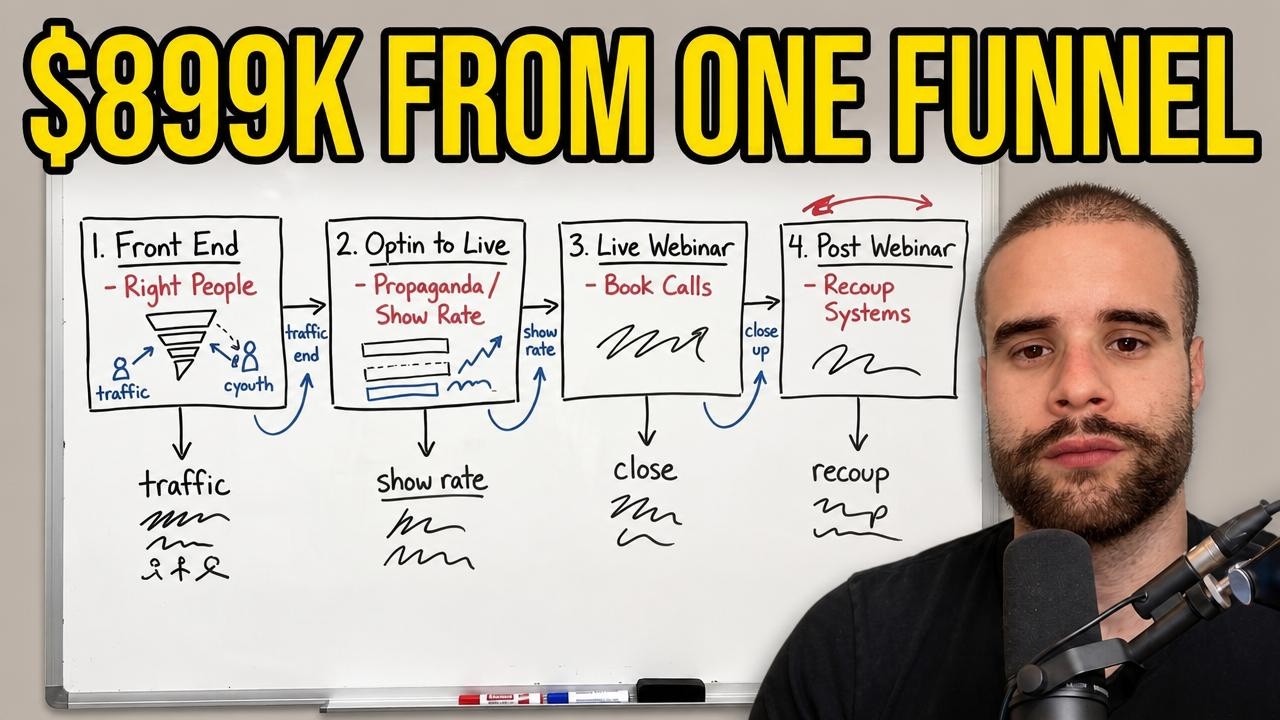

The Simplest Meta Ads Creative Strategy That Actually Scales In 2026 (1 Winner Into 40)
The 4 pillars to scale your info agency with LESS ($1.7m/year in 12 months with first agency)