He Runs 40+ YouTube Channels... Here's What ACTUALLY Works In 2026
Ayman runs 40+ YouTube channels for info-marketers and B2B companies. He uses a pod-based team structure, targets viewers through script language and simple thumbnails, and tests 30+ unique ads weekly. His core strategy combines case-study breakdowns, how-to videos, and founder-led ads that look intentionally rough and authentic.
Chapters
Okay, we are back with another podcast. The previous two were conducted through Google Meets. This one in person. We're here with Ayman, YouTube specialist, and we're gonna be discussing some sophisticated shit. Now we have no big idea of the podcast. We don't know what we're gonna discuss, but we know that's gonna be value-packed as hell. And I'm sure, Ayman, people from Twitter, YouTube will be familiar to some degree of what you do, but just kind of give us a background with how you started the journey, especially. Like people now know that you do YouTube. How did you stumble across YouTube and then how did you know that, okay, this one I'm going to offer to brands?
Yeah, for sure. So first and foremost, Maciek, thanks for having me on. Currently we're running over 40 channels, like mix of info people and then B2B service providers. But in terms of how we started, basically it was 3 years ago now. We were actually a short-form content agency, but then my first client, we were doing YouTube and short-form for him, and then the short-form videos generated no revenue, but the YouTube videos in 4 months took him from $30K a month to $75K a month. So I was like, okay, I need to like position myself to be revenue generating because at the end of the day everyone wants to make money. That's the whole reason why they buy services. So then we just repositioned the offer and then started pitching to YouTube, to everyone. And then yeah, that's how I got my start.
Yeah, that's when you were doing, were you doing like Instagram content with like short form pieces, right? And that was when you came through, was it through Client Ascension?
Client Ascension.
They kind of showed you the ropes of like, okay, short-form content, then you just saw more profitability for like YouTube content.
Yeah, exactly.
Now 40 brands, 'cause we're gonna have like a lot of info marketers watching this, right? Managing 40 clients at once, right? That's a lot of work, right? We kind of take like a different route. We are more specialized. Yeah. Like, 'cause we do the ads conversion mechanism, the funnels, and even the backend, right? But what does that team kind of look like? Like how are you able to effectively serve like 40 clients?
Our team is split into pods and then each pod is capped at 20 clients. So each pod consists of one strategist, one copywriter who writes the scripts, one thumbnail designer, and then anywhere from 10 to 12 video editors and one operations manager and one video quality checker. So basically the strategist is like the most important role and it's usually what people skimp on or they try and get someone cheap or someone who doesn't really know their stuff. All our writers and strategists, they're like US or UK or Canada based. And what they do is they come up with the ideas and then they come up with like the thumbnail concepts as well. Overall, they're the ones like driving performance. It's the same thing if you if you run an e-com agency, it's like creative strategist, right? Same thing, but just for YouTube organic. And then our copywriters, they write the scripts. The video quality checkers, they're the ones quality checking the edits because if you've ever worked with like video editors before, maybe it's for ads or something else, how many mistakes they make and they need a lot of babysitting essentially, even if they're very skilled, they'll still maybe make like 1 or 2 mistakes per video. And it also just helps having like a second perspective to like bounce things off of. So that's what the video quality checker does. And then the ops manager is like the glue connecting everything together, assigning projects, making sure everyone hits deadlines, et cetera.
Yeah. 'Cause I remember when me and my previous business partner, we were seeking some video edits, right? Then I noticed that you were still hands-on, especially in the client communication, right? So with these 40 clients, of course you've got Slack channels and stuff, right? But are you still inside like conversating with the clients? Like do you take the client calls? Like what does your responsibility look like within the agency?
Yeah, so in terms of fulfillment, I check every video idea because like that's like the highest, highest leverage thing for me to do. So whenever we onboard a client, like the strategists do all the research and then they come to me with a set list of ideas and then I'm going through and like nitpicking each one and like giving them pointers on direction. And then we usually go through like 2 or 3 iterations of the initial strategy before we present it to the client. And then actively at the time of recording, like I still do the onboarding calls and checking calls with the clients. And then in terms of communication, it's mostly the strategist 'cause they're the ones like leading the performance of each account. But I still jump in like from time to time or whenever either there's an issue or if like I have a new suggestion I wanna run by the client.
Now I would like to know your perspective on one thing, right? 'Cause I saw like a tweet previously around like the founder completely detaching from like client-facing responsibilities and stuff, right? Like for us, I'm still inside of client communication channels ensuring that the boat is of course running smoothly, right? Do you feel like that's important as like an agency owner? If an agency owner was to completely delegate everything and then not be responsible for anything, do you think that the agency owner loses their advantage?
I wouldn't say they lose their advantage, but they have to be very careful when they do it. 'Cause like, obviously you can't just like hand off to some random like Joe Schmo and then, 'cause then the clients are just gonna churn off. So as long as you can put someone else in place who's either like equally skilled or better than you, or maybe just like slightly worse than you, then like things will be fine. You just have to make sure like the people you put in place for fulfillment are like socially skilled as well and they can communicate and handle problems. But they won't lose their advantage though, 'cause usually the founder's time is better used for other things, whether that's growing the business or just like maybe high, high leverage strategy for each client.
Let's talk about that as well. 'Cause like now you've got the pods and then people of course taking care of the fulfillment, right? And you of course you're going crazy with the content client acquisition, right? What are your main focuses with the agency now? Are they kind of like 90% sales and marketing side? Is that what you focus on?
Now it's shifting more back towards fulfillment because I want to, sort of like restructure things and see how we can do things better and more efficiently and just make sure we have an even better product. 'Cause we know obviously if our clients get even better results than they already do, then like word's just gonna go around even more.
And that is, I'm assuming, I could be wrong here, right? But is that how you built the client base? 'Cause like to be honest, getting to 40 clients in like a specialized like offer like yours, like YouTube, right? Is it mainly word of mouth? Like how did you build that client portfolio?
Yeah, so a lot of our initial traction was from Twitter inbound. I know you're on Twitter as well a lot, But like Twitter now, I don't want to say it doesn't work, but I don't focus on it, so I'm not really getting any clients out of it. Usually people are just shitposting on there. So let's say maybe that was like 20% of the client base. And then like, I actually did the math the other day, then another like 20 to 35% was like referral. And then the rest is split between organic from my own channels, because I post on like YouTube and then a bit of Instagram, although that doesn't work too well. And then LinkedIn, although it doesn't work too well, LinkedIn brings like 1 or 2 clients every like 6 to 4 months or so. So it's nothing too crazy, but the YouTube works like pretty well. And then we've started paid ads as well over the summer.
Let's talk about that because of course client acquisition, we know if you do good work, you post your case studies online, people are gonna eventually see it. You get inbound flow, right? And through paid ads, 'cause I know like a lot of people, they've split tested paid ads for client acquisition, right? But what does that kind of approach look like? Like are you getting, the of course dream prospects through Meta, right? Then I get them just to fill in like a VSL or I send them like a low ticket. I know that you done like a low ticket previously as well, right?
Yeah, I did a low ticket before.
Yeah, how did that go?
So the low ticket was good. I actually made like a good amount of money from the front end and the bumps and the OTO. But from in terms of actually upselling people into the high ticket backend, I barely got anyone. But that was like my fault 'cause I actually wasn't focusing on the ascension. I was just trying to, make money from the front end. I didn't run it on paid though. It was on organic. So it was just like pure, pure profit. And it was like working like really well with the traffic. But I'd like to hear from you, like what have you seen to be the best practices for like ascending people? Are you doing like the fake onboarding call into a sales call or what are you kind of doing?
The first thing, I mean, what we always look for is on the front end, the low ticket product actually has to appeal to our high ticket clients. Meaning like let's say we're serving agency owner is making $100K a month, right? To them, they're not gonna want, I don't know, something service level, right? They probably want a done-for-you SOP, or like, let's say an AI process that they can implement to scale past $100K, past $200K a month, right? So the product first appeals to the hard-to-get client in a nutshell. Then like when we run ads for low ticket, all the messaging on the front end, even though we're selling a low ticket, we still appeal those ads to our dream hard-to-get clients. So by the time they buy the low ticket and by the time they book a call, we're like, okay, this is ICP 1. So we always start off from the front end, right? Now strategies that you can implement, well, we've tested, we've tested the, as you said, the fake onboarding. The ascension rates on that are ridiculous. They're ridiculous. Like for one client, we had like 70 to 80% of low ticket buyers booking onboarding calls on the thank you page because we framed it as mandatory, right? We now with other clients who I will not be name dropping due to NDAs, respectfully, but now we're just getting them straight to the strategy session page where it's like we don't discuss the sales process. We're kind of like, okay, you bought this, here's the next step, coaching, book a call. We don't take on anyone, right? For that, that also works as well because you're getting on the phone with good prospects. But with a strategy like that, you need insane status and dollars. So when someone buys your low ticket, within 5 minutes, They're receiving a dial, like, hey, I noticed that you bought this bundle and you may have saw this step to book a call. You may have not booked a call. Like, here's what we're gonna walk over. Availability's limited. Book your call now, right? What also works well as well, which if you were to do another low-ticket funnel, right? All the low-ticket buyers, they were invited automatically to a community. That can be school, Discord, wherever it is, right? And that community acts as like a propaganda tool. Meaning like when they join, there's like an embedded VSL. Okay, you bought this, here's your roadmap to consume the low ticket. And then we present an opportunity for high ticket. And then even beneath the course modules, book a call, book a call, book a call. Inside the community, we embed case studies, we embed social proof testimonials, people sharing their wins. 'Cause like sales cycles as well, right? Not everyone's gonna buy the low ticket and then book a call on the next step, right? So we need these propaganda tools. Internal webinars, they do incredibly well as well. For one of our clients, we run like an internal webinar to low ticket buyers who didn't book a call, like every 3 to 4 weeks, just like a Zoom link, right? They were walking over the low ticket components. Here's how to consume. Then at the end, we got this opportunity. We opened the door for 10 people who want one-to-one. You'll be receiving a candidacy link inside the Zoom thing. Book a call while you can. They're just like a few strategies that of course you can implement, but it starts off with the front end and then actually speaking to that customer who can pay high ticket with you.
Yeah, it makes sense. Have you tried automated webinars or only like live?
We've tested automated webinars for other clients through low ticket ascension. I've got some friends who have tested it. We haven't, but we have done like auto webinars, like through cold traffic. They're okay, but then the pendulum swing, you know, like people can kind of to some degree detect that is an evergreen webinar. Would you come back to live webinars for those? Yeah, but we have tested those.
Okay, dope. Yeah, the live webinars cook. Like one of our top performing YouTube clients, they make $150K to $200K a month, like directly from YouTube organic with like no ad spend. And like they're absolutely ripping and they're doing a webinar. I don't know if they do it biweekly or monthly now, but like, yeah, those just cook.
Bro, $150K to $200K. Through YouTube organic. Let's walk over that, bro, because you make $150,000 to $200,000 a month, right? If you could break it down into like 3 buckets, right? What buckets would it be like to make money on YouTube like that?
So the first thing is making sure you have the foundation set because if you're thinking of YouTube as like, oh, I post one video and then I post one video and they're their own things, it's not really going to work as well. You need to treat it like an ecosystem, right? Because you have like the social proof videos, you have the top of funnel videos, you have a free course. So the first fundamental thing is just thinking of it as an ecosystem. And then the next thing is the strategy. So the reason why I check all of our clients' video ideas and I'm still hands-on with the strategy is because it's literally the most important part. Because for example, if you try and get views, you know, you can make a video like, oh, I just bought this SVJ Lambo and like, you'll get a million views. Like you'll get some leads, but they'll be very bad quality. You won't get as like from a million views. This is just a random number for explanation purposes. You'll get like, let's say. Like 10 sales calls and then maybe 0 to 1 closes or something. Or you could make a more niche video and get like 1,000 views and still book the same amount of sales calls, but higher quality prospects, more closes, and more cash per video, which is what you need to be optimizing for. So making sure you have the right strategy is super important. So you want me to dive into like what that strategy should actually look like?
The more sophisticated we go, the better.
Yeah, let's do it. So no gatekeeping. So basically There's the social proof videos. Okay, so these, usually when people think of these, they just think of client interviews, but there's actually another type which is called case study breakdowns. So what these are is you're basically taking a piece of social proof and you're presenting it in a different way where you're basically explaining how they hit that certain result, but it's not like a Riverside thing or a Zoom interview. You're just breaking down, hey, step 1, John, you did this. Step 2, John, you did that. Step 3, John, you did this. And the good thing with this is like people buy from people they identify with or they relate to. Right? For example, let's say I was selling a dropshipping course and then I lived in like New York, just like naturally I'm going to get people from New York or I'm going to get people who like lived in my area or people who identify with what I do. If I start explaining how I used to play basketball, I'm going to start to get basketball people in. You attract similar people to yourself. And so when you make these case study breakdowns, now you have like more people that they can identify with because maybe they're not from New York, maybe they don't play basketball, but maybe they identify with this guy who's in Canada, or he used to work a trades job, whatever. So now you get these case study breakdowns on the channel and your program is going to feel like it's for more people. And you know this, the more social proof you have, the higher conversion rate you're going to have. Like on funnels, I'm pretty sure like one of the highest converting funnels of all time, you just keep scrolling, scrolling, scrolling, it's just screenshots. So you have that social proof base. That's where a lot of the conversions are going to come from, not the views though. So now we need to get the viewership and bring people in. So that's the top of funnel. So this is going to be action-based content. So what this looks like is usually how to XYZ. So if I was selling a dropshipping course, it would be like how to find a product, how to build a store, and these types of topics. You're starting with the easiest levers to pull, right? Because now we're targeting people who are already in the market and they're searching for e-com related topics because those guys, they've already naturally gone through pieces of the sales process and now they're coming into your realm of YouTube. So We're pulling the easy levers first to get money in quicker because then once you have these foundations set up, then you slowly go to colder and colder and colder audiences. It's the same thing on paid ads. The more you scale the spend, the more Meta has to go to colder audiences. You're doing the same thing on organic, and we'll touch on this later in the podcast, like organic and paid. There's a lot of similarities between them and they also work together super, super well. So that's the top of funnel. And then eventually once you have enough of those like how-to pieces of content, then you can branch out into broader topics and like comparing different business models or just things that will appeal to more people. The next type of video you're going to need is a free course video. This is basically like a YouTube VSL.
I saw those, bro.
Yeah, dude, we've done like some where the client posts it, they're at $200K a month, the next month they're at $430K a month. Yeah, it was a free course video on YouTube. It's like absolutely insane. That one was going to a webinar actually. So yeah, that's what the strategy looks like.
Interesting. Now the case studies, I like what you mentioned about the social proof, right? That especially that funnel. I saw something like people don't necessarily read the testimonials, they just see how long the scroll is. But like the how-to ones, right? Like let's say I'm not doing a client interview with, I don't know, X name, right? Would that case study breakdown be like, okay, how this name implemented this funnel and scaled to this amount in Y time kind of thing, right? Then you walk over your philosophy. Is that kind of the approach to it?
Yeah, pretty much. There's like another way you can take it as well. So you should do it in that way you just described and then you can try and do the same video later. Like 2 weeks later, 4 weeks or 2 months later and repackage it to be more top of funnel. And like instead of using the person's name or maybe these things they wouldn't necessarily identify with, instead you try and package it more broad. So it's like this guy went from like McDonald's to this or like whatever it might be. So it's like more top of funnel.
I want to also talk about like the targeting as well, right? And this is what Eamon said. We're going to touch on the similarities between cold and organic and just —called inorganic, right? Yeah.
Paid and organic.
With the content, right? How does one ensure that that content piece is going to attract your dream clients, right? Because like now, right? I've done videos where it's very specialized. Like, I don't know, it's like make $100K a month with like a Logic Essential Funnel, right? People who want a Logic Essential Funnel, they may watch that video and then they kind of appeal to it, right? But for your clients, like how do you perfect the fact that Okay, they're like, this content piece is going to attract a specific demo. Like, what does your process look like with that?
Yeah, so everything starts from like, for you, you're saying on the low ticket funnel side, everything starts with the front end. Same thing here. Everything starts with like the strategy and the actual ideas you select, and then that's going to be the biggest lever you can pull. But then since we already touched on that, to go one level deeper would be like the language you're using or how, like, let's say you're running a biz op and you want to target like beginners, then you need to like simplify your language. You need to like maybe not talk as quickly or really like walk through things in a very beginner level. And like YouTube is very smart. It'll like know who to push your videos to as long as you're saying the right words in the video, because YouTube pulls the transcript to try and rank it in search and push it to the right people. And then from there, it's also like the thumbnails as well. Because like, for example, if you're targeting higher level demographics, I'm selling a B2B service or something like I don't need like too much crazy stuff in the thumbnail or like lots of colors or things like that. You know, more simple tends to work better. Not necessarily just a screenshot from the video. You know, you can still do some editing to it, but like depending on who you're targeting, you shift like how simple the language is and like maybe how straight to the point the video is as well. Because if you're targeting a beginner, you need to maybe before diving right into a certain topic, you need to introduce it more and explain why this is important so they actually know to watch it. With more higher level or sophisticated audiences, if that's your dream target, you can do less of that and be like more straight to the point. So overall it just comes down to the execution of the actual video.
And then like when you onboard a client, like how do you understand that these types of videos will appeal to their dream clients? Like have you got like an internal process? Of course not like, like unveiled to the max, but like how do you take client onboarding to craft these video ideas?
From the client onboarding, One thing we do is we look at their sales call transcripts and then we're seeing who's buying, who's not buying, and we speak with the client as well over Slack. We're trying to understand who they actually want to attract. And then from there, like there's certain word tracks or certain things these prospects will say on the sales calls and we can pull those into the strategy. That's one thing not many people do is like taking the feedback from the sales team and the sales side and bringing that into the marketing. It's like one of the easiest levers you can pull. So that's one of the things we do. And then our onboarding form asks like the same questions your onboarding form probably does or any agency, just like really understanding in depth like the person, their offer, et cetera. And then from there we're just, we ask them who's their dream people they're trying to target and then tailor the ideas.
So like, do you get the sales call like transcripts? What do you understand? Was it like the dream outcomes, the dream, no, like the hopes, the frustrations, but like how do you get that information then? Say, okay, this specific phrase that they said can be a YouTube video?
What's the full process with that? For sure. So let's say we take like 10 sales calls, we feed them into the AI, and then from there we try and find similarities between them. This is how it ties into the strategy. So basically if they say, oh, I've been burned before, or they say more specifically, oh, I tried this business model, or I'm in like a small town and I'm trying this, it's not working, or I'm working a dead-end job. And like we can take these things and like bring them into the script because you'd be surprised, like some info offers, like just somehow, whether it's from paid or whatever existing source before they're already on board with us, they're attracting like a demographic that's not the traditional demographic of like, oh, I'm broke or whatever. Maybe they're like 6-figure earners already looking to buy a business or whatever it might be. So through the sales call transcript, we're trying to see what do most people identify as or describe themselves as? And then we pull those into the ideas, but also into the transcript too, because, or the script, because the script is very important because as I was saying earlier, YouTube's very smart, so it just knows who to push the videos to. So we find those similarities and we craft like a, we call it the, what do we call it? It's like a description of the client, basically the dream avatar. And then from there we tailor the ideas and the scripts to that.
With me, I know that I've got a very specific ICP and stuff, right? But you mentioned the importance of having a script, right? Sometimes, bro, I've just got like the big idea, I just Loom riff it. Even though I'm just gonna riff it, how can I ensure that this script appeals to that client so it kind of activates that YouTube ripple effect that you're talking about.
Yeah, for sure. So we like those like riff videos as well. Like a lot of our clients do that too. It's mainly like in the hook trying to include like certain keywords and it's not too complicated as I'm making it seem like, for example, if you're selling a dropshipping biz op, it's like including keywords like Shopify, dropshipping, like make money, these types of things. And then like later into the script, like usually when you're riffing, it's easier if you have like bullet points to go off of. And then from there you can touch on certain things like you mentioned Facebook ads or you mentioned like other keywords that have good search volume. Like let's say in a hook now, right?
I say, okay, online coach making $100,000 a month and wanting to run Meta ads using AI. Very specific, right? But like what, can YouTube pick that phrase up and then distribute a content piece accordingly? Is that how it does it?
Exactly. It will do that. But the thing is, is like naturally right away you're making your TAM very small. So like the viewership on the video won't be too great, but like the quality will be good. But it's important to try and have like a nice balance per se. So like instead of doing like mass filtration at the start, instead you can like take it back down a notch. So instead of like, hey, coaches making $100K a month who want to run ads using AI, instead you can be like, if you want to start running ads for your online coaching business, blah, blah, blah. And you keep going. So now it's like, it appeals to all coaches, but then naturally as you keep talking, maybe you'll like drop in some things like, can say your ad spend to $500 a day or $1,000 a day, whatever. And then naturally it'll just appeal to better people essentially, because you don't want to like shut out that bottom of the market. Like of course you don't want like full-on brokies, but there's like a good 10% or 20% of the market, or actually it's even more than that. You don't want to fully shut them out because eventually they'll become a dream client, like over time. Like there's a lot of people who started watching our stuff like 2 years ago and then they become a client like now and they heard of me way back then when they weren't qualified. So they didn't even get through the Typeform, but then now they work with us. So you don't want to fully shut out that bottom part of the market because that's a lot of the viewership on YouTube and you need that viewership to push your video out to more people because when YouTube sees that you have good watch time on a video from enough people, then it pushes you to that next group of people and then it pushes you again, pushes you again.
Interesting. That's why you mentioned, I could be wrong here. I'm not the YouTube specialist. I run all my YouTube shit myself, right? But that's why you mentioned that you need the variations of content. So you've got like, okay, the free course, then you've got the case study breakdown. That's like, let's say now, right? I have a free course, right? And then I've got a case study breakdown. Is it possible to like, let's say, okay, the free course, bigger term, then the case study breakdown, I'm appealing to a more specific ICP. Is that kind of a thing?
Yeah, yeah, that works for sure. That's good. Because like the free courses, what's so good about them is like, even if you make them appeal to the bigger TAM, also the sophisticated audiences will still get a ton of value from it because naturally these are like 60 to 90 minute videos. So they're very information dense. So the higher level ICPs can also get value from them.
I've done like a free email marketing course. I think it done like 3K views. Done decent, right? But that's when I didn't really understand YouTube as much. But how do you optimize for watch times?
It depends who you're trying to target. So for B2B audiences like yourself, you're trying to reach like info marketers, you want to make the video more straight to the point. So in the sense of you don't want a long and drawn out hook and like very big introduction and all these things. Instead, you want to be more straight to the point. But if you're selling B2C a biz op, then you don't want to necessarily make it super, super long, but you need a nice balance where you need to give people a reason to listen to you and you still need to do the same thing with B2B. And then maybe you need to introduce the topic more. Before getting into the body. So that's the hook, right? And then for the body, just remove fluff. Like that's like the main thing. Like before in like 2023 and before that, you could kind of have like a fluffy video, but now it needs to be like trimmed out and like lean. So like we've even had clients who've made like 1-minute videos, like a long or like a long-form horizontal video, not a short. And like it's gotten like 20,000 views. And then that video just brings in so many more people into their ecosystem. And that 1-minute video could have easily been like fluffed out to like 8 minutes or so, but it was literally like a tutorial on how to do something in a software. And then that just brought in so many people. And then the next thing as well is when you're doing your call to actions, you need to be careful with them. You don't want to make them feel like a long infomercial. Because with our clients, most of them, we're doing 2 call to actions per video. We do one at the 33% mark in the YouTube video and then another one in the outro. Because then, like, we're making people aware of the offer while at the point where most people are still watching. Cuz a lot of the drop-off happens around the 30% mark, give or take, cuz the KPI we're aiming for is above 30% retention on a 10 to 15 minute video. If the video's longer, like a free course for example, it's not the same KPI because it's a much longer video. So with the CTAs, with that 33% one, what I was saying is to make sure people don't drop off after that, it needs to be very like quick and sneaky. So you need to really make it like 1 to 2 sentences and like transition smoothly into it and out. but also make sure you put it in between two key points. So to put this into perspective, or as an example, let's say I'm making a video on like how to reach like $100K a month with your YouTube channel. And then the first part I'm talking about the ideas, the next part I'm talking about the scripts. Like after I'm done talking about the ideas, which is the first part of the body, of course they want to get to the script part. Maybe I like foreshadow it a little bit and then I get into the script part. So like as they're hearing the CTA, they're like, oh, I'm not going to click off because like I want to hear the next part still. So that's how you do it while still getting conversion.
Interesting, bro. Yeah, as I said, I do my YouTube shit myself, bro. Like even when I say, okay, I've got like a newsletter and stuff, there's no script for it. I just say, okay, join this many markets inside, you know, you receive a daily direct response to gem and stuff, right? I wanna touch on two things, right? The first one is being what we kind of touched on briefly, how paid and organic can perfectly complement each other. Before we go into that, like the conversion mechanisms, right? Because you mentioned that one of your clients, he was promoting like the live webinar. It's why he scaled, right? With your clients, let's say the ones making 200K, 300K, 400K mark through YouTube, 'cause I know that you've got a few, right? Yeah. How does their YouTube ecosystem look like to drive traffic to the offers? Is it kind of like live webinar? Do they get people to fill in a Typeform? Like, yeah, what's the best things that you've seen?
Yeah, so the easiest funnel to do and what most of our clients do is gonna be a VSL funnel. So that's like, some of them do opt-in, some of them no opt-in, most of them no opt-in. And then it goes to a Typeform and then the Typeform rejects them or pushes them into booking a call. And then there's the thank you page with the FAQ videos. Very simple. And then webinars would be the next one. Most of our clients don't do webinars because I would say they're more difficult or there's more like logistical intensity to like do them and start doing them. But the sales calls model is kind of easy. But we've had clients like rip with webinars as well. Those are like the two main ones like our clients have done. Of course, other funnels work like low-ticket funnels, like obviously you do those for a lot of clients, but our clients just do like VSL funnel, webinar funnel.
I know the KPIs are dependent on the niche and the market, right? Let's say I've done a video and it got 1,000 views, right? It's teaching people how to build a low-ticket central funnel, right? Or like how to build a webinar funnel. Then my VSL is how you can seek our services to get a webinar funnel, right? Out of every 1,000 views, like how many people can book a call for like 1,000 views, or is that kind of dependent?
Yeah, it's like very dependent on like the niche and many factors, but like to give a very estimated number, it would probably be like 2 to 3 calls booked from that. And it's like from those 2, 3 calls, this is for like a done-for-you service, B2B targeting higher-level people, 2, 3 calls booked. And like out of those 2 to 3, if you get like 100% or like 80% show rate, give or take, like you could probably close like 1 to 2 out of those. That's like somewhat what it looks like, but that's if you have like all of the other stuff like in place as well. And like ideally you're pulling in traffic from external sources too to like help bring in more people to the channel. 'Cause how it works with their conversion cycle is like usually they're not buying off of the first video they watch. It's after watching like 4 to 5 videos. That's why it's important to have like the whole foundation in place. But those numbers I gave of like 2, 3 calls, it like varies a lot. 'Cause like with one of our other clients, we posted a video, he sells to people who want to get into tech, but like a specific niche in tech. I have like 2 clients who push to tech, but it's like different sectors. And then with this guy, we posted our 3rd video, it got 11,000 views and then he got 27 calls booked from 11,000. So like it just varies a lot with the niche.
And like now, right, you're running paid ads for your agency. Yeah. Right? Via SellFunnel, correct? Via SellFunnel. Now, because we run paid ads for our clients and I believe If as an info marketer or growth operator, you're only doing organic for clients, organic coaches, you're commoditized, respectfully. You need to understand how to convince cold prospects to buy with you, respectfully. Please learn paid ads. But right, how are you now using organic YouTube to complement that paid ads, right? Like, are you noticing that people, when they see your ad, are they searching you up on Google, watching a YouTube video? Like, yeah, how are you tracking that? [Speaker:JOSH] For sure.
So on every sales call, I make sure to ask the prospect like, hey, did you like look into us before this or? Like, how did you find us? And then if they say they came in through ads, then from there I'm like, oh, did you look us up beforehand? And then a lot of the times they're like, yeah, we did. And then like literally it was 2 days ago or yesterday I was on a call with someone. So he was selling like a real estate info offer. He was doing $70K a month from it. And then he told me he was losing deals because people would tell him like, hey, I searched you up and like I didn't find anything. And then they just didn't trust him and they didn't move forwards. And it wasn't just one time. It was like multiple times in this span of like 45 days. And that's what led him to booking a call with me. Like Meta targeted him, shout out to Mark Zuckerberg. Then he came on and then he was like, yeah, I'm like losing these deals, et cetera. That's like tens of thousands of dollars lost every single month. And then I was like, before coming on this call, did you search me up? And then he's like, yeah, I did. So some people do it after they book, then they look you up. Some people, they see the ad, they search you up, and then like they watch some stuff, they don't even book yet. And then later they get hit by the ad again and then they book. Everyone's journey is like different, right? Even for myself, like there was like some camera lens I was looking at buying and like I literally didn't— I still haven't bought it, but like it's still in my mind. Like I plan to get it and I've gotten their ads like 19 times. Maybe you'll get retargeted, bro. Maybe after like the 25th time, like I'll buy it. I know eventually I will. So everyone's journey looks a bit different.
Grant Cardone as well, right? I heard it from someone that when he has an ad and it's with like a celebrity figure, let's say it's with Trump or someone else, right? but the ad is pumping. He doesn't necessarily want that happening 'cause that ad is putting more focus on that celebrity figure. And what he wants is like when he scales his ads, it's come like Grant Cardone, Grant Cardone, Grant Cardone. So when people search up his name on Google, bro, there's visibility there, right? And I think that's a hidden benefit of YouTube as well. Yeah. It's got that built-in SEO platform. So when someone searches your name on Google, they see the videos and stuff, right? Like even for me, I think since I started posting YouTube videos like a lot more, when you search up Maciek Lipa on Google, there's my YouTube thing there. It's like my free email marketing course. You go to images and then you see all the thumbnails. That's probably gonna, could be wrong, right? But it's gonna probably accelerate your growth with the paid ads as well.
Yeah, definitely. Like we have a client who, since Google owns YouTube and Google's the number one search engine, YouTube's the number two search engine. We had a client ranking first on Google for the keyword Apollo.io. So like Apollo is like a lead scraping software. If you search Apollo.io, he still comes up to this day and the video, he has a cold email agency, right? It's a very like niche B2B thing, but that video has 120,000 views, right? And he's made like a lot of money from that video. And like it still books calls to this day because it's ranking on Google. And since it's ranking on Google, it's also ranking on YouTube. So like they definitely play together for sure.
That's, I think as well, YouTube and why it's so superior. 'Cause like let's say on Twitter, right? I've had tweets that got like 10, 15K likes and stuff, right? But when it goes viral, it's dead, bro. Yeah. It's like buried, right? But with YouTube, it's that evergreen ecosystem, right? So like one thing is like, how do you ensure the longevity of a video? Then like, how do you know, okay, that this video can be around for years? 'Cause bro, there's probably some, like let's say a Zapier tutorial and it's been like posted 3 years ago. That's still applicable. Then I still watch that video, right? Like how do you make those videos optimize for longevity, if that makes sense.
Most of our videos, we're always aiming for them to be evergreen because naturally we want to like use our client's time as best as possible and make evergreen assets. So it's very leveraged, right? So in terms of how to do it, you need to make the topic searchable. So for example, that video that's still ranking for Apollo, it was posted 11 months ago and it's still ranking because it's titled, I believe, like how to use Apollo, like something like that. You think, okay, how do people search into YouTube? And then you just type that in the search bar and then we like use that as the title. So these how-to topics are like very, very powerful. That's why I have a lot of them on my channel and my client's channels because that's how people are searching things up. If someone wants to start a low-ticket funnel, it's like how to build a low-ticket funnel, how to launch it, how to run the ads for it, whatever. How to, how to, how to. So that's like one of the easiest ways to do it. I'm saying easy, but it's still difficult. Like right now, if you search how to get into tech, like one of our client's videos from a year ago is still ranking for that. Yeah. And I even use that example in like a lot of the calls. So yeah, that's how you do it.
So like with your paid ad system, right? Yeah. To VSL. Now you're kind of not in a way stepping into like, let's say an offer owner, because of course you've launched your offers and stuff, right? But what does your ad process look like? Like how are you crafting ads that speak to your dream clients who want YouTube organic for the info offer? Like are you serving— it's not only info marketers, right? It's also like B2B, right?
Yeah. Basically like 60% of our clients are info and then 40% are B2B, give or take, or maybe even a bit more. More info, like 70/30. So in terms of how we ideate the ads, funny enough, it's a very similar process to how we're doing it on the YouTube side. So like we take our sales calls and we see like what are the main things people are saying that they're struggling with or things that are preventing them from starting YouTube on their own or whatever it might be. And then we take all that info using an AI and then we condense it and then we bring it into an ad and then we test multiple hooks. What we do is we do, we don't do like 5 hooks, 1 body. We're always doing like unique ads is what we call them. Do you, do you get what I mean?
What's the full process behind that?
My belief and like the people I follow and learn from, like since Andromeda came out over the summer, like the hooks and body stuff doesn't work as well anymore. It still works, but I've just been having success running unique ads. So like I'll launch a batch of ads with like, it'd be 30 ads. Like I'll launch them like 30 ads a week. And then from there we just get the feedback. We see what ads are getting spend, which ones are working. And then from there we like, look at the script, see, okay, why— we try and figure out why did this ad work super well and we try and make more ads like it but different ways. We record them in different settings, etc. Interesting.
So like when you test 30 ads, each ad is a completely different variation. Like the callout is different, body different, CTA different, right? But then how do you now, right? Let's say you test 30 ads, right? Then you got, you found 3 that are profitable, right? How do you know which section of the ad is a winner, so you introduce variations, right? Like meaning let's say you got like an ad and then you may believe that the body is thing, so you just want to test the, you know, like few variations of the hook, right? Like how do you know which part of the ad is winning?
Yeah, for sure. So basically I don't know like specifically which part, but it's like the overall theme of the ad in the sense of I'll have an ad that's ripping where it's like, hey, we onboarded a client and within 30 days, so he started with us at 0 subscribers now he has 27 subscribers, but he closed a $15K deal in the first 30 days. And that's like the theme of that ad. And maybe the theme for the next one is talking more about how they tried to go in-house, but it didn't work. And maybe another one, the theme is like, oh, I've wanted to do YouTube for a while, but I just never do it. So it's more looking at the theme, 'cause obviously I can't like go and figure out, oh, specifically this sentence, you know?
Yeah. Let's talk creative variation, right? And formats. Are you on all your ads? Yeah. What's going to be your thought process with like testing new variations? Like, are you gonna do UGC? Are you gonna do static? Are you gonna do, I don't know, like, interview type of things or podcast ads. Like, what are your ads looking like right now? Just like you with iPhone, like recording?
No, so our ads that perform the best, I shoot them in a podcast studio just like this. And then it's just me talking like straight to the camera. And so those are called like founder-led ads. Run it, bro. Do a creative right now. Yeah. So I could do one off the dome, my winning ad. I have it memorized because I've re-recorded it so many times in different settings. My next point is like whenever we have something working good, I'll do it in like a selfie ad. I'll do it in like I did one in Austria in like the mountains. So yeah, in terms of the plans for the future, I tried UGC with like this girl and then I got a high click-through rate. I got a high click-through rate. But then once they saw my face on the VSL, they were like, oh, like, screw this guy.
That as well. We've split tested that. I know friends who've split tested that. The moment somehow a female attractive character is on a front end, that does so, bro. CTR is insane, CPC is so low, is that congruency between the ad and the VSL. Like if you can ensure that so people don't click on, then you find a holy grail. But like bro, like female attractive characters, like I remember once, right? I was doing email marketing, direct to consumer, right? I was doing LinkedIn cold email, like the messages, right? I reached out to a prospect from my behalf. I'm a male, right? Same pitch. This guy didn't reply to me. right? I was like, okay, how can I get this guy's attention? He's our dream ICP1, right? Guess what I done? I created a new Gmail account from my sister's perspective, but it wasn't her name. I went on like top 5 attractive female names. Then one came up, Alejandra. I got like Alejandra at my domain name. I added a picture of my sister on the icon. Similar pitch, right? Similar, no, it's the same company name. I reached from her perspective. This guy flipping replied. He replied and he booked a call, right? He booked a call. And when he booked a call, I was like, you are going to be attending a call with the founder who's gonna take the call. But like what, like that mechanism, like men especially, they respond so much easier to females, bro. And it's why as well, I think like offers like Shelby, for example, right? Like her front-facing image, the fact that she's of course of this character and stuff like that, Bro, her content just pops off like a lot more. It's kind of like the halo effect, right? When things seem attractive, people just trust the person like a lot more, right? So that's super interesting, bro.
If you had to pick one ad format to rip for like the rest of your life for all of your clients, like what are you picking?
The best ads, right, that we've noticed— one minute. Get a Zinnin, Pablo, sponsor me. No, the best ads are native authentic ones that are kind of like ugly, right? 'Cause the moment someone sees an ad, they believe it's an ad, you know, like resistance because people don't like being sold to, right? Our best ads, believe it or not, is without, we give the client like bullets, but they just riff it, right? They just pick up their iPhone, they're walking, decent backdrop, and then it's just like a lot ugly, bro. Like even when I was running ads for myself, bro, my best performing ads was just like me. I remember I was in Lake Tahoe with Kieran, who I think you know, right? We were walking down something. I just said, okay, I'm gonna pick up my phone, record some ads. I didn't know what I was gonna say, but just like ugly and authentic, right? And I think that's why I'd like to get your thoughts on as well. But do you know like these ads that are like Hermosi-esque editing, right? Like everyone's using them formats and you can kind of detect that it may be an ad and then that resistance kind of grows, right? That's why I believe like our best ads. Yeah, bro. They're just like ugly ones. Sometimes we just, Don't even add subtitles, bro, like on it. It's just like very raw and authentic. Even if you check out Sabri Suby, sell like crazy, right? One of his ads is like a static and it's just a screenshot of the Google Shopping with all the reviews. Another one is a static of his book with all the reviews. They are our best performing ads. Like not even the, like the B-rolls and then, you know, the flashy subtitles with like green and red text. Yeah, that's like what our best ones are.
On Instagram, like the, the text that says, oh, this is an ad, it's actually nowadays very small and like hard to see. So sometimes when I'm scrolling, I'll like see an ad and I'll be like, I won't even realize it's an ad until like my eyes like glance down. I'm like, oh crap, this is an ad. I definitely agree. Like that's going to be like the winners in the direction Instagram is trying to go and Facebook, because obviously Facebook's goal is to not have people come in and like see an ad and like go off platform. Of course they're like, they have the ads manager, they make money from that, but they want to make sure the users have a good experience and they don't want to be hit with ads all the time. So like definitely think that's the direction things are going in for sure. And I've tried those, but yeah, it's dope it's working for you.
Mark Bulls Brown as well, he done like a masterclass for our coaching program, right? And do you know these creative concepts that pop off organic, like those interviews, right? If you can use that format of creative and put it into paid media, you found your holy grail. 'Cause it's kind of like a popular content piece at a time. Like I'm not sure what's popping off now. Like I know, Street interviews were doing well and all these other things. But if you can use that format and test it as an ad, it blends in with the feed because people know that it's trending at the time as well. That's why like you saw like a lot of interview ads do well. The podcast ads, they do well as well because like the podcast ad, it's kind of like people know that podcasts are popular. So if you can blend it in as an ad, it's like very profitable. So like, yeah, we just find like winning concepts that are printing as just content pieces, you know, like even, you know, when these content pieces where at the beginning they've got like a controversial topic, let's say, I don't know, someone's saying I tried this exercise and then like it helped me lose weight and then it transitions into the guru and he says his thoughts on the content piece. Like that as an ad, well, that's like a content piece, but it's also like it can be repurposed as an ad.
Yeah, that format came from like organic, like one of my friends, he was ripping those videos and then like now I'm seeing tons of ads on like using that same format. That's why organic is a good testing ground. And typically the people who have the best organic content when they step into paid ads, it's like so easy, right? Have you seen the same with your clients?
Like I'm sure. Always, bro. Like our clients who are organically charismatic, those bro, they can just craft ads all the time, bro. It's so easy. But that's why as well, like sometimes doomscrolling can be a good thing. 'Cause if you doomscroll on TikTok organic or like even IG organic, then you see content pieces that are going viral. Take the format of that and then distribute that into like a paid ad. Bro, like super easy, bro. Yeah.
You gotta doomscroll like intentionally though. That's the tough part. So it's better to do it on your computer. Sometimes I'm like there, I'm like, yeah, I'm studying, but like, no, I'm just scrolling.
But doom scrolling sometimes can be profitable. Yeah. If you're using it for marketing purposes, you know? Yeah, yeah. You find big ideas. You're like the ads, right? You're doing these, it's going to a VSL funnel. You're taking a sales call, right? Yeah. How are those leads that come through cold, sorry, different from leads that may have came through Twitter or YouTube? Like what are you doing differently? Yeah.
So we, use the same sales process because if you use like a cold traffic sales process on organic people, it's going to work better. And if you're using it on cold people, it'll work good. But if you're using a warm way to sell people on the cold guys, it won't work. So it's better to just do the best way of selling, which is to cold traffic. Now in terms of the difference in lead quality, the leads we get from YouTube are like way higher quality and like even Twitter as well, but mainly YouTube. And that's still our main client source. Like our organic sources are more than our paid. Like for example, in September, like Literally out of like the new clients we'd bring on in a month, like 8 would be from organic and like 2 would be from paid. And we maintain that ratio like all the way till like now basically. And so going back to the original question, yeah, the YouTube leads are like much higher quality. The paid ones, it's like hit or miss. Of course they're all going through the tech form and stuff, but like naturally they're coming in like way less bought in. You'll get like a lot less like one-call closes, but then also just the thing with content is like we reject a lot of people because people just don't have the it factor or like they just can't like speak well or like they're just, I feel like their offer's not gonna work and stuff. It's like a very specific type of person where we know we're gonna cook with. We reject a lot more deals than like from organic.
If someone goes over your Typeform, right, they're not qualified for some reason. Let's say, I dunno, their offer is bottom of the barrel, right? Have you got downsell mechanisms in place? I don't know. Let's say you get 10 Typeform applications, right? How many of those leads are qualified for your done-for-you?
I don't have the exact number. I believe it'll be like 80% from paid, like 80% will be unqualified or not 80% unqualified, like 80% won't like fully finish the Typeform. And then like from that 80%, 'cause like usually the unqualified people, they drop off 'cause after seeing the questions and stuff, either they get rejected or they just understand it's not for them. 'Cause the thing with cold is like, even if I'm doing the callouts or you're doing whatever, you still just get these random-ass people like coming into the funnel. But I don't have a downsell mechanism just because, well, I, I don't think it would be worth the effort in the sense of it's not unqualified people like, oh, they're still online coaches but below $20K or $30K a month, which is like typically our minimum threshold. It's like literally like random human beings type of thing. So that's why I don't do it. But I know for like other info offers and stuff like that, like they're super profitable to have that downsell, right?
You probably do that for your clients. Like Typeform Logic. If on this question they select something specific, then they're automatically redirected to like a downsell mechanism. Like even through low ticket funnels, like it can work like super well as well. Like let's say we're doing right, like on the front end, like as you know, right? Low ticket, 2 order bumps. Next step is book a call, right? But we've got no one-time offers, right? For some clients. Let's say on that onboarding call step for the Typeform, they're not qualified. Then we can redirect them to like, let's say course for £197. Then we've got like a downsell mechanism for those unqualified leads. You're just tapping into like a lot of lost leads who would've not take action like before, right? Even for our webinar funnel clients, what we've done in the past, which is insanely profitable, let's say on Webby we're selling a 997 offer, right? If they sat through the webinar, they didn't buy, then they received email was like, okay, risk reversal, like social proof and stuff, they still don't take action. It has to be some sort of pricing limitation. So what we've done is like backend launches to leads who watched the webinar, didn't buy the 997 offer, and we're selling a similar offer for 297, 397, et cetera. Bro, conversion rate's silly. For one client, we've done like 120K, right? In like 3 to 4 weeks with like an email launch just to these leads. So yeah, I think it does also depend on the lead flow as well, right? Like if you're getting a lot of like unqualified leads, it makes sense to do like a downsell mechanism. If you're getting like, let's say a small quantity, your attention maybe you know, just to get more calls and done for your clients, right? But yeah, those crush.
Okay, we already touched on like, okay, the people who have a good organic base, like naturally the paid ads like scale much quicker. But like, how big really is that difference in their performance? Like, have you ever taken someone with like no organic content to like ripping?
Yes, we've done like a low ticket funnel for a B2C biz op offer dropshipping. The low ticket funnel is scaled to like $120K a month, I believe. And with that, there's no digital presence whatsoever. There's no client-facing attractive character. But when you search up the company name, okay, Trustpilot, these and these and these things, right? But yeah, like I don't believe the organic is 100% mandatory. Yeah. 'Cause like I know that we were working with someone who I believe you may know, can't name drop him. With like a low ticket funnel, he was doing like a million dollars a month, right? With Ascension as well. And bro, he's got no content piece. On IG he's got like a few hundred followers, right? But just because his paid ads are so dialed and his product is insane, it kind of makes up for the lost organic, right? But I believe, I would love to know your thoughts on this as well. If you can have both mediums ripping, oh bro, that's when it's peak. Like you, for example, right? The paid ads, YouTube organic. When someone searches up your name, they see your Twitter. When someone searches up your name, I think you've got like a free school community as well, right? Yeah, that as well. You know, like all these assets, they for sure increase conversion rates.
It makes everything so much easier and to the point where it's not even like that logistically intense to create content because you don't need that much. That's just a belief people have is like, oh, I need to make so much content or spend so much time on it. But it's like if you have things decently dialed, like you're looking at like a couple hours per week into content and you're good for every single month. And then the output you get from that incremental little bit of effort is like So much YouTube organic, incredible.
HeyDad's incredible. But yeah, I think that is the direction info marketing especially is going to take. Because like now, bro, there's so many offer owners, offers, and like there's so many dropshipping guys, let's say, right? But the person who I think will differentiate and get that customer is like an ungodly amount of proof and presence. If someone sees your ad, they search up your name on Google, then they see that you've been featured on this podcast, that podcast, that you've got these YouTube content pieces, this YouTube free course, that free school community. Bro, all of those are trust assets, right? It's something that I'm optimizing for. Of course with you, you've already got that like harness with like the YouTube especially. But I think someone searches up your name, then they see authority and proof, oh, you're gonna scale. But like look at someone like Grant Cardone, bro. When you search up his name on Google, what the fuck do you see? Forbes, YouTube, everything. Forbes, YouTube, you see like everything. So yeah, I think that's probably the direction that is going to take. And I think if you only rely on paid without organic, your paid ad system needs to be so fucking dialled, bro. Like creatives and product. And not many people can do that. Like many growth operators, respectfully, they're just 100% organic. They don't know what they're doing, right? But like through paid is a whole different game.
Yeah. If you're running purely through paid and like actually doing good numbers, like, you know, their backend is like a military operation, bro. Yeah. Like we've worked with some of those offers that, because like we also do ad creatives as well for some clients. And like I've worked directly with some of these offer owners doing like millions a month, like through paid. Their attention to detail is like off the charts. And that's one thing like I've noticed with like hyper successful people is like their like attention to detail is just insane. Like they'll snipe like little things in the creative and like you might think like it doesn't make a difference, but like all of these things add up and like that's why they're doing like Ms a month.
Bro. Yeah. Like, do you know these Brazilian direct response marketers who like deepfake opera and stuff, right? Bro, when you search up their product, there's no digital presence. There's no YouTube like this podcast and stuff, right? But because their front end and back end through the cold traffic system is so dialed, they're scaling, bro. Like, you know, like the, have you watched some of the VSLs?
I've seen on Twitter a screenshot. I haven't watched them, bro.
I'm gonna try to find you a link of one, right? I'm not sure if I can find it, but there is like a deepfake one. Insane VSL. And like the amount of attention to detail that goes into that VSL, you know that they're correct, right? So yeah, I think learning paid ads is mandatory. Yeah, for sure.
They're gonna get hit with like a fat lawsuit though, probably. But if they can get the bag and maybe send the money elsewhere, they'll be good. Yeah.
But they are good people to study. The best paid ads guys are probably like direct-to-consumer marketers, like e-com and like affiliate marketers. That's why like if you are in info as well and you only study info ads, in my opinion, you're kind of putting yourself in a bucket. That's why like see what affiliate marketers are doing or direct-to-consumer brands are doing. Get the format and double that down into like info marketing format. Because like direct-to-consumer brands, they need to make the purchase there, right? They need to get that customer there. But with like, let's say info, even if someone opts in, they haven't bought anything with you, but they're still in the backend. You can still remarket to them, dial them, et cetera, right?
It's like a different game. People, on YouTube, if they're— let's say you're a dropshipping coach and you're just looking at like only the other dropshippers and pulling formats from them, like you are going downhill, you're running the brand to the ground. You need to look outside, two steps out. So the first step is looking at other biz ops. You look at agency biz ops like AI agency or this and that, whatever. And then you go another step out, like you can pull formats from like the math niche and like these random ass niches and bring them over to your niche. And that's That's like how a lot of the concepts that you see nowadays like actually work because there's like smart YouTube people behind them pulling things from other niches. So yeah, you definitely have to like get creative and think outside the box. If you're only looking at info marketers for paid ads or your direct competition, you're just going to sound like everyone else. And if you sound like everyone else, then you're going to get tuned out. You're going to go from one ear out the other.
Interesting. So like with your clients as well, let's say there is a content piece that popped off, right? And it's in, I don't know, the agency space, right? But you can take that format and then replicate it for tech space.
Yeah, exactly. So like when we had our first free course rip, like the client went from $200K a month to $430K a month. And then from there we literally did it in like all the other niches we work with. And it doesn't cannibalize the first free course like at all because it's completely different niches. So everyone's okay with it. And like we did it twice in the dropshipping niche, like same channel became like the number one video on that channel. We did it in the clothing brand niche, we did it in how to get into Harvard niche, we did it in like the tech niche, the agency niche, like so many of them. And like they just rip like every single time. It's like that, that good old reliable, like you just do it, like obviously using our framework and stuff and it just works so well.
Using that framework. That's the keyword, using that framework. Are you the one that coined free courses?
I don't know if I want to say I coined it because like before I had made our free course, there were already other people like doing a lot of them. Yeah, I don't want to like claim credit for it, but like we definitely popularized it for sure.
Yeah. I saw some of them. I saw some of them. But yeah, that concept of formats is so critical. Like let's say for example, right? Like someone trying to learn copywriting and stuff, right? And then they want to run paid ads. If you just see a paid ad that is printing cash, right? You dissect the format of it. Like what are they activating? How does the structure look like? Get that structure. Like you can even get the transcript on somewhere, put that inside like Claude or so. Get Claude to get you the structure of the ad and then like use Claude to replicate the exact same structure for your offer. Everything in copywriting, especially in like paid ads, is all structure and format. Like if you just know the structure of it, you're gonna print, right? Like that's why for you, you've kind of like, of course the free course, right? You found why it works. You've kind of got like a chronological process of following it, right? You can replicate that for any other clients. It's just like the structure, right? So is that free call structure the only one that you've kind of seen? Like, I'm sure that there's more, right? But what other structures of YouTube video have you seen that crush?
The life story video is like also an essential one on like every channel. That's just like walking through, like, for example, if I were to make a life story video, I'd be like, oh, I used to work at McDonald's. And then like I moved from— You worked at McDonald's? Yeah, I worked at McDonald's. Bro was flipping burgers, bro. Yeah, well, I was the cashier and I was also making like coffees, but And I was like 14, I think. Yeah, 14, which is actually illegal because I was turning 15 like 3 months later and they let it slide for some reason. So anyways, so I worked at McDonald's and then like, oh, after that I worked at Costco and then I tried to start dropshipping. It didn't work. And then I started agency, started working, blah, blah, blah. It's like video walking through that life story. Like those cook because right away someone watches that and then they actually understand like who you are, who you stand for, what you've gone through. And then like I was saying earlier, people buy from people who they know, like, and trust and also that they identify with. So now that someone knows your story, then they're going to be much more susceptible to buying your product. So that's another one that works super well. In terms of another one, we already touched on like the case study breakdowns as well. Like those cook. Those are like the, the good 3 to have on like every channel.
Now you mentioned know, like, and trust, right? You've got like 40+ clients at your agency, right? How important has it been to like activate those elements like with prospects and how are you like achieving that? Like I know you've got organic content pieces and stuff, right? But like, how else are you like differentiating? Like there are other YouTube agencies out there, right? But like, yeah, how are you differentiating?
Yeah. So to differentiate from the other YouTube organic agencies, I am like the reason why there's a lot of them because I used to run a program and like I created a lot of them, like over 100 plus.
They're little minions, bro.
I created my own competition. You know what's funny though? Like literally I was having dinner with like 2 students from the program like 2, 3 days ago in London and they sold their agency. Like, oh yeah. Oh shit. And we even have some other people, they're hitting like 6 figures a month and stuff. And our offers are like similar in a sense. But the thing is, is like everyone executes YouTube differently. So like in terms of the marketing, like we do tend to like look kind of similar, but like when you work with them, everyone kind of has their own way of doing things. Like we have like our way, someone else, maybe they won't even do free courses. They won't even do this or other things I'm talking about. They'll do it in like a whole different way. So everyone has their own like spice or like way to do it essentially.
Now with of course client acquisition, right? I believe you put out a tweet a while ago, right? It's like when you were getting your first few case studies, you were just doing free work for prospects and then showcasing your credibility, right? There will be some people here watching that may have one client, two clients, et cetera, right? But let's say I've got one client, one decent case study, right? How do I turn that into more clients through like, let's say, RGDM, Cold Email?
You got to like milk that case study. Like with us, like we have lots of case studies, but like I know which ones like hit the hardest or resonate the most with people. So like I milk those the most. Now for someone who has like 1 to 2 clients, they have a case study, awesome. They got to like not be scared to just milk it. So I'll get into the outreach bit in a second, but on the content side, like they need to make like lead magnets out of it, multiple of them. They need to find like multiple angles to branch out of it. So for example, let's say you got a case study, like you had zero clients, you got one client, and then you launched a low-ticket funnel for them, launched on paid, and then they hit $100K a month. Now, like you can make one like big lead magnet that's like how X name hit $100K a month in 3 months using a low-ticket funnel. And then the next lead magnet you're going to do is like talking specifically about the ad creative strategy. The next one's going to be about the funnel. You find all these different angles to hit from, because each angle is going to appeal to a different person. So that's what you're going to do on the content side. And you're going to make sure to distribute that across like Twitter, LinkedIn, YouTube, Instagram, your very small email list, because you're going to be like have zero or one client. So your email list will be like 50 people.
Do you think that at that stage, let's say you've got one client, one case study, do you believe a personal brand is important before you go to other things?
I think yes, because you need every advantage you can get when you're starting out. Right. The best decision I made in my life was like taking my personal brand seriously as soon as I started my agency, because then it just snowballs and like people can like look into you. People want to buy from people who have content, things they can look at, et cetera. And then over time you just rack up like more and more mutuals in the space. Like now if anyone looks at my IG or my Twitter, now it'll have like hella mutuals that's like already trust built in. Yeah. So for the outreach bit, you can just add like one-liners that are like, oh, we used a similar strategy for like X person and like we got them from point A to point B. Just like adding in that one line into the, the outreach.
And then like the actual outreach thing, right? Let's say I'm showcasing credibility and then I'm doing like free work for someone, right? Would you just say, hey, I saw you on this thing. I know you've got this problem. Here's something that can help you out. Best, first name, right? Like, how does that kind of structure of acquisition message look like?
I believe you shouldn't like copy like someone's exact like outreach message. Because even if I were to like say verbatim, like what that should look like, like tons of people will do it and then doesn't work as well. So the framework and what it should look like is kind of like you said, it'll be like, hey, what's up? Johnny, like I did like a free XYZ for you and then you like link it. So what you don't want to do is bait them and be like, oh, I wrote a free script for you, or I made you a free low ticket funnel. Do you want me to send it? But you didn't, you didn't make anything. Everyone hates that. It doesn't work. So don't do that. Instead, actually go put the time into making that and do it upfront. And then from there you just say like, like have a look and let me know what you think. Or maybe some more like elaborate CTA. And that's like what it looks like. Honestly, free work is, I'm sure I'd like to hear what you think as well, but free work's like the best way to get started, don't you think?
Absolutely. Like if someone, let's say you've got zero clients or even one, right? You've got like a case study, you know that you are kind of skilled. Free work is the way to do it. Cause like what I'm kind of against now, let's say this cold email script, and then there's no value, there's no problem diagnosis. And you say, would you be open to a 50-minute evaluation session? I'm like, bro, I'm not hopping on a call with you, broski. I'm not hopping on a call with you, broski. Like all the people, by the way, who I invested in services from, right? Bro, the first message, even on Twitter, I hired a few, right? The first message, bro, they like, for example, diagnosed my entire YouTube thing and crafted me like 15 videos, right? Like let's say someone who's offering like webinar funnels, for example, right? Actually seeing someone who's running webinar funnel, attending their webinar and like seeing where in the script it could be improved, for them over like an analysis video of that section. Bro, that's the way to do it, bro. I think like if you just find clear leaking pipes, like problems, overcome that problem for free in like a sales asset, just hand it to them, like completely detached as well from the call. Like if you put giving above all, the prospect will kind of like see that you don't really want to hop on a call with them, right? I think in the first message, if you say, would you be open to a 15-minute evaluation session? Or like, would you be totally against hopping on a call sometime next week? I'm like, bro, I'm not hopping on a call with you.
You know, the law of reciprocity is real. Like if you go and you just give things to people, like they're going to feel indebted to you. They're going to at least like actually read your message, click your profile, click on the free asset compared to if you send some copy paste DM that's like, give me 15 minutes of your time. They're going to be like, go, go, go fuck yourself.
You know, if you're without clients and you send 10 sales assets personalized to dream prospects a day, so you send like 50 a week if you skip the weekends, right? That's 200 a month. Out of those 200 free sales assets to dream prospects a month, 10 to 15 reply to you.
With us, like in our prime of outreach days, 'cause we don't really do too much outreach anymore or rarely ever do, like we would send 100 messages and then we would get like 1 to 2 clients out of it. And then in its like peak, 'cause it like peaked and then kind of like fizzled out a little bit, but it was still working and it still works today. Like we hit even like 4 to 5 clients closed out of 100 sent. but then it like dropped back down towards 1 to 2. So that was just kind of like a peak. But yeah, it works super well. Interesting.
And then you were finding your dream prospects. Okay, you haven't got this. Here's something that can help you. Is that what you were doing?
Yeah, pretty much. Like I would find people who like I knew I could do YouTube better than their current YouTuber. Maybe they didn't have YouTube at all. And then what worked super well for me was free scripts at the time. But also you can do like video idea docs or you can do like free thumbnails for people. There's like many things you can do. And it's also how you present the information, right? Because you could present it in like an ugly Google Doc, like some ugly Loom and stuff. But if it's like a proper like doc that like looks super good or very like elaborate, they see you put effort into it, like you'll get much higher reply rates. When did you start like Info? I started my agency November 25th, 2022. 2022. Yeah.
Like we started at like a similar time with my previous business partners. I think like, you know, Kieran, right? Yeah. Yeah. When we started, no one in the bio had iScale info or shadow behind the scenes info scaler or iScale brands, right? There was like a lot less competition, right? So like meaning you didn't really need advanced or sophisticated systems in place, right? Now the market has changed. So let's say there are two people, right? The person A, he's scaling like a lot and stuff, right? With like info marketing. Person B, not so much. Like what is person A doing like to kind of adapt to the sophistication as an agency owner?
So basically your question is how can someone adapt to the sophistication, right? Number one, you need to have case studies, right? But this isn't going to be like the end-all be-all because nowadays, or as things get more sophisticated, everyone ends up having case studies, but that's just like a minimum. And then next would be like trying to see if you can differentiate your offer from other people, not in the sense of like shiny object syndrome and changing completely, but just like repositioning it slightly, maybe adding a deliverable or two that other people don't have. Or maybe it's like one-to-one access added, whatever it might be. Because like if you look at someone like Iman, he talks about this all the time. It's like every like few years or every couple months or whatever cadence, I don't know exactly, like they're changing the wording or changing the positioning, but it's like pretty much the same like product. What is unique mechanisms?
It's all the same. Like now he's doing Shadow Opera. Yeah. Bro, it's Growth Opera, bro. The same thing, bro. It's just that unique mechanism, that naming convention.
Yeah, it sounds cool to the, to the general market, which is what he's going after. So that's what I would say. And then also just like continuing to like post content and keep doing your inputs every day because over time, like your bigger competitors will like fizzle out or they'll start doing something else and then it's going to give you enough room. But naturally in like sophisticated markets, I find that people like find their own path a little bit. So for example, maybe there's like other YouTube agencies who only work with financial advisors. Like that's what one of our students was doing before when I used to run my program. I don't work with financial advisors. So like there's like these little pockets you can also target.
Let's say now, right, I'm offering webinar funnels, right? There are other people offering webinar funnels, but do you believe it's important just to change webinar funnel to like a live event funnel? Or do you think that there's more to it? Is it really just a naming convention or are there things behind the scenes that no one sees?
So if I understand your question, you're basically saying like, is it enough to just kind of like rename the webinar funnel or like do you actually have to change things on the backend? Is that what you're asking?
Yeah, cause like I've seen like, let's say like an info offer, right? Yeah. Selling Amazon FBA, it could be like the 3-Step Amazon Formula. Then the other one's like the Amazon Financial Freedom Formula, right? Does that change in name really matter? What are the things behind the scenes that matter more?
I think it's like behind the scenes, but still like more like, let's say before you're selling a dropshipping webinar, and then the headline is like, how I went from McDonald's or how I went from KFC to like dropshipping millionaire. And then you like change the positioning more so to like selling against what most people are selling, which is just traditional dropshipping Chinese products. You say, oh, like how I like copied like Home Depot's model to make like millions. And you talk more about like a different type of dropshipping or something. and then that creates like more intrigue. But at the end of the day, it's still dropshipping. Those types of bigger tweaks like are more important.
Yeah. 'Cause like as an info marketing agency owner, right? I could attract someone with like a unique name, right? But if that client is onboarded, the onboarding process is seamless. Like I'm getting results, bro, we're gonna just scale just with that one case study. 'Cause that case study can turn into more clients. That's like a content piece. That's why like I think even people like you, right? Because you've got those case studies. One name refers you to someone else. That name refers you to that person. That person refers you to that person, right? So you can scale just through skill. Like if you are sick at what you do, bro, word's gonna get around, bro. Like word's gonna get around.
Yep. So I want to go through those questions you had. How many did you have on Twitter?
A few. We got like 5 or so minutes. Yeah, we should be good. Let me quickly see.
Yeah, we can rip them. Yeah, I should, I should, I would've retweeted that if I knew you put it up. Okay.
We've only got like a few cause I put out like recently. What's the meta for selling agency services through YouTube in 2026? Great question. I think he works with you, Dane.
Oh yeah, Dane. Yeah, we worked together for a bit. So best way to sell agency services through YouTube would be like what I was saying earlier of targeting that easy pocket in the market that's already searching for specific services. Let's say you help Amazon stores like rank in SEO and just scale through also pay-per-click, then you'll make how-to videos on like every single topic related to like what you do. So like how to rank on Amazon, how to optimize your PPC, how to optimize the product listings. XYZ, XYZ, whatever, everything people are searching for. And then that would be the first step. And then if you have social proof, great. Make case study breakdowns, do the free course. It's like the same formula we ran through.
If I'm selling agency services, right? I'm posting content. The link in bio, agency website, or like VSL, like where do you link people to?
Yeah, we do a VSL funnel.
The VSL funnel for everything. This has been, Eamon, my brother, massively value-packed. We've discussed a lot of things. It went too quick. What the hell? Was that an hour and a half? Fuck me, bro. We could have done for like 2 hours and a half. Guys, this is gonna be distributed, of course, through YouTube. We'll create clips. If you are an info marketer, B2B, I'll be dropping Ayman's links in the description. What do you want me to plug? I'll plug your YouTube channel and then you've also got like a newsletter, right?
We'll put my Instagram and my YouTube channel in the description and then also a link if you wanna work with us on a done-for-you basis.
He's selective with who he takes on. If you're not qualified, no hard feelings. That'll be inside the link in bio. Linked bio, you also see my daily direct response marketing newsletter. Thousands of people every single day open up Google Docs and I just spit what's on my mind. Low-ticket funnels, webinar funnels, client acquisition, sophisticated shit only. This is until the next one. Hope you found some value inside. Make sure to check out Eamon's shit inside the description and let's scale these offers. Let's get it.
More from Maciek

He Spent $100m On YouTube Ads, Hit $350k/mo, Then Shut His Agency Down (Brian Moncada)
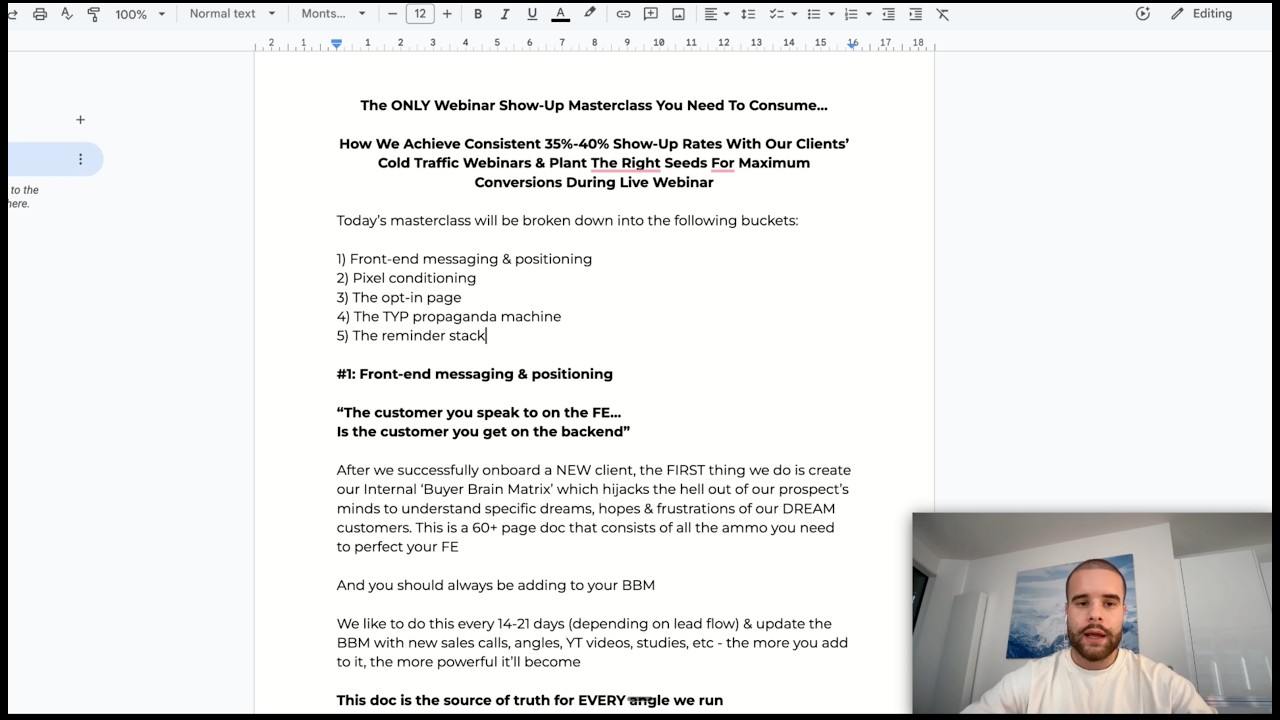
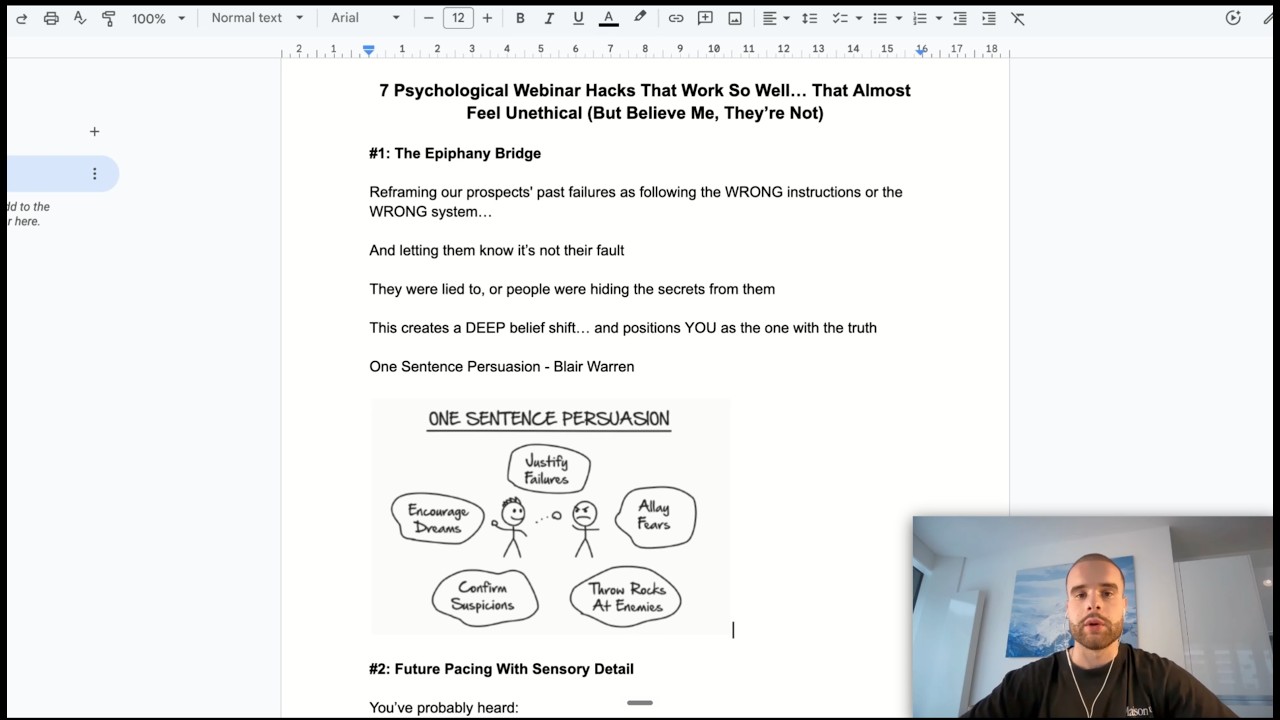
7 psychological webinar hacks that work so WELL... that they almost feel unethical
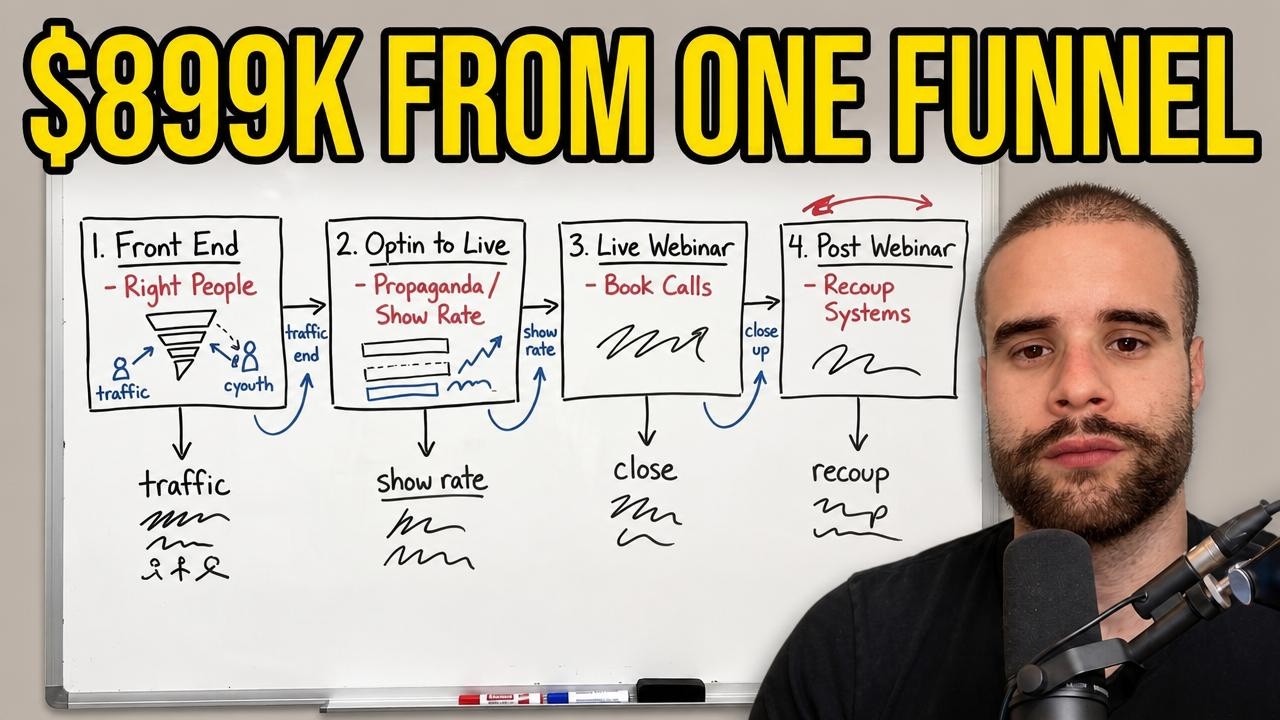

The Simplest Meta Ads Creative Strategy That Actually Scales In 2026 (1 Winner Into 40)
The 4 pillars to scale your info agency with LESS ($1.7m/year in 12 months with first agency)
He Sent 920,000 Cold Emails Running Outbound For 110+ Clients (The Unfiltered Breakdown)