He Spent $100m On YouTube Ads, Hit $350k/mo, Then Shut His Agency Down (Brian Moncada)

Brian Moncada spent $100M on YouTube ads for Dean Graziosi, then built an agency to $350K monthly revenue before shutting it down. He scaled through Loom outreach and raised prices from $1K to $15K per month, but eventually left the rat race for health, family, and freedom.
Chapters
Guys, we're back with another Sophisticated Ask podcast here with Brian Moncada. And believe it or not, we actually connected before and I forgot to press the record button, but game's game. Now, if you don't know Brian Moncada, when you think of YouTube ads, you think of him and his agency. He's worked with countless names. I'm not going to name them, but some of them, Charlie Morgan, Dean Graziosi, like the list goes on and on and on. $100 million in YouTube ad spend. He scaled his agency to $350K a month. And now he's of course taking a different transition, but Brian, on your side, the YouTube ads, right? How did you first stumble across the power of YouTube ads?
Yeah, so I started working for my former mentor. Well, first of all, dude, thank you again for having me on the Sophisticated Ads Party. Great name, by the way. I started working for my former mentor back in 2018. His name's Dean Graziosi. And at that time, I had no idea what funnels were, ads were, sales copy was. I was green to direct response marketing. And because I got a job with him and I worked under him with his team, I was able to learn copywriting, funnels, ads, sales letters, basically direct response marketing 101. And I originally got hired to work with him doing Facebook ads, but they already had a killer on the team who was younger than me and he was making Dean a lot of money. And then Dean approached me one day and he was like, hey, Facebook ads is kind of on lock already. We just need Ryan, who was his name, to manage it. But I have a friend named Brendan Bouchard. He's crushing it with YouTube ads with his book funnel. And we have my book funnel, but we're not using YouTube ads for it. You should learn YouTube ads. And I was like, cool. So I went online, bought the first and only course that I could find online for, I think it was like $297. It was Russell Brunson and a guy named Tom Breeze. And it was It was like a 2-hour sort of like presentation from stage teaching like YouTube ads at a high level, not even like in the Google Ads account. So I just kind of took what he taught me at a high level and applied that in the ad account. And I remember spending about, yeah, like $5,000 in the first month and then making only like $2,500 back. And that was my first attempt at YouTube ads by myself. And then luckily Dean knew the power of investing and paying for speed. And he flew out a coach to teach me in person for half a day. He came to Scottsdale, Arizona, sat down with me and basically taught me how to scale. And then we went from spending like $5,000 that first month, just me testing it by myself, to $5,000 a day within the next 30 days and scaling his book funnel to like hundreds of copies on YouTube ads, which was the very first time I realized like, holy crap, like this is a skill that I have now. And I can not only make money with his company, but like I can make more money for myself personally.
And then when you first ran YouTube ads, the first consumption play was that course, right? Did you consume anything else at the time or was it only that course?
I was going on YouTube, watching free YouTube videos. Some of them were helpful. There was a guy named Surfside PPC at that time who was still doing it. He was doing really well on YouTube with tutorials and trainings. He was like the only free YouTube channel and resource that was available for YouTube ads, but he was teaching a lot of e-commerce, so I couldn't really apply a lot of the fundamentals to info and like, you know, online high-ticket-based businesses. Those 2 things combined allowed me to kind of get my feet wet. And then once he flew out the coach to teach me for half a day, that's when everything went to a whole nother level because he was a skilled expert in like the info space.
And with Dean, like how aggressively did you scale with YouTube ads? And like how long were you working with him?
In total, I spent $3.8 million, just shy of working with him for 3 years. At my peak, I was spending for his companies about $75,000 a day. And that was through book funnel, that was through a webinar funnel, that was also through, I think mainly those 2 funnels. We had a couple other ones, but like the main drivers were the book funnel and then the webinar.
And then with a book funnel, 'cause it seems like they're coming back now, but they redeem a book for free with shipping. And then there's like ascension practices when they redeem the book, right? Or like, how did that ascension process look like for Dean?
Yeah, so he was really great at this 'cause he used to do that funnel on infomercials back in the day when like you had to like basically get a house mom or housewife wife to stop basically taking care of the chores across the television set and get her to pick up the phone and actually call in to order the book. So he was already good. And he applied that to Facebook ads and YouTube ads. And the way the model worked was it's free plus shipping. So you just cover the shipping and I'll send you the book for free. We charged $7.95 and that allowed us to basically lose a little bit of money on the book, but because of the order bumps. So for example, there was like a, you know, get the order bump right now, which is the audio recording of it and the PDF version for like $17.99. That will give us a lift of the AOV. And then he would also charge like 3 different one-time offers. Like one would be a monthly recurring membership site for like $37, which is his inner circle. That's like a mass market offer. And then another one would be like the, I think it was like a $497 sort of like real estate profits from home, which is like a mini course teaching them how to get wholesale deals online virtually. And then the other and final one-time offer was sort of a high-ticket type thing. But then once they land on the thank you page, there was also a free opt-in to go to an evergreen webinar that was like a $2K pitch for a self-liquidating evergreen webinar. And then obviously on the backend of that, they would have the sales team dialing all these customers anyways. Right. For the high-ticket in-person workshops and mastermind offers for his real estate. So the real play was like, get a bunch of people on this low-ticket free plus shipping book offer that's mass market, because the book was called Millionaire Success Habits, right? So everybody wants to become a millionaire. And then once they got the mindset and the habits and they're invested in their education, on the backend, we sell them the how-to make money now, which was the vehicle, which was the real estate wholesaling play for Dean at that time.
That's a cracked ascension ladder. Yeah. Now with like webinar funnels, I've seen a good play where we've looked at ascension funnels, apologies, where they buy like a low ticket ascension, no, no, like a product. Then there's 2 order bumps. And then on the next step, there's like a thank you page, which is either an implementation page to book a call with a setter for ascension or to get them on the webinar. It seems like a similar play. And like, what year was this? What year
did you run this? Yeah, we ran that offer 2018 all the way to like 2021. It started fatiguing around 2021, but then he launched a whole different thing. So we kind of made it back up. Because what I've learned from Dean was when you do a free plus shipping book offer, whenever it would work, I remember him saying, he's like, whenever I would get a free plus shipping book offer to work, because he's done many before in his career, he's like, I knew I had about 2 or 3 years before I had to write my next book. So he always knew the lifetime cycle of a book offer would be about 2 or 3 years. But Millionaire Success Habits was his most successful one and ran the longest.
Correct. And bro, like, because you're, you were reasonably privileged to have an opportunity of Dean, right? Because that of course opened the doors to signing more clients and building up that credibility, right? But after you signed Dean, you got results and stuff, like, what did the process look like to activate the ripple effect, to sign more clients? Like, how did that look like?
Yeah, so like, to be clear, I didn't even like start signing my own clients until I was already working with them for like a year and maybe 8 months. And that was because just through the word of mouth and industry, I started getting recognized. They're like, I'm the guy that runs YouTube ads for Dean Graziosi. And that's when I actually started joining my first mastermind, which was a fitness business mastermind in Toronto, Canada. And at that time, I was trying to make money on the side. And it was like my— I was basically trying to build a fitness brand at that time. So I went to this business conference at this mastermind in Toronto, Canada during my birthday weekend. And, you know, I introduced myself in front of everybody. It's a room full of 100 fitness coaches all making, you know, $10,000, $30,000, $100,000 plus per month. And I introduced myself saying, hey, my name is Brian Moncada. I'm trying to build this fitness business, but I also run YouTube ads for Dean Graziosi. If you've seen Dean on YouTube, like, I'm the guy that runs those ads. And the business coach, his name is Vince Del Monte. I remember him basically shutting me down in the first intro and told me like, hey, I'll tell you right now, dude, you got to cut the fitness stuff out on the microphone in front of everybody. And then he's like, we'll talk at lunch. And I was like, what the heck? And then he pulled me aside and he was like, hey man, so like, what do you want to do? And I was like, well, I don't know, dude. I mean, I flew out here to build this fitness brand, um, but now you're saying like, don't do that. So I'm kind of confused. And he's like, well, look, dude, you know, do you want to be selling how to build bigger biceps by the time you're 35? And I was like, I mean, I didn't really think about it like that, you know. He's like, look, what I'm basically saying is like You're stepping over dollar bills to chase pennies. You're the guy that has the skillset, which is YouTube ads, that's making this guy a whole lot of money for his business. Everybody in here needs that. They don't know how to do it. You're the guy that's the best at that, clearly. So you should just sell that. Like, I'm going to help you get to your goal basically without all of the struggle, trial and error that like I went through to build a fitness business basically. And so that was a light bulb moment where I was like, okay, I could probably do what I'm doing for Dean, on the side as like an agency. And I went all in on that. I listened to it because I obviously paid him and I joined that mastermind. It was $2,000 a month, which I didn't have that money at the time. And that same weekend I got my first client for $1,000. Um, and then that kind of snowballed from there. But to answer your question more specifically, Dean like essentially was my first case study because I went to go work for him and I learned everything I needed to do. I had the proof of concept in his business. And then I started duplicating that service that I was doing in his company full-time on the side as an agency.
And bro, like the domain adspend.com, I think you told a story at the mastermind, but how did you get that domain?
Yeah, so I originally had the idea for admin as my domain, admin.com, and that was because obviously the TV show Mad Men, it's the greatest show of all time in my opinion. And I was looking for an agency name that would stand out, Ogilvy, Procter& Gamble, right? Sterling Cooper, right? I was trying to think of a name that would make sense. So I had the idea of admen.com, but that was already an agency in New York City at the time. So I was like, dang, okay. So then I just, I let my subconscious mind do its thing. And eventually the word Ad Spend came to me. And obviously that's all we do, right? Is spend money on ads. So I was like, oh, that's perfect. I went to GoDaddy. This is when I'm still working for Dean Graziosi, by the way. I went to godaddy.com, typed in adspend.com, and it was available through a third party. Right? So you know how like if it's not available right away, it'll show you, hey, you can contact this person, you could buy it, right? So I contacted them, um, and they were like, yeah, it's $25 grand. And I was like, bro, I'm broke at this time. Like, I don't even have my first client yet. So I'm like, I'm not gonna pay $25 grand for a domain. And then, uh, about a year or so later, this is when I'm finally— I finally left Dean already. I'm going all in on my agency. And at the time I was calling myself like the YouTube Ad Pros or something like that. Very niche, very like, you know, specific. But I reached out to them again and it was during COVID now, 2020, right? So I reached out to them again and they're like, yeah, it's $15K. So it's a $10K discount now, right?
Mm-hmm.
And I was like, okay, so they're willing to negotiate. And I was like, yeah, the best I could do is $3K. And they're like, there's no way that the guy's going to sell it for $3K. Like, you got to work with us here. And then like we go back and forth. He's like $12K. I'm like, honestly, dude, like max I'll pay is like four K. And he's like, blah blah blah blah blah blah. Like twenty nine emails later in a thread, like and like two days of negotiating, he finally sends me a link that says it it'll expire in twenty four hours. Like get it now or else it's gone forever. And yeah, exactly. And he's like, it's five K. Take it or leave it. Five K. And I was like, yeah, let's do it, bro. And I bought it.
Insane, bro. How much is that domain worth now? Like if you don't mind sharing.
I could probably sell it for like $250,000.
$250,000? Yeah. That is digital real estate right there.
Yeah. Yeah, I've got a couple offers, but I think $250,000, it's like the minimum I would ever do it for. But yeah, I don't know if I will. We'll
see. Intriguing. So like, Dean, the credibility, and then of course you signed your first client from that mastermind, right? And I think you know, I believe you were initially pitching like $1K a month for your services and stuff, right? What did the first client look like? Like, how did you sign your first client?
Yeah, so it was because I joined that first mastermind. And when you're the guy in the room that has a specific skillset, it's very easy for you to sign a client who's also in the room that needs what you do, 'cause there's just like proof of concept and there's also just the proximity effect, right? So the way it worked was like all those people were like fitness coaches, right? So they were selling some sort of like digital product or program or high-ticket offer and they needed more traffic. most of them clearly. And so, uh, one of my first clients was a guy named Lee, uh, Hayward. He's an OG in the fitness space. Um, I didn't know how much to charge at that time. I just charged him $1,000 because at that time I didn't know how to price my services accordingly. Like, here I am spending, you know, hundreds of thousands of dollars, you know, for Dean Graziosi, like $3.8 million total spent, like making them, you know, at least a 3 to 4x on the back end, including everything, right? Mm-hmm. And I didn't know how much that was worth, right? I just didn't know how much to price that for. And so when I charged Lee Hayward the first $1,000, it was just because I just felt like he would say yes. And also it's like, I'm kind of just testing to see what I can get away with here, 'cause I don't really have any credibility. In my head I was thinking this, obviously it wasn't true. Yeah. I could have charged $5K right away, but I just didn't have that confidence. And so all I did was, yeah, he paid me $1,000. He was running a low-ticket $97 offer. And I quickly learned like Dean was an anomaly and I got sort of lucky to work with him and it would just work. Like everything I touched turned to gold with Dean. I like, I was like the Chad media buyer, bro. Like I was the definition of a Chad media buyer, right? And like everything I did just worked. And so like I didn't have to do any of the virgin complicated media buyer stuff to make things work. Yeah. It just worked. But then when I was working with like other guys, for example, that didn't have that Dean sort of backend sales attention process, copywriting skills, the offer, all those things, it wouldn't work as well. And so thankfully I charged a little in the beginning because I would say most of my clients in the beginning that I was testing this new service, the same service I was doing with Dean, YouTube ads agency, sometimes it would work, sometimes it wouldn't because I quickly realized like, damn dude, to make ads profitable and convert at scale, you need to have that packaged and pricing to make the model work. You need to have the backend ascension. You need to have the sales process dialed in. You need to have the funnel. You need to have the email. You need to have all these things in place to make ads profitable to cold traffic. And none of these guys had those things. And so yeah, $1K was just for YouTube ads, media buying service basically, and consulting. I would help them with the scripts. I would help them with some offer stuff, but I was still learning at the time too myself. So I was really just getting paid for media buying, to be honest.
And how difficult is that? 'Cause with Dean, of course, all of his systems are established, right? When you run ads, it's fairly simple, right? When you came across these clients who didn't necessarily have the backend systems and stuff, like how did YouTube ads differ? Like, did you have to do more work on the frontend?
It was how it differed was like, it just was so much harder to get profitable because here I am, like, I think assuming what I'm doing with Dean is gonna work for these guys, right? But I quickly realized that, again, they didn't have all of these other systems in place. And so when I would do the same thing I'm doing with Dean with the media buying campaigns, the targeting, the creative, the tracking, all of it, it just wouldn't be profitable, or it wouldn't be as profitable as we would both want it to be to continue scaling and spending more money. And so I then had to get better as a marketer and realize, holy shit, I can't just be a media buyer. Media buyers clearly are not valuable when the media buying isn't profitable. So I had to become basically a Swiss Army knife. I had to learn how to become better at offers, copywriting, sales funnels, you know, backend systems, backend ascension ladders, like all of these things to make these clients better. Even like speaking on camera, dude, like you would think like, again, this is something that most of these clients had already, but no, it's like, dude, Dean's been on infomercials back like 20 years ago, you know what I'm saying? Selling through television, like I said previously. And these guys, like they can't like even read a script, you know? It's like, it's kind of crazy. So I had to learn all of these skills through those first clients, but that helped me become obviously the better agency owner that I am today and be able to charge more money eventually because, you know, I realized like a lot of these people just don't have it yet, so I need to install it in them, otherwise it won't work.
And then at the time, if a client didn't have the sales funnel solidified, did you take care of that as well or did you only run YouTube ads?
Yeah, so I learned very quickly who was a good fit for my service back then and who wasn't, so I had to adjust my offer to only target the right fit. So like basically I went from selling YouTube ads to then selling YouTube ads for info products, to then selling YouTube ads for info products who sell high-ticket courses and coaching, to then YouTube ads for info products who sell high-ticket courses and coaching using call funnels, and then YouTube ads who sell info products selling high-ticket courses and coaching using call funnels and are already running Facebook ads. And that's when I was able to charge way more money upfront and work with way better clients because they already had the ads running. They already had the high-ticket margin. They already had the call funnel. They already had the sales team. They just needed more qualified leads in their funnel to be able to scale the cold traffic profitably. And that's when I went from charging like $1,000 a month, you know, I stair-stepped it up to like $5,000, but then eventually we were charging, you know, $10K to $15K a month per client.
Yeah. Let's talk about that ascension from like being able to charge $1K a month to like, let's say $10K, $15K a month, right? Of course that comes down to credibility and name association and you build it up with, of course, ad spend, right? But credibility aside, like what else do you believe allowed that to happen? Like which mental models did you develop to, of course, increase that ascension?
Yeah, the first one was definitely basically joining that first mastermind because at that time I didn't have money. Like I wasn't making much money with my agency at all. I didn't have my first client. So like just paying $2K a month, even when I didn't have it yet, like, or I shouldn't be buying this, really had to make me level up because then I had pressure behind me. Like, okay, I got to figure this out now. Otherwise, like I'm going to be tapping into my savings. So like that allowed me to sign that first, you know, 1, 2, 3 clients, even if it was for $1,000 a month, But that allowed me to get more experience. And also, you know, when guys are like approaching me, like for example, like Bedros Koulian or, you know, these big names in the space, and they're asking me like how much I charge, it's like, damn dude, like $1K, $2K, $3K just doesn't sound like a big enough expense for them to like take me seriously. And so that's when I discovered the law of the mirror. And I learned this from Taylor Welch and their program called I think it was called Traffic and Funnels. Mm-hmm. They came through the Sam Ovens sort of consulting.com mastermind, but they taught me this concept way early on called the Law of the Mirror. And basically, it's basically a concept that people buy from you the way you buy from people. And so if you're someone who tries to cheap out and get the best deal possible and try to negotiate so that you get a better deal, and ultimately you want to pay as little as possible and get the most value, people are going to do the same thing to you. But if you're the person that shows up on a sales call and And you pay in full, you commit first, you figure the rest out later. You show up every single day and do the things you're supposed to. People will also replicate that for you. And so on sales calls, you won't get many objections because you're not giving objections, or people will pay in full to you because you're paying in full. And you've got to embody that abundance sort of mentality first. So that was the first mental model that I learned. And then also just realizing, like, being around the right environment to like say, okay, cool. Hey dude, you're charging one, two, or three K. And then I had a few friends that were also doing agency stuff telling me like, dude, you gotta be charging like five K, bro. Like with your skill set, with your expertise, with your spend, like you shouldn't be charging anything less than five thousand dollars. And then it just took me one day going like from you know two or three K on a sales call to just say yeah, it's five thousand dollars. And like you know some people wouldn't buy. Oh, it's too expensive. Like but dude, for the right person, it's like oh, that's it. Okay, cool. Yeah, when can we get started? And it's like holy shit, I just did it right. So it just it just takes that actual like permission to do it, and then being in the right environment where you sort of have that pressure too as well. Because if, if you're around people that are charging $1K, $2K, or $3K and that's all they can get from their clients, of course you're going to think and believe that that's all you can get. So it took the case studies, the social proof, the testimonials, plus the mastermind investment myself, investing in my self-education personally, and the Law of the Mirror training, and just being able to give myself permission and say like, I am worth it because I have all of these skill sets. And the other thing too, dude, that I didn't mention was like I kind of didn't really give a fuck. And what I mean by that is like, I was already making money with Dean Graziosi full-time. So like, I didn't really need these other clients on the side. And so like, when I was raising my pricing from like 1, 2 to 3 and then stair-stepping up to 5+, like, if they didn't say yes, cool, dude. It's like, it's less work for me. I'm still making money with Dean and like, I don't really need you, you know? So like, I don't care if you say yes anyways. So that also gave me permission. And that's why I think, you know, For my story, it's like I worked to learn versus working to earn. In the process of working to learn, I earned a lot of money by doing that. And I was able to then safely transition to my agency because I was already making money here. But then when I started making more money on the side, that's when I was able to say, okay, cool. I'm only working 4 hours a day on my business with my agency, personally, my own agency. I'm working 9 hours at the office for Dean. So like, if I just put the same effort and energy and doubled this, I would double my revenue and double my business. So that's when I was able to quit my full-time job and go full-time on the agency.
Yeah, that's real game. That's what I believe many agency owners neglect is when they're operating from a sense of scarcity, of course, when they try to outreach that client, their client picks up on a scarce energy and scarcity always repulses, right? But you create that abundance because you knew that you were working with Dean and then that gave you the credibility. And like, let's say not the credibility, but the conviction to charge more for your clients, right?
Yep.
And you signed your first few clients, okay, Mastermind, the name association through Dean, right? But how did you sign your next, like, let's say 5, 10 clients? Was it through like cold outreach? Like, how did that process look like?
Yeah, it was cold outreach and it was specifically a process that I teach in my Mastermind called personalized Loom videos. And this is exactly how I got guys like Frank Kern, as clients. So Frank Kern was my very first OG whale client that I knew if I landed Frank Kern as a case study, I'd be able to get a lot more people onto my agency. And so what I was able to do was send what I call personalized Loom videos. So it was basically a 20-minute Loom video just giving him free game because I saw that a lot of these guys were already running Facebook ads, obviously. Again, this is 2018, 2019, 2020, back when nobody was really running YouTube ads still. And so I would basically audit his Facebook ad library And I would send him a Loom video basically saying, hey Frank, you don't know me at all, but I'm going to make you money in this free Loom video. I'm literally going to show you how to copy and paste your Facebook ads onto YouTube ads and basically double your revenue. He was doing a free challenge, or sorry, a paid challenge at that time. And I just did a whole Loom video walking him through the account setup, the targeting, the campaign structure, the settings, the creative strategy. So that way, if he watches it, and he actually implemented it, it would work for him automatically. And the funny part is, is he watched it. He didn't actually hire me though. He introduced me to another guy named Roland Frazier, and that was a good friend of his. Roland Frazier ended up hiring me and paying me $5K a month right away. And once I got good results for Roland, then Frank, I guess, trusted me at that point. And then he allowed me to do his challenge. And then once I did a free challenge, because I didn't work for Frank, he didn't pay me money yet. I did it for free because I was willing to go for free because I knew, again, if I could get this case study, It'll open so many doors for me. So I wasn't like stingy about money at that time. So I said yes to the free trial, you know, crushed it for him. He made a bunch of money and then he's like, hey man, this is great. It worked. What do you want? You want me to pay you? You want referrals? And I was like, referrals would be nice. He immediately introduced me to like 12 new people through email, like in the next 10 minutes. And like 6 of them signed up to work with me.
Insane. Yeah. I joined a mastermind, I implemented that POV strategy, and props to you, I signed a few deals. I'm about to cut your revenue share for that, bro. But that approach, I believe it principally is superior because you're operating from a given perspective rather than like an extraction perspective. And I think that's what prevents like a lot of agency owners. They outreach in the first message, cool, cool, cool, cool, cool, and then they're not giving. But you build up that— know, like, and trust elements. So by the time they're ready, then they pull the trigger, right? But the POV approach, what did you just, of course you showed the Google Ads and stuff, but what did it look like? What did it consist of? Was it just like a walkthrough? Did you give them game gems? How did it look?
Yeah. So it was just a simple Loom video, but I already had the very first screenshot was their Facebook ad typically. So I'm immediately showing them why I'm pitching them and sending this to them. And because the screenshot of the Loom, when they click on the video in their Instagram DMs or whatever, shows something that's relevant to them, it's like clickbait, like a thumbnail, right? And then immediately I'm starting with like, hey, Frank, the reason why I'm saying this to you is because I saw you're running ads on Facebook. In this video, I'm going to show you how to duplicate what you're already doing and put it on YouTube to make more money. Like, no secrets, no hidden gems, nothing held back. I'm just going to give it to you in this video for free in hopes that it actually gives you enough value. And maybe one day you want to work with with me, right? I'll just do this for you. And so then I just walk them through, okay, cool, here's this Facebook ad that's working for you. Here's a script you can literally do on a video. Here's how you can film it with your iPhone right, right now. Here's an example what that looks like. Then put it in YouTube like this. Here's the campaign settings. Like, I walk them through everything, like nothing held back. So that way when they do watch it, they're like, holy crap, this kid knows his stuff. He's doing this for free. He's obviously very hungry. Like maybe I'll give them a shot. That's all I wanted because I knew I was like, dude, these guys don't need me. Like they can hire anybody. They have access to the best network, the best industry. They're the biggest names in the space. So all I wanted to do was get their attention, show them that I'm actually skilled at what I do and get them to actually give me a shot so that I can earn their business eventually. And that's what I did. And that's why the PLV strategy works because when they watch it and it actually is valuable, then you separate yourself from all these other people saying, hey, I just created this freaking, you know, 20-minute training. Want me to send it to you? It's like, no, you didn't, bro. You're going to create it after
Send me that video, bro. Send me that video, bro.
Exactly, dude. So I send it right away. I don't even ask, I don't even wait for them to say yes. I just send it and then I keep following up with them until they actually watch it. And when they do, it's usually a really good response rate and typically very easy to book sales calls that way.
Solid. And then simultaneously while you were sending the PLVs, were you building your personal brand at the same time?
Yeah, so there's 4 ways I grew my agency. The first was the pitching strategy, which was like PLVs, right? That's where you're typically doing cold outreach from like $0 to $30K a month. You're trying to build case studies, right? Once you're at $30K a month, you have case studies. Typically you have some experience, obviously you have some more confidence. Now you can start posting. So $30K to like $100K plus, you got to be posting. And that's usually where you want to do one long-form YouTube video a week. For me, I was posting on YouTube once a week and I was also posting daily on my Facebook personal profile at that time. And I was just building up my Facebook friends and they were all like, you know, coaches and course creators that were doing really well. And so like my Facebook profile was really, really key at that time. Now it's Instagram, but if you can do one, like, pitching plus posting on one long-form and one short-form platform where your customers are hanging out. This could be Instagram, this could be LinkedIn, this could be Facebook, whatever it is, that's going to actually help you build the inbound leads. Because again, you don't want to just be relying on outreach all the time. So the posting helps you bring inbound leads that are already qualified who raised their hand saying like, hey, I'm interested. And then once you have that system working, you typically can then start investing in ads at that point. But I didn't even spend money on ads until I was doing $180K a month. So like, that's just the proof that like, as long as you're good at what you do, and as long as you can continue delivering results and post about it, like you can scale past $100K a month without needing any ad spend.
And then the posting element, of course you were building up this ecosystem of course creators and coaches and stuff, right? If they didn't come inbound, did you have some sort of mechanism to like outreach to them as well? So they're kind of warm, or like, did you only rely on inbounds?
No. Yeah. So like I just basically had my website, which was adspend.com. So they, I would always point people to adspend.com and that was where we had all of our case studies and our solutions. social proof for inbound specifically. And then the outreach was basically booking a call that way. So I would only push people to adspin.com, one website, one funnel. It was just a book a call and that was it. There was, if they did apply and not book a call, there was some email stuff, but it wasn't anything crazy. I was just focused on getting the right people on the phone.
Yeah. Was that when you had the VSL with the eggs?
Facebook Ads Basket, yeah.
Yeah, that was a really good VSL. I remember that one.
Thanks, man.
So no ads until $180K a month. And then when was the time you decided that paid ads was the next step for your agency?
Yeah, once we couldn't scale past that, it was like beating my head against the wall trying to figure out how to scale my agency. I was like, dude, it would be like we would get around the 18 to 20 client mark and we just couldn't get past that. And I was like, man, why can't we just get past this like $150K to like almost $200K range? And then like clients churn or we sign up new clients. Like, there's just this, this revolving door that's happening and nothing's really like making us get to the next level. So there's a few things I could have done back then looking back in hindsight, but what I realized we needed to do was we needed to scale paid ads because I was just like, dude, we're at spend.com. We spend so much money on ads for our clients. Like, why aren't we running ads for ourselves? We have the budget, we have the war chest. Like, what are we— what are we not— like, why aren't we doing this? So that's when I realized we need to start spending money on ads. So we started spending money on YouTube ads, obviously, because that's what we are the best at. And that worked, but it didn't work as well as I would hope it to. And that was because when you're leading with a done-for-you service, typically to cold traffic, you're going to pay a lot of money to get somebody on the phone with you, especially someone who's qualified. So for example, our ideal clients were like $100,000 a month in revenue already. They're already running Facebook ads. They're selling a high-ticket offer. So those clients, there's not an abundance of them. Like, it's maybe, I don't know, less than 10% of the market, and maybe only 2 or 3% of the 10% is ready to buy like right now and work with you today when they see the advertisement. So what I realized was we needed a more scalable offer, and that's when I realized that most people, they don't really want to hire an agency, but they hire an agency out of necessity. So they ultimately want control of their marketing in-house eventually. So I realized we needed to sell them productized service on the front end that made it easier for us to scale. And that's when I came up with the hybrid offer. It was a done-for-you setup plus done-with-you consulting, and it made it easier for us to sell because it was a 16-week program. We set it up in month 1, we do all the hard part and heavy lifting for you. We write your scripts, we set up your campaigns, we choose the targeting, we launch, you can start getting leads, and then we hand it to you and your team internally. Yes. And then we step into consulting now and show you what to change, how to optimize it, what buttons to push, what to scale. And once it's working, You trust us enough to say, hey man, this is great, but I don't want to do it myself. Obviously, that's why I kind of came to you. Can you just keep running it for me? And the best part about this was we were pricing it at $15K upfront because our agency at that time obviously was charging $10K to $15K a month. Most people can't afford that, especially if they're making less than $100K a month. But the $15K upfront price point allowed us to do a payment plan of 3 payments of $5K. So if they could just pay us $5K on that call, call. They could still afford $5K in ad spend and they're making a minimum of $30K to like $100K. So it works with their budget financially and it allows us to get leads and calls so they can get quick wins. So it made it a more productized scalable offer that allowed us to go from just working with $100K+ month businesses to $30K to $100K a month businesses. Because again, there's not many $100K a month businesses, less than 5% of businesses make 7 figures per year, right?
Mm-hmm.
And so Majority of the people that came through our funnel were making like maybe 30, 40, 50, but we were able to price it in a way that was product that was you know 60, 70 percent profit margins for us, and it allowed us to create more ideal clients for our agency because we would set up the foundation for them. And a lot of them needed help with the offer, the funnel, the VSL, you know the sales process. So we would basically install all those systems with the 16K hybrid offer or the 15K hybrid offer for 16 weeks. And then once they trust us, which they do because they're like holy shit this is super valuable. Now it's very easy. It's easy for us to command the retainer at that point, 'cause they see the proof of results.
Yeah. So like the upfront investment and then retainer, or could you ascend them in like other avenues? Like let's say now I set up like a webinar funnel, right? Done for you. Let's say I'm doing $15K to $20K, right? It's getting results. To maintain a webinar funnel, do you see like capabilities in doing like revenue or profit share? Or like does it only work for like retainer extensions?
Yeah, we would do retainer for the most part, $10K to $15K. But for the clients that we knew we could scale very, very heavily, profit share. And typically we would do like a 20% profit share on only our tracked ROAS attributed back to our Hyros campaigns. So for example, we would make sure that our YouTube ads, or if we're running Facebook ads for them, we would basically make sure it's tracking properly and we would charge the profit share as well. I found the revenue and profit share only works with some clients because for example, a client like Jeremy Miner, he would never pay me a revenue share or profit share. His brand is so big. But he would pay me a $15K a month retainer, which he did for like almost 2 and a half years. And that was fine with me because I got a case study, got the interview with him, and like, you know, that gave us a ton of deals, obviously. So, um, some clients you can negotiate percentage of profit and revenue, but I wouldn't be like— personally, what I found is like every deal is custom on the back end, and that's up to you and your team to negotiate what makes sense. So like there's no rules. You can do revenue profit share plus retainer, but I always negotiate Plus like with a retainer, there's, you're not working with me and my agency unless you're paying a retainer upfront and the profit and revenue share is what's negotiable.
And then from like $180K a month to $350K a month, was this with what you call like the offer suite? So you had 3 offers, correct? So you had your done for you, you had this implementation offer, and then what was the third offer?
The third offer was our downsell for our course community. And basically just a, you know, 60 is basically our scaling process and a course and community on school. So it's $2K one time. Or sorry, $1,997. And that was like for the people that were making like, you know, less than $30K a month. 'Cause we would get people that still like, you know, they try to apply and work with us and book a call, but a ton of them were like less than $30K a month. So then we would have our setters follow up with them and then push them to the $2K course and show them the benefit of like, here's the blueprint to do it yourself. And then some of them would buy it. A lot of them wouldn't, obviously, 'cause they don't want a course. Yeah. They think they want done for you, but they're not making any money, obviously. But then some of them that did buy it, they'd be a good fit for the hybrid in a couple of weeks. And then obviously they would ascend. So we would ascend people from this low-ticket do-it-yourself to this hybrid offer, done for you plus done with you. And then we would create more ideal clients for our agency that way. So that way we would monetize every single lead. That's what I call the offer suite. Because when you run paid ads, like, yeah, sell one thing to one type of person, one specific sales process, one way. Yeah, that's fine. But past $100K a month, the only way to scale to, let's say, $1 million a month if you want, is to sell more shit to your existing people or more shit to the market, right? Yeah, facts. Just having one offer past $100K a month is going to limit you like it did for us because we capped out at less than $200K a month for that one offer. So that's why we introduced the hybrid offer, which introduced way more volume to get to $350K a month. And then the downsell for the people that are less than $30K a month with the course and community.
Yeah, because when you go with ads, of course you're increasing your TAM and you're getting a lot of people that are making less than $30K a month. And if you never had that downsell mechanism of the course, that would just be neglected revenue.
Yeah, exactly.
And then with, um, when you started YouTube ads, right, you were taking care of everything, right? Like even for Dean. So like you learned the skill sets. But like now running an agency that's doing $350K a month and you're doing paid ads and stuff, right, the dynamic is completely different. Like now you've got this team, right? So I've got 2 questions. The first one is how did the team develop? And then the second one is like what did your responsibilities look like? And like what skill sets did you have to develop mainly for the leadership? Because I know that you scaled to like a team of 16, 17, how many employees did you have full-time?
16 at our peak, yeah.
16, yeah. So like what did the team look like now at $350K a month and what skill sets did you develop mainly on the leadership side of things?
Yeah, so the team at $350K a month, it was me, CEO, Nick, who was the COO at the time, Charlie, who was CSD. Charlie was managing 4 CSMs underneath him. We had 1 full-time sales rep who was putting up anywhere from 15 to 25 units a month for $15K each. We had 1 full-time setter, We had a pool of contracted scriptwriters, a pool of contracted video editors, and one person that was doing just account setups for Google Ads and Facebook Ads. And then we had an operations manager. We had my wife who was also doing HR and events for our mastermind. And then we also had, I believe, who am I missing? Oh, and we had a creative team too internally. So we had a full-time videographer following me around and doing a bunch of things. And then, yeah, I mean, in total it was like 16 people that were working all around the clock for that. And my leadership, yeah, leadership's obviously the most important thing here. One thing I think that you have to learn pretty quickly is leadership skills is probably one of the hardest things that most people don't develop, but it's a skill like anything else that you can actually develop. And so before, when it was doing $100K, $80K a month, I was basically just duplicating myself. I was trying to find someone who already had a media buying skillset copywriting skillset, and I would just teach them YouTube ads. I would just teach them how to be a better account manager. I would teach them client relationships and how to keep clients happy. And I had a team of just CSMs at that point, basically duplicate versions of me. And that was the old way of scaling an agency. That's what I knew. But with the productized service and $350K a month, it was more like, okay, we have this proven system. We just need to put the right person in the seat to manage these clients appropriately. So my time at $350K a month was just managing people. I was out of fulfillment completely besides doing offer calls every once in a while where someone would come in, for example, let's say they're selling like a $497 mid-ticket offer and I know it's not going to scale to cold traffic or the sales guy knows or the CSM knows, they would then escalate it to me to do like a 1-hour just value bomb where I help them repackage their offer, make it scalable to cold traffic. They get a lot of value from it and they're happy, right? That's the only fulfillment I was doing. Besides that, I was on sales team trainings every single day for like 1 hour. I was on CSM team trainings every single day for 1 hour. I was on team huddles every single day before those trainings for like 30 minutes. And then I was also doing one-on-ones with my team every single week. And I was doing leadership meetings every single week. I was just managing people, bro.
Mm-hmm.
So like, you really have to step into the leadership management role, which was looking back, the thing that bored me the most and also made me sort of like resent the business because I didn't like managing a bunch of people 'cause it was just a bunch of the same things done every single day. It was just repetitive work, like daily, just, it was just like the same thing And it was just like optimizing these little details to make everything run more efficiently, which again, that's how you like continue scaling a business. But for me, my default was always like new campaign or new offer or new things. Like I'm very creative and I'm very like much a visionary. So I got bored with the details, but I was able to manage that team and create a good culture and get the people excited and, you know, create the merch and everything. And it was fun for a while. Um, but yeah, leadership and management is like a whole skill in itself that like you have to just You can learn, but it's managing people's expectations more than anything and making sure that you have the right people in the right seats and they're all rowing in the same direction.
Yeah. Because one thing I saw, especially Charlie, his name is, I believe, he's like the tool person, right?
Yeah.
When I was speaking to Charlie, you could just see that he was bought into the long-term vision of ad spend. And when you would ask him a question, he would go really in depth with Of course, the answering, right? So he was really bought into the mission. Is that something that you developed during your leadership meetings? Like, did you have like mission statements that you were walking over or like, how did you like incentivize them to keep going? You
know? Dude, this was like my number one core focus from the very beginning of building adspend.com. 'Cause I just knew, dude, it's like, for me personally, I just needed a bigger mission, vision, and values of like, why the hell am I even doing this? Because like, you know, when I was making $30K a month by myself, it was like, dude, this is cool. But I was also just like not really going all in on it. And that's when I realized, I'm like, dude, I could either like just keep doing this lifestyle thing right now, or I could like really try to build a company and like really go all in. And so like I was always obsessed on like, what's the vision for this company? What's the mission for this company? Like, what are the core values? And like, what's funny is like my team would always get mad at me because I'm always like reminding them or asking them like, what about this? What about this core value? What about this vision? Like, does this make sense? And they're like, I don't think it's that important. I'm like, no, dude, It is so important because like I need people to get bought in on this because like people aren't going to come work with you, especially if they're A players, if your vision's not big. Like people are not going to come work with you, especially if they're A players, if you don't have a big mission. So like for me, I realized like we need a big vision and a big mission. So I would always try to refine it every week. I was always refining it. So like our vision was like build the most sought-after advertising agency in the entire world. And it's like, how do you even fucking measure that, right? It's like, well, it's so big, it just kind of makes you You realize it's kind of almost impossible, right? Can we even do that? But I needed that big of enough vision to get those 16 people. And then the mission was we create entertaining ads that educate the world to make better decisions. 'Cause the better decisions people make, guess what? The more money they make, the better relationships they have, the better person they are to society. It improves the entire, basically, consciousness of the entire world. And the information that we sell them through these courses, coaching, and masterminds that our clients are using, it'll help improve the entire consciousness of the world. And it's like, When you have a big mission like that, who's your enemy? Well, our enemy was the mainstream media because the mainstream media is trying to fight against you and sell you these prescription drugs, sell you these things you don't need, try to keep you stuck, try to keep you unhealthy. And it's like, damn, when you can say that and you're in a room with people that are like, they don't have a mission, they don't have a vision, it's like, I want to be a part of that. So I was always reminding my team. And so what's funny is every Monday we would have a team meeting with everybody on the team on Zoom and we would have at the end of the meeting, everybody would do a core value review. So we would do a spinner and like we would go through the core values as a team. The first one was extreme ownership. Second one was red carpet customer experience. Third one was ready, fire, aim. Fourth one was teaming together, everyone achieves more. And then there was another one. Why can I forget it at the time? Extreme ownership, red carpet customer experience. Oh, sorry, radical transparency. And so like Like, we would have that, and then we would have a quote, and then we would have like a statement of it. And so if somebody got it wrong, if they didn't say it right, like with one word, if they missed one word, guess what? Everybody on the team had to do push-ups. Everybody on the team had to do push-ups. Oh my God. And so like, I basically programmed them to program themselves to embody these core values. And there was a punishment that if somebody on the team didn't do it or messed up, everybody would get punished, which incentivized everybody to continue leveling up. Because I wanted them to, throughout their day, extreme ownership. I always take full responsibility for everything that I do. I never criticize, condemn, or complain. I either win or I learn. It's like, that's a mode of operating, bro. And so like, these core values, I instilled it in them. And it's funny because it's like, you hear people say like, you know, these big companies, like, I don't know, like Andy Ellie gets a lot of hate, right? It's like, it's a cult, where it's a cult. But it's like, I heard him say one time, it's like, the best companies are cults. Like, it's the culture, you know? It's like, if you don't have a cult, like, you don't have a cult, you don't have a company. And so, you know, I kind of did that in a way with my team, um, and it was the most important thing because, like, that's why Charlie was so bought in. That's why I've had people stay with me for 3, 4, 5 years, and they were getting offers from other companies, but they stayed with me because of what we were building.
Yeah, they were resembling that. Remember the little, like, the little badge on their suit? It was not like the Aspen badge. They were resembling that.
Yeah, the merch, bro. Like, all of those things are just like psychological buy-ins, like, for you and for them, that like they want to— people want to be a part of something, you know? People want to be a part of something that's, that's like doing something like big, or that they feel like they're on a mission with some other people that also believe the same thing. So if you can build that for your team or for your company, even with like merch and stuff, it's like it makes it more fun.
Yeah. Okay, 2, I want to walk over, of course, the transition, because guys, Brian scaled his agency ad spend to 350K a month, and then he decided to stop his agency. So make sure to continue watching as we're going to walk over that transition and why he took that. But before we go into that, I want to read a tweet that I said and your response to it. I said, guys, please, please don't sleep on in-market B2B webinars. Webinars don't only work for B2C glue-eating leads. When you conduct them correctly, they are insanely lucrative for B2B. You can sling 10K deals on the backend pretty easily. And you replied, I've done webinars and now paid workshops for B2B, and to be honest, I found paid workshops can be even better. Customers versus leads, show rate increases dramatically, ascension can be easy. How did you— I know you had a workshop for your software, I believe, right? But how did you incorporate paid workshops to your business?
So I've done a handful of webinars, free B2B for my agency over the last few years. I've made 6 figures on 2 of them upfront, after those webinars. So they worked definitely. I was selling the $15K hybrid offer. However, recently, so for the Ad Spend AI, that was a free workshop. That was a free webinar as well. And I made almost 100 sales in the first 24 hours on a $97 recurring offer a month. So I was like 10—
Was that with live conversions or including the backend with post-webby?
So it was for our Ad Spend AI software. It was a $97 a month recurring Or it was $997 for the year upfront. We had like 20 people take the yearly immediately on the webinar. Then we had like a bunch of people take the $97. Within 24 hours, we got over $10K a month MRR with that one Ad Spend AI product, right? And that was a really good webinar. But I recently did a paid workshop last month for the very first time, and I wanted to test it because I was like, okay, I know free webinars work, but let me see if I can do a paid workshop. So I did a $97 paid workshop last month. And I had 36 customers buy in total. 76%— no, sorry, 80% show-up rate on the live Zoom, and they stayed all 2 hours with me. I had the ascension to the mastermind, and the best part about it was I created more customers for my mastermind, which is what we're going to talk about in a second. But the reason why I think paid workshops can be— not like don't do free webinars, obviously, but I think mixing them together strategically can be very lucrative because 'Cause what I found, especially for B2B, is, dude, business owners are busy, bro. And like, you know, the show-up rates I would get on these free webinars is like, I would get like 500 people to freaking register and I would only get like maybe 120, 150 people actually live. And then like, you know, but I just need them there. If they're there and they spend the time with me, they're gonna consume, you know, me and they're gonna wanna buy from me, but they're not showing up 'cause it's free, dude. There's no skin in the game, but with the paid workshops, even though I've only done one personally, my clients are doing them too. And it's like, dude, the show-up rate is insane. And also you're creating more ideal customers that you can then ascend to your agency or to your mastermind. So the show-up rate's better. You actually get the remarketing list you can then run on ads, for example, and saturate them with more paid ads content. And you're getting paid to basically pitch them, which is the best part. Even though you're not pitching like super hard, you're giving them a ton of value, obviously. But it's a really good model because you get the cash and it allows you to basically profit immediately versus just, you get paid for your time.
Yeah. And then other customers who, it's not like a free opt-in, they've made a transaction relationship, so they're more bought into the idea. That's why you had like 78% shows. Yeah,
like 70, I think it was like 76% show rate.
And then the CTA, was it like book a call or like direct to checkout?
It was a DM me on Instagram admin because mine's sales call with funnel. So I had a 7.9x ROAS on the front end. I had how many? Oh yeah, 76% show-up rate. And I had a total 11.2x ROAS on the back end because it's a yearly membership, obviously. So that's just with one workshop. So it's like doing these monthly now is going to be very key for me. But if anybody did this, right, it's like if you had the choice, what would you do? Would you want to have free opt-ins coming through, or would you want to have paid buyers coming through? It's like, obviously the paid buyers, right? So just try both, try both and use them strategically.
Yeah, I know, like Dan Henry, he does a similar mechanism, like a paid workshop. I believe he charges like $97 as well.
Yeah, I bought it from him. I think it was called like his pitch. I don't know, it was like maybe a year ago or so. It was called like Perfect Your Pitch or something like that. 'Cause I was like, okay, I was doing a webinar at the time and I was like, I just want to see how Dan Henry does this, 'cause I know he's so good at it. And I bought it and I got a lot of value. That's how I was able to sell 6 figures on my next webinar that was later that week. But I saw his model and I was like, this makes more sense to me. I want buyers in the room. So yeah, it was really good.
Good stuff. And now you're doing them monthly?
Monthly, yeah. So I got the next one coming up on the 27th of this month.
And then with traffic sources, are you doing organic, paid, and like just as many traffic sources as possible?
Oh, so I'm going to be promoting on Instagram, YouTube, email, obviously Twitter for organic. And then I'm gonna run a small budget paid with Facebook and YouTube to get more buyers through from my audience. So that'll be the difference. I only spent like $500 last one. So like this one, I'm gonna spend like $5,000 and see how much I can get through this time.
Good luck on that, man. Your KPIs are saying to scale the ad spend, man.
Exactly,
exactly. Okay, so Dean, of course you got your feet wet, scaled the agency, $350K a month. Then you decided to stop it. Why?
Yeah, so it was not an easy decision, but a lot of things happened. So during the $350K a month peak season, when we were scaling very, very heavily, behind the scenes, nobody knew, not even my team, but I was dealing with a lot of health issues. And for example, my skin, was dealing with severe eczema, which I've never had before. And it was due to mold exposure that we had from our apartment in Miami. My wife and I moved to Miami. We rented a place in Brickell. Unknowingly to us, the air condition was broken beforehand and it kept breaking throughout our time there. And having a broken air condition and AC unit in Miami is not good because obviously it's very humid and mold's very prone to grow there, especially when it's raining all the time. I remember coming back from London. It was a mastermind, Charlie Morgan's actually, where he had me speak. And we just opened the door of the apartment and it just smelled super mildewy, and I just had a bunch of allergies. It was just really messing with my immune system. Then I started developing eczema on my skin, and then it just wouldn't get better. I started taking a bunch of supplements, started working with holistic health coaches. I invested a lot of money in my health because I didn't know what the heck was happening to me. On top of that, I'm also super stressed out because like I'm scaling my ads, I'm scaling my team, I'm trying to grow, I'm trying to build this company, and a lot of things are happening. Plus We ended up having our first miscarriage with my wife and I, so that was a bunch of stress as well. And all of this stuff was happening, dude, and I'm like, man, like, it just felt like I was just juggling so many plates, and like, it just felt like things were— things were gonna break. Like, I just felt this pressure, like this immense pressure. And like, the pressure is good, but it was a pressure out of like, I need to keep up or else I'm not good enough. It was— it was a pressure from a state of like fear versus like pressure of like This is what I'm meant to do. It's like I'm just trying to keep up because if I'm not, I'm not good enough. And so it wasn't until it got so bad with my skin, like I was wearing long sleeve shirts in Arizona when it was like 120 degrees outside in the summer, just because like it looked like my my my arms and like my whole body was just like sick. It was like like like if you've ever read the Bible, it's like Job when Job has all those lesions on him and God's like testing him. Like I look, I felt like I was Job. What the fuck is happening to me? Anyways, I took two weeks off. Something was telling me. I just I think it was God. I mean, I believe now it was the voice of God or an angel. It was like I just remember hearing one day. It's like go back to nature. Like go back to nature. And I just felt like I was so disconnected from the source because I was just so ingrained with like everything I was doing with the business. And I remember just hearing go back to nature. And it was that day that I booked a flight to my parents' place. They were living on the beach at the time in Hollywood, Florida. And I stayed with them for 2 weeks. I turned off Slack, like didn't work at all. I just spent 3 hours a day for 2 weeks swimming, getting sun, and my body started healing. And I was eating anything I wanted because before I was restricting myself because, oh, you can't eat gluten, you can't eat this, you can't eat that, like it's gonna flare up your eczema, all these things. So I was more stressed out. I was eating everything I wanted that my mom cooked me. I was just swimming 3, 4 hours a day, getting sun, and my body started healing. And I was like, fuck, man, what is this trying to tell me? Like, clearly my body's trying to tell me something. So long story short, I knew I had to change some things because like if my body's healing and I'm not working, like something's definitely off. And I already knew like I needed to make changes in my business because it just didn't feel sustainable. And ultimately it felt like it was just like I was trying to push out of a sense of like desperation. So anyways, the miscarriage also happened and I was like, okay,
Kudos,
bro. Oh, thanks, bro. Thankfully, we have a daughter now and she's a year and 4 months and it all worked out. Thank you, bro. And so that's when I realized like, okay, if I could rebuild this business again, how would I do it? And you know, because you attended the Miami Mastermind, but all I've ever wanted to do was host masterminds. And the reason why is because my life changed When I joined my first mastermind, when I was in the room with the right people, like it was the most fun thing I ever did. And I was like, I just want to do this. Like, and the Miami event that we did, like I was like, if I could just do this the rest of my life, like I'll be happy. But the problem was I just had the agency, I had the team, I had all these things. And when I would tell people on my team like, hey, I just want to do masterminds, they're like, well, we can't, you need this, you need that. And obviously they were telling me these things because they were self-interested that if I just did masterminds, They wouldn't be needed, and it was true. And so, like obviously, I felt the pressure to continue working with them because, like you know, Charlie, I've known him since seventh grade. Obviously, I don't want to let him go. He's a friend first. Like that would be hard to do. Same with Nick. I've known him since freshman year of college. Demi, my operations manager, been with me for five years. It's like I have all these pressures to things to keep up with. But the reason why I made the switch was because just deep down, dude, like I wanted to take a break. I wanted to reset, and I wanted to focus on me and my health, which I needed at the time. And I also wanted to just. to focus on building a mastermind, but I didn't know how. So it was a long transition, dude. It took me like 2 years to finally have all the tough conversations with everybody, let everybody go on the team, and be able to shut down the agency and get to where I am today where I'm finally doing what I want to do and not worried about like, oh, keeping up with the old identity that I have. Because as you can imagine, bro, when you're doing $350K a month and you have a team of 16 and you're known for being the guy of adspend.com and working with all these clients, it's a lot of pressure internally on yourself, especially especially that like you gotta keep doing it even if it's like something that's not aligned with you anymore.
I can imagine that process. 'Cause like you spent those years of course developing Ad Spend and then you've built up this identity that you are the agency owner with this team and stuff. So you had to profitably detach from the identity and stuff, right? Is that what that time away helped you with? Like that, no, like that 2 weeks away with your family?
Yeah, it basically helped me get back to the source, which again, like that was the voice in my head, like get back to nature, like what's true? And it was a bunch of like, you're, you're, it was like the devil on your shoulder that's always like, oh, you got to do this, you got to do that. But like when you, when you, when you, when you did, when you get back to the source, you can hear and you can, you can think clearly again. And it just makes you realize like you're just putting all this unknown stress, you're putting all this unnecessary stress on yourself to keep up with what other people think you should do versus like listening to what's actually true. And it's very hard to do, especially when you're just consuming, you know, Instagram or YouTube all day, like you got to disconnect for a little bit. So I was able to disconnect, and that's when I was able to think clearly about like, what do I want to do now? Obviously doing it is the hard part because you got to continue to let go of who you used to be. Like, for the longest time, like it was a 2-year transition, so I felt like I was this like monkey swinging through vines, and I was trying to get to this vine right here, but I wasn't letting go of this one. So I was just stuck in the middle, and that's when like my identity was like— my ego was at this crossroads Because of who I was and who I believed myself to be, and it was a lot of inner work that had to that had to heal. To be honest with you,
I can imagine. I mean, like now I see the tank top. I see the skin glowing. You're you're you're in Bali. It's like a different direction now.
Yeah, bro. Completely different. More aligned, I would say. More purposeful and more peaceful. More than anything, it's a lot less pressure. It's more more fun because even though what I did was great, and I always remember for the rest of my life, and like I'm not saying I'll never. you know, scale a big team again or scale a company, it's like, I'm not going to say no if the right opportunity and the right vehicle presents itself. It's like, I've done it once, I could do it again. But for this season I'm in right now, like, this is what I'm focused on. So it's like, it's all just seasons and chapters. Like, the way I like to think about it was like, Brian, like, you're trying to think about like this whole thing was like your life. Like, that was just one chapter of your book, bro. Like, you have many more chapters to go. And I'm still obviously only 32. So it's like, there's plenty of time to do what I wanna do like on a bigger scale and do it all again. So it's just a different season.
Amen. And like when you downsized,
of
course the team, but what happened to the clients?
So yeah, so basically that was a transition too. So like the team couldn't get downsized until the clients got downsized. So for example, every CSM on our team had like 30 clients, 30 to 40 clients they were managing. A lot of those clients were on a 16-week program. They would either churn or they would upsell to the agency. Obviously we stopped having a lot of those agency conversations to get them upsold. And I had to strategically think about how to windle down the client load. So we stopped running a bunch of ads. We stopped leading with the hybrid. I went from 4 CSMs and 1 CSD to just Charlie by himself managing a bunch of clients and just me. And that worked for a little bit. And then eventually Charlie also left the business too. So it was basically honoring our promises. We didn't just say, hey, you got to go. It was like, no, let's honor our promises. Let's obviously not try to get as many refunds and chargebacks as possible because with this new direction, I'm not sure even what I'm doing necessarily. It's like I need to make sure that the cash flow is still consistent, but that was a process as well. So the clients still got served, they still got help, And I had to jump back in on fulfillment too for some of them. And that was also where I realized I like working with clients and that's what I wasn't doing previously. So yeah, it was a process.
And that's what you're doing now, right? Your team is very lean now. I believe it's you and an AI agent and a video editor, right? Yeah.
One AI agent, pre-trained AI agent employee, and then one video editor. So my time now is basically working with clients one-on-one inside my mastermind, which I love doing because I get to actually help them with the strategy, their mindset, their ads, their funnels, their VSLs. That's like why I started my agency in the first place. But I scaled myself out of the fulfillment, which is good depending on obviously what season you're at. But now I'm back working one-on-one with clients, which is great for me right now. And then I have one AI agent that handles a lot of the service delivery and fulfillment for me and takes a lot of the grunt work off my plate. And then I have one video editor who edits all my content, and then my AI agent employees schedules everything and posts it for me.
Yeah, and you use Victor, right?
Victor, yeah.
Yeah, I need to split test it. I'm seeing like a lot of my consulting clients are using it as well. It seems really interesting.
It's great, dude. The reason why is because again, like, I'm not a coder or software engineer by any means, and I stopped— I didn't use any AI tools because of that reason. It's like you got to— Claude Mac Minis and like Cowork, and like, I don't know what any of those things mean. And it's like I just needed something that I I could buy off the shelf, plug it into my systems and tools, and it works. And that's exactly what Victor does. I integrate him, I buy him, I integrate him to all my tools and software. He knows everything that I do and he doesn't forget anything like most AI agents. He's connected into Slack like a real employee. I send him a voice message through Slack DMs or a Loom video and he just executes. So like, that's the best part about it. And it's 1/10 the cost of like what you would pay an operations manager or like a CSM anyways. I've had so many people that have also used Victor after me referring them and they've fired CSMs, graphic designers, copywriters. It's like, 'cause it's just a better AI agent employee. And again, it's like the way I see it, dude, is like Victor's just the beginning because eventually we're gonna be doing the same exact thing with like robots and like shopping between Microsoft, Apple, and like Amazon. Like which robot has the better features, you know?
Yeah. But wait, so you can send a Loom to Victor, like asking to execute on this YouTube ad campaign and then he can execute on a campaign?
Yeah, exactly. So you plug him into your Facebook ads or your YouTube ads or your Google ads, right? And I send him a Loom video saying, hey, I have this campaign set up, change it like this, and he'll go in there and he'll do it. So like he'll take, he'll read, watch the Loom video, read the transcription, and then actually execute on it.
But then have you got like a quality control process in place? Well, like, have things ever broke with Victor?
Yeah, like sometimes he'll do stupid shit and I'll have to yell at him, obviously, right? He's not like perfect. So like, that's like any agent right now. But the best part is like, I always have him send me something before I approve it. So like, he can— you can one-click approve or reject in Slack. So like, for example, he does all my client invoices and like follow-ups. So like if a client misses a payment, for example, for the mastermind, like he has a follow-up sequence that I trained him on. So like he'll follow up with them day 1, day 2, day 3, day— like he'll follow up with them 7 days to collect that payment. Now, email, Slack message, all automated. And then if he still can't get ahold of them, then I'll escalate it myself. So like, but I've already approved all the emails and templates and everything. So like, you just gotta work with them a little bit. It's like any employee, obviously, the more inputs you give them, the better. But with Victor, he works 24/7 and he doesn't care about the cost.
Yeah. So Agency 350 came off. That was of course one chapter of Brian Moncada's story, Now you've got the new chapter with you, the AI agent, and of course your video editor, like a lean team and a mastermind in focus, right? But what are your goals for like the next 12 months? Like what are you projecting? What are you looking to achieve?
Yeah, so like revenue goals, I mean specifically $100K a month recurring profit, that's like my only goal that I have for my business. And the reason why is because a lot of people focus on revenue, obviously just like I was. I was just trying to get, you know, $500K a month, $1 million a month. And like those are cool goals to have, But at the end of the day, the only thing that actually makes you rich is profit because you can take that profit and invest in assets. And a lot of people don't realize that. They don't care about that. They don't focus on that. They don't optimize that. But for me, again, not only is the profit the most important thing, but the recurring profit is a very specific thing because it's one thing to have profit, but it's another thing to start from zero every single month. So the reason why I'm focused on the mastermind is because with this model, I can build a community and a recurring machine that gives me a bunch of profit every single month, and more importantly, is sticky. It's a community, it's lifestyle, it's, it's the environment, it's the events, it's the coaching. And so for me, that's the most important thing— recurring plus profit. And so, you know, I don't need many clients to do that, obviously, but I need the right clients. I don't need thousands of clients. I need, you know, like 50 of the right agency owners in the mastermind that all want to achieve the same things. That's a very tiny sliver of marketplace and they're buying me. And so that's obviously what makes it easy for me to do. Now, on the other side, my only goal with my business is to be able to not take sales calls, work with clients one-on-one who I would be friends with anyways, even if they weren't a client of mine, and be able to have peace, profit, and purpose. And so that's, that's all I'm optimizing my life and my business around because it's fun. So like now I get paid to coach clients one-on-one, host events around the world, and get paid to travel basically and hang out with them for free. And I also get paid to just create content now, which is like my skill set and my specialty. So it's like my business is now designed around my ideal lifestyle, whereas before I was just doing anything I could to scale the business. And I eventually became a slave to the business to where like it was not based around my ideal lifestyle. I was optimizing my lifestyle around my business.
Amen. Yeah, the continuity thing is powerful. Like, I know even— I'm sure you know Jeremy Haynes. I believe he scaled to like a million, like a million a month with a $10K month recurring offer, right? Especially with you, like a $2K offer, like these agency owners, right? There's a lot of practices you need to implement to decrease that churn and like, of course, maximize their results from the actual program, right? Of course, you've got like course material inside as well, but like, what else are you doing to minimize that churn and like to of course maximize the results?
Yeah. So the big emphasis for this mastermind with me is like, number one, the one-on-one aspect is the reason why people buy, because it's like they get direct access to me, not a CSM. So like just the onboarding call alone, what we execute on is obviously a lot of them come in, they're not charging enough, they don't have a scalable offer, they don't have an AI agent to leverage to do the fulfillment and outreach for them or the systems for them. Like the first onboarding call, we install the pre-trained AI agent employee, we help them repackage and position their offer, we help them build their offer suite, and then they usually sign a client in the first 1 to 2 weeks already that makes their investment of like the next 4 or 5 or even 6 months back already. So the mastermind is essentially free. They also get the weekly collaboration calls with me and the rest of the mastermind members to stay accountable, plus they get access to the in-person events for free included. And we go, you know, we don't we don't just go to the same place. Like this might be a bad thing about me, but it's like I could be more profitable for sure if I did, you know, deeper events. But like I like to go, I like to go places, bro. So like we're going to Tokyo in December. You know, we're gonna go to Japan. We're gonna do like some sake bombs and it's gonna be fun, bro. So like we're going to Tokyo. We just came back from from, uh, from Greece, Mykonos. Before that, we were in Argentina. Before that, we were in Washington, DC, watching the UFC fights at the White House in person together as a mastermind. Before that, we were in, uh, yeah, we were in Medellín. So it's like, I like to travel, I like to bring people out together. So, um, it's the events, it's the in-person, and it's the actual daily Slack channel where we're all sharing wins and hyping each other up too. So it's all of those things combined, plus they get the course, plus they get the trainings, plus they get the new updates when they come through in the actual
Yeah. These are things that AI can't replace. Like, as I told you before, right? It's like when my mind thinks Miami, it subconsciously thinks back of that mastermind. It's not coincidental, right? So like, that's why you of course do all of these events in person and stuff.
Yeah, dude. It's just memories, bro. It's like AI can't replicate the room and the events. Like, for example, again, the Washington, DC one we did in June, like the UFC did the first ever fights in front of the White House. And I was like, dude, we have to have the mastermind there because I want to go there and like Like everybody flew out to go be a part of it, and we were actually there in the crowd live watching on the big screens with everybody else in Washington D.C. at that point in time. Like if you weren't there, you missed it, bro. Like you'll never get that experience back. But the people that were there, like that's going to be a memory they have for the rest of their life. And some of them, dude, they're not even UFC or mixed martial arts fans. So it was their very first time watching the fights live ever. Like they've never seen mixed martial arts, and there was knockout after knockout after knockout. It was insane, dude. So like they're they're going to live with that memory for the rest of their life. And those are the things you're going to look. Back on when you're 80, at least for me, and be like, the money was great, right? But it's like, but I'm always going to remember that Miami mastermind. I'm always going to remember New Year's Eve, Great Gatsby, suits, cigars, you know, chilling, chilling with Maciej and Asad, smoking cigars together. You know, that's going to be the thing we care about.
Nah, undoubtedly, bro. Like, the memories are the most important. As I said, when I think of Miami, my brain just subconsciously thinks of that event itself, you know, which is a really good concept that you've got. And like, even the investment thing, right? that you don't try to penny pinch off the events. Like that shit in Miami, that was— I saw that vividly, bro. In Miami, you like, you weren't penny pinching there, bro.
No. Yeah, we spent a lot of money on that one.
Hoping a good ROI.
Yeah, yeah, yeah, for sure.
But, um, guys, yeah, this has been great. I want to finish it off with a final thing. And of course, if you do want more information about how Brian works on his AI hybrid offer, I'll be dropping a link in the description for his Twitter and Instagram Check out more information, but does seem very interesting. He's highly vetted, highly sought after, so make sure to check out that link. But Brian, before we of course finish this, right? You're now thirty-two, right? You're married. You've got a daughter traveling. It seems like your purpose is there, right? If you now were the same agency owner at twenty-five years old, right now with the knowledge that you've accumulated, what key things would what key three things apology. Would you tell that person that's 25 years old to find that purpose, to actually find the joy in the work?
Yeah, great question, man. Um, so I would say the first thing is don't set revenue goals the same way that you used to. So for example, right, like you believe the $100K a month goal is going to make you feel like you finally made it, or that's what you need to be successful, and that's the problem. But it's also the thing that pushes you where you're at right now. So that's the thing that pushed me too. It's like, I need to make $100K a month because it's like, that's the goal. That's the goal. But the problem is, dude, the goalpost always changes and you're not going to feel satisfied if that's your only goal. So like, for example, for me, it was like, I need to make $10K a month when I first started my business. And it was like, I need to make $100K a month. And it was $250K a month, then $500K a month, then $1 million a month. And it just keeps going and going and going. The problem with that system is it's very toxic. Because it's from a place of fear, or it's from a place of fear, anger, resentment, guilt, and shame. And you always have this like chip on your shoulder. Like for me, for example, like I never felt like I was, you know, good enough as a kid. So like that childhood trauma is what allowed me to become a really good entrepreneur because I was always trying to better myself for good and for bad. But the problem is it's never good enough when you're always trying to chase external things that are outside of you already, like the revenue, Or like the new milestone in your business. So I'm not saying don't set targets. Like for sure, set the target. But the place you're operating from on the way to get there is the most important thing. So what I would challenge you to do is actually lower your bar for what actually success looks like to you. Not lower your standards, but lower the bar for what success looks like to you. So what does that mean exactly? Well, for me, my success used to be five hundred k a month, a million a month. Like big team, big status, like big like everything baby. And I think that. That's good to a certain point, right? But when it only becomes the thing that satisfies you, it'll never satisfy you because there's always more. Someone doing better, someone doing bigger, someone has more. And so the problem is for me today, right? What I've learned is that's from a place of anger, resentment, guilt, fear. And there's a there's a thing called the the there's a map called the subconscious awareness level, the map of consciousness. And most entrepreneurs are operating from this place. They're the guys that are like just never satisfied. It's never good enough for them. And they run into a lot of health issues. They don't have a good family aspect for that reason. They don't have their kids love— their kids don't like them. Their kids don't even talk to them. It's because they're just so focused on work, work, work, work, work. That's like their entire life. And that, you know, if that's your purpose, for sure, dude. But like for me, like my whole goal was to be the leader I felt like I never had growing up. So like that's the only thing that matters to me. And so So when I learned that my real success to me today is like, okay, did I wake up and do I have a roof and a bed to sleep on with my wife and daughter? Are we taken care of? Do we eat lunch and do we eat dinners, lunch, or meals together as a family? Do my wife and daughter love me? Okay, unconditionally. Do I have friends around the world that actually care about me? And is my family healthy and am I healthy? And can I wake up today and see, can I walk, can I breathe, can I eat, can I sleep? Like that's all success means to me today. So for me now, it's like if all those boxes are checked when I wake up, guess what? Everything else is a cherry on top. Everything else becomes more fun. Everything else becomes easy, effortless, and flows because I've already won. And when you have that mindset, everything else is just a game now. Whereas before, I needed the $500K a month. I needed the million a month to be successful. And if I didn't have it, I was always stressed. I was always worried. I was always anxious. I was always checking Slack. Deal, deal, deal, deal, deal. And that's what caused a lot of stress for me in that approach. And, um, and it was never good enough, dude. It was never fulfilling to me. So like today, dude, what's funny is like I basically don't own any material possessions. I'm like very minimalist. I get the most joy because my lifestyle now is like based around my ideal lifestyle. Like I wake up in the morning, no alarm clock. I immediately kiss my wife and my daughter. We have breakfast together as a family. I go to the beach, I work out, I have— I get sun, I focus on my health. My daughter has a nanny that helps my wife so she can go to the gym. She can be her good mom. And she can still have time with me, and we have time together as a family. Like that's the most important thing. Like most people believe that like money is the most important thing. No, money is the tool to give you back what you actually need, which is your time. That's true freedom to me. The new rich to me is the freedom of flexibility and mobility, like to be able to move and adapt as you need. Like if you don't have that, if you're just rich but you don't have any time, bro, you're poor, bro. Like you're still a slave trapped in your freaking rat race, bro, in golden golden handcuffs at a business that you built, and. I'm like, that's not, that's not life, bro.
Real rap. Yeah, bro. And it's like that video that you put out, I remember, um, like the million dollar a month entrepreneurial rat race, which I believe is real, right? A lot of people, they see these offer owners getting $2 million a month and then they believe that they subconsciously, they deserve the same goal. So they're aiming for the same goal as everyone else. But is that a goal that is true?
Yes.
To you intrinsically? It may not be, you know, because when you scale $2 million a month, more team members, your margins, they kind of decrease. You've got more responsibility. For some people, that's
Yeah. It's like, what game are you playing, bro? It's like, if you're trying to play a game that you don't actually truly subconsciously want, but you're just trying to model what somebody else has because you believe they're better than you, or you believe that they have the life that you want, it's like, you don't know what goes on behind the scenes, bro. Yeah, they're making a million a month, but guess what? They maybe spent $600,000, $700,000 in ads just to do it, just to get that trophy. They maybe also have way too many people on their team that they don't actually need. They maybe didn't make any profit that month. Month. They maybe have a bad relationship with their family. They maybe have kids that they don't even talk to. Their wife's like— they're divorced. Like, it's like you don't even know, bro. And it's like, they also— they also just might like working 24 fucking 7. But do you, right? Do you? And, and if not, dude, like, why are you trying to do what they're doing? Like, it's just not for you, bro. So it's like, choose the game you're playing. So like, in our mastermind now, we focus on the 3 things that actually matter. It's like peace, profit, and purpose, bro. It's like profit— we optimize for profit. Peace, because obviously the only thing that you need is to become mentally stable first, because if you don't have that, then it's never going to be good enough. And then purpose is like, is your business actually aligned to what you actually want for your ideal lifestyle with your family? It's like, if that's not— if that's what— that's the game we're playing. And it's like, dude, you got to realize that, because if you're going to listen to these people online, which everybody does, they're going to tell you things that might be true for them, okay, but maybe not for you.
Real. And like, that margin thing is true. Like, many such cases that I've seen I've seen, of only scaling $2 million a month, but then their margins are plummeting. Many such cases,
bro. And then what happens the next month too? What happens the month after? Where's the follow-up 90 days after, right? You don't even see those videos really, because I've seen people that hit that as well, and then I've seen what happens after. And, um, and I think, you know, they realize too, some of them, that it's like, I thought this was— I thought this was it, but it wasn't it, you know?
Real. Peace, Purpose, Profit. The 3 Ps. There we are. Yeah. But Brian, this has been a great feature, a lot of insightful lessons. And as guys, as I said, I'll be dropping Brian's Twitter and his Instagram and YouTube in the link in the description. Check out his YouTube, a lot of great videos for you to consume. And of course, if you want more information about his AI Hybrid offer, feel free to DM him on Twitter or either Instagram. But Brian, once again, I appreciate my This is to another Sophisticated Ask podcast. And yeah, bro, as I said, the tank top is out, bro. The skin is shining. So it's a good direction.
Thank you, bro. I really appreciate you for having me on, Maciej. And if you're watching this, by the way, and you haven't worked with Maciej yet, you got to work with him, bro. I've worked with him personally inside my mastermind. I can tell you he's a real one. He knows what he's doing. And you got to pay— when you pay, you pay attention. I'm telling you, whatever Maciej has to sell you, buy it. Because guess what? You'll ROI on it. That's the real deal.
Buy now, buy now. Yeah, bro, that was a lot better.
More from Maciek
7 psychological webinar hacks that work so WELL... that they almost feel unethical
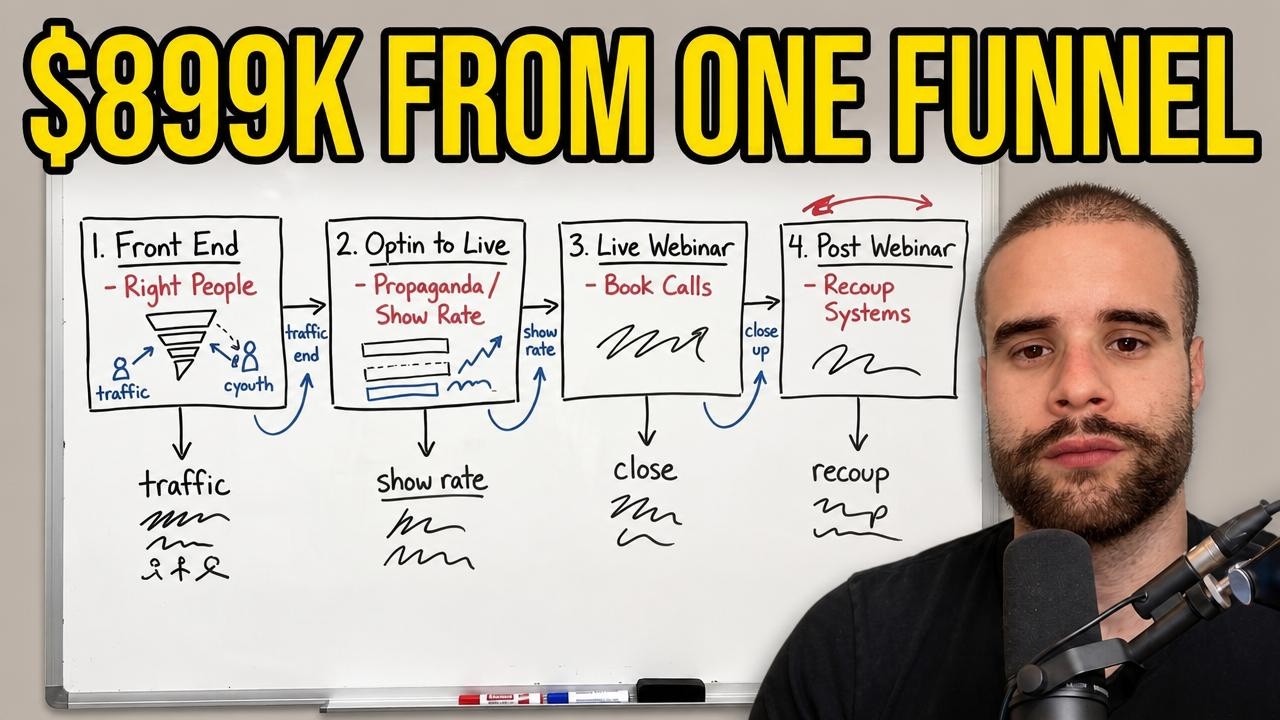

The Simplest Meta Ads Creative Strategy That Actually Scales In 2026 (1 Winner Into 40)
The 4 pillars to scale your info agency with LESS ($1.7m/year in 12 months with first agency)
He Sent 920,000 Cold Emails Running Outbound For 110+ Clients (The Unfiltered Breakdown)