CHEAP Leads Are Killing Your Webinars (Here's How Ours Did $899,462)
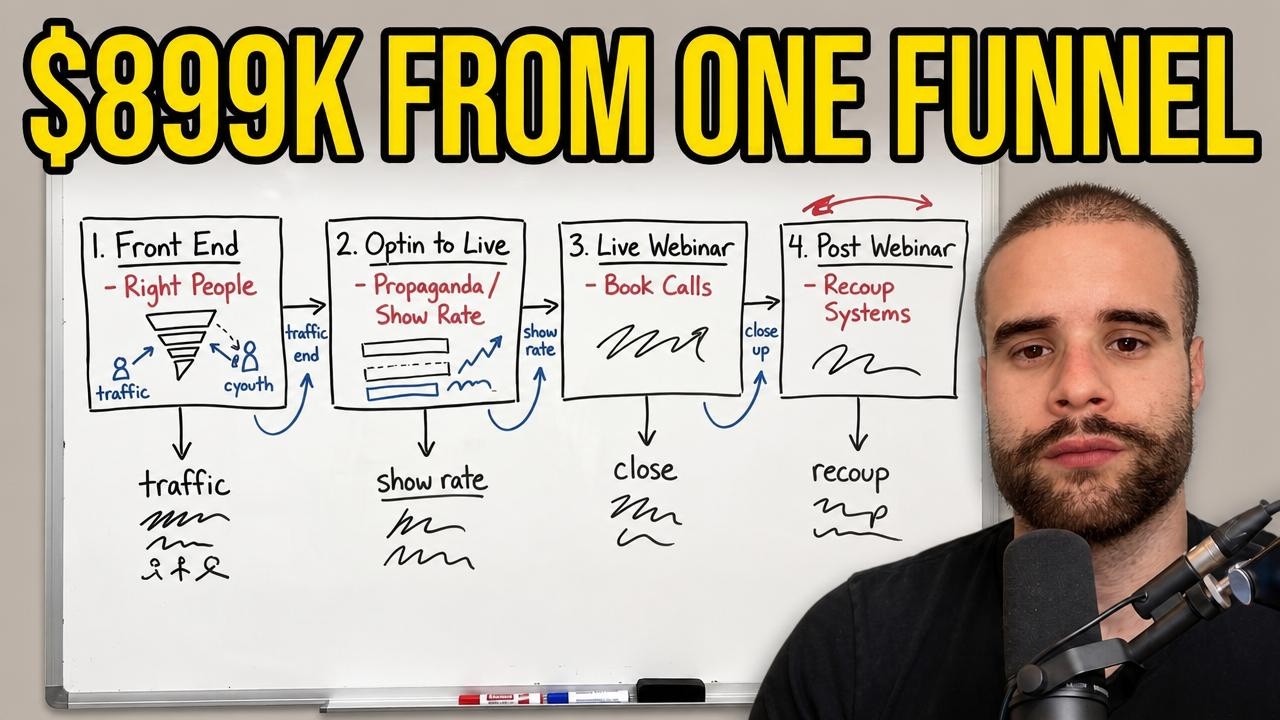
Maciek Lipa breaks down how one webinar generated $899,462 using a four-bucket funnel: qualified lead acquisition, pre-webinar persuasion sequences, a live event with 61.9% booking rates and $688 average deal value, and post-webinar automation. Cheap registrations don't matter; qualified prospects and systematic follow-up do.
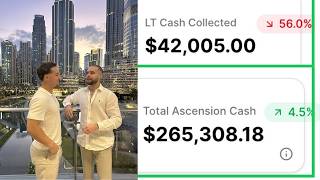
Chapters
We made $899,462 from one webinar in just a few months and stopped chasing our registration numbers. Here's everything you need to know about filling a webinar with buyers instead of your typical conventional and improving every single KPI from your front end to your back end so one 80-minute weekly webinar can add multi-six figures a month to your bottom line. Cash collected numbers are here. Average shop rate across all the webinars for this one client, 37.6%. Average booking rate attendees, 32.4%. Average booking rate for people at pitch, 61.9%. And average cash per call, $688, nearly $700. We need to bump that up to $700 or so. Now that's of course this result, but if you go to our agency landing page, infoprofits-order, you will see a lot more results and case studies from people that we've helped with webinar funnels, low-ticket funnels, especially that they are our core conversion mechanisms, webinar funnels and LTO funnels. But we've done a lot, right? You can go here if you do require more credibility and proof before deciding if you want to watch this video. A million a month, million a month, you kind of get a gist right now. Before we dive into the practicality, an important note about upcoming masterclass. I'm gonna walk over 4 critical buckets that every webinar funnel has. Doesn't matter how much money your webinar is doing. Every single webbie has these 4 buckets. And these 4 buckets, they aren't a menu. They're a chain. Meaning if you want to scale your webinars consistently and profitably, you must feed every bucket into the next one. High-quality leads on the front end, makes your show-up rates easier. A packed room of the right people makes your pitch land consistently. A strong pitch fills your calendar and your recoup systems catch everyone that missed the pitch. You can have a world-class script, and I've seen this over and over again. I've probably consulted with hundreds of info marketers and even offer owners, and they've got an amazing script, but it's not saving them because they've got the wrong people in the room. So if you do want to scale your webinars, if you're an info marketer working with clients implementing webinar funnels, or if you're an offer owner looking to consistently scale through webinar funnels, especially through cold traffic, please don't passively watch this. You need to find a bucket where your existing webinar funnel is leaking most and fix that first. And if it's your first time implementing webinar funnels, at least now you have a lot more awareness on how to make things right. Before you launch your webbies. Now, the 4 webby buckets I'm walking you guys through today. First one, the front end, attracting the right people. Second, opt-in to live propaganda and getting these opt-ins to actually show. The third one, the live webinar, getting these people to book. And the fourth one is your post-webinar recouping systems, converting the people who didn't book a call and eventually getting them to book a call. I'm gonna be walking these over bucket by bucket and showing you a lot of visual examples that you can implement right away. Now bucket 1 is your front end and attracting the right people. Now I've, as I said, worked with privately dozens and dozens of info marketers, and yeah, they show me their stats, low CPLs, and again, all of these registrants and stuff, but it doesn't necessarily mean anything. If you're getting low CPLs, but these people, they're not attending your webinar or they're not even qualified to book a call with you, it doesn't make sense. For some of our clients, we've 1.5x'd what a lead looks like for us, meaning that we've spent 1.5x more to acquire a lead. And on that webinar week, we made more money. Why? Naturally, a better lead following the systems that I'm going over today. So route 1 that most people take, they have broad-ass ads. They believe that the cheapest CPL wins. There's zero friction on the opt-in page. There's no disqualification. The messaging is all over the place and you kind of get the gist. In hindsight, yes, it does look nice, right? You're getting all of these leads, your CPO is low, and your dashboard is looking sexy, and you're getting registrants consistently. But when your webinar runs live, your show-up rate is whack because of the lead that's coming in, and people are— and people who are booking their calls can't even afford what you're offering. So it doesn't make sense, right? But Route 2, there is a reason why this is capitalized. I should even put this slightly bigger text. This is the route that we go with for our Done For You Webinar Funnel clients. The same route that we went with, with this client, this case study that I'm going over today, right? These are ads that call out a specific person and their pains, a more strategic approach to your CPL, which I'm gonna walk over you in just a moment. Qualification on your opt-in page, stricter messaging on the opt-in page as well as your ads. And filtering out the people who can't afford what you're selling. If we're selling a 10K program, why do we want people attending a webinar who can't even buy it? Doesn't make sense. With route 2, our dashboards look sexy like route 1, but this time we're actually collecting cash. That's why route 2 makes sense. Now we look at high-quality leads in 3 different kind of avenues. One is financial, the second one is character, the third one is intent. Financial meaning if they're financially qualified to buy what you're offering. Simple. The second one is character trait qualification. If they're the type of person who make a good client, they'll get, of course, the results with a program, et cetera. And the third one is intent. Their willingness to see success, to actually attend a webinar, so on, so on, so on, right? So how do you optimize for the best lead possible with webinar funnels? There are a few things that you can do, but I'm gonna be walking these over step by step. And the first one is being specific as hell with the identities and problems you're calling out in your ads. In your ads, if you're calling out $10K a month promises, you'll get people who are, of course, making a lot less. But do you necessarily want them? Or if you promise someone to make an extra $3K a month from home, who do you believe is going to be attracted by that message? It's, of course, going to be lower-level leads who are not necessarily the fit to buy what you're offering. So you need to be very cautious with the identities and problems and outcomes you're calling out on your ads. Because front-end messaging dictates the customer you get on the back-end always. With your ads, don't only call out identities in if you're this person format. I've seen this over and over again. Like if you're an agency owner making over $10K a month and you want a consistent client-getting system. With your ads, that is a way to call out identities, but you can also call out specific people through specific pains that they're currently facing or specific outcomes they want to achieve. For example, if I'm targeting, let's say, agency owners making $50K a month, what specific pains do they resonate with at that level of scale? Delegation, SOPs, finding A-star players, firing people that aren't the best fit for them, hiring whale clients, how to make their personal brand better so they can increase their retainers and so on and so on. I would call out these specific outcomes and like pains that they're currently experiencing and as a byproduct, Meta's algorithm is so powerful that it will naturally put your ads in front of people who appeal to that type of messaging. If I want to appeal to, let's say, beginners, right, that are stuck in a 9-to-5 and they want this next side hustle, then, then their pains will change. Stuck at your 9-to-5, the commute, you know, you're sick and tired of your boss telling you what to do and so on and so on and so on. Your identity callouts, they aren't only in a format of if you're this person, you also call out your specific customer through specific dreams, hopes, and frustrations that they're currently facing. Important. Now, don't neglect the importance of the terminology you're using. And Jeremy Haynes, he actually made this more clear to me. But again, an example of passive income versus working capital. The word passive income appeals to someone who wants that kind of get rich quick, you know, dopamine hit. Working capital, now it's a different ICP. So be very cautious of the terms that you're using in your ads because it does allow you to put in front of the person that you want to, of course, appeal to. Now, another important thing, if you're not solely relying on Meta for webinar funnels, let's say you're doing organic email promos or community, it doesn't matter what traffic source it is, these principles, they have to remain consistent. You still need to call out specific dreams, hopes, and frustrations of your dream ICP in organic content pieces. Like it should be seen no matter what traffic source you're implementing. And another thing that you can do is add a qualification on your opt-in page. On your form, ask about their current situation, how much they can invest. Most webinar opt-in forms, they've of course got full name, email, phone number, and then there's like a CTA redirect to thank you page. But you can add an input field to ask about their current situation. Which one of these best describes you? Then you have like 4 different options. And if someone puts an input that is qualified, then you can redirect them to a qualified page for pixel conditioning, which has your pixel on. And then the event can be a qualified registration, for example. With this approach, yes, there's more friction, but this is the whole point of this process. The people who can't afford you or say that they're not qualified or they're not at this current stage of customer journey, you know, they filter themselves out before they cost you. So you can also add qualification on your opt-in page to optimize for this best lead. And the most important thing is your pixel conditioning. With Meta, of course, they're powerful, but if you optimize for the cheapest lead possible, Meta will find you the cheapest people. And the cheapest people, yes, they can give you their full name, email, and phone number. Are they gonna attend the webinar? Potentially. Are they going to book a call? Potentially. Are they gonna buy? Not so likely. Like, don't optimize for the cheapest lead. With webinar funnels, what we do is When we sign a new client and if their pixel isn't as enriched as data, we add an intake form on the thank you page that acts as a qualification form. And then within Zapier, we add a filter and we create like a new zap. Okay, Typeform submission filter out, and then there's a send Facebook event action step, right? And then within Meta, we now have a custom event for qualified registrant, which is only for qualified registrant, only for qualified leads, right? And then within Meta event sources, you'll see that event. And then when you collect like a lot of data, let's say 50 to 100 events or more, then you can begin optimizing your webinar campaigns for qualified registrant, not a typical or conventional Meta lead, because a Meta lead isn't necessarily the best event. When you're starting your webinars for the first time, absolutely, because you haven't got sample size, but still, if you're just starting webinars, add the intake form so you can fire for these custom events. You can do qualified registrant. I've even seen people do webinar schedule optimization events. It's more bottom of the funnel, but it's a better lead. Or you can begin optimizing for purchases when you're doing a bridge offer. Bridge offer, when someone opts in, $27, $37. With your webinar ads, you can fire for a purchase rather than a lead. A buyer is better than a lead. So that as a byproduct, it'll result to this principle. Best lead possible for your big saw, Conditioning is the most important thing. And with these events, yes, absolutely, your CPOs may go up, but it's better to pay more for a lead that's financially, character trait, and intent qualified than a standard meta lead who's not gonna take the action you want them to take anyway. So that's the third one, pixel conditioning. Now, a few other things with ads, 'cause I get these questions a lot, is how we test campaigns. We test in ABO and scale winners in CBO. So we test one creative per ad set. So every unique creative gets its spend and we know which format wins. Then we move these winning formats into a CBO scaling campaign and continuously keep testing creatives in the ABO. We test like religiously within these ABO creative testing campaigns. Targeting propaganda is mandatory for show-up rates on top of your emails, your SMS, your RVM, and all your other mechanisms. When someone opts into your webinar, they need to be added to a custom audience, 7-day registrants, and you hit them with free play campaigns to improve your webinar show-up rates. We do CBO for this, like $20, $30, $40 a day depending on the scale. Here, testimonials, overcoming limitations, overcoming doubts, and just flooding them with proof. So by the time the webinar is happening, they know, like, and trust you a lot more. So that's bucket 1. Now bucket 2, opt-in to life. This is your propaganda and getting these people to show, because yes, you can get these leads opting in and stuff. Does that mean that they will show? Not with these systems not in place. The first one is treating your confirmation page like a propaganda page instead. I've seen so many people make this mistake is they do a webinar and then the thank you page is congratulations, you're reserved, here are your details. That's what everyone does. But we don't like to do that. What we like to do is treat it like a propaganda machine and hand them first the feeling that they did the right thing, acknowledging the prospect where they're at. Then the second one, which is probably the most important, is reselling them on the opportunity. 'Cause you need to take into account these aware and sophisticated prospects, they're receiving ads left, right, and center. They are browsing for solutions. And if your opportunity and your UM, your unique mechanism of getting a result, is not seen as superior, they haven't got a strong enough reason to attend your webinar. So as soon as someone opts in, they're the hottest. So the first thing that you do is resell them on the opportunity and your unique mechanism to getting that solution. Then enticing a reply in the confirmation email. We sometimes do it in exchange for a bonus gift or like a come prepared guide. This does a few things. Micro-commitment before the webinar, but also helps improve your deliverability. So you're landing in these people's primary inboxes. So by the time you send them the we're going live emails or we're 1 hour live emails, they're in the primary tab. So they're more likely to open and join The live room. Now, following one. Most people, they just got one standard VSL. Here's how to attend. Add it to your calendar. Do this. Reply to this email. See you on this time at this day. We don't do that. We've got how and why VSLs on the confirmation page. The how is logical. The how is like kind of how to attend, and the why is emotional. The one that converts. And the why VSL is why they should attend. What's the opportunity that we're going over? Why is this opportunity better than other opportunities in the market? Why should I attend? What are the consequences of me not attending, etc.? Right? We've got both VSLs on the confirmation page. I'll show you a visual in just a moment. And these move the needle forward and we entice them on the thank you page. But even when someone opt into our webinar, they receive the emails, we redirect the traffic back to the confirmation page so they can rewatch them if they haven't already, right? Now show them exactly which you want to look for. Of course, get the live training on the calendar, add event, get, add event, get a training, get the live training on the calendar. You can use a tool like Add Event or you can code it. What we also do for some clients, especially in skeptical markets, is we kill objections before the webinar with short FAQ videos answering top questions from our sales calls. And I'll show you where we put these below. And then we just flood them with proof and name association and status delta before the webinar commences. So they know that, okay, I can trust this person. This person has helped other people like me achieve the outcome that I want. And they got started without these objections. I can do the same. Now our confirmation pages, here's like a universal approach. Depending on the client that we sign or the niche that they're in, there are some minor tweaks that we made, but fundamentally we have the confirmation hero, countdown timer for urgency, and handing them their details. Then step 2 or step 1 is the how VSL. Okay, here's how to confirm your spot. You go to your email inbox, you add to your calendar, et cetera. Then beneath that, we've got the why VSL, probably the most important. Here's how to get the most out of the training. Here's why this opportunity works. when everything else hasn't, right? This resells them on the opportunity, floods them with more proof, and just demonstrates the consequences of not attending, like respectfully, you know, like if they don't attend, here's what's gonna happen. Then add to calendar, FAQ videos, client success hub, and more results and authority. Especially if you're doing cold traffic webinars, your need of creating credibility elements is very high, right? 'Cause these people, they've been burned before. So create as much proof for them as possible. And what we do for clients that have a lot of results or videos or so, we also add a final CTA, which is a client success hub. And we link this in our pre-webinar emails. And what this client success hub is, it's just a bombardment of video testimonials, images, authority publications like Forbes, Yahoo, and all these other ones. So by the time the webinar is happening, they're like, okay, This guy has been featured on Forbes. He's helped this many people. Here's the Trustpilot. I trust him. That's the entire purpose of that client success hub. But that's a foundational confirmation page. And it's what we're doing for this client. And you see our show-up rates, right? Consistently 37.6%. There's been weeks where we've had 45% show-up rates with our webinars. Some weeks even more, all because of the principles I'm walking over. Now that's a confirmation page. The following one, I'm not going to hand you over the A to Z pre-webinar sequence and SMS and RVM and voice memo sequence. If you do want access to an SOP that we've got, a full webinar operational SOP, you can DM me on Instagram. It'll be inside the description. I can hand you over an SOP. But the way that we look at pre-webinars is also as a propaganda tool. They're not just basic reminders. Hey, first name, we're 24 hours away. Here's your link. That is mediocre. Every email needs one job. Overcome a limitation, build belief, or give them a strong reason to show up live. In our pre-webinar emails, we also tell the story behind the mechanism, show client proof, and answer the questions from our replies. Before the webinar even happens, we add countless micro-commitment tools and other communication tools to get people committed to the webinar. One of them, redirecting to the success hub. Another one, client video in selfie format recorded by them. Hey, it's client name. Quick reminder that we're 24 hours away from the live training. Details are inside your inbox. I'm gonna be walking over this. Make sure to tune in live. It's a different format. Like with your webinars, don't only add emails and SMS, do some selfie videos. What we do also do for clients is we embed voice memos in the emails. So it's like a different communication tool. This helps with pattern interrupts. Pattern interrupts get opened. When we do a voice memo email from a client, it's kind of, I recorded this audio message for first name. Pattern interrupt. But for pattern interrupts, we also send emails from different faces of the brand. It can be another coach, or it can be your business partner, or it can even be a client or a successful student, for example. Don't show repetitiveness, like show variation. That's when your open rates will increase and your shop rates will increase as a byproduct. Important one, make the live matter, not the replay. For our clients, we don't even put focus on the live as much. We just double down on the things that we only do in live. And we tell them straight that the replay doesn't include any of it. Because if someone opts in and then they have a strong indication that, yeah, the replay is going to be available. And yes, if you watch the replay, you still get these bonuses. And yes, if you watch the replay, this happens. People have no strong sense of attending live, but we need these people to attend live because that's when conversion rates are going to be the highest. So make the live matter. Following principle, day off is where the show rate is 1. Intent is the highest on your webinar day. So that's where, for our clients especially, where we send the most amount of emails and SMS, and we keep sending even after we go live. Maybe we've got the 1 hour before I'm going live and 15 minutes into the live room, but While your webinar's happening, you can send a few emails to get to maximize people in the room. We typically do 15 minutes in and half an hour in, or sometimes even 15 minutes and then 45 minutes in to maximize people in the room. Now bucket 3, the actual webinar. So you have optimized for the best lead. You're getting these people to show up, but now how do you get these people to book a call with you, a qualified call with you? The first one, and this needs to be used universally throughout your entire webinar, Your webinar big idea is the cornerstone. What are you teaching? What's the entire message? Your big idea is not your hook, like make your first $10K a month with Amazon FBA. That's commodity messaging. Your big idea, it's the worldview shift that makes your offer the only logical conclusion. Just make your big idea novel and something that they've never heard of before. That's when your webinar KPI will be on its front foot. You need to tap into a fear or desire already in the market. You need to redirect the emotion and not reinvent the wheel with it. Once again, I have a full webinar SOP with a lot more details in the webinar big idea and how we conduct this. If you want more info, just DM me on Instagram. I can get that over to you. Now the following one is making your opportunity or the way of getting X result, for example, way of making money online or way of losing fat, it needs to seem sexy. Most webinars, especially that I've seen, Like I've critiqued webinar scripts. They just seem— they just make the opportunity seem mundane. But you need to make it seem so sexy and so big that they can't afford to leave. With your actual opportunity, what we like to do with clients is inject urgency into the opportunity itself. Why do I need to take action now? And why this opportunity won't stay like this forever? You need to find a strong sales argument that backs this up. You don't create scarcity and urgency through limited live spots, or we can only take on 15 calls per week. You can also create urgency and scarcity and make your opportunity seem even sexier by using real-life urgency and scarcity. What's happening in the market now? What laws are being released, etc.? Then you can use that ammo for your webinar. Formula 1, get as many different forms of commitments as possible before your pitch. Your pitches and your webinars is not only Type 1 in a chat or type yes in a chat. Different forms. You can get people to pick their lane. You can get people to commit to their goals subconsciously. You can do a live activity with them. You can do free live business audits with them. The Q&A is another commitment tool. You need to get people committed in as many forms as possible. You can even do a live workbook before the webinar, then they go over that workbook during the webinar. There's so many things that you can do. The more creative and interactive you are, the better. Don't be overly creative where you're doing things for no reason. But the entire goal of a webinar is to collect as many micro-commitments and yeses as possible, small ones, so the big yes, it makes sense. And not only do— and don't only do basic drop yes in the chat commitments. These micro-commitments come in different forms. Probably the next important one, it's probably the most important, and it's pitching without being needy. And this is the principle, doesn't matter what route you're going down or who you're targeting, right? Abundance attracts, neediness repulses. With your webinar scripts, you need to make the prospects qualify themselves to you and don't bombard with fake urgency and scarcity stuff like, okay, we've only got 12 spots left, the calls are going quick and stuff like that. People pick up on this stuff, especially when customers are aware and sophisticated. Rather than using fake urgency or scarcity, find urgency elements from the actual opportunity itself to make it real. Or if you say that you can only take on 15 people a week. Give a sales argument behind it to back that up. Don't only add 12 spots left, right? It doesn't move the needle forward. The third one is calling back to earlier in the webinar. For example, if you go over a successful student or testimonial, let's say, I'm gonna use my name for the sake of it. Maciek, who used this system, he went from, I can't say homeless, that's a bit too crazy, but he went from making $2K a month to $25K a month with his agency using this system, right? If we mentioned that early on in the webinar, we can call back to it during our pitch section. Remember Maciek? He followed a system. He was at $2K a month. Now he's doing $25K a month. And it's all because of the system that he followed. And no, he never had marketing experience. He never had this or this or this, right? You can call back to earlier sections of the webinar. And that is also a great principle to improve your pitches. And you can, another important one is asking permission to pitch. Rather than building up some insane scarcity, urgency, and all of this storytelling before your pitch. You can do that, of course, fundamentally, but then when you get to the final CTA, ask for permission. The way that we do it is, in the past 60 minutes or so, I've shown you the entire system, and I think it's only fair that I show you what it could look like with me working directly with you to help you get to this outcome even faster. If this sounds fair, drop a fair in the chat, and then we transition to the full pitch. This asks for permission. So it's kind of, we're giving a prospect the power in a pitch. It's like a big shift. We future pace the call. This also helps increase book call extension rates. And it's how we're getting book call extension rates for this one client of 61.9%. When we say, okay, book your call, we make it abundantly clear of what's gonna happen on the call. Okay, we're gonna walk over your roadmap. This is gonna discuss, you know, and all of these other things. We're going to future pace what's covered on the call to put them in the right headspace. And as I walked over using real scarcity and urgency around the opportunity and giving sales arguments in why you can only take on 15 calls or why you can only take on 20 students a week. Don't just add, yeah, 5 spots. That's meaningless, right? Give a sales argument behind it. Now for book a call webinars, we never reveal the price and do like crazy price anchoring or bonuses and stuff. Like we don't do that. Your job with webinar book calls especially is to feed your closers these qualified calls and they close them. So you don't need to go over price anchoring or how much is the program or what's inside to a tee. You don't need any of that. Keep it frictionless and let the closer take over the rest. That's when your book call extension rates will increase. Now the 4th one, post-webinar recouping. I'm gonna go over one key principle here, 2 actually. The first one is dialing, by far the most important. For our clients, as soon as the webinar ends, there is an automatic CSV providing tool that hands them over opt-ins who haven't booked a call and attendees who haven't booked a call. Then what our dialers do, they dial them right after to maximize the book call volume. But then what we also do on the post-webinar is we have a series of did not attend and did not book automations. The did not attend is for people that opted in but didn't even join the live Zoom room, right? Or WebinarJam if you use WebinarJam. And the main purpose of the did not attend is replay. Super simple. Did not buy— if they attended and maybe they've watched the pitch but they haven't booked a call, we redirect them to a similar page like this, but it's got the application form. It's more focused on a call booked. So here's what that did not book automation— well, did not book funnel looks like. We've got the replay headline, the embedded replay, and an application form beneath the replay. Then beneath the application form, we have FAQs around booking a call, not around the replay, around booking a call, because that's the action that we want them to take. Then we give them the bonuses that they of course showed interest in. Like for our clients, we add live bonuses for every single person that stuck with us with the webinar, and then client results, and then final CTA to fill in the application and book their call. So that's the video, 4 buckets and everything you need to know about filling a webinar with buyers rather than typical and conventional webinar registrants, right? Buyers, they matter the most. Now, if you do want a full operational webinar SOP, as I said, DM me on Instagram. The keyword can be anything, but just DM me Webby, and I'll forward you over an SOP that goes more in depth for these strategies. And if you are an offer owner, consultant, or you sell online courses and you want a webinar funnel implemented for your business done for you, here's some more results. You can go link in the bio and book a strategy call here with myself. I can take the calls, and then if you're a right fit, we'll tell you. If not, we can refer you to someone who may be a right fit. But yeah, without further ado, this is until the next video. Hopefully you found some value inside this, and let's scale these offers.
More from Maciek
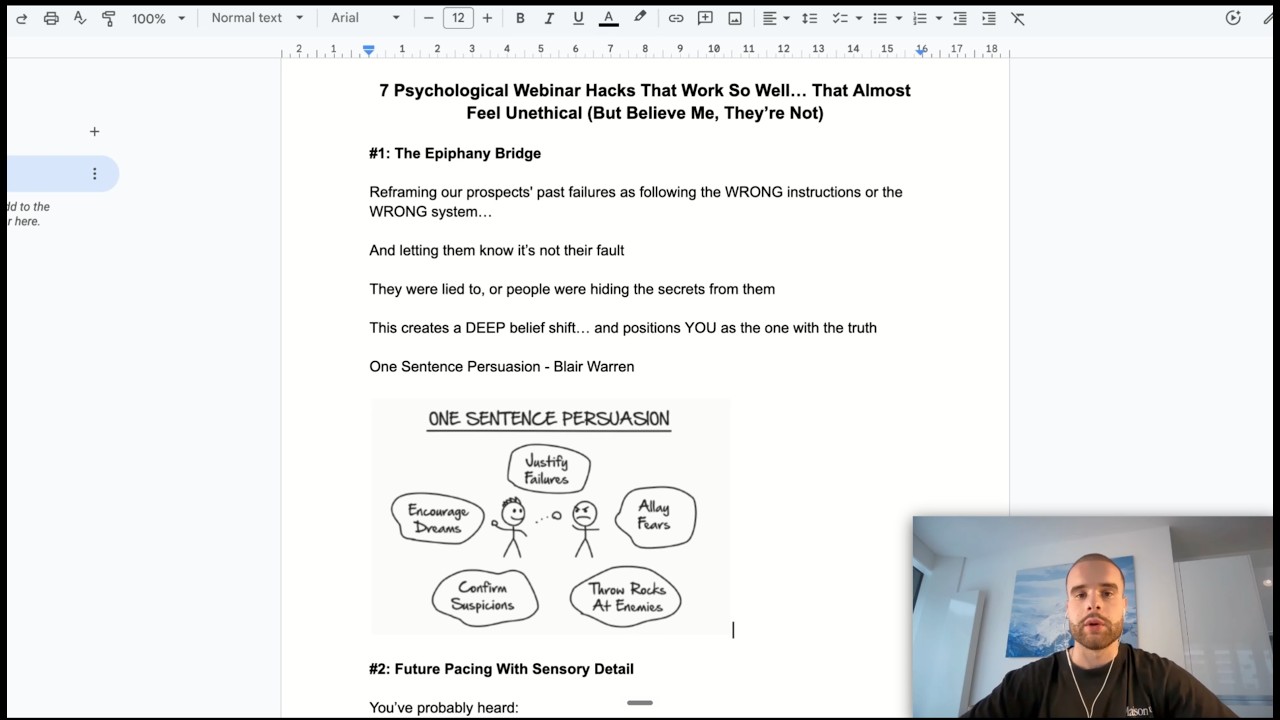
7 psychological webinar hacks that work so WELL... that they almost feel unethical

The Simplest Meta Ads Creative Strategy That Actually Scales In 2026 (1 Winner Into 40)
The 4 pillars to scale your info agency with LESS ($1.7m/year in 12 months with first agency)
He Sent 920,000 Cold Emails Running Outbound For 110+ Clients (The Unfiltered Breakdown)