3 info-product entrepreneurs discuss ads, funnels & sales systems ($41M lessons/Q&A)

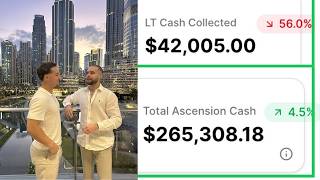
Matchaik and DJ, who say they've generated $40M in online revenue, walk through how they scaled a client from $150–200k/month to $1M/month in two months using challenge funnels, webinars, and a sales team. They cover front-end acquisition costs around $70–100, back-end offers at $10,000, and why testing creatives and speed-to-lead matter more than ever.
Questions this video answers
$40 million and counting.
About three months (90 days).
Seven partners.
About two months.
Approximately $70–$80; overall acquisition cost ~ $100.
Chapters
Okay, so I am here with Matchaik and DJ who have generated how much by the way?
40 million and counting in online revenue.
Got it. So when you say $40 million, can you like break that down? Like what, where's that $40 million come from?
So the 40 million in revenue, bro, it comes from of course helping people sell more courses, culture programs and of course the consultants, services as well as even their masterminds. And we do this through front end to back end, like the monetization. So front end of course getting the customer conversion mechanism, converting the customer and then back in infrastructure to like recoup all the lost buyers and of course sending them into higher ticket.
Got it. So where is like say a course creator, coach, whoever they are, where are they typically when you take them on as a client?
So on most occasions we look for one key qualifier. Honestly bro, we just have of course that they've got a clear offer that serves a starving market and actually provides like a dream outcome. And of course we also look for the client's story themselves. When the client story is established, it kind of gives us like marketing amount.
So give me an example. Like what's one of the biggest clients you guys have worked with?
Do a name drop.
It's your guys. It's your clients.
I mean like we typically look for clients of course with clear like rags to riches kind of stories. Okay, like why rag to riches? Like I of course mean they were.
Before in a situation, but I mean like what industries typically are they in? Like is it like make, make money online? It sounds like any other industries as.
Well make money online. We've of course dabbled into fitness and health and things of that realm. But our golden niche is like MMO. But like of course not your everyday MMO. Like we work with kind of some lucrative MMOs as well. Yeah, like that actually teach like sophisticated esque like business ventures as well.
Got it. How long have you guys been doing this?
So we started this new agency together. Like bro, how the hell. Kind of.
Yeah, we were both running kind of separate agencies and we joined agencies about three months ago. So literally like 90 days, which is kind of crazy to think about. Yeah.
And like what, how many clients do you guys have now?
Right now we have seven partners.
Got it. So like there's going to be like coaches watching this. What, like what do you guys actually do? I know you do marketing. I know you mentioned like front end to back end, but what is like the day to day, like when you're working with a client, what are you guys actually doing for them?
Typically, I'd say we're converting traffic. Like we definitely, we run traffic for clients as well. So like paid media, like Facebook, Facebook ads, et cetera. But I think like the main service we provide is just converting that traffic through like funnels back in sales systems, stuff like that.
What's the typical, like web, our main.
Vehicle is like webinar funnels, challenge funnels. It's like the two kind of core vehicles that are pretty similar. And then we have, we run low ticket funnels as well.
So people watching this have probably heard of webinars and stuff. Like they probably tried, maybe they've tried webinars. Not working. Let's walk, let's dive into that. Okay, so webinars, when a client, you start with clients say they don't have a webinar, how do you get started with creating the webinar, launching it, getting traffic to it?
Good question. Yeah, I'd say first step is like really just diving deep into the client's business, like understanding their offer really well, understanding their story, you know, walking them through like a, you know, in depth onboarding where we just get a super detailed understanding of like, you know, their market. That's obviously number one, their offer, their story, you know, who they're trying to target, essentially. And then we can take that, take all that ammunition and then we can turn it, if we already have an offer, a clear offer, we can essentially turn that into a longer form sales presentation that they can then present live.
Got it. Okay. And you do it for cold traffic. You do like paid ads to.
We do both. A lot of our clients actually have like pretty big personal brands. So like, they'll start out and they'll already have an audience that either they are monetizing or they kind of want to monetize. And then we can take some of those eyeballs and we can, you know, build a webinar, drive that traffic to a webinar, test out the sales presentation on organic, get some proof of concept, get some sales through the door, and then typically we'll immediately diversify into paid traffic.
And as the personal brand creator, literally I just have to do the webinar and you guys basically do every. Essentially you guys are doing everything around me doing the webinar. Basically.
Yeah. There's literally we have a couple referral partners that we have a traffic partner who he's really good at Instagram Organic, for example. So he'll work with some of our clients on like their Instagram and he'll help them Build their followings and then we're essentially, you know, the entire marketing infrastructure who can take those eyeballs and then convert them into sales. And then a lot of the times we're selling like a DIY offer which is do it yourself, which involves no sales team. So it's literally just an offer that they can sell directly on the webinar. And then if they want to sell high ticket, typically they'll have either their own sales team or we also have like another partner who kind of handles the sales system. Not really partner, but just kind of like, you know, separate.
There's like a whole team though, like behind it.
Yeah, 100. Yeah, you want to speak on that.
It's like essentially like the Avengers team. Like when you kind of look at. There's the Avengers team. Like when you look at. Of course, like any successful online course, coaching or consulting business, all avenues are taken care of. Yeah, you've got the front end with traffic conversion mechanism with some sort of highly converting funnel. And I've got the back end with the cell systems. And once all three are established, that's like a very successful info brand. Of course we have a good offer. Yeah, good story. And like I'm hungry to scale and.
You guys have scaled clients to millions of dollars a month and I mean I've been involved some of that process. Some old clients we used to have scaling. What do you guys think is the main infrastructure someone needs to get to a million a month in terms of team? Because it's hard to do it yourself. You need like people in place, marketers most of the time.
I mean it kind of what I mentioned about them free buckets is like if you have the traffic mechanism taken care of with a guy or like a team who manages traffic, then you've got a conversion mechanism team who does all the funnels and set up these funnels, etc. And then you've got the sales system. Them free buckets are kind of taken care of. Meaning that you can essentially have three solidified agencies that specialize in each department.
Or it can be in house. Like you can build really good in house sales teams. You can build theoretically a really good in house marketing team. I think that's actually harder to do. I don't know if you guys heard me, but yeah, you can, you can build those in house as well.
To put it shortly, would you recommend someone go in house like right away or.
No, I think it depends on your goals. I think it's significantly harder to build a world class in house team. Yeah, because it's like you. If you're gonna get, for example, a world class copywriter or a world class sales manager. Yeah, world class, you know, traffic guy that runs paid meeting.
Marketers.
Marketers, Sales reps. Exciting. Sales reps is different. But maybe sales managers who built businesses before. That's expensive, man. You have to pay a cmo, you know, hundreds of hundreds of thousands of dollars, most likely.
Yeah.
To get to that, you know, high level. Whereas you can work with an agency that's working with multiple clients.
Right.
Has the systems in place, knows what they're doing. It can essentially just plug into your business and then, you know, and if.
They'Re really about it, unless you're really incentivizing them, they're going to want other clients. They're going to want to like, have a portfolio, you know.
Yeah. I think especially in today, like just the way that, you know, the whole freelancing thing is like most, for example, most marketers, copywriters, they either run an agency themselves or they're simply freelancing and they have multiple clients. If they're good. Because if they are good, then they can land clients, they can get paid more.
So what I want to do is like, you guys have scaled how many clients past a million a month since starting. Like, is it, is it one right now or is it together?
Together.
Together. Like together. Obviously, you know, those beforehand scaled others, but with like, I think recently it's been. It's been one. Right.
So recently since our agencies have of course, like kind of forged, it's been one big name, but we're looking at like a very successful Q4 as well.
Okay.
In total, of course, like, I know like a few more names.
So I think people watching this video, like, want to really break down. Reverse engineer, how that even happens. I mean, how many months did it take to get this person to a million a month? We won't reveal their name. Like it's. Yeah. Competition.
Two months. Two months. Two months.
So what, what were they doing before?
I mean, previously they were doing like 150, 200. So we kind of took them well, like, of course from like 200 to like a million. Maybe they were making like slightly more beforehand. But it's because of course we introduced like a grand Slam challenge funnel which pulled conversions up a bunch. We also done like one grand slam webinar which brought in like over like 100k, like revenue as well. And that kind of adds to the fuel. Of course, the conversion mechanism is one process because we've done the funnels and the challenges and the webinar funnels. But then of course the sales team are responsible for that. The no, like the traffic guys are responsible for like nurturing leads. So it's like an entire ecosystem with.
That's a real killer team, man. You can scale so fast. What, what was the main shift? They went from 250 to like a million a month, do you think, in terms of like team. But then what you implemented from where he was before to where he got to.
Of course, bro, it's the one conversion mechanism with like the challenge and webinar funnel. But also, bro, just like sales systems, bro, like our like a sales team that was responsible for this one client, bro. They were like crazy.
By the way, people watching this might wonder what is a challenge funnel. Can you just explain that real quick?
A challenge funnel is essentially what DJ mentioned with the live event. But instead of one day, it's kind of like a three day live event. So like one day you can have one key teaching, day two you have another key teaching. And then day three you have the final day teaching. Of course you can do like three day challenges, four day challenges, five day challenges. We've kind of seen the golden spot with free mainly because of course five day like you kind of have like drop offs happening in like retention. But that's what essentially is in like.
In like a nutshell, it's like a free day webinar. And at the end of the three day webinar you pitch like a high ticket offer essentially. But they spend three days of you and they spent so much time with you that you can really pitch high ticket. Yeah, yeah. So is that the main thing that got into a million a month, would you say?
Yeah, I'd say it was introducing. This client had run webinars in the past and their KPIs weren't like extremely good throughout the funnel. So they weren't converting at a high clip, as high of a clip as they should have been. So they were pulling most of their revenue through literally just like Instagram organic. Just setting people onto calls and then closing them over the phone, which obviously you can generate a lot of revenue with that, but you know, it's very sales heavy. So introducing this vehicle where, you know, we can drive multiple eyeballs at once and sell to one to many rather than one to one, you know, all at once in a big challenge or a big webinar, it just allowed us to just multiply our efforts, you know, warm people at scale and then get them onto the phone pretty much. Pre sold ready to buy, credit card in hand, you know.
Yeah. One to many being webinars where you're sending to multiple people.
Exactly. Yeah. It's like rather than like setting an individual person in the DMs, you know, sending them onto a sales call with either a setter or a closer, having them go through the process one on one in person. A lot more like nurturing education and actual selling on the call has to happen with the webinar. You know, the way we construct them, like we're essentially overcoming all of their objections, educating them on the opportunity and getting them pre sold and excited at scale. Because you can get, you know, thousands of people in a webinar room theoretically if you have traffic and then you can just get them on a call or you can sell them, as I mentioned, you know, a course on the webinar and then send them later.
So if someone's like a coach or selling a course and they're just getting started or say sub 50k a month, would you recommend them one to one setting or one to many at the beginning?
Yeah. Would you say like 50k a month?
It's like sub 50k a month.
So below 50k a month.
Yeah, because that's probably. Most people watching this video are probably in that situation where they're like weaseling like around below 50k a month and they're trying to figure out, I mean there's so many options with funnels, so many options with different marketing strategies you can do to scale, you guys know, because you've got it. So what do you think?
I would say like, you know, if you're hovering between like 30 to 50k a month. Yeah, you can definitely go one to many. If because you have proof of concept, you're, you're getting cash collected and you know you have a good offer, most likely. And then you just need either more traffic or better conversion mechanism to scale. So webinars can make sense. I will say though, like if you've never run webinars before, it's a pretty complex funnel that has a lot of moving pieces that if you drop the ball on one of those moving pieces, it's not going to be nearly as effective as, you know, something more simple. But in short, yes, I would recommend it. But you just need the right team to essentially do it for you.
The right everything's built around just like it's not just like presenting the webinar. You have the pre process, the actual on the process, the post process, like everything in place. You've got to have that.
Absolutely. Like the webinar is huge. Obviously the conversion mechanism of the actual live presentation or the challenge or whatever is huge. But like getting people to register for it, getting people to show up, you know, that's. Those are two huge KPIs that if you don't get anybody in the room, you can have the best sales presentation in the world, but you're not gonna convert anybody because you don't have anyone there. You know what I mean?
Do you build the sales presentation or do clients do too?
We build the entire, we build every single moving piece from the funnel. A lot of times the ads, if we're running traffic, the actual webinar, the emails, like every single marketing asset essentially in the entire funnel we handle.
And that's why I guess that you were saying earlier there's like zero to hero story is so important because that in the webinar is like a whole trans transformation. Gets people inspired to actually buy.
Yeah, I'd say like the zero to hero story is really important for a couple reasons. Like yeah, one, it makes you relatable to your audience.
Yeah.
Like if you were just like born into money or whatever and you're just like already at this level, like for example in the biz op market or if like say you're like a fitness guy and you were never out of shape and you just had a six pack abs your whole life or whatever, it's not going to be as relatable to the people you're actually selling to. So that's one thing. And then you know, stories are one of the best ways to actually overcome objections like indirectly, you know, you can tell a story in a way that allows you to overcome a lot of the you know, limitations and limiting beliefs that someone may have.
Yeah.
Because you can explain how you had those same limiting beliefs and then you came overcame them. So it's like, it's a really good mechanism for just like selling in general.
And to go back from that. So say someone that same person watching, would you recommend them dive into paid right away? From you guys perspective, I have my own ideas on it. But from your guys perspective, if someone's like just kind of starting out, would you recommend building the brand, the personal brand, going down that route or paid or both?
I.
So where they at? They have an offer? Are they actually they have an offer.
They have a transformation and they're kind of just getting it kick started.
Okay. Yeah, I would say I've mixed, mixed opinions on it. I think that it is smart to build like A foundation of organic and like an audience that you can, you know, nurture and sell to organically, like, at least to a certain extent. Because then you have a cushion to figure out paid traffic. Because paid traffic, unless you're working with like an expert like you, who runs, you know, millions of dollars in spend.
Yeah.
You know, it's. It can be relatively tough to crack. So if you build up that cushion of like an organic audience and you can get revenue in to kind of fund that learning process or. Or you can just bring on an agency or in fund the agency to, you know, diversify into paid. I would recommend it, but yeah, I genuinely think that, like, everyone needs to, you know, go to paid traffic at some point.
Right. But when they're just starting, you would recommend starting to build a brand a little bit slower.
But I kind of have, like mixed opinions on it. I think that you can go either route. Like, if you really are committed to actually learning paid traffic, you can make it work without a brand. Like, you can just run paid traffic and scale if you know what you're doing, 100%. So it's really a skill thing or a team thing.
Yeah.
Like, if you personally are skilled enough to run paid traffic at scale profitably, by all means, it's the quickest way to scale and it's the most predictable. And you know, personally, what I think is the best.
Got it. And with, for example, your client, your biggest client. Like what? Like, do they have a big personal brand like this client scale past a million? Like what. What do they do on the personal brand side of things?
Yeah, as I mentioned, like, of course, as even DJ mentioned, the pay, that's. It kind of complements the organic presence.
Yeah, they play into each other.
Yeah. So like, meaning the better organic presence they have, the better the ads will perform. Because, like, essentially we of course connect the client's IG account onto the ad, then the client can check out the IG profile. So kind of. Yeah, they complement each other.
Yep, got it. So this client, just to go back to the client who's, you know, got to a million a month, he has a big audience and you guys leverage that for the challenge for the webinars. But then you also sprinkled in paid to get basically new eyeballs on onto the organic. You basically just create this massive flywheel ecosystem. Essentially. That's what I always say to clients. And everyone is like, everything's just a flywheel. It's like content marketing, but then it turns into customers, then more customers turns into more results and it's just like a massive flywheel and it just plays into each other. And it's the same thing with personal brands and paid ads. It's like they both complement each other essentially. Because if you have paid out, if you have a good brand, your ads are just going to stand out due to the brand, you know, but then even your brand is going to grow from the paid ads. You'll get new cold eyeballs, convert them into warm up eyeballs and it's what.
Like what you also mentioned in regards to knowing like the paid ads, right? It's like when you run like a paid ad, most occasions are likely to search up your name.
If you search up and you've got.
Like a strong digital presence, ad is.
Only going to perform, I can say with an absolute fact, like if I look at our top clients, like, like our top, top, top clients and customers and commanders, like they're all have some sort of brand somewhere. Maybe not on social media. Like some of them have big articles, big publications, they've been on some big masterminds, events, but they have something, you know, like you gotta have something. I think, yeah, especially now, like you can't, I mean you can make it work with just paid, but like you said like at that level you gotta.
Be a really skilled marketer and like the sales cycle. If you for example, if you're just running paid traffic with no brand today with like the level of skepticism that's in the market, like obviously if you're one of the most skilled people around, you can make it work. I'm not going to say you can't, but like having that content out there, it's like a nurture mechanism. It's like someone will, like people don't just go, you know, directly From AD to VSL to piffing for 10k on a call or add to webinar, whatever. It's like ad, what is this? Hit the landing page. I'm gonna go check out your Instagram, I'm going to look you up on YouTube, I'm going to watch a couple videos, right?
Yeah.
And then I'm going to come back into the funnel, maybe book a call. Like it's, you know, it all works in tandem. And that's why I would say like I would kind of like restructure my answer. I think you can start with paid early but build the brand while simultaneously. Yeah, simultaneously.
That's the biggest thing I've seen because like what we did was we started introducing more content. We started running like content as ads. So Say someone would like schedule a call. Like we're hitting them with content and like emails, like pre emails and that. Like our Showboy went like 90% plus on paid. We're booking like 60 calls a week right now.
And talk to me about that, break that down a little bit because I don't think a lot of people would understand that strategy. So you're saying, yeah, you're running content like as paid ads. How does that.
So, like say swan schedules are cool, right? What happens is they go into like a list, like an audience on Facebook. And then what I'll do is I'll hit them with like 7 to 10 pieces of content built around like what we sell. And like it's kind of a propaganda. You could say, yeah, yeah, propaganda. And they watch that, that mean it's just they get more name association and then at least like even when they come. I think the biggest killer with paid and what I saw and this is when I started was that people wouldn't even know who you were and you were kind of getting categorized in the box, whereas people were like, oh yeah, like your customers are clank Kieran. Right? Like, yeah, like that was the biggest shift we had. It impacted close rate impacted me. How people that showed up impacted, like the actual. Because like I always see when you're trying to take someone from cold to war, you have like cold, you have warm and then you have hot. And it's like your goal is simply just to turn like as. Do your best as a marketer, turns one from cold to as warm as possible because it just has such a massive effect. Like, the sales team loves it too. It's like if sales team hops on someone and it's like, yeah, I watch like a 60 minute video like this, for example. Like, I love your stuff. Like this could even go into a process and like they watch this and it just builds like this warmer nature towards your business.
Essentially you're engineering a customer journey that as soon as, you know a prospect comes into your ecosystem, whether it's through cold or organic, you're able to then engineer a customer journey that is like overcoming objections, warming you up, educating them, and then like, you know, pre framing.
Them for the sales call, educating and overcoming objections. Because, for example, I like, there was like, there's so many people through paid. I've booked a call with. Right? And then what happened was I didn't myself. Like, I didn't show the call because they didn't send me anything. Like, I didn't. I was pretty skeptical, but I liked the idea from the marketing of what they had. But you have to be able to convert that marketing to actual like belief and conviction before, like ideally, before I even come to the sales call. Obviously don't tell your sales reps that. But like if you can have like say emails in place, like I don't know, 10, 15 emails that you send them, just slamming value, I hate to use that term, but like really just overcoming objections they're going to have, that's going to help a ton. Like seeing your content on the feed is going to help a ton. Like all this stuff just plays up to where they see you enough times. By the time they get to the cool, they already know a good amount about you and your sales team loves you going to close more deals, you're going to scale. So that's what we mean by the way, when we say like put organic together with paid, that is like the golden combo. It doesn't actually matter what fun funnel you're running. It's the same like principle.
Yeah, for sure. And like one thing as well that can be applicable to of course what we're doing right now with our conversion mechanisms. Like for example, like even on the Optim page, you know, like a YouTube video or even like of course we mentioned about that big bottleneck of bringing people inside the library.
Right, right.
We can do the similar principles, get people inside the library's webinar. How does that series look like? What objectives are we overcoming? Can we link them to like YouTube videos etc? So it's like a, as you said, like a fly with effect organic content. It also allows you to have more assets for webinar funnel, the transformer, the logic funnel as well.
So yeah, I've also seen man, like the songs to be said for like with paid, it's just, it really compounds over time because the first month like you're building that momentum. Like now we have such a momentum with paid. Like the brand is just building itself for us running ads. It's like people just oh, you're like the customer command guys. You can see, you see your ads all the time. Time. It's like it's just stacked. And that's why I always say to clients, it's just, it's all sometimes about how long you're in the game because like just running ads for like literally running ads for like a year, you beat like 99% of people just because they like want the direct ROI ROAs, etc, which is cool. And obviously as a business you got to make money. No Doubt about it. But like a lot of this stuff really compounds with the brands or the paid. And that seems like what you guys do for your clients too. It's like that you are. You help with that process, essentially.
Yeah, bro. Dj, maybe like you could walk them over. They'll get benefit from this. It's like about the logic of funnel we're doing and how we were kind of in like testing phase trying to come up with these optimizations and finally we were able to like kind of crack the code and of course now see these conversions for like a 10k digit size. Like, how was that testing process for us? Because I know that you made like a lot of changes to the funnel itself as well as on the front end.
What is a low ticket funnel way, just because I know, I know people are going to go to this and they're like, what, like all these marketing nerds, like, what are they talking about?
Right, right. So let me try to explain this. So we kind of went over webinar funnels, essentially all funnels. Like, what a funnel is, is just a conversion mechanism. It's a sales funnel to, you know, generate or to take a cold customer to a warm lead, essentially, and then to convert that lead into a sale. And that's all any funnel is. There's different funnel structures, different like, you know, architectures that you can use. And a low ticket funnel is essentially just offering a low ticket, essentially like a tripwire offer on the front end that's, you know, there's various price points you can test. But, you know, low ticket is essentially like, you know, anything under a hundred bucks, you're offering that front end offer with, you know, a series of order bumps to boost aov. Of course, yeah. And then you can have like upsells on the back end. But with this funnel in particular, we're just running front end. We have two order bumps. And then instead of OTO one, it's just essentially.
What's an oto, by the way?
One time upsell, apologies, one time upsell. So instead of just the traditional funnel architecture, which is like front end offer.
Yeah.
Upsell one, upsell two, book a call. It's just we're just trying to drive as many people to the phone for our high ticket because it's a really good offer. So the funnel architecture is literally, you know, ad low ticket, front end, two order bumps. And then OTO one is just a, essentially an onboarding, a free onboarding call that we're offering to all buyers to get on the phone with our sales Reps give them some value and then convert them on the high ticket.
It's all economics, man. It's like the low ticket is just you're spending money on ads, you have a certain cpa and I guess the low ticket is just liquidating that amount. So then by the time they even come to the high ticket, they've already, you've already liquidated a lot of your spend or maybe all of your spend by the time they even potentially close on a high ticket.
Exactly. And then another, another big benefit of like a low ticket funnel is like in my mind, some of the most powerful marketing is just demonstration of the product. Like for example, if you've ever seen, you know, like an infomercial where they're like, it's like selling a knife set or something and they're chopping the craziest stuff. Like that's like the best marketing because it's demonstration of how the product works, what it is, etc. Giving actual value that someone you know can see like, hey, the product works. And that's like the value of a low ticket funnel. Like you can get someone in for, you know, a low ticket product that may be priced extremely low, but can be extremely valuable. And then they're actually, you know, they paid money, they're going to pay attention. They're actually going to consume not only the sales process that you're putting them through, but also the content of like, you know, what this offer is about. It's educating them, getting them excited and nurturing them in a way. And then if you have like a dialed ascension process, you can get them on the phone. Yeah, they're much more warm. And as you mentioned, like with this funnel architecture, we're looking liquidating only like 50 to 60% of the spend because we don't have upsells on the back end, on the front end. But you know, we're getting calls booked for you know, 100 bucks, but we're liquidating half of that on the front end. So it's super profitable, especially with a 10k back end offer.
I mean the most ideal low tickets where you take something that's usually like thousands of dollars or hundreds of dollars and you do it for like 10 bucks.
Yeah.
On the front end. So. So damn irresistible that just literally.
Yeah, it's like we're for in this offer specifically, like we're essentially just giving away all of the information and then we're just selling the implementation on the back end. So it's like everything you theoretically need to succeed. But most People obviously are not going to consume the information and then actually implement. That's like just the nature of the game.
Yep.
So it's like, here's everything you need to succeed. You know, if you want to not run into all these players, problems, issues and struggles that I've ran into, you know, I can hold your hand through it. And that's essentially the sales process.
Where do you guys see the market go? You've been in the game for a few years now. Where do you see it go in the next five years? Like with selling online information, coaching, I.
Think we're at like the accountability phase of the market. It's like there's super high skepticism, there's a lot of stigma around like people who sell coaching courses, etc. Online. So like just simply due to the fact of all that skepticism, there's, you know, it's harder to sell people because they're just inherently don't trust you.
Yeah.
So I think a lot of it just is actually genuinely just going to come down to like client results and like longevity in your business. Like if you are someone, you see it all the time. Like someone launches a different offer every year, they drive in thousands of customers into their business, they get little to no results for those people.
Right.
You know, and then they just fall off the face of the earth and then they have to offer something new and, and that's just kind of like how it goes. And I think those people are going to, you know, die out. The grifters, right, the grifters, the infogrifter. So I think it's, you know, one, you have to become a better marketer and implement things like what we're talking about, like propaganda and like, you know, extensive nurture systems, like better sales processes, better conversion mechanisms, just better marketing overall to be able to actually convert the customer, you know, in the first place. And then I think you need like a deep back end to be able to like, you know, withstand the rising ad costs, et cetera. And then I think you just need incredible client results.
Yeah. I also think you should sell based off like some sort of mean, like a. Not a trend. There's a lot of people, I mean, you guys know, you work for a lot of people, sell business opportunities, but they're very like. Yeah, very short term. But I think one of your biggest clients, right, is like they help people buy businesses. I mean that's just a principle that will never change. Like people will always want to buy.
Businesses and those are the clients that we specifically go for. Like we we don't want like, you know, there's, there's like static markets and then there's dynamic markets. And a dynamic market is a market where you know, it's a trend. It's like hey, make money with TikTok or make money with Instagram or something or you know, a Facebook ads course. And then like those principles change. So it's like you can, it's a quick cash grab, it's like a crypto offer or something. It's like hey, this, there's a trend in the market. I'm going to monetize that by selling a course teaching you how to like, you know, do that trend. And then in, you know, three months, six months, a year down the line, what you teach is no longer valid. And then you know, it's a dynamic market as I said. So it's, it's a kind of like, you know, becomes irrelevant. But if you're in a static market, like for example, selling to sophisticated customers, like we're selling to you know, corporate people who are already making six figures like, are older, are like, you know, more intelligent.
Yeah.
And want to go and you know, create financial freedom through like one of the most proven routes to do that, which is like buying businesses. So you know, it's just more high IQ frankly.
Yeah, I think that's the trap that a lot like they fall into like saying to low IQ customers and that stuff like it's such a trend like the business will do well and then it's going to drop off and there's no longevity.
Yeah, 100% and I think that's a.
Big thing, 100% and it's just like a, again it goes back to like selling a dynamic market. It's like that has like a two year lifespan maximum. I mean I see it so many times now in the markets like most of the markets just selling dynamic and they'll be gone in two years, three years. I think if you can get as close to static as possible. Like that's like, I mean even with customers on command like this, the way that we, the implementations, what we do, sure it's dynamic but the idea and the principle never changes. Like on like people selling online information are always going to want customers, never changes.
And if you're in a dynamic market, but you can evolve like for example the service you provide, the mechanism that you're using now to get client results may change but the principles of like marketing, direct response like sales etc. Will never change and you're always going to adapt to that.
Right, exactly, exactly. Yeah. So every single one of your biggest clients you'd say are in static markets most of the time or is there.
Some of them are kind of in dynamic markets. But what we kind of do to of course allow us to like adapt to that is appeal to like a more sophisticated icp. Because what we notice is, well like when we're kind of in like these dynamic markets. Right. As you mentioned, you're targeting like a less competent customer.
Yeah, yeah.
For them you kind of need to enter drifting mode.
Yeah.
Other clients who target like sophisticated customers. Yeah, we know. It's what I mentioned earlier about them three buckets front end conversion mechanism as well as the back end. That process becomes, comes so much easier if you're not a sales system. Right. If you target a sophisticated customer who understands the vehicle, they've got money to invest and they're actually not like they're competent if they think they're going to make the conversion like a lot easier. But like incompetent customers like you need to of course do crazy things, revolutionary things to get them off edge.
Yeah, it's a short, it's a short lived game. It's really hard to scale. So I really wanted to walk through like five steps because you guys obviously are marketers and anyone watching this probably isn't a marketer. They're trying to like maybe they are like some, some people watching this on marketers, but a lot of them they're not. But they're selling information and they're just like, okay, what, what are the steps I should take? So I think to go back to what we were talking about earlier, say you have poc, so proof of concept with some sort of product or service online. What are the steps you then take? Like you talk about traffic, you talk about conversions. That's a lot as far as one, what in order, like what do you do?
That's a good question. But someone has like an offer established. The next thing, what do you believe AI actually comes down to? It's like a consistent conversion mechanism.
Well, I think for like us we work with people who typically already have a sales process. So like work our specialty is like coming in and then like improving on improving what they improving a business that's already off the ground has wings flying and then we're optimizing things in the marketing, the sales process, etc. So but your original question was like how do you get like how do.
You get to that point?
Yeah, how do you get to that point?
Like say okay, so say someone Here is like, I want to become one of your clients or they need, like what are the things they need and they should do to get to the point where they could be a client of yours.
So we typically only work with like 100k a month plus businesses like 7 figure business owners. A couple reasons, like they're just more competent. It's, it's easier for, easier for, easier for us to work with them, get results. You know, they understand like how most of these things work. You know, it's hard for us to come into, you know, a complete beginner business who doesn't even have a business and then like build them a business. Essentially it's doable, it's just a lot more work. You know, it's, it's more like hand holding of the client, you know, educating, et cetera. But if someone's at complete zero and then they wanted to become one of our clients, I'd say the steps are like, you obviously have to have some form of like deep expertise in. So some, you know, whether you're a personal performance coach or a nutritionist or, you know, you, you have some sort of a business that's like if you're in the make money online niche, you have some sort of business that you're super successful at. You're not like, you know, you made your first $10,000 a month and now you want to teach it. No, like you've, you've most likely made millions, done it at a high level. So you have some form of deep expertise. And then obviously like the first step is essentially like eyeballs. So you, you know, probably need an audience or you need, like I said, us to run traffic for you. But typically we want to work with someone who has an audience because as we mentioned, you know, it's adding fuel to the fire. It's a nurture mechanism. You know, people know like trust you, et cetera. So I'd say second step is building that audience surrounding your expertise. Like you can't just build a random audience of just people online because you post like, you know, crazy stuff like that's not going to work, but like a specific audience surrounding that expertise. And then, you know, the next step from there is essentially like figuring out your offer. And I think a good way to go about that if you're going from zero to one is to just sell one on one coaching. Like, you know, you don't want to go straight to selling a course. Like that's the dumbest thing you could ever do because you know, typically you're not going to get good client results. You don't, you can't just build something you have to sell before you build. Like that's, that's a key principle.
And the best feedback is sales.
The best you build your product through selling customers is and then figuring out what they actually need, not what they even want. Because sometimes people don't even know what they want. But you sell customers and then you try to get them results and then through that process, that's how you build your product.
Yeah, that's what's one of them. Because I've seen so many people that they'll spend like a year building out the product and then sell it to the market. I've had clients like that who like dedicated like a year to building the product before they really truly understood who their customers. And the way you do that is sales.
Right.
So, so you would sell before you built 100%.
100%.
You just figure out who your market is, this is this person. And then you sell them, work with them and then the product kind of will create itself.
Exactly. Like you always start with the market. Like you want to go into a big market, a starving market, a big group of people who you think you can help. You want to sell to those people, you want to get them in on one. On one, ideally one, because you can charge higher prices, high ticket, ideally. And you can actually make more money with less clients and actually have a profitable business with like, you know, three to five to seven clients without having to sell hundreds of people. And then, you know, you coach those people, you get them results, you get actual case studies. You build your product through, you know, feedback from the market. And even then I wouldn't go straight to like selling a course. So like I would go from one to one. Then once you have so much demand that you literally can't take on any more one to one people and you are building up an audience and you have enough traffic and you kind of have an offer that you know, people want, then you can, you know, diversify into like group coaching. And then eventually once you know you're at scale, you can sell courses.
Yeah, nice start. Gripping courses. Yeah.
Right.
How do you. Yeah, yeah, please.
Because you want to comment on of course, the selling before. No, like the selling before the.
Yeah, sell before build. Yeah.
This is of course because like action is the best feedback loop as well. Like when you're actively working with like let's say coaching clients, etc.
Yeah, yeah.
You actually discover what they truly wanted. Like you can get deep into their pains and it's like, bro, it's like a great feedback loop, you know, because like you can actually send these people like surveys like let's say 36 days after.
Right.
Getting in know, like getting deep on how was the practices, what needs improving.
Yeah.
What would you include to do things differently and then that's like for sure, like the best mechanism.
And it's incredible marketing.
Yeah. You know what I mean? Exactly.
People best marketing.
Yeah. And people so rigid like with their offer. Like I've seen that like with offerings they just get so like rigid. I'm like, it does not matter like what you think. It literally matters what your market needs. That's it. Like and it's like, I think, I think that is the single. There's one thing to take away from this video. Like the single biggest difference is just that you have to sell exactly. To what the market wants. Wants to know. Especially if you're selling information coaching. It's like that's like it has to be truly what people need. The only way you know that is by talking to them. You can't, you can't assume, you know.
And I think that's like a big problem because people like these, you know, CEOs who end up doing this, they may have a deep expertise. Expertise in a certain domain.
Yeah.
Super passionate about that. So then they want to build something for themselves and not the market. So then they build that prior to even selling any customers. And then they take it to market and it flops.
It flops. And then they get attached to it and then they just end up in this cycle of selling something that people don't want.
Like I think to of course sell like a good information product, you essentially need to mold yourself into your prospect 100. No, like essentially become them. Like what their day looks like, what their dream outcomes. I don't know, like frustrations, pains. Yeah, just like essentially become them.
So you guys were talking about low ticket funnels earlier, right? We were going to get into specifics of that. We didn't get into it. Like can you guys dive into. You scaled one, a low ticket funnel, pure cold, like just straight cold traffic. Let's walk through that. Let's see. Like how did that even work?
Did you walk over the philosophy? Because of course it took some time to kind of crack the code. Right. Like we had like a few optimizations to the funnel, the sales systems, of course, like the front end creatives. But what changes did we make from like creative, the funnel and then the sales systems to of course bring us Cash flow as positive on the funnel.
Yeah. So I think like important, an important thing to know is just if you're going to launch the paid traffic, it's not like you're just going to record your first ad, set up a funnel, you know, start, you know, giving meta money and then just making money profit. Like it's just not going to happen. Like you have to. A lot of times you're going to have to do multiple iterations of the funnel dial in the messaging, especially with a brand new offer. So like we were speaking zero to one and we actually took a customer, customer from zero, like no offer. It was somewhat of an offer but you know, had never scaled before, let alone had never scaled before on organic, let alone paid. We took it to pay this low ticket funnel. It took us about 30 to 45 days to actually get cash. Roas positive, not like revenue roas positive, not blended roas like strictly paid traffic. And yeah, talking about some of the optimizations we made, obviously, you know, first iteration of the funnel, we launched some ads to a lower ticket funnel. As I mentioned, the architecture was you know, low ticket products, two order bumps, you know, ascension VSL to get someone on the, on the phone with the sales rep and some bottlenecks we were seeing was one conversion rate on the front end. So we have a two step order form for anybody who doesn't know what that is. Essentially it's like if you hit a page, you know, you put in your information and then you're taken to an order form where you can actually put in your payment information. So we were getting people that had high curiosity but low intent. So, so they would hit the page, they were curious about it, they would enter their information and then they would bounce. So they weren't converting. So you know, they saw our ad, they were like this is interesting. And then they didn't have enough intent to actually convert.
They were the last step pretty much.
Exactly. So we were, we found like we had a high opt in rate but a low conversion rate. So the first optimization we needed to make was actually getting conversions on the low ticket product. So things we had to do there was test more ads like on the front end to you know, boost, click the rate, get more traffic to the, the page.
Yeah.
And then we had to actual actually make a ton of optimizations to the funnel. We had to. It's a very niche offer with a small tam. So a lot of what was the kind of niche like it's actually like buying businesses but it's buying a specific kind of business. So it's not, it's not, you know, buying any kind of business like a laundromat, an accounting firm, a, you know, a car wash, etc. It's specifically accounting firms. So it's a very small tam of people who are going to see an ad on cold traffic, not know who you are and be like, dang, I just inherently want to buy an accounting firm. Like, it's a very small market. So we had to figure out how to create messaging on the front end that wasn't specifically talking about that opportunity, but enticing them with the idea of business acquisition and how it's a good vehicle for creating wealth. And then we had to educate on the actual landing page, through the vsl, through the copy on the page about why accounting firms specifically, specifically are such a good opportunity. So that was one major change that we made was adding that education and kind of invalidating like any other boring business because that's kind of like the niche. And once we did that, we started seeing a bunch of conversions. And then that's only one step. It's like you're getting people through the door on the front end. And then it's like, okay, our primary goal here is not to, we're not going to make profit. As I mentioned, we're actually at a loss on the front end. So it's all about getting people to buy the high ticket. So at that point, you know, we were getting buyers through the door. We were booking a call here and there, but like the ascension system wasn't dialed and we weren't getting people to the phone.
Yeah.
So the next step was we brought in a setter to call every single both opt in and buyer, like ideally within, you know, three to five minutes. It's not always going to be that quickly, but speed to lead is a big thing. We brought in a setter so they were calling all people who had opted in but didn't buy. So that's essentially a lead. And then calling all buyers like as quickly as possible and then offering this free onboarding call. So that was a big thing. We started booking calls super consistently at a good cost per call within our KPI.
Yeah.
And now the last step that we're trying to essentially like the last bottleneck that we have is basically close rate. Like our show rates pretty good. It's around 70% on cold traffic. And now it's just, we just brought in a closer this week and. Yeah, but as I mentioned, like, we're positive cash roas with a Pretty low. Closer. Pretty low. Close rate really?
Should be lower.
Extreme. Yeah, extreme. Way too low. Yeah, yeah.
So what's like a customer acquisition cost on the front, that front end offer?
Yeah. So we're, we're getting customers on that front end for about 70 to 80 bucks. Our AOV is 62 bucks. So on our best performing creatives, it's about 70 to 80. We're still in the creative testing, so we're spending more. So like our actual, like, yeah, you know, overall cost to acquire a low ticket buyer is, you know, around 100 bucks. So as I mentioned, we're liquidating about 60% solid.
And then you have like the back end coaching, like what kind of price point is. Exactly.
It's 10k.
So it's like we literally are able to get, you know, we can spend quite a lot. Like we have, you know, a bunch of, we have a bunch of room. Yeah. In that if we, if we're able to pip for 10k, we can be profitable.
I mean, that's something that a lot of people, the markets do, they'll just like sling their course or whatever it is on the front ends and like a big part. I mean, it doesn't really matter what funnel you work. You work. But even with your pipeline, if you're doing like a high tier, cool funnel, a low ticket, the back end, like that's where all the money's made. And it's like, so it's like so much easier to sell to an existing customer. Like 65% easier. I think some of that. Yeah, like it's, it's ridiculous how much easier.
Yeah, like our, our booking rate, like from lead to call versus buyer to call. It's like a completely different ball game. Like a buyer is about, you know, probably a hundred more times, 100 times more valuable to you than just a lead like your standard VSL or webinar opt in. So that's why we love low ticket.
I remember like one of our biggest clients, he was doing webinars, but I mean, I think he did like, he would sell like a couple like 50, 60 people on the webinar on like a 1.5k offer. And 60% of those people would buy his high ticket, which is insane.
It's insane.
That's like where millions of dollars was made in that back end.
Yeah, it's hilarious because it's like a lot of people will be like, oh, low ticket, low ticket. And then people are like, oh, that sounds so cool. I can just sell like, you know, a $97 a month community or a low ticket product and make whatever. But it's like you're not making money on the front end. Like it is a, you know, it's a one, it's a acquisition vehicle, it's a nurture vehicle, it educates people about you, it allows you to liquidate your spend, but it's not a profit vehicle.
But at what point, so I tell many of our clients, it's like really to scale. In my opinion, it's about reducing complexity. And when you start including low tick offers and funnels, it does realistically add complexity for me. We start introducing that kind of stuff for clients when they are spending like a couple six figures a month. Because what happens is you have cash conversion cycle, you have being able to make the cash back. And if your cash conversion cycle, say 10 days, if you're spending 100k like in a week, for example, that takes a while to come back and there's a lot of cash to be throwing away that was going to come back over a week later. So what point would you say that the low ticket stuff where you'll be able to liquidate ad spend and then sell makes sense to me. It's like if you're starting out or if you're just, if you're spending like a couple five figures a month, it just makes sense to push all to high ticket in my opinion because it's just like the profit and it's so, so much easier, so much more simple to scale. When would you introduce?
I think it really depends on the offer. And like for example, with this specific low ticket, like it's pretty low complexity. It's almost like a call funnel. Like as I mentioned, there's one version on the front end that's essentially almost an opt in and then you know, the actual demonstration vehicle, it's not just a bsl, it's actually a product. So it's pretty low complexity the way that we're running it with this, you know, funnel architecture. I wouldn't recommend this to everybody, but we took this from, we built the offer, we built all the messaging, we built all the marketing collateral and the first vehicle we took was paid and a low ticket funnel which is like, I wouldn't recommend that if you're just going, yeah, if you're just gonna go and build your first business or your first offer, I would not recommend that. But for us it made sense for a couple reasons. One, due to the complexity of the offer, like we felt like there was, there needed to be a lot of education and like overcoming, you know, limiting beliefs, etc, like for example, like just an obvious objection of like, hey, would I ever buy an accounting firm? I'm not an accountant. You know what I mean? It's a very like high iq, you know, complex opportunity. So for us, I feel like, hey, if we can introduce this opportunity through a low ticket product and then give a bunch of game in that product and then like have people go through like a pretty, you know, beautiful sales process essentially, that educates them on the opportunity, overcomes those limiting beliefs and explains to them, you know, why it's actually a really good opportunity for them. It made sense. And as I mentioned, there's no upsells, so it's almost a call funnel.
Oh. So it literally is just front end and immediately. Oh, wow, that's. Yeah.
So it's like, it's very. Yeah, it's like it one allows us, like I said, it's liquidating the span, which is really cool. So it's like if our cost per call is 100 bucks, you know, it's really like 50. You know what I mean? So it's like, it's. That's a really cool thing about it. And then as I mentioned, you know, it works really well with the offer that we have.
You guys have dropped a lot of, a lot of gems. And this is your first time on the video, right?
Dj, I, I interviewed him one time, but yeah, I was a bit nervous first time, man.
I believe he needed the light. Fulfillment master.
Yeah.
Stop, bro.
I will drop your igs below in this video. So if you want to go and check out these marketing rammers then. And yeah, I mean, any, any last words you guys want anyone watching this video who's like now schizoing over the marketing genius of these guys, arguably, maybe.
Take a notebook out and like, of course take notes and just implement something potentially. Just take notes and just implement.
And that's a good idea, you know? Yeah.
Take action.
Absolutely. We'll see you in the next one.
More from Maciek

He Spent $100m On YouTube Ads, Hit $350k/mo, Then Shut His Agency Down (Brian Moncada)
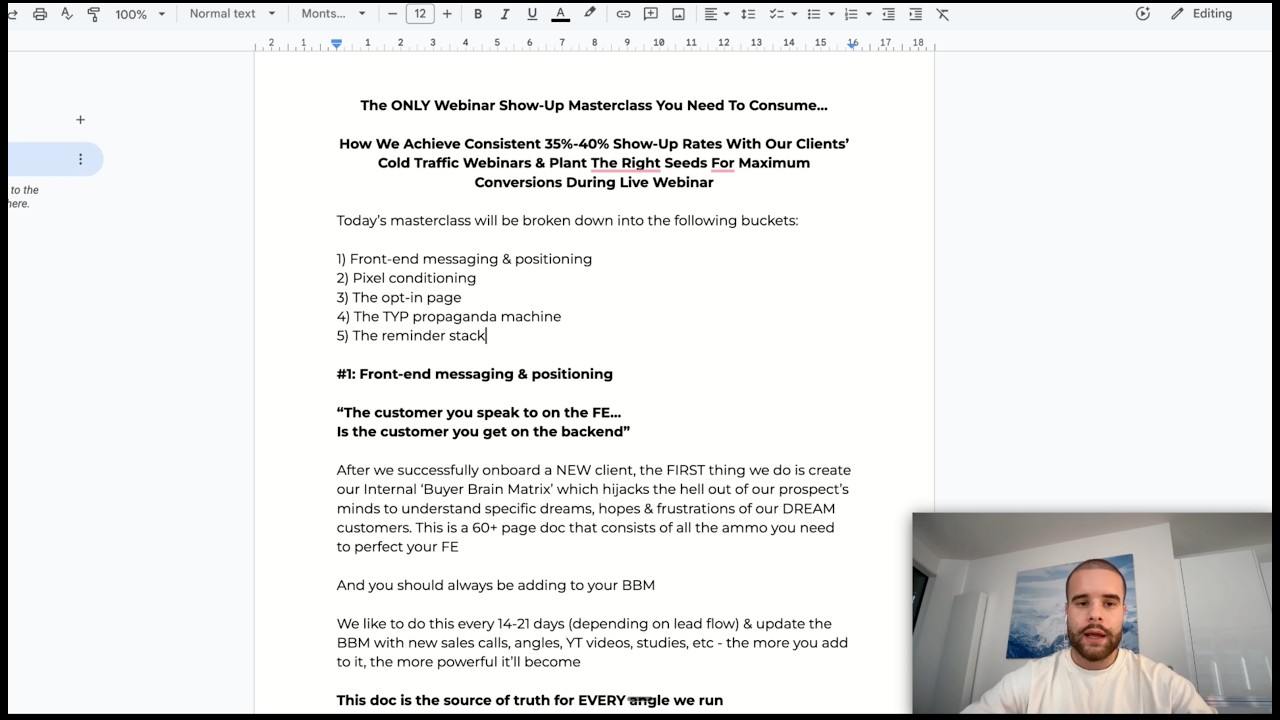
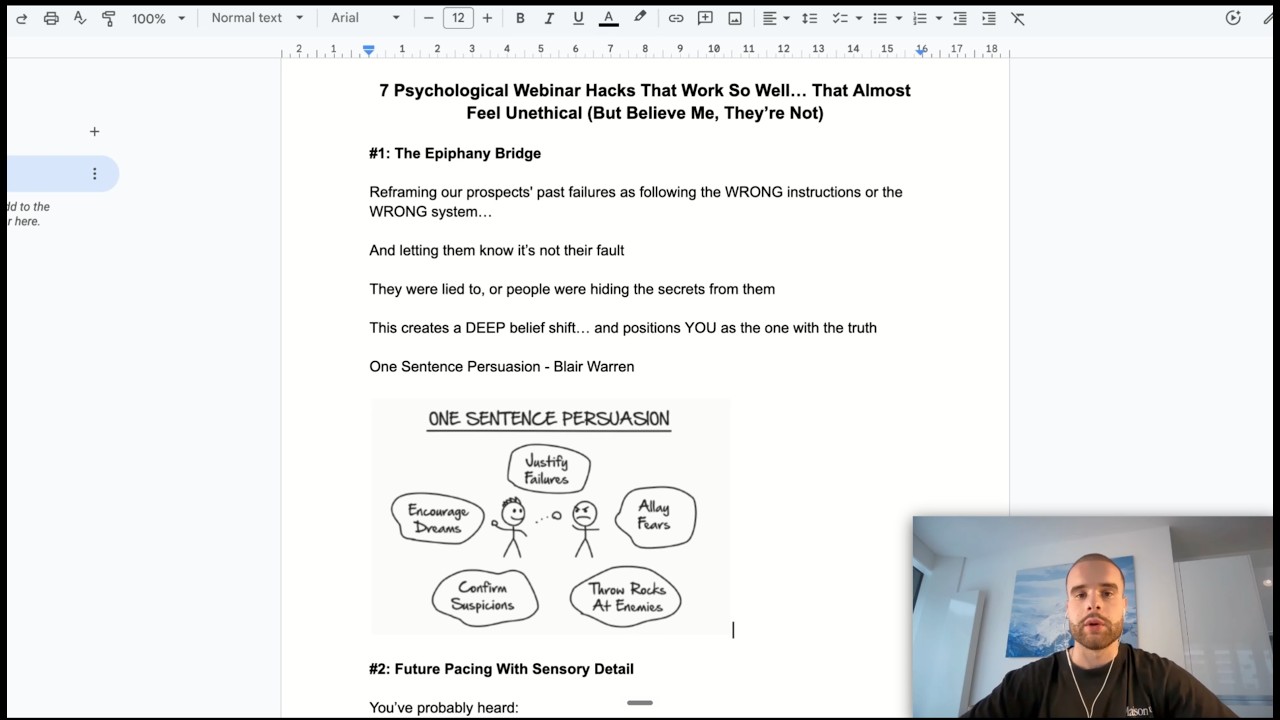
7 psychological webinar hacks that work so WELL... that they almost feel unethical
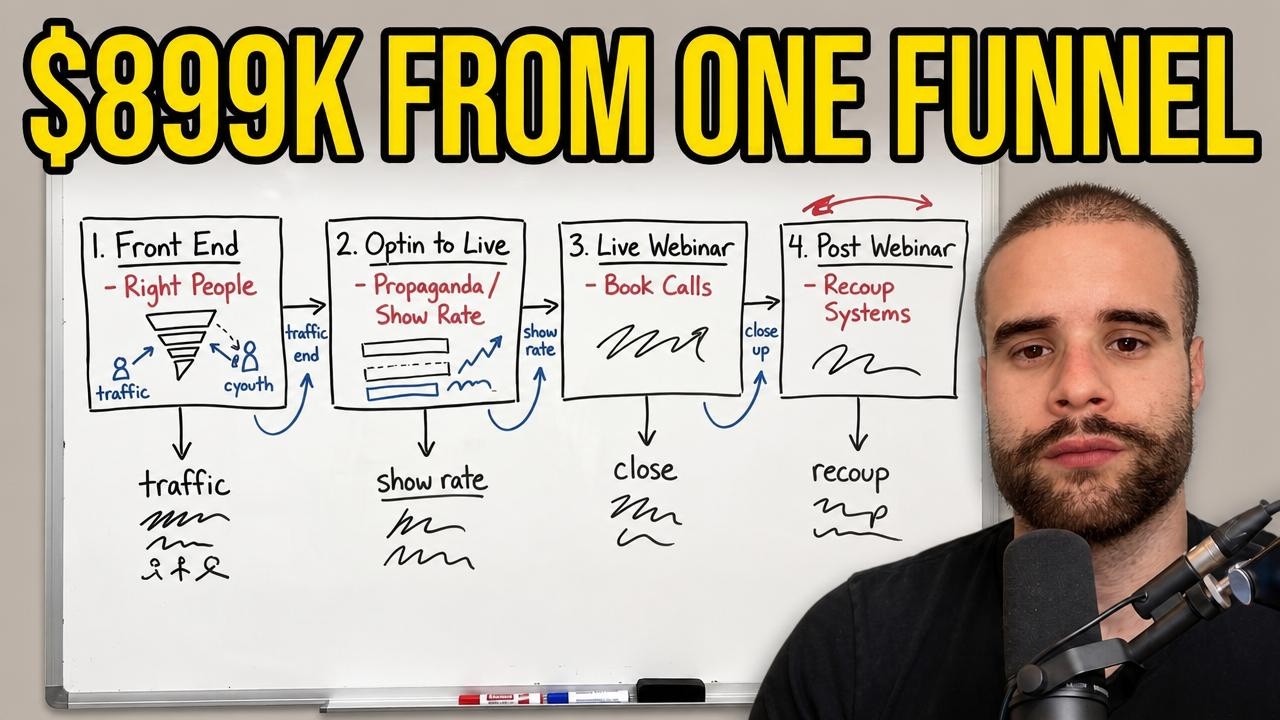

The Simplest Meta Ads Creative Strategy That Actually Scales In 2026 (1 Winner Into 40)
The 4 pillars to scale your info agency with LESS ($1.7m/year in 12 months with first agency)
He Sent 920,000 Cold Emails Running Outbound For 110+ Clients (The Unfiltered Breakdown)