7-Figure Marketer Discusses Funnels, Meta Ads & Scaling An Agency

Maciek Lipa built a seven-figure agency by starting in e-commerce email copywriting, then moving to info products and coaching. He uses webinar funnels with low-ticket offers that feed high-ticket coaching, runs Meta ads for traffic, and structures deals as either build-outs or profit-share arrangements depending on client fit.
Chapters
So about a year ago I was scrolling on X or Twitter or whatever you want to call it, and it was when the growth operator trend was going mad. So Eddie Cumberbatch, everyone starts talking about partnering with info agencies and taking school percentages and stuff. And I came across a video from David Hunter and he was talking about how growth operating is actually not an easy business model. And he also said that there were only two other people in the industry who he knew who had done it successfully, and that was Ben Bader and the man that we sat here with today, Maciej Leaper. Welcome to the Progress with Us podcast, bro.
Welcome on. It's a pleasure to speak with you, to be here.
So you have. You were kind of doing growth operating or whatever you want to call the unique mechanism before it became a bit of a mainstream biz op course and people started pushing it. You started off with a direct response e commerce email marketing agency, am I correct? So you started off with that, right? And I know that one of the things that you are massive on is skill accumulation. Talk me through your process about how you got started with the E comm stuff and how you accumulate the skills to then get into the info agency.
Great question. Yes. So in terms of growth operating, of course recently has been like an upsurge. Like there's so many of these people entering the industry and when we started it was in 2022 and in 2022 no one in the bio had iscale info or like growth operating, nothing like that. So it was a lot easier signing deals. It wasn't as commoditized, that being said. And but before info, I was of course in e commerce email marketing and I of course read the traditional books, of course all the cashmere ties and Claude Hopkins and things of that realm. But I learned the most honestly from practicality. So I started off as an e commerce email copywriter. I had like a decent client portfolio and then just me writing daily for like five to eight hours a day. I was kind of like immersing myself into what makes great copywriting. And simultaneously when I was writing for brands, I was kind of like figuring out is like what are the big writers doing in the industry and just kind of like swiping their thinking processes, you know, because I believe in, in order to become a great copywriter, direct response marketer, it's not so much more about the books you read, it's more about the exposure, like the sales letters and things of that room that you read. So I believe copyright is a language and the more you expose yourself to the language, the better your skill accumulation is, you know, so it's something that I make a daily non negotiable and exposure is the best way to broaden the skills.
So what was your in to even becoming an E comm copywriter? Right, because everyone has like. So for example, I bought Cardinal Mason's course on a webinar and that was my in. Right, so you would have been 21 in 2022.
2021, yeah.
Like were you kind of like working a job at the time? Had you considered going uni and like what was your, what had you seen online that made you think like right, copyright is the avenue that I want to take.
Yeah, great question. I mean before even copyright we could take a step back. I was actually in E commerce so I like a drop shipping brand but even at the time I had no idea what I was doing. I was just, I saw like a big competitor in the industry that I saw and then I just bought their products, saw how they done the email automations, how they've done their front end product pages, the ads. I kind of ripped them in a good way of course. And then I just scaled that store like I was like 18 at the time. I scaled that score to like 30k a month in sales. But then since being in that e commerce industry of course didn't learn the E mock up around like a lot. So that's when I kind of transferred into freelancing for brands. So I can kind of broaden the skill sets. But if we take it a step back is the brand then I didn't understand direct response then. So I transferred into of course picking up on the skills and then started fulfilling for brands. So that's kind of the journey in a nutshell.
So you didn't like you weren't part of a program or you didn't buy a course. It was kind of. You tried the econ for yourself but then realized that you needed to learn the direct response stuff first.
Correct? Yeah, I mean the first guy that kind of exposed me to the industry, I'm not sure how you pronounce his name. Gabriel St. Germain. And it's like a OG Shopify drop shipping guy. Like he made like breakdowns about e commerce stores to like really sophisticated at a time. Not sure what he's doing now, but he kind of exposed my mind to what's possible with online business and he inspired me to start a Shopify drop shipping store. And in terms of copywriting. Yeah, just curiosity and then me of course, knowing that is so crucial. And of course Twitter as well, it kind of boosted that edge as well.
Cool. So I mean, kind of past that point. Then what initiated the transition into the more operator side of things? And how was that for you? Because I guess it's kind of going from something that's very targeted, one specific area to a little bit more broad. A lot of different processes, a lot of different things that you're having to do. So what was that kind of transition like for you and what initiated it?
Great question. With of course, the ecommerce, email marketing. It was very principle driven. It was very direct response driven. So when we took the transition into informarketing, we kind of understood the principles it takes to get results, you know, so it wasn't really like a difficult transition. But the transition came just seeing the opportunity with my first two business partners.
Yeah.
And we just saw the opportunity to partner up with coaches and things of that realm. We started initially with fitness coaches. Okay, cool. And then we kind of ascended. So we started off just with basic email list management and if you offer that now it's like a huge commodity because AI has taken over, right? Yeah. So we started with email list management and then these clients, they were running like webinar funnels and all these funnels and then we had to kind of learn these funnels in order to like even make a lot more cash. So as I mentioned, it was just through exposure, see what our clients done and then just learning along the way.
You know, bro, I feel like, you know, with all the copyright. So I started off obviously, Cardinal Mason's webinar, right. Bought coffee, mba and he's saying like, you know, you can get paid five grand a month to write three, three emails a week for people. So I was thinking like, right, emails, am I in? So at the start I was just writing. I did a similar thing to you where for 45 days I just wrote an email every single day. I just picked like people in the industry I'd want to write for, send them samples, etc. And I remember when I got my first client, you know, I thought it would be as simple as, right, I just write Google Docs, I just write copy on a Google Doc and I just send it to them. And it's like, well, no, but then that is where the skill accumulation started. So I guess for you probably, you, you probably manage the email list similar to me. But then it's like, right, can you put the automations together? And then when I learned how to do the Automations. It was like, right, can you put the funnel together? And then once you put the funnel together, it's like, right, can you write the vsl? And then you become. And then you kind of ascend, like you said, into learning the different parts of an info business. So when you were doing that email list management, right, I've heard you put out tweets and say that you were writing emails every or you were doing client fulfillment seven days a week for what, a year and a half, two years, five years?
Like every single day? Yeah, yeah. Email list management, deep in the trenches, just writing.
So what's interesting about you, right, and especially your agency is that, you know, the natural path of an agency owner, I feel like, other than yourself, you know, the average path is agency gets to a point where you don't really want to scale it anymore. You see the info or coaching or a done with you is more scalable and then you go all in on that. You haven't done that, right?
Why not?
Is my simple question. Why have you chosen to focus all of your energy on the agency as opposed to going all in on the done with you?
It's a crossroads. I'm at daily. I know if I prioritize the coaching program, they're done with you. I can go full guru mode, go Dubai, rent out some cars and just create content and drive traffic and make cash. But the agency is the main puppy. I believe if you fully transfer to coaching and you're still not actively doing what you teach, you lose your competitive advantage in the market. And the fact that we have got a coaching program that complements our agency and the coaching program results just excel because of that, because we're still actively testing things for clients, we're adapting to the market and like, as, you know, like, what works, what worked. Apologies a year ago doesn't mean that it will necessarily work today. So you constantly need to adapt, you know, and the agency is the main puppy and we are getting like a lot of traction for it. And it is a fun ride to be in, you know, especially when you work with clients that treasure expertise, who you help scale. And of course, if you've got like a good partnership deals in place as well.
How do you find that kind of balance then between, you know, actually running the agency and the coaching? And do you ever find yourself kind of leaning towards one or the other or how does that balance look for you? Because I know even maybe within like our circles and a few people that we spoke to, you know, there's always people who Might start of the agency, then end up leaning this way. But it can sometimes be a little bit of a zigzag effect of not knowing which one to fully commit themselves to or be able to balance it equally.
Yeah, another great question. Yeah, the agency is the main driver. That's where the majority of my attention goes. Because of upside potential and scalability. And of course the coaching program has scalability as well. But we see like a lot more long term potential with the agency. Like right now we're of course even thinking into getting to like long term publishing deals, you know, and if we prioritize the coaching program, we won't be able to do that. So the main vehicle is the agency and the coaching program. It perfectly complements that now.
So how is actually running the coaching program the done with you and the consulting offer helped you with the actual like implementing the done for you stuff for your own clients?
Yeah, great question. So we've liked the done for you. Of course we're kind of exposed to our own offers, our own clients and things of that realm. But with consulting clients, especially because I'm the one that's hands on with reviewing a copy that's like something that we do inside a coaching program and overviewing other people's offers, it's kind of exposed us to what other people are doing. And the easiest way to actually improve your skill is to kind of teach someone else to do it. That may be at like a, like a lower level to you, you know. So I improved my skill accumulation a lot just through exposing my mind to what other consulting clients are doing.
Mm, cool, man. So I mean, one thing that I'd like to kind of run back to as well as you talked about your kind of daily non negotiables and obviously that was kind of more based around like the copyright inside of things. How would you say that your, you know, day to day, your maybe daily non negotiables now have changed compared to back then, if they have or how does your day kind of structured compared to then and now?
Yeah, so when we started the agency, of course we were in like a different stage. We have as much name association, credibility, things of that realm. So that's why we were forced to be in the fulfillment trenches. Yeah, I don't regret the phase because the phase has improved our skill and if we delegate too early, we wouldn't know if the delegated person is doing a good job. So previously it was a lot of fulfillment, a lot of learning, a lot of kind of exposing our minds to what's out there now it's more of I'm that face of the brand. I kind of attract the deals and I'm responsible for growth because behind the scenes at our agency we have got a fulfillment partner, absolute killer who of course fulfills effectively, you know, so I'm just responsible for the sales, the marketing and just putting our name out there to bring us the deals and reach the goals that we want.
Cool man. So I mean kind of delving into that a little bit further then what would you say your day to day actually looks like?
It typically is of course my newsletter. That's the main priority. So when I wake up, the first thing I do that's on my mind always is open a fresh Google Doc and whatever's on my mind. I write like I don't even come up with ideations. You know, like when I'm on my laptop, an idea would spring to mind and I would kind of write it. So I don't schedule newsletters like a week before and things of that realm I write in the morning. Gets my creative juices flowing. So that's the first thing, my newsletter after my newsletter is done. The second most important thing is client KPI and conversion economic maxing. So I'm deep inside our client accounts. We create advanced looker studios that display all key KPIs from front end to back end. And if I notice a leak and pipe happening, I'll consult with my fulfillment partner and we immediately fix that bottleneck. That could be a customer acquisition cost, opt in rate, whatever the metric is.
Right.
Then includes of course the KPI maxing, client check ins. And then my second proportion of the day, it typically consists of new business.
Yeah.
So that's more tailored towards the YouTube ideation, the personal branding, taking sales calls, setting up strategic partnerships, reaching out to people in my network to kind of for like growth. And that's what my days consist of. Of course they can be random. I'm like a spontaneous guy. Things come up like a client request, a new launch, a new ad account that needs to be unbanned. These things come up but like from like a focus point of view and those are the main needle movers.
Yeah, that's fine.
Something I want to sit on for a minute if that's all right. Is the actual operations of the agency. Right. So you started off the agency with business partners, right?
Correct.
What did the, what did the kind of spread of skills look like when you first started? Because it's something that you know in a business partner, let's Say for example, with a, with an info agency, for example, I would say that maybe you have someone who's kind of like paid media and copywriting and the funnel side of things and then maybe someone who is more sales driven, who can manage the sales teams with. What did the split of skills look like between you and your business partners when you first started?
Great question. And when we started we were kind of at a foundational level, so we didn't really understand what makes great business partners. When we started the first agency, we were kind of like this opportunity sounds good, let's go three ways, you know. But at the time, what was complementary? It was me and one of my business partners were more fulfillment focused and like high level strategy and then the other one was more legion and acquisition because he came from that kind of background. There was complementary skill sets. But now my stance on business partners has changed like a lot since then. You know, like I think when you start you kind of just rush into business opportunities because you like each other and then sure, let's make some money, you know. But yeah, my stance has changed a.
Lot in terms of, I guess then you know, the obviously business partners. Something I wanted to touch on is like the hiring side of things. And for you then personally, when do you think is kind of the perfect time to start hiring within kind of the info space? Whether you're an agency owner or you've got a product yourself, at what point past maybe potentially just having someone doing operations, when do you think it's time to actually start building out a team?
Yeah, this is a mistake. I think many info agency marketers make is they think that they need to delegate too early and then they haven't gone through the skill accumulation phase. We've had like 1.5 to 2 years without hiring. Like I think we scaled it like I don't know, it was like 85, 90k a month with our agency. Not bad. And then I was still writing daily emails. I was in activecampaign coming up with the ideation, coming up with the big ideas. But that gave us an edge because when we decided to hire it was like a lot easier. Yeah. And so in terms of hiring, I don't believe you. I believe it's a big mistake you detaching from the business too early. You know, like even if we are like 2,300k a month, are we still very hands on within the business that of course the focus changes. I won't be doing fulfillment, but I'll be doing like overview to ensure that the clients are happy, you know. So I think the first high that you should make is of course depending on your vehicle, depending on what you offer. But of course when you've got like a decent client portfolio, like at five, six partners, workloads kind of getting hectic, you can kind of come to the conclusion.
Right.
But don't detach yourself from the business too early. Is very, is a very big mistake that many people make.
Yeah.
I think it causes their downfall.
And I guess kind of for anybody who's watching, who isn't as familiar with the space, then, you know, what would that potential kind of hiring structure look like, you know, within an info product? A lot. I'm sure a lot of people are curious. What does that structure look like? You know, obviously most people see the face of it. Maybe like Iman, you know, you see Iman, but he's got a whole team behind him. And for anyone who's kind of fresh, what does that team actually look like?
It depends on the scalability of offer. You know, as an agency, of course, you've got fulfillment partners, you've got people that do the funnels, you've got back end managers. As an offer owner, the highs you make are like a lot more different because now you need the sales reps, the setters and like operators and it gets like a lot more complex. You know, I think of hiring the best thing that you can do is on the front end build your personal brand.
Yeah.
Like I signed my fulfillment partner who's an absolute killer through like through my Twitter. Like he was following up like five, seven times. I want to jump on a call to him, not like with him. My intuition just told me that he was the perfect guy for me.
Yeah.
You know, so I think hiring gets easy. If you have got reputation in the industry, people naturally gravitate to you in a good way.
Yeah.
And. But yeah, that's what makes, that's what's made hiring easy for us.
What about. So do you know the people who come into the coaching program? Right. Obviously there are going to be people in any program who are more successful than others. What are the skill sets that people are coming into the program with that allow them to succeed quicker than other people?
Yeah, great question. Do you know, it's not necessarily more on a skill tied, it's more about the character tied. And because I've got people inside my culture program who are absolute killers with direct response. Their copy is insane, they can write insane, their flow transitions, all of this is insane. But then they've got leaking, perhaps in their character traits, they may believe that they're not worthy, they may believe that they're not able to sign these clients. And when you program your mind with these thoughts naturally over time, of course it's going to affect your actions. The people inside my coaching program who see the best results, they've kind of got a mentality that is like, bet we'll figure out anyway. You know, it's like this client leaves us better, we'll figure out anyway. You know, this launch flop to bet we'll figure out anyway. So I think it's more the character thing, like driven, like even our cause we are heavy into the character traits, like rewiring your belief systems to believe that you are worthy because it's all, is all internal. It's something that I picked up on like a lot of, I thought it was mainly skill. It's not mainly skill, it's mainly character and limiting beliefs. So we touch a lot on that inside the program.
Yeah, especially I think with the signing bigger clients thing. That's a big thing. You know, like if you sign, let's say like a fitness coach who's got 10k followers and he's selling a coaching program, you can just, yeah, you can just flip it like that. But with the bigger people, you know, I found that, you know, if people follow some of my clients, that's always what I'll lead with. With the outreach it's like we've taken this client and immediately you're getting a response because you just know that the name association is good enough for them to at least like even open the DM in the first place. And most people coming into the program by themselves or with a business partner.
And we have got a few business partners inside but a majority of them are individual and they are as you mentioned previously about the fact that I don't post content. I've got like a newsletter I discuss like sophisticated ascension demonstrative funnels, webinar funnels and scaling offers. You know, the people that we bring into the coaching program, they understand that school accumulation is important. So the questions that are asked, they are high level people. Don't come in and ask about a stupid subject line or I don't know, some foundational things. It's more advanced, it's more bigger picture overview and people are seeing really good results inside.
I mean you spoke about the kind of limit in beliefs and how it wasn't something that you always, you know, fought that way. So what was kind of that pivotal moment where you said where you kind of thought. Okay. It is potentially a mindset shift. It is these limiting beliefs. And is that something that you had to overcome yourself or what was it that kind of made that switch for you?
Yeah, I had to do it myself. So even during our first agency, even though we scaled to decent numbers, I always had a subconscious feeling that I wasn't worthy of the success that we're getting. And I think you need to develop your worthless, your sense of worthiness inside like a market, you know. So since I kind of picked up on that, just improving my worth and just believing that I am able to get the success that I want, you know, because I think many people, they self jeopardize their success, you know, they don't outreach to that big client because they say I haven't got a skill yet or they don't do this because they say that they're not ready, you know, but it's all, it's all limiting belief tide. So I have gone like on a big journey to overcome that.
And what I guess were some things that helped you overcome that. I know a lot of people say it comes down purely to, you know, actually just taking action and putting in the reps and know you go over. But for you yourself, you know what, what was on a personal level, what do you think it was that kind of helped you overcome these things? If you don't mind sharing that, of course.
No, I think it's of course action. I'm already like, I'm a relentless action taker. I like working a lot, 10 to 14 hours a day, every single day. I love that shit. And. But what's helped me a bunch is understanding that when you're working, you're working and when you're not working, you're not working. And meaning I was so attached to business that even when I was away from business, I was still thinking about business, which is kind of strange. But the moment I detached in a good way from the business and like when I'm present, like let's say I'm out with my family or whatever may be I'm in that moment, that's helped me a bunch. So it's kind of like finding the balance between business and of course, life. At the beginning stage, there is no balance. You need to work like a motherfucker, you know, and. But when you reach a certain stage, that differentiation, it becomes like a lot more important.
Yeah, I want to stay on the, on the agency side of things, if that's all right, for a minute. So Ryan Clogg, right. We were talking about a minute ago. He's kind of come on doing the video a day, sharing high level stuff, interviewing high level people. And one of the things that I've really picked up on him is his kind of involvement in the strategy of the offer as opposed to just like so for example, taking care of the paid media or writing the webinars or writing the VSLs and the marketing tech and everything like that. With your agency, how much involvement do you have? Like let's say you're so the offer owners that you work with. Right. What does the split look like between the tasks that you're doing for the business and the stuff that the offer owners are doing for the business? And are you kind of consulting the offer owner on things they should do to do with like product for example or monetization models?
Yeah, it does depend on the client that we bring on board. And one of our agency's philosophies is get the clients the best results possible with the least amount of time on their sides. So we do like to take care of like a lot more moving parts. So we do tend to consult them on these cover like on these avenues. But our main agency offer is honestly paid media funnel backend management and consultation with the sales team. And if necessary, if you want to be a go giver and if you want to improve your retention, then we'll of course consult the product. If we work with a client and then we're getting them insane results. But then we know it's like let's say a leaking pipe in their onboarding, for example, and it's not in our deliverables. We'll still bring it up to them. We'll still kind of give them the initiative to go ahead and, and improve that, you know, so we always deliver even if it's not in our delivery scope.
So on the. You are primarily right. You know, when you think about info agencies. Right. I feel like most people either come from a copy and a marketing standpoint or most people might have been a rep and then they go and kind of like manage the sales team and that side of things. I was speaking to an operator the other day who started off as a rep and he's kind of learned the marketing side of things in the paid media. What's your involvement with like the sales side of things? Because I imagine that you're primarily marketing based, correct?
Yeah, so. And because the majority of the clients that we bring on, they have got established sales systems already in place, you know, so they have got a sales manager who kind of takes a lead and ensures good KPI sharp rates, closing rates, and we just drive traffic. So the closing so that the closers and reps can of course close them. We have been put in opportunities where we need to of course bring on these settings and closers for clients. We have got the network to of course take care of that, but we just mainly focus on the marketing because that's where we want our agency's core vehicle to be. It makes our job a lot easier because then we're spreading ourselves too thin. Like sales and marketing, they're two different departments within info product business. And we want to become the best on the marketing sides. So we need to now focus on sales. It's going to kind of diminish the results on the marketing, you know, so we do consult with team members. We have weekly sales and marketing chats. We overlook KPIs, we rewatch call recordings if necessary to improve the marketing. But a lot of our attention does go towards the marketing.
Yeah, that was where I was going to go with that because something that I found is like really helped me on the webinar side of things is the communication with the sales team. Because I find that the sales team are on the front lines, right? The closers, if they're taking five, six, seven calls a day, then they know the customers and their backgrounds better than almost the offer owner does. So if I'm just speaking to the offer owner and the offer owner is kind of like doing the content and you know, thinking about YouTube videos and stuff, whereas the sales reps are actually the ones who know the customer well. And what I was going to say is like, what does your communication look like with the sales teams on the offers and how much kind of not involvement, but like what does the consulting approach look like between the sales team and you as the marketers?
It's very hands on and I think it's very critical. I believe as a marketer, if you're a operator or whatever, the unique mechanism, growth operator, direct response, marketing, founder, whatever, um, you go with, you need close communication from front end to back end. You need close communication with the media buyer, the guy who does the funnel, the guy who does the webinar, and the sales team. Because if you don't, incongruencies happen and the funnel breaks, you know, so with all our clients, we do have close communication with the sales managers, the people that do the ads, to ensure maximum congruency, you know, because like even from the ad, if someone calls out a specific icp, the Targeting changed on the front end, the sales teams are not informed, then they're going to jump on calls with people from like a different ICP is new objections, is new combats, is very difficult, you know, so you do need the congruency.
So from a, from an agency standpoint, right, I want to get onto webinar and low ticket funnels because I know.
That that's the demonstrative funnel.
The demonstrative. I know that that's your guys, that's your um. Right.
Yeah.
But how important do you think it is for an info agency to have a um? Right, because I see. So for example, go on someone's Instagram or you go on their Twitter scaling info and it's like, cool, what are you doing? You know, I mean like when I, when I read your newsletter and you're sharing your KPIs and you're showing what you're doing on the front end, the back end, how you're sending people, like the webinar video that you made, that was really useful for me especially. How important do you think it is for an info agency to actually have a um in terms of what they offer?
Not too important. Let me explain. I think in the informeter industry it's all about name association, credibility and status. And you attract good prospects even if you don't have a landing page or a um just because of the previous results that you've got. You know, I think when we started was kind of different. Now of course, there's so many of these growth operating minions entering the industry and the power of a um may be more critical. But I believe the way that you differentiate is what I'm saying is like the skill accumulation. If you've got no clients, showcase your competence to a prospect that you can get them results through free work. Go give max with your acquisition and then they'll trust you over all these guys who've got revolutionary freestep um systems in the bio. You know, I think it's just a marketing fad. I think the main thing that matters most in the industry is results. If you showcase a result of you generating, I don't know, from scaling an offer from 0 to 300k a month, that means more than the revolutions funnel system for scaling info.
Yeah, yeah. Like Joe, with my webinar stuff, I don't say that I've got like a. I don't call anything else. I'm like, it's a, it's a webinar challenge funnel with a guarantee. Right. That's just what we Do. How did you land on the demonstrative funnel and the webinar funnel as the two things that your agency kind of specializes in?
Yeah, great question. So with the webinar funnel, we've been immersed in that funnel since 2022 when we done our first agency and we signed our first big client through a Twitter dm. And at the time he was doing his webinar funnel, we saw like, love training. We were like, what the fuck is this? I had no idea what this shit was. Like, it's a new game for me. But he was doing these live trainings every Sunday. And then you joined like a, like at the time it was like a webinar jam room. I was like, what's this shit? You know? So we had to learn the webinar funnel through there. And that client, of course, by God's grace, he kind of referred us to more clients also running the webinar funnel. So the webinar funnel, it came through, of course, the first big client. And the demonstrative funnel, it actually came recently through a publishing opportunity that we received for a business acquisition offer. And the client brings up this concept about of course, getting calls on the calendar and sending like a low ticket. I'm like, interesting, you know, so you sell like a low ticket product through paid ads. As soon as they buy, you present them with an opportunity to book a call. And then we kind of was trying to come up with some cool names, some cool ums, because we can call it like a low ticket funnel, but they've heard that shit before, you know. So the demonstrative funnel, the way that we got the name, it was kind of like you demonstrate your credibility, authority and the results you can get with your low ticket product. And when you low ticket product gets results, then you can ascend customers a lot easier. So the demonstrative funnel, it kind of came this year? No, no, like late last year actually, like November, December time.
So I'm fascinated by the demonstrative funnel because I feel like that. So one thing that I see most people do is, right, they get a growth operator, growth operator sets them off. A VSL funnel. Right, Organic traffic. Whereas with a demonstrative funnel, you are, I assume, primarily pushing that funnel through paid advertising. Right. How do you go about putting together a low ticket product to make sure that you give enough value, but you don't solve the entire problem to make the high ticket seem like you don't want people to think, oh, well, I've got this low ticket thing, I don't need that. So how are you going about putting together these low ticket products for people?
Great question. I wrote like extensive newsletter editions on this topic, but we've got two philosophies is of course the low ticket product has to get your customers a quick win and then you need to ethically gatekeep. There's another, um, I coined ethically gatekeep. Some offer components or your high ticket makes sense. So our low ticket products, the way that they look like is typically they're like crash courses that they can go over and then they can get a quick win. And here's where people go wrong. They think that your low ticket product, it needs to get a quick tangible win. The win, it doesn't need to be tangible. The win can be emotionally driven. If a customer buys our low ticket product and then they go over the deliverables and then they think to themselves, oh my God, like I can do this shit, you know, like, like my perspective has shifted. That's a win in their eyes. And then it's easier to get them on a win. No, to get them on a call. Apologies. So yeah, they're very simple. Typically crash courses add some bonuses there for perceived value. But a lot more focus on the high ticket. You know, that's where the differentiation is. That's where the handheld elements are and that's where to accelerate successes.
And what did the economics look like on that funnel? Right, because I know that you've spoken about this before, that the goal of the low ticket is not to have the low ticket be profitable. Right. Day one. So what do the economics of that funnel look like?
Yeah, so we actually scaled like a demonstrative funnel. It was in like an AX robots, 100% cold traffic and we were only liquidating 40% of our ad spend. That means for every $100 we spent, we only make back $40. People typically, they will be emotionally reacting saying oh, I'm not profitable, I'm going to stop my ads, I'm going to stop this shit, go to like a new funnel. But they need to understand that you don't make profits because when these low ticket buyers, they see the opportunity to book a call, you make profits on the back end. Like we had like a 10k offer on a back end from these low ticket buyers and that's why we had like an ax roas, you know, so the goal is not to make profits. We aim for with our clients like a 40 to 70% liquidation rate and of course a really good low ticket to book call essential rates, you know.
You've worked with a lot of people in the info space. What would you say currently is probably one of the most like overlooked levers of growth that people you know may put to the side or they don't actually look into and that's you know, around the time at the moment as well.
Great question bro. I think it's product. I think it's product people. A lot of these info guys especially, I don't know, I'm not going to name drop anyone but like I don't know these people that are mass market B2C, they run out Rolex day dates, they go shopping, Dubai more, all these things. Yeah, they're very marketing driven and they neglect their product and then their growth plummets. Yeah, you know I think the way that the info game is going because of how sophisticated and how aware the market is, the product differentiates you, you know. So I think if you put like a lot of focus to your product like actually get sick results like your scale, like it's like it's bound to happen, you know. So I think product and I guess.
You know, moving on from what you just said there as well, where do you see the future of the info space? I'm curious, you know in terms, I think there is kind of a split of people who are there cash and then also people who are there to help their clients actually truly grow with their clients and themselves and not just be on a cash collecting mission. Where do you see the two and just what you see the future for info at the moment?
Yeah, I think a lot of people, they have got that quick cash mentality and I think the people who will succeed is the people with a good why behind why they're doing it is like of course causing an impact like actually changing people's lives. You know even like as an online coach, the best clients that we've worked with, they just say like I want to help so many people because I was once like them and they actually firmly believe in that, you know. So in terms of where the space is going, I think there'll be a lot of short lived people entering the industry. They see that as popping, they want to launch something, they make a quick cash, then they leave and that'll be happening a lot. And but yeah, the people who last other people who of course skill accumulating and they actually have good whys behind it, you know.
Yeah, 100. And in terms of the why then I guess for you personally what was the why? Why the online space? What kind of drove you into this in the first place.
Yeah, great question on like a deep level was of course like the family giving back and stuff of that realm. But now I actually wrote this when I was, I don't know, I was making like 750 pound a month. Like I was brokers, you know, But I even wrote it on like a notebook. It was kind of like help other people succeed with copywriting. And this was in like 20, 21. And like now knowing that I've helped people go from, I don't know, like 0 to 40k a month, like 15 to 115k a month with like the principles that I picked up on, it was actually like super sick. Because like even back then, like honestly copywriting, I wasn't making money. I was just grinding away, like working a lot. It's like now knowing that I can do that for people, it means a lot for like, I love that shit. Even like a consulting client, if he messages me, I don't like late at night, he sends me like a voice note three minutes long and I've got my phone open, like I'll reply to that shit. It's like I was kind of once in that position and knowing I can help someone escape that position to better their life, it means the world, you know. So yeah, that's kind of my.
Why for people who are in a. In a similar position to you at the beginning, then how important do you find, you know what? Everyone likes to be there. I was in the trenches. That kind of whole phase of just putting your head down, maybe not making money, actually accumulating a good skill set and maybe on from that. How would you say to actually find your own skill set?
Great question, bro. I think it does come back to trying a lot, seeing what your mind sticks with. For us, it was kind of like an intuit, no, like an intuition, you know, Like I've always loved writing, like even when I was young is like. I was like. I'm not like. I'm not sure if this is weird, but I used to love poems. Like in English literature. I used to like, like analyzing them poems and like the vivid imagery did like the transitions and things of that realm. So I knew that copywriting was for me, but it's kind of, of course, character trait, you know, some people, they don't want to focus and write. Some people are more aggressive and outgoing. So maybe cells is for you. You know, I think it just like internal. Like I believe that you can feel it. And I think it does come down to like trying a lot of shit.
I want to do one more point on the demonstrative funnel. Right? How do you. So I know I'm here for the tactics, but I'm here for the game. That's the um, bro, that's the um. I want to pick. I wanna, I wanna. Right, okay. So low ticket to high ticket on the back end, right? How are you making sure that the sales cycle from them buying the low ticket to the high ticket is shortened to make sure that the funnel actually is profitable? Right? Because if it took them five, six months to end up ascending to high ticket, then I imagine that you would have a lot more problems with the economics of the funnel. So how are you making sure that they are ascending quickly from high ticket to low ticket?
Great question, bro. Now, with some of our clients with different niches, the sales cycles can be longer. Like we've been in situations where a client bought our low ticket product, they went through it for like 45 days and then they booked a call and then they pay for 10k. You have got them outliers. But the way that we minimize the sales cycle is through making the low ticket product digestible and having good product consumption. So it's very easy to consume. They receive product consumption emails. Step one, here's what to do. Step two, here's what to do. You have got like three to five days to consume this. Then we put them in a calendar within that bracket. Then when they're on a call, by the way, they're so fucking sold. It's so easy. Like we signed like a decent amount of hard to get the other day and all of the people in a sales call, they said, I went through this low ticket course. I've got the notes, here's my notebook. They took notes of like the low ticket course. So make it digestible. Actually make it a sick product. Then like ascension is easy.
Yeah, I see the similarities between that and the webinar funnel. Because with the webinar funnel, when obviously if you. We've been booking calls for webinars recently for high ticket as opposed to pitching on the call. But I am going to try the, the low ticket pitch on the call and then upsell to the consulting with one of our reselling clients. Yeah, bro, I'm excited to do it. But we've just been booking calls, right? Organic monthly webinar book calls. Book two weeks of calls and they're just paying, right? And I see the similarities between that because once people have been on the webinar, they just like, they just turn up and Pay like the sales team just say like it's a cash collection call. And it is just because you've, you've demonstrated that value upfront, you've shown them you can solve the problem. And if you can just write the webinar script well enough and actually get them there in the first place. Like I implemented the voicemails as well.
Yeah, nice.
Yeah. Hard.
Don't ring us voicemails.
Yeah, bro. Yeah.
I love webinar funnels as well, man. They're super fucking fun, man. Like when we do like a webinar funnel, no matter how late it is, like I'm inside that webinar jam room, like moderating.
Yeah.
I'm just overcoming objections and shit. And like if someone says something bullshit, I overcome the objection. So like, of course they can book a call like pay for the program. But webinar funnels are super fun. Super fun.
Yeah, they are. And I feel like that's another funnel where it's more. But I mean, every funnel is economics based, right? But with the webinar funnel, when you have the metrics, you can almost reverse engineer a number you want to make from the webinar and be like, right, well, what's the conversion rate on the webinar going to be? What's the show rate going to be? What's the cost per lead going to be? And you can almost reverse engineer the revenue goal to the amount of ad spend that you want to put into it and then just kind of like fix the gap in between. So yeah, I enjoy that. I want to go with how do you think? So I've been thinking about this, right? How do you think info is going to change over the next few years with AI getting better? So do you think info products are going to have to start implementing a lot more kind of tools into their programs and things like that, or do you think people are just going to keep it strictly info?
Great question. I believe there's an uptrend for AI right now. It's like a huge demand, right. And if you incorporate AI into your messaging and do offer components that are AI tied, people are gravitating towards it. So I think it does help improve conversion rates. We haven't split tested it, but it does gravitate people towards it. I believe a lot more coaches, course creators, they will be using AI as part of the offer stack, which is rightly so is the, is the direction that the world's taken, you know, So I don't think it'll be strictly info driven. I think even on the coach and course creator side, they'll be using AI a lot more even with the ads, or even improving their product. You know, it's like this. Like it's happening right now. You know, you can either use AI or you can get left behind, you know.
How have you implemented AI into agency operations?
Yeah, great question. So don't like a YouTube video on this, but we've got like an entire process, so we've got another um of us unique mechanism. Fine. It's like a by brain matrix formula.
Yeah. Seed is our name.
I love ums, I love differentiation. I love putting yourselves in markets of one. That's why we've done this AI process and. But this involves a extensive client onboarding, collecting a lot of assets, and then using AI, of course, Claude, to hijack the minds of our prospects to a T. Like our Buy Brain Metrics formula. We don't like a new one. We sound like a new client is about 55 pages long and it's got like a journal entry, which is a positive one, journal entry, which is like a negative one. What they think about their frustrations. Like, it goes extremely in depth. Like, I have got like a YouTube video. Feel free to watch it. But when we've got a barberry matrix formula created, then we use that to craft marketing ammo, to craft ads, to craft the sales pages, to craft email. But that's the cornerstone of everything. We make that priority.
Bro, I came onto a new offer the other day. Property offer and the kind of sales manager slash easy operator. He's the rep I was talking about a minute ago. I was like, right, I need to speak to the reps, I want to speak to existing customers, do that market research. And bro, he just sent me this notion doc.
It was Joe, I can vouch for him.
It was beautiful. He just sent me this notion doc with the journal entries. And, bro, I could not believe it. I was like, I. I was spamming the Slack channel. I was like, bro, this is the life. Everyone did this. My life would just be so much easier.
So easy. But yeah, with a pop of nicotine, right?
Yeah, bro, of course I want to talk about. And this is an interesting one, right? So you know Julius, buyer of media on Twitter?
Yeah. Like, we put it together.
He put out something the other day that I thought was really interesting. So it was like someone posted a Ben Bada video of him and Cardinal Mason in their new apartment. And he was like, need to push harder. Need to push harder. And he put, don't fall for the same PSYOP that you're meant to be creating interest as a marketer. So do you know for the, the people in the info agency, right. I feel like it's a bit of a. Do you know, when you become aware of the marketing stuff, I almost feel like you as a, as a marketer become a lot more hesitant to, to buy things, right? Because like, you know, so say for example, like the buyer brain matrix, right? Go on, tell me, what is it?
Yeah, like the buy brain metrics formula, right?
So I see that and as a marketer I'm like, it's a unique mechanism. But then I do also know that that is valuable. What do you think about that quote? I just saw it and I thought that's so good. Like, as a. So like don't fall for the same psyop that you're meant to be creating. So as a marketer, because he was looking at like other people living the life and whatever, and I just saw.
It, I thought, that's bro, that's powerful.
Yeah, it's hard.
That's powerful. That, that hits home runs. I think it's like it kind of goes back to that thing. Like you can of course be on a bench or you can of course be Michael Jordan Tuna Freeze. You know, you can kind of choose that. Like, even if you see great marketers doing things and that you're not doing them and then they're collecting cash. Like, why are you on a bench?
You know, you work with a lot of different people and the primary, you know, kind of metric that a lot of people track is just financials. But delving a little bit deeper, what would you say are actually some of the most important metrics of growth within the space, maybe a little bit further in on the back. And not just the basics that people.
May see, like in terms of like a client perspective or so in terms.
Of an agency perspective. So say for you, you know, let's say you're working with a new info offer and away from, you know, potentially just like, okay, we've cash collected 50k this month. What are some important metrics that you look at to say, okay, wow, this is what he's doing. This, this and this. As you know, again, it's something that a lot of people on the back end, my, I mean, well on the forefront, kind of looking in, aren't necessarily aware of these things.
Great question. I think it comes down to client satisfaction and margins. You know, like if you can make a client, I don't know, X amount of cash and their margins diminish it doesn't really mean as much, you know. So that's why we optimize for client profitability. We ensure that when we make X amount of profit, the client's actually making a lot of profit in like the gateway. But I think as a agency owner, what's often overlooked is of course you can be making cash, but it's about kind of your peace of mind working with the clients. You know, like we've had opportunities that we turn down. Like they can be, I don't know, 10 to 30, 40 Kmart clients.
Yeah.
And then they were headache. They were, they would like minimize our peace of mind, you know, like with the clients that we look for, of course we look at their business if the offer is good and stuff. But we are really look at their character traits and what inspires them. You know, like our best clients, like they're white, like they just wear like a black T shirt and they're like family people. They've got like children. They dated children to school.
Yeah.
I think some info guys, they're very materialism driven. Yeah. They want to go Miami brick or buy day dates money and like Dubai and like five Palm and like that. And I think if you've got that, why inherently you're only driven by money and it's not really the best why behind it, you know. So that's what we look for in lacking clients. It's more actually like. Yeah, like the character traits behind a client as well. Yeah.
Interesting. I wanted to, I want to go three more tactical things. Right. I want to talk structuring partnership deals with you and clients. I want to talk monetization models and what you are doing for clients at the moment that you're enjoying the most and what's doing the best. And I want to talk about traffic sources as well. So we'll start off how are you structuring agency deals? And I know that this is probably different now. You have the name association, the skills and everything. How are you going about structuring these deals? I know that you said that you were thinking about taking a bit more of a publishing approach going forward.
Yeah, Great question. So like our, at our agency right now we've got two core offers. One is like a build out. That's to set up our infrastructure for the demonstrative funnel, our unique mechanism which is like a low ticket book call hybrid. And then we have got like a GP deal which is retained and profit share focused. But even before we do the deals and we pitch X amount of profit share, we Kind of figure out like how much of profit, how much profit can we make this name, how much would they be taken home and how much our profit share can actually be with the retainer. Because each client like that we want, they want like we are very specific with how much they want to be paying us, you know. So we have got them two kind of offers like a build out and the GP deal. And with the build out you'll get results with that and then you may notice other leaking pipes in the marketing that they can potentially be like a GB client in the future. You know like we've had them situations but we have got them too.
So what does the build out offer look like? So are you kind of, are you building it for them and then kind of like helping them with. So Jason Wojo, he has a webinar build that one where it's like 14 days, make it profitable, build the ads and whatever and then we help you for like a month after. Is that a similar kind of structure to your build out offer where you're building them the demonstrative funnel and then for the next 30 days or 60 days or whatever you're helping to manage the ads and things like that and very similar, yeah.
So even though is a build out offer we are still very hands on. We have like a slack communication like checking calls because of course client community like client retention. But the build out it does consist of of course crafting the front end page, the VSLs like the book call pages, the email automations, consultation with the sales teams and that's typically like a 60 day period like consulting them to ensure that the KPIs are good. And then after we're going to send them if needed, you know and then we do also craft them some like front end ideation, some scripts, some ad hooks to get in front of their dream prospects.
Monetization models, low ticket. I know that you obviously have to have that as a component to the demonstrative funnel. Mid ticket and high ticket. What are you kind of, what are your most successful clients doing and what are you kind of liking the most at the moment and what's working?
Great question. I mean like people say like that they prefer low ticket over high tech and things of this realm. And by like our demonstrator funnel is kind of like a hybrid. So it's a low ticket and high ticket hybrid. That's what we've got the most joy with because we can test so many ads, we self liquidate, we get calls on the calendar but the info guys that we work with that scale past like a million dollars a month, they've kind of got a portfolio of offers that appeal to different ICPs. You know, like even for one of our clients, we did like a webinar for like a 997 offer. People were unqualified and then we down sold them on like a 497 offer. So that portfolio of offer of like offers like allowed to scale, you know.
What was the difference between the 997 and the 497?
Just like a new um. And we've removed some components but like through email, like within like 3 to 4 weeks, it's like 120k cash collected. Something like that. Just for like email promos. Hint on them. Lost leads, you know, because many people inside the CRM or the activecampaign, they've got a bunch of non buying leads that are not buying anything. And they're not buying anything because of money limitation or belief limitation. So if you overcome them two limitations and craft a new funnel, a new offer that appeals to them, you collect cash. So you need to kind of create different offer tiers that appeal to different ICPs. And that's what our best clients do.
Traffic sources. So you are primarily meta ads, am I correct?
Correct.
Have you dabbled in YouTube, Google, things like that?
Our clients, they sometimes have got teams for the YouTube and Google and we don't like, we haven't versed into that because we want to of course become the best with meta and. But apparently like YouTube is super great as well.
Yeah. Because I saw that you were Brian Moncada's mastermind.
A super sick guy. Told me a lot. Yeah, good exposure.
Yeah. So I wasn't sure if you'd kind of been there to learn a bit of the YouTube side of things.
Yeah, with Brian, like I mean because he's been doing YouTube for years, I appreciate his longevity. He hasn't changed a vehicle, he hasn't changed niche, he hasn't thought about doing, I don't know, Facebook ads or something random. He's kept consistent and with that ideology. I like that because consistency is of course very important. And I just got there because of course like his agency, if he's been doing it X amount of years, he's doing something. Correct. He's working with like heavy hitters.
So yeah, when I think of YouTube ads, I think of Brian Moncada, I don't think of anyone else.
But there's a reason behind that because he's been doing it for so many years. Right. Then all these growth will pay minions, they try to sign a client, they don't get a response with 30 cold emails center. Then they jump into the next vehicle, the next thing you know. But then there's other people, like Brian for example, or like other people I know, they've been doing this shit for four or five years and now they're seen like insane. Success is about longevity.
So name association is something that I want to touch on as well because I feel like we kind of skimmed past it earlier. What kind of. When you were first kind of running the agency and you were doing fitness coaches and stuff, how were you going about landing bigger names within the space? And how do you think what you were doing then has changed compared to what's required now?
Great question. Now there's so many growth of her minions, as I said.
Yeah.
So many of these small minions like that want to live in Miami. Brickell, as I said. Right. And. But when we started, we sort of, we kind of signed our first big name by grace because my business partner, he was doing like ghost writing for this name, you know, so he wasn't doing email list management. He was making okay money. We signed him and then by God's grace, he was kind of like a big name. He had like a sick network, you know. Then he referred us to other big names who also were making like a lot of money, you know. So that was by grace. If I had to improve the name association now, I'll do it through value stacking and personal branding for sure. Putting your name out there in a good way and not discussing service level shit, you know, actually showing competence in your content, you know, like, like Ryan Clark is a great example. Like he hasn't necessarily name dropped like names that he's worked with, like consultation, but because of the content that he's curating, people know that he's competent. So he's increasing, he's increasing his name association. It's like a byproduct, you know, comes.
Through competence as somebody kind of in the info space, then as a service provider rather than somebody who's actually, you know, selling the info, trying to make content. What do you think kind of the difference between content production should be in terms of, you know, obviously you spoke, it should be a little bit more niche down and actually be specific delving into things. But how should that difference potentially look as an agency owner, so as somebody who's providing a service, potentially, whether that's an operator, sales copywriter, etc. In comparison to somebody who's primarily Just trying to sell info. Where do you think kind of the two should go in terms of who you're targeting? Maybe that one being heading towards virality and the other trying to target a specific kind of niche.
Yeah, great question, bro. I think there are principles that are very similar. If you sell an info offer, you of course need to harness the one icp.
Yeah.
As a service provider, still harness the one icp, but I think as an info offer it is more about virality in a way. Sometimes, you know, you can still make insane amounts of money with like being very niche. If you want to go mass market. B2C, you do need some virality. That's why you see like these day in the live videos and yeah, they're doing like watches, buying all these shoes and. But as a service provider, you don't need to optimize for virality. Like I've got YouTube videos that. I've got 1.3k videos on my 1,3k views. Apologies. On my demonstrative funnel that have got prospects signed. So it's. It's like a different game. Yeah, like with agency owners, like a lot more tight knit.
Yeah.
I signed a client from a video that has 45 views.
Yeah, bro, that's what you need, bro.
Yeah. Like, and obviously you look at the channel and you think like the video's got 45 views. But it made me three grand on a consult on a consultation offer. Exactly.
And then other people have, they've got 100k views doing shit videos and they made no money from it. So you don't need to optimize for views as a service provider.
In terms of kind of the content side for you, then, where do you potentially see that going in the future? Obviously, I know in terms of like Instagram, short form and all of that, it's not potentially something that you do too much of at the moment, but where do you see the content side of things heading for you?
Yeah, like we'll be mainly YouTube driven and because I believe in YouTube, you're creating like a lot of touch points and it's kind of like a Netflix like scenario. If someone likes one video, they watch others. You're building up a lot of touch points and if they book a call for YouTube, they're not more sold on your idea.
Yeah.
And so we are mainly YouTube driven. I also like Twitter because of the prospects on there. The people on there, they are from a sophisticated background. Yeah, they understand marketing. But yeah, it'll be like a lot of YouTube content, Twitter and of course the main Vehicle is diverting those eyeballs to my newsletter where I touch them with more touch points and then that'll sophisticate so they can kind of like eventually book a call.
Yeah, it seems like everyone's kind of done a little bit of a full circle recently in terms of, you know, there was this whole fad of like smash out, short form, short form, short form. And then people have suddenly had this realization that the value comes from YouTube and there's been a little bit of a loop back to people. People. Obviously it's always been there, but I think more attention going into the YouTube from what I can see at the moment.
Yeah, it's like longer form. I mean like short form on IG is still great. Like I know people that make a lot of money with short form ig. It still does work effectively, don't get me wrong. And, but with the ICP that we want to attract, like YouTube is the vehicle, you know, because we can actually be extremely sophisticated. And as I said, the more time someone spends with you, the more they know like and trust you and the easier it is to kind of get them sold on your idea.
What's the long term goal with the agency? Like where do you see the agency? And you know, I always, I actually hate asking that question. I was going to see where, where do you see it in five years. But like what, you know, at the moment, next steps, let's say next six months to 12 months. Where do you see the agency side of things going?
Yeah, we want to just scale, of course. We've got like numbers in mind. I won't be disclosing. It's kind of like between me and my fulfillment partner and. But we want to have like a decent client portfolio, like 10 to 12 partners which will get there like in no time on good deal structures and just capping that a while, kind of like treat ourselves as like a CMO within their business for retention. You know, we don't want to do like service level stuff. We actually want to overlook the businesses and be the main driver for their success. You know, so like a lot more responsibility. And of course as I mentioned early on, it's kind of dabbling into publishing later on in line. You know, like find these insane niche experts who know what they're talking about. They're passionate, but they have no idea about marketing. You know, like there's a platform, it's called like expert finder or like on Google there's people that know like they are experts at overcoming addiction or overcoming trauma, overcoming ptsd, all this shit, you know, imagine like launching them, paying them like a retainer, then launching the marketing infrastructure for them. Then the only thing that you do is utilize their knowledge and their credibility. That's what we want to get into long term.
So I feel like, you know, imagine you're, you're a growth partner just starting out. You go on Instagram, you're looking at people who've already got 50, 100k followers and you're outreaching to them and it's like, well, they've already, they've already got something built. They've probably already got a partner or they're able to build the team themselves. Do you know, with the, you know, the goal for the agency, right, say 10 to 12 partners, how much emphasis? Let's say you're at two to five partners as an operator, right? How much emphasis do you think you should be putting on scaling existing clients as opposed to acquiring new clients?
Existing clients, always existing clients. That's where the majority of your attention should go. Even if you've got, especially when you've got good deal structures in place, and especially if those clients have decent networks and name association that they can feed you more clients, you don't grow with heavy mass type acquisition. You grow with becoming the best. Yeah, putting skill first and create a good name for yourself in the industry. You know, I think that's where people go wrong. As you mentioned, they got like a decent client portfolio and then they think of blasting igdm, signing more names. But you don't scale that way. You scale through quality rather than quantity.
Yeah, I mean, I always say it's too. The amount of DMs we get from scaling info. We want to scale your agency this.
Do you get people who DM you stuff like that?
All the time.
Your main funnel is the newsletter, right? So for, for a bit of time, I had my newsletter, newsletter as my main funnel. And I had this guy saying like, charlie, you doing anything with email? It's like, bro, just like, please, please, please just have a look. You know, I mean, all it would.
Take is, it's like for me, I'm in the sales space, I don't even run an agency. And the amount of people I kept sending me messages saying, we can scale your agency to this, this and this.
If I show you my Twitter and IG DMS right now, right? And I wrote like a newsletter about this, but the majority of these messages are copied and pasted and when I see that message, I instantly place you in a commodity bucket and you're getting ghosted. Respectfully.
Yeah.
The people who I've signed on work for. Not like for work. They've go give Max. Like I signed someone for like YouTube thumbnails. They done me free for free. They were absolutely heat, you know, they demonstrated their competence. All these guys, they've got a script from a program, I don't know which program they bought. Then they copied and pasted them. Think that they're going to sign clients, they're not showcasing competence and then they're going to get ghosted.
Yeah.
And they follow up with memes. And like one guy, he followed up with like. Yeah, the meme context.
The memes piss me off.
It's so cringey.
Yeah, yeah.
So cringey.
The memes. The memes are not the one, dude, we've run out of time. Well, that was, bro, I. I could sit and talk, bro, I could all day. Look. So where can people find you on an agency level? On a done with you level. And if they just want to see a bit more of your stuff, YouTube.
Magic Clipper and my newsletter. My newsletter send a daily email on sophisticated topics. Scaling info offers. Scaling an agency on every single newsletter I have got a section with three of our offers. There's a free school, community, our agency and then our done with you offer. If at a time you believe it's right, feel free to explore it. If not, no hard feelings. We are very specific with who we take on. That's not fake disqualification. We are strict with who we take on. If you don't qualify, unfortunately it's not for you. But yeah, like when you start YouTube, they're the best assets, bro.
You're one of the best in the space. It's a real pleasure to be able to sit down and pick your frame.
Thank you guys, man. It's been a pleasure.
Thank you, man. Subscribe.
More from Maciek

He Spent $100m On YouTube Ads, Hit $350k/mo, Then Shut His Agency Down (Brian Moncada)
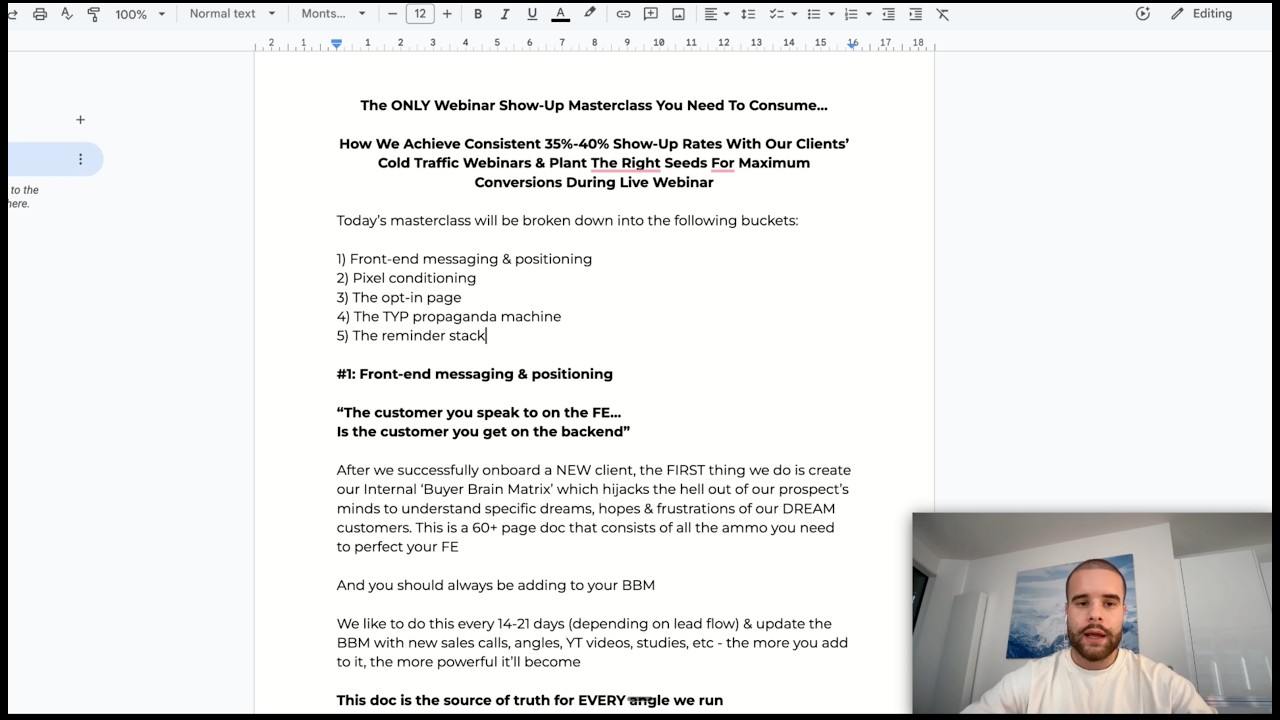
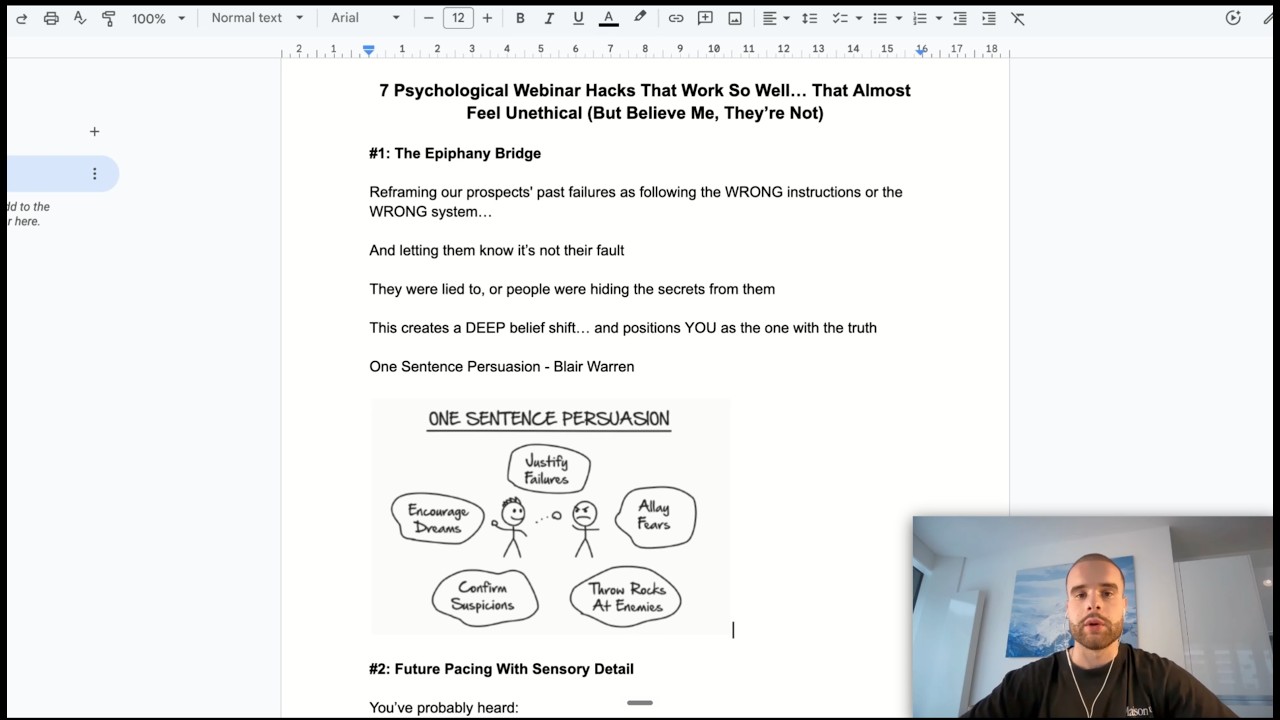
7 psychological webinar hacks that work so WELL... that they almost feel unethical
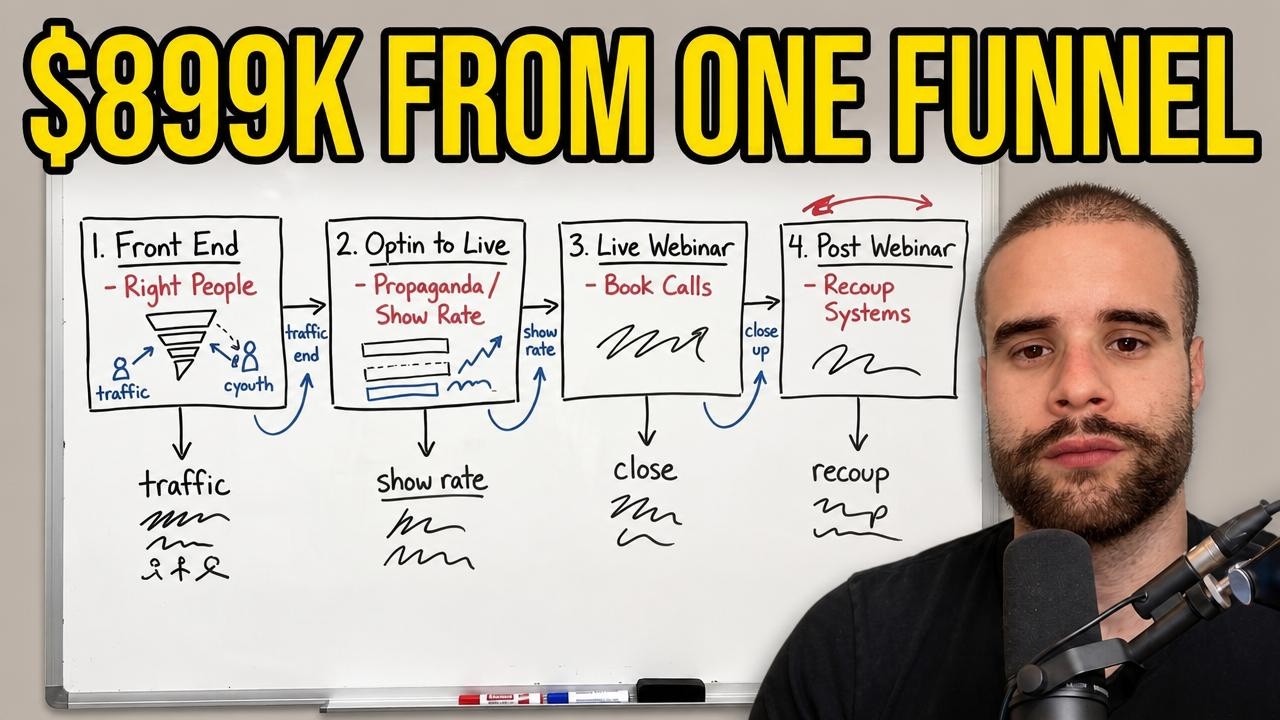

The Simplest Meta Ads Creative Strategy That Actually Scales In 2026 (1 Winner Into 40)
The 4 pillars to scale your info agency with LESS ($1.7m/year in 12 months with first agency)

He Sent 920,000 Cold Emails Running Outbound For 110+ Clients (The Unfiltered Breakdown)