He Scales 9-Figure DTC Brands With A 41-Person CRO Agency… Here’s The Full Playbook (Carl Weische)

In this interview‑style podcast, host SPEAKER A sits down with Carl Weische, founder of Accelerated Agency – a 41‑person conversion‑rate‑optimization (CRO) firm that has helped direct‑to‑consumer (DTC) brands scale to nine‑figure revenues. Carl walks through the agency’s origin story, how they acquire clients, and the systematic playbook they use to grow brands. The conversation covers the full funnel architecture (top‑of‑funnel long‑form advertorials, quizzes, and VSLs; middle‑of‑funnel listicles; bottom‑of‑funnel product pages and bundles), quiz‑routing and personalized offer pages, creative and audience segmentation ("pocket audiences"), post‑purchase upsells and subscription models to boost average order value, and the research methods (reviews, heatmaps, surveys) that feed their hypothesis generation. Carl also shares a 10‑metric impact scoring framework for prioritising A/B tests and cites real‑world examples from brands like IM8 and Kinobody. The episode ends with a call‑to‑action for listeners to follow Carl on social media and explore the agency’s work.
Chapters
And yeah, guys, we are back with another Sophisticated Ask podcast. This time we're taking it different. We're here with the main man, Karl, founder of Accelerated Agency, CRO agency primarily, right? For DTC. Yes.
I mean, we now ventured also into consulting and a bunch of software stuff, but yeah, we started as an agency.
And what does the agency like do? Like how did you first, like, I wanna dissect of course like the journey and like scaling the agency, cuz correct me if I'm wrong, but like now, The agency is like a 41-person team, right?
Yeah.
More. Because like, how did you stumble across the idea of CRO? Because I know everyone in e-com, bro, like they do ads or email marketing, but how did you find CRO?
Yeah. So basically around 7 to 8 years ago, I got started with like Amazon FBA dropshipping and everything. And then through a mutual friend, I got connected to my now co-founder Lars. And back in the days, he was doing CRO as a freelancer. And then I basically hired him from my website. my stuff and then we worked together. And then one, I found that very interesting. And two, I always had a passion personally for psychology, right? So I would read like every book in the library. I would watch like hours and hours of Tony Robbins videos and stuff. And then when Lars came to me and we worked together on my website, he told me like, yeah, we need to think about psychology. We need to do this research about the consumer. And then we need to change the copy on the website here. And this is what we need to do in the email flows to get better open rates and conversion rates and everything. And then for me, it basically brought together like what I wanted to do professionally in terms of like selling stuff online. And then like psychology, which is basically consumer psychology, which is CRO, right? And then in 2020, during COVID we then basically decided to just start freelancing together. And the rest is pretty much history.
And now here we are. When you found a freelancer, you were running your website. Was it like a Shopify store?
Yeah.
So you started selling products through Shopify and then you transitioned to like an agency, right?
Exactly.
Why did that— go ahead.
No, I just wanted to say, so I started when I was 16, actually with like reselling like sneakers, like Yeezy, Supreme and everything. Then I moved into like having my own brand and like selling products through Shopify and Amazon, and then moved into freelancing and then building the agency.
Without dropshipping?
Pardon?
Without dropshipping when you started?
No, we actually financed like thousands of units and then put them into like our bedroom and then sold them. So we didn't even know what dropshipping was basically.
Yeah, 'cause I know, bro, in like 2020, 'cause I started with dropshipping as well. And back then it was so easy, bro. Like you could just do like a few creatives and then I hired this Fiverr freelancer to set up some like ads for me. I drove traffic and bro, their conversion rates were like a lot easier. And like you could be really profitable. I was profitable on the front end, like a 2.2x on the front end. But like now, which we're gonna walk over. Like now, how do you believe, right, from when you started the agency to now, right? Like how more difficult is it to be profitable, especially with like e-com? 'Cause like now, bro, there's so many brands, right?
Yeah. I would say on the front end, it's becoming more and more difficult, more so due to the ad platforms, right? Because like historically, basically how much you're paying to generate attention impressions is just rising year on year on all of the major platforms. Like that's number one. And then number two, there's more and more big players entering social media and spending a lot of money. So you're just competing with huge brands on the ad platform auction for the same audience to then get the impression share. So basically you just pay way more to generate the traffic, which just makes it way more difficult to generate new customers profitably on the front end. I mean, it's still doable, right? We know so many 8, 9, and 10-figure D2C brands that still do it, but the trend is more so, okay, let's buy customers like very slightly profitable or even at breakeven on front end and then make all of the money like on the second or third order.
And does that come down? Because I know e-commerce is very different to info, right? Info, you've got webinar funnels, DTA funnels, load extension funnels, right? With direct-to-consumer, you've got listicles, advertorials, and straight product pages, right? What conversion mechanisms do you see working best now for direct-to-consumer?
So typically the strategy that we do for all of the accounts that we work with is that we essentially have different funnels for different stages of the awareness level. So let's say bottom of funnel, the ready-to-buy audience, we basically send them straight to a product page with a very attractive offer, meaning typically some form of bundle offer, which highly incentivizes them around getting a lot of free gifts and a lot of discounts. So that's basically what we do for bottom of funnel. And then for middle and top of funnel, we have a way longer customer journey. So for middle of funnel, it's typically like a 5 reasons why listicle page where we basically force content consumption and educate them around the solution, the different offers on the market, then tell them why ours is the best and then push a product page. And then for top of funnel, we have a very long funnel. So typically we have a very long-form advertorial, which takes like 15 or even 20 minutes to read. Like a doctor advertorial or POV storytelling advertorial or whatever. Or we will have like a long-form VSL funnel, like 10, 20 minutes VSL or like a long quiz funnel. And then after that, we then route them to an offer page, right? So I would say it's like really based on the awareness stage that the prospects are in. And then we just basically route them through different funnels that matches their intent level.
Yeah. 'Cause I've seen, I'm sure you're familiar with Craig Clemens and Golden Hippo, right? One of his brands, Gundry MD, they're running like a quiz funnel now, but the entire approach of it is like, do you submit the questions and like, depending on your answers, you're routed to like a product page? Like, let's say you're doing a quiz funnel for a client and someone says that their main goal is, I don't know, let's say fat loss. I'm a middle-aged woman. Right. Would you put them then through another listicle and then product page? Or does that depend on the awareness levels?
So for us, like for a quiz funnel, typically, um, we run it like very long form, like 15 to 20 questions. And takes a couple of minutes to go through the whole quiz. We will always start the quiz with the very easy questions around their age, their gender, their current pain points, their goals and everything, and then go very, very specific and very deep. And then also the way that we build the quiz is that throughout the quiz, every 3 to 5 questions, we have an intermediary section, which is not really a question, but just a social proof, building trust, showcasing results, whatever. So they basically, let's say, answer 20 questions and they've seen like 5 intermediary small pages that build trust or build urgency or set the frame. And then we send them to an offer page and then the offer page blueprint is always the same. But then we basically take the quiz answers, what you already mentioned of like, what's their age, gender, current pain points, desires and everything. And then we just basically change the images, like the product images and the assets on the offer page. And we change the copy based on the intake answers.
And then the intake answers, are they like the headline, for example, would change based on a dream outcome? Like what variable would change?
Exactly. So let's just say very easily, like they will give the input. It's like a 50-year-old woman and she is currently on GLP-1 and she has a lot of problems with like weight loss and not feeling attractive anymore. And she has this desired outcome of XYZ. The offer page would then show this very specific customer of like 50-year-old overweight women using the product and seeing results. And then the headline would be, if you're on GLP-1, this is the perfect product. And if you're currently experiencing these pain points, like this is how this product solves it. Yeah. So it's just basically a very individualized product page based on the intake answers.
But how would that work? Like if a quiz funnel happens, right, there may be, let's say, 20 potential scenarios that happen, right? Does that mean that you have 20 routing offer pages? Or do you only condense them? How many do you have on average?
So there's 2 things, right? The more technically advanced would be one offer page, one URL, and then just based on the UTM parameters, the content would change. The bit easier technical way is just to have literally 20 duplicates of the pages with different content and then just route them based on the quiz answers.
Yeah. Because bro, like I know that you've scaled like a lot of direct-to-consumer brands, like 8, 9 figures and stuff, right? With the core conversion mechanisms, are they using the one core conversion mechanism or are they taking advantage of like, let's say those awareness stages and like through Meta, especially depending on the customer journey, they've got, let's say, bottom of the funnel conversion mechanisms, middle of the funnel, top of the funnel, like to scale. My question is, are they combining all of these conversion mechanisms?
So a very good example of this is IM8, which basically grew from zero when they entered the market in 2024 to the last published number is $20 million per month in July this year. At scale, also the last published numbers are they were spending over half a million per day on Facebook with around 2,000 live ads and around 40 to 50 different landing pages. Again, I can obviously only talk about the publicly known numbers and everything. But basically, it's a state-of-the-art example of where we pushed it to the max of every single creative has a standalone funnel. So, GAP1 users, women ad would get pushed to GAP1 page. Menopause, menopause page. Influencer, influencer page. Authority, authority page. Quiz to quiz funnel. Comparison to comparison page, whatever. So, we would just have a lot of different blueprint templates of listicle, comparison, influencer, authority, quiz, whatever. And then they would just get hyper-specific. Also, obviously you have to put a huge shout out to their marketing team because they're fucking cracked with the ad creatives and everything. They just went hyper-specific on those pocket audiences on Meta. With the copy and the ad creative, they just did an outstanding job at then going hyper-specific on a specific customer avatar with a specific pain point. And then we would have a hyper-specific landing page. So the whole customer journey from their perspective, especially for the more unaware audiences, would just feel amazingly tailored to that specific avatar.
How do you find those pockets? Like, let's say, of course, I'm selling a supplement, right? It's mainly for middle-aged women over the age of 40, right? Would the pockets on the landing pages be like specific problems potentially, or like outcomes, or like what do those pockets look like?
Yeah. So there's 2 ways of research, right? So number one is basically researching through the existing customers that you have. So a lot of the stuff that we do is, for example, go through all of the reviews, set up specific on-page surveys, post-purchase surveys, and then basically sending out very specific long-form surveys to the existing customer base. So that's number one in terms of getting a good understanding of what even are the current customers that we're attracting. And then secondly is I would say the general market research of understanding what are those hyper-specific avatars in this market of let's say women over 40 in America. Like, where can we go into? Right? I always make this example of we've had this client in 2022 where they were one of the first ones to very aggressively scale those pillow slides. You've probably seen them before. This winning product. And we exported 30,000 reviews and 10,000 said it's very comfortable, whatever. But then 2,000 said it feels like walking on a cloud. And then I was like, I never heard that before. We never used it in the marketing. Let's run it as a split test on page. And then we basically put it as the main marketing slogan on the homepage and increased the conversion rate by 10%. And then it became the main brand slogan and the main slogan for the ads. So, that's just a good example of how you can get a lot of very specific things from the existing customer base. And then the second big thing we got from the customer base is that we figured out that a lot of the customers were nurses and healthcare practitioners. Right. which is basically what's the main customer base that would buy these because they would be on their feet all day and they just needed hyper-comfortable shoes to walk around the hospital all day. So they then basically optimized the whole targeting, creative strategy, and messaging to those nurses, healthcare practitioners, doctors, and everything.
Would you say this is what takes to survive. And the reason why I say this, bro, because even like supplements alone in the US, there are dozens of these brands out there, right? Why do you believe that some of these brands, like what's that big brand, Resilience? Is that how you pronounce the name?
Yep.
They've got like some like song AI videos like through Meta right now, right? Why do you believe some brands like Resilience are able to scale to where they are while like other supplement brands, especially if we're talking in the health market, kind of like stagnant and they can't find a competitive advantage? What do you think the difference is?
Yeah. I mean, we've worked with a lot and a lot of the big 9 and 10-figure brands in the US market specifically, not Brasilia. The one big thing that I would say is I would not take every aggressive scaling supplement brand as an example, especially Brasilia, because a lot of the strategies that they do on creatives, and then also, for example, like gray hat MRR and whatever, It's just not going to be a long-term brand. Very straightforward. It's just a cash grab. And brands like these will blow up and ending in a huge FTC complaint or something like that. So I would not necessarily take an example out of some of these very aggressive direct response brands. There are a lot of other brands that still are somewhat direct response. I mean, even I Am 8 is very aggressive in the ads, but they have a good line. They don't cross the line. They don't go too crazy. I mean, you've seen all of these AI ads. I mean, it's all over Twitter now. Everywhere. Yeah. But to drive the point home, I would say what you need to do now in 2026 moving into 2027 if you want to win, yes, you need to do some form of direct response marketing and you need to go for very specific pocket audiences. Because there's a lot of household names like AG1, IM8, Greens, Transparent Labs, right? So many household names that do hundreds of millions, if not billions of dollars per year in turnover. And they already own the mass market and a lot of pocket audiences. So for you to come into the market, or even if you're already a 7-figure brand, to scale to 8 and potentially 9 figures at some point, you just have to focus. I would say it all comes down to focus and a very niche positioning. I mean, same with you. You noticed from Infra, I mean, also for us in the beginning, we were so obsessed with such a hyper-niche positioning of like, we have one hyper-specific service of like SEO and funnels, and we have a hyper-specific niche of like only D2C brands and only 8 and 9 figures. So we already combined like 2 niches into one. And that's like, you know, the same with like info, right? It's like, if you're a fucking general, like B2C make money online offer, like you need to be hyper-specific. Like what is the USP? Like how are you going to stand out in the market of Grant Cardone, Tai Lopez, Tony Robbins, Dean Graziosi, Jeremy Haynes, all of these? Like how the fuck are you going to stand out? Like Shabby Seth is an amazing example, right? Of like taking this, but selling it as a woman to woman, like make money online offer of like high-ticket sales. Like there's a lot of unique things like that haven't been done before. Like, I mean, Elena Cardone did it a bit, right? But like Shabby Seth did it, right? Woman to woman, high ticket sales and everything was very unique. And that's like the approach that I would take in any market, but especially if you're in a D2C brand.
Yeah. But like then how specific can you go? Like now, if I wanna start a supplement brand, right? I can of course have my ICP in mind. Okay. Women, middle-aged, 40, menopause problems, just for example. Right. But then I could take it deeper and like saying that they've tried this, but then I can take it deeper that they've run into these problems or like take it deeper that they're kind of experiencing these specific symptoms and like problems from having menopause. Right. Like how, where is the ceiling to go in like specific, like how specific can you go?
Um, I would just answer it a different way. Right. I would always think about total addressable market. And obviously the more specific you go, the smaller that total addressable market of that hyper-specific pocket audience is going to be. And then at the end of the day, it just comes down to, okay, there's going to be a glass ceiling for every pocket audience. I mean, I don't know if you're familiar with BB Company, for example. It's also a 9-figure D2C brand in the US that is very much focused on women in their menopause. Mm-hmm. They have a lot and a lot of different supplements, but then they have a very general approach. So even if you would come into this niche of menopause and then whatever, you would focus on menopause. I'm just giving some random stuff, like menopause for Black women. We've worked with some companies that have sold the supplement to the exact same audience, but literally the only differentiator was it was a Black-owned supplement company only selling to Black people. And that was the only differentiator, and it worked like crazy. So the point I'm making is you don't always have to go hyper, hyper, hyper-specific down to the bottom. But you obviously need differentiators in this market.
Yeah. And then bro, with the conversion mechanisms, right? Because for example, like one of your clients, right? IMA, right? They of course sell supplements, but do you believe like listicles, advertorials, they work for like every DTC brand? Or do you believe that the conversion mechanism kind of depends on, first of all, who you're serving, what you're selling, and of course what your TAM is? Like, how do you decide upon Okay, I'm gonna do a quiz funnel for this client. I'm gonna do a listicle for this client. Like, what are your variables?
Yeah. So foundationally, I believe that I would just put it generally under the umbrella of direct response marketing, right? So for me, direct response marketing works for every type of product that has some form of transformation that we sell to the consumer, which means every health, wellness, beauty, pain relief, shapewear, whatever, like all of these types of brands, it 100% works. Then there are these brands like Vessi, for example, like comfortable sneakers, and they have this USP of like waterproof shoes. Like we did Lissy Kids with them and it crushed. Or there's like other companies where it's like fashion, but it has a big USP or something like that. And then it's like a 50/50, but probably most of the stuff they still run to collection pages and product pages. And then there's very general stuff, whatever, like jewelry, general fashion, activewear. We've also had a lot of those. We don't even touch funnels. We've worked with Crop Shop Boutique, which is also a multi-nine-figure-per-year activewear brand. And we don't have any funnels. We just push all traffic to homepage, collection page, and PDP. Yes, we do have a small quiz that they can take on the website. But it just doesn't make sense to have this direct response marketing approach because it's active wear. They buy it due to different reasons. They buy it because of status, because they want to feel a sense of belonging and have a community and be unique in what they wear and have an identity and everything. So it's very different buying reasons from the consumer psychology than all of this direct response software. It's very pain-driven.
I've seen some crazy offers, bro. Like some long VSLs with delayed buy buttons for e-com. I've seen some crazy VSLs, bro. How do VSLs work in DTC?
They crush. I mean, in these niches, we've had different clients also in the supplement niche, like 9-figure per year brands, and they would have, for example, a free plus shipping book funnel on the front end. And then we will push them for post-purchase upsells to supplements or memberships or whatever with VSLs, and they rip. So I would say probably 20 to 30%, we do it on the front end. And then the big part is VSLs on the backend. We have so many companies where we do have 3 to 5 post-purchase upsell VSLs. And they get another— so they typically get 20 to 40% of the total AOV from the backend.
Are they like essentially one-time offers? So when someone successfully buys product A, it's like a one-time offer with like a VSL embed selling the upsell. Is that what it looks like?
I mean, so basically you send traffic to a product page, they buy through the checkout, and then it's basically a standalone page like, hey, whatever, one-time offer, VSL, you can buy it or click away. And then it's the second page, third page, fourth page, and then thank you page. So that's basically how they work. We've done it for a lot of different brands. I mean, for supplement brands, it's very easy because it would be supplement A on the front end. First upsell is like more of the same or turning it into subscription. And then upsell 2 to 4 is just complementary products where we would say like, hey, you just bought product A for pain point A. Product B is amazing because it helps keeping this problem away forever. And then product C. Well, you probably also have this pain point, right? Because you just bought a sleep supplement, so probably also have an energy problem and we want to help you with high energy with product C. So that's how it works for supplement. And then it works pretty similar for, let's say, also we have some pain relief products or medical device products on the front end. And then we then just upsell a lot of different, let's say, like gels or sprays or shampoo or whatever it may be, like consumable products on the backend, because we can all sell them on subscription, even if they only have like one medical device, for example.
Would you say that this is more critical? And the reason why I'm saying this is like Shopify in 2020, right, bro? I got started and I was profitable. I didn't know what I was doing, right? But now there are so many more brands entering, right? And I'm assuming, of course, CACs are rising, CPMs are rising, right? How do you, for your clients, create these offers that allow you to increase AOV? So you're kind of like breaking even and making a profit on the backend. Like what offers are crushing now?
It really depends, right? But I would say it's very important to have a strong post-purchase upsell process, right? Like one of my good friends, Harvey, he's also running like a multi-nine-figure-per-year brand, which is in the pain relief niche. And one of the main competitive edges is that they just bump the AOV like 2 to 3 times from the front-end AOV. So like a competitor in the same market, whatever, let's just say that the product is $100 and you have like an 80% gross margin. They can maybe afford like $60 CPA highest. Harvey can just say like, yeah, whatever guys, I can do $120 CPA because I would just bump up the AOV in the back end so aggressively. Generally, I would say yes, the post-purchase upsell mechanism is a huge USP just because it allows you to just basically, what is it called, like mop your competition in the ad auctions. You can just outspend them.
Yeah. Then the media buyer or the company who can spend more to acquire a customer, they win. And that happens on the backend. What is also interesting, you mentioned, which caught my interest, the free plus shipping book and then Ascension with supplements on the backend, right?
Yeah.
How have you seen with your clients and what methods have you seen them implement that are kind of applicable with info? Of course, like maybe like educational frontend or some sort of community aspect. Like how do you see both industries coming together for scalability?
Uh, we've combined it a lot of times. I mean, a great example is Greg from Kinobody. Um, so he has both. So he's also a bit unique in that sense because he has supplements, he has fashion, and he has a lot of info products. So that's an amazing example because he had this one product called Kino Mojo, like a testosterone booster, which worked amazing through Instagram because his audience would just buy it. But it just didn't work at all on Facebook because everybody and their mother has a testosterone supplement on Facebook. So basically we repackaged the offer. We put together the Kino Mojo and then the Kino Nitro, which is like a pre-workout booster. and then combine that with an info product and a community. And then we sold it as basically like a 30-day module mastery challenge where we went away from like whatever, boost your testosterone to, hey, 30-day challenge, let's all get super ripped and attract girls and become the best version of ourselves. And then they would get the 2 supplements and then they would basically get a training guide, nutrition guide, videos, and they would get a community on the backend where Greg would do like weekly group calls with them.
Yeah. And then, bro, in a community, what did you do if you were responsible for it to increase conversion rates? Because like, I know, bro, when we do, for example, for clients like low-ticket extension funnels, every single buyer, they would join like a school community for propaganda to get them to book a call, right? But if you're getting all of these members inside the community, could you run like internal webinars selling them like a huge AOV supplement package? Or like, how have you seen ascension work?
Yeah. So there's basically 2 things, right? I mean, what is unique about this is that the community is on the backend after they've purchased. So the 2 strategies that we had, there's number one inside of the community where we would obviously like hyper pitch more supplements throughout the course. And then number 2, we would basically just have his sales team, um, try to upsell them into like a high ticket, like whatever, $6K, um, coaching product. So they would just like reach out to like everybody who has been part of the community. Yeah,
that's crack, bro. I would see like a lot more brands, they're like incorporating educational aspects in direct-to-consumer through like community and like free books and stuff. Um, with as well, I know that you're doing a lot of great work for IM8, right? Like a big brand. When you signed them and stuff, right? First of all, what bottlenecks were they experiencing? And what does your process look like as a CRO agency owner to kind of take their existing data and allow them to overcome their bottlenecks?
Yeah. I would take another example just because I made when we signed them, they were literally at zero. So I almost didn't take them on because they were at zero. I mean, I then took the bet and it played out very well. But let's just say like we have whatever, like an 8 or 9-figure supplement brand, they come to us. I would say the first week we just obsess with their data. So we will look at what I already mentioned, the customer reviews, to do a pattern recognition of pain points, desires, motives, beliefs, and everything. 2, we will look at, probably you're familiar with Microsoft Clarity or Hotjar, all of these heat mapping tools, screen recordings and stuff. So number 2, we will look at that. Number 3, we will basically, and you have the same thing in ClickFunnels, these funnel views where we basically see on which page in the funnel do they drop off, right? Is it presale page to product page, product page to cart, cart to checkout? And then we would just collect a bunch more data points from surveys and competition and market and Reddit and Quora and Amazon and Facebook ad comments, DMs, customer support tickets. So just a fuck ton of data points. And then based out of those data points, we would then high-level identify where's the biggest drop-off in the customer journey for all of the different ad channels. 2, where's the biggest potential based on the heatmaps and everything on the pages? And then 3, who is the customer avatar that we're selling to? And then we'll be like, hey, whatever, we need to update the product images. We need to change the offer. We need to change the copy on this listicle because not a lot of people are reading the whole listicle. We need to up the call to action from whatever, 80% scroll depth to 30%. We need to do XYZ. And then we would just basically have a very long list of action items that we are going to execute. And then we just translate those action items into high-end like designs and copies and everything to propose it. And then they approve it and then we push it live. Right. So that's basically the whole process.
Yeah. Cause I've seen like IM8's, their PDB for like the bundle offer and stuff, which is like really good. Right. But now when like you're working with these brands and stuff, right. Because bro, CRO is like a broad thing. Like you can just of course apply urgency, scarcity, more storytelling benefits and all of these other elements. Right. What 3 core things do you believe go into CRO with PDPs? Like 3 core things.
Yeah. I mean, one thing that I would say is like we A/B test everything, right? I mean, for these brands, like most of our clients that do like $5, $10, $20 mil per month. So like everything we A/B test before it touches the live page. Right. So I would say that's just one very important philosophy to understand as a brand owner. And I mean, you can see it with the biggest companies worldwide like Amazon and Meta and all of these companies, they A/B test all day. Almost every single time you go to Amazon, something changed.
Yeah.
Right? So they just basically have an idea, they test it, get market feedback, see the impact it has on the main KPIs, and then either they implement it or do the next thing. So I'd say that's one very important thing around the methodology of testing everything before pushing it live and not just going like, Oh, Resilia is this. Resilia basically just copy-pasted the IMA product page. They even bought fucking Ronaldinho and did the exact same product shooting. It was very funny. But yeah, so that's in terms of the methodology, very important. And then secondly, in terms of product pages, obsess with the above the fold. And there's then basically 3 things in the above the fold: product images, the main value proposition and copy, and the offer. So, those are like the 3, like the 80/20 of what you need to do. I don't know how deep you wanna go, but basically product images, very easy framework I always like to use. If the consumer only sees the product images, are they going to buy? Yes or no? You basically need like 10 product images that work like a sales funnel. Product image number 1 is a value proposition. Product image number 2 is like before and after. Product image number 3 is like benefits, whatever. Social proof, authority, objection handling, and everything. So, that's how you want to think about product images. Number 2, value proposition. I mean, the copywriting is very straightforward, right? Main value proposition, 3 main USPs that solve the biggest pain points that they have right now. And then the offer, it's based on what you're selling. But as I said, we typically have some form of decoy offer similar with info. You always have 2 or 3 offers. You do offer stacking, huge discount. It's the same idea, right? Yeah. So we always do have 1 to 3 different offers similar to IM8, one-time, 30-day, 90-day. And we basically have this on all of the big brands, like 1 to 3 offers where we then have basically an exponentially increasing price curve. Where let's just say you have a $50 offer, $60 offer, and $100 offer. So that most of them go for the second offer because they get way more value out of the second offer instead of the first offer. And then the third offer is as a decoy, but you still get 10 to 20% taking the third offer. And then you basically, the first offer is just the product itself. Second offer is like 2 products and gift, whatever. And then third offer, Huge discount, gifts, this, that, whatever. And those are like the 3 things. If you do these 3 things very strongly, like that's like 90% of what you can do on the PDP.
Yeah, bro. I've seen Happy Mammoth. They do something similar, but then I believe it's for the middle section. They frame it as the most popular option to take.
Yep. Yep.
That's kind of like the methodology, right? But with the PDP, have you guys at your agency Kind of like crafted, like a proven template to follow? Or like, does the template or the structure of the PDB depend on the kind of client you're
working with? So the template is basically what I just explained, which is in the above the fold section. And then you already lose like 80% of the traffic, right? So yes, generally there's like a template of like rehearsing, like giving them reviews, showing behind the brand, showing authority, showing the before and afters, handling the objections, FAQ, USPs, and whatever. So yes, you can do all of these, but the whole game is won in the above the fold basically with images, copy, and offer.
Yeah. And then for your PDPs, are they hosted on Shopify? Most of them, yeah.
Yeah, like 90% is Shopify. Some of them have headless or custom.
Yeah. Okay. Yeah, bro. What's also interesting to me is, of course, you start the agency, the freelancer, the CRO agency, right? And you're very deep into psychology, right? And I wanna talk about your split testing process. How rooted is that process to split testing? Like, what's your methodology around split testing? Do you just think to yourself, okay, I'm gonna now test the headline of this PDP. I'm gonna potentially change or split test the first image in the product image. Or what is your methodology around split testing?
Yeah. I would say it's like a combination of data and psychology. I mean, to give you some quick context, like Lars and I, we are freaks about psychology. We've done so many sales psychology, consumer psychology webinars and trainings. We've both done the NLP Practitioner Master. He even did the coach and stuff. We are so autistic around psychology.
That's what we need, bro. That's what we need.
Yeah. And so basically on the one hand side, it's like all of the data that we just spoke about like 10 minutes ago. And the second thing is then combining that with consumer psychology. That basically gives you a very long list of ideas. And then we basically have an impact grading system of like 10 KPIs for every idea where it's basically like, is this based on quantitative data? Is it based on qualitative data? Is it in the above the fold? Is it designed to increase user motivation? What is the level of effort? What do we think? What does the client think? And like 3 more that I don't have top of mind. And then basically these 10 KPIs then translate into one big score, right? Of how the idea can rank from 0 out of 100. And then we just rank every single idea against these 10 KPIs. And then it's almost like you can just sort them top to bottom based on like the highest probability of success. And then we just basically take these ideas first and test them first. All right. And then we conceptualize it, design, copy, develop it, push it live. And then we would just go through the whole list. And then obviously, as soon as we get the first results, let's say we have a headline split test that crushes 20% more conversion rate, we would then do another one or another thing in the above default, 'cause it has a very, very high win, right? So yeah, that's basically the process.
Always be split testing. Always be split testing. That's the game. Always split testing. And with, 'cause at the backend, I know I'm deeply rooted into info, right? And I know if a customer enters your ecosystem today, but then they opted in, you've got their details, you can of course potentially remarket them on the backend to get them to attend to a webinar and eventually get them to book a call for high-ticket coaching, right? With e-com, I understand that there's of course like Klaviyo backend marketing and stuff, right? But what else do you do, or like that you may know and that other brands are doing to like recoup lost revenue? and make a ridiculous amount of money on the backend? You mentioned, of course, the upsells and paths and stuff like that, but what else have you seen that crushes?
Yeah. I mean, I would say generally for lost customers, so people who didn't buy, there's just basically 2 things. Number one is email. So basically just very aggressive email campaigns as soon as you have their email. 2, what we basically do with most brands is have a custom audience That everybody who just doesn't end up buying is automatically added to the custom audience in Facebook. And then has very specific creatives, which are typically social proof, testimonial, or another unique offer that we then push out to the custom audience that didn't buy. Retargeting, basically.
Yeah. Because I know with info, if you're running a webinar, you can of course retarget your webinar registrants, get them hyped up for the webinar, right? With the custom audiences, have you also seen work like when someone buys, like let's say your hero product or product A, do you also put them inside a custom audience for ascension reasons, like to get them to upsell? Or like, are you only doing retargeting?
Sometimes I would say, I would say most of the education happens through email, right? So I would say with most brands, they mostly focus on like pushing that on the front end. Either way, the algorithm nowadays will push all ads to especially the existing customer base. 'Cause once they bought, it's a very high intent data feedback point to Facebook. We've seen it very rarely that we have specific standalone campaigns that try to ascend existing customers. It's more so like the email in the backend.
Maybe I'm just emotionally attached to info, bro. I believe that info strategies, they work for DTC. May not be the case.
Some of them, right?
Yeah, that's real game. And I want to also talk about the agency, bro, because I see the ClickFunnels plaques in the background. I'm not sure if they come from the agency and stuff like that. There's some good status there, right? You started your agency in 2019?
Uh, 2020.
2020. Like, you now, you've of course built up the name association credibility, you've got the results, right? You're probably getting referrals and stuff, right? But how did the process look with your agency when you first started? Like, how did you sign your first few clients?
So the first ones were very hard work. The very first client was basically a friend of mine. And then the first couple of clients we signed were network friends and family. We would just literally tell everybody, do you need a website? Do you need an online store? We would just pitch everybody that we knew. I literally did a WhatsApp to all of my friends saying, do you know anybody who needs this? Then the thing that worked very well in the beginning were Facebook groups. So we would just go into Facebook groups, and build a personal brand in dropshipping e-commerce groups and posting value. And then we would get people into a free consulting call and then at the end ask them if they want us to do
it.
We then did cold calls. And then in 2021 beginning, we did cold calls, we did a webinar, but everything was very, very slow. And then end of 2021, around September, October, we started with Twitter. You may be familiar with Wizard of Ecom, Mubu. OG.
Yeah.
So basically end of 2021, I was actually his first client. So I was his first client. He basically told me how to build the personal brand on X, and I just executed everything down to the T. And I think within 3 months, we went from 0 to 10,000 followers and just took over the whole niche. And we would get like 20, 30, sometimes 50 sales calls per month from Twitter. So in 2022, the combination of Twitter and then also Nick Shekharfod invited us to speak at GeekOut in Dubai beginning of 2022. And those 2 things were like a really spiraling effect, right? So us getting, basically becoming the biggest name in like D2C bubble on Twitter. And then also like having this in-person basically audience. And we also get a lot of clients from that event. And then that kickstarted my speaking career where then I did Vital Live in Oxford, where also Ravi was there, Peter Keir, a lot of those OGs. I did Alex Fedotov Mastermind in New York, and then another one in Dubai. And then I would just do 2 or 3 speaking gigs a month. And then I would say 2022, we went into it with 5 people. We went out of it with 35. And then moving into 2023, we continued the speaking, we continued Twitter, we started doing a little bit of ads. And then from like 2023 to like end of 2025, we just continued all of that. We also started with YouTube in 2022, which I forgot. YouTube then became very strong. And then I would say the biggest things have been YouTube, Twitter, and recommendations. And then beginning of this year, I was like, I just want to crack paid. So I just started paying a lot of people money. I spoke to Daniel Fazio. He gave me a lot of amazing insights.
Shout out Daniel. Shout out Daniel.
Yeah. He told me how to structure. I did a lot of very inefficient ABO. He told me this whole CBO thing, whatever. I then paid a lot of more of my friends and just spoke to a lot of people. And then yeah, we just very aggressively scaled. Paid to like now $250 per month in spend and like B2B. And then through us scaling paid, we then had a lot of things happening, right? So for example, we've only ever had this done-for-you offer for the agency for like 8 and 9-figure brands, but then we scaled paid. So you get so many people who were like 7-figure brands, which is why we then did a consulting offer. for 7-figure brands. We did that. We started that 1.5 years ago and took off. And now we are booking 150 calls per month through paid with people who are not even big enough for the consulting offer. So we launched a group coaching offer literally just 2 weeks ago. And now just very logically, I would say based on the requests and everything, we now just kind of build offers and service models around the requests that we get. And we just started doing that 1.5 years ago. For 5 or 6 years, we just said no to everybody. Bro, sometimes I'm calling my co-founder, I'm like, do you see how this is taking off? 5 years we left millions or tens of millions of dollars on the table by literally saying no to everybody who was not the perfect ICP for the agency. And that's basically the progression. So we have 41 people in the agency, and then we have another 15 or 20 in like the consulting and software companies. And now we just kind of build based on like what we see works and what like plays into the ecosystem.
Bro, by the way, I must say, bro, I'm getting spammed with your ads, bro, on Facebook and Instagram. I'm not sure why, but I'm not sure if you're retargeting me, bro, but I'll book a call soon, bro. I'm being spammed with ads, bro. I'm being spammed with ads. But how did your messaging and positioning transition from like, let's say 2020 to like now, right? Because you mentioned that you kind of came with a frame, like we'll do your website and stuff, right? What was your positioning in 2021 compared to now?
I mean, in 2021, 2020, 2021, we just basically did everything that people want. So most of the times we would build them a website from scratch. We would completely redesign their whole website. We would do just whatever they need, build them a landing page, do a consulting, do an audit. And then moving into 2022, the big thing we saw that we always had these sprints and standalone projects of like, you build one website, $10K, 3 months, done, never see you again. And then we were like, if we want to scale and build a real company, we need predictable income so we can also build an operations team, headcount, all of that. So that's why we switched to A/B testing. And CRO because it's basically an ongoing service that you can basically do forever, right? So that's what we did beginning of 2022. And then obviously at the beginning we would serve like 7-figure brands and like smaller brands. And then just over the years, like we just built a name and then we started working with bigger companies. We started working with AG1 in 2023 and The Oodie and like some of these big names. And then in 2024, just continued and continued and it continued and continued. And then we just basically then over 2023, 2024 said, okay, let's only work with like 8 and 9 figure brands, like bigger brands. It's a better service for them because they have so much more data, we can charge more. And then the agency just basically became this like hyper boutique, high-end, very expensive agency where we just increased the pricing like 3 to 4 times a year, right? For the done-for-you service and have like a hard cap. on clients. Like for example, we only have like 25 clients in the agency, right? And then that's basically how we built it. And now the whole positioning is just like, we are the best in the market. We work with the best. It's the most expensive in the whole market. Like if you want this, then yes. If not, then good luck. That's basically the agency positioning.
And but when you started paid ads for your agency, were you first attempting to sell them the done-for-you offer? Or do you have a different offer in mind for paid ads?
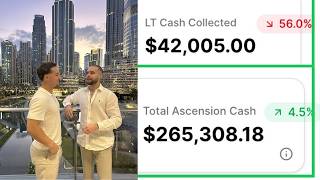
So we started in 2023 with paid ads. We always only spent like $30,000 a month for like 2.5, 3 years. And we only pitched to them for you. And then at some point I was like, bro, there's so many 7-figure brands that are booking. It's not ICP. We cannot sell them the agency service. We need to sell them something else. And that's why we thought about, okay, what do they need? They have more issues with Facebook ads, funnels, and everything, and they want to learn it. So let's build a consulting where we help them. with their marketing, creative strategy, Facebook funnels, and everything, and they would just do it themselves. And then we built that offer beginning of 2025. In the beginning, it was only a downsell, and then it just took off. I think we scaled it to like $100K cash collected in the first 3 months. And then we thought, okay, this has a fuck ton of opportunity. Let's build it as a standalone offer, have unique messaging, unique creatives just for that. And now it's literally that the whole ad account is completely restructured to this offer. I don't even really pitch the done-for-you offer anymore just because we have so much more demand than supply. So it doesn't even really make sense to aggressively market that. And then we just aggressively market this done-with-you offer. So we just changed the messaging, the creative strategy and everything to be more tailored to 7-figure brands. And that's what we're doing. I mean, we still obviously acquire 8 and 9-figure brands through it because it's the same case studies, but it's more of like— Before, like, it was like the consulting was a byproduct of the done-for-you. Now the done-for-you is a byproduct of the consulting offer that we run through paid ads.
And then the consulting one, I'm assuming you've got like a lot more leverage with that. How does the capacity look like? Because of course with done-for-you, you can be capped and then you of course need to hire new headcount to take care of that demand, right? With the consulting, like, how much leverage have you got with it?
Insane leverage. I mean, on the done-for-you, we basically have like 6-person teams and they can literally only manage a handful of accounts. Right? So let's say for whatever, we want to go from 25 to 30 clients, and then for you, we need 6 more people, which is insane. Yeah. To service 5 more accounts. On the consulting, it's way more exponentially scalable because let's say one very strong customer success manager can handle 20 to 30 accounts. And then whatever, you can always go into 20 or 30 increments of whatever. We have 60 active, we want to go to 100. Okay, we need 2 more people. We want to go to 120, 1 more person. And now we basically have a handful of people in the consulting and we already hire and train people for the next growth stage basically. And then yeah, it's the most amazing business model ever.
Yeah. A lot more leverage. But then the goal with the consulting, as you said, is it to eventually turn that consulting client into a done-for-you client? Is that the main goal of it?
Yes and no. I mean, also within the consulting, we have the ascension model and a lot of stuff. So for example, they start a $36K package for 6 months, which is the basic consulting. We can upgrade them into a key account management consulting with way more one-on-one calls, way more hands-on, which is double that. We do have like, now we do have the offer of like, we will help them staff the in-house team. So we would just hire creative strategists, train them, run them through our progress and like place them, for example, for clients. So we have like staffing and recruiting. So like a lot we modeled from Cole Gordon essentially, right?
Yeah.
And then obviously some of them we want to upscale into the agency, but like very, very few, maybe like 3 to 5%. Because at the end of the day, this is a 7-figure brand and now we get them to 8 figures and it's already big. On the agency, we don't even want brands that are doing 10 mil per year. It's best case if they already do 20 or even 30 million per year on the agency side. So they would just take so long to build a brand from 7 figures per year to 10 million to then 20 or 30 million. So it's more so that we just on the consulting, like put more manpower on it, give them like more access, more hands-on strategy execution, staff it, manage their team and everything. Like, for us it's really just the goal of like just keeping this like consultant role in the company. And it's, yeah, just not even the goal to get them into the agency.
Good shit, bro. Good shit. And of course you're the founder and stuff, right? So what do your responsibilities look like inside the agency? Like, are you mainly focused on lead gen and signing clients, personal branding, or like, what do your day-to-day responsibilities look like?
I'd say the biggest thing is marketing sales leadership, right? And, um, very high-level key account management for some of the key accounts in the agency, whatever, like those I made projects or some of these other brands where I'm like high-level involved strategically. But I would say, yeah, the biggest thing is like the organic content production Like the long-form videos for YouTube, managing Facebook, making sure that it keeps pushing. I take like those very high-level done-for-you sales calls myself just because like I have to make sure that it's a perfect fit for the agency. And then basically everything else is like handled, for example, through sales team or then the delivery team and the done-for-you. And then I will only be involved— Okay. And like some of these key accounts high level on the agency side. And then apart from that, just making sure that, I mean, I basically manage like the content marketing team, the sales team, and then my co-founder, he manages the customer success manager and the Done With You. And then he manages the leadership team in the agency, and then the leadership team manage the whole team. And then in the software, he also manages the leadership team and they manage the people, right?
So, 'cause I know like when you ascend, you're of course in a good way learn, like you need to learn critical leadership skills and stuff, right? But all your team members and stuff, like what did the vetting process look like? Because bro, for example, with our agency, we've had some bad experiences with like hires and stuff, right? Now we've kind of refined our process. We can kind of vet that talent, but where do you find like A-star players?
Very good question. For us, um, there's 2 things. One is the personal brand. And we've made some of the best hires. So 3 things actually. In the beginning, for example, the leadership team, they've all been with us since day one, and we literally built them through years of hard work from scratch, literally from zero. 2 is failed entrepreneurs, which either literally failed or they just don't want to have the stress anymore, but they have an amazing subject matter expertise. 3 is the personal brand. So obviously in my personal brand, I have a lot of marketing talent that I just do an Insta story or Twitter post. And then 4, we've now started to see some success with Facebook ads. Because then I would do one story, I would get some replies, whatever, but the Facebook ads would then also target my followers and my audience and people who have seen us before, and then basically acquire the same-ish people. which are like failed entrepreneurs or don't want the stress anymore, or just like very, very strong people that want to start with us. And we just have like an— I mean, I would say it's very difficult, bro, because everybody can do well in the vetting process and everybody can do well in like the first month or 2. So the main things that we now go for is basically a mixture of Subject matter expertise. And then the second big thing is hunger and motivation. And now recently, the third big thing is AI. How sophisticated are they with AI usage? And if they have a very strong subject matter expertise, they're very hungry and eager to learn. And then they already come to us and say, whatever, I've done this. Here's what I already prepared for this meeting. Let me show you my Claude setup. Then we know, okay, perfect. And then we give them a shot and then we very quickly see like how they perform. And then like everybody for us has like a 1 to 3 month period where we basically are very strong on them just to make sure that we did the right decision. Most people we already kick in month 1. And yeah, and that's basically how it goes.
That's game. But the hunger and motivation thing, because for some people it can be, let's say a facade. I know I've run into a problem before where like you hire the person, first 30 days it seems like they've got this optimism, this hunger, this motivation and stuff, right? But then they kind of fall back into old habits and stuff, right? Like what is your process to ensure that that person is actually like a killer? Like when, so when you've got like a job application, right, how do you determine what hunger or motivation looks like?
Um, so I will give you like a sum of like my learnings. So number one, we will always let them record a Loom video where they explain something, right? And then through that Loom video, you will— because let's just say you do a Google Docs test task for creative strategy or whatever, copywriting, they can just do whatever with AI. So we will always have them record a Loom video where they talk about themselves and then also very specific task and then why they're a perfect fit for the company. So the Loom video already kicks out like 95% because of their—
Not everybody. I can imagine, bro.
Aura, charisma, how good are they explaining it? You can directly tell whatever they just did it with AI and they're just reading it. The second thing is that we just have different calls. We have one just intro call, one subject matter expertise call, and then one culture fit call. And I would say it's just this gut feeling, right? We just now rely on gut feeling. And then the last thing that we've learned it the hard way, and I've also heard it from Cole and a lot of other people that You basically get what you pay for. And in the early days, like the first 4 or 5 years, we would try to get more junior people and not pay too much. And we've completely shifted that over the past 12 months to paying amounts that are hurtful for me. These people crush, but I'm looking at the payment of like $20K or $30K per month. I'm like, you motherfucker.
A-star players, bro. That's what it takes.
Yeah, but it's like, And they crush, bro. They just rip everything apart and they get $20K to $30K per month. And I'm looking at that, but then I'm like, bro, this one person is outperforming 10 other people, literally in some cases. So I would way rather pay one person $200K or $300K than pay 10 people $80K.
Yeah, facts, bro. Facts.
And that's a huge learning that we've made, that this top Tier talent. They just need a very, very high salary. And they will also tell you these very high salary expectations themselves. So that's typically a good sign if they are very— like they will come to you and say whatever, $150K, $200K or something per year. Like this is what I want to make. Yeah. And those are like the main things basically that I want to look out for.
That's real game. And are your team members remote or have you got an office?
I mean, I'm sitting in the office right now. So we get these, we get them together like once a month, like the leadership team or customer success or like sales or whatever. But apart from that, it's like completely remote.
Yeah. And then how do you incentivize the team members to, 'cause loyalty is a big thing, bro. Like poaching is real, by the way, bro. Poaching is real with agencies, right? How do you, incentivize that team member, like salary aside, to get them bought into your agency, your vision, your mission?
Propaganda.
Propaganda, bro.
I mean, it's, um, this is like one thing I've learned from my co-founder. Like, he's a fucking G at this shit. Like, he, he just built the most unique company culture. And for me, like, frankly, my first 5 years of entrepreneurship, I was like, bro, fuck culture. Like, what is this culture shit that everybody talks about? It's in every leadership book and every YouTube video. And I'm like, fuck culture, bro. Values, vision, mission, whatever. I couldn't care less. But then I've seen countless examples where employees of ours would try to get poached and they would come to us and say, just transparently, this other competitor of yours, they tried to poach me. They tried to pay me more, but I love it here. I would say, fuck them. So the long story short that we've seen for culture, yes, vision, yes, mission, but I would say the 2 main things for employees, they need to have a very clear roadmap for them specifically, individually, of where they can grow. And then 2, we just have this very strong feeling of family. So... It's not something that you can do once. And it's also something that I've had to learn the hard way. Culture is something like you have to— it's basically like a relationship. You have to show up every single day for fucking years to cultivate that. And if you don't do it for 3 months, it's spiraling down. So Lars has just done this since day one of enforcing this culture. sticking to certain values, sticking to the mission, sticking to certain, whatever, like good things and bad things. And if people didn't fit, like we would kick them out. We would also, sometimes the team would come to us and say, this is not a good part of our team. We would kick them out. Sometimes team would come to us and like say, like this client is not treating us well. And it was like, really? They're not treating them well? We would kick out the client. So we would just do a lot of things that are very aligned with the culture. And I mean, we've also had hard times in the company, bro. We've had multiple times where we didn't take out a salary for months just to be able to pay the team. And we communicated that to the team, right? So Lars basically taught me this of leading from the front and leading by example and just obsessing with culture, right? I would say those are the most things. And then literally all of the people that have been quote unquote poached are people that we wanted to kick out either way slowly. We just didn't do it fast enough. And we were almost happy that they got poached because we were like, okay, they solved our problem and we know our competitor has a bad employee. Right? Mm-hmm. We literally never lost a good employee. Over those past 6 years, we've not lost one good employee that we wanted to keep.
That's an incredibly good sign, an incredibly good sign. But with the bad employees, is that mainly from their skill or more of like character traits that they've developed? Like, why have you been in a situation where you thought to yourself, this team member needs to go? And what was that moment?
Um, I would say cultural fit, skill set not developing quickly enough, mindset, and just frankly output, right? I mean, Reflecting on the past years, it's not like we've always had the highest status for ourselves. And sometimes we would just let 2 bad talents stay with the company for too long, maybe even just 1, 2, 3 months too long. But a lot of times we've had a gut feeling or we wanted to let go of somebody and then we just didn't care about finding a replacement quick enough or whatever. And then we just let them with us. And then it was very good that somebody else poached him because then we had to take action and find a good replacement. So we just basically also changed that going into 2025, that when we have a bad feeling or a gut instinct, we just— now for us, leadership team, it's a very straightforward rule. You have to take action instantly. We fired them within a week or something. Some years back, we would give them months to prove themselves or we'd just not take action or whatever. And that's just also a big lesson for us. We were just too slow, basically.
But do you give them a warning about it? Or do you just bring up the fact that you've been underperforming, you've got one week to go?
No, obviously they get a lot of— they get a feedback call, they get a second feedback call, and then a warning over the period of, say, 6 to 12 weeks. We do have this approach of if somebody has been with us for years, they can also perform suboptimally for like 3 months or something. Like that's the longest time period where they can perform like 7 out of 10 instead of 10 out of 10. Because everybody has like personal issues, like family, health, whatever, everything can happen. Of course. So people that have been loyal and crushing for 5 years, like even if they would not be that way for 3 months, we would give them their time. For somebody that has been in a job for like 3 months, now they didn't perform for 4 weeks straight, it's like After 2 weeks we have a feedback call, after 4 weeks we have a second feedback call, and then we're like, well, do you want to fix this or no?
But then the feedback call acts as like a warning call, and then if after that call you don't see drastic improvements, that's when you have a harsh conversation with them, correct?
Yeah, we typically have like 2 feedback calls before we then— I mean, like 2 warnings and like 3 times you fuck up or like you don't improve yourself for like 6 to 8 weeks. And you've been in the company for 3 months. Like, yeah.
Well, like fucking up from like a result, like point of view or like unprofessionalism, like not attending, I don't know, team calls early. Yeah.
I mean, just like in the agency world, I mean, in like almost every world, like with an online job, everything is trackable. Like you have a very specific set of deliverables, output, and deadlines to do. Right? Like there's so many KPIs, right? Like project management system. How long does it take you to finish a task on average, right? Like how many delays do we have? How much are you on deadline with your work? Like for example, for us, CRO, what's the win rate of the A/B tests that you deliver? Like how much revenue do they deliver for the client? What is the NPS of the client? What is the team saying about you in terms of NPS, right? Like there's so many quantifiable KPIs. specifically for your deliverables and then the impact it has on the client and the team and the company, that just makes it so easy for us to very easily check that. I mean, similar to sales, you just have very straightforward deliverables of outbound dials or closing rate or cash collected or whatever. And like, bro, it's like this month you didn't hit XYZ. We just both look at the numbers and it's like, what should we talk about? There's not much to talk about if you're not on KPIs.
Now, real rap, real rap. I mean, bro, your agency, um, from the days of WhatsApping everyone inside your WhatsApp group, like everyone inside your contacts, to now, of course, building this agency, right? Now you're scaling the paid ads. Like, where do you see the agency going to? Like, how big do you want to go?
Uh, very good question. I mean, we, we ask ourselves every day, like, literally when we started, we just wanted to become like the biggest in Germany. That was like our big thing. Like what we are now, like 5 years or something later, which is like mind-boggling for us because there have been agencies that have been around for like 15, 20 years, like a management team of like 60 years. And we're like, we just did this in like 5 years. So, bro, for us, it's more so like, how far can we take it? It's not that we have like a set goal of whatever, like X million or like X people or whatever. It's more so like a challenge for us. How far can we take this? How big can we make this? I mean, we started with Done For You. We now have like 8 different offers or something with multiple different Done For You, different consultings, group coaching, and softwares. And our very straightforward vision is just to basically own this complete ecosystem around like CRO and funnels for e-commerce, right? That's just because it's a blue ocean. 5 years ago when we started, nobody was doing it. Like now we've had a lot of copycats, like people entering, but it's still a blue ocean. It's probably like billion-dollar, multi-billion-dollar market, this whole CRO thing. But there's software companies for CRO, for A/B testing that do hundreds of millions of dollars per year. The biggest A/B testing softwares are doing like $300, $400 million per year. It's mind-boggling.
Huge market.
Right? So I'm just thinking, how far can we take it? Like, let's, let's see where we can take it. Like with the, the done for you, the consulting, the softwares, like it's more so a game for us now.
Yeah. But what about from like a founder's perspective, bro? Because of course you could have this agency vision and stuff, right? But you intrinsically, of course there are core pillars that you oblige with that drive you forward every single day, right? Like what keeps you going and like ensures that you're consistent with that vision?
So for me, it's this thing from Tony Robbins, CARNI, right? Constant and never-ending improvement. For me, I've had this one very good friend of mine, he would always say sharks die if they don't move. For me, it's literally, we will have a record month, and then next month, if we do the same amount, I will be like, fuck.
Yeah.
How bad did we perform? That's how we think about it, right? Even if it's the record month of the company history and next month we only hit the same amount, I would be like, we fucked up. So that's just for us, and Lars and me, and then also the leadership team, but especially Lars and me, we have such high standards for ourselves and each other that we just constantly need to grow, right? Every single year we've increased revenue and profit. Right? Like every single year now. And we will continue to do so. And for us, it's just like we always want to grow. Like for us, the worst thing that can happen is that it just flatlines or we don't improve or don't increase. So for me, it's like a combination of I learn something new, I improve my skill sets, we grow. I can see in terms of the KPIs, like revenue grows, profitability grows. Something like that needs to happen, right? Like otherwise, like our field— Very bad.
Yeah, but bro, I think there's like a clear difference because there's agency owner A who's got good character traits, right? And they're increasing revenue and profitability every single month, every single year, right? Agency B— no, agency owner B, apologies— has the same goals with that, but there's something that separates them, right? And I believe it comes down to mental models, like what mental models you've developed over the years, right? So of course you've got this vision and like these goals and stuff, but like if we speak from first principles and like mental models, what do you believe you've developed that allows you to keep that hunger consistent? Because bro, many people, they would work with the brands that you're working with, scaling the agency, and then they'll get complacent, bro. They'll kind of back away, right? Yeah. But what keeps that going?
Very, very good question, bro. And, um, like one book that I can highly recommend is, it's called Relentless from Tim Grover. Where he basically talks about Kobe Bryant and LeBron James, all of these MVPs that he mentored. And there's a lot of things that I took from that. So one thing is basically self-hypnosis where you basically, I would say the biggest mental model is that we just very quickly shift our identity all of the time. So For us, we will set a goal, we will reach it, and then we will set the next big goal, and then the next big goal. And I will have a friends group of people, and then I will move to the next friends group, and I will always be the smallest in the room. I will always self-hypnotize myself into like, I'm small, I'm just starting out. Well, right now we are more successful than we've ever been in the company history, and I'm feeling smaller than I was feeling when I was starting out, mentally. So I would say those are the biggest things in terms of mental models of always shifting the identity, always shifting the standard that I hold myself to. If you think about the Sam Owens, the highs and lows, right? Basically pushing a new barrier from the bottom up of how you have to perform. And then I can just name some examples. I would always, for example, upgrade my personal lifestyle and expenses to be needing to make more money. Pressure. Yeah, I would not buy fucking bottles in a club, but I would get a more expensive flat, I would buy a very expensive car, very expensive watch, I would retire my dad, I would do whatever, and I would just keep stacking monthly expenses to keep increasing pressure. Same thing with agency. I mean, you probably noticed with your business, if you aggressively increase ad spend, we've went from 30 to 50 to 100 to 200 to 250, there's so much pressure because everything has to work.
Real rap, rap.
The creative strategy has to work. The funnel has to work. The sales team has to work. Everything needs to make sense. Nothing can fail. And I would say we just artificially always increase the pressure and the stakes to be like basically pressuring us into, we have to perform, we have to make this work. I would say like, that's like the long story short of basically like what's going on in our mind and like how we just basically always keep pushing forward.
That's real game. That's why I believe, bro, many agency owners, they hit $100K a month, $200K a month, decent cash flow, but then complacency, bro, with agency owners is so common. They've got decent cash flow and they just get complacent, right? And I'm currently, bro, for the second time reading Psycho-Cybernetics. Right. And they're very big on the identity. And if we look at your changes in identity, like Carl running an agency that's doing like, let's say $50K a month, right. To now spending this money on ads, working with these big brands and stuff. Right. How are those identities different? Like how, how big is that step?
Bro, there were probably like 10 or 20 identities in between. I would say it's huge. It's like, um, Like I would literally, I would like 2 things, right? Like number one, I would take like this Alchemy of Seth from Sam Ovens and just basically like treat it as like GTA. I would be like, okay, like this is my identity now. These are my character traits. This is my skillset. These are my goals. And I would just like change it and change it and change it and change it. Like always change it. And number 2, like I just want to give a shout out to Jeremy Haynes. Like maybe you've seen this video. Jeremy Haynes. You need to get a fuckload richer. I've watched it.
Like about the tree, like a tree's rich.
Exactly, exactly. He had an older version of that 1 or 2 years ago, and I watched it, and it just resonated so much of like— and that's why I always keep adding expenses and keep changing rooms that I'm always the smallest in the room. Because if you're a $100K per month agency owner and you hang out with $50K to $100K per month agency owners, you will feel big and you will feel fucking rich. And you're all state jets and this one business class to Dubai, it's fucking amazing. And then get into a room with agency owners that do half a mil, one mil per month. Bro, they maybe bought a house. They maybe just retired their whole family. Really? They maybe have a savings account, like $1 million in the S&P 500. They have all of the shit. Their life is levels, right? They have a private chef. They have a personal trainer. They have a maid. Like, there's so much stuff and then like, it just keeps, like, you just have to like keep expanding your horizon. That's why I love this video from Jeremy so much because it's like, bro, did you ever think about like buying a fucking house or like a yard? And then like, bro, like for me, like even buying my car, like I didn't even like before that thought about like gas or like repairs or like new fucking, what is it called, wheels.
Well,
it's like fucking almost 20 Gs for like new wheels, you know? And like, there's like so much maintenance cost to like this higher lifestyle. And like, the point I'm making is I think you just have to like expand the awareness and also have enough like, like humble yourself. Like, bro, $100K per month and you have like what, like 20 Gs in your savings? And like, if the business is gone tomorrow, you're back to zero and everything. It's like— There's nothing to be happy about, you know? Exactly. And they get bottles in a club and they, whatever, rent out a yacht or some crazy Airbnb. And I'm like, bro, yeah, you're still at zero. I'm thinking I'm still at zero. I have such a long way to go. I have so much money to make and so much security to build. I feel like I'm at zero. And I would just kind of keep that mindset. until you have millions in the bank, like $5 or $10 million in the bank. You just need to keep that mindset because you just can never be satisfied. And there's readers from Grant Cardone talking about $1 million savings and how much you can do with it and how $1 million is basically nothing. And I think David, right? David. I know your first video was with him. Actually, YouTube. Oh yeah,
David Hunter,
yeah. Yeah. I've also been friends with him for years, and he had this one video about it, or a tweet of like, you always need to add pressure. As a man, you always need to add pressure to your life. Obviously, one great way of adding pressure is expenses. So that's for me, like, some years ago, I went to my family, and I was like, I want to retire you. And think about how much pressure and how much responsibility that adds to your plate. You cannot fuck up. He's relying on you now, or whatever. Something else is relying on you, or even your employees. You have 10, 20, 30, 50 employees. They are paying their bread. They are paying their salary, their family. They are paying their rent with the money that you make as the business owner. I think a lot of people in the agency space, like on the marketing space, are just not taking it seriously enough. Like for me, I really feel like this is a, bro, this is like a once in a lifetime chance to build generational wealth. Like this has been given to you. Like you have been gifted this opportunity. Like don't fuck it up. Like if you fuck this up, maybe it never comes back to you. And like, that's just basically the belief I installed in myself. Like I have a once in a lifetime, opportunity that like 0.000001% of people in the world get, like, who am I to fuck this up? Like, I can just build generational wealth, like even starting with my parents now, my family generations, like I can basically save my whole bloodline. And that's like how serious I take this now, right? And like, that's what changes everything of like how we run the business.
Amen, bro. And bro, there are, few agency owners I respect in the industry, right? But the reason why I believe I respect you, and this is kind of like a compliment, right, is there are many agency owners that I know that maybe do $50K a month, $100K a month, but then you check their digital presence and there's a lot of inflation I put on this facade, right? But even before this podcast, bro, I was checking out the YouTube channel and stuff, right? And you're keeping consistent with the CRO thing, bro. This like scaling these Shopify brands, like case studies, like The tweets are remaining consistent and stuff, right? Like that digital presence that you've created is like, you know, like a good one, which is kind of rare with agency owners, bro. 'Cause they make some cash and then they wanna splurge that shit, right? But without that strong foundation, and these are the mental models that you're walking over, it's like kind of difficult to keep consistent with. Like the thing that you mentioned around like generational wealth and like the depression and the team members, the ad design scaling and stuff, right? Yeah. That's what's of course allowing you to keep going. But not many agency owners have developed those mental models. That's why I believe they stagnate, bro. That's why I wanted to extrapolate on your mental model process and like what you think about. Because I believe, bro, that's the differentiation between agency owner A and agency owner B. They may have the same skillset, but one of them is scaling and it's not for like a magical reason. I believe it's from intrinsic Like character traits and beliefs that they hold about themselves, and they are hard to develop, bro. They are super hard to develop. I think it prevents a lot of people, bro. A lot of people. Yeah, 100%. Oh my bro, this was a fucking sick talk, bro. Bro, this talk was fucking sick. And guys, link in the description. Check out my man's. Twitter. I'm going to be plugging the YouTube. He's got some really good gems, strategies on direct-to-consumer shit, like a lot, right? And I want to finish this off with one thing, right? This is going to be for the agency owner because there are like a decent proportion of agency owners watching these videos, right? You've gone through the ascension path of starting and scaling your agency, right? If you now didn't go back to zero, but let's say you're doing $10K, $20K a month, right? What 3 key things would you tell yourself, like let's say 4 years ago, right? Who allowed you to see that success. 3 core lessons that you've developed as an agency owner through your ascension path.
Yeah, 100%. And the first one to say, very enjoyed the conversation. I think you're very, very strong on like asking high quality questions to extrapolate high quality answers. 3 things I would say. Number one, as you already mentioned, um, for me, Mindset dictates your success. I actually wrote my bachelor thesis around what is the biggest thing on entrepreneurial success, and it's literally mindset. It's self-efficacy, which just basically means that if you believe you can do it, then you have the highest probability of success. So number one, focus on mindset. Number 2, personal brand. I've seen the effect of personal brand firsthand. I think the concept became very famous past 2 years, and now everybody's talking about it, but It's true. Like you just need a very strong personal brand. And then I would say you just need to understand how to acquire customers. Like the biggest bottleneck of scaling an agency successfully, and I would say the biggest bottleneck of probably 9 out of 10 agencies is that they're just not acquiring customers efficiently and regularly. And the whole success of the agency model is like 80% marketing and sales and 20% service. We've been stuck on over-obsessing with fulfillment and service for years. And because we are Germany, we wanted to be low-key and humble and not push marketing and sales too much. And then I was like, there's so many people that do 10 times our revenue and their results are so bad, but they're just so much better at marketing and sales. Mm-hmm. And I just have this conviction that if you have an amazing product, then you need to sell it to as many people as possible. Right? So that's how we view it basically now.
Yeah. And it's kind of like the barber analogy. Like there's a highly skilled barber there, right? He doesn't know how to get customers. So he's going to be stagnating, but then there's kind of like an okay barber, but we check his Instagram. He's got befores and afters. He's got reels, him walking into the fucking barbershop and he's doing all of these videos and stuff. He's going to get the customers. I think that's what prevents a lot of marketers as well, bro. They are, I know the most insanely skilled marketers and copywriters who know all of these principles that you're talking about, like NLP and all this shit, right? They're so fucking skilled about that, but they're not officially signing clients because they're not paying attention to sales and marketing, you know? It's like, I think fulfillment is of course like a critical cornerstone, but if you don't balance that with efficient sales and marketing, bro, you're never gonna scale. You're like, you're never gonna scale.
Yeah.
Never gonna scale. But karma, bro. As I said, I'm gonna say it again. This was a fucking sick talk. Info DTC scaling, a lot of agency lessons, CRO lessons. Guys, another sophisticated-ass podcast in the fucking works. I said this, Cole, Twitter, YouTube below. Please, before you even press play on this video, go to this guy's Twitter and press that follow button if you're not already, bro. That's the goal. Press that follow button, interact with him, and just see what he's doing and check out, of course, his agency. But Karl, my bro, appreciate you, of course, coming aboard. Good luck on the rest of the agency scaling mission. And yeah, bro, this is to more scaling and more purpose, I guess, bro.
More life, bro. Has been
a pleasure. More life. There we are, bro. Take care, bro.
More from Maciek

He Spent $100m On YouTube Ads, Hit $350k/mo, Then Shut His Agency Down (Brian Moncada)
7 psychological webinar hacks that work so WELL... that they almost feel unethical
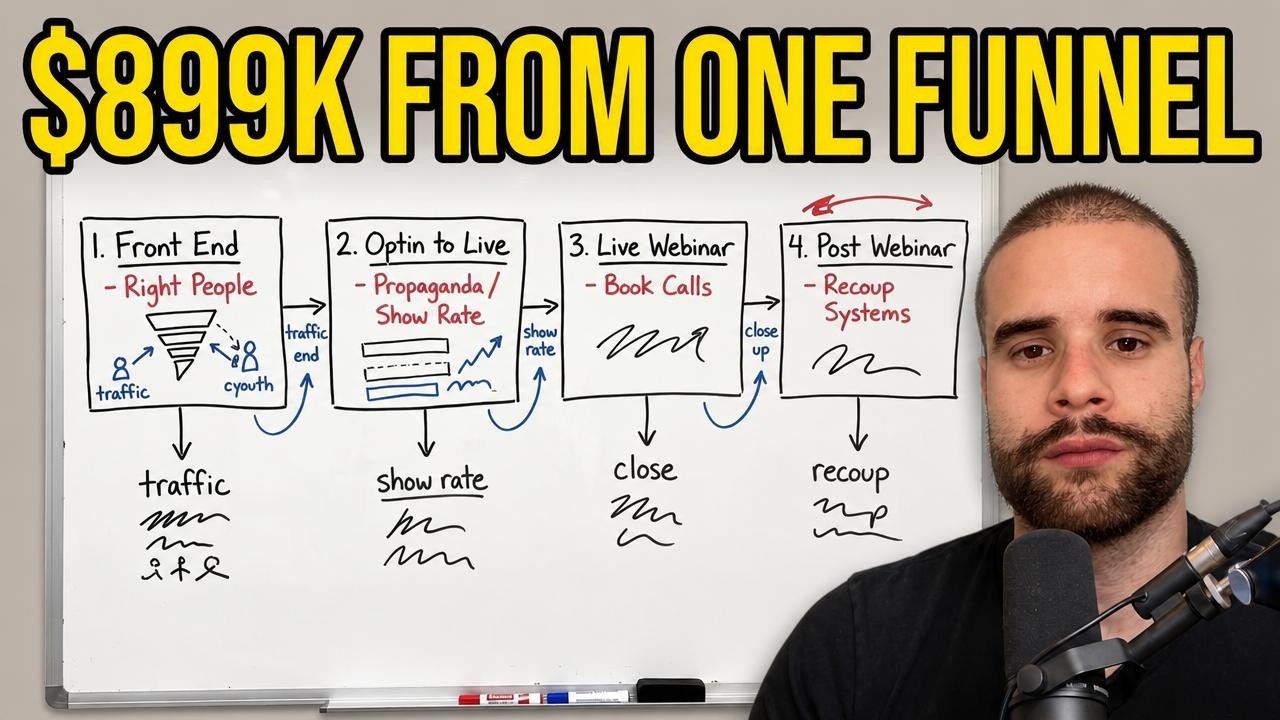

The Simplest Meta Ads Creative Strategy That Actually Scales In 2026 (1 Winner Into 40)
The 4 pillars to scale your info agency with LESS ($1.7m/year in 12 months with first agency)
He Sent 920,000 Cold Emails Running Outbound For 110+ Clients (The Unfiltered Breakdown)