The Unity Event - Rabbi Reuven And Rabbi Mizrachi In Montreal Canada
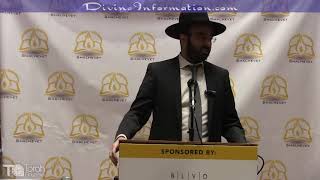
The recording captures a community event organized by Shal Hevet in Montreal, beginning with opening remarks that thank volunteers and introduce the organization’s mission to bring souls to Torah. Rabbi Yaron Reuven delivers a lengthy sermon on the concept of Jewish unity (achdut), outlining three historical models of unity (survival, shared sin, and collective service of God) and arguing that only the third—unity rooted in holiness and Torah observance—is desirable. He links unity to the coming of Mashiach, citing Gemara (Sanhedrin 97b) that the Messiah will arrive only if the Jewish people repent (teshuvah) by keeping Shabbat, kashrut, modesty, and other mitzvot; otherwise, redemption will be forced through catastrophic leaders like Haman. Rabbi Reuven stresses personal sacrifice, the importance of teaching others, and the role of overwhelming kindness (g'milut chasadim) in hastening redemption. He critiques modern conversion trends, anti‑Semitism, and secular attitudes, asserting that suffering and persecution are mechanisms God uses to awaken the people. Rav Mizrachi follows with a brief address emphasizing the supreme value of Torah, free will, and the necessity of spreading Torah knowledge, while also denouncing those who oppose Judaism and highlighting the moral superiority of a Torah‑observant life. The event concludes with announcements for a raffle and an open Q&A session.
Chapters
Shavua Tov to everyone. Sorry. Shavua Tov to everyone. Be'uchim habaim. It's a pleasure for me to be here and to see everyone gathered together. First and foremost, I would like to just say that to be here and to be in front of all of these people, and I know that there's people watching online from the networks from the Rabbanim, it took a lot of work. We started working at the end of last summer, and before we got the team together, Baruch Hashem, if this team wasn't put together, we would not be here tonight. I'd like to just name the team because they deserve, they deserve a big chazak u'ba'uch. They worked day and night, mamash. Yedidia, David Shikuri, Ilan Nekeslasi, Baruch Sibat, David Levi, there's Isabel, there's also Vicky Ben-Arosh, there's Adina Sibat. Did I forget anyone? I don't think so. Baruch Hashem, they all work together And I have to say that two of them, I have to mention, Yedidia Mor Yosef and Isabel Izmiravitchi went over and beyond any expectations that any of us had. They worked mamash through the night. I would go to bed, I don't know, 1, 2 in the morning, wake up 3, 4 because the baby was crying, and I would get messages. Can we take care of this? This person said this. Can we arrange this? And it takes a lot of effort, but Baruch Hashem, I'm very happy to be here with everyone, because there's a good friend of mine, a rabbi in the city, every time I see him, he says, Baruch Hashem, we give a lot of respect to doctors, and they do receive a lot of respect, and they do deserve it, because they work hard for it. But these people worked to bring Neshamot and to save these Neshamot. Because at the end of the day, after 120, when the doctor has no place anymore, and he also gets to 120, only the Neshamot stay. And they're the ones that we have to work on. Everyone according to their level. Everyone has his own tikkun, everyone has his own difficulties. But when we gather today, and when you gather in nights like this, through the Kotelet, through the title of unity, and all coming together for Torah, then Hakadosh Baruch Hu shines light on us Ad Midai. You have no idea how much light we bring down by every single person's little effort, by sharing a message, bringing someone over, sending them the video after, and sharing it so that the Divrei Torah can touch their hearts and can served as a trophat. They can be mamash, a doctor for the people that they save, and they give a refuah, health to their neshamah. I don't want to take too much time. I just want to give, before I forget, certain names that we're doing b'ezrat Hashem, leluim nishmat. Shalom Eliyahu ben Yechnina, Chasiba Shirle Bat Esther, Yitzchak Essek Hizkiyahu ben Avraham Nachum, Yochaved Dada Claudine bat Hasiba Shirle, Chana bat Esther, Yosef ben Nissim Malka, and a person that is— I'm going to ask everyone to answer amen to, two people that are in critical— well, one person that is in a critical condition. Their name is Avigail Meryl bat Bashabaila, and also Averon, the child. And two words before I give the speaker to the Rabbanim, I would just like to explain a little bit what Shal Havit stands for. Shal Havit was created on a, we can say, a shlichut from Rabbi David Abuchatzeira when I was learning in Eretz Yisrael during the first year of our wedding. And we said that we had to come back to Montreal because my father was sick. Many of you knew my father. And he passed away a few months after we came back. But before coming to Montreal, I went to see Rabbi David, and I asked him, I said, we're going back to Montreal, I have to be there for my father, I have to be there for my mother, I have to be there for my sisters. But I feel like I wanted to stay here because Eretz Yisrael is where we should be. So I told him, if I'm leaving Eretz Yisrael, should I build a Beit Hamikdash over there? He said, not only do you, you have to do it, you're chayav to build a Beit Hamikdash in Montreal, and you have to give shiurim, and you have to bring people to Torah, and you have to give the message to the people of the Torah. And Baruch Hashem, we live on His brachot. Just this week, He blessed everyone, and He blessed us to be here. And Shal Hevet started that way because I have my uncle, which is in Paris, which he has the zechut to have at least 2,000 students go through him a year, my father's brother. And he also has the association over there that's called Shal Hevet. So I told him that we would take the same name and build the same type of organization here in Montreal. And, B'ezrat Hashem, since 2011 that we are back here, we've been working. For those who know us, for those who come to shiurim, we're at the synagogue Beit Hamram on the Carry, where the Résidence Salomon used to be. We give shiurim, Baruch Hashem, there every day. And we not only give it internally, but we go and do these events because we know that a lot of people could we mechazech from these situations of all being together and united, L'shem Torah. And when we're all together, the effect is a thousandfold. It's not just because you probably have 300 more people here tonight that it's 300 effects. It's 300 a few hundred times fold. Why? Because when we come together, there is nothing that can separate us. And that, at the end of the day, that's what Hakadosh Baruch Hu wants from us. He's looking to see how His children are behaving, and if they're together, and if they're caring for one another. And how do we care for one another? Not just with money, not just with health, not just with food. We have to make sure that we are here to accomplish what He sent us to do. Yesterday, most of you stood up like the Minhag is in the city, for the Aliyah, the 6th Aliyah. When the Rabbi goes up, we stand up for— the Aseret HaDiberot. Hakadosh Baruch Hu, we can say that He came to us and spoke to Am Yisrael as one, and it's the time that it is written in the Torah and is told over to us. So, Baruch Hashem, we take that strength with us tonight, and we do the same thing. We're all here to say, Hakadosh Baruch Hu, we want from Your Torah, we want to listen, we want to change, everyone at their level, we want to hear the truth, It's hard? Yes, it's hard. Sometimes it's very hard. Just like when you go tell someone that smoking is hard and you have to stop. It's the same thing. It's hard, but you have to make that choice. You have to make that effort. You have to listen to the way it's supposed to be listened to. Baruch Hashem, I pray that Hakadosh Baruch Hu opens our heart that we can serve Him, that we can make Him happy, all together, individually, and as a klal. And, B'ezrat Hashem, without taking more of your time, I welcome Rabbi Yaron Reuven to come and to speak to the crowd. If I can please ask everyone just to make sure to turn off their phones.
Hold the microphone, you feel like a spaceship. So First of all, Baruch Hashem, Beshem Hashem, Nasiv Nasliach. Thank you everyone for having me and Rabbi Zachi. I know having Rabbi Zachi is much easier than having me. But first thing, you know, the big thank you, big zechut to Rav Gad Ifrah and Isabel and Albert and all, and Adi Didya, and all of the people that were mashmoser nefesh for the last couple of months to make this event happen. The goal of today is to find out a little bit more about Achdut. You know, people love to talk about Achdut, how Am Yisrael is supposed to be together, be together, be together. But between us, don't tell anybody, who are we kidding? You give a Russian guy some Moroccan food, he's going to tell you, "What, are you trying to kill me with the spices?" You give the Moroccan guy the Russian guy's food, he's like, "I wouldn't feed my cat this food. What are you talking about? Gefilte fish? Are you out of your mind?" First time I went to a friend of mine, I went to his house, and he had some red dish, which all Sephardic dishes are red. What is it? It's red, it's good. Okay, spicy? Okay, it's good. Baruch Hashem. And I start eating it. It's like, what is this? He goes, gefilte fish. I said, stop it. No, don't lie to me. I don't eat gefilte fish, I'm Sephardic. No, what is it? He goes, gefilte fish. I said, how can gefilte fish be red? He goes, it's Tripoli. Tripoli. Gefilte fish from Tripoli. I said, okay, you know, we can't even get along about food. We can't get along about which miknesset to go to. We can't get along, quite frankly, about anything. So how can we keep talking about achdut? How can we talk about achdut? How can we talk about unity? What unity do we have? The Ashkenazim like the Ashkenazim, the Sfaradim like the Sfaradim, and everybody hates each other. What? You asked, really, let's be serious. What Achedut do we really have? Baruch Hashem, our Torah, Kedusha, tells us a couple of times that we've had Achedut. It tells us a couple of times that we've had Achedut. And the Torah is not just a book of laws, which really that's the main thing that it is, but it's also a little bit of a history, a little bit of history of Am Yisrael, not necessarily of what we've done and what we didn't do, but actually what worked and what didn't. Now, if you look at the world today, it doesn't really make a difference if you are religious or not. Everyone agrees that the world is upside down. A year ago, it looked like everything was going great. Over the last year, a lot of things have changed. The economy is shaky, the market is shaky. You have a virus that no one knows how to control. You have elections in America that people are willing to kill someone off. You have almost a revolution in almost every country, whether it be in Africa or in Israel. You have a lot of things happening. So unity is the last thing that's really on anybody's mind right now. But really, the Torah tells us there are a few times we had unity. The first time we had unity was a tevat Noah. Tevat Noah, everyone knows, even if you're not religious, everyone knows the story of Noah, at least some of it. That Hakadosh Baruch Hu simply has had it with the world. He said, you don't want to keep any mitzvot, you don't want to do this, you don't want to do that. Instead you want to do the opposite of what I want. Okay, so I don't need this world. He destroyed the world. So what unity was there? The unity that Parashat Noah says is the unity of the animals. The animals were united. Suddenly the lion looked at the zebra and he didn't think about lunch. He said, hey zebra, you're here too, okay, beseder. He looked at the keves, he looked at the sheep, and he didn't eat it. Now even though there are some Midrashim that say that up to that point they were all vegetarian, but still, how come they didn't fight? If you see two cats together, they fight. 2 dogs together, they fight. Over here you have a million animals in little boat and no one's fighting. We had unity. What was the reason for this unity? The reason for the unity, Rabotai, is because no one wanted to get into a fight and be the first one thrown out into the disaster that's outside, into the destruction that's outside. Another time we had unity was in the same parasha, in the Tower of Babel. A bunch of Reshaim, a bunch of wicked people, decided that they want to take Hashem and they want to take him on as a fight. So they wanted to build a tower and get to the sky and fight Hashem. They were united. This is actually the reason why Hashem didn't kill all of them. He killed the people of the flood, but he didn't kill the people of the Tower of Babel. The difference between the two: the people of the flood he killed because they, at least even though they were sinning, they weren't united. The people of the, of the Tower of Babel, they were sinning, but they were, they were united. Unity counts for a lot in Hashem's eyes, even when it comes to sins. But obviously this didn't work out very well. Hashem doesn't like sinners whether they're united or not, and eventually He turned some of them to monkeys, some of them to elephants, some of them he threw all over the world. But the point being is that we had another point of unity at this time. The next time that we had unity was in last week's parasha, parashat Hitro. In last week's parasha, in chapter 19, verse 2, it says that Am Yisrael parked, parked at the bottom of the mountain. And "Vayichanchav Am Yisrael." Am Yisrael was there, Am Yisrael was encamped there. And Rashi, our commentator from 900 years ago, says that Am Yisrael was united not only in flesh and blood, but also they all wanted to be there. They all had one heart, they all had one goal, they all had one purpose. What was that purpose? To fulfill the will of Hashem. Even though they all had their own individual desires— this guy wanted to buy, you know, to open the store, the other guy wanted to, you know, sell stuff, the other guy wanted to get married— everybody had their own stuff that they wanted to do, but they had one common denominator, which is that they all wanted to do the will of Hashem at that point. They all wanted to be at Mount Sinai. They still didn't know what they were getting themselves into, but nonetheless, they all wanted to be there. So we see that we have 3 different things that unite us. One is if we're all in trouble, like the generation of the Mabul, we all were forced to be inside a tevah, in an ark, because we didn't want to go into the disaster that's outside. Two, we're all making sins. Or three, we're all doing what Hashem wants. Those are the three possibilities of being united. Now, Dagedah Shel Pesach, we have a song that's sung by everyone dayenu. And at some point we say, even if you would have brought us to the mountain, to Mount Sinai, but didn't give us the Torah, dayenu, it would have been enough. So the Rav Mebriisk says, what do you mean? Why would it be enough for Hashem to bring us all the way to the mountain, all the way to Mount Sinai, after he made all these miracles, and not give us the Torah? Isn't the whole point getting the Torah? So Rabbi Brisk says there are really 3 possibilities of how a person can be united with the rest of his brothers. Either they're all in trouble, or they're all making a crime against Hashem, or they're in it for a good reason, like the Torah. If Hashem brought us over there, even if we're not in trouble, we're not making sins, oh, it's good enough that we even got that. We got united. That's how valuable unity is. But there is one problem, Rabbi Tzvi. The problem is that we know that making sins and being in trouble are not options that we want. But yet if you tell people, come for a shiur Torah, it's not every day that you get 500 people to show up. Now, the Gemara, Masechet Sanhedrin, Page 97b talks about the end of days, what's going to happen before Mashiach comes. Now people love to talk about Mashiach. Sometimes they live in a fantasy thinking that the Mashiach is going to pay all of their bills, fix all of their ailments, as if he's Social Security and welfare and maybe the Red Cross too. People have a little bit of a delusion like, oh, I can't wait for Mashiach to come. Why? All Oh, he'll take care of my debt. Mashiach is not going to take care of that, I promise you. He's not going to take care of your debt. Oh, all my troubles. What kind of troubles do you have? Mashiach is not going to be the welfare. But people want Mashiach to come. Now the sages spoke about Mashiach very differently. I promise you that not one time in the Gemara you will find the sages screaming Mashiach now? Never. You're never going to see the sages say, I can't wait for the Mashiach to come. Never going to see it. In fact, you see the opposite. You see Rabbi Eliezer ben Hokanos, the rabbi of Rabbi Akiva, say, I want Mashiach to come, not while I'm alive though. I want him to come because that's when Hashem's— the climactic point of the world is going to arrive when the Mashiach comes. So I want it to happen. I want Hashem to be happy, but I don't want to be alive during that time. That's what one of the greatest rabbis Am Yisrael ever had said, and many followed. Why? Because of this Gemara I'm about to read to you. When the sages spoke about Mashiach, they didn't give any discounts, they didn't sugarcoat, and they definitely weren't politically correct. And they said the following. Rabbi Eliezer, the same Rabbi Eliezer that I just spoke about, says if the Jewish people do teshuvah, which means they have to start keeping Shabbat, taraat mishpacha, kosher, be honest in their business, meaning if they start changing their lives to do what G-d says and not necessarily what they feel like doing, if the Jewish people do teshuvah, they'll be redeemed, meaning the Messiah will come, will bring them salvation. They will not have to worry about the goyim killing them and pogroms and inquisitions and Holocaust. All of that is simply a distant memory. But if not, they won't be redeemed, meaning if they don't do teshuvah, Messiah is not coming. So Rabbi Yehoshua ben Levi says, what do you mean he's not coming? Let me elaborate on your point. It's not that he's not coming. It's not that the Messiah is not coming. He's coming whether you like it or not. He's coming. But if they don't do teshuvah, the conditions change. If they don't do teshuvah, if Am Yisrael does not start keeping Shabbat, if Am Yisrael does not start keeping modesty rules, if Am Yisrael does not start keeping kosher both in the business and in their mouth, If they don't start doing it, then Hashem is going to force a situation on them.
How?
He's going to force them to do teshuvah by sending them a leader like Haman that's going to force them to do teshuvah. And the Midrash elaborates on that. He goes, what does it mean he's going to send them a leader like Haman? Haman didn't really torture us. He just wanted to kill us, but he didn't torture us. He says, no, that's the difference. If it's at the time of Mashiach, then it's going to be like Haman with an additional torture, like a Haman slash Hitler. Shemirachem. That's the condition. If they do teshuvah, Mashiach can walk into right here right now, and all of us are celebrating. We're all going to sing together, Yishtabach Shemot. We don't do teshuvah, Rabbi Yehoshua ben Levi says, okay, Hashem says You're going to do teshuvah one way or the other. It's just going to be under a different condition. What's the condition? I'm going to send Haman. So here we see, Rabbotai Ekarim, that the Midrash Tanhuma in Parashat B'Chukotai scares the living lights out of us by telling us that, yeah, he's coming, for sure he's coming. The question is, what kind of condition is he going to come? Now the good news is, is that at this point we will have unity. But do we want that kind of unity though? Do we want that kind of unity that comes from a Holocaust? Anyone that spent a little time reading some of the stories of what happened during the Holocaust, you probably heard the stories of the Rav Mitzvahs. The Klostenberger Rebbe, he was a ish kodesh that just to do what he did every day, maybe we need to work a lifetime. If you heard him pray just a regular mincha prayer, regular mincha, everyday prayer, and you didn't start crying, you should check your pulse. Maybe you're not alive. The way he prayed regular mincha every single day, the way he cried to Hakadosh Baruch Hu I don't know how he's human. I don't know he's classified as human. Now, this is a person that not only survived the Holocaust but thrived during the Holocaust, despite the fact that Hitler, imach shemo, murdered 11 of his kids and his wife in the Holocaust. But anyone that asked him why this is happening Why did we have all this happen to us? The Klozenberger Rebbe didn't get confused. He had an explanation. One guy shows up to America after the Holocaust, a couple years after the Holocaust, and he comes to a rabbi and he says, I'm a Jew, can you help me, uh, discover what, uh, what does it mean to be a Jew? You're a rabbi, right? So the rabbi looks at this guy and he sees this guy has tattoos everywhere. He says, yeah, you're a Jew like I'm an Indian. What's Jewish about you? What makes you a Jew? He goes, I'm definitely a Jew. He goes, what makes you a Jew? Because I'm a Jew. He goes, your mom is a Jew? I don't know if she's a Jew, but I know that in Holocaust they said I was a Jew. He says, but what makes you a Jew? Do you, do you have like a Jewish name? No. Do you, uh, remember any learning? Maybe you went to yeshiva? He goes, what's yeshiva? Forget about it. Do you remember the prayers? Maybe, you know, a prayer, Shema Yisrael, something goes. Who's that? Goes, okay, forget it. Do you have any songs? Goes, ah, songs I have, because I have a song. What song do you have? He says, I have a song that I heard this song hundreds of times during the Holocaust. Says, what song is this? Says the song is a song that stuck in my mind, and it says, because you did not serve Hashem with happiness and joy, you will now serve your enemies. And he has this Hasidish tune to it. He says, this is the song you remember? He goes, this song I'm never gonna forget. Because where did you learn this song? He says, listen, there was this one guy in the Holocaust, in the barracks over there. Secretly, everybody called him the Dayan. This guy was a rabbi, but you can't tell the Nazis this is the rabbi because they like to torture rabbis extra. But this guy was a rabbi. I didn't know what a rabbi really meant. All I know is that's what they called him. Now, every time I looked at him, he was always like saying this. Because you didn't You serve God with happiness and joy. You're going to serve the enemies? Hashem Eichem. What kind of song is this? One time, the Nazis in Machshimah wanted to have fun with the Jews by torturing them, and they wanted us to go run up and down 500 stairs with a rock, a 30-kilo rock. And they made me and him run together up and down. 'If we survive, good. If not, the Nazis had a good laugh at it.' Now, a lot of people didn't survive. But the whole time I was there, what made me survive was because I couldn't stop hearing the rabbi sing the whole time, the same song. And he's not singing it crying, he's singing it happy. And I said to him, 'Rabbi, why are you singing now out of all times in the world? You're not scared you're going to fall? You're not scared of what's going to happen?' He says, no, my son, you don't understand. This pasuk, this verse, is a testimony that the Torah is real. Why is this pasuk? Why? He says, because just like Hakadosh Baruch Hu says there are blessings that come if we do certain things, He says the opposite also. And the opposite is exactly what we're living. Which shows that when he said it, he meant it. And he says, this was the Klozenberger Rebbe. There was no confusion whatsoever. He wasn't one of these people that went to Hashem complaining, why did you do this to me, and why did you do that to me? He knew, he understood that Hakadosh Baruch Hu has an ultimate purpose for all of us. But the truth be told is that Hashem didn't bring us to this world in order to punish us. He brought us to this world in order to reward us. And that's really the ultimate purpose of creation. He told us that I am good, but in order for me to be good, I have to create good. You cannot say I'm a good person but be selfish at the same time. You cannot say I'm a good person, but the only person that you care about is yourself, and that's it. It's not possible. In order to be good, by definition, you have to create good. So God says, I want to give you good because I am good. I want to give you good, but I also know that if I give you good— thank you, thank you— if I give you good for no good reason, then that in essence is the opposite of good. If you have your son come to you and say, 'Ima, I failed every single test this semester. Can I get a present?' Now you're laughing, but there's some kids telling their parents that same exact thing, and sometimes they get the present. Would you classify those parents as good parents or bad ones? They're not such good parents. If the kid failed every test, you can't give him a present. If you give him a good present, then all you're doing is enabling him to become a criminal because he thinks that failure is a good thing. On the other hand, if the kid says, listen, I passed some, I failed some, okay, maybe a present for the good, not such a present for the bad. If he did really good, then you get a big present for everything. But the point is that everyone understands the concept of reward and punishment. It's not a big genius thing. Hakadosh Baruch Hu, it's the same thing. He says, if I give them good when they do the opposite of what I told them to do, it's bad, it's not good. Which means, Rabotai HaKareem, that when we do not do what Hashem says, in essence, what are we doing? We are stopping Him from providing us the good that He wants to give us in the first place. We're tying his hands behind his back. We're forcing him to give us bad. And the sages say that's part of the reason of why he punishes us, because in essence, what does he really want to do? He wants to give us good, but he cannot give us good unless we do good. So in essence, that's the reason why Hakadosh Baruch Hu is very serious about the things that he said. Now If a person pays attention to some of the things that the sages said, he sees that every time that Hakadosh Baruch Hu mentions any type of punishment, there's also a reward next to it. But at the same token, we see that the reward doesn't necessarily come easy. Now, in last week's parasha, We hear about Yitro. It says, "Vayishma Yitro." Yitro heard. He was the Kohen Midyan. He was the former Pope of Midyan. And he came down to Mount Sinai with Moshe Rabbeinu's wife, which was Yitro's daughter, and his kids. Now, if you're trying to, let's say, bring somebody closer to Yiddishkeit, you're trying to get them closer to Judaism, what is the traditional approach? It's probably not what I've been saying for the last half hour. It's probably a little different. Usually the traditional approach is, you know what, if you do good and you keep Shabbat, Hashem is going to give you a bunch of money. And if you keep Torah, Hashem is going to give you a bunch of money. And if you keep kosher, Hashem is going to give you a bunch of money, because the first two bunches is not enough, so you get more money. And if you do this, you get more money, and you get health, and you get this. And in reality, it doesn't really work. Why? There's plenty of people keeping kosher, they don't have any money. There's plenty of people that keep Shabbat, they don't have any money. There's plenty of people that keep Torah and they're broke. So how come we keep telling this to people? Why do we keep telling people if you do what God says, he'll give you a bunch of stuff? I'll give you stuff, give you a car, give you shidduch, give you, give, give, give, give, give. It doesn't really work. Sometimes, but not always. It's not like a foolproof system. You know what does work for sure all the time? Telling people the truth, even if it's inconvenient. And Moshe Rabbeinu teaches us this in this week's parasha. When Yitro comes to him, Moshe Rabbeinu says to Yitro, all of the travel that has befallen them on the way. He tells Yitro, hey Yitro, oh, you just came from Midian, you were a Kohen over there, you were rich over there, you were popular over there. Why, you want to join us here at Mount Sinai? We're about to get Torah. Listen, before you decide to join us, I got to tell you a lot of stuff that's happened to us. The Egyptians tried to kill us, and then we didn't have any food, and then we were stuck in front of the ocean, and we didn't know what was going to happen. There were anacondas on the right, scorpions the size of humans on the left, We weren't sure what was going to happen. We almost died. And if that wasn't enough, there was a bunch of guys fighting. And if that wasn't enough, we didn't have any water. And he starts telling about all of our problems. What kind of kiruv rabbi is Moshe Rabbeinu here? Shouldn't he tell him, listen, that you came, good. Why should you be a goy? Be a Jew. You'll have a lot of money. You'll have cars and houses. Why come he didn't tell him any of this stuff? He told them all of the problems that Am Yisrael has had so far, and he tells them all of the suffering they endured in Egypt. How if you didn't meet the quota, they would kill your kids, Hashem Yachem. And now if you didn't do this, they would kill somebody else. Now if you didn't do that, constantly killing people, constant suffering. That's what Moshe Rabbeinu was telling Yitro. Now the Gemara In Masechet Yevamot, in page 47a, says what are the conditions to converting somebody. You know, today the world is very different. For the first time in history, people want to convert to Judaism in by massive numbers. There's always been people that wanted to convert to Judaism But now it's in a massive scale. People from all over the world want to become Jewish. Now this may make sense to you because you like, maybe you like being a Jew, but in reality, for a goy to want to be a Jew, it doesn't actually make any sense. It doesn't. Yesterday you were allowed to eat pig and shrimp and bats and cats. Today you're not allowed to eat anything but chicken and cow and calf, and only if it's kosher from the best kashrut. And if not, Gad Ifra is going to catch you and say, hey, it's not good, it's not good. Rabbi Ifra is going to say, no, it's not good. Why? You have to make sure it's kosher 100%. And he's right, he's right. But yesterday I ate bats and cats like the Chinese. What's the problem? The problem is if you're a Jew, you're not allowed. So why should I convert? In reality, it doesn't make any sense. Yesterday you were able to drive on Shabbat, no problem. Today you drive on Shabbat, death penalty. Now since we don't have the Sanhedrin, we can't kill anybody who drives on Shabbat, so Hashem takes care of business. That's His business. We have a job of helping people stop driving on Shabbat. Hashem, His job is to have patience until we do it. But the reality is, for a non-Jew to want to be Jewish doesn't make any sense whatsoever. Yet you see it on a massive scale. Why? Page 3B, beginning of 4A, says a prophecy of what's going to happen before Mashiach comes. Many people would want to become Jewish even though it doesn't make any sense. So the Gemara says, what's the conditions of converting them? The old-fashioned conditions, we don't really follow these per se anymore because it's much more difficult today to tell who's real and who's not. But the real halacha, the real law, is this: he comes to the Beit Din and he says, I want to be a Jew. And they say to him, listen, why do you want to be a Jew? Don't you realize that the goyim are trying to kill us every other day, and that they torture us at every opportunity, and every other week there's some type of problem that Am Yisrael has. There's a Holocaust, there's a pogrom, there's an Inquisition. They're gonna blame us for something. They blamed us for the Black Plague. What do you think? They're not going to blame us for corona at some point? Just give it time. Everything that's wrong in the world, they have to blame the Jew. Why? Who else is there to blame? The themselves. Are you crazy? They're going to blame us. Why would you want to be a Jew? If the goy responds to the bedeen and says, yes, and I'm not even worthy to be like them, meaning they're so great with all these problems, they still serve Hashem, I wish I was like them. The Gemara says we convert them on the spot. We tell them a little bit of the small laws, We tell them a little bit about the big laws. We tell them, listen, if you drive on Shabbat, Hashem is going to kill you. If you eat choleb, digger, this, you tell them all some things, but you convert them on the spot, no questions asked. This is amazing. This is amazing.
Why?
The Gemara tells us that this guy who didn't have to keep everything, it doesn't actually make any sense for him to keep, says he wants to keep despite the fact that it doesn't make sense, and we convert him right away. But the first thing that we do is we tell them about our problems. Don't convert without knowing about our problems. Remember the Holocaust? Yeah, that was our people. Remember the Spanish Inquisition? Yeah, that was us too. Black Plague, they were killing us. England in 1100s, that's us. In Rome, Greece, us too. Turks, Spaniards, us— everybody tried to kill us. Just know that's what you're joining.
Why?
If you want to be a Jew, sacrifice has to become part of your life. If you're not willing to sacrifice, you're never going to be a good Jew. So now, what's our final point? Our point is this: we have an opportunity to sacrifice everything for the sake of Hashem. Everything for the sake of Hashem. We can sacrifice certain desires that we want and realize that Hashem doesn't want it, and therefore we stop. We can sacrifice our time that we want to waste and instead invest it learning about Hashem. We can sacrifice our money that we want to buy a bunch of different things we don't you don't need, and instead use it for the sake of publicizing Torah. You have to make sacrifices. Hashem says if you make those sacrifices, then you'll be the reason why I bring the Mashiach in a good way. But if you don't, and everyone continues to be selfish, only do things that fit their own life and their own house and even their own community, but nothing outside, and we don't have unity, then Hakadosh Baruch Hu says, then you still did not learn the point. In order for us to have unity, it could only come in one of three conditions. Either we're all doing something wrong— that doesn't end well— or we all are sanctifying Hashem's name, we're all doing something good, like today, Baruch Hashem, we're all learning Torah. Or Hashem says, while fighting for our life. Now, when Yitro came to Moshe Rabbeinu, Yitro did not expect this kind of news. But Moshe Rabbeinu told him, listen, Yitro, if you want to be part of Am Yisrael, you have to understand that this trouble, this suffering This is how Hashem runs the world in order to keep us Jews. Anti-Semitism is something we need in the world. Now I know this sounds like the opposite of what you hear. Why would I need anti-Semitism? Anti-Semitism is terrible. I agree it's terrible, but we need it. Why? Right now in America, there are over 80% of Jews marrying non-Jews. That means 8 out of every 10 Jews are marrying non-Jews, and Judaism ends with them. In some sections like Denver, over 90%. Over 90%. That means you have a more better chance of winning the lotto twice in one year than actually marrying a Jew in Colorado. And that's when the Americans have already declared that 50% of them hate Jews. And that's with antisemitism, a 50%. Imagine there was 0% antisemitism. We'd simply not have Jews. So antisemitism and all of the different troubles that happen to us on the road are different ways that HaKadosh Baruch Hu calls us and tries to get our attention, not because He wants to punish us, not because he gets a pleasure out of punishing us, but rather this is the way he runs the world in order to keep his sheep, keep his herd contained and not go out of control. Now we can help all of it by simply understanding that Hashem gave us rules. He says you have 7 days in the week. One day I want for me. It's called Shabbat. On Shabbat, you're not allowed to drive if you're a Jew. If you're a non-Jew, drive as much as you want. If you're a Jew, you're not allowed to drive on Shabbat, not even to Beit Knesset. On Shabbat, you're not allowed to cook, you're not allowed to work. There are certain things you're not allowed to do on Shabbat. Hashem says that Shabbat may not mean like a lot to you, 'But Hashem says that Shabbat means a lot to me.' Why? 'Because I created the Shabbat for you. I created the Shabbat just for you. I don't need Shabbat. Hashem has everything.' What did He do for Shabbat? In essence, He minimized Himself by taking the creation that could have taken Him an instant to create and spreading it over 6 days. So you can have one day that He doesn't create, and that would be the same day that you don't create, and therefore you would feel like your Father in Heaven. So He says, I created Shabbat for you, so you take that present and throw it in my face. That's not so nice. That's like a bride and groom arrive at their wedding day Everyone's excited, and the groom tells the bride, listen, I have a present for you. Why don't you open it? And this big present shows up, and they see the big box, and they open the big box, another box in it, and they open a small box, and there's another box in it. There's another box and another box and another box. After 15 minutes of opening boxes and building up the crowd's excitement, finally they get to a little box. And she opens the little box and you see there a $100 million diamond. Everybody's like, ooh, ah, eee, all types of noises. You're not even sure if they're pets or they're humans, but everybody's impressed by this diamond except the Kallah. She looks at the diamond, says, ick, and she throws it in his face. How many of you, by a show of hands, still marry this girl? Nobody. She So she's gonna stay alone. Well, that's us when we violate Shabbat. When we violate Shabbat, that's the same thing. It's actually worse because the ring you bought in the store, some guy made it. Shabbat, G-d made it, and He made it just for you. Now sometimes we think, I keep Shabbat already, Rabbi, I'm religious, so this half this lecture is not even for me.
Wrong.
If your Shabbat is not the best day of the week, and it's so good that you're already starting to prepare for it on Monday, then how good is your Shabbat? Shabbat is supposed to be a taste of Olam HaBa, a taste of Olam HaBa, meaning you're supposed to think of Olam HaBa on Shabbat. If you're not thinking of Olam HaBa on Shabbat, okay, so you have some work to do too. That means that all of us have an opportunity to take a small mitzvah and turn it into the biggest mitzvah that we could even imagine. And that's one way that we can sanctify Hashem's name and bring better judgment to not only ourselves but also to the nation. But lastly, since the lecture is not going to reach all of Am Yisrael right now, what do we do about the rest of us? We heard the truth, we heard what we need to do. Fine, so a few hundred people here are going to do it, b'ezrat Hashem. A few thousand people are going to do it on the internet, b'ezrat Hashem. But everyone knows there's a lot more than just a few thousand Jews in the world. Now, one of the things that the sages said that every person is going to have to answer for at the time of Mashiach is the Mashiach is going to ask us, what did you do to bring me? What did you do to bring me? Now, if we're going to answer, well, I learned Torah, says, thank you, but you learned Torah for yourself. Because if you don't learn Torah, you you don't know how to be a Jew. How could you know how to be a Jew if you don't learn Torah? Why do you keep Shabbat? Why? Because some rabbi told you. Maybe he's lying. Oh, why do you keep Pesach? Oh, because it's in some book. Did you ever read the book? Oh, so you don't really know. You're just keeping it just like a robot. Meaning, if you don't learn Torah, you don't know how to be a Jew. So in reality, you learn Torah for yourself. Oh, but I did mitzvot. You did mitzvot for yourself. Why? You want to go to Gan Eden. You want to go to Gan Eden, you have to learn Torah, you have to do mitzvot. You want to go somewhere else, don't do mitzvot, don't keep Torah. There's two options, 50/50. Point being is the Torah and the mitzvot you did is for yourself. I prayed, you prayed for yourself. What did you do for me, Mashiach is going to ask you. And the truth is, there's only one thing we could do for him. Torah, mitzvot, that's for us. Prayer, that's for us. Saying "Mashiach now," I'm not even sure who that's for. There is one thing we could all do. It's called "G'milut Chasadim." It's called overwhelming kindness. But we have to clarify what kindness means. Kindness does not mean if you make challah and you don't really like the taste, so you give it to your neighbor to eat and make it like it's a favor. That's not kindness. That just means you want to get rid of food and you don't want to throw it out. What's real kindness? Overwhelming kindness, Rabotai, is giving something to someone that is priceless, and that's not something that they could simply get on their own so easily, or perhaps they're not getting it because they're not aware it's available. Now, what's the greatest gift that you can give someone? Now, if you bought them a car, the car is going to go bad in a few years. You bought them a house, in a few years the house will be too small. Materialism ends at some point. What's not going to end? Heaven. Gan Eden is not going to end. If you give somebody an opportunity to get to Gan Eden, that's the greatest kindness you can possibly give them. Now, how do you get somebody to get to Gan Eden? By simply introducing them to the truth. Both Rav Mizrachi and I, Baruch Hashem, work day and night to try to help people discover the truth, just like we're doing here in Montreal. Hashem will do in different places, and we continue to do it year after year. Baruch Hashem, he's been doing it for over 2 decades. I myself have been doing for 5 or 6 years. And the key is that we have one job in our mind, and that's to introduce people to the truth, so at least they know how to get to Gan Eden. So they don't arrive in Shamayim confused, oh, I didn't know how to get here. Now there's only one trick to get to Gan Eden. And that's to fulfill the Torah. But most Jews don't know that. Most Jews think that just by them being Jews, therefore they're automatically going to go into Gan Eden. It's not true. In order to go to Gan Eden, you have to fulfill the Torah. There is no other way. You don't fulfill the Torah, you cannot enter. Now the beautiful part is, is that that message doesn't actually take that long. You give him this lecture, a link of this lecture will be publicized tomorrow. He watches the lecture. Maybe he likes it, maybe he doesn't like it. Maybe he likes me, maybe he likes Rav Mizrachi, maybe whatever he does. The point is he'll get something out of it. He'll use it in his life to change his life in order to go on a path that's actually going to help him or her go to Gan Eden. And you now have given this person a present that he can never repay you for. In fact, it's a present. The only one that can repay you for it is Hashem Himself, because Hashem is going to ask you, what did you do in order to bring the Mashiach? And the only correct answer is if you helped other Jews get closer to Hashem. That's the only thing that you can do for Hashem, by bringing more and more of His children closer to Him. Because he has everything else. Money, he doesn't need. It's all his. Your house, he doesn't need. He already has a house. He doesn't need anything else other than his children to come back home. He's been looking for us for over 3,300 years. Now imagine he's been looking for his son or his daughter for 300— 3,000 years, and the son doesn't come home. But finally you get them. You give them one of the CDs that's there outside for for free, or one of the flyers that I put out there for free, and you give them the movie, you give them the CD, and he watches it, she watches it, they start doing teshuvah. The next thing you know, they start saying Shema Yisrael every day, they start putting on tefillin every day, they start keeping Shabbat once a week, they start keeping kosher, they start doing teshuvah, they start going to shiurim, they start inviting you to shiurim, they start becoming more religious than you and me. Guess what? You just saved this person's Olam Haba, and you just gave Hashem a favor. That's the only thing you can do for him. This, Rabbotai, are the only two things that I would suggest a person focus on: themselves doing Teshuvah by keeping Shabbat, by keeping all of the Mitzvot, by learning Torah every day, and by focusing on helping Am Yisrael, because those are the only two things that will create true unity. All other unities are not unities we want. We don't want the unity that comes from sins, of us sinning together by going to some baseball or football game or some, uh, concert. We don't want that kind of unity. It's called Sodom. Anyone that knows the story of Sodom and Gomorrah, it didn't end so well for the Sodomites. That's not the type of unity we want. We also don't want the unity of the generation of Noah. We don't want the generation of— no, we don't want to have unity because we're forced to be in one little cage because we want to survive because there's disaster outside. We don't want that kind of unity. The only unity we want is unity that's comprised of kedusha. And that unity needs us to do teshuvah, and b'ezrat Hashem, the rest of our brothers and sisters to do teshuvah again. Amen.
Without taking any time at all, we're going to give the microphone to Rav Mizrahi for his inspiring words. And just a reminder that B'ezrat Hashem, after Rav Meir Zvi Nachman speaks, we will have the raffle as it was written on the flyers. There will be after that, whoever wants to stay, an open period with no limit with time. If you want to stay until 2 in the morning, you're welcome to do so. The rabbis are here to answer. There's a question and answer period that will be held here after we do the raffle for whoever wants to stay for whatever questions, whether it's personal personal or public, the Rabbanim are here for us.
Bechavot. Good evening, everyone. It's my great honor and pleasure to be here tonight in Montreal and to see a lot of wonderful friends, familiar faces from over the years. We even had a big Shabbaton here once in this place. Thank you very much, Rav Gad Ifrah, for this wonderful organization and all the team that helped to organize it. The greatest investment investment in life is to organize Torah activity, whether it's live events or online or in CDs or any possible way to bring the knowledge of Hashem to people. Nothing is greater than that. If people would know the value of the reward of bringing people closer to Hashem, they'll run after individual 70 years with sorrow and pain and aggravation just to get the one person to become religious. That was already a great achievement in a person's life. That's what the Zohar in Parashat Terumah says. Zohar is the Kabbalah, the Jewish mysticism. The mystical part of Judaism, which most people are not really touching in their lifetime. It's for special scholars. It also says in the Zohar that in the next world, everyone that will be righteous will have an eternal life, and he is going to cash out on all the achievements that he achieved in his lifetime. He can either make it big time or you can lose big time. It's free will. Nobody force you to go into any one of the two sides. That's what the Rambam, the greatest rabbi in the last 1,000 years in halacha, the Rambam, Maimonides, he writes in the Law of Repentance that there is no power that push a person to the right to the left side, to the positive or to the negative. Rather, the person choose 100% what to do. To be righteous or to be wicked is 100% in a person's hand. Everything else was decided for you. If you be smart, if you be not so smart, you'll be handsome, you're not being so pretty, not pretty, rich, poor, healthy, not not so healthy? Who's your parents? Where are you gonna be born? How are they going to raise you? Everything was already decided for you from the minute you were created. The night that your father and your mother were together, there was an angel who took one drop and went in front of God and said, dear God, what's gonna be the fortune of this drop of seed? And it was all the decisions one by one were made for you except one decision. If you be righteous or wicked is 100% in your hand. You can be a generous sponsor of great things and help the poor, help the yeshiva, help Torah, help a lot of great things, or you can be a thief. Nobody force you to be this and nobody force you to be that. You can be a modest woman, you can be a woman that is not modest. You can be a Jew that keep the Sabbath, the eternal covenant with God, or you can be a Jew that rebel against his Creator and disregard the Sabbath and violate all the rules of the holy covenant that God made with the Jewish people. They should know one thing. The only religion in the world from more than 80,000 religions— fake religions are popping up every week in the world— from these 80,000 religions, there's only one religion that can be proven 100% scientifically, that leaves no argument, no doubt whatsoever. Only if the person is 5% honest, doesn't have to be so honest. 5% honesty he has, after 20 minutes of argument, he gets the point. Because all he needs to do is to read my book, "Preparation for Eternal Life." After 1 or 2 chapters, that's it. There's no arguments anymore. How do I know? After 25 years of experience, I should know by now, no? I'm still looking for the one person that had something to contradict the Torah. You'll never find. People speak a lot of nonsense, obviously, every minute new thing. But when it comes to reality, it's all baloney. There's not one solid argument against the Torah. The only book that can be proven 100% is the book of God, is our Torah. And you want to hear something unbelievable? Who do you think are number one in the list of the deniers of the Torah? You have thousands of, I don't know, hundreds of nations. Go ask the Christians, 2 billion people. Do you believe God gave the Jews the Torah in a public event in front of millions of witnesses and all the Jews heard the voice of God speaking to Moses? Moses in a public event, everybody witnessed it. Do you believe it? Every Christian will tell you, of course, what's the question? It's in our New Testament. That's what we hear in the church. That's why every priest is preaching. That's how we grew up. That's our tradition. Our religion is based on your religion. Without you, we have nothing. Ask 1.8 billion 1 billion Muslims. You believe God gave the Jews the Torah in a public event? Of course, what's the question? Where do we know all the names Ibrahim, Yusuf, Maryam, Musa? Where all these names came from? Ismail? It's all from your Torah. If we denied your Torah is the book of God, would we call our children by the names of the Jews? Would we call our children Abraham, Ibrahim? Where we got those names from? Not only that, we don't eat pork. Where did we learn it from? We don't charge interest from each other. Where did we learn it from? Our women dress modest. Where did they learn it from? And many other hundreds of things that they do. It's all come from the Torah. The only ones that dare to challenge and argue against the Torah are Jews. That's the reality. You don't believe me? In one minute I'll prove it to you. If you know a little bit Israeli politics, there are 120 members in Israeli Knesset. 14 of them are Arabs. Almost all 14 are pro-terrorism. They're not hiding it. They speak in the Knesset in their speeches to kill Israelis. They're very happy that Jews dying. They speaking openly. One thing I like about the Arabs, there's no hypocrisy over there. They tell you in your face, we waiting for the moment that we can slaughter you. They're not smiling to you, how you doing? It's a beautiful day, and you leave the elevator. Wait until we see what we're going to do to this Jew. Doesn't work like that. Israeli. If they like you, they nice. Some of them very nice. You come, you speak to them. Oh, I just came from Israel. So one Arab told my friend in Hebrew, "Zeh ahla Yahudi." You know what it means? This is a superb Jew. That's how all the Jews should be. Why? All I did is gave him a little respect, made him coffee, gave him something to eat. Treated him very nicely. He's willing to die for me. There are people like this. Actually, believe it or not, the majority of the Arabs are like this. But the ones that are terrorists, they show you in your face as soon as they see you that we're waiting for the moment we can choke you to death. They're not hiding it. They're not pretending and smiling. Right in your face. But one thing, you ask the terrorists, you believe That God gave me the Torah 2,000 years before your Muhammad? Of course. No argument. Now let's talk about Israeli politics for 30 seconds. You have 120 people sit in the Knesset, each one of them worth 50,000 people. To sit there, you need 50,000 voters. That's roughly about 6 million options, I mean, from the amount of citizens that lives in Israel. Let's analyze it. 8 seats goes to a person named Lieberman, that his declaration in the election is, "Give me the power to destroy the Torah and the religion and the yeshivot." That's 400,000 Israelis right there that say, "We want to destroy the Torah, to destroyed any memory of this God and this Torah. 400,000 people, Lieberman. Then we have lapid. Lapid is about 14, 15 seats. Massive. How many? 15 times 50,000, 750,000. What we standing on? 1,150,000 Israelis who say give us the control that we should destroy Judaism. That's almost 1.2 million people. Then you have Meretz, 5 seats, sometimes 6. That's almost 300,000 people. What is it? 1.45 million people already in Israel that say that all we care about is to destroy the yeshivot and the Jewish heritage. That's all they care about. If you don't believe me, just watch their commercials now before the elections. It's every minute on TV. That's all they talk about. They don't speak about Iran. They don't speak about economy. They don't speak about rights to the elder people. Nothing. Just let's cancel Brit Milah. Let's cancel Shabbat. Let's make Shabbat a regular working transportation day. Let's throw the religious people into the garbage. That's all they could talk about. That's right there, 1.45 million people. Now you have the Gantz. Gantz himself, it's another 16, 18, half of them also like that. But they also care about other things, so they don't vote for the others, they vote for Gantz because they care about this and that, but they're also anti-religion. So before we even started to count what we have, we have 2 million people in Israel that all they care about is to destroy the Torah. Now I want to ask you a question. Do you think that one of these 2 million people who wants to destroy the Torah and erase a memory of it, do you think that one of them ever read one page in the Torah and knows how to explain the words in simple Hebrew? One from the 2 million. If you find me one, I'll give you a very nice prize. 2 million Israelis, all they speak about is to destroy the Torah. Now one of them can explain one chapter in the Torah. In simple words, forget about Kabbalah, forget about secrets, forget about Rashi, forget about Gemara, Midrashim, forget about all the things around, forget about it. I'm not expecting any of that. I'm just saying, explain to me in simple Hebrew like they explain in first grade in yeshiva. Hasidish, Litvish, Faladi, first grade. They already know how to explain the Chumash. They begin to learn. So the little kid, "Hey Mendel, tell me what the Parsha says." "I'll explain to you what the words mean." "Hey Moshe, come explain." "He'll explain to you." Go to the Prime Minister of Israel, tell him, "Explain to me one chapter in the Torah." He has no idea. Ask all these politicians who speak to destroy the Torah, to destroy the religion. Not one of them ever read the Torah once in their life. They have no idea what nobody talks about. The level of ignorance is below zero because an average Arab knows more Torah than them. An average Christian knows more Torah than them. But they speak their entire life against something they have no idea what it is. Sounds very foolish, I know, but that's reality. Can't deny it. You disagree with me? You bring me one person who knows how to explain the meaning of the words of the Torah. Find one secular guy and I'll give you $1,000 in front of a camera. Find me one in Israel. I do it for 25 years, they don't know. You know what? Forget about it. I'll go even further with you. To read one page in Rambam without mistake, find me one person that can. To read Ibrew, almost nobody knows. Here I say almost nobody knows because some very intelligent people, they may know how to read, which is a great achievement to know how to read. Forget about to know the Torah. The Torah, you know, you have to learn. If you learn the Torah 1,000 years, you still don't know 1% of it. Rechavayim inayam is larger than the ocean. But people think, "Ah, we're talking about some tradition over here." What are you talking about? All the philosophers, all the greatest people in history, the doctors, the smartest people in history lived 100% according to the Torah. Did not move an inch from one of the laws of the Torah. As a matter of fact, it takes 5 minutes to prove all Christians that they all live in a lie. Why? Because when you ask them, who is your hero? They will all say JC. So you admire JC? Of course. Whether you believe he's the Son of God, whether you believe he's the Messiah, you obviously give him a lot of respect. So you ask him, based on JC's legacy, based on JC's legacy, what's the obligation of every Christian in the world? The answer is to keep all the commandments of the Torah and not to change even one of them. Where did JC say it? In the New Testament, where in the book of Matthew chapter 5, verse 17 to verse 19, it's written, I did not come to contradict the Torah. I did not come to change the Torah, not to change even one letter like Yud. Yud is a small no letter, not even a part of the Yud. If anyone will change one letter from the Torah and will teach to people otherwise, will be cursed by the Kingdom of Heaven. Meaning, translation, James, he said to the group of people that he had in his cult on the street, if anyone will dare to change one letter from the Torah or breaks one of the commandments, God will curse him for eternity. Do you know one Christian that keeps one mitzvah of the Torah correctly? You don't have. Not even the priests. First thing is, you have to ask the priest, why are you not married? What would they say? Intimacy between men and a woman, it's not something holy. If you want to be holy, you have to suffer all your life and be alone. I don't want to tell you the results of this ideology, where does it lead us to, because the Torah says the exact opposite. A person without a woman is an incomplete person. The Torah says, "Lo tov eyota adam levado." A person can never reach his full potential without a woman, a companion to support him and to be with him. First mitzvah in the Torah is to get married and have children. First mitzvah of the Torah from 613. Why it's the first one? Because without it there's nothing to talk about. There's no continuation to the world. No continuation to the world. If you want to reach a high level— when Hashem created Adam, he looked at him, he's alone, he said, it's not good for the man to be without a woman. I will make him a partner. And what does it say right after that? Once you get married and you find your woman, you even leave your parents that are the most important thing in your life, and your wife becomes the number one thing in your life. V'azav et avivim oved avak b'shto, v'ayule basar echad. And they become one. That's what the Torah says. What does the priest do? Forget it, we have to be alone. It's contradicting the Torah. Why is it? Because they don't know Torah. They know a little bit here and there, but they don't know what the Torah says. We, the Jewish people, are so lucky that if we knew how lucky we are, we would run in the streets like crazy. Like, you know, these fans that their team win. I think a year or two ago, the Canadian team Canadian team won the championship. You remember how people ran around and screamed all over here? You remember or no? What was that, basketball? No? When was that, 2 years ago? No? Huh? 1 year ago? Not 20 years ago. I'm talking, I was here. Couldn't drive anywhere. Toronto, yes, Toronto. I know Toronto and Montreal is 2 different countries, but don't exaggerate. Anyway, you saw people running out, they're going around in the street like they won the whole world. What did they win? One guy took a piece of leather and threw it into the net. Yes! What's the achievement? Honor, fame, glory. I'm the best. The ego, feeding the ego. "I'm the best." Ask a lot of these stars that makes, I don't know, $15, $20 million a year. "This year you're gonna make only $5 million, but you're gonna win the championship." Or, "You make $15 and you come last in the league." Ask them, what do you think will be their answer? "Oh, we want the championship." We want—
why?
That's our dream. And what exactly is the championship? Taking a cup, going like this. We don't hold a piece of metal and go like this and cry. We have the Torah, the book of God, the creator of the world. Piece of metal like this. One American congresswoman came to Israel. When was that? Simchat Torah. So she drove in the street with her driver and she saw Jews in the street. You know, in Israel on Motzei Simchat Torah, they're all dancing with music in the street. She asked, "What's the party for?" So the driver, the Israeli driver, said to her, "They happy. They dancing with the Jewish book of law." That's how he explained it to her. So she said, "I wish in America people people would hold the Constitution and dance like this. So we have to tell this madam that the reason in America nobody dances with the Constitution is because corrupted people hold it. So there's nothing to dance with. But our Constitution is the creator of the world, is 100% pure, is 100% the truth. And the most important thing is It's the key to the life of eternity. As the Torah says, I'm giving you today the good and the life, and the good, the bad, and the death, and you should choose life. Meaning you can choose death. What do you mean choose death? Most people don't commit suicide, even though now the number of suicide cases is the highest it's ever been in history, which I'm going to talk about in a few minutes, why people are so sad and depressed nowadays. What's going on? What went wrong here? But the Torah says, I'm putting in front of you today the good and the life, and I put the bad and the poison, and you will decide which one you want to eat, from the Tree of Life or from the Tree of Death. It's 100% in your hand. Therefore, in the end, you have no one to complain to. No one but yourself. You can complain, "Why you didn't make me pretty?" Okay, you have a case. "Why you didn't make me so smart?" Okay, you have a case. "Why I'm not so rich?" You have a case. Everything that Hashem decided, you can argue, you can ask, "Hey, why did you make me like this? Why I'm not healthy? Why I don't have legs? Why I'm blind?" Everyone with his problems. But why I'm wicked? There's only one person to blame, is yourself. That's the beauty of it. Because now everybody gets exactly what they deserve. But you know what? It gets even better. You don't only get what you deserve based on your action. The Torah say I'm paying each one of you based off the fruit of his actions. Fruit of his actions. Fruit— what came out of the tree. The tree is one thing. The tree— you go, you buy a tree, $3,000, you plant it right now, it's empty, there's nothing. You wait 6 months, it's full of oranges. You take 1,000 oranges, you sell them, you make $2,000 or $3,000, whatever you made. Next year the same, next year the same, forever. This investment brings fruits. You're getting paid by the fruits. How many fruits are coming off the tree? The more fruits you get, the more money you make. Very simple. Same thing here. The more mitzvot you make, the more your next world will be superb. And there's no limit. You can go higher and higher and higher and higher. Every little commandment change your status. Every little commandment. You and your friend did exactly the same. You did in the end one more mitzvah than him, you're already higher than him. The jealousy is tremendous in the next world. When you see people you knew, learn with you in the same yeshiva, pray with you in the same synagogue, you could be— you grew up together, you had greater potential, you were much smarter, but you're lazy, and your friend that was not so smart, but he was a hardworking person. When you see in the next world that he's in a higher place than you, you can forgive yourself. What a fool I am. I had more tools than him to succeed, but I was lazy. I wasted my time on nonsense, and look how much he achieved. One thing we should know, that when you do, when you conduct business through So today, let's say you have a car and your car is not driving well. You need to take it to the mechanic. The mechanic asks you, "What's the problem?" "There's electrical problem." "Electrical problem." The mechanic says, "Okay, come back at 3 PM." You leave him the car in the morning, come back at 3. You show up at 3. "Sir?" The car is all open up. Everything, every box is open, wires everywhere. Sir, we have very, very serious difficulty to locate the problem of your car. You will have to leave it overnight. Sounds familiar, right? At least by me. You're gonna have to leave it for tomorrow. Don't worry, we'll give you a loaner car. Tough. Next morning you call. Is my car ready? Still not, still no luck. Call back at 4 PM. Next day, next day, next day. Thursday already. He gave him the car Monday. Thursday. Tomorrow will be ready for sure. We close to find the problem. Friday afternoon, soon Shabbat. Hey, my car is ready. Just come and take your car. We going crazy here. What do you mean? We cannot find the problem. No matter what we did, we We cannot find the problem. Just come take your car and get out of here. You come to the garage, you're so angry. They're angry, you are angry. You come in, say, I'm sorry, we tried all week, we couldn't find the problem. We're 20 years in business, we never saw such thing. Okay, he gives you the bill. Here is the bill. What? What's this? $3,000. Labor, parts, $100. He said, excuse me, I have to pay you? You know what lawsuit I'm preparing for you? You're talking to me about me paying you? What do you want? Where is your heart? We worked from Monday from 9 AM to 6 PM, Tuesday, Wednesday, Thursday, and today. We worked on your car 50 hours. Each hour is $100. "Supposed to be $5,000, but because we didn't fix the problem, we only charge you $3,000. You should be very happy, we gave you 40% off." Makes sense or no? From the mechanic point of view, makes a lot of sense. He works like a dog, what do you want? He has to get paid by the hour. But in this world, you only get paid based on achievement. He achieved nothing, you get zero. Sometimes you get a punishment. If you didn't fix, they'll sue you. Not only you don't get anything, you ended up paying after you put time and effort. We are very lucky that by God is not like that. Imagine if He would pay us based on achievement. Where would we end? The good news is that He pays us based on our effort. And effort everybody can put, even the dumbest person, even the poorest person, even the most not talented person you ever met. Effort everyone can put. In what you do, you find what you know how to do and you put effort. Based on the efforts, that's how the reward is. So what are we saying here? You can have two guys in yeshiva. They both learned 40 years in their life Torah. One became Chacham Ovadia Yosef, the biggest Chacham in the world, and the other one became a regular simple Avrech, nothing special, nobody knows him. But the one who became nothing great, maybe put more efforts into the learning because his brain is not so capable. The other one was very sharp, very smart, catch everything quick. It's fantastic to learn Gemara when you have a super sharp brain. This is where you enjoy the most in life. Who enjoy to learn Gemara? Sharp people. The people that their brain is not so sharp and not so fast, and doesn't have such great concentration and memory, it's very difficult for them to learn. You see the difficulty on their face. Who gets a greater reward? The one that is not so famous. Why? Because he put more efforts and it wasn't as delicious in his mouth, the Torah that he learned. Same thing, a woman. If a woman is not modest and she becomes now modest in her clothing. Her friend doesn't have a challenge. Always been modest. That's the way she grew up. That's the way all her parents were and grandparents for generations. She doesn't have any Yetzer Hara to go and dress not modest. But the other one grew up in Manhattan, in a worse place, in the village over there when everyone walks naked over there. You're not sure sometimes if you're in a street or in a zoo by the way the people dress. Because in a zoo nobody gets dressed. The animals have no obligation to get dressed. See, animals have no shame. They can do the most intimate thing in front of a crowd and they don't feel that something is wrong. Because they are animals and they don't have a divine soul. But a person that has a divine soul supposed to be embarrassed to behave like an animal. And if you find that a person is walking in the street like an animal and is not embarrassed, you have to check what is sick in his soul. What went wrong? I'll give you a parable, you understand. If you have a nice car, you, I don't know, you spent $200,000, you bought an expensive car. If instead of gasoline gasoline, you put milk. And instead of oil, you put water. How long exactly the car will drive? It would choke, smoke will come out, smells will come out. Not exactly going to function. Let's analyze our life today. Most people in the world, almost everybody, is very happy with their life. Or everyone is a face of Tisha B'Av? Most people, when you look at their faces in the subway, in the train, in the street, everybody's thinking about the problems, about their mortgage, about their marriage, about their children, about their addictions, about the money people owe them. So many stuff. Struggles and problems, almost everyone is half crying. You look at people's faces, you have to see. I see it after my lectures everywhere I go. A line of people come with the problems, you already see before they begin to talk what level of agony they in from 0 to 100. By the face, you already see, you already know the next person that is waiting to talk to me, that's probably a very sick serious problem. How do I know? I look at the face, I see the body language. Some people have small problems, some people have huge problems. Some people have such problems that I stay speechless. I don't even know what to answer. That's how bad it is. Don't know where to start. Most people are sad, most people are depressed. Half of the people in America are on Prozac. Do they have Prozac in Canada? Probably different name, no? Something French, no? Don't worry, depression in English and in French is the same depression. So half of the people in America are in depression. The addiction to material only go higher and higher. If you take away the materialism from the person's life, you killed him. 'Commit suicide right away.' 'I don't want to leave.' 'What do you want to—' 'I had $30 million, I left with $2.' 'Oh, it's still better than most people have, $2.' 'No, no, I don't want to leave. Don't talk to me. Don't call me.' They hang up the phone. One week, 'Where is he?' 'A minute before the lecture I got— before I walked in, I got a call.' 'Speak to my brother.' 'What happened?' 'For one week he's missing.' 'What?' 'Before he went missing is I have no more reason to live. But if I would show you the kid that say that, you would be sure that is the prince of the world. Very rich, very handsome, from very good family, has everything what a person dream to have, he already has it from very young age. What person dreamed to achieve, he got it all for free.
On a gold platter.
He doesn't want to leave. Big problem. Now I hope that after this lecture I won't find out, Chasvei Shalom, something bad about him. Few days he doesn't pick up the phone, nobody knows where he is. It's very scary. But this is the situation that we're facing every hour of our work. Everywhere we go, many people are depressed. Divorce rate more than 70%. Children's, children's in serious drug addicts, addictions, horrible drugs. Can't believe what's happening. So many are dying every year. It's unbelievable what's happening here. The more we analyze the world, We must admit regardless of religion, this is even secular people, many secular people and goyim, they say the world is coming to an end. That's it. Something is happening. We realize something is about to happen. Now you know that the world literally is in serious jeopardy. If they won't find a cure to this virus, within a year the whole world will be finished. Thousands of people getting it every day in China. Many, some people say, wow, tens of thousands. They're hiding the real information. I saw a video of the Chinese police go and shoot people. They know they're all infected. They shoot them. See the bodies on the floor. Why they shoot them? It's much easier to shoot them than to take care of them. And in China, life doesn't have exactly any value. Because there's no human rights. No human rights in China. I was there, I saw in my own eyes. If the Chinese government decide that they want to make a highway on this street and there are 3 buildings over there, they knock on the door, "Excuse me, you have 48 hours, pack your stuff and leave." "What do you mean? It's my apartment, I pay $5 million for it." That's the prices of the apartments there in Guangzhou, $5 million in a lousy apartment. With rats walking around. $5 million I paid. We don't care, you have 48 hours to pack your stuff and leave. 48 hours they come, they knock down the building. You inside, you outside, they don't care. Bam, they put, the building comes down because they want to make a highway. Do you think you can go to the Supreme Court? There's no court. Everything is owned by the government. You are owned by the government. You're lucky we let you breathe. That's China. There was Olympic Games, they decided they don't want scooters on the streets. It's too risky for terrorism. So they put trucks on the road. Everyone with motorcycle, shh, hey, come here, take the motorcycle, goodbye. That's it. You don't get it back. There's nobody to appeal to. You understand? Add on top of it what they eat. If you saw some videos, without going into details, I don't want to ruin your night. And now you understand why there's such a big epidemic that always starts there. It's unbelievable. SARS also started there. This one started there now, but this one is much more contagious. One person goes into a room like this room, big, sneezes one time, everybody can get it. You don't only get it if you're next to him. If you walk there 3 minutes later in the same area, it's still in the air. You breathe one time, you're dead. 50%. Maybe yes, maybe not. And if a person did not die, he can catch it again a week later from someone else. So what's gonna happen to humanity if Hashem won't make a miracle like he did in 2003 and somehow he made SARS disappear. Nobody understands how. One day disappeared against the law of nature. This maybe that was the last warning. How do we know? If this time Hashem won't make a miracle, we have one year to live. So let's grab as much as we can because remember it doesn't matter how long we are we going to be in this world? Because this world anyway is temporary. We, Baruch Hashem, know from the Torah that if we will be righteous, we will go to a place full of unbelievable spiritual pleasure that words cannot describe. The Gemara says the righteous people will sit in the next world with a special crown to their head. That's an analogy— and will enjoy the greatness of God. If you want to ask me to describe to you the greatness of God, you are dreaming. I have no idea how wonderful it's going to be, but I know one thing: it's better than anything you can imagine. And if you're still not convinced, you don't have to count on me. It's written clearly. What's written? Listen carefully. If you take all the pleasure of all the people of all the generations of the entire world from the creation of Adam until the end of the world and their entire life, which is 78 years of life, 7.5 billion people multiplied by 70 or 80 years multiply by 365 days, multiply by 24 hours, multiply by 60 minutes, multiply by 60 seconds, the numbers are all the way from here to New York. Do you understand the number of seconds? Now every second we have pleasure. We see, we listen to music, we eat, We do things, we enjoy life. Hey, this guy enjoying this, this girl enjoying that. We are constantly in pleasure on and off. And all this pleasure of all the people combined is a mountain all the way from here to the moon. This huge mountain of pleasure does not reach one hour of a righteous Jewish man or woman in the afternoon. Life in the next world. And that's a guarantee, not from a politician, not for Trump or Netanyahu or congressmen. No, no, this is a guarantee from the one who created each one of you. Now the question is, do you want to believe him or you think he's a liar? That's really the question. Do you really think God is a liar? I don't think so. If anyone we can rely on 100% and with no doubt that's Him. And He promised that. It's written in the Gemara. "One hour of the pleasure that will happen to the soul in the afterlife is greater than this entire world combined." Now imagine what people people that will not live according to the Torah, how much they're going to lose. Good people, great people, Ashkenazi, Marrocan, Syrian, Persian, Bukhari, doesn't matter. Most Jews have good heart. In time of trouble, they run, "Can I help? Can I volunteer?" But ignorance is the key role here. The ignorance, not learning Torah, not listening to CDs, not reading books, not learning about the purpose of our life will cost us in the end such a price we will never ever forgive ourselves. Never. You know, one little mistake can cost you life. That this girl in Israel, she had 7 grams of grass, enough I think for 1 or 2 cigarettes of grass. I think here it's legal, it's In some places it's legal. But she went with that to Russia. She got 7 years in prison. Lucky her that she had some relative that works for Netanyahu and drove him crazy. And in the end, the Israeli government gave Russia all kinds of gifts to release her. Do you know how many thousands of Israelis like this are in jails in the world? In Thailand, in Turkey, in Bangkok, in Japan, in places you cannot believe, in South America. They sleep on the floor, 20, 20 in one square meter, one on top of the other. People, I don't want to tell you what they do over there. There's no bathroom. People do it right there on the floor and there's rats like this. Or in India, on their head. Just few months ago they lived in Tel Aviv on the beach, surfing, being enjoying life in 1 minute, 30 years in Thailand. There's nobody to talk to. There's people over there which are so evil. You beg, you scream, you cry for your life. Let me just go to the bathroom. They treat you like nothing. You should hear the stories I heard from people. Some people managed to escape the jail. Some people pretend they're sick. They took him to hospital. They took a life risk from the third floor. They jumped. Either I die or I run out of here. Crossed the border somehow and ended up in Israel. Some of them in yeshivot, you can hear their stories, you cannot believe. In one second the life of a person can be gone. In one second. Can be— look at this basketball star. 41 years old. $600 million. Everywhere he goes because everyone bowed down to him. Selfie, selfie, picture, Kobe, Kobe, Kobe. King of the world coming everywhere. Ah! Did he ever imagine in 5 minutes I'm gonna be dust? Do we know what's gonna happen tomorrow night? Tomorrow morning? Tomorrow night? Do we know what's gonna happen? We don't know. One thing we do know. If by the time we leave the world we will be Shomer Shabbat, we will dress modest, we will eat kosher, We will learn Torah daily. Men will put tefillin. We will give lots of charity. We'll be honest. We'll not be liars. We'll not speak lashon hara and hurt people. We will keep the basic laws of the Torah. By the way, you should know the Torah has 613 commandments. 70% of them at least are not in effect because we don't have the Temple. All the sacrifices, all the Mitzvot of the Kohenim, all these things, a lot of it is not in effect. Some Mitzvot is only for women, so the man doesn't have it, or the other way around. Some Mitzvot is only for your boss. If you're a boss, you have employees. It doesn't apply to a regular person. Some Mitzvot is only for Kohen or if you're a Levi. So there are certain things that doesn't apply to everyone. In the end, altogether comes to about 60-something mitzvot. Some mitzvot is once a year: Pesach, Sukkot, Arbat Aminim, Lulav, Etrog, Yom Kippur. Once a year, no big deal. Shabbat, once a week. But most of the daily mitzvot is to be a decent person, not to be a crook, to make your money honestly, not not to cheat people, not to cheat the government, not to cheat the goyim. You're not allowed to steal from the goyim. When you steal from a non-Jew, it's even worse than stealing from a Jew. Both of them is a sin from the Torah. But when you steal from a non-Jew and he finds out, that can cause the death of thousands of Jews. Because he's going crazy now. Look what the Jew did to me. You know, after the Holocaust, Some of the Jews were released by the Russians and the Americans in Poland. They came out of Auschwitz. They lost everything they had. One single person, two out of a family. That's it. Everyone died. They went back to their streets, to where they grew up, to where the business was, to where their house was. And the Polish people already occupied it. They moved in and they got a beautiful mansion. There in Warsaw. How much they pay for it? Zero. They knew the Jews were taken 3, 4, 6 months ago. Let's move in. Broke in. We lived there until today. Nobody ever returned the Jewish property. Same thing in Iran. Same thing in Libya. Same thing in Spain. Same thing everywhere. So when the Jews came back and the Polish saw that the Jews came back, Some of them, dozens of them, you know what they did to them? They took axes. Imagine an axe. Imagine what an axe can do. They ran to them, stuck it to their head and split their head open. That's what they did to them. They were not less cruel than the Nazis. So they asked them, why did you hate them so much? After all what they went through, didn't you have mercy on them? They asked the old Polish people, what happened back then? So I saw some of the interviews. You know what they answered? Just the thought that they're gonna go back into our business world here in Poland and cheat us like they used to do before in the business and take advantage on us. We got so nervous we could not afford it. So in the end, what killed us so survivors after they made it? They made it out of the Holocaust, they were released. What killed them in the end? Lack of integrity and no honesty, at least according to the claims of this Polish. There was one kid, that American soldier named Vinegar, American soldier, Jew. Jew in the American Army. He liberated the camps. He saw one skinny boy, very skinny, and this Jew has tzitziot, he has a helmet, but he has a kippah. So he started to speak to him in Yiddish. And the Jew started to run, the survivor. And the American soldier was chasing him. He ran into the forest and it's chasing him, the soldiers, and he keeps screaming to him in Yiddish, "Don't be afraid, I'm not an enemy, I'm a Jew myself, look, I have tzitzit." But the kid didn't care. He continued to run and run and run and run and run until he came to some tree. He started to dig. He dug. What is he looking for? He took out a big silver menorah, handmade, some work of art worth fortune. Cleaned the sand, was crying, going hysterically crying. He asked him, "What's this?" He said, "That's the only thing I have left from my family. We hid this the day before they took us. That's all I have left." This American soldier asked him, 'Would you agree to come with me to America?' 'So how will I go to America? I don't know anyone in America.' 'I will adopt you. I will make an application to adopt you as a survivor of war. Would you come?' 'Of course I come. Where do I have to go? I don't have a place.' He took him with him to America and he lived in Manhattan. They put the menorah, they clean it, they put it by the window. This Wininger had a friend that works for the Museum of Art in Manhattan. One day he came to visit. When he saw this menorah, his eyes almost came out. "What? Where did you get this from?" "It's not mine, it's the boy that I adopted." "The boy? Do you know how much it's worth? There's only 4 in the world." No more like this in the whole world. It's worth fortune. Where is the boy? He called the boy. He asked him, would you sell the museum this menorah? I give you right now a check, $50,000. This was right after the war. Now in case you don't know, in that time, with $50,000, you could buy 4 mansions in New York. And one mansion today is more than $2 million. With $50,000, with the property where I live, there's 4 properties. It was sold for $27,000 just about the time of the Holocaust. 4 huge lots, huge! Each lot is bigger than this big shul. Lots. 4 lots, $27,000. Each lot today, $600,000, $700,000 without a house, just the lot. Went up like crazy. So imagine how much was $50,000 70 years ago. Huge amount of money. The boy said, I can't sell it. It's the only memory I have for my family on Hanukkah. We were sitting around the menorah, my mother, you know. I can't sell it. "so you'll be a rich man. You're not even Bar Mitzvah. You'll be a very wealthy kid. Nobody has this kind of money. What are you going to do with this menorah?" "I can't sell it. It's too painful for me." Tov, he refused to sell, refused to sell. Then Chanukah came. What do you do on Chanukah? You lighten this menorah. Third day of Chanukah, They lit the third candle, the Rabotai— this is a story that happened. Someone knocks on the door. "Yes?" Open the door, see a woman like this speaking in Yiddish, broken English. "Excuse me." "Yes?" "Can I look at your menorah? I saw from the window you have special menorah." "Yeah, yeah, please be my guest." She comes to the menorah. She touches it, begins to cry, shaking. "I don't know where you get this. I had the same exact one before the war. They took it away from us. They killed all of us. I stayed by myself." He said, "It's not mine. It's a kid. I brought him from there. Wait a minute. Let me call him." He called him up from the room. He comes out. He looked at the woman. The woman looked at him. He screamed, "Mommy!" He was sure his mother is dead. And I don't have to tell you the excitement over there. I always, when I read the story and I remember it, I remember one thing about it. Miracles like this happen to us all the time. We just not always see it. But I want to ask you a question. Most kids would sell the menorah, right? $50,000 is like $8 million today. Bar Mitzvah kid, alone, without a family, in Manhattan, lived by someone as an adopted kid, can go and buy himself a beautiful apartment and buy a business or two. What would he prefer? To do that or to keep that menorah? The answer is pretty obvious, but this kid had values. Money was not everything for him. If he would have sold the menorah, he'll never ever meet his mother in his entire life. The only reason he got his mother back is because he passed the test that Hashem gave him. And then he obviously was able to unite with her for the rest of his life. This is what our life is all about. Every day Hashem gives us tests. How do I know it? It's written in the Torah. I'm strict with you, I'm torturing you, even to a level of a torture, mental torture, physical torture, to check what's in your heart. 'Will you be faithful to me and keep my laws, or God forbid, you will be ungrateful?' It's a verse in the Torah. 'I'm testing you to check what's in your heart. Are you with me when it's bad, or only when it's good, when the millions are floating into your account? Are you with me when when you have nothing? Are you with me when you're sick? Are you with me when you cannot find your soulmate? Or when you cannot find a job for a year? Or all kinds of other problems? Or you're alone in a jail, in the darkness, in the end of the world? Nobody even knows you exist. Are you with me or you're not with me? Every minute of our life is a test. Abraham, our main father, the first one, Avraham Avinu. 9 tests Hashem tested him. Each one of them we wouldn't pass. Jump into the fire, all kinds of things. The last one, Hashem told him, take your only son after 100 years that he waited for you. Take your only son and sacrifice him to me in the mountain of to the Moriah Mountain. No questions asked. Avraham Avinu wants to do the mitzvah. 100 years you waited for that moment to have a kid. Now you're going to slaughter him? No questions asked? And that's after Hashem told you it's not good to sacrifice children, it's idol worshiping. Yitzchak will inherit you, you won't die alone. All the promises that Hashem made to him in one minute is about to break each one of them. Now I want to ask you a question. If Hashem would do it to us and tell us to take our only child and sacrifice him to Hashem, how much of a choice we would have? Can you go against God? I have no choice. Once the decree is made, that's it. So what's the big deal? So Avraham also agreed to do it. I would also do it, but I would say to Hashem, "No, no, I'm sorry, I refuse." "Lom kubal alay," like they say in Israel. "Lom kubal alay." Would I be able to even talk if Hashem said, "Take your only son and take." I would be frozen with a broken heart, but I couldn't make a beep. "Take your son, take your son, what can I do?" But inside my heart, I will go crazy and my mind will explode. How can He do it to me? How did He fool me like this? How did He break His— how is He going to break His promises to me? How can it be that this is the God that I followed all my life, right? Million questions we would have. That's the greatness about Abraham that the Gemara says that he did not even think one little thing against Hashem. That's why he's a legend. To sacrifice the child, many people would do because there's no choice. That's what Hashem wanted, He will take him anyway. But not to think a word against it? It's only one in a generation, perhaps one in a history could have made it, and this Avraham Avinu. After the final test, Hashem said to Avraham, "Now I know No, you are a God-fearing person. What do you mean? Until now you didn't know? When I jumped into the fire, you didn't know? When I went to fight and save my nephew Lot and risk my life, you didn't know? All the other things that I did, it wasn't enough for you to know? I taught the whole world that there is one God, that all the idols are nonsense, there's only one truth. And it still was not enough? I make so many converts, I teach the whole world about your greatness, I save so many Avodah Zarah, I cancel it from the world, I give my life for you, I jumped into the fire, it's not enough? The answer is you have to know the difference. Everything, yes, yes, yes, it's all great. You're great, you're great, you're tzaddik, there's no No question about it. When will I put my stamp on you? Stamp, meaning there's no return. That's it. I put my stamp on you with no hesitation. When you are willing to sacrifice for me the most precious thing in your life. I tell you, when you come to speak to secular Jews, after you prove to them that Torah is divine and only the Creator of the world was able to write such a book. No human being had the knowledge. What human being knows the future? What human being knows all the oceans and the galaxies and the renewal of the moon? No one would be able to know things like this. Only the Creator of the world. After you know that Torah is 100% the book of God, Still, we pick and choose. You come to a woman, I want you to be Shomer Shabbos. Okay, not so hard. I'll sleep, I'll eat, I'll go to the synagogue, enjoy the davening, you know, be with my family, a day of rest. I'll manage. Good. I want you to eat kosher. What's the big deal? Every other restaurant today is kosher. Every product, or you, or Okay, this, cupcake. Almost everything today is kosher. No big deal, no big deal. Until you come to the modesty. Once you come to the modesty, the whole body begins to shrink. Oh, right away? I have to? Why is it? Because that's the hardest test for a woman. With the greatest reward. When do you know a woman is really religious? When she's willing to cover her beauty and keep it only for a man, not for the street. Why? Not because she wants. Her will is to go and show her beauty everywhere. That's what she's bragging about. Everyone likes to brag about the skills that he has. Smart person will always show his wisdom. A great athlete will always show how he plays. Great chess player will always try to initiate chess games. Everyone tries to improve in what is good. A woman, what's the most attractive thing about her? It's her beauty. So if Hashem gave her special beauty, all she wants is to go and show it. But Hashem says, "Not allowed. That's not the way of my children to behave. It's not a safari over here." So, so what happened? She has to fight with herself. Because it's so difficult, she gets a huge reward. And if she doesn't, every day that she walks in the street not modest, every man that looks at her, a punishment goes immediately into her account. Multiply it by millions of men in her lifetime and you do the math. One woman wants to She told me, "You a little bit too extreme." I heard a few times in my life. "You a little bit too extreme." Today it's unbelievable. You read clear verses from the Torah, you're extreme. So really the claim is not against the speaker, it's against the writer of the Torah. But put it aside. She said to him, "What? I cannot be praying?" "for myself, to feel good with myself." I said, "So the 20-30 minutes before you leave the house putting makeup, doing your hair, all these things, changing your clothes 3 times before you leave the house, this is for yourself or for the people to see you?" "For myself. I want to feel good with myself. I want to be pretty, feel good with myself." Very convincing. So I asked them, Let me ask you this. Let's say you're on a plane and the plane landed, an emergency landing, everybody died besides you. You're the only survivor. And what do you have with you? Your makeup box. So you come out of the plane and you begin to walk— chimpanzee, giraffe, elephant, snake— walking around all day, no people, only only monkeys, only lions, some dogs. Now, the next morning you wake up in the morning in the island. How long would you sit to do your hair and your makeup and this and all that? How long? She even laughed at her nonsense. She said, "Well, I get your point." I said, "Of course!" When you're alone, what, you're going to put makeup for the monkey? "Hey, chimpanzee Amir, come here!" Why don't you look at me? I put makeup for you. Sometimes people don't understand that what they do comes from their subconscious. Sometimes a righteous woman, she'll be very offended if you tell her, "Why are you putting such a show when you go to a place that it's all men over there? Why? You usually don't put such a show when you go. All of a sudden you're now very, very pretty." "Ma, you're suspecting me?" I'm a religious woman, this... If you connect her now to a lie detector, she will pass the test. When you ask her, did you put the show for the men on the street or in a place over there? God forbid. The machine will show that she's not lying. Why? Because it comes from the subconscious, not from the conscious. Do you understand? Most of the things we do in life comes from the subconscious. Now time is running out. I would like at least one point to clarify. The way the world became is almost impossible to survive like this anymore. All the values collapse, society is very corrupted, politicians are corrupted, the police is corrupted, the army is corrupted, almost everywhere you go you can't believe what's going going on. They cannot believe what the world became. Terrorism everywhere, fear and panic everywhere. Every other person is in constant panic attack, anxiety attack, panic attack, vibration, shaking, depressed, pills, drugs, in and out of all kinds of mental institutions. Almost every other person has a private shrink, psychologist, psychiatrists. What's going on? That's not the way Hashem wanted the world to be. If the world came to where it became, that means something went wrong. Now I want to ask you, is it possible to fix what went wrong without locating the root of the problem? If you have a root canal and you don't open the tooth to check what's inside, You just give antibiotic and Advil. For now it looks like you treated the problem. "Oh, there's no more swelling, no more pain, I can go to work." Well, what happens tomorrow? It comes right back. "Okay, again Advil and antibiotic." After a while the body doesn't react to it anymore. You can die, that's it, it can go to the brain, whatever. We never treat the root of our problems. Never. Everything we do in our life is we only treat the symptoms of the problem. The symptoms that God made to wake us up before it's too late for us. But we are too lazy, or sometimes wicked, or sometimes all kinds of other reasons for it. We don't want to go and work hard to fix the root of our problems. So what do we do? We go to some Kabbalist, give him a $1,000 check with a list of names to give a blessing. Bless me, bless my daughter. Okay, fine, I will. But what about you? You're going to change or you're going to stay the way you are? I'm great. When people go and check their mezuzot, you know what they do before they go? They read Tehillim that at least one of them will be not kosher. Why? It's $100 now. The mezuzah is not kosher, you have to buy a new one. If 5 of them are not kosher, it's $500. Why you hope that at least one mezuzah is not kosher? I tell you why. Because you have tons of problems in life. Tons of problems in life, and you don't want to start changing your pride, your ego, your anger, your jealousy, your your lack of faith, all the problems that you have in your life. You don't want to change them. So you hope that one mezuzah is not kosher. Oh, that's why I suffer. That's why there's no business. That's why I cannot find a shiduch. The mezuzah was not kosher. Look, it doesn't have the word Ben HaChem. That's why I don't have kids. 10 years, Papa, can you believe it? No, you don't have kids because you don't know how to raise kids. Hashem is anxious to give you kids, but how is he gonna give you kids? What kind of examples you give them? You're gonna make them infidels. You're gonna make them atheists. You're gonna send them to schools and to teachers that will teach them how to be the worst despicable people on the face of the earth. To follow abomination, to walk naked on the street in all all kinds of parades, if you know what I mean. That's what you're gonna teach them. If you're willing to teach them what I want you to teach them, of course I'm very happy. What? My goal is to make every one of my children happy. But sometimes they're not a vessel to accept the blessing. They're not a vessel. So, Rabbi Taya, I want you to know the way for repentance is not short, I admit. It may take years. But there's wonderful thing about Hashem. If you enter the right path to make repentance, even though you're far away from your destination, very far. Rabenu Yonah writes, one of the greatest rabbis 900 years ago, Teshuvah. Rambam says you must do full repentance all the way to the end. That's it. You're a righteous person. Rabbeinu Yonah, of course, agrees. You have to do repentance. Of course. Does nobody argue about that? Torah says, "Veshavta Ad Hashem Elokei Chavesh Hamata BeKoloh." But Rabbeinu Yonah gives us a beautiful understanding about Teshuvah, about repentance. What he says is, If you get on the right highway and you finally in the right destination and you died, you didn't make it. You died on the way. You did not reach your goal. Don't worry, you're still in a good situation because you enter the right path. Meaning, if every one of the people that sits here tonight that is still not Shomer Shabbat, still not eating kosher, still not dressing modest, still not behaving according to the requirements of the Torah. Now, this second, not tomorrow, not another 5 minutes, right this second, everyone will close his eyes and say, "I want to change. Dear God, dear Father in Heaven, I finally understand what it means to be a Jew. What does it mean, the purpose of life? Why did You give us Torah?" Torah means instruction. Standards, life of eternity. I don't want to end up a loser and lose all of that. I want to make it. Help me out. Now I'll tell you one wonderful thing that you're all gonna like. Every one of you that came here tonight for sure is very special to the eyes of Hashem. Very special, guaranteed. Not maybe. It's not a It's not a theory, it's guaranteed. How do I know? Very simple. The Torah says that in order for you to hear the word of God, but the real word of God, not the politically correct fake word of God, which is totally the opposite of his word, the real word of God according to the Torah, if Hashem brought you here tonight to sit 2, 3 hours and to hear it, and then you're gonna have time to ask questions after the raffle, which we're about to start. That means that Hashem did a lot for you to come here tonight. I know there's some people here that do not normally go to lectures. Some people I recognize from the past, but some people maybe that's the first time they came. You didn't come here by coincidence. To hear the word of Hashem, you need a a special merit. And if he got you to come here tonight, that means he expects from you. And I will finish with one final story and you get the point. We had in our community in Israel a legendary rabbi. He was actually the head rabbi of the whole religious people in the world. His name was Rav Shach, Rosh Yeshiva Ponovich. He passed, I think, 107, 108 years old. When he was 16 years old, 16 years old, he was in yeshiva. The yeshiva was very poor. Snow just like here in Montreal, all over. And they sleep on the floor, there's no mattresses. No money for mattress, for toilet, For 2 years he was sleeping like a dog on the floor freezing. No mattress, on the floor, not even a blanket to put underneath. Half of the boys in yeshiva has a mattress, those who are there for many years. And everybody who comes has to wait in line. When someone gets married and leaves, the mattress passes to one of the younger kids. For 2 years he sleeps on the floor learning Torah all day. Then he had an uncle that was very rich. He had a big factory. His uncle sent him a telegraph, a letter. He said, "Eliezer, I don't have kids, as you know. One day I will die. Who's gonna take all of that? It's a big factory, more than 100 workers. I need you to come here to live by me." He was very poor Rav Shach was very poor. His Bar Mitzvah was his mother sent him a pair of tefillin with a messenger. That's it. That was his Bar Mitzvah. No money for nothing, for even the chaim. So he said to him, one day this is all going to be yours. We live in a city with lots of religious people. You can come here, you can go to learn, but I want to start teaching you how to take over the business. I'm an old man, I'm not so healthy. If I die, that's it. It's all gonna be left for the government. So he sent him with the letter, he sent him tickets for the train. He was 16 years old. He came to the Rosh Yeshiva. He said to the Rosh Yeshiva, that's it, I decided to go to my uncle. I'm gonna live by him and learn the job. "Look, I don't even have a mattress. My bones hurt, my body hurts. I can't live like this anymore." Everybody tried to convince him, "Be patient, you'll get a mattress." "No, no, no. Enough is enough." Hugged everyone, everyone said goodbye, and he's on the way with his suitcase outside of the yeshiva, walking towards the train. As he walked out, A woman came dragging a mattress. Dragging a mattress. "Excuse me, young boy." "Yes." "Are you learning in this yeshiva?" "Yes." "Look, I heard that you don't have mattresses over here. My husband just passed a week ago. Today I got up from the yeshiva and if I don't need his mattress, I can donate it. Do you have a mattress?" He looked at her and said, "No, 2 years I sleep on the floor." "Oh, very good, I found the right guy. Here, the mattress is yours, it's a gift." She gave him the mattress and left. Now he's with the suitcase, with a mattress, already answer back a letter to his uncle that he's on the way, he's gonna take the train into the life of millions, becoming millionaire at age 16, inherit all this wealth. But he wasn't a fool like us. We would get on a train, most likely. We already set up our mind, "I'm gonna make millions now, gonna be rich, I'm gonna have a life. What is this, I sleep on the floor?" He got the point. He said, "Why did Hashem send me now a mattress 5 seconds before I get on the train? He couldn't send it to me a year ago, 2 years ago?" He knew how I was suffering, freezing on the floor every night. Because he doesn't want me to leave the Torah. It's no random, no coincidence in life. Everything has perfect timing. Turn around, walked in with a mattress. Rabbi, I changed my mind. Hashem sent me his answer. I got a mattress. He got a mattress, stayed in yeshiva. 3 years later, the Rosh Yeshiva come to him and say, I want you to go out on a date with my nephew. Who is she? An orphan, have no parents, poor girl, no money. All his friends that learn in yeshiva all got to marry rich girls that their parents gave him an apartment. They gave them an apartment that they should sit and learn Torah. And he was the best student, he should have got the best girl. But the Rosh Yeshiva said to him, I want you to marry this poor orphan. The Rav Shach asked him, where exactly will we live? I don't have any money and she doesn't have parents. He said to him, you live in my living room. In the living room in my house. He said to him, no problem, Rabbi, but there's already a couple living in your living room and it's a small room. He said, don't worry, we take a blanket We stick it to the ceiling and we divide the room to two halves. You'll be on one side and they'll be on the other side. Imagine you move your elbow, boom, into the eye of your friend's wife. "Oh, sorry, I had to stretch." How can you even sneeze? How can you talk? Imagine, well, somebody's right here. You are here, your wife is here. And there's a couple right here. By mistake you go like this, you break her head. Imagine the feeling. Who can live in such a situation? Freshly out of the chuppah. He said to him, if that's what the Rav thinks is the right thing to do, I will take it. He got married to her and moved into his living room. Not for long. Maybe a few weeks, maybe a few months. The Nazis came to town, showed up in his town. He said to his wife, "Look, everyone here has an apartment. They are attached to this town. You and me have nothing here. Let's get on a boat and go to Eretz Israel." We had the British here in Eretz Israel. Let's go on a boat. What do we have here? Whatever we have here, we have there. Please, we'll be in the Holy Land. Let's go. They got on the boat. They went to Israel. Few days later, his friends also put their apartment for sale. But nobody buys. It doesn't happen from today to today. So they locked the borders. Hitler closed the gates. Nobody comes in and out. You want to go out, you have to prove you're Jew, you're not Jew. All his friends that laughed at him, you should have gotten the best apartment, you're so naive, why did you agree to marry this poor orphan? All of them got brutally murdered and he became the biggest rabbi in the world. The head of the biggest yeshiva, one of the biggest yeshivot. For how many years? For so many years. One time when there was a war, the rabbi sent them home. He went home with the train. His mother told him, "Why you came back home?" He said, "They bombing next to the yeshiva." She said to him, "What kind of a rabbi you have? He doesn't know that if anything will save us in a time of war is learning Torah? He sends you back home?" He didn't want responsibility. "Go back to the yeshiva." "Okay, I need money for the train." "Where will I get you money for the train?" "I don't have money for the train." So he took his bag and he walked one week. One week he walked with a heavy bag. One week walking and walking to get back to the yeshiva. Couldn't afford the train. When he came to the yeshiva, everybody was home. Only the rabbi was there. What are you doing here? How did you get here? I walked now for a week. My mother got very upset that I came back home. She was glaring at me. I told her it's very dangerous here. There's a war. She said, don't worry, the Torah will protect you. I couldn't say no. I came back. You walked all the way from your house to here? Yes, we don't have money for the train. He felt so bad for him. He saw that his shoes are all ripped. He gave him 300 rubles, a lot of money. He said, "I want to buy these shoes from you. Let me buy them." "Why do you need these shoes? It's ripped. Go buy yourself new shoes and you have some leftover." And these shoes today are in a wall unit of the Rosh Yeshiva Lakewood in New Jersey. You walk in, you see a lot of silver things. Inside, you see Torah shoes. What is this shoes doing here? These shoes, it's the amount of sacrifice that the Jew was willing to do for the Torah. So I'm not asking each one of you to be him. I'm realistic. I understand New York, Montreal, it's a different planet. All I'm begging each one of you, if you're not Shomer Shabbat, You're playing with fire, Rabotai. Chalal Shabbat has no shelter in the world to come. The soul is going to be cut for eternity. It's unbelievable punishment to lose everything for driving a car to Macy's, to Starbucks. Isn't it a shame? The Torah says, "I'm going to cut that soul." Hashem is not a liar. Says everyone who would create fire on Shabbat and break Shabbat, I will cut his His soul permanently. What do you think, it's a joke? People get tefillin, they don't put it on. They don't have 2 minutes a day for Hashem. 2 minutes a day they don't have. Hashem give them millions, houses, cars, money. They marry their children, they have plenty to help their children. 2 minutes a day to put tefillin, they refuse. They have 2 restaurants, kosher, non-kosher. What's the difference? Different. 10% on the price, 20% on the price, 30%. He has money, it's not that he's poor. He goes into the Taref and eat non-kosher meat. Rabbi Tye, it's not a joke. It could be that in few months everything will be over. As of now, the doctors and the scientists say will take them a year and a half to find vaccine to this coronavirus. A year and a half, everybody understands nobody would be left in the world. So now we're counting on a miracle. As of now, the world is about to end. If Hashem will make miracle, we believe. We believe that Hashem will save us. But maybe not. Maybe He's fed up with the way the world became. Maybe He's tired what's happening today in the world, that people behave like Sodom and Gomorrah. Maybe he's tired of the internet that destroyed our children all day and all night. Maybe he's tired of seeing all kinds of gay parades and abomination and naked people waving with flags and they want to rebel against his rules and change the law of nature. Maybe he's tired of that. Maybe he's tired of everything. Look, there's no government in Israel. We're going into a third election, same thing. I'm telling you, there's not going to be be a prime minister. One year, no government. Why? I'm tired of you. Sick and tired of you. That's the message. When did you hear that there's no government? One election, no government. Second election, no. Now, as they describe the polls, the same thing. No government. Fourth election? You know how many billions of shekels every election costs? We're not exactly a rich country. The coronavirus is threatening not only our lives, threatening the Parnassah of each one of us. Tens of thousands of Jews are working with China, importing, exporting. Everything is dead now. Nothing. Nobody can do business. There are people right now already for more than a month they didn't make a dollar. They pay employees, they pay rent, they They pay a lot of things and they cannot get the merchandise. The CDs are stuck in China. You don't know if you ever get them. And it's going now to Singapore and Philippines and now Israelis on a boat in Japan got it and it went to Canada and went to United States and it goes everywhere. In Egypt they found. We don't know what's gonna happen. At least now when it's time of judgment in the world, Everyone wants to become serious. Because remember, there's not gonna be endless amount of chances to do teshuvah. Pharaoh, the king of Egypt, got 6 chances. By the 6th plague, Hashem said to Moshe, no more games. From now on, even if he wants to do teshuvah and to repent, he can't. Why? I block His free will, no more. We don't want, God forbid, to be in the same situation that we get a chance and another one and another one, and in the end, Hashem will block the free will. I want to thank you again. Now we're going to do the B'ezrat Hashem, the raffle. Maybe you get lucky, you win some money here tonight, enjoying the Torah and get paid for it. Maybe we'll see. Thank you very much. Hope to I'll see you again. Please, rabbi.
More from Mike










(English Subtitles) Debate: ראש בראש באולפן על תכלית החיים 💥 הרב יוסף מזרחי 🆚 נאור נרקיס