Sustaining Love and Business with Power Couple Quinton and Terran Lewis of Herb N' Eden...Ep 25
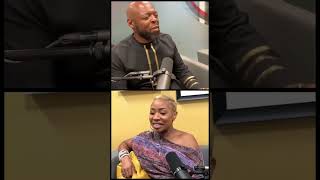
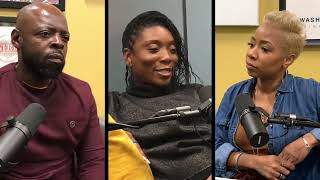
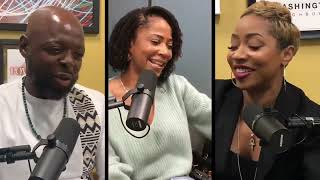
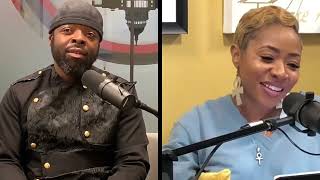
This is a recorded interview (YouTube/Conscious Intercourse) with Quentin and Taryn (Taryn spelled TARYN in transcript) Lewis, co-founders of Urban Eden (also referenced as Herb N' Eden). Hosts Ebony and Armand Kadima discuss the couple’s personal and business journey: how they met at Georgia State, early farming internships that inspired plant-based soap making, Taryn began making soap in 2014 and the business was formalized in 2016; they built the brand through farmers markets, festivals (Juneteenth, Malcolm X events, Essence), and a "digital-first" documented approach (collecting customer data, video vlogs). The couple emphasize role division (Taryn: product/creative; Quentin: operations/finance), friendship and communication as keys to sustaining marriage-and-business, and are expecting their first child (Taryn ~28–29 weeks at time of interview). They credit community, authenticity, and an exceptional product for growth; notable moments include taking ~4,000 bars of soap to California and running a brand ad during the 2020 pandemic.
Questions this video answers
June 8, 2023
2014
2016
Douglasville (metro Atlanta), Georgia
About 9.5 years (married at 22; approaching 10 years in December)
Chapters
What's up? What's up, y'?
All?
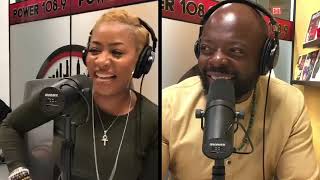
Welcome Back to power 108.9. I am Ebony, here with who You. Who are you today? Before. Who are you today?
Well, you're coming for me already. I'm just saying, the show just started and you're like, who are you today?
Wow.
I don't get no justice around here. I've been saying it.
It's so malachite. And we are conscious intercourse. Y' all know. You just never know with this one who we gonna be today, you know?
Yeah.
His personality.
We're always evolving, right? You're never the same. Like, every day is a new opportunity to be a new version of yourself, right?
This is true.
I create myself in every moment. That's why I gotta check, you know, today, I'm still so malachite.
Still so malachite.
Yeah.
You know, as we consciously intertwine, right? And share these transcendent experiences to evolve our spirituality, you know, this is. This is who we are. We create. We create our reality, right? And today, actually creating a whole new reality today. Because today is the first time we're going to have intercourse with our CEOs. Yeah.
She like, pause.
Quint is like, pause.
Y' all know this one, you know, he gotta go there.
But y' all know.
Y' all know how we touch on the word. And, of course, it's an exchange. It's a conscious exchange, right?
Right. When you look, look it up, right? People be like, intercourse.
I'm like, what's the true meaning? What's the true meaning of intercourse?
We be like, right? They catch me every time.
Yeah, every time.
But yes, yes.
So today, yeah, we're literally. Yes.
We're.
You know, we have two CEOs here today, you know, and we're gonna have an intercourse again with the CEOs today. You know, our phenomenal guest today, amazing entrepreneur. I used to tell you guys all the time when I first met you all, like, yeah, yeah. I like my role models, man. Yeah. You know, power couple, you know, accomplishing things, you know, successful, beautiful. Just, you know, and always. The energy is always immaculate when I'm around you all. Yeah, I just always have this glow.
Yeah, indeed.
You know, ultimately, you know, standing ovation to Quentin and Taryn, you know, founders, executives of Urban Eden.
You know, Urban Eden, man. Yeah.
I remember all them conversations we used to have early on. I remember the conversation we had at Juneteenth. I never forget that.
Right, Juneteenth.
Right.
We were just. Every time I would see you all At a. Either this Juneteenth or some type of a veggie taste or vegan fest or whatever it was, or. You guys were always out there on a grind from the. From the beginning.
Right.
You know, so, you know, urban eating is a big deal now. You know, I. You know, I can't go a lot of places in the cities where people don't know who you are.
Right, Right.
You know, you've touched so many lives.
Like, I.
You know, I could walk in my bathroom, like, oh, my God. I could just, you know, it's an experience. Now taking the shower is an experience.
Right.
Before, it was just, you know, you walk in the shower and just, you.
Know, grab a bar.
So now it's an experience. Right? It's.
That is so true.
Yes, that is.
No, it's true.
It's an experience.
You get it.
You excited? What soap am I gonna use today?
Yeah. Yeah. Y' all got me putting on lotion. I sit there and be like.
Before we dwell. For those people who don't know you, first of all, welcome. Welcome to Conscious Intercourse. Thank you so much for being here. But please let us know who you are and what you do.
I go first. I go first. So I'm Quentin Lewis.
I'm Taryn Lewis.
And I guess for this conversation, for work and all that type of stuff, we are the co founders of Urban Eden, a natural soap and body care company based here. Based in Douglasville. Yeah. Based in Douglasville. Yeah. Part of the metro Atlanta cities. For people that are listening, what started in 2016 and officially. Yeah, officially done a whole lot since then, and I'm pretty sure we might get into that type of stuff. I don't want to just.
Absolutely. You said officially. So y' all was doing it before 2016.
Yeah, I started making soap in 2014. That was the first time. And then we did farmers. We started farmers markets in about 2016. So just selling around on social media prior to. And on, like, a little square website.
Yeah.
But then when we got into farmers markets and stuff, then we actually, like, established the business and we're doing events.
You know, we'll do certain events in the city. You know, Atlanta has a lot of events, festivals.
This is the season.
This is the season. So we was at every. We was at all of those things, you know.
Okay.
Until we, like. I'm not. I'm not gonna say we couldn't, but until, like, the point of the business just was like, okay, we need to kind of focus on.
Yeah.
Other parts. So.
Yeah. And it's not just any soap. Any kind of soap. Natural soaps? Yes, natural soaps with healing properties.
Yeah. Yeah. So there's a difference. You know, I always say, like, even from when I first started making soap prior to, like, just growing up, I had been using, like, Dove and Caress and just things that my mom used. And then when we were in college, that's where me and Quentin met at Georgia State. We met in college, and Quentin actually was interested in, like, gardening. He was. He was already. He made, like, a herbal hair oil. Rosemary, lavender, herbal hair oil. And I just knew that that was, like, one of his interests. And one time when I was, like, walking at school, I seen a flyer for, like, a urban internship for a farm. And so I just took a picture of it and sent it to Quentin. And Quentin was actually the only person who responded to that internship. So he. He started interning there.
And.
And then at some point, I joined him at the internship. And so we pretty much got in touch with, like, just farming, learning about the soil, learning about plants. I always tell people this story about, like, my mom. I tried to give her, like, just a tomato and basil leaf, and she was like, ew, no, that's nasty. So it just really spoke to me how we were just so disconnected from food, even coming from plants, and just the power of plants. And so that internship just really just kind of opened up my mind and my world to the power of plants and. And entrepreneurship.
Yeah.
As well. Farmers market life. And so I wanted to get involved with that beyond farming and just wanted to learn a new skill. And soap making. The first soap I ever made was, like, a lavender soap. And I just remember being amazed that you could even put lavender herbs and essential oils into soap. And, yeah, urban evening was on the rise.
You ran with it. Yeah. And it is an amazing brand, like, from someone who does use it. I love it. My favorite is the turmeric bar. Get your face right. You know, I love it. And your oil, you know, I just absolutely love it. Absolutely love it.
Thank you.
Yeah. Like, how did you. Like, of course you shared with me that you were interested, but, like, did you know that these things were gonna come to fruition when you've made your first bar of soap? Did you actually think that you were going to build a business out of it? And, like, was this something that you planned from the beginning and said, hey, I'm gonna do this and actually build it into a business?
It was strange, because I don't. Like, technically, I guess I did, because, like, I said, we were going to Farmers markets, but we were selling plants, and then we were, like, going to restaurants, giving them the produce that we were growing. And so I just knew that I wanted to. I was like, okay, well, I do want to learn a different skill. We also visited a commune out in Tennessee. They actually have a birthing center there. So that's one of their biggest. And. But they had all these other different businesses at the birthing center was like, one of their biggest businesses. They had a hammock business and, like, a tofu business. And so I was like, you know, I was just really, like, hippie minded. And I was like, oh, I want to be a part of, like, a community and a commune. And if I was a part of a community, I just want to have a very valuable skill and a valuable business. So I think my first I was like, I just want to have a skill. It was like just me having the interest of getting a skill under my belt. And Quentin already had a business doing vegetable garden. So when I started doing it, he was like, you should start a business making soap. And I was like. I was a little nervous because I was like, well, what does that look like? You know, I just knew I wanted to do the skill. And he was talking about actual business, the masculine perspective.
Right.
Because you're more feminine, so you're creative. You just want to create a good skill.
He's like, that's monetized.
We can turn this into this, that, and the other. Right. We have masculine energy to. To build.
Yeah, that's that. You need both.
You need both.
And that's even just as we've grown throughout the years, that's how the. Our roles within the business has just continued to transform. As far as me being the creative side and Quentin taking over all the business and the operational side, like, he is totally the business mind. So you hear him saying, the business started in 2016, and you hear me say, right.
2014.
Right. Started making soap. But that's when he actually was like.
Well, that's when the money came in.
Yes. He did all the paperwork to actually make it a business in 2016.
Right, right. That's awesome. I see you over there rubbing your.
Belly because this girl is active. Yeah.
Yes.
Congratulations.
Thank you.
And how far along are we?
Okay, so people say they don't do weeks anymore, but I use the app, and I'm pretty much like 28. 28 weeks. And wow. In the middle of the week somewhere. So I'm about to be 29 weeks this Saturday. So just entered into the third trimester. So.
Wow.
Yeah. It's summertime here in Atlanta pretty soon. This is our first. Our first child, so. Yeah. Getting ready to have a new housemate.
Exactly.
So how has that been on the business, you know, with your energy and everything and.
It's been good. I really just been trying to, like, like, just protect the energy. And I feel like now that I'm, like, kind of more so entering into the third trimester, I haven't. I've kind of, like, just fell back on, like, creating products and really just trying to prepare my mind for, like, becoming a mom and having a child and kind of, like, stepping back a little bit in the business, letting Quentin just do his thing that he continues to do and kind of just let the, like. Nothing new necessarily in the business.
But you still be involved.
I'm definitely still involved, even, you know, just in ways that I can be. But then I'm preparing for the fact that I know, like, once I have the child for, like, the first few months, to just really be taking the time to just. I don't want to. This is my first pregnancy, and I just kind of feel like I don't want to let this time go past. Like, you always talk about just being conscious and being aware. I want to be here with my first. Really nurture myself before I get to the point where I'm about to nurture a new life.
And that is very important. That is very.
That's so beautiful. For. Congratulations, you know, to the both of you all. This is, you know, it's a phenomenal, you know, experience to bring life into the world. That's the greatest creation.
Yeah.
You know, exercise of our creativity possible, right?
Absolutely. It is.
That is a wonderful thing. So I'm really, really happy for you all.
I appreciate it. You don't. You done seen us grow up, like, man.
Yeah, we've been at it for a minute, you know, we've been at it for a minute, and watching y' all just evolve and grow, it's been a phenomenal journey, you know, to be able to just see it firsthand. So I'm always like. I'm just blown away a lot of times when, you know, when I see you all and all the things that you've accomplished, and, you know, it's just a phenomenal feat. And I think for me, it's also the power of a couple.
Right.
You guys are, like, the epitome of a power couple, especially because a lot of us in, you know, our community, especially as, you know, African American or black people, a lot of Times, you know, we do have examples of power couples, but on TV and this, that and the other. But to actually see y' all together, actually to be able to successfully work in a business together, right, where you. You don't leave and, you know, Quinn doesn't even go to work here, you don't even go to work there. You know, y' all at work together, go home together, hang out on the weekends together, like.
And still like each other together.
That's what I'm saying.
Yeah.
Yeah, that's what I'm saying.
Right.
Yeah, that's what I'm saying. Together all the time. So, to me, that is, you know, that is a. An amazing feat. And, you know, just, you know, I don't want to make y', all, you know, put the pressure that you are a role model that you're a model for others to emulate, but you are, but technically, you are, you know, and it's. It's. You know, it's just. I think that, to me, is. Is so powerful, right, because of the examples that you guys are setting for others. And, you know, they just, you know, how love can be nurtured, you know, for, you know, for you guys to work together. You're like, even. We just tell your story, you know, going through the, you know, internships together and, you know, building all these things together, you know, it's like. So it's. It's. It's. Yeah, yeah.
And I'm. And. And I know we said, you know, y' all still like each other, but I'm sure it's been challenging, you know, trying to run and start a business and thrive in the business, in a marriage. I'm sure you have. You run into challenges, but that's a part of America. That's a part of a partnership, you know.
Absolutely a part of it.
And so. So. So talk to us about that. Like, share some of your wisdom to. To sustaining a marriage when in business as well, because a lot of people say, oh, you should mix it. You should. It's hard to do, but what is your.
What is your experience before we even get that right? How did y' all still answer that question? But I want us to go to the beginning. Like, how did y' all know that y' all was going to be together? Like, how did y'.
All.
Yeah, how did y' all meet?
Yeah, how did y' all know that y' all was gonna, like, spend. Commit to spend the rest of your lives together?
Like, I have to tell the story, I guess, because I'm the One who knew? But yeah, go ahead. I feel like I've been talking, but.
No, I mean.
Who knew you could. Go ahead.
So we met at Georgia State.
Okay.
Met in Georgia State. You know what's crazy? This was real crazy. We met because of, you know, like, in colleges, you have, like, the party promotion groups. They be trying to recruit people when you come into school. Oh, okay. I'm sorry. So. So. So the place that was the promotion team that was. That was recruiting us was called Team Millionaires. Okay. Crazy thing is that the founders of that are the founders. Some of the co founders of lvrn. Okay. Which is. I don't know if you know lvrn, which is a record label now. Okay. They the record label for Summer. Summer Walker.
Okay.
Who else?
Black.
Black.
Okay.
Yeah, they're the same. Same guys. So me and Taryn, they had, like, a meetup. Like, this was before we even got to college. We're 17 years old. Oh, wow. Actually, and we went to this meetup, and that's where I met her at.
But we didn't. We didn't, like, formally meet. We sat in a room, like, with other people. So I. I. And I don't even know if he remembered, but I was like, okay. I think I was like. I think I remember, like, meeting you there. But we formally met once we got to school, and it was still. We are. We're actually 10 days apart. So we both started school relatively early. We graduated high school when we were 17, so. And our birthdays are in September, So a lot of things.
Virgo.
Virgo.
Wow.
And so we did a lot of, like, there was a lot of interaction with us getting prepped in college before our birthdays even came up. So when we actually formally met, it was before we even turned 18. We were getting ready to turn 18.
Yeah.
But just. I don't. I don't want to take away from him. But just when we met and even today, we were just having a conversation, and he was one of the cars. Said, like, what was one of our favorite. Well, what was my favorite memory? And I said, my favorite memory of us is when we met. Because I just remember a friend of ours who's still our friend today introduced me and Quentin, and I literally have never, like, heard a voice so clearly, but there was this voice that was in my head that was like, this is gonna be your husband. I'm 17. And I'm like. I think I just, like, I just put it there too.
Right.
But I heard the voice, like, loud and clear. It was like, this is gonna be your husband, like, as soon as I met him. And I just remember. That's why I told him. I always remember that because I remember his face. I remember, like, his smile. And just, like, looking at all of that felt like home.
It did.
And he. I mean, we were young, so we didn't. We, like, started, like, liking each other. We were just like young freshmen. We would hang out and stuff like that, but we didn't actually start dating until probably, like, a couple years later.
Till we were together.
Oh, wow.
I had to grow up.
Yeah, he did.
That's real.
I was like, why couldn't we be together right then and there? He was like, I wasn't ready neither time. And I said, I can understand that.
17, 18.
Exactly. Right.
I'm just getting to college.
Right.
First time out of my mom's house.
You had to experience that little freedom a little bit.
I need a little bit of time to my. I need some time to myself.
Right. Get to know who you are.
Try a little bit.
Absolutely.
That makes sense.
But I kept that in the back of my mind. It wasn't something, of course, that I told him. I didn't really share that with anybody. And so even though, like, I talked to people, it was just kind of like, I just knew that that path was to be aligned in some way somehow. And then eventually, he. He came around. I think I just. Like. We were friends, though. We were. We were good friends. We just always. I. I don't know if we hung. Yeah, we hung around each other.
Okay.
Like a bugaboo or nothing.
No, she was like. Like, I had, like, male friends, and she would be in the mix of us.
Oh, really?
Kind of like, you know, you got, like. You got, like, the cool chick that be with you and the fellas and stuff. Like. And it wasn't too many. It was just really me, you, and cre.
Honestly, pretty much during the time.
Okay.
And we're still friends. Like, one of our friends, he's like, we have a mutual best friend. He's been our friend pretty much that whole time.
So.
Wow. Now. But, yeah, that was how we met.
So y' all been married how long now?
It's nine. Like, nine and a half years. We'll be married ten years in December. Wow.
Wow.
Beautiful.
Beautiful.
We got married early. We got married at 22.
Yeah. We'll be 32 in September. Wow.
Wow.
Okay, so back to that question. Yeah. How. How have y' all been able to sustain this beautiful relationship?
I think just. I think we. We know our roles Cause you asked about how do we sustain a relationship and business and stuff like that. Like, I think just knowing our roles, knowing what we do, what, what we are good at. Like how you were hearing earlier. Taren is product and, and speaking from the business side of it, like, you know, she's product, creative. That side. I don't mess with none of that. Like, you stay in your lane. She stay in her lane on that. And then when it comes to like the operations and like, you know, the conversations where we have and stuff like that.
Exactly.
You know, I. She lets me deal with that. She lets me deal with that type of stuff or whatever.
Okay.
I guess the boring stuff in business or whatever.
The importance, though.
Well, the importance.
Everything is everything. Everything is important. It just like you said, it's the balance. Be able to know.
Yeah, yeah. So we, so we stay within those roles like that. And then I think the flip side of that, like the, the actual relationship and stuff like that, I think we talked about it. I think communication just, you know, being friends. I think also the fact that we're just now having our first child now I think allowed us to, you know, grow up with each other. Allowed us to, you know, just, you know, just grow and experience the world like we were able to do. We're able, we were able to build the business and grow the business. Not to say that kids is going to stop you from doing any of that because you're still going to do. You're going to. You're going to make it happen.
Yeah.
But I think for our situation, for everything that has happened, especially in business, I think that all of that was very beneficial that it didn't happen yet. Right.
You know, because y' all got to know each other to know that y' all can actually do business together.
Yeah.
Because y' all were good friends.
Yep.
Yeah.
That's important. Good friends. I just would add, I think, I mean, it's definitely been, I guess when you even ask, like challenges. It's been like a learning situation the whole time. Quentin's like pretty easy to kind of. He's easy going and easy to get along with and pretty patient as well, because I know that we. You were mentioning like talking about just traumas and stuff just growing up. And like for me, one of my biggest traumas was just like my parents, their relationship. They got divorced when I was 10. But I would tell people, I just would remember just like waking up just thinking I'm hearing arguing because they just argue so much and you know, just when people are just at odds with each other and just being in the middle of that as a child, that's a byproduct of that. So even for us to get married in the first, like, few years, we had times when, like, we argued, and. Because that was what I knew for the most part. And I really kind of had to take a step back and realize that, like, I didn't want to be like my parents. I don't. I don't want to, you know, be divorced and all of that. So it was just, like, I really wanted to work on my relationship and really value being with Quentin and just the relationship that we had in general. So just constantly working on myself to just be a better wife. Hopefully you work on yourself to be a better husband. I can't speak for him.
Then we naturally just up. Grew through.
Through the.
Through time.
Yeah, yeah. And community, like you said, communication and really just taking the time to talk. Like, we probably don't sit down and talk as often as we could, but we will sit down and talk something out if. If need be.
Right.
So that's. And. And try to work and grow from there. So I think, like, even the friendship aspect, us being friends and just being, like, open with each other has. Has helped a lot.
That's real. That's real.
That's amazing.
I know.
Quentin, you mentioned, like, the roles, right. In business.
Right.
Do you guys find that you also have roles in your marriage as well, in your, like, at home, like, do. Are there certain things that you're responsible for, Quentin? Now, there are certain things you're responsible for tearing, like, you know, around the house, for example. Or is it. Is that.
Yeah.
I'm saying. I'm just curious.
Oh, no, you're right. You're right. I mean. Yeah, I think. I think we just. I think even just as people, I think we naturally fall into roles. Yeah. In relationships, like, I dump the trash, like, right.
She don't touch the trash.
But that is not. But that's not to say that I won't touch the food and won't help.
Cook or anything like that.
Or, like, won't help to wash the dish. Now, yes. Taryn will do those things more than me, like cooking and cleaning. I want to. I definitely help out, you know, in those areas or whatnot. But, you know, we do have. We do have our roles and. Yeah.
Yeah.
Like, if somebody's at the door and, you know, it's late at night, I'm gonna get up.
Y' all don't take turns, like, short term. Terry.
Yo.
Hey.
Hey. Somebody out there. I don't know, man. Go check that.
I did it last night.
Right? You gonna get that?
You gonna get that last couple times.
Right, right, right. So, you know. So, I mean, yeah, we have the natural rose.
Yeah, that's what's up.
But do you feel like having those roles actually helped you all, like, kind of helps with the dynamic in the relationship?
Yep.
Yeah.
Even. Even with saying even with me just talking about my parents and stuff, that was something that I had to kind of realize, too, is what were these roles? And just. Even. I feel like, in a sense, I know that we talk about gender roles a lot in. In this day and age, but I truly feel like it's just important for. I mean, as a woman, you want to. We talk about our soft life nowadays. It's like, we want to live a soft life. Like, let the man leave. Like, yeah, let the man be a man. Let the man be a man and make the decisions and, like, just. But I mean, of course, you. That man should show that he is capable of making sound decisions and that he, you know, he could be a leader. So I feel like Quentin has. Has shown that he's good at making decisions. And even when we talk about soft life, sometimes it's just like, as women, sometimes we don't want to make all the decisions all the time. Like, we. We. We make, like, natural decisions. We trust our intuition. But some hard things, we just want to take the world off our shoulders a little bit. And y'.
All.
Y' all shoulders is big and broader for that.
Exactly.
Right.
Carry the load. Right?
Yeah.
Accepting that for me, like I said in the beginning, I think, because I, you know, I had my own apartment. I had a job. I had all these types of things. I'm a first, like. Well, I have an older brother, but I'm the first, like, daughter. So I had all this type of. All these types of things. I was independent for the most part. You know, we both had apartments, but Quentin, like, technically, like, moved into my apartment, but it was just, like, still just kind of breaking. I had to break that barrier of sharing your space. Yeah, sharing my space and feeling like.
I need to be out through the whole world. Right.
If that was to go by, they.
Would be like, oh.
He moved in with her. Wow.
But, Taryn, you said, you know, you talked about, you know, your childhood trauma with your parents, so you pretty much had to learn your roles and what that really looked like to be a wife. You know, you learned that pretty much through what you knew you wanted, not what you experienced in the. The example that you had. So tell us a little bit more about that, like, growing up, you know, were your.
Were your. Were you.
Was your mother talking to you about her relationship with your father? Did you. Did you have more insight of what was really going on with their relationship?
I think from, like, my age, I did, because, like, with whatever they were dealing with, like, in their infidelity situations, like, on both parts, my dad would ask me what my. What my mom was doing, my mom would ask me what my dad was doing, and then they didn't, of course, probably tell me everything, but they did tell me some things as far as, like, me being their older child. I was their older child, their eldest child that they had together. Okay. So I kind of, you know, I would have to be in that role of kind of, like, understanding what was kind of going on, not fully from an adult perspective, but just from, like, my perspective as a. As a child. And, you know, me probably, like, telling my dad, trying to make up or trying to observe what I saw and telling him stuff, and, you know, him probably getting mad. And my parents like to say, even to this day, that it was, like, manipulation on either end. I don't know what it was, but it just was like. I don't know, it was just me being observant, trying to figure out, like, what was going on in their relationship. And my parents divorced when I was 10, and they actually got. Tried to get back together and did get back together a little bit when I was 16. And my mom, you know, we have been living by ourselves. We moved down here to Georgia when I was, like, 11. Okay. And my mom, you know, she asked me before my dad came and moved in. She said, do you think your dad should move back in? And I said, no. I said, because you guys have different parenting styles. And I have a brother that's seven years younger than me, and my sister is 10 years younger than me. And I said, I don't want them to have to go through the same thing that I went through as far as, like, y' all breaking up. And I knew, because I knew that you just know when people are not compatible. I was like, yeah, not, like compatible, and it's not gonna work.
Wow.
But, you know, she. Even though she asked me, she didn't listen and still did her own thing. And of course it didn't work, like, within a couple of years and stuff. And my brother and sister went through the same exact thing. And it actually might have been a little worse on them just because they had each other, like, as far as closer to their age. Right. And then my parents were still in the same vicinity, so it was like, I'm gonna go to my dad's house, and I'm gonna go to my mom's house whenever they had an issue with parent or something. And at that point, you know, I'm getting to the point where I'm in high school, getting ready to go to college. So it's like, y' all living y' all life. I'm doing my thing right at this point. So, yeah, I. I feel like I kind of didn't. I didn't learn how to be a wife growing up, per se. When I met Quentin, actually, and even just him as a friend, and I met his mom. His mom. I always tell his mom, I was like, you know, you showed me how to be a wife. She showed me how to, like, be a wife to her son. I felt like, as far as. Like, that's when I, like, kind of really learned how to cook and stuff.
Okay.
Just seeing her as a wife now, I'm not necessarily the same as her, but just I learned a lot of things from her as far as, like, being a wife. Right.
And feminine and doing the roles, which.
Is an interesting point. It kind of leads to. You know, I was going to ask you the same thing, like, what about your childhood that you saw that has either helped you. I would assume it has helped you, you know, in your relationship, I think.
Well, what I saw. You know what's crazy? Like, I saw, like, my dad, although he's always been, like, this huge figure. Like, he's six, four, two, something, whatever. So, like, he always been, like, this huge guy to me. Yeah. So, you know, he was. He's. He's the guy, like, he was the alpha in the house or whatever. And my mom was always submissive, you know, she wasn't, you know, combative like my mom. She doesn't. I mean, she yelled at us or whatever because we her kids, but, like. Yeah, I never really seen her, like, you know, going back and forth with my dad and stuff like that and see too much of that. Okay.
Are they still married?
Yeah, they still married. Yep. They've been married 30. What? I'm 31, so they should be married 32 years. Wow. I believe. Yeah. They got married super young.
Okay.
So, yeah, I. I saw some. I think I saw some good stuff now. Some of the negative things I did see. Yeah. Just stuff like, you know, my dad just not always, like, helping out my mom. So that I think I Took that. Yeah. And, you know, I've always told Taren, like, I don't want you to, like, wear out because you're cooking all day and you're cleaning all day. I want to help out so that we both can sit down and relax and enjoy, you know, watching some Netflix together, whatever.
Right.
So, you know, I'm very cognizant of that. So, yeah, I think that was some of the things that I saw. But I would say, overall, it wasn't a bad experience whatsoever. Okay. I don't think it was bad experience. I'm grateful for my parents. I think that I owe them a lot, you know, just for raising me and my brothers.
Okay.
You know, me and my brothers, we all. Well, we all have business. My other brother, he works for us now, but.
Okay.
We all were all entrepreneurs, so I gotta. Definitely. They gave us a good foundation. Yeah. We all were together. Mom and dad both in the same household, even though everything wasn't perfect, but.
Right.
You kept three boy. Three African American boys in the same household. You know, we. We made it where we are. They deserve some credit.
And they still together.
Yeah. Because we can, you know. You know, you can nitpick the stuff, you know.
Right.
And I've had conversations. My brothers, they like, oh, they did this, did that. I'm like, yo, you gotta look at everything from the high level, right? Grand scheme of the things. We safe. We here. Y' all got kids now. We growing up, so. Yeah, we good.
That's awesome.
Yeah.
I'm always curious to learn as well, you know, especially, you know, in. In that type of context where actually both of y'. All. I'm gonna ask you all, was. Was religion or spirituality the factor in your upbringing? Like, what was that like? You know, as far as, you know, your parents. Did your parents make y' all go to church or, you know, did y'?
All. Well, yeah, religion was a roller coaster for me. Okay. My dad is a. He reads a lot. He's a searcher. Even though this is crazy, my dad dropped out of high school, but he reads re. He will read a book. He. So he's always been a searcher. We were Muslim at one point. Okay. We went to Christianity. He was in the church. He started searching. He became Hebrew Israelites at one point. That was like the. That was like, probably like the. I would say the bulk of my childhood was that. Okay. You know? Then he started reading Owaspi. I don't know if you heard of that book. Yeah. Like, my guy, he goes everywhere, and we've Got taken through everything.
Yeah.
So religion definitely was like big part. And, and again, like I said, Hebrew Israelite was the, the main religion that I was part of my childhood probably from. He first introduced it to me when I was like 13. Thirteen until I would say mid-20s.
Which. Which explains why you probably was into farming and things.
Yeah, that's exactly, that's exactly why I was into that. Because the, the guy that introduced me to farming and stuff was a Hebrew as well.
Right.
So like I'm very. And I know how he really likes stuff now. Very controversial. What now? But you know, I don't like to talk super negative about them because.
Right.
Because like I know a lot of people in it still.
Yeah.
Like it's such a foundational piece for me.
Oh yeah.
It was such a thing for me like from, from diet to the farming to, to rest. I mean. Yeah. Honoring your parents values, right? Yeah, values.
Value systems. Exactly.
We was, me and Tim was just talking about that today because the fact that, you know, me and her don't really like latch to a certain religion now that we have a child on the way. I'm like, well, what are we going to set for her? What foundation and values are we going to set for her? Yeah, for her to latch on to. You know what I'm saying?
Right.
Yeah.
And it seemed like y' all got a sound, you know, a sound knowledge of self.
Yeah, yeah.
And that's important, you know, because you know, you mentioned the different religions you've been in and you got enough knowledge of self of who you are to pass down to your child to, you know, for them to just be true to themselves. Because at the end of the day that's what it's about. I don't think it's about attaching itself to a religion or ideology of anybody else. Knowledge of self.
Yeah, yeah.
And that's important, you know, because you know, you mentioned the different religions you've been in and you got enough knowledge of self, of who you are to pass down to your child to, you know, for them to just be true to themselves. Because at the end of the day that's what it's about. I don't think it's about attaching yourself to a religion or ideology of anybody else's work. Do what's best for you with integrity.
And that's probably how like I've taken my approach now as, as I've gotten on my own and got out on my own out front of my parents house. That's what it was. We, we've taken on our own type of thing now.
Right.
But I've never forgotten any. I always will quote something from Proverbs.
Yeah, it's a good foundation.
Like, she's like, you.
I always pull a story or something. I mean, you got to think, like, going from 13 until then, like, every week we was reading the Torah and, like, some.
Less Shabbat.
Huh? Your own Shabbat. We was just sun up to sundown. But you can't forget any of this that's in you. It's.
It's foundational, you know, it's.
That's right.
How about you, Ter?
For me, growing up, we were Christians. We weren't, like, super, super devout, like, holy roller type of Christians. Like, yeah, like, in church every Sunday, but we did go to church a lot. And then at some point. So when I. When I went to college, I started having questions just about religion in general. Because. Because I was living the college life, and I was like, I need to go get baptized. I was like.
Girl, Georgia State, downtown Atlanta.
Go get baptized. And. But I kept asking myself, I'm like, is that really the answer? Is, like, is me getting baptized really the answer? Right? And then also, I took an African American studies class. And I remember we're in, like, this big kind of like, stadium classroom, and we're reading in a textbook. And it said that when African Americans were brought here, that they were not Christians. And so a light bulb goes off in my head because my parents had also taught me, like, from a very young age about racism, about slavery, about just the injustices that were going on. So when you say that when we came here, we weren't Christians, I'm like, so what were we? Did we become Christians at some point? And so that's when I started having questions. And me and Quentin, like, I said, we were just friends, like, just hanging out. And I'm asking Quentin. So I'm like, I have questions. I'm like, I don't know, like, what's going on? Like, is Christianity, like, the path. Like, is it really real? And I remember we were sitting in the car at my apartment in the Flats in Atlantic Station, at the rooftop, in the car. And he was like, okay, well, you just need to erase, like, everything that you know about.
Reset the hard drive.
Remember, he said that he. You just need to erase, like, everything that you know about.
Red pill, blue pill.
Red, blue pill, Right?
Like, reset the hard drive.
Reset the hard drive. I remember he said that. He was like, you need to erase everything that you know about Christianity. He was like, okay, this is what I'm about to tell you. And then I remember. I honestly don't even remember what. I probably pulled out the Hebrew. Like, you need to erase everything that you know about Christianity. He was like, okay, and this is what I'm about to tell you.
If you've never, if you've never read.
It, I pulled that out.
And then you read. Gets you in the moment.
You're like.
And it resonates. It's true instantly. It's like, oh yeah.
Because you're like Daniel Kalua. You know, get out. You know, you sink in that sunken place.
Yeah.
To me that's what I think that's what happened to me. It was like, dang. I'm like, this is. I'm in that sunken place right now. I'm like, I'm like, yo, this was here this whole time.
And then especially for you to come from Christianity and a person can show you something in the Bible that you're like, wait a second, right? I ain't look at it like that.
I'm 17, 18 years old. I'm showing her this and she probably like, she's like, yo, you different, right?
That's what got her.
That's what got her baby office already different to me. But yeah, definitely when he showed me that, it was like I kind of became interested more so into that. So I wanted to know more about that. I wanted to start going to him. He was like, well, you know, I go to like a congregation on Saturdays and stuff like that. And I was like, okay, like I'll come and check it out and like go to it. And like part of it was like I was learning a lot more and then I was spending more time with him. So it's kind of like, okay, like more interested in this. And my, like I. So then I kind of like, you know, took on a lot of the doctrine and just kind of went with it. And I remember like my parents and cuz once you kind of become a Hebrew Israelite, so you become like very zealous. You're trying to tell everybody.
You look at through your phone like you texted everybody like, yo, you ready to debate?
You ready to debate?
Debate you going through like, yeah, I.
Was going there with all my parents, you know, trying to tell them about not eating pork no more, can't do this. And so they really thought like, you know, of course they think like, it's definitely like a cult in a phase and stuff like that. Which I guess in a sense it end up being a phase in A sense. But like you said, it's still foundational. Exactly. And so we went into that route, and that's actually even part of the reason why we got married so young, too, because we were just hanging out a lot, and then we wanted to live together and stuff like that. And of course, like, everything in the Hebrew Israelite way is very, like, by the Ten Commandments is, you know, really shouldn't be living together. You know, shacking up. Intercourse thing before.
Right.
Sexual intercourse before.
So we were kind of like, I'm not. I guess I don't want to say we were forced to be married, but they was kind of. The elders was kind of looking at us like, yeah, yeah, y' all kind of need to make this happen.
Wow. And when your parents. I remember his parents had found out, because I think we. We. I was. I would go visit his house and stuff, like, with his. His brothers. He lived in with his brothers and his parents at the time, and I would go visit his house and. And one time, I think he was in there playing a game, and his mom was like, do y' all sleep in the same bed or something when y' all hang out? And he is gonna answer it all just like, yeah, we sleep in the same bed. His mom was like, wait a second.
Hold up.
Wait a minute.
Right?
She's listening that from the perspective of this is her first baby.
Like, Right.
I'm her oldest.
Yeah. She like, wait, what?
Next thing I know, she's going to the elders at the congregation telling them that, oh, they've been sleeping together and all this type of stuff, so they need to start going through the courting process. So it was like, at this point, they're like, yeah, you're courting her pretty much, and, wow, you need to go through, like, the marriage process. But, I mean, I think that we kind of just were with it. We didn't. It was a part partly pressure situation. But then we liked each other, too. And it was like, hey, I guess we. Oh, they've been sleeping together and all that type of stuff, so they need to start going through the courting process. So it was like, at this point, they're like, yeah, you're courting her pretty much and know you. And, wow, you need to go through, like, the marriage process. But I mean, I think that we kind of just were with it. We didn't. It was a part partly pressure situation. But then we liked each other, too, and it was like, hey, I guess we can.
Plus, the voice in your head said it. Right? So at that Point.
Your voice did say was.
It was.
Said it was. You know what I'm saying?
Yes. And even though my parents weren't a part of it, we did ask my parents for, like, permission. Like.
Okay.
Was it okay?
You said they weren't a part of it.
They weren't a part of the.
Oh, they're the religion. Right. Okay.
We still did ask them for permission and we got married at the courthouse, so we did get like a certificate through the congregation as well. But we pretty much got married at the courthouse.
Right.
And are legally married, so.
Yeah, but it worked out, though, because it. It settled me down.
Yeah. Okay.
I guess. I guess it gave, like, because. Because now, you know, I'm not just out here, like my friends know again, I'm 21, 22, 23. When you that age in Atlanta, you.
Plus the voice in your head said it.
Right.
So at that point, the voice did say was.
It was.
Said it was done. You know what I'm saying?
Yes. And even though my parents weren't a part of it, we did ask my parents for, like, permission. Like, was it okay?
You said they weren't a part of it.
They weren't a part of the religion.
Oh, the religion.
Right. So we still did ask them for permission and we got married at the courthouse. So we did.
Atlanta. Yeah. You just want to go do your thing. So. But now, Now I'm married. Now we're. We're having conversations. We're thinking about business.
Exactly.
We're thinking about. All right, how do we, you know? Cuz. Cuz I was working as a valet, she was working as a server, and we were just like, yo, what are we going to do? We need something to invest in. And then that's when we kind of got us.
Get like a certificate through the congregation as well. But we pretty much got married at the courthouse and are legally married, so.
Yeah, but it worked out, though, because it. It settled me down.
Yeah. Okay.
I guess. I guess it gave, like, because. Because now, you know, I'm not in Atlanta. Yeah.
Come on now.
Just out here, like my friends, you know, again, I'm 21, 22, 23. When you that age in Atlanta, you can't.
This is Atlanta, though. Atlanta.
Everybody got potatoes.
Right.
But now you got other problems.
Atlanta is amazing. Everybody know what Atlanta is?
I'm the freaknick.
It's the freaknik all the time.
Any place I go to, I compare to Atlanta, and nothing compares to Atlanta.
Atlanta.
Yeah. You just want to go do your thing. So. But now, now I'm married Now we're having conversations. We're thinking about business.
Exactly.
We're thinking about. All right. How do we, you know, compares to Atlanta? Nothing compares here.
You can't even go to the grocery store.
So even that. To sustain a relationship living in Atlanta.
Yeah.
To young.
Yeah, that's because. Because I was working as a valet, she was working as a server. And we were just like, yo, what are we gonna do? We need something to invest in. And then that's when we kind of got us.
Why I gotta be amazing?
Yeah.
Oh, they do.
They do. They do get wild in other cities. We just happen to be in Atlanta, Right.
But it ain't too many. Too many naked bodies in Chicago all the time. It's cold, right?
Yeah.
It's what they did.
All right.
You better be careful.
His shot town people gonna come for him. Yes.
You a mess.
A mess.
So it's interesting point, because I was. As you talked about how y' all had to, like, begin to. You're married. You're not out in the streets partying. You're like, we got to figure out something to invest, something to do.
Right.
Because I was about to lead into that, because. Trying to figure out. Okay, because, you know, we go to a lot of festivals in Atlanta, you see. And you see everybody named Mama making soap. Like, literally, I see more soap makers at these festivals than I think any other, you know, any other brand, any other products, right? So, like, what made y' all stand out and achieve so much success? What would y' all listen to in Atlanta?
Yeah.
Come on now.
This is Atlanta, though.
Potatoes.
Right?
Now you got another problem. Atlanta is amazing.
Everybody know what Atlanta is.
Give.
Like, you know, if you had to identify a few things, what would those things be?
Good question. I think that I just want to say. I do think that's a great question, because it is an oversaturated market.
Yes, it is crazy.
And I know it wasn't when you started off.
No, actually. Actually, it still was. When I used to see out the festivals, it wasn't as saturated as it is now, but it used to be. At least when we go to the Juneteenth, all those things, it used to be at least like 10 or 15 of them. Like, it was like, the most. You know, I would see it all the time, but I'm like, but something that made y' all different.
Any place I go to, I compare to Atlanta, and nothing compares to Atlanta. Nothing compares here.
You can't even go to the grocery store.
So even that to sustain a relationship, living In Atlanta.
Yeah.
To young.
Yeah.
That's so.
To me, it's like, I want to kind of get some clarity around that, even though. So for people that are listening and watching, like, amazing.
Yeah.
Oh, they do.
They do get wild.
What was the things or the things that you feel like major Made us different. Yeah. Made y' all different.
Yeah. You know, I think some of the things that made us different was just we. The documentation of our. Of everything from the beginning. Like, we used to always just document everything on the phones, you know? You know, video. Communicating through video. We did a lot of that. Okay.
Yeah.
I think I always had, like, this digital cities.
We just happened to be in Atlanta.
Right. But it ain't too many. Too many naked bodies in Chicago.
Digital first approach. Even early on, meaning I was always collecting data all the time.
It's cold.
Yeah. Okay. Even early, early on, I remember I used to go to festivals and I used to go to vendors just to go around and see who all be collecting.
All right.
You better be careful.
Collecting data. Nobody was ever collecting data.
Okay.
We was doing that from day one.
Okay.
We was collecting your name, your email, your phone number.
Right.
Okay.
All the time. I remember my first email in 2015. Oh, wow. So, you know, always doing that. I think that separates you and then I think the product.
Yeah. Okay.
I think that just got to just give the credit to the product.
And all of that.
Yes.
You a mess.
So it's interesting point, because I was good as you talked about how y'.
All had to, like, man created a exceptional product. And I think that we. We focus.
Begin to. You're married. You're not out in the streets partying. You're like, we got to figure out something to invest, something that's on soap.
For the first two and a half years, we didn't. We didn't actually all. You see all the products that we have now.
Right.
We didn't have all that stuff at first.
Right.
We just. We just established in SOAP because we wanted to be known as, like, you know, the soap, the soul people do. Right.
Because I was about to lead into that because. Trying to figure out. Okay. Because, you know, we go to a lot of festivals.
Yeah. And. And honestly, the business was created out of like a. Would you say like, out of like, kind of like a necessity kind of. Because at the congregation we was going to. I created this program called the Group Economics Project.
Okay.
Where I wanted everybody in the congregation to create products that we all used every day.
Okay.
So that we. So we can purchase from each Other. So that's how we first kind of.
Was in Atlanta, you see. And you see everybody and their mama making soap. Like, literally, I see more soap makers at these festivals than I think any other, you know, any other brand, any other products.
Right.
So, like, what made y' all stand out and achieve so much success? What would y'.
All.
Let's.
At what age?
22, 23. Okay.
That is awesome.
It was around there. So I created that program there. So I wanted people.
People were at the end of the say, give.
Like, you know, if you had to identify a few things, what would those things be?
Good question.
At the end of the service time, people would go and set up their table.
Yeah.
Start sending them. And he definitely. He did. He set that up.
Yeah. So we was doing. So somebody else was doing deodorant. I wanted somebody else to do bed sheets. Somebody else, you know, just the essential stuff.
That is awesome.
But we happen to keep it going, right? We happen to keep it going. And again, just documenting the process as we. As we continue.
I think that I just want to say, I do think that's a great question, because. Yeah, it is an oversaturated market.
Yes.
Okay.
And I hear that. And listening to you, like you said, y' all documented the journey. I really think what sells it the most and is y'.
All. Yeah, yeah.
You know, the people seeing a strong couple doing it together, I think that's something for people to believe in.
It is crazy.
And I know it wasn't when you started off.
Actually, actually, it still was. When we see out the festivals, it wasn't as saturated as it is now, but it used to be, at least when we go to the Juneteenth, all those things, it used to be at least like 10, 15 of them. Like, it was like, the most want.
To, you know, be behind, you know, that is amazing. And that's something that would definitely motivate me to support, you know?
No, absolutely. We. We. I think early on, we had those. What do you call them? Like, those raving fans. They really gravitated to the story. They just really. Yeah.
You know, I would see it all the time, but I'm like. But something that made y' all different. So to me, it's like, I want to kind of get some clarity around that, you know? So for people that are listening and watching, like, what we're doing.
Exactly.
You know, being at Juneteenth Festival, being at the Malcolm X Festival. Well, being at these festivals, what was.
The things or the things that you feel like major Made us different.
Yeah.
Major.
This was where, you know, it was. Our people there. Yeah, they would, you know, they would learn about us on social media, but then they would come and vibe with us at these festivals and stuff like that. I think that connection early. You know, even though we do most of our stuff online today, we didn't start off online right. We started off in person.
In person.
You know, I think some of the things that made us different was just we. We was making those. Set up that tent.
Right.
Making those connections in persons.
I think that you guys were consistent. You guys were at every.
We was at a lot of.
We was like literally touching down everyone.
The documentation of our. Of everything from the beginning. Like, we used to always just document everything. Markets through the week.
Exactly.
And then we was doing like the Malcolm X or Juneteenth or whatever on the weekends and stuff like that or whatnot. So I think that really helped.
And the timeline of that was like, we, you know, we were everything on.
The phones, you know, you know, video. Communicating through video. We did a lot of that doing.
The stuff at the congregation. And I remember, like, Quentin was already kind of like transitioning out of not working his job anymore at valet and stuff like that. And I was like, okay, Yeah.
I think I always had, like this.
Digital you out here just like living. And I want to know. I want to be working. No, more like as far as, you know, going in and clocking into a job. And so I remember even in 2016.
I want to say it was 2016, digital first approach. Even early on. Meaning I was always collecting data.
My last time having a job was 2016, and it was the farmers market. Us, like, branching out. Okay.
Even early, early on, I remember I used to go to festivals and I used to go to vendors just to go around and see who all be collecting.
Going into the farmers market world. Because we were doing like three farmers markets and data.
Nobody was ever collecting data.
Okay.
We was doing that from day one.
Okay.
We was collecting your name week.
So, you know, of course that was kind of like time consuming in a way. And honestly, that probably wasn't the best thing to do at that point in time.
Looking back. We should have had. We should have had jobs.
We should have.
Yes.
Because we struggled for.
Yeah.
A lot of years.
Your email, your phone number.
Right, okay.
All the time. I remember my first email in 2015.
Yeah. We did the farmer's market life. But even in the beginning, like, I was making soap and Quinn was.
Wow. So, you know, always doing that. I think that Separates you doing Internet marketing.
And we didn't have a tv, so we really just, like, focused in on those skills. And Quinn is very like, we were broke.
We were super broke.
That's not why we didn't have a tv.
Yeah. And then I think the product.
Yeah, yeah. Okay.
I think that just got to just give the credit to the product.
You know, we didn't have a TV and microwave. We was really living a different life. Yes.
Created a exceptional product. And I think that we. We focus.
And so he was just always like. Like, he said he was really big on documenting the journey. It would be times I would have an attitude. We making soap late at night, he turning on the camera, going live, showing everybody else making soap. And I'm like, like, why? He's showing the good, the bad, the ugly.
And that's why they love y' all just on soap.
For the first two and a half years, we didn't. We didn't actually all. You see all the products that we have now.
Right.
We didn't have all that stuff.
I wouldn't. If it wasn't. If it was for me, I wouldn't be turning on the camera showing everything at first.
Right.
We just. We just establishing soap because we want it to be known as, like, you.
Know, the soap, the soul people, stuff like that. Quentin would turn on the camera. Okay. Y', all. This is what we doing. It was very, like, raw stuff. It wasn't like, we're creating, like, ads and commercials and stuff.
Right.
Like, we're just showing what we're doing.
That's right.
And we had a. For one time, we took 4,000 bars of soap to California.
Yeah. And. And honestly, the business was created out of, like, a. Would you say, like, out of, like, kind of like a necessity kind of. Because at the congregation we was going to.
I went and documented that whole journey. And so I think, like you said, a lot of people just have followed the story, because you'll hear a lot of people that have been like, yes, we've been following y', all, like, ever since y' all been doing this. So.
Created this program called the Group Economics Project.
Okay.
Where I wanted everybody in the congregation to create products that we all used every day.
Okay.
So that we. So that we can purchase from each other. So that's how we first kind of start.
I feel like people just feel, like, connected to us. And then when the pandemic happened in 2020, we came out with, like, a brand story and ran an ad on that. And then more people started finding out about us. They're looking for a soap to use, a natural soap.
At what age?
22, 23.
Okay.
Company a black owned brand. So it kind of just like. Like took off and we gained more traction.
That is awesome.
It was around there. So I created that program there. So I wanted people.
People were still at the end of the. From there.
And I'm sure through that you got a lot of testimonies how it actually helped people skin and change their lives, right?
Y. Y. We did. We got a lot of those.
Yeah, I bet.
I bet.
Con. At the end of the service time, people would go and set up their table.
Yeah.
Start sending up. And he definitely.
I remember when I was introduced to you.
All right.
I think we were somewhere and someone's like, hey, you know, Quentin may need some accounting support or something like that. Like, were you actually looking?
He did. He set that up.
Yeah. So we was doing. So somebody else was doing deodorant. I wanted somebody else to do bed sheets. Somebody else. You know, just the essential stuff.
That is awesome.
But we happen to keep it going.
Right.
For support in that capacity. Like, how did that happen?
You know, I. I mean, I think. I think I was working with. We was working with Javaris and them. Okay. Yeah, we was working with them. And I'll be honest with you. Finances is not our strong. It was never our strong suit.
Yeah.
She's the creator. Happen to keep it going and again, just document the process as we. As we continue creative. I'm more of like that. Go get an entrepreneur.
Yeah.
Finances is really wasn't our strong. Okay.
And I hear that. And listening to you, like you said, y' all documented the journey. I really think what sells it the most is y'.
All. Yeah. Yeah. You know, so I think working with him.
Yeah.
One of the. I think I remember. I think I was working with him and he was all. He would call you asking about certain stuff on like asking certain accounting advice. Exactly. And then I think I put two into the. I'm like, okay. I think I probably working with you.
Not.
Not. No slight to him or whatever.
In a strong couple doing it together. I think that's something for people to believe in.
But it was just. It was just those early earlier years. But yeah. When the year did we start working together?
We want to, you know, be behind. You know, that is amazing. And. And that's something that.
It was 2019, I remember. Yeah, it was March of 2019. Okay. You guys. Actually we talked and you guys came to the house.
Oh, you came. Yeah.
You came to the house. We sat down and kind of talked.
About, you know, definitely motivate me to support, you know.
No, absolutely. We. We. I think early on we had those. What do you call them, how we.
Could potentially work together. And I remember, you know, fast forward at the end of 2019, I was like, quentin, you guys have something, like, phenomenal here. We need to sit down and put together some projections.
I remember them like, those raving fans. They really gravitated to the story. They just really gravitated to what we were doing.
Exactly.
You know, being at Juneteenth Festival, being at the Malcolm X Festival, being at these festivals where, you know, it was our people there. Yeah. They would. They would learn about us on social media, but then they would come and sew together.
And Quentin was just like. I was like, quinn, like. I was like, let's schedule a meeting on the calendar. Let's do some projections.
Yeah. And it was not clicking at the time. It just wasn't. Because he kept. He kept saying. You kept saying to me, what does it look like if you do a million dollars? And I just was like, what? It just.
I don't.
I don't know.
2019, wasn't it?
It was a 2019.
It was.
It literally was vibe with us at these festivals and stuff like that. I think that connection early, you know, even though we do most of our stuff online today, we didn't start off online.
Right.
We started off in person.
In person, exactly.
He was making us set up that tent.
Right.
In persons, I think that you guys were.
December 2019. I was like, quentin, I could see you guys doing a million dollars in 2020.
You called it before anybody. Yeah.
I was like, you have to do. It's like, literally, you could do a million dollars in 2020. And I was just like. But I was like, let's put something on the calendar. Let's do it.
Yeah.
And then I didn't hear back from you.
I'm like, we didn't get a chance.
What's going on? Then I reached back out. He's just like. I remember when I talked to you about it later on tonight, he was just like. It just. It just didn't click. Like, yeah, you told me we can make a million. Just didn't.
It didn't.
Like, it didn't make sense. Like, it just.
It was.
It was a reality. It's like you were talking fantasy. It was like, yeah, but, you know, but I think then fast forward to see what happened in 2020.
Yeah.
And it's like, man, you Couldn't believe system. You guys were at everything.
We was at a lot of, like, literally touching down everyone right after you called me. I think it was like the end of the year. I was like, yeah, we did this. You was like. Like farmers markets through the week.
Exactly.
And then we was doing, like, the Malcolm X or June 10th or whatever on the weekends and stuff like that or whatnot. So I think that really helped.
And the timeline of that was like, we, you know, we were.
What?
What? Exactly.
What?
Like, I only said a million, like.
Doing the stuff at the congregation. And I remember, like, Quentin was already.
Kind of like, y took that in, you know, and destroyed it.
And speaking about the finances, we going to have to take a break real quick, and we going to come back because we definitely want to know more about that. And we pay the bills.
Hold on.
He's looking at some type of way. We're not breaking.
We not breaking.
How much time it's been.
Oh, wow. It's been.
We went through our brain transitioning out of not working his job anymore at valet and stuff like that. And I was like.
We went through our brain. It be like that on this show. We just be talking.
Oh, that's what.
That's what you were saying over there. So we gonna have to have y' all back on.
It was so.
It was so good. Like, I didn't want to break it.
You out here just, like, living, and I wanted. I don't want to be working no more. Like, as far as, you know, going in and clocking into a job. And so I remember, even in 2016. I want to say it was 2016. That was my last time having a job was 2016. And it was the farmers market. Us, like, branching out.
Amazing story.
I love it.
Yes. And just definitely congratulations on all the success.
No, I appreciate it. Appreciate it. I mean, just give, you know, thanks to the creator.
Yeah.
The team and, you know, even yourself, Armand, just, you know, you've been. If anybody doesn't seen it, this man, he doesn't seem.
That's what's up.
Everything. Yeah.
Like, everything going into the farmer's market world because we were doing, like, three farmers markets. A natural supporter.
Yeah.
I used to come because you just have a big family, so we. So, you know, of course, that was kind of, like, time consuming in a way. And honestly, that probably wasn't the best thing to do at that point in time.
Looking back, we should have had. We should have. Yeah. Brought the kids. I remember we did the, you know, in the store.
Yeah. Demonstrations Be able to just show them like real life entrepreneurs, especially like young husband and wife team actually doing it.
Right.
I think to me that's a testament to, you know, your jobs.
We should have.
Yes.
Because we struggled for.
Yeah.
A lot of years, but success and I think it's. I think the universe to me has a way of rewarding people for actually being an example and doing things actually the right way. Like Ebony mentioned earlier, with integrity.
Right.
It seems like there's so much integrity that comes from your story and I actually, you guys are doing it, so I, to me it's just, it's so commendable and I've always been the biggest supporter and however I, you know.
However.
Yeah, we did the farmers market life, but even in the beginning, like I was making soap and Quinn was doing Internet marketing and we didn't have a tv. So we really just like focused. Focused in on those skills. And Quentin is very like. We were broke.
We were super broke.
Yeah.
That's not why we didn't have a tv. We was, you know, we didn't have a TV and microwave. We was really living a different life. Yes.
Be from the beginning, it's been, it's been the journey.
Well, for the people listening, I'm sure they would love to follow y'.
All.
Let us know where they can find you, how they can stay in touch.
Yeah. So speaking of documenting the journey, we've recorded a lot of videos and you can find. Catch us on YouTube. You can see a lot of like vlogs, us talking about business and any kind of future things that we're doing as well. Okay. And so he was just always like, like he said he was really big on documenting the journey. It would be times I would have a. It's Urban Eden. All of our social media handles is Urban Eden. H E R B N E D E N We're on Instagram, same same name. Facebook, Tik Tock, Twitter. We don't really do Twitter too well, but we're on there attitude. We making. So late at night, he turning on the camera, going live, showing everybody else making.
And y' all still do festivals? Are you still out here?
So we do have a festival. I don't even think we can technically talk about it right now because. Oh well, they said, they said until they actually accept you, but it's over. And I'm like, like, why? He's showing the good, the bad, the.
Ugly and that's why they love y'.
All. Yes.
I wouldn't if it wasn't. If it was for me, I wouldn't be turning on the camera showing everything.
Okay.
It feels good to actually get back into festivals because we really stopped for like the past couple years, and I'm so excited.
Pandemic, really kind of.
Yeah, absolutely.
Yeah, yeah.
To get back in front of people and just like, gain new customers. And like you said, you talk about people, like, know about us, but then, you know, there's still so many stuff like that Quentin would turn on the camera. Okay, y', all, this is what we doing. It was very, like, raw stuff. It wasn't like we're creating, like, ads and commercials and stuff. It's like we're just showing y' all what we're doing.
That's right.
And people that don't know about it. So many so just spreading the word about us. I'm excited. And we'll probably look into, like, some more festivals as time goes on because that's just the. The good marketing right there.
Connecting with the people.
Yeah.
Awesome. Well, I still remember I thought I heard you say something about the Essence Festival.
Yes.
Yes.
Okay. That's big.
No, it is.
It is.
That is huge.
It is. We actually was.
We had a four. One time, we took 4, 000 bars of soap to California. Quentin documented that whole journey. And so I think, like you said, a lot of people just have followed.
The story parent forward in 2020. Yeah, it just, you know, scrapped it. But I'm happy to be going to Essence.
Look for them at the Essence Festival, y'.
All.
That is amazing.
That is amazing indeed. Because you'll hear a lot of people that have been like, yes, we've been following y', all, like, ever since y' all been doing this.
So.
I feel like people just feel like connected to us. And then when the pandemic happened and 2020, Eden, our little girl's name is going to be Eden.
I love it. Love it.
Our son is not going to be named Herb. We came out with like a brand story and ran an ad on that. And then.
I'll be setting him up to get taken out every day.
So fresh and so clean.
Thank you so much.
Another amazing conscious.
More people started finding out about us. They're looking for a soap to use, a natural soap.
And of course, y' all check us back next time. Peace.
The One Up Company, a black owned brand. So it kind of just like took off and we gained more traction from there.
And I'm sure through that you got a lot of testimonies how it actually helped people's skin. And with me Great.
Change their lives, right?
Yeah. Yeah, we did. We got a lot of those.
Y. I bet.
I bet.
I remember when I was introduced to you.
All right.
I think we were somewhere, and someone's like, hey, you know, Quentin may need some accounting support or something like that. Were you actually looking for support in that capacity? Like, how did that happen?
You know, I mean, I think. I think I was working with. We was working with Javaris and them. Okay. Yeah. And we was working with them. And I'll be honest with you. Finances is not our strong. It was never our strong suit.
Yeah.
She's the creative. I'm more of like that go getter entrepreneur.
Yeah.
The finances is really wasn't our strong point. So I think working with him.
Yeah.
One of the. I think I remember. I think I was working with him, and he was all. He would call you, asking about certain stuff on, like, asking certain accounting advice.
Exactly.
And then I think I put two into the. I'm like, okay, I think I. Probably working with you.
Not.
Not. No slight to him or whatever. But it was just. It was just those early, earlier years. But yeah. When the year did we start working together?
It was 2019, I remember. Yeah, it was March of 2019. Okay.
You guys.
Actually, we talked, and you guys came to the house.
Oh, you came. Yeah.
You came to the house. We sat down and kind of talked about, you know, how we could potentially work together.
Yeah.
And I remember, you know, fast forward at the end of 2019, I was like, Quentin, you guys have something like four phenomenal here. Like, we need to sit down and put together some projections.
I remember.
Together. And Quentin was just like. I was like, quinton, like, I was like, let's schedule a meeting on the calendar. Let's do some projections.
Yeah. Awesome. And it was not clicking at the time. It just wasn't because he kept. He kept saying. You kept saying to me, what does it look like if you do a million dollars? And I just was like, what?
It just.
I don't. I don't know.
2019 wasn't it?
And what was it? 2019.
It was literally. It was December 2019. I was like, quentin, I can see you guys doing a million dollars in 2020.
You called it before anybody.
Yeah.
I was like, you could do.
It's like, literally, you could do a million dollars in 2020. And I was just like. But I was like, let's put something on the calendar. Let's do it.
Yeah.
And then I didn't hear back from him.
Like, we didn't get a chance what's going on?
And I reached back out. He's like, he's just like. I remember when I talked to you about it later on tonight, you just. Like, it just. It just didn't click. Like, yeah, you told me we can make a million. Just didn't.
It didn't.
Like, it didn't make sense. Like, it just.
It was.
It was a reality. It's like you were talking fantasy. It was like, yeah, but you know, but I think then fast forward to see what happened in 2020.
Yeah.
And it's like, man, you couldn't believe.
It right after you called me. I think it was like the end of the year. Yeah. Like, yeah, we did this. You was like, what? What? Exactly.
What?
Like, that's. Yeah, I only said a million. Like, yeah, yeah. Took that in. You know, it destroyed it.
Yeah.
And speaking about the finances, we're gonna have to take a break real quick. Are we gonna come back? Because we definitely want to know more about that and pay the bills.
Hold on.
He's looking at some type of way.
We not breaking that.
How much time it's been.
Oh, wow.
It's been.
Yeah. We went through our brain. We went through our brain. Yo, it be like that on this show. We just be talking.
Oh, that's what.
That's what you were saying over there. But we gonna have to have y' all back on.
It was so.
It was so, so good. Like, I. I didn't want to break.
It, cuz this is an amazing story. I love it.
I love it. Yes.
And just definitely congratulations on all the success.
No, I appreciate it. Appreciate it. I mean, just give, you know, thanks to the creator. Yeah, the team and you know, even yourself, Armand, just, you know, you've been. If anybody done seen it, this man, he done seen.
That's what's up.
Everything. Yeah. Like every single.
And been a natural supporter. I used come to come cuz you just have a big family, so they.
Brought the kids. I remember we did the, you know.
In the store demonstrations. Be able to just show them like real life entrepreneurs, especially like young husband and wife team actually doing it.
Right.
I think to me that's a testament to, you know, your success. And I think it's. I think the universe to me has a way of rewarding people for actually being an example and doing things actually the right way. Like Ebony mentioned earlier, with integrity.
Right.
It seems like there's so much integrity that comes from your story and actually you guys are doing it. So to me, it's so commendable and I've always been the biggest supporter and however I could be, from the beginning, it's been.
More from Armand
Chris Johnson of Reclaimed Karma joins our Conscious Intercourse on Mental Health... Ep 22
Do we manifest things or is life all a big coincidence...Ep 21 with Kamal Grant of Sublime Doughnuts
The Power of Thought and the Placebo Effect with Legendary guest Don Cannon...Ep 20