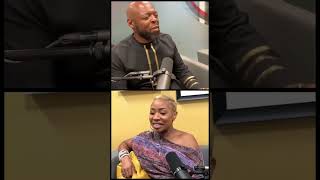
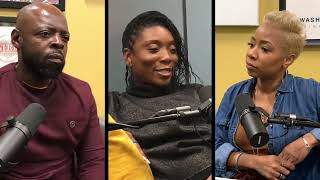
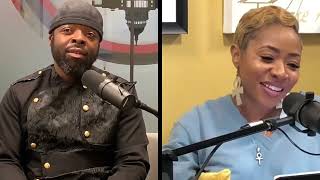
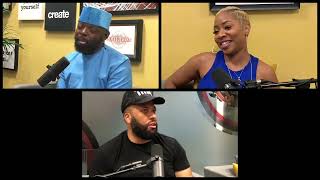
The origins of your host Armand Kadima pt 1... Ep 1

Recorded episode (YouTube upload) of Power 108.9 titled "The origins of your host Armand Kadima pt 1... Ep 1." Hosts (Armand Kadima, Ebony, Michael McFadden) introduce and define 'conscious intercourse' — a broad spiritual/practical exchange for healing and ascension — and Armand recounts his life: born in Zaire (now DRC), childhood amid civil unrest, family business exporting gemstones (malachite prominent), planned migration with a stop in Johannesburg in 1991, arrival in New York then Buffalo at about age 11, later relocation to Atlanta after family financial collapse following his father's death; his mother later died of AIDS when he was ~18. The narrative frames trauma as balancing experience that informed his work on conscious intercourse.
Questions this video answers
Zaire (now Democratic Republic of Congo).
1991 (right before he turned 11).
Around 11 years old.
Malachite.
She was about 34 and died of full-blown AIDS (per the transcript).
Chapters
Foreign.
Favorite station at ATL power 108.9.
Power 108.9 the station for the people keep up with power 108.9 on social media. Instagram power 108.9 and Facebook 108.9. It's.
It's the.
It's the exact same is at power 108.9. Power 108.9 a station for the People.
If you're a content creator, social media socialite influencer, or simply love to record current events, you need the Joystick. The Joystick is an essential tool for every type of digital content creator. It holds two or more mobile phones or tablets, allowing users to stream and record hands free on multiple apps simultaneously. And it's lightweight and portable. For more information or to purchase your Joystick today, visit our website@www.joystick.com.
Yo, it's Michael McFadden, my powerful and pristine people.
It's your boy Emoney, your favorite engineer. Check it out. If you want to get involved with Power 108.9 as far as partnerships and advertising. If you want to reach our 50,000 plus listeners and viewers per week, please email power1089adsgmail.com that's power1089 ads Gmail.com Speak to our marketing director so we can get you set up and ready to go. Let us help you reach your targeted audience and expand your brand.
Question what's the only station where you can get R and B, hip hop, pop and talk radio? Time's up.
Power 108 29. A station for the people.
It's estimated that around a hundred thousand enslaved people escaped the north via the underground railroad from 1810 to 1850.
Wow.
Wow. A hundred thousand?
Harriet Tuckman was working.
What?
That's why she looked like that in all them pictures.
My good. In 2012 at the London Olympics, Gabby Douglas became the first black.
She was tired.
Power 108.9 for the people.
Yo, what's going on, y'?
All?
This is Malik McFadden and did you know that you can listen to power108.9. 24. 7? Just visit the website power189.com or simply say, Alexa, play power 108.9.
Yeah.
The opinions and views expressed by this program are those of the program, program host and guest and do not necessarily reflect the views of Power 108.9 and its officials. We hope you enjoy.
Beautiful people. Welcome on this 420. Let's get lifted. Let's get conscious. It's your host Here, Armand Kadima, along with Ebony, Emma Pill.
Hey, what's up? What's up?
We are getting ready to get intertwined with conscious intercourse, a transcending dialogue on overcoming trials and tribulations and gaining your personal power and spiritual ascension. So we're going to discuss, you know, the. The origins of conscious intercourse. We're going to discuss what is conscious of the course, what is. What is it all about, right? Because people hear the word intercourse and it. It sends a lot of different vibrations, a lot of frenzy out there. So we're going to discuss, you know, bring things to reality and just share and grow, you know, and spiritually ascend and get to know one another more comfortably. And it's going to be also a lot of uncomfortable moments as well. But it's all about growing and learning and sharing. So we all, as a conscious people, can elevate and heal our planet.
Indeed. Indeed.
So today is 4-20s I mentioned earlier, nothing but a day of constant elevation, lifted and lifting our minds. There's so much going on in the world right now, so many challenges, so many obstacles to overcome, whether it's financial, whether it's spiritual, whether it's relationships, that there's. There's a need, there's a requirement for a place to. To discuss those things that are not talked about amongst the. Amongst those that are, you know, keeping things a status quo as, you know, as. As how we've been conditioned or taught on how we should behave, how we should, you know, interact with one another, how we should love each other, how we should eat, how we should talk, how we should raise our children. Everyone has an opinion, but whose opinion really matters, right? So this is what it's all about in this, you know, in this. In this dialogue here. It's about understanding how to tap into the higher self, tap into yourself and finding your journey, your truth, within the reality in which you are creating. So, Ebony, tell me a little bit.
About your thoughts on conscious intercourse. I think it's very important that we have these topics as a people. We are. We are going through and have gone through a lot of trauma, and I think it's in. In order to elevate, we have to heal, but a lot of us don't know how to do that. You know, a lot of people look for external sources when it comes to healing, but I believe it's within. You know, I really believe it's within. So this is very. This is very dope. And with that, let's get lifted, right?
Let's do it.
Let's Elevate.
Let's raise the vibrations.
Yes.
Right.
Yes. Yes. Yeah. So I. I think it's. I think it's good that. That you're. You're doing this. That we're doing this and giving people a platform to discuss some of these topics that, you know, not a lot of people are free to do that.
You know, so, yeah, you know, sharing your personal story as a way of, you know, uplifting the masses or ourselves. You know, this is not about me or you, Ebony. This is about all of us. You know, humanity as a whole doesn't matter what race, what sex, what religion, what background, what age, what age. Exactly. You know, especially our children. Right. If. If anybody should be involved in this conversation, it should be them.
Absolutely.
Because we want to definitely, you know, leverage what we've learned, right, the experiences that we've experienced to be able to, you know, lay down a foundation for their success. Right? So that's what conscious of the course is all about, right? It's. It's about consciously living and creating our reality. You know, we. We all have now learned that, you know, everything that we do in this present moment, right? This eternal present moment creates our future and our reality, and we have to be consciously aware of the decisions that we're making, the things that we're saying, the feelings that we're feeling, and take control of that. So you are accountable for what you're creating, because a lot of us create unconsciously not knowing what we're doing, because we've been programmed to just operate like robots, right? You've been told how to eat, you know, you've been told how to think. You've been told how to make money. You've been told how to pretty much do everything that you do in this world, but it's time to really take, you know, take your own ownership of who you are, your power, and unlearn.
Unlearn all that, you know, get all that out your head. Unlearn, unlearn those things.
Is that a dictionary? Is that a real word?
Unlearn word. But I don't know if it's in the dictionary. Unlearn.
Unlearn. I like that.
It's real.
It's real.
Unlearn. Erase everything.
Erase.
Okay.
Reprogram.
You know, Right? You get to choose your own programming. Right?
Choose your own programming.
Wow.
Absolutely.
I love that. I love that. So, you know, a lot of times it's. You know, there's. We talk about the origin of things. Like, where does things come from? Like, you know, ultimately, this says you have to, you have to understand where you're coming from before you know where you're going.
Right.
So here we are, you know, I know we are here in this day, in this moment, on this platform. And so we want to talk about the origins of conscious intercourse. Like, what is it, where did it come from and why we're doing this. Right. So for me, it's been a, a lifelong journey. Right from the time that I, I came into this incarnation, came into the world, it was all about figuring out how to maneuver, you know, how to live a good, happy life. Because everybody wants to be happy, right. It seems like that's the, is that the goal for most people?
I believe so.
Have a lot, have a lot of.
Money, you know, wealthy, you know, well off. Comfortable. Content.
Yeah, yeah. And ultimately happiness. Right? Happiness, you know, to feel loved. Right. Everybody wants to feel loved. That indeed, you know, that's probably the most important thing. Right. We all come into this world even as babies, right. Seeking for our parents to love us, you know, our mothers, you know, our, our fathers, our family members, our siblings, if we have them. Like, that's really, I think the whole foundation of who we are is to embody love in some type of capacity. So.
But everybody has different love language, right? Everybody has different love language.
Allegedly.
Yeah, definitely. Everybody has different love language. Not everybody loves the same.
True.
Not everybody wants to receive love the same. So that's very important.
True.
Yeah.
So everybody should be able to define love for themselves as they see fit.
Absolutely, absolutely.
I agree, I agree with that. So conscious intercourse again, right? We're going to keep talk, you know, we're going to keep replaying that phrase.
Reiterating it conscious in the course. First, first and foremost, get your mind out the gutter. When you hear conscious intercourse, don't think sexual. It can, it can be that, but it's so much more than that. It's elevating, it's spiritual, it's mental, it's physical. It's everything that embodies who we are.
Indeed. It's an exchange. Right. Typically, you know, even if you look up the word intercourse, a lot of us are, will be surprised that when you look up the word intercourse, you don't find anything relating to sex at all. Right. It's a simple exchange between multiple people or multiple groups of people.
Exactly.
So an exchange can be whatever is happening, whether it's energetic, whether it's surface level exchange, whether it's shaking hands, whether it's, you know, reading a book or sharing your story with somebody. Else that's an exchange. That's what an intercourse is. So we are simply creating a platform, a dialogue to transcend the physical reality by talking about and addressing some of the most important facet of who we are that we sometimes take for granted or just ignore, but are ultimately impacted in everything that we do. This is what it's all about. I'm originally from the Democratic Republic of Congo and saw a lot of things growing up. Right. Saw a lot of things that were troubling to my spirit and to my soul.
Congo. Wow.
Right.
Yeah, that's. That's very interesting.
Exactly right.
Very, very. Tell us more.
Yeah. You know Zaire, right, as it was called at the time. You know, I was born in a place called Zaire, you know, soon thereafter, you know, about 10, 11 years later or something around that. Don't quote me exactly, the name was changed to the drc, the Democratic Republic of Congo. But it's, you know, it's a place where a lot of history of the world has been shaped from, especially from, you know, it's mostly recognized as the wealthiest country on the planet from a natural resources perspective. So there's always a lot of foreign powers that are there to, you know, to collect. To collect, you know, precious stones and minerals, jewels. Right. To, you know, to provide a lot of the infrastructure that's necessary around the world to sustain especially this, you know, first class lifestyles that we live. You know, the electricity, the electronics, the jewelry, the gold, the rubber, the copper, all the things that are used to, to create a first class lifestyle while simultaneously the people that are the inhabitants of that land are third class citizens or you know, third world country inhabitants. So it's kind of interesting paradox that we find in these places and there's a lot of places like that around the world. But I can only speak about what I've experienced and what I've seen. So, so coming from that place, that background has been, has shaped a lot of my perspective as far as who I am at this point in my life and why this dialogue has come forth. Because there's just been a lot of things that are talked about, you know, between how the Congo has evolved to be the country that it is today from where it was, you know, a thousand years ago when it was ruled by kings, you know, of melanin descent, who had access to all wealth and resources and the ability to lead a free life uninterrupted by foreigners to where it is now, where it's. You can't keep foreigners away from the Congo, right? Everybody's there.
Everybody want a piece.
Everyone a piece of the piece of the piece. Exactly. I mean, it's. But it's all there for us to share, right? It's there to share, but it's just. It's. It's a shame that a certain group of people have usurped authority over that land, over that those resources at any means necessary, whether it's to take life, is to rape, to pillage, right? Any means necessary. It's a full onslaught on ensuring that they're able to get theirs, and that's it. And the people that are, you know, sitting on top of that mountain full of, you know, treasures are left with nothing. Just left to, you know, to barely suffer, barely make it and sustain a life. So seeing a lot of that stuff growing up, you know, a lot of the civil unrest that I witnessed, you know, as a child, seeing a lot of the poverty, seeing a lot of the things that just didn't make sense to. To me as a, you know, growing up there. And so I had a lot of questions. I began to question everything, right? I was like, why do we go to church on Sunday and see people that don't look like us in the churches? That's the only time we ever see them is in church when we're being fed this little communion cracker accompanied by this red stuff that they're calling blood. So they'll say, hey, I'm eating somebody's body and then drinking his blood. So I'm like, okay, so here I am, a little kid, right? I go to church. It's like, okay, let's eat this man's body and drink his blood. I'm like, what is that? I'm like, word.
This.
This is. This is what we're doing right now, right? Right. But these people don't look like us. So I'm just like, this is interesting.
Right Back to your belief or whatever, but this is a child's mind, you know?
Yeah, right.
Yeah, for sure.
So we have. So I'm seeing this. I'm like, okay, this is what. This is what we do, right? We pretend to. I'm not sure if we're pretending or not. I don't even know if his body. Right. It's been. Right. So I'm like, all right, cool. You know, this is what it's about. So you see that? You're like, all right. You know, as a child, I'm like, I'm questioning these things. I don't understand. They don't make sense to me, you know? And then we, you know, life is as is, you know, growing up middle class in the Congo. You know, my family, my father did believe, did well for himself. You know, we, we lived a, you know, somewhat of a middle, upper class lifestyle. You know, we had, you know, we had a driver, we had a gardener, we had, you know, a cook, someone that made meals for us. You know, we had a compound. Right. Wow. You know, we chickens and goats and, you know, all kinds of stuff running around. So everything in your life was good, you know, everything seemed, you know, rosy and. But then suddenly, things just began to change. You know, there was a lot of tension around the Congo. I remember being in school, I think I was maybe like, maybe 8 or 9 years old. It was probably like just a regular day of school. It's probably second grade or, you know, don't, don't quote me exactly what grade we're in when we're in nine years old. But, yeah, second and third grade. And next thing I knew is there was a lot of, you know, turmoil, right. Pandemonium outside of the school. And that next thing I knew, the teacher is jumping out the window. Like, he just, he just skated out, jumped out the window and dipped, right? So the alarm bell, the school alarm bell is ringing, like, to, you know, to signify that there is danger. So, so we're, this is pandemonium. So we're here we are teachers dipped at the window, straight up, right.
Not worrying about the children at all.
He did.
Wow.
You know what I'm saying? And, well, there's a mob just, you know, wreaking havoc on the city. So I'm just like, what in the world is going on? Right? So everybody, we're just running around, just panicking, right? I'm trying to figure out where I'm supposed to be going, right? How to find my parents. You know, typically we got picked up after school, you know, by the gate of the school. So I'm just, you know, we're just panicking, racing around, you know, and somehow, you know, I ended up, you know, connecting with my parents. You know, we went home this, that and the other. But it was at that point in time, it seemed normal, like nothing had happened. Right.
So what happened?
I really don't know. Right. It was just the mob was destroying the city because there was a lot of civil unrest because, you know, at the time there was, you know, President Mobutu, who was in power, and, you know, he, you know, he, you know, he took over power. You know, you know, when Congo won its independence through such A, you know, such a challenging time, you know, where there was just a lot of. In the 60s, right around the same time, where there was a lot of, you know, civil rights movements was occurring here. There was a similar type of movement in the Congo, in Africa as a whole, actually, where a lot of the African countries were gaining their independence from the, you know, European powers that had colonized them. It's also interesting to me that all this was happening around the same time. Like, most of the countries in Africa got their independence around the 60s at the same time that, you know, supposedly African Americans in the US Also somewhat got their independence. Right. So it's such an interesting, you know, coincidence. Is it a coincidence?
I don't think so.
Right. That's something to think about. We'll expound on that a little further. Right. We gotta. We gotta process that a little bit. Like, why. I mean, South Africa with Nelson Mandela, a lot of stuff was turning up at the same time. That's interesting. We got to come back to that.
Yeah.
So, yeah, there was always so, you know, 30 years later, here we are, it's early 90s, a lot of turmoil. People are just unhappy. Right. They're just, you know, they're, you know, there's a lot of poverty. There's just a lot of unhappiness. There's, you know, there's. There's all these things that are happening, you know, like lack of food, you know, lack of. Lack of, you know, just the basic necessities. Right. And also AIDS at the same time, is wreaking havoc on Central Africa for whatever reason. Right. There's all of a sudden AIDS appears out of the blue, and it's decimating, you know, Central Africa, you know, good bit of my family members, you know, ended up victimized by aids. And so there's all this stuff that's going on. So people are just, you know, they're just unhappy, just restless, trying to figure out how do we. How do we, you know, create a. A decent life for people? It seems like people have been suffering for so long.
Yeah.
So I'm. I don't know all the specifics as what to answer your question about what happened. All I know is that happened. We went home the next day. You know, life went on the norm. Just the norm, you know, just happen at any time. Exactly. You know, kind of like, you know, I don't know, maybe Rodney King got beat up. No. Right.
Who knows? It could be anything. Right.
Yes. So we're gonna pay some bills and we'll be back.
Yes.
Conscious intercourse on power 108.9. Sam.
Yo, it's Michael McFadden. For our friends over at Credit Building Professionals, you know what they do? They help their clients achieve better credit. How? Late payments fraud, liens, charge off student loans. They do it all. Get results in 30 to 90 days. And it's very simple to contact them. Hit them up on their website, credit building professionals.com or give them a call. 678-447-2012. Once again, 678-447-2012. Tell them you heard it on Power 108.9. What up, credit crit? Yo, it's Michael McFadden of Power 108.9, and I want to ask you a question. Are you looking for a new house? If so, you need to holla at our guy, the mortgage guy, Alvin Jameson. Alvinjamison.
Com.
Yeah, Alvin liked the chipmunk, and Jameson like that fine whiskey. Not only can he help you on the purchase of that new home, he can also assist you on that refinance as well. So whether it's fha, conventional and of course, that VA Home loan that you sitting on right now. Yo, call Alvin Jameson, 404-587-9033. Once again, 404-587-9033. Trust the guy we trust here at Power 108.9, Alvin James. Listen, alvinjamison.com or just call them 404-587-9033. And of course, tell them you heard it right here on power 108.9.
Let's go.
He made you go to church on New Year's Eve. You couldn't turn up?
He said he want to go. He didn't want to go to church. He didn't want to break New Year's.
Eve with the church. What New Year's Eve? Boy, I think I had Gabby a little cocktail before I was in that mug crying. I was crying, giving myself to the Lord Jesus.
Say this to the altar. Did the deacons walk up and get your name and information? And they asked this Michael McFadden. And he today is dedicating his life to the Lord.
Power 108.9. A station for the people.
Hey, Atlanta, this is Sayon, and you're listening to Power 108.9.
Peace. Peace, peace. Here we are.
Yes, we are back. Conscious intercourse. So, Armand, before the break, you talked about the Congo and the turmoil in the Congo.
Yes.
You know, let's talk about your transition. What brought you to the States?
Actually, great question, of course, the Turmoil, right? So stuff is just about to just take a turn for the worse right there. It's early 90s Mobutu, as you know, our Warren is welcome, right? He's. He's, you know, embeddled, embezzled, or got in bed with a lot of the foreign powers and has been, you know, handing over the keys to the foreigners to take and you serve, take out the kitchen sink, essentially. So then there's this turmoil, like I mentioned, you know, the, the. The civil unrest. There's next door in Rwanda. You know, there's the Rwandan genocide that's brewing. Right? All that tension is brewing there. There's just a lot of turmoil that's just happening there. And. And ultimately my family, my father, you know, he. You know, he was involved in. In exporting a lot of the precious stones out of the Congo to America and the rest of the world. And a good portion of those things were considered as a kid. I don't remember specifically, but it seems like there was some type of issue with the government or the local police, with him actually exporting those precious stones. Like these stones that we walk upon under, up under our feet, that we find in our driveway, in our yard. We couldn't really monetize because the foreign powers had monopolized the. The ability to trade those precious stones. So I remember that was his business. That's how he provided for us. I remember he would travel all the time. He was always gone. And so I remember we, you know, the plan was that we were leaving. Going to America. Right.
How old were you?
11. So right before I turned 11, so. 11, yeah. So we were, like, about to leave to come to America. And for us, it was just like, wow, America. America was heaven on earth. Like, literally, it was like, you know, like, we're about to go to where the Jetsons be at, right? Where everything is like, you know, super califragilistic. Spialidocious. Right, right. We're about to go to this place where there's like. Yeah, like everything is plush, Right. You can literally eat off the floors. Right? That's what. That's the image.
That's how you imagine.
Yeah. You know, we had this term called bulaya. He just meant, like this, like almost the closest thing to heaven on earth.
Right?
So we're about to go to this place, the place that we've seen on tv. You know, we used to watch Eddie Murphy, you know, and Beverly Hills Cop. Right. You know, ever seeing all those nice cars, you know, the, you know, the big houses, you know, this you know, food, luscious food. Just everything was just. It was just this place that we were really, really excited and looking forward to going. So I remember we. There was the day at arrival, we were about to leave, we get on a plane, and so we were essentially, we're about to. We're gonna do like a two week layover in Joburg in South Africa. So we got on the plane. Exactly, Got on the plane and literally the plane started moving. And all of a sudden, like, the plane stopped and like, these police officers got on the plane and approached my father and then escorted us off the plane. Like, so we, like, were escorted off the plane after it was already in motion by the, you know, these, you know, the detectives or whatever you want to call them. So they took my father to somewhere where they talked. And then, you know, a couple weeks later, we eventually left for Joburg. It wasn't until later in life that I finally realized what that was, what happened then. But at the time, it was just like, okay, well, we're delayed for a couple weeks for whatever reason.
So what happened?
So we just ended up going home, right?
No. What happened then? Why did they come on the plane?
Oh, you actually want me to fast forward? Tell you what I know now?
Yeah, what you know now they stop a plane in motion, you know, good point.
So. So I was told later on by my uncle, my, you know, my dad's older brother, that, you know, these police had an eye on my father, right? They knew that he made, you know, substantial amounts of money by exporting those precious stones out of the Congo. So they essentially wanted a piece of the pie. They saw him leaving out. They wanted. They wanted some money. They wanted to be like, hey, boss man, you about to get up out of here, you know, break us off something, right? You out here taking your family on this plane, right?
Wow.
You know, we need a little piece of the pie. So essentially, they wanted to, you know, collect some money from him before he left. So, you know, apparently he was, you know, my father was, you know, he was well known. I remember even just growing her up around the city. It was interesting. It's almost like he was a. Him and his brother were like. I don't know, I don't want to call to call them like kingpins, but it was something like that, right? It was interesting because they. Gangsters, they. They ran. They ran the city. I remember one time, supposedly my mother's purse got snatched, right, One night. And I remember a lot of commotion around the house that evening. And apparently goons were sent out and somehow her pocketbook was. Or purse was recovered and somebody got to be down. Right? So I'm just like, you know, I'm just, you know, I'm here, I'm 9, 10 years old. I'm just seeing all these things. Used to be a lot of people coming around the house all the time. They will always. They refer to my father as patron because we spoke French growing up. They'd be like, patron, Patron. Patron. No, that really means, you know, it means boss, right? That was just a term. I, you know, I remember my sister one time was like, dad, what did they call you? You know, pantalon. Pantalon meant. Means pants in French. But she, she kept hearing the word patron. She thought it meant patalon. Like they kept calling him like pants. But if that's. That was like his name patron, like, you know, boss. So. So yes, apparently they saw him leaving, they wanted to collect some. So apparently he, you know, went back, you know, paid him off and then we eventually left a couple weeks later.
So they let him leave.
Exactly. Eventually. Yeah, a couple weeks later. So he had, it was, you know, he had to. They. Whatever was the issue, he satisfied it. And we were, we were able to leave a couple weeks later.
Okay.
So then we spent like, you know, a couple weeks in Joburg. And Joburg was phenomenal. Like, you know, it's a 10 year old. You know, you're. You land in this place. 10, 11, somewhere around there, around ish, you know, around that time. You know, memory is a little vague right now. I just remember it was 1991. And I don't, you know, I'm typically, I don't turn. Yeah. So my birthday is in September, so it was that summer. So it was right before I turned 11. So. So Joburg was beautiful. Yeah, we, you know, you know, we were stayed in one of the, you know, top hotels in Joburg. It was clean skyscrapers everywhere. Because, you know, in the Congo we don't have skyscrapers. Right. This was the first time ever seeing like a skyscraper, like a building with over 20 stories. Right. It was. Wow. It was, you know, it was immaculate. You know, the, the, the. Just the hotel itself, the how clean it was. It was, it was quite an experience going out to the restaurants, you know, the food, you know, it was, it was, it was phenomenal. So we spent about two weeks in Joburg and then we headed towards Laguardia, as they would say, LaGuardia, New York. New York, Big city of dreams. Right?
Okay. So that was an interesting adjustment.
It was, you know, 20 plus hours on a flight, you know, hitting up NYC, you know, and. And then actually disappointed. I was like, NYC was dirty. It was filthy.
It was like, yo, ain't it, though?
You know, it was like, compared to Joburg, it was like, this is dirty. At least a part of Joe Bird that I saw. Right.
It was disappointing.
It was. Yeah.
I'm like, it was gonna be golden. Golden streets.
Golden streets. You know, like, you know, I guess I missed that part in coming to America. Right.
Well, New York is an interest. Interesting place to come to first.
Exactly. Right. Yeah.
To the States.
It was quite an experience, you know, so, yeah, New York. But then we ended up, you know, spending about a, you know, just a day in this. In nyc.
Okay.
And then we took a, you know, another flight to Buffalo, New York. So that's. We ended up settling in Buffalo, New York. Don't ask me why. Apparently we have some, you know, some. Some relatives or some connections there. So we ended up settling in Buffalo, New York, and. And the cold weather was.
It's cold in Buffalo.
It was devastating.
Oh, yeah.
Oh, man, the snow was great.
What's in Buffalo? There's not a whole lot in Buffalo.
A losing football team. Right. This is early 90s. You know, it's. It's just cold. And it's a lot of cold. A lot of snow.
My grandfather was in the. The army, so he was stationed in Buffalo.
I remember that. Yeah. They manufacture snow up there.
Yeah, right. I do remember that. Yeah.
Yeah.
So that was interesting.
Yes, it was. So, you know, we settled down in the suburbs of Buffalo. You know.
Okay.
You know, life is. You know, life is looking promising. You know, things are. We're in America, you know, we're, you know, more white people than I've ever seen ever before in my life. But it was. It was interesting. It was like, you know, we like white people because we were not used to seeing them. They feed us blood. You know, they feed us blood and people's bodies. You know, we like them. At least we won't go hungry. At least we won't starve. We always have somebody's body and somebody's blood to drink. Right. Really? I'm just saying that's what I knew about white people. They fed you blood. I mean.
Yeah, but they were nice. They were nice. And Buffalo.
Yeah, they were nice. You know, they say, hey, you little African kid, come here, Let me rub. Let me rub your head real quick.
So you started public school in Buffalo, New York?
Yes. You know, started public school, first day of School. You know, walking to school, and it's like, here. Here's Armand. He's from Africa. They're like, African booty scratcher. Oh.
So they said, yeah.
Okay.
So that's everywhere.
Yeah. You know what I'm saying?
African booty scratcher.
Yeah. You.
You have to be African. You just had to be black. Just. Well, black. Black.
Like, just somebody scratches their booty, really? Yeah. So, yeah, you know, started school. You know, I spent all of my days on Hooked on Phonics. You know, just learning. Learning language, you know, transitioning. You know, everything seems, you know, just perfect. Like, you know, we're about to. You know, this is. This is just life. You know, we're in America. We're learning, you know, the food, the culture. I remember it was scary. One day when we started school, first day of school, my mother's like, you know, I know we don't know English that well, but I'm gonna teach you a word today that you, you know, make sure you hold on to this word very tightly. I'm like, okay. She's like, the word is help. I'm like, so she's like, when you're at the bus stop, if somebody comes and tries to, like, grab you and steal you and, you know, and kidnap you, say, help. Help. Help. I'm like, really? Like, somebody's gonna try to do that to me at the bus stop. Like, so I'm sitting here like, this is America. Like, why would someone want to hurt you? Steal me?
Yeah.
Like, this is something that's never happened before. Like, what would somebody want to kidnap.
Me at a bus stop like that in Africa?
No.
Okay.
We just run around all day, like, you know, scratching our booties, you know, like, who do you think about. None of that. Right? You know, like. Yeah. So, yeah, I'm just like, that. That was traumatic. Like, so here I am at the bus stop, looking over my shoulder, trying to see who's trying to, like, kidnap me. Right?
Yeah.
So you go to school, you know, it's. You know, you try to fit in. You know, you're. I'm different. I'm the oddball, you know. You know, I'm. You know, I don't fit in. I don't speak the language. You know, I'm getting picked on. All that good stuff. So, you know, but adjusting, right? Adjusting to life in America and, you know, what was to come next.
Okay, so how did those experiences. And I know there's a lot more, but how did those experiences lead to this? Conscious intercourse?
Yeah. I mean, you know, soon thereafter, after, you know, arriving in America, now things just began to take a turn. A few years later, you know, my father suddenly just got sick and, you know.
Got sick?
Yeah, he got sick, you know, the. Soon right before that, right before, you know, that he got really, really sick. He was taking me with him around the country because he would attend these mineral gem expos where he would sell a lot of the crystals that he exported out of the Congo. So he would, you know, take me with him, show me the business. We would go places to these, you know, elaborate, you know, hotels and places around, you know, convention centers. And we would set up the stables and we would showcase all these stones. And these people would come by and just like, oh my God, these stones. And they would just buy them, you know, a bunch of them like spending bread, like, yeah, spending thousands of dollars to buy these stones. I'm just like, wow, these people buy stones, like we throw them right as children. But these people are coming here buying them, spending bread to buy these things. So he was just showing what kind.
Of stones were these?
So it was, I know the, the most popular stone that we had, the most abundant one was Malachite. Right. Malachi was this green, earthy looking stone. It was a crystal. So we had Malachi. There was a lot of different, you know, copper based stones. Crystal Cola was one of them. There was just a bunch of just, you know, look like just regular rocks from under the ground. But come to find out they were just, you know, crystals like, you know, like amethyst, you know, malachite, citrine, a lot of different, you know, gemstones and crystals that people were, you know.
So these stones actually provide different energies. That's why they're so in demand.
Yeah, yeah. At the time I didn't understand it. Yeah, yeah. But evidently there's, there's a lot of use use for them. Right. From an energetic perspective. From a healing, cleansing perspective.
Absolutely.
Yeah. The, and these stones were abundant, you know, where we come from. But yeah, so he was, I was going with him. You know, we would go out and he'd be like, hey, we're on this, we're on a business trip. Just eat however you want this. We're not worrying about money that we're, we're working, we're making money. So just let's live the life. I'm like, bet, bet that run that. But you know, let's get this paper dog. So we would, you know, he was taking me and then he got sick. Just got real sick. This was weak, you Know, he was, you know, as many times where he would, you know, lose consciousness in the middle of the night. We have to call the ambulance. And it was just. It was crazy. It was scary, you know, and then it was just. It just kept getting worse. We just. Just drastically was just getting worse and worse by the day. And it was just, you know, so hard to watch, you know, to watch your father just, you know, disintegrate bit by bit over time.
And what was his sickness?
So, you know, we'll come back to that. But at the time, we really didn't know. They never told us what was going on with him. So I remember we went and saw him in the hospital, maybe in the hospital maybe about a week or so ago before he transitioned. And he was just, you know, very frail, just weak. A week later, you know, I get a phone call around maybe 8:30 at night or so. My mother and older brother. So school had just started. My mother and older brother had just left to go to a show in Denver because, you know, they. This is how we survived. You know, his business was how we survived, how we earned an income. So with him being sick, my mother and my older brother were essentially. Once school started and I was unable to, you know, to partake in going to these shows, they left out to go to, you know, to Denver. And so myself and my two younger sisters remained at home. So I was 15 and they were 13 at the time.
Okay.
So I get a phone call from the hospital, and then my dad gets on the phone. He's like, arma. He's like, don't let anything happen to that shipment that just came in. So it was like a humongous. This is probably the largest shipment of the. These crystals and gemstones we've ever received. He's like, don't let nothing happen to these crystals. And, you know, 30 minutes later, I get a call that he had transitioned, that he had passed away. And so it's like, damn, like, what just happened just now? Right? So that happens. You know, life just changes. You know, it takes, you know, drastic shift. Of course, the breadwinner is no longer there. So I come home from school one day, all that stuff is gone.
What he told you to protect.
Yeah, the things that he told me to protect is all gone. And apparently my mother said that one of her cousins who was somewhat my dad's like, understudy, somehow told her that that was all his stuff.
Oh, no.
So, yeah, so all the stuff was gone and we lost the house. We slumped into immediate poverty. Right. We Went to just bare nothing. Like, I remember just times were digging through the couches for loose change to buy food so we could eat lunch at school. Right. Things just. Yeah, it took a turn for the worst. So next thing you know, we, you know, ended up having to relocate from Buffalo to Atlanta because, you know, we couldn't afford to live, you know, couldn't live in, you know, western New York anymore, the suburbs of Buffalo anymore. And my mother needed some support. She had some support in that, you know, in the suburbs of Atlanta. So we relocated here.
So it was you and how many siblings?
So it was myself. And so I have three other siblings. So myself, I have an older brother and two younger sisters.
Okay.
My older brother, he got into some, you know, after. Soon after we relocated to Atlanta, he got into some little, you know, legal issues, and at the time, we were illegal aliens, so he got deported. Right. So that was another story. Right. He, you know, that was just. Yeah. And a story of his own with.
Come back to that later.
We'll come back to that as well.
Okay.
But, yeah, so we relocated to Atlanta. Came to Atlanta. You know, Atlanta was cool. There was a lot of, you know, a lot of history here, a lot of tradition from an African American perspective.
And it was easier to adjust in Buffalo.
Yeah, a little. A little easier.
You know, a little bit more, you know, imagine.
So. Yeah, A little bit more flavor.
Yeah, Okay.
A little bit more flavor in the. In the A. Right. In the a. Atlanta was cool. You know, we adjusted and then graduated high school and. And literally my freshman year, some of my freshman year, you know, in college, my mother gets sick literally that summer, and she passes away. Right. Wow. And it's like, omg, like, what's happening here? And like a couple nights before she transitioned, we get called in and see my sisters, Myself and my two younger sisters were, you know, I'm 18 at the time and they're 16. We get called into the ER and they're like, your mother won't make it through the night. She has full blown aids.
Wow.
And she's had it for, you know, for a long time. And so we're. So I'm sitting there like, what? Like, but this is a dream. Like, this can't even. This is the nightmare. Like, this can't even be real. It's like, yeah. You know, it's completely taken over her body and she's, you know, she's not going to make it.
And how old was your mother at the time?
My mother was only 34 at the time. Yeah. My Mother. Yeah. So she had me when she was 15.
Okay.
Or so she was only 34. Yes. And. Yeah. Yeah. That was.
Devastating.
Is there a word?
Yeah.
Right.
Wow.
Is there a word?
So how long after losing your father?
Three years.
Three years after losing your father?
Yeah. Yeah. So, yeah. So that experience, you know, kind of shaped a lot of my. My curiosity about life and. And what happens after this. Right. Because it's like after losing the two closest. I mean, the most influential and closest people to you, you know, your parents, in such a short span of time in a place where you don't, you know, you really don't have. In family. Right. You really don't have a lot of the support. Exactly. Right. So it began to shape like this curious, inquisitive, you know, train of thought that eventually led to conscious intercourse. Right. Because when you. When you deal with so much trauma and adversity, especially such a young age.
You gotta learn to cope.
Yeah, exactly. Right? You learn to cope. You learn to. You learn to assimilate. Right. To. To uncomfortable circumstances and uncomfortable situations.
Right.
Because you don't have an option. You don't have a choice, Right?
Absolutely.
So it's having to figure out, okay, how. How am I going to finish college? Right. My sisters are still in high school, so here I am, I'm their older brother. So I'm like. So they're looking at me like, like, bro, what we're gonna do? And I'm like, I don't know. Right. So we have to now figure out how to. How we're gonna, you know, make it through the next day and the next week and the next month and the next year. And so through that, those experiences, you know, I gained a lot of insights. Right.
That was all on you.
Yeah. I was an older brother, so a lot was on my shoulders.
Because your older brother was deported.
Exactly.
Okay. Wow.
Exactly.
At 15. 18.
Well, 18. Exactly. So this is 18. Yeah.
Okay.
So we're navigating through all of that. I mean, my. My sisters and I. And of course, at the time, you know, we're, you know, we're in. My mother raised us in the church, so we're in the church. You know, we. We're going to church on Sunday and we're. We're praying to God, like, why, like, why is this happening to us? Like, you know what. Please give us, you know, some type of, you know, helping hand. Like, you know, why? Just the question, really. It's like, why? Why is this happening?
Right?
But, you know, at the time, it's like, you know, we did whatever we had to do to make it through, to make it, you know, just. It became living a day at a time because you could never predict what else was going to happen next.
Right?
Yeah.
That's heavy. That's heavy for an 18 year old. 18. Taking care of two younger siblings.
Yeah, it was, it was such a difficult time. But, you know, but we made it, right? We made it through. Here we are.
You are today.
Here we are still in the A. Still in the A. I love thriving.
And your siblings are still here as well.
Yes. Loving the A.
Okay.
Yeah, this is, this is a beautiful place.
So your whole outlook on life just change completely, right?
Yeah, completely. It's, you know, you begin to look at life differently. Certain things you don't take as serious anymore. Right. You just, you learn to brush certain things off and you just begin to, you know, to slowly but surely know that there's more to life than what has been presented.
Indeed.
Yeah.
Indeed.
Indeed. Indeed.
Yeah. So I hear the music coming on, so we're gonna take a break and dance a little bit, you know, pay some bills. Yeah.
Looking forward to hearing more.
Yes, definitely.
Absolutely. We'll be right back.
He publish Power 108.9 on social media.
Instagram @Power 108.9 and Facebook 108.9. It's. It's the, it's the exact same thing.
It's at power 108.9.
Oh, oh, okay.
Power 108.9. A station for the people.
The number one Favorite station at ATL.
Power 108.9. Tired of all that baloney? They force feed you on social media.
Yes.
Then get connected to power 108.9. A station for the people. 108.9 the station for the people.
If you're a content creator, social media, socialite influencer, or simply love to record current events, you need the joystick. The Joystick is an essential tool for every type of digital content creator. It holds two or more mobile phones or tablets, allowing users to stream and record hands free on multiple apps simultaneously. And it's lightweight and portable. For more information or to purchase your joystick today, visit our website at www.joystick.com.
My powerful and pristine people. It's your boy, E Money, your favorite engineer. Check it out if you want to get involved with Power 108.9 as far as partnerships and advertising. If you want to reach our 50,000 plus listeners and viewers per week, please email power1089adsmail.com that's power1089adsmail.com Speak to our marketing director so we can get you set up and ready to go. Let us help you reach your targeted audience and expand your brand.
Question, what's the only station where you can get R and B, hip hop, pop, and talk radio? Time's up.
Power 108.9, a station for the people.
I really like the after effect of when. You know, the Denzel Tyler Perry moment. I think that that was not highlighted enough. I think if I wild out, y' all would be the ones on the side like Elam happy like this.
After that, Elam slap the out of him.
And then there's them. He's going to jail. Get yourself some mentors. Get yourself the right mentors. If you have the wrong people in your camp, this is the stuff that could happen soon.
A light bulb off his T shirt.
I don't give a damn.
Power 108.9. A station for the people.
This is Elan B. King, and you're listening to power 108.9.
Hey, hey, hey. We are back with conscious intercourse and.
Wow.
Wow, Armand, that was heavy.
Quite an intercourse, huh?
Yeah, quite an intercourse.
That's. That's heavy that you're feeling some type of way, huh?
Man. Man, this has got me thinking. You know, when you talked about love and love language as a child, as a teenager, especially at 18, you know, you had to probably be very internal at that time. Was really hard to relate to a lot of people. You were suffering. You were going, going through a lot. Adjusting to America, losing both of your parents at such a young age, and needing that love. So how did you. How did you go about seeking that and what did you do to, you know, help your family make ends meet?
Yeah, it was actually. I don't even remember. We just made it through, right? So, you know, we did have some, you know, some. So my sisters and I, we, you know, we had a, you know, a group hug where we talked and we were like, pow wow. Yeah, a little pow wow moment, right? Because I was like, I was like, I want to drop out of college, you know, know, and, and, and come home and we'll, you know, get an apartment and we'll figure it out. But there was like, no, no, you're, you know, you're. You're in college. You got a football scholarship. You know, don't let that go. Like, this is.
Oh, you got a football scholarship?
Yeah. Okay. You know, I was on football scholarship. I was in college. You know, it was like, you can't drop that. You can't let that go. You know, we'll figure it out. You know, we, you know, we had a, you know, we have some family here, so we're going to try to figure out a way to leverage, you know, I think when our uncle was here. So we're going to try to leverage, you know, them potentially leaving with him or just figure something out.
Okay.
So we, you know, we powwowed, had that moment. We kind of came up with a plan that I was going to go back to school because I had to do that.
Okay.
And that, you know, I was going to do my best to support them from, you know, from, from afar as they were, you know, getting ready to finish high school. Okay. So we, you know, we had a plan and we, you know, decided to execute the plan that we came up with.
So pitched in, helped out.
Yeah, he pitched in, you know, you know, he, you know, it's, it was a challenge, you know, for him. You know, he's taken on two teenage girls, you know, 16, 17 year olds. We just lost both parents. Right.
Yeah.
So that's, yeah, that was a lot.
And he had children of his own at the time.
I think at the time he might have had like a toddler, I believe.
Okay.
Yeah. So, yeah, it's taking on two teenagers, like I said, in those, you know, with that type of a mind, you know, mental state. Right, right. Was definitely a, an obstacle to.
Okay.
To transcend.
Yeah. Yeah. Indeed.
Yeah.
Wow. Okay. Okay.
You know, so, you know, in the midst of all of that, it's, you know, sometimes I've come to realize when, you know, we come back around full circle that some of these, you know, so called tragedies of life, you know, I call them so called tragedies because they're, they're really not tragedies. They're not. That's not really what they are. I believe they are experiences that, that balance life to its perfection. Right. What I mean by that is, you know, when we think about perfection, we typically think of something like perfect, like a straight line. Right. We talk about, like when you. Back in days, I used to get a fresh cut, you know, when I, when the, you know, when I had the, you know, the fresh lines, crispy lines, it was like perfect. Right. The perfect lining. Right. You think about perfection, you think about a straight line or something that is, you know, perfect. But life does. Life is only a straight line when the ups and downs are balanced, when they're neutralized. Right. Because you can't have, you can't enjoy pleasure without pain. Right?
That's right.
There's, you know, mountains. Well, the valleys. Ain't no mountain high enough, you know, no valley low enough, you know? You know. Right, right.
You can experience, you know, light without darkness.
Darkness. Exactly.
Or appreciate it.
Exactly. So the tragedies, you know, a lot of time we don't. We. We're. We reach, you know, points of ecstasy and happiness, you know, and jubilation. But we give more credence to the tragedies because we feel like they hurt, you know, they. They're traumatic. You know, we assign all these words that make us feel that pain over and over again. What I'm learning to realize is that these things are just balancing experiences to perfect the life that we live. So once I've begun to process things in that capacity, I find life so enjoyable in every aspect of it. Right. I want to feel the pain to his fullest extent because I want to feel the pleasure to its fullest extent as well. And through that, I'm able to balance life.
Okay.
Right. Conscious intercourse.
Wow. Deep, deep, deep, indeed. Well, I know, I know y' all definitely looking forward to more.
I am.
Definitely, definitely getting higher, getting lifted and some more. Conscious intercourse.
Most definitely. You know, it's been a pleasure.
Absolutely.
I love you.
Hey, enjoy, y'.
All.
420, y' all conscious. And, of course.
More from Armand


Sustaining Love and Business with Power Couple Quinton and Terran Lewis of Herb N' Eden...Ep 25


Chris Johnson of Reclaimed Karma joins our Conscious Intercourse on Mental Health... Ep 22

Do we manifest things or is life all a big coincidence...Ep 21 with Kamal Grant of Sublime Doughnuts
The Power of Thought and the Placebo Effect with Legendary guest Don Cannon...Ep 20