#1 Way to "Fight" the Urge to Watch Pornography
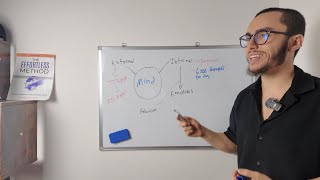
In this self‑help video Samir Gardner explains how to handle urges to watch pornography or masturbate by applying a cognitive‑behavioral therapy (CBT) framework. He distinguishes external triggers (e.g., seeing an Instagram model, being cut off in traffic) from internal events – the thoughts and self‑talk that follow a trigger. By reshaping the internal dialogue, a viewer can change the emotional response and subsequent behavior. Gardner shows how personal meaning (e.g., linking quitting porn to life‑success, marriage, or career) can amplify the perceived stakes of a relapse, leading to fear, shame, and irrational decisions. He offers practical mental tools: mindfulness of thoughts, rational re‑appraisal, habit‑based reframing, and replacing fear‑based reasoning with goal‑oriented reasoning. The talk includes analogies (traffic, gold ring, hamburger, anime) and cites a recent Queen’s University study reporting ~6,200 thoughts per day, as well as references to David Byrne’s CBT approach and Dale Carnegie’s motivational example. Finally, he advises viewers to view urges as passing thoughts, avoid catastrophizing past relapses, and adopt a rational decision‑making process rather than shame‑or fear‑driven reactions.
Chapters
Alright guys, so today we're gonna talk about how to handle urges. How can you in the moment really not feel like you're compelled to go and watch porn or masturbate and really have like mastery over your own mind? Now I've made videos in the past explaining like where do urges even come from in the first place, meaning what is the root cause behind those desires and how to really remove those desires from the root. Now, of course, that will drastically reduce the desire that you have for whatever behavior we're talking about, if that's PMO, if that's video games, whatever. But the issue a lot of people face is, yes, they can reduce that desire, but it is still there for some time at, in the beginning, which is totally normal. But the issue is how people interpret that, and they really self-sabotage because the moment that they get a slight desire or maybe even a strong one, they just collapse after maybe, maybe not instantly, but at least after a few days or a few weeks. And so we want to prevent that so that we can become permanently free from PMO. So let's really dive deeper into this subject. Okay. Now let's explain how to deal with urges, which I call desires or want. I don't like to call them urges because oftentimes people, when they think of urges, they think of like almost like attacks that, that are coming, externally to them. But this is something which I adopted from an expert called David Byrne, who uses CBT, cognitive behavioral therapy, to treat his patients. And I really like this because it really simplifies how we can learn, like, what's going on in our mind that makes us have that desire or makes the desire strong in the first place, but also that makes us watch porn in the first place because of the emotions that we feel as a byproduct of what's happening in our mind. So let me explain. What happens most oftentimes is that when people have the desire, and I'm talking about people that are, that have been in this like NoFap space and really following this NoFap movement, or maybe even semen retention, is that they attach a lot of importance and there's a lot of meaning that is attached to quitting porn. And what does that mean to them is that in their mind, they think, if I were to watch porn, or masturbate. And really, we can say for people that follow the semen retention movement, that if they're about to release, for example, they start attaching so much meaning to it. It would be one of the biggest failures. And failure to every individual means something different. For example, someone might fail in life, like for example, on an exam, and he thinks, well, if I fail an exam, maybe that means that I'll never have a future because I'm not gonna be able to get good, because if I don't get good grades, I won't get a good job. And if I don't get a good job, I won't be able to build a family. And you see how like suddenly failure doesn't just mean, oh, I failed on my exam, that means I'm not good enough. No, it means maybe I won't be able to build a family in the future. And maybe that means a lot to the individual. So you see how the meaning that people attach to quitting porn overall semen retention is often very powerful in the sense of they may think, and I'm making assumptions here and it's different for everyone obviously, but they may think, well, if I don't quit porn and don't masturbate, maybe I'm never gonna be successful in my life. And maybe success to them means that life without success will be void and will be meaningless. And you see how far that can go. So what we need to understand is the external events. So, so, An external event, for example, would be that you get a trigger and that trigger, let's say it's an Instagram model. Sorry for my writing. It's really messy. I say this in every video, but look, so there is a trigger. Now trigger, I just mean like you see something, you see an Instagram model. Okay. Now that trigger in and of itself doesn't have any, there's no causation. It's not okay. You see a beautiful half-naked woman, suddenly you need to go and watch porn, or suddenly you have a strong burning desire. That doesn't happen to everyone. Your reaction is going to determine everything. Now, what is your reaction? What determines your behavior and how you feel is going to be what we call the internal event, which is essentially how you think about this, the internal dialogue that you have in your mind. And this is where everything changes. So if we use cognitive behavioral therapy for anger, for example, so you guys can be cut off in traffic and they can have totally opposite emotions and reactions, meaning behaviors as a byproduct. So for example, one guy can be cut off in traffic, which is the external, and internally thinks, oh, well, that guy just probably didn't mean to do that anyways. I don't want to be angry. Or react with negative emotions to that because I personally believe that getting angry at such situations is not beneficial to my goals and how I want to live my life. So guess what's going to happen is he's just going to feel like normal, neutral, or maybe he's going to continue feeling whatever emotion he was feeling. Maybe that was happiness because he was thinking of something that made him feel happy, whatever. And then his behavior is he's probably not going to go and open his window and try to race so that he can be next to the guy that cut him off and try screaming at him. He's probably not going to do that. He's probably just going to continue with his day and act as if nothing happened and just drive right home. And we could argue that such reaction and behavior and emotions is much more beneficial to the individual objectively. But then another guy, and this is, I guess, the typical example, and probably if you're I'm not a bad driver, so I don't remember having anyone being angry at me. But if someone hypothetically gets cut off in traffic the same way the other guy I just gave you the example of got cut off in traffic, well, maybe he's going to think, oh, look, the trigger, so I'm getting cut off in traffic. He thinks of it, well, that guy probably is doing this because he's dumb or because he just doesn't care about me. And you see like the thoughts, the internal dialogue that's happening. How is that guy going to feel? Is he going to feel angry? And he's gonna then, then maybe he's going to decide to react by deciding to race next to the guy and start screaming at him and say the F word to him. And maybe the guy's gonna be angry for the next 15 minutes just thinking about the situation over and over again. So you see how same, external event, different emotions and behavior. And so we can argue that the same thing can be done when it comes to the trigger or Instagram models, or you're in public and you see a beautiful woman. That could be anything. It can be even something you think about, even though that would be a bit more internal. The issue is that most people, what happens is they see that Instagram model and maybe what's going on in their mind, they think This is the thing. They think, oh, I wish a beautiful woman like that was in my life where I could have intimacy with this type of woman. If people were honest with themselves, that's the thoughts that they have sometimes. And if that's what you're thinking, then how are you going to feel? Maybe you're going to feel hopeless because you think, well, I'm not attractive enough, or I'm not worthy enough of getting with such women. And so is You feel hopeless, or you feel maybe even sad or depressed. And then because you feel that way, you think, well, also there's maybe no options. There's nothing really I can do. It becomes like self-reinforcing, but you, you, you feel something. And because of that, you think that you're even more hopeless. And then the behavior is going to be maybe, oh, well, the only solution in your mind is that I can go and PMO so I can get like a substitute for that experience that I really want, which is to have intimacy with a beautiful woman just like the one I saw on Instagram. Because you think, I can't really, or it's going to be so hard, or it's going to take so much time that it's irrational for me to even think that I can get this in real life within the next few days or next few weeks. And I'm not just talking about intimacy. It can be just a sense of feeling attractive and knowing that, okay, maybe I'll be married with a beautiful woman one day. A lot of people feel hopeless in that regard. And so they go and do it because in their mind they think, oh, I mean, I'll never really get to that. Or in the past, they start thinking about like in the past, women rejected them and they never felt attractive. And you see like that, that's the internal dialogue that's happening and that creates the desire to be even more strong. And then the behavior, which is to PMO oftentimes. And so the issue also is, uh, people can get the quote unquote trigger, which is let's say they see a beautiful, uh, naked woman. And look, there's so many different things that can happen. Like I said, everyone is different, everyone is unique. Not as in like they're so special, but we have different events, we have a different background and so on. And so a guy that, for example, really, really cares about quitting porn and he really cares about semen retention and thinks, if I can't succeed in this regard, I can't succeed in any other parts in any other areas of life, whether that be getting married and starting a family, whether that be building my career or business and having success, because he believes that he cannot be, for example, productive, or he cannot work on himself if he watches porn and masturbates. And so he sees, let's say for example, a beautiful woman, or maybe he just feels the desire out of the blue because of whatever external event, and then he thinks internally, oh no, if I were to go back to this, I would, I would completely ruin my life. I would completely ruin my chances of building a family in the future, or to get married, or to achieve all of these goals. And these goals really mean a lot to me, because if I can't achieve them, then my life is, is useless. You see, like, how far that can go. And how is that guy going to feel? Well, maybe he's going to feel tense stress of the fact that he thinks, well, I'm having this desire, and in the past when I had this desire, I would act it— I would act on it, and it would ruin my life as a byproduct of going back to porn or masturbation. Because then for days, what would happen is I would not be productive, and I would just stay in my room and just feel depressed and ashamed, and I would feel hopeless because I would think that I would not achieve any of my goals if I were to continue like that. So you see what happens in his mind. He thinks, well, if I were to PMO again, I will essentially ruin my life. And so the, the stress will probably come as a byproduct of how he's thinking about this desire or this trigger, and he's going to feel shame. And what happens is when you feel those emotions, it's really hard for you to even rationalize or to go about making a decision properly. Not saying that you lose control over yourself, but It's like you just start feeling so much fear that you, you make a decision based on fear rather than based on what would be actually better for you. Instead of taking a more rational approach, a feeling, the desire is something that's going to maybe come. We have habitual thoughts, for example. So habitual thoughts are things you think about because it used to be a part of your life. And this is the issue with a lot of people. They have these random thoughts. We'll classify them as external events. Let's say, even though they're happening within you. You have these external, you have these habitual thoughts like, oh yeah, I used to watch this specific actress on this specific site. You remember a scene and people call these porn flashbacks and they interpret these flashbacks as, oh look, this is maybe the devil trying to tempt me, or maybe this is a sign that I'm still an addict and that I'm still going to Maybe struggle, or maybe this is an attack on me, and maybe I'm cursed and I'll still have this desire, and that means that my recovery is not working. You see, like, how people interpret that simple desire? And because they interpret that desire that way, well, what happens? They feel stressed, they feel fear, they feel shame, and they then decide to take an action which might be completely irrational as a byproduct. Like, oh yeah, I'll watch porn because Anyways, the devil is influencing me right now. Or anyways, I'm still an addict, so what's the point of even trying? And so if you were to just change this, the internal, you would change everything else. You would have complete control over yourself. You could feel the desire, just like I feel the desire sometimes randomly to watch anime. I haven't watched anime in years, and I only watched anime for like a year of my life when I was 18 years old. And I remember, funny enough, when I was in Japan, there was this anime that I used to watch back then, and I saw that there was a movie for it. And I started thinking, well, why don't I just go and have a fun time watching this movie? Because I used to have such a fun time watching anime back then. By the way, anime is Japanese cartoons, if you didn't know. So I thought, yeah, let me go and do that. But then I just started rationalizing with myself. I was like, Yeah, I mean, that could be a good idea, but really, I mean, I could maybe find more pleasure in doing something that, in maybe visiting Japan or maybe watching a YouTube video about something that will be a bit more conducive to my goals or something that's good, maybe like more productive. Like I could have pleasure and align that pleasure with whatever is now meaningful to me as anime and whatever it gave me at that time is not really meaningful to me anymore. So you see, I just rationalize. I add the desire, just like I have the desire to eat an hamburger if it's in front of me. But if I think, well, yeah, it could be rational for me to eat it, but I'd rather wait until I have my cheat meal because I don't want to ruin my fitness progress. You see, like, how I'm rationalizing with myself. I'm not feeling fear. I'm not like, oh my God, there's an hamburger, I'm gonna fall for it and I'm gonna just binge on it. And like, that's not what's happening in my mind. Instead, I try to rationalize and I just use that internal dialogue. I just interpret whatever I see to my advantage rather than use this fear-based approach. And it's only detrimental. And look, even for me, I might think back of that scene that I watched a long time ago, not because I necessarily want to act on it. I just see it as a passing thought. Like for example, if you go to a store, like I was in a store selling gold, like real gold, and sometimes they would just put like the gold ring that probably costs a few hundred dollars on the table and you could steal it and they wouldn't even notice, but you don't think, oh no, I don't trust myself because this is so appealing. Like, this is so desirable. If I were to steal this, I would be able to resell it and make so much money. And money is so important in our day-to-day. Like, you see, instead you rationalize, you're like, no, I'm not going to do this because it doesn't make sense. I'm gonna get caught and it's gonna be morally bad first and foremost, but also I'm gonna get legal repercussions. That's what's happening internally, even though externally it's like really appealing. You see what I mean? And so even if I were to have desires or think about fetishes, let's say I think, oh yeah, it would be nice to PMO right now. If I were to think about that, I would just see it as passing thoughts or a passing by desire. This is just something that I'm thinking about that you can just be mindful of. Okay. Like, this is just something that I'm desiring and I don't have to overthink it. This is just a random thought because anyways, the most recent study done on this subject shown that we have 6,200 thoughts per day. Literally, we have 6,200 thoughts per day. The study was done recently by psychologists at Queen's University in Canada. So you're telling me that all of the other thoughts that you have where you think about something that's maybe messed up or something that maybe you desire, you think of like the junk food that would be so good if you were to eat it right now, yet you don't act upon them. But when it comes to PMO, you think that PMO is more special than these other thoughts or these other desires that you may think about throughout your day? Like, really think about it. Now practice like a bit of mindfulness. I know mindfulness is— everyone talks about mindfulness, but mindfulness just means look at like that internal dialogue. Like, how do you think of something? Not to like overthink it and have OCD about it, but just to really see, okay, like, what am I thinking? Do I have to think this way? Can I just change my internal dialogue? Okay, this guy cut me off in traffic. Maybe I could blame the fact that this was a stupid decision of him and that getting angry about this wouldn't be beneficial for me right now because I have to work on X project today and I don't want my focus to be sapped by this, or I'd rather think of something that is more meaningful to me, or maybe it would be stupid for me to let such an event that is outside of my control to affect me to that extent. And just changing that will completely change your emotions and behaviors. Now look, here's an issue a lot of people face. They think, well, yeah, sure, I agree with you, Samir, but in the past, like, I've tried changing myself, my, my thoughts and so on, and I try to be mindful and I try to like change my beliefs, but it didn't work. And a lot of people, what they do is they interpret their past decisions to watch porn despite for example, gaining new knowledge or changing their beliefs, as evidence that there's maybe something flawed with them or that it's just not working for them. And so they think, well, look, so— or they think simply, I used to watch porn in the past and I tried quitting so many times in the past. I tried hard and I, and I've went maybe 2 months, 4 months, 6 months, maybe even a year without it. And then I came back. And so I, I'm always scared that I might come back to it again. And so that also kind of like puts fuel on the fire. Now they have more fear when they feel the desire to maybe watch porn or masturbate and have like what we call an urge because they take, well, look in the past, I used to fail even after like going without it and without even maybe even feeling desire for weeks and months on end. And what you want to do is instead of interpreting that as like, evidence that you might come back to it again and therefore have that internal dialogue that is basically going to be to your disadvantage, why don't you interpret that as, yeah, back then I took action and decided to watch porn, maybe even after 90 days or after 180 days, and I quote unquote relapsed as people in NoFap would interpret it, but that was just because, and you interpret it that way, that was just because I didn't know any better. I just acted based on the beliefs I had at that time, the sets of belief that were maybe wrong. So that means that what I tried back then didn't work just because I was fed the wrong information. Now I have new information. You shouldn't— this is one thing with quitting porn— the less you care about it, the less you make it a goal, and the more you're like, okay, like, this is just a sin I want to leave behind for maybe God, maybe for my future and my the success that I want in life, and I think that quitting porn will help with that. And you just see it as a decision that will benefit you rather than a goal itself. It will also make it much easier for you to just like go and move on from it because you're now gonna approach it with, let me rationalize if I should watch porn today or not. Oftentimes when you rationalize, you'll find how easy it is to just say, oh no, I mean, it's better if I don't watch it because I have so-and-so and so-and-so reasons to not watch it or not masturbate. So it would be better for me to not watch it today and maybe do this instead. And I have this other option in my life. And you can think more clearly, you can think of other things you can do. And I don't mean like you do push-ups when you feel the desire, but you can think, well, yeah, look, I want to PMO because I am not able to indulge in any types of intimacy. But maybe if I were to go to this social event, I could make connections and that could lead to Maybe me getting married and fulfilling my desire for intimacy that way. You see, like, you'll find a solution and then you'll also make your life better as a byproduct. Because the issue a lot of people face is they just have the external event and they don't really use the internal event, like their internal dialogue. Either they don't really use it, meaning that they just go from external events to, oh my God, like, I might go and relapse and that would mean I'll just ruin my life. And then they'll feel those emotions and then they'll maybe act on that. Or they use internal events to their disadvantage and they start thinking like, oh no, I have this desire. This means that the desire might take over me because in the past it did. And so on. So, so most people never really rationalize why they shouldn't watch it. Or if they do, they try using fear and shame, which is like trying to say to a kid that if you don't eat your broccolis right now, it's going to have a negative impact on your health in the long term. It's like the kid doesn't really care. I'm not gonna say— I'm not saying that you don't really care about the shame or guilt as much, but if you were to tell the kid, okay, look— and this is coming from a book from Dale Carnegie, gave an example of a kid that used to be bullied, and then his parents told him, okay, look, if you eat the healthy food, the mackerel, the fish, the vegetables, you're going to be able to be big and be able to fight back the bully. Guess what the kid did? He started eating a lot of these healthy foods, which really shows that at the end of the day, if you really master this— and this is not like hard to master, just like become aware of this and then change it— you'll be able to feel calm and not feel like the urges are just like attacking you, that you're, you're going to come back to it in the future. So I hope this was helpful. If you want to learn more about how you can quit masturbation, then watch this video right here, and I'll see you soon.









