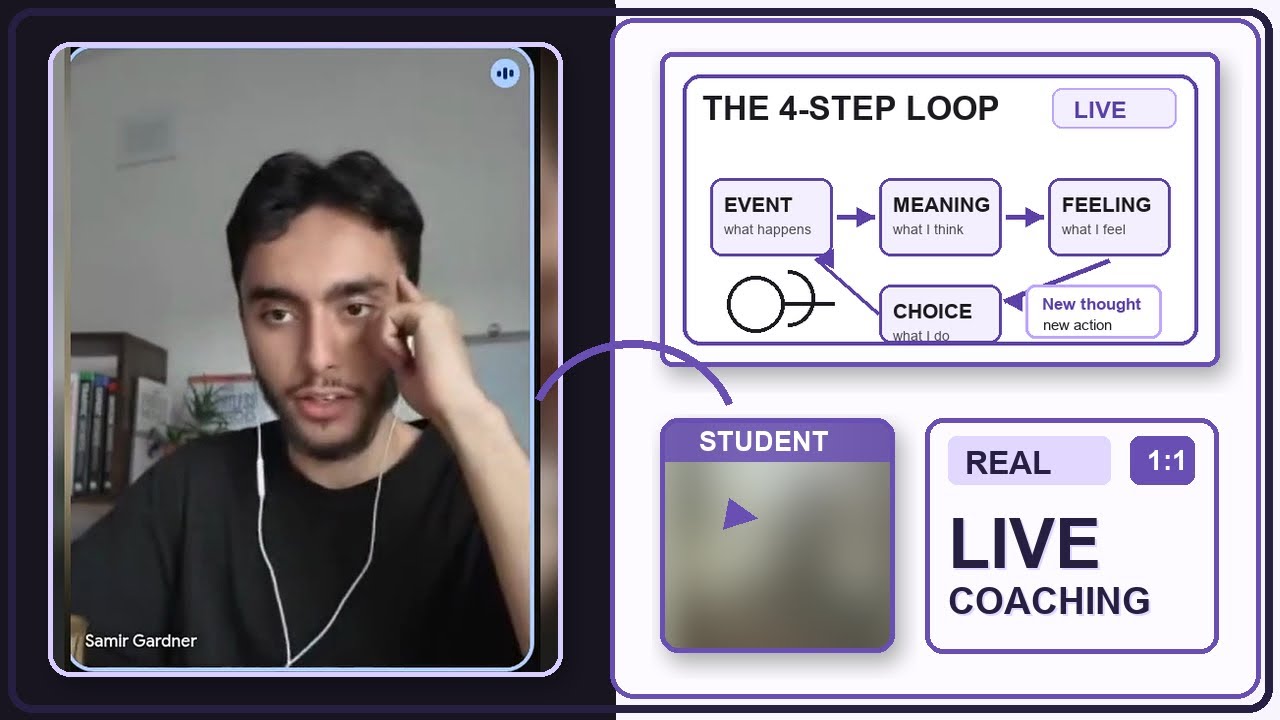
Samir Gardner coaches a client through why he uses porn, moving past surface triggers like boredom to deeper drivers: a need for control, rebellion against strict parents, and loneliness. The client realizes his habit is tied to low self-worth and a fantasy of intimacy he lacks.
Chapters
Before you watch this coaching call, I just want you to know that this is a real coaching call with a real student of mine. This was the first coaching call we had together. Now, this is shared with permission. I kept his identity private, and I will never ever share any coaching call that I have with my students or people I talk to without their permission. But this is a coaching call where we dive deeper into his root cause, understanding what's really going on. Why is it that he still desires to watch porn even though he's tried everything, even though he really wants to quit porn? But deep down, there's something deep That makes them wanna watch it. And the great news for you is that right now I'm actually doing free 25-minute consultation calls where we dive deeper into the root cause, just like you'll see in this video. You can keep your identity private, it can be anonymous. You can book your call, it's completely free. And you might think, what's the catch? Look, I'll be honest, I do have a coaching program that is a more intensive one-on-one coaching process with me. But to be honest, if you don't want to join, there's no worries at all. For me, based on my beliefs and my faith, I get the chance to do a good deed by just Simply helping you with this free 25-minute coaching session. So you can book it down below, but you gotta make sure that you show up on time, that you're serious about quitting, that you're gonna be focused, not just like driving in your car. All right, let's watch this coaching session. The thing is with adult content, and I think you kind of like already have an understanding of that, which is that we want to do it internally. Like there are reasons as to why we want to do it. don't just do it out of nowhere. There's always a reason why, or multiple reasons. It's just that we do not really reflect on them because sometimes they are more so like unconscious. And that's the goal. We want to like really uncover those unconscious reasons to then work on them. And that's what I'm going to do. So the first thing is just like, you want to like accept that you actually want to do it. instead of just denying and being like, okay, I don't want to do it, you know, I just do it because of dopamine or addiction and so on. And then what I'm going to do is I'm going to ask you, okay, like, why do you want to do it? And there's no right or wrong answers. It's just like whatever's on your mind, even if it sounds irrational, you say it. And of course, like, if you're not comfortable sharing something or whatever, then of course you don't have to. But the point is you want— I mean, we want to just really be honest and just say whatever is on our mind, even if it sounds irrational, like I said.
Okay?
And there's no like, uh, oh, why do you like to watch porn? I'm not, I'm not, uh, trying to find like an answer like, oh yeah, I don't want to watch it, uh, uh, or again, like whatever is on your mind. There's no like right or wrong answers. Yeah, got it?
Yeah.
Perfect, man. So why do you want to Watch porn, and by porn I mean like porn, masturbation, everything.
Yeah. Um. Why?
Um.
Hmm. Shoot, actually. Um, let me see. I guess, uh, well, I guess a reason would just be, I mean, sometimes it's, uh, literally I'm just bored.
Bored?
Yeah, it's kind of like a fallback or something like that. I'm just like sitting down on the site alone.
Got it. Why is it appealing to you when you're bored?
Um, oh, that one I actually don't know. Uh, it just kind of— it's like the Like, sometimes that'll pop up before, I don't know, watching a movie or, um, even sometimes like scrolling through like social media or playing games. Um, maybe it's just a kind of like a habit thing.
A habit?
Did it once and just kept on doing it.
Okay, well, what I'm trying to ask is why do it when you're bored? Like, how does it maybe help with boredom? And again, like, there's no like right or wrong answer. It's not like, oh no, like this is irrational.
No, yeah, I get you. That one's also, I think about it. No, I mean, I guess because you get like a rush, kind of. Not like a— yeah, yeah, kind of like a rush. Um, so I guess it kind of like gets you out of being bored a bit, and then afterwards you're like, oh, I want to do something else. So that's, that's probably why I do it.
Got it. What do you like about that rush?
Um, oh, it just feels good.
That's good.
Okay. Yeah, it just feels good.
Why do you want to do something that feels good, like for example, for, uh, adult content?
Um, I mean, not a lot of things. Like, like, I'm a pretty, like, happy person, like, pretty optimistic, but not a lot of things, like, actually feel good. Like, I'll just be, like, chilling or something like that, um, or whatever. I get bored very easily. So, um, yeah, sometimes it's nice to actually be in control, like, I guess.
To be in control of what?
Like, of what feels good.
Of what feels good. Okay.
Yeah.
Can you expand on that?
Yeah, because like, um, let's say like you play a video game or something like that and, uh, you just like suck at the video game. Eventually the video game's gonna be annoying to you.
Yeah.
Or if you watch a movie and then the movie's just bad, it's like, oh well, now I just wasted my time. Or you go out to eat and then the food's bad. Like stuff like that. So I guess it's like a natural, like, or not a natural, like it's a, um, it's like a guaranteed, like it's going to feel like that.
Okay, so what's special about, for example, the pleasure of PMO specifically to you? Because let's say, for example, uh, You probably know, you and I, that there are different things that we could do for pleasure, whether they are sinful or not. Like, for example, video games, or for example, social media, or scrolling, or taking drugs, whatever. What was special about PMO specifically to you?
Special, special, special. I can't really see a thing in it. Oh, I guess, um. More so because it's something that, like, uh, in a sense everybody says you're not supposed to want. So, like, I don't know, kind of like going against everybody else in a sense.
Yeah, you mean like a forbidden fruit effect kind of?
Yeah, I guess something like that.
What about going against everybody else is appealing to you? That's a question that we don't want to—
Um, that's why I usually go with what everybody else tells me to say.
You usually go with what everybody else says?
Yeah. Um, so I guess it's, uh, like what I'm not, uh, or, uh, something that I don't usually do. Um, so yeah, I guess I find it appealing, like, oh, you know, this is like a completely— I have my own separate kind of life kind of thing.
I respect your honesty. Um, let me just take some notes. Okay, and what about that Like going against what everyone else says you can do. Like, what's the motivation behind it? Because you said, okay, like, uh, you know, I can do this in private, uh, but what's the motivation behind wanting to do that? Because look, I'll also tell you, like, I'm kind of like— I have also, uh, I'm somewhat like this in certain areas of my life. So I want to know, like, from your perspective.
Um, the motivation, like the, the start, or like just like right now, like, like, uh, I go through— because I'm pretty sure the start was just, uh, um, what's it called, because my parents, my parents are like really strict.
Mm-hmm.
So I, I literally did go like anything they said, it wasn't like, uh, Like, I know I don't want to do that, or like, I'll do it later kind of thing. Like, it was like a, you do this when I tell you. Um, so then that's how I, like, that's how I grow up, or grew up, uh, thinking with everybody. So like, if somebody tells me to do something, I almost always just do it like quickly. And especially now that it's like military.
Yeah.
It's like, the rank also gets involved. So it's like, if somebody higher rank tells me to do something, I'll just do it. Like, so I, it feels like, I guess appealing, like having control over like something that I want to do. Um, yeah, I guess that's the, that would be the reason why.
So back then, uh, you said like it started with your parents. Uh, was that like the most, you can say, significant, um, experience you had in regards to this?
Um, in regards to like following others?
Yeah.
Yeah, definitely. That one I don't have a question on.
What didn't you like about that? What did it mean to you back then?
I mean, it's not even— it's not really that I didn't like it, like them just telling me what to do, because oftentimes it's like the main way I know how to work. It's like if somebody tells me what to do, I'll just do it. It's quick and easy. But it's, I guess it's more so if like, let's say one day I didn't want to do something, um, then it becomes a you don't have control over that kind of thing.
What do you mean?
Okay. So like, um, let's say, and since it's like parents, it's gonna be like less of a serious thing but more of an overall, um, let's say One day, like, you know, you're tired or whatever, and then they're like, oh, clean your room. It's like, I don't want to— I want to clean my room later. But you can't— like, for me, I couldn't tell them that. So I would just be like, like, okay. And then I'd clean my room or something like that. Or I'd try to do something else other than clean my room and put it aside. And then you just get in trouble for that. Um, so stuff like that, like little small things like that. Um, but it was like every day. Um, but I mean, most of the time it was like, uh, I don't know, like, hey, I need help with this or something like that. Like, help me out with this. And then I just helped them. And I was like, I don't really care. Like, it wasn't like, uh, I didn't like it. I liked it. It's just like an indifference. But like, on the times that I didn't want to do something, um, that kind of sucked. So this became kind of like a thing to do if I wanted to do something.
This, you mean like PMO, or what do you mean?
Yeah. Yeah.
So you were using it against, like, of course it might sound irrational, but like against your parents in that sense? Yeah.
Yeah, definitely. I didn't really think about that like that, but yeah.
Yeah, no, I mean, always, and by the way, like, even if it sounds like I said irrational, like there's so many things that they sound irrational, but because back then they were rational to us when we were, for example, younger, they still stick.
Yeah.
And that's the thing that, um, if you see day to day, for example, there's people that are like, let's say for example, they're scared of, uh, confrontations or they're scared of like talking to, let's say, the opposite gender. And even though like it's been like, uh, let's say like they're now like a grown adult and they have a career, like they, they have like their stuff together, they're confident and so on. It's like maybe they learned, let's say in that case, like hypothetically, that guy went through like an experience where he got rejected by a woman and it really hurted him. And now what happens is like that event is still kind of like imprinted in his mind. And so whenever he's about to talk to a woman, even though it's 10 years later, it's like still affecting him in the sense of like it's influencing him in the sense of Oh, you know, I fear that this might happen again, for example. So even though it's irrational, because it's like, no, like, this is like, it can't happen. Like, that happened when you were 15, and when you were 15, people were not as mature, for example. Then it's still like in the back of their minds, they still like fear that, and it holds them back unconsciously.
That makes sense.
So when you say like using it against your parents, again, it might like, the answer might be irrational to you, but if you say out loud, but how does PMO help with that? Like how does it fulfill that?
Let me see. I guess it goes back to the boost, like the feeling good, like the rush.
Yep.
Um, Is more so like a, like a, like, oh, you know, had a bad day or something like that, or they want to tell me to do all these things or whatever, like, do like, you know, be involved, and then you get the rush and then you're just like, oh, like you kind of feel like on top of the world in a sense. Um, So then you feel like, I guess, in control as a byproduct.
In control of what?
Um, just control, like, uh, I guess it would be like in control of your body. Like, since you're the one who made you feel good, you feel in control of yourself. Yeah. And then there's like nobody to tell you, oh, don't do that, or something. So I guess that would— yeah, that would make sense.
That would— what? Sorry. I was—
I'm saying like, I guess that would be the reason why, if I try to look hard at it, because, uh, like, to be completely honest, if I was to be like, If I was to answer, you know, I guess it doesn't make sense.
Yeah, I know, I know, that's the thing though.
I'm trying to fight it, like I'm fighting really hard not to say that.
I know, I know, man, I know, it's like, it's like it doesn't make sense but I gotta say it, yeah.
Yeah.
I know, okay, so PMO makes you feel on top of the world, you feel in control, in control of your body, nobody can tell you anything when you are doing that, Okay, and, uh, have you, for example, done that with anything else, like, other than Kimo? Like, use anything else to, for example, uh, feeling controlled in that sense and go against your parents, quote unquote?
Um, going against my parents?
In a similar fashion, actually.
Yeah, yeah, but I only done it once because I'm like terrified of fights. But um, yeah, I guess so. Because my my mom hates it when I do stuff that's dangerous.
What did you say? Ah, you froze.
My bad. My mom hates it when I do stuff that's like dangerous. Uh huh. Like because of course you know she. Um, so this one time I went up to this, uh, I went up to the spot to like watch the sunrise, to get like pictures of the sunrise. I like photography, so trying to get pictures of the sunrise. And, uh, I got this, uh, picture. It's like me sitting on a pillar, uh, but like it got the sunrise and everything, so it was fine, you know. On the picture it just looks like normal. Uh, the pillar though was on the side of a cliff, so it kind of— it did feel like pretty nice, you know, just sitting there. But I'm afraid of heights, so I was like also pretty scared.
Yeah, I get it.
Yeah, yeah, that was one time.
It's like your mom really, uh, will try to protect you in that sense, and she really doesn't want you to do that. So by you doing that, it's like you're taking revenge or whatever, like you're going against— I, I know it sounds bad, like, to say it. It's just like, yeah, yeah.
I mean, that one would be on a, on the lower side of that. Like, it was kind of like a little side thought because obviously the main thought was just I want to get the picture. Um, yeah, but yeah, that kind of came to mind. I was like, oh, and so then I'm like, yeah, whatever, like Um, but at that point, I was, uh, I was— it was like a little argument with my dad. Not like— no, I guess it was kind of like a— no, no. Um, so I was kind of mad at my, my parents at that time.
Okay, that— I mean, look, that makes a lot of sense. And I was just asking this to see if like that— if PMO is like the, the only thing that you're essentially using to fulfill that, quote unquote. And it seems like it. And I just want to tell you that this specific thing of like trying to go against your parents by consuming adult content is like actually very common. It's just that most people never ever talk about this because it's very like, that's something in the unconscious. And it's also something that, I mean, people are just not aware of like why they do certain things. And it's like a huge influence. I remember talking to a guy like a few years ago and he told me, and this guy was like in his 60s or something like that, maybe, I don't remember, but I didn't coach him. But he told me like he was in his 40s or 50s or 60s. And so he said that his dad was very religious and he wasn't. So what happened is that when he got angry at his dad, the thing that he would do is he would look at the Playboy magazines and like basically porn. to take revenge. And so you see, like, how for us, um, like, on the surface, it's— it seems irrational. It's like, why would you do something that doesn't even benefit you to take revenge on someone, right? It's like, uh, yeah. But the truth of the matter is that this is something that we do. It's just that we unconsciously don't know what's really influencing us In that moment, and it's not like there's something magical about this. It's just like you learned a specific way to, for example, fulfill that right to, for example, go against your parents and have no one to tell you what you need to do, and that can easily be changed. Like, and just by you being aware of that now, you're like, oh well, PMO can't really help with that even if I wanted to do that. You see what I'm trying to say?
Yeah, I understand. And it's funny because I didn't even think of it like that, um, like my parents.
Yeah.
Until you said it, I'm like, oh yeah, I guess that would make sense.
Yeah, exactly.
But yeah, that makes sense.
And, uh, to just give you another example, like, this is a bit more of an extreme one, but you know when people like self-harm, like they mutilate themselves, for example?
Yeah.
Oftentimes, like, it's pretty clear that, uh, I mean, maybe it's not fully clear, but a lot of times they do it to get the attention of other people. Okay, so they, they want to, for example, attack someone by attacking themselves. Like, okay, this guy, this gal, she, he hurted, uh, me, therefore let me self-harm, because if they see it then they'll feel like some type of like shame or something like that.
Yeah.
And so they don't self-harm because they have like a mental illness. Maybe some, some people do, right? But for a lot of people that self-harm that do not have a mental illness, that's what happens. Uh, it's one of the, the most common reasons.
Yeah, yeah. I had a friend who did that too. Um, for that actual— yeah, I remember. It was for that actual reason.
Yeah? Yeah.
He's good now.
You said what?
No, I was saying like he's good now.
Awesome.
Yeah, we were super like, what are you doing?
Yeah, no, but I'm assuming he was also pretty young, right?
Uh, yeah, it was like when we were like 14.
Yeah, yeah.
But yeah, that makes sense. That makes a lot of sense. I didn't correlate it to that though, but now that you say that, it's pretty close.
Yeah.
So it doesn't even make sense because they won't like see it or nothing like that. So it's like 90% of the time that you're doing it because of them, it's not even affecting them. Yeah. Maybe later, yeah, but like, that's some crazy revenge. But yeah.
Yeah, but it's like, it doesn't make sense on the surface, but it's all mental at the end of the day. It's nothing physical, like, okay, they see me or they don't see me. It's like, I don't want to go too deep into this because like, we'll go through these things as we go along the coaching, but like, porn is all about fantasy. It's all about you're watching a video and we think like the video itself is what's really appealing, but instead it's what's going on in your mind whilst you're watching it. It's the meaning that you attach to that. So for example, if I watch adult content, I, and like before I watch adult content, I just think, oh, I'm so lonely. I'll never get with a woman. I'm just worthless. Nobody wants me. And if I watch adult content, I can combat these feelings and feel the opposite by just imagining that I have a woman, right? Whilst I watch the video, like there's a woman that has intimacy with me and she makes me feel attractive and it's a whole fantasy. That's because the video itself is a video. If the video, for example, you were to watch it and let's say you watch like the first minutes and you're getting into it, you know, you're You're liking it. And then like a minute later you realize, okay, the, the women in the videos were actually men. Like the arousal stops like this because you realize in your mind it's— there's nothing physical. Because at first you were like aroused by the, the video, but then the moment you realize with your mind, with your thoughts, that, oh, this is actually not, uh, a real woman, you then stop because the fantasy cannot be, uh, well, at least if you don't want to, if you don't like men, right? Um, yeah, yeah, like, it's like, no, I'm not gonna fantasize about that.
Yeah.
You see how that works?
Yeah. I wonder if the whole— it's my friend going down the hall. It's going over.
Okay, no worries. Did you have any questions about, uh, the process, um, we just did?
The process? Um, no, I think I got it in the gist. That was like interesting though. Um, yeah, that was pretty interesting because like I said, I mean, like Told you, I mean, because I get the the mental aspect of it. So it's like it was really interesting to see it from that perspective. I'm like I never thought of that. Like it always comes back to the to my parents.
Oh yeah.
By the way, my parents are pretty good. Oh no, I don't know why.
No, it's fine, man. It's fine. Look, I, I don't think, uh, bad thoughts about your parents because of that, right? I, I, I see this process as just like, okay, we're essentially digging into like, um, maybe the older version of you, like the, the beliefs you used to have that might be irrational now, but they were rational back then. I don't see it as like, oh yeah, like, uh, your parents are so bad, uh, they're so strict, whatever.
Yeah.
I saw the onboarding form and I read like a bit about like, you talked about your parents there. So of course, like, I don't have any bad thoughts about them. It's good to see though, that, I mean, not good, it's just interesting to see that, you know, we started with like, oh, I do it because I'm bored and it gives me pleasure. And so like, okay, no, it's much deeper than that. That's what always happens, by the way. Like, this is my goal with that process.