Debunking The Pleasure of Porn
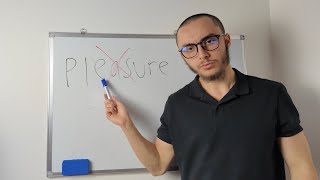
In this solo‑talk, Samir Gardner argues that the pleasure derived from porn is not a hard‑wired biological response but a learned, meaning‑based experience shaped by beliefs, culture, intention, and imagination. He begins by normalising the attraction to naked bodies and likening porn pleasure to acquired tastes like hot sauce. He cites animal studies (infants, monkeys, turkeys) and psycho‑analytic concepts (Freud’s id, ego, superego) to show that humans possess higher‑order cognition that can override instinct. Gardner explains how knowledge and context (celebrity leaks, brand labeling, art attribution) alter perceived pleasure, illustrating that the brain’s reward response is driven by meaning rather than the stimulus itself. He discusses cultural differences in beauty standards, moral frameworks, and how personal values can outweigh biological urges. The talk emphasizes that intention is required for pleasure: without a conscious desire, stimuli feel neutral or painful. He critiques the illusion of control in porn, where viewers avoid rejection and failure, and warns that over‑reliance on imagined sexual experiences hampers real‑life growth. Finally, he offers reflective questions and a reframing strategy: identify the unconscious meanings attached to porn, seek alternative sources (e.g., sport, religion, personal goals) that fulfill the same underlying needs, and consciously detach pleasure from porn.
Chapters
Today, guys, we're going to debunk pleasure. I've actually made a video over a year ago, and I really went in depth into the subject of how we can detach pleasure from porn and as a byproduct not really desire porn as much. I'm going to do the same thing today but go even more in depth. Now look, before we get in, I just want to preface this by saying that it is normal for us human beings to find naked women beautiful. These are things that we just learned to like. These are things that we cultivated a desire for. Just like, for example, hot sauce. Hot sauce is not pleasurable the first time you eat something spicy. There's no benefits to eating anything spicy. There's nothing really appealing to it. But then as time goes on, you learn to like it more and more and more. You start attaching and start imbuing it with meaning. Well, you start thinking, okay, hot sauce, actually, that, that burning sensation, I— you start attaching pleasure to it. And we kind of like do the same with porn. It's important to understand this. And not think that we are flawed or that there's something wrong with us because humans shouldn't watch porn. And we know from a moral standpoint that we shouldn't be doing this, but at the same time, it is not because we're doing something immoral that there's something wrong within us. It is very, very important that you guys understand this. And look, in this video, I'm really going to make you think and make you reflect to a certain extent where you might start questioning everything in regards to pleasure. But this is not my goal for you to go and start asking questions about every single thing you see and start thinking that everything is an illusion. That's not my goal. My goal is just to make you reflect on this one subject and to just really see it like this. And if you find other pleasure in other things in life, it doesn't mean you need to start detaching the pleasure that you find in those things. Because life shouldn't be just about asking questions over and over again. Sure, philosophy is interesting, but it is not the goal of life to just constantly doubt and constantly question and constantly rethink things. I think that is actually a detrimental approach to life. But let's get into it. Pleasure is learned. Pleasure is learned is very simple to understand. Now look, there has been studies on infants and monkeys. On infants, we see that when an infant sees the picture of a caretaker, like a mother, they react as if the mother was actually there. Whilst in monkeys, we see that the male will actually find pictures of the woman monkey attractive, and they'll find that picture to be in their brain as if it was an actual monkey. And we even find in turkeys, which is funny, but in turkeys, when they would only put the head of the female turkey, the male turkey would react as if it was a natural turkey. But it is very important to make the difference though, that yes, maybe it is wired within animals, within their instincts and within kids for them nature, but we have developed cognitive functions. Now, this is a topic I talk a lot about in previous videos. Human beings do not just live, as Freud would say, on the id, which is like your instincts. Like you just want to do what's pleasurable, what's, what's needed right now. And we have, like Freud would say, a superego, meaning that we have the ability to take, no, I shouldn't do this because this is, for example, immoral. And then we have the ego, as again, Freud will say, that would be mediating between those two. Now, this is just like a fancy way to put it, but essentially you have a mind, you can make rational decisions, you can reflect on if you should do this or not. I think a good example as to how we have developed connective functions is the example of people that go and build businesses for years on it, years without seeing results, without seeing pleasure, you can say, without seeing immediate rewards. And yet they would continue working because They have this idea in their mind. It's abstract. It's not tangible. It's not there yet. It's not even guaranteed yet. They put in the work and the sacrifice, effort and time and resources and all of these things that as human beings, we're trying to keep within us. And yet they continue working, working on for years for a potential big reward, which shows that first of all, animals cannot do that. There's no animals that can do that. Infants obviously cannot do that. Even kids before puberty probably don't think about that, or at least to that extent. So we have the ability to differentiate between imagination and reality. And so if that's the case, even if let's say infants and monkeys and animals in general find images to be pleasurable, just like we find images we can see in these videos to be pleasurable, we do not live on these instincts alone. We are not forced to watch these types of videos because they appeal to our biological instincts. Just like we're not forced to eat junk food because they appeal to our biological instincts, as a lot of people claim that junk food is so appealing because of the fat content, the sodium content, the sugar content, which is very attractive for our survival, for how we have evolved as human beings. Yet it does not mean that one individual cannot say no to junk food. Or for a matter of fact, we see this in our day-to-day work. People are not necessarily disgusted, but they do not even desire to really eat junk food and they desire to eat healthy for specific reasons. And so we can do the same here with PMO, which is we can desire to not PMO and have little to no desire to PMO and not really find PMO pleasurable. And let me ask you a question that might challenge you a bit. We say that if we watch porn, we're weird because we're essentially looking at other people having sex, which I think porn is immoral, by the way. So I don't necessarily disagree with this or agree. I don't really think that's the right question to ask. But if we were to ask ourselves, like, okay, is watching porn weird? Well, most people would say yes, because you are watching other people have sex and we know it's like orchestrated and it doesn't represent reality and so on. But then my question then to you is, is watching horror movies weird? Because you're watching other people get killed, get tortured, and so on. So how is that not weird? You might say, well, because it's fiction. But then it's like, okay, if there was a porn video that was fictional, would that mean that you'd watch it because it's fiction and it's not real life? You see, like, we need to really make sure that we don't think we're just weird, because the moment we're weird, it becomes our self-image. And if it becomes our self-image, then we'll act according to our self-image. It's very hard to go outside of that. And the more we watch porn again and again, the more we'll reinforce that self-image, and therefore the more we might feel hopeless, and the more we will feel maybe weird. And then overall, your life just goes downhill and downhill and downhill, and we don't want that. Now, pleasure is meaning. Now think about this. It's going to shock you a bit. So let's say that, for example, Let's say hypothetically you were to partake in intimacy, you were about to have sex with this beautiful woman. She's beautiful, like you find her to be sexually very attractive. And you know, you start doing the act, I'm not gonna go into too much details, but you start doing the act, she still has like her clothes on and you're feeling like very aroused sexually, you're happy, you feel this rush of dopamine, because you're anticipating that interaction between you two, and you're making love essentially, and you spend that time, you're obviously very aroused and so on. Now imagine that that woman, as she now pulls down her clothes, you realize it's a ladyboy, like a man that basically became a woman in that sense, just to simplify the term. A man that— the question to ask in that situation is, Why did you feel pleasure to begin with? Was it because it was a woman? Well, probably not because it wasn't a woman. Was it the idea in your mind that you were about to have sex with this beautiful, sexy, attractive woman? This is an actual story I've heard of someone that apparently went to Thailand, which is a bit more popular over there, where it was like a young man in England that went there and he was not really getting any attention from women back home. And then he went to Thailand and suddenly it was like, surprising to him that like a woman would go to him and just like ask him to have intimacy with him essentially. And he had intimacy. Well, I'm not gonna go into details, but you can imagine what kind of intimacy he had because he didn't know that it was a man up until after the act was done. And he literally threw up afterwards. Now he still had a good time, but what happened? Now here's what's interesting. Do you know about celebrity leaks? So these are like videos where when you used to watch porn, you know that there's this popular genre porn where, uh, it's videos about like celebrities. It might be leads about— might be like them being nude, it might be them performing intimacy. We see this with a very popular celebrity. I'm not gonna say any names, but we see that these videos, when you know about the person that is very popular, these videos usually are more appealing to people, not because the body of the woman is more attractive than the body of the other porn star that you don't know about. But simply because of the idea of who that person is. Think about it. I'm not really a type of guy that follows celebrities and so on, but especially not from the opposite sex. But if there was a woman that, let's say, when you were younger, you used to admire, maybe from a movie, and you find her so attractive and so on, and then suddenly she apparently has like this leaked tape. And what's interesting is that magazines and these porn sites will pay a lot of money to get access to these kinds of videos and leaks and pictures. They might be even blurry because people like them so much, not because of like the woman's body being different, but because of the idea of who they think that person is, which is very interesting. And we see this in different aspects of life. Now imagine I show you this painting right here. You might be like, well, okay, that's a cool painting. And you're like, oh yeah, I mean, that's, uh, it's not bad or anything. But then if I tell you that this is actually from Picasso, now suddenly the same painting has much more value because of the idea of who Picasso is and the whole history that there is behind Picasso and how famous he is and so on. Even though the painting did not change, it's simply the thought, the knowledge, the belief that this is coming from someone, that this is different. And we also have this for food. I mean, there's multiple studies on this, but even if I were to tell you, look, I'll give you like a a nice beautiful steak and you start eating it and you're like, man, this tastes great. What kind of animal is it? And you're like, is it like a cow or is it like maybe a veal or is it maybe like a lamb? This tastes so good. It tastes great. And then I tell you, no, no, actually this was a dog. You realize that like the taste was good, but now that the idea that this is a dog you're eating, if I were to never tell you, you'll probably just be like, wow, this is This taste is great. And you probably never know this, but the moment you know that this is a dog, you'll probably maybe even throw up. Whilst if I never told you, you would never even any form of negative reactions. Another thing to understand when it comes to meaning and pleasure is that it doesn't have to be related to biology. Very important to understand. If you receive $1 million suddenly, you'll probably whoop with like joy, happiness, You'll feel that pleasure, but is it because dollars in a bank account or paper currency that is objectively worth nothing, meaning that it's not backed by gold or anything, is it that biologically, you know, just like for example, reproducing, or for example, eating and satisfying your hunger and quenching your thirst, money has nothing to do with this. The notion of money just emerged throughout history. So pleasures, as you can see, do not have to depend on something within your body, for example, you can just create it within your mind. And this is the thing that we do with porn. But let me give you more examples. Now, culture is important to understand. If you were to look at different cultures, if we were to, for example, look at Asian and Western culture, we'll see that there's two different beauty standards. So in Asian culture, like if we take Japan, if we take Korea, for example, we see that there is an emphasis on the whiter the skin, the better, and the more thin, the more lean a woman is, the more attractive. Whilst we know that in the Western world, the whiter the better is not necessarily the case. I, I think that in the Western world, uh, men actually like women to not be as white as people would like them to be in Asia. Now, of course, there's different preferences, but the notion of the body just being thin and lean In Western culture, we can see that they prefer way more women that are more curvy, that hold more of that fat in that sense. So is it a question of biology or is it a question of culture? If it's a question of culture, as we can see here, then it means that it is just— it just depends on their education. It just depends on the learning of the individual based on what they've been exposed to, essentially, not what they're hardwired for, which means that they can also change that and start to like maybe the woman that the Western men like instead. Now when it comes to studies, and we can even just look at it, I've been coaching people for years now, and I see that, for example, if I talk to someone from America, they will tell me that their circle, the people around them, their environment, will actually say that it's good for them to masturbate. I'm not here to say that it's good or bad, that's not the point of this video, But they would be told, yeah, you should masturbate. Oh yeah, paying a prostitute is actually something normal. It's not something that is shameful in any shape or form. Or, oh yeah, having intimacy with someone of the opposite sex and doing these kinds of positions just casually with them whilst not even being in a relationship with them is totally normal. Whilst we see that in different cultures, like we can think of any more conservative flat slash more religious cultures, that these things would be a big no, they would be weird, there would be a stigma around them and they would be immoral and so on. So we see how the culture impacts one. Now that doesn't mean that the culture controls the individual, it will have an influence on the individual depending on what the individual decides to adopt. So for example, a guy can be in a society where, for example, in America, he might be religious, but not to do like everyone else is doing in his environment, which is maybe to casually sleep around or to masturbate or to pay for prostitutes. Because in his mind, even if that's in front of him, it's very accessible and maybe it's even cheap and easy to do, he might think in his mind based on his belief and based on what he actually values in life, that this is very bad to do and this is something he should never ever do. Which shows again, it's not biology. It's not just like we're an animal, which is going to jump on any opportunity that's in front of us. We don't just live on instincts. And it's not because something is pleasurable, because the religious guy knows that yes, having intimacy with this beautiful woman would be probably pleasurable, but maybe for that individual it is much more pleasurable to feel like they're aligned with the morals and values and pursuing different things with their lives instead. And this is the thing that most people might not be aware of. But when we talk about studies, what we find interesting is there's a lot of studies on like food and drinks and we see that how someone thinks of a food affects how they judge it and how they find it, essentially, like if they find it pleasurable to eat or drink, whatever. And like the design of these studies is very simple. Like you get two groups of people and you give them something to eat or drink or whatever, but you just like present to these groups, uh, these foods, the food or the drink in a different way. And then you ask them like how they like it. And you'll see that there's going to be a difference. We know this with the Pepsi and Coke study where If, for example, a participant loves Coke more than Pepsi, let's say, and you give him Pepsi, but it's labeled as Coke, the certain parts of his brain, when we do fMRI, we see like the certain parts of his brain that are linked with pleasure actually activate when he thinks he's drinking Coke, even though he's drinking Pepsi. And when he's drinking Pepsi and he knows he's drinking Pepsi, he doesn't get the same brain activation. We even see that orange juice that is less orange tastes less good than orange juice that is more orange. Even though it's the same exact juice, they just changed the color. So the thing we need to understand is knowledge affects experience. So it doesn't change the experience itself. Like objectively, physically, you're still drinking the, you're still drinking the same exact thing, but the knowledge affects how you will value that experience. Therefore, if you're, you're probably going to be more likely to engage in that experience again, or find it more pleasurable to begin with, just because you think, of something a certain way based on your expectation, not based on the thing itself. And again, this links back to porn, and we'll explore this even more in depth. And one thing that we really need to understand is sensations are actually— like, for example, if we masturbate, like, physically, sensations are always colored by our beliefs. Let me actually write this: sensations are colored by our beliefs. And what happens is if I go and, for example, if we go back to the example of the hot sauce, hot sauce is not good. It doesn't have any biological advantage, whatever. It doesn't help you with survival, doesn't help you with anything. It's painful, especially if you were to go back to the first time you tried it, it was just a painful experience. But the sensation of eating hot sauce, whatever meaning we give that, whatever meaning we give it, well, that's going to color our sensation, like the painful sensation. If we do the same thing in different aspects of life that are painful, if we think of the gym, for example, the gym, we can argue is painful mentally, physically. When you're pushing weights, like you're fighting gravity in that sense, you're fighting those weights. It's hard. You need to spend a lot of physical will and mental energy, and you do that over an extended period of time. But then it's like this, the way that you interpret those sensations Like the beliefs that you have in regards to like when you do the bench press and what you think you're getting from that and why you're doing that, like the meaning you give to that exercise is what makes you want to do the exercise, is why you find, we could argue, the gym even pleasurable. You find pain to be pleasurable because of the knowledge that you have of, okay, if I go to the gym and I push those weights as hard as possible, I'm going to build my muscles and maybe women are gonna be attracted to me because of that. I'm going to be the strong man and maybe I can help protect my family because of that. It's like with every reps that you do, while you're getting closer to that which you desire, essentially just attaching meaning to those sensations. And I give this example in one of my old courses with my students where I say, look at an ice cream, for example, like the physical shape of an ice cream is not necessarily like beautiful or not. Like it doesn't really matter. But why is it that the moment you see an ice cream, you're like, oh, I really want to eat it. Like, and you have this anticipation for it. And you're like, wow, this looks beautiful. And you're like, man, I really want to eat this. Is it because of like how it looks or the shapes that it has? No, it's because of your belief of what the experience of eating the ice cream is going to be like. Maybe it's the pleasure. Maybe it's I'm going to feel comfortable. I'm gonna, feel like I'm rewarding myself after a long day of work. It's going to be like my reward. It's like that belief of the experience when it comes to the ice cream. Similarly, if we go back to porn, it's not the shape of the woman's body that is so pleasurable and that makes you so drawn to porn. Because yes, okay, she has breasts, she has a beautiful body. She— I'm not denying that it is not beautiful per se, But often what really creates that pleasure— I'm not saying that you won't find women's body to not be beautiful. I'm not saying that, that you should completely detach your attraction and you shouldn't want to be with the opposite sex and you shouldn't find it, find them attractive, or you shouldn't think that intimacy won't be pleasurable. No, these things are natural. What I'm saying is that the reason why we feel and we attach so much pleasure to, for example, porn and the body of a naked woman is because of the meaning that we associate to the body in the first place. It's the belief that we associate to them. It's the belief of, if I were to have intimacy with this woman, what would this mean to me? And if we were honest, this would mean a lot to us in many different ways. And this is one thing we're going to tackle. Maybe it's okay if I were to have sex with this beautiful woman. Sure, that can be reproduction. Sure, that can be overall pleasure. But oftentimes it's more than that. Oftentimes it is, for example, I'll maybe finally be confident because I never had intimacy with any beautiful woman, and maybe this will affirm that I'm actually attractive because all of my life I thought I was ugly. And maybe this is the narrative that you're playing in your mind. So the moment you can maybe have intimacy with this woman, in your mind you're like, man, this would mean a lot because this would mean I will finally be attractive. I would finally feel confident, I would finally feel worthy, I would finally feel like a man for that matter. And this means a lot to us, for a lot of us, and especially emotionally. Now, another thing is intention. The reason why I'm talking about intention is that in order for something to be pleasurable, we need to have the intention to do that thing in the first place. And this is what we can see with porn. It's not because of the, just the pixels and the images on the screen that we find it pleasurable without our own consent. No, we find it pleasurable because we intend that thing to be pleasurable. We want that thing to be pleasurable, and therefore we create the pleasure, and we watch porn, and we attribute falsely the pleasure to porn. Let me explain. If, for example, I can enjoy the pain of going to the gym, I can think, okay, I'm going to go to the gym, and I'm gonna do this workout, and with every reps that I do, I'm gonna build my body, and that's pleasurable to me, that's valuable to me because I really want that because I wanna attract a woman, let's say. Because it is something that you do out of your own will, will, then you can decide to expect it, for example, to feel pleasurable. But if you were to do something without your own will, against your own will, for example, you were to stumble your toe on the wall or on the door, and it hurts, and it hurts for 1 minute, it doesn't feel pleasurable because you did not intend to do that thing in the first place. That's another aspect of pleasure. You need to have the intention to feel pleasure. Once you realize that, you're like, okay, well, if I don't have the intention of feeling pleasure, then I'm not going to feel pleasure. And yes, that's what happens with porn. Because if we were to really think about it, let's say that we were not in the mood to watch porn, we really don't want to watch porn, and we were forced to watch porn. And we can just look at our own daily lives. You know, there's days where everything is going right and you feel happy and you're progressing in life, and then you think about watching porn, you're like, no. And You don't even think about watching porn, but even if you were to be reminded of porn, let's say for example, you scroll on YouTube and you see a NoFap video, you're like, man, no, watching porn would be disgusting right now. But then there's times where you do find it to be a bit more appealing. You're like, hmm, if I were to watch it, I'll get some good pleasure. So there has been psychological studies that shows that when we, for example, like read a story, that when we read a story, and sorry for my writing, it's very messy. It's never been my strength to write in general, but when we read a story, our natural like default state when reading a story is that we imagine ourselves as if we were in the character's head. And we can look at when we read fiction stories, and we can even look at movies that we watch. Obviously, we need a certain level of focus where we are really in the story and we imagine ourselves to be there. And what's really interesting about Pona, and this is what I've read recently and really like made me think porn is like the only— it's like the only place on earth where you can watch someone very, very closely without them looking back at you. And so this is where I theorize that maybe there's something a bit deeper than that. The reason why that idea of looking at someone without them looking back at us oftentimes means that, okay, if we have this belief, and this is a pretty common belief nowadays, not everyone has it, but We see more and more people have it where they think, no woman would ever find me attractive. No one would ever find me, will ever want to be with me. And a lot of men, for example, they will give up on the idea of getting married and they'll say, it's too hard. Women are not good and this and that. But this idea that she doesn't, you don't have to first do the work to get a real woman because the belief that a lot of people have is that porn is like a lesser substitute for real intimacy, so it's still like a substitute, it's still like a sexual experience, it's just not as good as the real thing. Other people argue that porn is better because of how it hijacks the brain and the dopamine system, but that's another theory for another day. But think about it, if someone thinks, okay, this is going to be too much work for me to attract a woman, maybe it's even nearly impossible because I don't think I can become attractive for whatever limiting belief one person might hold. And on top of that, if I were to attract a woman and get real intimacy, she might be disgusted by me because I don't find myself attractive, and we might have limiting beliefs. So when someone gets to really look at a woman from, like, in porn, like, you see her from different angles that you cannot really see from real life, and she cannot even look back at you, well, you don't have to face rejection, you don't have to face failure, you don't have to face humiliation. As you know. So let me just use my imagination like we do in stories. Like we think we are the character. Let me watch porn thinking I'm the one having intimacy in that video. A lot of people say, oh, it's weird that I watch another man have intimacy with a woman I like, and that's like a cuckold fetish. And it's like, sure, I can see where this is coming from, but in reality, we just think that we are the man and we act like that and we fantasize around that. And we think that, oh yeah, look, I am the one getting that intimacy. I feel like that. And we kind of like put ourselves in that. And we actually feel like we are the character. We are the one having intimacy with this porn star. And when you look at porn videos, oftentimes, this is the thing with imagination, is even if we know that this is not real 100%, they use certain parts of life that we know are real. Often use like scenarios like a teacher and a student relationship, or they might use like in your, they're in a neighborhood, or it's, it's never like something unrealistic, like 100% where you're like, okay, this is just impossible. We know that there's certain, there's a part of this that it is real and therefore it can maybe happen in real life. And so we kind of see again, imagination as like a little substitute because of that. But there's one weakness about like using imagination, AKA porn and so on, or just masturbating and fantasizing whilst masturbating, or even fantasizing alone, is that it obviously is not like the real experience. And that's pretty self-explanatory, I assume. It's less vivid than the real world thing, than the real world experience. Like, think about it. We can use the example of video games. Yeah, sure, you can play a video game of FIFA, right, of the sports video games. And you can feel that you're good in that game, but you know it would be much better if you were good in the real game, just that the real game requires much more effort. And the other issue about imagination, about watching porn and fantasizing, using that as a substitute, is something very dangerous. And that is that you are in control, plus you can't fail. And this is the thing that It's scary because when people essentially play that game of just like constantly fantasizing, constantly watching porn, they're kind of like in control. There's no partner, there's no other human being that's going to be there and like they might impose their will on you. Not saying that they're going to do anything bad, but they might say, no, I don't want to do that, or no, I think I don't want to have intimacy with you. So there's no rejection that might occur. There's no failures. There's no no, uh, being criticized, being humiliated. There's no— there's none of that really. But when you, you are left with your own imagination, with you watching porn and deciding which videos to, to really watch, even though again, it is not like a very good substitute, even if you think it is a substitute, it is— it cannot compare with real life, obviously, first of all. But second, I would argue that it is different from real life. But if you were to use that as a substitute and really just like believe in side there, then the problem is like you're imagining a scenario and you're, you're imagining an experience where you're fully in control and you're just winning. There's no like losing, there's no failures, there's no negative outcomes that can come out of this because you're the one operating 100%, which is obviously not how real life works. And then if you just adjust to a life where you always think you need to be in control and always win, then reality is going to hit really hard. It's going to be hard for you to accept that life comes with problems, challenges, and so on, which you'll have to definitely face at one point or the other in order to progress in life. And this is why I think also when you decide to leave porn, masturbation, or any distractions or any escape for that matter, it becomes such a huge benefit because now you have to face life. Therefore, you become good at facing life, and now you make the pains and the and the challenges that you face, something that's comfortable to you and something that you use as an opportunity for even more growth. But what we need to understand all in all is that our brain is not like hardwired or just randomly tricked by porn to think that this is the real thing that you're experiencing and that you cannot differentiate between the real thing and your imagination or porn itself. The same way someone that plays video games where he's shooting different people and killing different people knows that this is not a substitute for doing it in real life. It might provide him a similar feeling, but that doesn't replace the real thing. Rather, what really happens is just we allow, we decide to create that fantasy, and we decide to use our imagination and put ourselves and immerse ourselves as if we are the one having intimacy. We decide to do that. It is not that It is not something that's forced upon us. It is not like, oh yeah, there's a random video that you see and suddenly your brain just gets hijacked and now you're forced to imagine as if you were the guy in the video. No, we decide intentionally to do that in order to feel something, in order to maybe feel pleasure, in order to feel like we're conquering something, in order to feel confident, whatever. So a question to ask yourself really to reflect on is, is why do you want to create pleasure from porn. Why do you want to create pleasure from porn specifically? Because with every example I've given you in this video, you realize that you can actually create pleasure from basically anything. So why porn specifically? And it's not me trying to be passive-aggressive saying, why do you link pleasure to porn when there's so many better other things? Like, is there something wrong with you? No, that's not what I'm saying. I'm just saying I just want you to reflect on that so that you can realize, ah, the pleasure, if if it's something that I decide to feel and I decide to do it through porn, that means I can decide to feel it through anything else I decide to attach meaning to. And so you might come up with an answer like, okay, well, I decide to feel pleasure through porn because when I watch porn, I think I'm feeling a sense of masculinity. I get to see a beautiful naked woman, and that affirms my belief that I have the testosterone within me, that I have this libido, that I have this masculinity, that I have this man And that's going to make me feel confident. And that's going to show me that I really have those desires within me. I'm really a man in that sense. And I want to feel like a man because of X and X reason, whatever. And then when you have these answers, you want to then ask yourself a second question. So this is the first question. And then the second question is, what could actually give me what I'm looking for? Very important question. What could actually give me what I'm looking for. Just like I said, okay, why do you create pleasure to watch porn? And you realize the meaning that you attach to porn. Now you want to ask yourself, okay, well, the meaning that I attach to porn, can I get it from somewhere else that could be more beneficial, better for me in general? So if it's a sense of masculinity, this is when we start to think about, okay, what could actually be beneficial based on the things that I desire the most in life? So that might be like, okay, well, if it's about masculinity, maybe I can instead put my thoughts, my imagination to this specific sport. It can be even you imagining a different scenario. It can be you imagining you becoming successful, and that's going to give you maybe a sense of masculinity. It can be you dominating in martial arts. And then you start thinking about those things. You're like, okay, well, maybe I can get it from that. Or someone very religious might be like, okay, well, I can just link it back to God. I can feel this sense of masculinity based on what my religion says is masculinity. Because the deeper meaning that we usually attach to porn that then makes it pleasurable, we can say, is often found in the unconscious. And I really like this approach from Carl Jung and Freud and so on. But if we really could look at our past and the things that either happened to us, the things that we learned, the beliefs that we used to hold the experiences that shaped us, well, sometimes we can find certain desires and certain drives that we attach and basically the meaning that we attach to porn based on those things, but we often just deny and suppress them. And because of that, we never get to know why do we truly want to watch porn? Why do we find porn so pleasurable? The moment we become aware of what we've been suppressing all of this time, we realize, okay, well, actually I can change that. It's just that I never really updated this. I never really updated my beliefs, my learnings, and so on. But now that I'm aware, now that I'm conscious of them, I can now do that. And this is what you want to do so that you can detach the pleasure that is associated to porn once and for all.









