Tahini - Unknown Superfood
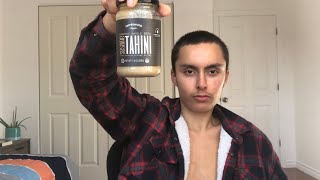
Samir Gardner breaks down tahini, a paste made from ground sesame seeds, as a nutrient powerhouse with 180 calories, 6g protein, and 4g fiber per two tablespoons. Unhulled brown sesame has five times more calcium than the hulled white version. Use it in dressings, hummus, or as a peanut butter substitute.
Chapters
What's good, y'all? It's your boy Samir Gardner. Hope y'all doing good. So let's talk about like a superfood. For me, I think it's a superfood because of the minerals, of the like everything, bro, the nutrients and everything. And that is tahini, bro. So first of all, what is tahini? Uh, tahini is basically just sesame seed paste or sesame seed butter. And basically it's just made from sesame seeds. Sometimes they might add some sesame oil, they might add some salt and everything, but the one I buy— and I've been using it recently— but the one I buy is just some pure, um, let me look, it's just some organic whole sesame seeds. It's just, it's the un-oiled version. Okay, so I'm gonna talk about the 3 different types of sesame seeds. Now the first one is the old version. The old is— I'm not saying old like, uh, you know, uh, in, in, um, talking about time. I'm talking about old like, uh, the one where they basically, uh, like took out the shell and everything. So the old version is the one that is white, and it's probably the most popular one. Now the one I bought right there is not the old version. This is the unold, and the unold basically is like, it's basically, it has more nutrients. And the reason why is because it still has the sort of like husk or the shell on top of it. Like it still has, like it's the whole grain basically. So this is the one I use most of the time. Store-bought tahini will be like the old version. It will be more white. This one is looks more brown, you can see, and everything. So there's also another one, and the other one is black sesame seeds. And black sesame seeds have pretty much the same nutrients. They're just like black sesame seeds, bro. I don't know where they came from, but I can tell you that they pretty much have the same benefits when I did my research. Now let's compare, um, the old version versus the unold version. The unold version is more brown, like I said, like this one. Basically, it's the unold version. But what you gotta understand, since it's unold, it has 5 times the calcium. I don't know if it's that for everything, but bro, 2 tablespoons of this has 260 milligrams of calcium, which is about 20% of the recommendation on daily allowance or something. It has 20%. That's a lot, just 2 tablespoons. So with 6 tablespoons, you have enough calcium. So for the people that, you know, think they're not getting enough calcium because they don't drink milk, or they're not getting enough calcium because they don't consume dairy or anything, uh, tahini, bro, one of your best alternatives. Um, now the old version, which is the one that most people use, most people buy and everything, because it's the one at the stores— because this one, I found it on Amazon and You know, it's great. It costs kind of a lot of money. It's kind of costly, but it's a great— like, it's a great product. But the old version, which is more white, you see it like on salad dressing, you see it everywhere, bro. Uh, people use it in every recipes. It cut it— I think it costs a little less, but at the same time, it just depends on the brand and everything. But the old version still has a lot of nutrients, but it doesn't have as much nutrients as the old. The unold is basically the whole seed, and the old is not the whole seed, it's the seed with the sort of husk removed, like the shell removed, so it doesn't have as much nutrients. Now you can make tahini on your own. Buy some unold sesame seeds or buy some old sesame seeds, put them in a blender. Some people like to add like sesame oil, like 2 tablespoons, or or depending on the quantity you're making, and you just grind them up. It's— you're gonna need a good, good blender though, like, and you're gonna need to blend this for like 15 to 20 minutes or something depending on how good your blender is. Because when you blend those seeds, uh, the oil of the seeds needs to come out, and it takes a lot of time. It takes like at least 15 minutes. And when the oil of the seed is gonna come out, uh, it's gonna make that sort of butter or paste or whatever, like, which is gonna be more liquid. Okay, so sesame seeds, bro, um, let's talk about like the nutrition, nutrition facts. Okay, first of all, 2 tablespoons has 180 calories, which is very calorie dense, and plus it doesn't have much carbs for, for the people that are trying to eat less carbs, more protein, more fats, and everything. It doesn't have much carbs or fats, pretty much like every, um, nuts or seed butter. Uh, you know, it only has 5 grams of carbs for 2 tablespoons and 180 calories. Also, it has 6 grams, 6 grams of protein and 4 grams of fiber. So to be honest, bro, for me it's a superfood. Now looking at the nutrients, uh, I have basically, uh, notes And basically tahini or sesame seeds in general are very high in calcium, iron, zinc, copper, vitamin B1, manganese, phosphorus. And all these nutrients— like, tahini is basically a great, great thing for everything, bro. Magnesium is good for the heart. Phosphorus with, um, calcium is good for the bones and everything because it's going to be balanced. Um, You know, it doesn't have sugar inside of it, bro. So sugar sometimes messes up, or like pretty much things that are acidic or have too much sugar, like fake sugar, is gonna pretty much mess up your whole, um, calcium absorption. But you know, you have all these nutrients in a good amount. Like for example, copper helps with, uh, the hair, helps with, uh, the growing of the hair, and adds a lot of good— it has a lot of copper. Is that it has a lot of magnesium, it has a lot of good things, you know. Uh, also it has powerful antioxidants. I mean, when you look at whole foods, bro, they have— they don't— they only have benefits. Maybe they have some anti-nutrients like tiny— some people say there's anti-nutrients, but I think you should not overthink it. And bro, it's— you don't need to overthink the negative, the positive, and everything, bro. If you're eating whole, I think you're good, okay? But you know, sesame seeds have some powerful, uh, antioxidants. One is called, um, sesamolin, and one is called sesamin, I think. And pretty much they just help in everything, bro. I'm— I don't want to go into the research, I don't want to go into the science, uh, I, I just want to tell you, bro, sesame seeds, tiny, is a great— like, especially for calcium, for the ones that may have bone problems, osteoporosis, or whatever you call it, uh, anything, bro. Sesame seed or tiny butter, bro, is great. Now, how to consume it, uh, for the people like me who, uh, had peanut butter allergies— I don't know if I'm still allergic, but you can use it instead of peanut butter, but it doesn't taste the best. I, I'm gonna be honest, I don't— I never tried almond butter, I never tried cashew butter, I never tried peanut butter, I never tried all those things. I only tried pumpkin seed butter and sunflower butter. That's the only 3 butters I use: tahini, sunflower, and pumpkin, because I had some nut allergy in the past and I don't know if I'm still allergic. But what I can tell you is this can be a substitute for peanut butter, for any butters. Now a lot of people use it as salad dressing and in their hummus. Hummus is like one of the most popular recipes, and basically Tahini is very, very popular in the Middle Eastern and everything. And you know, they use it on top of bread, they use it with dates, they use it with everything. And I'm gonna tell you, um, on salad dressing, bro, you mix it with lemon, garlic, a little bit of sea salt, uh, what else, like a little bit of water, it makes the best salad dressing ever. It's not gonna taste like— it kind of tastes bland, it kind of tastes bitter But you get used to it. Like, yeah, it's not— it doesn't have the best taste, but it's— bro, the nutrients just— but the nutrients just are too good for you to care about the taste. But still, you can mix it with, like I said, garlic, lemon, and— but that's the best. A pinch of sea salt, a little bit of water, put it on the top of a Buddha bowl, put up— put it on top of a salad or anything. Well, it's the best. in hummus it's used a lot. You can make your own hummus. Uh, me, I like pairing it with, um, coconut. Coconut, uh, you can make tiny coconut buttercups which taste great. Coconut and dates and tahini is also very, very good. You can make healthy desserts with it. You know, coconut has the good fats, dates is the good sugar with potassium, magnesium. And tahini, bro, with all the benefits I just said. You can also mix it with eggplants. A lot of people like to do like roasted eggplants and they put tahini on top of it. You know, it's pretty much like all Middle Eastern recipes. And you can also just mix it with nut butter if you don't like the taste. You can mix like 50-50, like 50% of almond butter— I mean sesame seed butter— and 50% of almond butter. And just mix it and it's gonna be good. I'm gonna put in the description links on how to make caramel because caramel, bro, yeah, you can make caramel with this and it tastes great and it's healthy too. And you know, you can make any, bro, you can make Nutella, you can make anything with this. I'm gonna drop videos on this description on how to make those things. But you know, that's it for the vid. Hope y'all like it. And like Bro, this is underrated. Y'all must try it. Like, I know it costs a lot. I'm gonna put the link in the description. Still, it costs about like $14 to $15 for two. This is about like 300 grams. And you know, just go on Amazon and you can look at— look it up. On old version is the best, bro. So see ya.









