Why Addiction Is NOT a Disease | Dr. Stanton Peele Interview
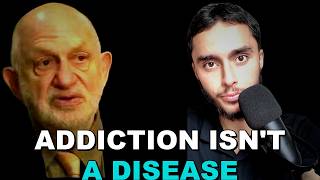
Dr. Stanton Peele argues addiction is not a disease but a life process shaped by culture and circumstance. He points to Chinese laborers in 19th-century America and WHO studies showing many societies don't recognize alcoholism as disease. His Life Process Program strengthens people's ties to work, housing, relationships, and community instead of treating addiction as a medical condition.
Chapters
Today's guest is Dr. Stanton Peele. He has spent decades challenging the way that we think about addiction. While many experts claim that addiction is a brain disease, Stanton went and challenged that notion through his books like Meaning of Addiction, Love and Addiction, and his latest book, A Scientific Life on the Edge, which talks about his journey. Today we're going to talk about why he believes that our understanding of addiction is flawed and what a better way of thinking about addiction could look like. So here's the interview.
Well, that's exactly how I got into the field. I wrote Love and Addiction with Dr. Brodsky in 1975 and The Meaning of Addiction in 1985. And we've created a whole, quote, science of addiction, which is actually steeped in American history, a kind of an idea which started with alcohol that substance makes you out of control. And I have the unfortunate retrogressive view that before we invented this disease medical concept of addiction, just looking at addiction in a commonsensical way gave us more both an accurate understanding of addiction and a better way of tackling addiction as well.
Yeah, definitely. I mean, you spent decades researching that and you said you wrote your first book in 1975, correct?
Yes. I mean, I started out with the insight that people When you think about getting totally immersed in something that changes your whole life in a way that can be negative, it's quite remarkable that one of the most common ways we see that taking place is in love relationships.
Yes.
I mean, after all, unrequited or disappointed love is the major cause of both suicide and murder in the United States. People— I mean, most murders are— the largest category of murders is you kill your ex-lover, your ex-wife, your current lover, and likewise suicide. So here it is staring us in the face, this common experience And it's totally identifiable as an addiction. And at the time I wrote Love and Addiction in 1975, we had come through a whole historical period, especially around drugs, and especially around the introduction of the synthetic opioid heroin in the US. And if you said addiction, people's minds, boom, went to heroin. That was addiction. They lost the ability to analyze the actual phenomenon and the parameters to understand that addiction was a process, a common process. And there's two sides to that thinking. One is, well, a love relationship that becomes totally absorptive And it has negative elements, and it culminates in an inability to withstand withdrawal. That's the process of addiction on the one hand. On the other hand, people take opioids all the time throughout history. Opioids have been known since ancient times.
Yes.
And it took us until when I wrote Love and Addiction in 1975. Opioids have been known for thousands of years, and we just discovered in the last 100 years that it's different from everything else in the world, that opioids are the one thing that can create addiction. And it's obviously both a historical and cultural anomaly, as well as a professional one. We came to this concept of addiction as a medical syndrome just at a time in the late 19th century and early 20th century when medicine was becoming professionalized, when we were really going back to the century before, medicine was kind of mostly folk medicine and herbs and things like that. So as we were formulating a kind of modern concept of medicine, and modern concept of diseases, of which there are many examples, addiction, specifically to opioids, specifically to heroin, just fit in that slot, and we fit in that slot, and we've never gotten out of it. And America, ironically, invented that concept kind of worldwide. And we've always had the worst opioid addiction problems. So it's sort of like we go, well, look, look how bad the problem is. Thank goodness we've got a modern understanding of it to approach it. Oh, what? It's getting worse? Well, thank God we'll just double down on our efforts. And we are incapable culturally of rethinking our assumptions.
Yeah. Definitely, because we've seen across history, for example, I believe in India, and of course, I'm not the expert when it comes to that, you are the expert. When it comes to that topic, for example, in India, we've seen the Chinese workers coming to the United States consuming these drugs, and they did not have like this notion of addiction. And therefore they were not acting accordingly. Correct?
Right. I think there's incredible cross-cultural variations in addiction to the most popular addictive substances, alcohol, and heroin. And, you know, pneumonia doesn't differ cross-culturally. You know, we're pretty good at saying, oh, you've got pneumonia, whether you're in Egypt or Africa, or whether you have AIDS or HIV, no matter where you are. But recognizing addiction, identifying it, it's frequency, its course of events, how it's responded to, varies cataclysmically across countries and cultures. It just so happens that, I mean, we're thinking a lot about American imperialism lately with the invasion of Iran, but American imperialism of thinking is actually more evident, and it's most evident in the area of addiction. It's— that's the primary example. We've really had to spend about 150 years convincing a lot of the world, oh, this is what addiction is, because they're so resistant to it, uh, in so many places. And of course, that goes along with alcohol too.
Yeah.
The World Health Organization did an international study of the nature of alcoholism, and there were a bunch of medically oriented epidemiologists, and they said, well, we're sort of surprised in countries like, say, Greece, they sort of don't recognize alcoholism. You can't— you have to sort of explain it to them. They know that people drink too much. But the idea that you have this loss of control and disease, that doesn't register. And here's the bad news: they have less of it than us. So we, with our great model of medical conception, have managed to create something in much greater numbers, and we do much less well in dealing with it. So let me jump to the modern times. Of course, my claim, you might be aware of my book, my memoir, A Scientific Life on the Edge, I've spent— well, I'm 80, you know, I've spent— and I wrote Love and Addiction in my 20s— I've spent more than half a century presenting my ideas, and my ideas have been— it's hard to say I've been ensconced in the whole thing, but it's remarkable how many of my ideas are now broadly recognized. Let me give you 5 examples.
Yes, go ahead.
One is, it's— it— Love and Addiction was about, well, you know, addiction isn't to do with heroin or drugs, it's something broader than that. There's kind of a general recognition around the globe that addiction is not limited to one drug or even the drugs at all. The second thing that's kind of recognized generally around the globe— I was— once you recognize that addiction is a more— it's a normal— it's an extremity of a normal human experience, Then you become less dramatic about it and you realize that it's not only more common, but it changes a lot. I mean, people outgrow addiction. And obviously, people have different forms of love relationships and people get into destructive affairs. But in many cases, they outgrow them. So I created the idea— I was the pioneer in recognizing what's called natural remission or natural recovery. The third thing is I was a pioneer in terms of thinking about harm reduction. I mean, once you stop thinking about these things as magical solutions to magical substances, and the only solution is totally to abstain from them, you start saying, well, wait a second, if I change my whole life and I'm not in the same place I used to be, Well, maybe I'll drink alcohol or take painkillers differently. I'm not the same person who became addicted to them when I was in my 20s. A fourth recognition, and this is where I was headed, there's actually, although I pioneered many of these, there's sort of a worldwide recognition centered mainly outside the United States, but even appearing here, that the best approach— if it's not a medical disease, you have pneumonia, you can use antibiotics, boom. Um, we've got a way of dealing with it. It's not as good as any— if you start thinking about addiction as a complex way that people involve themselves in certain kinds of experiences that depend on their life stage and their cultural setting, and where they are in life, and their social circumstances, then you start saying, well, it's a— we— the best approach is going to be a community approach, one that encompasses their whole life experience, their culture, their social setting. And that's— the World Health Organization, which in many ways is very backwards about drugs, has been endorsing for 30 or more years now community response to addiction, by which is the opposite of medical response. It says rather than taking a person and isolating them, like at a hospital or in a medical setting, integrating and supporting people through a cultural involvement is really the best approach that we can have. It's not magical, and it requires kind of an investment in cultural and social institutions. And once again, America is among the worst examples because we've gotten— we're less community-oriented than virtually any other society.
Definitely.
And so the last thing that, you know, I've made those 4 points, I pioneered in all these ways of thinking. But now we have, in America, there's something called drug policy reform, and I know many of the practitioners in it. It's remarkable the degree to which people who consider themselves, once considered themselves revolutionaries, the use of medications like buprenorphine, for example, or methadone as a counter to opioid addiction, it's remarkable the degree to which they are, if anything, even more steeped in these basic cultural assumptions. It's almost as if you found somebody on the street and said, well, let's— somebody gets really involved in a negative experience, but they can't detach themselves from it, and it can really break them down completely, destroy them individually, make them violent. Most people, if you ask them to think about that in a commonsensical way, will come to some realizations. They'll say, Well, maybe they didn't have much going on in their lives. Maybe they were kind of deprived. Maybe the best way to help them get better would be to sort of help support them and build up their lives, give them more cultural opportunities. In the case of love and addiction, you might say, well, you know, maybe they need more friends or a more supportive family. All those kind of commonsensical notions that any reasonable person could come to, they're reappearing. Yeah, as though they're, you know, and people say, you know, community, and the label generally is a community approach, you know, you might call problem solving. I, I absolutely go the life process program, which says, um, let's focus on all of the contextual aspects of a person's life, and they'll be less likely to be addicted. Which brings up— I had given you 4 ways in which I pioneered things. Well, my approach is a harm reduction approach, and it doesn't— because it's not focused primarily on, oh, you can never take another opioid because which happens all the time. A person's in recovery and then they get— they break their leg or they get a knee replacement, and then they say, well, yeah, why don't you give me some painkillers? You know, I'm not going to go home with the knee replacement and just like endure that pain. And then they take the, the painkiller for 2 or 3 or 4 or 5 days, and they say, okay, I'm I'm good. You know, I'm going to desist it. All of which is sort of, on the one hand, impossible in terms of the disease model, and two, sort of virtually everybody knows about it. You know what I mean? If you say to people, well, you know how opioids are addictive? Have you ever had an opioid painkiller? You had an operation? And they go, yeah. And I said, well, did you become addicted? To it? And they go, well, no, it gave me a certain kind of a feeling. Opioids make you feel detached from your pain and your experience, but I didn't find that entirely pleasurable. And so, you know, I have things to do. I have a family, I have a job. So, you know, I stopped taking them. And that's what could be, for want of a better word, dumber. Dumber in the sense that anybody can know that and figure it out. And it's— and we're having an incredibly difficult time breaking through this cultural consciousness to make people aware of that. And the World Health Organization regularly publishes— they'll say, well, we've been presenting a community approach for 20 years, but it hasn't been very well adapted around the world. And because we're sort of combating a kind of a cultural and American, possibly growing worldwide vision that is opposed to it. And so, you know, when we came up with antibiotics, people still die of pneumonia, but we know how to treat it. We've eliminated certain diseases like measles. Well, it's coming back, but we were able to eliminate yellow fever. We know how to cure other kinds of diseases. But addiction is the modern disease in that it only grows more evident. I mean, after 100 years or of fighting narcotic addiction, at the turn of this century, America had its worst outbreak of opioid addiction ever. We're not going to have our worst outbreak of pneumonia or yellow fever, you know, in 20— in the 21st century. That's whatever— since the 22nd century, you know, we know we, we know we've gotten somewhere because we know how to approach it.
Yes.
And yet here we are with our current approaches And it's amazing, well, gosh, they only get worse. And at the turn of the century, drug policy reformers were among the worst people. They said, you know what we need to do to eliminate opioid addiction? Let's cut out prescribing painkillers, which has created a whole other context and dilemma that we're all dealing with now, which is regular organizations like the AMA say, well, wait a second, you can't cut out painkillers. Painkillers do something. And people have operational and other kinds of pain. And so, we're now— there's a certain degree of a civil war even within medicine about what we're talking about. But we certainly, you know, when you— in the cases of many diseases, we come better, we become better able to understand their underlying sources. We're now in a period of greater turmoil and conflict.
Yeah. Yeah. I mean, this is definitely one of the things that we really need to have more knowledge of. And it's very good that you are discussing these things because when we really realize what's been like the history behind this, we can really see, okay, like where do those ideas even come from in the first place? And I wanted to ask you, like, because you said that we need maybe an entirely new conception of addiction and what would that actually like look like?
A new conception of addiction would be in many cases you described removing most of our assumptions And just asking common-sensical questions to people, like thinking about their own experience. Let me give you two of them. You didn't become addicted when you took an opioid painkiller. Why was that? And the answer was, well, it disrupted my ongoing life. So what does that suggest? It says, well, people need a firmer anchorage in their ongoing life. And if it's true that marginalized people are more susceptible to becoming addicted, Well, that's because they have less linkage and on rewards from ordinary life. So our Life Process Program is something that we now use in community settings with community coaches and counselors, where we say if a person's marginalized ethnically or poverty-wise or housing-wise, why don't we start working on those foundational things? Give them a place to work, a place to live, create a community and relationships. It's almost— it's embarrassing. It's sort of like to say, oh, I've got a modern, a great new modern solution to addiction. Um, it involves just the most commonsensical ways of attaching people to their life experience. And so Remarkably often, people who consider them— I've, you know, 50-plus years, I've had debates with people where I'll get up with some giant neuroscientist and we'll be in NYU.
Yeah.
And the guy will go, well, what you're talking about is psychological dependence, not addiction. When you get addicted to opioids That's real addiction. And then I say, well, don't most people take opioids without being addicted? And they'll go, well, well, that's true. And I say, and if the guy's knowledgeable, I think, well, don't most people who become addicted to opioids, for example, in Vietnam, don't they outgrow it? Don't they overcome it, especially if their circumstances in life improve? And they go, yes, that's true. And I say, so how are you deciding that that experience of addiction deserves a separate label and a separate place in the world, when you just told me it follows the general rules of human behavior? You've made up an artificial distinction, and you've, to use the term, reified it, So that when I point out to you, it's going— your everything you say actually supports my notion of addiction. You have to throw out your categories, which you're not going to be inclined to do. You already are a professor of neuroscience, for God's sake.
Yeah, I mean, the Lee Robbins study, like on the drugs, for example, is one of the best evidence and one of the most popular way to really show that, okay, like people naturally outgrow these things as their life gets better. And really your model of like just making things like, let's just go back to the basics. Like let's just improve one's situation in life, help them in the basic and the foundations. And sometimes I feel like people, they just want like a fancy solution, but that's not what's needed. Sometimes it's just like you need to do the basic stuff.
And they— and good Americans are especially addicted to scientific and chemical and medical sounding solutions.
Yeah, yeah.
If you sort of gave your answers, well, go back to where they had some problems and help them with their lives and help them get support, certain people are going to sort of say— they would accuse you of being non-scientific. What the hell's the matter with you? And of course, the answer to that question is, science is the most accurate and effective way of approaching a problem. That's what science is. Science isn't neurogenetics and neurochemicals. Science is actually a label for understanding reality and how to delve into reality in a way that can improve and bend it towards your society's own purposes.
Yeah, exactly. I want to ask you just a personal question, because you described your career as like a lonely quest. Why do you feel like it has been like so lonely?
Well, I think we've been going over the reasons. I've been swimming across stream or upstream my entire life. And I've said to you, I gave you 5, I think, reasons things have all changed in my direction. If you— when people go— when they— when I first— I believe it or not, I was teaching at Harvard Business School when Love and Addiction was published, and I, and I taught organizational behavior. And a fellow professor goes, Love Addiction, it's okay to choose. People don't say that now. When you say love or sex addiction, they say, well, I think I know what you're talking about. I've seen examples of that. And so despite the fact it's hard to believe I've been around so long— love it— 1975 is now more than 50 years ago. My ideas, to a remarkable degree, have been adopted. But it's almost like I did it too early. It's too soon. People are People are— there was just an article in the New York Times a month ago, 'Is Love a Genuine Addiction?' And my problem in life was, you know, I described that 50 years ago, and now people are just getting their heads around it. So, um, there's such a thing as being too, uh, early and insightful in it. And as I've always been across currents And even now, when my ideas to some extent are being recognized as common wisdom and being accepted, you know, I'm still not, uh, being given that kind of credit. So Samir Gardner, I'm counting on you and your podcast. I hope this becomes a— I want you to go out and promote it. Uh, of course you have a You look like you're not totally bound to the American experience. You look like you come from— you have a little more diverse view and experience of the world. So I want you to go out there and help me spread this idea. You know, you have to be alive to win the Nobel Prize. They don't give it to dead people. And I mean, you probably look at me and say, oh, this guy's good for another 100 years, another 50 years. But, uh, Maybe not. So, uh, you're gonna have to go out there and really promote this to get this moving forward. You hear?
Definitely. And to anyone listening, I highly suggest you guys pick up a copy of your book, uh, Scientific Life on the Edge, or also the other books such as Love and Addiction and Meaning of Addiction. My personal favorite is Meaning of Addiction. It really shocked, uh, my entire world and how I seen— I mean, how I see things now, my perception, my beliefs, and so on. So thank you, uh, Dr. Centenpiel, for talking here on this podcast, and I hope this was helpful for anyone listening.
All right, let's keep in touch over the decades, Samir, and we'll see how things go. Good talking.
Thank you. Thank you again.
Bye-bye.
Bye-bye.









