EP 132: Bek, Tim and Liam - Short first labour, doula support, separation after birth and bonding
In this Transform Your Birth podcast episode, host Tracey Anderson Askew talks with first‑time parents Bec and Tim about their birth experience with their son Liam. The couple prepared by taking the Transform Your Birth course and hiring a student doula, Bee, which helped them feel informed and supported. They faced an early induction offer at Flinders Medical Center, chose to decline and later discovered Bec was already in early labour without realizing it. A rapid, precipitous labour unfolded over about three hours, with the baby born in a hospital shower after a failed attempt at a water birth. The birth was intense, with limited use of pain‑relief tools, and required quick decisions about positioning, a yoga ball, and a bath. After birth, Liam required a brief neonatal unit stay due to low oxygen readings, leading to a short separation from his parents. Both parents describe the emotional journey of bonding, noting that connection took a few weeks for Bec and is still developing for Tim. They reflect on the importance of doula support, clear communication with staff, informed consent, and managing expectations about labour length and bonding. The episode ends with practical advice for expectant families about seeking support, trusting their bodies, and allowing bonding to unfold naturally.
Chapters
Well, welcome everyone, another episode of the Transform Your Birth podcast. And I have a threesome today, and it's Bec, Tim, and gorgeous little Liam, who is just so distracting. I don't know how I'm gonna not look at him for the whole thing. Um, but it's beautiful to have a family. It's also great to have a dad or a partner in to share their experience as well because they have a very different perspective. So welcome you three, thank you for coming.
Hi Tracey.
Hi Tracey. How old's Liam?
4 months and 2 days.
4 months, oh my God, and he's beautiful. And where did you have your bub?
Flinders Medical Center in Adelaide.
Beautiful. Okay, so let's start with how— I'll start with you, Bec. How are you feeling about the idea of giving birth? And you can share a little bit then about what sort of preparation you did. Yeah, no worries.
So I was a little bit nervous about the unknown with birth. I had had some difficult experiences when I was younger, and it just made me really worry about losing control in that situation. So we were looking for continuity of care as something we were really keen on in coming into birth, but also to have some education and to understand what, what we could know ahead of time to make this as smooth as possible. Um, and actually we, we tackled that from a few different directions because we didn't get into the hospital's continuity of care program. Um, so we engaged a doula a student doula actually, Bee, who I think that was probably one of the very best things we did in preparing was to have her alongside us through this journey. We also flew over to Canberra to do your course, Tracey Anderson Askew Askew, which was amazing in getting Tim and I on the same page and making sure that we had the conversations ahead of time. About what I did and didn't want and what I was worried about. I'm not sure you were as worried, Tim.
No, but more just about knowing what could happen and having thought about it beforehand. So one of the stories our doula shared with us was the reason that she wanted to get into doula-ing and um, she needed like one sort of live birth experience before she could, could graduate, which was, which was Liam, um, in the end. And she graduated shortly after, after he was born. Um, but the reason she got into it in the first place was because she had 3 kids at Flinders, um, all of them C-sections, um, because, um, you know, she'd gone into her first birth without having a lot of preparation a lot of thought and had a very specific idea about how she wanted that to go. And then when it didn't go that way, when it turned into, oh, um, you're gonna need a C-section, she hadn't prepared for that at all. She hadn't thought about what she wanted. She didn't know what the options were. And of course, in that moment, you're getting wheeled in for an emergency C, you can't exactly stop and do the research and have a lot of deep thoughts and discussions with your partner about how you want things to play out. And so, yeah, there are a lot of things she realized afterwards that she could have asked for, but she didn't know that they were options because she hadn't prepared for that, that pathway at all. So her goal was to— was very much like yours, Tracey, to make sure that, that the women that she worked with, um, you know, knew and had at least thought about all the different possibilities.
Yeah, my goal is always to prepare women and their partners for birth under all circumstances because, you know, we just don't know what's going to happen on the day. And it's quite common for doulas to come to this work and feel very called to this work because of their own experiences. And often they, they start to realize the significance of birth and the impact it has post-birth. I always say what we learn in birth sets us up for parenting, and if we come through that doorway and giving birth in a way that causes us to look behind our shoulder and wish we had a known this or wish we had a known that, then, um, you know, that stays with you for a very long time. So, and, and for those listening, a doula— when you can't get continuity of a known midwife, we do know that that model of care is gold standard in the sense that relationships matter in birth, and women need to trust the people around them. And when they don't know who the people are around them, um, a good way to fill that gap is to get a doula. So I'm a great believer in doulas. I was a doula for a few years as well, and, um, it's a beautiful job. And, and it's interesting, tell us a little bit more about, from both of you, why having a doula made such a difference to you.
I guess first and foremost, in the vulnerable position of giving birth, having someone on the phone— at first we had her on the phone and then we had her in person at the hospital. Yeah, but having someone on the phone reassuring me was actually really valuable. Yeah, I really appreciated being able to just say, oh look, I'm feeling nauseous, for example. Is that normal? She'd say, yes, that's— that, that can happen. Um, so yeah, that's right. Um, so you don't sort of spin off into this, what's going on? Um, you can just— that's normal, and you can kind of get on with, um, working through the contractions. And yeah, um, so that I found fantastic.
Yeah, it was really good for me as well when I'm, you know, also freaking out a bit about what's, what's happening and how quickly it's all happening and running around trying to, um, you know, pack the car, uh, finish packing the car and, and, you know, trying to get Bec into the car and, and, and having Bec on the phone just coaching Bec through it so that, um, you know, cuz I, I'd done your course and, and all this preparation about, you know, being there for it, but in the moment I was just frantic because it was all happening so quickly and neither of us had ever done it before. So having this calm and experienced and trained voice on the phone to just help us through it—
It's great backup for you, Tim, because having all of that on your shoulders can be a lot for partners and particularly for your first one. I think that's very true.
Yeah. Yes. Um, just to add as well, Tracey, uh, through the process of arriving at the hospital and then being— and I'm assuming we'll go into the story. Yeah.
Well, let's do, let's do that now. Let's go into the story. Um, before we do though, just what changes did you notice from having a doula and perhaps doing the Transform Your Birth course? What were some of the changes that took you from being a little bit anxious about the unknown to being able to go, okay, game on, let's get into this?
I feel like by the time we reached the point of giving birth, I feel like I'd looked into everything I wanted to look into, and I had a fairer understanding of the ways it could go, the ways it might play out. I think that combined with building a relationship with Bae, um, really helped.
Yeah.
To just sort of settle me and actually have me really feeling quite calm about it. I wasn't, I wasn't feeling anxious at all.
Yeah. Beautiful. Did the practices help? Yeah, we did do the practices.
Um, and I completely forgot to do them during during the process. There was, there was too much during, during the actual laser.
Yeah. Um, but, um, I remember Beck turning to me after, at the end of the first day of your course, and, and just saying like, just, just the amount of information that, that you downloaded in, in that first day was enough to just reassure her that like, yeah, she's got this. Like, yeah, she knows what she didn't know about what could happen and, and and that she could handle whatever did happen. Like, it was, it was really just a fear of the unknown, of— yeah, um, and like she said, losing control as well. And then, you know, so on the one hand, um, you know, getting, getting that message that, that, you know, you, you really can't control it, but, but you can control how you respond to it, and, and that she was kind of prepared to mentally to, to respond to. Just having talked through all the different scenarios and go, okay, yeah, I think if that happened, we could, we could deal with it, right?
Yeah, that's the antidote to the uncertainty. It is the biggest thing women have, and their partners have to get their heads around, is the fact that we cannot control this, but we can influence it, and we can start to train ourselves to respond a certain way. And once you understand the process and you understand what can happen, like what the different possibilities are, and that the tools that you learn can support you through all of those, then the subconscious goes, okay, we have an answer. And I do. I love— that's why I keep doing this work, because I love to watch the transformation that people go through when it comes to really, um, looking, um, fear in the eye and moving beyond the fear into a level of doability. If that's a word.
Yeah, maybe, um, the, the last thing that was really valuable from your session as well was giving me reassurance that Tim knew what to do.
Yeah, yeah, yeah. You had your checklist, Tim. I bet you looked shiny. Did you?
Uh, no, it all went out the window as soon as, um, I was running around panicking and, you know, trying to clean Beck's vomit out of the sink and Well, we better get into the story.
Sounds a bit graphic. Let's get into it, eh? You poor darling.
So to set the scene, um, yeah, go. Beck was, uh, at 41 weeks, um, so she was due on the 8th of December, and by the, um, 11th we went in for our 40-week appointment at Flinders and they, uh, put in the paperwork for us to be induced, um, if it came to that. Um, and we were told, oh, you'll get a phone call 72 hours before your induction slot, um, when once you've been scheduled in. Um, we got a call the next day to say, uh, this is not the usual 72 hours, but, uh, can you come in in 2 days because, uh, it's, it's lead up to Christmas, we're all booked up, that's, that's all we've got. Um, so that would have been, um, 40 plus 6. And we said, well, we don't really want to be induced, like we wanted to wait the full 10 days after. Yeah, like 41 plus 3. And, and, you know, if he's still, still hanging about at that point, we're happy to, to go for an induction, but we really want to, want to give him that, that full 10 days to to come naturally if possible. And so the admin lady on the phone had to go and talk to one of the midwives and came back and said, oh yeah, no, just, um, you can of course decline the induction, but how about you just come in for this appointment and we'll do a wellness check and talk about it and see where you're at. And then if you don't want to be induced, you can decline it, as of course you can for any medical procedure. So, um, so that's what we did. So we went in on the Sunday, um, 40 plus 6, um, and, uh, got all checked out. And, um, they hooked Beck up to the, um, the machine, and I was watching the numbers go up and down, um, that were measuring her contractions. And I said, Bec, do you know you're having a contraction right now? She's like, oh really, am I? Um, and, and I said, oh yeah, and the number's going back down again now. And she's like, oh, I can sort of feel something kind of letting go now. But she was, she was completely unaware, um, that she was actually having contractions.
Um, that's, that's interesting. Um, just before we go further with this, I, I just want to touch on that piece around, you know, oh 'Well, you're 40 weeks now, we'll start to book you in for an induction.' We've got an induction rate for first-time mothers of up around 50%. I'm sure it varies from place to place, and it seems to have crept in as a, you know, standard procedure. 95% of babies are generally born between 37 and 42 weeks. My daughter-in-law, just recently I had my first grandchild, which was wonderful, and she went all the way to 42 weeks, and there was absolutely no pressure put her. The baby was fine. The signals that everything was going fine were very, very obvious. But what can happen if we, um, work with our caregivers in a way where we're not actually aware that these things are actual choices? It's being able to identify the difference between a medical necessity and a choice. An induction, for the most part, is a choice. If you get given a, well, we'll induce you between the, you know, this window. How necessary is the induction? If you need to be induced because of medical reasons, you're going to be induced now, not in 2 or 3 days' time. So contemplate that, because the, well, we'll, we'll induce you because it's coming up to Christmas, or we'll induce you because we've got this window and we can book you in— that is not a medical reason. And that changes birth very dramatically. Rather than spontaneously going into labor at home where you're more likely to dilate more efficiently, you feel, you know, you're in your nest, to going into hospital and having the whole process start and finish there is going to change the experience dramatically and potentially how efficient your labour is. The people coming in and out, the monitoring, all the things that go with induction are very significant. And sometimes our carers play that down. They'll identify a risk of, I don't know, high BMI or advanced maternal age without necessarily also describing the risks of induction. Now, induction can work really well if it mimics a normal labor. I'm certainly not against inductions, and they can be incredibly appropriate under certain circumstances. But I think you highlighted a very clear— what's the word— I think hole that people can fall into if they don't question what's being offered and even fully understand what that option is likely to invite as well, which is high rates of caesarean, high rates of postpartum hemorrhage, high rates of babies going into neonatal intensive care. Can be very, you know, hard on the mother's body, and it comes with a whole lot of extra bells and whistles, people. So you want to make sure you're very clear before you make that decision. So thank you for highlighting that. So She was having contractions and didn't even know about it. Tell me more about that. Now, doesn't that sound fantastic?
Yeah, well, like, um, the, the meter was, was going up to like 50 or 60, and, and I'm frantically Googling to go, what is, what does that mean? And it's like, oh yeah, that's pretty well in the, in the ballpark for a, for a contraction. Um, and, and she wasn't, wasn't even really aware And so, um, the midwife comes back in and, um, and Bec agrees to an examination, and, uh, it turns out she's, uh, fully effaced and 2 centimeters dilated. And so, you know, labor was essentially well progressed without her ever even being aware of it, largely.
Yeah, um, so they sent us home and, um, said, look, we'll rebook your induction for a couple of days' time, um, but we don't expect you to make that date. So we went home, um, and I tried, um, the breast pump to see if I could stimulate the oxytocin and kind of get things going. And so I was pumping that night and then the following evening. Um, and that following day turned out to be the day he was born. We didn't know it at the time.
Yeah, yeah. Um, so, so, uh, Beck's mom had taken her out for a day of pampering.
So it's a lovely day.
We, we went, um, we went to go and walk. Where are we going to walk? To a cafe or something? And, and we got sort of 200 meters down the road and Beck's like, no, I can't. Like we weren't even a quarter of the way there and she's like, no, I'm not gonna make it. So, so I ran back home and got the car and went back and picked her up and Mum up and we went and found, um, well, no, we actually, we went and had lunch. Yeah. We went and had lunch. Yeah. Um, and Beck had, um, who Beck had, had not been eating huge amounts prior to that because, you know, stomach was all kind of squished up and everything and Um, she had this enormous double-cut salad and roll, um, which she absolutely polished off, and, and this huge milkshake.
Um, and did you see that later?
Oh yeah, yeah, I did. I foreshadowed the sink, um, but we'll come back to that. Um, and then they went off and got a, a pedicure and a hair wash and head massage.
And wow, lovely lead into labor.
Oh, this is— now this is what everyone should be doing.
Into the hospital with, with freshly painted nails and freshly straightened hair and just looking fabulous.
Good for it.
It was so nice. Um, so yeah, to now get up to the bit where this all happened, um, the labor itself— and we didn't know this was possible— but, um, start to finish was less than 3 hours.
Oh wow.
Um, and we've found out that's called precipitous labor. So half past 6, well, just after half past 6 in the evening, my contractions started and Liam was born at about 20 past 9. Wow. So we'd gotten home from this lovely day of pampering and I got the breast pump out and I started pumping. And then a couple of minutes later, a very strong contraction came straight on. And, you know, it was a bit unmistakable. At that point. So Tim got out the timer and, you know, we started.
So I, I'd already downloaded a contraction timer app, um, so, you know, when the first one happened, I would open the app, push the button, um, and so when the second one came around, we already knew, okay, they were— that was about 4 minutes, right? I mean, so, and, and at this stage, Beck was like, oh my God, if that's, you know, if that's the first contraction like, what, what are the, what are the final ones going to be like? Like, it was, it was quite strong, and, and the app was asking us to like rate it out of 5, and we're like, well, the first one, we don't know where that is on the scale, so we're like, oh, I guess we'll call that a 3.
Like, compared to what?
Yeah, it feels quite strong, but like, we don't know how much worse it, it could get, right?
So I think, yeah, looking back now, um, I realized actually that it didn't get that much more intense. Mm-hmm. So this strong contraction from the get-go, I remember saying a few days after the birth that that was probably an 8 out of 10, if 10 out of 10 was as intense as it got. Yeah, it really started strong, but it didn't get a whole lot stronger.
Yeah. So it's interesting, you were already fully effaced and a couple of centimeters dilated. So what that tells us is that there were already contractions happening before you started to realize that you were in serious labor. And that can happen, um, where women, you know, start to efface before they're really experiencing those contractions. So it's a bit of a mystery how all this unfolds, and every woman's body is just so different. So tell us what—
how—
so you wouldn't have been home for very long then before you went in?
Well, we were home for an hour and a half of that 3-ish hours.
6:38 was the first contraction, and we left home at 8 o'clock. Right, so it's just, just under an hour and a half at home and then just under an hour and a half in the hospital, um, plus the transition, like the drive there. Um, but yeah, so as soon as the contraction started, we got on the phone to the doula and then let her know, um, that, you know, things were kicking off. Um, and, um, yeah, she was coaching us through some of it and And then by the 4th or 5th contraction, like after about half an hour, the app was, you know, after I think 4 contractions, the app then says, oh, you know, get ready to go to hospital. And it's like, well, this is only like, it's only been 20 minutes. Yeah. But, you know, they were 3 or 4 minutes apart, right? So we ring the hospital and the hospital's like, ah, you know, it could be, uh, you know, it could start and stop, and you know, you can come in if you want, but you know, um, call us again when, when you're having 3 or 4 contractions in, in 10 minutes. And I'm doing the maths on that and going, that's like 3 and a half minutes apart to, to 2 minutes apart. Like, um, we're already like 4 and decreasing, like we're almost there anyway.
Um, and then so how did you make that call to go in? Like what Because this is where it gets tricky. If you've got an app saying now it's time to go into the hospital, and then you've got a midwife saying, ah, stay at home, stay at home, you're a first-time mother, it's going to take days— like, these are the variations that can happen. How did you deal with that noise, and what made you make the call? Because it sounds like you made the call well.
Well, what, what ended up happening was that, um, uh, yeah, Beck spent a lot of that early labour on the toilet, the dilation station, our doula called it. Um, and, uh, and, and then she started having some, some bleeding with each contraction. Um, so then we called the hospital back again and they're like, oh well, if it's just like, um, period blood, then don't worry.
Don't worry about it, or something like this. Um, but by the time we called the hospital back this second time, I was not able to resist pushing. Um, so they were still pretty relaxed about whether we'd come in, and I said, no, no, we're coming in, the time has come.
Yeah, yeah. So, so, you know, we sort of, we rang the doula and we said, oh, um, you know, we're gonna get, we're gonna head into the hospital and, um, and, uh, and get, you know, get her checked out, and then we'll, we'll let you know if we're going to stay, um, or if we're just going to come home again. And then it pretty quickly became clear that no, um, well, I was worried about giving birth in the toilet at this point because she's like, I can't, can't help but push. And the door's like, oh no, that, that's okay, that's just the baby's head pushing on like the need to poop button in your in your pelvis, um, it's not actually like you're about to, you know, start pushing a baby out just yet. But I was, I was frantic because, um, you know, Beck had to have her knees apart because there was a head in her pelvis, and, um, and she couldn't do that with her tights on. So like, um, she's got her pants fully off and then Every time I managed to convince her to put them back on again so we can leave, another contraction starts and then they're straight back off again. And I'll go, how am I ever going to get you into the car to get you to the hospital? I was, I was frantic. Um, and so then, then the—
I'm sorry, it's a little bit funny, Tim. I'm sorry, it sounds like it was harder for you than it was actually for Bec.
Much funnier in hindsight. Well, you know, I wasn't having the physical sensations, but I, um, you don't know how you're going to react until you're in it, do you? Be on the phone at this point, um, says, okay, Bec, after this contraction, as soon as it finishes, you're putting your pants on to get in the car, um, which I was more than happy to go along with, um, and then, and then it's like, oh no, but we need to put a towel down. So I had to go and find a towel and shove it under, like, Bec was already in the car at that point, so she's kind of lifting her hips off the chair., so I can just in case shove a towel underneath her and, and off we go. So poor, poor Bee, I told her, oh, we're going to the hospital, we'll let you know if we're going to stay. And then we're like, oh no, um, yeah, we're, um, we're definitely heading to the hospital, meet us there. And then so she gets in her car and she's halfway to the hospital and then we ring her again. I'm like, I'm pretty sure she's going to give birth right here at home. So she's like, okay, I'm turning around. So she turns around and she's like most of the way back to our place. And then we're like, oh no, I've got her in the car now, we're heading to the hospital. So she's like, okay, well, I'll just stop here, and when I see you pass me on the way to the hospital, I'll, I'll tell you. So, um, you know, she changed direction about 3 times, um, but yeah, so she, she, uh, pulled in behind us, uh, as we, you know, as we passed her on the way to the hospital. And, um, Rebecca at this stage has, you know, got the chair fully reclined, and she's got the, the eye mask on because it's like 8 PM on a summer's day, uh, and, uh, the sun glare was like directly in, in her face. And fortunately, yeah, I mean, we were, we were very, very well prepared. Um, we had all the, all the checklists, and Bex, an organized kind of person, so, um, you know, we had everything, was packed, everything was available.
Not that much was used.
We didn't end up having time to use a lot of it.
At least you were ready.
One of the things we did use was that we, we had had the eye mask in the car already.
So, yeah. Can I ask you, Bec, how were the sensations? What were they like?
It's interesting to try and reflect back on that afterwards because I'm finding it really hard to describe what the contractions felt like now. Yeah. Other than I remember quite a lot of intensity in my body. And when it came to the kinds of positions that were comfortable, leaning forward just wasn't doing it. I needed to be leant quite far back. Um, and with my legs as far apart as I possibly could. Um, so like I tried leaning over a chair, um, you know, over a couch, um, and things like that here, or turning around on the toilet to face the cistern. And none of that was doing it.
So yeah, um, it's interesting how women have a natural intelligence in their body to know what they need to do at different phases of labor, which is why they shouldn't be tethered. If you give women the freedom to move and to respond to whatever it is, and she doesn't know why and how she's responding that way, she just is. And that needs to be paid attention to because there's, there's an intelligence there. That sometimes medical professionals don't appreciate the significance of.
Yeah, yeah, I do remember asking for a heat pack. Yeah, which I didn't end up getting because Tim was a bit preoccupied with the sink.
Oh yeah, no, I, I forgot to tell the part of the story where she's like, I need to vomit. I'm like, turn around and do it in the toilet. She's like, no, I don't have time. So, um, so she stood up and turned to the ensuite sink and, and vomited in the sink. And so then I spent The next deal of my labor, the next little while running around trying to find a plunger and trying to plunge the sink, and the smell was so bad I couldn't— I couldn't be in the ensuite without holding my nose. Like, it wasn't even enough just to not breathe in, I just— I had to physically hold my nose. So I'm like holding my nose with one hand, plunging the sink with the other, and then like periodically leaning out of the ensuite to take a breath.
It was a poor thing. It was an experience. That's love. See, these are the things that bring you together. There's no mystery between the two of you now. He's probably seen more of you than you.
Bec would have much preferred that I left the sink and went and found her a heat pack, but I ended up at the other loo of the house, which didn't have the sink in it. But yeah, so when we reached the hospital, Bee had coordinated with Tim that he would drop me off at the passenger loading bay and put me in a lift up to emergency, and she would meet me at emergency with a wheelchair. Yeah. Um, just having two people do that was amazing because I quite literally got dropped in a lift, and when the lift doors opened, she was there ready for me.
Wow. Because I was, I was again panicking about, well, how am I— you know, I can't leave my car in the loading dock, but I can't leave my wife in the loading dock while I go and park the car. And, um, I don't want to go and park in the garage and make her walk all the way from, from the parking garage. So like, how, how's this going to work? And then, so again, thankfully we had, had B there, just another pair of hands.
Yeah.
Um, to make that work.
So when you got to the hospital, what, what unfolded then?
Um, so we, um, they took me through to the birthing assessment suites and, um, we went straight into an assessment bay, um, because none of the rooms were available.
It was Christmas, so, you know, the inn was full.
Yeah, they were cleaning a few rooms, so they were nearly ready. But, um, I consented to an examination when we arrived, and they checked, and I was 10 centimeters. And bearing in mind that I couldn't not push, I was really glad to hear that.
Yeah, for sure.
Um, and so they offered us a room, and by this point, Tim arrived and asked if it could be a room with a bath. Because I was interested in a water birth. Yeah. Um, so we managed to get into a room that was freshly mopped, um, straight in and straight into the shower.
Yeah.
Um, they'd, um, yeah, they, they'd literally just finished cleaning the room, um, because, yeah, I heard the midwife talking about, oh yeah, room 7's available. And then I'm like, oh, does room 7 happen to have a bath by any chance? They're like, no, but room 8 does, and we've nearly finished cleaning that. So Then they're wheeling us into room 8, and they're like, oh, just be careful, the floor's a little bit slippery because we've just, just finished cleaning it. And then, so then they turn the bath on, and so the bath was filling in the background for the entirety of the rest of the labor, um, and, and she never actually got in it because by the time it was full enough for her to get in, she was too far advanced. Yeah, I want to get in it. So, uh, we didn't actually get to use it in the end.
But no, so you were pushing in the shower?
Yeah, that's right. So, um, at first there was just a, um, hospital chair in the shower, but I couldn't sit down, so it was just— it's kind of hovering above it, which wasn't working for me. Um, so I've tried standing up and leaning against the wall, and that was not really working for me either.
Oh, you didn't really have the strength at that point to hold your own weight? You tried standing?
What did you end up doing?
Um, well, you know, at the time, to me, this all just kind of appeared for me. But, um, you know, in discussions with Bea afterwards, she'd actually spoken to the hospital staff about getting a pregnancy yoga ball in there and a mat for me to lie on.
Yeah, I think, I think the midwives had found like, you know, a waterproof like acro mat, like mat that they could—
And did that work?
How to kneel on.
Yeah. So I transitioned to the ball first and I was sort of collapsing onto the yoga ball between contractions. Towel down. And that was really nice actually. But what the midwives were finding was they couldn't get a read on Liam between my contractions with me at that angle. And so they gave me a few positions that they thought might be better for getting a read. And just said, you know, between next contractions, are you able to get into one of these positions instead? And so I did. I ended up laying down on my side with my leg up perched on the bath that was still filling. That gave them the access that they needed to get a Doppler and I think later a CTG in to check that Liam was doing okay.
Yeah. She's lying on her side sort of facing her facing the bath with her sort of top foot resting on like the lip of the bath to keep these apart, you know.
So what position did you end up pushing in?
In the end, that position.
So you stayed there and had the baby there? Yeah. Beautiful. And what was that like? What was the second stage like in that pushing urge? Bec, tell us about that.
Um, I've heard people talk about, you know, fighting the urge, if it's too soon and things like this. And just in that moment, I couldn't understand how you could possibly fight this. Yeah. Um, it felt just like very strongly like my body knew what it needed to do. It was ready. Um, but yeah, by the time we were in the hospital and I knew I was fully dilated, then, um, when we were in that hospital shower, I was just really going for it at that point.
Yeah. Yeah. Sometimes when women find themselves in that situation where they're wanting to push at home and then still need to get to the hospital or where the place that they're birthing, it can really interrupt that second stage and they can then hold on and it can be difficult sometimes to even reverse that. Um, but it sounds like it was, there was no reversing it for you. So how about you tell us what it was like when you met little Liam? Let's hear it from you first, Bec, and then we'll listen to Tim.
Yeah, it was, um, the whole process and that whole night afterwards, just so surreal. You know, um, we went from a very ordinary day, it felt like, to suddenly we had a baby in our arms.
Yeah.
Wow. So there was a lot of, hang on, we have a baby now, in my mind. Um, and, and he was so little as well. Beautiful little boy. Yeah, yeah, it was, it was lovely having, um, you know, the time for him to lay on my stomach. And yeah, um, I was hoping to let him climb up to, um, latch, but I think I was a little bit too inclined where I was sitting. Yeah, so that didn't happen. I ended up needing to pull him up.
And then they thought that maybe he wasn't able to climb up because the umbilical cord was too tight. So, um, at that point we decided to, to cut the cord, um, and then realized that it had been 40 minutes or something, um, that, that he'd been attached.
Uh, yeah, beautiful.
So the cord was well and truly drained by that point.
Yeah, the passage of time through this whole period and afterwards is just—
it's just not Yeah, you're in a very different sense of time, aren't you? You are in an altered state for sure. Now, Bec, just on that though, the, the speed of your delivery can cause some women— you know, we often think, oh, that, that'd be great having a 3-hour labor, but it's not all it's cracked up to be. You know, the shock of that can really stun the mother afterwards, and it can take a while for her to return. Was it, was it like that for you?
Um, yeah, I think probably where that mostly came out for me was, um, I was sort of expecting to feel a real bond with Liam straight away. And yeah, really that took a little while, probably took a couple of weeks to really, um, really connect. Um, and I remember talking to Tim about it and, you know, oh, the self-doubt creeps in, of course. Um, you know, about whether or not this is, you know, something in me. But looking back now, I think it just— I just needed a little bit of time to—
you did.
Yeah. And then a couple weeks later, I can see the love in her eyes. I'm like, yeah, that you found that one, haven't you?
Yeah, exactly, exactly. I, I love that you've brought that up because the, the— I think we can have expectations about how we should or shouldn't be feeling, and bonding is a very unique experience. And every time you meet a baby— and I found this with my four— every time they landed, there was a different kind of flavor to that bonding process. But I always remind people, don't underestimate it. It's a biological necessity, and it can take a little bit of time for some, for some mums, and also for dads too. It can be a slow burn, and then it happens. Tim, what was it like for you? Tell us your experience of meeting Liam.
Well, yeah, I mean, it was surreal, as Beck says. And, um, the other— there's another whole chapter to the, the story yet, really, because, um, you know, when— after he was born, then, um, you know, he lay on Beck for a bit, and then, and they put him on me while they cleaned her up, um, and she needed some stitches. And, um, and then they took him from me and put him on the, um, the heat lamp bed thing where they do all the assessments. And, um, and the midwife was, uh, you know, had her little oximeter, um, with probes on his hand and his foot. And she's like, oh, you know, we really want these two numbers to be the same to show that like all of his circulation is is working, you know, his hand and his foot are reading the same, but the foot was a bit low. Um, and so she said, well, I need to, to call the, the baby doctor, the pediatrician.
Um, so he needed a bit of help. Um, how long did that take?
Well, it's, it's a whole story. Um, the pediatrician, um, came in and, and redid the same measurements and they were closer together by that point. Um, but she's like, oh, I'm just not, not sure. And this was like a little handheld unit that just gave you one, one number or two numbers, one for the hand, one for the foot. And she's like, I just want to, I just want to wheel him around to the neonatal unit just to use their machines, get a better, better read on it. Um, so at this point Um, you know, I follow Babe and doctor out of the room, um, say goodbye to the doula, say goodbye to Beck, um, and, and head around to the, the neonatal unit. And then we get there and, um, they're hooking up to these machines and then looking at the numbers and going, oh, well, we'll just keep him for half an hour and see um, you know, just a little quick 30-minute admission.
How long did he end up being in there?
A couple of days.
Oh, that would have been difficult. So when— this is, this is an important, um, realization after birth that there can be some separation, and sometimes couples find that the most difficult part of the whole process, um, because it's not normal to be separated from your newborn when they're born. So that would have been quite difficult. So when you got him back, Tim, can you tell me more about your bonding and what that— like, how you were able to, um, support Beck and Liam, but also your own connection with little Liam?
Well, I, I mean, I followed him the whole, the whole way. Beck was left in the delivery room, but I went with. And, um, yeah, it was, it was really like, okay, you're a parent now. Like, the doctors are talking to me and giving me all this information and asking me to make, make these decisions. Bec's not even there.
Um, you know, it's really like, in the hospital, to fatherhood straight away, like advocacy straight away. Yeah.
And, uh, um, and that this, you know, and then I think it must have been about like 2 AM or something that Bec finally, um, you know, came around to the neonatal unit to join me. And, um, so yeah, I was, um, you know, left, left alone to, to, to look after this little guy and make all the decisions for him. Um, it— in the end, we, you know, we spent several— he spent several days in, in the neonatal unit, and we had a lot of support from, um, from the staff there to, to learn how to bathe him, learn how to change his nappy, learn how to burp him, settle him, all this stuff. So, you know, we had a really good, um, you know, a couple of days of really strong support. And, um, you know, in the end that there was nothing really wrong. Like, it was all very precautionary, um, kind of stuff because the birth was so fast. Yeah, oxygen levels just took a bit longer than they would like them to, to stabilize. So, um, you know, it was kind of— we're in, we're in the neonatal unit with all these extremely premature babies, and we've got this, you know, healthy, happy, robust little guy, um, who's not got really got anything wrong with him. It kind of felt a like we were out of place. But, uh, it was, it was really fantastic to just have that time in the hospital to, you know, be well supported, have all the, all of the staff around us to, yeah, to show us what to do.
And, um, did you feel that bond with him, Tim, or did that take a while to come through?
I don't know, it's— I still sometimes will be like, oh my God, I have a son. Like, you know baby is mine. Like, yeah, I had an actual child. Like, I'm— I don't know, maybe, maybe the bond's still, still forming. I think, I think I might bond a bit better with him when I can have a conversation, you know. It's like, it's like at the moment he's just a— he's very, very cute. And, and seeing him start to, you know, respond to you and, and smile at you, and, and we've got some laughter out of him the other day. So I think it's just It's building, it's building over time.
Yeah. Thank you for both of your honesty around that, because I think sometimes we can feel inadvertently the pressure that we should feel a certain way. And, and like I said, it's a very unique and individual experience. So going through what was a very quick labor, and often as first-time parents we can, um, expect the exact opposite, which is very long, long labors, and this can go on for days. Um, and your transition into parenthood was quite quick. What, what wisdom would you share with a pregnant family?
I think seek out support. Like, you don't have to do it on your own. Um, Don't necessarily. I mean, it depends, I think, a lot on where you're birthing. But, um, you know, we've got a lot of the kind of messages that Tracey Anderson Askew was even giving, um, today about, you know, hospital staff and medical staff can, can be this and can be that. And that was not our experience. Like, all of the staff were absolutely wonderful.
Isn't that great?
Um, some of them were, you know, preoccupied with, you know, like the the midwives were, were focused on getting Liam's heart rate after each contraction and less so on Beck's comfort. So having, having the doula there who was kind of, yeah, in the middle of it all like I was, but not, not focused on the baby but focused on Beck, um, and, and going, what can I do to make, make her life easier? That was, was fantastic. Um, yeah, but in general, I had, I had nothing bad to say about any of the staff we interacted with.
They were all They're amazing people, the role they, they play in our lives. You never forget your midwives.
All of the education that we got from the hospital was perfectly aligned with yours in terms of, you know, all medical procedures are— require consent and you can say no to anything. And yeah, like, it was all— it's all very modern.
And yeah, you know, I would say the same. I would echo what Tim said. Having a doula there, um, was something that that I plan to repeat. Um, that was extremely positive experience. Um, I felt very supported.
Yeah.
Um, and while I didn't use a lot of the pain relief, um, tools because we just didn't have time, um, I was really glad to have the option.
Yeah.
So I'm, I'm really glad to have done the preparation that it did, even if I didn't utilize it on the ground.
Yeah.
And maybe the last thing, and I mentioned this earlier, was the contractions coming on really strong from the get-go. I think I would have, um, liked to know that it wasn't going to get much more intense.
We don't always have the luxury of knowing that though, do we? Just don't know. But yeah. That would have been having— and my first labor started like that too, because my waters broke, and that often brings babies down quite strongly inside. Very strong contractions right from the beginning. And it is hard to know to what degree this is, if you were to give it a score out of 10 and compared to what, particularly when it's the first time. It's tricky. It's part of the mystery. And we've got to find ways to find comfort in that space. And the beautiful thing about labor is you are in an altered state once if you don't fight it and you just allow yourself to roll with it, um, where you don't tend to think in the same way. So you don't worry too much about it. But, but what can happen, and I think Bec's alluding to this, is because you don't know how long you're going to be in labor for and you don't know how intense this experience is going to become— like, the idea is it gets more intense as you go further. If you start off intense and you think, oh my God, and this is only like the first part, not knowing where the finish line is and not knowing to what degree it's going to grow in intensity can really mess with your mind. So the only way to deal with that is this contraction right here, right now. So, my darlings, thank you so much for sharing your beautiful story with little Liam. And he's now asleep. He's been incredibly, um, Oh my God, he's so beautiful. He's been, um, very quiet through listening to his own birth story. I think the lessons we can learn from Bec and Tim is the power of teamwork and also getting a doula. I think their story of first births are not always long births, they can be very quick and efficient labors, and that sometimes we do get separated from our babies, and that can be very, very difficult. But don't ever think that that window of opportunity for bonding gets closed because of that. Not at all. Bonding is a biological necessity, and it has its own flavor, its own time. It happens in its own way. So do your best not to have expectations, but just trust that the connection that you will form with your child will absolutely be there, because a child's survival depends on it. So thank you again for listening into the Transform Your Birth podcast, and we'll have more goodness for you again. See you later.
More from Tracey

Ep 140: Kate — A healing VBAC: Facing fears, finding trust and birthing a big baby
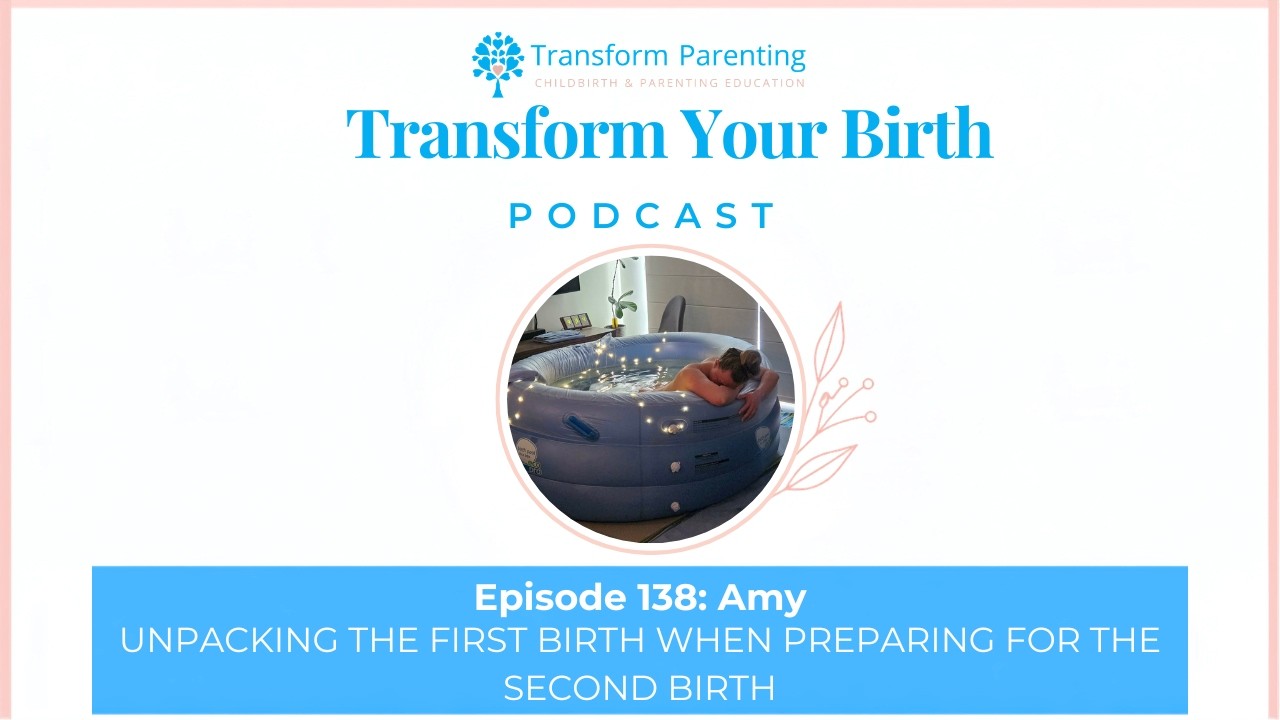

Ep 137: Eli - Yoga teacher, two very different births, induction and power of breathing

Episode #136 Dominique: Physiological birth, using the power of the mind, importance of preparation.
Ep 135: Bilal - The importance of the nervous system.Chiropractic care through pregnancy and birth.
Ep 134: Bilal and Chelsea - From homebirth to hospital birth, adapting to the unexpected.