Transform Parenting Pathway information
Tracey Anderson Askew founded Transform Parenting Pathway after a doula named Maggie changed how she understood birth. The program is a 12-pillar framework delivered over six months of weekly training, covering pregnancy identity work through post-natal integration and family culture. Cost is AUD $4,500 introductory, aimed at birth workers, therapists, and parents wanting to support others.
Chapters
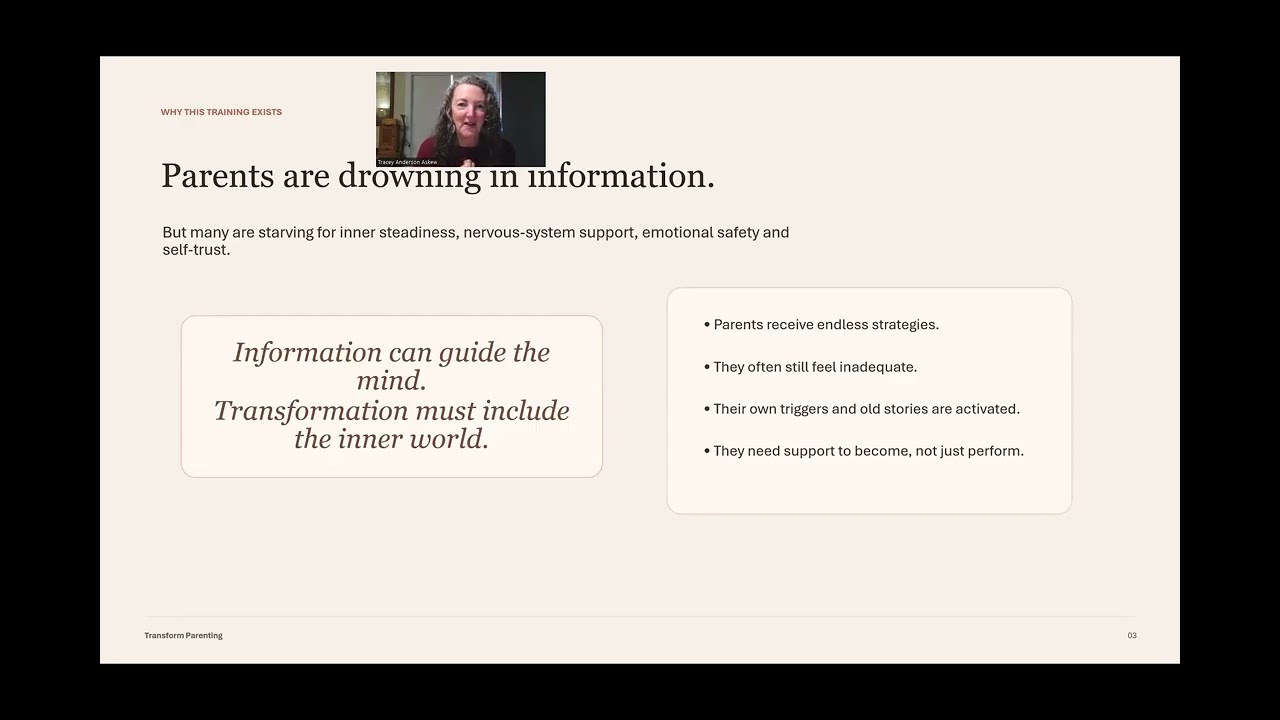
Hello everyone. Thank you so much for showing interest in this valuable work. It's my life's work and it's something that I'm very proud of. And I realized at the beginning of this year I was getting in the way of this work reaching more and more people. So I'm really, really keen to get more people in the Transform Parenting bubble. But also to support this work, to find other containers, other places for it to land that can really help deepen families, women, partners, children's experience of being in a family and growing with their children, because that's kind of what they've got to do. And a little bit of guidance from somebody wise and who knows what the pathway is can have a profound ripple effect on people moving forward. So thank you for showing interest. You've obviously heard the call somewhere. I thought I might just start about how I got to be doing this work. And, you know, the experience that I've had has been top rate in terms of having the right people at the right time. So let me just share. Some beautiful photos. Yeah. Let's go to this picture. This is my beautiful Maggie. You know, I was very excited to be pregnant with my first son. This was 30 years ago now, so it's a long time ago. And I was pretty much textbook pregnancy up until about 38 weeks. And prior to that, I had a doctor who I loved. I'd go in, he'd measure, he'd weigh, I'd pee on things and Check things out, and it was pretty stock standard. My symptoms were, you know, fine. And anyway, I was very happy with the model of care that I had. I was told that I had the best obstetrician in Sydney and that I was going to a really nice hospital. I had private health, so I decided to, you know, get the very best, which is what we often want for our families. And I got to about 38 weeks and realized, oh my God, I've got the wrong doctor. And that journey led me to finding this beautiful woman here, which is Maggie. That experience of changing carers at 38 weeks opened a door I didn't even know existed. The first part of the experience was going to get a second opinion from another doctor who gave me a totally different view of the same situation. And that was a powerful moment of realization that there's more than one way to do this. But it was when I met this woman, Maggie that I went, oh, she's the one for me. And I'll tell you why. Because instead of focusing on weighing and measuring and, you know, the clinical side, she sat Peter and I down knowing that we were very late in the pregnancy and she wanted to know who we were. She wanted to know how I was, how I felt about having a baby, how I felt about the idea of giving birth. breastfeeding, what sort of support we had around us, what, what was going on in our relationship, how did Peter feel. And the questions she asked made me realize, oh my God, you get this. You really understand what this is about. And what was so interesting is as I got to know her in a very short period of time, I felt so nourished and so supported by a woman, an older woman, an elder who really knew and understood what I was going through. As I got closer to birthing day, my blood pressure went up and she gave me a blood pressure machine just to keep an eye on it because that can be an early sign of preeclampsia. And what was interesting is it wasn't up all the time. When I was at home, it was fine. But when she came in, it would go up. And I blamed her. I said, you're the one sending my blood pressure up. And she said, well, let's dive into that a little bit. And what she discovered is that I had some fears. And the fears were sitting underneath the surface. And what she got me to do is to really talk through what was going on for me and helped me to understand how we might manage those fears. And then she got me to create a birth picture. And this is my birth picture. I went hunting for this. And it's a picture of me feeling the support of the circles around me and my baby traveling into the world on a golden river. This is very, very ethereal, isn't it? But that was the vision. And when I got a bit tetchy in the labor, obviously when I was hitting transition, she got that picture and she stuck it in front of me. And that's what I was looking at when I was pushing Sam out. So here's a beautiful photo. Let me just move that over of me in the water with Maggie. And you can see how Just, you know, so present she was. And look at my husband. God, these pictures make me want to cry. It's just amazing. It's another beautiful picture of Peter and I feeling so connected. He loved Maggie too. He could see— he was very happy for me to go down that path because he could see she was the one who really Understood this. And that's the moment I became a parent. That's my little Sam. And, you know, I was high on hormones for days. And I got to experience the full power of a physiological birth and how it sets us up for parenting. So by getting the right information at the right time, it really made a huge difference to my experience. And that's when I decided to become a doula. So I decided to help other women in the birth process. I also started running new mothers groups. I did a grad dip of childbirth education, went back to my education roots because I was a teacher before and started running childbirth education classes. And I, in the, well, over 25 years I've been doing that, I always ask the question, what moves the needle for birth? Because one of the things that is the biggest challenge for a woman about to walk through through that doorway into parenting, which is the birth process, is it's a mystery. We can never guarantee anything in childbirth. Doesn't matter how many kids you've had, it's always a new experience. And you're walking into the mystery. But there's a deep, deep intelligence to the fact that that's happening. Because the woman has to learn to let go. She has to learn to surrender to what is in front of her. And she doesn't know. And so that experience is what is preparing her then To really surrender to the baby, to get to know this baby. And so what we learn in birth sets us up for parenting. And I realized that because I experienced it. I ended up having 4 children and was supported by 3 different midwives in that process and was really able to see the power of physiological birth, but also recognizing that sometimes we need help too. So in running the birth classes that I have for a long time and then deciding to do mothers groups and things beyond that, I started to realize that the parenting is where the rubber hits the road. And I wanted to do more in the parenting realm. And what I discovered is parents are drowning in information. They're so overwhelmed now. And with AI, my darlings, it's only gotten more. more louder. But in doing that, it's taking the woman away from her baby brain, which we often tease her for having. It's taking her out of her intuitive, empathic, feeling brain and putting her into her analytical, rational brain. And that's not what babies need. Babies don't need mothers to think. What they need, they need them to feel and sense and to know, to create that deep knowing and connection and attunement between the mother and the baby. And it's that journey of attunement which then starts to really crack open the mother. And the more involved fathers and partners are, the more they attune to the baby and they upgrade. I love the term upgrade. It's like it's a growth. It's a period of growth. And what they need through that is Steadiness, presence, focus. And they need people around them who can help direct them back towards themselves. And that's what's missing in our world. There's so much on Instagram and other forums giving them advice and information, but actually they They need to go back within. So information can guide the mind, but it's transformation which is what starts to open that inner world. Okay. Parents receive endless strategies. They often still feel inadequate. Their own stories and triggers get activated and they need support to become, not just to perform. Okay. And the academics call this period of parenting intense parenting because it's expert-guided, emotionally draining, child-centered, Fueled by technology and very expensive. Parents are a market. All you have to do is walk into Baby Bunting and you'll work that out. Oh my God, that's an overwhelming place. But these conditions, or this incubator that they're growing in, causes them to feel inadequate, confused, overwhelmed, just not enough, never measuring up. And then of course they go back to work. And their children are in childcare for long periods of time, which can cause their development as knowing their children to get stagnant a little bit too, because that separation. And when they come back and their children are very needy and parenting can become just hard and not very fun and overwhelming. So even the fact that we can't stay with our babies as long as what we'd like, or every woman has to make that choice and some women don't have that choice. This. Parenting gets really hard. And this is what I started to realize. And I thought, how can I really serve parents in a way that isn't more noise, that isn't overwhelming, but can help them to start to tune in? And I was doing it more and more with the pregnant women too when they were getting advice to induce. I never tell women what to do, but I do help them to go within themselves in order to find those answers because they actually know. Women know. They don't know that they know, but when you ask them, they know. So these are some of the things I discovered. So what's happening beneath the surface as we grow with our children is that there are old stories, experiences, imprints, how we were parented— all of that's coded into our subconscious mind. And those stories start to come out, particularly if we've got a difficult-to-manage baby or Toddlers having meltdowns in public. The whole journey is designed to unlock this. Children press buttons, and what they're doing is they're showing us where the work is that needs to be done. And so the goal for parents, for as much as possible, is to be grounded and centered in self, but they can't do that when these parts of them get activated. And so it's the parts work that I started to do as parents had older children that really helped them to return back to their grounded, centered self. And from this place, they have access to higher wisdom, which is intuition, creativity, inspiration, being open to the not knowing, being okay about that, and just trying different things with their children. but being able to read them and attune with them. That comes from a grounded, centered place where you can access something that is higher. And it's also a deep intelligence that we all have, but we can't access it with the noise and we can't access it when we're in these old stories and these old patterns. So it's so powerful to understand that this is the journey that parents make. This is the hero's journey or the heroine's journey. Okay. So from behavior management to conscious becoming and having people to help them to do that. And this is where this program is very different. So when going from strategy parenting, which is what they get plenty of, how do I stop this behavior? How do I make the child do what I want them to do? To what is being awakened within me? And it includes the nervous system, the old stories. They have to tune into their values, be able to repair and expand their capacity with their children. So I just want to give you a little bit of an experiential practice about what am I really talking about when it means, you know, going within. I want to give you an experience of that now. So whatever you're doing, if you're just listening to this and you're doing other things, you might want to keep doing that. That's fine. You could do it later. But if you're in a position where you can just be still. And like the people on this, hopefully you can just give yourself a moment to turn inward. And the best way to do that is to just make sure you're comfortable and you're nice and upright. You've opened up your diaphragm, you're not hunching. Just really open yourself up. And if you want to, you can close your eyes, or if you prefer not to close them, just glance downwards to just start to bring your awareness inside of yourself instead of the external world. And then I'll get you to just do 3 very gentle, slow breaths. And as you do those gentle, slow breaths, just take your awareness to your heart area. It's a beautiful place to bring your awareness out of your head and into your heart. Take a slow breath in. And a slow breath out. And you're not needing to be calm or anything, you just need to let yourself arrive and to bring your awareness to your inner world. So as you do that, just become aware of perhaps any tension in your body. Maybe there's parts of your body that are hotter or warmer. And parts that are cooler. You can notice that any sensations, and just be here now. This is a moment for you, and as your body. Continues to just let go a little bit more in its own time, in its own way. You don't need to worry about that. Your body knows how to relax. You just let it happen. We're just going to do a little exercise within our minds and our hearts, and I want you to bring to your mind a child that you love. You parent or guide or teach or care about any child that comes to mind. And when you do, just notice what happens in your body when you bring that child to mind. Could even be a future child. If you're wanting to have children in the future, or a child who needs a safe adult, just bring them to mind and notice what happens in your body. No judgment, just noticing. And ask yourself this question: what does this child awaken in me? What does this child awaken in me? Not, not what is wrong with them or what needs to be fixed or anything about them. Let's turn the focus on you. What is awakened in me? And let the answer come from your body, from a deeper sense. You might get a few thoughts and just see if there's anything under the thoughts, a feeling, a sense. And now ask yourself this question: when this child is struggling, what part of me tends to show up? Is it the fixer, the controller, the rescuer, the avoider, the perfectionist, the critic, or the overwhelmed one? What part of me tends to show up? And there could be more than It could be 2 or 3, particularly the parts that cause you to feel out of balance. And this is what children do. It's what their job is, to help us to grow. So what part of me tends to show up And as a result of that, what quality am I being invited to grow? Steadiness, maybe softening, surrendering. Maybe it's boundaries. Maybe I need to learn to trust more. To have courage to keep going. Maybe compassion, or leading the child, guiding the child. Maybe I abdicate that a little bit sometimes, or just repairing when I'm not at my best. As parents, we all need to know how to repair. Maybe it's patience. The goal is not to be a perfect parent. The goal is to be a parent that grows with our children and to be more present in order to choose our responses rather than default from the old stories, default into reactivity. Like a reflex. When we notice these things, we have the capacity to pause and then choose. And so just pop one word in the chat. What came up for you? What was the one, one particular thing that you feel is being required Of you to grow into. Oh, look at that. Patience. That's a big one. 3 of you had patience. Hmm. Ah, boundaries. Yeah, that can be a big learning curve, can't it? I think in my early parenting, a lot of my learning was around surrendering. Because I had three babies in four years. My God, you got to surrender. Yeah, and ended up with four sons. I learned a lot, a lot of things. I could tick all of those boxes, and I think that's the truth. I think that's really what this is about. We're all growing, and so this is the stuff underneath. The tips and tricks and strategies. This is where the real growth happens, and this is what really transforms parenting too. I used to find that every time I had a little breakthrough in my own development, my children would change. It's like a miracle. It's quite interesting. Okay, so just coming out of that now, it's bringing your awareness back into the room. That's it. Give yourself a moment to reorientate and let me take you through the journey of becoming and what this work is in the Transform Parenting pathway. So there's 12 pillars that I've built it on, and my God, have I got content, people. After 25 years of working in this field, I had a lot of content and it was quite a feat to bring it together and thread it through with that inner journey work. And so, you know, as parents, parents tend to be supported in pregnancy and then they get supported during the birth by different people and then often by different people in early, like in the first 2 weeks, and then different people in the months after that. And then Then they're left to their own devices and they get all sorts of support in a whole lot of different places. And so it can feel very fractured. But what I aimed to do through Transform Parenting is to thread, to have that continuity of community support and educational guidance that was less about knowledge and more about process. And so we look at the pregnancy foundations, our readiness for birth, postnatal landing, and family and becoming. And so let's look now at the 12 pillars. Becoming a parent begins before birth. And so we look at identity, expectation, our fears, our hopes, and our relationships. And then we look at attuning with the baby, bonding, sensitivity, inner listening, early relational connection. Number 3 is protecting our inner authority. It's really important we help parents from the very beginning step up to the platform and become a part of the decision-making processes. It's very easy to just hand it over to the so-called experts who can be making choices on their behalf. Without really— it's not even about them. And so they need to know what their own values and choices are, but they need to know what they don't know. Working with the fear and the mind. This is such an important part of the journey to really understand the nature of the mind, to harness it and work on unlocking some of those things that can get in the way of women being able to birth. Number 5 is trusting the body in labor. We want embodied confidence using tools like the breath and a whole lot of comfort measures as well, but to really understand how the body works and how we can optimize it. And once again, birth choices, doing birth mapping and advocacy, very important part of the journey. And boy, does that extend into parenting. What you learn for birth is helping you for parenting. The first 40 days. Traditionally, culturally, in many places around the world, these are very significant days and people in our culture don't tend to understand that. So it's a really important readiness for parenting and the recovery that's needed for both mum and as the baby adjusts to life outside the womb. Learning and attuning to the baby, the cues, the feeding, the sleeping, all of those really significant phases. Integrating the birth experience, it's a really important part of helping them to Take their birth story and learn to find peace with it, whatever happened. Matrescence, identity, and our relationships and how they change. Such an important thing to appreciate what is actually happening, because a lot of women feel a real loss after birth. They feel a loss of self, but it actually isn't a loss of self. It's a loss of a former life. The self is actually expanding. But a lot of women don't really understand that until you point it out. Even though you feel like you're back in kindergarten, you're starting from the beginning again. There's a part of you that is upgrading big time. In fact, all of you is upgrading on every level. Building the family culture and then looking at triggers, loving limits, play, and connection. So important we help protect childhood because it's a lot of things happening in childhood. Mm-hmm. That is not helping children to develop their full potential. So this is the journey, this is where they're going. And so my goal is to bring together people who can facilitate this work, not just deliver information. Okay, we want to help guide parents inwards without overwhelming them and making them feel like they're not measuring up. We want them to connect with their nervous system and their inner stories, their behaviors, working with their Creating support as they go through things and meeting them where they're at. It's very, very powerful. Translating this deep work into practical family change. Behaviour is the doorway, but it's the adult's inner world which is the path. So what does it contain? 6 months of guided facilitator training, weekly sessions for an hour on Zoom. So I've made it as doable as possible for wherever people are at. And as part of that, you do exercises and integration of the material between the sessions, which usually involves things like meditations, weekly challenges, things for you to focus on, because I want the facilitators to have experienced the work, not just to bring the work to the people. It's really important you have experiences that you can use to guide people on their own path. Now my next— I've already started a cohort of people going through now, and not all of them are doing the whole path. Some people are only doing parts, which is why I'm bringing in a new group to integrate with this cohort as we go through the different stages. You will get the full course, but I'm sort of, you know, working with different people at different stages of the pathway. I'll be starting a new cohort on the 18th of September from 12:30 till 1:30. So that's on a Friday for an hour. It'll be on Zoom. And the cost of this, I've kept it at the base cost, which is $4,500. And it's a huge body of work to have access to with that money. When I start to run it more commercially and really widen the net for this work, it's going to be close to double that, I imagine. Okay, because when you look at what you get, it's a huge thing. So this introductory price is a very, very cheap price for what it is that you're getting. And it is small group trainings. Okay, I try not to do it too big. The current cohort are 9. And then there'll be, I think, 3 who will finish in the next couple of weeks. And so I'm hoping to bring another at least 3 in. But We've got space for a few more. Okay, so it is limited. I don't want to have too many people because this is more of a personal experience. It's an experiential course as much as possible. And so who's it for? Well, birth workers is obvious— doulas, midwives, nursing, childbirth educators. That's all very obvious, but also therapists, coaches, parenting educators, and And I just know I've got some in my current group, mothers who feel called to support other mothers. And so if you're a parent and you're not involved in this work yet, but you're feeling the call, this could be for you as well. In fact, I know the mothers that are in there, they've done pretty much everything I've done, and they're incredible, and they're going to be incredible leaders supporting other mothers. So this is, this is open to a broad range of people. And how you do it is completely after you, up to you. So the next steps, we're going to answer some questions. I can see some questions have already been asked. But I want you to really tune in and to really get a deeper sense. Does this work call for you? I'm not going to do a big sales pitch or anything like that. I can do it. I'm pretty good at sales. But for this work particularly, I want people to feel the calling from a much deeper place within themselves. And the way you know that is through curiosity and the desire to dive deeper into the undercurrents of what it is to be human, what it is to grow, to learn, to overcome, to heal. And if you want to be on that path for yourself and for the people you touch, then this is going to be a very powerful experience. Once the 6-month training is over, I'm also going to include as part of this another 6 months of mentoring on a monthly basis, because my goal for this work is to create a community of people who are trained in the Transform Parenting pathway to be there to support each other. And by meeting up every month on Zoom, so it can be wherever people are. I can guide us in a few more exercises, answer questions, offer support. We can all offer support of each other. And we'll also have our WhatsApp group to communicate between those sessions as well. So it's not only are we trying to create communities outside of this work, but I want the people involved in this work to be a part of a community that continues to grow and support each other. Okay. So, uh, let's see, that's the QR code if you want to go on to the sales page where you can book your call with me because the next step is for me to have a chat with you and to answer any specific questions that you might have. I like to get to know everybody that I work with and to really understand what your needs might be as well in this training. And so that's the next steps. And then if you want to, you can also look at joining us. Okay, so let me just have a look at some of these questions. Okay, how could I build a business out of this? Great question, because if you're going to spend $4,500, you want to at least have a plan to get it back. And particularly if you do build a business, it becomes a tax deduction. Remember that. So keep your receipt. Um, how do you build a business? There's a couple of different options. Some of you out there will already have a container. You might be a psych who works with postnatal women or birth trauma or something like that, or you have your own clientele. So you can bring it into your business as an additional. You can take whatever parts of the program you want and reshape it to suit the container that you're in. Okay, I have no attachment to it being presented in a certain way. Having said that though, I do appreciate when people reference Transform Parenting. It's a brand I'd like to really expand, expand its capacity and expand the teachers within it. There's also opportunities for people to work Within Transform Parenting because I want more teachers. Right now it's all on my shoulders and I've got a few extra teachers who can do the Thrive course, which is wonderful. But I'd like more people in the birth course. I'd like to see the birth course expanded because it's top-notch. That birth course is shit hot. It should be after all the years I've worked on it. And it's very effective at helping people to transform their birth. Even more effective than calm birth and hypnobirthing. It's based on similar principles, but it always depends on the facilitator teaching. But the actual course itself that I've created is so intentional. So there's opportunities there to run mothers groups. But building a business yourself, it, it is a journey. I'm hoping the Transform Parenting brand will help people with that. I'm hoping that the also the website can be a reference point for people to find you and to access your work. And I'm hoping it's not just Australia-wide but even beyond that. I've got a few plans around international as well. So you're sort of coming in at the lovely time where a business has been— has a really good solid foundation in which to springboard from. So as part of the mentoring, we can talk more about business ideas. It's something I started on the side as a hobby that eventually became quite substantial, and it is a substantial business now. It's got a very good reputation here in Canberra. Okay. That's a lot of content. How do I access it? Can I keep it? Oh, that's a great question and something I've just realized I haven't done. Let me stop sharing that and I will now bring you to— sorry. Oh, goodness me. I apologise for this. Okay, so here is the platform that has the Transform Parenting Pathway. You get access to this and there'll be a licensing fee that you'll pay every year, which won't be a lot, but it will help me to maintain this platform. So the pathway at the very beginning, the first few modules are really understanding the pathway, the beliefs behind it, the flavor of this work and the modules, delivery options for facilitators that your role, the training outcomes and a detail training curriculum. So that's there for all of you to access actually who are watching this and may not have signed up yet. You can access this as part of the email that will follow to give you a little bit of a deeper understanding of the training. Then we explore pregnancy as identity transition. Look at that, attunement with the baby, inner authority. A lot of great stuff there. The birth process, connected parenting from inside out, fear in the mind. This is all you get to keep. That's why the trainings are less content-based and more experiential, which is the only way to learn, because I want it to be transformational for you too, not just the people you touch. Learning to trust your body. So a lot of this is the Transform Your Birth course. Birth Choices and Birth Mapping, Transform Parenting course. And page 2, First 40 Days, Learning the Baby, Birth Integration. And my, one of my most favorite courses, the Thriving as a New Parent. And this is where we studied with the original, started with the original cohort because I had 3 people who just wanted to focus on this particular part of the pathway. And if that's something you're interested in, let me know because we'll make that an option for you as well. So they are the 7 weeks and it's a beautiful course and it really bonds women. And it's very— I think the ripple effects of Thrive is so very long-lasting. I have families that are still connected 10 years plus on, which, wow. How's that for a community? And then more into the play parenting of older children. I'll also be focusing very much on facilitation skills because how you facilitate, how you set things up, how you create safety is really important when it comes to the experience that other people have around you. You lay the— set the scene for that transformation. We'll look at assessment and the pathway as well as licensing and protection. So how do you like those apples? That's a lot of bang for your buck. Okay, it's a lifetime of work and it's yours. You get to keep that and go back to it every time you're running a course. You can look it up and go, oh yes, here are the key questions, I'll lock those in my mind, and you can revisit it whenever you need to. Okay. Next question. Where might I use this work? Okay. So midwives, this is the part of midwifery that a lot of people really grieve that they don't get to do more of because so much of midwifery gets clinical. And that's fine. That's kind of your way of protecting mothers and babies. There's no judgment there. Mm-hmm. But the deeper understanding the pathway that women are on can bring you from being a midwife to being a wise woman. A wise woman who knows, who can guide, who can respond to what's presenting in that mother. This is my Maggie. That's what she did with me. She was able to see where I was at and respond really beautifully. So I think it's a beautiful program for midwives to deepen their practice and to support their own nervous systems as well, because you guys do a huge job. Doulas, the same thing. But doulas are in a beautiful situation to create, to run mothers groups, to run little group courses where you can take mothers through Thrive or Matrescence, or even just having really good conversations with your clients. And creating communities. I think taking doula work to the community, creating communities where doulas really thrive, where you can run a regular playgroup and the parents from your births or other doulas can come and just hang out and have someone lead some really powerful discussions. Mothers, I love mothers. Mothers are around other mothers and that can inform their conversations, but they too can create communities, playgroups, online gatherings, or use it to create a business so you can be more with your children. It certainly has legs to do that. That's how I was able to raise 4 boys by having work that I could do at night on the weekends, take my kids to it. It was a great business for me to have when I was raising my children. Psychologists, educators, there's so much you can do. Particularly, I know a lot of psychs love to do small group work because so much learning can happen when they see other people going through the same thing at the same time. So yeah, There's lots of scope for that. Okay. Do you need more teachers? Yes, I do need more teachers in Transform Parenting. I think I've answered this, but I'm looking for more to do the birth course. I'd like to see that widen. I only want to do one a month because I'm a granny now and I want to be a granny, and a lot of granny stuff happens on weekends. So I don't want to be working nearly every weekend like I used to. I'd love to see the birth course out in different areas and expand its reach. I do love having Thrive people, like more Thrive groups. Canberra, I've got a few Thrive facilitators here and we could do some work on getting more, more information out around Thrive. And of course the Village. I do different events in the Village, so having other teachers support that as well. Payment plans, yes, are available. Payment plans can be negotiated as long as it's paid over that 6-month period. Okay, I think that's it. Great. Well, if you're interested, please reach out. You'll get an email following this and book a call with me and I can have a chat to you. Or if you think you'd like to just enroll, that's okay too, although it would be nice to have a chat to you. So thank you so much for listening, and let's see what sort of magic we can create in this world, because I tell you, it's a bit crazy at the moment. And the only way to fix that is to raise the next generation in a way that's conscious, hearty, loving, smart, creative, and connected to themselves. Lots of love.
More from Tracey

Ep 140: Kate — A healing VBAC: Facing fears, finding trust and birthing a big baby

Ep 137: Eli - Yoga teacher, two very different births, induction and power of breathing

Episode #136 Dominique: Physiological birth, using the power of the mind, importance of preparation.
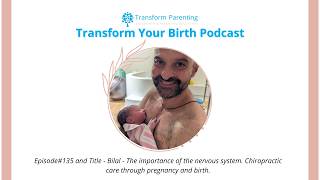
Ep 135: Bilal - The importance of the nervous system.Chiropractic care through pregnancy and birth.
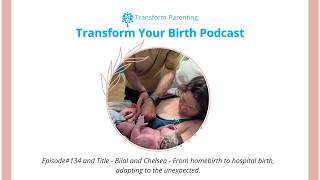
Ep 134: Bilal and Chelsea - From homebirth to hospital birth, adapting to the unexpected.
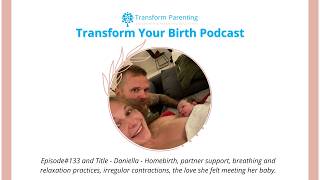
Ep 133: Daniella - Homebirth, partner support, the love she felt meeting her baby.